Could Drone Authorization at Utah Valley University Have Prevented the Charlie Kirk Assassination Attempt
Enjoying this? Share it with someone who needs to see it.
Up Next
Jon Bray Explains the Exploding Microphone Theory Behind Charlie Kirk's Death with Data and Analysis
2:03:04
Travis Shares His Eyewitness Account of the Charlie Kirk Shooting at UVU: Standing 50 Feet Away
25:20
Brian Harpole's Shawn Ryan Interview: Integrity Security Reveals What Happened During Charlie Kirk's Final Moments
32:39
Could Drone Authorization at Utah Valley University Have Prevented the Charlie Kirk Assassination Attempt
A deep examination of Utah Valley University's drone authorization policy raises serious questions about security preparations before the assassination attempt on Charlie Kirk. While security team leader Brian Harpole claimed they couldn't fly drones due to airspace restrictions, UVU's official policy reveals a clear multi-step authorization process that could have been completed within the two-week advance timeline his team had on the ground. This analysis breaks down UVU Policy 705 on unmanned aircraft operations, compares it against statements made during the Shawn Ryan interview, and asks the critical question: Did Charlie Kirk's security team actually submit a request to fly drones, or did they simply rely on local law enforcement to handle aerial surveillance of the rooftops where the shooter ultimately positioned himself?
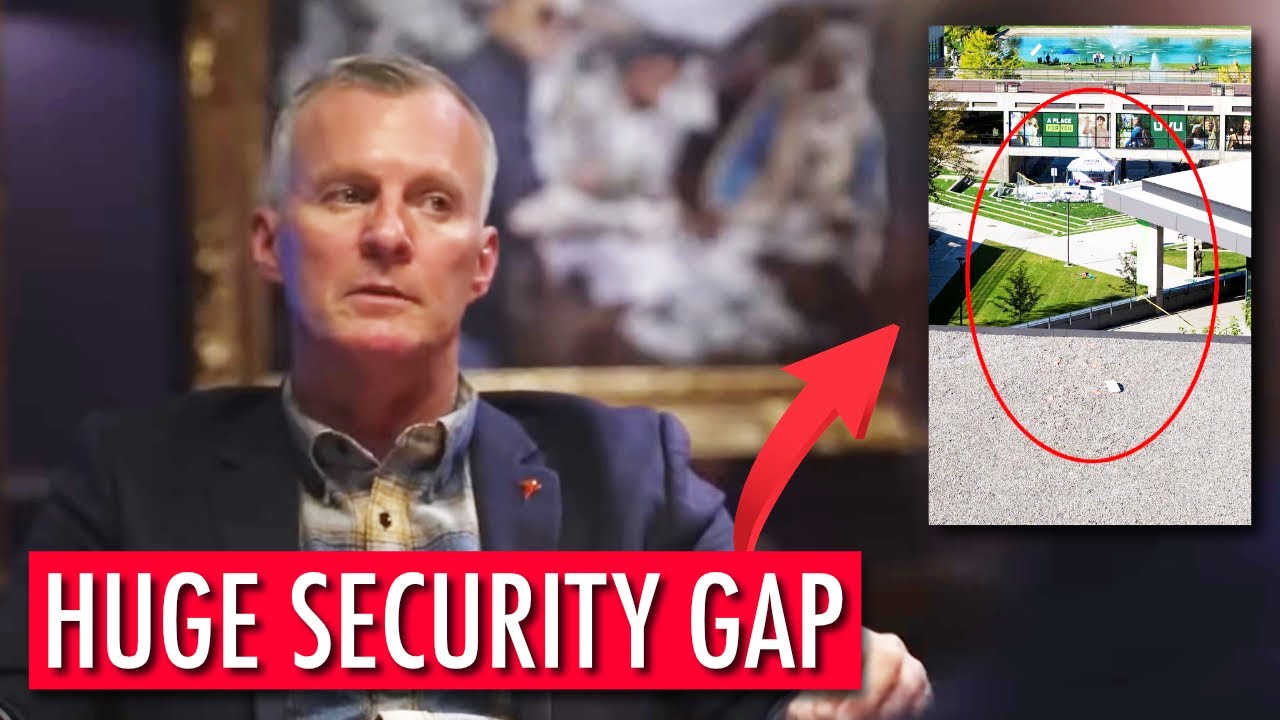
Something doesn't add up about the drone situation at Utah Valley University before the Charlie Kirk assassination attempt. A detailed look at UVU's official drone policy raises serious questions about whether the security team did everything possible to protect their client. The central issue: Could a drone have prevented the tragedy by detecting the shooter on the rooftop before he fired?
The answer appears to be yes. A drone conducting aerial surveillance would have spotted someone climbing onto the roof or already positioned there, providing precious time to either neutralize the threat or evacuate Kirk from the danger zone. The security team wouldn't necessarily have needed to stop the shooter directly—simply identifying the rooftop threat and removing Kirk from the line of fire could have saved his life.
What Brian Harpole Said About the Drones
During his interview on the Shawn Ryan Show, security team leader Brian Harpole explained why his team didn't deploy drones for the event. His explanation centered on legal restrictions and jurisdictional limitations.
Harpole explained that his team arrives early for advance work, sometimes weeks ahead of an event. In this case, they were on the ground at UVU by the 24th of the previous month, giving them at least two weeks of preparation time. He mentioned that his company had invested thousands of dollars in drones and ensured his team members obtained proper FAA Part 107 licenses.
However, Harpole stated that if an area falls within certain airspace restrictions, he cannot legally fly drones there. He specifically mentioned restrictions in the Provo, Utah airspace and secondary limitations potentially due to heavy foot traffic at the school. His position was clear: "I can't go in and break the rules. There's laws for a reason."
Regarding who could have flown drones, Harpole noted that the school or the police department could have operated drones, but claimed they didn't have them available. Then, contradicting himself moments later, he acknowledged that the local police department actually does have an active drone unit with professionals he described as "awesome" who "get it."
The Mutual Aid Agreement That Wasn't Used
One of the most revealing parts of Harpole's interview was his discussion about mutual aid agreements. He explained that he started asking questions: Did the police department have a drone unit? Yes. Did they have a mutual aid agreement with the school? Yes. Did they call the school to ask for assistance? No. Did the school call them? No.
Harpole's position was that the police department could have called for help, and he could have called them as well, but there was "no reason he should have other people doing the work he gets paid to do."
His conclusion: "Table the drones, which would have been awesome. Absolutely. I believe in them, but I can't break the law to do it."
The interview revealed that rooftop coverage was supposedly being handled by police drones. The police department told him "I got you covered." Harpole acknowledged he did not verify this coverage himself. Shawn Ryan, the interviewer, pointed out diplomatically that it would have been a good idea to confirm that the police actually had drones deployed.
UVU's Official Drone Authorization Policy
What Harpole didn't mention in his interview is that Utah Valley University has a clear, established policy for authorizing drone operations on campus. UVU Policy 705, created in 2018 and available on the university's official policy website, outlines exactly how outside parties can obtain permission to fly drones on university property.
According to the policy, UVU strictly prohibits any unauthorized drone flights on university property. However, authorized operations are explicitly allowed if the operator completes UVU's required approval process.
The authorization process involves several specific steps:
Submit a request of authorization to UVU Risk Management
Provide a certificate of insurance
Consult with the safety coordinator to verify FAA compliance
Possess FAA credentials (Part 107 license)
Receive a signed UVU flight authorization document
Notify UVU police before flight
Operators must also register the drone with the FAA, follow all federal regulations, and ensure safety and privacy compliance. These are standard requirements for any professional drone operation.
Could It Have Been Done in Two Weeks?
The critical question becomes whether the security team had sufficient time to complete this authorization process. Based on the policy requirements and typical processing times, the answer appears to be a clear yes.
Breaking down the timeline for each requirement:
Submit a request for authorization: Up to 48 hours
Certificate of insurance: Approximately 3 days (if not already on file)
FAA requirements: Immediate (if already Part 107 certified, which Harpole confirmed his team was)
Risk management review: Up to 7 days
None of these steps inherently require extended lead times. The only potential delay would be if special FAA waivers were needed, which is rare for this type of situation and would likely be immediate to several days at most.
With two weeks of advance time on the ground, a competent security team with proper documentation could realistically complete the entire authorization process. The policy contains no minimum time requirements that would have made this impossible.
The Question Nobody Asked
Throughout his interview, Brian Harpole never mentioned actually attempting to go through UVU's drone authorization process. He didn't say he submitted a request that was denied. He didn't mention that the process took too long. He didn't indicate that he was unaware of the process.
He simply stated he couldn't fly drones in that airspace due to legal restrictions—restrictions that appear to have a clear workaround through the university's established authorization procedure.
This raises the fundamental question: Did the security team officially request permission to fly their drones at UVU using the established process?
If the team was as thorough as Harpole described—arriving early, building security infrastructure themselves, conducting extensive advance work—why wouldn't they have investigated how to get their drones authorized? A simple inquiry to UVU Risk Management would have revealed the authorization process.
Where the Responsibility Fell
During the Shawn Ryan interview, there seemed to be an attempt to distribute blame among various parties—UVU didn't provide drones, the police department didn't deploy theirs despite having them available, mutual aid agreements existed but weren't activated.
Shawn Ryan himself gently pushed back on this narrative, suggesting it would have been wise to verify the police drone coverage rather than simply trusting their assurance that they "got you covered."
The police chief apparently failed to deploy the drones his department possessed. The security team failed to verify that coverage. And based on the available evidence, the security team may have failed to even attempt securing their own authorization to fly.
Harpole's statement that "I can't break the law to do it" rings hollow when the law appears to have a clear pathway for legal compliance that simply required following an established procedure.
What This Means for Security Standards
If a competent security team with proper Part 107 licenses, insurance, and two weeks of advance preparation time failed to secure drone authorization through an established, accessible process, it represents a significant failure in due diligence.
The statement "they could have used them, they chose not to" becomes particularly damning in this context. It wasn't that drones couldn't be used—it's that the necessary steps to authorize their use apparently weren't taken.
A Freedom of Information Act request or similar public records request could potentially reveal whether any drone authorization request was submitted to UVU Risk Management before the event. That single piece of documentation would answer the central question definitively.
The Final Analysis
Based on UVU Policy 705 on unmanned aircraft operations, drone coverage of the rooftops was not only possible but appeared to be readily achievable within the timeline available. The policy structure is straightforward, the requirements are standard for professional operations, and the processing times are reasonable.
A drone conducting aerial surveillance almost certainly would have detected the shooter positioning himself on the rooftop, providing the critical early warning that could have saved Charlie Kirk's life.
Whether through the security team's own authorized drones or through properly verified police department coverage, aerial surveillance should have been part of the security plan. The failure to implement it—whether through lack of effort, lack of knowledge, or simple oversight—had tragic consequences.
The available evidence suggests this wasn't a situation where the law prevented proper security measures. It appears to be a situation where proper security measures simply weren't pursued through available legal channels.