[00:00] Well, my friends, there's more. Just
[00:02] when you thought we had pretty much
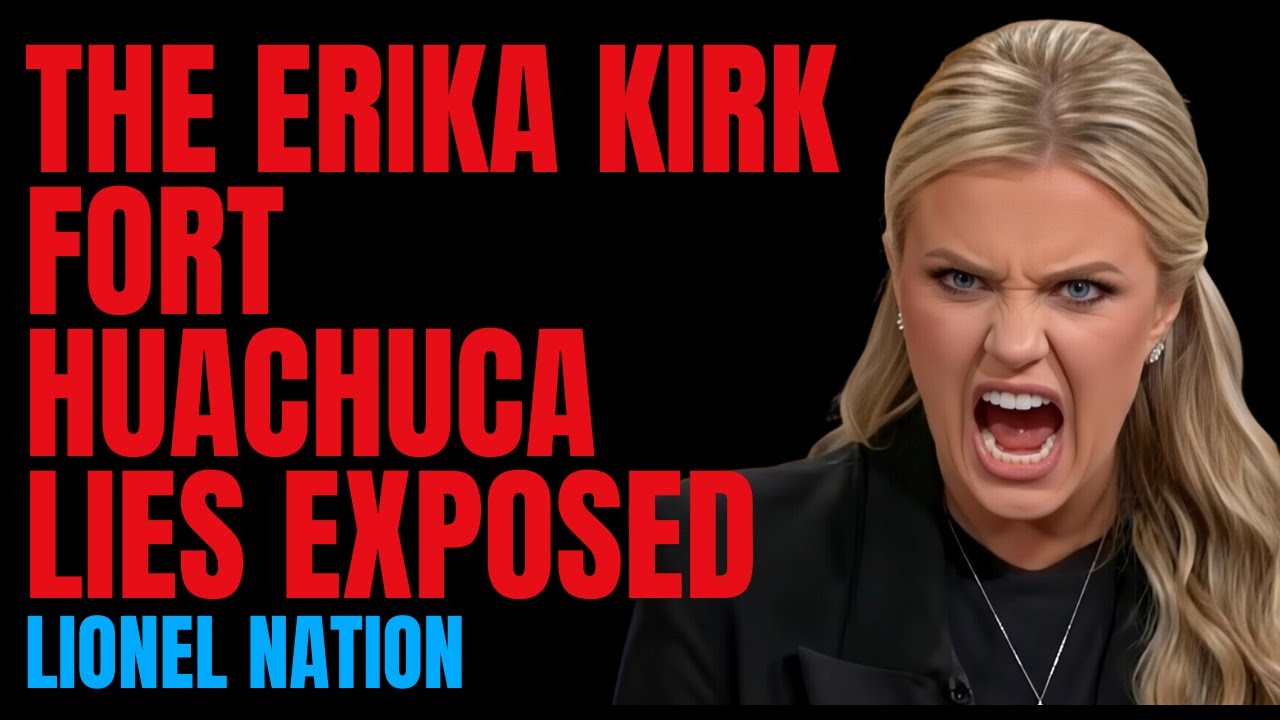
[00:04] exhausted the topic of Erica Cook,
[00:10] we're mistaken.
[00:12] Erica, we hardly knew ye. Here's the
[00:16] latest, my friend.
[00:20] It seems like the resurfacing of Erica
[00:23] Kirk's old reality TV audition footage
[00:26] didn't just surprise people who followed
[00:28] Charlie Kirk and loved him. It jolted
[00:30] them because it cracked the carefully
[00:34] polished public image that has been
[00:37] built since his death and it exposed a
[00:40] version of America that we kind of
[00:41] suspected but that looks radically
[00:44] different from the one currently
[00:46] presented on national stages.
[00:48] for many supporters who who believe that
[00:50] they were watching the emergence of a of
[00:54] a quiet uh traditional faith centered
[00:57] widow stepping into leadership out of
[01:00] duty and sacrifice. Well,
[01:03] the contrast is jarring. It isn't about
[01:07] judging someone for having a life before
[01:09] marriage. It's about the whiplash
[01:11] between the two radically different
[01:14] personas and what that suggests about
[01:17] branding and performance and
[01:20] authenticity
[01:22] in modern political media culture. And
[01:24] it makes you wonder, well, what else do
[01:26] we don't know? Is this an act, too?
[01:31] Now, in the Amazing Race audition tape,
[01:34] Erica is of course the playful,
[01:36] [laughter]
[01:37] bubbly, overly flirtatious,
[01:39] little selfopenly marketing herself and
[01:42] her boyfriend.
[01:45] Anywh who, um her boyfriend with with
[01:48] with language like sex cells and leaning
[01:51] into entertainment, culture, and
[01:53] reality, TV ambition. You've seen him
[01:56] before. And that version of Erica speaks
[01:58] the language of Hollywood hustle,
[02:01] personal branding, fame seeking, selling
[02:05] yourself, selling your soul, selling who
[02:08] you are. Am I sexy enough for you?
[02:10] That's what I know. I know how to market
[02:13] me. We'll get to that Lord business
[02:15] later. Yeah. Yeah. Yeah. The Bible.
[02:18] I'll do whatever. I can [snorts] be.
[02:20] Want me to be a CIA operative? I can do
[02:22] industrials for EMPs. Name it. Send me
[02:25] to Romania. send me to China. I'll do
[02:27] whatever you want. I'm like Zelig. I'll
[02:29] do anything. I become my surrounding.
[02:32] Now, fast forward to today and the
[02:36] public image is completely different.
[02:38] Now the presentation emphasizes
[02:41] now uh modesty and faith and family and
[02:45] emotional restraint and a and a
[02:47] traditional wife. That whole aesthetic
[02:49] that that aligns neatly with the
[02:52] conservative cultural expectations that
[02:54] we all want. Right now for many Charlie
[02:57] supporters the issue isn't uh that that
[03:00] people change. The issue is whether the
[03:03] transformation
[03:05] reflects genuine growth or a calculated
[03:09] repositioning to fit a a new a new
[03:12] audience and a new power structure. Oh
[03:15] yeah. You see, this is where
[03:19] this is where Candace Owens's role
[03:21] becomes important. You see, Candace has
[03:23] positioned herself as someone willing,
[03:26] ready, and able to question narratives
[03:28] that that others are afraid to touch.
[03:31] Now, now while while many conservative
[03:34] commentators tiptoe around, you know,
[03:36] sensitive internal controversies,
[03:39] um Candace has built a reputation on
[03:42] confronting well uncomfortable
[03:45] contradictions head on. Supporters see
[03:48] her approach not as not as cruelty, but
[03:53] as accountability. In this case, Candace
[03:55] is not attacking Erica's past
[03:57] relationships.
[03:59] She's highlighting the larger pattern of
[04:02] image management, malleability, the
[04:06] chameleon. Who is Erica? You know, this
[04:09] selective storytelling and strategic
[04:12] reinvention that often happens when
[04:15] someone suddenly inherits a a national
[04:18] platform.
[04:20] Now, Charlie Kirk was not just a public
[04:22] figure. For millions of of young
[04:25] conservatives, he was more than that.
[04:28] More than that, he was he was a symbol
[04:30] of authenticity and grassroots energy
[04:33] and real and genuine and personal
[04:36] conviction. His supporters feel
[04:38] protective of that legacy. And not only
[04:41] protective of the legacy, but protective
[04:43] of Charlie and what he meant to them and
[04:46] what they remember. See, this is what
[04:48] people don't understand. They were
[04:49] committed. They were sold on him. And
[04:52] when Erica stepped into into the
[04:54] leadership roles, by the way, and nobody
[04:56] voted her as far as grassroots didn't do
[04:58] this, or all of a sudden she says, "Hey,
[05:00] guess what? Here I am. It's me. You love
[05:03] me. I'm in charge." People said, "Okay,
[05:06] well, you know, I guess." All of a
[05:09] sudden, people started it began shaping
[05:11] the the future direction of TPUSA
[05:14] related messaging and people said, "Wait
[05:16] a minute." And expectations were
[05:18] enormous. You know, fans wanted
[05:20] [clears throat] continuity. Yes.
[05:22] Continuity with Charlie's values and and
[05:24] and and transparency and leadership.
[05:27] That's what they wanted. Emotional
[05:29] honesty and instead what many perceive
[05:32] as some kind of a carefully
[05:35] orchestrated and rehearsed public
[05:37] persona that seems designed for optics
[05:40] and schmaltz and putting on the image of
[05:43] something. the holier than thou all of a
[05:46] sudden uber Christian spouting
[05:48] Christianity spouting biblical phrases.
[05:50] I mean, she just But it's always about
[05:53] her her voyage, her how she's, you know,
[05:58] stewarding the helm, weathering her way
[06:01] through the travailes of life.
[06:04] And if I hear one more person say,
[06:06] "Shouldn't you be nice? She's a widow."
[06:08] Look, I don't know what being a widow
[06:11] has to do with what I'm seeing. It's
[06:12] like when when somebody that you know
[06:14] that you thought was a real jerk all
[06:16] your life, he dies or she dies. You're
[06:18] supposed to feel sad. I'm not putting
[06:20] her in that category, but I'm looking at
[06:22] what she's doing. Now, remember, nobody
[06:25] I'm not talking about the way she looks
[06:27] or her face or her age or her No, no,
[06:30] no, no. This is this is about
[06:31] performance. And by the way, stay away
[06:33] from that. Don't lower yourself to that.
[06:35] We're not going to go into what people
[06:36] look like. Okay? The only thing we care
[06:40] about is what people act like and if the
[06:42] sincerity quotient is working because
[06:44] you know this resurfaced footage, it
[06:46] feeds the perception. It creates this
[06:49] visible contrast between
[06:52] a past persona, you know, oriented
[06:55] towards entertainment, fame and and uh
[06:59] and a present persona oriented and
[07:01] directed around political influence. And
[07:04] to critics, it raises very uncomfortable
[07:06] questions. Was the earlier sex cell
[07:09] sells mindset abandoned through
[07:13] through a genuine personal
[07:16] transformation or was it simply replaced
[07:18] with a different marketing tool, a
[07:20] different strategy, a different act, a
[07:23] different act too, so to speak, you
[07:25] know, better suited for conservative
[07:26] audiences. And when Erica speaks today
[07:29] about innocence and purity and and
[07:32] traditional values, some viewers now
[07:35] wonder whether those narratives were
[07:38] selectively emphasized and picked and
[07:41] selected to to fit a new role rather
[07:44] than organically develop over time. You
[07:47] know what I'm saying? You're not buying
[07:50] this. Look, you know what she is. With
[07:52] all due respect, she's a she's an
[07:54] actress.
[07:56] It's okay. She That's what she knows how
[08:00] to do and she thinks she's she's pulling
[08:03] a fast one. See, Candace Owens has has
[08:06] capitalized on this moment, not by
[08:09] inventing scandals, but by highlighting
[08:12] how optics and and stage craft and power
[08:16] kind of all intersect. She understands
[08:19] better than a lot of people modern media
[08:21] dynamics. Okay? she knows better than
[08:25] most. And she knows that movements built
[08:27] on image rather than authenticity
[08:30] eventually
[08:32] fracture. And her criticism resonates
[08:35] because it it taps into a broader
[08:38] anxiety among conservatives that that
[08:42] their leaders are maybe becoming more
[08:46] performanceoriented and and and and
[08:48] theatrical than principled. In that
[08:51] sense, Candace isn't just critiquing
[08:53] Erica. She's challenging this entire
[08:57] system that always rewards branding
[09:01] and veneer over character. And what
[09:04] makes this exceptionally interesting and
[09:08] particularly sensitive is the emotional
[09:10] backdrop of Charlie's death. Supporters
[09:13] are still grieving.
[09:15] They're watching someone else step into
[09:17] a symbolic role tied to his memory.
[09:22] Any hint of inauthenticity
[09:25] feels magnified.
[09:27] When Erica presents herself on stage
[09:30] with with dramatic emotional cues and
[09:34] highly choreographed, you know,
[09:37] messaging almost Busby Berkeley like
[09:39] productions. Some viewers interpret it
[09:42] as sincere grief.
[09:44] But others see it as stage craft and
[09:47] artificial and not authentic. And the
[09:51] resurfaced audition tape adds fuel to
[09:55] that debate by showing that that Erica
[09:58] was once very comfortable performing for
[10:03] cameras in pursuit of attention and
[10:06] opportunity. And it's kind of like it's
[10:08] almost weird seeing this rather uh I
[10:12] mean she was young but
[10:15] sort of seductive
[10:17] uh you know coetish with this boyfriend
[10:21] who this guy is talking about cleavage
[10:23] and
[10:24] no comment on that. Now none of this
[10:27] proves malicious intent but it does
[10:30] raise legitimate questions about
[10:31] consistency. You see, public figures who
[10:34] build platforms on moral authority
[10:38] invite the scrutiny. And if your brand
[10:41] centers on faith, then modesty and
[10:44] traditional virtue and all that stuff,
[10:46] but people people will naturally examine
[10:48] your history for alignment. Doesn't that
[10:50] make sense? Billy Graham was one thing.
[10:53] um you know if if he was with the Hell's
[10:55] Angels, unless that's part of your
[10:57] story, how you transformed from the
[11:00] gutters and the bowels of criminality to
[11:02] this elevated Christian uh uh
[11:07] quintessence today. Now that scrutiny,
[11:09] by the way, becomes even sharper when
[11:11] old content contradicts current
[11:14] messaging. This is not harassment.
[11:16] This is not harassment. It's the
[11:18] consequence of choosing public
[11:20] leadership.
[11:21] You see, going back to Candace, her
[11:25] supporters argue that she is doing what
[11:27] legacy media refuse to do. She's asking
[11:31] whether conservative movements are being
[11:34] led by authentic conviction or or by
[11:39] professional image managers. She's
[11:42] questioning whether internal power
[11:44] transitions are being driven by
[11:48] principle or optics. And she's doing it
[11:51] while accepting the backlash that
[11:54] inevitably comes with challenging sacred
[11:57] cows. You know, don't mention it. She's
[12:01] she's I don't want to say virginal, but
[12:02] she's almost like she's beatotific, so
[12:05] to speak. Now, for many
[12:09] for many Charlie Kirk supporters, this
[12:12] situation feels personal. And they
[12:15] invested emotionally in Charlie's
[12:16] mission. I mean, they really did. and
[12:18] they were just devastated when he was
[12:21] assassinated. And they trusted the
[12:23] movement that he helped build. And when
[12:26] leadership stories and leadership
[12:28] theories and narratives feel curated and
[12:31] produced rather than organic, it creates
[12:35] a sense of betrayal. And the Erica
[12:37] footage doesn't create that feeling by
[12:39] itself, but it amplifies existing doubts
[12:43] about transparency and decision making
[12:46] and internal accountability. That's what
[12:48] we're talking about. The broader issue
[12:51] here is not one individual. It's the
[12:55] collision between influencer culture and
[12:59] political leadership and social media.
[13:02] social media reward reinvention and
[13:06] branding, you know, pivots and and uh
[13:09] viral uh storytelling. I love that.
[13:12] Movements require consistency though,
[13:15] trust, credibility, and the word I keep
[13:18] using over and over again, authenticity.
[13:20] And when those two worlds collide, then
[13:23] the contradictions become unavoidable
[13:25] and glaring. And Candace Owens
[13:28] understands this. She understands this
[13:31] tension and is exploiting it
[13:34] strategically, not for cheap drama, but
[13:37] to force a conversation conservatives
[13:40] have avoided for too long. When you saw
[13:42] that that that
[13:45] piece, when you saw that audition real,
[13:48] when you saw Erica, you thought to
[13:50] yourself, "Wait a minute. Wait a minute.
[13:54] This is It creeped you out, didn't it?"
[13:56] Be honest. And the sense of creepiness
[13:58] isn't the fact that somebody could,
[14:00] again, not that somebody could be
[14:01] younger, somebody could be auditioning,
[14:02] but the fact that there is this part
[14:04] you're wondering how much of this act
[14:06] are you seeing now? How much of this is
[14:09] audition? Is life on is anything real?
[14:11] Is there anybody acting? This is like a
[14:14] like like a Twilight Zone thing. Listen,
[14:16] I'm going to tell you something right
[14:17] now. This is my opinion. This is my gut
[14:20] reaction. I feel terrible what happened,
[14:21] of course, obviously to her and her
[14:23] family regarding the assassination of
[14:24] Charlie. That's a given. But I don't
[14:27] trust her. I don't believe her. And I
[14:29] don't I don't like her. Meaning, I don't
[14:33] feel good with her. I don't feel like
[14:35] she's leveling with me. I don't She
[14:38] can't sell me anything. I've seen all
[14:40] this. I've seen the reaction. And add to
[14:42] it, the cease and desist, the meeting
[14:45] with Candace, the stop, the the the
[14:48] series, this this whirlwind tour on Fox
[14:51] News, and even Barry Weiss.
[14:54] All of that. All of that put together
[14:56] spells this this cacophony of
[15:00] inauthentic problems that I'm talking
[15:03] about. And that's it. And what do you
[15:06] think when you saw this? When you saw
[15:08] this, I I don't want to be show these
[15:11] over. If if you saw it, great. If not,
[15:14] but what's your take?
[15:17] Do you believe her? Remember, she thrust
[15:21] herself into the corporate world by
[15:23] virtue of of being the position of I'm
[15:25] I'm speaking on behalf of everybody. I'm
[15:27] the voice of TPUSA. Oh, okay. All right.
[15:32] That's the thing. That's the difference.
[15:33] Remember this. Remember, nobody's just
[15:35] picking on somebody because, you know,
[15:36] she's uh we don't like the way she looks
[15:38] or she had a bad audition reel. No. No.
[15:40] She thrust herself. She is in the
[15:42] spotlight. She's in the warmth of the
[15:43] cleague. She is there. She's the
[15:45] epicenter of all that's going on right
[15:47] now. and she wants you to believe her.
[15:49] And woe unto you if you or anybody else
[15:51] dismisses her or does not pay the proper
[15:54] homage to her.
[15:58] TPUSA
[16:00] that ain't going to be here for long.
[16:02] Uh-uh.
[16:04] And every time one of these stories
[16:06] issues rises, every time one of these
[16:08] these these references to her past or
[16:12] the real the real Erica a a particular
[16:15] layer or veneer or stratum
[16:18] that which which we see whenever that
[16:20] happens things change and vectors change
[16:23] and commitment changes. What do you
[16:24] think my friends? You've been so so very
[16:26] kind and by the way your your analyses
[16:28] have been fantastic. Please continue.
[16:31] I've got some questions for you to ask
[16:33] to answer in the section
[16:36] involving uh well the comment section.
[16:39] Please like this video. Please please
[16:43] you liking us is incredible. That your
[16:47] support is phenomenal. We thank you so
[16:49] much. Also, please hit that little bell
[16:52] so you're notified of live streams and
[16:53] new videos. And also, which is
[16:55] important, remember as you have been so
[16:57] wonderful in liking our efforts this
[17:00] year, my beloved wife at Lyn's Warriors
[17:03] is fighting indehaticably. Coming up,
[17:05] she's going to be talk we're going to be
[17:07] talking about and she's going to be
[17:08] talking about lawsuits that are going to
[17:10] be asking whether social media are
[17:12] addictive, whether there should be
[17:14] strict rules regarding children and not
[17:17] like the stuff in the old days when
[17:18] somebody would say, you know, backwards
[17:20] masking or no, no, no, no. We're talking
[17:22] about things that permanently and
[17:24] irreparably affect children in the long
[17:26] run. So, please follow her and her
[17:28] quest, her goal to make the world better
[17:30] and to stop human trafficking for
[17:31] children under Lynn's warriors. I thank
[17:34] you for that. All right, that's it, my
[17:36] friends. Now, let me uh thank you for
[17:38] this. Let me ask you to to go to the
[17:40] next section and make sure right now
[17:42] that you comment as you see fit.