
Up Next

Candace Owens Exposes Timeline Inconsistencies in Charlie Kirk Assassination Investigation and Tarmac Hug Mystery
53:24
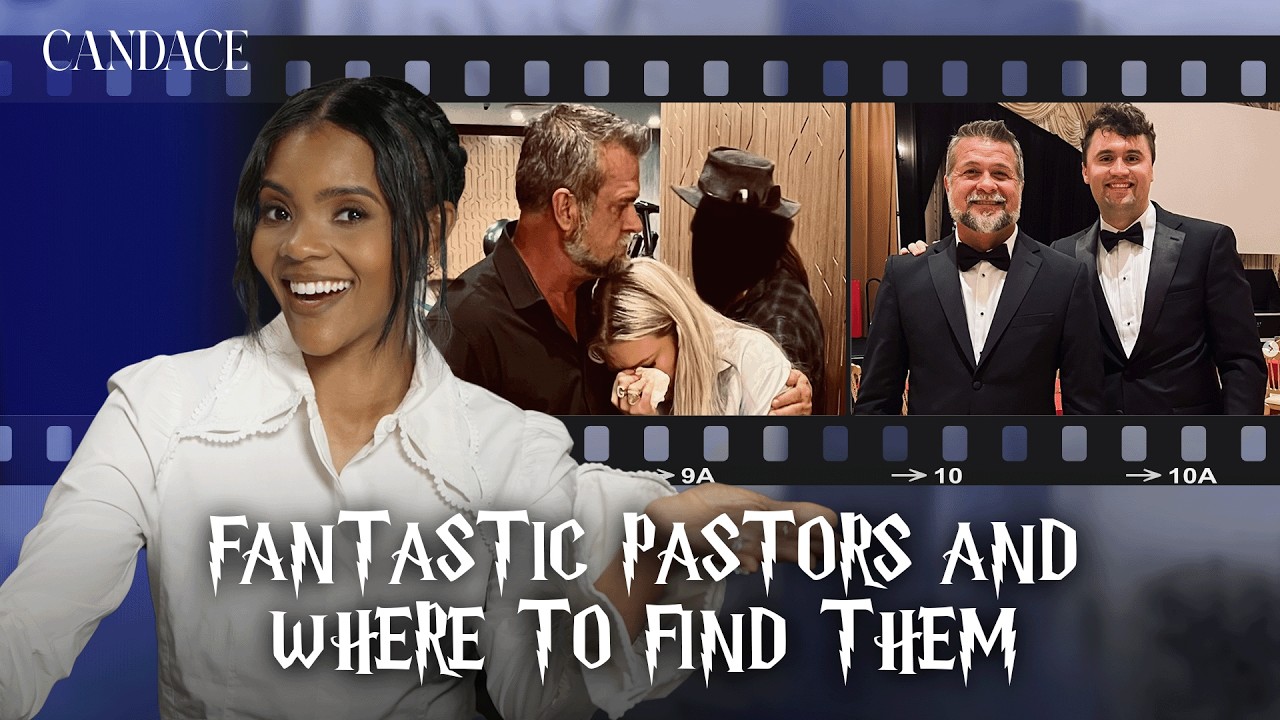
Candace Owens Confronts Victor Marx About His Background, Alleged Rescues, and Close Ties to Charlie Kirk and Erika Kirk
1:38:11

Candace Owens Investigates Charlie Kirk Assassination After Erika Kirk's Powerful Forgiveness Speech and Kash Patel Statement
1:00:21
Corby Hall Exposes Victor Marx's Disturbing Manipulation, Weapon Requests, and Spiritual Abuse Tactics
Corby Hall, owner of Fold AR and inventor of the world's most compact AR-15, shares his disturbing experience with pastor and humanitarian Victor Marx. What began as a promising partnership around school resource officer safety quickly devolved into bizarre spiritual rituals, requests for weapons to smuggle into Haiti, and psychological manipulation. Hall describes how Marx performed what he called "retooling prayers" that resembled exorcisms, commanded angels to dismember demons, and later requested 50 guns for an embargoed country. When Hall faced a mental health crisis under financial pressure, Marx allegedly joked about having him "disappeared to a banana plantation." This conversation with Candace Owens reveals unsettling patterns of how faith can be weaponized to manipulate, control, and cover potential criminal activity.
The Meeting That Started Everything
Corby Hall owns Fold AR, a small firearms manufacturing company in East Texas that holds the patent on the most compact AR-15 in the world. With a mission focused on equipping school resource officers, Hall spent nearly two decades perfecting his product. In late November 2023, his wife showed him Instagram posts from Victor Marx, who was demonstrating compact weapon systems. Marx, who presented himself as a pastor and humanitarian, appeared to be searching for the most versatile compact weapon platform available.
Hall's wife encouraged him to message Marx, and the response was immediate. Marx invited the couple to his home in Colorado Springs on December 1, 2023. When they arrived at the property, approximately four to five acres, there were 15 to 20 people present—family members, friends, and security personnel. Everyone seemed welcoming as Hall demonstrated his rifle system, pulling it from a backpack and teaching attendees how to deploy it in the dojo-style studio space.
After the indoor demonstration, the group moved to a 25-yard gun range at the back of the property. As Hall stood back by his vehicle, letting others shoot and photograph the weapon, Marx approached him with words that would mark the beginning of an increasingly troubling relationship.
The Compliments and the Vision
Marx told Hall something he had rarely heard in his years of operating a relatively invisible company in the firearms industry: "I don't really meet too many people that are at the pinnacle of their industry." For Hall, who had endured 17 years of work, lawsuits, failed marriages, and constant stress, this validation felt significant. Marx mentioned he was considering signature series partnerships with several companies, but said Hall's weapon was "the only one that makes sense."
The conversation touched on school resource officers—a topic that resonated with Hall's developing mission, though it wasn't formalized yet. As the day stretched into four or five hours and dusk approached, Marx invited Hall and his wife into the house. As Marx opened the door, he made an observation that struck Hall: Marx and his wife Eileen had noticed the unique connection between Hall and his girlfriend, how they finished each other's sentences and seemed unusually synchronized.
Marx told Hall he felt "the hand of God" on them, that he sensed "God's favor," and that they were "about to come into an abundance." Hall had heard similar predictions many times over the years from people who thought his business was about to explode. Something about this moment didn't sit well with him internally, but Marx already seemed to understand his product and his struggles, so Hall allowed himself to consider that maybe this time was different.
The Retooling Prayer Ritual
Sitting in the Marx living room, the conversation deepened. Marx and Eileen asked if Hall and his girlfriend were believers. They were—both had accepted Christ at age 16, another coincidence that seemed significant in the moment. When asked why they weren't married, Hall explained he'd been married twice before and didn't want marriage to ruin what they had. This led Marx to explain something Hall had never heard of: a "retooling prayer."
Hall grew up in church but wasn't heavily rooted in Scripture at that point. The term meant nothing to him, and he didn't recognize it as something to watch out for. Marx was asking Eileen questions about how the process worked, which struck Hall as odd—why would Marx need to ask his wife for guidance if this was something he regularly performed? But Hall was excited, exhausted from the long day, and convinced that someone finally understood his years of struggle. When Marx suggested performing this ritual prayer, Hall agreed.
The process took about 15 minutes for each person. Marx began with an opening prayer that lasted about 30 seconds, during which he established what he called a "circle of judgment" in the room—an imaginary spiritual perimeter around everyone present. Hall later found a 2021 podcast where Marx and Eileen described this exact process, and reviewing the transcript brought all the details flooding back.
The key theological framework Marx used was this: believers cannot be possessed by demons, according to Scripture, but they can have demons "assigned" or "attached" to them through continuous sin. Since Hall and his girlfriend were believers, Marx couldn't call this an exorcism. Instead, it was reframed as dealing with external demonic assignment rather than internal possession.
Commanding Angels to Dismember Demons
Marx instructed Hall to respond with the first thing that came to his mind when asked questions, without thinking or filtering. He asked how many demons were assigned to Hall. Hall said either two or three. Then Marx asked for the name of the first demon. Hall felt himself entering a trance-like state, staring at Marx without blinking, his eyes watering. He noticed he had stopped breathing—not from panic, but as if his body had simply suspended the function.
The first name that came to Hall's mind seemed absurd to him: "Belial." Hall said, "You're never going to believe what's popping in my head. I think it's something I've seen in a movie or something." Eileen reassured him that the name was "actually pretty common." With the demon now named, Marx proceeded to what Hall describes as the dramatic portion of the ritual.
Marx commanded angels to come down and grab the demon by the arms, forcing it to kneel before him. Hall's retelling of this moment is chilling: Victor Marx was claiming the authority not just to command demons, but to command angels themselves. Marx then asked Hall a series of questions: "What are the three lies this demon has been telling you?"
The first responses that came to Hall's mind were: "You're a fraud." "Your kids don't love you." "He'll never love you." Marx then asked what truth God was trying to tell Hall that the demon was blocking. The answers became the inverse: "You're not a fraud." "Your kids do love you." "She's sitting right there next to you and she's not going to leave you."
Hall had just revealed his deepest insecurities to people he had met hours earlier. These were fears about his self-worth, his children, and his romantic relationship—vulnerabilities he would not normally share. Marx now possessed the keys to manipulating Hall's emotional weak points. After extracting these confessions, Marx commanded angels to dismember the demon, cutting off its arms and legs before casting it away. The entire process then repeated for a second demon named Thomas, and then again with Hall's girlfriend.
The God-Ordained Mission
After the ritual prayers concluded, Marx said performing this practice drained his energy significantly. He and Eileen left the room, then returned with something remarkable to share: Eileen had experienced a dream or vision the night before. As Marx and Eileen told the story together, trading off details, they explained that this dream revealed their meeting was not coincidental but "God-ordained."
The vision supposedly indicated that Hall's rifle was meant for a mission to protect children—specifically, to equip school resource officers with the Fold AR. Additionally, the weapon would benefit All Things Possible teams going in and out of conflict zones to rescue women and children. It was a double mission: protecting students in schools and saving trafficked victims abroad. And remarkably, Eileen had supposedly seen all of this the night before they met.
Hall and his girlfriend went home believing they had experienced something spiritually significant. Hall got to work on the Victor Marx Signature Series, developing color schemes and selecting accessories. He had the rifles ready for Shot Show, the largest annual gun show in the country, held in Las Vegas in late January 2024.
The Las Vegas Wedding
About five days before Shot Show, Hall texted Marx to tell him he planned to propose to his girlfriend. He asked Marx, who presented himself as a pastor, to perform a quick 30-minute wedding ceremony while they were all in Vegas. Marx agreed. The ring Hall had ordered traveled through four continents and arrived at their Airbnb the day of the wedding. Hall was wearing jeans, work boots, and a button-up shirt. His girlfriend wore an inexpensive but beautiful dress they had rushed to purchase.
Hall had not technically proposed yet. He asked her to marry him while they were walking down a hallway at the event. She was his company's CEO and had been working with him for at least two years, doing what Hall describes as a "bang-up job." They went up to Marx's hotel room where industry friends attended and captured video and photos. The ceremony was simple and special, particularly meaningful for Hall's new wife who had followed Marx for many years and adored him.
After they read their vows and Marx appeared to officiate, they grabbed a marriage certificate from the courthouse to have Marx sign. Hall and his wife walked to the other side of the room to mingle with friends. Looking back, Hall saw Marx and Eileen talking in what appeared to be a concerned discussion. Hall already sensed what was happening: Marx didn't have certification to officiate weddings in Nevada.
When Hall asked about it, Marx confirmed he didn't have a license for Nevada. There was a space on the form for a license number. Hall told Marx to just sign it anyway—they would handle the legal filing back in Texas at their county office and keep this certificate as a keepsake. Marx reluctantly signed. In hindsight, Hall recognizes this as a red flag, though at the time the significance didn't fully register.
The School Mission That Never Materialized
Shot Show 2024 was memorable for Hall in ways previous shows had never been. He had attended every year since 2012 and typically hated the logistics, the walking, the hauling of equipment. But this year, with the Victor Marx partnership and the wedding, it felt different. People were shaking hands, meeting Marx, taking photos with the Fold AR Signature Series. It seemed like everything Hall had worked toward was finally coming together.
In March or April 2024, Sebastian Gorka reached out. Gorka, a gun enthusiast who had spoken with Hall multiple times via text, loved the Fold AR and wanted to feature the signature series on his show. Hall didn't want to appear on video but texted Marx suggesting he go on with Hall's wife to discuss the mission. Marx, who said he did media appearances regularly, agreed.
On Gorka's show, Marx laid out an ambitious vision: All Things Possible would make it their mission to put a Fold AR on the back of every school resource officer in the nation, starting with Texas. The plan was to establish a 501(c)(3) organization and collect donations to provide rifles to schools, particularly rural schools without immediate SWAT team access or adequate funding. Hall was surprised Marx had made such a public commitment without discussing it first, but he was on board. This was the mission.
Soon after, a local school district needed five rifles but didn't have the budget. The package—rifles, suppressors, backpacks, optics, and training equipment—cost between $13,000 and $15,000. Hall contacted Marx about getting All Things Possible to fund the purchase. Marx pushed back, saying he needed to run it through the ATP board, that they didn't know he was going to commit to this, and they were concerned about "the whole gun thing."
Hall's company wasn't producing thousands of rifles annually, so funding the build out of pocket was a significant financial hit. But they did it. Marx eventually sent a check, and the guns were delivered to the school district in summer 2024. The school loved them. Hall wanted Marx there for the photo opportunity, but Marx didn't come. This was the only school purchase All Things Possible ever funded. Hall's wife had created a detailed list of schools that met the criteria—schools that wanted the guns, would use them, and couldn't afford them or were in areas without quick first responder access. After summer 2024, there were no more attempts to fulfill the school resource officer mission.
The Request for the Long-Range Rifle
In August 2024, Marx sent Hall a message requesting a thousand-yard capable rifle with a scope and a camera attached to the scope. Hall already had the components and didn't need to purchase anything. Marx needed it delivered quickly. Hall built out the rifle with a Proof Research carbon fiber precision barrel worth approximately $1,100 and mounted a $5,000 scope he'd had for a while but wasn't using. He attached a camera to the scope as requested.
The initial text conversation had mentioned something about shooting watermelons at 1,000 yards. Hall thought Marx literally meant watermelons—perhaps for testing or demonstration purposes. When Hall delivered the rifle to Marx's Colorado property, the conversation shifted dramatically. In private, Marx told Hall he wanted to use the rifle to "blow the head off of somebody that sticks their head up over the fence" around an orphanage in Haiti.
Marx explained that the orphanage had people climbing over the fence trying to rob it or cause trouble. There was supposedly a watchtower in the middle of the property. Hall immediately told Marx he wouldn't leave the rifle if that was the intended use. Marx's plan was to shoot someone climbing the fence, capture it on the camera, and distribute the footage throughout Haiti as a deterrent—a propaganda video to stop future intrusions.
The conversation escalated. Marx told Hall he was planning to "go in and execute or capture" Jimmy Cherizier, known as "Barbecue," a powerful gang leader in Port-au-Prince who had brought Haiti to its knees. International media portrayed Barbecue as both a brutal gangster and a Robin Hood figure who organized food distribution in his territory while dismissing Haiti's transitional government efforts.
Hall had never heard of Jimmy Barbecue before this conversation. His response remained consistent: no. Hall redirected Marx back to the watermelon idea—just shoot a watermelon on the fence for the propaganda video instead of shooting a person. Marx seemed annoyed but reluctantly agreed that shooting a watermelon "wasn't a bad idea." Hall left the rifle with Marx, believing the issue was resolved, though he sensed Marx's irritation at being questioned.
The Request to Traffic 50 Guns to Haiti
In November 2024, Marx flew to Texas on a private plane provided by a couple he knew. Hall picked him up from the airport and brought him to the Fold AR facility for a tour. The visit lasted approximately four hours. Early on, when Hall and Marx were alone on the shop floor between machines, Marx brought up Haiti again.
Marx told Hall he needed 50 guns to "take and drop off in Haiti." Hall immediately informed Marx that Haiti was an embargoed country. By this point, Hall had exported firearms to many countries and understood the complex approval process. Haiti was not on the approved export list—in fact, it was probably the last place the U.S. government would authorize firearm exports.
Hall told Marx directly: "I can't do that. Haiti is like the last place they're going to let me export guns." He added that Marx shouldn't attempt to do this with firearms from any other manufacturer either, and advised him that he was suggesting Marx avoid potential legal violations. Hall assumed—perhaps naively, he now admits—that Marx simply didn't understand export laws, despite Marx's extensive history of high-risk humanitarian operations abroad.
Marx didn't provide details about who the 50 guns were for, only that they were for "protection of the orphanage." Hall had been told the property was 200 acres with a tall perimeter fence and a tower in the middle, but he didn't know how many children were there, who staffed it, or any operational details. The request to leave 50 firearms in an embargoed nation raised obvious legal red flags. Hall made his position explicit: "If you place an order for 50 guns with my wife next week, I can't sell you the guns because I already know now. Let's not talk about this anymore." Marx's response was simply, "Okay, I'll figure it out."
Financial Collapse and Mental Health Crisis
After Donald Trump was elected in November 2024, the firearms industry experienced what's known as the "Trump slump." When Republicans are elected, demand for firearms decreases significantly, forcing manufacturers to pivot quickly to survive. Hall's company didn't have the resources to make that pivot. Sales were declining rapidly, and the pressure was mounting.
Compounding the business stress, Hall was struggling with THC dependency. He had been using THC daily since 2020—gummies and vapes—as a way to manage anxiety without resorting to SSRI medications. As long as he moderated his use, it helped regulate his anxiety. But over time, he needed more and more, developing a functional dependency that was now interfering with his ability to make the sharp business decisions required to save his company.
The irony was cruel: Hall's wife had worked so hard as CEO that in 2025, Fold AR made the Inc. 5000 list as the 608th fastest-growing company in the country, the 60th fastest manufacturer, and the first in their region. Over the prior three years, they had increased revenue by 350 percent. The notification arrived just as Hall was panicking about how to keep the lights on.
Hall reached out to Marx and Marx's COO, Chaz, for support—both for help getting off THC so he could function at full capacity again, and for general mentorship during the crisis. The help never came. Looking back through the text message history, Hall now sees the communication pattern differently. Every message, every response, makes sense in a way it didn't at the time.
The Parking Lot and the Threat
At some point during this period—Hall doesn't remember exactly which month—he reached a breaking point. He found himself sitting in a Walmart parking lot, crying, in the middle of a suicide crisis. Years earlier, Hall had specifically shopped for a life insurance policy with a suicide allowance, and he was now considering using it to provide for his family after his death.
Hall texted Marx: "I'm in the parking lot of Walmart." He explained his situation and added something crucial: "God's telling me that if I do this, He's not going to take me." Even in crisis, Hall was telling Marx he wasn't going to go through with it because he believed it would result in spiritual consequences.
Marx's response was not a phone call. It was a text message: "Well, of course, don't do that. You know, the lawyers, they'll always find a loophole." The next message was even more disturbing: "Well, I can just have you disappeared. I can have you knocked off. I can have you knocked off or disappeared to a banana plantation in South America."
This was the man who had positioned himself as Hall's spiritual authority, who had married him, who had performed demonic deliverance rituals on him, who claimed to feel God's favor on his life. When Hall reached out in a mental health crisis, explicitly stating he would not harm himself because of his faith, Marx responded by joking—if it was a joke—about having him murdered or disappeared.
Hall emphasizes for the record that after studying Scripture extensively since this time period, he is not suicidal, will not kill himself, and is not having suicidal thoughts. He was having a low moment and looking for a friend or spiritual director. Marx's response revealed something far darker than mentorship.
The Final Meeting
The context surrounding Hall's final meeting with Marx in early April 2025 was multifaceted. There were ongoing issues between Hall and his wife. Marx had been providing what Hall viewed as mentorship on biblical matters and relationship issues throughout their entire association. The financial pressure from the Trump slump was intensifying. Hall's THC dependency was preventing him from executing the pivot his business desperately needed.
Hall drove to Colorado alone to meet with Marx one more time, hoping for guidance, support, or clarity on multiple fronts—his marriage, his substance use, his business struggles, and the increasingly confusing relationship with All Things Possible and the abandoned school mission. What happened in that final meeting, Hall has not yet fully disclosed in this conversation. But the totality of circumstances leading up to it painted a picture of a man who had been systematically manipulated, isolated, and exploited.
Patterns of Spiritual Manipulation
Candace Owens identifies multiple connecting themes throughout Hall's story that parallel her investigation into the circumstances surrounding Charlie Kirk's death and changes at Turning Point USA. The most prominent pattern is the weaponization of faith to manipulate and control.
Marx positioned himself as a spiritual authority figure—a pastor, though he has since publicly stated he is not a pastor. His website previously identified him as such. Marx's wife Eileen has a documented relationship with Erika Kirk, Charlie's widow. When Candace witnessed Charlie and Erika's first meeting, everything was framed as "godly," as "what God wants." Charlie fell quickly into believing this woman was divinely sent.
One of Erika's ex-boyfriends told Candace that Erika would claim to have visions or dreams about people close to him after he opened up about them. Specifically, after this ex-boyfriend mentioned his grandfather, Erika claimed the grandfather had visited her in a dream. This tactic establishes an immediate spiritual and emotional connection that feels profound and unique—exactly what Marx and Eileen did with Hall and his wife.
The pattern includes: immediate recognition of a "unique connection," claims of divine favor or calling, performing spiritually intimate rituals that extract deep vulnerabilities, and then using that information to maintain control and manipulate behavior. When Hall questioned Marx's requests or expressed concerns, he was made to feel he was questioning God's will or God's anointed representative.
The Unanswered Questions
Hall's story raises numerous troubling questions that remain unresolved. What was Marx actually planning to do with 50 firearms in Haiti? Who was he working with or for? What authority did he believe gave him the right to command angels and perform quasi-exorcisms on believers? Why did the school resource officer mission—publicly announced and supposedly divinely ordained—evaporate after a single purchase?
Most disturbing: Was the entire partnership designed from the beginning to gain access to firearms for purposes that had nothing to do with protecting American schoolchildren? The "retooling prayer" session happened at the first meeting, within hours of Hall arriving at Marx's property. The extraction of Hall's deepest insecurities, the establishment of spiritual authority, the claims of divine vision about their partnership—all of this preceded any significant business dealings.
Hall does not have answers to these questions. He knows what was said to him, what was requested of him, and what he observed. He knows he was manipulated through a combination of spiritual authority, emotional exploitation, and what he now recognizes as psychological abuse. He knows that when he was at his lowest point, the man he trusted as a spiritual father threatened him instead of helping him.
Why Hall Came Forward
Hall has no media following. He operates a small manufacturing company in rural East Texas and had no public platform before this conversation. Victor Marx, by contrast, has a significant following built on his reputation as a pastor, humanitarian, and child trafficking rescue operator. When Hall began asking questions or expressing concerns, Marx immediately went on the offensive, characterizing Hall as mentally unstable.
This is a common tactic: discredit the accuser by suggesting they are crazy. It's particularly effective when the accuser has admitted to substance abuse issues and a mental health crisis. But Hall chose to tell his story anyway because he recognizes patterns that extend beyond his personal experience. He sees how faith is being weaponized to cover potential criminal activity. He sees how spiritual authority is being claimed by people who use it for manipulation rather than ministry.
Hall acknowledges he made mistakes—trusting too quickly, sharing too much, not recognizing red flags that seem obvious in hindsight. He was vulnerable due to years of financial stress, relationship struggles, and the isolation of running a small business in a challenging industry. Marx appeared to offer understanding, validation, spiritual covering, and a mission that aligned with Hall's values. By the time Hall recognized what was happening, he was already emotionally, spiritually, and financially entangled.
The Broader Implications
Candace Owens frames Hall's experience within a larger investigation into how the media lies, how faith is manipulated to control masses, and how evil potentially hides behind pastoral authority. She sees the world before Charlie Kirk's death and after as representing a shift in tactics—an increase in gaslighting that makes people think they're crazy when nothing makes sense.
Hall's story illustrates how this operates on an individual level. A man works for 20 years to build a product and a company. Someone with spiritual authority and public credibility arrives offering validation, partnership, and divine purpose. Within hours, that person has extracted the target's deepest vulnerabilities through a spiritual ritual. Over months, requests escalate from legitimate business partnerships to legally questionable weapons trafficking. When the target resists or questions, they are isolated, threatened, and publicly discredited.
The through-line in these stories is not primarily about guns, or Haiti, or school resource officers. It's about how authority—whether pastoral, humanitarian, or media—can be weaponized by individuals who understand human psychology, spiritual hunger, and the isolation of people who feel unseen in their struggles. Hall felt seen by Marx. That feeling of being understood after years of invisibility made him vulnerable to manipulation that, from the outside, might seem obviously dangerous.
Hall's willingness to speak despite having no platform, despite Marx's following, and despite the personal cost demonstrates a recognition that silence protects predatory systems. His story may not provide all the answers about Victor Marx's activities, intentions, or connections. But it documents a clear pattern of spiritual abuse, psychological manipulation, and escalating requests that crossed legal and ethical boundaries. Whether other victims exist, whether Marx's operations in Haiti or elsewhere involved illegal activity, whether the All Things Possible organization functioned as described—these questions now demand investigation beyond Hall's personal testimony.
Video Transcript
All right, ladies and gentlemen, get locked in. I have a good one for you. I told you about this yesterday. There's a lot to unpack and I think it could provide a lot of answers to some lingering questions that we have. I am very honored to welcome Corby Hall, the Candace Owens Show. >> Well, all righty then. >> That's how you do it. that if you don't take the glasses off then no one's going to no one's going to believe you. People >> need the glasses >> so that people know you mean business. >> Aren't we waiting on somebody? >> No, we are not waiting on anybody. He's not coming. Victor does not want to sit across from you, which I thought Victor Marks it would be a good idea to have you all here because I can't contest anything he says. I am not the fold AR uh company and I did not have these conversations with him. Uh, but it's okay because I'm actually happy to have just you. I do think that if he was here, he would dominate the conversation. Um, everything that I learned about Victor Marks, I learned against my will. I want my audience I want to be very upfront about where I am at on this conversation, why I was so drawn to your story. Um, and why I believe they will be so drawn to your story. I think uh we are at a very interesting place in America where we know we are being sort of abused by the media. Um we know that they're lying to us about everything. There's for me the world before Charlie Kirk died and the world after Charlie Kirk died and it seems like there's been an increase in this sort of I don't know like tactic to uh make us think that we're the crazy ones when nothing is making sense. And when I read your story and learned about Victor Marx, there were so many themes that were coming up here. This idea of the pastor, this idea of you can't question this because the Lord has willed this. This is what we're all feeling right now, like faith has been used to manipulate the masses and actually to maybe cover up for evil. So, I want you to know that when we have this conversation, I will interject and put my opinion. As always, it does not need to become your opinion. Feel free to say, Candace, I don't believe that. That sounds crazy. That could be a conspiracy. Um or say, "I plead the fifth." You could just say that you want to stay mom. >> Yeah, sure. >> Um but I wanted to give you a chance because I know that Victor Marks has a following. You do not. And he has been instantly right out of the gate saying that you are a crazy person, which is one of their favorite tactics. Everybody who disagrees with me is an insane person. So, who actually are you? Corby Hall. >> Well, I own a company called Fold AR. I've got the patent on the most compact uh AR-15 in the world. And our mission is school resource officers. And uh so it's it's been a long journey. This isn't something that just popped up overnight. You know, this has been a 20-year journey for me. and uh you know we we've done really well in the market place for for the size of the company and and um the amount of resources that were available to us. You know I just got back from Ice Off. So that was the big you know you've you've kind of made it. Um jumping over that bar was was uh exhilarating to say the least. And that special forces operators from around the world. I I got to shake hands with a lot of IDF and and uh all other kind of special forces came out and shot my weapon systems and loved it. So, it was an honor. You know, this is Old AR. The brand itself has been here since 2018. >> Okay. >> And uh we're a small company out in the sticks, East Texas. And um just a few employees and we make a few thousand rifles a year. And uh yeah, it's uh you know, it's it's the most compact, but it's also a caliber swap. You know, push one pin, barrel system comes off, you can change your calibers, your barrel links, push the pin back in, and you're ready to go with another caliber. >> And we're we're not going to tell people back at home how you just had to slowly explain to me the very basic functions of a gun. We're not going to tell them that. >> No, let's not tell them. >> I knew everything. >> Yeah, he's knows it all. >> I know it all. So, I did just get a nice crash course. It It's a very interesting product. You could see um why you would have special forces interested in that product. And something that I think jumped at my audience in general when it came to the fold AR was the idea of a pastor. I know now he says he's not a pastor, but his website certainly did say he was a pastor at some point. Uh being interested in this product. So, I I'd just love to hear about how you met Victor Marx. Well, uh, late November of 23, my wife was showing me some of the Instagram post that he was making and he was demoing compact weapon systems and it was like it was kind of framed around, you know, Victor is looking for the most versatile compact weapon system that's out there that um, and I don't think he announced it as he was looking for a signature series at the time, But uh nonetheless, she had me message him and he responded right away and invited us up to his house in Colorado Springs. So we drove from East Texas to Colorado Springs on uh I think December the 1st and um >> what year? >> 23. >> Okay. >> Yeah. And so we got there and there was a there was quite a few people there. There was I think there was probably around 20 15 to 20 people there. some family, some friends, some security guys, >> and uh all really nice people. Everybody's really kind to us and uh we got to meet all of them individually and talk to all of them. Um, so we went into the Dojo house where it's like a karate mat and kind of wide open space and I was demonstrating it, you know, pulling it out of a backpack and deploying it and teaching some of the people that were there how to deploy it. >> This sounds like a pretty big property. >> It's not that big. Um I would say I would say like four to five acres maybe. >> Okay. So 5 acre property. Mhm. >> Okay. And but they're doing gun demos just in a studio where he does DOA did you say? >> Yeah. Yeah. So just a studio area >> at first. >> Okay. >> And so we we did that for an hour and it was disc mostly discussion of course and so we're not deploying it and shooting it at that point. But um you know >> any other people that were just people friends not in the industry whatsoever just like local friends of theirs. >> I don't know if they were all local. Um but nonetheless everybody treated it. Everybody was really nice. >> Okay. So, um, after that portion of it, we went out to the gun range, which was, uh, just a 25 yard range that's that was at the back of the property, and it had like tender framing around it, and it's kind of dug into the ground. So they got to shoot right there and deploy and and uh so everybody got their rounds and and we got pictures and uh my wife got to shoot the gun and with Victor and she was excited about that. Got some pictures and anyways I you know I kind of stay back like I don't put myself in the middle of everything and so I show everybody what to do. Make sure everybody's safe. We got you've got uh security type former military people there. Everybody knows how to shoot a gun. And so I'm just kind of sitting back at my vehicle which is parked at the back. And and uh Victor comes up to me. He's like first thing he said was you know not the first thing of the whole meeting but first first thing he said in this moment was you know I don't really meet too many people that are at the pinnacle of their industry. And to me, I don't take overt compliments very well. Um, that was really the first time that anybody significant had said anything like that to me cuz I'm still very small company, almost invisible in the industry, even though I'm well known in the in the industry, but in the general marketplace, kind of invisible. And so I When I heard that, I was like, "Okay, at least somebody gets it." Like, I'm not trying to get a badge of honor here. But that was that was nice to after 18 or 17 years of work at that point. >> Wow. And uh so he said, "Well, you know, I've got some signature series that I'm looking at with uh he named off a few different companies and you know, bigger companies." Like, "Yeah, but this one's the only one that makes sense." And for me, I already know what my weapon system is. So, validation doesn't really mean anything to me from other people, but um it was again a reaffirmation that somebody gets it. >> Mhm. And we had already had conversations, you know, back at the at the DOA house, whatever you call that, um, about our mission with going on the backs of school resource officers and and, uh, well, it wasn't our mission at that point in time, but it was brought up as a topic and and we had sold quite a few to school resource officers, but again, it wasn't it wasn't so much, you know, our our mission wasn't established until we left the Marxes and I'll walk you through that. So, when we walked in, well, so we get done with the shooting at the range and we've already at this point we've been there for like four or five hours. So they invite us into their house and it's uh it's getting dusk I suppose. Um, and you know, Victor opens the door and my wife goes in and as he's going in, he says, "You know, everybody has been talking and we've noticed too. Me and Eileen have noticed that, you know, you and your wife just have a like a unique connection that is unusual. Like you're finishing each other's sentences. you're talking to multiple people and like automatically know where the other one left off and you fill in the gap and and the way you look at each other and you know it just that was normal for us. Like we we're already 3 years into the relationship and we we had little thing where we called you know twin flames and and uh you know it was natural to us. And so we had this other thing, you know, 11-11 and not into all the angel numbers, but you know, that was our thing, our our unique connection. And, you know, he opens the door and he's and he's and he says, you know, I feel the hand of God on y'all or or God's favor. I feel God's favor on y'all. and y'all are about I I you know he's telling me that y'all are about to come into an abundance as we're walking into the house. And so, you know, having worked in on this for so long up to that point, there's been a lot of instances where people have told me like, "Oh, this is about to take off. You're about to make all this money and get all this attention so many times over the years." And so that was one of those moments where inside it didn't sit well with me hearing that. But on the outside it was like, okay, maybe this is it cuz he already understands. Like that's already clicked. So that started off the entry to the house. We go in, we sit down in the living room on the couch and um we're just having casual conversation and talking about the history of of what I've been through to make it this far and you know it's just getting deeper and deeper and you know they ask us about well first they're you know this is when they make the comment about the connection. you know, we're sitting there on the couch, makes the comment about me and my wife's connection and says, "Well, aren't y'all married? Well, y'all, first it's are y'all believers?" Like, yeah, yeah, we are believers. You know, I got another coincidence. You know, I accepted Christ when I was 16 and so did she. And so answered that question and and then it was then it was why aren't y'all married? Like well I've been married a couple times before or two and and it just wasn't a priority. You know we're we get along great and I don't want marriage to ruin that, right? but what we're not thinking scripturally about it. And so this led into, you know, we're this is hours worth of conversation. And um you know, this led into the Victor explaining what a retooling prayer is. And I had never heard that term before. And I grew up in a church. Um, but I wasn't I wasn't heavily rooted in scripture at that point in time. You know, we're talking December 23. Um, so it didn't it didn't click with me that that that was uh, you know, something to watch out for. >> I'm just, you know, I'm excited we're here. you know, this seems like it would it might be what I've been working for all this time and all the stress and the lawsuits and the marriages and and finally somebody understands. So, you know, hey, let's do a ritual in prayer. And and so he kind of explains it and and he's asking Eileen a lot of questions about the process. But to me it was like, well, why does he have to ask her how it goes, you know, from component to component of how this ritual prayer goes? But again, I just let it slide and and so we agree and uh it was started off with with me and this this whole process I think lasted maybe 15 minutes each. When you say it started with me and you also used the word ritual, uh what do you mean by that? >> Um well, the retooling prayer, he was going to do it on me first. >> Okay. >> And then and then um >> so one by one and he's going to retool what? >> A good question. >> Yeah. Okay. >> We'll figure that out then. >> Figure that out. >> Yeah. So, and of course I didn't memorize the whole process, but recently I looked back on uh there was a podcast that they did in 21, him and Eileen, where it described the process. You know, I I kind of forgot what the process was after this thing, but I looked back recently and, you know, it all started coming back. I was like, "Oh, yeah, he did exactly that." >> And uh transcribed it out. It was a podcast, verbal podcast, but had it transcribed out and got to look through it in detail, you know, piece by piece here just a few weeks ago, actually. And um so as I was reading through it, it was, "Oh yeah, he did that. He did that. He did that." And so the first part was an opening prayer. And I didn't memorize the whole opening prayer. It's like five or six sentences long, you know, 30 seconds worth of opening prayer and it's using name of Jesus and uh seemed seemed like a fairly straightforward prayer except and again I didn't notice all this stuff back then but except the whole circle of judgment. So there's an opening prayer and he establishes a circle of judgment in the room >> and um there's some other components to it but >> and who who was in the circle of judgment? Sorry to >> It was it was just an imaginary bubble sphere so to so to speak. >> That was just the terminology was >> so he's kind of setting up this imaginary perimeter. >> Yeah. Around around the whole room like all of us. >> Okay. I mean within the circle no one is judged or we will be doing some judging. That's what I mean. >> That's my question. >> Like you can tell me everything and no one's judging or like we are going to enter in some judgments. >> I think it was well looking back on on the transcript. >> Yeah. Which is helpful. >> It it's judgment on the assigned demons. >> Okay. So he's judging the demons that he assumes are in you, >> not in that's a >> yeah attached to >> attached to you. Okay, sorry. Yeah, correct anything. I'm I'm I've not been >> communication with a person who's doing retooling prayer. So, >> right. So, here's the trick. Um, believers can't be possessed by demons. That's scripture. And so when you have believers come come to this quasi exorcism, you can't call it an exorcism. So you have to reframe everything. So possession now becomes assignment. >> Okay? >> So they're not in you, but they're attached to you. >> Okay? So in you that's scriptural. >> A non-believer possessed >> inside you. A believer can't be possessed inside but can be attached the outside. And so if you've engaged in if you engage in a continuous sin like you have >> invited a demon to walk alongside you I suppose. >> Okay. Okay. I would have to consult a priest on that cuz I do think that there are definitely ways that you can get possessed by demons. Like there have been people I I don't know for sure. So I'm I'm going to So but that helps me understand I guess the context of how this is happening. So he's saying there are demons that are attached to you. I'm going to do this tooling prayer. May I ask what is his authority to do that prayer? >> Well um I don't know that answer and uh don't >> that's would be my first question. If someone's like I'm gonna like get these demons that are attached to you off of me. I'd be like, "Oh, are you a priest? Are you an exorcist? Are you >> Did he say to you, "I am a >> a pastor?" >> A pastor. Okay. So, he's taken that since just so you know, publicly he's no longer a pastor, but he definitively did. We checked out on his website that he was a pastor. >> Um, >> well, I think um I guess I won't represent this as something that I remember him saying, but I think he believes that he's anointed by God as some type of apostle. Okay. >> So, um in any case, so this attached assigned demon is going to get judged in this circle of judgment. And so he asked he asked the subject me, you know, I'm going to I'm going to ask you a series of questions and you're just going to respond. >> Mhm. Whatever the first thing that comes to your head, just just say it. Doesn't matter what it is. Don't think about it. Relax. Just say whatever the first thing that comes to your mind. And so he asked, he's commanding the demons at this point. And he asked, you know, what demon what is? Well, back up. He asked how many demons are assigned. and you just say a number. And so that's the instruction that he's given me. You know, I'm gonna ask how many demons are assigned to Corby. And I don't remember exa the number it was either two or three. And I just said the first number that came out um came to mind. And then he asked the name of the first one. So he was going to going to judge the first demon. He knows now I say a name and I said and this was this was recorded by the way and we were advised or suggested to record it. And so my wife did record and um so I said, "Oh, you're never going to believe what's popping in my head. I just I just think it's something I've seen in a movie or something. And Alen says, "Oh, well, you know that just just say whatever it is. It doesn't matter. Doesn't matter if it's they name off some whatever common names." And I said, "Well, visible." And Eileen says, "You know, that's actually pretty common." Like, "Oh, okay." Um so proceeding from there he names Victor names the demon by the name visible and um he commands angels to come down and grab this demon by the arms and make the demon kneel before him. So if you can imagine angels coming down, grabbing, forcing the demon to kneel before Victor. Just pausing here for dramatic effect because that is how I'm I am envisioning that Victor Marx then believes that he has the capability not just to command demons but to command angels. And that's what he's telling you. He He can >> Wow. That is Sorry for interrupting, but that is just that's the statement right there. >> Yeah. >> And also to be clear, I hadn't realized this. I thought when you said you guys went one by one that maybe Eileen's in another room, but you guys were all in the room together. This is a Yeah. >> Okay. >> Yeah. And she and Eileen is is still kind of reminding him of the of the steps. He knows what to say, but you know, it's just like, "Oh, no. You do this step first." And then he'd be like, "Oh, yeah." >> And which angel did he say? >> Didn't say. I don't remember him saying the names of the angels. Okay. >> Um, again, all recorded, so it'd be interesting to >> figure out which angel he believes he's commanding. Yeah. So, >> this is just, you know, this is a scary story to me. Like, I am like I don't even watch scary movies. So, like I it's like a movie right now in my head that I'm like I'm walking out of the theater right now. I'm just going like, okay. Like, I'm going to be honest with you. This is this is terrifying to me. like a a man that Yeah, that is that is something. >> But this is the guy who understands me >> and understands what I've been through and sees the value in what I'm doing. >> Mhm. >> They always come as your friends. >> Sorry, Charlie. >> Yeah, they always come as your friends. So this demon being held by two angels, he makes some commands. I don't remember what he said, but he commanded one of the angels to cut the arm off the demon. And then I I think commanded the other angel to cut off the other arm or a leg or something dismemberment of the demon. And um I you know I did you know I did skip I did skip a portion. So before that yes before all of that dramatic stuff there was another set of questions that was asked. So after the demon's name, the next question that was asked was, "What are the three lies that you've been telling Corby?" And so this is where I started to get in kind of a trance-like state and I was staring straight at Victor and I wasn't blinking my eyes. They're kind of watering up and uh stopped breathing not as a panic but just I noticed that I just wasn't breathing for for a few seconds. And so again, first thing that pops into your head and I said you're a fraud. And then what's the second lie that you're telling Corby and said your kids don't love you. And the third lie, he'll never love you. So that was uh the three lies. First things that popped in my head and uh so then after that set of questions was what is the one truth that God's trying to tell Corby that you're blocking from him hearing? And of course, it's you're not a fraud. Your kids do love you and she's sitting right there next to you and she's not going to leave you. So then the dramatics with the chopping the thing, the arms and the legs off and casting away and then onto the next demon. What's the next demon's name? And then the whole process started over. And each in each process is he chopping off the arm of the demon. >> Okay. Hindsight is 2020. >> Yeah. >> Right. Also not I I have the honor of sitting in this chair and I can like hear what's happening with what I just know about psychology and stuff and he you are telling him your deepest fears. That's it. Like there's nothing happening other than we're all self-conscious. We constantly in our head are are saying things. says, "Oh, this is not right." You know, we're we in our normal capacity, we're our own worst critics, and he's just commanded that out of you, and now now he knows your weak spots. >> Yep. >> Yeah. Now, he knows he and and you at the end of that, because you're you're doing this and these people are strangers, um you've instantly established an emotional connection with these people because you shared with them something that you would not just share to a person that you met, >> right? So he is um I would almost say he's uh he's trained in that. I don't think it he's uh being trained by a church in that. I'll tell you that. >> Right. Oh, I I know now. >> Because in just how the emotion of hearing that like and I instantly know this is like these are your deepest fears. That's it. Like we all have them. And you're talking about your kids. You're talking about does this woman love me? like I'm going into I think you said this is your third relationship, right? That's going to obviously be a fear. Um and he just now he's got the key. >> Maybe he was summoning demons. Maybe there was somebody in there that might have been uh a little possessed or attached. I don't I don't think it was you, but that's my opinion. It's my podcast. I can say my opinion whatever I want. can >> I can >> I am >> so um you know there was one more the the next name was Thomas and I don't remember what the the answers you know the three lies um or the answers were for that one but then the thing about it was it was like a compounding effect. So every time, this is where it got really interesting. Every time you would get done with a demon, he would re ask the question of now, how many demons now, you know, each time? And so after that second one, Thomas, I said zero. We're done. Um, no matter what number popped into my head, it was zero. Uh, so it was getting kind of weird at that point. I wanted it over with, but uh, moved on to my wife and I'll just leave that one alone. But, um, >> same process, same thing. >> Yeah. >> And what happened after? >> Well, I remember him saying that doing this practice like drains his energy. like he gets real worn out and almost like he's using up energy in this process and I remember that being something that stuck out. Um but after this whole process, so him and Eileen leave the room and you know, we've we've talked about my my brief story. You know, I I dove deeper than I ever have with anybody else already. Mhm. >> But they left the room and came back and told me about a dream or vision. And I don't remember which one it was, but it was a dream or a vision that Eileen had the night before. And they were both telling the story kind of him telling a piece and then her telling the piece. And it was that Eileen had had this dream or vision that um this was going to be related to a mission to protect kids and that it's, you know, just so coincidental. Well, not co coincidental at all, but God ordained that we met and that I'm bringing this rifle that is the best tool for the job on the backs of SRO's. And in addition to that, you know what I what I think to be partially true at least them going in and out of board zones, combat zones or conflict zones to rescue women and children and having these rifles on their backs will will uh benefit them. So double whammy schools protecting students and and saving women and children abroad. >> And God ordained it. What do you know? Just the night before. >> All right, you guys. You see the headlines, you read the stories, and then the impact shows up in your own numbers. Balances rising, and fees piling up, minimum payments are designed to stretch debt out for years. That's why you need to check out PDS Debt. Whether you're struggling with credit cards, personal loans, or medical bills, PDS Debt has custom options to help you get out of debt. They go beyond the numbers to understand your unique financial situation and to craft a personalized plan that's designed just for you. There is no minimum credit score required. They're here to help you save more, pay off your debt faster, and start putting money back where it belongs, which is in your pocket. PDS Debt is A+ rated by the Better Business Bureau. It boasts thousands of five-star reviews on Google, and it holds a five-star rating on Trust Pilot. Why? Because PDS debt has helped hundreds of thousands of people get out of debt. Every month you wait, it cost you more interest and fees. The best time to start was yesterday. The second best time is right now. When the numbers are clear, you should act. Take back control in 30 seconds. Get your free personalized assessment and the best option for you at pdsbet.com/candis. Again, that's pdsd.com/candis. All right, you guys. Right now, gold is giving people a second chance. Not because anything is wrong, but because markets move in cycles. Prices surge, they pause. They reset. When they do, smart investors pay attention. That's exactly what's happening right now. Gold pulled back after a strong run. And historically, moments like this don't last very long because the reasons to own gold still have not changed. Uncertainty is still here. Inflation hasn't disappeared. And paper assets, well, they can shift overnight. Gold is different because it's tangible. It's proven, and it has stood the test of time. That's why I continue to buy gold and why I recommend that you at least take a serious look. My partners at Goldco make it simple. They are highly trusted with thousands of five-star reviews and right now they're offering a 10% bonus in free gold on qualified orders. But understand this, when momentum returns, prices can move quickly and you don't want to be sitting on the sidelines wishing that you had acted sooner. So head to candace likesold.com for details. Again, that's candislikesold.com. I also want to tell you guys about balance of nature because you know those days when you just feel a little bit off. As a mom, I've had plenty of them. Between juggling work, family, and everything else, eating perfectly balanced meals every day just is not realistic. That's why I started paying attention to what might be missing from my nutrition. Balance of Nature makes it super simple. They use real whole food ingredients, fruits, and veggies taken through a special vacuum cold process to help preserve nutrients. Then, it's all powdered and put into an easy daily routine with no fillers or unnecessary additives. And here's the thing that I really love. those natural colors, the smells, and the flavors in fruits and vegetables. They come from phytonutrients, which is exactly what our bodies need more of. And if you've been curious, a great place to start is their whole health system. It includes fruit and veggies, plus fiber and spice supplements, 47 whole food ingredients in total. So whether you've been on the fence for a long time or it's the first time that you are hearing about them, I recommend that you go to balanceofnature.com and order the whole health system supplements as a preferred customer today. Again, that's balanceof nature.com. There's there are so many connecting themes here with just everything that I've been discussing on my podcast. Obviously, just investigating this Charlie Kirk story and that brings me back to this obvious relationship Eileen has with Erica. And this is very similar. You know, I was there when Charlie and her met and it's this, you know, godly. It's all everything is godly. It's all about this is what God wants. And this is like, you know, and how easily Charlie fell for that and believed that, okay, yeah, this this woman is just so so godly. And uh speaking to her exes, as I did, and one of them telling me that she would say she had like a vision or a dream of someone that he was close to after he had opened up that this person was close to him in his life, particularly this ex-boyfriend was speaking about his grandfather. And then she'd say that, "Oh, your grandfather visited me in a dream." So, it's again establishing that connection. There's there's a pattern here that I'm recognizing and I think it's like I said been one of the major connecting themes and just kind of looking into the story of sort of what changed at Turning Point USA and the direction that it went into. Um, I don't want to get ahead of myself there. Um, so you've done this, you've established this connection, you do believe to some degree that it must be godly. You've now handed them the keys to your deepest insecurities, right, about yourself. And I'm sure it felt in equal parts like cathartic, right, getting that out. You don't seem like the kind of person who runs up and talks a lot to people and says, "Hey, let me tell you my deepest, darkest secrets, >> right?" Um, >> I'm pretty open to people that I feel see me. >> Um, but in general, no, I'm pretty standoffish. >> Right. So, now the four of you are, you know, in this God vision, >> right, >> together. I'm obviously saying that tongue and cheek. What happens next? >> So, we go home. Uh, well, you know, I believe we had a hotel that we were staying in, but we left the next day. And, um, so this was again early December. So, I get to work on the signature series, the Victor Marks signature series. We run through a bunch of ideas on color schemes and features. You know, what is suppressor, what backpack, you know, all these how how is this rifle going to be presented? It's got to be nice. And so we we came up with something and it it was it was a pretty cool rifle. But um I had it ready for Shot Show. The Shot Show is the largest gun show in the in the country, probably the world, but in the country annual. It happens in Vegas every year and um sometimes late January, I think. Sometimes it happened in some years it happens late February, but this year, this year of 24 in January, it it happened in yeah, late January. So, we're communicating back and forth and you know this the color scheme and all the accessories have been picked and we built a few units to be able to present be able to give him a couple at the show and um you know he had his FFL to federal firearms license and so we transferred a couple to him at the show and had a few for um for our display in our booth. And uh yeah, well, backing up just a little bit, I I asked him well, I told him that uh you know, I'm I'm going to ask my then girlfriend to to marry me and uh in text before the show, like what maybe 5 days before the show and uh can't remember if he pro offered it or or if I asked him. I think I asked him, you know, hey, you going to be there, your pastor, you know, we let's let's get married. 30 minute ceremony, we'll be in and out quick. He's like, oh yeah, yeah, we'll do that. And uh so I had gotten a ring and it actually it had traveled through five different four different continents and arrived at our Airbnb in Vegas uh the the night of the or the day the day of the wedding and uh I was just dressed in like jeans and my work boots and just a button-up shirt and she had a had a pretty treat cheap easy dress that she got looked it looked beautiful but uh we we just like this was a rush job and I actually hadn't even asked her to marry me like oops wait so the day of the day of I asked her we were just walking down the hallway and uh by you know by the way she was my CEO of the company and she had been working there for at least 2 years by that point in time and just bang up job like she's she's good and um so anyways asked her to marry me that day we go up to Victor's hotel room we have some of our industry friends attend with us and they got video and pictures and it was super special for her because she just adored Victor and had followed him for many years and the the ceremony was perfect and simple and just it was it was nice. So, try not to get too sentimental here, but um you know, we we read each other's vows to each other. Victor was there. He officiated it. We had our marriage certificate that we ran into the courthouse and grabbed real quick and you know we got a picture of him signing it with us sitting down behind him and we once we got the photo op we walked to the other side of the room and just mingling with our friends and looking over and he's talking to Eileen and already know what's going on like he's not certified to do this in Nevada. I already know it. And so, and so they're just talking it back and forth and he's like trying to decide if he's going to sign it or not. And so I'm like, "Hey, is it just because we're in Nevada?" He's like, "Yeah, I don't I don't have license here because there's a block on the form where you're going to put your license number." >> And I was like, "Well, just it's fine. Just sign it. We'll go, you know, we'll go back to Texas and just do our county county deal after this, but we'll we'll keep this. Doesn't need a doesn't need a license on. We're not going to file it here anyways. So, no big deal, right?" um red flag. But >> does he have a license even in Colorado? >> I don't know. I don't know. So that was that was that. And um got done with shot show. It was a great event. Got a lot of videos, pictures. Everybody was shaking hands and meeting Victor and meeting us. And it was a it was a very nice shot show. And normally I hate going to I've been to Shot Show every since 2012. Hadn't missed a year and just absolutely hated it. Just all the walking and hauling stuff around and having to be here and there and unpacking stuff and the logistics is just nightmare. But >> this one was pretty memorable. >> This was this was nice. >> So things are are looking good. >> Mhm. What is when is the first time I guess you guys had any sort of a shift in that narrative? Like a just we're all on the same page. Here's what we're trying to do. Here's what our goal is. We've got your signature series. Good-looking gun. You're getting us married. When's the first time you had a hiccup? >> Well, I guess uh I'll get there. So I'll just So >> yeah, take me wherever you want. Don't you know we could I want to get the full story. He went on well, we had an opportunity pop up and I I believe it was I believe it was March or Aprilish and Sebastian Gorka um had me on once and um you know me and him had talked quite a few times and and text message based and um he he loved the gun, right? He's a gun guy. And so me and him kind of connected and and uh he said, "Okay, well, I'll see you guys signature series. Victor, been trying to get him on my show forever and you know, let's let's talk about this cool mission and let's get y'all on." So, I did not want to go on. Um I didn't want to be on video, can't you tell? And uh then I texted Victor. Hey Victor, Sebastian wants you to get on with him and talk about the full AR. You've been trying to get you out. You've been bugging me. Like just go on with the dude. My wife will be there to to support you through this. And Victor's like, "Yeah, I do this all the time. It ain't no problem." And tell us the genesis before we talk about Victor and the very exciting plans you have for this weapon. What is the genesis? How did you get this idea? Uh so our our inventor uh Corby he's my husband also but he uh came out with the product about seven years ago and um he came out with it because he was looking for a way to get the AR to be more compact and uh decided to take the barrel nut off and then when he figured that out he figured that you could also fold it and after a lot of testing and and a couple years of development you know he made this a possibility What is your mission now, Victor? >> Well, I'll tell you, everyone knows that time in a critical life and death situation makes the biggest difference. And this weapon platform, not only being an outstanding um high-end platform to shoot, it is absolutely the best product in order to engage a hostile threat in a school, bar none. Uh and again with it being carried in a backpack uh it keeps the level of anxiety down for students to watch. So we know this is a lifesaver and what we want to do is to be able to see every resource officer uh first starting in the state of Texas uh have one of these and then it's spreading throughout the United States so that our children will be made safe. >> So Victor goes on and they talk about the fold they are a little bit. I I think Sebastian asked her, you know, how did I think your lesser half, he's the inventor and you know, tell us how you came up with it and she spit off some stuff. It was good. But um then Victor came in and was talking about the all things possible mission and said that um you know we're going to make it a mission to get one of these full ARs on the back of every SRO in the nation starting with Texas. I was kind of oh I didn't think he was going to say that but yeah let's do this. And uh that idea was to set up a 501c3 and figure out how to get donations coming in for schools, particularly rural schools that don't have immediate access to SWAT teams or uh or funding and and let's get these get these moving. So that happened and it wasn't too long before we had a school that needed five and didn't have the budget for it. It was local to us. And uh we built them up and we talked to Victor about it to get that funded and there was kind of some push back and you know I got to run this through the ATP board. They didn't know that I was going to do that and they're kind of worry about the whole gun thing and I'm going, "Okay." Um, you do what you got to do, but I got five. >> Mhm. And it's and it's like I think it was either $13,000 or $15,000 and you know the suppressors and backpack and like optics and all the stuff on it that they need to just train and get ready and and go go deploy them. And so he he eventually did, you know, we we paid for them to build them up front. And uh you know, we're not making a lot of guns every year anyway, so funding that out of pocket is kind of a hit, but we did it. And um he he did send a check to us and uh we got the guns to to the high school or the ISD and they loved them. We got some photo ops. Victor didn't come for that, but we really wanted him to. And so that was we delivered those in in the summer of 24. And um that was the only that was the only one that Victor ATP purchased. And my wife had created this fairly long list of schools and they would fill out a template. You know, we want the guns, we will use them, and we don't have a budget for them andor we're located in a in a area where there's not a quick access to first responders. >> Mhm. And if they checked the boxes off and put it on their letter head and you know we would take it in and and have it ready for ATP and um yeah just never after summer of 24 there was no attempts for for >> school resource officers. >> Yeah. >> In that context. Yeah. >> Right. But there were requests for other guns. And so so moving forward into into August, y'all jump to August. Let's get into it. H. >> So, Victor messages me, says, "Hey, I need a thousand yard capable um rifle that has a scope on it and a camera attached to the scope." Like, okay, I I can put that together. I actually already have the components. I don't have to buy anything. and he needs me to deliver it to him pretty quickly and says it's he tells me that it's for Well, let let's just hold up there then. So, I build this thing out. It's got a proof research barrel on it. is a carbon fiber precision barrel. It's like $1,100 barrel uh and 223 16in barrel with I had like a $5,000 scope on it. Had had it for a while. So, I was just like, you know, he he'll make better use of it than me. >> You're just going to give him a $5,000 scope? >> Yeah. >> Okay. and with a camera attached to it. Like I literally had this already set up, >> but I wasn't using I hadn't used it in a while. So I take it up to Victor and um the conversation is we want I want to and this is with me and him privately. You know that's where you know the the meat of the conversations always come in. He wants to blow the head off of somebody that sticks their head up over the fence around this orphanage in Haiti. And they have a tower in the middle of it. Like some kind of watchtowwer because apparently there >> of the orphanage. >> Yeah. Of the orphanage. >> Okay. And you know, he's saying that people are jumping over the fence, climbing over and trying to rob or or whatever the orphanage. And so, you know, tell them, "Yeah, I'm not going to leave it here if that's what you're doing." And you know, we we had a conversation before about shooting watermelons, a previous conversation about shooting watermelons at 1,000 yards. But when I got there, you know, the conversation shifted. Now we're in person. And he wants to talk about shooting people. >> Shooting people. Yeah. And I just want to back this up. When he's initially, because we do have that message and we're going to show that message when you guys were initially having that conversation about shooting watermelons, like did you think he was talking about watermelons or do you think it could be code cuz you kind of know him a little bit now? Look, he's like, "Hey, I'm just wondering if we could or were you thinking like, no, he just really means like if we were to test it with the watermelon, like what was your thought process when you were first having the conversation via text about shooting watermelons from 1,000 yards? Did you did you think that there might have been some innuendo reading between the lines? You thought he was shooting straight because he had never made a weird request before this. So you were like he just wants to know if Okay. So then you're like >> he says let's have this conversation face to face. And when you say you meet up this is in Colorado. >> Yes. >> Okay. So that is does he have a place in Texas or are we always Colorado? >> Uh yeah we always met in Colorado at his house >> and just to get our timeline right. This is August of 2024. >> Correct. >> Okay. >> Mhm. So now you're face to face and he's like actually there's this orphanage and people are climbing over this fence in the orphanage and there's happens to be a tower in the middle and we just want to shoot these people. We want to protect this or orphanage. >> Yeah, >> because what are they doing at this orphanage? Presumably stealing orphans, trafficking children. >> I don't know. >> He didn't say that explicitly. Okay, >> fair enough. >> So I say, you know, I'm not going to leave this. This that's not what my rifle is for. I mean for military guy I will sell my rifles to military law enforcement and it's assumed that they may shoot people with them >> right but in this context of a >> mercenary type >> operation >> that doesn't have oversight no um >> and did you wonder why he was doing that at all cuz I mean I'm just he's a pastor he's doing a rout like I I have a priest if my priest was suddenly like hey Candace can I have some guns to go shoot an orphanage on mercenary mission. I'd be like, "Oh, this is a new side of you. Is he telling you like you've met armed forces guy at his property?" Like, what is your are you shocked at even the proposition of him doing this or does he kind of speak this way and tell you that he's connected and whatever? Like, how are you processing that request? Well, um I just simply said, "Yeah, I'm just not going to leave it here." >> You're not processing it. Just >> I'm not I'm not processing it. I'm just again I'm happy that I'm there in person now. We can talk about like I got this list of schools that are ready for guns. Um and you know there's that that bond has been established. Mhm. >> He is my author, you know, spiritual authority figure. >> I'm not to question, >> I am to do. >> And I was there to deliver. >> So, but you know, I told him, you know, well, why don't you just like we were talking about, eat the watermelon. Just do the watermelon. Like, oh, oh, okay. Well, like and and backing up. So, shooting the head off of a person transpired into Well, I'm going to go in and execute or capture Jimmy Barbecue. >> Okay. >> And the first time I've ever heard of this guy. I don't know who he is. I'm still like, "Yeah, no." Uh, again, back to the watermelons. He's like, "Yeah, you just I said just put the watermelon up on the fence. Shoot it. Get your propaganda video." That's what the whole thing was about was shooting somebody climbing over. Got it on camera. We can distribute it out in the Haiti land and they won't jump over anymore. Like, like I see the good intention behind it, but yeah. No. And then, you know, transition transitioned into a little bit more detail like maybe maybe if I tell him that it's to kill Jimmy Barbcue who is causing all the ruckus in Haiti anyways, then then he'll agree. >> Okay. So, I do want to just take the second now to just show a brief clip to my audience of the media context of who Jimmy Barbecue is. Some people do know do not follow politics, global politics and what we were told Jimmy barbecue is and was during this time frame August 2024. Take a listen. >> Jimmy Charizia, universally referred to here as Barbecue, is the head of one of the most powerful gangs in Porto Prince. But he's also the head of a gang consortium that's brought Haiti to its knees. Barbecue sees himself as a revolutionary for the people and he rails against corrupt politicians and oligarchs. He dismisses all the efforts underway here to form a transitional council that will govern Haiti. Inside his territory, despite the poverty, life is relatively peaceful and organized. Unlike in much of Porto Prince, cues for food barbecue gets brought in are orderly. Usually, it's chaos. But here, people wait knowing that there are enough supplies for the whole community. And this is a source of barbecue strength. To the outside world, he may be a gangster, but here he's a sort of Robin Hood. >> Okay. So, he's saying to you, I'm going to get this guy. I'm going to capture or I'm going to kill. You say, "Not with my weapon, actually." And let's talk about school resource officers. What happens next? Well, you know, right after the Jimmy barbecue, that's when I brought it back to the watermelons and he seemed to agree um kind of reluctant annoy in an annoyed manner like why are you questioning me? >> Maybe he was testing me. I don't know. I don't know what his intentions were. I just know what was said to me. So, I didn't have a concern at that point though because he's like, "Yeah, we we'll do the we could do the watermelon." No, it's not a bad idea. And so, uh, from there, I I left the gun with him. And um you know there was no discussion about schools or maybe maybe there was and it was just kind of like just nothing was yeah we're still on board with the mission but you know I'm dealing with this and that and I got this mission coming up and just never you know never went anywhere. So yeah, we we left and um then there was a I know there was another you know I skipped over a meeting I went in June. >> Mhm. >> That the June meeting is the one I don't really remember what I did. I know I went alone. Um but I don't remember. I didn't deliver anything as far as I remember, but um you know there was a June trip that I made and the August one I do remember specifically uh there was text messages surrounding it that that I was able to reference against. Um so then in November then he comes to Texas to my facility and um so the intent is that we're going to um tour the shop. He had a he had a couple fly him down on their private plane and I picked them up from the airport and we went to the shop and tooured the shop and um you know during that tour pretty early on you know he was there for probably four fourish hours and um you know when we at when we got alone on the shop floor in between the machines, he's like, "Hey, you know, I I still I still got this Haiti stuff going on and I need 50 guns uh to take and drop off in Haiti." And I said, "Well, you know, that that's a embargo country. So I I mean I've exported guns by this point to many different countries and I know the process and it's not easy every time anytime really. And I just knew that Haiti wasn't on that list on the approved export list. So, I was like, "No, I I can't do that one because like Haiti is like the last place they're going to let me export guns." Probably the last place. And so, I said, you know, I suggest you don't do that with any other firearms either. Just I'm assuming that he just doesn't know the export laws. >> Why am I assuming this? I don't know. But he's a high-risisk humanitarian abroad. He's been to all these other countries, done operations in hindsight 2020. Of course, he knew that you can't take guns and drop them off into Haiti. >> Um, did you, and I'm sorry to cut you off here, but I have a question about that. The other countries he had visited, did he ever give you again the context? Because I'm just going in my own point of reference. My priest was like, "Yeah, and I did these high-risk humanitarian things. What's your background? How are you getting on these missions? Who are you working for? Did he ever give you that context or just Okay. So, that might have been why I didn't really flag you that he was going to Haiti because it was kind of a part of something that you knew he had done or he says he has done in many other countries. >> Yeah. And then, you know, there was already the visit before that there was Haiti discussions and told me about the orphanage, told me about Demi Barbecue and the >> um you know, the gang violence that was around. So, I kind of knew the context already. It's just like, okay, well, you're I've already told you no once and then you're bringing me something that's even cuz you can I suppose if you have whatever license or approval, State Department or whatever kind of approval it is where you can go as a private citizen with your own gun and and get out, do your saying and keep your gun on you. I suppose that that's a legal thing. I I would have to research that, but it seems to be that that's a thing that is done commonly. >> Um but leaving guns, I know that's you can't do that. Not na. >> Yeah, I think that's called weapons trafficking, but I'm not positive. >> Yep. So, told him no. uh told him, you know, don't don't be going to some other manufacturer and getting 50 and I'm trying to look out for you, pops, listen to me. Um, so I also told them that um, you know, if you if you place an order for 50 guns with my wife next week, I'm not can't sell you the guns cuz I already know now. So like, let's not talk about this anymore. Like, okay, I'll figure it out. What did he say he wanted to do with the like who was he dropping those guns off for? He >> didn't tell me that. >> Okay. >> All I All I was told it was for protection of the orphanet. >> And you don't know what they're protecting? >> I don't I don't know any details about it other than I was told it was a 200 acre property. I don't know if that's true or not. Mhm. >> I was told that there is a tower in the middle of it and a a pretty tall fence around the perimeter of it. >> Okay. >> Wasn't told how many kids are there or who mans it. >> Mhm. >> Um yeah, just other than them needing a long range to make a propaganda video and then the 50 to do I'm not sure. Okay. >> What happens next? Well, that's not the most dramatic um or juicy portion of the story, but >> mind me because I'm I'm taking some notes on what you're saying, so I do have some questions I'm going to want to come back to, but go ahead. >> Yeah, no problem. Um, so there was not another meeting until the final meeting which was in um early April. >> Okay. >> And so the context around this meeting was multifaceted. >> Are we in Colorado? >> Yeah, in Colorado. and I would drive up there again and it was by myself. The context around this meeting was like I said multifaceted. It was issues between me and my spouse. It was we were talking about biblical things um relationship. I mean, he was he was mentoring me, what I viewed to be mentoring at the time, you know, during this whole relationship. And things were starting to pile up and in April, you know, so Trump got elected in November of 24 and um in the gun industry, we have what's called the Trump slump. Anytime a Republican is elected, then the demand for firearms goes down. So things get pretty tough. You have to pivot as a as a manufacturer to survive in that environment. And we didn't have the resources to pivot. >> And it was it was getting tough. Um yeah, actually I I forget, you know, we went to Shot Show again in January of 25. >> Mhm. And uh that that could have possibly been a February year, but I believe it was January 25. And you know, so it's our anniversary. You know, it it was pretty rough cuz uh sales were already going down. And um and just to be just to be honest, I was I was struggling with um substance abuse with with THC, >> smoking pot. >> Uh gummies or vapes? >> Okay. >> Yep. >> How often? Like just like kind of living high like >> No. Uh well, yeah, daily. But >> yeah, gummies. Popping gummies and >> Okay. Any other stronger substances? >> Yeah. >> Okay. >> Are you drinking too? >> No, not drinking. >> Okay. So, you're THC? >> Yeah. That's, you know, I'd done that since 2020. >> Mhm. I think you sent me a thing and like you and your wife both smoked pot. Like you were both THC users, so to speak. I guess we'll focus more on you, but I'm just saying that like this was something that was already known to the Markx family. I think Oh, yeah. That's what I'm asking morely. >> Yeah. >> Yeah. And uh you know, anxiety issues with the past. I didn't want to get on any SS SSRI or anything like that again. and and weed as long as I moderated it. It was it was uh it was a it was a pretty good um regulator of anxiety for me so long as I didn't go overboard with it. But it became, you know, one of those dependency things. You just got to have a little bit more, a little bit more, and then you get kind of dependent on it. And um but now I had needed to pivot you know 2024 the end of 2024 uh early 2025 we needed to pivot and I wasn't able to do it like I was functionally decline and you know they weren't the ATP thing wasn't helping >> you know the signature series we did sell some of them but it wasn't you know, it wasn't um just like skyrocketing business or anything. >> So, you now got the added like financial pressure, which is what causes >> Yeah. Yeah. Y >> Mhm. >> And so, and interestingly enough, with my wife's involvement, the prior 3 years, we made the Inc. 5000 list in 25. Although like it was just we got the notice in she had worked so hard on it and uh you know with her in the CEO P position we had increased our revenue by 350%. >> Wow. >> In the prior 3 years. So he earned608 position in the country and 60th fastest manufacturer and first in the region fastest growing company in the region while we're like oh man we're we're tanking fast. >> How are we going to keep the lights on? >> Yeah. >> Yeah. >> Yeah. So, um, yes, this is all this is all building up on me and and I'm again going back to Victor for and and one of his guys, Chaz, for any kind of support, you know, more so like help me figure out number one, I'm ready to get off of THC because I got to make this pivot and I've got to like bring my high functioning self back. >> Mhm. >> And there wasn't there wasn't any help there. You know, maybe a couple nudges here and there, but uh you know, and there's a there's a text message history that I've gone through recently, and it it makes sense now. Every all of it makes sense. But >> a text message chain between you and Victor >> and Chaz >> and Chaz who is just so my audience is aware Chaz is the his COO >> COO >> Victor marks the COO of all things possible. >> Right. Right. >> Okay. >> And what is it about that text chain that makes sense? Cuz I I you've mentioned it so I think we want to >> like in retro hindsight is 2020 but what what element makes sense? Like you're looking at this message you're going aha what? Well, there was a point in there and I don't remember which month it was, but um you know there I was in a suicide crisis >> for a moment and you know my message to the Victor was hey I'm I'm in the parking lot of Walmart and you know I had bought this life insurance policy like seven years prior and I shopped around for one that had a suicide allowance in it uh for that specific reason. >> Mhm. >> And um and I knew, you know, I was sitting in that parking lot. I was crying and and uh said, "God's telling me that if I do this, he's not going to take me." So, you know, Victor's response is, "Well, of course, don't do that. You know, the lawyers, they'll always find a loophole." Okay. And the next message is, "Well, I can just have you disappeared. I can have you knocked off. I can have you knocked off or disappeared to a banana plantation in South America. >> So, you're in the parking lot. You've said that you're going through the suicide crisis and that's what he comes back with. And this is supposed to be your minister, pastor, spiritual director. Um, wow. Also want to tell you guys about active skin repair because when it comes to my kids and family, I don't take chances with what goes on their skin. That's why active skin repair is the product that I always keep on hand. What makes active skin repair different is that it uses the same proprietary formulation that's trusted in hospitals. The key ingredient is a molecule that's called hypocchloric acid. When it's applied to the skin, the molecule works by mimicking the natural immune response to cleanse, soothe irritation, reduce inflammation, and support healing. Active Skin Repair can be used to treat a wide variety of skin issues, including cuts, scrapes, burns, sunburns, diaper rashes, acne, eczema, and other types of skin issues. It's also safe and non-toxic, making it suitable for use on all skin types, all parts of the body and face. Active Skin Repair is the product that I trust to help my family get back to doing what they love. So, if you're looking for something gentle, effective, and family safe, I highly recommend keeping Active Skin Repair in your home. To learn more and to get 20% off your order, visit activekinrepair.com and use code candace@ checkout. Again, that's activekinrepair.com with promo code candace at checkout. You can also find active skin repair on Amazon and at your local CVS. Also have to remind you guys about Tax Network USA because maybe you owe back taxes or you've not filed tax returns or you have filed every year but you still keep owing. Maybe you retired and suddenly you got hit with a tax bill that you didn't expect or you pulled money from your 401k or IRA early and now the IRS wants its share. However your tax issue started, the outcome is always the same. You feel like the balance is never going down. Penalties grow, interest compounds, and many of you are about to owe again for this upcoming tax year with no plan in place. Stop what you're doing and call Tax Network USA. With over 15 years in business, there hasn't been a tax case that they have not seen or resolved. They specialize in tax controversies and they help taxpayers nationwide get back on track by resolving back taxes and unfiled returns once and for all. So whether you owe $10,000 or $10 million, their team has resolved over $1 billion in tax debt. They're offering a free investigative call with the IRS. And after that investigation, they put a clear plan in place to resolve your tax problem and to get you back on track. So do not wait for another IRS letter or a frozen bank account. Instead, call 866-6861651 or visit tnusa.com/candis. Again, that's tnusa.com/candis. And the reason why I I'm encouraging you to talk about this is cuz he will use this against you. And I also just want to say to you like you shouldn't feel weird about that. That's the number one reason that men commit suicide. This is why men have a higher suicide rate than women. the financial pressure, the stress of finances is like there are going to be so many men watching this that can relate to that. Um, and so when you kind of keep that inside and like I'm sure like I feel ashamed, you know, like all that stuff. It's this is I feel like why he was able to manipulate you and why he's so like well he's got mental health issues and first off knowing that this man is supposed to be your spiritual spiritual director. Like mine's obviously my priest in London. I couldn't imagine my priests going on an Instagram live no matter what happens like you know if I leave the Catholic church and and I become the edye of the Catholic church there is something that is so violating about him coming out and saying like my like you're you're actually going to who you're supposed to go to right and obviously you're you're Protestant so you're thinking this guy is telling me he's a pastor he married me like this is the person when I am thinking I want to kill myself that I should be able to lock this into a box and he's going to talk me through this and remind me that financial pressure comes and goes like I remember being having $9 in my bank account and like sleeping in my car the feeling of that financial anxiety and what that can do it can be so crippling >> and he's just using that against you >> and with knowledge that that I was on THC I was very open about it and >> and asking for help >> for help. >> Um, >> so this becomes sort of this entry point of how he's just on the radio right now like, well, he's got mental health issues and well, you know, try being broke and trying to figure everything out and I think everybody develops a little bit of a mental health issue, >> right? >> So, I just wanted to just give you >> to know that that's not something that you he shouldn't have made you feel about that the way he made you feel about it. >> I guess in his mind he was joking, but looking back at the total totality of circumstances. There was it was something else going on there. And um >> he didn't call you. I mean, I would just think that like if somebody texted me and said, "Hey, I'm in a parking lot and like I'm thinking about killing myself." My instinct would be to call. >> Yeah. >> Not send a text. And and you know I just just go to say though that you know I was being told that you you can't do this because God won't take you. So, I'm telling him at the same time, these are thoughts going through my head, but I'm not going to do it because, you know, it's not it's not going to work out well for me, if you know what I mean. Um, but yeah, the response was he he didn't call and the response was looking back on it, it was manipulative. Uh now for the record after having studied scripture as much as I have since this time period forward um I'm not suicidal. Put that on the record. And I will not kill myself and I'm I'm not having suicidal thought. So clear that >> you were having a low moment. >> Yep. Yeah. >> And looking for a friend or a spiritual director. >> Yeah. >> A lot going on, you know, >> and and I'm off
Related Books
Browse Conservative Books






Comments
Be the first to comment on this video.