
Up Next

Frank Turek Addresses Charlie Kirk's Martyrdom and Why the Church Was Asleep While a 31-Year-Old Led Revival
1:07:39

Tucker Carlson Honors Charlie Kirk's Faith and Mission to Spread the Gospel Worldwide
1:38:26

Charlie Kirk Memorial Service at Brave Church: Celebrating a Life Devoted to Faith, Freedom, and the Next Generation
1:15:32
Frank Turek Speaks Days After Charlie Kirk Assassination: Faith, Evil, and the Legacy That Won't Be Silenced
Frank Turek addresses a Western Carolina University audience just days after witnessing the assassination of his close friend and mentee Charlie Kirk. Speaking through grief, Turek shares the final conversations he had with Charlie about the resurrection of Jesus and the importance of family, presenting footage from 36 hours before the shooting. What follows is a profound exploration of the problem of evil, free will, and God's goodness in the face of unspeakable tragedy. Turek confronts the question that haunts every believer who has prayed for protection only to watch it fail: Where was God when the bullet was fired?
A Walk and Two Conversations That Would Be Charlie Kirk's Last
Frank Turek stood before a packed auditorium at Western Carolina University, his voice steady but heavy with the weight of what he had witnessed just days before. He began by recounting a walk he took with Charlie Kirk on a Monday evening in Phoenix—the fourth time that summer they had met to prepare for the college tour. Charlie had asked him to come over around 8 p.m., and they walked together with a bodyguard, discussing the questions they faced on college campuses and how they could better serve students searching for answers.
During that hour and fifteen-minute walk, Charlie wanted to focus on two specific subjects. The first was the resurrection of Jesus Christ. As Turek explained to the audience, Charlie understood that Christianity rests on two foundational facts: that God exists, and that Jesus rose from the dead. They spent considerable time discussing the evidence, with Turek pointing out that all the sources about Jesus's resurrection were originally non-Christian—they were Jews who witnessed something they never thought possible. These were people who had abandoned their 1,500 to 2,000-year-old religion to declare that a man claimed to be God and rose from the dead, facing persecution, torture, and martyrdom for this testimony. They gained nothing from this claim—no sex, no money, no power—only suffering.
The second burden on Charlie's heart was the family. Turek asked the audience how many had been scarred by divorce, noting how families were breaking apart, how people no longer wanted to get married or have children. Charlie and Turek talked for at least half an hour about how to help people understand the beauty of marriage and covenant relationships with God at the center. These were the topics consuming Charlie's thoughts just 36 hours before he was killed.
Twenty Minutes Before a Martyr Was Made
Turek presented video footage from the event at Utah Valley University, taken just 20 minutes before the shooting. He emphasized that fascists don't invite their opponents to the front of the line to take the microphone—fascists kill their opponents. The person who pulled the trigger was the fascist, not Charlie Kirk. In the footage, Charlie speaks passionately about eternal judgment, about Jesus Christ being the only way to salvation, about the present-tense proclamation "He is risen" transcending time. He discusses marriage as the death of the bachelor mindset and the birth of manhood, the importance of prioritizing God and family over career, and the evidence for Christianity's truth claims.
Turek paused to tell the audience that he wasn't just saying this because Charlie had recently died, but that the 31-year-old man they saw on screen was the most accomplished and Christlike human being he had ever known. The video showed Charlie's final public moments, teaching about faith, family, resurrection, and the courage to stand for truth even in hostile environments.
The Moment Everything Changed
Turek then shared what happened as they approached Utah Valley University. Charlie had asked him to pray, and Turek prayed for effectiveness and safety. Walking in, Turek told Charlie he didn't like the place—there were too many buildings. He was standing 25 feet off Charlie's right elbow when he heard a pop and saw Charlie go back. His first thought was "no, no, no, no, no" because he had feared something like this might happen. He started to move toward Charlie but the security team was already there, so he ducked down expecting more shots.
Turek ended up in the car with Charlie, trying desperately to help. He couldn't go into all the details, but said that Charlie wasn't looking at him—he was looking right past him into eternity. Charlie was killed instantly. They performed CPR and mouth-to-mouth, but there was nothing anyone could do. At the hospital, Turek was yelling at everyone to help, demanding action even as one staff member asked him to stop yelling. When Erica Kirk arrived and saw her husband's body, she came downstairs and hugged Turek, telling him, "He loved you and he died doing what he loved." Minutes after viewing her husband's corpse, she was already talking about continuing his legacy.
If Evil Exists, Then God Exists
Turek acknowledged that evil is not just a problem for the head but for the heart, and that academic answers might not resonate when someone is in pain. But he insisted that the first step back to wholeness is understanding intellectually that when evil occurs, God had a reason for it, even if that reason is never discovered this side of eternity. He shared how Charlie had texted a mutual atheist friend who said he was starting to believe in Satan because of all the evil in the world. Charlie's response was four words: "If Satan, then God."
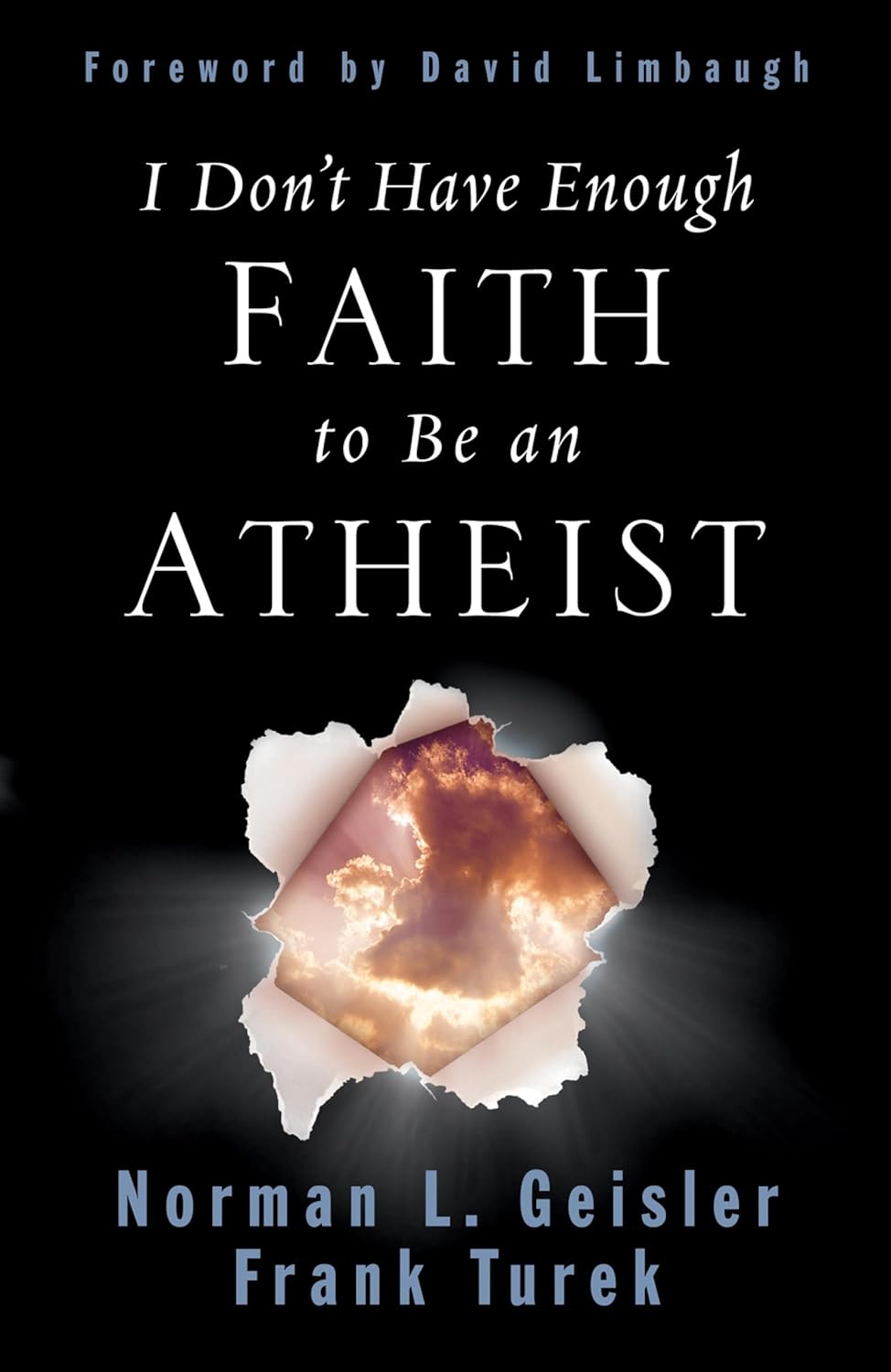
Turek then laid out his case. When examining whether God exists despite evil, the evidence must be weighed on both sides. The evidence for God includes the beginning of the universe, the fine-tuning of the universe, the information in DNA (a message 3.5 billion letters long in every cell), life itself, consciousness and free will, the ability to reason, the laws of nature, objective morality, Old Testament prophecy, and the resurrection. What is the evidence against God? The biggest argument is evil.
But Turek argued that evil does not disprove God. Quoting Charlie's insight—"If Satan, then God"—he explained that objective evil presupposes objective good, and objective good requires God. Otherwise, everything is just opinion. Without God, there are no rights, no objective morality, nothing that is ultimately right or wrong. Turek cited C.S. Lewis, who realized as an atheist that calling the universe unjust required a standard of justice. You cannot call a line crooked unless you know what a straight line is.
Evil is not a thing in itself but a lack in a good thing, a parasite on good. Evil is like cancer in a body or rust in a car—remove the evil and you have something better, but remove the good and evil cannot exist on its own. Shadows prove sunshine; you can have sunshine without shadows, but you cannot have shadows without sunshine. Similarly, you can have good without evil, but you cannot have evil without good. Therefore, if evil exists—and everyone knows it does—then God must exist. The murder of Charlie Kirk was evil, which meant God must exist. Instead of being evidence against God, evil is actually evidence for God.
The Purpose of Evil and the Cost of Freedom
Turek then addressed the question of why God allows evil to continue. He recalled being at Michigan State University where an atheist asked why God doesn't stop all evil. Turek's response: "Maybe because if He did, He might start with you and me." When people complain about evil, they always complain about somebody else—never asking God to stop themselves. If God were to stop all evil at midnight, would any of us still be alive at 12:01?
He showed a short video explaining that God cannot do what is logically impossible. If God created humans to be free, they cannot be forced to obey, because freedom without choice is a logical contradiction like a square circle. God wanted real people, not robots. The first humans abused their freedom, and the consequences of bad choices ripple across the world. God is responsible for the fact of freedom, but humans are responsible for their acts of freedom. Evil exists because we have free will, which is the only way love and moral choices could exist.
About six months before the shooting, Turek had texted Charlie urging him to increase his security detail. Charlie responded, "Oh, I have. They want me dead." Charlie knew he was a target, yet he continued his work. At the hospital, when the doctor told 23-year-old chief of staff Mikey McCoy to call Erica, McCoy had already done so and sent a plane for her. Despite having just witnessed his friend and boss murdered before his eyes, McCoy remained remarkably composed. The shooter thought he would end Charlie Kirk's legacy, but Turek declared he had only poured gasoline on it.
God's Solution: Love That Doesn't Force
During the Q&A session, Turek addressed questions about capital punishment, heaven and hell, and God's relationship with Israel. When asked about ensuring justice for Charlie, Turek affirmed that capital punishment is prescribed in the Bible for certain crimes, citing Romans 13 where Paul says the ruler does not bear the sword for nothing. Government's essential purpose is to protect innocent people from evil by punishing wrongdoers. But he also urged prayer for the shooter's soul, noting that even murderers can go to heaven because salvation is by grace, not works.
On the question of hell and loved ones who reject God, Turek explained that hell is separation from God, and that God is too loving to force people into heaven against their will. Many assume everyone wants to go to heaven, but people have been running from Jesus their entire lives. What would God do in the afterlife—force them into His presence? That wouldn't be loving. Love by definition must be freely given. God sends us creation, conscience, Christ, and the Bible. If people keep rejecting Him, God gives them up to their own desires. As C.S. Lewis wrote, in the end there are only two kinds of people: those who say to God "Thy will be done," and those to whom God says "Thy will be done."
Turek emphasized that love does not mean approval. Every parent knows this—you cannot approve of everything your children want to do and still claim to be loving. Love always protects and does not rejoice in wrongdoing but rejoices in truth. The shooter called Charlie a "hater" for not agreeing with him, then decided to kill him. But Charlie was putting himself in harm's way out of love, trying to show people what God wanted for them so they could flourish. As Thomas Sowell said, when you want to help someone, you tell them the truth; when you want to help yourself, you tell them what they want to hear.
A Legacy That Cannot Be Killed
When asked how Charlie wanted to be remembered, Turek recalled that about six months earlier, Charlie had said he wanted to be remembered for his faith and for having courage for that faith. Turek's response: "Mission accomplished." Erica Kirk exemplified the strength that would carry that legacy forward. At the hospital, minutes after seeing her husband's body, she was already looking ahead, telling Turek that Charlie died doing what he loved and that she wanted to keep his legacy going. Turek's wife, who is not easily impressed, visited the Turning Point USA facilities and met Charlie shortly before the tragedy. She was effusive about how much Charlie's team loved him and how enthusiastic they were about their work.
The ultimate solution to evil, Turek explained, is not that God takes away free will, but that He quarantines evil in a place called hell. You still have free will in hell, but you cannot hurt anyone in heaven. There are two destinations in the afterlife, and God is not going to force anyone into His presence against their will. The briefest summary of the Bible Turek ever heard: God created it. We broke it. Jesus fixed it. Jesus would not have had to come to earth if humans had never sinned, but He came to give His life as a ransom for many. Christianity itself is the answer to the problem of evil. As Tolkien wrote in The Lord of the Rings, "One day everything sad will become untrue."
Turek closed by noting that he didn't know why God allowed Charlie to be killed, but he knew why he didn't know why—because he is finite and God is infinite. He knows very little about the past and present, and nothing about the future. But God knows everything and can redeem everything. The team at Turning Point USA, the widow who will not be denied, and everyone who witnessed this tragedy are ready to continue and expand Charlie's legacy. The event that occurred one week ago may prove to be something that changes more lives in America than anything in a long time, hopefully for good. The Lord will prevail, and the goal remains the same: to make heaven crowded.
Video Transcript
How many? Keep talking awkwardly amongst yourselves. Good evening, ladies and gentlemen. Welcome to Western Carolina and the Rasho Christi and Bridge Church uh presentation of Frank Turk doing his talk on if evil if God why evil which will be done in a different format tonight. Uh Frank will be speaking shorter about 20 minutes or so and then doing longer Q&A tonight. He wants to minister to you all in the congre in the crowd and uh also hear any hurts, needs, concerns, questions, objections that are out there. We want this to be a respectful event uh as we go through his presentation in the Q&A. You're welcome to agree or disagree. We just ask that you do so respectfully. And if you start pushing it, you will be somebody will intervene. If you do push it even more, somebody else will intervene. And on the third try, security will escort you out. So, but we think everybody in here will be uh a good participant and a good friend in everything. I'm Mike Armiststead. I'm the chapter director for Rasho Christi, a Christian apologetics ministry here at Western Carolina University. We're at about 100 schools across the country and in the Philippines, in South Africa, and Pakistan and other places internationally. And we do Christian apologetics, defending the Christian faith. And our club was started four years ago and has really grown and we have great student leaders. It's a student club. I'm just there to help along. Rick Sime is our assistant chapter director over here. Wave Rick in the black hat. And we have a table in the back with information about our club. We're recognized student organization and this is a sanctioned university event. There was some question about that early, but this has all been approved. And we appreciate Jeff Hughes and uh his staff with campus activities and the UC crew uh for being gracious hosts and allowing us to use their facilities and helping us along. Not everybody got in, so you're the lucky folks. There about 30 or 40 people out there that uh weren't able to get a seat tonight, but they can live stream it. And this is being live streamed. So uh you can also go back and view it at a later point in time. So if you get up and ask a question later on, you will be on the internet and you will be preserved for posterity. So ask good questions uh as you do that tonight. So and you are free to disagree with what is presented tonight. Uh we are trying to work through lots of heavy issues together and Frank is our guide for that this evening. Now Aydah Shelton here uh from Winston Salem is our chapter president. I'm going to let her say a few words. Hey guys. Yeah, I'm Aydah. I'm the president of Rasho Christie this year. Really just want to thank you guys all for being here, for spending your evening with us. Um, yeah, we're Rashio Christie, which is Latin for Reasons for Christ. We are not politically affiliated group, but we're an apologetics group on campus. We meet every Thursdays at 4:30. We have a topic each week, and we just have a apologetics topic that we go over. Um, we have discussions. We have people from all backgrounds, all religions, all beliefs who come and join us. And so if you guys want, we have a QR code back there for our group me. If you guys would be interested in coming to a meeting, you're more than welcome to. >> Thanks. Um, want to ask our chapter officers to stand for just a second. Uh, these are the students who have taken leadership roles in our club and we appreciate the hard work that they've put together promoting and advertising. [Applause] Uh, we also have some of Frank's staff here. I'd like to ask the cross-examine staff to stand up. Clint's in the middle running all the video. And, uh, all other cross-examined staff to please stand up. [Applause] Keith Mackie, event coordinator for Frank, is on the very back row back there with her husband Paul. They had car trouble getting here, but God got them here. if they need a ride home, we'll see if we need to arrange that. Um, we are all grieved over the events of last week of which Frank will be referring to uh with the assassination of Charlie Kirk. I was asked to announce that there is a vigil uh this Saturday from 10:00 a.m. to 12 p uh 12 noon uh at Bridge Park in Silva if anybody would like to come to that event. I was asked to announce that. Also, the Bridge Church is the co-sponsor tonight. Uh Josh Hyde, the pastor is here. Where's Josh? Okay, he's on the back row back there. He must have some Baptist blood in him being on the back row back there. But we appreciate the Bridge Church. They invite you to join them. They meet at Koe Valley Elementary School at 9 and 11. Okay, you can join them. And there are many other good churches here. And I want to say a word of thanks to the other Christian fellowships here on campus uh that have come together. Campus Outreach, RUF, The Rock, uh, Gateway Church, uh, Orchard Church, everybody out there. We got a lot of great Christian groups on campus. Rash Christ's mission is to supplement all those groups. Uh, we do a special thing. Uh, we're not a prayer and praise group. We get into topics and the data behind the faith. And so, we welcome Christians, non-Christians, uh, people in between to come to our meetings and get into dialogue with us. We want to teach them and show them that there are valid rational reasons for fight following Jesus Christ as your Lord and Savior. Frank will present some of those tonight and we ask invite you to come and join with us on a weekly basis. You also see us out with our canopy tableabling on Mondays usually, sometimes on Tuesdays. You're welcome to come up. We've got our whiteboard back there that we have a qu poll question every week to engage students with uh about their opinions about spiritual and theological and other issues. And so we have a good time doing that and we that's how we promote our group and that's how we promoted this event. We handed out over a thousand flyers to students over the last couple of weeks. So I want to say thanks to my crew. I'm very proud of what y'all have done to promote this and obviously we filled up the hall and could have even more here uh if we had more room. So but uh I think that's kind of it for the night. Frank, you ready to roll? I'd like to invite Frank up here. We've had prayer with him before, but I'd like to start with a prayer with him for the whole group. Heavenly Father, we ask your blessings upon Frank as he's recovering from a tragic event last week with a dear friend. Uh use him and speak through him. Help him to minister to us. Help us to minister to him. Let your spirit flow through all. Uh draw us together in a sense of your love and peace and community. And let the peace of Christ that passes all understanding rule in our hearts and minds today. It's in Jesus name we pray. Amen. >> Amen. Take it away, Frank. >> Good evening, everyone. Last Monday night, Charlie said, Frank, can you come over about 8? Want to go on a walk? Whenever I was in Phoenix, we'd go on walks, long walks with a bodyguard and we would talk about issues that we both face on a college campus, questions that we get. How can we improve ourselves so we can serve people that have questions? Because everybody has questions and nobody has all the answers. So Charlie being the brilliant young man that he was had several mentors in his life and I was privileged to be one of them. So on that night, this was the fourth time this summer I was in Phoenix with him to prepare for the college tour. He wanted to talk about two main subjects on our walk. The first was the resurrection of Jesus of Nazareth. Because as he and I talked about many times before, there's only two facts that you need to establish to show that Christianity is true. One is is that God exists and number two is that Jesus rose from the dead. Because if those two facts are true, it's easy to show that Christianity is true and the Bible is true and we ought to orient our lives according to it. So, we spent quite a bit of time talking about the evidence for the resurrection, pointing out that, you know, you always hear people say, "Do you have any non-Christian sources to tell us what happened to Jesus?" Ladies and gentlemen, I have news for you. They're all non-Christian sources. There were no Christians. The people that wrote the New Testament were Jews who had witnessed something they didn't think could happen. That a man could claim to be God and then rise from the dead. Those were two things they didn't have in their belief system. Claiming to be God would be blasphemy. They knew we'd all rise from the dead at the end of time, but they didn't think one guy would rise from the dead in the middle of time. Why would these Jews suddenly overturn their 1,500 to 2,000year-old religion and say a man claimed to be God and rose from the dead? If it didn't happen, what did they get for saying Jesus claimed to be God and rose from the dead? They got kicked out of the synagogue and then they got beaten, tortured, and killed. They got martyed. You think they did this on a whim? You think they just made this up? For what reason? They didn't get the big three. What are the big three? The big three that we all are tempted by. The big three reasons. The big three motivators that cause us to sin or influence us to sin. They didn't get sex. They didn't get money. They didn't get power. Instead of getting power, they got persecuted. They got martyed. So, we talked a lot about the resurrection. And then one of the biggest burdens on Charlie's heart is the family. Can I ask you guys a question in here? How many people in here have been scarred by divorce? The family's broken up. People don't even want to get married anymore. People don't want to have kids anymore. people just want to live for them. Instead of theology, it's all meology. And Charlie had a burden for that. And we talked for at least a half an hour out of this hour and 15 minute walk on how can we help people understand the beauty of marriage? How can we help people realize that when you are in a covenant relationship with somebody else and God is at the center, that's what you were made for. That's how society goes on. That's how society is civilized through marriage. And so what I asked our team to do is to put together a short video of Charlie talking about those two issues, the two issues that were on his heart 36 hours before he was murdered. And I'm going to show you that video right now. By the way, here we are 20 minutes before Charlie was martyed because you know Charlie they say was a fascist. Ladies and gentlemen, fascists don't tell people who disagree with them to come to the front of the line here. Take the microphone. Fascists kill their opponents. The guy who pulled the trigger was a fascist. So, here is, by the way, I'm not just saying this because he just died, but that 31-year-old man you see behind me was the most accomplished and Christlike human being I have ever met and was privileged to know. Here he is. [Music] >> What would you actually want to tell me if I have 30 seconds left to live? >> Um, boy, you got 30 seconds. In 30 seconds, you're about to meet eternal judgment. And there's only one way that you can get bailed out of that. It's not all the good things you did or the moral scorecard. It's whether or not you have Jesus Christ as your Lord and Savior. And that's the only thing that's going to matter. And so you got 10 seconds left. You're dying from a gunshot wound. And you ask the question, who is Jesus Christ? And the answer to that singular question, who is Jesus Christ? Is the most important question for everyone in the audience? Not how much money you have, not how much good stuff you do. It is who is Jesus Christ? You might say, "Oh, Jesus was, you know, a teller of good tales or Jesus was a good person or Jesus was a historical figure." None of that's going to cut it. It's whether or not you repent and you ask Christ to come in as your Lord and Savior. That's the only thing that will save you from eternal damnation. >> He is risen. >> He is risen indeed. Bill, >> why do we say that in the present tense? >> He >> because it is a it is a constant truth in our life. >> He is risen. I always noticed that that that was interesting to me that it was >> that's a really important question actually. >> It is. Totally. >> Well, because the fact that he has risen transcends time. It's not just in the present sense. It's that of all time that promise is accessible to all of us. And so it's a proclamation to all people. Cuz if you said a he was risen, it's like it's just merely a historical event. It almost underplays the metaphysics of it. There's a reason why the dress for the man is the same at a wedding and a funeral because you're saying goodbye to your previous self. The woman is the the icon, the symbol of beauty, almost always in all white, right? Ascendant. The man is usually in black and white like he's attending somebody's death because it is his death. No, but think about it. It's the death of the bachelor mindset. It's the death of promiscuity. It's the death of the wandering eye. It's the death of immoral behavior. It's the death of texting girls casually. It's the death of I get to do what I want to do. It's the death of just going to the bar with friends. It's the death of acting like an infant. It's the death of playing video games till 1:00 a.m. And it's the birth of a man. >> Number one, you're right. God must always come first from your spiritual disciplines. Honor the Sabbaths and turn off your phone for one day a week. Go to a church, a good Bible-based church. We have many of the pastors here that teach the word of God verse by verse. And also understand that it's external things of the flesh like alcohol or porn or drugs or other temptations that will take down your marriage. You as the husband must constantly be at guard of things and also over shopping, overindulgence, too much credit cards, idolatry of vacations. You must guard the family from those things seeping in. So understand the order. It's God and then the marriage. And those things will bless your marriage from the devil who tries to undermine it and usurp your holy union. [Music] the best. >> That is the best. >> Which one matters more? Uh, great family or great career? >> Family. >> Great family. You should want to meet your future husband that will be able to make enough money that you can quit. >> Okay, >> that would be my advice. My number one thing I'm obsessed about. I want to live in a country where if a woman does not want to go to work having to have a kid, she does not have to go to work and she can stay at home and raise those kids. Are you a Christian by any chance? >> Yeah, very, very much so. >> Like, why is that exactly? >> Oh, Jesus saved my life. I'm a sinner. Gave my life to Christ. Most important decision I ever made. >> So, you believe the Bible is real? >> Yes, I believe the Bible is true and real. >> Why is that? >> Well, I could give you the technical answer. There's never been an archaeological discovery that has contradicted the truth of the Bible. And then, of course, the wisdom. There's not a truth of the Bible that if you apply to your life, your life does not improve dramatically. And then finally, uh, we have the most accurate and transparent historically robust account that one can have of the most important figure ever to live in the history of the world, Jesus of Nazareth. And the resurrection is the is the pinpoint of my belief that Jesus did rise from the grave so that we may live. >> What makes Christian mythology real? >> So that's not mythology, but that is theology. If Genesis 1:1 and the resurrection is true, anything in the Bible is possible. You're looking at the greatest miracle. The greatest miracle is creation. And then the fact that Jesus rose from the dead. I say, "How do you know that Jesus rose from the dead?" Well, show me another historical piece of a story where so many people willingly died a brutal death for a lie. Every single person around him had everything to lose and yet they went to the absolute death from Paul to Peter to the halfbrother of James saying that Jesus is Lord. Jesus rose from the dead. Not to mention, if you were going to fake a story, you would not use female witnesses in the ancient world. In the scriptures, it said that the fe the women were the first one to see Jesus Christ. If you're trying to fake a story, you would never do that. Not to mention the 500 people that saw Jesus after he rose from the dead. And then the later church that lived under persecution under the belief that Jesus Christ was the son of God. >> I love you. >> I love you, too. [Music] >> Gig, you don't just get to get everything you want. >> Okay. Well, you have to be on very good behavior to get such a thing like this. Okay, hold on. Hold on. >> You have to behave well. >> Did you earn it? >> Yeah, >> I know. But what did you do for it? Have you been a good girl? >> Yes. [Music] >> Okay, I'll get it for you. [Music] If everything completely goes away, how do you want to be remembered? >> If I die, everything just goes away. How would you If you could be associated with one thing, how would you want to be remembered? >> I want to be I want to be remembered for for courage for my faith. >> That that would be the most important thing. Most important thing is my faith in my life. Looks like we have a a Satanist to begin. >> Yes. [Applause] [Music] >> I I in in the name of Jesus, I repudiate this unclean spirit. >> Get your out of here, brother. I'm sorry. >> Was that your question? >> Jesus is the way, the truth, and the life. >> Not today, Satan. Not today at Illinois State University. What is your best What do you think is the best way to prevent our children from being influenced from those ideals and growing up in a with the proper Christian ideals? Even though we keep it in our household, they're still exposed to it outside. >> Yeah. First of all, don't send your kids to government schools. That's number one. Number two, have a very robust church life and attend church regularly. Honor God and all that you do. And also marry a godly man that was willing to defend your kids and to wall off all of the negative poisonous content that might come after your future children. And if you are called to be a stay-at-home mom, that's a beautiful thing. You don't have to go into the workforce to be a godly woman. In fact, I recommend being a stay-at-home mom. Is one of the most underappreciated elements of American life. Thank you. So John 8, if I'm drawing from memory correctly, best embodies both Christ's mercy and love, but also his commitment to truth. And sometimes in the modern gospel, we overemphasize the grace and we underemphasize the truth. >> And so we are far too willing to say, hey, Jesus loves everybody, but we don't get to the second part of the conversation that says Jesus doesn't want you to live in sin. >> So this is in John 8, it's best embodied, right? Almost every Christian in this audience would be able to tell you the first part of this, which is a bunch of Sadducees and Pharisees who are sitting around standing around with rocks and they're about to stone um the prostitute woman. And Jesus comes up and says, "Let the first among you without sin cast the first stone." And everyone starts dropping the rocks. But what comes next shows that Christ is not just grace focused. He's simultaneously truthfocused. He goes up to the woman who had a career in selling herself for sex and said, "Sin no more." Now, imagine today how much trouble you would get in if you would go up to somebody and say, "Stop sinning." That oh, you're being too judgmental. No, no, you're actually being Christlike. So Jesus stood, he was 100% grace and truth. And that tension is very hard in a modern world because we want to overemphasize grace when in reality Christ loves us too much to have us continue to live in sin. He wants us to try to elevate our actions to glorify God in all that we do. You are commanded to go do something productive with your life. >> Wow. >> To go give and to produce and to risk and to then go sew into other people. That is a biblical idea that has made the world a profoundly better place. Beautiful [Music] spacious for waves of grain. Four purple mountain mesties above the fruited lame. America, America [Applause] [Music] [Applause] [Music] to shining. >> So, how how did I do? You did excellently. [Music] [Music] [Music] Charlie and Erica, I love you, Eric. America. Our entire team is ready to help you continue and expand Charlie's legacy to make heaven crowded. The Lord will prevail. We're ready. Let's go. [Applause] Did you see Erica on Friday night? That widow will not be denied. Watch out. In fact, we may have witnessed a week ago the event that will change more lives in America in a long time, hopefully for good. But we have a question. Is this verse true? You, Lord, are compassionate and a gracious God, slow to anger, abounding in love and faithfulness. Is that true? >> If it's true, then why when we were approaching Utah Valley University, Charlie said, "Frank, pray." And I prayed. Prayed for effectiveness. And I prayed for safety. And walking in, I said, "Charlie, I don't like this place. There's too many buildings." If he's so gracious, why didn't he stop the bullet? Where was God? Where was he? We asked him, "Protect us." 20 minutes in. I'm standing 25 feet off Charlie's right elbow. Oh, yeah. I'm the guy in the white hat making the signals to the sniper. Yeah, you probably saw that on the internet. And we know if it's on the internet, it has to be true. Do you know I just got a call from an FBI agent two hours ago? Be the guy in the white hat. Yeah. Guy that interviewed me in the hospital last week. He said there's a guy in DC that he just wants us to check into it. I'm like, are you crazy? First of all, there's a sniper on the roof. Does he need some guy standing 25 ft from the target to go, "Yeah, there he is. He's looking through a scope. We just had to check into it, sir." And then I hear this pop and I see Charlie go back and my first thought was no, no, no, no, no. Cuz I thought this might happen at some point. And I started to head toward him and the sec security team was right there. So then I ducked down thinking there would be more shots. And they went that way and I went this way and I met them at the car. Charlie was like a son to me. My sons are here right now. They're right over here. They came in support. Raise your hands, guys. There they are. Right there. Now, if your son got shot, what would you do? What would you do? You'd get in the car, right? Yeah. So, I got in the car thinking maybe there's some way I could save him. I can't go into details, but let's just say that Charlie was wasn't looking at me. He was looking right past me into eternity. He was killed instantly. There was nothing we could do. CPR tried it. Mouthtomouth tried it. So, what I'm about to tell you might not resonate because evil is not just a problem for the head, it's a problem for the heart. And when you're going through pain, the academic answer to the question, where was God? Why did God allow this? might not resonate with you. But the first step back to wholeness is for you to intellectually understand that when an evil event occurs, God had a reason for it. Even if you never discover this side of eternity, what that reason is. And you know who became a very wise defender of Christianity was Charlie Kirk himself because a mutual friend of ours texted Charlie and this mutual friend was an atheist. He said, "I'm starting to believe more and more in Satan because I see so much evil in the world." And Charlie texted him back four words. Here are the four words. If Satan, then God. If Satan, then God. Why? Well, let's just spend a few minutes on this because when you look at a big problem like how can there be a good God when there's all this evil in the world, what you need to do is put the evidence on a two column chart. What is the evidence for God and what is the evidence against God? Now, a year ago, almost to the day, we were in this room and we were going through some of this evidence. We did a program in here called I don't have enough faith to be an atheist, which is based on a book I co-wrote a number of years ago. And it provides the evidence that Christianity is true. Remember I said earlier there's two facts. Does God exist? Did Jesus rise from the dead? What is some of the evidence that God exists? I'm just going to list it here. I don't have time to defend it. But here's some of the evidence that God exists. The beginning of the universe. That's what Charlie was talking about. That if the universe had a beginning, there's got to be a creator. The finetuning of the universe. The information found in DNA, you know, the longest word we've ever discovered is in your every one of your 40 trillion cells. It's 3.5 billion letters long. Messages come from minds. Your evidence that there's a intelligent creator. Everything about your body tells you that, including your DNA. Life itself is the product of intelligence. Our consciousness and free will, our ability to make choices, our ability to even know things outside of our skulls shows us that the world is not just a bunch of molecules bumping into one another. You're not just a molecular machine. You're not just a moist robot. There's a spiritual element to this world. And you yourself are proof of it. intelligence and reason, our ability to reason, the laws of nature themselves. You know, atheists will say, "Well, oh, everything happened by natural causes." Really, if the universe had a beginning, nature can't be the cause because nature is the effect. And where do the laws of nature themselves come from? The laws of nature come from lawgivers that create a lawgiver creates laws and then sustains laws. Also, objective morality. Does anyone in here want to argue today that the murder of an innocent man was just a matter of opinion? We're going to set the Q&A mic here in a few minutes. Does anyone want to make that case? I hope not. Because if you're going to say that the murder of an innocent man was just a matter of opinion, you're denying reality. But objective morality shows us that God must exist. Because if God doesn't exist, nothing is ultimately right or wrong. It's just a matter of opinion. It's just your opinion whether you murder somebody is wrong or not. Just your opinion whether you torture a baby for fun. It's just your opinion. If you rape somebody and then you're saying that's wrong, it's just your opinion. Unless there is a standard beyond ourselves that we're obligated to obey. And that standard can only exist if God exists. Old Testament prophecy, I think, shows that there is a divine mind behind the Bible and the resurrection and other miracles. The New Testament talks about there's evidence for that. What's the evidence that God doesn't exist? The biggest argument is evil. But let me ask you a question. Does evil disprove God? No. Why? Charlie had it right. If Satan, then God, because evil is actually an argument for God. Objective evil presupposes objective good, and objective good requires God. Again, everything's a matter of opinion. Do you know you have no rights unless God exists? I couldn't believe a politician the other day from Virginia of all places said that rights don't come from God, they come from government. This is the guy from the same state that Thomas Jefferson started the University of Virginia. Thomas Jefferson, the man that wrote, "We hold these truths to be self-evident that all men were created and endowed by their government." No, he didn't say that. Endowed by their creator with certain unalienable rights. If rights come from government, then a new government can come in and simply take your rights away. Rights are not something government gives you. Rights are something government recognizes and bad governments don't recognize them. So CS Lewis pointed this out brilliantly in his book Mere Christianity. He realized that evil requires good and good requires God. He was an atheist early on in his life. He was in World War I and he saw too much evil in the world. In fact, his best friend was murdered. Not murdered, but you know, killed in in in battle. And he said, "There can't be a good God. There's too much injustice in the world." And then one day he had an epiphany. And he later wrote in the book in the book Mere Christianity. Here's what he wrote. He said, "As an atheist, my argument against God was that the universe seems so cruel and unjust. But how I got this idea of just and unjust. A man does not call a line crooked unless he has some idea of a straight line. What was I comparing this universe with when I called it unjust?" You see, you wouldn't know what a crooked line was unless you knew what a straight line was. You wouldn't know what unjustice was unless you knew what justice was. Something can't be not right unless something is right. And so, if you're going to say something's wrong, you have to you're implying you know something's right. Because you see, evil is not a thing. It's a lack in a good thing. Evil requires good to exist. Evil is a parasite in good. Evil is like cancer. If you take all the cancer out of a good body, you got a better body. What happens if you take all the body out of the cancer? You got nothing. It doesn't exist. Evil is like rust in a car. If you take all the rust out of a car, you got a better car. What happens if you take all the car out of the rust? You got a pinto. You got to be old enough for that joke. Okay, it doesn't exist on its own. Or we might say that the shadows prove the sunshine. In order to have shadows, you have to have sunshine. In other words, in order to have evil, you have to have good. Oh, you can have sunshine without shadows. You can have good without evil, but you can't have shadows without sunshine. You can't have evil without good. So, if evil exists, and we all know it does, we just saw it on TV or on the internet one week ago today. If evil exists, then God exists. I know that sounds counterintuitive, but if you think about it, I think the argument goes through. Evil does not disprove God. It may prove there's a devil out there, but it can't disprove God because there'd be no such thing as evil unless there was good. And there'd be no such thing as good unless God existed. So what we witnessed, what I witnessed up close and personal, I knew was evil, which meant God must exist. So you know what we ought to do? Instead of putting evil on this side, we ought to put it over here because evil is actually an argument for God, not an argument against God. Now, this doesn't answer all the questions, though. In fact, when I do this a full presentation, I go through three points from our book, Stealing from God. Does evil disprove God? We just did that. The next question is, what's the purpose of evil? And I'm just going to introduce that and go to your questions. And then what's God's solution to evil? We'll end it that way after some Q&A. But let's deal with the second question. What's the purpose of evil? If evil doesn't disprove God, why does he allow it to continue? I was at Michigan State a number of years ago doing I don't have enough faith to be an atheist. And I knew there was quite a militant atheist in the audience because he sat through the entire two-hour presentation looking like this. I mean, he didn't crack a smile once and I had some pretty good jokes in there. Anyway, when the Q&A came up, his hand shot up immediately and I said, "Yes, sir." And he said, "If there is a good God, why doesn't he stop all the evil in the world?" And I said, "Sir, that is an excellent question. Maybe because if he did, he might start with you and me. Because we do evil every day. You ever notice that when you start complaining about evil, you're always complaining about somebody else? You know, God, why don't you stop her? God, why don't you stop him? God, why didn't you stop the shooter? You know what we never say? We never say, God, why don't you stop me? Let me ask you a question, ladies and gentlemen. If God were to stop evil at midnight tonight, would you still be alive at 12:01? I wouldn't be. I'm not infinitely just. I'm fallen. I do evil. And if you're honest with yourself, so do you. So I sir I said, "Sir, actually that is a wonderful question. If we had a whole semester, we could talk about it, but we don't have a whole semester. What I want to do is I want to show you a 1 minute and 46 second video. A video that a friend of mine put together from our seminary, Southern Evangelical Seminary, sees.edu. Still a great place to get an education. I'm just going to play this video right now. It's very short, 1 minute and 46 seconds. There's a lot going on in the video. You have to pay attention. You guys ready? All right. Here it is. >> Is God good? If he is, why is there suffering and evil? Let's assume for the moment that God is all powerful. >> This means that God can do anything that is logically possible. So he can create galaxies and subatomic particles and rainforests and you. But God cannot do what is logically impossible. He cannot make a square circle or a one-ended stick. So, can God make a rock so big that he can't lift it? No. So, what if when God created human beings, he wanted them to be free? Freedom's a good thing. But if humans are to be free, they cannot be forced to obey God because freedom without choice is like a square circle. It's a logical contradiction. No choice, no freedom. God didn't want robots. He wanted real people. The first humans endowed with the awesome power of free choice abused their freedom. The tragic consequences of their bad choice and our bad choices ripple across the world. God is responsible for the fact of freedom. But humans are responsible for their acts of freedom. But let's remember we don't suffer alone. God will put an end to suffering and evil. And God became a man to suffer with us. God is good and he wants real people like you to know him. But the free choice is yours. >> If you want to see that again on YouTube, just type in is God good? And we have a lot of videos on our YouTube channel. Oh, there it is. Sorry. Uh if you go there, you can see there are many, many videos, short videos. The bottom line to this video is evil exists because we have free will, which is the only way love and moral choices could exist. If God were to stop all evil, this would be a morally trivial world. And there are good things that actually can come from evil. Now, I showed that video at Michigan State that night. How do you think the atheist looked after I showed it? Yeah, he uh he looked like this. He said, "Well, that doesn't explain all evil. You know what about natural disasters? Or what about evil that happens that seems to have no good come from it? Like a baby dying or a brilliant young man gunned down in front of 6,000 college students. Why don't we uh why don't we leave it there and go to questions. And since no one likes to ask the first question, we'll move right on to the second question. And this is the great Clint Bolan, by the way, ladies and gentlemen. Clint is the reason Yeah. Give Clint a round of a round of applause here because uh Clint travels with me everywhere. And uh he shows up with a couple of Pelican cases and a backpack. And you would think ABC Sports showed up. He does all this live streaming himself. And so those of you watching out there, you can thank Clint Bolan for it. Okay, let's start with uh Q&A here. So, anyone wants to ask the first question. Once we get the first question going, then uh a lot more will come. So, don't don't make me tell jokes up here. >> Come on. We'll start here. Yes, ma'am. What's your name? >> Cindy. Cindy. >> S Cindy. >> Yes. >> Hi Cindy. Thank you for coming. >> Um first of all I want just want to extend my condolences obviously losing a dear friend of yours. Um, my question would be uh for those of us who are grieving Charlie like myself, if it's not too painful to share, was there is there something he maybe said that day that you could maybe share with us that may bring comfort to us? Well, it wasn't necessarily that day, but you saw in the video that um when Charlie was asked how did he wanted to be remembered, he said, "I wanted to be remembered for my faith, having courage for my faith." And what I say to that is mission accomplished. because about six months ago there was another one of these violent tax attacks in our society on a prominent person. And so I texted him. I said, "Charlie, um, I hope you've increased your security detail." He says, "Oh, I have. They want me dead." I don't know who he meant by they, but as you know, there's been several violent attacks and he knew that he was a target. So, here's one thing that's might be encouraging. Um, we got to the hospital I'm yelling at everybody, "Come on, get on him." At one point, one guy goes, "Sir, you got to stop yelling." Where are the Come on. I mean, they they responded quickly, but I expected them to be like outside, you know, and we pulled up and you don't know we're coming. The ambulance that was sent for passed us on the way. We're going there and it's going this way. and we're talking in the car. Should we stop? No. No. Just keep going. Doctor later said that was the right call. Anyway, long story. The great Mikey McCoy, 23-year-old chief of staff for Charlie Kirk, he just sees his friend and boss get murdered before his eyes and he's cool as a cucumber. He's shaking a little bit, but man, he's just Doctor comes out and says, "You need to call Erica." He had already called Erica, obviously. He sent a plane to get Erica. Erica's on her way. When Erica gets there, she meets with the doctors, as she should have. She goes and sees Charlie and me and the security team are just and some other people who are part of TPUSA and friends are just waiting in the hospital. We've been there for hours. And when she's done seeing Charlie, she comes downstairs where I am. And I'm the only one in the hallway. And I have to get somebody to open this door. And she comes out and she comes right up to me and she hugs me and she goes, "He loved you and he died doing what he loved." And then she said that she wanted to keep his legacy going. This is minutes after she sees the corpse of her husband. You want a strong woman role model? Look no further than Erica Kirk. So she's already looking forward and be encouraged because the the team there at that organization, in fact, my wife is not easily impressed. In fact, let me put it this way. She has a baloney meter. If you're out on a farm, you use different terminology, right? She can see through BS very quickly. So on Monday, no it may have been Tuesday, Tuesday, the day before, she and our executive director are given a tour of the TPUSA facilities. And then they meet Charlie. It's just me, Charlie, and my wife and our executive director. And my wife is basically effusive going, "All of your people love you and they're so excited about what they're doing." And it's really hard to impress her. You could ask ask these three men right here. Really hard to impress this woman. She is so impressed with the quality of people and their enthusiasm there. Despite this tragedy, this shooter thought he was going to end Charlie Kirk's legacy. He poured gasoline on it. So, be encouraged. Does that make sense? Thank you, Cindy. God bless you. >> Yes, sir. What's your name? >> Tori. >> Tori. Go ahead. >> Thank you. Thank you for what you do, Frank, and your courage. >> Thank you, Tori. >> I just wanted to say real quick that Charlie Kirk's book, The College Scam. >> Oh, that's real popular here, I'm sure. >> Territory, >> but that that book has been very influential in my life, and I thank Charlie for that. >> Okay, thank you. >> My question is, I was listening I'm a big fan of the Ben Shapiro show. I was listening to the Ben Shapiro show today and >> I loved your podcast episode, by the way, too. >> Thank you. and he was talking about how the the New York healthc care CEO shooter that he may not receive the death penalty now and may not receive life in prison. He may even be able to walk the streets free one day, which I think that's absolutely ridiculous. And with in this case with Charlie, I hope personally that he gets the death penalty. I mean, I'm not afraid to say that. >> Let's let's first hope that he accepts Jesus. >> Yes. And then he gets the death penalty. >> Yes. >> He says, "Oh, a a murderer can go to heaven." Yeah. All of us can go to heaven because you're not saved by works. You're saved by grace. If you could be saved by works, why does Jesus even need to come? This is why Paul says in Galatians chapter 2, "If righteousness could be acquired by the law, then Christ died in vain. So pray for his soul. Go ahead. >> And kind of in those lines, how do we ensure justice in this case for Charlie? And can how I support that justice with theology? >> Well, capital punishment is prescribed in the Bible for certain crimes. In the Old Testament, which doesn't apply to us today, it was prescribed for many crimes, but even in the New Testament. And how do we know? Well, a couple of reasons. First of all, Paul in Romans 13 says, "The ruler does not bear the sword for nothing." What's the purpose of government? What's the essential purpose of government, ladies and gentlemen? To protect innocent people from evil. That's why you have a government, which means you have to punish wrongdoers. And the sword in Romans 13 is a reference to capital punishment. In fact, our founding one of our founding fathers, the guy that really wrote the first amendment wasn't Thomas Jefferson. It was James Madison. James Madison said this. If men were angels, no government would be necessary. Think about this. Would we need a government if we were good all the time? No. Governments are instituted to protect rights, which means they have to have the power to protect people who want to take those rights away from you. So, Romans 13 talks about capital punishment. Genesis 9 does too. But I want to talk about Jesus because Jesus is before Pilate and Pilate looks at him and says, "Don't you know I have the authority to kill you?" What does Jesus say? He doesn't say, "No, you don't." He says, "Yeah, you do. But you get that authority from the from above because you're in government and you're a servant of God." Now, sometimes these servants don't follow God, but you get the idea. They're supposed to. So, capital punishment, just like other punishments, are legitimate given the seriousness of the crime. Make sense? >> Yeah. >> All right. Thank you. All right. Yes, sir. >> Yes, sir. What's your name? >> Uh, Isaiah Stockton. >> Isaiah, nice to meet you. >> Uh, first of all, I want to say it's a huge honor to meet you, sir. Um, I've been watching your content for years. uh first uh unfortunately in animosity and then later uh in admiration. So it's thank you. >> Yeah, it's great to see you. >> Thank you. >> Uh so I sort of a bit of a bit of off-topic question but not at the same time. >> Uhhuh. >> Um I've been getting really into like the metaphysics of Christianity >> and um something I'm really fascinated by is how the Greeks looked at the faith or the Romans I would say. >> Okay. And a lot of times when I'm discussing with my friends ideas of theology, I like to discuss the metaphysics behind it, kind of give them a backbone for why they should think a certain way. >> And one of the things they brought up on time was a debate uh roughly 350 years before Jesus even walked the earth between Plato and a fellow Greek man. I don't remember his name. And they had two different opinions on what they thought the idea of a monotheistic God would be because they were talking about Israel at the time. Mhm. >> Plato argued that God arbitrarily defines good >> and the other man defi argued that God has has a knowledge of good that existed before him and that they would compare those ideas of good together but they couldn't come to a conclusion. >> Yeah. This is called the euthiferro dilemma. >> So you know what I'm talking about. >> Yes. Okay. >> Okay. Uh I was I would like to know if you think there's a third option because I I do as well. >> Yes, there is. And and it's what's called a false dilemma. Just very briefly, Euthiferro is a character in one of Plato's dialogues who says, "Does God do it because it's good?" In other words, is God looking at a standard beyond him and he says, "Oh, I should do that. Let me do that." Or is it good because God does it? God just arbitrarily says, "Well, this is good, so now it's good." And this is supposed to be a dilemma for the Christian because if the first is true that God looks up to a standard beyond him, why do you need God for morality? We can look up at the standard and go, "That's the right thing to do." And if God just arbitrarily makes up what rightness is, well, we can do that, too. So, you don't need God for morality. But the problem is for the skeptic here is this is not a true dilemma. A true dilemma is A or non A. This is a false dilemma because there is A, B, and actually a third option, a C. God doesn't look up to a standard beyond him. If he did, that standard would be God. And God doesn't arbitrarily make up a standard. The third option is God is the standard. In other words, the buck has to stop somewhere. It stops with God's nature. God is the grounding of morality. He's the grounding of of all being. Actually, he is the standard. So, it's a false dilemma. God is the standard. Does that make sense? >> Yeah. >> All right. Thank you. >> Thank you. Great question. [Applause] Yes. Hi. What's your name? >> Hi, my name's Olivia. >> Olivia, go ahead. >> I just want to thank you for being here and for speaking to all of us today. Really do appreciate it. >> Um, so my question is actually from me. It's from one of my friends. Unfortunately, today >> asking for a friend. Yeah. Go ahead. >> His name is Brandon. He actually does live streams every night on Twitch. >> Oh, okay. >> His Twitch handle is it's Mr. B123 if you guys would like to follow him. >> Okay. But let's just go on with the question. Thank you. >> Um, but he said, "I do online apologetics and one question I face is deeply emotional. Someone asked about heaven and their non-believing family members who have already passed away. They said they would rather suffer with their loved one in hell than enjoy paradise without them. How would you respond to that tension between God's goodness, the reality of heaven and hell, and the deep love we feel for our >> CS Lewis talked a lot about this. In fact, I just read something. He talked about it uh last night. Last night we were reading my wife and I, he has this segment in I think weight of glory where he says that hell cannot veto heaven. If why are people in hell? People are in hell because they're they're sinners. And God is infinitely just. And if he's infinitely just, he can't allow injustice to go unpunished. If he does, he's not infinitely just. The only way that he can remain infinitely just and not punish people is if he punishes an innocent substitute in our place. Where can he find an innocent substitute? Not in any of us. We're all fallen. The only place he can find an innocent substitute is in himself. So he adds humanity to his deity. comes to earth allows allows the creatures that rebelled against him to torture and kill him so he could punish sin and allow us unjust people to go unpunished. And not only that, he doesn't just forgive us, he gives us his righteousness. If some people don't want that, that's up to them. In fact, let me just give you a quick story on this. I was at the University of Michigan debating a atheist by the name of Eddie Tobash. And Eddie asked me a question during the debate. He said,"Frank, my mother was a survivor of the Holocaust. Toward the end of her life, someone offered her the gospel, what I just said, and she rejected it. Then she died. Is she in hell right now?" I said, "Eddie, I don't know where your mother is. I don't know if she had a deathbed conversion or not. I don't know if God came to her at the last minute and said, "You and she wanted God. But if she didn't accept Christ before she died, then God is too loving to force her into heaven against her will. Because the assumption is everybody wants to go to heaven. That is not true. Who's in heaven? Jesus is in heaven. There have been people running from Jesus their entire lives. What's he going to do in the afterlife? Go, "Hey, where are you going? You're with me now. Get over here." You say, "That wouldn't be nice. That wouldn't be right." You say, "But what's all this business about hell?" Well, I used an illustration with the University of Michigan audience that night. I'll use it with you now. It was a question for the ladies. So, ladies, let me ask you a question. Ladies, have you ever had a young man pursue you whom you did not want to date? Some of you going, "Yeah, and he's sitting next to me right now. He will not leave me alone." Whenever I ask that question, ladies always giggle and the men look at their shoes. They're like, "She looking at me right now?" Well, ladies, suppose this man keeps asking you out. He keeps asking you out, and he finally says, or or you finally say after he keeps asking you out, you you say, "Look, I like you, but only as a >> ladies, why don't you just stick the knife in and turn it?" Every man has heard the dreaded friend rejection. In fact, gentlemen, if you ever get the dreaded friend rejection, I have some advice for you. Move on. She's not interested. In fact, she doesn't even like you as a friend. Ladies, I'm telling the truth, aren't I? Because if she did like you as a friend, you'd be interested or she'd be interested. But she's not. Well, suppose this doesn't deter the guy. He keeps asking you out and he finally says, "Look, I love you so much, I'm going to force you to love me." Can he do that? No. ladies run screaming from the building. He can't force you to love him. Love by definition must be freely given. So if he truly did love you, what would he do? He would leave you alone. That's what God does for us. He sends us cards, letters, and flowers. He sends us creation. He sends us conscience. He sends us Christ. He sends us the Bible. He may send us the Rio Christi group here at Western Carolina University. If you're a Muslim in a faroff land, he may send you a dream or a vision. That's happening a lot. But if if he does all that and you keep saying, "No, no, no. I don't want you." God will give you up to your own desires. You'll be separated from God. What What is hell? It's separation from God. And there are different there are different levels of torment in hell, just like there are different levels of of reward in heaven because God is just. In fact, CS Lewis put it beautifully. He said in the end there's only two kinds of people. Those who say to God thy will be done and those to whom God says thy will be done. So hell cannot veto heaven. People who are in hell are justly there and they don't want the alternative. They won't like it but they don't want the alternative. In fact, you know what the ultimate solution to evil is? We haven't gotten there yet. You know God doesn't take away your free will. You know what he does? He quarantines evil in a place called hell. You still have free will in hell, but you can't hurt anyone who's in heaven. In other words, there are two destinations in the afterlife, smoking and non-smoking. And you want to be in non-smoking because God is not going to force you into his presence against your will. So we we with great urgency try and warn people. Well, let me say something about Charlie. In fact, this is true of our whole political debate. We have a big mistake in our country. The big mistake is is that people think love means approval. Love does not mean approval. In fact, every parent knows this. How many parents do we have in here? All right. How many former children do we have in here? Okay, good. That's all of us, ladies and gentlemen. If you approve of everything your kids want to do, are you loving? No. You can't approve of everything your kid wants to do. If you do that, you're not loving. You're enabling evil. You have to stand in the way of evil. If you're going to love people, you just can't say, "Oh, yeah, do whatever you want to do. That's just fine." In the passage that everybody reads at their wedding, but nobody obeys, 1 Corinthians 13, Paul says, "Love always protects. Love does not rejoice in wrongdoing. Love rejoices in the truth. If you want to love people, you have to tell them when they're not going in the right direction. Love doesn't mean you approve of everything. Love means you seek what's best for the other person according to the will of God. And so when the shooter allegedly says Charlie was a hater, a hater. Why? because he didn't agree with the shooter's view of whatever he was upset with. Notice that the shooter decided that he was going to take out Charlie for not agreeing with him on something. When Charlie and what I'm trying to do and many other Christians are trying to do are trying to show people what God wants for them because God wants those people to flourish just like he wants us to flourish. Why would he put himself in harm's way if not for love? Thomas Soul, who says everything well and is now 95 years old, said this. When you want to help someone, you tell them the truth. When you want to help yourself, you tell them what they want to hear. How often do we tell people what they want to hear rather than what they need to hear? So, hell is real because we have free choice and God is love. He's not going to force us into heaven against our will. All right. All right. Thank you. Thanks, Olivia. >> Yes, sir. What's your name? >> My name's Roy. >> Roy? >> Yep. >> Go ahead, sir. >> All right. Well, my dad always said if you're in >> little little closer to the mic, Roy, >> my dad always said, "If you're the smartest person in a room, you're in the wrong room." So, I'm in the right room. Um, >> and I've been kind of I've been wrestling with this for a long time now, >> with my friends and everything, and they've all asked it. Um, a lot of churches and a lot of people seem they believe that the Jews are God's chosen people still. And then a lot of other people say that they aren't. >> Mhm. >> And I don't know which one is true. I don't know what what does the Bible say about that? How do we untangle that now with a group of people who their religion has kind of changed since two or since 2,000 years ago and has become whatever it is now? How can we as Christians kind of untangle that? Are has you know God's chosen people shifted to those who believe in Christ or >> Okay, thanks for that easy question, Roy. >> Yeah, >> appreciate it. I >> where we we could spend hours on that one. Okay, go through all sorts of different passages. Personally, I believe that God made the land promises to Israel and they haven't been fulfilled. Okay. However, a lot of people say we have to bless Israel or bless does not mean you approve of everything somebody does. If Israel's doing something wrong, if you want to bless them, you tell them. Just like if you want to bless somebody you love, you don't bless them. Like I just said, you don't just tell them what they want to hear. You tell them what they need to hear. Right now, I I hear some Christians saying, "Well, Israel, you know, we don't have to support Israel at all because, you know, they're apostate." News flash, ladies and gentlemen. Every one of the kings of Israel was apostate. Every single one of them. There's only a few on the Judah side that were good kings. All the rest were evil. Until I see something that tells me we ought not support the nation of Israel, I'll support the nation of Israel, but I'm not going to I'm not going to blindly support the nation of Israel. If they do something wrong, we should call it out. And that's how you bless people. Does that make sense? >> Yes, sir. Thank you. >> All right. All right. Thanks, Roy. >> Yes, sir. Go ahead, >> Frank. >> Hey. >> So, since you brought up the parent child analogy, I'd like to to run with that a little bit. So, if a mother comes home from work and she's left her child at home and she comes home to find that her favorite heirloom vase has been knocked over and broken and she comes to confront the child and the child says, "Well, I knocked over the vase, but I didn't cause it to shatter." How is God responsible for giving us free will, for giving us agency, but not then responsible for what our agency entails and what it what the consequences of our agency are? >> I'm not sure I'm completely following your question. >> So, okay. >> You want to say it a different way? >> Yeah. Go ahead. >> In the video, it said that, >> you know, God is not responsible for evil. He creates us with free will. Mhm. >> supposedly. And then >> it's on us to then go. >> Yeah. I guess it depends on what you mean by responsible. >> Uh if you want to say since God created the universe that he allowed evils to occur and in that sense he's responsible. Okay. You know, if he created no universe, there'd be no evil. But there'd be no love other than love inside the Trinity either. Okay. And God thought it was better to create a universe that had love than not to create it all. Even though the cost of that was evil and of course the ultimate solution to the problem of evil is Christianity. Do you know that Jesus would not have to come to earth if we had never sinned? The reason Jesus came is because we had sinned and he said the son of man did not come to be served but to serve and to give his life as a ransom for many. So the answer to the problem of evil is Christianity itself. And this is actually brought up in the Lord of the Rings, which is of course Tolken's sort of uh it's based on Christianity, the whole series. And at one point Sam says, in fact, I texted this to Charlie just about two weeks ago when he was talking about evil on his show. He said, "What would you add to this?" And I said, "Christianity is the answer to the problem of evil." Just like at the end of the Lord of Rings, Sam says, "One day everything said will become untrue." Everything said will become untrue. In fact, here's the here's the briefest summary of the entire Bible that I've ever heard. It's three sentences. God created it. We broke it. Jesus fixed it. God created it. We broke it. Jesus fixed it. God is not directly doing evil. He's creating a universe where evil could occur because he gives creatures free choice. So if you want to say he's responsible for creating an environment where evil could occur, okay, guilty. But he's not directly doing evil. He's allowing his creatures to do evil. Evil that he can later redeem. But that also assumes that whole framework assumes that love must exist at the cost of whatever evil goes on in the world. But if God is all powerful and all knowing, he could have easily just as easily created a world in which love can exist without evil, could he not? That you're right, that's logically possible, but it's not actually achievable with free creatures. It's logically possible God could create a universe where everybody believes. But it's not actually achievable because there is no universe where free creatures, all of them would believe. Because here's the thing, God can't do. All powerful doesn't mean God can do anything. It means God can do everything that's logically possible given his nature and given the nature of what he creates. So God can create a universe that has free creatures in it, but he can't guarantee that all those free creatures are going to believe and never sin. Because if God forces them not to sin, they no longer have free will. It would be a contradiction to say that they have free will, but I'm forcing them never to use it. They don't have free will. >> So then how do you demonstrate free will? And then what is doing the willing? What part of is doing the willing? You are what? Who is who is me? What is you? >> Your soul. >> Your body makes your soul visible. >> What is the soul though? Where is it? >> Okay, you're asking aware question about a non-wear um entity. >> But how do you know it's non-wware? How do you observe? >> Well, right now we feel it's attached to us in some way. >> Well, I don't What do you mean? It's it's a well now we're getting into into Aquinus and dualism and all sorts of different philosophical ways of looking at the body and the soul and how they interact. But where's Charlie's soul right now? >> I don't know. >> Okay. If he's a Christian, absent from the body is present with the Lord. But his soul is not a physical thing. It's an immaterial thing. So then how do you demonstrate that it exists? Because I feel like that's pretty essential to the entire Christian framework. >> How do you demonstrate a soul exists? >> It's obvious. >> Well, how do you demonstrate it? How obvious is it? How do you know it's obvious? >> It's it's self-evident that you have a soul. If you didn't have a soul, you couldn't you couldn't even ask this question. Are you just molecules bumping into one another? >> Well, that's part of it. Is it >> part of it, but is it all of it? >> I don't know. I'm asking how do you know that it's it's not all of it? Well, >> because you're you're implying and you're assuming you're presupposing that the soul exists. So, how do you demonstrate that? >> Well, because how do molecules form themselves in such a way that when you ask a specific question, I give a specific answer to your question >> is there's electricity and there's neurons in the brain that >> Well, this electricity is really smart to orient itself. >> Yeah. >> Precisely to your question. >> Yeah. It's incredible. Yeah. And and you think you think that's the best explanation for you you you don't think you have free will. Is that what you're saying? >> I'm asking you to demonstrate your explanation that the soul exists. >> Well, I think it's self-evident the soul exists. >> How so? >> Because we're having a conversation right now and that can't be explained by molecules in motion. Not solely. >> Right. >> Okay. So, there is an immaterial reality to me and to you >> and that immaterial reality is what we call a soul. >> And so, how do you know that that's controlling the body? >> Because I can do this, >> right? And I can >> but you wouldn't you wouldn't have done that if I hadn't asked this question. >> I can do whatever I want whether you ask the question or not. Don't ask me a question. Look, I just did that. >> Right? >> See that? >> But again, you're doing that in the context of this question. This conversation, >> I am doing in the context of the question, which shows we have free will. We're interacting. But this conversation relies upon pre-existing conditions and events that eventually go back to you and I being born which we ultimately can't control and then all the way back to God who then again set the the vase in motion. If you're >> Yeah, that's the materialistic view and it's nonsense because if it's true there's no way of knowing it's true because >> you could say the same thing you could say the same thing about God. If God is responsible for every all the thinking, all the reasoning you're doing, then you could say the same thing that God is determining. >> Well, sure, if God's a puppet master, right? >> But that would make God the author of evil because that would make God the guy that pulled the trigger the other day, >> right? Well, he created everything knowing that would happen. >> Of course, he did >> intentionally. So, did he not? I'm asking at what point the is the vase falling over not my fault anymore? If I knock this microphone over, >> at what point is it just falling to the floor without my agency and without my willing? >> Well, you're you're you're asking a process question versus a a pinpoint um action. As soon as you push it, it's going to go over because gravity's going to take it down, but it wouldn't have gone down unless you had pushed it, >> right? So if God created us knowing >> and intentionally knowing that we would >> have to suffer and have to >> sure he did, >> you know, execute evil. >> Of course, God knew everything that was going to happen, but he also knew he could redeem it, >> right? But why would he put us through all this suffering? >> Oh, okay. Well, that's another question. That's a whole another question, >> right? >> And one of the reasons we go through suffering, and there's many, is because we learn from going through suffering. Mhm. >> And we grow going through suffering. And there's always a ripple effect that every everything that happens. In fact, people will ask me, "Why did why was Charlie killed?" I don't know why Charlie was killed, why God allowed it. But I know why I don't know why. >> I'm finite. God is infinite. I I know very little about the past, very little about the present. Hard I don't know anything about the f
Related Books
Browse Conservative Books











Comments
Be the first to comment on this video.