Up Next

Tucker Carlson and JD Vance Remember Charlie Kirk's Legacy of Civil Discourse and Faith
9:07

Tucker Carlson and Jack Posobiec on the Assassination of Charlie Kirk and the Spiritual War
11:00
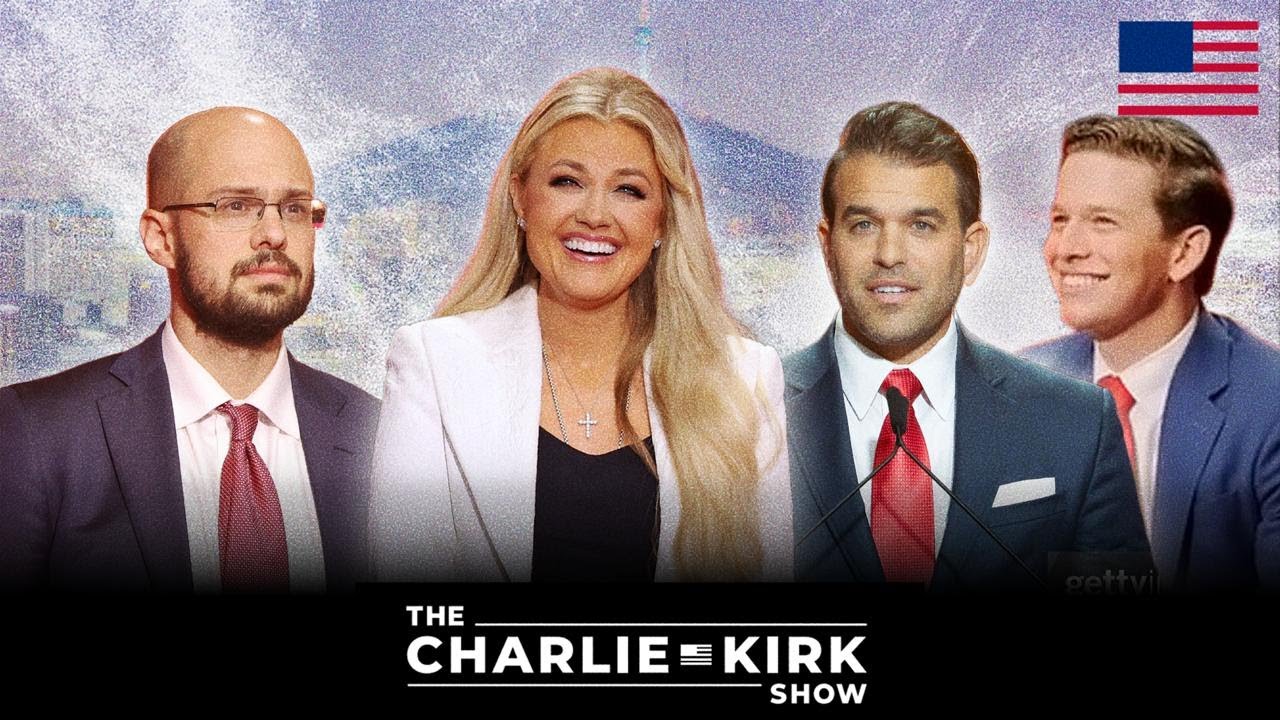
Andrew Kolvet and Mikey McCoy Share Charlie Kirk's Final Asia Trip and Turning Point's Future Vision
1:58:02
Tucker Carlson Honors Charlie Kirk's Faith and Mission to Spread the Gospel Worldwide
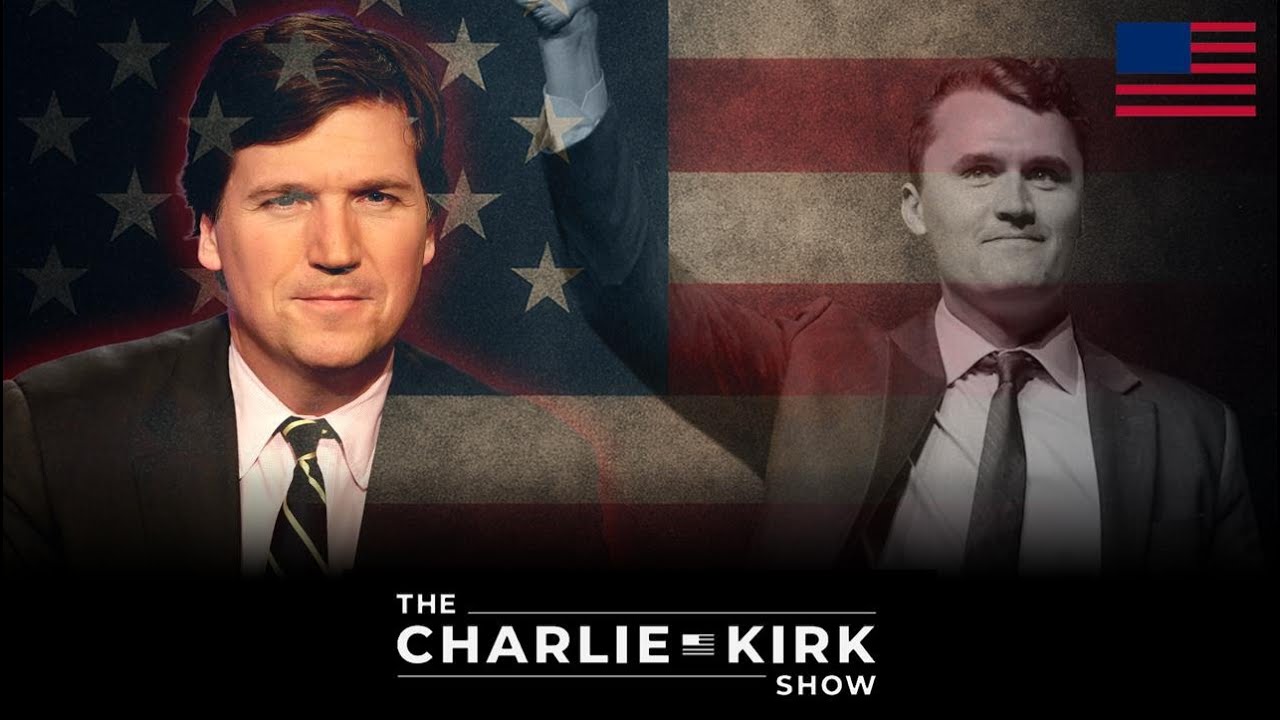
Tucker Carlson takes over the Charlie Kirk Show to honor his friend's memory by focusing on what mattered most to Charlie: his relationship with Jesus Christ. Tucker shares intimate stories about Charlie's unwavering Christian faith, his courage to hire Blake Neff when no one else would, and how Charlie lived every moment as if on a divine mission. From tent revival-style campus tours to preaching the gospel in Japan and Korea, Charlie never stopped spreading the message of Christ. Tucker reflects on Charlie's humility, his willingness to change his mind, and how his life embodied the timeless virtues described in Kipling's "If." Joined by Andrew Kolvet, Blake Neff, and Frank Turek, they discuss how Charlie's passing has ignited a revival across America and around the world.
Charlie Kirk's Life Was About Following Jesus
Tucker Carlson opened the show by stating plainly what everyone who knew Charlie Kirk understood: Charlie was fundamentally a Christian man, and Jesus was the center of his life. This wasn't performance or branding—it emerged immediately in conversation with him. Tucker decided to honor Charlie's memory not by dwelling on political drama, but by spending two hours discussing Charlie's relationship with Jesus Christ.
"His life was about following Jesus. Period," Tucker said. "And so I think the best way to explain who he was is to spend the next two hours talking about Jesus and Charlie's relationship with him."
Tucker was struck by how much material existed of Charlie talking about God in public. There was a deluge of clips, more than perhaps any other public figure. What made Charlie credible, Tucker argued, was that he wasn't being paid to talk about Jesus—it informed everything he did, everything he thought, and the way he lived his life.
A Modern-Day Prophet and Biblical Mission
Andrew Kolvet shared a profound realization that had come to him in waves since Charlie's passing: Charlie Kirk was a prophet. Not a fortune teller, but a biblical prophet who would go into a nation and call it to repent. He went to college campuses, onto stages, into media appearances calling America to repentance. He went to London and called England to repent at Cambridge and Oxford, where they hurled insults and mocked him, just as they did to the biblical prophets.
"They wanted to stone him and ultimately they killed him," Andrew said, his voice breaking with emotion. "And that is what Jesus said. He said, 'What did they do to the prophets? They killed them.'"
Andrew had another revelation about the campus tours they organized: "They were tent revivals. Complete with the tent." The realization hit him that what they had been doing all along was conducting modern-day tent revivals, like the circuit riders and evangelists of America's past, like George Whitefield preaching in the open air.
Charlie's Unmatched Drive and Agency
Blake Neff, who worked closely with Charlie for years, described him as the highest agency person he had ever met. Charlie believed that if there was something he didn't like, he had the power as an individual to change the world, or at least he had no excuse to complain about it if he didn't take action.
"People would ask me, 'Is Charlie smart?' And I'd be like yes, but that's kind of besides the point," Blake explained. "What was amazing with him was his drive."
Charlie disciplined his body, avoiding alcohol, drugs, or anything that would slow him down or reduce his productivity. He was obsessed with maximizing his output. Andrew reflected that Charlie somehow knew there wasn't a moment to waste. He journaled obsessively, wrote Erica a weekly note every Saturday, read books, listened to audiobooks on walks, and found ways to squeeze every ounce of productivity from his time.
Tucker recalled saying to Charlie, "You remind me of Paul. Like, you never stop." Unlike Tucker, who enjoyed fishing and relaxing, Charlie was relentlessly driven, as if he felt God had a plan for him and he was on a mission that was bigger than politics.
Preaching the Gospel Everywhere, Even in Japan
Blake shared a story from Charlie's last public speech in Japan. Japan is only about 1% Christian and famously resistant to Christianity. They were speaking to a political party aligned on issues like immigration and birth rates, but Blake mentioned to Charlie that the audience likely wouldn't be receptive to a Christian message.
Charlie asked, "Is there somewhere I can work in the faith angle? Because we're supposed to preach it everywhere we go."
They found a spot late in the speech where Charlie told the Japanese audience: "I want you to save your country, but in the end, you're going to have to believe in something transcendent for that to work. For me, it's because of my belief in the Almighty, my belief in Jesus Christ. And you're going to need to have something like that to be able to win."
Only two people in the audience started clapping energetically. The rest sat politely. But Charlie had been obedient to the Great Commission to preach the gospel everywhere.
In Korea, the response was dramatically different. Eleven days before his death, Charlie was on stage when the crowd asked him to come forward. They prayed and sang over him in English, lifting their hands and singing "How Great Is Our God." Charlie put his hand on his heart, and those who were there said his eyes were misty—it meant so much to him.
Charlie's Courage in Hiring Blake Neff
Tucker shared a powerful story that illustrated Charlie's courage and Christian character. Blake Neff had worked closely with Tucker at Fox News for years when he got caught up in cancel culture at its height. Someone dug up old online posts, and Fox overreacted, denouncing Blake. Tucker's boss, Suzanne Scott, tried to pressure Tucker to denounce Blake on air. Tucker refused, telling her she could fire him, but he wouldn't do it. The show was going live in ten minutes.
Blake found himself unemployed and unemployable, his name smeared in the New York Times as a bad person. Tucker felt a moral obligation to help but didn't know who would hire him. Then Charlie Kirk called.
"I'm thinking about hiring Blake," Charlie said.
Tucker told him honestly what Blake was like—eccentric, unusual, but a wonderful and talented person. Charlie hired him. But Charlie didn't just hire Blake quietly—he put him on the air, as if to say, "I know this man. He is a good man. You will judge me for doing this. I'm doing it anyway because it's the right thing to do."
Tucker emphasized that no one in their world does this. Everyone talks about free speech until it costs them something. But Charlie pivoted toward the risk, exposing himself and Turning Point USA to ridicule and potential damage. He did it because it was right.
"That was the acid test," Tucker said. "Those of us in this business know how brave that was."
Blake later told Andrew, "Charlie gave me my life back."
Charlie's Willingness to Change His Mind
Tucker met Charlie when Charlie was still a teenager, introduced through their mutual friend Foster Friess. Tucker admitted he was initially skeptical, assuming Charlie was just a fast-talking kid throwing back Reagan quotes to impress old donors. But when they met, Tucker found Charlie was genuinely smart and intellectually curious.
They had an unplanned debate at an event where they disagreed on economics, foreign policy, and marijuana legalization. Tucker passionately argued that marijuana was a control device designed to make people passive, while Charlie held a more libertarian position. But Charlie looked at Tucker like he was genuinely considering the argument.
That moment sparked an ongoing conversation. Charlie's views were changing, and so were Tucker's. Tucker admitted he had been a libertarian, a self-described neocon, and had even gotten mad at Alex Jones for asking questions about 9/11. He had been wrong about many things. An honest man asks himself why things didn't work and what might work instead.
"Young people are very inflexible about what they believe," Tucker said. "Charlie was one of the only young people I've ever met who was like, 'Oh yeah, I think I was wrong.' And only belief in Jesus allows you to say that because you know that you're not judged."
Blake added that when media outlets would dig up old clips of Charlie holding different positions, Charlie would simply say, "Oh yeah, that was back when I was a cuck." He had no shame about admitting he had changed his mind because the evidence had changed.
The Poem That Captured Charlie's Character
Blake read Rudyard Kipling's poem "If," which perfectly captured who Charlie was:
"If you can keep your head when all about you are losing theirs and blaming it on you... If you can trust yourself when all men doubt you, but make allowance for their doubting too... If you can meet with triumph and disaster and treat those two impostors just the same... If you can talk with crowds and keep your virtue, or walk with kings nor lose the common touch... If you can fill the unforgiving minute with sixty seconds worth of distance run, yours is the earth and everything that's in it. And which is more, you'll be a man, my son."
Tucker highlighted the line about treating triumph and disaster as imposters. "Winning is the trap," he said. "That's where men destroy themselves. Surviving triumph is the real trick and so few can do it. He could."
Charlie's Mission: Make Heaven Crowded
Andrew shared that Charlie and Erica would look at each other and say their mission was to "make heaven crowded." That was the real mission underlying everything they did. Andrew believes God is unleashing a new revival on America, and Charlie is the spark igniting it—not through his death, but through the start of his eternal life and eternal glory.
Stories are coming in from around the world. Someone reported that a church ran out of baptism space and started baptizing hundreds of people in the parking lot fountain. Before Charlie's passing, about 2,000 people wanted to start Turning Point USA chapters. Now that number has exploded to approximately 65,000 and growing by the minute.
Frank Turek, who was with Charlie the day he died, joined the conversation. Charlie would come to Frank with questions about apologetics and how to argue for the faith in the public square. Frank pointed out that Christianity is the only worldview that grounds the inherent worth and dignity of every individual. In Hinduism there's a caste system. In Islam, non-Muslims are second-class citizens. In the secular world, there's no way to ground these moral values. Only Christianity affirms that every person is made in the image of God.
Frank has seen people from all over the world commenting on YouTube videos: people in Denmark, Australia, and London saying they were atheists who became Christians because of Charlie Kirk. This revival isn't just happening in America—it's happening worldwide.
Charlie's Humility and Treatment of Others
Andrew wanted people to understand something about Tucker that also applied to Charlie: they treated everyone the same, whether it was the person taking out the trash or a major donor. Andrew had witnessed Tucker countless times deep in conversation with assistants and staff members whose names Andrew didn't even know, while Andrew had to interrupt to get Tucker on stage.
Tucker explained he grew up in an egalitarian world where the housekeeper came to Thanksgiving dinner. Period. That was the wasp culture he was raised in—the only thing that could get you kicked out of the club was being rude to the staff. Underneath it all, everyone is the same. We were all created by God and will all stand alone before Him. That's the core idea that spawned the American democratic republic, though it's rarely articulated anymore.
Charlie wanted better elites who embodied these values. He modeled it himself, staying humble and close to Jesus even as his platform grew. Andrew remembered Charlie would text privately: "Stay humble. Stay close to Jesus."
Charlie would rush home to be with Erica whenever he could. If Erica was on the road, he'd hurry through donor dinners and events to call her. Andrew would try to discuss one more thing, and Charlie would say, "Sorry, I'll talk to you about it in the morning. I got to see Erica. Bye."
Blake joked that Charlie had never "hung out" in his entire life. He was either on his mission or with his family, 100% all the time. The only times Blake got to really talk with Charlie at length were on plane flights across the country, when Charlie was physically trapped and couldn't work. Those were some of Blake's most treasured memories.
The Big Picture: Light Versus Darkness
Tucker acknowledged the conspiracy theories and questions swirling online about Charlie's death, which he had mostly checked out from because they were too upsetting. He believes there needs to be a fair, impartial, well-explained investigation to assure everyone that the rule of law still exists in America, and he thinks people should push for that.
But Tucker emphasized the big picture: "Whatever happened, it was a species of the same phenomenon, which was the fight of evil against good. His murder was an attempt to extinguish the light. Period. And it didn't work. That's the main thing to know."
This is light versus dark, Tucker said. The darkness comes in many different forms and guises, but what it really is, is the age-old evil—Satan, the evil one we ask to be delivered from in the Lord's Prayer. The evil one is all around us.
But Charlie's murder is a reminder that we are surrounded by God's protection and love. The light has not been extinguished—it's glowing brighter. The forces of darkness tried to extinguish the light and not only did they fail, their effort was counterproductive.
"I'm going to focus on that," Tucker said. "I'm going to focus on the big picture while demanding a precise accounting that is legitimate. But I'm not going to get so caught up in that stuff that I miss the true message."
Video Transcript
It's Tucker Carlson. I'm honored to be sitting in uh to host the Charlie Kirk show today. I was I flew in um from the East Coast last night and was thinking about what to do today for two hours and there's all this very ugly drama swirling uh around the Republican party, the right, the memory of Charlie Kirk. And I just thought, and I've got, of course, strong opinions. I have strong opinions about everything and I've expressed them, but I I thought I really need a break from that. And I don't think that any of it reflects who Charlie was fundamentally. Who was Charlie fundamentally? He was a Christian man. And Jesus was the center of his life. That was obvious to anyone who knew him. It emerged in conversation immediately when you talked to him. That's that's just a fact about Charlie. His life was about following Jesus. Period. And so I think the best way to explain who he was is to spend the next two hours talking about Jesus and Charlie's relationship with him. And so I'm going to be really happy to do that. This will be the happiest conversation about Charlie Kirk, I hope, uh, all week. And so, as I said, I'm hosting, but I have no idea how the show works. I literally don't know. Um, though I've I've done it. But luckily, Andrew and Blake are here, who I know very well. Um, I've actually worked with Blake for years in another life. We're both grateful to be gone from that. Uh, but Andrew is really going to be like running in and out. We have these things called breaks and you've got commercials and all that. Yeah, we got a show to run here. Okay. Show. But you know what? Just not suited. But listen, we'll blow the brakes when we have to. So if you're watching on stream, if you're watching on uh Real America's Voice, you're watching on one, you know, a video platform, you'll probably be fine. We're just going to we're just going to have fun today. Good. Well, I with you in charge of the details, I know that that will happen. Correct. Blake, it's wonderful to see you. We talked on the phone the other day. I've been thinking about you every single day. Um so I hope you're holding up and I'm and I'm grateful that you're here. So, uh, yeah, I want to talk about Charlie's relationship with with Jesus. And I'm amazed going I have a whole list of thoughts or sound bites here. I asked for Charlie talking about God in public and I'm just kind of amazed what came back. I mean, there really was a deluge. Yeah, it was unbelievable because there's really no one in public life who talked about Jesus more than Charlie Kirk. And I'll just now I'm revealing one of my ugly biases, but some of the people whose job it is to talk about Jesus are not um you know, I don't think as credible and believable. I'm just being honest as I think Charlie was. He really meant it. He wasn't being paid to say it. I think everything that he did, everything that he thought, the way he lived were all informed by his love of Jesus. And I don't think I'm overstating, and I I said this to him recently when he was at my house in Maine. I really, you remind me of Paul. Like, you never stop. I stop. I like to I like to go fishing. I like to go bird hunting. Like to hang out, you know, on Saturday morning in bed with my wife and like, you know, BS with my wife and all that stuff. But Charlie just did not allow himself any of that. He was so driven and you can see it now maybe as part of a larger plan where he never wasted a minute. He he forced himself to get on the airplane and to do things that were really, really hard in a way that I've never done. I'll just admit it. Um, and I think that was because he felt God had a plan for him that he was on a mission. It wasn't just about getting somebody elected. It was about something bigger than that. Am I Well, just ask you first, Andrew, and then Blake. Do you think that's I'm reading too much into it or do you think that's right? No, I I totally agree. And I've had I've had wave after wave of revelation of what we were actually doing. You know, I was so in the weeds, we were so in the weeds that it was impossible to fully understand even what we were doing. But I, you know, I'm I and and I I Charlie and I bonded at the very earliest days because we were both like really strong Christians and that was such a central part of who we were. But we didn't we, you know, we didn't talk about it all the time necessarily publicly, but as the years went on, we both knew that we had each other in that way. And I've tweet there's two tweets that I I've posted. I have realized in the days hence that he was a prophet, not a fortune teller like people think of prophecy. He was like a biblical prophet that would go into a nation and call it to repent. That's what he was doing. He was going to these campuses and he was going on stage and he was going on this show and the podcast and he was calling a nation to repent. He went to London and he called England to repent at Cambridge and Oxford and they they hurled insults at him. They mocked him. They jered him just like the biblical prophets. They wanted to stone him and ultimately they killed him. And that is what Jesus said. He said, "What did they do to the prophets? They killed him." And now the other revelation, you're making me emotional again because I know that what you're saying is true. And the other revelation is specifically about these campus tour. We called them campus tours. They were tent revivals. Yes. complete with the tent. Tucker, that's so I don't know why I didn't really see you. I didn't either as it was. You say that and I just like to envision like George Whitfield like being, you know, just like Jesus was sent as a savior and must be accepted to be saved. Prove me wrong. I know. But it's so clear to me now. It's so clear to me. And me, too. I don't know. It's Yeah. I don't know how I missed that. I don't know why I thought it was like political organizing or something which I on one level it was but it that's not well you guys were there all the whole time. I mean it was more than that. It it was it was and it really knowing him over the past almost 3 years. That was what I would always tell people who would ask about Charlie. And it's it's so funny where like they'd always just open like is Charlie smart? And I'd be like yes. But that that's kind of besides the point. Like the amazing thing with him is not his IQ or like how much how many like facts he can know or something. What was amazing with him was his drive. The way I would say it was like he was the highest agency person I had ever met in my life. He thought if there is something I don't like I have the power as an individual to change the world about that or at least if I don't take action I have no excuse to complain about it. And he brought that to politics and organization of course, but he especially brought it to the faith question. And he always always wanted to talk about it. Uh he loved talking about it in private. He loved talking about it in places where it was you, you know, arguably pointless. Uh the last speech he kind of gave in public was we were in Japan and Japan is 1% Christian maybe. Uh we were speaking to a party there that's you know you know we're aligned with them because they're anti-immigration. They don't like globalism. You know we have we were talking to them about all that stuff. He was like yo you should increase your birth rate. Don't rely on immigrants and all that. But Japan is famously resistant to Christianity. Yes. Yes. But and I told him about that and but you know in Korea we talked about Christianity and there it was a Christian audience mostly. But he said, he's like, you know, is there somewhere I can work in the faith angle to this? Because, you know, we're supposed to preach it everywhere everywhere we go. And so we talked about that, you know, what what could we do? And we found a spot late in the speech. And the very end of his speech, he was saying, "Look guys, I want you to save your country, but in the end, you're going to have to believe in something transcendent for that to work. It's not just going to work on pragmatic grounds." and for me. And then he just, you know, for me it's because of my belief in the Almighty, my belief in Jesus Christ. And you're going to need to have something like that to to be able to win. And you know, I think two people in the audience started clapping really really energetically and the rest kind of sat there very politely as a couple people. Oh, the Japanese were wonderful people. But but you're right, they're not open to that. But there were two who were. Yeah. And maybe they were believers. I'm not sure. But uh you know I'm I'm very glad he got to do that. And then in Korea though u totally different story. We have this clip. Why don't we just play it if it's okay 18 [Music] All right. That that was 11 days ago, Tucker. and he's on stage and in English they asked him to come forward and pray and sing over Charlie and they put their hands up and they started in English saying how great is our God sing with me how great is our God and Charlie put his hand on his heart and Mikey said when he got off stage like he could see his eyes were misty it meant so much to him Melbourne's one of the darkest cities really in the world there are good things about Melbourne but basically it's it's in enemy hands and boy do you feel it when you're there and I was like I got to go to church so I go of course to the Anglican Church, which is my denomination. It's now a museum filled with Chinese tourists. I was like, "Oh, this is the worst. I'm feeling despondent." I go next door to the Scottish church, the Presbyterian church. Beautiful, beautiful church, like in beyond. And there's no one in it except at the front and it's like a 100 yards away. It felt like there's this little group of people singing and it's Koreans. And this Korean congregation of like nine people has taken over the church, rented it on Sundays because of course no whites are going to church of course. And I just thought to myself, this was God's way of reassuring me that even though the world that I grew up in is gone and totally, you know, everyone's fallen away and and it hasn't worked at all. Um that that Jesus still lives and but you know, his name is spoken in other languages and one of those is Korean. And there's something there's something about watching, you know, Koreans worship that just oh, it's my favorite thing ever. I I totally agree. They are absolute prayer warriors. But I just believe this, Tucker, and I have to say this like in this moment, I believe God is unleashing a a a new revival. Yes. On this country, and Charlie is a the the spark that is igniting it. Completely agree. And I don't even want to say it's his his death. It's his the start of his eternal life and his eternal glory, his immortality. And I believe that he is seated with God in heaven and he's seated in glory. And I believe that there's a reason that Charlie and Erica would look at each other and say, you know, our mission is to make heaven crowded. And and I believe that that is actually the real mission. And that is actually going to be happening right now. It's happening in our midst right now. And it's hap it's sweeping the country. And there was there was a story I just heard on the drive here this morning that they ran out of uh baptism space. They just kind of did an impromptu baptism space one of my friends churches and so they went out in the parking lot start dunking people in the fountain. Hundreds of them. Protestants are fun. I just I just love that if I can just say a word. I mean I don't get involved in the Protestant Catholic Orthodox thing because I'm just for Jesus. But if I could just stick up just for one second for my people. Protestants were real ones. Like they built this country. They did. I'm sorry. It's just a it's a it's a fact and they really believed in God and they, you know, they were on the right path. They were amazing people. And I I'm very aware that they've declined to the point where I make fun of them constantly, but there was something very, very real there. Very real, you know. Sorry. Well, the circuit writers in the Feel like I have to say that. No, no, no. I mean, listen, and there as I I'm somebody both Erica and I were cradle Catholics, right? We were did the first communion and we did the catechism and the you know the uh anyways I went to Catholic high school even um you did you go to Catholic high school? No long story long story. I'll let you chime in if you want but my parents moved me to public schools. I I ended up getting saved in college. Very very very non non-denominational evangelical way to phrase it. I got saved in college radically saved. Um, so I had this Catholic background, but then I found myself in a non-denominational setting alone at a school in Seattle, like the second least church city in the country, and I ended up getting radically saved. And so, but I've never cared about the distinctions. I love both. Yeah, I agree. You know, I might have petty minor little theological differences. Yes. Doesn't matter. I love them both. I don't I've can't because of my path here. I never cared. Anyone who focuses on Jesus is my brother. That's how I feel. And I I agree with you 100%. And if you let your It's a little bit like Twitter actually. If you if you think about it too much, you end up hating everybody and you miss the commonality between people and the commonality between Christians is Jesus. Period. And if you think about, well, I'm mad about transubstantiation or like the last pope was horrible, which he was. Um I'm so sad we didn't get to just have that full debate. We we wanted to have just a straight like just for fun like let's debate Mary. No, I'm not doing that. Next, but we wanted to do it with Charlie and now we can't. I'm not doing that. And that one of the the things I hope you guys live to your 50s because and I and I'm and I'm sure you will, but because when you get there, you're like, "Wow, I've been wrong about so much." And you think that middle-aged people are wishy-washy. And low testosterone does account for some of that. Just a fact. But part of it is just the recognition of how wrong you've been. And that is the Christian forgive us our sins as we forgive those who sin against us. It's like first you meditate on how fallen you are and then you realize you don't have a basis upon which to judge other people actually and you can forgive them. And that is the process that's prescribed in the Lord's Prayer. Of course, it's a center of Christianity, but it's also just like a human process. And you get there and you realize like, yeah, I'm mad about Mary. That's a fact. Okay. But then I get older and my wife's like, "Oh, I was just saying the rosary, my very Protestant wife, and I love it. It brings me closer to Jesus." And I'm like, "I'm not judging anymore." I really want people to understand, Tucker, you and Charlie had such a unique and special bond and relationship. It was It was a deep friendship, and you both uh had each other's back in an incredible back. You had his back, too. I know those stories as well. Yeah. And I promised I wouldn't get into any of that. But I will say, and I'm not going to, but I will say because I want this to be about Jesus and his love for Jesus and what he did to spread the word of Jesus throughout the world. But I will just say this that whenever I would come and do a gig for you guys, which was a lot cuz I really enjoyed it. And he was so kind to invite me and defend my being there. But I would always, he's the only person I did this with. I would always say, "Hey, you know, let's like meet in my hotel room or have a meal." Like I I loved talking to him and it wasn't just to catch up on everything that's going on in the political world. He would always bring it back to God every single time and it was so there's no one around like so he didn't need to be like oh yeah I really love God like just us and he'd be talking about that and you would come to Phoenix and you would reach out to I it was like I have so many memories of Charlie being like I can't I got to do dinner. Who are you doing dinner with? Oh Tucker's in town. I got to meet up with him. always, always. And he was so intellectually curious and flexible. And I think that also grew out of his Christian faith. And I know that as I've gotten older, it's been one of the things I appreciate most about believing in God is like you can admit when you were wrong. You can change your views. Paul, who created a lot of the early church, was the chief persecutor of Christians. He was a freaking Pharisee. So like in our religion at its core is the fact that God can change people. And so you don't need to be brittle and afraid about admitting that yeah, I was totally off base. And Charlie was so much like that. He was constantly thinking about is this the right thing? Is that the right thing? Like there's no one in public life who does that. It it's so easy for like relig, you know, for sometimes people use religion as an excuse for megalomania. Yes. And Charlie was so humble. Genuinely humble. We would we would have these moments. Thank you for saying. And on this note, we would have these moments and I'd be like, can you freaking believe what's going on? You're on South Park or whatever. And and he would say he would say stay humble. Stay close to Jesus. That would be the type. We need to stay humble. We need to stay close to Jesus. Really? Yes. This is in his private text to people he works with. I have a story like this too and I'm I'm ashamed that I am the villain in this story. Basically, it was two weeks before he died and I'll never forget it. I there was just some annoyance that was, you know, in our way and we we we needed to deal with something. I can't even remember it was. And I just remember going, hey, you know, we could just tell them XYZ and translation, we could just, you know, little white lie and it'll go away. They'll understand. And I remember seeing the like the dots he was typing right away. Right away. We don't lie. It was a private message with me. And and it wasn't you don't lie. It's not I don't lie. It was Andrew. We we here on this show in this turn in turning point. We don't lie. Well, and not only don't lie, I mean I without even getting into it, but like if you run a huge nonprofit and TC is all about huge nonprofits. I know everyone who runs them. Boy, there are temptations and there was never any of that here ever. And we Tro and I talked about that a lot. Like here are the pitfalls in a man's life. Here here's how people get ins sns snared. It happened to David. I mean, we know this is a thing. He was so, and again, I just had this conversation with him right before he died because I'm very focused on because I've seen so many people destroyed destroy themselves and it's clearly like Satan acting on them. Fact, sorry. And he was like he was a narrow path walker in I just have to say that cuz most aren't. He would run home to be with Erica. Yes. If he couldn't Yes. If he if Erica was on the road, he'd be like, "Are we done here?" Okay. uh like a donor dinner or something. He would, you know, he at after our events at night, he would do kind of like a little circuit to all the dinners and he couldn't wait. He's like, "Okay." And I'd be like, "I got to talk to you about one one other thing, Charlie. Hold on one second. One second." He's like, "Sorry, I'll talk to you about it in the morning. I got to see Erica. Bye." I It was just That is the key. I love to tell people this because some sometimes people who didn't watch Charlie a lot would sometimes just think, "Oh, he's like a young influencer." So people would ask me, they'd be like, "Blake, do you ever hang out with Charlie?" And what I'd always say is I don't think Charlie has ever hung out in his entire life. Uh he was always on his mission or you know he was with you know he was with his family. It was 100% all the time. That being said some of the best memories that I have are the plane flights across country. Yeah. Because and that's the only time he can hang out. It was amazing. Trapped in a trapped. And by the way, when and and I think that gave him the freedom to kind of just go, "H, I'm hanging out." And I mean, if you had to add him up, I've got hundreds of these hours and they are some of the most amazing cuz he was so funny and so so curious and so so he did, but it was like you had to get him in this this mode where you literally trapped him on a plane and he couldn't get out and he was stuck there. But what is that? I mean, most people sort of fritter away their entire lives hanging out, and I'm I'm definitely one of them. I'm like an Arab man in the souk. I like to sit around hitting the water pipe, playing back gammon, drinking little cups of coffee, talking about women. Like, I've spent a lot of my life doing that. That's why I love Trump so much. He likes that, too. But Charlie had like this mission. So my theory on that, Tucker, is I think in order for this whole God plan to work in Charlie's life, he had to like he had to impress in him almost subconsciously, hardwire it, whatever it was, he was going to maximize the juice, the the the output. And Charlie disciplined his body. He didn't put alcohol into his body. He didn't put drugs into his body. He didn't put anything into his body that he thought was going to slow him down or reduce his productivity. He was obsessed with biohacking. He was like and and all I thought it was just this weird quirk because I'm thinking Charlie, you're going to be alive cuz you're younger than me. You're going to be alive when I'm gone. Like chill out, relax, have some fun. But but somehow he knew there wasn't a moment to waste. And I'm finding these things, Ducker, that he found time to do. Erica's telling me he somehow found time to journal obsessively and she never looked at every single week. Wrote her a weekly note on Saturday. Every every Saturday I he read books. He skimmed books. He got Blake to read them. He found ways to get the team to distill information so he could absorb it. And he but he would do walks with books on tape. He he managed to squeeze so much life into such a short period of time. And it's I have to believe it was God impressing and blessing him with this divine ability to maximize his output. I I love that. And I had many conversations with him on this topic also about like physical health. I'm a pizza guy so Okay. Yeah. Physical health. I I quit smoking cigarettes at 45. Like I feel very virtue. It turns out you say he didn't want to put anything in his body that would hinder him. And it turns out the list of things that hinder you is all foods except like cabbage, grilled chicken, hot sauce. But that's basically what I mean. He was the fittest guy, but it was for a reason. How much time do we have in this segment left? Uh, we're going to welcome back radio in 3 minutes and 20 seconds. Then we have a nice 13 minutes. Okay. So, I want to um when we get to the 13, I want to tell the Blake story. Blake Nef, who's sitting right there, story, and it's it's just a story that just explains who he really was. And there's so much that goes on in Washington and political world that's so treacherous and cruel and antihuman. Um, and Charlie just stood against all of that, not simply in public, but in private. And I had a window into one of the amazing stories of bravery and forgiveness. It's just an incredible story and it and it's about you. Again, it makes me emotional thinking about, but anyway, I don't think it's ever really been told. Sorry to make you emotional. It's an amazing story. You know what I love about this Blake story, too, because I and I I don't want to I'm not going to ruin the punchline here, but I would just say I one of the strongest testaments to Charlie is the fact that this guy's a tough judge and I know when he Oh, I know. He worked for me. And when he first started working with us, I could tell that he was a little unsure. You know, you probably had the questions. You're back. Charlie spoke the language of the people. And you're a Dartmouth kid. It's a total egg egghe head nerd, you know, like beautiful mind kind of person. And but Charlie would cut through all that and he would speak right to the people and cut people's hearts in two and make them choose the side they were going to go and go on. And that was not the language of Blake Nef, but we needed a Blake Nef. And I knew we needed a Blake Nef. And I just there was this moment where I forget why but you you took this moment and I remember being really touched by it and you paid Charlie a tremendous compliment and I knew it was like a two years after the fact and it and it was I Charlie texted me like directly. He goes, "Whoa, did you hear did you hear Blake?" Like cuz it really meant the world to him that he had won he had won your respect and it really meant the world to him. Yeah. South Dakota Germans aren't big on compliments. But I do think the So you if you get one from Blake, it's earned. I do think the question that people had about Charlie, the question I got most often and people came to me a lot about Charlie, like what is this cuz they knew that I knew him and that I was friends with him. But really the core question everyone wanted answered was, "Is this guy for real? Is this real?" Cuz like nothing in our world's real. It's all fake actually. And I hate to say it, but it's true. A lot of preachers are very fake. And and I would always say, "Amazingly, it's 100% real. It's totally real." And I remember talking to you you about that. I mean, everyone like, "What is this exactly?" And you concluded early. I remember when you told me, "No, no, it's totally real. That's incredible." You really have to have lived in our world for a while to know how wild that is. Cuz most people are like, "Yeah, of course it's real." Not in political world. Is that fair? Very fair. Very fair. And he's like the realest guy to ever live practically. I know. I know. Oh, it makes me sad. He's gone. I wish I I wish I had said this in public before he left because um I said it many times in private. I will say that to many people. Who is this guy? Is this like what is this? And I would always say, man, if you had dinner with him, you would know it's real. This is really the Tucker day. And I I uh I feel awkward even taking us in and out of breaks, but Tucker, I don't want to do it. I don't I'm doing this out of service for my to my nation and to my friend Tucker. Um so yeah, the floor is yours. I know where you're going, but Oh, this is a Blake Nef story. Okay, so this is a story that um obviously I was in the middle of it and I've talked to a lot of people just this week about it. I don't think it's ever been told in public. I'm going to give the outline and then just turn it over to Blake to correct me or and to fill in the details. But here's the story. So Blake worked for me at Fox News uh for years, probably more closely than anybody, like intimately at Fox. And um and I love Blake. And Blake is obviously an unusual person, but just a wonderful person and a really deeply decent person. I mean, it's true. And obvious Yeah, Blake's weird, but like Blake is the best. And people who love Blake really love Blake. And there's a little group of people who, you know, we all know each other. We all talk about Blake. So Blake got caught up right at the height of all this insanity, true insanity called cancel culture, but it was more than that. It was like French Revolution stuff. And someone like, you know, Blake is not Blake is a racist. Well, actually, as I always say, Blake is actually not a racist. And I would admit it. He's not. He's a Christian who believes that God created everybody. So, he's actually not a racist. But Fox overreacted, of course, and he left. And then Fox denounced him. They tried to get me to denounce him. Suzanne Scott tried to make me denounce Blake and I refused. Something I'm proud of, but whatever. It was It was just awful. It was the saddest moment in the 15 years that I spent there. And then Blake's unemployed and unemployable. And I get this and I feel terrible and I feel like I've got a moral obligation to help Blake. And but who's going to hire Blake? Because he's like in the New York Times, he's like a bad person. When actually he's a great person. Charlie Kirk calls me. He's like, "I'm thinking about hiring Blake." I was like, "God bless you, Charlie. What's he like?" I said, "Well, Blake's very eccentric. Like, no kidding. He's the only person who ever lost weight eating junk food. Like, he's a really unusual person. Like, we talk about Blake all day long, but he's a wonderful person and he's incredibly talented. No one disputes that. And I think you should do it." He does. Charlie and I talk about then Blake and I talk. We're having these like conversations behind the scenes about each other. And not only does Charlie hire Blake, he puts us makes me emotional. He puts Blake on the air as if to say, "I know this man. He is a good man. You will judge me for doing this. I'm doing it anyway because it's the right thing to do. And then of course it becomes this whole thing where Blake is like a true asset to him. But when he first did it, it was like, "No, I'm doing this because it's the right thing to do. This is the last thing I'll say before turning over to Blake. I've been in this business my whole life." Nobody does that. Nobody does that. Everyone's like, "Oh, I'm for free speech or whatever until it hurts me." At which point, like, "Sorry, pal. Good luck." But Charlie pivoted against that in a way that exposed him and his group Turning Point to ridicule and risk and he did it anyway. And all week I've been talking to people about this like that was the acid test. Those of us in this business know how brave that was. Who's the bravest thing anyway? Sorry Blake. I I remember talking to you about that because I I actually was weighing another employment option and I was going you know as you said I was like I I think you maybe were behind that one too. Yeah. I was I was desperate to another option and I remember just I I won't say what it was for but we were talking about it and I think the one that you really pointed out that was really important. He's like Blake I think the most important thing like Charlie is a for real a sincere Christian and I think you're going to want to work for someone who is a for real sincere deeply believing Christian and you know because then you'll disagree on a lot of things but you will align on really important things. Yes. And I think that was what carried the day with me and I'm very glad it did. Um, and you know at at the time as you said it was like at the time I came in it was he was just a very different person. Yes. And it was over time realizing all the ways that as you say you have to really see it. You're like is this for real? You and I what is is this going to work? You would also have that where you're like this can't this can't possibly work right and it does and it does because he's so completely intently sincere and fully allin on it and I think that's what like amazed young people like you know when you go to these campus events and you know I think there's a lot of you know you'll see these people online who are like very like performatively trad or Christian or whatever because it like owns the libs or whatever but Charlie is just No, no. I I like 100% believe in this like because I believe it is true and because it is important and I want everyone else to believe in it because it is true and I think it is the most important decision they will ever make. And it would always shine through in what he was doing and how he behaved that he really believed that and well and I mean I think and you know this because you were at some of the campus stops. I was at some of the campus stops. 90% of the interactions as he got older, right? the the the the brand of Charlie was almost cemented, you know, in 2018 where he was much younger and he was like a peer to the kids on college and he would say Charlie Kirk destroys the libs or whatever. And that was just titling. It wasn't actually in Charlie's heart. But the Charlie, by the way, didn't determine the titles, you know, like people behind the scenes destroy anything. No, behind the scenes that's, you know, that's a social media team that's doing the titling. That wasn't Charlie picking the title, you know. Anyways, but the point is as he got older, he transitioned to a much more big brother and and people started observing like this incredible herculean patience that he would exhibit on these in these interactions with sometimes bad faith people, but sometimes people that just had bad ideas. And 90% if you went and sat there and watched the entire 3-hour prove me wrong, 90% of it is him being kind and gentle and thoughtprovoking and working through whatever was the lie that was stuck in this kid's head or sometimes professors, but he would work with them through it and use the Socratic method to draw out the truth. And it was a beautiful thing. And you know, he doesn't get nearly enough credit for that because the Charlie destroys the libs clip goes mega viral, right? I I I couldn't agree with you more. I have to say when you when all that happened to you, it was I just cannot say how pain I Well, you know, cuz we've talked about many times, but that was like one of the most painful things that's ever happened to me in my life. Uh because, you know, we have such a tight staff and um and the same staff like I don't have new people working for me really ever and I don't I don't care to. So, um, that was really, really painful. Oh, go ahead. And I just wanted you to have health insurance. My expectations for you were so low because you had been so mistreated and maligned and slandered and it's just so hard to come back from that. The fact that he put you on the air is so possibly a mistake. It was not a mistake, but it was that is so wild. So I I have an insight into that piece of the story because I was aware of this other job opportunity and I see it now all as like God's plan and I was working on kind of a panel show idea but I I didn't have the it was just like a nugget of an idea was back in my head and and I remember kind of just intuiting that in order to like restore this man that had been so wronged by Oliver Darcy or whatever and CNN these scumbags. I thought, you know, forgive Oliver Darcy. Thank you for reminding me. As we forgive those who trespass against us, he needs to be my daily rotation. So, but you know, and by the way, I I saw I ended up in that moment in that when we were talking with Blake at the beginning. I looked back at your monologue from that night. Maybe it wasn't your monologue. It was the finish and final segment, but you said I you you really were defiant and it was beautifully done because you were back at you you they they you were part of something and only had so much control in at that moment. Right. And so they were bullying me. Suzanne Scott got I was in the parking lot of a place in I was in Bosezeman, Montana fishing and she called me and I went outside to do my pre-show bathroom break. Always outside if I can do it. And she called me and she said, "You need to say what he said was wrong." And I said, "I'm not doing that period. and you can fire me and the show's live in 10 minutes. I'm not doing that." And she goes, "Well, I guess I can't make you." And she until the day she fired me, she never really talked to me after that. Yeah. I And I I'm not trying to get into any of that, but I do believe that Oh, I want to get into it. It was horrible what they did to him. I I'm just saying I will I don't know where to go with. I will say, Tucker, this is awkward for me. If you Sorry, sorry, sorry. No, sorry. Sorry. Sorry. No, I would just say that I think this moment has profoundly changed all of us, including people like Suzanne. And uh I just want to say briefly, for what it's worth, she's been exceedingly wonderful. And we all changed and I've done crappy things, a lot of crappy things in my life, so I shouldn't be judgy. But but to your point, you your hands were tied in that moment. And you you defiantly said, I remember you said, I just want everybody to know that you are gloating over a young man's life being ruined. And shame on you. You basically you you I I I'll never forget that. And I remember thinking, "Okay, like if Tucker's got his back in this moment, this guy's pretty great. He's the best." Yeah. And he's been the best. And I love having They came out of nowhere, man. I'll never forget that. I'll never forget that as long as I live. But anyway, the point is whatever. And I shouldn't even brought Well, we put him on air. Exactly. And and by the way, and now look at this. This show is going on. Erica Kirk has demanded that the show goes on and we're going to figure out the details and Blake is going to be critical to that. And if we hadn't have created this this roster, this thought crime crew that we do on Thursdays, I don't know what we would do. But it takes the bravery of an individual to get there. So like everything is fine now and Blake can do whatever he wants and people know who he is because they get to see him and they can make their own judgments about him. But when Charlie made that decision and he's the one who would have been blamed if it had gone wrong, people didn't know who Blake was apart from what they read in the New York Times. Slander devised by CNN and Oliver Darcy. That's a fact. and and not helped by a lot of other people who I shouldn't be attacking, right? Sorry about that. But he's the one who allowed Blake's life to continue. And I just I felt it so strong cuz I've been I that's my world. Like I know what that is. Almost people are like, "Well, you know, you can't put him on air. Like he did bad things. I heard that." And it's and Charlie was like he was willing to stand up to them and say, "No, that's not true." Like most people are not going to do that. No one will do that. And um well, and I remember the nasty articles we there was a few and Charlie would just write back, "lol." So that's courage. In case you're wondering what courage is, that's actual courage. And you know that it is because it's so rare. Nobody does that. If if people do that, who are they? I I live in this world. Like I know every single person hosting every single show and they don't do that. And he did that. And so that's what actual courage is. Courage is standing up for what is true in the service of other people, in the service of showing love to other human beings. That's the commission that we get from Jesus. Period. And he actually did that at great risk to himself. And um anyway, just I've had like 50 text exchanges about the song we give up. Anyway, bless you Blake for being at the center of that. Thanks for standing with us. Thank you. Thank you very much. genuinely. Can I say something that you told me that the night of that blew my mind and it Go for it. Go for it. So, we're bringing Blake to the brink here. We were we were in Provo the night of and it was like we were all shell shocked and Blake was there with them when it happened and we filter in late at night into this little like corner of the restaurant, the hotel in Salt Lake City and we I don't know how it came up but Blake says the most I will never forget it. He said, "Charlie gave me my life back." Yep. And I I knew exactly what he meant, and now I think the audience does, too. Amen. Our dear friend seat remains open with the golden EIB microphone in front of it, his hero Rush. Uh, it's pretty amazing. And, uh, so Tucker, I This is This is the Tucker show for Charlie. And so I think it's important that I get to ask you a question. Okay. When did you meet Charlie and tell us about how your relationship with Charlie grew cuz I think it's fascinating. So I met Charlie when he was a teenager. He was um connected to funded by a close friend of ours called Foster Freeze. He was a wonderful man from uh Wilmington, Delaware. Well, really from Wisconsin, but lived in Wilmington then Jackson, Wyoming. um and was an investor in a company that we had and more important like an actual friend really the only investor I've ever had in anything and um and a very enthusiastic Christian man and the kind of person who was just a collector of people you know I met this person was so enthusiastic and almost everybody around him was just wonderful but because he was so rich and so generous he did collect there were phonies in the orbit because there always are when someone's rich right and so he tells me at dinner about this kid he's met. He's only 18. He's not going to college. I've always been opposed to college my whole life. I try to convince all my kids not to go. I mean, I really meant it. And so he's like, "You would love this guy. He's not going to college." And I was like, "Man, I love that because I really am opposed and I mean it." And um I'm like, "He sounds great." And he's like D. And I'm thinking, "Oh man, some fasttalking kid has config was like throwing back Reagan quotes or something at poor Foster, you know, who's in his 70s and like late60s and he doesn't know." And I really thought assumed that Charlie was just some predator. And I didn't like it at all. And of course, there's the bias against young people. I mean, Charlie's literally the age of one of my children. So like uh and I felt he's probably just totally conventional telling old people what they want to hear, sucking up to the donors, whatever. So I meet him. I thought he was smart as hell. But I was very skeptical. Then I have this uh he calls me. Would you do an event? Sure. I was going to be in the state anyway, so I do it. And we have this kind of sort of debate. Not really a debate. Well, what actually happened was I was going to give a speech and I got there and we were backstage. She's like, "Well, actually, let's just do a Q&A." And I was like, "I don't know, son. I don't think you want to do that with me cuz I'm kind of a jerk." Uh, you know, which I am in those settings, right? So, he's like, "No, no, I want to. We We can It's okay to have a debate." I was like, "I don't know, man. Like, I disagree with your views on economics and foreign policy, and I'm pretty hot on these topics, so I'm just letting you know that." Oh, no problem at all. So, we end up having this kind of intense thing and I'm like passionately opposed to marijuana and drugs. I'm just having used a lot of drugs as a child. Like I'm very opposed to drugs. Charlie never used any drugs in his whole life. And he was at the time he was kind of libertarian on the subject. And I remember saying, "Everyone in the crowd is for weed. Like you think you're so cool, but actually it's a control device designed to make you passive and accepting of this system that's destroying you." And people kind of booed me or whatever, but Charlie looked at me like, I think that may be right. And that it was that issue. It was weed of all issues. You know, it's not my top issue, but I do feel it really strongly. I hate marijuana. Okay. And I know it's really cool, but no, it's like fully corporate actually. And it's wrecking Americans, especially boys. It's wrecking the parking lot of the grocery store nearby. It makes me feel like getting my gun. Like I really feel that way about it. Sorry, I shouldn't say that, but I really am mad about it. And Charlie grooved with that. And that moment set off this like conversation. So I was back, I was in Arizona for something. He's like, "Let's go to lunch. Let's go to dinner." And we started having all these really intense conversations. Started putting him on Fox. And his views were changing. And mine were too, by the way. It's not like I converted him. It's like I had been all kinds of embarrassing things during the scope of my long life. A libertarian, a self-described neocon. Can you imagine? I mean, I I'll admit it. I like got mad at Alex Jones for asking questions about 9/11. What? Like I was like a horrible person or a very close-minded person. I was totally wrong about everything. And so I didn't judge. Like you should change your mind as the evidence changes. The things you thought were going to work didn't. An honest man asked himself why they didn't work and what might work. Like that's the process of adulthood. And Charlie, young people are very inflexible about what they believe. I have found in and I I have a lot of young people. I have a lot of children. He was one of the only young people I've ever met who was like, "Oh, yeah. I think I was wrong." And only belief in Jesus allows you to say that because you know that you're not judged. You know that honesty is the ticket and that if you pursue an honest path, you'll be okay. And you don't need the agilation from the crowd. You don't need the love of strangers to feel good about yourself because you know that you are loved. It gives you true freedom. And he had that. Charlie had no problem at all getting up and being like, I was a neocon. And of course with me he didn't because he knew that I was too. I'm like cheering on the Iraq war, which I did. Like I literally did that. And I'm ashamed of it. But I'm also proud to admit it because I think that it's important to let people know that you can admit being wrong. It's okay. It's all right. We're people. We're not gods. You can be wrong. I want you to know, Tucker, that that must have gone deep because Blake can attest of all the fringe issues that he knew, he was on the unpopular side. He was very very vehemently against weed. No way. Oh, he went hard on it. Yes. I just I I think it you really got at it where, you know, one, he was totally unafraid of being in a huge minority on an issue and being frank about it. you know, people would ask and he'd he'd be like they'd ask him about like abortion and he'd be like, "Look, you know, my position on that is a tiny minority in the United States and I'm going to keep trying anyway." And he'd say that on, you know, gay marriage where the polls would say, you know, a big majority support it and all of that. Um, and at the same time, yeah, the zero uh like shame about if he had to change his views. You see that so often with politicians. Well, actually, that was a different situation. You know, I voted that way because, you know, it wasn't like that. and he'll just be like, "Oh, no. I was wrong. I, you know, I hadn't thought about this." But you can't be controlled if you will. So, this is how the media control politicians. They find some clip if the politicians saying something different 10 years ago. It's like, "Well, it was a different country 10 years ago." He would do that. We would see these clips, you know, these really like they'd be like, "Look at here's Charlie defending, you know, this issue." And and I would be like, "Ah, Charlie, they dug up that old clip." And he goes, "Oh, yeah. I was a that was that was back when I was a cuck." Oh, 100%. And you know, but there's no shame in that. And and Charlie's example of admitting the truth about himself in public is the most edifying and important thing you can ever do because it shows people you can take the leash off and you can live in freedom because you know you're loved. You can tell the truth. We're all going to die anyway. Is that this is the deepest truth. And your job is to be honest and to be loving to other people. Okay? That's your job. Only belief in God allows that. And once you do it, it's like it's not only fine, it's great. It's actual liberation. You said that. I remember at the first Amfest when you came back. So you had the debate and then you came back, the unplanned debate. Oh, I remember feeling so honored that you came back. It was our first Afest and we really needed like somebody of your caliber and your your I'm going to say it. you your fame, your your your the weight that you held in the movement especially. I mean, it it was an honor to us to have you there. And you came out the first came out the first night and you and you just said, "Let me say a few words about Charlie. He's willing to change his mind. He's willing to adapt." And and and I knew that was your subtle nod to people who might have judged you. Maybe you weren't even thinking that, but it it felt like it was at least saying like, "Listen, I know some of you think Charlie's a certain way. Let me tell you, from that 2017 or whatever 18 debate to now it was I think it was 2021. Like a couple years had gone by since we'd had you back and and then we you know you've been back ever since. But it was it's it's so important. I just can't say it enough to be honest about yourself. It's very easy to be honest about everybody else. Oh, you're fat. I don't like your dress. Like that's super easy. It's very hard to be honest about yourself. Like I'm fat. I'm wearing an ugly dress. It's like no one wants to admit that, but once you do you the feathers are off and you are so free and Charlie just live that I feel like that's almost one of the most important things is to admit the truth about yourself and then no one can control you. What can you say about me that I won't readily concede about myself? Like nothing. And then what are you going to do to me? You know, nothing. Ah, it's it's amazing. I read that poem a week ago about Charlie. And I always think about that other one. You know, it's a much more famous one, If by Ruddard Kipling. Yes. And it really does just perfectly describe Charlie. Uh, you know, if you can, you know, speak with kings but not lose the common touch. If you, and the really one, the the one that ends the poem, which you don't hear quoted as much, if you can fill the unforgiving minute with 60 seconds distance runner or something like that. I might be getting that wrong. like uh but he he really did encapsulate all like everything of of that poem about what it is to to be a true man to be a true adult to be a heroic figure. Uh I don't Yeah. You want me to read it? Yeah. Go for it. Yeah. Okay. Uh if you can keep your head when all about you are losing theirs and blaming it on you. Yeah. If you can trust yourselves when all men doubt you. exactly yourself. But but make allowances for their doubting too. If you can wait and not be tired by waiting or being lied about, don't deal in lies. Or being hated, don't give way to hating. And yet don't look too good nor talk too wise. If you can dream and not make dreams your master. If you can think and not make thoughts your aim. If you can meet with triumph and disaster and treat those two impostors just the same. Exactly. If you can bear to hear the truth you've spoken twisted by naves to make a trap for fools or watch the things you gave your life to broken and to stoop and build them up with worn out tools. If you can make one heap of all your winnings and risk it on one turn of pitch and toss and lose and start again at your beginnings and never breathe a word about your loss. If you can force your heart and nerve and senue to serve your long your turn long after you are gone and so hold on when there is nothing in you except the will which says to them hold on. If you can talk with crowds and keep your virtue, or walk with kings nor lose the common touch. If neither foes nor loving friends can hurt you, if all men count with you, but none too much. If you can fill the unforgiving minute with 60 seconds worth of distance run, yours is the earth and everything that's in it. And which is more, you'll be a man, my son. It's incredible and and the line that jumps out to me which is the truest and everyone I think understands it at some point if you can treat triumph and disasters those two imposters the same they are imposters actually because you know I'm not trying to leech the meaning from the human experience it is meaningful but it's not it's it's not the real point actually and there is a sense in which this is it it just stands out to me how many of those things we just heard in the past hour being lied about Don't deal. That's that's the one thing that I kept thinking about. If you can wait and not be tired. No. Or or being lied about. Don't deal in lies or being hated. Don't give way to hating. And you know how is the real trap. Winning is the trap. That that's where men destroy themselves. That's what that was. He and I talked about that recently all the time. Well, yeah. Winning is when you decide that you're God. That's the David moment for most men. surviving triumph is is the real trick and so few can do it and he could I think it's a beautiful Thank you for bringing that actually Blake has brought two poems uh to us this week that um I am the egghhead we have uh I mean that one about from world war world war what was the name of that poem uh for the fallen for the fallen lake can read poetry in a very heterosexual way which is are you saying that I just did it in a non no no no no no that was so straight it was unbelievable. I'm just saying you don't meet a lot of guys who are like I want to share some poetry with you. I've never I've never been accused I have a unblenmished record of heterosexuality. And you know it's funny I'm stealing that line from Charlie Kirk. He would always say I have an unblenmished record of heterosexuality. I'm Andrew Kulvit, the executive producer of this show. I'm joined by Blake Nef, another producer on the show. And of course the wonderful, the great, the legendary. And Tucker, you don't get enough credit for something. I I I should have finished it. The Tucker Carlson. But you don't get enough credit for something. I just want people to understand that Tucker I mean I've seen you backstage I don't know more times than I can count now. And you are the exact same with the guy who's taking out the trash as our PAs and our assistants and the people in between as you are with Charlie or me or Blake. You are the exact same human. And I I really want everybody to know that about you because you wouldn't say it about yourself. you treat everybody like you. I can't tell you how many times I that has occurred to me because you'll be I'll be needing to drag you somewhere where we need you to go, but you're deep into a conversation in the corner with you know the the the assistant that like I don't even know know that I necessarily knew the name of the because we have so many employees right and you would just be like engrossed in this deep conversation and I would feel bad you know oh we got to grab Tucker he's got to go on stage in like five minutes or something and I love that about you man and I just want the world to know that. Well thank you. No, I mean I love people and I you know God created everyone. But it's also true that I grew up in rich people world back when it was an egalitarian world. It's one of the main changes in my country in my lifetime is that rich people are not egalitarian anymore. But I grew up you know in an affluent family around rich people and you know the housekeeper comes to Thanksgiving dinner. Period. Period. And that's a wasp thing. I'm just going to say it out loud. That's a wasp thing and that's gone. But we felt that very very strongly. And um I just think that's right. And it's not gone cuz we still believe it and you still believe it. I really believe it. I really believe I'll just say one thing. Everyone hates the Wasps and I beat up on them constantly, but in the club that I spent my life at, I don't even know if they're clubs anymore, but the only thing you could do to get booted from the club was to be rude to the staff. Period. You could be drunk. They're always drunk, of course. Um you could be, you know, whatever. You could say anything. But if you were rude to a waiter, you were gone. I mean, they wouldn't even have to be hearing about it because so deep was the was the culture on that question. It's that you we are all underneath it all the same. We were all created by God. We have different aptitudes or language and we're very different in a lot of ways, but fundamentally we're all going to stand alone before God. And that was the idea that spawned the Democratic Republic that we grew up in anyway. That that's the that's the core idea of America that is never articulated anymore. We didn't have fasttrack at Disney World when I was growing up. And I still feel that way and I'm married to a chick who really feels that way. I mean, really feels. You get married in my family and you know, the guy who cuts her grass is coming to your wedding whether you like it or not. Like that's that's the rule in my house. I love that. I'm not saying that to make myself sound virtuous. It's just like that is something that we have lost and we have to fight to regain that. And all these like little fake aristocrats flying around in their planes. It's one of the reasons I really am upset with them is because they've forgotten that specific thing. Charlie wanted better elites and uh Yes. And uh and I Yeah, I mean you you model it and it's not gone because we're talking about it right now and maybe we can bring it back. Um, in the spirit of actually doing a show, we have a one of my obsession. I have this great clip that I I can't wait to share with everybody, but uh we're going to bring in Frank Turk who um cross talk. He was with Charlie on the day Charlie um he would go to Frank with ideas of apologetics and how to argue for the faith and contend for the faith in the public square. So Frank, welcome to the Charlie Kirk show with uh Tucker Carlson, the great Tucker Carlson with us. Hey Charlie. Hey. I just want to piggyback on something Tucker just said. The only world view that agrees with what Tucker just said is Christianity. You know, in in Hinduism, there's a cast system. In Islam, if you're not a Muslim, you're a secondass citizen. In the secular world, there's no way to ground uh these moral values and the moral worth that every individual has. The only world view that does that is Christianity. And that was the world view that Charlie and everybody here at this table right now wants to demonstrate is true and try and persuade young people to follow. I love that you said that. I I think that that is indisputably true. I think it's provable. I mean, you know, the founding documents still exist. We we know what the people who wrote them were thinking and they were informed by a culture that is a product of Christian civilization. Period. Western civilization is Christian civilization. And there I I'm not against other religions, by the way. I don't follow them, but I'm not mad at them. I'm just going to want to say that. I'm not I know a lot of great people who are of different faiths. But Christianity is unique in that it's true. And it's unique in that it believes that every person is at least potentially chosen by God. Every person. And and and the whole New Testament is that story, by the way. And and so Christians feel that deeply. The cultures that they create reflect it. And I grieve its passing. And I pray for its return to our country. Well, ironically, Tucker, Charlie's martyrdom might be the turning point to bring it back. I don't know. Well, you do know because you're seeing what's going on at TPUSA right now. Yes. How many people want to start TPUSA chapters? What's What are we up to now, Andrew? Is it 62,000? Something like that? Yeah, it's I mean, it's growing by the minute. So, it's probably, let's just say approximately 65,000. Whoa. It's We had We had 2,000 before that. I mean, I'm I'm I'm seeing people online on on some YouTube videos that have to do with Charlie. Some of my own YouTube videos, they're all over the world. There's people in Denmark going, you know, I was an atheist and because of Charlie Kirk, I'm a Christian now. Australia, same thing. London, same thing. This isn't just in America. This is happening all over the world. And so I want to commend every one of you for uh advancing the cause that Charlie so uh was so near and dear to Charlie's heart in a time of mourning. It's got to be so difficult Andrew and Blake especially to uh to continue on. But Charlie would want it and that's why we're all here right now. Well, and Frank, I you know, bless you. I know you've had to deal with the conspiracy theories and the you know why' you touch your hat at this time because you know that wretched video. I mean, but bless you, brother. I just want to be uh I just want to be a character reference for you. And uh Charlie loved you so much. You were always there for Charlie and I know how much he leaned on you for apologetics and for thinking through these deep issues. you know, around the when he was on Bill Maher recently and you know, you you've meant so much to him and your work at Cross-examine like you are a dear brother and a dear friend and some of that garbage like I don't even paid any heed but I know you uh have you were there the day that it happened and I know this has been terrible for you too and you've had to deal with all this garbage but um you know God bless you and I'm sorry that that has been something in your experience. Thanks brother. I mean, that's that actually hasn't bothered me all that much to tell you the truth. I just think it's so colossally stupid that if somebody wanted to shoot somebody, they'd need a guy standing 25 ft from him to signal, hey, get him. He's the guy. I mean, he's it makes absolutely no sense at all. So, uh it was just a terrible day, but we all did the best we could to try and help and save Charlie. And then once we couldn't, all we could do was take Erica's lead and your lead, Andrew, and Mikey's lead, because you were all there to march forward and and take his legacy to new levels. And Lord willing, that's what's going to happen. Well, Frank, you're going to be a key part of that. And um you know, I I joke with Erica. I'm like, Erica, he left us all the the keys. He had all the people that we needed, all the all the reference points, all the all the true allies, not the snakes, not the not the the grifters, the true people. And you are a true man and you have great character and you have great heart and you've been a great friend to Charlie and to us. So, you know, thank you, brother. As you can say it a thousand times over. Thank you. But, um, let's just do whatever we can to to advance this legacy now. and that you mentioned it Erica and I me and Tucker were just talk we want to we want to talk about Erica a little bit here and so we have to go to a radio break but we're going to keep we're going to keep going for the stream and um so hang right there with us the great Tucker Carlson Charlie's dear dear friend is with us and we're so honored you know there've been reference I know that a lot of the stuff going on online I've checked out actually just want to say that because it's too upsetting to me I know it's extremely upsetting for you guys since you're way more in the middle of it than I am Um, but I obviously you need a a fair, impartial, wellex explained investigation that assures everyone the rule of law lives in the United States. I think it's essential and I hope that we get it. I think we're going to have to push for it. We should push for it. But as to what happened, again, totally fair in my view to to ask sincere questions. But I think it's important to remember the big picture, which is whatever happened, it was a species of the same phenomenon, which was the fight of evil against good. and his murder was an attempt to extinguish the light. Period. And it it didn't work. Like that's the main thing to know. There are lots of things I I want to know. And again, we have a civil system that has to go through a process in order for this government to continue or any government. It has to be transparent and motivated by good faith and it has to try to affect justice. That's a key and I I I don't think we should blow past it. However, again, big picture, this is light versus dark and you feel the darkness all around us. It comes in many different forms and many different guises. These are these are disguises. Okay. But what it really is is the age-old, you know, it's the it's the Lord of the earth. It's it's Satan. Sorry to say that. It is. Deliver us from the evil one, I think, is the actual translation in the Lord's Prayer. And the evil one is all around us. But Charlie's murder is a reminder that we are surrounded by God and God's protection and God's love. And that is so obvious. The light has not only not been extinguished, it's glowing brighter. I I hate like dumb metaphors like that, except this one is totally real. And so we should or I speak for myself. I'm going to focus on that. I'm going to focus on the big picture while demanding a precise accounting that is legitimate. But I'm not going to get so caught up in that stuff that I miss the true message, which is for forces of darkness tried to extinguish the light and not only did they fail, their effort was counterproductive. That is the truth, Frank. That was I was just sorry I got I was in sort of wrapped by what you were saying. Sorry, I felt that. I felt it coming u
Related Books
Browse Conservative Books