Up Next

Allie Beth Stuckey Responds to Jezebel's Witchcraft Curses Against Charlie Kirk and Christian Nationalism Attacks
1:05:18

Frank Turek's Personal Account of Charlie Kirk's Final Days and the Day He Died
1:15:08

Lance Wallnau Addresses the Martyrdom of Charlie Kirk and the Rising Digital Revival Movement
28:34
Frank Turek Addresses Charlie Kirk's Martyrdom and Why the Church Was Asleep While a 31-Year-Old Led Revival
Frank Turek returns from a 42-person archaeology trip to Jordan, Israel, and Egypt to confront a painful question: Why did it take the martyrdom of 31-year-old Charlie Kirk, a man without seminary training, to wake up the church? In this deeply personal message, Turek wrestles with the problem of evil, shares never-before-heard footage of Charlie Kirk recorded just days before his death, and issues a clarion call to pastors, theologians, and everyday Christians who have been "asleep in the light." With raw honesty, Turek examines the ripple effect of tragedy, the tsunami of souls coming to Christ since Charlie's death, and what believers must do now while hearts are still tender.
The Question That Exposes the Church's Failure
Frank Turek opens with a jarring question from a theologian named Jason: "Why is a 31-year-old man who didn't go to college, just decided to study for himself, why is he one of the most effective evangelists of our time? When people with PhDs or pastors who are in the pulpit are refusing to engage on these issues, why is that?"
Jason, a 50-year-old man with a PhD in Christian theology, writes with shame about his own inaction. He confesses that both the ministry and academic sides of evangelicalism have refused to engage the culture for Christ. Too many evangelicals show no interest in relating to or understanding those they disagree with. The church has given up on communicating with worldviews that differ from their own.
"It should have been me rather than Charlie who was willing to sacrifice themselves for the sake of the gospel," Jason writes. "The 31-year-old man was murdered because the church has for too long been asleep in the light and refused to authentically care about a culture in desperate need of Christian truth."
Turek echoes this indictment. If pastors and people with proper credentials who have been to seminary had been following Jesus, using their skills, engaging the culture, loving people enough to have sometimes awkward and tension-filled conversations for their good, then Charlie Kirk might not have been needed. If people had been doing that from the beginning, we probably wouldn't have as negative a culture as we have now.
Returning from the Holy Land to a Broken America
Turek had just returned from a two-week archaeology trip with about 42 people to Jordan, Israel, and Egypt. The group visited numerous biblical sites, many Turek had never seen before, collecting evidence that supports the biblical narrative. He spent four days in Egypt with their guide Midto, experiencing firsthand the stark economic contrast between Egypt and America.
The average Egyptian worker makes approximately $33 per month in US dollars—what the average American makes in about a day. Egyptians earn between $3,600 to $5,000 per year, while Americans make between $61,000 and $65,000 annually—nearly 16 to 18 times more. The purchasing power of Americans is five or six times greater.
"If you're going to complain about America, you ought to go over to Egypt and try and live there for a year or two and see how much you like it," Turek says. "Too many people here in America think wealth is the norm. No. Across the world, poverty is the norm. Poverty is the norm. Wealth is something you have to work for."
When Turek's plane landed in New York, the former LAPD cop sitting next to him remarked, "Wow, it's so clean"—talking about New York compared to Cairo. "You don't know how good you have it here, ladies and gentlemen," Turek emphasizes. "Jesus said, 'To whom much is given, much will be required.' You ought to be using your wealth to propagate the gospel."
Wrestling with the Problem of Evil
Since Charlie Kirk's murder, Turek has been inundated with emails from people struggling to understand why God allowed this tragedy. One woman, Kristen from the UK, writes: "If what happened is for the greater good and many are led to Christ, then isn't that what Jesus died for? So my question is, why did Charlie have to die? Listening to his vast amazing mind, I'm sure he could have been more effective still."
Turek turns to First Peter chapter 4, written to Christians under persecution in the first century: "Dear friends, do not be surprised at the fiery ordeal that has come on you to test you. Do not be surprised."
"Why are we surprised when this kind of thing happens?" Turek asks. "Does the Bible promise that you're going to live at least 80 carefree years? No, quite the opposite. The Bible promises trouble."
Jesus said, "If they persecuted me, they're going to persecute you." Paul said, "Anyone who lives a faithful life in Christ Jesus will be persecuted." In the Sermon on the Mount, Jesus declared, "Blessed are you when people insult you, for great is your reward in heaven."
Peter continues: "Rejoice inasmuch as you participate in the suffering of Christ so that you may be overjoyed when his glory is revealed." Turek notes that Charlie's glory was revealed immediately. When they had Charlie in the car after the shooting, his eyes were fixed, looking right past Turek into eternity. He was already with Jesus, absent from the body, present with the Lord.
Evil Proves God Exists
Turek makes a counterintuitive argument: this tragedy, like all evil events, only makes sense if God exists—not if He doesn't. If God doesn't exist, evil makes no sense at all.
"There is no evil unless there's good," Turek explains. "And there is no good in an objective sense unless God exists. Evil does not disprove God. Evil proves that God does exist."
He quotes CS Lewis: "As an atheist, my argument against God was that the universe seems so cruel and unjust. But how did I get this idea of just and unjust? A man does not call a line crooked unless he has some idea of a straight line. What was I comparing this universe with when I called it unjust?"
There is no such thing as unjust unless there's justice. There's no such thing as immoral unless there's moral. There's no such thing as wrong unless there's right. And there's no such thing as right in an objective sense unless God exists, because His nature is the standard of righteousness.
"If there is no standard of righteousness that we're all obligated to obey, an objective standard outside of ourselves, then nothing is ultimately good," Turek argues. "But that also means nothing is ultimately evil. So what are we complaining about?"
The question "Why did God allow this to happen?" assumes a moral standard. It assumes this is a bad thing. It assumes we are obligated to obey that moral standard. It assumes there's a moral purpose to life. It assumes human life is valuable. All of these assumptions can only be true if God exists.
Why Doesn't God Stop All Evil?
Turek addresses the question of why God didn't divert the bullet. He certainly could have. So why didn't He?
"I don't know," Turek admits. "But I know why I don't know. I'm finite. I'm inside of time. God is infinite, outside of time. He can see the end from the beginning."
If God were to stop all evil choices and divert every negative implication so nothing negative happened, we wouldn't really be creatures that could affect reality. It would be a morally trivial world. Every time we tried to do evil, God would stop us.
Turek recalls speaking at Michigan State years ago when a militant atheist asked, "If there is a good God, why doesn't he stop all the evil in the world?" Turek responded: "Sir, that is an excellent question. Maybe because if he did, he might start with you and me because we do evil every day. You ever notice when we start complaining about evil, we're always complaining about somebody else doing it? We always say, 'God, why don't you stop him? God, why don't you stop her?' We never say, 'God, why don't you stop me?'"
"If God were to stop evil at midnight tonight, would you still be alive at 12:01? I wouldn't be," Turek confesses. "Ultimately, God doesn't stop evil. He just quarantines it. He doesn't take away free choice. He just puts the people who want to do evil in a quarantined place called hell so they can't interfere with the people who have chosen redemption through Jesus."
The Ripple Effect: Good from Evil
Turek acknowledges he struggles daily with why God allowed Charlie's death. He wakes up for two hours in the middle of the night, and the first thing he thinks about is Charlie. The last thing he thinks about before going to bed is Charlie.
"I ask myself every day, why did God take him? Or why did God allow it to happen? I don't know why, but I know why I don't know. God can bring forth good even when we can't see it."
The concept that helped Turek understand this issue is the ripple effect. Everything that happens, good or bad, ripples forward to affect trillions of other events. Why did God allow Charlie to die? It could be because of the good ripples that will come forth because of it.
"We're already seeing so many of them," Turek says. "In fact, it's not just ripples. It's a tsunami of good. At least 100 million people watched the memorial service and heard the gospel repeatedly from politicians—not just from me, but from Marco Rubio and Pete Hegseth and JD Vance and even the president."
Joseph's story illustrates this principle. After confronting his brothers who sold him into slavery, Joseph tells them: "What you meant for evil, God meant for good, the saving of many lives." The evil his brothers did rippled forward to help them later.
Paul writes in 2 Corinthians 4: "Our light and momentary afflictions are achieving for us a greater weight of glory that far outweighs them all. So we fix our eyes not on what is seen, for what is seen is temporary. We fix our eyes on what is unseen, for what is unseen is eternal."
"If Charlie were here today and we were to say, 'Hey, Charlie, in order for a hundred people to come to know Christ, and they won't come to Christ any other way, you need to die,' he'd go sign me up," Turek says. "That's what my life is all about anyway. I'm trying to bring people to Jesus and I'm trying to get them to be Christians 24/7 in every area of their lives."
Charlie would have agreed to sacrifice his life for the gospel. Now he's saving a lot more people. Turek speculates that the amount of good that comes from this tragedy in eternity could far exceed what would have happened had Charlie lived.
Never-Before-Seen Footage of Charlie Kirk
About a week before Charlie died, he recorded a three-minute message for a conference in Dallas that he couldn't attend because he had to travel to Korea and Japan. He recorded this approximately ten days before he was murdered on September 10th at Utah Valley University.
In the video, Charlie promotes Turning Point Academy's prep year program—a gap year before college offering classical, biblically-based education. His enthusiasm is evident as he describes the program developed largely by his colleague Huts.
"I would venture a guess, I would place a wager even, that your daughter, your son over the next year is going to learn a lot more at Turning Point Academy prep year than going to just a regular college or university," Charlie says in the footage.
He explains that regular colleges are like mills where students sit in auditoriums receiving the same secular, humanist teaching. Even Christian schools might be woke and not individualized. The prep year offers individualized teaching meant to raise up biblical leaders in the faith.
"This is a year that will form you for the rest of your life," Charlie tells the students in his final recorded message. "This is a year that you will remember for as long as you live. It will set a foundation of your worldview. It will teach you apologetics. It will teach you all the great lessons of the faith."
"What a beautiful mind. What a beautiful man. What a wise man at 31," Turek reflects after showing the clip.
The Tsunami of Response
Since Charlie's assassination, the response has been overwhelming. Dr. Hutz Hertzberg, who heads Turning Point Education, texted Turek with extraordinary numbers: They've heard from 202 countries (nearly every country in the world). They've received over 1.6 million orders for their curriculum—compared to 20,000 before Charlie was shot. Over 1,300 groups want to start schools with them. More than 1,200 want to join their association. They've received 15,000 inquiries and more.
"We are seeing John 12:24 in real time," Huts writes, referring to Jesus's words: "Very truly I tell you, unless a kernel of wheat falls to the ground and dies, it remains only a single seed. But if it dies, it produces many seeds."
Bible sales are up. Church attendance is up. Turek receives emails from all over the world—an atheist from Sweden now a Christian, someone from Denmark with the same testimony. The testimonies keep pouring in.
"This could be a worldwide revival," Turek suggests. "Maybe it is a worldwide revival going on right now. We'll see as the days and months unfold."
A Call to Action for the Church
Turek returns to Jason's confession and indictment. A 50-year-old man with a PhD in Christian theology admits he's ashamed because he hasn't done enough to engage the culture for Christ. He's dissatisfied with evangelical subculture because both the ministry and academic sides have refused to engage the culture for Christ.
"Why do you even need a Charlie Kirk?" Turek asks. "If pastors and other people with the proper credentials who have been to seminary had been following Jesus, using their skills, engaging the culture, loving people enough to have sometimes awkward and tension-filled conversations for their good, if people had been doing that from the beginning, then we probably wouldn't have as negative a culture as we have now."
Turek wrote a column in 2009 titled "Country a Mess, Blame the Church." The church has been asleep in the light. Christians don't want to shine the light anywhere else because it might offend people.
"If you want people to stay in sin, yeah, never offend them, never say a word, just agree with them all the time," Turek says. "But Paul said, 'Love always protects. Love always perseveres. Love does not rejoice in wrongdoing. Love rejoices in the truth.'"
Jesus confronted people outside the truth. He excoriated the teachers of His day who taught wrong things. "Jesus was not Barney," Turek emphasizes. "He said, 'I came to bring a sword. It's going to divide mother and daughter, father and son.'"
Jason wrote that he's been working in his church to teach brief courses on the reliability of the New Testament and the relationship of Christianity and science, but few congregants have attended. This reinforces evangelicalism's lack of interest in developing the Christian mind to better engage the culture.
"The apathy that so many in the Christian church have experienced hopefully is now being transformed into a motivation to do what Charlie did—to make disciples, to know Jesus and to make him known," Turek declares. "It's a time to get serious, ladies and gentlemen. This is a good thing that's coming from this great tragedy."
How You Can Help
Turek offers concrete ways people can respond to this moment while hearts are still tender:
- Pray for Erica Kirk, Charlie's team, and all those affected by the tragedy
- Subscribe to Cross Examined's email list at crossexamined.org for updates on opportunities to volunteer or work with the ministry
- Volunteer at your church using your gifts and skills—the purpose of church according to Ephesians 4 is to equip the saints to do ministry
- Consider gap year programs like Turning Point Academy (turningpointED.com) for post-high school students
- Take online courses at crossexamined.org to equip yourself with apologetics training
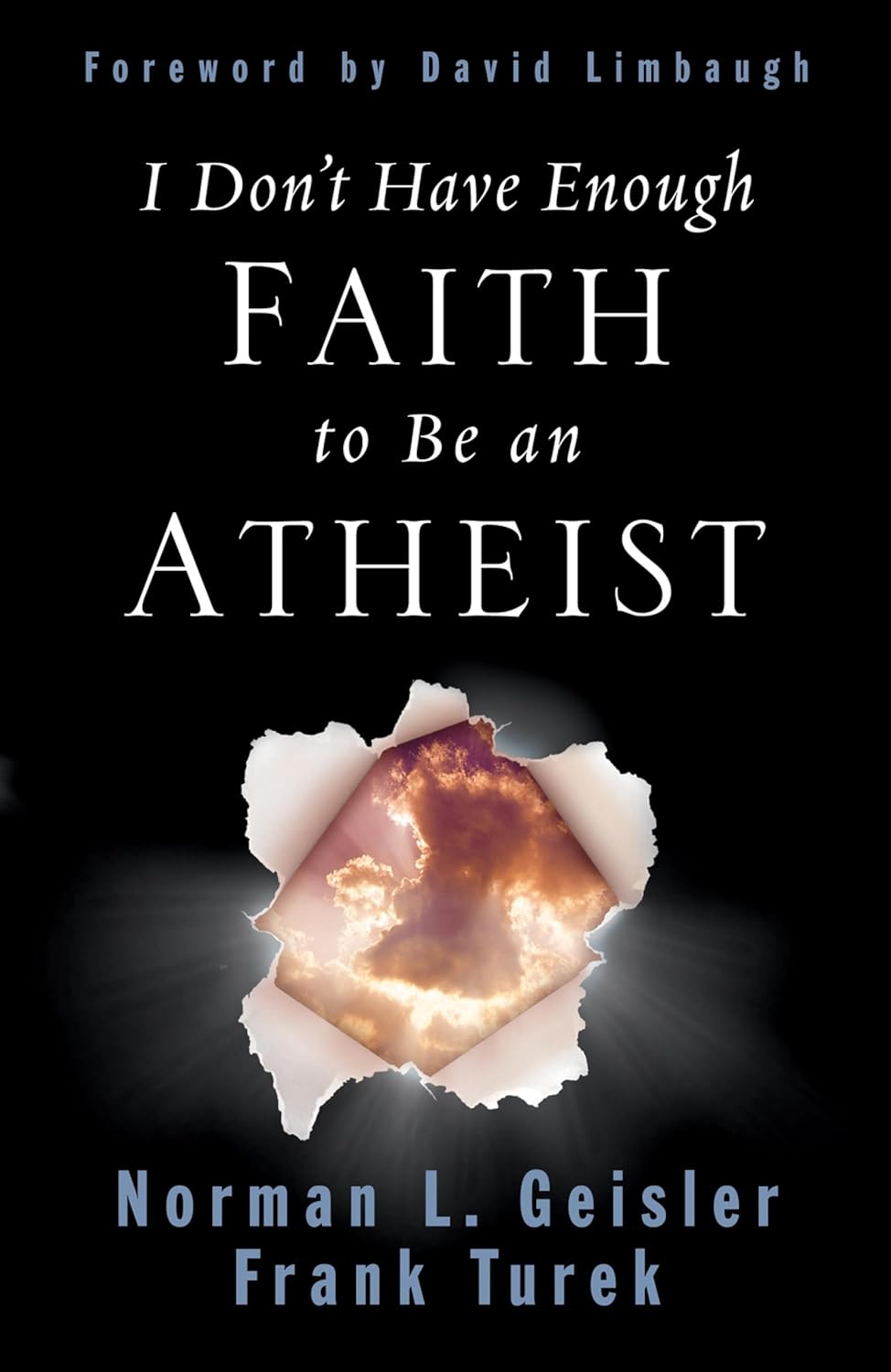
- Read foundational books like "I Don't Have Enough Faith to Be an Atheist" (the book Charlie was reading when he died), "Stealing from God," and others
- Start with children using resources like "Milo's Mission" from Brave Books (bravebooks.us/frank)
- Utilize curricula for second graders through eighth graders available at Cross Examined
- Access the podcast archive going back 15 years on evergreen topics through the Cross Examined app
- Consider formal apologetics education at Southern Evangelical Seminary (sees.edu)
The New Reality: Tripled Costs and Increased Danger
The world changed when Charlie Kirk was martyred 25 feet from Turek. Since his death, questions from students have shifted from skepticism to evangelism. Students want to know how they can better reach their non-Christian friends with the gospel.
Turek was scheduled to go to UC Berkeley with Charlie on November 10th. Charlie will remain in glory with Jesus, but Turek is still going to UC Berkeley—with actor and comedian Rob Schneider joining him.
However, with the threat of violence so high, Cross Examined now needs private security at all campus events, not just for Turek's safety but for the safety of audiences. Total costs have tripled from approximately $5,000 per campus to more than $15,000 per campus.
Since Cross Examined charges students nothing to attend these events, donors fund every event. Each event reaches hundreds in person, thousands via livestream, and millions through clips taken from the Q&A sessions.
"In nearly 20 years of going to campuses, I've never seen students more willing to hear the truth about Christianity than right now," Turek says. "This is a window of opportunity, but it's not going to stay open forever."
The Upcoming Schedule
Turek's schedule demonstrates his commitment to continue the work despite the danger:
- October 23: University of Georgia - Prove Me Wrong event with Lucas Miles
- October 25: Unshaken conference in San Clemente, California with Alisa Childers and Natasha Crain
- October 27: The Bible You Never Knew program restarting, discussing Joshua with new footage from Jericho
- November 3: Ohio State University - "If God, Why Evil?" addressing why God allowed Charlie to die
- November 8: Unshaken Frisco, Texas at Stonebriar Community Church
- November 9: Speaking at morning services at Stonebriar Community Church
- November 10: UC Berkeley with Rob Schneider
- November 13: University of Alabama in Tuscaloosa
- November 20: Boise State (Turek's 64th birthday)
- November 21: Restored Community Church, Boise
More events are coming in December and beyond.
A Personal Toll and a Faithful Witness
Turek is exhausted from the brutal two-week trip—14 to 16-hour days running where Jesus walked. But more than physical exhaustion, he carries the weight of grief. He normally wakes up for at least two hours in the middle of the night. The first thing he thinks about when he wakes up is Charlie. The last thing he thinks about when he goes to bed is Charlie.
"That's just the way it is, and it's going to be that way for a while," Turek says. "People have it much worse than I do—Erica and the people that were even much closer to Charlie than I was."
He asks for prayer not just for himself but for many others affected: Ben Shapiro, who now has to have armed guards all the time; Megyn Kelly, who is struggling because she knew and loved Charlie; Jack Posobiec, Andrew Kolvet, Mikey McCoy, Danny Phillips, Rob McCoy, Andrew Sopher, Justin, Dan, Blake Neff, and many others on Charlie's team and in his circle.
Despite the pain, Turek sees evidence of divine design even in tragedy. When his friend Christopher Hitchens died in 2011, Turek wrote a column called "Christopher Hitchens, Evidence of a Divine Being." He didn't have enough faith to believe that Hitchens's vibrant personality had no intelligent cause.
"I don't have enough faith to believe even a greater mind like my friend Charlie Kirk had no cause, no intelligent cause," Turek says. "It's obvious that God exists because there's an effect like Charlie Kirk, like you, like me, that can't be explained naturally."
The Window Is Open—For Now
Turek ends with urgency. Students are more willing to hear the truth about Christianity right now than at any time in his nearly 20 years of campus ministry. But this window won't stay open forever.
"If we want to rescue this generation from lies, we can't wait," he declares. "If we want to disciple students on campus and online, we can't hesitate. If we want to protect students from woke ideologies that are driving some of them to violence, if we want to proclaim the truth on campus, we must act now."
He quotes Jesus: "I am the way, the truth, and the life." His mission is to show the next generation why before this window closes.
The apathy must end. The sleeping church must wake up. And those with training, credentials, and resources must finally do what a 31-year-old man without a college degree sacrificed his life doing: engaging the culture with truth, having difficult conversations out of love, and making disciples who follow Jesus 24/7 in every area of life.
"Let's go do this together," Turek challenges his audience. The revival has begun. The question is whether the church will join it before the window closes.
Video Transcript
[Music] Why is a 31-year-old man who didn't go to college, just decided to study for himself, why is he one of the most most one of the one of the most effective evangelists of our time? When people with PhDs or pastors who are in the pulpit are refusing to engage on these issues, why is that? Why do you even need a Charlie Kirk? If pastors and other people with the proper credentials who have been to seminary and been to all the these uh institutions, if they had been following Jesus, using their skills, engaging the culture, loving people enough to have to have sometimes awkward and tensionfilled conversations for the good of them. If people had been doing that from the beginning, then we probably wouldn't have as negative a culture as we have now. Ladies and gentlemen, just got back from a twoe archaeology trip. took about 42 people with us to Jordan, Israel, and Egypt. And you've probably seen hopefully some of the videos that we've taken over there. There's many more coming. So, keep an eye on our social media sites, YouTube, Instagram, X, Facebook, Tik Tok. We're putting out videos. A lot more coming. I'm not going to say a lot about the trip right now. We'll get back to it. We just had Titus Kennedy on just a few days ago to talk about some of the archaeological discoveries related to the Bible, but we saw so many over there. Went to so many sites, sites, even sites I had never been to. It's just so amazing how much evidence there is out there. And I just want to talk for a few minutes just about Egypt because we just spent four days in Egypt. We had a great guide, Midto, our same guide we had back in December when we were there. And Egypt obviously has so many amazing sites, many of them biblical. But I want to point out one thing that I think would be a cure for people who are complaining about America. Because when you go to Egypt, and I love so many of the people over there and so many of the sites, but it's a very poor country compared to America. In fact, the Egyptian government controls a lot more than they control here. basically in the United States where uh privately funded or I should say uh private enterprise runs most of the economy. Of course, we do have some government obviously uh but it's a little bit different over there in Egypt. The government's involved in a lot more. What do you think if I were to ask you what is the average salary of an Egyptian worker in US dollars? You would be shocked to learn it's about $33 per month. Most Americans make that or the average American makes that in about a day. What an American what a Egyptian worker makes in a month. They make about approximately anywhere from say 3600 to say $5,000 a year. Let's just round it off to 4,000. The uh the American worker makes between say 61 and $65,000 per year on average. uh about what is that almost 20 times more. Um it's it's at least 16 to 18 times more. Anyway, the purchasing power of the American is five or six times more. That obviously costs more to live here, but the standard of living is so much higher. And if you're going to complain about America, you ought to go over to Egypt and try and live there for uh a year or two and and see how much you like it. you'll you'll appreciate America a lot more. Again, nothing against Egypt. It's got its advantages obviously, but from a prosperity perspective, there's no comparison. Uh and and unfortunately, too many people here in America think wealth is the norm. No. Across the world, poverty is the norm. Poverty is the norm. Wealth is something you have to work for. Poverty comes easily, as the proverbs say. A little folding of the hands and suddenly boom, you're in poverty. As the proverb says, you need to work hard, but you need to have a system that allows you to work hard and keep the benefits of your labor. And we have that here in America. Is it a perfect system? No. There is no perfect system, but it's far better than what you have over in Egypt and many of the other places we visited. So, if you want a cure for leftism, at least from an economic perspective, go to some of these countries that I've been to on this trip. Obviously, out of those three, Israel has the highest uh uh standard of living. Probably Jordan is next and then Egypt. As great as those countries are in terms of the things to see and and and the biblical uh the the biblical history that's there, when it comes to helping people get out of poverty, there's nothing like the United States of America. And so, uh, this idea that the government can control everything or socialism works is false. It's false because it misunderstands human nature. When was the last time you washed your rental car? You haven't because you don't wash your rental car because it's not yours. The same thing is true in socialistic countries. If you don't own it, you're not going to care about it as much and you're not going to be as motivated to do what you need to do as much. If you can keep more of the fruits of your labor, then you're going to have a much more prosperous society and everyone's going to benefit from that. A rising tide lifts all boats. All right, enough of the economics here. I just wanted to point that out that I am so appreciative to come back to America when I go to these countries. As much as I love going there and seeing all those things and the and there's great people over there, there's nothing like America. In fact, when we landed in New York, where the lady sitting next to me, who is a a former cop in uh in LA, an LAPD cop said, "Wow, it's so clean." She's talking about New York. It's so clean. Yes. Compared to Cairo, it is. Okay. You don't know how good you have it here, ladies and gentlemen. So, be appreciative that you live in America if you do live in America or live in the West somewhere because I can guarantee you most of the world has it a lot worse than than we do. And by the way, Jesus said, "To whom much is given, much will be required." You ought to be using your wealth to pro to propagate the gospel. Not just take care of yourself, but also to propagate the gospel. We'll talk more about that as we go. But I want to go to some of the questions that have come in. I haven't been able to do that, but so many emails have come in since Charlie's martyrdom, and these two relate to that. And uh I want to deal with these questions and hopefully some of the the answers here will be helpful because I know a lot of people are struggling and to be honest I'm I'm struggling. I mean um you you look at me you go man you you look tired cuz I am tired. Not only was this brutal it's it's not a vacation okay our days were 14 to 16 hours every day. It's not walk where Jesus walked. It's run where Jesus walked. and we were running and we wanted to see a lot because there's so much to see and you'll see some of it as I say on our YouTube channel and other social media sites. So, keep an eye on that. I'm tired. It's, you know, ever since Charlie's murder, I normally wake up at at least for two hours in the middle of the night. The first thing I I think about when I wake up is Charlie. The f the the the f the the first thing or the last thing I'm thinking about when I go to bed is Charlie. Um, that's just the way it is. And it's going to be that way for a while. And and people have it much worse than I do, Erica and the people that were even much closer to Charlie than I was. So continue to keep us in prayer and particularly them. But there's been good some good that's come out of it as well. And and and Kristen writes in from the UK. Here's what she writes in. Dear dear Dr. Turk, I like everybody. I'm struggling with what happened to Charlie. If what happened is for, she says, the greater good and many are led to Christ, then isn't that what Jesus died for? So my question is, why did Charlie have to die? Listening to his vast amazing mind, I'm sure uh he could have been more effective still. So why did God allow him to be taken there? Jesus was sent for that. And we're going to hear a little bit from Charlie a little bit later in this program. So so stick with us. And uh then she says, 'The other verses that come to mind are in this life you will have trouble. Yeah, indeed you will have trouble. But that one isn't cutting it for me either, says Kristen. I I can't imagine your pain or his family's pain if it affects strangers like this, but I don't know where to put this thought. Why couldn't it Why couldn't it have just dodged his ear or neck and and this not happen? I'm sorry for your loss and I'm sorry to ask you, but if you don't know either, then it's it's hard to comprehend. Much love, Christian from the UK. Well, let me read a passage from uh First Peter. You know, the just about every New Testament book talks about suffering somewhere. First Peter is about suffering. If you don't know, this is from First Peter 4 when people were under persecution in the first century. Dear friends, do not be surprised at the fiery ordeal that has come on you to test you. Do not be surprised. Why are we surprised when this kind of thing happens? By the way, ladies and gentlemen, does the Bible promise that you're going to live at least 80 carefree years? No, quite the opposite. The Bible promises trouble. In fact, Kristen had mentioned that in the verse she just alluded to where she said, "In this life, you will have trouble. Jesus said, "If they persecuted me, they're going to persecute you." Paul said, "Anyone who lives a faithful life in Christ Jesus will be persecuted." And he said, "Blessed are you when people insult you." This is what Jesus said in the sermon on the mount. Blessed are you when people insult you, for great is your reward in heaven, when they say all these evil things about you. Anyway, Peter goes on to say this. Do not be surprised at the fiery fiery ordeal that has come upon you to test you as though something strange were happening to you. But rejoice in as much as you participate in the suffering of Christ so that you may be overjoyed when his glory is revealed. Well, his glory was revealed to Charlie and uh as I mentioned in the first podcast after his murder that when we had Charlie in the car, his eyes were fixed. He wasn't looking at me. He was looking right past me into eternity. He was already with Jesus, absent from the body, present with the Lord. That's where he was. He's already in glory. Now, it's not the ultimate glory. The heaven and the new heavens and new earth haven't been created yet. That'll be our ultimate our ultimate heaven. But right now, he's absent from the body, present with the Lord. So, he's overjoyed to be in Christ's presence. Peter goes on to say, "If you are insulted because of his name in Christ, you are blessed. For the spirit of glory and of God rests on you." He's echoing what Jesus said in the sermon on the mount. Oh, by the way, I got to say one other thing. This was amazing going to Israel. When we went to Israel just a week or so ago when we were in Israel, we went to almost every site. Nobody was there. We were alone in Capernaum. We didn't have to wait at all to get in the church of nativity in in Bethlehem. Some people waited four hours. This is what happens when you go to Israel during a war. There's nobody else there. Nobody was on the sermon on the mount site. It was just us. I mean it was amazing in that regard. In any event, I digress. Peter says, "If you are insulted because of the name of Christ, you are blessed. For the spirit of God, spirit of glory and of God rests on you. If you suffer, it should be not as a murderer, a thief, or any other kind of criminal or even as a meddler. However, if you suffer as a Christian, do not be ashamed. But praise God that you bear that name." Praise God that you bear that name for suffering. Yeah. I mean, this is not easy, friends. This is just reality. And for all those people out there saying, "Well, if you just have enough faith, you're going to be healthy and wealthy." Ladies and gentlemen, were Jesus and the apostles healthy and wealthy? No. They were brutalized. They became martyrs. And don't tell me they didn't have enough faith. They had plenty of faith. Peter's going on to say you you should be blessed when you when you suffer. He says, "However, if you suffer as a Christian, do not be ashamed. But praise God that you bear that name, for it is time for a judgment to begin with God's household." Whoa. Wow. We're going to be judged as part of God's household. And if it begins with us, what will the outcome be for those who do not obey the gospel of God? In other words, they're going to be really judged. And so he goes on to say, "So those who suffer according to God's will should commit themselves to their faithful creator and continue to do good." So first response, Christian, don't expect life to be easy when you're a Christian or even a non-Christian, but certainly as a Christian. Charlie was not guaranteed 80 carefree years. None of us are. And let me point out that this tragedy, like all evil events, only makes sense if God exists. Not if he doesn't exist. If he doesn't exist, this makes no sense at all. Why? Well, first of all, because there is no evil unless there's good. And there is no good in an objective sense unless God exists. As we've been talking about on college campuses since Charlie's death, that evil does not disprove God. Evil proves that God does exist. I mean, it may evil may prove there's a devil out there, but it can't disprove God because there'd be no such thing as evil unless there was good. And there'd be no such thing as good unless God existed. I mean, CS Lewis said it very well. He said, "As an atheist, my argument against God was that the universe seems so cruel and unjust. But how would I got this idea of just and unjust? A man does not call a line crooked unless he has some idea of a straight line. What was I comparing this universe with when I called it unjust?" Indeed, there's no such thing as unjustice unless there's justice. There's no such thing as immoral unless there's moral. There's no such thing as not right unless there's right. And there's no such thing as right in an objective sense unless God exists. Because his nature is what we mean by the standard of righteousness. If there is no standard of righteousness that we're all obligated to obey, an objective standard outside of ourselves, then nothing is ultimately good. But that also means nothing is ultimately evil. So what are we complaining about? You can't complain. You can just say, "I don't like it. It's my preference that this wouldn't have happened." But it's not really wrong unless God exists. What happened to Charlie was just a matter of opinion. In fact, if you think about this, this obvious question, why did God allow this to happen? Would only make sense if there is a moral standard. Number one, it assumes a moral standard. It assumes that this is a bad thing. But that assumes there must be a standard that defines what bad is, a standard of good. Because evil is a lack and a good thing. It's not a thing in itself. Evil is like cancer. If you take all the cancer out of a good body, you got a better body. What happens if you take all the body out of the cancer? You got nothing. It doesn't exist. Evil is like rust in a car. If you take all the rust out of a car, you got a better car. What happens if you take all the car out of the rust? You got a pinto. You got to be old enough to know that joke. No, it doesn't exist. Evil does not exist by itself. It only can exist as a parasite in a good thing. In fact, you could put it this way. Evil is anti-creation. God creates something perfect and we degrade it by by destroying something about the creation. That's what evil is. So God creates a great man in Charlie Kirk and we destroy it. Someone destroys it by shooting him. That's what evil is. It takes a good creation and destroys it or degrades it. So evil assumes a moral standard. It also assumes that we are obligated to obey that moral standard. How does how is that possible if God doesn't exist? There are no objective obligations unless God exists. There's no there's no there's no u natural law out there that you're obligated to obey. You're not obligated to obey gravity. When you try and say dunk a basketball, you're not sinning against the law of gravity. And you can only sin against persons. So there's no natural force out there that has the authority to tell you what to do. Gravity, electromagnetism, the strong and weak nuclear forces, they have no authority to tell you what to do. Neither does evolution. If that's true, no authority to tell you what to do. How does a mutating genetic code have the authority to tell you you ought not murder? Who said? And if if it's all about survival, why why can't I murder to survive? Why can't I rape to survive? To propagate my genes. No. Evolution doesn't work as the standard either. It also assumes there's a moral purpose to life or there's there's some kind of purpose to life. To say that what happened to Charlie is wrong. There's got to be a purpose to life. What's the purpose? If there is no purpose, you can't say that murdering somebody takes us further from that purpose while loving someone takes us closer too. There has to be a purpose to life to say this particular action is negative because it takes us further from that purpose and this particular action is good because it takes us closer to that purpose if there is no purpose. Just like you can't say that your quarterback throwing a touchdown, is better than your quarterback throwing a pick six, that's where he throws it to the opposite team and they take it back for a touchdown. Unless you know the purpose of the game. If there is no purpose to the game, you can't say that the touchdown was better than the pick six because the touchdown got you closer to the purpose, scoring more points than the other team and the pick six took you further away. They scored more points than you. There's got to be a purpose. If there's no purpose to life, then what happened to Charlie wasn't good or bad. It was just someone's opinion. And there can only be an objective purpose to life if God exists. Otherwise, it's just your opinion against mine. It's just your opinion against, say, Hitler's opinion or Stalin's opinion or the guy that shot Charlie's opinion. It also by the way this idea that what happened to Charlie was bad assumes the human life is valuable. And why is it valuable if there is no God? There is no God. Human life is just like any other life. Just a preference. Okay. Why should humans flourish and not roaches? What does it matter? Well, human beings are more intelligent. What does intelligence matter? We're all going to die and just become worm food. How we live ultimately makes no difference. Whether you live as a murderer or you live as somebody who loves other people makes no difference ultimately because we're just going to go to heat death. What's the point? There isn't a point unless God exists. So when we ask it's a legitimate question to ask you know why did God allow us to very legitimate don't get me wrong. I'm just saying there are so many assumptions underneath that question that can only be true if God exists. So evil does not disprove God. It actually shows God does exist because evil can only exist if good exists. And good can only exist in objective sense if a being like God exists. Now, it doesn't prove the Christian God necessarily, but it turns out if Jesus rose from the dead, the standard we're talking about is the Christian God. We don't have time to get into the resurrection today, but that's what we do. And I don't have enough faith to be an atheist. So, if you want more on that, Christian, check that out. Also, the book that has more on the question of if God, why evil is a book called Stealing from God? Why atheists need God to make their case. So, you might want to check that out, Kristen. Um, now I mentioned that God does not promise us a pain-free long life. Uh, and you pointed that out as well, Kristen. Um, and let me ask you a question. Um, what would happen if God stopped every evil choice we made? You know, why didn't God divert the bullet? He certainly could have, of course. Why didn't he? Well, I don't know. But I know why I don't know. I'm finite. I'm inside of time. And uh God is infinite outside of time. He can see the end from the beginning. And I'll I'll get to that in a minute. But I want to point out that if God were to stop all the evil choices and divert every negative implication of an evil choice so nothing negative happened, we really wouldn't be creatures that could affect reality. It would be a morally triv trivial world. Every time we tried to do evil, God stopped us. You said, "Doesn't he do that in heaven?" No. In heaven, nobody will try and do evil because a we won't have a sin nature and b we'll see God for who he is and we won't have any desire to sin because now we sin because we're trying to get good things that we don't have like sex, money, and power. We're trying to get those good things. They're good things. The problem is we'll often take shortcuts to get them because they are so good. And that's what sin is. We're trying to get a good thing in an illegitimate way. We're missing the mark. by trying to get something in an illegitimate, a sinful way. Um, but if God were to stop all the evil in the world, this would be it might as well just be a robot world because every time we try and choose something, nothing happens. In fact, I remember years ago I was at Michigan State and I knew there was a militant atheist in the audience during the I don't have enough faith to be an atheist presentation because he sat he sat stonefaced like with a frown on his face for almost two hours. He didn't crack a smile once and I had some pretty good jokes in the presentation. Anyway, when his hand went up as soon as I asked for questions, I said, "Yes, sir." He said, "If there is a good God, why doesn't he stop all the evil in the world?" And I said, ' Sir, that is an excellent question. Maybe because if he did, he might start with you and me because we do evil every day. You ever notice when we start complaining about evil, we're always complaining about somebody else doing it? We always say, "God, why don't you stop him? God, why don't you stop her?" We never say, "God, why don't you stop me?" Ladies and gentlemen, if God were to stop evil at midnight tonight, would you still be alive at 12:01? I wouldn't be. Ultimately, God doesn't stop evil. He just quarantines it. Doesn't take away free choice. He just puts the people who want to do evil in a quarantined place called hell. So they can't interfere with the people who have chosen redemption through Jesus. So God gives people free choice and respects free choice. He doesn't stop every free act they try and and do even if they're evil. He just quarantines them ultimately in a place where they can't hurt others. Now, there may be instances where God does stop evil. We just won't. We don't know what those times are. There could be a lot of times in history where God has diverted the bullet or prevented something evil from happening. My point is, if he did that all the time, then this would not be a morally relevant world and we would never grow. Our choices really wouldn't matter. And as we're seeing now, sometimes, in fact, according to the Bible, always good things will come from evil to those that love God and are called according to his purpose. That's Romans 8:28. In fact, I struggled and still struggle a lot with evil. You know, why does God allow certain things to happen? I keep looking at Charlie. I I keep seeing all the great things he was saying. I mean, not just personally to me, but I mean, not our just personal interactions, but all the stuff that's still online. And there's hundreds of hours of video you haven't seen of Charlie that will be released soon. Um, brilliant. Just so many great insights Charlie had. I was privileged to help him with what he was trying to learn about Christian apologetics. But he was such a good student, he he just picked anything I knew up immediately. And but he he learned most of what he knew, not from me, but from studying himself and talking to other people. And I ask myself every day, why did God take him again? I don't know why. Or why did God allow it to happen? I don't know why, but I know why. I don't know why. God can bring forth good even when we can't see it. And the thing that helped me with this issue years ago when I studied it was the ripple effect. There's always a ripple effect. Everything that happens, good or bad, ripples forward to affect trillions of other events. Why did God allow Charlie to go to die? It could be because of the good ripples that will come forth because of it. And we're already seeing so many of them. In fact, it's not just ripples. It's a tsunami of good. As I said at the memorial service, at least 100 million people watched that. and heard the gospel repeatedly from politicians, not just from me, but like Marco Rubio and Pete Hegsth and JD Vance and even the president who, you know, would never claim to be an evangelical. He still doesn't understand how people are saved. He thinks you got to do good to be saved. Still doesn't get it. And President Trump has been told several times what the gospel is. Somehow it hasn't penetrated. At least not to this point anyway. In fact, I said to Charlie and Jack Hibbs, who saw him more than I did, I I've privately I've only been with with Trump twice, and that was during the 2016 campaign. But I said, "Hey, Charlie. Hey, Jack. You know, can you explain grace to him?" Yeah. Yeah, I get it. Yeah. He doesn't quite get it yet. He doesn't quite get He still still thinks that, you know, if you do enough good things, they outweigh the bad. No, no, no. That's not the way it works. In fact, Paul even says in Galatians 2, if righteousness could be achieved by the law, then Christ died in vain. Why do you need Jesus if you could just obey a set of commands and and earn your way into heaven? You wouldn't. But you can't earn your way into heaven for an infinitely with an infinitely just being because we haven't been infinitely just. And since he's infinitely just, he has to punish sin. So what does he do instead of punishing us? He punishes an innocent substitute in our place. The only place he can find an innocent substitute is in himself. So he adds humanity to his deity, comes to earth, allows the the the the very creatures that rebelled against him to torture and kill him so he could take our punishment upon himself. And then by trusting in him, you can not only be forgiven, but given his righteousness. It's the greatest story ever told and it happens to be true. The God of the universe takes our punishment upon himself. He's infinitely just, but he's also infinitely loving and that's why he does it. Now, the passage on this that might talk about this more than anything, there's several in the New Testament and even the Old, but let me just mention one. It's second Corinthians 4. I'm talking about the ripple effect here. Well, two. Let me tell you, one from the old, one from the New. Let's go to the old first. Joseph, we we talked a lot about Joseph on this trip to Egypt and Israel and Jordan. And there's a passage where Joseph um after he he confronts his brothers who sold him into slavery, he says to them, "What you meant for evil, God meant for good, the saving of many lives." Joseph was treated horribly by his brothers, but the evil they did actually rippled forward to help them later. The saving of many lives. There you could see the ripple effect. Evil brings forth good. You can't always see it. Paul talks about it this way in 2 uh Corinthians 4 when he says, "Our light and momentary afflictions are achieving for us a greater weight of glory that far outweighs them all." So we fix our eyes not on what is seen for what is seen is temporary. We fix our eyes on what is unseen for what is unseen is eternal. You need to keep an eternal perspective, ladies and gentlemen. I mean, if Charlie were here today and we were to say, "Hey, Charlie, in order for a hundred people to come to know Christ, and they could they won't come to Christ any other way, you need to die." He'd go sign me up. That's what my life is all about anyway. I'm trying to bring people to Jesus and I'm trying to get them to be Christians 247 in every area of their lives. 247 365. Christ owns every area of our lives. He's supposed to influence what we do at church, what we do at home, what we do online, what we do at work, what we do in the voting booth, what we do with our neighbors, everywhere. That's what Charlie was all about. A 360 247 Christian that covers every area of life. That's what Charlie was all about. He would say, "Yeah, sign me up. I don't want to leave Eric. I don't want to leave the kids, but that's what my life is about. Knowing Jesus and making him known. And if people come to Christ because of that, I'm all in." Well, he's saving a lot more people now. In fact, I don't know this because I don't know the future, but it could be that the amount of good that comes from this in eternity in in this world and into eternity will far out out will far exceed what would have happened had Charlie lived. Now, of course, I wish he was still here. I'm just saying it could be that could be the case. We don't know. We're inside of time. God is outside of time and he is bringing good from this evil. We can see some of it. We can't see all of it. In fact, we can see very little of it. We know very little of the past, very little of the present, nothing of the future except what God tells us. This could be a worldwide revival. Maybe it is a worldwide revival going on right now. We'll see. Is it as as what as the days and months unfold, but Bible sales are up, church attendance is up. I'm getting emails all over the place. People are becoming Christians. I got a lady from Sweden, atheist. I'm a Christian now. Goes to Charlie. Someone else from Denmark. Same thing. We're getting stuff from all over the world and TPUSA is as well. So, good can come from evil. And I'm going to talk more about this in a few minutes, but I got to go to what Jason writes one more from a man by the name of Jason. And this this letter that he writes, I think should wake us all up. He said, "Dear Frank, this is a difficult email to write because of the shame I feel about my own actions, or rather the lack of action. I'm a 50-year-old guy with a PhD in Christian theology. I'm ashamed of myself because I have not done enough to engage the culture for Christ. For the last several years, I've been trying to pinpoint my lack of satisfaction with the evangelical subculture of Christianity. After Charlie Kirk's death, I think I have clarity on the nature of my discontent. It is this that both the ministry and academic sides of evangelicalism have overall refused to engage the culture for Christ. In other words, too many evangelicals show a lack of interest in relating to and trying to understand with sincerity those they disagree with. Evangelicals have largely given up on communicating with world views that differ from their own. And he goes on to say, "It should have been me rather than Charlie who was willing to sacrifice themselves for the sake of the gospel. It should have been the pastors or theologians willingness to do the same before Charlie ever came along. The 31-year-old man was murdered because the church has for too long been asleep in the light and refused to authentically care about a culture in desperate need of Christian truth." Exactly, Jason. Thank you for admitting that. Why is a 31 year old man didn't go to college just decided to study for himself? Why is he one of the most most one of the one of the most effective evangelists of our time when people with PhDs or pastors who are in the pulpit are refusing to engage on these issues? Why is that? Why do you even need a Charlie Kirk? If pastors and other people with the proper credentials who have been to seminary and been to all the these uh institutions, if they had been following Jesus, using their skills, engaging the culture, loving people enough to have to have sometimes awkward and tensionfilled conversations for the good of them. If people had been doing that from the beginning, then we probably wouldn't have as negative a culture as we have now. In fact, I wrote a column, what 16 years ago, it's 2009. The title of the column, if I remember correctly, was something like um oh, why can't I remember the exact title? Had something to do with country a mess. Yeah, this is the title. Country a mess. Blame the church. Yeah, we've been asleep in the light, as Jason says. And we don't want to shine the light anywhere else because, oh, that could be offensive to some people, and I don't want to engage in that. I don't want to make people mad and offend them. Ladies and gentlemen, if you want people to stay in sin, yeah, never offend them, never say a word, just agree with them all the time. But Paul said, "Love always protects. Love always perseveres. Love does not rejoice in wrongdoing. Love rejoices in the truth." And Jesus went after people who were outside of the truth and teaching wrong things. I mean, just read John chapter 2, John chapter 8, and Matthew chapter 23. He excoriates the teachers of his day who were teaching wrong things. Jesus was not Barney. Can't we all get along, boys and girls? No. He said, "I came to bring a sword. It's going to divide mother and daughter, father and son." How often have you heard those passages talked about? You haven't. But you know those passages are true because some of you are divided in your own family over Jesus. And you should be. You should be following Jesus rather than your culture. You should be following Jesus rather than CNN or Fox News or whoever is out there. You should be following Jesus instead of what your family even wants. Jesus said, "If you don't hate your parents compared to me, you can't be my disciple." No, he doesn't literally mean hate your parents. What he's he's drawing a strong contrast. He's just pointing this out. You got to deny yourself to follow me. But no, we don't want to do that. We want to make sure nobody unfriends us on Facebook or sends us a nasty gram on X or puts a bad comment in a YouTube or Tik Tok video. Anyway, here's what Jason goes on to say. I am truly beside myself over Charlie's death because it highlights so much of a life I feel I've wasted. Even before Charlie's death, I've been working in my church to teach brief courses on the reliability of the New Testament and the relationship of Christianity and science. Few congregants have attended. I don't say this to elicit encouragement. I simply state it as a fact that reinforces evangelicalism's lack of interest in pursuing the development of the Christian mind for Christ to engage the culture better. Anyway, I'm thankful for your ability to work with Charlie and to help him build his skills. And then he wrote a letter, he included a letter he wrote to TPUSA. So here's a guy with a PhD in Christian theology and he's saying Charlie ran circles around what he was doing and now he's motivated to actually use his skills for Jesus. Well, here's another good thing that's come out of it. The apathy that so many in the Christian church have experienced hopefully is now becoming it's being transformed into a motivation to do what Charlie did and that is to make disciples to know Jesus and to make him known. So it's a time to get serious ladies and gentlemen. This is a good thing that's coming from this great tragedy. And if you want to help and I I look I've gotten so many emails. How can I help? What can I do? I' I've said you can always pray. Um you can uh look sign up for our email because sometimes when we have a job opening, we'll put it out on our email list. And look, we only send one email a week and it's usually sending you a video of something we've done that's helpful to you. We don't pepper you with emails. We don't give our your email address to anyone else. In fact, if you go to crossexamine.org And let me just make sure I'm telling you this right because I haven't done this myself lately because I'm already on the email list. But let's see. If you go to crossexamine.org, crossexamine with a D on the end of it. Subscribe. It's right there. It's right next to donate. Subscribe. Just subscribe to the email. We'll uh we'll send you one email a week and and you'll be on the inside. And maybe you can volunteer for us or maybe if there's a job opening you can work with us. Um, but if you feel like you want to make a difference, so many people want to help, but you you don't you haven't studied, you you haven't done enough education to like get involved in apologetics or theology or philosophy, you can't give what you don't have. You can't teach what you don't know. So, here are some things you can do. First of all, what's the purpose of church? According to Ephesians 4, the purpose of church is to equip the saints to do ministry. In addition to worshiping Jesus, obviously it's to equip the saints to do ministry. The question is your is your church helping you, is it is it equipping you to do ministry? And if you have certain skills and gifts, and everyone does, are you volunteering at your church to equip other saints? See, the church technically is not a place that's all about bringing unbelievers to salvation. It's about is about making believers disciples. And I've talked about this before. Some megaurches get it right, others don't. Some megaurches are all about the seeker model. And you know what happens when it's all about the seeker model? They wind up never talking about the hard issues because we don't want to offend anybody. We just want to get people to become Christians. We're going to talk more about this in a future program. But what they wind up doing is never talking about the hard issues. And they wind up getting half converts, if converts at all. And even Bill Hibbels, who really started this whole movement back in the 70s at Willow Creek, admits we haven't made disciples. And if you're not making disciples, you're not doing church. Jesus didn't say make believers. He said make disciples, true followers. So volunteer at your church. Use your gifts. Use your skills. Now's the time. It's revival might be happening. There's so many good signs of this. So now's the time to get involved. Bloom where you're planted. You don't need to move anywhere else. just wherever you are, bloom where you're planted. As I said, sign up for our email. If there's an opportunity that comes around, we'll um we'll let you know. Now, here are some things you can do. Say you have a kid who's just graduating high school. Um there are gap year programs like u Impact 360, which is great. I think Summit has one, but TPUSA has been putting out one. My friend has been putting out one. My friend Hutz Hutsburgger. Yeah, that's his name. and is a friend of Charlie too has been spearheading this. I just got a text this morning from Huts. Here's what he said. He said, "I'm great, very grateful for your support in these extraordinary and opportune days. Since Charlie's assassination, we at Turning Point Education have heard from 202 countries. There's there's only about 202 in the world, by the way, maybe a few more. Including over 1.6 million orders for our curriculum." To put some perspective in this, before Charlie was shot, they had 20,000 orders. Now they have 1.6 million orders for our curriculum. 1,300 groups who want us to start schools with us. Over 1,200 who want to join our association. 15,000 inquiries and more. We are seeing John 12:24 in real time. And it's amazing. What's John 12:24? That's where Jesus says, very truly I tell you, unless a kernel of wheat falls to the ground and dies, it remains only a single seed. But if it dies, it produces many seeds. And that's what Jesus was saying. I'm going to the cross. It's going to produce many seeds. And Huts is saying, well, this could be what's happening with Charlie. We're seeing many seeds. We're seeing many good things happen. Now, this Turning Point USA curriculum is something that will it's a gap year before you go to college or even if you don't go to college. And it's a classical kind of education. And a little over a week before he died, and I'm going to tell you in a minute how you can get a part of this, Charlie did about a three minute little talk on this to a pe to to people that were at a conference in Dallas that he was supposed to go to, but he couldn't because he had to go over to Korea and Japan. And then right after he got back from Korea and Japan, we went to Utah Valley University on September 10th. He recorded this maybe 10 days before he was murdered. And here's what he said. Check this out. Hey everybody, I so so so wish I could be there right now, but I have to go to Asia and it just didn't work with back and forth and all around. So, please accept my deep deepest apologies. I so wish I could be with you right now. Uh I'm just so thrilled for what the team first has accomplished. The entire prep your team, uh Huts and Dr. Gu, thank you guys for your hard work and your diligence and your faithfulness putting this all together. So, God bless you guys and for all of you, prep your students. I I just I just can't say enough good stuff about this idea. This idea was really boring, largely thanks to Huts, who said, "Charlie, you're always talking about not going to college. Why don't we develop a biblically based prep year where we are able to bring students through a masterclass year of the western cannon of biblical scriptures of what it means to think, actually go through what logic is, what reason is. And for all you parents uh watching this right now, I would venture a guess, I would place a wager even that your daughter, your son over the next year is going to learn a lot more at Turning Point Academy prep year than going to just a regular college or university. You see, at the regular college university, it's kind of like a mill. You know, they they sit in an auditorium and they just kind of teach the same thing and it's all pable. It's very um secular. It's humanist and even if you send them to a Christian school, it might be woke and not individualized. This is individualized teaching that is meant to raise up biblical leaders in the faith so that they can be so your son and daughter can be understanding what Jesus wants us to do to fulfill the great commission to make disciples of all nations to love God and love people to know what Jesus actually wants. And if we're honest with ourselves, uh, the nation needs more young game changers like your son and your daughter that is going through prep year to really dive into these ideas, see what the Lord wants for them. And there's and the the experts that they are going to be around the subject matter professionals to learn what the Bible has to say to learn honestly what is the constitution what are the federalist papers what is the declaration of independence to ri raise up biblical patriots that love this nation but most importantly love god and love Jesus and want to serve for his purposes here on earth and so I'm so touched by um all of you wanting to spend spend a year with us. I'm definitely going to make a couple appearances whenever I come through Dallas. I'm going to make a point to come see you guys. I'm so wish I could be there, but I'm booked to go to Korea and then Tokyo and so the dates just didn't work out and I have to give a huge speech there well before all this kind of came together. This has been a commitment I've had in my books for well over a year and a half. So, please forgive me and accept my apology that I can't be there. But, God bless you guys and thank you Huts and the entire team. Everybody, study hard, work hard. This is a year that will form you for the rest of your life. This is a year that you will remember for as long as you live. It will set a foundation of your worldview. It will teach you apologetics. It will teach you all the great lessons of the faith. And so, dive in. It's an all you can eat buffet. Take learning super seriously. You're going to dive deeper and become wiser than any other college could get you close to. So, God bless you guys and thank you for spending the time. I'll be praying for you and hope to see you guys soon. and I will see you soon. God bless you all. Thanks so much. >> What a beautiful mind. What a beautiful man. What a wise man at 31. You know, when my friend Christopher Hitchens died back in 2011, I call him a friend because we conversed a little bit offline after we had those two debates. I wrote a column called Christopher Hitchens, evidence of a divine being. Christopher Hitchens, despite being an atheist, had a brilliant mind, was very witty, was a unique personality. Christians loved him. I loved him. Even though often he was rude and unkind, but there was just something unique about Christopher Hitchens. I don't have enough faith to believe that that vibrant personality had no cause. No intelligent cause. And I don't have enough faith to believe even a greater mind like my friend Charlie Kirk had no cause. No intelligent cause. It's obvious that God exists because there's an effect like Charlie Kirk, like you, like me, that can't be explained naturally. And even if you could make some sort of case that natural laws somehow could bring forth such a being, they can't. But even if they could, you're still going to ask the question, where did the natural laws come from? Where did the universe come from? You're ultimately going to get back to an uncaused first cause that's immaterial. That immaterial cause is what we mean by God. That immaterial mind, that is spaceless, timeless, immaterial, powerful, personal, moral, intelligent. You don't need the Bible to know that. That's just what we call natural theology. That's just reasoning from effect to cause. Every effect has to have a cause. That's the ground of all science, ladies and gentlemen. If you want to give up on causality, you've just given up on science. The most scientific viewpoint you can have is that there is an uncaused first cause. And that uncaused first cause has to be greater than its effects. And if Christopher Hitchens or Charlie Kirk or you or me or anybody is an effect that requires intelligence, what must be the cause? like, well, if you want that curriculum that Charlie was talking about, by the way, we're going to do everything we can to advance Charlie's legacy. I know Turning Point is all about that. We're doing what we can because his legacy is just what Jesus would want us to do. to make Jesus known and to know Jesus and to make him known. That's John 17:3 along with the great commission. And in doing that, we love people. And that involves being involved in laws that protect them from evil. We'll talk more about that in a future program. But here, if you want the Turning Point Academy that one the the the curriculum that 1.6 million people have just ordered, and look, Turning Point's not asking me to do this. I just You want to do something? Here's something you can do, okay? Go to TurningPoint ed for for education. Just TurningPoint ed all oneword.com. We'll put it in the show notes. Okay. Well, you see that's for post high school and maybe seniors and juniors can handle it, but it's it's it's a curriculum post high school. How about starting earlier than that? We've got a ton of online courses at crossexamine.org. Just go to crossexamine.org, click on online courses, start taking some courses, okay? Some of them are premium versions where I'll be your instructor or Lisa Childers will be or uh we have Shawn McDall, we have Mike Cona, we have uh Jay Warner Wallace, we have we have all sorts of people who are teaching courses or you can just take them in a self-paced way. Anytime you want to take them, you can. By the way, there's been a a huge surge of people taking these courses since the tragic murder of Charlie. Also, where else can you get uh instruction? We've got books, as you know, I don't have enough faith to be an atheist, Stealing from God, Legislating Morality, Correct, Not Politically Correct, Hollywood Heroes. Uh these are books that I've written or co-written that can be helpful to you. I hope there's many other books you can get. Of course, we have a whole Oh, we got a new book. It's for kids. Start as early as you can. I've only talked about this once or twice with Brave Books, Milo's Mission. These are for kids, you know, 2 to 10. And if you want this book and to get a new book, and by the way, they're beautifully illustrated. If you want to get a new book, my grandkids love this stuff. If you want to get a new book every month, just go to bravebooks. usfrank. bravebooks. usfrank. You'll get a discount and you can start getting the books for your kids. And we have curricula, by the way, on our on our website. Just click on store curricula. It goes all the way down to the second grade that basically teaches I don't have enough faith to be an atheist for the second grade. Like I think it's called Yes, God is real and another for like sixth to eighth grader. It is called It's called Let's Get Real. And we have logic courses. Train your brain for sixth to eighth graders. And we tell parents to take it too because it's written for sixth to eighth graders. Yeah. Yeah. Even you can understand it. You ought to teach kids how to think because when they get to public school, they're not going to be taught that. They're going to be taught what to feel rather than how to think. And that's going to be a problem. Our podcast archive has evergreen topics that go back 15 years. Get our app, the cross-examined app. Two words in the app store, cross-examined. You can go back 15 years and find episodes we've done on evergreen topics. They're not even current events, on theology, on philosophy, on apologetics. Check them all out. our podcast archive, our YouTube channel, Facebook, our uh Instagram, our X, our Tik Tok. In fact, I get a lot of questions from you guys. They're like they're like you email a question, hello@crossexamine.org. I can't get to all of them obviously, but some of them are so basic that you ought to go to our YouTube channel first. We probably have a we probably have a YouTube video on the question. Just click on the little little uh search hourglass there and type in I I just got a question on the age of the earth again. Age of the earth. Just type it in. Age of the universe. Type it in. You can see what I think about it. All right. So, our YouTube channel has all that. By the way, the book that Charlie was reading when he died or just he was just almost done reading was I don't have enough faith to be an atheist. He read a lot of it on his way to and from Korea. And he really, I'm just telling you what he said. It was an excellent book. He was trying to get better at apologetics and he was. But now that Charlie's with Glory, we got to get more people involved in apologetics. Even if he was still here, we'd still need more. So get the Turning Point Academy. Take some of our online courses. If you really you already have a degree or you you already got two years of college, go to sees.edu. That's for Southern Evangelical Seminary. That's where I went to Lisa Childers is going. Uh that's where uh Tim Barnett of Red Pen Logic goes. Uh so many people have gone there. Uh Jason Jimenez, you may know Jason. Um there's so many apologists that have gone to SCES. It's a great the the best place to get an apologetics education. SCES.edu. You can do your last two years of college. You can also do then graduate work there. All right. Now, what are we doing about this in the near term? Okay, get buckle up, friends. I'm gonna have to get some sleep because we've got uh we've got quite quite a schedule coming up. I want to tell you about hopefully you can be with us. We were going to Georgia Tech. That's actually been moved to the University of Georgia this Thursday, October 23rd. University of Georgia. Prove me wrong. I'll be there with Lucas Miles, the head of TPUSA Faith. It'll be a TPUSA event. Will not be livereamed, but you'll see the clips later. So if you're anywhere near the University of Georgia, see you there. Then this next weekend, Unshaken, San Clementi, California with me, Alisa Childers, Natasha Crane, October 25th. Details on the website. Then next Monday, the Bible you never knew. We're restarting that program. October 27th, be talking about Joshua. We just went to Jericho. We're going to show you some new footage from Jericho on October 27th. We'll be live stream 7:30 Eastern time. Ohio State, if God, why evil? Why did God allow Charlie to die? We'll talk about that. take questions. November 3rd, that's at Ohio State University. Then unshaken Frisco, Texas at Stonebrier Community Church, November 8th. And I'll be speaking at the morning services at Stonebrier Community Church on November 9th. Then University Oh, sorry. Uh, forgot. Do you see Berkeley? November 10th. Uh, you know where that is out in California, the Bay Area. I'll be there with Rob Schneider. Charlie and I were supposed to be there, but Charlie's going to stay in Gloria. In Gloria, I'm going Glory. And um Rob Schneider is going to be with me. You know, Rob just wrote a book. I just downloaded it today. Uh and it's called uh You Can Do It, Speak Your Mind, America. You know, there's Saturday Night Live actor Rob Schneider. He's conservative. He wrote a book on free speech. I'm looking forward to reading it. And he's a comedian, too. So, it'll be a fun read. You may want to check him out. Uh, Lord willing, we'll be there November 10th. Then University of Alabama, November 13th. Tuscaloosa, Alabama, Roll Tide, Roll. See you down there. Then Boise State, November 20th. I'll be 64 years old that day. But we're going because we just got the invitation and now's the time to go because hearts are tender. People want to hear. Then I'll be at Restored Community Church, Boise, November 21st. More coming in December. But here's the problem, ladies and gentlemen. I'm going to need your help for all of this because you may have seen our video. I'm going to show it to you right here in a minute. That due to the violence on campus, we now have to take security with us. And when we go to a college campus, it used to cost us about $5,000 to go. Why? Because, you know, we got airfare, we got hotels, we've got to pay our videographer to live stream it and film it and all this. Approximately five grand. Now, our costs have tripled to 15 grand for every university. It's not just for my safety, it's for the safety of the audience. And so, we need your help because uh this obviously when costs triple, donors have to have to pay because we don't charge students anything. Students pay nothing. You are the ones who are bringing us to college campuses and you're reaching these kids through us. And uh we put out a video to explain what's going on and I'm going to play it for you right now. It's only 5 minutes long. Check this out. This is what we're going to do uh into in this semester, in the next semester, and forward. Here's the video. Check it out. seniors is [Applause] college protests reaching a boiling point after days of this. According to the Washington Post, police have made more than 1,200 arrests in the past two weeks alone. >> Ladies and gentlemen, I wish I didn't have to make this video, but I have no choice. The world changed forever when my beloved friend Charlie Kirk was martyed 25 ft from me. >> Since Charlie's death, the questions from students have shifted from skepticism to evangelism. Students want to know how they can better reach their non-Christian friends with the greatest story ever told, the story of Jesus, which the evidence shows happens to be true. Now, when God allows evil, he promises to send forth ripples of good. And in Charlie's case, he's sending forth a tsunami of good. As millions have heard the gospel, and they are now responding. I've had the opportunity to not only preach the gospel at Charlie's memorial to probably the largest single audience in history to hear the gospel all at one time. Over 100 million were watching live and millions more have watched since. but to also speak that same gospel message on several mainstream TV shows and podcasts such as Hannity, Fox and Friends, Megan Kelly, Tucker Carlson, Trace Gallagher, and others. So many of you have have asked, "What can you do now? First, thank you for your prayers." God has responded by sustaining me and more importantly, Erica and Charlie's amazing team. Please keep praying for us and reaching out to those you know whose hearts are open right now. Second, I want you to know that Charlie's martyrdom isn't going to stop TPUSA or us. I was scheduled to go to UC Berkeley with Charlie on November 10th. Charlie is going to remain in Glory with Jesus, but I am still going to UC Berkeley on that day. And actor Rob Schneider is coming with me. Lord willing, I'll also be going to Georgia Tech, Ohio State, and the University of Alabama in the coming weeks and several more campuses next semester. However, with the threat of violence so high, I need your help more than ever to continue our mission onto these hostile campuses. We now need private security at all campus events, not just for my safety, but for the safety of the audiences. Because of that, total costs have now tripled to more than $15,000 per campus. Since we charge students nothing to attend these events, donors like you fund every event, which reaches hundreds in person, thousands more via the live stream and millions more through clips taken from the Q&A of these events. We now have countless testimonies from people who have come to Christ through these events and even more are coming since that terrible day. >> One guy gave me your book to read and this book changed my mind. I started to go to church and 2 years I was baptized >> and one of those books was I don't have enough faith to be an atheist and it turned my world upside down. I just wanted to thank you and is it okay if I shake your hand? >> Oh yeah. Yeah. Thank you. I came to Christianity and thank you for coming because you were also one of the reasons that influenced me. >> I am so thankful uh for not only changing my life but all the lives that you change uh through your ministry and coming to do these talks. >> Um I actually was an atheist uh for the first 16 years of my life and then I converted over after actually watching your uh I don't have enough faith to be an atheist uh online thing. I just want to thank you. You're one of the reasons I converted to Christianity. >> In nearly 20 years of going to campuses, I've never seen students more willing to hear the truth about Christianity than right now. This is a window of opportunity, but it's not going to stay open forever. If we want to rescue this generation from lies, we can't wait. If we want to disciple students on campus and online, we can't hesitate. If we want to protect students from woke ideologies that are driving some of them to violence. If we want to proclaim the truth on campus, we must act now. Will you stand with us as we invade campuses and the online world with the evidence for Christianity while the world still wants to listen? Together, we can bring truth to every campus and every conversation that matters. Please hit the donate button below. Your donations go 100% to ministry and 0% to buildings. We are completely virtual. Jesus is the way, the truth, and the life. Please join me in showing the next generation why before this window closes. Let's go do this together. [Music] Ladies and gentlemen, we're going to need your help to keep going. We're going to go regardless with the funds we have now, but to continue, we're going to need you. So, thank you for anything you can do, particularly at the end of the year as we approach the end of the year. Um, thank you for standing with us. continue to pray. By the way, I want you to pray for some other people, too. Um, just come to my attention recently that uh Ben Shapiro has to have has to have armed guards all the time. Um, Megan Kelly, who I've gotten to know a little bit, been on her podcast, is struggling with this, um, because she knew Charlie and love Charlie. I mean, there's so many people that knew and loved Charlie. Jack Pobic, Andrew Kovit, Mikey McCoy, Danny Phillip, Rob McCoy, Andrew Cipher, Justin, Dan Blake Blake Nefrian Rick Justin was another Justin was on the security team that day. [Music] Pray for all these people by name. Erica, Stacy, Mac, Gigi. Thank you. See you next time. If you're looking for solid answers to life's biggest questions, don't miss the latest episode of I don't have enough faith to be an atheist. Find it on Apple Podcast, Spotify, Pandora, iHeart, One Place, and Podchaser. Tune in, discover the truth, and share it with someone who needs it. Let's keep spreading the truth together. [Music]
Related Books
Browse Conservative Books