Gary Melton from Paramount Defends Charlie Kirk Security Team Using Tactical Combat Casualty Care Training Insights
Enjoying this? Share it with someone who needs to see it.
Up Next
Dangerous Liberty LIVE Ep166 - Blake Bednarz - Was There A Device In Charlie Kirk's Shirt?
2:35:46
Gary from Paramount Tactical Analyzes Security Protocols and Blood Evidence in Charlie Kirk Assassination
18:57
Zach From WolvesAndFinance Uncovers Alleged Military Fraud Connected to Charlie Kirk's Death at Fort Huachuca
38:44
Gary Melton from Paramount Defends Charlie Kirk Security Team Using Tactical Combat Casualty Care Training Insights
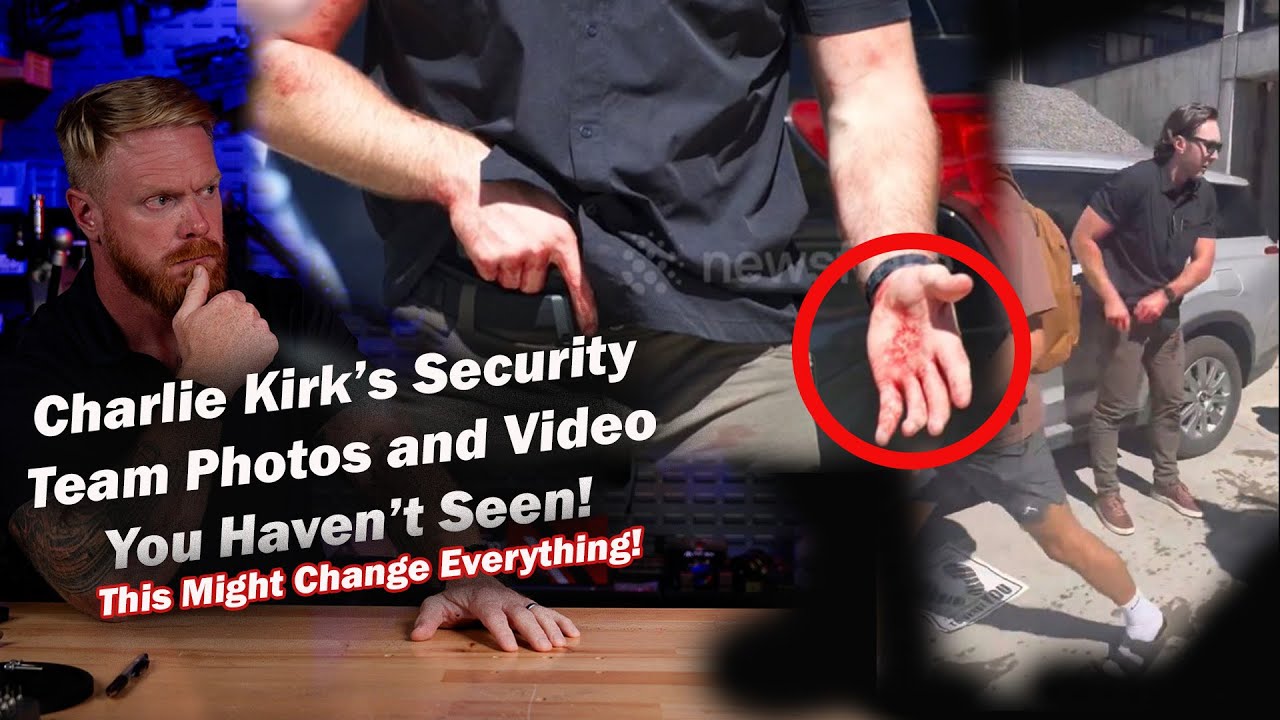
Gary Melton, a NAEMT training site instructor, addresses widespread misconceptions about the medical response following Charlie Kirk's injury. Using wound packing demonstrations and tactical combat casualty care principles, he explains why the absence of visible blood on responders doesn't indicate suspicious activity. Drawing from his experience teaching TCCC and TECC, Gary walks through proper hemorrhage control procedures, demonstrating that competent medical response to traumatic injuries should look exactly like what video footage shows, focused, efficient treatment with minimal blood transfer to responders.
Gary from Paramount, an instructor at a National Association of Emergency Medical Technicians (NAEMT) training site, provides critical context for understanding emergency medical response. His company teaches TCCC (Tactical Combat Casualty Care) and TECC (Tactical Emergency Casualty Care), training individuals to treat traumatic injuries effectively. He emphasizes a sobering statistic: traumatic injury is the number one cause of death in the United States for people aged 1 to 44, the healthiest segment of the population. These deaths result from various mechanisms including car accidents, home accidents, and workplace incidents, with gunshot wounds representing only a small percentage.
The tragedy, Gary notes, is that many of these deaths are preventable with proper immediate treatment at the scene. The number one cause of these preventable deaths is blood loss. Those trained in tactical casualty care learn the MARCH algorithm—Massive hemorrhage, Airway, Respirations, Circulation, and Hypothermia—which helps prioritize treatment with massive hemorrhaging as the top priority.
Demonstrating Wound Packing Procedures
Using a wound packing trainer and simulated blood, Gary demonstrates the reality of treating severe hemorrhaging. He stresses that this demonstration is not a replacement for in-person training, as wound packing is harder than it appears and requires repetition to perform competently, especially under stress. His demonstration addresses a specific misconception: that there should be blood everywhere during treatment.
Gary pours a significant amount of fake blood—which he notes stains worse than real blood—to simulate the injury. Even with two liters of blood, he demonstrates how proper hemorrhage control confines blood exposure to primarily one person's hands. The responder must mechanically stop the bleeding by finding the source and applying direct pressure with fingers, then packing the wound with gauze to compress blood vessels. This process, while Gary performs it slowly for demonstration purposes, can be completed in approximately 20 seconds by trained professionals, especially with team support.
The Reality of Blood Exposure During Treatment
A critical point in Gary's demonstration is showing how many people can effectively work on a single wound simultaneously: only one. Only one responder can fit their hands in the wound to pack it properly. Others can help by opening packages, assessing other injuries, or assisting with patient movement, but they shouldn't be getting blood on themselves. Gary shows that even when treating a severe arterial bleed with two liters of blood, the blood exposure is minimal—some on hands and perhaps a small amount on pants from kneeling near the injury.
He presents real-world video footage of arterial bleeding treatment where neither the primary responder nor the assistant have blood covering them. This contradicts the widespread assumption that everyone involved in treating severe bleeding would be visibly covered in blood. Real blood, Gary explains, wipes off easily while wet, unlike the training simulation blood that permanently stains.
Securing the Wound for Transport
After packing the wound, Gary demonstrates the next critical step: maintaining pressure while preparing the patient for movement. Disturbing the packed wound causes bleeding to restart, making all previous efforts worthless. For a neck wound, standard compression bandaging around the neck would cause obvious problems. Instead, Gary shows the technique of using an Elias compression bandage, wrapping it under the patient's arm and then bringing the arm down to create and maintain significant pressure on the wound.
This entire securing process, when performed by a trained team with members manipulating the head, moving body parts, and passing bandages, can be completed in under 10 seconds. Gary emphasizes that competent, trained responders can complete the entire process from initial hemorrhage control through patient preparation for transport very quickly and efficiently.
Analyzing the Charlie Kirk Incident Footage
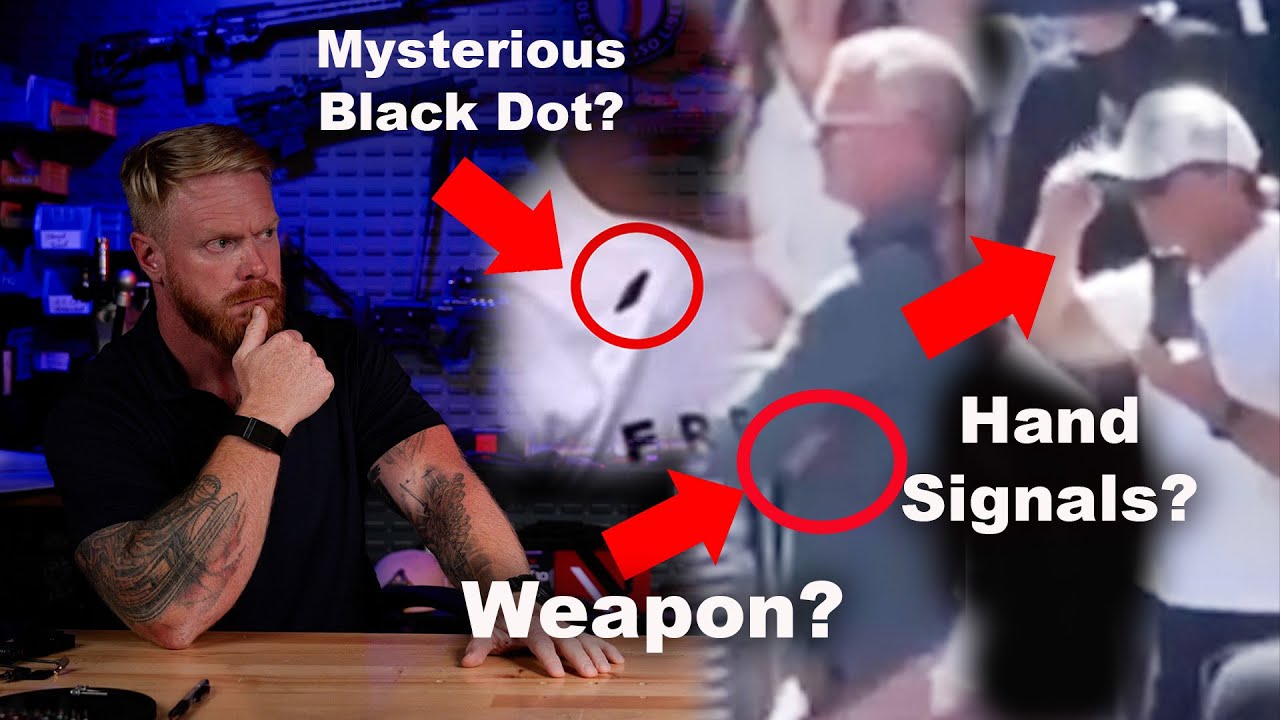
Gary reviews the footage of the response to Charlie Kirk's injury through the lens of proper tactical casualty care. He identifies clear signs of panic and urgency in the responders' movements, which he considers normal and expected. He points out three people working on Charlie behind the table, with the primary responder being the man in gray hair and blue shirt who has what Gary identifies as likely an aid bag for medical gear.
A telling moment in the footage shows Charlie's arm being brought forward and down—exactly the motion used when securing a compression bandage around a neck wound by routing it under the arm. Gary notes that everything visible in the footage aligns perfectly with proper TCCC procedures being performed by trained professionals.
Professional Security Team Training Requirements
Gary reveals that he has identified the man in the blue shirt with gray hair and knows the company he works for, which teaches TCCC. Anyone working for a reputable security company performing PSD (Personal Security Detail) work is required to have current TCCC certification. These certifications are only valid for three years and must be kept current to reduce liability and ensure best practices are followed. The training evolves annually as new evidence-based information emerges and new products become available.
This means the security team responding to Charlie Kirk would have received professional tactical combat casualty care training within the previous three years, trained in the same protocols Gary teaches. While Gary acknowledges he cannot know with 100% certainty what the responders were doing behind the table, he believes the most reasonable assumption based on all available evidence is that they were providing competent medical treatment.
Addressing Conspiracy Theories and Constitutional Principles
Gary expresses disappointment in fellow conservatives for jumping to horrific conclusions in the absence of complete information. Some have suggested the security team was complicit in harming Charlie Kirk rather than treating him. Gary defends the security team explicitly, noting that nothing he sees appears suspicious. He reminds viewers of a fundamental constitutional principle: innocent until proven guilty.
He addresses anticipated criticism directly, stating he will not be held captive by audience expectations or financial incentives. No one pays him to express particular views, and he will not say things he doesn't believe for clicks, likes, or to conform to a preferred narrative. He acknowledges that many will disagree with his analysis and may even accuse him of being compromised, but he remains committed to expressing what he genuinely believes to be true based on logic and evidence.
The Critical Importance of Medical Training
Gary's primary message is the importance of obtaining proper medical training. He emphasizes that people are a thousand times more likely to need and use a trauma kit than a firearm for self-defense. Even those who carry firearms still need trauma kits and the training to use them. Unlike firearms, trauma kits can be carried anywhere in the world, even where weapons are prohibited.
Training is more important than gear, Gary stresses. Simply purchasing medical equipment without learning how to use it properly is insufficient. To keep yourself, your family, and others safe and sustain life until professional medical care is available, both proper training and appropriate gear are necessary. He encourages everyone to seek out TCCC, TECC, or similar traumatic injury treatment training.









Comments
Be the first to comment on this video.