
Up Next

Erika Kirk Vows Charlie Kirk's Mission Will Grow Stronger After His Assassination
16:41
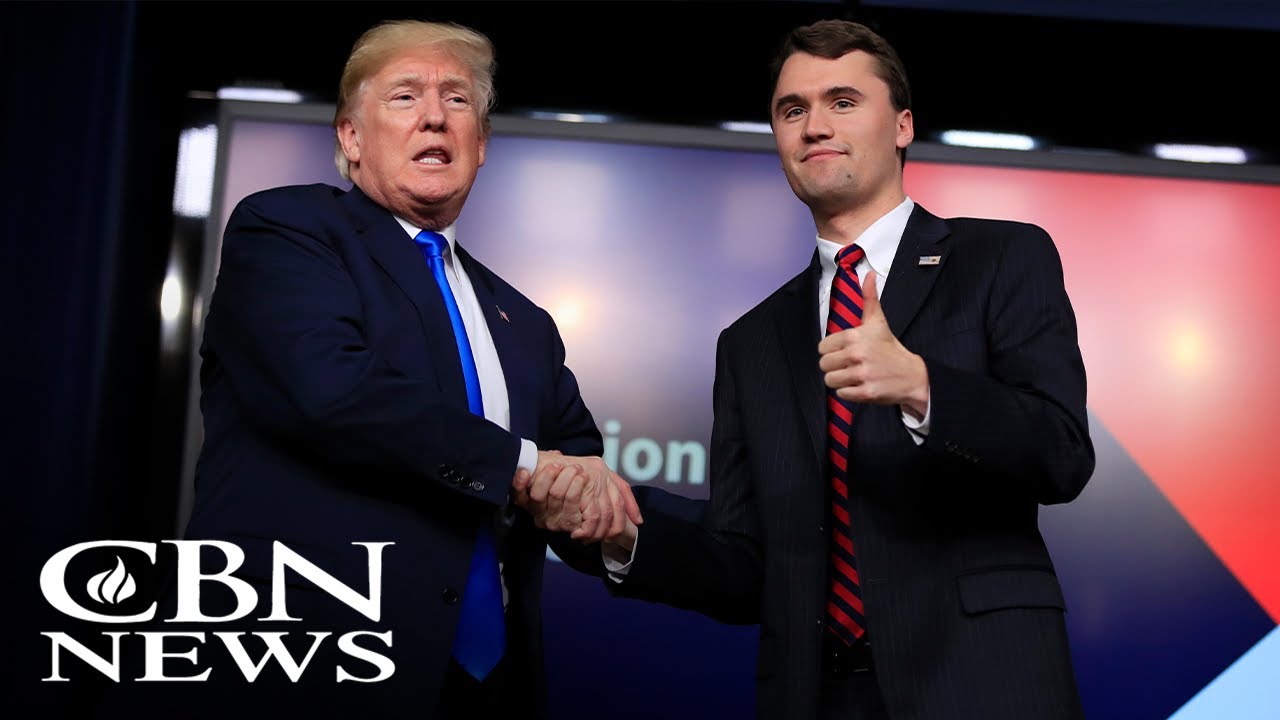
President Trump Awards Charlie Kirk Presidential Medal of Freedom Following Tragic Assassination in Utah
2:57
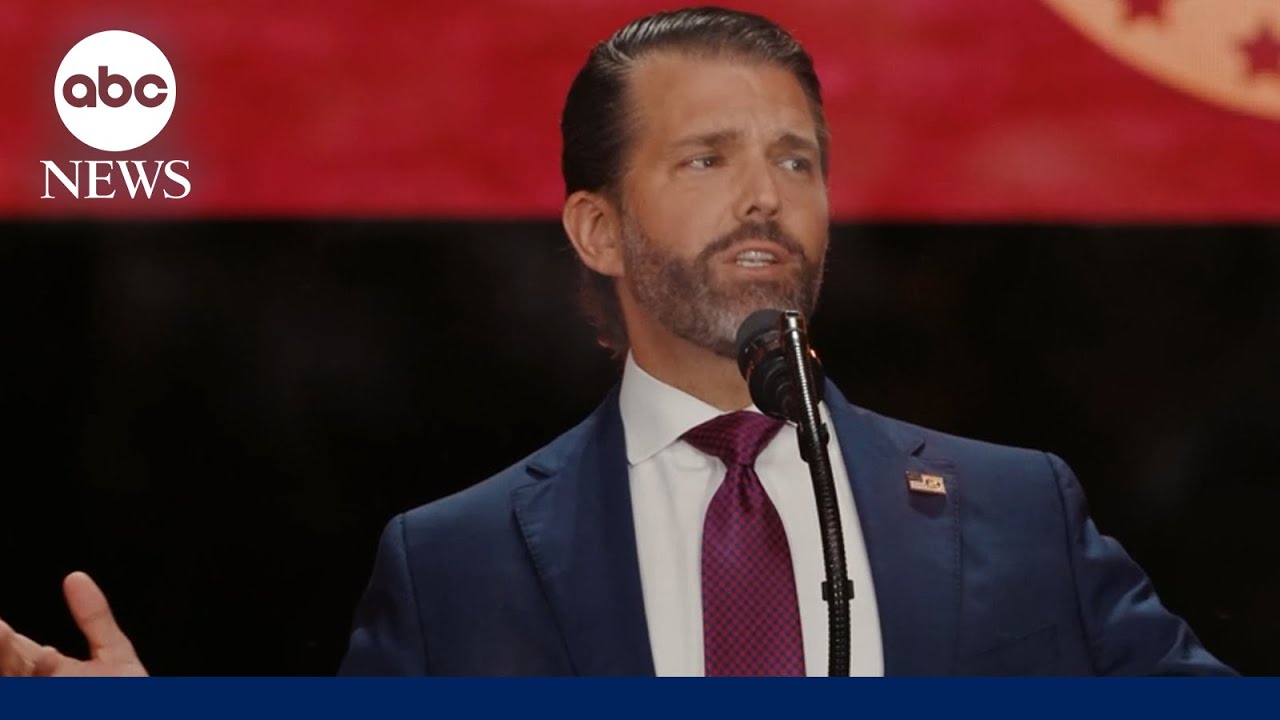
Don Jr. Honors Charlie Kirk: A Brother, Martyr, and Champion of Faith, Family, and Country
13:15
Governor Glenn Youngkin and Megyn Kelly Honor Charlie Kirk's Legacy at Virginia Tech Memorial Event
Governor Glenn Youngkin and Megyn Kelly addressed thousands of students at Virginia Tech in a powerful memorial event for Charlie Kirk, who was killed by an assassin's bullet two weeks prior. Youngkin challenged attendees to examine their faith, engage in civic life, and endure in spreading truth, while announcing a $100,000 donation to establish new Turning Point USA chapters across Virginia. Kelly urged students to stop hiding their conservative beliefs, emphasizing that courage and authenticity matter more than being well-liked. Both speakers highlighted Erika Kirk's strength as she assumes leadership of Turning Point USA, calling on students to become "the next Charlie Kirk" by standing boldly for their principles on college campuses.
A Memorial Event Two Weeks After Tragedy
Two weeks and a day after Charlie Kirk's final podcast, thousands gathered at Virginia Tech for what was supposed to be a Turning Point USA campus tour stop. Instead, it became a memorial event honoring the life and legacy of a man killed by an assassin's bullet. Governor Glenn Youngkin and Megyn Kelly stood before students, volunteers, and supporters to reflect on Kirk's impact and chart a path forward for the conservative movement on college campuses.
Youngkin opened by recalling that just two weeks prior, everyone was worried about logistics and schedules, not about mourning a fallen leader. On the morning of September 10th, Charlie Kirk recorded his final podcast. When asked about phrases he lived by, Kirk offered two responses that would become his final public guidance: "This too shall pass" and Romans 8:28, which states that "in all things God works for the good of those who love him, who have been called according to his purpose."
You Will Be the Next Charlie Kirk
Addressing the question everyone had been asking since Kirk's death, Youngkin declared that there would not be one person to replace Charlie Kirk. Instead, looking out at the thousands assembled, he proclaimed that every person in that room would be the next Charlie Kirk. The governor praised Erika Kirk for demonstrating "the courage of a lion" and "the heart of a saint" over the previous two weeks, announcing that she would lead Turning Point USA forward as someone who knew Charlie better than anyone.
Youngkin used the metaphor of light to describe Kirk's impact and the responsibility now falling to students. "You can't put a light under a dirty old bucket," he said, referencing a church song. Charlie was a light who believed in truth and shined it in an extraordinary way, always demonstrating respect and love for others. Now, each student present was called to be that light, shining in corners, illuminating evil, and chasing out darkness.
Examine, Engage, and Endure
The governor challenged students with three imperatives. First, examine yourself. Look in the mirror and ask fundamental questions about belief in God, in Christ's sacrifice, and in something bigger than yourself. Youngkin shared his own faith journey, explaining how his wife Suzanne led him to accept Christ after he proposed marriage. She had said yes, but only if Jesus would be at the center of their marriage. That decision changed his life trajectory completely.
Second, engage. Don't sit on the sidelines. Kirk challenged people to thoughtful dialogue, to civic responsibility, to understanding what it means to stand for values and principles. Youngkin emphasized the importance of engaging in the search for a spouse who will make you better, engaging in family, and engaging in civic duties. He announced that Virginia would donate $100,000 to Turning Point USA to support new chapters across the Commonwealth, calling on students to participate actively.
Third, endure. The hard part is not the initial burst of enthusiasm but the long-term commitment, the work that doesn't have immediate satisfaction but impacts lives one year, five years, ten years from now. Youngkin reflected on Kirk's early days with Turning Point, when he had no idea what he was doing, no money, and was just showing up. That persistence built an organization that now spans over a thousand campuses.
A Sniper's Bullet Cannot Silence Truth
Youngkin noted the tragic irony: "A sniper's bullet shot from a heart filled with evil tried to silence a voice of truth. Tried to silence all of us. But the exact opposite is happening." Rather than ending the movement, Kirk's assassination sparked a revival spreading across the nation, one that points upward to God while spreading outward in influence. The governor invoked Virginia's foundational role in American history, quoting Thomas Jefferson's Declaration of Independence and James Madison's Constitution, reminding students they stand in a long tradition of fighting for liberty and truth.
He closed by leading the entire arena in prayer, asking attendees to hold hands as he prayed for Charlie's family, for Erica in her new role, and for every student present to have the strength to examine, engage, and endure.
Megyn Kelly: Say What You Actually Believe
Megyn Kelly took the stage next, opening with thanks to the students for their courage in showing up despite the obvious safety concerns following Kirk's assassination. She emphasized that everyone came to send a clear message: "We will not be silenced by an assassin's bullet, by a heckler's veto, by a left-wing woke professor, or anyone who tries to silence us from saying what we really believe."
Kelly recalled her last in-person conversation with Charlie at a Turning Point event in Tampa in July. When he asked her advice for students, she told them to "say the thing you really want to say. Say what you really believe. Say what's actually in your heart. Don't go along with what the professor wants you to say just to get a pat on the head or a good grade."
The Long-Term Cost of Hiding Your Beliefs
Kelly walked students through the dangerous pattern many conservatives follow. In college, they hide their beliefs to get good grades and recommendations for graduate school. In graduate school, professional school, or law school, they continue hiding because grades matter even more for job placement. Then they get hired by companies that assume based on their resume that they're ideologically aligned, when in reality there's been a complete mismatch.
"You didn't put Turning Point USA on your resume while applying," Kelly explained. "You didn't walk into that interview with your political science essay with a D on the front of it and hold it up like a badge of honor saying, 'Let me show you what I wrote and why I got this D.' Because I refused to write that capitalism is bad. I refused to write that men can become women."
The result is a long-term professional relationship built on false pretenses, where the employer doesn't know who you really are and you're stuck in an environment hostile to your actual values.
There Is Safety in Numbers
Kelly emphasized that conservatives need to stop hiding because "there is safety in numbers." She pointed out that conservatives are actually the majority in America, which is why Trump won. "We are all Charlie Kirk," she said, explaining that the phrase means more than supporting his ideals. "If you say it and you say it and you say it and you say it, then it is less dangerous for me to be up here or for you to be up here the next time."
Addressing the indoctrination that happens in educational institutions, Kelly urged students to break the cycle. "Let it out. Say it loud. Say it proud. There's nothing wrong with it. It's beautiful. Stop hiding it. Stand up for what you believe in. Be respectful of the other side just like Charlie was. You don't have to be a jerk. But they're not allowed to own you or be a jerk to you either."
Cancel Culture Can Be Liberating
Kelly shared her own experience with being cancelled, offering an unexpected perspective: "Having been cancelled from a job very publicly, can I tell you it's better for you if you really do have your principles line up with those of your employer. I've actually come around to the place where I love cancel culture. I actually think it separates a person from a place at which they did not belong."
She explained that cancellations typically remove people from environments that were "positively vile" and didn't share their values anyway. The key is being honest from the start about who you are so you end up in the right place to begin with.
Question and Answer Session
Kelly then fielded questions from students, covering a wide range of topics. When asked about her workout routine, she joked that she only trains twice a week for 45 minutes with light weights, plus walking. When a student asked about Starbucks, she quipped, "I don't go to Starbucks. It's too bitter. And by that, I mean the employees."
On more serious matters, a student asked about Israeli influence on American politics. Kelly responded that all wealthy people, regardless of religion, try to exert influence, but that Trump's independent wealth was part of his appeal. She expressed support for Israel while noting that the conflict has gone on too long and Israel is losing support even among Republicans.
A young woman asked how to show Christian love to people who hate her for her conservative beliefs. Kelly pointed to Erika Kirk as an example, noting that if Erica can find forgiveness for Charlie's assassin, "you can surely find it for the people who are jerks on college campuses." She recommended maintaining friendships with liberals by focusing on non-political topics and keeping relationships alive through shared human experiences.
Standing Up in Hostile Environments
Several students shared experiences of facing discrimination for their conservative beliefs. One co-founder of the Turning Point chapter at James Madison University described being reported at work for discussing politics and told that citing Charlie Kirk as a role model in a job interview was "the wrong answer." Kelly's response was direct: "These are bad people. You should extract yourself from them as soon as humanly possible and find a better place to work." She offered to help the student find employment.
When a student expressed fear about speaking up in a mandatory "Identity and Inclusion in Agriculture" class, worried about failing, Kelly advised taking any unfair grade directly to the dean with a threat to report to the Department of Justice's civil rights office. She emphasized that students need to have each other's backs, speaking up to support classmates who express conservative views so no single person feels isolated.
Faith, IVF, and Moral Questions
A Catholic student asked Kelly about her views on IVF in light of her renewed faith engagement. Kelly, who used IVF to conceive her children, acknowledged the moral complexity. She explained that there are ethical ways to do IVF by carefully controlling how many eggs are fertilized, avoiding the creation of excess embryos that remain frozen indefinitely. She expressed concern about society moving toward differentiating the value of life based on how it's conceived, but maintained that IVF has brought many wonderful families into existence and helps address population decline.
Barack Obama's Divisive Legacy
When a self-described "huge lefty" asked Kelly to rank Barack Obama among modern presidents, she placed him at the very bottom of 21st-century presidents. Kelly explained that she used to think Obama was "a good man but a bad president" while Trump was "a bad man but a good president," but now believes she had it completely wrong. "I actually think Obama was a bad president and I genuinely think he was a bad man," she said, citing his divisive approach to racial issues, his forcing through Obamacare against the will of the people, and his lies about keeping doctors and health plans.
The Epstein Files and Government Transparency
Asked about the Epstein files, Kelly said they absolutely should be released but expressed doubt they ever would be. She criticized the Trump administration's handling of the issue, saying they've been "overpromising and underdelivering," offering fig leaves like requesting documents they knew courts wouldn't release. She gave them a "D minus" on handling Epstein but acknowledged she's mostly moved on to more pressing current issues.
Congress Is a Lost Institution
Kelly shared her pessimistic view of Congress when asked about term limits and stock trading bans. While supporting an end to congressional stock trading, particularly citing Nancy Pelosi's husband's suspiciously well-timed trades, she expressed zero hope for Congress as an institution. "The organization is corrupt and basically lost to us," she said, arguing that tomorrow's solutions rely on the private sector, people like Elon Musk and Peter Thiel, not politicians.
She explained that Citizens United, though correctly decided in her view, corrupted Congress by making members answerable only to their richest donors rather than constituents. This ended bipartisanship and compromise. "It's a lost institution as far as I'm concerned," Kelly concluded. "We technically need them, but there's no fixing it."
Building Influence Outside Broken Systems
Kelly encouraged students not to become traditional journalists ("Run. Don't walk in the opposite direction") but to start podcasts and build followings through independent media. She argued that she has more influence over most issues than any member of Congress, and suggested students use their voices through alternative platforms to work around the broken system.
As the event concluded, the message was clear: Charlie Kirk's death would not silence the movement he built. Instead, it would multiply through thousands of students committed to examining their beliefs, engaging courageously in the public square, and enduring for the long term. The revival spreading across America would continue, pointing upward to God while spreading outward in impact, carried forward by an army of young people refusing to hide their light under a bucket.
Video Transcript
[Applause] [Music] [Applause] Unbelievable. Thank you. Thank you. Come on, Hokes. [Applause] >> I thought we'd have Enter Sandman going. I can't thank you enough for the incredibly warm reception. All gathering together tonight to talk about a turning point. A turning point. You got a big night in front of you. By the way, Megan Kelly's here. But I first am going to ask everybody here to stand up and give a rousing applause to the Turning Point team for Bowling tonight off. Thank you. Thank you. Thank you. Unbelievable all these volunteers down here. I want to thank you for your leadership, your service. Thank you. Amazing. Here we are. Here we are, my friends. We're here to reflect, but we're also here to go. And that's what tonight is all about. Two weeks and a day ago. Two weeks and a day ago, where were we? We were worried about lots of things. not what tonight was going to be like. To be candid, what I was worried about two weeks and a day ago was moving schedule around because Charlie had been incredibly gracious and invited me to come to Blackburg and be part of this event. That's what I was worried about. I talked to Megan Kelly yesterday and she was working on her logistics as well. The team was working on how to pull this event off. I'm sure all of you were focused on school. It was a different time. It was a different moment. Two weeks ago, it all changed. You see, early in the morning on September the 10th, Charlie did his last podcast. He did a podcast. He had done them more frequently than any of us can possibly imagine. He had engaged in conversation all over the world. And that morning he was engaging in another podcast. And that podcast would end up being his very last one. At the end of the podcast, the interviewer asked him to ask him one question. Hey, are there any phrases or sayings that you like to live your life by. And he said, well, there's two. The first is this too shall pass. What a comment. This too shall pass. It's just a saying. It's a saying that when things are really good, be humble. And particularly when things are really bad, have faith. This too will pass. His second statement was really important that morning. He said 2 Corinthians 4:17. For this, no, I'm sorry. Romans 8 version uh verse 28. Romans 8 28. And we know that in all things God's work for the good of those who love him, who have been called according to his purpose. I'm going to say that again. As we know that in all things God works for the good of those who loved him, who have been called according to his purpose. Called in according to his purpose and this too shall pass. That morning, Charlie left us with a blueprint. That morning, he left us with guidelines to once again benefit from a man who spoke truth. He left us again with something to reflect on our own lives. And therefore tonight we have an opportunity to reflect and we have an opportunity to go. I wish Charlie were here tonight. I wish we were engaging in that amazing moment where Charlie speaks truth. There is a dialogue, a respect, a recognition of the beauty of freedom of expression and we will have that tonight. But I know we all wish Charlie was here. But see, the truth is that the question that has been asked over and over again is who will be the next Charlie? And as I look out in this room and I see thousands of you, I want to repeat the best answer that I have heard. You will be the next Charlie. All of you. And that is something to take home tonight. Now you will have a leader that's extraordinary. a leader that we have all come to know in a very different way than we knew her two weeks and a day ago. Over the course of the last two weeks, Erica Kirk has demonstrated that she not only has the courage of a lion, but she has the heart of a saint. We have grieved with her and her family. We have prayed for her and her family and we have stood together for her and her family. And tonight we see that the next leader of Turning Point is the person who knew Charlie the very best. Someone who looked into his heart. And therefore, is there anyone better to lead Turning Point going forward than Erica Kirk? My friends, I think right now it's a moment to cheer for Erica Kirk. But you see, you can't put a light under a dirty old bucket. That's the way we sang that song in church with my kids. You can't put a light under a dirty old bucket. Charlie was a light. He was a light who literally believed in truth. And he shined his light in such an extraordinary way. A way that demonstrated respect. A way that demonstrated the basic most important commanded after love God with all your heart and all your soul and all your being. Love one another as he loves us. That was the foundation of Charlie Kirk. But you see, given that all of you are the next Charlie Kirk, all of you therefore are light. Each one of you is the light. A light that shines in the corner of the room. A light that shines brightly on evil. A light that chases out darkness. That is each and every one of you. And I don't begin to know where each and every one of you may be in your own faith walk. And that's why tonight is so important because tonight is a moment for us to come together and as I said, grieve, but also to go. Tonight is a moment for us to come together and reflect. And that's why I want to share with you a few thoughts around how to do that. First, I'm going to ask each and every one of you to examine examine yourself. Stare into the mirror and ask yourself some really basic questions. What do I believe? Do I believe that there is an almighty being, an all powerful God? Do I believe that that God loved me so much that he sacrificed his only begotten son so I could be reconciled with him? What do I believe? This is not a moment of condemnation or challenge. It's a moment of question. Let me just be clear. My own faith walk is not one of a rocket ship. In fact, when I was sitting where all of you were sitting, I was not faithful. In fact, God fixed that for me. He put in my life one of I think the key tenants that Charlie constantly extolled all of you to understand that the most important decision you will make in your life after accepting Christ as your savior will be deciding who you marry. That's the most important decision after that. And boy did he change my life because he put Suzanne in my life and and I love Suzanne and I wanted to marry Suzanne and and so I asked Suzanne to marry me and she said yes but now guys let me just tell you that is not the answer you want. Yes but. But she said yes but. And then she looked at me and grabbed my hands and she said, "Jesus is really the center of my life and therefore he has to be in the center of our marriage. Promise me you'll do that." Now, [Applause] now again, here's some coaching for the guys. When you're in that moment, let me just tell you what the answer is. Yes, that's the answer. But see, I wanted to get married. And so, I looked at Suzanne and I said, "Absolutely, yes." And little did I know that she was going to take me on a journey. A journey that would change my life in a way that I could never possibly imagine. Ever. Ever. I remember the day when I actually truly accepted Christ and I was in a new Christian's class. Yes, you had to take that in order to join the church that we were joining. And I found myself in a moment where the spirit descended on me and I could do nothing other than weep. And at that moment, I knew that there was so much more to this. And I was on a journey. A journey that I am still on today. A journey that opens up deeper pathways to God's love for us. So when I say examine yourself, look in the mirror, it's not a moment of judgment. It is a moment of opportunity. The second thing that I would challenge us all with is to engage. You see, one of the things that we all loved about Charlie Kirk is he not only spoke truth, but he challenged us. He challenged us to do more than sit on the sidelines. He challenged us to engage, to engage in thoughtful dialogue. Of course, recognizing we had to do it with respect, but to fully engage. Don't back down from your beliefs. Be prepared to debate them and discuss them, but engage. And then he would call us all to engage in the search for that person that will make you a better person when you enter into marriage. To engage in relationship and family. To engage in the things that we know make us better. But also to engage in our civic duties, our civic responsibilities. to understand what it means to jump in, to understand what it means to stand for the values and the principles that we hold dear in this great United States of America. Now, I'm going to tell you a secret. Being governor of Virginia is really cool. It's awesome. And by the way, someone in this room, I hope one day, will feel a calling on your heart. And you will run for office. And you will run for office to serve. You will run for office to stand for the things that we believe. And I can't wait to hear the story of the one of you or two of you or 10 of you or a hundred of you that choose to do that. But I got to tell you, being governor is really awesome. You see, every morning I have an opportunity to think about what are we going to do today in order to make people's lives in Virginia better. Every day, it's unbelievable. Now, I start out every day with the clear recognition that it's impossible for me to discern what that is. It's impossible for me to execute against a plan. And it's impossible for me to do that without asking for help. And so this journey that my amazing wife put me on, this journey that I found that there was so much more than just me invited me into a relationship with the Lord that's unbelievable. And so now I have a chance every morning to wake up and bury myself in scripture and then pray about the day. And I have to say I'm sometimes lazy and I repeat the same prayer every morning. I think God's okay with that. I don't think he minds because I'm doing what he asks us to do, which is come to him. My favorite psalm is Psalm 121. You all should love this psalm because you have the appropriate geography. You see, it starts out with, I lift my eyes up to the hills. You get to do that every morning. Where does my help come from? My help comes from the Lord, maker of heaven and earth. It's extraordinary. That's where it comes from. And so as we engage and we seek for and we seek help, there will be help. There will be help. In Virginia, we sort of have a lot of this we carry around with us. You see, Virginia, for those of you that aren't from Virginia, I'm sorry, but America was made in Virginia. I mean, I was recently in South Carolina. It didn't go over so big. But you see, in this great Commonwealth of Virginia, so many of these basic principles were not just debated, but they were in fact inscribed on the founding documents of our n of our nation. And then battles were held in order to win our liberty. Battles were held. Most powerful words I believe written in this hemisphere were written by a Virginiaian, Thomas Jefferson. He wrote it in the Declaration of Independence. We're going to celebrate this in 200 the 250th anniversary, the signing of the Declaration of Independence next year. I encourage everybody to start celebrating now because it's that big. But he wrote these words. We hold these truths to be self-evident that all men broadly defined as men and women are created equal and that we are endowed by our creator not by government, not by a dictator, not by a monarch, not but by our creator with certain unalienable rights and among them are life, liberty and the pursuit of happiness. These were incredibly powerful words that changed the world. Absolutely changed the world. Now, we as a nation have failed to live up to them. And yet, we then get to look at another document that was of course written by a Virginia, James Madison, the Constitution. And the beginning of Yeah, we like James Madison. By the way, we celebrated Constitution Day last week. And he starts out the Constitution with these powerful words. We the people, us, we the people, in order to form a more perfect union, recognizing that it will come up short, we have to engage. That's what this is all about, engaging. I challenge each and every one of you to engage. I think Turning Point is an unbelievably great place to engage. That's what I think. And therefore, we are going to donate $100,000 to Turning Point USA to support new Turning Point chapters all over the Commonwealth of Virginia. That's what we're going to do. engage. The last bit is to endure. You see, it's easy for moments to be flashes in the pan. Two weeks of efforts and then move on. This is the hard part. The hard part is to endure. is to set your sights on long term to do the work that doesn't have immediate satisfaction but impacts one year, five years, 10 years. That is the magic. I was watching one of Charlie's interviews over the weekend and he was reflecting on what it was like that first day two three in the beginnings of Turning Point and he he was just reflecting on the fact they had no idea what they were doing. They had no money and they were just showing up. Now think about that. Now fast forward to today. Fast forward to today. A a sniper's bullet shot from a heart filled with evil tried to silence a voice of truth. Sniper's bullet shot from a gun held by someone with a heart of evil tried to silence truth. Tried to silence all of us. But you see the exact opposite is happening. The exact opposite is happening. There is a revival spreading across this great nation. A revival spreading across this great nation that is spreading out while it points up to who's in charge. This is so awesome. Examine. Examine. That's so important. Engage and endure. All right, let me finish where I started because you want to hear from Megan. Charlie had Two incredibly preient quotes to live by. Two preient ones. This too shall pass. And we know that in all things God works for the good of those who love him, who have been called accounting to his purpose. Take those two home with you tonight. Reflect on them. Examine, engage, make a plan to endure. That's what tonight is all about. When I look out across this room and I see thousands of light, I see thousands of the future. I see where I want to invest my future in you because you will be light. You will carry the baton. You will engage. You will change minds. You will be that revival. And therefore, I want to say thank you. Thank you for being here tonight. Thank you for believing in what Turning Point stands for. Thank you for being willing to step outside your comfort zone. Thank you. Now, here comes the hard part. You see, one of the things that I firmly believe in is that prayer is essential. absolutely essential to everything we do. And this is now where it might be a little uncomfortable, but I'm going to ask you to bear with me. In my family, we hold hands when we pray. Now, oftentimes I do this with the big guys on my detail because I like to see them hold hands. We take pictures, too. But if you wouldn't mind, just quietly reach over to the person next to you and hold hands and gather yourself together and join me. Join me in a moment of prayer. Father God, thank you. Thank you for every single person in this room. Father, you say to bring our asks to you, we would ask for some air conditioning. But Father, we know you gathered us here tonight for a reason. And you promise us when two or three are gathered in your name, you will be among us. And so we invite you, Father. We we thank you for Charlie Kirk. We thank you for his life. We thank you for the way that he lived it. We thank you for the way that you inspired him and called him. We thank you for his courage to say yes, send me. Father, we thank you for your promise is real. That Charlie is with you in your kingdom. And yes, when he arrived, there was a celebration and you said, "Well done, good and faithful servant." Father, we pray for Erica and their family. We pray for her first as a mother. We pray for her as Charlie's wife. We pray for you to give her strength to fulfill those essential callings on her. But we also pray, Father, for her new role as leader of Turning Point that you will provide her the strength, the capabilities, and by the way, the team to do all that you want Turning Point to do. Finally, Father, I ask for your blessing on everyone here. Will you stir in their hearts a moment to examine, a moment to engage, and the strength to endure? Father, will you shine your face upon each and everyone? May they know your peace. Father, we pray all of this in the mighty name of your son and our savior Jesus Christ. And all God's people say, "Amen." God bless you all and thank you. [Applause] USA. USA. [Music] Wow. Can you guys hear me? All right. Wow. This is uh this is pretty cool. Um it's kind of mean for them to put me after that. I don't I don't think I can live up to that. But uh my name is Elliot. I'm the chapter president here. It is it is really awesome to see all you guys here. Um Um yeah, so I mean our chapter the last the last few weeks we have gotten so much interest, so much membership. We we've been blown away. It's been it's been awesome. Um and I so tonight I want to thank a few people. Uh first uh I want to thank the law enforcement people here. Uh they're they've been they're doing such a good job. [Applause] um you know these these last few month or the last few weeks uh have been really crazy but I mean these guys come out here they put their lives on the line uh for us and I that's really awesome. So really thank you. Thank all of you. Uh that's that's so cool. And uh I also really want to thank all the people from TurningPoint USA. Uh my chapter staff uh really just my VP and my secretary uh Thomas and Jacob. They have been so awesome and so many times when I haven't been able to do something, they've been able to take step up and it's been so cool. So can I get a round of applause for them, please? Uh and then also the event staff uh and uh our field representative Emily. She has been awesome. Uh guys, let me tell you about something about Emily. I don't know if I know anyone who works as long hours as her. I mean, she works so hard. She comes here at 9:00 am. She's not gonna leave here tonight until at definitely past 900 PM. So, thank you, Emily. Emily, you are so great. And all of the Turning Point uh USA event staff, they have been so awesome putting this together. I mean, really, all I do is just, you know, send a few emails to admin. They do all the backend stuff. They they brought you guys here. So, really another round of applause for them, please. Um, so also I want I want to mention obviously a lot of you guys here are not uh members of our chapter. Uh, and if you are interested uh I encourage all of you to go to turning point tpusa.com/getinvolved and join our chapter. If you don't go to Virginia Tech, join a chapter or start a chapter. Um, we we need you guys. So please uh I I really encourage you guys to do that. Finally, I'm going to plug uh Amfest. If you guys don't know about Amfest, it's really awesome. It's in u it's in Arizona. It's in a few months and it's going to be really awesome. So, go to the Turning Point website uh and you're not going to want to miss that. Um finally, the last thing I have is uh to honor Charlie. We wanted to take a picture uh with all of you guys. So, you guys should have little flags and banners in your seats. If you guys want stand up and make get, you know, bring up the energy a little bit. Let's cheer. Let's you know. Yeah. All right. And we're gonna take a picture. Come on. Yeah, guys. Come on. Yeah. Yeah. Yeah. There we go. [Music] [Music] Thank you guys. That's awesome. Thank you guys. Um, and now it is my honor to introduce Miss Megan Kelly. >> Who are you? >> My name is Charlie Kirk and I love America. Why are you here? >> Because I love talking with people I disagree with. >> Started an organization that's now in a thousand plus campuses to save the greatest culture and country ever to exist. >> Our family is divided. We're divided the same way the nation is divided. Will anything ever be remedied. A nation divided against itself will not stand. Neither will a family divided against itself. >> Why do you think your son is conservative? You, as a father, should listen to your son. I used to be at one point on my father's side. Upon doing my own research and seeing things firsthand, I've switched sides. We talk every day about politics to the point where it's divided us. >> Father son divide is more important than politics. Really try to come down at what generational perspective do they have. Never let politics get in the way of the beautiful relationship between father and son. >> And my question for you is, do you have any hate against the LGBT community? >> How could I hate that which I have a heart for? I might not agree at that for some of the lifestyle choices that some people make, but of course not. And if someone said, Charlie, what's your view on marriage? I say, I believe marriage has been one man and one woman. Do I have hate in my heart for somebody that doesn't choose the lifestyle that I believe that God laid out in the scriptures? Of course not. >> What's this for? >> I go around universities and have challenging conversations because that's what is so important to our country is to find our disagreements respectfully. Because when people stop talking, that's when violence happens. >> Okay? >> You could see that happen all across the world. >> What might I attribute from that view? >> Well, because I I love talking to people I disagree with. When people stop talking, that's when you get fun. That's when civil war happens because you start to think the other side is so evil and they lose their humanity. >> First, I just want to say I don't agree with you on a lot of stuff, but I I really respect, not I think you don't agree with me on a lot of stuff, but I really respect that you'll have a dialogue. I think one of the big problems in this country right now is like people can't have a dialogue and people like don't even know how to like have a dialogue and use logic and like have an actual argument like you do. So how do we improve that as a country? How do you think we get more people that can argue like on both sides of the eye? >> I think this event is a great example of it, right? I think that this event is we need to have different opinions. We need to have people that don't share the same worldview and see which one is better and try to find common bond. You should have your own discussions like this every day. You should try to model it and try to have, you know, back and forth and that's what makes the country strong and great. Civil dialogue. >> Megan, you are amazing. God bless you. At Turning Point, you'll say thanks you. [Music] Hey guys. [Music] Oh, you look so beautiful. It's awesome to be with you. Thank you. Thank you. Thank you. Thank you. Thank you. Wow. It's so great to be with you. Thank you so much for being here, you guys. I am thrilled to be here with you guys tonight. And of course, my only sadness is that it's not with Charlie. Charlie asked me to go on the tour with him a couple of months ago and we were going back and forth on which stop would make the most sense and you know he proposed one date and I couldn't do it or you know the other way around and we settled on Virginia Tech a while ago and he was so looking forward to this. I was just talking to Erica and she wanted to tell me that number one wanted me to tell you he's so looking forward to this. he so wanted to be here with you and that she is so proud of you for showing up and she also wanted me to tell you that she's got your back. Turning Point has got your back. [Applause] I guess I wanted to start with just thanking you for showing up. Showing up. They say half of life is showing up and you did that. And in this particular circumstance, showing up is courageous given what happened with Charlie. And I'm sure many of you thought about it. I'm sure many of you had conversations with your parents about it. Is it safe? Should I do it? Am I going to be okay? And I had conversations with my family about it, too. But I think we all came for the same reason. obviously to hear me, but really the reason is to send a message that we will not be silenced by an assassin's bullet, by a heckler's veto, [Applause] by a left-wing woke professor, or anyone who tries to silence us from saying what we really believe. Those days are done. They're really done. The last in-person conversation I had with Charlie was in July and you just saw a tiny clip of it at the end of that real. We were in Tampa at the Turning Point event and we did a long segment. We talked about Epstein. We talked about a bunch of stuff and we finished it with Charlie asking me, "What advice do you have for all these students here?" Because it was the student action summit. So, it was a bunch of young people just like you. And it wasn't rehearsed. He didn't know what I was going to say. We just happen to have a lot of shared values. And I said, "Say the thing you really want to say. Say what you really believe. Say what's actually in your heart. Don't go along with what the professor wants you to say just to get a pat on the head or a good grade. It's truly deeply important." And let me explain why. You You know the basics, but let me explain more. For too long, what's been happening in college campuses and high schools and middle schools for that matter and possibly below is that students who are right-leaning or conservative in thought or independent-minded even and may have heterodox thinking on whatever is issue of the day it is have been clamming up because we all know very well that 99% of our professors are leftists and they're not going to like us if they find out that we're not. and they will like us more if they at least think we might be leftists. Like there's still a chance and we're not gonna get as good a grade on our paper if we write right-wing things instead of left-wing things. If we take all the positions that they want us to take, especially on cultural issues, we're going to be well-liked and well-graded. And maybe you want to go to med school. Maybe you want to go to grad school. So your grades matter. So you figure, I'm just going to play along for the short term, for the long term. And then finally, maybe when I get out there into the world, I can say how I feel. At that point, I can express my actual beliefs. But what happens is you get into grad school or med school or law school and you just run into a bunch more of the same kind of professors. They're just giving you a different degree. So, the game has to keep going because your grades don't stop mattering when you get into law school or med school or grad school. That you could argue they matter even more because now you're competing for your real job at the end of this particular stint. So you need to have the perfect days in your med school. You've got to, you know, these are competitive people. We're all doctors. We're all lawyers. We're all grad students. So you keep doing it this routine. And then you get hospital hired at a hospital or a law firm or a company that likes these grades and has no idea who you really are because you've done nothing. You haven't put anything on your resume that would telegraph you might not be like-minded to them. You might actually be on the right side of the aisle. So, they welcome you into their company and then you may find out the hard way a year or two or more into it that there has been a mismatch because they're not looking for somebody who thinks the way you do, who loves America the way you do, who believes in personal integrity the way you do. They're looking for a woke duck that's going to follow in line behind without making too much noise. and they see on your resume, you are such a person. You never caused trouble. You didn't put Turning Point USA on your resume while applying. You didn't ha you didn't walk into that interview with your advanced history or, you know, politics and gov essay and a D on the front of it. And you didn't hold it up like a badge of honor saying, "Let me show you what I wrote and why I got this D." Because I refused to write that capitalism is bad. I refused to write that men can become women. I refused to say the Second Amendment should be repealed. I refused to say that hate speech is not free speech. I refused and told that employer right from the get-go who you really were. So that at a minimum you if you weren't like-minded, you had a basic respect for the fact that you stand up for what you believe in and you don't lie about what's important to you. And so what needs to happen now needs to happen now for a couple of reasons. To ensure that your long-term marriage with your corporate employer, whoever it may be, is a good one, is a real one, and is founded on ideal principles. You don't have to wear your politics on your sleeve, but you can't hide them anymore. You can't hide them anymore because of the second reason, which is simply put, there is safety in numbers. You know, the we are all Charlie Kirk that we've been saying and hearing, that's more than a slogan. We're saying that because we believe in Charlie's ideals. We believe in what he stood for, and we want to reinforce in our own personal lives. But we are Charlie Kirk means something more to me. If you say it and you say it and you say it and you say it and you say it and you say it, then it is less dangerous for me to be up here or for you to be up here the next time or for you guys to be in class writing what's true or for you guys to apply for that internship or corporate job or med school, whatever it is. We know we're in the majority. We know that conservatives are in the majority in the United States of America. That is why we have Trump as 47. So why are we so afraid? We're the majority. Why are we so afraid? Because we are indoctrinated for the first 25 years of our lives in leftist institutions that try to make us little leftists or at least afraid, scared, cowering conservatives who don't want anyone to know. Let it out. Say it loud. Say it proud. There's nothing wrong with it. It's beautiful. [Applause] Stop hiding it. Stand up for what you believe in. Be respectful of the other side just like Charlie was. You don't have to own your professor, you know, be a jerk. But they're not allowed to own you or be a jerk to you either. >> We've been going along with that, letting them do that to us for too long. And it's bull. You know me and my potty mouth if you listen to the show. But this is a Charlie event, so I'm going to keep it clean. I'm going to try. Um, so you have to now you have to. And by the way, having been cancelled from a job very publicly, can I tell you it's better for you if you really do have your principles line up with those of your employer. I've actually come around to the place where I love cancel culture. I actually think it separates a person from a place at which they did not belong. You know, you don't get canceled from a company that that shares your values. Time after time, these cancellations have worked to remove to I would say liberate many of us from a place that was positively vile. What was that out loud? So, you've got to do it. So, find your courage, find your strength, and show up. Show up for yourself. Be honest. Bring your integrity into the room. Stand up for your principles. Stop hiding them. Don't let a professor berate you out of them. and you remind them that you, not they, are in the majority. All right, enough from me. Let's hear from you. You guys have some questions for me. I'm going to let the Turning Points people take it over. [Applause] >> Come sit in the front row of your life. >> God bless you. Thank you. >> Love you guys. Love you. >> It's like the we have ways of making you talk like >> Hi, Megan. >> Hi. >> I'm just wondering what is your gym split? >> My gym split? That is very funny. So, I do work out um only twice a week. And can I tell you that's enough. I work out twice a week for 45 minutes with a trainer and I I just lift like, you know, light weights. That's it. That's all you have to do. I do walk a lot. Like I do some aerobic activity and that. But I'm telling you, you really don't have to do much more than that to be honest. And I don't really have a ton of time to do much more than that. But if you can spare 45 minutes twice a week, it'll tone you right up. >> Yeah. Yeah, right on. [Applause] >> Megan. Um, I just wanted to also start you off. >> Sorry. Sorry, I can't hear you. H. >> Hello. I just wanted to start you off with another easy question. What is your Starbucks order? >> Oh, my Starbucks order. All right. So, it's a it's a trick answer. I don't go to Starbucks. [Applause] >> Right on. Not go to Starbucks. It's too bitter. And by that, I mean the employees. It's not for me. Hi. >> Hey. Uh, nice to meet you. Uh, I do disagree, I think, with um some of the things that you have said, but I also disagree with some of the things that have been said about Israel in regarding to what Candace Owens has said, what Ben Shapiro has said, but I feel like I do agree with you in the sum that you sometimes will take a more nuanced approach and criticize them or agree with them. But I wanted to ask I I disagree with the Republicans. I feel like they're being vague about Israel. And so I wonder if places I'm asking for specific people. Do people like Bill Aman, Robert Schielman or Apac, are they influencing uh American politicians? Are they influencing popular YouTubers? Are they influencing people like Fox News? And god forbid, are they influencing our president and the decisions that are made? >> Um that you might be the one person in America that agrees neither with Ben Shapiro nor with Candace Owens. I don't understand where you are. Um, so I I don't know if the what the answer to that is, whether Bill Aman is influencing President Trump on Israel. I mean, I think President Trump, especially on foreign policy, has come to his own conclusions. You know, look what he just said about Ukraine yesterday. You know, he's suddenly flipped the switch and he was like, I think they could win the whole territory back. What? And then some he said, wait, what? Um, Trump is actually, you can see his evolution as he deals with foreign policy. And that's a that's a job of one really, right? because the commander-in-chief is going to have to make a lot of these calls that are going to get people killed. His goal is to stop killing people and to save lives, which is really laudable. So, I think Trump is making his own decisions on Israel. I think Trump is very pro-Israel, very pro-Israel. And I would say Trump and I have the same position when it comes to Israel. We're on Israel's side. However, having said that, Trump said this a year ago and I said this thereafter, it's time to wrap it up. It's time. It's been too long and Israel is losing the support of its closest ally and most important ally in the world and that's us. They've already lost the Dems. They've lost the independence. They've lost Republicans under 30 and they're starting to etch away at Republicans over 30. And that can't happen if Israel wants to maintain its standing in the world. So that's my view. >> Real fast. Quick followup. Thank you. Do you think rich billionaire Jews or the Israeli government influences America polit American politics? Did you say rich billionaire Jews? >> Whoa. I don't I don't like when people call Jewish people Jews after the word billionaire. It sounds kind of uncomfortable. Makes me feel uncomfortable. Um, yeah. I hell, why not? If you're you're a rich billionaire, whether you're Jew or you're a Christian, you're a Muslim, why wouldn't you try to exert your influence? I mean, that's what they all do. They all try to buy the president. All of them. One of the reasons Trump got elected was because he had independent money and he promised us that he wasn't loyal to anybody except for us. and we believe that promise and so far I feel like he's done pretty well on it. >> Hi there. Hi. I just wanted to know um because I feel like we live in a world that's full of a lot of hate right now. Um how I as a Christian conservative woman on a college campus can love and show compassion to people who don't agree with me and quite frankly hate me. Um because it's scary to walk around and um feel secure in my beliefs when I know that people want me to, you know, die for what I believe in. >> Well, I would say first and foremost have in your frontal lobe a woman named Erica Kirk. >> Have you ever seen such a showing of strength and compassion and Christianity in one soul? You know, she is now the lifeblood of this entire organization and she was completely the appropriate choice. But I mean, if she can find forgiveness in her heart for the assassin who stole Charlie from all of us, you can surely find it for the people who are jerks on college campuses. Now, having said that, I do actually have a real life approach to dealing with hardcore liberals with whom we disagree. And I know this approach. I have this in my heart because some of my best friends are hardcore liberals. I mean, I've been living in Manhattan for the past 20 years. We only recently moved to Connecticut. I'm from a family of Democrats, so I I have this skill down. And I would recommend the following. Be with them. Have dinner, have lunch, have coffee, have a drink, whatever. And don't talk about politics at all. There's so many other things we can talk about besides politics. Here tonight, we'll probably talk about some politics among other things. But think about it, like when you go out with your girlfriends, you're not constantly talking about Trump and, you know, Chuck Schumer. Literally, nobody's ever talking about Chuck Schumer. Um, you're talking about your life, like the guy you're dating and what school you want to go to and this professor who's a jerk and you know the diet that you want to try. Like that's all the stuff like that's the spice of life. That's what can bond you with somebody and remind you of their humanity without making politics the stakes. You know, I I go on a once a year girls trip with two of my best friends. One's from Chicago, one is from Detroit. And my Detroit gal is definitely very liberal, a committed liberal. Wouldn't call her a leftist. She's not woke. The Midwesterners are sane. Um, and then my my Chicago gal is is more independent, right leaning. And we've been doing this every year for 20 plus years. And why does it work? Because we don't talk about politics that much. I think you should keep leftists in your life. I don't think you should talk about politics. If you really, really love each other and you feel like it's safe to try an issue here or there, then introduce it. But there's really no reason to start debating, I think, people with whom you have diametrically opposed views because while you should hear them, you should know what they are, debating them with each other, I think, is probably not likely to convince either one of you. >> Thank you, ma'am. >> Thanks for coming. >> Hi, how are you, Megan? Hi. >> Thank you for being here. Thank you, Glenn Ynan. Uh, this is a great event. I just want to start off by saying I'm a huge lefty. I love Joe Biden. I was one of the >> welcome here anyway. >> I was one of the 50 to 100 people at his rallies back in the 2020 co era >> and uh I wanted to ask about your thoughts on uh Barack Obama. He's like my favorite president of all time. I think he was great for this country. It was really nice to see a beautiful black man in the office. >> And uh where would you rank him among like modern US presidents? Where would you put him? >> Sorry, I didn't hear the landing. >> Like where would you rank Barack Obama out of the last few modern presidents? Like for me he's number one. Like where would you put him? You're a very brave man, first of all. Good for you. Good for you for coming out here and saying that in front of all these people who you probably assume don't don't agree. So, that's very brave of you. Um, I would rank him in the, you know, 21st century at the very bottom. Yes. Correct. Yeah. He laughs. And I And I'll tell you why. I'll tell you why. As you guys may know, I don't know because you're young, but are you guys aware of the fact that President Trump and I didn't always get along? >> Yeah. Okay. So there's a history there. But now we do. Now we're all good. But at the beginning of Trump, you know, 1516, we were coming off of Obama. And I used to say at that time, I think Obama is a good man but a bad president. And that Trump is a bad man but a good president. That's what I thought initially and I completely had that wrong. I actually think Obama was a bad president and I genuinely think he was a bad man. I know, sorry, controversial. Um, and I think Trump is a good man and a good president. I think both. And the thing that I really object to about the Barack Obama years, having lived them and reported on him nightly on Fox News, is that I don't think we've had a more divisive president. People think President Trump is divisive. Let me walk you back through the Barack Obama years, okay? The first thing he did, the first thing was he seized control of 17th of the US economy and shoved down our throats Obamacare, which the American people did not want and did not have majority support. It was the first time in our history that had ever been done. And the country was angry. He he lied repeatedly saying, "If you like your doctor, you can keep your if you like your plan, you can keep your plan." It was a lie. And he knew it was a lie at the time. I used to give him the benefit of the doubt saying he was mistaken about his own health care plan because that's the kind of person I used to be. And then it became clear that he knew it was a lie because the facts came out he was a knew it was a lie. So he lied intentionally and took people's doctors away and people died. He got in there and said elections have consequences. Too bad I'm doing it. He is the one who injected race into the society at every turn. We never had a president do this before. And not just because he happens to be of mixed race. We never had a president take cases, legal cases, and I was a lawyer, practiced law for 10 years before I went into journalism. Take legal legal cases that are in the news and comment on them in a way that's very provocative and stirs up anger like the Trayvon Martin case. He's the one who made that a new practice of getting ahead of the evidence and dividing us on that issue. We could be here all night, but those are a couple of examples. So, >> okay, thank you. Those uh >> thank you for coming and for the question. Hi, thank you so much for being here. So, I'm a mom and I know you're a mom and I have my child on Yimpy and that's a Christianbased, you know, app so she can watch TV and everything. But I have a question on we pray morning eating mid afternoon we do scripture and we pray at night but at the same time I don't want to like brainwash her and make her feel as she gets older that I'm just shoving it down her throat in my brainwashing her. I want her to have that feeling that he's there >> on your faith, you're saying, >> right? So, how how do I balance that? >> Well, I think with any of these issues, did could you guys hear the question? Okay. How can she raise her child to be a person of faith without shoving it down her throat and be going over the top? I really think the answer to that is the answer I'd give you on virtually anything that you want to teach your children, which is light-handed. let them think it's their idea. You know, even with our children and my husband and I really do not want to raise three lefties at all, but we have said from birth, it's up to you. You guys will figure out what you want to do. These are our values. This is how we view these issues. Even on the most controversial issues, you name it. We say this is what we think, but you guys are going to have to figure out what you think. And then just exposure, exposure, exposure. You know, it's like Tucker Carlson is back for his 20th visit. I don't know why he's here again. Right. Just exposure. Um, and I think she'll get it. But it's kind of like you being a little more subtle about bringing it into her life. >> So, part two, what do you think is like a good age? Like, let's say we go to church. What is a good age to be like, okay, you can make that decision. >> Well, that I would say never once they're out of your house. Like in our house, they're going whether they want to go or not, you know, and and you teach them. That's an obligation. You're coming. >> Thank you so much. You bet. Hi. >> Hi, Megan. It's so nice to meet you. Um, my name is Jenna. I'm one of the co-founders of the Turning Point chapter at JMU. >> Right on. All right. >> I'm the other co-founder, co-president, vice president. >> Way to go, girls. >> Um, so I have a question for you. Sorry, I'm like shaking. I'm so nervous. Um, so I work at school. Um, and I work under and with mainly a lot of people who disagree with my values and beliefs. Um, and I've never really spoken about it in front of them just for the sake of keeping the peace and the friendships. Um, since starting this chapter, I've received a lot of like different treatment from those people at work um, indirectly mostly. However, recently this past week, I was reported by a co-orker for discussing politics and making her uncomfortable with a fellow co-orker when I was mainly just discussing how great it was to have this new chapter in the events we had planned this week. And in an interview for a higher position, I was asked who my role model was and my answer was Charlie because that's always been my answer and I tried to think of a different answer but I'd be lying. So I said that and when discussing this with a co-orker who was present I was basically told that it was a bad answer and that it was the wrong answer. Um so just like dealing with all of this at work. What is your advice on moving forward with this? >> Well I mean I'm not I'm trying not to swear but f these people. >> These are bad people. you you should not want to continue the relationship with them. Anybody who would make your politics the stakes of your presence there is not somebody you should work with. They're bad people. Normal lefties, again, I have them all over my life. Normal liberal people, normal Democrats will not make your love for Charlie the stakes of your employment or advancement. What you're telling me is these are bad people and you should you should extract yourself from them as soon as humanly possible and find a better place to work. You're in Virginia. We We have actual conservatives here, not like New York where I've been living. >> Get Get me your number and I will help find you a job. >> Thank you. I'll try and find you after if that's okay. >> You're welcome. >> Um and also part two, um for our like new and upcoming chapter, do you have any advice for us starting in a mostly left-sided campus? Well, you think they're mostly left-sided this campus, but let me tell you what happens once you start speaking as a conservative because there have actually been studies on this. Not not about politics, but on on how in any given room, you think you're in the minority, so you don't raise your hand. You think your question's dumb, so you don't raise your hand. You think your position is the weird one, so you don't raise your hand. And that every time you do speak up, you find there's a circle in the room that agrees with you. And then the circle multiplies because people hear you espouse the idea and they're like, "You know what? That's my belief, too." And you don't have to trust Megan Kelly about this. Go on X any day of the week. I know you're all young. Do you guys go on X? It's okay. You're not stuck on TikTok alone, right? Because they hate our people. Um, but go on X any day of the week and you will see the sea of videos coming out right now of young people, young people saying, "Oh my god, I've been watching Charlie Kirk videos and I am a conservative." But you don't you're not going to get people there unless you speak the truth. You say what you believe. You stand up in class and then someone's going to say, "You know what? She's bold." And I'll just say, not as, you know, just as an aside, but I do kind of think where the hot men are, the hot women come. So, I know Turning Point can be very heavily male-dominated, but you know, ladies, as soon as you start showing up there and show them who you're seeing, I feel like you're going to have a lot more droves behind you. Thank you so much. >> Welcome. [Applause] >> Hi. Love your hat. >> Hi. Thank you so much. I just want to first thank you so much for being here. >> Um my question today is what is your advice to young adults who are getting leftist bull, we'll call it, um pushed down their throats. Specifically with like my grandparents, they blatantly like screamed at me in front of like a family dinner for not being vaccinated. and I originally told them like it wasn't their business along with I'm taking an identity and inclusion and agriculture class which is a um required course for my major and again I like you I know you mentioned it already a little bit but I feel forced to act like I'm a lefty. Um what's your advice on that? So on the on the vaccine front >> just um no on how to deal with people who are trying to change my views and >> well I should listen to them you know I mean I I listen to people who disagree with me all the time because the rare occasion comes along when I realize I was wrong about something and then as a result of this conversation I'll be less wrong tomorrow than I was today. So I I mean the name of Charlie's this session, you know, that he does on college campuses or did is prove me wrong. So you should be open-minded to being proven wrong because maybe we are wrong on some some things. Who knows? Could happen. Thought I was wrong once, but I wasn't. I was right. Um so you should listen to them and maybe engage, ask questions, see what's why they think about these issues differently than you do. And if you disagree, you don't have to try to convince them back. say, "I got it. You gave me something to think about. That's it." And there's nothing wrong with your questions about vaccine. And that class you have to take is absolute baloney. And I'm doing well, aren't I? Um, and on my swearing. Um, and I actually think in that class, maybe you could have some fun. Like, if I went to that class, I think I'd enjoy myself. You should you should say what you really believe. I'm honestly afraid that I'm not going to pass the class if I speak up like you've already mentioned. Um, and I >> then you take that paper and you go to your dean and you say, "This person's failing me because I'm conservative and I'm literally going to at Har Dylan at the DOJ's civil rights office if you try to ruin my college career because of my political beliefs." [Applause] >> Okay. Well, thank you so much. I'll definitely I definitely speak up in class. I'm just a little hesitant even though I'm normally like pretty loud and proud about my >> You're hesitant because you guys aren't having her back. Charlie's army. They use that term at his memorial. Charlie's army. And you're all part of it. And you guys have to have her back. Erica said she'd have your back. You got to have her back. If she speaks up in class and says something, somebody say, "I agree with her." That's how I feel, too. You got to do it for each other so you don't so you're not just the the one sore thumb sticking out and the teacher feels less emboldened to try to bully you. >> Thank you so much. >> Yeah. [Applause] >> Hi Megan. My name's Mary. Um my mom loves you by the way. >> Right on. >> Um do you think the Epstein files should be released? And why do you think they haven't been released yet? >> Yes, I think the Epstein files should be released. Um, this has not been handled well by the administration. I mean, the overpromising and the underdelivering doesn't work in any area of politics and it really doesn't work when it's something this, you know, well covered. Uh, so no, I think we are entitled to more documents. Will we get them? I doubt it. I don't think so. I think so far they've been sort of putting out things that they think are supposed to satisfy us like we'll call for the the court transcripts like the grand jury indictment in the Epstein case and the Galain Maxwell case which they knew they weren't going to get. They knew the court was going to say no and indeed the court said no. So these have been fig leaves so far. I'm not satisfied. I've also moved on because we have a lot more important things to discuss at this point. But yeah, no I I give them a D minus in how they're handling Epste. >> Thank you. >> Yeah. [Applause] Hi. >> I'm a big fan of the podcast. >> Thank you. >> As a fellow Catholic, I really enjoy seeing you engage with the faith on your show, particularly when you bring on uh guests like Bishop Robert Baron and Father Michael Schmidz. U my question is seeing you re-engage with your faith, has that made you reconsider your position at all on IVF over the last year since the Alabama court case? Um, I know that you've been very publicly supportive of IVF. And on a couple of points on which I think we agree, I think we both agree that all children that have been brought into the world using IVF are a blessing. It is a good thing that they exist and are in the world. I think we also both share the opinion that all children that are currently in a chyrogenic freezer should have the opportunity to be born and they shouldn't be held captive by an IVF clinic. But my question is specifically on your thoughts on is it good for society? Should we allow society to have millions of human children conceived in through IVF in which many of them will be destroyed, many of them will never have the opportunity to be born. >> Does everybody hear it? >> He's asking about my opinion on IVF, you know, in vitro fertilization because it can leave a fertilized embryo in a test tube or, you know, petri dish forever more frozen potentially millions of them sitting waiting that'll never be born and that is life. So, it's a good question. And I've been public about the fact that we used IVF to conceive our kids, so obviously I'm in favor of it. Uh, yeah, thank you. You're really going to love them when you meet them. Um, but I I totally get that it's controversial. And I would just say like I'm not really into like forcing other people to do it exactly the way I did it. But I think there is an ethical way of doing it because having been through this now I can say you get all the eggs and you know how many eggs you have and then you can choose how many to fertilize. Like someone women will will only produce two eggs. So most women would say I would carry two babies and then you can fertilize that those two eggs. But if you are somebody who produces a bunch of eggs let's say you produce 20 eggs then now you have a real moral quandry. I think you should before you fertilize those all those eggs because those are babies and you probably aren't going to go back and get them. Now, having my three children, I can't imagine having three more of them just like them waiting for me in a freezer and I'm too old to go get them, you know. So, I agree with you that it really does pose a serious moral issue and I thank God every day that we did it in a way where I did not have any extra embryos and I think everyone can get there. the mother will have to go through potentially another cycle or two because you don't just get all the eggs at once and fertilize them all. But it's worth it. It's worth it to to not have a child of yours sitting in a freezer somewhere. >> Yeah, I agree. Do you think that since it's such an ethical problem that we should have the government involved in a way where we can make sure that extra leftover children as you once mentioned on the podcast um won't be created >> won't be >> like um how do we prevent the creation of what you called um leftover children just like the children that you're worried about? >> I don't I don't think it's a matter of the law. I agree with you. It's not a government solution. I think it's an individual solution. >> Are you concerned at all on just of society moving in a direction where we differentiate the value on life based on if you're conceived in a womb or conceived not in a womb but yet planted. >> Yeah. >> Yeah. >> A little I am I worried about differentiating the value of life if it's in a womb versus out because we're really getting into a weird transhuman and you know experimental experimentation place in life and I don't know where that's going. And you've got some people talking about growing babies in incubators without a mother even present which is a hard no. So, I am concerned and I don't I don't have that one all figured out. I just know like there too many parents I know who are so amazing who have had their kids via IVF and we definitely want more kids. We already have a population problem uh you know in this in this country. You guys are not going to be able to support my people when we're all on social security which will be bankrupt anyway. Um so we really do need more babies especially in the United States. So we want to encourage that. I don't think it's up to government to say no. Thank you for your question. >> I want to be respectful of the line but I do want to say go >> yeah let's let somebody else go. God bless you and God bless Charlie. >> Thank you. Oh yeah. God bless. >> I feel bad because you guys are all lined up. >> Hi Megan. >> Hi. >> Oops. Hi. My name is uh David Anus. I've been a lifelong um conservative Jew and I just wanted to understand or sort of reconcile the idea of um all the different beliefs that are held here. I know that there are a lot um >> Do me a favor. Put the mic closer to your mouth you guys so everybody can hear. >> There you go. Yes, it's better. >> Everybody can hear me now. We're all good. Awesome. All right. So, I've been a lifelong conservative Jew and I was just trying to reconcile the idea of all the different beliefs that we have here and um the um religion being uh brought into them as well. Can can those beliefs be separated and sort of perpetuated without having to believe specifically in Catholicism or Christianity? >> Of course. Of course. So >> you can be an atheist and believe everything that we believe >> everything >> except for the part about God and Jesus and you know scripture but but you can you can not believe in God and still believe in respect for your fellow humans and still believe in >> divided government and still believe in the constitution and the way we've chosen to live here in America. And in fact that was one of the founding principles. we were a Christian nation and founded as a Christian nation but but the ability to have different faiths in the country was there from the beginning. So yes, I I think it's a very big tent. Conservatism is a ve a very big tent. Now I will say taking conservative values and infusing them with faith in God supercharges them. And I I think we saw that in Charlie. You know, gives you the will and the tearity to go out there and spread the good word and fight for these principles in a way you probably wouldn't have if you were purely an atheist. But yes, I think the answer to your question is yes. >> No, of course that allows you to have some humility and understanding at least fuels that humility and understanding that there's at least something bigger than you. Um my next question then was what uh the Okay. Thank you. >> Okay. Thank you. Yeah, forgive me. Do me a favor though. Keep it to one because the line is so long. I we'll never get through it and I don't I hate to leave people standing. Hate it. >> Hi. >> Hi. Thank you for be Thank you for being here today. I just wanted to bring up some bipartisan issues. Um first, like what's your stance on congressman term limits and individual stock ownership for congressmen? uh the the stock ownership while they're in Congress and they basically insider trade all day has got to end and it it looks like it may it looks like there's majority support in the House for that to happen. Now the question is whether the Senate will get on board because it can't get to Trump's desk until we get unless we get Senate buy in. But I think that will come to an end. I mean Paul Pelosy's trades are awfully on the mark. that woman got rich off of all of us and she actually wants us to believe that it was just his good luck. That's a bull. Um, so yeah, I'm totally against it. Term limits. I don't I mean like yes, I guess. So I haven't really thought it out to be honest with you. You guys like it. I see why. I guess here's my my true view. I have zero hope in US Congress people. I do not think they're the answer. I don't think it's going to matter whether we switch them out and switch new people in. I think the organization is corrupt and basically lost to us and tomorrow's solutions rely on you, the private sector, Elon Musk, Peter Teal, and people like that. I just don't think the the idea is not to give Congress any more power than it already has or find new people. That's not the solution. The the institution has been lost and it's been lost for a whole bunch of reasons. Citizens United, which I believe was correctly decided, but it has really corrupted Congress in a way where they only have to answer to the richest donors who oversee their district. So, there's no more across the aisle negotiating. They don't do bipartisanship anymore. And so, they just they talk past each other. They don't make compromise. It's just it's a lost institution as far as I'm concerned. We technically need them, but there's no fixing it. >> I wanted to bring up one follow-up quick question. Um, conservatives and liberals both combined polls show that about 80% support term limits or support banning individual stock ownership and representatives are supposed to represent the people yet obviously they haven't tried to really push towards this. So how do we as individuals even on both sides of parties try to make this issue more known or tried to be pushed more in representation? Well, you know how Governor Yncan was saying out of all of you, one or 10 or 100 of you may one day decide you might want to run for Virginia governor and it's a great job and you should do it. Well, someday one or 10 or 100 of you may decide you want to become a journalist and you should definitely not do it. Run. Don't do not walk in the opposite direction. But you could start a podcast, which isn't exactly the same thing, and use your voice and build your following and say all these things. And I think that's the future for my particular business. And I would submit to you that I have more influence over most issues of the day than any US Congress person. So do use your voice, but find ways around this corrupt, broken system to do it. >> Thank you. I appreciate it. >> You bet. >> Good evening. I um I feel like we are living through a time of unprecedented political divide and way closer. Okay. And it's uh it's something that I feel like affects like everyone. It's what ultimately got Charlie in my opinion. It's what almost got Trump. So, how do you feel we should go about as individuals trying to reconcile that political divide? Y >> because ultimately it's down to all of us. Well, I think we talked about it right off the top, right? First of all, say what you believe. We've seated the fight on the right. We have seated it. I mean, all the way through. It's like, and then, you know, to continue the point I was making earlier, then you get out and do your job and now you're still not saying your politics because now you don't want to offend your boss or your co-workers, etc. And then dying in your bed, you know, 50, 70 years from now, you can be really proud of yourself that you never offended anyone. Great job. You know, I was just looking at this article that was online today and it was about a hospice nurse who talks about what people what matters to them in the final days of their lives. And of course, we've all heard it's family and kids and having spent time with loved ones. But the other thing she was saying most people want to talk about is whether they mattered and they want to go over the things that they accomplished in their lives that made them feel like they mattered. I mean, wouldn't it be nice to know at a young age that you are making a difference, right? That your your voice and your values meant more to you than being well-liked everywhere. Where's that ever gotten anyone? The goal is not to be well-liked. The goal Matthew McConnA was on the show today and he said, "I I want to be known as a good man, not a nice guy." He said, "It's fine to sometimes be a nice guy, but what's important sometimes when there's conflict is that you're a goo
Related Books
Browse Conservative Books







Comments
Be the first to comment on this video.