Mark Halperin Analyzes Jennifer Welch's New York Times Profile After Attacks on Erika Kirk
Enjoying this? Share it with someone who needs to see it.
Up Next
Caitlyn Sinclair Exposes Barack Obama and Jimmy Kimmel's Disgusting Reactions to Charlie Kirk's Murder
14:06
Tim Pool and Blake Expose Media's Deadly Cover-Up of Left-Wing Violence Against Conservatives
23:30
Dave Smith and Candace Owens Refuse to Support an Occupied Trump Administration Following Charlie Kirk's Death
26:59
Mark Halperin Analyzes Jennifer Welch's New York Times Profile After Attacks on Erika Kirk
Mark Halperin joins a discussion examining the New York Times's profile of podcast host Jennifer Welch, who made controversial comments about Charlie Kirk's widow, Erika Kirk, calling her a "grifter" and attacking the late Charlie Kirk as a "piece of sh*t" following his assassination. The conversation explores how the Times glossed over Welch's inflammatory rhetoric while claiming to pursue balanced journalism, and touches on the broader impact of Kirk's death on conservative politics. Tim Pool also speaks about security concerns at his West Virginia compound and warns that Kirk's assassination may prove to be one of the most effective political assassinations in American history due to the resulting disarray within conservative circles.
New York Times Publishes Uncritical Profile of Jennifer Welch
The New York Times published a profile of Jennifer Welch, host of the "I've Had It" podcast, that drew criticism for its lack of scrutiny regarding Welch's controversial comments and rhetoric. The profile failed to critically examine what some view as obvious moral and political flaws in Welch's public behavior, particularly her attacks on Erika Kirk, the widow of the recently assassinated Charlie Kirk.
In a clip that resurfaced during the discussion, Welch attacked Erika Kirk directly, calling her "a grifter" and criticizing her "costume changes" and "affect." Welch stated: "This woman should be kicked to the curb. She is an absolute grifter just like Donald Trump and just like her unrepentant racist homophobic husband was." Welch had also previously referred to Charlie Kirk after his assassination as a "piece of sh*t."
These comments came after Erika Kirk discussed her position on government entitlement programs at the New York Times Dealbook Summit—remarks that were hardly controversial and didn't warrant such aggressive attacks on a grieving widow.
Mark Halperin Weighs In on Media Double Standards
Mark Halperin offered his perspective on the profile, beginning with a humorous jab: "I don't think it's a Dealbook summit unless you're invited. That's just my general attitude." He then turned to more serious criticism of the Times's approach.
"It's one of the main—I say main, it's a big grievance of people on the right, as you know, that places like the New York Times write fawning profiles of people on the left," Halperin said. "And in this case of a lady who even before her latest outburst about Erika Kirk, she's not very well-mannered. She's not very polite. She's a big potty mouth."
Halperin highlighted the contradiction in the Times's editorial standards: "The New York Times wants politics to be more genteel, wants there to be less negativity. They don't like the president's use of negative stuff. And this lady is second to none in saying things about people that are mean-spirited and gross. She's entitled to her First Amendment rights, but I don't know that she's entitled to a New York Times profile that glosses over her rudeness."
The Times's Attempted Course Correction
The discussion acknowledged that the New York Times has been making what appears to be a self-conscious effort to demonstrate fairness and win back some credibility with conservative audiences. "They have obviously been trying to prove that they're getting better," one participant noted, adding air quotes to the phrase. "They're obviously trying to make some inroads with the right again."
Halperin agreed, citing two recent examples: "They wrote a long story about the scandal in Minnesota over the stealing of tax dollars by groups largely run by Somali Americans. And then they had a story, two and a half years too late, about Joe Biden's failed policy on the border. These are stories that I suspect are being called up by the editors to demonstrate fairness, but then they go and write a profile of someone who, again, if they were Republican, they would rip apart. But she's a Democrat, so they write something relatively soft and gauzy about her."
The comparison was made that if Welch were a conservative figure, she would be treated like Christine O'Donnell—subjected to intense media scrutiny and mockery.
Understanding Welch's Appeal
Despite criticism of Welch's rhetoric, the discussion included analysis of why she has gained popularity. The theory presented was that Welch understands that Democrats are in a "Tea Party moment," and few other podcasters have grasped this dynamic yet. As a result, she has "sucked all the oxygen out of that hole in the market," and her audience is left to accept the rest of the baggage that comes with her approach.
Halperin offered a slightly different framing: "I think she's popular because she's part of that 'we're not going to take it anymore, we're not going to sit back, let's imitate Trump' movement. It's parallel to what Gavin Newsom has done on X and social media, which is to basically say, 'We're going to simultaneously mimic Trump and parody Trump. We're going to say outrageously mean and personal things.'"
Tim Pool Discusses Security Concerns and Kirk's Assassination Impact
The conversation shifted to Tim Pool, who has been facing security concerns at his compound outside Harper's Ferry, West Virginia. Pool reported that on December 5th, a car drove onto his property and opened fire. The incident is currently under investigation.
In a recent clip, Pool spoke about the broader impact of Charlie Kirk's assassination: "The assassination of Charlie Kirk may be the most effective political assassination in our history because of conversations from many prominent individuals. I'm not singling out any one person. There are many people doing this. Turning Point USA has become the perpetrator of the crime against themselves."
Pool continued: "Turning Point USA would have been the principal organization to help Republicans win the midterms. With Charlie Kirk's death, we are now seeing disarray. But the fact now that Turning Point is viewed as the villain by so many people, especially on the right, it's going to hinder their ability to win a midterm. Democrats might actually win. Trump will get impeached and this means dark days indeed."
The Chilling Effect on Conservative Politics
When asked about whether there has been a chilling effect following Kirk's assassination, Halperin confirmed: "Look, there have been a lot of canceled events, quietly, privately canceled events. There's also people you and I both know who have kind of a fatalistic attitude which Charlie I think to some extent had, which is to say you can only take so many precautions. If it's going to happen unfortunately it's going to happen."
Halperin shared a specific example: "I talked to someone today by coincidence—I'm not going to be super specific here—but his office was in a public office building, not a government building, but there was a government official who had a district office in that building right across the hallway. And he quit his job and went to work someplace else because he didn't want to be in that building because of what happened to Charlie Kirk. Switched to a different office building."
Charlie Kirk as the Glue Holding Conservative Movement Together
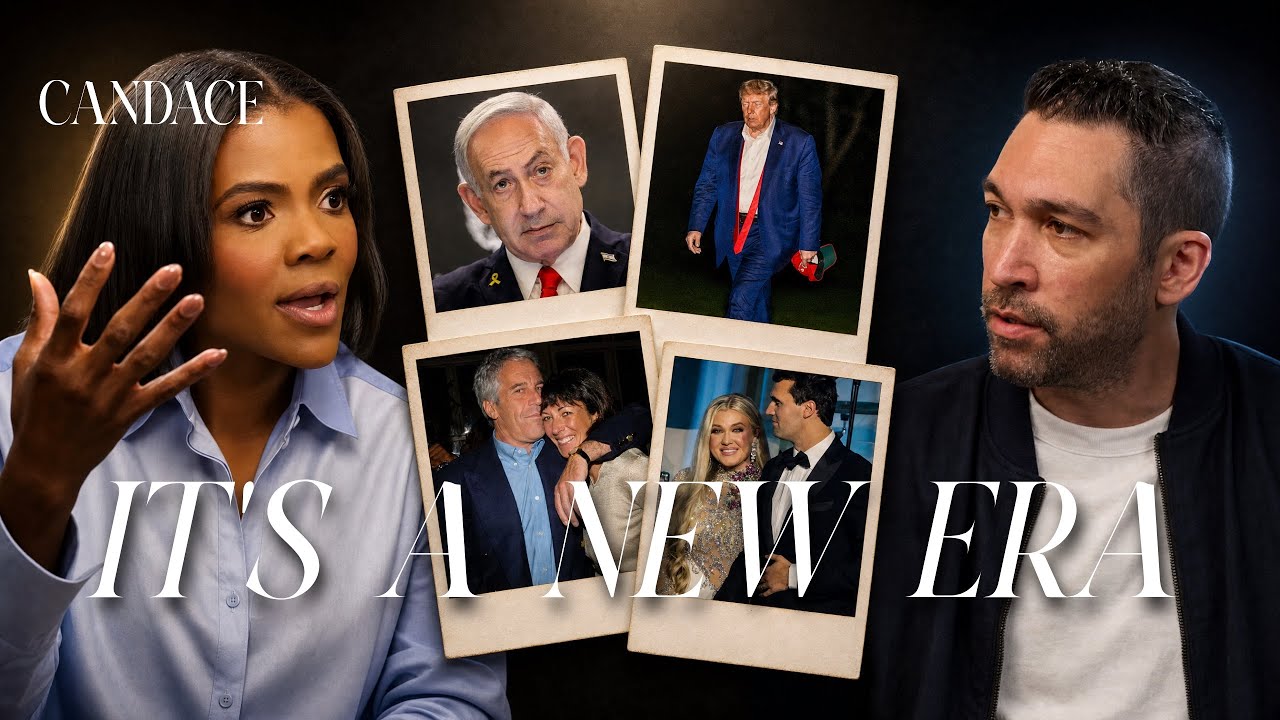
Halperin shared an observation that wasn't originally his own but which he found compelling: "Charlie was a genius and he was glue." He pointed to the current infighting among conservative figures—Laura Loomer, Tucker Carlson, Stephen Bannon, and Candace Owens—as evidence of what happens without Kirk's unifying presence.
"When Charlie was alive, the controversies, the contentiousness with Candace was tamped down. When Charlie was alive, the contentiousness with Tucker and with Nick Fuentes was tamped down," Halperin explained. "So, has this all broken out, at least on X, MAGA on MAGA action? Has this broken out because Charlie's not here to keep the peace? I can't say for sure, but I can say the correlation seems pretty exact."
He drew a parallel to Donald Trump's claim about Putin not invading during his presidency: "Donald Trump always says, 'When I was president, Putin didn't invade. And then when Biden was president, Putin did.' Is it a direct correlation? Who knows? But we can say this just as Trump can say they didn't invade on his watch. When Charlie was alive, the controversies were tamped down."
The discussion painted a picture of a conservative movement in flux, dealing with both external threats and internal divisions in the wake of losing a figure who apparently played a crucial but underappreciated role in maintaining unity.












Comments
Be the first to comment on this video.