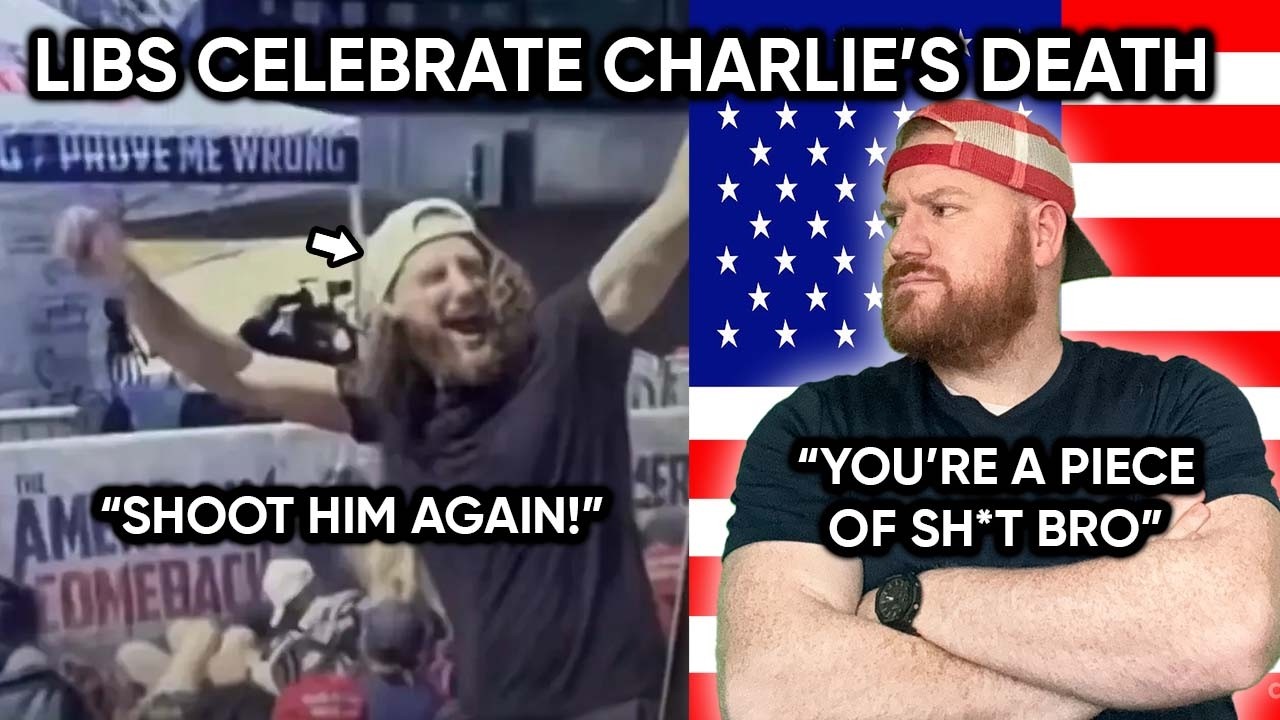
Is it Can you guys hear my audio? I'm looking at the stream. No audio. No audio. Good. Oh, okay. Okay. Quickly to recover what I was just saying with no audio. Charlie Kirk was doing a college talk as he always does and was shot in the neck, right? He is I am I am praying I hope by some miracle he survives. But guys, the videos that they have that they that they're showing on X of the closeup shot in the neck, I'm just talking about like leaking blood immediately. He he was assassinated by some old kooky crazy leftist. Somebody who you know just consumes MSNBC rhetoric about how Trump and the Republicans are Nazis. They're fascists. They're destroying the Constitution. Like what? Like what did they think? Did they not learn from Trump o almost getting assassinated? Did they not learn their lesson? They're so power hungry. I I I'm literally at a loss for words because we all said that this was going to happen. They had to just they're so afraid to to confront their own failures, what they did wrong that their only messaging was Donald Trump bad. And and this is a direct result of that. Not just Donald Trump bad, obviously Donald Trump Hitler, Donald Trump fascist, Donald Trump threat to democracy. I don't even I don't even know what to say as somebody who does this kind of thing, speaks truth, loves America, is a conservative. Like, I'm I'm terrified. I'm terrified. No way. MSNBC just speculated the Charlie Kirk shooting could have been a supporter shooting their gun off in celebrate. What? No way. >> This was a >> um in which a shooting like this happens. >> Yeah. And again emphasize what you just emphasized. We don't know anyful details of this that we don't know if this was a supporter shooting their gun off in celebration or so. We have no idea. But >> um What is this? Dude, this is insane. Redditors are celebrating Charlie Kirk's assassination. These are these are sick, evil, vile people. Th that's not hyperbole. Charlie Kirk is a father of two young kids and some angry old boomer who who whose bored in retirement wants to be part of another of of another movement decides to take his life. who who's inspired by the rhetoric that what he's doing is is an objective good thing. You got to kill Nazis. How is killing a Nazi a bad thing? Did do Democrats not understand that's that's the uh the only reasonable, you know, that's that's the only reason for trying to label your opponent a Nazi. It's like I don't I'm I'm sorry. I'm not my usual uh articulate uh self right now. I I'm I'm I'm truly struggling to process how I'm feeling. Like like I don't want to be the one to say, "Oh, yep. Charlie Kirk's dead." You know, like I I I want to wait for it to get confirmed. I'm I'm hoping that he's okay. But guys, I am sick to my stomach after watching that video. That man is and then you get Harry Sison, Democrat shill, pretending to have some compassion and empathy. Let's read these comments. I bet a lot of people are blaming people like him for his for his rhetoric. Oh yeah. See, there you go. Charlie Kirk is a sick racist piece of trash. Just put the clan hood on already, Charlie. Yeah, people like you caused it. Look at that. Children being shot in their safe zones like schools and churches are horrifying. A grown ass man who praises guns and hate is another thing. Just that's the problem. with Democrats just declaring and establishing themselves as the moral arbiters, right? We're the good guys. Everything we stand for is good. Everything we stand for is about love and compassion and inclusivity. When when when when you when you when you're so arrogant, you're so self-obsessed that that you you've convinced yourself that motivates all of your policy beliefs or whatever, then you have to by default label anybody who disagrees with you as evil, as racist, as a fascist because Dude, I can't even believe this. I seriously can't literally assassination attempts of Trump kill theiite uh the United Healthcare CEO because you know c down with capitalism. You want to be a socialist revolutionary firebombing Tesla dealerships. Trying to catch up on comments if anybody said anything. I am I am I'm truly scared. I'm truly scared. I'm not talking about like me personally. I'm scared for what is about to transpire in this country person. Like I believe so. I think that I think the trickle down effects of of this especially if it if it gets released that he's that he's dead. I I think I think it the world is going to be a very different place tomorrow. It it it will be I just made a video a couple of days ago about my trepidation and my premonition of the meeting between China, Russia, North Korea. It felt a little eerie to me. It didn't feel regular. It felt like they were preparing for something. And one of the reasons I believe that and I said that in the video is because America is divided. I mean, like, don't get me wrong, sure it's fun to make these videos and like point out how stupid Democrats are, but I would much prefer if the if the competing party weren't a bunch of violent, militant, radical America haters, you know? Like, sure, I guess it makes me feel good that I'm not one of them, but like I would much prefer some reasonable political discourse in instead of what we have right now. And you get and and yesterday what happened what like I just predicted in my video, Russia's going to push forward. What they do? They sent drones over Poland, NATO airspace, testing, antagonizing, pushing, and and and and now we got Charlie Kurt getting assassinated. I don't I don't think a civil war is necessarily going to break out, but if you thought the division between the left and the right was bad now, it's only going to get worse. And I and I think if you're China, Russia, North Korea as as an evil axis, now's your moment. Now's your moment. That's what what I'm what I'm afraid of right now. Like if if conservatives start feeling like they're like they're actually being hunted, they're they're going to they're going to pick up the guns and they are going to and they are going to wipe the leftists. Oh man, I don't even know. No. Nope. I don't want to watch that. Wow. There's no way MSNBC anchor calls Charlie Kirk divisive and polarizing after he was shot. Cash Patel. We're showing, by the way, our affiliate in Utah. Um, and the aftermath of this shooting. Uh, you could see people running away pretty quickly, as as you would imagine they would do um at gunshots. Uh, the FBI director, Cash Patel, uh, has um, weighed in on this. He just tweeted the following. We're closely monitoring reports of the tragic shooting involving Charlie Kirk at Utah Valley University. Our thoughts are with Charlie, his loved ones, and everyone affected. Agents will be on the quickly and the FBI stands in full support of the ongoing response and the investigation. Um, Charlie Kirk is a divisive figure, um, polarizing, lightning rod, whatever term you want to use. Why? >> Uh, well, he's one of MAGA's most prominent voices online. He hosts a near daily podcast. He opines on almost everything. He's been very closely aligned with the president uh, since his initial run for office in 2015, 2016. his ties to Trump really elevated his own brand. Um he was really quite young as an activist when the president launched his initial campaign and he has kind of ridden along with MAGA um since 2016 and built up a massive massive brand of his own. Uh his his group has brought in tons and tons of money. I I don't even want to I don't even want to look at the responses from the left because I mean I already know. We already know. You guys know. I know. We already know what they're saying. But but if I feel I don't want to hate my fellow Americans. I don't want to hate them. I think if I read these comments, I I will I will hate them, you know? Like I like I currently just think leftists are stupid. I think they're stupid. They're definitely dangerous. Um But but part of me felt like I wanted to believe they were redeemable. I wanted to be optimistic and hopeful about about my country. You know, they live here. We're struggling to deport 10 million illegals. We can't deport 150 leftists. So, we got to deal with them. We have to live with them. And and I want to believe that that they that they that they aren't too far gone, that they're not that they're that they're not tarnished and and can't be fixed and can't be saved. But if I if I start really looking at some of these replies, I think I'm I think I'm just going to develop a hatred that I that I don't really want to harbor personally. This is bro lit. Literally all Charlie Kirk did was was have conversation with people, try to change people's minds, let people speak their minds. He was the embodiment of free speech, of open dialogue, of civil discourse. and they killed him for it. If if if you need any more proof that the left is tyrannical, they don't believe in the Constitution. They they they killed the guy who became famous for having civil political discourse with people all because they decided in their mind they're good. They're moral superiors. They got their college degrees and and and and they're geniuses. How dare Charlie Kirk say that college is a scam? How dare he try to stop people from going $80,000 in debt, wasting four years of their life to to to learn no marketable skills, come out the other end miserable and unhappy and burdened by debt. He's the bad guy for trying to save people from that scenario. I don't even know. Let me look at some comments. Tim Pool posted that Charlie is stable. Oh my gosh. Please let that be true. Tim. Source tells me Charlie is stable. Oh my god. Oh my god. If that's true, dude, I hope I hope that's true because that was just the way he was shot was the most heinous dis like despicable thing I like I've ever seen in my I've I've came right on Q to arrange leftists are celebrating Charlie Cre. >> I'm not saying [Music] >> I'm not saying she deserved it, but I'm saying God's timing is always right. [Music] These are the people the the self-appointed moral authorities. These people the the the people who want to chop up kids, sterilize them, right? The people who want to kill babies. These are the people that we have to be uh whose moral compass we have to follow. Yeah. Yeah. Pro protect my me and myself. Look, man, I have never been a big proponent of um doing like public debates or street interviews or online debates, mainly because I don't find them productive. you know, I I see I love my country and I feel as if the divide between left and right is something that's going to destroy us. And um and the effort to save the country can only be done by by bringing people from the left to the side of common sense and reason, right? I think that the the duty to try and save the country is is noble. It's important. I don't think it's to be sensationalized um and and made into a performance into theatrics into some show for the internet for clicks, you know. Um, I don't know how many people here um have seen my, you know, my video talking about my story, but from 2021 to 2024, I was wearing my Make America H Great Again hat all throughout Los Angeles, everywhere to the clubs, grocery stores, everywhere, everywhere you can name. And through this, I had real conversations with thousands of people during the time Trump was his most unpopular. And I was able to persuade a lot of people to my to my side because I think a lot of people actually genuinely want to be informed, want to love their country, and and want to do what's best for their future. And if you talk to them in an intimate setting, where there's not a crowd, where there's no cameras broadcasting to the world, where they're not instantly put in defensive mode because they don't want to be made a fool out of or they or they don't want to admit that they were wrong. I mean, admitting you're wrong is hard enough to yourself, let alone another person you don't know, let alone in front of a crowd of thousands or online in front of thousands. It's almost impossible. Online debates, street interviews, the these are just these are just theatrical moments where where where each side is trying to uh own the other side, try to get a viral moment. um where where at the end of the discussion the audiences for both sides go leave thinking that they're right and the other the other side is stupid. It's never productive. It's never productive. And this sealed the deal for me. These leftists are mentally ill. They're erratic. They're violent and dangerous. And they are militant. Look, just some old some old coot. Some old coot whose best years are long behind him, snuffing out the life of a young father because he because he drank the Kool-Aid. believed Donald Trump was Hitler. Anybody who assisted him was a Nazi and therefore he was doing a moral good. This is the problem with Democrats in their inflammatory language. It's all to distract from how much of a fail of a failure Joe Biden was. That's it. It's not even that serious. You decided to up the up the ante, up the temperature to to Nazi level simply so you didn't have to talk about the fact that you let in 20 million illegals. Simply so you didn't have to talk about how you caused record high inflation. It is. I cannot imagine what his wife is feeling right now. I cannot imagine it. two shots to the jugular. I just um I I'm I'm not optimistic that we're going to see the requisite level of of personal responsibility from the Democrats. Like they they have to change their rhetoric instantly, bro. Instantly. Instantly. They got to stop with the whole fascist. They got a whole They got to stop with all of that. If the Democrats continue with this rhetoric, they are encouraging, they are condoning, and they are promoting stuff like this happening. And and and that and and and that is what's going to prompt Republicans to fight back. Yeah, it it it did not look survivable to me. We just looked at Tim P's tweet where he said that um his connections are saying Charlie is stable. Man, I hope so. Man, I hope so. I hope so. No, I don't want to watch that. I don't watch that. I wonder if this crass these are like some of the most ludicrous Trump deranged Democrats on X. Okay. Also, please stop politicizing this death without fully fully understanding what took place. Bro, what do you mean fully understand what took place? Charlie Kirk was just shot in the neck at an event. What took place? This is um this is just jarring stuff. I'm sorry. I've been looking at these comments. Brandon, for we wrestle not against flesh and blood, but against principalities, against power, against the rulers of the darkness in this world, against spiritual wickedness in high places. Yeah. Uh Marlana Woods, thank you for being here for us and covering this horrific event. Man, my heart hurts so much. I'm praying harder than I ever had in a long time. God, please be with them. Guide the hands of those doctors. Don't take them from us, Lord. They arrested the wrong guy. Ah, it's a gun control problem, huh? Like, violence must never be the answer to political disagreements. Now, all of a sudden, the Democrats want to pretend they're cordial and civil. These are the people screaming for everybody. People people have to fight. We have to fight Donald Trump, right? See, when when Donald Trump said, "Let's go peacefully protest at the capital." That didn't matter. He started an insurrection, right? But these are the people saying like, "We need to fight in the streets. We need to not show these Republicans any peace. You know, like we need to fight Donald Trump harder. We don't live in a banana republic. There are legislative measures to what you can do. He's the president. You don't have uh the majority in the Senate or the House. You can't block anything. So, what are you implying when you say we need to fight? We need to fight more. We need to fight harder. We need to take the fight to the Republicans. And then you combine it with uh with the, you know, uh Gavin Newsome, we can't we can't play fair anymore. We have to get our hands dirty. We have to start playing dirty. We got to throw away the rule book. We're bringing a knife to a gunfight. We need to start bringing a gun to a gunfight. And and and then and then and then you combine it with the with the uh daily repetitive message that whatever thing Donald Trump does today is inching us closer to authoritarianism. Whatever thing he did, we're on the brink of a fascist takeover. Anything he does, he's trampling on the Constitution, taking away rights, taking away freedoms. I I just don't understand what they expect like what like what is the purpose of this inflammatory, galvanizing uh uh war cry if not for things like this to happen? What are you even talking about? Violence must never be the answer to political disagreements. See, they say that, right? They say it violence should never uh violence, you know, should never be used uh for political disagreements, right? But what they do is they convince themselves and and they'll say it verbatim. So this isn't me just assuming. They'll convince themselves that their disagreements with Republicans aren't political disagreements. They're non they're non-negotiable uh positions on right or wrong. on human rights or not. You know, they don't see it as a political disagree. Oh, yeah. Of course, political disagreements. Violence is completely unnecessary. But we're not having political disagreements. We're having fundamental disagreements on good and bad. And And I'm on the side of the good because I said so. you. I I just can't even. Yogi Yates, is this real or fake? No, it is real. Charlie Kirk was shot twice in the neck. For four years, the Democrats silenced and suppressed and censored and cancelled any kind of political discourse. You could only say what they wanted you to say. You could only believe what they wanted you to believe. They they had they had a tyrannical control over the culture, over over society, over what was acceptable. And now they're the party that believes in civil discourse. Right. Okay. Okay. Was the shooter trans? I don't know about the shooter. Um he stabilized but in critical I I only said uh I only said he was dead or thought he was dead within like the first five or 10 minutes of this stream. Somebody in the comments said Tim P said he was in critical condition since then. you know, I' I've been taking his word for it. But I mean, if you if you saw the video and and and it wasn't me sensational, anybody who was here for this stream can confirm I wasn't sensationalizing it. I I was I was I was struck by the by the grief and the reality of what I saw in the video. and it led me to believe that that was going to be the likely outcome. Okay. So, it that that was it. Yeah, like you know like ju just for just for one example right on the uh on the on the Democrats um uh you know they completely understand political disagreements but what we're talking but but but what but but they consider everything to be uh actually a moral argument um something you know something that is that is non-negotiable. Take for instance the trans issue. They make the claim a man can become a woman and and we simply ask for some understanding seeing as they're the ones who are bringing in this novel idea and trying to institute it through policy into our regular everyday lives, right? And you know, if they don't shut you down and and completely just call you a bigot for asking them to explain themselves, um the their their next point of reasoning is, you know, trans rights are human right are human rights. Trans people exist. We're never going to go away. and and and you even having an opinion that is that is uh opposite to that belief isn't a political discussion. They see it as a human rights discussion and and they're not going to bend on their human rights beliefs and they don't feel the need to have discussions about them. And when they feel like they're, you know, when when when they consider themselves to be uh the the sole proprietors of the truth and good um and and that's attacked, well then of course violence is justified. Of course. Weren't they the ones who said that, you know, words are violence? Words are violence. That's why you couldn't have open discourse with Democrats was because words were violence. Oh man, I want to see it. Single shot from a campus building two 200 yards away. That's professional. Um I have no idea. Like I don't know if um he was shot up like if it was that old man then he must have been shot up close but if it was if it's being reported it was from 200 yards away that is a uh professional. That is a professional especially young but following what was just said. He's been one of the most divisive, especially divisive younger figures in this who is constantly sort of pushing this sort of hate speech or sort of aimed at certain groups. And I always go back to hateful thoughts lead to hateful words which then lead to hateful actions. I mean, God, God forbid, God forbid we complain about 20 million illegals entering the country in four years. Well, that's hateful. That's divisive. That's othering people. That's targeting out a marginalized group. You can't do that. Again, that to them, immigration isn't a political disagreement. It's a human rights one. You're not allowed to disagree with Democrats. That's what that guy basically just said. You're divisive. You're polarizing for what? For for for not just blindly following the delusional, woke, Americahating, anti-science Democrat agenda. The left is is responsible for cultivating an environment in which mental illness is something to be glorified, something to be celebrated, something as a label you can add to gain a little bit more victim hierarchy points. Um, and what they've done is they've created this welcoming, safe, coddled en environment for these people who are fragile, who are gullible and and then they just incite them with the with the most inflammatory rhetoric Like that's why that's why they were defending the guy who stabbed the woman on the train in Charlotte. Criminality is excused to them because oh, he had a me he had a mental illness, right? That's why mental illness isn't something to be taken lightly. That's why it's not fetch. It doesn't make you unique. It doesn't make you special. It's not cool. It It's bad. It's bad. It It should be fixed. It should be It should be taken care of. You You can't You can't have have an entire party of people that celebrate that celebrates mental derangement and then and then throws fuel on the fire to these lunatics. and and and and and as we keep seeing time and time again, I think we've seen three now from three clips from MSNBC where they're all blaming Charlie Kirk. The Democrat philosophy is well if you don't if you don't want us to be violent don't disagree with us then right I mean Elon Musk was simply trying to reduce government waste and corruption and they firebomb dealerships um and and and the grave sin Charlie Kirk is guilty of right is not agreeing with Democrats enough. I'm going read some of these comments. Faceless critic. Why does it seem that we supporters of the right maga Trump? We have a target on us. It's getting really scary out there. That's the Democrats trying to control us and the rest of the world will fear. Yeah, I mean it's terrorism, right? This is the definition of terrorism. The de the democ shocking. The party that supports Hamas is engaging in terrorism. Shocking, right? Dr. Phoebe's cat. It's time to stand up for our side. Man, I hope uh I hope things don't get worse. I really don't. Or I really do hope that they don't get worse. Like I am a brand new father. My daughter's not even 3 months old and I I look at things like this and and I I I'm just I'm just uh at a loss for words. Genuine loss for words. Well, this is somebody saying that he died, but I don't believe it. I'll check out Tim Pool again. See if he has an update. All right, he's alive and fighting. I'll be right back everybody. 30 seconds. My uh little brother just got here. Anybody's familiar with my streams, he's always been a uh >> regular of sorts. >> Regular of sorts. We We actually uh saw Charlie Kirk at a Turning Point event. We got some uh turn We got some the white hats with the gold 47 which are the turning point 47 hats. We got those. Oh my god. This is a video that's of him getting rushed rushed away from the scene. If he survives, nothing short of a miracle. >> God, my boy. >> Yeah. the the the left has to um the left has to end in end end this inflammatory rhetoric immediately right away. Right away. I mean I I don't want to I don't want to hear another left-wing pundit, left-wing politician talk about this authoritarian takeover anymore. It's so tiring. just just come up with some good ideas and let's get back to politics because this is this is the this is the result of what they've been doing. And if they continue to do it, what other choice does the right have than to fight back? What we're we're supposed to, you know, systematically just just get erased by a bunch of lunatic leftists. No, no, no, no, no, no, no, no. Wow. Wow. Okay, you guys see Stephen King? The motivation of the man who shot Charlie Kirk isn't clear, although he's probably mentally unstable. What is clear is is it was another example of America's gun vi It's a gun violence problem, guys. It's a gun violence problem. Just the motivation of the man who shot Charlie Kirk isn't clear. Like how how entrenched do you have to be in your own partisan delusion that that you can allow yourself to even say something like that? That would be like saying the motivation of the guy who shot Donald Trump was unclear. We have to figure we we have to take some time to figure out why he shot at Donald Trump. >> Okay. Um, I'm to be honest with I don't even have the uh audio hooked up correctly. I don't even know why I'm wearing these headphones. It's coming out of my computer anyway to be honest. I I I can just hear myself. That's the only reason why I like it because I can hear myself coming through. It's okay. You can just leave it. Um, yeah. The bullet fired at Charlie Kirk may have killed the moderate right. It's like Democrats don't even understand they're creating this thing that that they're so scared of. They're creating it. You want to see what happens when people really start saying, "Screw it. Screw the Constitution. Screw all of it. Donald Trump, arrest the arrest all of these Democrats. Throw them in jail. throw them in jail. Mow down all of these protesters. Put them down like or or reciprocal things, assassination attempts on Gavin Newsome, on JB Pritsker. some some of these right-wing people are going to get tired with with having to deal with this, you know, and and as I said at the very onset of this stream, if you guys missed it, this is the perfect time for China, Russia, North Korea to make their move. What What better time than right now? We have a crime problem. We got a left-right problem. The left doesn't want to solve any problems. The left wants more problems. The left hates America. Like I am I am worried for what the world will be like after this day. And it's not even like it's not even like Charlie Kirk is is uh you know at the level of Donald Trump in terms of in terms of like absolute significance, but he's big enough. He's big enough to where we saw the assassination attempt on Trump as wow, I can't believe this happened. This is this is an insane one-time occurrence. and and and now this just proves that they are coming for all of the biggest voices that they disagree with. Once you got plausible deniability this was just some random madman. It h it happened once you know it was an it's an isolated event twice and Charlie Kirk I don't know, guys. I don't know. Here. I'll scoot over a little bit. You can get up in here. Oh, no. I don't I don't want to watch that. I don't want to watch that. I'm I'm trying. >> That's the up close. >> I'm just avoiding all the videos of him getting shot because I I know I can't play him on YouTube, but I' i've seen them enough. I don't want to watch them anyway. >> Yeah, it's sickening. and and and I'm just I'm just I'm I'm I'm so flabbergasted at again, you know, I make these videos every day. I'm I'm not proud to admit I'm chronically on X, right? I see people who who like I I pattern recognition. I see them time and time again, day after day, say like like saying the most inflammatory stuff, the most hateful things about the right, but today they're they're they're just acting like they had no responsibility for it at all. Right. These are the people that when Donald Trump wasn't seen for 4 days, they were jumping with joy, hoping that he died, celebrating the possibility of the president dying. And now there are Oh man, there's no place for violence. Like what do you you guys you guys keep calling you guys keep calling for violence and and then and then throw your hands up and say you're not. But it's like it's it's it's it's just par for the course with Democrats. They they are they are complete hypocrites and and again completely allergic to to >> accountability >> to accountability. Right. That's that's why um when Jake Tapper released his tell all book about Biden's mental decline, he just he just pretended like he wasn't complicit in it for the last four years. >> Well, we already know they serve up the old good point, but don't focus on that. >> Yeah, >> it's a very good skill of theirs. It it it it's it's it's insulting to the intelligence of people to be treated as if we have the attention span of a squirrel, you know, like no, I never said that. I never did that. Like I >> like we haven't been living in these past four years. >> Seriously, >> rightirectly to the I think whoever did it was a good shooter, a sharp shooter. It was one shot right directly to the heart. And we need to find out who did this. I think there should be a research completely done that took place hours, maybe a day. >> He passed. >> No way. >> No. No freaking way. Where's Where's this news? Marjorie Taylor Green just said he's alive. >> That is 30 minutes ago. A whole lot can happen. Maybe refresh and look up Charlie Kirk again. Okay, he didn't pass. Okay, I I saw someone's comment saying that he did. about a moment ago with with Allen after one of the Doge uh employees was allegedly attacked in Washington DC. That's what Donald Trump used as a justification to send in federal troops into Washington DC to to get things under control. the carjacking situation. He used that and I I know it's hard to predict the future, Mark, but you can imagine the administration using this as a justification for something. >> You see the text from lost a guess as to what happens next. >> Perfect. Because um as we were just talking about a moment ago with with Allen >> Oh, can barely hear. Okay, let me let me uh try to fix the audio real quick, guys, because it's not playing as it should. So, give me a second. Sound. Okay. Let me know. Let me know if you guys can hear better now. >> The most recent thing I'm seeing is 8 minutes ago talking about his just being stable. People in the comments are saying he died >> because I mean I don't know what Jaden just saw but that's what he just sent me. >> He passed. He's in critical condition. He died. He passed. This is too much. This is Yeah. What happened today will permanently change the course of history. Yeah. the last civil war, I mean, was was fought because one side had to impose their will on the other because the other couldn't get it together. And that's what's going to happen again now. We're we're we're not we're like we're not going to accept the normal political process, political nicities when when us uh operating within those confines gets a shot gets if disagreeing with Democrats is going to get a shot, we're not just going to acquies to what the Democrats want. We're we're going to rip them out by the root. This militant violent uh behavior. >> They said the post that said he's dead has been deleted. >> Okay. >> Yeah. like like like if becoming if becoming um look never thought I'd say a prayer for Charlie Kirk, but here it goes. Political violent like to to imply that I would never say a prayer for Charlie Kirk. The what's baked into the premise is that he's such an irredeemably vile person essentially deserving of death. >> He's not even worth prayer. >> Not even worth a prayer. I I would even give a prayer to this guy. If if you felt that, like if I were to tell you I wouldn't even pray for somebody, I think like the you would get the implication that like, oh, okay, like like you kind of just like want them gone like like that entirely Trying to read these comments, guys. >> Look at this. >> How does that even make sense? >> Oh, sorry. Can you guys Can you guys hear the videos now? Someone commented they couldn't really hear them. I'mma play it. Let me know if you can hear it. Okay. No, people said no. >> Trying to figure it out, guys. Give me a second. inclined to consume conservative media are now I think upward of 50% say that necessary violence is okay. You've only got the conduct on one of the two sides. The permission structure for violence. You you've got polls about political violence. Democrats don't think it's a good idea. Only Republic. So, so yeah, there I mean, how do you find common ground with people who blatantly ignore reality for their own political gain? >> I mean, I I just don't understand it. >> I hate to say you can't, but it's like it you almost can't. >> Let me check Tim Cast. Tim Cass is I guess just where we're going to get all of our information. No way. >> How long ago? Minutes. >> Eight minutes ago. >> Bro, please no. Wow. Charlie Kirk was shot after answering questions about the trans shooter. Seconds ago, they just posted that and said he died underneath. It's not giving me anything. Sorry, guys. I'm trying to Oh, hell no. J I know JB Pritsker is not running his mouth. Ah, it's Donald Trump's fault. Got it. Got it. Nope. Not watching that. back and for heated back and forth. He's also a controversial figure at times. He goes into these various college campuses, uh pushes conservative issues, gets into back and for heated back and forth often with these students on these college campuses. But of course, uh none of that is violent, >> bro. literally >> about a moment ago with with Allen after one of the Doge uh employees was allegedly attacked in Washington DC. That's what Donald Trump used as a justification to send in federal troops into Washington DC to to get things under control. the carjacking situation. He used that and I I know it's hard to predict the future, Mark, but you can imagine the administration using this as a justification for something. >> I I must admit I'm at the assassination attempt on a political figure to to crack down on the real problem. >> Yeah. >> Clearly there is a problem if this can even happen. >> We have a terrorist problem. >> Yeah. And it's half the damn country, unfortunately. >> Yeah. Like, >> but to your point about how do you find common ground with them like that unfortunately will will create the monster they're trying to make it seem like we already are. >> Yeah. I mean, like they're already complaining about uh how how Gen Z men are the most, you know, right-wing in in a generation or whatever. This was their guy. Like, this was their guy right here. Any I would I would like to say any man under 25 was was probably found his way to conservatism through Charlie Kirk. >> [ __ ] Probably. And Christianity. >> Yeah. And uh No, no, no, no. Please people stop. This is Every time you guys say this is my heart is dropping. 19 minutes ago. [Music] Megan Kelly says he's passed. from Megan Kelly of some of the cultural sicknesses that we experience um in fact that we're experiencing right now. But I think also he he nudged um our our culture along with him and he he did it. He he has been a part of this revolution technologically that we've seen. And I think of you you've mentioned this a couple of times over the course of the broadcast. all of the people who have seen Charlie on their their little screens on their iPhones almost every day, sometimes multiple times a day, just as they're scrolling through Tik Tok or YouTube shorts or Twitter. Um, and those people, Gen Z, I mean, he's almost as close to monoculture as Gen Z gets. Everybody felt like they knew Charlie Kirk, even if they didn't like Charlie Kirk, they felt like they knew Charlie Kirk. They felt like they knew Charlie Kirk and they saw him grow up. And so I think you've mentioned this a couple of times. We are if anything underestimating as a as a society right now how profoundly this will reverberate on the culture. >> Yeah. Yes. This I don't I don't know if the left fully comprehends how important he was to us. I really don't. I'm not sure they appreciate. A lot of people are saying, I mean, the comments have been saying this the entire time, but people are starting to say it more that he that he's dead. >> I saw something that saying his wife and kids were there. >> A right to violence. All oppressed people have a right to violence. And I'm going to tell you something. It's like the right to pee. You got to have the right place. You got to have the right time. You got to have the appropriate situation. And I'm absolutely convinced that this is it. Right. >> Oh [ __ ] >> I'm logged into my phone. What are you looking for? >> They they tried to marginalize him and make him into this fringy character who would go on camp campuses. >> No way. No. No. No. No. No. There's no way. >> Dead. I'm going to send it to you. Hopefully, you can pull it up on the computer. Oh my god. Oh my Oh my god. Was that him commenting on it? That video? >> No. Bro, it's like making my stomach turn. [Music] Yeah. What comes from this might be I don't know. Rest in peace, Charlie Kirk, bro. They're not even saying anything about the shooter. I'm I'm I'm like I'm like like devastated. I'm trying to balance between sadness and and and anger. Like I I'm I'm I'm I'm mad that I'm mad that this could be this this could have been completely avoided had had the Democrats just decided to engage on the merits of their ideas and instead of instead of slanderous vile characterist assassination uh me meant to inflame their radical mentally ill base. This like They were they they were so power hungry. They were so corrupt. The like like like they they had what Turning Point is talking about it now. This is this is political terrorism of the highest order of the highest magnitude. Um I mean The left is dangerous. I don't I don't I don't know what else to say other than the fact that they're dangerous. They're going to keep chugging along and tomorrow they're going to continue talking about how Donald Trump is a fascist. He's a dictator because because that's all they have. They're miserable people. They're miserable, sore losers who think that they're who who think that they know it all and and therefore, you know, they can just call people Nazis and and and it'll have the emotional weight that they want it to carry and there's nothing wrong with killing Nazis. It it it's like it's like it's it's clear. The strategy is clear. The game plan is clear at this point. you dehumanize. You can do anything else because of that, >> bro. It's it's just straight dehumanization. Um >> on top of the moral good and evil that they're trying to stand that they're on the the high ground of we're good, they're true evil, do whatever. He even, bro, he was the one of the first ones to call out that they were going to try and assassinate Trump. It's like again, I I don't I don't know if this is me just full of emotion. I don't know if I'm mad. I don't know if I'm if I want revenge. I don't know if I'm feeling sorrow or a combination of everything. But if if we're not allowed to solve this problem because of the confines of the Constitution, I'm going to be the first to say, "Fuck the Constitution. [ __ ] the Constitution. Trash the Constitution, martial law, jail. uh whatever we have to do to figure out the Democrat problem. Whatever we have to do because I I refuse to live in a world where I have to agree with you otherwise I'm a political target where I have to endure a crime in a city because you don't want it fixed because you don't like the president. where where I have to endure, you know, uh the overt sexualization of children, you you telling them they can become they can swap genders, putting them on chem chem chemically castrating uh sterilizers, encouraging them to mutilate themselves, you know, flooding the country with the third world because you guys hate America so much. You've decided we have no legitimate claim or right to it. and and and because and you and you have to virtue signal so hard you're willing to give the entire country back to other people. I'm not standing for it. I'm not standing for it. I'm not I'm not saying the Constitution is the problem. I'm saying if we are not allowed to fix this radical terrorist democrat problem within the confines of the constitution then it needs to be dis like this is this is like priority number one for me at the moment. I don't know if again if it's coming from rage, but it's like screw everything else. Tax policy, foreign policy, economic policy. >> We have half the country thinking assassination is the vi is the only viable option. >> Where do where do you even go from there? >> Exactly. I I'm not interest I'm not interested in civil discourse with these people anymore. I'm not I'm not there. There might not be anyone who can take Kirk's place. >> Who's going to want to? >> Exactly. No one should want to. >> The hell? who's going to want to. And that's and that's the point of what they did. That's the that is why they did what they did. When when when you argued against their trans ideology, they took your kids so the next guy wouldn't speak up. There is there is no voice bigger um and more mainstream and and and more >> influential and >> influential, more real. There is nobody else with the with the influence of Charlie Kirk who was just boom, I'm here on your campus. I'm willing to talk to you no matter who you are. Walk up to me. Let's talk. Let's have a conversation. Who? Who? Nobody's going to Nobody's going to take his place. >> Yeah, they can't. And to your point, even if they could, they won't. >> Yeah. Why Why would anybody want to take take his place until the until the lunatic left problem is fixed? That's what I'm saying. Charlie tried to do it the right way and got killed for it. He He tried to change minds and hearts with words and civility, with dialogue, and he got killed for it. Okay, fine. No more words. No more civility. I don't um I don't really have anything more to say, guys, to be honest. I'm probably just going to end the live. I as soon as I heard he got shot, I wanted to hop on kind of go through this moment with you guys, tell you my thoughts. But but now that he now that he's died, it's been it's confirmed that he's died. I I don't think there's anything else productive that I that I can say. I think I'm just going to end up saying a lot of hateful, mean stuff that I that I may come to regret. So, um I'm I'm devastated. I I I feel so bad for his family, bro. >> Yeah. And and that's and that's really why I'm feeling this way. I I I will I will not I'm not guys. I am no Charlie Kurt. I am probably not on the radar of any crazy leftists, but I have a child. I'm I I will not allow myself >> to anywhere near a possibility of that >> to get taken out by them. All right, man. I'm uh clocking out. Appreciate you guys for tuning in tuning in, I guess. I don't even know if that's the right thing or the appropriate thing to say, but >> rest in peace to Charlie. Rest in peace to Charlie Kirk, man. Take it easy, guys.