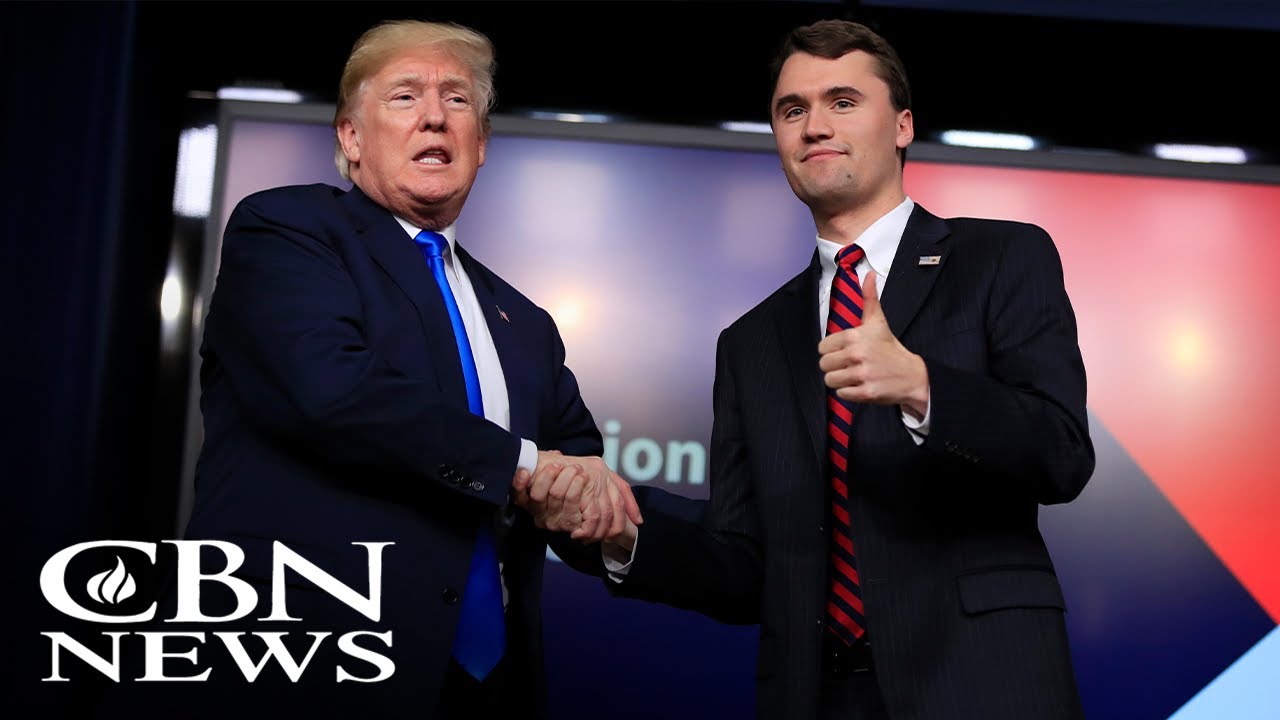
Charlie Kirk would have been president. His friends knew it. His admirers knew it. And his enemies knew it. I'm Michael Nolles. This is the Michael Nolles show. We have a lot to get to today. And it's not going to be anything that any of the other TV news shows are talking about. Uh it it's going to be personal and it's going to be political. We're not going to focus on all the negative. There will be a time for that. There will be a time for the reaction to the reactions that we're not going to forget about that. That time will come. But today is not not that day. We're going to focus on grief. We're going to focus on mourning. We're going to focus on what Charlie means. We're going to focus on the honors that have come to him from the president, from other presidents, from Yankee Stadium. For goodness sakes, we're going to get to to all of that. Uh I I wrote a little uh obituary uh for Charlie on social media uh which you can find it's on the daily website too. And and and when I when I think about the guy not just as my friend but as a political figure that's the point I keep coming back to. Everyone believed in this guy. Everyone believed this guy would be president. I first I first met Charlie many years ago. The first time we met, I was in a green room at Fox News in Los Angeles. Tiny little green room, you know, a little bureau there. And it's three o'clock in the morning, four o'clock in the morning. I lived in LA, so I should have been used to waking up. I was doing that TV show a lot. And I'm half asleep in the chair. And Charlie walks in. This is the first time I've ever met him in person. And Charlie comes in, probably off some flight on a different time zone, and he's just bouncing off the walls, just full of energy. Hey Michael, that's that uh just wants to talk about everything. Go. He just understood. He was we were talking about politics, talking about practical politics at that time, you know, in the early days of Trump. We were talk we're talking about every policy, just everything. 4:00 in the morning, I said, "Hey buddy, it's nice to meet you, but you know, come on. I'm trying to sleep here." Just absolute boundless energy. Uh he looked the part, very tall, good-looking guy. He had all of the skills. You know, Charlie founded Turning Point at age 18. He gets out of high school. I think he had I think he was an Eagle Scout. He gets out of high school. He was going to go to college. Realized there was that was not going to be a useful uh way to spend his time and money. Founds Turning Point USA at 18. Raises a ton of money. People believe in him. He inspires confidence from major donors and inspires confidence from the young voters that he was reaching. And he turned this into the the biggest organization on the right. I don't even mean the biggest young voters organization. I mean the organization. Charlie was the nexus for all of us on the right. He became extraordinarily important to the Trump campaign. It is no exaggeration to say that President Trump in 2024 might very well not have been elected without Charlie Kirk. He just kept getting more and more responsibility. He found a turning point action which then went on to lead helped to to lead the get out the vote efforts and therefore to win the popular vote for a Republican for the first time in 20 years. He started the faith uh division. So even of TPS USA, you had the nonprofit, you had the political action, you had the faith divi, you had women's leadership, you had all of these different divisions. In the meantime, while he's doing all of this stuff, 18 founds the organization, 22, he's addressing the RNC. This rocket ship of of influence in American politics, reshapes the government, as the vice president pointed out last night, helped staff the government, and as he's doing all of this, he published five books. He married his beautiful wife. He had two wonderful children doing all of these things. A little bit that has not been discussed in his biography is is how he grew his mind because he was so busy doing practical politics and practical politicians usually aren't that smart. They don't really read books and they just learn slogans and that's it. And Charlie could have done that, you know, I mean, they would have had a great career doing that, but he wasn't content with that. He wanted to uh make up for the education that he did not have. One because he didn't go to college and two because most people who do go to college these days don't get an education either. And he wanted that education. And and I remember I was sitting with another friend of Charlie's mutual friend of ours. Uh and we were talking about how he should do one of these fellowship programs, you know, to read great philosophy and you know the great books and all of this. And some other people were saying, well, I don't know. Is he really suited for that? Is he? And I said, "Yeah, of course he is." Cuz you he's got this unbelievable political talent. He's got this unbelievable skill. He's a thing and he recognizes that he, you know, he doesn't have the most formal education and he wants that too. And he just wanted you just an absolute sponge of knowledge and skills. And so he did it. He did extraordinarily well. He took it very very seriously. And in some ways it was annoying because he became harder to debate. He got he got incredibly skilled at debating and organizing and fundraising and staffing and communicating. Oh, he hosted that national three-hour radio show in there in between all of the just so for so that's another reason people believed in Charlie. That's another reason why anyone you talked to his friends, his admirers who didn't know him personally and his enemies alike all said, "Man, you know that guy? that guy's probably going to be president. But for all those people too, and especially for his friends, what impresses me about the guy and what I think is more important than his political skills and accomplishments, even more important than his appearance, it's helpful to be tall. I mean, Charlie would would joke with me. I'd say look, I was like 6'5 slouching and he would say I said, "Charlie, good grief." You know, you're just a giant. He said, "Well, yes, I'm descended from the Nephilim. I'm descended from the fallen ones in the, you know, the Old Testament. And we're all we're all uh we're all born fallen ones, you know, with a fallen nature. And this really ties in with what's most impressive about the guy because there are people in politics who on the left and the right for that matter who present one way and live another way. There are and some of them are fine politically and you can hit the campaign trail with them and sometimes they say something interesting on TV, but the the image they're presenting is not the same as the person they really are. With Charlie, he really was that guy. And and I I just think about the virtues, the four cardinal virtues and then three theological virtues. Four cardinal virtues, prudence, temperance, justice, fortitude. Prudence is the paramount political virtue and he had it in spades. He wasn't just some egghehead ideologue. He was think he was constantly growing, constantly thinking, constantly applying his deeply felt principles to changing political circumstances, taking in new information. A lot of people can't do that in politics or anywhere else. So he had prudence which is how he was able to help build and help maintain this general coalition. This this mass coalition with with discordant parts that that were actually able to get things done. The only other person who can really claim that is Trump. Trump himself. So he had that in spades. Temperance. I never saw the guy have a drink. He refused to have my cigars. He he really was a a tea totler. He was very very temperate. And you know, we're he's a he was a young conservative. Young conservatives love whiskey and cigars and hanging out and staying up late. And Charlie did not do that stuff. And I I don't think there's anything necessarily wrong with doing that stuff, but it it shows you that he was determined not to squander one second or one ounce of energy that he had uh that could go toward achieving his purpose, his political purpose, for which we now know in retrospect he had so little time. 31 years. That's it. He did all of that in 31 years. I'm skipping over countless aspects of his of his resume of the things that he achieved. And he didn't part of part of the reason he was able to achieve all that is he didn't he didn't go hang out. He didn't go have the third drink or the first drink for that matter. He didn't he didn't go stay out all night for this guy. He was just doing stuff all the time. Uh justice, I think, is clear. He was so fair to everyone. He's not underhanded in any way. plenty of people in politics are even people on our side. He was not in any way. He was always fair. He was more than fair because an aspect of justice at least an aspect of God's justice is is also mercy which go hand in hand. And he was so gracious to his opponents. And this I'll get back to when we talk about the the political import of Charlie's assassination. He he gave his interlocutors, he gave his sparring partners on the left and the right. He also loved debating his friends and his his allies. And he loved he just he loved it. He loved the exchange of ideas. He he even loved being proven wrong. He might not admit it in the moment, but he even loved that because then he would it was he deepen his ideas and he would get stronger and he would he would he would become even more of a force. You know, he wasn't afraid of the truth. He wasn't afraid to be contradicted if what contradicted him led him even closer to the truth. A lot of people are a lot of people a lot of people don't want to grow. That's that's how he was able to grow. That's one of the reasons even beyond the cardinal virtues. The three virtues that are I think mo most clear from Charlie are the theological virtues which are which are the more important ones. Faith, hope and charity. That guy believed what he said. I promise you. I don't think anyone doubts it. But if any if anyone who only had a passing acquaintance with Charlie on, you know, Instagram reels or something, if anyone doubts it, that guy believed his religion and it was more important to him than any politics, any sharing stages with the president, anything else in the world. He had a firm hope in the resurrection and he had immense charity for for everyone around him including and especially his his opponents. And so we uh we entrust Charlie to as as he confidently entrusted himself to God's care. That's all all that we can really do about it. We pray for Charlie and we we do all of the things that are attendant to religion. Religion which was the most important thing to him. Uh there's one caveat to this. People are grieving. They're going to grieve in their own way. I don't tell people how to grieve really. I know there is going to be a broader impulse in the public for happy clappy talk. Oh well, you know, he's with his savior today and isn't that we should really should be happy. You hear this sometimes at funerals. Funerals which are no longer even called funerals. They're sometimes called celebrations of life. You can't even you can't even admit that one is mourning at a funeral. You have to celebrate everything all the time. There's a there is a deep religious truth as Christians to say, well, we entrust these souls to God's care. Friends of Christ, we we entrust to to Christ's care uh at the particular judgment and in heaven and in the life of the world to come. It's still sad. It's still really, really sad because death is still bad. Even in light of the resurrection, it is still a bad thing. It loses the sting. It loses a lot of the sting. But you know, Jesus wept when his friend died before he raised his friend from the dead. Death is a very bad evil thing. And we can mourn and we can grieve because the Christian religion doesn't contradict reality. Plenty of religions do. The Christian religion does not does not say don't believe your lying eyes. Oh no. Don't the thing you're feeling that's just totally fake. Just ignore that. Just deny that. Just be happy clappy. No. The Christian religion tells you more about reality. The the the supernatural perfects nature. Grace perfects nature. It doesn't contradict it. So we should be sad. We should be sad. This is a very, very sad thing. It's good to mourn. It's good to grieve. It's good to be It's good to recognize that this is really bad. And there are going to be other people, and I guess this gets us into a little bit of the political response to Charlie's murder. There are going to be people who say, "Well, they don't know what they've unleashed. You know, this if you strike me down, I'll become a million times more powerful. And this is we're going to get you. And this is this is the beginning of something much much greater. And maybe, yeah, maybe. But for the moment, let's just mourn. There are going to be there's a there's a deep deep anger. Trust me, I know. Uh that's for tomorrow. There is a greater commitment to to our our shared purpose. Yeah, that's good. And we should double down on that. I was supposed to see Charlie 11 days from now. I owed him a text. I'm very bad at texting. an iota text uh about about actually some about something religious and something later down the road which will now likely not come to pass because we we imagine these futures for ourselves even though we're not promised tomorrow. We imagine these futures which is part of part of the sting of the of this kind of a grief. She say no but this was supposed to happen. No, we were supposed to do this. No, we were supposed to talk about this. No, he was supposed to be president. But we're not guaranteed a future. In any case, on our on our political import here and on the shared purpose politically, Charlie and I were supposed to do an event together on campus in 11 days in Minneapolis. I was on a show not long ago. Uh we were talking about it on on this tour. Uh obviously I I don't I I have not uh spoken to TPUSA. We're uh we're we're letting them grieve, of course. And uh uh beyond personal messages and things like that, we're not I don't I don't know what's happening there. I'm sure they don't know what's happening there. This is a very live situation. So, you know, take take everything with a grain of salt. From the from the 30,000 foot view, though, I know some people are talking about cancelling events and not going to the campuses anymore or anything like that. I had already paired back a number of those events. I do not intend to cancel any events. I don't intend to cancel any of them. Uh I I I I'll be going out if if the events are to occur, if the doors are open, I I will be doing that. I suspect a lot of other people on the right will be doing that too. Uh we will we will not uh be cowed by this. Uh so um there will be more information about that coming. I don't know exactly what that's going to look like, when these things are going to look like, but uh for now at least, while there's still so much confusion about what the future looks like, I I will not be cancelling a single event myself. But the events will certain events will be cancelled just generally in politics. That's just how these things go. And and I think broadly speaking the political import of Charlie's assassination beyond the personal side is that these kinds of events are broadly over. You know what did Charlie do? What did he did a lot of he did a million things. What was he best known for in this moment? What did he dominate in this moment? What did South Park feature him for as as an amazing tribute toward the end of his life, though none of us knew it would be the end of his life? He showed up to campuses and debated ideas. He show He just want He showed up to campuses and elsewhere and sat down and debated ideas graciously with people and they killed him for it. Which means we're probably not going to have as much debate in the future because Charlie did that. He did that really, really well. He did it actually better than anybody right now. And they killed him for it. And in a battle, whether you're talking about a physical battle or a battle of ideas, your opponents get a say, too. He showed up. He wanted to debate ideas and they killed him. Which means that we're probably not going to get as many debates in the future. If one side doesn't want a debate, we're probably not going to get as many debates in the future. I I felt that the Harvard law professor whom I greatly admire, Adrien Vermule, had had a good point yesterday on this, which is he said, you know, Charlie dedicated himself really in this in this beautiful way to the free exchange of ideas and the debates and and his enemies found that intolerable and so they assassinated him. And there are two responses that one can have to that. The bad response is uh repaying violence with private violence, not justified violence, which is self-defense and there are other kinds of but but some of this talk of retribution and you know you take one of ours and we'll take two of your you know that that would be unjust. That's that's one response. The other response, however, is to say, okay, uh the we like the free exchange of ideas. We endeavored to do that. We were we did it in as good faith as one could possibly do it. Uh Charlie Kirk was lit literally a boy scout and was just so wonderful to his opponents. And now we need to uh restrain the people who are doing violence against us. Now we if you know if you don't want to engage in in that kind of thing then we need to arrest more criminals. We need to uh be less permissive of social pathologies and and mental illness and threats of violence and all of the things that we've just kind of let run a muck. We need to be a little clearer about what is good and what is bad, what is true and what is false. We need to be a little clearer about that. We need to be a little less handsoff. We need to we need to assert our moral vision because if vigilantes on the left and some people with state power on the left are are asserting their moral vision and in a in an unjust way, in a in a way that no one but the most despicable sorts of people would defend. Well, we need to do it in a just way in accordance with the laws. That seems to be the inescapable political conclusion here. An event like this is is massively significant. And a lot of us have been kind of just walking around in a fog. And I was walking around uh at home, finally got home late last night. And you was talking to Alisa about it. And and at first I thought that the heaviness of it all was just because we were friends, Charlie and I. I thought it was largely just personal. I don't think it's that because as we'll get to in momentarily there were tributes from everybody every major sign all the presidents and Yankee Stadium. Yankee Stadium was the one that really got me. Yankee Stadium had a moment of silence for Charlie Kirk before the game. heads of government around the world were were sending in eulogies and and obituaries, tributes to him. This is politically very significant and and coincidentally, however it worked out, today's 9/11 is one of the most uh significant dates in American history. And there's an impulse when when these significant events happen to just go on as if nothing happened. To go on as if nothing's changed. I just don't want to grapple with the fact that something's changed. Something's changed. Something has changed. And I I know it's it's sad. It's another layer of sadness to add to add to this event. But I for for 10 years now, the the right has endeavored in good faith to openly debate ideas in in when in the case of Charlie just in a field, you know, in just in the open in a physical space that was totally open with ideas that were totally open. We really really tried that and you killed him. You killed him for it. And now we got to do something else. Now we we we need to react to that. What you did what you did is probably the end of that. A as to the murderer. I'm I'm not going to get into speculation. As of the beginning of this show today, I'm sure my team would have updated me if something had changed. The murderer was still on the loose. We don't know who it is. And I'm I'm not going to speculate that the the closest update we have, this is via Daily Wire, is that the FBI believes that it recovered the assassin's rifle and uh the authorities recovered what they they believed to be the weapon. This is according to Robert BS, the special agent in charge of the in charge of the FBI's Salt Lake City field office. He says was a high-powered boltaction rifle recovered in a wooded area where the shooter had fled. The investigators are currently analyzing the rifle. The FBI is also analyzing a footprint, a palm print, and forearm prints. That's it. They don't have the guy. Now, analysis of the analysis has led the Daily Wire to conclude that the suspected assassin appears to be college age. According to the Utah DPS Commissioner Bo Mason, the suspected assassin is u college age person. Uh they said that uh they have good video footage of the assassin, but they are not releasing the footage to the public at this time. The quote is, "We are confident in our abilities to track that individual." So there are leads and there are leads that have come from the leads, but there's no person yet. And I'm just not going to speculate on it. Charlie had enemies on the left. Obviously, he should not have. He was basically the nicest one of us. You know, he was really, really gracious to his opponents. And yet, I won't even today get into the response of people on the left on social media and on the news networks. I won't. that's for tomorrow. But they were not so nice to him. So I think most people assume this is a person on the left and maybe that's the most likely. He did have enemies on the right or kind of on the right, the fringy parts of the right. Plenty of enemies, plenty of people who've made it their raise on debt to to ruin this guy's life and to go after him for years and years and years. So I suppose that's a possibility, too. And there's a third possibility. Because when you stop thinking about this purely ideologically and you start thinking about it more politically, meaning more from the significance of the person relative to power structures in the country, Charlie was really big, physically giant, but really really big. Part of part of the reason I think that this feels so politically significant is we're thinking about him as, you know, a nice kid who would give speeches and have debates. This is one of the most influential and important political figures in the entire country. I I've said I might have said it with Charlie actually somewhat recently that the the guy like runs the republic ran the Republican party, you know, ran like the the American right in many ways other than Trump, you know, he was like one of the one of the big guys. And so there is a question of whether or not there's it was not just some lunatic, most likely on the left. I guess it could have been someone on the right, but that that maybe this was a a more targeted assassination of someone who wielded immense political power in the country, immense cultural influence, who had the ear of the president of the United States for a decade, who he was a big guy, and who who would have been president. Uh those are the options. I'm not going to speculate. I I which is why I'm I'm not even inveying today against the left or this or that. And and it's just his enemies. Some enemy of Charlie's got him. And that's significant enough. My friend Gaston Mooney, president of the Blaze, uh texted me yesterday. He had a suggestion that uh Charlie should lie and honor the US capital. He tagged Mike Johnson in it. I think this would be fitting in many ways. Charlie was as thoroughly patriotic as any figure in American life. He he he wasn't just another another one another talker, another organizer, another, you know, he he did something generous, you know, he did something unique. And I I I think it would be fitting if if that is the wishes of his family who should, you know, be considered first in all of this. And if I I think it would be very fitting because some people, especially those who didn't follow Charlie too closely, they they they might recoil at that and say, "No, what are you talking about? He wasn't a he wasn't a governor. He wasn't a senator. He wasn't a president. He wasn't. Why would he? Yeah, he he was more important than most of those people. And I don't other than the president of the United States himself, I he probably had more influence than than any of those types of offices. I think it would be fitting. I think it's a really really good idea. Again, I I I have I've really tried not to bother, you know, his family and and really closest friends just just yet. Uh but if if if they think it's the right thing to do, I think it'd be a beautiful thing. And now as to the reaction that I mentioned to show you the significance of this politically, the president of the United States gave a somewhat lengthy Oval Office address to to speak to the nation about Charlie's murder. To my great fellow Americans, I am filled with grief and anger at the heinous assassination of Charlie Kirk on a college campus in Utah. Charlie inspired millions. And tonight, all who knew him and loved him are united in shock and horror. Charlie was a patriot who devoted his life to the cause of open debate and the country that he loved so much, the United States of America. He fought for liberty, democracy, justice, and the American people. He's a martyr for truth and freedom. And there's never been anyone who was so respected by youth. Charlie was also a man of deep, deep faith. And we take comfort in the knowledge that he is now at peace with God in heaven. Our prayers are with his wife Erica, the two young beloved children, and his entire family who he loved more than anything in the world. We ask God to watch over them in this terrible hour of heartache and pain. This is a dark moment for America. Charlie Kirk traveled the nation joyfully engaging with everyone interested in good faith debate. His mission was to bring young people into the political process, which he did better than anybody ever, to share his love of country and to spread the simple words of common sense. On campuses nationwide, he championed his ideas with courage, logic, humor, and grace. It's long past time for all Americans and the media to confront the fact that violence and murder are the tragic consequence of demonizing those with whom you disagree day after day, year after year, in the most hateful and despicable way possible. For years, those on the radical left have compared wonderful Americans like Charlie to Nazis and the world's worst mass murderers and criminals. This kind of rhetoric is directly responsible for the terrorism that we're seeing in our country today, and it must stop right now. My administration will find each and every one of those who contributed to this atrocity and to other political violence, including the organizations that fund it and support it, as well as those who go after our judges, law enforcement officials, and everyone else who brings order to our country. From the attack on my life in Butler, Pennsylvania last year, which killed a husband and father, to the attacks on ICE agents, to the vicious murder of a healthc care executive in the streets of New York, to the shooting of House Majority Leader Steve Scaliz and three others. Radical left political violence has hurt too many innocent people and taken too many lives. Tonight, I ask all Americans to commit themselves to the American values for which Charlie Kirk lived and died. The values of free speech, citizenship, the rule of law, and the patriotic devotion and love of God. Charlie was the best of America, and the monster who attacked him was attacking our whole country. An assassin tried to silence him with a bullet, but he failed. Because together we will ensure that his voice, his message, and his legacy will live on for countless generations to come. Today, because of this heinous act, Charlie's voice has become bigger and grander than ever before. And it's not even close. May God bless his memory. May God watch over his family. And may God bless the United States of America. Thank you. We've now gotten an update. Since that time, uh, President Trump will award Charlie the Presidential Medal of Freedom. He announced this when he was speaking at the Pentagon 9/11 ceremony. Absolutely fitting honor. Uh, he he deserved it before he was assassinated. Uh, he deserved it. Oh, he deserved it for years. When when Trump says, you know, Charlie's mission was to bring young people into the political process and he did it better than anyone ever that that might not have a hint of exaggeration to it. Pericles did he I don't know. I he didn't focus exactly on I mean Charlie brought so many young people into the political process to the right side of the political process in the strongest country in the history of the world. So much so that his side won the popular vote for the first time in two decades when Charlie when Charlie was put in charge of of a lot of it. Okay. Okay, so was that's from President Trump. Uh he posted much much the same a truncated version of that untruth social. His wife Melania had a really beautiful post. I don't have it here in front of me, but but she said, you know, she she gave a very feminine take on it, a very a very motherly side of it, which is, you know, Charlie's kids now are going to grow up with stories rather than memories. and they're going to grow up with photographs rather than a a father who bounces them on the on his knee. I think for a lot of people, even more than the political significance, which is so great that it merited an oval office address, a presidential medal of freedom, and declarations from all of the other presidents, which we'll we'll get to in a second. somehow e even we're talking about the height of political significance in the world for heads of government around the world and and yet Melania's observation is is even worse. That's where your heart really breaks is for his wife and especially for his kids. That someone murdered those kids' dad because he wanted to have an open debate about mainstream ideas. They took it their dad away for that because they didn't want him to debate ideas. ideas that virtually everyone agreed with like 20 years ago because Charlie wasn't some fringe guy by any stretch of the imagination. He was the most mainstream conservative and in many ways the most mainstream young political figure in the whole country. President Bill Clinton said, "I'm saddened and angered by Charlie Kirk's murder, and I hope we all go through some serious introspection and redouble our efforts to engage in debate passionately yet peacefully. Hillary and I are keeping Erica, their two young children, and their family in our prayers." Nice statement, Barack Obama. We don't yet know what motivated the person who shot and killed Charlie Kirk, but this kind of despicable violence has no place in our democracy. Michelle and I will be praying for Charlie's family tonight and especially his wife Erica and their two young children. It's good that he put out a statement. Don't think we needed the preface before he expressed his statement. We don't yet know. Just want to point out we don't yet know. We don't yet know. Hey, hold on. Don't Whatever. Kla Harris put out a statement. I'm deeply disturbed by the shooting in Utah. Doug and I send our prayers to Charlie Kirk and his family. Let me be clear. Political violence has no place in America. I condemn this act and we must all work together to ensure that this does not lead to more violence. Uh that's good to hear from them. We're hearing different things from other mainstream elite people on the not just the fringe, but the mainstream elite people on the left, which we'll get to tomorrow. I don't I don't have it here for some reason, but uh Joe Biden issued a statement as well. So, you have you have every living president. Here we are. Here's Joe Biden. There's no place in our country for this kind of violence. It must end now. Jill and I are praying for Charlie Kirk's family and loved ones. This was relatively early yesterday when when Biden released his statement when it was still u still a little bit unclear. Oh, George W. Bush. I I don't have his printed out here either. George Bush said today young man was murdered in cold blood while expressing his political views. It happened on a college campus where the open exchange of opposing ideas should be sacrianked. Violence and vitriol must be purged from the public square. Members of other political parties are not our enemies. They are our fellow citizens. May God bless Charlie Kirk and his family and may God guide America towards civility. One can look at all of these statements pour in and there will be others not just from around America but from around the world and and say, "Wow, what an honor. What a tribute to this guy's life." Obviously, this guy really mattered. This guy was really significant. 31 years and he mattered more to the political world, to society than I don't know how however many people in however many lifetimes. And yet that's little consolation, isn't it, to his family and to his friends and even to his many admirers. And this gets to a truth that Charlie really got. And it's kind of funny that Charlie got it. It it seems almost paradoxical because he was at the very heights of politics, the very very heights of politics other than sitting behind the Resolute desk himself. He which which I think most people thought he would do someday. He was at the very very height of politics and yet he he paradoxically understood how little all of that ultimately matters. It matters a lot in a contingent way in our life here to uh allow people to flourish and to point them toward the good and to conduce to their natural happiness. And he got all that and that's really important. I'm not saying politics doesn't matter. But ultimately he saw that's that's not what matters. And we're seeing this now. All the statements in the world, all the heartfelt statements from all of the presidents, I strongly suspect are not going to alleviate uh Charlie's family suffering one iota or his friends or his his admirers. It it it it doesn't there's there's got to be something deeper that will uh ground your activity in the world that will direct your energies and direct your purposes and will ultimately console you. And that's well those those three theological virtues I talked about earlier point to it. Faith, hope, and charity. That's religion. It's knowing that the point of life from the old Baltimore Catechism is to know God, to love him, to serve him in this world, and to enjoy him forever in eternity. That's that's really what we're after. And uh I I know Charlie believed that and I know that that is a real consolation. And they well, they say that all the way to heaven is heaven. You could see that bear fruit in his life. And that Knowing that that's what he thought and that's how he believed is a great consolation to me. The rest of the show continues now. We will see you all in the member block. [Music] >> Thank you sir. [Music] >> Okay. Uh, we're not going to do any games or anything today obviously, but let's chat a little bit in the in the Mim segmentum on the iPad. Patterson family says, "I couldn't watch the video. There should be nothing normal about seeing a real human being murdered on your iPhone." I uh did not watch it. I had just gotten back to the office. Uh Mr. Davies came in, said, "Charlie has been shot at an event." And uh and you know in my mind I said, "Well, that's very bad." I was quite concerned. You know, I was looking up information and I said, "I hope they didn't get him. I hope they didn't hit him." And if he was hit, I hope, you know, it was just a minor hit or something. I hope they didn't get him too bad. I hope his recovery won't be too tough. Ah, I hope he'll be back in the gym playing basketball or something soon. It did not penetrate that it was even a possibility that he could have been killed. I know. I know. In retrospace, of course, it it just didn't. Sweet little Lisa said the same thing. We got him. It didn't It didn't And she saw the video. She said, "Even seeing the video, she said it just cannot be possible that he was murdered." And so I I saw the vid the far away video. There was a video that was a little far away. I saw that he had been hit. That looked bad enough. Then I heard that there was another video going around that was closer up and I'm very very grateful that I heard about that before I had to see it on on social media. I uh didn't watch it. Don't need to watch it. I know he's dead. You don't have to convince me that he's dead. And uh I hope I think that video has been taken down. I hope it's been taken down. If you haven't seen it, you don't have to. Hookcast, those people are fascists, Nazis, and threats to democracy. Someone takes them seriously. Why would somebody do this? Yes, if you can't read the quotes in there, that's true. I mean, you know, for goodness sakes, to call Charlie Kirk a fascist, to call, as as some of his enemies on the left did, many of them, to call Charlie Kirk a radical, a reactionary, violent, are you kidding me? He he was like the nicest one, the most mainstream center right. I don't mean that in any disparaging way. I mean that in a really mainstream way and moderation is the as the mean between two extremes. I mean it in a and his views evolved and changed and he he adapted with new information. But that guy was as mainstream as it gets. And I I do think that's also part of the political significance. If Charlie Kirk is so outside the bounds of what the left believes to be political discourse, if that is the case, if that is how that went down, then that means that they want to murder all of us because he he was he was the mainstream one. I I think that's that's what a lot of people have in their minds right now, whether consciously or unconsciously. Man, if they're gonna if they're going to shoot that guy, they'd shoot all of us. If they're going to shoot that guy, wait till they hear about, you know, my uncle or me or the I think that's what that I think that is a little bit of what what is nagging people right now as well. Uh Wolverine22 at waffle. Yes, please don't watch it. Instead, take time to pray for the Kirk family. Yep. Yep, for sure. Screw destiny. I will say if I lost my husband tomorrow, my world uh would be torn apart. It would be some small comfort to know that millions upon millions of people were also grieving with me. Yes. though again even on even on that side of things uh there are some people who are not grieving and we're not going to give them any attention today but Charlie's family has to deal with that too and so I I just think you know it's not that you know well the the the mourning voices are outweighing the despicable voices or it's not it's or it's not any of that it's just vanity vanity and all is vanity. You know it's transit gloria mundi thus pass the glories of this world that the only consolation is eternal which Charlie knew which you know that that in itself is a consolation the fact that Charlie knew that unlike statistically everyone in politics Charlie actually knew that Charlie got I watched the clip. I had to see the ugliness of the left with no veil, says honest. Yeah, I get it. I get that perspective. I have friends who did that. Chris Perez, nice Calvinist Council of Westminster. Touch in there, Michael. Well, Glad glad you caught that. I feel hopeless for America. I wouldn't do that. You know, Charlie wasn't hopeless. And he was right. I don't even mean that as well. You know, folks, we uh Charlie would have wanted us to just be happy clappy. No, that's not that's not what it is. I'm saying he wasn't hopeless. I'm not saying he wasn't optimistic or pessimistic or I'm saying he had hope. Hope is a theological virtue grounded in the fact of the resurrection which really happened and which is recorded in acts of journalism. So journalism these days has a bad connotation but like reliable journalism that this thing actually happened. So you have to have hope. Despair is a sin actually and it's irrational. That's the hope. But but this is why some say well are you optimistic about the future? I think no, I know how it ends and it's going to get pretty bad there for a while. You know, I know how history begins. I know the pivot. I know how it ends. I know the ending is good, but it's going to get a little rough there for a while. But but I have hope because hope is not a mere sentiment, feeling like optimism and pessimism, but it's a it's a virtue grounded in a fact. So, you really need to have hope. It's crazy not to. Just got back from work. Still shocked, says Katherine. Yeah. Yep. This is pretty weird. I gota I got to tell you, you know, we got to be tough guys. We don't want to be blubbering on TV. We don't want to be You gota For the men out there, especially the men, you got to be a tough guy. Come on. No blubbering. You got to be tough. But I will confess this one is pretty weird. This one really just doesn't this this doesn't get out of your head. Uh Ruben Gonzalez, Michael lead us in prayer for Charlie. Sure. Sure. Uh and I say, you know, Charlie and I would all the time we'd be debating about religion though. Uh people aren't really privy to our off camerara conversations, but it was we kind of raz each other, you know, especially in public, but Charlie Charlie thought very very deeply about religion. And anyway, one of his last religious uh clips to go viral is he said, "We need to venerate Marymore." And Charlie was an evangelical Protestant obviously and he said, "We need to venerate Marymore." And uh which I was touched by. I thought that was wonderful development. But so anyway, sure that's uh so you know there's um you know song Danny boy you know come a song about you know come to my grave after I've died and come and say an a there for me. So amened to Jesus to Maria Mday or Pernobis today or Pernobis Mday nostray. Amen. Sorry I'm so uh so overcome. I went into another Marian prayer there. Okay. Uh well everybody hope you uh keep your chins up. Keep praying for Charlie. uh mourn as it's appropriate to mourn and then pick up that virtue of courage, the prerequisite of all of the other virtues and keep on keep on going. I'm Michael Nolles. This is the Michael Nol show. See you tomorrow.