Up Next
Street Interviews at Trump Protest Reveal Deep Division After Charlie Kirks Tragic Assassination
34:36
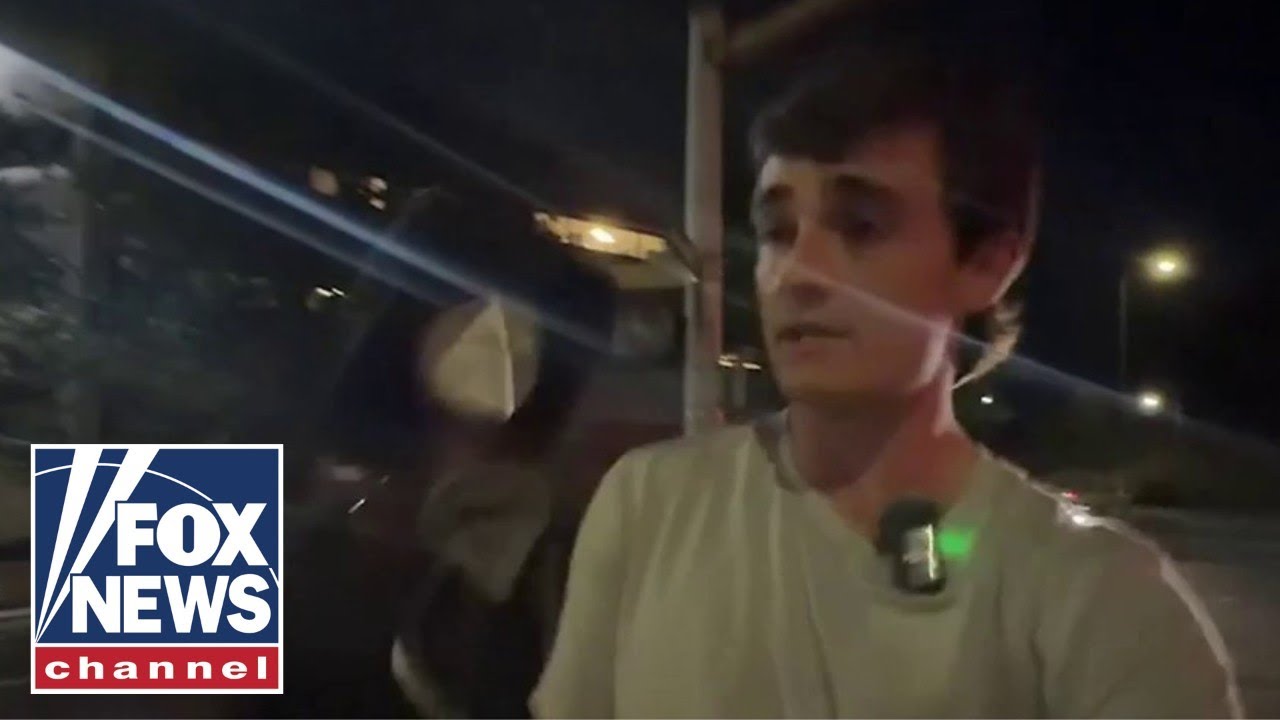
Independent Journalist Nick Shirley Exposes Violence and Lawlessness at Portland ICE Facility Protests
5:41
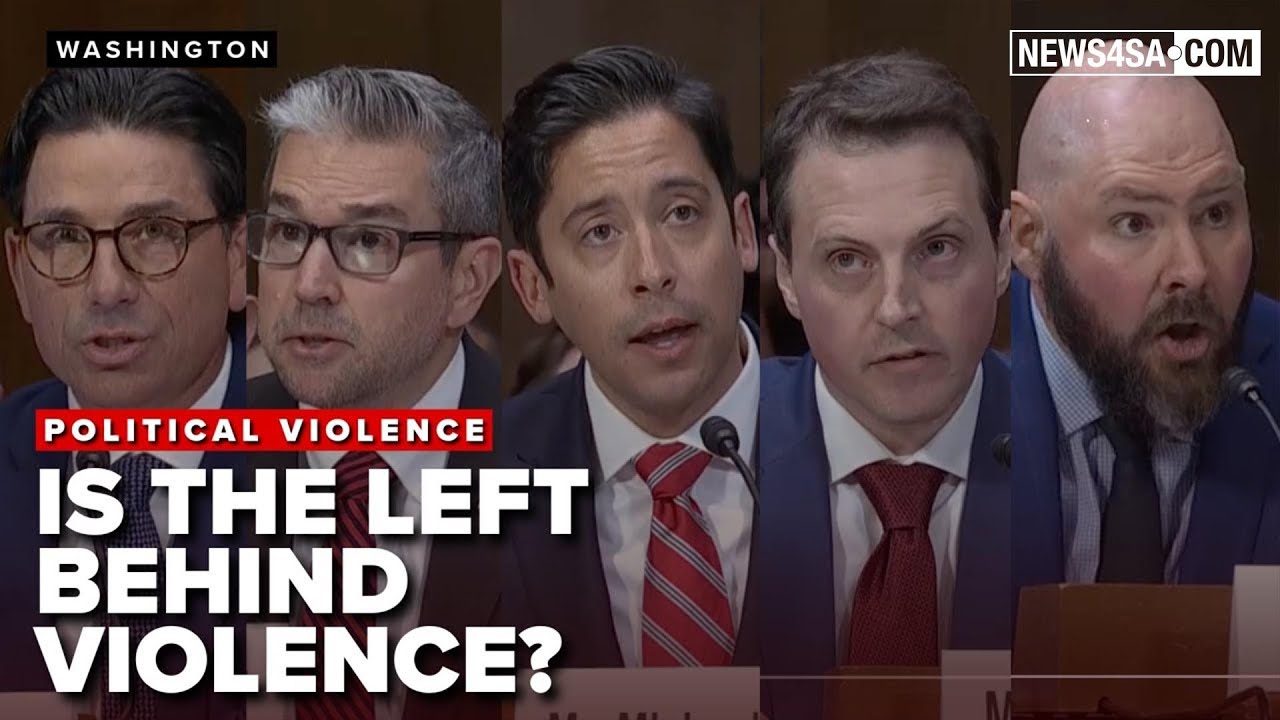
Congressional Subcommittee Hears Testimony on Rising Political Violence and Antifa Domestic Terrorism Designation
24:43
Charlie Kirk is the Founder and President of Turning Point USA, the largest and fastest growing conservative youth activist organization in the country with over 250,000 student members, over 150 full-time staff, and a presence on over 2,000 high school and college campuses nationwide. Charlie is also the Chairman of Students for Trump, which aims to activate one million new college voters on campuses in battleground states in the lead up to the 2020 presidential election. His social media reaches over 100 million people per month and according to Axios, he is one of the "top 10 most engaged" Twitter handles in the world. He is also the host of “The Charlie Kirk Show,” which regularly ranks among the top news shows on Apple podcast charts.
Subscribe on YouTubeNoah Rothman Exposes Century-Long Pattern of Left-Wing Political Violence Mainstream Media Refuses to Acknowledge
Noah Rothman unveils disturbing evidence of systematic left-wing violence spanning over a century in America. From anarchist bombings in the 1910s to Antifa tactics today, Rothman documents how media institutions and academic researchers have actively suppressed data showing left-wing extremism while falsely claiming political violence is exclusively a right-wing phenomenon. His examination reveals coordinated efforts to excuse violence in the streets, from the siege of Portland's federal courthouse to the takeover of Seattle, while major news outlets continue insisting there is "no equivalent on the left." Rothman challenges corrupted databases and exposes how influential figures provide intellectual cover for revolutionary tactics targeting law enforcement and political opponents.
The Suppression of Left-Wing Violence in America
Noah Rothman's investigation into political violence in America reveals what he describes as a conspiracy to suppress the reality of left-wing extremism. This isn't a coordinated effort in the traditional sense, but rather an unspoken set of interests among mainstream media professionals and communicators who subordinate everything they know about copycat violence and responsible reporting to an ideologically motivated desire to convince Americans that the right is uniquely violent.
The pattern becomes clear when examining major incidents. Whether discussing the attack on Charlie Kirk, the assassination of United Healthcare CEO Brian Thompson, three separate attacks on ICE facilities in one year including one involving sophisticated ambush tactics, or multiple assassination attempts against a sitting president, the response from left-wing institutions remains consistent: deflect attention away from left-wing violence and redirect focus to alleged right-wing threats.
Rothman's book, "Blood and Progress: A Century of Left-Wing Violence in America," exposes how recent scholarship has only begun to explore waves of left-wing political violence in this country during the 1920s, 1910s, 1970s, 1980s, and today. The similarities across these violent movements are striking, with individuals engaging in deluded thinking that is encouraged by influential people in the orbit of very responsible institutional figures who refuse to look at the problem squarely.
CNN's Narrative and the Statistical Manipulation
The mainstream media narrative was perfectly encapsulated in a CNN segment stating: "While America's roots are soaked in bloodshed, violence in the country today is mostly from right-wing extremism. From Oklahoma City to Charlottesville to January 6th. There is simply no equivalent on the left."
This refrain serves not to explore the issue, but to excuse ignoring it. Rothman argues it's the only logic associated with issuing that reflexive reaction whenever there's an episode of left-wing violence conclusively demonstrated by investigators and law enforcement.
The claim is supported by dubious statistical games played with databases used to justify it. The Anti-Defamation League has one database, the University of Cincinnati has another, and they're cited repeatedly. However, when explored, the statistical breakdowns of right-wing violence include prison violence, gang violence, intrafamily violence, someone who spray paints the side of a church, or a homeless man hurling racial slurs. The data begins to look corrupted the more one examines it.
A 2021 report authored for the Department of Homeland Security alleged that left-wing violence is not well-studied because there are intimidation campaigns marshaled against people who study it, including threats of reputational damage and physical harm. Additionally, participants in these often violent left-wing movements are themselves the authors of studies exploring the phenomenon, creating a fatally subjective enterprise if not hopelessly corrupted.
Common Threads Across Waves of Left-Wing Violence
Rothman identifies several commonalities spanning from the anarchist socialist wave of terror bombings in the 1910s and 1920s through the nationalist movements that attempted to assassinate Harry Truman and shot up Congress in the 1950s, the Marxist terror cells of the 1970s, and contemporary movements.
These common threads include:
- What was called "propaganda of the deed" historically, now referred to as "direct action" - spectacular attacks designed to galvanize a broader audience and ignite broader violence that will beget revolution
- Revolutionary and Marxian nature with small cell, leaderless organizations
- Attacks on law enforcement when these waves begin, as they regard the state as much an enemy and in league with the American right as their right-wing adversaries
- The intellectual notion that systemic oppression licenses extralegal violence, however they define it - a permission structure they give themselves
This philosophy manifests in contemporary form through concepts like "social murder," as seen when commentators justified the assassination of Brian Thompson by arguing he was guilty of social murder through his role at United Healthcare. Media-credentialed individuals were literally discussing social murder just two weeks after the assassination, demonstrating an elaborate philosophy baked up to justify murder, violence, and extralegal means.
Charlie Kirk's Understanding of Left-Wing Violence
Charlie Kirk articulated the fundamental nature of left-wing ideology when he stated: "This is all they have is violence at the core of the left, at the core of a liberal is someone that would use the sword if they had it. They are very violent people at their core. They always have been. They can't debate. They can't have conversation. So they'll resort to these tactics."
Rothman argues the left is willing to endure a certain amount of violence for their political goals. As the Democrat party becomes more radical, the comfort level with violence increases. Recent polling from pollster Rich Baris shows 59.4% of those polled identify as democratic socialists, 21% say unsure, 12% say traditional liberal, and 6.2% identify as socialist.
While the vast majority of responsible Democrats do not support violence in the streets, there is an element within the Democratic party attracted to "people power." When they see mobs and vast numbers of protesters, they see a reflection of what they regard as romantic zeal and enthusiasm for their political project. They subordinate all their caution to embrace those groups and harness that energy into what they believe will be positive social change.
The Pattern of Democratic Embrace of Violent Movements
This pattern played out with Occupy Wall Street. Even though members of Occupy Wall Street had no use for Democrats and would tell you to "throw them all into the East River," Democrats embraced the movement. Even when participants engaged in lawless acts of violence, attacking federal facilities, attacking law enforcement, and shielding perpetrators of violence and rape from law enforcement, all that was pushed aside to try to harness the energy.
The exact same thing happened ten years later with the George Floyd protests. Democrats saw political enthusiasm that could help them win elections and to a certain extent succeeded, but traded responsible governance to ingratiate themselves with a movement that was potentially violent and not sympathetic to the broadest number of Americans.
The Double Standard in Action
The double standard becomes obvious when examining real-world patterns. Campus events are never cancelled because of right-wing violence, but regularly shut down due to left-wing violence when activists barricade buildings, set things on fire, and terrorize people. No one worries an entire neighborhood will get torched by right-wing violence, but it has happened with left-wing violence. There has never been an urban takeover by right-wing radicals, but left-wing radicals took over downtown Seattle for a month in what was called the "summer of love" during the CHAZ/CHOP occupation.
The courthouse siege in Portland saw left-wing agitators basically besiege a federal building for weeks on end with politicians defending it. There is no equivalent of this on the right in America. The violence in Portland and Los Angeles descends almost nightly on these cities and is regarded as a quirky feature of the urban scene rather than the decay of modern social life and breakdown of elementary governance.
The threat environment is so pronounced that proactive action like shutting down events has become common currency, with no equivalency on the right. Professional agitators and organizers dress in uniform, somehow have respirators and gas masks delivered to them by shady actors who pop up out of nowhere and get unloaded out of U-Hauls with disturbing frequency.
Breaking Through the Isolation Tactic
Rothman notes there is a valuable element to work with: when the left says the right is uniquely violent, implicit in that is the notion that political violence is bad. They wouldn't be accusing others of it if it was good. This means there's an understanding that the American people at large are not attracted to political violence, abhor it, and regard it as a threat to the social fabric. That social stigma is valuable.
The left gets away with denying their own violence problem by analyzing each event of left-wing political violence in isolation, never drawing the threads that any logical inference would allow them to draw, then telling themselves that the right-wing has a monopoly on political violence by establishing selective timelines.
By establishing a comprehensive timeline with 80 pages of notes in "Blood and Progress," Rothman creates a roadmap for individuals who want to confront the left with their tacit and complicit acceptance of a rising tide of political violence on their side. When put all together, it creates a damning portrait that the left must contend with.
The Stakes of Acknowledging the Truth
The book's title plays on the left's and Southern Poverty Law Center's favorite boogeyman of "blood and soil," turning it into "Blood and Progress" to force the left to own their history and present reality. The Southern Poverty Law Center maintains that left-wing violence is a "myth," a position that becomes untenable when confronted with the comprehensive evidence Rothman presents.
The importance of this thesis statement cannot be overstated. The left is a movement with a long history of resorting to political violence, especially in our current moment. By documenting this pattern across more than a century, Rothman provides the evidence necessary to counter the narrative that has dominated mainstream discourse and shaped public perception while violence in the streets continues to flourish under the protection of media silence and institutional cover.
Video Transcript
Welcome to the show. So, I should just
say the first seven pages of this are a
retelling of an experience we all are
going to remember the rest of our lives.
What happened with Charlie and in
particular something about it that
should never be memory hold. and people
are doing their best to do it, which is
the wave of I'll just say insane lies
afterwards trying to spin what happened
as an act of far-right wing violence
against Charlie from uh Lawrence Tribe,
a former professor at Harvard, tried to
argue that it was right-wing violence.
as your book gets into uh Noah, this is
part of a very long-term pattern on the
left that there's sort of been a for
lack of a better word, a conspiracy to
suppress that this is going on. Uh can
you elaborate on that thesis?
>> Yeah, I think a conspiracy is a great
word for it and it's not as though
there's a coordinated effort here. It's
an unspoken uh set of interests that um
end up making mainstream media
professionals and otherwise responsible
communicators just subordinate
everything they know uh about copycat
violence, about responsible reporting to
an ideological motivated desire to
convince the rest of the American people
that the right, the American right is
uniquely violent and always responsible
for big episodes of of political
violence in this country. We hear about
it all the time. We heard about it after
Charlie Kirk. We heard about it after
the assassination of Brian Thompson,
United Healthcare CEO. We hear about it
whenever there's an attack on an INCE
facility three times last year,
including one that involves
sophisticated ambush tactics. We hear
about it after the president is almost
assassinated, not once, not twice, but
thrice. Eventually, you have to wonder
if this line has any substance, any
merit to it. And that's what I
investigate in this book. Not only that,
but Blood in Progress, uh, a century of
leftwing violence in America, exposes
the degree to which very recent
scholarship has only begun to explore
the recent the waves of left-wing
political violence in this country in
the 1920s, 1910s, 1970s, 1980s, and
today. And you begin to see a lot of
similarities across these violent
movements where individuals who engage
in perhaps diluted thinking, but diluted
thinking that is encouraged by
influential people in the orbit of very
responsible institutional figures in
this country that encourage this sort of
thing and refuse to look at squarely in
the face telling themselves that oh we
don't have a violence problem. It's
largely a myth. The right is the real
problem in this country.
>> And we we have a clip that I just I have
to play. This is from CNN saying exactly
that. S 25.
>> While America's roots are soaked in
bloodshed, violence in the country today
is mostly from right-wing extremism.
From Oklahoma City to Charlottesville to
January 6th.
>> There is simply no equivalent on the
left.
>> Yeah. No.
>> Agree or disagree?
>> How would you reply to that?
Well, it's a refrain and it's a refrain
that serves not really to explore the
issue, but to excuse ignoring it. Uh,
increasingly, I feel like that's the
only logic associated with issuing that
um that reflexive reaction whenever
there's an episode of left wing violence
in this country, obviously conclusively
demonstrated by investigators and law
enforcement. And it's supported by some
dubious statistical uh statistical games
that I think are being played with some
of these databases that are used to
justify this claim. The uh ADL, the
Anti-Defamation League has one, the
University of Cincinnati has another,
and they're cited repeatedly. And if you
explore them, the uh the statistical
breakdowns of right-wing violence
include prison violence, gang violence,
intraf family violence. Sometimes
somebody who spray paints the side of a
church, right-wing violence. a homeless
man who starts hurling racial slurs in
at Hotel Yay and attacks him. Right-wing
violence, the the data begins to look
kind of corrupted the more you look into
it. And then there's this report
authored for the Department of Homeland
Security in 2021 that alleges that
leftwing violence is not wellstudied
because there are intimidation campaigns
marshaled against people who study it.
Reputational damage, the threat of
physical harm for doing that kind of
work and as well the fact that people
who are participants in these often
violent left-wing movements are
themselves the authors of studies
exploring the phenomenon. So, it is a a
fatally subjective enterprise if it's
not hopelessly corrupted. And by telling
these stories, and I don't break it down
into statistics. I'm not this book does
not contend that right-wing violence
does not exist. That would be a child's
argument, which I encounter all the
time. But it does comp complicate the
argument that is issued by the left and
leftwing institutions like the Southern
Poverty Law Center, which maintains
leftwing violence, is a quote unquote
myth, and confronts them with the the
fact that the evidence they're relying
on to make that claim is deficient, if
not corrupted. Uh, I hope that leftwing
this this book, Blood and Progress, a
century of leftwing violence in America,
gets its hands into the right audiences
because if anything, I just want them to
confront the fact that they have been
banding about this notion, not in order
to correct the record, but to avoid
looking at the whole spectrum of
political violence in this country. And
until we get our hands around the whole
problem, we're never going to solve it.
>> Yeah. So, you mentioned that there's uh
commonalities that there was lefting
violence in the tens and 20s. We saw
another in the 60s and 70s and you could
say we've seen another surge of it
certainly since about 2019 2020 or so
>> in the US with BLM. Yeah. Mostly
peaceful stuff. You mentioned there's
commonalities between them. What are
>> what are the common threads of a surge
of left-wing violence. So if you go back
to the 1910s, 1920s, which is where I
start, the anarchist socialistic wave of
terror bombings, which the only the
recent scholarship into it, only in this
century, all of the people who explore
this phenomena note that it's forgotten
in much the same way that the
nationalist movements that tried to
assassinate um Harry Truman and shot up
Congress in 19 in the 1950s are
forgotten or the Marxist terror cells of
the '7s were forgotten. Um but across
the spectrum you see some similarities
like uh what they used to call
propaganda of the deed which is today
more likely to be referred to as direct
action. These are spectacular attacks
that are designed in the minds of their
perpetrators to galvanize a broader
audience and ignite broader violence
that will beget the revolution. A lot of
this is very revolutionary in nature uh
and marxian in nature. small cell
leaderless organizations. Again, when
that that ICE terror cell attacks,
including one that involved about 10
members using uh fireworks to lure out
their targets and overlapping fields of
fire. Again, very sophisticated attack
on law enforcement. But you usually see
attacks on law enforcement when these
waves of left-wing violence begin
because they regard the state as much as
an enemy and and in league with the
American right as they do uh the
right-wing adversaries who they
typically organize against. And lastly,
the intellectual notion that systemic
oppression licenses extraleal violence,
however they define it. Um it is a sort
of permission structure they give
themselves. No, that reminds me when you
say it like that of, you know, Hassan
who went on with the New York
Times and talking about social murder,
right? That you know, Brian Thompson was
guilty of all this social murder, so he
had it coming. And then you saw those
nitwits outside of the Mum Donnie press
conference or whatever where they, you
know, I forget the two ladies names, but
they were, you know, media credentialed
and they're and literally two weeks
later they're talking about social
murder, social murder. All it is is this
elaborate philosophy that they've baked
up and to justify murder, to justify
violence, to justify extra, you know,
sort of uh means, proactive means. You
see this with the Antifa handbook,
right? Dr. Antifa at Ruckers University,
where the whole thing is a handbook of
how do you preemptively attack people
you politically disagree with. This is
fundamental to their worldview.
>> Yeah. And it's it's meeting out real
violence, real bloodshed in response to
a highly theoretical metaphorical
violence that again that they talk
themselves into. Those two ladies, three
ladies, one of whom was less talkative
than the others were very illustrative
of this phenomenon, right? It was a
ghoulish display. They competed with one
another to be more offensive, to be more
inhuman, and literally I use that word
because they were utterly devoid of
human empathy and compassion. And then
what is the point of this whole thing?
It was Lena Weissro was her name who
said, "Listen, we're the most
subservient cow population in the
history of this planet. We would have
had a revolution by now if you shared my
apprehensions and my anxieties." And I'm
sure she's right. The thing is, most
people don't. So in the leftist mind,
they have to invent these causes and
then meet out real vicious violence in
order to demonstrate to you that this
that the god can bleed, that we can
destroy this wholly immoral system if we
just all take a sledgehammer to its
foundations. It's what they want. And
this book elaborates on why.
>> Well, let's play a clip of Charlie
saying exactly that. Um, stop 28.
>> This is all they have is violence at the
core of the left, at the core of a
liberal.
is someone that would use the sword if
they had it. They are very violent
people at their core. They always have
been.
They can't debate. They can't have
conversation. So, they'll resort to
these tactics.
Charlie always understood the left
fundamentally. And you make an argument
in your book that they're willing to
endure a certain amount of this
violence. And the question then, and I
want to get into this in the next
segment, is how much are they willing to
endure for this? And here's what I
here's what I love about noble gold is,
you know, when people are going to buy
precious metals, and we can talk about
why they should and why they should
consider as part of their portfolio, and
we will, but you know, here's what I
know. You are honest and trustworthy.
You have integrity. People love doing
business with your your company, and you
charge. You know, people don't realize
this. There's a lot of shysters out
there where like if you buy this much
gold, they they mark it up a long long
way and then you as in the audience that
thought you were getting an investment
vehicle, you got to you got gold's got
to like double in value before you make
your money back. That's not what happens
at Noble Gold. You guys are like the
industry leader as far as fairness on
the pricing and uh that's how awesome
you guys are.
He's touching on a topic that is u we're
very intimately aware of here and we've
been uh experienced the tragedy
firsthand obviously with Charlie's
assassination and murder. I want to show
you this new poll that uh pollster Rich
Baris sent me over the weekend. Um he's
doing some uh polling about the left and
he's he he he was freaked out. He was
like, "Man, they're getting more
radical." Um so you could see this 59.4%
4% of those pled basically say they're
democratic socialists. Uh 21% say
unsure, 12% say traditional liberal, and
6.2 just say we're socialist.
So the question then becomes, as the
Democrat party becomes more radical,
Noah,
should we just sort of anticipate that
they are comfortable with more and more
violence? Because I don't want to
overprescribe and say they're all
comfortable with assassination. I know
that's not true, but there's certainly
some that are. And there's even more
that are comfortable with overt acts of
disruption, chaos, political violence,
vandalism. That seems to be pretty darn
mainstream on the left now. How much are
they like right now? If you took a
snapshot of the Democrat party or the
progressive movement in the United
States, how much violence are they
comfortable with? Well, I go into the
polling in the book and it depends
obviously on the survey and the sample
and the time that the survey is taken,
but there are trends that indicate that
increasing numbers of Democrat
affiliating voters in this country tell
pollsters, not just to themselves, are
willing to tell pollsters that they do
support some level of violence in order
to to suppress speech they don't like,
for example, or to get positive social
change as they see it. I think the vast
majority of responsible Democrats do not
support violence in the streets. That
said, there is an element within the
Democratic party that is attracted to
people power. When they see people on
the street, mobs, vast numbers of of
protesters, they see in that a
reflection of what they regard as
romantic zeal, enthusiasm for their
political project. And then they
subordinate. all they know, all their
caution just goes out the window in
order to embrace those groups and
channel and harness that energy into
what they believe will be positive
social change. So they did that with
Occupy Wall Street. Even if you ask any
member of Occupy Wall Street if they had
any use for Democrats, they would tell
you, "Throw them all into the into the
East River. We don't need them." Didn't
matter. even if they were engaged in
lawless acts of violence, attacking
federal facilities, attacking law
enforcement, shielding perpetrators of
violence and rape from law enforcement,
all that was just pushed aside in order
to try to harness this energy. They did
the exact same thing 10 years later with
the George Floyd protests. um seeing in
that some measure of political
enthusiasm that could get them over the
hump, get them past the election with
Trump and to a certain extent succeeded,
but also traded in a lot of responsible
governance to ingratiate themselves with
a movement that anybody should have
known at the time was potentially
violent and certainly not sympathetic to
the broadest number of Americans. But
they just have this attachment to um the
enthusiasm in the streets that can that
can be harnessed and controlled by the
worst demagogues in this country.
They just subordinate everything they
know to
>> sounds like they're just willing to sell
their soul to the devil if they can
think they can win an election. And it's
so infuriating, Noah, that I just I
think of like the double think that must
go on where a lot of these people can
hear a report on CNN or M, you know, uh,
whatever they call MSNBC, MS Now or
whatever that'll say viol, you know,
we've checked the numbers and political
violence is overwhelmingly a right-wing
phenomenon. And yet at the same time,
you know, I know, I think everybody
knows, even members of the left will
sometimes essentially gloat about this
that it's never an event on a campus is
never going to be cancelled because of
right-wing violence, but it will because
leftwing violence, they barricade the
building, they set things on fire, they
terrorize people, and as we know, they
are capable of committing murder. Uh
similarly with after the George Floyd
stuff, no, no one's ever worried an
entire neighborhood is going to get
torched by right-wing violence, but it's
happened with leftwing violence. We've
never had an urban takeover. We had a
left-wing radicals took over downtown
Seattle for what, a month
>> and
>> summer of love.
>> Exactly. The CHAZ chop, whatever you
want to call it. It's one thing after
another. And I guess how does this
double thing work? Are they just
>> Yeah. compartmentalizing this as not
real violence. And I should also mention
the courthouse siege in Portland. You
can have leftwing agitators basically
besiege a federal building for weeks on
end and
>> politicians defend it.
>> There's no equivalent of this on the
right in America.
>> It happens all the time. We've gotten
almost used to it. Um the violence in
Portland and places in Los Angeles, for
example, descends almost nightly on
these cities. It's kind of regarded as
like a quirky feature of the urban scene
and it is just the decay of modern
social life. It's the breakdown of
elementary governance. And yes, you're
right. There's there is no equivalent
when it comes to the threat environment.
The threat environment is so pronounced
that proactive action like shutting down
events is has become common common
currency. And it's not something that
has an equivalency on the right. But
there is, you know, there's a taboo here
that I can work with. When the left
says, well, the right is uniquely
violence. Implicit in violent implicit
in that is the notion that political
violence is bad. Right. because they
wouldn't be accusing you of it if it was
good. So there's an element there that
reasonably understands that the American
people at large are not attracted to
political violence, abhore political
violence, regarded as a threat to the
social fabric. That's good. That social
stigma is valuable. I want to encourage
that. But I want to encourage it by also
taking a look at what rightwing violence
looks like these days. is the degree to
which it mirrors some of the black block
tactics that we see again nightly
displayed in cities in which uh
demonstrators, professional agitators
and organizers who who dress in uniform
somehow have respirators and gas masks
delivered to them by shady shady uh
actors just pop up out of nowhere and
get unloaded out of a U-Haul. This
happens with disturbing frequency. And
by putting this all these events
together in this book, Blood in
Progress, I hope that we can create a a
portrait that compels the American left
to look at this phenomenon because it
has been delineated in such as in this
fashion. They get away with it by by
analyzing each event of left-wing
political violence in isolation, never
drawing uh the the threads that are that
any logical inference would allow them
to draw and then telling themselves that
the right-wing has a monopoly on
political violence in this country by
establishing the timeline as I have. I
hope and with 80 pages of notes, I dare
you, defy you to go check my work. I
hope someone does. Uh, I I'm creating a
a roadmap here for individuals who want
to confront the left with their tacit
and complicit acceptance of a rising
tide of political violence on their side
with everything they have allowed to
flourish. It's when it's put all
together like that, it's a pretty
damning portrait. I think
>> I think it is. And I, by the way, I love
the title of your book because it's sort
of a play on the the left's and the
SPLC's their favorite sort of boogeyman,
blood and soil. And you're like, how how
about blood and progress? uh because now
you guys have to own it and um I think
it was really important timing with this
this book, Noah. So, thank you for
writing it and um thank you for putting
together the thesis statement that
they're going to have to contend with
now that the left is a movement very
priority, especially in our moment and
and throughout history, to political
violence. Thank you, Noah.