2,422 videos 1,389,747,653 views US Joined Aug 30, 2018
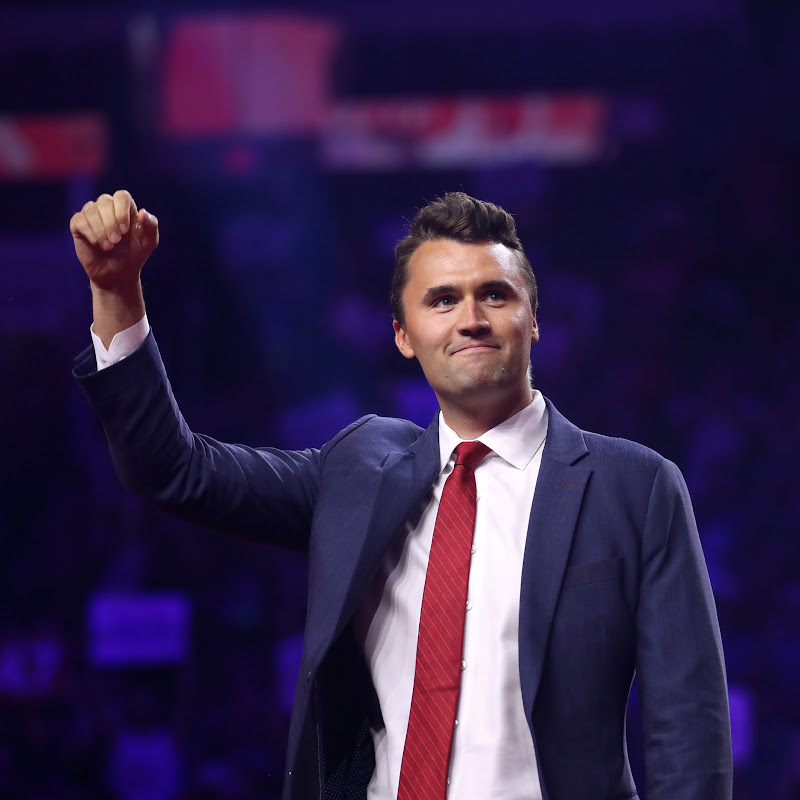
Charlie Kirk is the Founder and President of Turning Point USA, the largest and fastest growing conservative youth activist organization in the country with over 250,000 student members, over 150 full-time staff, and a presence on over 2,000 high school and college campuses nationwide. Charlie is also the Chairman of Students for Trump, which aims to activate one million new college voters on campuses in battleground states in the lead up to the 2020 presidential election. His social media reaches over 100 million people per month and according to Axios, he is one of the "top 10 most engaged" Twitter handles in the world. He is also the host of “The Charlie Kirk Show,” which regularly ranks among the top news shows on Apple podcast charts.
Andrew Kolvet and Chris Cuomo Discuss Charlie Kirk's Legacy and Rising Political Violence in America
Andrew Kolvet sits down with Chris Cuomo, host of Cuomo on NewsNation, for an unexpected but meaningful conversation about the assassination of Charlie Kirk and the state of political discourse in America. Cuomo reflects on what he describes as an "evolving fundamentalism" in the country, turbocharged by social media and toxic partisanship. They discuss the disturbing "yeah, but" responses that followed Charlie's death, the responsibility of media platforms, and alarming polling data showing nearly 30% of young progressives believe violence is justified to achieve political goals. Andrew shares how Turning Point USA continues Charlie's work while honoring his legacy as someone who chose the microphone over violence, even as others chose the gun.
Andrew Kolvet welcomes Chris Cuomo, host of Cuomo on NewsNation, to the show for what he describes as a conversation this audience might not expect. The discussion centers on the assassination of Charlie Kirk and the state of political discourse in America. Cuomo had hosted Andrew the previous night, and the two continued their conversation on this platform, with Cuomo expressing his condolences and agreeing to join the show.
Andrew thanks Cuomo for his personal outreach following Charlie's death, noting that while many people's first concerns were about business implications, Cuomo's first comment was expressing sorrow for the loss. Despite their political disagreements, Andrew acknowledges Cuomo's genuine empathy and the respectful relationship he had with Charlie.
Andrew emphasizes what he told Cuomo on his show the night before: while the question of who killed Charlie remains under investigation, the what is clear. Charlie Kirk was killed by someone who chose to pick up a gun when Charlie's entire mission was about picking up a microphone.
The Terrifying "Yeah, But" Response
Cuomo describes Charlie's death as a perfect encapsulation of an "evolving fundamentalism" in the country and the extremism that is turbocharged by social media, monetized within politics and digital media, and capitalized on by what he calls a "toxic two-party system." Beyond his personal feelings about losing such a young man followed by so many, and what it meant to Charlie's wife and children, Cuomo says what scared him most was the "yeah, but" response.
The "yeah, but" mentality, Cuomo explains, is frightening when it comes to moral analysis. People would say it's wrong to kill somebody, but then immediately qualify or mitigate that statement. Cuomo is clear: there is no "but." While people are free to debate Charlie's ideas—something nobody wanted more than Charlie himself—and while Charlie did this with decency more than most, the idea of his murder must be seen as an absolute low for the country that can never be mitigated or qualified.
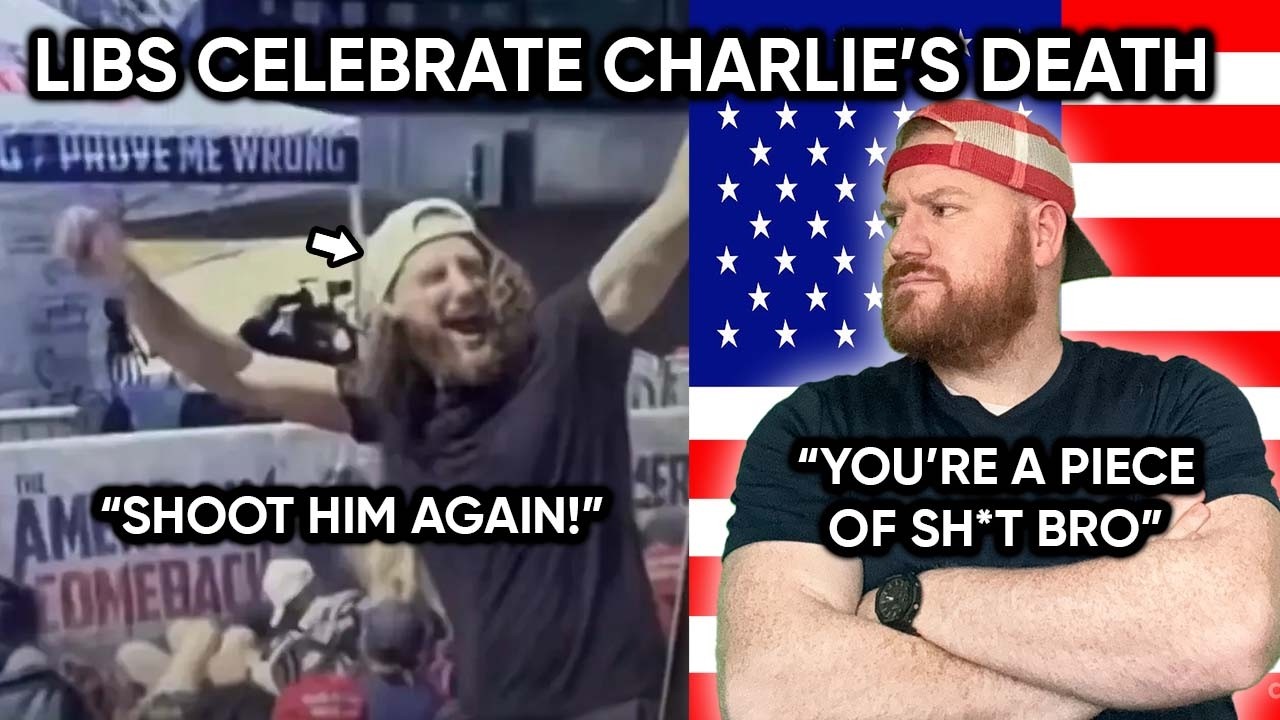
Andrew agrees, describing how he and Blake were shell-shocked watching the world's reaction in the hours and days after the assassination. They witnessed Congress getting into shouting matches about a prayer and saw celebration in some quarters. The "yeah, but" manifested as an immediate race by many people to find a reason they could feel okay with what happened, or even decide it was a good thing.
The Weaponization of Tragedy
Andrew describes how people fixated on the smallest details to justify their reactions, searching for reasons to dunk on Charlie for dying or to claim it was fine that he was shot. These responses focused on cherry-picked statements about the Second Amendment or affirmative action, issues that were debunked in subsequent episodes.
Andrew reveals he received messages from people he personally knows who were gloating in his face about Charlie's death. Cuomo relates this to his experience after the assassination attempt on President Trump, where he received countless messages questioning whether the injury to Trump's ear was real, with people sending pictures and claiming it was faked. Cuomo states that if someone brings him proof it was faked, he'll cover it, but short of that, he doesn't want to think about what would have happened if the president had been seriously injured or killed.
Cuomo shares that he reached out to Trump after that incident, and the media and many people immediately weaponized it, claiming he was apologizing to Trump for the media as if he were somehow responsible for what the assassin did. He describes this dynamic as part of the current problem in American discourse.
Conspiracy Theories and Agenda Exploitation
Cuomo explains that one reason he reached out to Andrew was his protective concern about seeing people use the opportunity of Charlie's assassination to promote agendas that weren't Charlie's and that are "shameless and disgusting." He specifically mentions conspiracy theories about Israel being involved, dismissing claims that he's "paid off by AIPAC" as silly conspiracies. Cuomo found the weaponization of Charlie's death and the exploitation of Andrew and the team to be cheap and part of the problem, which worried him. He wanted to make sure they were able to own their own narrative.
Andrew responds by outlining how the work continues: they've announced the All-American halftime show, have a tour continuing with thousands of students at arenas, and AmericaFest is going to be the biggest it's ever been, with huge announcements coming even the following week. He describes their sacred duty to live up to Charlie's legacy, calling Charlie a "modern-day founding father" who called the country back to its national ideals of debate and dialogue.
The Importance of Investigation and Justice
Andrew emphasizes their sacred duty to harness the outpouring of energy, enthusiasm, patriotism, and faith into what he believes can be a revival in the country, especially among young people. He states they cannot get bogged down by controversies or dragged down rabbit holes online, or fixated only on the who. While the who is important and they want justice for everyone involved, he makes clear that their silence does not mean they don't care.
Andrew explains that Blake, as a witness who was just feet away from Charlie when it happened, and Andrew in his role, cannot negatively impact an ongoing investigation. He urges people not to conflate or confuse silence on this important matter with complacency, laziness, or lack of caring, insisting that if people think they care, "we care more."
Finding Common Ground Through Conversation
Cuomo expresses interest in a future conversation where they explore their disagreements, suggesting it would be fun to show where they actually differ. Andrew notes that he's been excited to see Cuomo chart his own course after his CNN days, especially regarding COVID, and that Cuomo's belief that "conversation is the cure" is something Charlie would agree with.
Andrew shares that Charlie and Cuomo had been working behind the scenes to get Charlie on Cuomo's show, though sadly it never happened. However, they did appear together on Patrick Bet-David's show for hours. Andrew reveals that Charlie came away from that experience saying, "Chris is a really decent guy in person. I really enjoyed meeting him," and that it was all positive vibes.
Clarifying Misunderstandings About Charlie's Views
Cuomo brings up one thing he wishes Charlie had the chance to say publicly—something Charlie told him when they were with Patrick Bet-David. Cuomo had asked how Charlie could think the Civil Rights Act was a mistake. According to Cuomo, Charlie told him that's not what he meant. Charlie explained that of course minorities needed to have the right to vote, but that the DEI embedded in the DNA of that legislation wound up being used in a way that has been bad for the country, and that's what he was talking about, even if he didn't say it that way initially. Cuomo accepted this explanation based on his experience with different types of prejudice.
Cuomo categorizes what he sees as three kinds of racists: dummies who are ignorant or didn't get exposed to diversity; people who aren't aware their behaviors or words are suggestive of implicit prejudice but are correctable; and the real problem—racists who are proud to tell you they are because they believe they have good reasons. In Cuomo's experience, if someone is truly racist, they will tell you. He sees the term being abused now, just like calling people Nazis or saying Trump is Hitler, which cheapens the profound nature of these accusations.
The Weaponization of Labels and Language
Andrew pushes back, noting that people have been mislabeling others as racist for basically as long as he's been an adult, probably much longer. Cuomo acknowledges this is sometimes true, but adds that it has ramped up significantly in the last 10 to 15 years and has become weaponized, which can be seen in charts and graphs from sources like the Wall Street Journal tracking how often racism is mentioned.
Cuomo agrees the weaponization is real and explains that the reason it has ramped up is because the country is going down a road of fundamentalism, getting into extreme ideas and extreme belief systems. He believes this is fed by the two-party system specifically and amplified by design for profit by social media.
Cuomo reiterates his interest in having Andrew and Blake pepper him with questions about where they disagree—on guns or whatever issues they think separate them—calling it a great exercise. He contrasts this with the current toxic approach where people call each other names, claim to have "destroyed" their opponents, and clip it for viral content. He calls this approach toxic and notes that people don't get it.
Online Behavior Versus Real-Life Interaction
Cuomo tells people all the time to think about whether they would say the same things if they were standing in front of the person. Andrew brings up a viral incident where someone confronted Cuomo in public and Cuomo got in the person's face, joking that the clip made him think you don't want to mess with Chris.
Cuomo reveals the full truth behind that incident: he almost got fired for it, and a big reason it almost happened was that President Trump saw the clip or was told about it and used it to make the point that people say his supporters are violent. Trump went further, saying he knew Cuomo and that "these guys got lucky." Cuomo admits Trump was right—they did get lucky.
What people don't know, Cuomo explains, is that they didn't stop him first. They stopped his 9-year-old daughter and asked if it was okay if they took a picture with "Fredo." As Cuomo was walking up the stairs, he heard this and confronted the man, asking if he had just called him "Fredo" to his 9-year-old daughter. Andrew expresses that this was disrespectful and apologizes that Cuomo had to go through that.
Alarming Data on Political Violence Among Young Progressives
Andrew shows Cuomo polling data from September 12-15, just two days after Charlie's assassination. The poll asked: "Is it ever justified for citizens to resort to violence in order to achieve political goals?" The results show the percentage responding yes, broken down by age and political ideology.
The most striking data point is that among those aged 18-39 who identify as liberal, nearly 30% (possibly 29%) said yes—that violence is justified to achieve political goals. Andrew notes there is something going on with young progressives that makes them think violence is somehow okay, and asks Cuomo what he makes of this.
Cuomo responds with several points. First, he doesn't think this is true as a standalone fact—it's about the additional context. One factor is that these people may call themselves progressives or may not; he thinks the labels don't apply the way they used to, and it's not just people on the left but young people in general.
The Pendulum of Political Rage
Andrew interrupts to point out that the conservative node in the data shows young conservatives are actually less likely than even 60-plus year old conservatives to support violence for political goals. Cuomo agrees and explains there's a reason for this right now: the pendulum has swung. Everything is pendular in politics because of the binary nature of the two-party system.
The rage was on the right, Cuomo explains, which is what launched and birthed MAGA—President Trump tapping into a legitimate set of grievances. Now it has swung, and there's a reaction formation to MAGA from what Cuomo calls the "Dems Socs" (Democratic Socialists), who have the outrage now. They have the grievance of Trump as a fascist, of affordability issues, and of perceived cultural victimization, which they grab onto both in Gaza and in America. This level of surrogacy for righteousness, whether or not it applies to them, is driving this dynamic, and Cuomo calls it really dangerous.
The Solution: Platform Accountability
Andrew asks Cuomo how to fix this problem. Cuomo says he's given it a lot of thought and, unlike his usual response of saying he doesn't know because he's not in the answers business, he has an answer: there's no way that NewsNation and every other media platform people like or dislike has a level of responsibility for what it puts out there while the richest, most powerful media people with the largest platforms have zero responsibility. The answer, Cuomo says, is to fix that imbalance.
Andrew notes that, to Charlie's credit, while Charlie gets lumped in with the "Charlie Kirk destroys libs" social media clips, 90% of his interactions on campus were calm and patient. As Charlie got older, he started looking at students as younger siblings, taking on an older brother role and showing nearly infinite patience with so many kids. This became one of the most common comments on social media: people asking how Charlie maintained such patience.
Andrew acknowledges that these patient interactions didn't always go as viral as the fiery exchanges, and that's something cooked into our basic wiring. Cuomo adds that it's not one thing, it's everything. He gets that most people don't understand this because they don't live social media the way the "amplified magnified minorities"—minority populations in terms of size, not demographics—do. But this dynamic is infecting everything people do get.
Algorithms That Reward Rage
Cuomo concludes by emphasizing the need to stop allowing algorithms to reward rage baiting. He notes the double standard: he's not allowed to do that kind of content because there would be so much scrutiny, yet the most powerful platforms and personalities face no such accountability.