Up Next

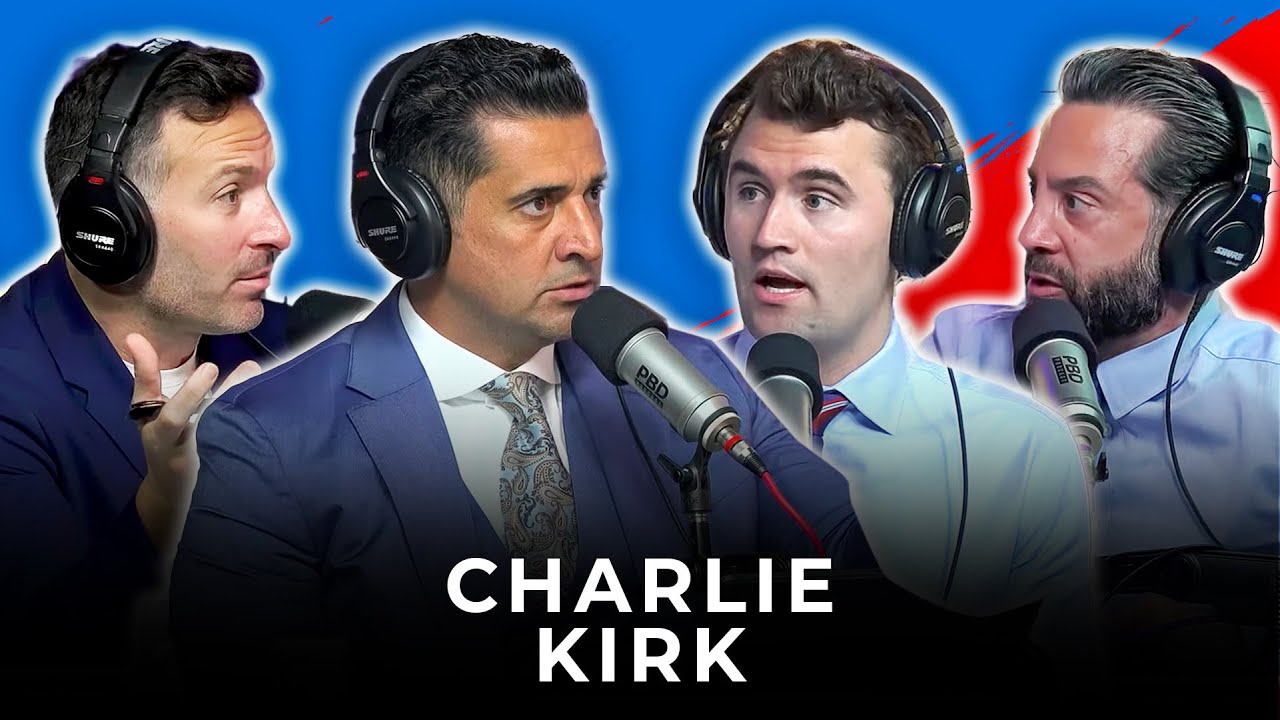
Charlie Kirk Analyzes Robert Kennedy Jr's Historic Endorsement of Donald Trump at Glendale Rally
11:58

Charlie Kirk on How Elon Musk Saved the Republic by Purchasing Twitter in Spring 2022
15:09

Charlie Kirk's Billion View TikTok Compilation Reveals Campus Conversations That Shaped the Election
25:10
Rob Schneider on Trump's Mandate, Hollywood's Collapse, and Why the Democrats Left America Behind
Rob Schneider pulls no punches in this wide-ranging conversation about Trump's historic comeback, the authoritarian turn of the Democratic Party, and how Hollywood became a wasteland of fear and conformity. From his early days on Saturday Night Live to his current exile from the entertainment establishment, Schneider explains why he switched parties, what went wrong with COVID policy, and why he believes Robert F. Kennedy Jr. and free speech are essential to America's future. He also reveals why California's policies drove him out, what the pharmaceutical industry doesn't want you to know, and how comedy died when you could no longer challenge power.
Trump's Historic Comeback and the Left's Fatal Overreach
Rob Schneider describes Trump's 2024 victory as "the greatest comeback in political American political history" and "a stunning rebuke for this authoritarian narcissistic crap that America's been having to deal with for the last few years." He argues that the Democratic Party went so far left that they abandoned the American people entirely.
"It's so funny that they accused Trump of being racist," Schneider notes, "when the people that helped him win were black men and Hispanics." The response from the left? These voters had "internalized whiteness" and were "the black face of white supremacy."
Schneider believes the Democrats' plan for permanent power through open borders backfired spectacularly. "They were moving people in the middle of the night, flying people around. No one's doing anything good in the middle of the night," he says. "It was for forever power. They were going to have a super majority of Democrats and there would be a choice of which Democrat do you want."
California: Where Democrats Control Every Aspect of Your Life
Having lived in California for decades, Schneider witnessed firsthand the totalitarian creep of Democratic policies. "There is not one aspect of your life that this Administration—and understand the Democrats have been in charge for 12 of the last 16 years—there literally was nothing, no part of your life" that they didn't try to control.
He describes Gavin Newsom passing a law preventing parents from being informed if their child claims to be transgender at school. "I didn't sign up to co-parent with the state of California," Schneider says. "It's my kid, my wife's kid." The situation got so bad that he developed a joke: "It's dangerous taking your kids to public school in California. In the morning you drop off a girl, in the afternoon you pick up a boy."
California also passed shoplifting laws so lenient that stores couldn't prosecute thieves, leading to one remaining Walgreens in San Francisco where "you can't live your life" because everything is locked up. Kamala Harris, who claimed to be the "law and order district attorney for California," wouldn't even back Proposition 36, which simply required prosecution for shoplifting.
The Pharmaceutical Industry's Stranglehold on America
Schneider traces his political awakening to concerns about medical freedom and Big Pharma's power. "The Mexican drug cartels make maybe 10 billion, roughly maybe on a good year 15, 20, and that goes a long way in pesos. However, the vaccine industry is $350 billion. They want to get it up to 750 billion by the end of the decade."
He explains how pharmaceutical companies have captured regulatory agencies through a revolving door between industry and government. "You could be at the head of the Merck division for vaccines and then the next thing you know you could be at the FDA and then you could leave and then go back." The FDA is funded primarily by drug application fees from the very companies it's supposed to regulate.
During COVID, Pfizer, Johnson & Johnson, Moderna, and AstraZeneca "would not go into a country unless they were given blanket immunity from liability for the harm of these drugs. So they know something's up with it."
Schneider advocates for what Robert F. Kennedy Jr. has proposed: eliminating direct-to-consumer drug advertising (only the US and New Zealand allow it) and creating firewalls between industry and regulatory agencies. "75% of all advertising—when they say 'Pfizer, the news, Anderson Cooper brought to you by Pfizer'—that's because Pfizer is paying Anderson Cooper $20 million. So that is affecting the news."
How Hollywood Became a Wasteland of Fear
Schneider's experience in Hollywood spans from Saturday Night Live in 1990 to his current status as an industry pariah. The transformation has been dramatic. "People here in Hollywood hate me. They hate me with a passion," he says. "Because in some small way, a small group of us, along with Elon Musk, Robert Kennedy, it was enough to turn this election."
The difference between then and now is fear. In the SNL days, if people complained about a sketch—like one where they put braces on 13-year-old Chelsea Clinton—"you're a crazy person to do that, to write to a TV show." Now, with social media, "it's just this, and then send. Companies and advertisers are not immune to this pressure. If they get 15 or 20 or 30 of these things, they could think it's 300, or if they get 300, they think it's 3,000 complaints."
Hollywood executives don't make decisions based on what's the best movie or TV show. "It's what can delay my inevitable firing the longest," Schneider explains. "They're all scared. The executives are scared the actors are scared, the producers, directors—they don't want any reason to not get hired."
The best comedy now comes from conservatives because "you have to go against the power base. The power base has been this illiberal liberalism." During the Trump years, late-night hosts couldn't critique Biden or make fun of his age. "You could not critique Biden. You could not make fun of Biden's age. How dare you! He is our president. He's not brain impaired until we say he's brain impaired."
The COVID Response: A Case Study in Manufactured Fear
Schneider calls COVID the "scamdemic," though he's careful to clarify what he means. "The death rate in the United States was 0.3%. That is about the same as a flu." The people who died—80% were morbidly obese with an average of 3.4 comorbidities.
A friend at the NIH told him in July 2020 that "receptor 26 looks a little sticky," suggesting the virus was manipulated through gain-of-function research. This research, shut down by Obama in the US, continued anyway in Ukraine and Wuhan, paid for by Fauci.
The measures imposed were largely invented. "The six-feet distance was just made up." The vaccine claims that "you can't get it, you can't give it, you're going to save grandma"—all false. Locking down schools "was more detrimental to people."
Trump was lied to by the CDC, Fauci, and others who said "if you don't do this, 4 million Americans are going to die and you're going to be blamed for it." The manipulation was enabled by phones creating constant fear: "Every 30 seconds like, 'Oh no, this guy's parachute didn't open and he died of COVID.'"
Immigration: Where Trump Can and Can't Deliver
Schneider supports securing the border and deporting criminals—"no one's going to argue about kicking out criminals and murderers." He also supports stopping the flow of military-age men from China, North Africa, and Syria. "I'd like to know who's coming in."
But mass deportations of families? "I'd be against it. I think there has to be a road to some sort of legal status." His wife is Mexican, and he notes that "Mexican people who come here are the hardest working. If you stop the Mexican workers here, this country will shut down."
He suggests Trump's out: "It's too expensive. I don't want to spend the money. These people are going to work and we're just going to stop the flow and the criminals are going to get out and then move on quickly."
The Power of Free Speech and Elon Musk's Twitter
Schneider credits Elon Musk's purchase of Twitter as crucial to Trump's victory. "The last bastion in tech companies for free speech is Twitter. When Elon bought Twitter for $44 billion, the Democrats knew he was going to light them up. They didn't want him to have the power, but they still took the money. They still took every penny of that 44 billion."
Free speech, he argues, isn't for protecting popular opinions. "Free speech isn't just to protect the stuff that you like. It's the ugly stuff. It's the stuff—the socially acceptable stuff doesn't need protection. It's the lies, it's the stuff that's offensive that needs protection. And then let the people decide what's the truth and what's not the truth."
He's traveled with Charlie Kirk to universities because "they stopped teaching civics in school, how our government runs. And I don't think that's an accident. The government doesn't want you to know how their government runs."
January 6th and the FBI's Role
Schneider doesn't believe January 6th was an insurrection. "Was it ugly? Was it regrettable? Was it a horrible day? Absolutely. Was it a guided tour by the FBI? Probably."
When the FBI director was asked at Congressional hearings "were there any FBI agents that were disguised as Trump supporters that day leading the people in, he said 'I will not, I can't answer that question.' You can't answer it? There were."
He also points to the Michigan governor kidnapping case where the FBI set up "poor guys" by pretending to be militia men and suggesting they kidnap Governor Whitmer. "It was all a setup from the government. Luckily that got thrown out."
What Trump Must Do With His Mandate
Trump now has "the most powerful" position "in over a century in America. And that's done because the Democrats gave him that gift." With the Electoral College, popular vote, Senate, and likely the House, plus the end of media dominance, Trump has unprecedented opportunity.
"He's not running for reelection," Schneider notes. "He doesn't have to give a shit what the New York Times think." Though he adds, endearingly, "He still cares though. That's cute. He wants to be loved by everybody."
Schneider hopes Trump will focus on legacy rather than revenge. "The Republicans have put on the big boy pants here and they're going to have to be the reconciliation party and the party that reaches out to the other side and the party that doesn't do the lawfare and vindictiveness."
He's met with congressmen about legislation to automatically elevate state-level lawfare against federal officials to federal courts "so you can have a fair case. You can still bring charges against somebody, but at least it's taken out of the political realm as much as possible."
The Team Around Trump
Schneider is cautiously optimistic about Trump's advisors. "Don Jr. admitted Trump didn't have good people around him the first time. He trusted—you have to hire 10,000 people. John Bolton is this horrible war hawk that will have nothing to do with his administration."
He's enthusiastic about Robert F. Kennedy Jr., Tulsi Gabbard, Vivek Ramaswamy, and JD Vance. "I think there's some good people there. I think they're going to want to do good things. The American people are expecting good things. They need good things. It's been such a tough time."
Kennedy specifically could create firewalls between pharmaceutical companies and regulatory agencies, eliminate direct-to-consumer drug advertising, and shift American health policy "from a position of health, not inducing disease to gain health, but inducing health for more health."
The Elite Disconnect
What particularly galls Schneider is the hypocrisy of wealthy Democrats. "Oprah Winfrey saying we're going to have—democracy's over if we don't elect Kamala, who wasn't democratically chosen to be the Democratic Party nominee for president."
These elites "are so rich, they have so much money and power that they can avoid the very real life consequences of Democratic policies." When Oprah talks about the election, "nobody cared what she said because they know that her life is—what gave her the opportunity to become a billionaire was this society, and here she is shitting on people trying to make the best out of it."
Schneider met a Democratic woman in tears on his flight to London. "I was just trying to console her because I think it's going to have to be the Republicans—they're going to have to be the reconciliation party."
Western Civilization and the Marxist Long Game
Schneider worries about Western civilization committing suicide, citing Douglas Murray. The concern isn't immigration itself but "bringing people into your society with a spoken plan to subvert your society. You can't bring people into your country who hate you. You can't bring people into your country that want to destroy your country and that will not assimilate."
The United States has been unique because "there's just so much potential to make money and improve your lives that it subverts people's religious fervor. You have a chance here to really become successful. That's why communism never really took a foothold here."
But Marxists adapted. After Mao's Cultural Revolution in 1966 to eliminate "the four olds"—habits, traditions, culture, and religion—Western Marxists realized the worker revolution wouldn't happen. "What the Marxists had to do was sneak in through education and subvert the society through education. They've been very successful at that, through the universities and then going up into K through 12."
The plan, he believes, was "to cause so much grievance and so much chaos that people would be willing to give up their liberties for just some sense of calm. That's why you have boys in girls' locker rooms, the trans issue, open borders—this crazy chaos where people said, 'Enough, what liberties do I have to give up so I can have some sense of calm?'"
Hope for Reconciliation
Despite his anger at Hollywood and the Democratic establishment, Schneider holds no personal grudges. "I hope that they forgive me. I hope that I get into a position with my new movie and media company that I'll get to hire them. No grudges. I hold no grudges against anybody in Hollywood."
He believes the market has spoken. The New York Times, Washington Post, LA Times, The Atlantic—"nobody gives a shit outside that small little circle of several block area of New York City and a little bit in Bel Air and the gated communities in Los Angeles."
The biggest question now is whether Trump will focus on delivering what Americans asked for rather than settling scores. If he does, Schneider believes, "he would change the course of history. Not only would he show Americans that this was possible and he would hand over the presidency to whoever his successor is going to be—because if he delivers on his policies, why would anyone vote for anyone else? He could show the entire Western world you don't have to continue going down this path."
Video Transcript
so this was an astounding achievement I guess the left went so far left they left the American people behind so funny that they accused Trump of being racist the the people that helped him win were black men and Hispanics yeah but they've got internalized whiteness so that's what it is you could not critique Biden you could not make fun of Biden's age how dare you he is our president he's not brain impaired until we say he's brain impaired this is our Ronald Reagan he's the most powerful political figure in over a century in America and that's done because the Democrats gave him that gift Rob Snider welcome to trigonometry well thank you so much for having me you look happy I am happy uh it is a a joyous time in my nation and for the world uh yeah the the Trump victory was just a phenomenal achievement um uh an incredible the greatest comeback in political American political history it's a it's a stunning achievement most importantly it's a stunning rebuke for this uh authoritarian um narcissistic Uh crap that America's been U having to deal with for the last few years and uh so if you'll have to excuse me if I am U extremely enjoying this moment in time it's been been great yeah yeah and um you switched parties about 10 years ago right yeah well I mean if you if you're not a liberal in you're 20s you know what they say you're heartless but if you're still liberal in your 50s you're an idiot and um I it's I just never understood I just assumed I realized that the Democratic party um goes out of its way to try to help people when they have no power to do anything so nothing gets done but there's this feeling that they are supporting you somehow and I think that's what happens um you know to people who still support the the party and then there's the super Elites you know like it's it's so it is wonderful to to see um to to enjoy for me of having lived here and and been through this kind of elitist um you know crying and complaining and Oprah Winfrey saying we're going to have the democracy's over if we don't elect camalo who Who had who wasn't democratically chosen to be the Democratic party nomination for nominee for president you know and Robert dairo saying you know threatening him and it's just it's nice to know that um uh none of that worked and and these people are so rich they have so much money and power that they can avoid the very real life consequences of democratic policies of the last few years with open borders which were simply uh open to just uh moving people you know in the middle of the night you know no one's doing anything good in the middle of the night you know flying people I don't know I can think of a few things fun in the you know but I take your point but it was just for forever power and it was like we're just going to have like California we're GNA have a super majority of Democrats and and there will be a choice which Democrat do you want I mean you're going to have a choice in this one or this one you you'll have choice of these but uh so I it was really coming close to being the Republican party which I would you know I found appalling uh you know in my youth uh but where the the Democrat the Republican Party would be a forever minority party and that was the plan and and truthfully the republicans in Congress they love to you know as long as they 93% reelection rate they're happy to to even lose so this was an astounding achievement because I think I think we were the I guess the left went so far left they left the American people behind and um and so their policies which they wouldn't even mention I mean Camala Harris who was the she says she's the you know the law on order um district attorney for California she wouldn't back a bill that's uh 36 which passed very you know uh with the tremendous numbers here in California which is basically to just if you steal something shoplift they have to prosecute you I mean it doesn't seem that complicated but this week you know the day before the election she just said I'm not going to comment on that so we didn't know you know say how do you how are you against that um so you really have um you know like one remaining Walgreens in San Francisco and anytime you try to buy anything in the store like excuse me can I get somebody to unlock the bananas so that I can get you can't live your life that way so I don't even know how Democrats can you know there's this woman practically in tears on the plane uh that I um flew here and I was just trying to console her because I think it's gonna have to be the Republicans have put on the big boy pants here and they're going to have to be the reconciliation party and the party that reaches out to the other side and the party that doesn't do the law fair and vindictiveness I think that's going to have to be I met with a a CO you know I went to Washington DC met with the congressman to start talking and they have legislation now to make sure that if any any lawfare on the state level for any whether it's a senator any any federally elected official including past or present uh vice presidents or presidents that if it's at the state level which could be corrupted as we saw what happened in New York City with Donald Trump it's automatically jumped up to the federal so you can have a fair case so you can still bring charges against somebody but at least it's taken out of the the you know the the political realm as much as possible and that's we're going to have to do things like that to move things peacefully forward in this country France can I just finish on this you you said that you know the church quote I think it's Churchill about the liberal when you're young Etc is that really true though robt cuz one of the things that strikes me is I I don't I don't know how much you've changed you tell me but I think the Democrats have changed dramatically they have yeah so when you were still voting for them they were pro border security and all of these other issues they were many in many of them to the right of the where Donald Trump is now so is it that you got old and conservative or is it that they like you said they went so F to the left they left the country behind they did um and also there was just in California you have um there is not one aspect of your life that this Administration and understand the Democrats have been in charge for 12 of the last 16 years so there literally was nothing no part of your life whether it's your kid's school where they literally you know Gavin new and passed the law that if your kid was uh claimed or or was you know this there's a lot of the social contagion of uh gender dysphoria um which is a very delicate time for for any youth at a time and and there and there's also percentage of of kids that are on the Spectrum who could be fall prey to this uh gender dysphoria and it's a contagion or gender contagion in society and so they passed a law that if you can't tell the parents so you know I didn't sign up to co-parent with the state of California you know I mean it's my kid my wife's kid we're going to do so we we got the hell out of here as I say I act you know it's a very Rodney Dangerfield style joke is hey it's dangerous taking your kids to public school in California you know in the morning you drop off a girl in the afternoon you pick up a boy you know what I'm saying dangerous um but it's not that exaggerated I do feel it's um so they did and there was even legislation here it was a joke of mine that went I thought about it for a year the joke and it just it kind of crystallized finally as I was driving my car CU sometimes you you can take something and try to complicated but the more simple you can get the joke but it was about slave reparations because it they passed committee they don't know how to do it but it passed committee they don't know what they're going to do and Gavin Newsome did agree to sign the bill for slave reparations and it's like so the state of California wants to pay pay money to pay people who were never slaves to be paid for by people who never owned slaves in a state that never had slaves they said that's like paying child support for a child you never had to a woman you never [ __ ] you know it's and it just you know just kind of very just gets to the point people kind of get it and so but I think so the Democrats have been able to um I think the best comedy Now is more conservative based because you have to go against the power base the power base has been this illiberal liberalism that uh I just don't feel like it speaks to the average person the first time I came to this city was in 2002 and it was completely different when was a moment for you where you started to notice things going AR well it was had to do with medical freedom of of parents and the um the kind of the tightening the Noose for the Pharma industry uh big Pharma is a uh is a real problem in the United States the power of big Pharma um like I tell this to people in California well everywhere I say like you take the Mexican drug cartels they make maybe 10 billion do roughly maybe on a good year 15 20 and that goes a long way in pesos however you take a look at the Pharma industry just for the vaccine industry is $350 billion it really is and then they want to get it up to 750 billion by the end of the decade and that's just this particular uh group of drugs and they make it mandatory for you and that there's and what they did in Co was they make there's no liability as a matter of fact fizer and Johnson to Johnson and um what is the other one m madna and there's another one um astroica astrazenica thank you um they would not go into a country unless they were given blanket immunity from liability for for for the harm of these drugs so they know something's up with it and they didn't want to release the information because it's if the state's paying for it this is this is American's property so you have that's why we have the freedom of information I know you guys have that too in the UK so you have to turn over these papers and what they tried to do was the FDA and that's what we have uh a captured agency by by industry um the revolving door between industry and agency you could be at the head of the Merc division for vaccines and then the next thing you know uh you could be at the FDA and then you could leave and then go so there's there's and the the FDA is funded primarily by uh the drug indust so in instance if you have a new drug you have to spend what's $50,000 for just the application and the application for drug fees is what funds it and then you also do your own research you want you do your own studies to find out with safety so it's basically letting the um the fox in the hen house so there needs to be some some uh firewall and that's what Robert Kennedy and I have talked about for years is to have a firewall so that you can do what's best to protect the people I mean these agencies have to be for the protection of people and and and to benefit the uh the United States citizens and their children so I saw the encroachment where um where Pharma would actually write the uh new rules for the medical boards and the medical boards because the big Pharma pays if you look at the biggest contributors for all political for all political parties and for political candidates whether it's at the state level or federal you'd be shocked that the majority of it uh is coming from Pharma wow and so it's just too much power power so they're they're able to have uh um a strangle hold and it's also a strangle hold in our economy we spend five times more for our drugs here than they do in Europe and we're not getting the same results so I think one of the things that Kennedy's talked about Robert Kennedy's talked about is uh there's only two countries that allow straight to Consumer advertising of drugs and it's like and it is it's just us in New Zealand well you know that well New Zealand you can understand those why they would do it down there uh they're so far away from people and they're and they're very nervous and cold and so close to the um Antarctica uh but we uh so that's going to be a big deal because 75% of all advertising when they say fizer the news Anderson Cooper brought to you by fizer that's because fizer is paying Anderson Cooper $20 million so that is uh that's affecting the news so that they have to those tentacles have to be taken off one by one and so that we can have a chance to uh to kind of undo the damage that the Pharma has done so that's what got me involved originally in it and the it's you know the party in power in California uh you know they want to control what kind of car you drive they had legislation it didn't pass but it was uh proposed to limit your car to go only 80 M an hour I mean like hey look I don't want to drive more than than 80 M an hour in the school zone but however on the highway if I'm going to go up San Francisco I'm want to go more than 80 if I get a ticket I'll deal with it but the fact that the Democrats want to control every aspect of your life and the fact that they you know they want to hide things from your kids hide things from parents between the kids and their teachers I think is unethical and I think that that's um a bridge too far and I think even um so the American public rejected it they reject Boys in in girl Sports is the narcissistic narcissistic failed male athletes should not find Refuge because they can't beat other guys in girl Sports I mean I he I would have loved to have done it I'll be honest no Sports trophies in my house not one you know you know Rob what you're sort of talking about here is you're saying in many ways that California was descending into authoritarianism really yes absolutely well if you go too far left and you go too far right you end up with you really end up with they're back to back and it's totalitarianism whether it's from the left or from the right it is um it ends up being a power grab and what the interesting thing about the United States um was the division of powers I mean we really uh and that's why you know for all the people screaming that um Trump is going to become a dictator he wasn't the first time and he did leave the first time and he wasn't happy about leaving he certainly didn't want to he certainly made some phone calls to prevent leaving but at the end of the day he did leave so you have you have the three M the three-legged three-legged milk stools what do I call call it um with the executive judicial and the legislative now the problem that's happened though is after 911 and the attack on the on America you had uh and the the Twin Towers falling down and the 2,000 odd people dying we had a thing called the Patriot Act which subverted uh the authority that would and basically not subverted but it was happily given from the legislative to the executive so they basically abdicated their lawmaking powers to the executive so that the executive the president could have a clear hand and and since has been you know ruling like an emperor and that happened and it's been both parties don't want to give that power up and it was just approved again under the Democrats and I don't think the Republicans are want to give it up either and that has to be rescinded because the the idea of of a law and me if there's an emergency that the president needs to do something that's fine but I think you got to go back I go back to sports I think just like you know in football if there's a play you want to you want to have a a flag on the play you want to check the replay well I think the President should get two executive orders a year that's it two and you got to you know and it still should have to pass some sort of legislative review otherwise like what happened with Biden is 125 in his first week 125 executive orders so basically it's an emperor so we're hiring an emperor and they really isn't the checks and balances uh and it's really both parties they have to go back again undo the Patriot Act which also spies on Americans and um we have to you know stop these forever Wars and so you know I was excited about the potential to have Trump reelected to get out of this uh I mean the the Democratic party moved towards these Warfare they became it's really interesting that the people who supported Cala Harris and Tim Walls was Dick Cheney who the Democrats 20 years ago called a war correctly called a war criminal and uh you know his warmongering little daughter uh and they um you know and also Vladimir Putin also uh was a CALA supporter I don't think they really publicized that too well uh but um so I I think we have to move away from that we have to get away from that and stop spending our uh you know because when you keep spending money and it's like the the people the movie stars and the people who supported uh Camala Harris they don't know what it's like to be an average American like me you know I had to take I didn't fly private here I didn't you know did you fly Spirit Airlines it wasn't a normal jet like but I had it was like eight rich people inste of just one rich person because I'm not the Uber Rich I'm just kind of Rich uh but the average person in America has less than $1,000 Dollar in the bank yeah you're talking about 80% of America so when you raise when you just print a bunch of money and or you give a hundred billion dollars to Ukraine you are and you're printing that money you're causing this inflation inflation went up 26% in the last four years and that I mean people had to choose between groceries or or buying gas for their car and it it's just put a a real burden on the backs of hardworking Americans who were just struggling to get by so we have there people that's why it was such an across the board that's why you had it was so funny that they accused Trump of being racist and sexist when the the people that helped him win were black men and Hispanics yeah but they've got internalized whiteness so that's what it is so it is and you're right about that yeah they're the black face of white supremacy the black face of white supremacy isn't that a beautiful thing isn't that incredible cuz if you put that in your script or in the movie they going no that no one's going to buy that well that's the American dream even black people can be white supremacists be anything you want in this country it really is it's like so it really it comes down to um you have free Choice as long as you agree with us yeah and uh we own these minorities we this is our voting block we have them and stay away from them and if you don't and if you're in that and you no longer if you're Thomas soul and you're an African-American and you think differently and you find yourself uh in conflict with these uh liberals who aren't so liberal um you're a race Trader you're not just someone who things differently so I'm hopeful that the Democratic party will see the error of their ways and regroup this is an opportunity it's a good day for them I I hope they keep losing to be honest with you but you know the power now the power shifts so now my comedy is going to have to shift also to what the Republicans do it's it has to be whoever the power base is there's going to be an abuse and there's a potential for abuse so I mean I I mean I do hope we only get two parties we tried with Robert Kennedy to have a third party but you can say what you want about the you know the arrests and the indictments on President Trum which will all be thrown out this week or the first week that he's in office rightfully so in my opinion we have to keep moving forward but they did so seven against Trump 10 against Kennedy so the were you know the the Democrats don't nobody wants a third party even the Republicans don't so they what the media does and the media also needs a spanking from this and they need to come back to a place where they represent the American people you can see how far the polls were off and uh you know the slandering with the Atlantic is a [ __ ] magazine the New York Times The Washington Post no one wants to read that outside that small little circle of a several block area of New York City and a little bit places in Belair and the gated communities in Los Angeles nobody gives a [ __ ] about the LA Times nobody gives a [ __ ] about the New York Times it is it is no longer I would never pay a penny when they ask would you like a dollar a month I wouldn't give you a penny a month you couldn't pay me a dollar a month read that [ __ ] because it is no longer an objective news or well here's the interesting thing though because Jeff Bezos has came came out and actually said what the Washington Post is doing isn't actually you know is no longer working they need to reshape they need to move forward they need to they they need to catch up with current times and you're thinking whatever you think about him you can't deny the guy's a smart businessman it's a good moment to talk about how algorithms and AD driven media can drive specific narratives influencing how events are framed and understood that's why we're digging into the election coverage with ground news they cut through the Noise by showing you how different Outlets report the same story drawing from over 50,000 Global Sources check them out at ground. news/ trigonometry take this recent story about an investigation into Google over alleged censorship of conservative speech ground news identifies this as a blind spot for the left out of 31 Outlets reporting only two are left leaning compared with the extensive coverage on the right it's an eye opener having access to information like this is the best way to find the truth and you can't get this type of news analysis anywhere else head to ground. news/ trigonometry for 50% off their unlimited access Vantage plan it's the same plan we use here and it unlocks all the features you use here and more so click the link in the description or scan the QR code for 50% off your subscription helps ground news bring transparency back to the news something weird trigonometry fully support he is he is but it's a little late to the party isn't it though I mean he just did it like two weeks ago he didn't do it two years ago so I would say that if it was still you know a hegemon of of illiberal liberal media Giants they would continue it if I mean he he wouldn't but but they are privy to information that I'm privy to as as anybody who's who wants to get inside information on the inside tracks and it wasn't that hard to get inside information what was going to happen in this election that's why Zuckerberg apologized a month ago he wanted to get out in front of it as soon as he apologized Jeff Bezos and the same thing with the New York Times if you're going to be a newspaper if you're going to attempt to to present something that is uh objective in nature and sure it's going to always lean left but it was it was a a grievance newspaper at a certain point trying to make people feel like [ __ ] and that's the thing that that pissed off Americans was not only did they they thumbed their nose and they had disdain for us they called us garbage and didn't mean that as Trump supporters they could you know was deplorable garbage and then Mark Cuban the last week I mean talk about own goals the Democrats kicked here uh Mark Cuban calling Trump's women um unintelligent and not strong I mean whenever that happened it was like yeah that's another million votes we just we got North Carolina for for sure now and then um you know the great gift uh the the best Gaff of the entire election was Joe Biden saying he's uh why they letting him on TV they can just he could have been a phone call they could have been you know said and the only garbage I see these are his supporters and it was so beautiful how the White House tried to cover that wasn't it they said no there was an apostrophe and they call it apostrophe gate because said no no no didn't mean like the supporters are garbage he meant the garbage that's coming from specific supporter and it just fell on deaf ears and it was just more of the same Ian he's calling us garbage he was just calling us white supremacist uba Maga muga Ultra Maga yeah and these are Americans these Americans just want to get by and and get the government out of their life I mean you really have something that I didn't think was possible was we have another Reagan another Ronald Reagan who now has a mandate this is our Ronald Reagan he is he's the most powerful um he's the most powerful political figure in over a century in America and that's done because the Democrats gave him that gift do you think that he is going to be able to enact everything that he's promised or even 50% that's laughable uh no but I do think he'll be able to get some of it in first thing he's going to have to do is fulfill his promise about uh energy and immigration and I think the immigration is impossible and it's impossible um for for several reasons he he will have to make an attempt I mean no one's going to argue about kicking out criminals and murderers I mean that was a thing that like it's laughable that ice which is this organization that the Biden Harris Administration just [ __ ] on basically the immigration and enforcement I mean I these are the people that are doing the hard work of the and and then having to deal with with the real life uh you know problems from this Liberal Party that that they're allowing this open borders and all the mess that's happening this is ice so ice at the very a month ago in in the the in the election a little bit more than a month in September they released information about all the murderers and all the criminals they came in and that was not an accident they were saying [ __ ] this this is now you're gonna have to deal with this and that was it at that point I knew that the uh election was over I knew it was just a a matter of uh of just not doing our own own goals and and and there's you know what the policies are good under um Trump is just the form in which he presents them it's hard to stomach well the point you were going to make I think about immigration and I think it's a really interesting conversation is deporting the criminals yeah no one is going to disagree with that closing the INF flow that's going to not be a problem yeah that no one's going to disagree with that however if you're going to get into families and breaking up families uh if you're G to how are you going to do it and first of all I would just say I would give Trump an out it's too expensive and truthfully we need immigration in this country we do it's just nice to know who they are and are they coming in as you know and have an idea of where they came from and what their plans are well if someone's coming to your house for dinner you kind of want to make sure that they're the people that you want there right but I think your point is the immigration conversation gets difficult and painful because I don't think even speaking to people who are on the right who are part of the Trump movement yeah I don't there's much appetite that you you're going to get some idiot on Twitter saying you know get them all out and whatever but most people don't want to see families where you've got American children and grandm living who came here legally like all of them deported well it's I would be against it I most people in this country whatever small impact I have in this Administration which is zero uh but no I'd be against that because I also think that um there's an out for Trump it's too expensive I don't want to spend the money these people are going to work and we're just going to stop the flow and the criminals are going to get out and then move on quickly so do you legalize the people I think they have to have a road to um I mean they have to have a road to some sort of legal status and I I think you need it I think you have to have it and I think um the idea of um of America is must be give us your poor give us your weak give us your downtrodden and uh and we'll we'll make grateful citizens of them right because of the opportunities at this I mean my wife's Mexican and she um the Mexican people who come here are the hardest working I mean you can if you stop the Mexican workers here this country will shut down it will not operate and these are jobs that you know to be uh quite Frank that that that not all of them but there's a lot of jobs that people um Natural Born American citizens don't want uh and we need workers and we need people to come in I'd like to know who's coming in from China you know military age people coming in from North Africa and Syria China that has to stop and everyone will agree with that but we cannot a country um but as a country we cannot um afford to um and all you know I would say money first that's an out for the Trump we can't afford these people can't it's too expensive I want to kick him up but I can't uh but but also I just think uh it would be heartless and I don't think we we're not going to be knocking down doors and that was the thing about the Democrats were really was terrible was that the Democrats were knocking down doors and arresting people and January 6th that was not an Insurrection and the whole idea that that was going to win they were going to win the election on that an abortion was was roundly rejected by the American people it was it ugly was it regrettable was it a horrible day absolutely was it a guided tour by the FBI probably you know it was like a Disney ride you know they dressed the FBI you know when they asked the FBI the head of the FBI uh at this at the Congress hearings because that's all we had we didn't have the Senate so the Senate didn't give a [ __ ] what happened that day you know uh to really get to the bottom of it when they asked the head of the FBI blanking on his name H they said were there any FBI agents that were disguised as Trump supporters that day Leading the People in he said I'm not I will not I can't answer that question you can't answer it it's no it's nowh there were and so that's the kind of thing that has to that that was egregious again it was just just too far I mean it's a kind of entrapment like there's this incredible case that the FBI did which was absolutely stunning where they they set up and and um they've got these these people who are down and out in Michigan poor guys and set them up say hey wouldn't it be a great idea and they pretended to be these other militia men why don't we kidnap why don't you kidnap the governor governor Whitmer of Michigan and it was all a setup it was all a complete setup from the government and luckily that got thrown out so it's like what are you doing just I mean go after crime don't go after Real Americans but there was a point where the Democrats wanted to show these you know like the that they said for years the most dangerous thing in America these terrorists these white supremacists it's like you know and Obama's lie continuing to lie about there's good people on both sides he did not say that it's been debunked it's been debunked by liberal sources and yet these [ __ ] are still still saying the same crap so luckily I think we're in a better place it was roundly rejected so how do he move forward and and will he get his stuff across I think he'll do some of it I think he's going to do it um moderately I don't think he's going to do anything too crazy I don't think he wants to mess with the the markets well one of the things that is very reassuring to me about this situation now is that he's got not only the Mandate from the Electoral College yeah but the popular vote he's got the Senate as we're recording this we don't know what the situation with the house he could have all three he'll have by the time this this airs he will have the house we'll know by the weekend and I think he'll have a slim majority well let's say he has all of that and on top of that this was the election when the media dominance of the conversation ended so he doesn't have to give a [ __ ] anymore yeah he's not running for reelection number one but more than that he doesn't have to give a [ __ ] what the New York Times think and so my he still cares though that's that's isn't that cute he wants to be loved by everybody he's and I tell people I said you're not going to have Donald Trump don't worry about Donald Trump um coming over to your house for tea he's not going to come over for crumpets or whatever you Englishman eat he's not gonna he's not going to come for your bar mitzvah your kids Bar Mitzvah he's not coming for the Thanksgiving dinner he is going to be like the plumber you know when the pipes are breaking and everything you're not going to do it somebody's got to do it he's going to you know he's in a bigger way he's going to be that but he's got good people and I talked to Don Jr his son and I said you know he didn't have good people around him the first time and Don admitted yes he trusted I mean you have to hire like 10,000 people and um he didn't have the best people around him he admits it John Bolton is this horrible war hawk that it will have nothing to do with his administration and I I also hope that Pompeo doesn't as well I'm worried about that because I think he's another guy who's just a war hawk we got to get out of Wars we need to get people that are not going to be that gung-ho about it so I mean I I think he it's a good thing he still wants to be liked by the New York Times he still wants to be loved by that but he's not going to have to worry about re-election so I think he's going to worry about his legacy well yeah and that's what I'm saying I just think he has a chance the American people have spoken and he has a chance to deliver the things that they ask for yeah and if he just did that and he didn't worry about the headlines and he didn't worry about the name calling you know and didn't feel that he had to destroy everyone who comes after him he could just do the things that he promised to do and if he did that I suspect he would change the course of history he really would because not only would he show Americans that this was possible and he would hand over the presidency to whoever his success is going to be because if he delivers on his policies why would anyone vote for anyone else right well exactly right and then also Rob and this is you know for us is important he could show the entire Western World you don't have to continue going down this path well it is it is a reckless path of uh this idea of the global Elites and a one world government and we have to main if we if we've if we continue going down this path it's as Douglas Murray says it's Western Civilization committing suicide I mean when you have now the majority of people um in Brussels Belgium they're no longer belic but uh they're foreign born you really are this whole replacement theory is another conspiracy theory that 6 months later two years later has become fact so I think it's important that we hang on a sec Rob but when we said the good replacement Theory what are we actually talking because there's an aspect of it which is like Jews want to replace white people with Muslims in Europe and that is obviously well that's crazy that's crazy but that's what some people meanw are famously Pro Muslims yeah yeah it's all yeah well you have to be careful with any grandiose statements you just got to look at the numbers and I would just say also the the the thing that's unique about this incredible system I mean it ain't perfect I mean our founding fathers would when they said we they didn't say we're We join together to make a perfect system no we a better one that's all they wanted to have a better one that would with the checks and balances if you read The Federalist Papers you know what Madison really wanted to do was to create create a A system that was hard to uh to subvert into tyranny and I think he did a pretty good job with it is it perfect absolutely not but what we have um is um is our sovereignty and that was the biggest thing for me the biggest worry that I had was the Biden Administration wanted to give over sovereignty whether it's to the World Health Organization which Trump towards the end of his first run got us out of that because he saw how it was being run by China and um and also run by Bill Gates it was just funding that organization so you know Bill Gates has too much power it has to be uh you know and we can't have um we can't have our sovereignty or no any nation's sovereignty we want to keep the individual cultures and what they've developed over hundreds of thousands of years we want to keep the GS French you know we want to keep the swedes swedes what what's happening is if you having people come into your Society with a spoken plan to subvert your Society you can't bring people into your country who hate you you can't bring people into your country that want to destroy your country and that will not assimilate and I will say that the United States seems to be unique in the sense that there's just I don't know if it's just because there's just so much potential to make money and improve your lives that it subverts people's religious fervor and and and you want and you have a chance here to really become successful and and that's why communism never really took a foothold here and that's what I was worried about with this with the Democrats were moving more towards this Marxist in the name of woke which if you all these Trojan Horse terms that Andrew um Doyle speaks about it's true these are you know social justice as Thomas Soul said it sounds great but when you open it up hey that's grievance that's Revenge these are people that's Envy these are people that are angry and that want to you know revenge on everybody else so these Trojan host terms um but were adopted by the Democrats and never uh wanting to a power grab and it seemed like they were just punishing the average person so um I think it was important that there was a push back against that and a real rejection and I hope we can go back to where these countries will will reclaim their sovereignty and and hopefully uh only have people people in the United States get subverted to the system and they become and they assimilate so that's happened so far and so while it's imperfect and they why capitalism also leaves people behind it does afford one to improve your life and to improve the life of your children and that's everything and so communism didn't take over there however the marxists knew that the worker the in the west it was never going to happen the Marxist Revolution was never going to happen and there were two revolutions from from Mars I I'm sorry from Mao 1949 but then the cultural revolution 1966 and that was specifically to un to uh get rid of the four he called it which was uh habits Traditions uh culture and um I'm blanking on one more um be religion it was it's it's tradition religion um rituals and uh you know religion for sure but I think that was pretty much gone by 66 so what um so what the Marxist had to do was to sneak in through education and subvert the society through the education they've been very successful at that now through the univers and then going up into k k through 12 and it really is to cause so much I think the plan is to cause so much grievance and so much chaos that people and I I think the Democrats are part of this too were trying to cause so much chaos that they'd be willing to give up their Liberties for just some sense of calm yeah so that's why when you have like girls you know Sports and boys and girls locker rooms and then you have you know people the boys and you know the and the trans issue and then and then you have uh open borders you just have this crazy chaos where people said enough what do we got to do what what Liberties do I have to give up so I can have some sense of calm yeah and you know it's very interesting that you talk about you know the Grievous Grievous the grievance industry resentment because I've started to see this creep into comedy and you must have seen this because you were doing what Saturday Night Live in 1990 when it was a completely different world how do you see Hollywood then and Hol and Hollywood now let me tell you about this new supplement that has got a lot of people excited researchers like the biologist David Sinclair have recently made gamechanging discoveries showing that it's possible to slow down aging or even reverse it with interventions that go beyond healthy habits and this is why I'm using Verso Verso is a company dedicated to translating scientific breakthroughs into products that hold the potential to increase longevity as we age we accumulate zombie cells all damaged cells that linger beyond their useful life these zombie cells infect other healthy cells speeding up the aging process what scientists have realized is that when we induce autophagy the body's natural cleanup process we can starve these zombie cells of energy and kill them this is where clean being comes in with its thoughtfully formulated blend of clinically proven ingredients intended to activate autophagy for improved cellular Health after taking clean being for some time clinical trials have proven better skin less inflammation healthier hair hormonal regulation better immunity enhanced vision and enhanced cognitive function amongst many other incredible results if you want to read more about all of the research then check out the reference Link in the description of this video plus Verso publishes third party testing on every batch of its product to guarantee that you're getting exactly what you're paying for so if you want to join me you can get 15% off your first order by going to v.o that's v.o and use code trigger to save 15% off your first order well I think that there when people would watch something and complain about it when on Saturday Night Live like we did a sketch about Bill Clinton where Julia Sweeney one of the played uh Chelsea Clinton as a 13 she was 13 at the time Chelsea Clinton and we put braces on her like you know like that and people were Furious like leave the kids alone you know this is before the Democrats would you know say mean things about Baron Trump of course so that was like off limits um and uh but at the same time you have to go over to people who are in power so but but there were people you know have you ever written to a TV show and said complaint no exactly you're a crazy person to do that however on Twitter it's just this and then send and so the idea of which is you know social media is relatively new so the the idea for companies and advertisers or just you know particularly um they're not immune to this pressure and so if they get like you know 15 or 20 or 30 of these things they could think it's 300 or if they get 300 they just think it's 3,000 complaints and all of a sudden they worry about their brand uh so I mean we didn't have that pressure then but they do now so that's why um when when uh the most wonderful thing that's happened and I think one of the reasons why Trump was so successful is because the last Bastion uh in tech companies for free speech is Twitter so when um Elon bought Twitter for $44 billion interestingly the Democrats or the Liberals knew that he was going to you know light them up they saw all the signs and they didn't want him to have the power but they still took the money they still took the because they're [ __ ] at the end of the day the Democrat [ __ ] took every [ __ ] penny of that 44 billion and they were very happy to take it and go you know and and and they thought well go ahead destroy Western Civilization I'll build a big fence and I'll be fine in here next to Oprah and um you know and George Clooney will have her we'll be okay build a bigger fence uh so luckily that free speech um was was where people like myself could actually critique the government and uh and that free speech is is is really unfettered free speech uh it's to protect the bad stuff and it it's been amazing because I I've gone to universities with Charlie Kirk and I've gone um and spoken to people because they stopped teaching um they stopped teaching uh civics in school how our government run and I don't think that's an accident they don't want the government doesn't want you to know how Americans how how their government runs and so they don't really talk about Free Speech but you know Free Speech isn't just to protect the stuff that you like it's the ugly stuff it's the stuff the socially acceptable stuff doesn't need protection it's the lies you know it's the it's the stuff that's offensive that's what needs protection and then let the people decide what's the truth and what's not the truth but and I quite agree but let's go back to the Hollywood point because yeah as somebody who's a huge fan of comedy and grew up with comedy movies yeah it's a it's a wasteland it is an absolute Wasteland tell us um well because the fear of the comedy now and the fear of being uh ex you know excommunicated it really is what happen Peter bosan talks about this with the left and there really is a religious architecture in their thinking whether they're religious or not it has that architecture and a belief system when you challenge somebody's belief system they get really angry fundamentalist Christian fundamentalist Islamic or fundamentalist Democrat they they get angry and uh so um you know it was very interesting because during the you know during the scamdemic as I call it which was um an unbel hold on a second why is this pandemic is one of the most deadly pandemics in human history it killed millions of people around World okay well first of all it the death rate of that we have to look at the numbers for this what was the death rate do you know what the death rate was in the United States I do not okay it's three mhm that is about the same as a flu and they said there were no flues there they said nobody died of the flu that year why because people wore masks they said why come they died of Co well because masks don't work so at a certain point we have to look at the evidence we have to make our decisions that are evidence-based so when I say it was a scam it was a scam because Trump was lied to he was lied to by the CDC he was lied to by fouchy lied to by Redmond who's lied to by Burks these are the people in the health agency Health agencies they said if you don't do this you're not going to get reelected 4 million people Americans are going to die and you're not you're going to be blamed for it and so he he caved no but I sorry just I don't understand I'm I'm not even arguing with you I just want to clarify what you're saying which part of it was the scam part the scam was uh that's been confirmed that you know the the the six feet distance was just made up that lots of things we were told were [ __ ] and the was going to be effective and it wasn't it wasn't it was going to be effective for uh preventing illness and you can't give it you can't get it you can't give it you can't get it and once you get it you can't then you're going to save grandma and then and locking down schools was was was more detrimental to to people so we agreed on all that's a scam because again this is like one of those terms like the great replacement there is people who mean that there's a lot of immigration and now many cities in western Europe are not European anymore demographically and there's other people who have another layer on top I don't have that layer but I would just say to this like the people who died um the people who are most susceptible or like the people most susceptible to any flu totally these are people that in the United States the people who died 80% were were were obese were morbidly obese and they had 3.4 3.4 comorbidities all all of this stuff I agree with you so this is what caused the death of this and and it was you know it was something that was manipulated I had a friend of mine at the NIH uh the national ins studes of health and I talked to him July 3rd uh in 2020 and I said tell me what's happening and um he said to me and it's in my book you can do it which is that you can do it and the subtitle is scam demic the real truth he said to me that um I said what is going on because he was hired by the the government to go to the NIH he's a professor of medicine I won't use his name but he said um receptor 26 looks a little sticky and I said what is that and he said it's seems to be manade manipulated sure and so what happened was it it was able to this thing was they basically these sick bastards wanted to they were shut down from this gain of research study here in the United States and they said well they kept doing it anyway in in the Ukraine incidentally and they also kept doing it in Wuhan and was paid by fouchi after Obama had shut it down and they and they kept it going and so it was manipulated and then something you know it it it got out just like they were transporting the CDC was transporting Anthrax and some other and and the small poox in these little containers and the [ __ ] van crashed and that was luckily that it didn't cause a big gigantic epidemic but the the the the idea is we can't um we have to be evidence-based on all this to totally agreed I just the reason I'm I picked up on it is I just want to clarify because a lot of people who hear the term scamdemic what they think is you're saying nobody died there was no disease Etc right the people no the people that died the people most susceptible was interesting because there were different strains of it so in Italy you had in in the beginning of it you had people getting very very sick with a particular type of with their blood type that was in Italy that was very early that was the beginning of the shutdowns however the shutdowns ended up being more harmful in the end and it was was also Imperial College thanks to you you and your no no it was one one [ __ ] one [ __ ] we're not taking responsibility so what Happ but that was funded by by by China and China would like to uh would like nothing more than to shut down this western style um idea of freedom and the exercise of it by our citizenry because they don't want China to uh they don't want their Chinese citizens knowing that there's a Freer world out there and so we have to have um you you know we have to have the truth and we have to have and think make things evidence-based that's why I'm very excited about Robert Kennedy um joining this Administration Ian is he going to agree with everything from Trump no is Trump going to try to do some stuff that's that's probably out of bounds absolutely is he going to accomplish it hopefully not can we have some normaly I would hope so I do think that um as a guy who got shot in the face I would think he there is some humility there I don't see the same Trump as I saw before and I think is concerned about his legacy I like Tulsa Gabbert a lot I got to spend some time with her I got to spend some time with Vivic ramaswami I've been a Robert Kennedy is a dear dear friend and a lovely human being and I I I just don't think that um and I really like Vance so I think there's some good people there yeah and and I think they're they're going to want to do good things and and I think they're also the American people are expecting good things I think they need good things I think it's been such a tough time for the American people it has and it's been it's been a time where I mean I really felt the stress and the strain of people because I'm traveling you know not not on private planes I'm traveling and I'm talking to people out there and I'm going to places and I stay after and sometimes I took questions in Florida um after a show and I said what are you feeling and everyone is so stressed out and their tense so that's what the beautiful thing about this Mandate of a victory and the fact that he the reason why there's no fires and there's no protests and they're not burning Seattle one the cops shut it down pretty quickly in a small little Riot there uh yesterday but or I'm sorry a few days ago but also it's a mandate he got the popular vote so they can't be pissed so they got to look at themselves and what happened after when Reagan was elected two terms and then it was Bush it was three terms and that's what's going to have to happen so that the the Democrats can lose their extremist and then you end up with a a moderate like Bill Clinton uh you know I'm Pro death penalty Bill Clinton you know depends on what the meaning of the word is is and I but I do think that was a Centrist party that was the only way they could gain power and the only reason they gained power is because there were three parties at that time and Ross barough took away enough from the Republicans that Clinton got in which ended up being you know I don't think a bad thing for the country yeah he was a good president in many ways well I think it um some good and some bad NAFTA was not it ended up taking away losing American jobs um I think you have to you have to run the course between affordable products but also who's going to buy those things if no one's making any money so what happened in the late 1970s was you know inflation that kept going up the job money did no long that did no longer keep up with inflation so what happened was the uh the average worker to keep up with buying homes and or buying cars and buying TVs or back then video players or or Sony beta machines they had to borrow money from their home and they lived off that but when that collapsed you had a whole group of people that were just lost and um and that collapse happened in 2008 that was uh something that um I'm I think could be prevented again I think that was about to happen again and I think the economy what we saw this week the first week of um president Trump's uh his president-elect you're seeing the stock market responding very favorably which is going to help everything the dollar just went up tremendously against everywhere so I think it's U it's a boost of confidence and it's going to be a boost of confidence around the world and coming just with since we we started talking about Hollywood one of the things you obviously experienced is that your opinions weren't popular yeah yeah yeah do you think uh this is going to sound like an incredibly naive question but do you think do you think these people are now going to look at it and kind of go oh maybe I was the [ __ ] here no I think um I think they're angry I think they're pissed off I think people here in Hollywood hate me they hate me with a passion absolutely why um because in some small way a small group of us and along with the you know Alon musk God bless him you know Robert Kennedy it was enough to turn the selection I'm I'm saying I had I had very little to do with it but in some ways that speaking up and supporting Robert Kennedy and then supporting him very uh I mean that's how I knew his third party candidacy was in trouble when I was you know his his most famous supporter said oh man he's not going to go well for you Robert I'm sorry uh but I do think yeah they they don't want um they want the perception as these are we're doing this for everybody but they're not they're they're absolutely completely out of touch with the average American what they go through Oprah Winfrey when she's going and talking about nobody cared what she said because they know that her life is like what gave her the opportunity to become a billionaire was this society and here she is [ __ ] on people trying to make the best out of it and I would say that that's amazing thing about the United States the difference between England and my experience is that like people root for you to be [ __ ] Rich here oh yeah people don't in the UK that's that's why we love America I mean we got like [ __ ] yeah opro you're a billionaire G now now but I'm telling you it was getting to a point where people were getting pissed off and they they had they showed it at the polls it's like you know what you have everything these policies that you're you're allowing at the border and these people coming in it it is not affecting you and your gated mansion with all your security but it is affecting us it is affecting the the movie stars um who don't have tens of millions of dollars I mean I plead poverty I mean I have like my gate community only I only have one guard in my gate I have nobody in front of my it's my gate I my five cars there's only one person guarding it I mean somebody could easily come in it's a Venezuelan G and by the way these Venezuelan gangs I was writing jokes for Trump with some friends of mine for this um Al Smith dinner and I said maybe this will not for Tony Hinchcliffe somebody Robert Kennedy called me he said we should have had you do this you know I don't know why we didn't call you instead uh there's 300,000 Puerto Ricans in Pennsylvania I hope this doesn't cost us the election and sorry Robert but um no but one of the jokes say said like we have these Venezuelan gangs coming over here taking away victims from American gangs we need to support American jobs American gangs and you know um but I I don't he would it would require a delivery for him to do that but I thought he did pretty good he's funny that's the thing when he says I'm going to be dictator well maybe on day one I'll be you know that was a joke that wasn't saying he's going to [ __ ] turn into yeah you know Stalin on us so but but yeah Hollywood hates me and that's okay and I hope that they forgive me and I hope that I get into a position with my new movie and uh Media company that I'll get to hire them no grudges I hold no grudges against anybody in Hollywood I would happily even though I've you know I went public against all the the late night guys because it was true I said you you know during the during the pandemic I'll call it pandemic sorry I may set you off actually you didn't set me off I just think it's worth clarifying these things so people know exactly what you mean so they then don't go oh he doesn't believe Co happened or whatever I think that's I think you're right to bring that up and I I you know I talked about this in my ACT I said like you know because it was very scary because they tried to do this before to close Society down before with um what was it called uh the the the pandemic of the 2000 and it was like the swine flu right oh SARS you talking about SARS yeah the first they got to shut down but but like 50 people died from the vaccine and they shut it down whereas they didn't really necessarily care or check to what happened this time so that's you know and everybody they didn't fall for it because they didn't have the phones they didn't have the information you can scare the [ __ ] out of people enough with your phones remember those signs that we had signs all over the freeway said you know mask up America take the [ __ ] shot you know save grandma and the phones were scary every 30 seconds like oh no this guy's parachute didn't open and he died of Co so so you kind of show the exaggeration and um and I I just want um you know I want people to come from a place of of Bas next time and let's let's make decisions and I would just say in general we have to stop this I mean I am an opponent now of of vaccinology because and I talk about it in my book you can do it uh available now on hatched press that the theory there was a lot of bad ideas at the time in medicine you know there's theide there was going to be for a woman you know for so she wouldn't have um morning sickness morning sickness and then all of a sudden it you know made flippers out of arms for these these poor children and so they stopped it and so you know they didn't put in the measles vaccine and you can look this up too until there was no more deaths from measles in the United States because what happened was the VAC the theory of vaccinology this won't be you won't be able to put this on YouTube now but the theory of vaccinology what happened it it piggybacked on the backs of what was really successful and if you look at the CDC they'll say the biggest contribution to end disease was toilets Sanitation clean drinking water nutrition but this so the success of that the theory of vaccinology piggybacked onto that into the mid 20th century and so that that was a um and like measles I said the deaths of measel disappeared so you had you have there's a wonderful guy Roman banic who wrote called dissolving Illusions and if anyone's interested in this I recommend them getting that book because I don't think we should and as we're moving forward now with Robert Kennedy who's going to be um overseeing hopefully the NIH or at least overseeing the different um departments here and hopefully it'll it'll spread to the UK as well we need to come to health from a position of Health not inducing disease to gain Health but inducing health for more health and I think we need to do that because now we have children in America and what what really got to me was and why I got involved in medical freedom and why I got excommunicated from Hollywood originally because Hollywood doesn't want anybody to because they're scared they're all scared here um the executives just scared scared the actors are scared the producers directors they don't want any reason for to not get hired and you could if you're a liberal like you know Medi Hassan well you could say that you know homosexuals are pedophiles and well you're liberal okay we'll let you back in but if you're really if you're not and if they can get you you're out and you're out forever and all these Executives they don't want to be involved with anything that's controversial because their jobs they don't act like I do I want to do the funniest joke I can I want to challenge my audience and and make them laugh at stuff they're not hearing everywhere else um the Executives and the people at the you know streaming services are making decisions they don't decide what's the best movie or or TV show we can do it's what can delay my inevitable firing the longest you used to know these guys right yeah so what happened to them well I think were they always like that you know that's the cute thing about Hollywood why like I was lucky because I never got super rich you know yeah I mean I I did I did fine but I never got like super uber wealthy and so I needed to work which ended up being really good for me um but also once they the thing about Hollywood which is very uh subverse you know it subverts you they're not gonna ask for all of your soul at one take you know ask all your well Integrity they go you know what you know just a little bit you know that's why like interesting thing with Jerry Seinfeld they offered him 100 million when that was 100 million to do one more series of uh Seinfeld Seinfeld and the thing is about Seinfeld was really interesting because they only did one pilot and then they did three it was like there's never been a pickup of just three and then there was six and then 13 so they got four years to figure out their [ __ ] show the beginning wasn't that great they didn't know what they were doing then they they had three years to figure it out you can figure it out a smart guy like he's a genius Jerry Seinfeld and Larry David they figured it out so but took got four years to do it but they offered him 100 million he said no and I think that's that that is very few people can do that of course he already had Millions 100 Millions already so but they will they'll they'll take that they just do this one Jackie Gleason was one of the greatest um a guy who invented are sitcoms over here he um they said you can make this funny Jackie and it was a game show and he said you'll make it funny yeah that's how they get to you that's with Peter sers too they gave him these horrible scripts in the 60s like you'll be a blue Matador you know you'll make it funny and then you go this [ __ ] awful movies you know the they were all stoned on I love you Alice B toas you know it's an unwatchable movie but you know he's great if you love him when I was a kid I love him um but that's how they get to you you'll make it funny so Jackie Gleason did the show and it was a piece of [ __ ] and every it was just it got horrible uh reviews when people reviewed things at that time and he apologized the next week said I'm sorry I would find you a star who will apologize for something that's a piece of crap find you a star that'll do that you know I know dece Bigalow 2 wasn't that great didn't come out as great as I wanted it was good jokes but like yeah it didn't come out that great it happens I took the money though I took the money well but with these late night guys right I don't understand what that means do do you think they became corrupted by I think they they had to go along with what the Liberals were saying I don't think you they weren't allowed to go against the government policy you couldn't go against what the the the Democrats were absolutely closed you could not critique Biden you could not make fun of Biden's age one of the jokes I had was you know if Biden was a dog he'd put him down people would like they would get up and [ __ ] walk out how dare you you know he he is our president he's not brain impaired until we say he's brain impair
Related Books
Browse Conservative Books