2,422 videos 1,389,747,653 views US Joined Aug 30, 2018
Charlie Kirk is the Founder and President of Turning Point USA, the largest and fastest growing conservative youth activist organization in the country with over 250,000 student members, over 150 full-time staff, and a presence on over 2,000 high school and college campuses nationwide. Charlie is also the Chairman of Students for Trump, which aims to activate one million new college voters on campuses in battleground states in the lead up to the 2020 presidential election. His social media reaches over 100 million people per month and according to Axios, he is one of the "top 10 most engaged" Twitter handles in the world. He is also the host of “The Charlie Kirk Show,” which regularly ranks among the top news shows on Apple podcast charts.
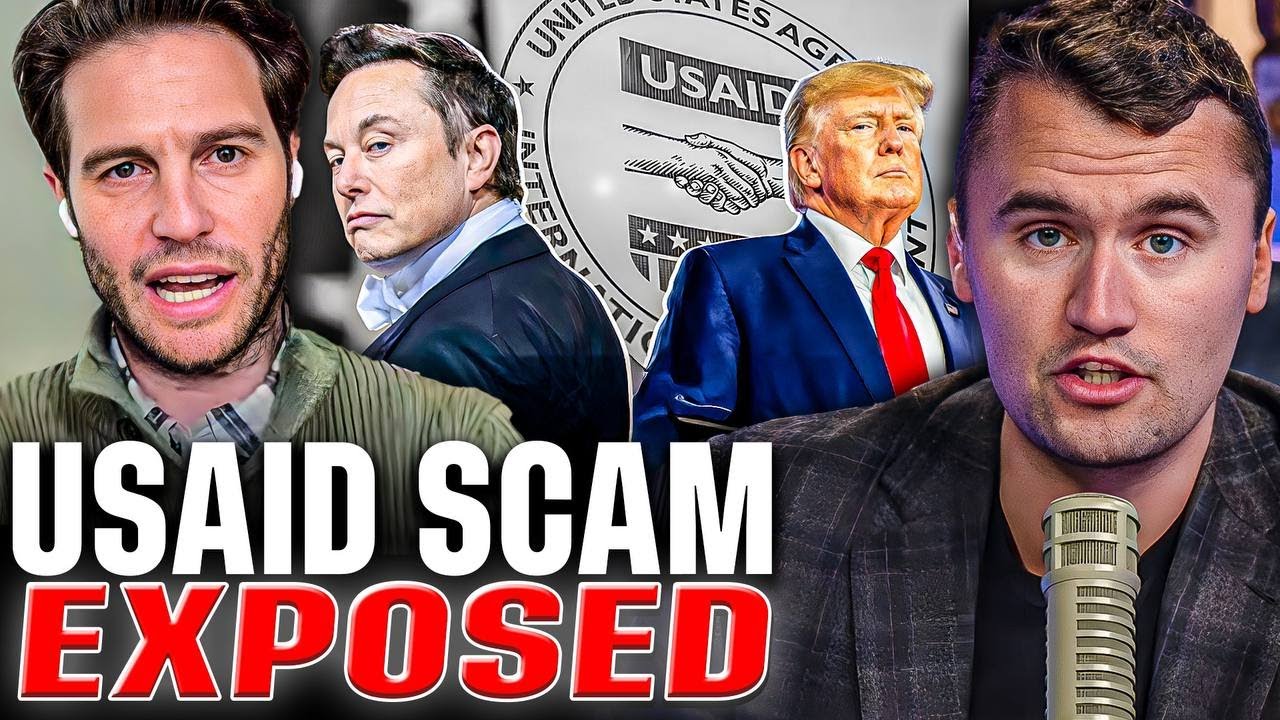
Senator Rand Paul Exposes USAID's Outrageous Spending: Transgender Monkey Surgeries, Climate Influencers, and Borrowed Billions
Senator Rand Paul discusses his decade-long fight to expose wasteful USAID spending, including millions spent on social media influencers in Ukraine, girl-centric climate change programs in Brazil, and transgender surgeries in Guatemala. With President Trump's administration placing a padlock on USAID and Elon Musk's Doge initiative investigating, the senator reveals how Congress has handed billions in blank checks to fund left-wing projects while borrowing from China. Paul announces upcoming hearings and explains how Republicans can use simple majority votes to rescind this spending, but warns that many Republicans still support these programs and need public pressure to act.
Senator Rand Paul has been leading the charge against USAID spending for over a decade, consistently arguing that the United States should not borrow money to send it abroad while running deficits at home. Through his annual Festivus report and continuous investigations, Paul has documented outrageous expenditures that seemed to generate little public attention—until now.
The senator explains that USAID spending has reached a tipping point where the American public is finally paying attention. With the Trump administration taking action and Elon Musk's involvement through Doge, the conversation about foreign aid waste has reached critical mass. Paul notes that the administration placing a padlock on USAID facilities has helped expose spending that nobody can defend because of its outrageous nature.
The Shocking Details of USAID Spending
The list of questionable USAID expenditures is extensive and disturbing. Paul reveals that $4.8 million was spent on social media influencers in Ukraine, $3 million on girl-centric climate change programs in Brazil, and $2 million to secure the border in Paraguay. Additional wasteful spending includes:
$1.5 million for advancing DEI in Serbia
$2 million for sex changes in Guatemala
$6 million for tourism in Egypt
Hundreds of thousands for meals that went to Al-Qaeda affiliated fighters in Syria
Funding for transgender operas and comic books
Hundreds of thousands of dollars studying whether lonely rats use more cocaine than well-socialized rats
Paul emphasizes that every left-wing idea imaginable over the last several decades has been funded by the State Department and USAID, yet these programs have nothing to do with peace or diplomacy—the actual purpose of the State Department.
How USAID Spending Actually Works
When asked whether Congress specifically underwrites these projects, Senator Paul explains that most of the time, money is allocated to USAID in large sums—millions or billions of dollars—and the individual projects are decided by the people who work within the agency. Congress typically does not specify how individual grants should be distributed, which is why Paul believes the agency needs to be completely reformed.
The senator praises Secretary Rubio for doing a good job of letting most of these people go, noting that most USAID employees are left-wing individuals promoting an agenda rather than focusing on diplomacy. Paul argues that while there is a need for a State Department as a critical part of government to promote peace, diplomacy, and discussions, programs related to climate change, social media influencers, and transgender operas have nothing to do with these core functions.
USAID spends approximately $40 billion on foreign aid, which is then divided into grants that fund these controversial projects. The more granular detail the American public learns about these grants, Paul argues, the more support there will be for reducing this spending.
Addressing Critics Who Minimize the Cuts
Paul addresses critics who dismiss these cuts as insignificant by arguing that amounts like $100 million or $250 million don't matter in the context of the federal budget. The senator calls this an invalid argument, pointing out that for anything anyone objects to in government, someone could always say it's not enough to balance the budget.
Even if all the waste identified only represented 5% of spending and wouldn't balance the budget on its own, Paul asks why Americans wouldn't oppose the worst and most egregious spending. He compares the approach to immigration enforcement, noting that while the government should end all illegal immigration, it makes sense to start with the most violent offenders. Similarly, starting with the most outrageous government spending is a logical first step toward broader fiscal reform.
The senator emphasizes that Congress must reduce overall spending, and eliminating the most egregious waste is the tip of the spear. Once Americans see this spending eliminated, they'll be more supportive of continuing the process of cutting unnecessary expenditures.
The Upcoming Senate Hearing on USAID
Paul announces an upcoming hearing that will showcase findings from his decade of waste reports, grievances about spending, as well as discoveries from Doge and other investigators. The hearing will feature testimony about the problems with foreign aid spending, while Democrats will likely bring witnesses to testify about why this aid should continue.
The senator makes a broader point about foreign aid: even when spending goes beyond outrageous projects like pride parades and could be considered valid or charitable, there's still a fundamental question about whether the government should engage in such spending with borrowed money. Paul offers a compelling analogy: if someone makes $25,000 a year with just enough money for rent and family expenses, they wouldn't go to a bank and borrow $1,000 to give to a homeless person when passing them on the street. People don't operate that way—they take care of themselves and their families first, and charity comes from what's left over, not from borrowed funds.
The government shouldn't be any different, Paul argues. The United States is essentially borrowing all the money sent to Ukraine—not just charitable aid but all military assistance and everything else. He points out the irony of people complaining about how to be strong against China while simultaneously borrowing from China to pay Ukraine and send USAID dollars around the world.
The Legislative Path Forward
Senator Paul explains that while the Trump administration is doing excellent work bringing attention to USAID waste, and his committee will shine a light on it, ultimately Congress must act through legislative proposals. What the administration is doing at USAID will require Congress to rescind that money through what's called a rescission package.
The good news, according to Paul, is that this can be done by simple majority through a privileged vote, meaning there's no filibuster. If the Trump administration decides to spend only half of the USAID money—or just a tenth—and gives 80-90% back, a simple majority of Republicans in the Senate and House can rescind that money and start saving it.
However, Paul warns that Doge is just the beginning, and Congress must follow through. He expresses concern about what he calls "feckless Republicans" in Congress who love USAID, love all the welfare, and love all the foreign aid. There's a big fight ahead, and Paul urges Americans to watch their Republican representatives like hawks to make sure they actually vote to cut this spending when it comes back.
The senator emphasizes that USAID has been a bipartisan project for the last 30 years. While it's easy to blame Democrats, both parties have grown this slush fund over the past two to three decades. Just as Americans applied full pressure for confirmations of Bobby Kennedy for HHS, Tulsi Gabbard for DNI, and Pete Hegseth for DOD, the same level of pressure is needed for USAID rescission.
Judicial Overreach and Doge Access
When asked about judicial overreach that might justify ignoring federal courts, particularly regarding tensions between branches of government and Doge's access to information, Paul expresses frustration with attacks on young people helping Doge. He highlights one particular case of a young man from the University of Nebraska who won an award for amazing research.
This individual applied artificial intelligence to MRIs of 2,000-year-old scrolls from Israel, possibly from when the Romans invaded in 68 AD. These scrolls were burned and couldn't be read or unraveled without falling apart, but this computer science genius was able to read the interior of the scrolls without unrolling them. Paul argues that Americans should be lauding and applauding this amazing genius for helping Doge reduce spending problems, yet the left is doxing him and trying to get him attacked, which the senator finds despicable.
The Ross Ulbricht Pardon
Paul discusses his long-standing advocacy for the pardon or commutation of Ross Ulbricht, which he has been pushing even longer than many others. He mentions speaking with President Trump about this during his first administration and meeting with Ulbricht's mother.
The case became a cause for libertarians because while Ulbricht was involved with something illegal—a website where people traded drugs—he was given two life sentences. Paul believes punishment should be proportional to the crime, and in this case it was extremely disproportionate. The senator expresses gratitude that President Trump granted the pardon, noting that Ulbricht is still relatively young but spent 11-12 years in prison.
Paul sees Ulbricht's release as an opportunity for him to become a productive member of society again. He believes Trump's decision went a long way toward securing support from libertarians who had a choice between voting for a third party or voting for Trump. The president was honest and kept his word by pardoning Ulbricht, which Paul considers a good thing.