Up Next

Candace Owens Uncovers Egyptian Military Planes Tracking Charlie Kirk and Turning Point USA Events Nationwide
1:03:45

Candace Owens Reveals Explosive 911 Call Evidence and Utah Medical Examiner's Sudden Resignation in Charlie Kirk Investigation
49:39

Candace Owens Reveals Liberty University Scandal That Led to Charlie Kirk's Assassination and Jerry Falwell Jr.'s Fall
53:09
The Untold Origin Story of Charlie Kirk and Turning Point USA: From Breitbart to Benedictine
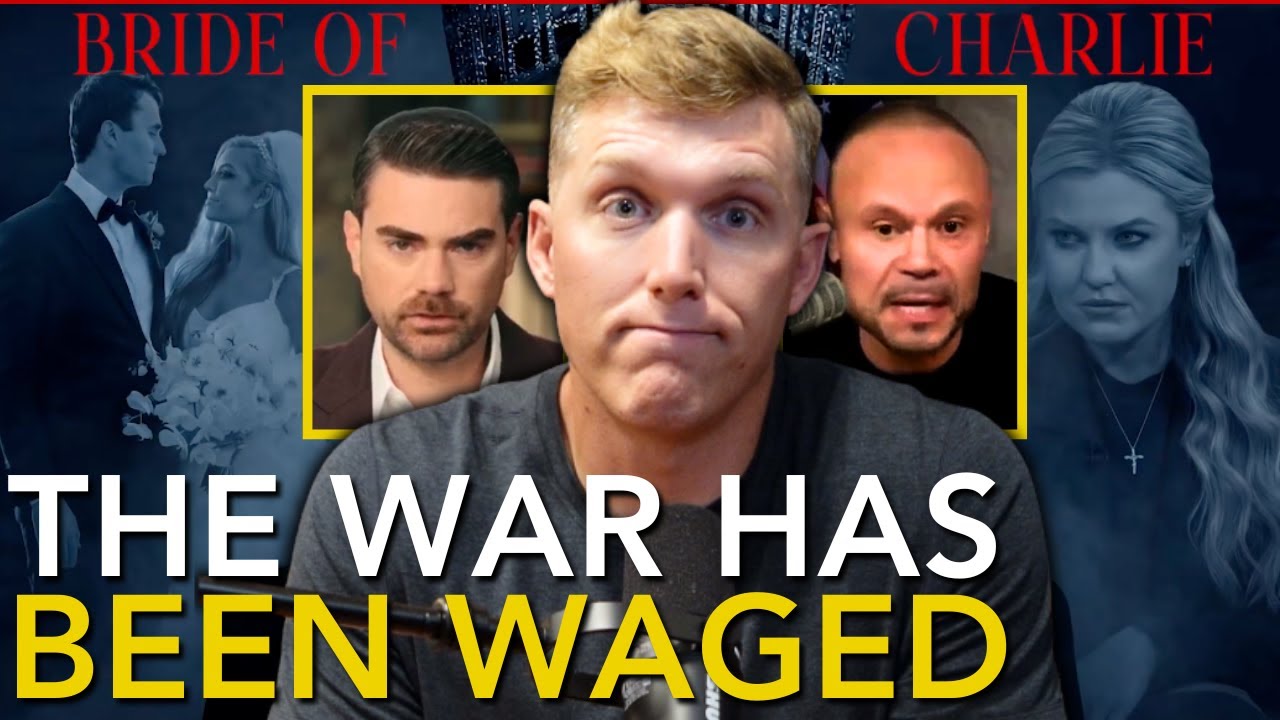
Baron Coleman's deep investigation into how Charlie Kirk really founded Turning Point USA reveals connections to Breitbart News, mysterious benefactors, and a carefully orchestrated rise to prominence that contradicts the official narrative. From a high school email to Joel Pollak, to a chance encounter with Bill Montgomery, to the controversial Crystal Clanton text message scandal, this examination of Kirk's early years uncovers patterns of manufactured crises, strategic placements, and an organization conceived with a very specific mission that had little to do with economic liberty.
The Alexandria Ocasio-Cortez Parallel
We all know the name Alexandria Ocasio-Cortez, commonly known by her initials AOC. What we may not know is why we know her name at all. Yes, we know she serves in elected office as a congressman from New York. But how did that happen? How did a bartender and political novice defeat an experienced 20-year incumbent politician and win her first election?
AOC was born in 1989 in the Parkchester neighborhood of the Bronx in New York City. She's the daughter of Blanca Ocasio-Cortez, who was born in Puerto Rico and worked as a domestic worker and school bus driver. Her father, Sergio Ocasio-Roman, was a second-generation Bronxite of Puerto Rican descent who owned a small architectural firm. When she was about 5 years old, her family moved from their Bronx apartment to a house in suburban Yorktown Heights, approximately an hour north of the city, in search of better public schools.
AOC attended Yorktown High School, where she excelled academically. She won second place in the Intel International Science and Engineering Fair for a microbiology project on the effects of antioxidants on the lifespan of roundworms. She graduated in 2007 and attended Boston University, majoring in economics and international relations. At Boston University, she interned in Senator Ted Kennedy's office, focusing on foreign affairs and immigration issues.
Tragedy struck in 2008 when her father died suddenly from lung cancer at just 48 years old. His death plunged the family into financial hardship during the Great Recession. AOC graduated cum laude from Boston University in 2011 and returned to the Bronx to help her mother avoid foreclosure. She worked multiple low-wage jobs, including as a bartender and waitress, while dealing with student loans and high health insurance deductibles.
The Casting Call That Changed Everything
AOC's entry into politics began during the 2016 presidential election when she volunteered as an organizer for Bernie Sanders' campaign in the South Bronx. The pivotal moment came in late 2016 when progressive groups Brand New Congress and Justice Democrats launched a nationwide open call for nominations of working-class, non-corporate-backed candidates who wanted to challenge establishment Democrats. This initiative resembled a casting call or audition process for potential political stars.
AOC's brother Gabriel nominated her without her knowledge by submitting her name alongside over 10,000 other entries. The groups aimed to recruit candidates who supported progressive policies like Medicare for All and the Green New Deal while rejecting corporate PAC money. AOC was contacted shortly after Christmas 2016 by Justice Democrats and impressed organizers during phone interviews and video calls. At the time, she was still bartending and claims to have been initially hesitant.
Her rise to national prominence exploded on June 26, 2018, when she defeated 10-term incumbent Joe Crowley in New York's 14th congressional district with 57% of the vote. Her upset was hailed as the biggest Democratic primary shock in over a decade. In November 2018, she won the general election with 78% of the vote, becoming the youngest woman ever elected to Congress at age 29.
Charlie Kirk's Official Origin Story
The official narrative of Charlie Kirk's rise follows a similarly improbable trajectory. According to the story told for years, Bill Montgomery, a 71-year-old restaurateur and Tea Party activist, just happened to be in the audience at Benedictine University in Illinois during a demonstration comparing Tea Party people and Occupy Wall Street activists. Montgomery claims he watched 400 kids going from falling asleep to wide awake as 18-year-old Charlie Kirk spoke.
Montgomery says he looked at the clock and noted it took only 20 seconds for Kirk to captivate the audience. Afterward, Montgomery approached Kirk and said, "Charlie Kirk, you don't know me, but you can't go to college." According to the narrative, they then traveled the country together for the next two and a half years, with Kirk unable to rent hotel rooms himself because he was only 18.
But when you examine this story closely, numerous questions emerge. Why would a 71-year-old man remember such specific details seven years later—looking at the clock multiple times, counting the speakers, calculating exactly 20 seconds of captivation? And if there were three speakers from Tea Party and three from Occupy Wall Street, why was there a seventh speaker? It's almost like Kirk was added on at the end, planted there for a specific purpose.
The Breitbart Connection
The real story appears to begin with an email to Breitbart News. Joel Pollak, who served as editor at Breitbart News for 15 years, posted a tribute after Kirk's death that revealed a crucial detail: "This is the photo Charlie Kirk sent me when he was in high school and was looking for help countering bias in his economics class. It's SOS Liberty, the precursor to Turning Point USA. He had been inspired by Andrew Breitbart."
Charlie Kirk, as a high school senior, reached out to Breitbart News because he was inspired by the life of Andrew Breitbart. How many emails do you think Joel Pollak received daily? Hundreds. Thousands. Yet he took time to respond to this one, read it, formulated a response, and encouraged Kirk to write an article about it.
On April 26, 2012, Kirk's first publication appeared on Breitbart: "Liberal Bias Starts in High School Economics Textbooks." The article criticized Paul Krugman's economics textbook used in AP classes. At the bottom, it stated: "Charlie Kirk is a high school senior and will be attending Baylor University in the fall. He is the co-founder of SOS Liberty."
The Rapid Succession of Events
According to Encyclopedia Britannica, Kirk's article led to an appearance on Fox News and a speaking engagement at Benedictine University in Illinois. Think about that timeline. A few dozen people read the article at most—this was not a viral sensation. Yet somehow, Fox News decided that what America needed was to hear from an 18-year-old high school student discuss economics and financial policy.
After his Fox News appearance, he spoke at Benedictine University. And it was supposedly at this speaking engagement that Bill Montgomery just happened to be in attendance and approached Kirk afterward. The timing is remarkable: Kirk wrote the Breitbart article in April 2012, and Montgomery claims to have met him in May 2012.
After his speech at Benedictine, Montgomery urged Kirk to start spreading conservative views on college campuses. Kirk's father reportedly came up with the name Turning Point USA, and Montgomery registered the organization in July 2012. But here's an interesting question: Why didn't Kirk's father come up with that name when they founded SOS Liberty? Where was Rob Kirk when they were brainstorming names for the original organization?
That August, at the Republican National Convention in Tampa, Kirk met Foster Friess, an investment banker and well-known donor to conservative causes. Kirk told Friess about TPUSA, describing it as a conservative counterpart to MoveOn.org. A few days later, Kirk received a $10,000 check from Friess in his parents' mailbox.
Breitbart's Jerusalem Origins
Understanding Breitbart's founding mission provides crucial context. According to Larry Solov, who wrote about Breitbart News Network's origins: "Breitbart News Network was born in the USA but conceived in Israel. It was the summer of 2007. Andrew had just been invited to tour Israel as part of a media junket. I agreed to tag along as his lawyer and best friend. What neither of us knew at the time was the trip would change our lives and give us the inspiration for Breitbart News Network."
Solov continued: "One thing we specifically agreed on that night was our desire to start a site that would be unapologetically pro-freedom and pro-Israel. We were sick of the anti-Israel bias in the mainstream media. By launching Breitbart Jerusalem, the journey comes full circle and a promise between two friends is fulfilled. In a very real sense, Breitbart News returns to its roots."
So Charlie Kirk sent an article to an organization whose founding mission was to be "unapologetically pro-Israel." He sent it to Joel Pollak, himself unapologetically pro-Israel. This kicked off a series of events in rapid succession that took Kirk away from Baylor University and onto the road to what TPUSA would become.
The Crystal Clanton Crisis
In December 2017, The New Yorker published an explosive article titled "A Conservative Nonprofit That Seeks to Transform College Campuses Faces Allegations of Racial Bias and Illegal Campaign Activity." The article revealed that Crystal Clanton, who served as TPUSA's national field director, allegedly sent a text message to another Turning Point employee saying, "I hate black people. Like, blank them all. I hate them."
The former Turning Point employee who received the text messages, John Ryan Oorthuys, requested that the messages not be used and declined to comment. Kirk stated that Turning Point assessed the situation and took decisive action within 72 hours, and soon after, Clanton left the organization.
But here's the crucial detail from the article: "While Kirk served as the public face of Turning Point, Clanton, its former field director, acted as its hands-on boss, according to former employees. In a 2016 book that Kirk co-authored with Brent Hamachek, he called her integral to the success of Turning Point while effectively serving as its chief operating officer. He added that Turning Point needs more Crystals. So does America."
This raises an important question: If John Ryan Oorthuys doesn't want the text messages published, and Crystal Clanton doesn't want them published, who published them? How did they get to The New Yorker? A text message is a two-way conversation—only two people are involved. So how did a screenshot land in the hands of a reporter?
Enter Andrew Kolvet and Tyler Bowyer
According to Andrew Kolvet's own account of how he came to work with Charlie Kirk, he was working with Johnny Moore when Moore ran into Kirk at some event in Southern Florida. Moore was impressed and suggested Kolvet reach out. Kolvet says he emailed Kirk but was ghosted for a while. Then Kirk had some news story that he tried to handle on his own that didn't go well and blew up, and then Kirk called him.
Does this story sound believable? Kirk was already hugely famous in late 2017. He was basically credited by President Donald Trump with helping him get elected. You can't imagine what that did to Kirk's email inbox. So the idea that when Kirk experienced a crisis, he would reach back out to a random guy who cold-emailed him seems implausible. Why wouldn't he rely on people closest to him, people he knew and trusted, rather than bring in an outsider he'd never met?
Tyler Bowyer's trajectory is equally interesting. According to his bio, he joined Kirk at Turning Point USA in 2015, later becoming the chief operating officer, overseeing the largest and most impactful field program. Crystal Clanton was the national field director who oversaw the field program. Kirk considered her the number two person at the company, like the chief operating officer. As soon as she left, Bowyer got the position.
Looking at TPUSA's website from October 2016, before the scandal, we see Kirk and Montgomery at the top, followed by Crystal Clanton as national field director. If you scroll through the entire list of staff—regional directors, field team members, everyone—Tyler Bowyer appears all the way at the bottom as "National Victory Director." He wasn't on the top line with the important people.
But by February 2018, just two months after the scandal broke, the website had been completely revamped. Only three people remained listed: Charlie Kirk, Tyler Bowyer as Chief Operating Officer, and Jake Hoffman as Media and Communications Consultant. Everyone else had been removed from public view. Tyler Bowyer had become the chief operating officer.
The Remarkable Redemption of Crystal Clanton
In a twist that demonstrates the complexity of this story, Crystal Clanton went on to clerk for Supreme Court Justice Clarence Thomas—one of the most coveted legal positions in America. An article revealed: "Justice Clarence Thomas gave Crystal Clanton a home and a job after she left a conservative youth organization in controversy. Then the justice picked her for one of the most coveted positions in the legal world."
Clanton was just 22 years old when she left TPUSA. A few years later, she was announced as a Supreme Court Justice Law Clerk. This is not a clerical position—it's the single most coveted legal job in America. When you leave a Supreme Court clerkship, every major law firm wants to hire you, often starting at $500,000 to $600,000 annually.
The article stated: "The Thomases and Miss Clanton, a 29-year-old conservative organizer turned lawyer, have built such a close relationship that the couple informally refer to her as their 'nearly adopted daughter.' Miss Clanton has lived in the Thomas home, assisted Mrs. Thomas in her political consulting business, and joined her on girls' trips to New York. They encouraged her to enroll in law school, where she received a full merit scholarship."
This raises questions about the authenticity of the scandal. Would Justice Clarence Thomas—himself a Black man—take in, mentor, and give one of the most prestigious positions in American law to someone who genuinely sent racist text messages about Black people? Or was the scandal manufactured for other purposes?
TPUSA's Mission Drift
According to TPUSA's original mission, the organization was founded to focus exclusively on economic liberty and free market economics. They claimed they wouldn't be political, only focused on economic principles. Yet by 2016, staff listings show Ron Fineold serving as "Director of Israel Engagement and Outreach at Turning Point USA."
Articles from that time show TPUSA organizing counter-demonstrations against Students for Justice in Palestine at George Mason University. Fineold stated: "Those that attended SJP's national conference now know that if they choose to continue to try to silence Jewish and pro-Israel communities, they will have organized and empowered activists standing up to their hate."
This raises a serious question: What does this have to do with Charlie Kirk's founding mission of economic liberty? The organization claimed to focus exclusively on free market economics and avoiding political issues, yet they hired a full-time Israel engagement director and were organizing campus demonstrations on Middle East politics.
The Pattern of Manufactured Crises
Looking at the Crystal Clanton scandal, a pattern emerges. A text thread is screenshot and leaked to media, creating a crisis that TPUSA has to solve. This brings new people into positions of power—Andrew Kolvet for PR management, Tyler Bowyer as COO. We've seen this pattern repeat: a text thread that Andrew Kolvet was on was screencapped and leaked and shared with media, creating another crisis that he had to solve.
The timing and beneficiaries of these crises are worth examining. Crystal Clanton, supposedly the number two person who Kirk said TPUSA needed more of, is suddenly gone after a scandal where neither party wanted the messages published. John Ryan Oorthuys, the recipient, didn't want them published and refused to comment. So who leaked them? The only two people involved were Clanton and Oorthuys, yet somehow the screenshots reached The New Yorker.
Tyler Bowyer clearly benefited, ascending from the bottom of the organizational chart to Chief Operating Officer. Andrew Kolvet benefited, gaining entry to an organization after being previously ghosted. The question becomes: were these crises organic problems that developed, or were they manufactured by people seeking to gain control of the organization?
The Audition Process
The evidence suggests Charlie Kirk may have gone through an extensive audition process, not unlike what Alexandria Ocasio-Cortez experienced with Justice Democrats and Brand New Congress. Let's see how he writes—encourage him to submit an article to Breitbart. That's pretty good. Let's see how he does on television—put him on Fox News a couple times. He's all right. Let's put him in front of a live audience—send him to Benedictine College to speak to students.
It's not much of a speculative jump to suggest that Bill Montgomery was sent in to make the final pitch after Kirk performed well at each stage. The question becomes: why was a 71-year-old man a couple hours from his home at Benedictine College in Illinois watching college kids give speeches to other college kids? If this was an audition process—testing writing ability, television presence, and live speaking skills—then making an approach through Montgomery makes more sense.
Kirk already had an organization called SOS Liberty that he founded around the time he wrote the Breitbart article in April 2012. Yet by July 2012, he had abandoned that name for Turning Point USA, supposedly because his father came up with a better name. Why wasn't Rob Kirk in the room when they named SOS Liberty? Why did the name change coincide with Bill Montgomery's involvement?
The Implausible Hollywood Story
If this were pitched as a Hollywood movie, it would be rejected for having too many plot holes. An 18-year-old high school senior writes an email to his favorite news publication complaining about liberal bias, and they say, "You should write an article about it." He writes it, and maybe 25 or 100 people read it. Based on this article with minimal readership, Fox News decides to put him on national television to discuss economics—because that's exactly who people want to hear from about financial policy: 18-year-old high school students.
After his Fox News appearance, he's invited to speak at a local college campus even though he's still in high school. At that event, a 71-year-old stranger approaches and convinces him to skip college and travel the country together. His father is totally supportive of this plan and even comes up with a catchy name for their organization. Within months, at the Republican National Convention, this teenager meets a billionaire investor who sends him a $10,000 check days later.
Nobody would buy this story. The number of coincidences required—each one necessary for the next to occur—strains credulity. It's far more plausible that someone spotted Charlie somewhere in this process, tested him through various stages, found him suitable, made him an offer, and provided him with an organization and funding to get started.
The Final Interview
Kirk's final interview the day before he died, with Ben Shapiro, takes on new significance when viewed through this lens. His organization was birthed in service to a very specific cause—unapologetically pro-Israel, as Breitbart's founders stated. His staff included a Director of Israel Engagement and Outreach. His activities extended far beyond economic liberty into Middle East politics.
Yet in that final interview, Kirk had apparently reached a point where he could no longer fully support that mission. Like a person who works in an industry long enough to see behind the curtain, he appeared to be questioning things he once accepted. And shortly after expressing those doubts publicly, he died at age 31.
What If Things Had Been Different?
It's worth considering alternate timelines. What if Bill Clinton hadn't run for office and become governor? What if Hillary Clinton had married someone else? What if George W. Bush's father and grandfather hadn't been in government service? What if Michael Jordan or Kobe Bryant hadn't played basketball? What would their lives have looked like?
What if Charlie Kirk hadn't sent that email to Joel Pollak at Breitbart? He wouldn't have written the article. He wouldn't have appeared on Fox News. He wouldn't have spoken at Benedictine College. Bill Montgomery wouldn't have approached him. He wouldn't have founded TPUSA or traveled the country. He wouldn't have attended the RNC and met Foster Friess. He wouldn't have experienced fundraising success. He wouldn't have been at Utah Valley University on September 10th. And he would still have an intact neck, with no holes in it.
The official origin story of Charlie Kirk and Turning Point USA is full of improbable coincidences and convenient timing. When examined closely, a different picture emerges—one of a young man who was identified, tested, funded, and placed into position to lead an organization with a very specific mission that extended far beyond economic liberty. The people around him—from Bill Montgomery to Crystal Clanton to Tyler Bowyer to Andrew Kolvet to his wife Erika—all entered his life through equally improbable circumstances.
Going Back to the Basics
To understand the Charlie Kirk narrative and how he became so prominent, we have to go back to where he came from and examine the concrete realities of what was happening on the ground when he was first discovered. The more we investigate, the more it appears this was no accident at all. The organization was likely already being set up and prepared to launch—they just needed the right person to plug in as the face.
How many other people did they approach? How many other young conservatives did Bill Montgomery talk to before finding one willing to skip college and travel with him? How many other aspiring activists wrote to Breitbart and didn't get the same response Charlie did? The selection process may have involved dozens of candidates before landing on the right combination of charisma, youth, and willingness.
Kirk wanted to attend West Point but didn't get in. He planned to attend Baylor instead. Even weeks after TPUSA was founded, his Facebook page showed him telling friends he was "going to Baylor this fall." That's not consistent with the origin story of him being immediately convinced to skip college. Something changed between his initial commitment to Baylor and his eventual decision to pursue TPUSA full-time.
The people who've benefited from his career—his wife who now attends the State of the Union as a guest of honor, Tyler Bowyer, Andrew Kolvet, Blake Neff, Rob McCoy—are all names we only know because of Charlie Kirk. They built their careers, their brands, and their influence on the foundation he provided. Some of them entered his life through manufactured crises. Others appeared through unlikely coincidences that seem less coincidental the more closely they're examined.
When asked who was responsible for what happened to Kirk, the answer may be simpler than elaborate conspiracy theories suggest: He went to work for certain people and interests. It was only a matter of time before the arrangement would end. His entire career was birthed in service to a specific cause, as the Breitbart connection makes clear. When political realities shifted and he could no longer support that mission with the same enthusiasm, when he started expressing doubts publicly, the usefulness of the arrangement came to an end.
Video Transcript
We've had a miraculous healing, ladies and gentlemen. We had a miraculous healing. Just yesterday, we reported that Erica Kirk was far too ill to do the Q&A at the Bible in 365 podcast that she was scheduled to do. But she survived. She is doing well. Traveling is the rumor. Traveling is the rumor. And tonight, we might get a glimpse of her. Hopefully not running our hands through the hair of the vice president of the United States, but at the same event, the State of the Union tonight. uh which is the cause for us going a little early tonight. No, contrary to uh to to the rumor. This is not an earlier time slot because Candace has vacated the Tuesday 4 to 5:00 p.m. Central time slot. No, no, no, no, no. I would never do such No, no, no. This has everything in the world to do everything in the world to do with the State of the Union and the State of the Union only. I would never take advantage of a vacated time slot like that that that is so highly popular and all that kind of stuff. No. No. I wouldn't I wouldn't do such a thing. That's not That's not the kind of guy I am. Not the kind of guy I am. Uh speaking of Candace, the whole world is freaking out. I will get to that in just a minute. The entire globe appears to be freaking out over her pending series that kicks off eh 24-ish hours from right now uh with The Bride of Chucky uh excuse me, The Bride of Charlie, who just happens to have weird bride of Chucky eyes, but that's a different story. And I got an update in the Tyler Robinson trial. I'll go ahead and spoil it. I'm not going to do a segment on it because it's easy and I already told you what was going to happen. The uh Utah County, I believe, has won the motion to have them removed and uh they survived to fight another day. So, I don't blame the defense for doing it. It's it's good to make the prosecution work, especially when they're trying to put your um put your client to death. It's it's good to make them work on every single issue. But, uh but they did not win. The the Tyler Robinson's team did not win that fight. So, it looks like the Utah County Prosecutor's Office will be the one prosecuting it. Uh, it does look like Erica Kirk will be at the State of the Union tonight. And it does look like Democrats and um well, they're kind of like Democrats. The mainstream Republicans are who are absolutely losing their mind over the Candace Owens series that's going to kick off tomorrow. It looks like they have lost as well. They look like the losers as well. But I have a we got a lot to cover tonight. Tonight's going to be pretty in-depth, and I hope you understand where I'm going with the open. You know, these opens, sometimes they tie directly into the subject matter of the day. Sometimes they point towards where we're headed. Tonight's ties directly into the subject matter of the day. And at first, if you don't know where I'm headed or you don't listen to the whole show and you just listen to the open, you might think, "Man, I didn't know those were his politics." Those are not my politics. What we'll talk about are not my politics. But it's a great example in my opinion of someone who has a similar origin story frankly. So we'll get to that in mere moments. Ladies and gentlemen, in mere moments. I appreciate you guys buckling in with us for a beautiful Hey, I mean truly a beautiful Tuesday afternoon. I usually take Tuesday off. Tuesday is usually not a show day, but today today's a show day. Let me get the opening statement moved over to the right screen so I can read it. Yes, I don't memorize these thousand to 2,000 word openings. No, no, no, friends. No, friends. That's not what I do. Um, I cheat. I read it right off the screen. So, let me get this moved over where I can get a better grasp of it and I will be off and away with your opening statement. All right. Are are you ready? Are you ready, guys? Because this is your opening statement. We all know the name Alexandria Accassiocortez, commonly known by her initials AOC. What we may not know is why we know her name at all. Yes, we know she serves in elected office as a congressman from New York. But how did that happen? How did a bartender and political novice defeat an experienced 20-year incumbent politician and win her first election? To find out, we have to go back to the basics. AOC was born in 1989 in the Parkchester neighborhood of the Bronx there in New York City. She's the daughter of Blanca Accassiocortez, who was born in Puerto Rico and worked as a domestic worker and school bus driver. She also is the daughter of Sergio Okasio Roman, a second generation Bronxite of Puerto Rican descent who owned a small architectural firm. When she was about 5 years old, her family moved from their Bronx apartment to a house in bougie and suburban Yorktown Heights. Yorktown Heights is approximately an hour north of the city. The family relocated in search of better public schools and educational opportunities. Her parents' Puerto Rican roots instilled in her a strong sense of cultural identity. During her early childhood, the family recognized the rising school violence and dropout rates in the Bronx during the early 1990s, and it influenced her parents decision to prioritize education and relocate to the suburbs. AOC attended Yorktown High School, where by all accounts she did excel academically. She participated in science fairs and won second place in the Intel International Science and Engineering Fair for a microbiology project on the effects of antioxidants on the lifespan of round worms. I don't even know what that means. She graduated in 2007 and went to Boston University, majoring in economics and international relations. At Boston University, she interned in Senator Ted Kennedy's office, focusing on foreign affairs and immigration issues. She credits this experience with giving her firstirhand insight into the struggles of immigrant families. Tragedy struck her family in 2008 when her father died suddenly from lung cancer. He was just 48 years old. His death plunged the financial the family into financial hardship during what has come to be known as the Great Recession. AOC graduated cumly from Boston University in 2011 and returned to the Bronx to help her mother avoid foreclosure. She worked multiple low-wage jobs, including as a bartender and as a waitress. During this time, she founded Brook Avenue Press, which was a publishing firm focused on positive children's literature about the Bronx. She also served as an educational director for the National Hispanic Institute. Despite graduating near the top of her class from Boston University, she lived mostly paycheck to paycheck and dealt with things like student loans, high health insurance deductible, and the realities of living just at or above subsistence levels of income. AOCC's entries entry into politics began rather unexpectedly. During the 2016 presidential election, AOC volunteered as an organizer for Bernie Sanders campaign in the South Bronx. This gave her her first taste of grassroots activism and electoral organizing. She traveled to Standing Rock, North Dakota to protest the Dakota Access Pipeline, an experience she says deepened her commitment to environmental justice and indigenous rights. But the pivotal moment in her career, the reason we all know who she is, came in late 2016. Progressive groups, brand new Congress and Justice Democrats had launched a nationwide open call for nominations of workingclass non-corporatebacked candidates who wanted to challenge establishment Democrats. This initiative was described by some as resembling a casting call or an audition process for potential political stars. The groups cast the effort of seeking authentic uh diverse voices from outside traditional power structures that could reshape the Democratic party. But whatever it truly was, AOCC's brother Gabriel nominated her without her knowledge supposedly by submitting her name alongside over two uh excuse me, 10,000 other entries. The groups aimed to recruit candidates who supported progressive policies like Medicare for all, the Green New Deal, and they wanted people who would reject corporate pack money. The groups liked what they saw in her bio. She was contacted shortly after Christmas of 2016 by Justice Democrats. She underwent phone interviews and video calls where she impressed the organizers. At the time, she was still bartending and claims to have been initially hesitant, saying she viewed the nomination as a long shot rather than a direct commitment to run for Congress. After a dinner meeting with BNC founders in Manhattan, she decided to pursue the opportunity. Just as Democrats unanimously selected her, providing campaign support that included things like strategy and branding. Her effort remained a long shot. It was driven primarily by volunteers and funded with a shoestring budget of about $300,000. I've lost my place, guys. Oh, here we go. Excuse me. Her opponent, by contrast, spent millions of dollars in search of winning an 11th consecutive term in the House. AOCC's rise to national prominence exploded on June 26, 2018 when she defeated that 10-term incumbent, the fourth ranking House Democrat and Democrat caucus chair in New York's 14th congressional district. She won by a landslide 57 to 43%. Her upset was hailed as the biggest Democratic primary shock in over a decade and it drew comparisons to a titanic upset. Her campaign focused on progressive issues like abolishing ICE, free public college and federal jobs guarantees, all of which resonated in the diverse workingclass districts spanning Queens and the Bronx. In November 2018, she won the general election against a Republican with 78% of the vote, becoming the youngest woman ever elected to Congress at just the age of 29. She was sworn in on January 3rd, 2019, and quickly became a media sensation. She leveraged social media where she has a massive following for a politician of over 8 million Instagram followers and 12 million on X. She co-founded a small group known as the Squad, a group of progressive women in Congress that include Ilhan Omar, Rashidita Taleb, and Ayana Presley. Her first major legislative push was the Green New Deal, a bold plan for a 10-year mobilization to combat climate change. She argued it would create jobs, address inequality, and it gained over a 100 co-sponsors, and sparked national debate. Unfortunately for AOC, it failed miserably. But the notoriety she gained from campaigning for the Green New Deal wildly succeeded. Her achievements in Congress to date have been relatively modest. But they do include populist initiatives like opioid treatment funding, cleaning toxic sites, and reimbursing CO 19 funeral costs. These are things that get broad support across the aisle. Despite winning her first election with a tiny budget for a congressional campaign, she has since been a prolific fundraiser, raising over $37 million since 2019. She was comfortably reelected in 2020, 2022, and 2024, and has been rumored to be considering a run for the United States Senate from New York, or perhaps an office even higher than that. Her rapid rise to prominence has not been without its share of controversies. Conservatives nearly universally identify her as a radical socialist. Some leftists criticize her for occasional compromises like voting to avert a rail strike or the occasional consiliatory rhetoric. She faced backlash for attending the 2021 Met Gala in a tax the rich dress during wealth inequality discussions and allegedly hiding during the January 6 capital attack. Despite all this, AOC remains, perhaps to the chagrin of the establishment in both major parties, something of a cultural icon. Going into the 2016 midterm elections, her influence endures. And consider how considering how wildly well-known and influential she is, it's hard to remember that just a few years ago, Alexandria Accassiocortez was just a bartender in the Bronx whose brother thought it would be worth a shot to submit her name to a casting call looking for someone, anyone to run for office. And that is your opening statement, an introduction to AOC. Not the highest IQ person to ever seek a congressional seat, I will admit, but accomplished in her own right. Why do I mention this? Well, wait till you find out what I have in store for you today. Because to understand to understand the Charlie Kirk narrative to understand how big he became we have to go back to where he came from. We're talking about going back to the basics. We're going to go way back to the basics. And I want to start at a place where we paused yesterday had a brief oop sorry didn't mean to run that in your ears if you heard it. We had a brief moment yesterday where Andrew Kulovic gave us a little tiny outline, a little tiny outline of how he came on the scene, where did he come from? And he gave us a clue. And we had to dig today a little bit more to figure out what he meant by this clue. And so I want to share the screen with you, let you see Andrew Kovette retell the story he told us yesterday about how he ever came to know Charlie Kirk in the first place. We ended up uh bringing on the Blaze as a client and uh at one point uh you know Charlie came across the path of Johnny in Southern Florida at some event and said, "Hey, you should look into this guy. He's young, but you know, I think he's got a lot of energy. You know, you should contact. Here's his email." So, I reached out to him, said, "Hey, you know, we'd love to talk about maybe working with you." He he basically ghosted, you know, for a while. And uh eventually he had some news story that was that he tried to handle on his own that didn't go so well and uh kind of blew up and and then he called me, got to work with him. He reached out to Charlie. Charlie did not appreciate it. He um ghosted him. Didn't want to have anything to do with him. Go away. And then when something blew up, he thought, I should reach back out to that guy. Does that story sound believable to you? It doesn't sound believable to me either. Let me just tell you, Charlie Kirk is way more famous. Even back in, what year would that have been? 2017. Even back in 2017, Charlie Kirk was way more famous than most of us realize. I think I get a lot of emails. Candace thinks she gets a lot of emails. Do you know how many emails probably crossed the desk of Charlie Kirk in late 2017? The guy at that point was basically credited by the then sitting president of the United States, a wildly popular president in right-wing circles. He had like a 96% approval rating in Republican primary, not the Republican primary, among Republican voters after he got into office. I mean, he's just a hugely popular guy and and and Donald Trump looks and goes, "That that guy helped me get elected." You can't imagine what that did to Charlie Kirktock, and you can't imagine what it did to his email inbox. And so, just to recap the story, Andrew Culvin says, "Hey, oh yeah, I was I was working with Johnny Moore." We have more on him down the road. Stay tuned. I was working with Johnny Moore. Johnny ran into Charlie. He was impressed. He suggested I reach out to him, so I emailed him. I didn't hear anything back. Yeah, it's probably because Charlie either didn't care, didn't like the email approach, or didn't see it. Regardless, there's nothing in that story that makes me think if Charlie was experiencing crisis, he would say, "I need to reach back out to a random guy who unsolicitedly emailed me a while ago. That's who I should call to solve this problem. I won't rely on the people closest to me. I won't rely on people I know and trust. I'm going to bring in an outsider I've never heard of who just happened to cold email me one day. Guys, I don't buy the story. You don't either. I know instinctively you don't buy it either. But I can't help but be drawn back to this video we've watched now on this program several times because the when Andrew met Charlie or when Charlie Met Andrew story reminds me a lot frankly of the when Charlie met Bill story. I can't get away from this story. I think we've got a little more on this story today. A little more than we knew prior to today. we'll get to in the later part of the program. But you remember this story. This is Bill Montgomery. Bill Montgomery is credited with being the guy who co-founded TPUSA and worked there for five or six years. This was his story of how he came to meet Charlie Kirk. Again, it's the darnest thing. Everybody just happens into Charlie's life. Bill just happened to cross Charlie. Andrew just happened to cross Charlie because Johnny happened to cross Charlie. Erica Kirk just happened across Charlie. Charlie must be the luckiest guy in the world. All these people that turned out to be extremely influential during in his organization just happened upon him completely unexpectedly. But this is Bill's version. >> You guys don't know is this is this is Bill Montgomery. You guys know Turning Point. I know you guys know Turning Point. They're doing remarkable work out there on the campuses. This guy is the co-founder. >> Co-founder, right? >> Co-founder. Wow. So >> I met him when he was 18 years old. >> Who? Charlie. >> Charlie. Yeah. He was speaking at Benedicting University. >> And there was a demonstration put on by the former attorney general of Illinois to demonstrate to 400 high school students the difference between Tea Party people and Occupy Wall Street people. And what was interesting, they put up mock demonstrations, had three speakers from each group speak. And really interesting, the kids were bored silly. So as a seven speaker was walking walking up to the podium, I looked at the clock and I said, "Hm, I hope it isn't going to be a long speech." I turned around and I watched 400 kids going from falling to sleep to wide awake. And so afterwards, I looked at the clock. Not afterwards, but I looked at the clock and it was only about 20 seconds it took for him to make these kids wide awake. I was so impressed with his message and the way he did it that I went down to him afterwards and I said, "Charlie Kirk, you don't know me, but you can't go to college." He was 18 years old. Uh he was going to go to Baylor. I said, "You've got to start an organization to reach out to young people in this country." And for the next two and a half years, he and I traveled all over the country. And because he was 18, couldn't >> Does anybody still buy this origin story? Like they've been selling this now for 14 years. And at first I bought it, I was like, man, what fortune, what amazement. Again, keep in mind, I think he was 72 on the on the day he met Charlie if I'm not mistaken because he died at age 80 and it was like eight years after this in 2020. So, I think he was like 72 when he met Charlie. A 72-year-old guy just happens upon Charlie at some random Tea Party type meeting, Occupy Wall Street, free market, whatever, and says, "You don't know me, but you can't go to college. You and I are going to shack up. We're going to split hotel rooms. You ready, big boy?" No, I'm not ready, old man. Get away. you're old enough to be my greatgrandfather. So that's that's the alleged origin story. That's the story they've been selling us for all these years. And a lot of people bought it. A lot of people have bought this story. And we'll come back to that towards the end of the program because there's there's a tiein. Believe it or not, there's a tiein to that story that we've now discovered. Daisy raised a good point when we were watching that video today prepping for the show. You said, "Who says I don't know you or you don't know me?" Excuse me. Who said like if you if I came up to somebody and said, "You don't know me." What is that saying? That says I know them. Otherwise, it's we don't know each other. If if I walk up to you and says, "You don't know me." That means I know you and I've been watching you. I've been briefed on you. But if I say, "We don't know each other." That means Oh, I What is your name? I didn't catch it. But I go back to the Andrew Kovit origin story. Oh, Charlie. He'd gotten himself in a real bind. Had no idea how to get out of it. He was just cooked. Well, what was he cooked about? What was this story that was so damaging that Charlie couldn't get out of it? Well, we found it. We found the story. This is the headline in the New Yorker. And we're going to go through this story and introduce you to some of the players because I think it has a lot to do with why Charlie's no longer with us. This is the headline in The New Yorker. A conservative nonprofit that seeks to transform college campuses faces allegations of racial bias and illegal campaign activity. So this is 2017. This is the first Donald Trump hadn't even been in office one year. Conservative nonprofit seeks to uh um transform college campuses. It's facing this horrific charge of racial bias and illegal campaign activity. Again, December 21, 2017. Well, what happened? What is the allegation here? The allegation in here is that a young woman, her name is Crystal, what's her last name? Crystal Clayton. Crystal Clayton. Um, trying to find where her name is first mentioned. Crystal Clanton, excuse me, Clinton. She writes an email. She writes an email. It says, "Perhaps most troubling for an organization that holds up conservatives as the real victims of discrimination in America, Turning Point USA is also alleged to have fostered an atmosphere that is hostile to minorities." I'll try to make it a little bigger for you there. Screenshots provided to me by a source show that Crystal Clanton, who served until last summer as the group's national field director, sent a text message to another Turning Point employee saying, "I hate black people." Like, blank them all. I hate them. End of story. That is what was alleged to have been said by this Crystal Clinton. Now, I don't I didn't see the text message. I haven't verified it, but I had to wonder like who did she send it to? Well, she sent it to this guy, John Ryan Oorc. The former Turning Point employee who received the text messages from Clinton, requested that the messages not be used in any article or background information concerning Turning Point and declined to comment on them. Kirk said in an email that Turning Point assessed the situation and took decisive action within 72 hours of being made aware of the issue. soon after Clinton left the organization. This is important right here. While Kirk served as the public face of Turning Point, Clanton, the woman who sent the text messages, its former field director, acted as its handson boss, according to former employees. In a 2016 book that Kirk co-authored with Brent Hamachek, he called her integral to the success of Turning Point while effectively serving as its chief operating officer. He added the Turning Point needs more crystals. So does America. So that that is that's an interesting dilemma he's found himself in. And it led it led me to raise what I thought was an interesting question in response to it or a pertinent question. If John Oorc, John Ryan Oor doesn't want the text messages published, if Crystal Clanton doesn't want the text messages published, who published the text messages? How did they get to the New Yorker? Who? A text message is a two-way conversation. I grab my telephone. You grab your telephone.Oopa bing. Oh, I've been texted. No one else is involved in the text message. It's them and it's you. So, how did they land in the hands of the New Yorker? How did the New Yorker get a screenshot of the text messages? I don't know the answer, by the way. But there may be some clues perhaps or at least some things we can speculate on. There's some things that I certainly wonder about in response to reading that story. For example, it said in that article that Charlie Kirk viewed her as the number two person at Turning Point and that she operated as the chief operating officer. Well, who do we know? Who else do we know operated as the chief operating officer at Turning Point? Well, let's go back and find out a little bit about the early days of Turning Point. Here is a bio of one person who might know a little bit about the chief operating officer position at Turning Point. Here's Tyler Boyer. Let's introduce you to Tyler Ber. He joined Charlie Kirk at Turning Point University in TurningPoint USA in 2015, later becoming the chief operating officer, overseeing the largest and most impactful field program. Well, uh, ladies and gentlemen, Crystal Clanton was the national field director. She oversaw the field program. Charlie Kirk said she was like the chief operating officer, even if she didn't hold the title. That's what he considered her, the number two person at the company. It's funny that as soon as she leaves, Tyler Boyer gets the position. Well, do we have anything else? Maybe. When when did he become the chief operating officer of Turning Point USA? Surely it's not related, right? Oh, no. Actually, it is very related. Here's Tyler Boyer becoming the organization's chief operating officer in 2017. Keep in mind it had to be very late in 2017 because as of December 2017 when the article comes out, he wasn't yet the chief operating officer. She was like the chief operating officer. So it seems at least you have this connection. You have this tenuous connection between Crystal Clinton leaving and Tyler Boyer ascending. And you have this weird situation where we have this national story breaking where TPUSA is on the back foot. They're being called racist. Text messages are leaking now. People because they're investigating them for these allegations of racist text messages, they're looking into their finances. Sounds a little bit like what they're going through now. Well, do we have any other evidence of how things were structured at the time? As a matter of fact, we do because we can go back to their website as it existed in late 2016, October of 2016. Here is what their website looks like. And you'll see here, Charlie Kirk and Bill Montgomery occupy the top two spots. That old man that you heard from at the beginning there, well, that was Bill Montgomery. He's the senior adviser at headquarters. Head, they were headquartered in Illinois at the time, by the way. Then you have Charlie Kirk, the founder and executive director at headquarters. And then the number the next person on the list is Crystal Clanton, the national field director, overseeing the field director opportunities. Well, surely if Tyler Boyer was about to ascend to COO, he should be right here at the top, right? Well, let's scroll. Who else do we see here? We got Thomas Hearn. That's not Tyler Ber. Uh, he's not on this line. We see Jake Hoffman. That's a name we recognize. Stay tuned for that. He's not there. We have Ron Fineold, Israel outreach and engagement director. No, that's not Tyler Boyer. We have Rebecca Zilki. No. What about the pipeline staff? They get the next billing here. Carolyn Stout, Steven Row, Julio Rosas. No, not there. What about the regional directors? This seems to be the next most important group of people. Morgan Burgon, Tex Fiser. Tell me Tex Fischer doesn't sound like a guy you don't want to mess with. Like when Tex Fisher walks in, he's got mute. It goes, every time he walks in any room, he goes to the bathroom. Got Helen Heath, Matt L. Where is Tyler Boyer? He works here, right? Brandon Schubert, Joiner Rodriguez, Devin Mski, Alana Mrangela. Where is he? Field team. Is he the field team? No. Emily Perry, and Andrew Cipher. This is weird. Where is this guy? I mean, we're getting down to the nitty-gritty here. Anybody see Tyler? Oh, Tyler, where are you? Where is he? Thomas Tullus. That's not Tyler, but it starts with a T. No, not down here. Are you on the website anywhere? Oh, here we go. All the way down at the bottom of the screen. Tyler Boyer, National Victory Director, whatever that means. He's not the national field director or the COO. That belongs to Crystal Clanton. So that's I mean, you have to scroll all the way down to find young Tyler at the time. He's not up here on the top line with the important people. Where else can we look for evidence of how everything shook up after the crisis in 2017? Well, let's go to the 2018 version of TPUSA. This is February of 2018. This is just two months later, 2 months after that article comes out. We've got a new look at the TPUSA website. Surely it'll give us some Well, there he is. is Tyler Boyer, chief operation officer, and Jake Hoffman, media and communications consultant, and Charlie Kirk. Guys, those are the only three people on the page anymore. Everybody else is gone. They've totally revamped the page. They got rid of everybody. Not got rid of everybody. I'm assuming they still work there, but they're not on the website anymore. Oh, no. Man, that was a big reveal, too. Let me scroll back up so you can get the whole effect. Ah, here we go. Uh, let me start. Uh, cut action. Lights, audio, speed action. Uh, look at the look at the website here. Surely we have all kinds of people. Uh, uh, oh, there's there's Tyler Ber and Jake Hoffman and Charlie and nobody else. Every other person has been removed from the website. The only three people that remain are the three important people. Charlie Kirk, Tyler Ber, Jake Hoffman. Tyler Boyer has become the chief operational officer. So there's that old who benefits, right? Who benefits? Who benefited from the crisis of Crystal Clanton? It wasn't Crystal Clanton. She was nationally labeled a racist and run out of town on a rail. It wasn't John Ryan Oor. He's a former TPUSA employee. He didn't survive either. No, it wasn't either one of them. Neither one of them would have an an an incentive to be branded as racist nationally, participating in racist communication. No, no, not those two. But Tyler Boyer seemed to sure benefit. Now, but are are you s are you suggesting Tyler Ber manufactured a crisis by releasing text messages, a screenshot of text messages, and that that crisis would become so large that they would have to go out and employ Andrew Kovit and bring him in to manage the operation, to manage the PR, to manage the fallout. Well, we've seen it again after this. We saw a text thread that Andrew Kovit was on that was screen capped and leaked and shared with the media and it created a crisis at TPUSA that he had to solve. You remember I've left with no choice but to leave the pro-Israel cause. Do you remember that? It sounds a little like 2.0. It sounds a little bit like, hey, wait a minute. I've seen this. I've seen this one. This is a rerun. Seems a little bit like it's a rerun. Now, real quickly, I got to I got to show you the irony of this whole thing. There's irony in this, ladies and gent. Justice Clarence Thomas, you guys know Justice Clarence Thomas, not a white male, very clearly. He's not Asian, he's not Mexican, he's not he's he's black. Guess who he's referring to when he says his nearly adopted daughter becomes his law clerk? Crystal Clanton. Justice Clarence Thomas gave Crystal Clanton a home and a job after she left a conservative youth organization in controversy. Then the justice picked her for one of the most coveted positions in the legal world. She was just 22 years old when she left TPUSA. And then a few years later, she was announced as a Supreme Court Justice Law Clerk. And let me tell you, this is not like clerk in the sense that you're running papers around town. The Supreme Court Justice Law Clerk is the single most coveted legal position in America. You basically write your ticket for the rest of your life. When you leave the Supreme Court, justice law clerk position, every single major law firm in America wants to hire you. Everyone. And they don't want to hire you to like shine shoes. They don't want to hire you to carry briefcases. You become an integral part of their appellet program. You start making, you might leave and make five or $600,000 year one, and it goes up from there. She was 29 years old by this time. So this is seven years after the debacle at TPUSA. It says the Thomas' and Miss Clanton, a 29-year-old conservative organizer turned lawyer, have built such a close relationship that the couple informally refer to her as their nearly adopted daughter. Mrs. Clinton, who was previously accused of sending racist text messages, including the one that read, "I hate black people," has lived in the Thomas home, assisted Mrs. Thomas in her political consulting business and joined her girls trip to New York. It was 2019. They encouraged her to enroll in law school. He taught at the law school where she attended. She got a full merit scholarship. I imagine his letter of recommendation had a lot to do with that, but I don't know. But it is one of the most I'm not even going to say one of. It is the most coveted legal job in America. Period. End of story. There's no job like it. There's no in-house counsel job. There's no private law firm job. There's no job like a Supreme Court clerkship. The blowup led to the group departure from the group she helped to build, TPUSA, which seeks to increase the influence of conservative students on college campuses. This is a remarkable turnaround for Miss Clinton. A remarkable turnaround for Miss Clinton. One that's so remarkable you wonder how did it happen? And I can't help but think it wasn't it wasn't an organic problem that developed. Yes, I'm I'm suspect enough particularly now what we know about Charlie Kirk. suspect enough to believe that Charlie Kirk has had these people around him his whole life and they've used him and manufactured crises and and everything to gain further control of his organization. Johnny Moore wants to get in good with Charlie Kirk's group. Andrew Kovette works for him. Hey Andrew, make a pass at him. They introduce they they doesn't go anywhere. Well, we'll get him on on board. We'll get in there. Quick, manufacture crisis. Poof. He still hasn't called. Have somebody on the inside manufacture a bigger crisis. They'll call. Get somebody on the inside to say, "You know what? We You remember that guy that emailed us? We need to call him." Maybe that was Tyler Ber. I don't know. Tyler Boyer said he built the entire structure. I think he takes credit for bringing Andrew in. He takes credit for bringing everybody else in. I want to go back to this Bill Montgomery story for just a second. I want to go back to the Bill Montgomery story for just a second because I think I figured out how Bill Montgomery might have been just happened to be in that audience. Anyway, well, just I want to replay this for just a moment and then I want to run through a thought experiment based on some some news on how Charlie Kirk ended up in that auditorium and how Bill Montgomery might also have ended up in that auditorium. So, let's go back to the story just to refresh ourselves. >> Difference between Tea Party people and Occupy Wall Street people. And what was interesting, they put a mock demonstrations, had three speakers from each group speak, and really interesting, the kids were bored silly. So, as a seven speaker was walking up to the podium, I looked at the clock and I said, "Hm, I hope it isn't going to be a long speech." I turned around and I watched 400 kids going from falling to sleep to wide awake. And so afterwards, I looked at the clock. Not afterwards, but I looked at the clock and it was only about 20 seconds it took for him to make these kids wide awake. I was so impressed with his message and the way he did it that I went down to him afterwards and I said, "Charlie Kirk, you don't know me, but you can't go to college." >> A couple things in this this story. So when you when you examine liars for a living, things jump off the screen to you when you hear them tell a story. One thing is, does anybody believe that seven years later, Bill Montgomery remembers? Well, I looked up at the clock. He was the seventh speaker. I remember thinking, I hope he's not boring. And then after he got going, I looked back at the clock and oh my goodness, only 20 seconds have passed. It felt like hours. He was so captivating. Charlie Kirkwood, I don't believe any of those facts. I don't believe any of those facts. I believe he has told this story to himself in the mirror so many times he might believe it, but it's not true. There's no way this 80year-old man remembers seven years prior supposedly before he had this inspiring revelation about how great Charlie Kirk was. There's no way this guy remembers why I looked at the clock and then I looked away from the clock and I was captivated. And so I looked at the clock again to see how long have I been captivated. Oh, I was only captivated for 20 seconds. That's very captivating. That's amazingly captivating. Other people must know about this captivation. I got to go to Captain Captivating. Have him captivate other people with me, of course, in a hotel room on the road. Just the two of us in my 70s. He's 18. will share a bathroom. I I don't I'm not I'm not I'm not cheesing. I'm not suggesting he's a skezy old man. I don't know him. I don't know him. Nobody knows him. That's the point. He's basically a ghost. Daisy found a list of jobs he allegedly held. I mean, he was he was basically just an odd jobs guy bouncing around doing random stuff. But there was one other fact in there that I thought either wasn't true or was a setup from the beginning. It was that they supposedly had this presentation of the difference between Tea Party people and and Occupy Wall Street people. Well, Charlie Kirk certainly wasn't an Occupy Wall Street person. He was a free market economics guy. He, you know, he's not Occupy Wall Street. So, is he Tea Party? Well, if he's Tea Party and you had three people from Tea Party speak and three people from Occupy Wall Street, why is there a seventh person speaking? It's almost like he was added on at the end. It's almost like they planted him there. Well, let's let's go and walk through this with me. This is going to take a little bit of speculation. I like to let you guys know when I know something is a fact and when I'm speculating. And I'm telling you right now, there's a little speculation in this, but I think it's speculation based on educated guesses of how the world works. While researching for this program, I found this random tweet. This is Joel Pollock. You guys may not know who he is. He's currently the opinion editor at the California Post. I'll tell you, for 15 years, he was the editor at Breitbart News. We'll talk about that in a moment, but either way, this is the photo Charlie Kirk sent me when he was in high school and was looking for help countering bias in his economics class. It's SOS Liberty. the prec precursor to Turning Point USA. He had been inspired by Andrew Breitbart. Well, a lot of us were inspired by Andrew Breitbart. We encouraged him to write an extraordinary life. This was posted again uh 5 days after Charlie Kirk passed away at the tender age of 31 years old. Uh it is just Charlie Kirk and some classmates. This is the original forerunner to turning point. This is what Turning Point looked like before it was Turning Point. This was SOS Liberty. Charlie sent him that picture when he was in high school and he was looking for help countering liberal bias in his economics class. Do we have EV? As a matter of fact, well, let me show you this real quick just to because I like to prove what I say. Here is Joel Pollock's bio on Wiki. Uh Pollock was asked by Andrew Breitbart to become the in-house counsel at Breitbart News and Pollock moved to California 2011. He also became the editor and chief of the website. He left Breitbart in 2025. He was there 15 years basically 15 almost full years. So, so we have Charlie Kirk as a high school senior reaching out to Breitbart, Breitbart.com, Breitbart News because he was inspired by the life of Andrew Breitbart. Joe Pollock gets it again. How many emails do you think Joe Pollock gets? A lot. Hundreds. Thousands a day. He took time to respond to this one. Not only did he say, "I want to read this." And he actually read it, but he read it and and formulated a response and said, "Why don't you write something about it?" That means Joel Pollock took an interest in him. And if Joel Pollock took an interest in him, it it probably didn't Wayne right away. Probably not one of those where he's like, "Oh, write a piece about it." And then forgets his name exists. No. In fact, we know that's not what happened because we have the article. We have the article that Charlie Kirk wrote, his first publication way back in 2012. I'll pull this up. Try not to be worried because Paul Kugman's going to be staring you in the face when you see this article. Huh? It's like getting hammered. I got to give you a trigger warning before it comes up. Huh? But here is the liberal bias starts in high school economics textbooks textbooks. This was written April 26th of 2012. When are we told that Bill Montgomery just happened upon a young 18-year-old Charlie Kirk and encouraged him don't go to college? We're told that happened in May of 2012. This is his it's actually admittedly a pretty good article all across the country. I'm not going to read the whole thing. I'll just read a couple sentences. All across the country, students are studying for advanced placement exams in the middle of May. Students in AP economics are taught were taught with Kugman's economics for AP adapted from Paul Krugman and Robin Wells economics. Our public education system supposedly one without bias, a place where any student can come and learn without any form of partisanship. Instead, our classrooms are slowly becoming political lecture halls with teachers being pawns to further the doctrine of liberalism and equality. And you see here at the bottom, screwed that up. Sorry. Uh Charlie Kirk is a high school senior and will be attending Baylor University in the fall. He is the co-founder of SOS Liberty. So he emails Joe Pollock. He might be alive today had he not emailed Joe Pollock. Joe Pollock responds and says, "You should write a piece about your uh position. He might be alive today. Charlie Kirk might, if he didn't write the piece in response." Joel Pollock reviews the piece and it gets published in Breitbart. Charlie Kirk might be alive today if it did not get published in Breitbart. Here are some of the comments. I thought those was so fascinating reading these comments. Let me show you some of the these are great because it kind of foreshadows what happened to him. This is just 14 years ago. Uh here are some of the comments. Um, great article. Um, let's see. There was one there was several in here that talked about you should you should you should tell you should be other uh uh be influential or be known or something like that. Hey, high school senior. Well done, Charlie. Keep it up. Oh, he did. He kept it up. He kept it up. Thank you. Please check out our entire youthled conservative movement. Then he links to their Facebook page. That's a dead link. Now, I just want to take a moment and thank Charlie Kirk for his contribution of this article and wish him the best as he pursues his college career next year. Well, had he gone to Baylor, he'd probably be alive. We all probably wouldn't know who he is, but he'd probably be alive. This is um this is really fascinating to go through and read these. I'm not going to sit here and read them all, but um nice work, Charlie. Be brave. Don't be afraid to speak up and keep your peers in check. Ah, he did. He did. This is a well-written and researched article. And then obviously people have later discovered this. RIP to a great one. God rest his soul. Um, but I found it fascinating because it's confirmation of of the beginning of the origin story. But how does this article relate to Bill Montgomery happening on the scene? Well, we've got that as well. We've got that as well. Um, here is from the encyclopedia Britannica about TPUSA's origins or from Bratannica. I guess it's the encyclopedia. It's the only other word I' only other time I've heard the word Bratannica is from those old 1980s commercials about the encyclopedia Bratannica. So, I just I just assume it's the same. Maybe different, but this is an article on Britannica about TPSA's beginnings. Kirk founded Turning Point USA when he was 18. During his last two years of high school, he had been turned on in conservative politics by listening to conservative pundit Rush Limbaugh's radio show. He was a rush baby. Toward the end of his senior year, Kirk wrote an op-ed for Breitbart News in which he criticized the influence of Nobel Prizewinning economist Paul Krugman on his AP economic textbook. This led to an appearance on Fox News and a speaking engagement at Benedicting University in Illinois. So, we have we've long speculated, how did he end up at Benedicting University? How did Charlie Kirk end up on Fox News? How did this happen? Well, it doesn't state it directly. And so, that's why I'm saying I need a little bit of time to speculate here. There's a little speculation here, but it seems to me that what's happening is you you had a recognition by Pollock when he receives the email that this guy's different. He's special. He needs to be followed up with. Go ahead and write a piece. And then he gets the piece and he thinks, "Wow, this is a good piece. I'm going to publish it." I doubt some random little sliver of an article that just got a few hundred views on Breitbart actually led to an appearance on Fox News. I'll spoil the surprise. I actually at one time in my life wrote for Breitbart News many, many years ago. I wrote in the sports pages, they weren't good articles. Don't bother going and reading them. It's a weird story how it happened. uh a guy I knew went to high school with Steve Bannon. Steve Bannon at the time was the editor uh or the head guy at Breitbart kind of running the show over there and he hired his high school peer to run the sports page to run the sport Breitbart Sports. I don't even know if they're still a Breitbart Sports, but at the time there was something called Breitbart Sports. And my friend gets the job and he says, "Oh my gosh, now I got to have people produce content. Can you help me produce content?" And so I wrote a bunch I mean I would just sit there and pump out articles boom over and over and over. Some of them had my name on it. Some of them just said staff. Some of them were taken by other people and punched up. It was it didn't pay well. It was like 15 20 25 bucks an article depending on how many clicks it got. But I saw the back end of Breitbart and I knew how much traffic they were getting. It was miserable. It really wasn't much. They were existing almost solely on donations, not advertising. They would have a couple stories here and there going v viral but but they were they trust me nobody was reading Breitbart. Very few people read Breitbart. And so if you looked at that it it had a few dozen comments at most 14 years ago. There's been a few added since. This was not something that went viral. This was not a national sensation. This is not something where Fox News got a hold of it and thought, "Holy cow, WE HAVE something special on our hands here. We should reserve national television for this guy. No, no, that's not how that works. Somebody spotted Charlie somewhere along the line in this process. Somebody spotted Charlie and thought, "Let's see how he writes." And they got an article. They're like, "That's pretty good. Let's see how he does on television." So, they throw him on Fox News a couple times. He's all right. Let's put him in front of a live audience. So, he goes to Benedict in college. They threw him on the set. They already had three and three. Throw a seventh one in there. It's close to his house. Let's see how he does in front of college kids. Apparently did okay. And it's not much of a speculatory jump for me to say. We got to wow him. Send in Bill Montgomery because I can't for the life of me figure out why Bill Montgomery was a couple hours from his home at Bill Benedicting College in Illinois watching a bunch of college kids give speeches to college kids. Again, he was 72 years old. If that story is even true, it may have been that he was running through this audition process. And that's why I opened with AOC because this was kind of an audition process. It may have been that they ran him through this audition process. Let's see how he writes. Let's see how he does on television. Let's see how he does in front of a live audience. If so, let's make an approach and let's make him an offer. We'll make him we'll give we'll give him an organization. We'll give him some money. And that's what happened. He ended up with an organization. He and Bill Montgomery founded TPUSA. Again, keep in mind it's a little weird because he already had an organization. It was called SOS Liberty. He had just founded it in April about the time he writes the Breitbart email. And if you go on in the Bratannica article here, you can see that after his speech, Bill Montgomery, then a 71year-old, I keep calling him 72. I apologize, Bill. I'm not trying to age you. Trust me. is someone who coach Colin refers to as 67 years old. I was listening this morning and he called me grandpa. I'm listening, coach. I may not be in the comments, but I'm tuned in. As an almost 71year-old myself, I do feel bad adding an extra age to you. But then a 71-year-old restaurant tour and Tea Party activist approached him and urged him to start spreading his conservative views on college campuses. Instead of attending college himself, Kirk's father reportedly came up with the name Turning Point USA. And Montgomery registered the organization in July of 2012. Why didn't Kirk's father come up with that name when they came up with the SOS Liberty, which is admittedly a ridiculous name? Where where was Rob Kirk when they were coming up with the name SOS Liberty? Why wasn't he in the room saying, "I got a better name. Let's call it TPUSA. Let's call it Turning Point USA." That August at the Republican National Convention in Tampa, Kirk met Foster Freeze, an investment banker, well-known donor to conservative causes. Kirk told Freeze about TP USA, describing it as a conservative counterpart to the liberal activist group move on.org. A few days later, Kirk received a $10,000 check from Freeze in his parents' mailbox. The rest, as they say, is history. How many 18-year-olds go to the RNC and land meetings with billionaires or investment bankers or what? I mean, he was obviously very wealthy. I don't know how anyone I mean, if this was a like a Hollywood movie, if if we'd never heard the Charlie Kirk story and they tried to sell us this, we'd be like, "No, stop it. that there's so many plot holes in this. You guys, you can't expect people to buy this. You can't expect people to buy this. No one's going to buy that an 18-year-old senior writes an email to his favorite news publication complaining about liberal bias and they say, "Well, you should write an article about it." Okay, here's an article I wrote about it. Well, that's a good article. Literally tens or maybe 25 people or maybe 100 people read it. You should be on Fox News at 18 to talk about finances and economics. That's exactly who people want to hear discuss economics. 18-year-olds. I don't want to hear from seasoned people who understand the stock market. I don't want to hear from people who can break down the laugher curve. I want to hear from an 18-year-old high school student. That's who I want to hear from on Fox News. And then after his Fox News appearance, you should go to a local college campus and talk to college students even though you're in high school authoritatively. And after that, we'll found an organization and we'll have no money. And your dad's going to be totally cool with you not going to college and traveling the country with a 71-year-old. He'll even pick a cool name like tear turning point. What do we know about Breitbart? The organization that seemed to have kicked this whole thing off. What do we know about Breitbart? Breitbart News Network was born in the USA but conceived in Israel. That's Andrew Breitbart right there on the top left. That's the Antichrist right there at the B. I mean, that's uh uh Benjamin Netanyahu right there at the bottom. A lot of people don't realize this, but Breitbart News Network really got it started in Jerusalem. It was the summer of 2007. Andrew had just been invited to tour Israel as part of a media junket. Isn't that interesting? I agreed to tag along as his lawyer and best friend. What neither of us knew at the time was the trip would change our lives and give us the inspiration for Breitbart News Network. Hold on. There's a great line in here if I can find it. Ah, one thing we specifically agreed on, one thing we discussed that night was our desire to start a site that would be unapologetically pro- freedom and pro- Israel. We were sick of the anti-Israel bias in the mainstream media and J Street. By launching Breitbart Jerusalem, the journey comes full circle and a promise between two friends is fulfilled. And in a very real sense, Breitbart News returns to its roots. So, Charlie Kirk just happened to send in an article to an organization whose founding mission was to be decidedly and what did he say? Unapologetically pro-Israel. Unapologetically pro-Israel. and by sending an email to the unapologetically pro-Israeli editor Joel Pollock himself unap unapologetically pro it happened to kick off a series of events in rapid succession I mean just a couple of months that took Charlie Kirk away from Baylor University Baptist school it have been great there and on the road to what TPUSA would become Let's go back to that staff listing in 2016. This is before a lot of you knew who TPUSA was. Oh, I can't get there. It's saying I got too many requests. Let's try a different browser. I don't know if it's going to work. Uh, archive doesn't like my mini request to ah, no, it's not going to let me pull it up. Well, that's un If you would have let me pull it up. Oh, I did. I pointed it out. You could roll back and see it. There was a guy on staff at the time in 2016 when I pulled up that list. His name was Ron Fineold. I don't remember his exact title. It was Israeli coordinator or something. Israel coordinator. And he he what he did was he would go to campus and he would do things like this. This is 2016. Keep in mind at this time TPUSA has a mission that does not involve really politics. It's just supposed to be economic liberty. But this was the article that I first found run fineold's name in. Israeli and Palestinian activists go headto-head at George Mason University. And we have here uh as for the demonstration, it was judged a victory for free speech when no one else wanted to go up against the SJP in their reputation to intimidate and silence opinions not their own, said Jordan Miller, Virginia field director at Turning Point USA. Our organization was happy to empower, organize, and mobilize a large group of people to show SJP that they don't get to control the Israeli Palestinian narrative. Ron Fineold, this was the guy on the 2016 staff list I was telling you about. D, oh, here's his title. Director of Israel Engagement and Outreach at Turning Point USA affirmed, "Those that attended SJP's national conference now know that if they choose to continue to try to silence Jewish and pro-Israel communities, they will have organized and empowered activists standing up to their hate." I got a serious question here. The hell does this have to do with Charlie Kirk's founding mission of economic liberty for all? Charlie Kirk founded an organization said, "We're going to focus exclusively on economic liberty." You can go back I I've got too many web requests in on the archive page today apparently, but if you go back and you look at their page, the TPUSA homepage, it'll always give you an about the mission and they always say things like, "We're not going to be political. We're only going to focus on economic liberty. We're only going to focus on free market economics. Not only not only you seem to be focusing on this issue also out of the blue, like you're not focusing on anything else but this issue. And it just was a it's a really weird set of events. You put it all together and you think I don't think Charlie's origin story is right. I don't think it's accurate. None of this makes sense to me. I don't buy for a second anymore that Charlie Kirk just happened to be found and discovered at Benedicting College. I think he was placed there just like he was placed on Fox News, just like he was placed in Breitbart's editorial pages. I don't think Bill Montgomery just happened to show up. I think he was placed there. I don't know who placed him there. Maybe we'll figure that out one day. We're going to continue to research this. We keep looking into it. Every time I look into it, we discover more facts about it. Every time I Every time we look into this, it's like there's another fact. There's another fact. There's another fact. And I can't help but place it in the broader context of what was happening. It it it it grew. It it nurtured and it got to a point where they thought, "All right, now we got to take over." That's when Crystal Clanton had to go. And that's when Tyler Boyer had to become the chief operating officer. And at that point is when he's like, "We should move to Arizona. We should get away from our roots in Chicago and we should go to Arizona." And it was the year next year later when they thought I know who should apply to work here. Erica Frans. Erica France. We're going to bring her in to work here. And Charlie just h you know the story. Charlie just happened to be just captivated by her diab diabolical bride of Chucky eyes, I guess, and just was just captivated and thought, you know what? I don't want to I don't want you to work here. I want to date you. That's what I I want to date you. And the rest is history. He's dead. I don't mean to sound morbid here, but my husband's dead. That's how it ended. He'd outlived his usefulness. But when you know how it started, you know how it started with Breitbart that was started in Jerusalem. When you realize how it was started, now think of how much more damning the end was. Now think of how much more damning that final interview the day before he died that we played last night, at least played a clip of it last night with Ben Shapiro. Think of how much more devastating that interview was. Think of how much more devastating it was where Charlie had come on the issue of our greatest ally. I'm left with no choice but to leave the pros, your cause, buddy. The pros, your cause is the only reason you're here. That's the only reason anyone knows your name, son. Don't get out over your skis. As Bill Cosby said, "I brought you into this world. I can take you out." I think that's what happened. I think the more we go back to the basics, the more we look at the the concrete realities of what was going on on the ground on the day Charlie Kirk was first discovered. It was no accident at all. This organization, in my mind, was probably already set up and and getting ready to go. They just needed a person to plug in. Who knows how many other people they'd approached? Who knows how many other people Bill Montgomery had talked to. Who knows how many other people, a dozen, two dozen, five dozen other people in the country had talked to. And they were all like, "Skip college. You're out of your mind. I want to go to college. I'm a smart kid. I have dreams of being a doctor. I want to be an accountant. I want to be a nurse." You got to go to college to do those things. It's not to say you got to go to college to be somebody. That's not what I'm saying. My point is he wanted to go he wanted to go to West Point. He didn't get in. So now he wants to go to Baylor. And if you remember, we pulled up his Facebook page where he said even after TPUSA was founded, 2 3 4 weeks, 5 weeks later, somebody said, "Where you going to college in the fall?" He said, "I'm going to Baylor this fall. I'm going to Baylor." That's not at all consistent with his origin story. The the myth of the Charlie Kirk TPUSA origin story is is full of holes. Again, if you pitch this to Hollywood, they'd say, "Your plot sucks. No one's going to see this. They're going to go right through it." And I look at all the leeches around him, all the people who've been sucking off of his dead corpse. still running the Charlie Kirk show. His wife, who will now be the guest of honor at the State of the Union tonight in two and a half hours. Tyler Boyer, Andrew Kulit, Blake Nef, Mikey McCoy, Rob McCoy. The only reason you know any of these names is because Charlie Kirk lived and died. And I get this question all the time. The the number one question I get is who done it? Who do you think did it? I get it in various formats. I get, well, give me your top five people you think just had to be involved. Or give me the people you knew, like the tier one people you absolutely know were involved and give me the tier two people you suspect might be involved. What was the mechanism that took him out? Was it a weapon? Was it a a a long arm? Was it a microphone? Was it electricity? Was it somebody just choke him out? What happened? And I'll tell you what happened. He went to work for these people. That's what happened. That's what took him out. It was only a matter of time and when it was going to happen. He went to work for these people and he didn't check his conscience at the door. And when a series of facts, when the political realities started showing up and he could no longer support it, he had to go. That's what happened. It wasn't some LGBTQ kid on a roof with a long arm. His entire career was birthed in in service to our greatest ally. And the moment he was walking away from it, he died like a mafia guy who said, you know, I've had enough killing. I'd like to go do an honest job. Well, good luck. Good luck. I just wonder how different his life would have been. I think I I think about this a lot. Like you see people on television like Bill Clinton. What if Bill Clinton had not run in his 20s and become governor? What if he just went to work at some law firm? What would his life have been like? What if Hillary Clinton had married somebody else? What if George Bush's father wasn't in government service and his grandfather hadn't been a a big wig and and he was just some random guy born in Texas or wherever and he was just a Texan. Think about basketball players, right? Kobe Bryant, I mean, hugely famous. Michael Jordan. What if they didn't play basketball? What would they have done? Like, is Kobe Bryant going to be 6'8 working at Taco Bell, leaning out the window? Like what is he going to do? You go be an accountant. You walk in, he's like, "I got your 1040s right here. All I need is your John Hancock there and there, buddy. We'll get this wrapped up. You got a refund coming your way. $612. Don't spend it all in one place, young man." And what if Charlie Kirk hadn't sent that email to Joel Pollock at breitbart.com? He wouldn't have written the article. He wouldn't have gotten on Fox News. He wouldn't have been at Benedicting College. He wouldn't have been approached by Bill Montgomery. He wouldn't have or gone college to start this youth organization, travel the country with a 71-y old man. He wouldn't have been at the RNC in August. He wouldn't have met Foster Freeze. He wouldn't have gotten his first taste of fundraising success. yada yada yada, as they say in Seinfeld. He's not at Utah Valley University on September 10th. And he's got his neck. He's got a whole neck. It's put together still. No holes in the neck. I don't know what he would have done. I don't know what he was planning to study at Baylor. I don't know. I just I I just the the more I dig, the more the more I feel that see it from the beginning. I could see it from the beginning. H All right. I I'm gonna get moving early tonight because I want to uh be done at a hard cap so that I have time to eat dinner, uh see my family and all that before the um before the State of the Union kicks off at 8:00 our time, 9:00 Eastern, 6 o'clock Pacific. Uh you overseas people, you're going to have to probably watch it on YouTube or something. Uh but but Baron, thanks for doing the show today. We all appreciate your time and efforts. Keep up the great work. Yeah, Tuesday is usually my day off. I'll admit it was a little weird. It was like working on Saturday. So, I I appreciate you appreciating cuz I appreciate your appreciation. Uh on the EKCK fight or conflict leading up the night before the Big Bang, if she had prior knowledge, she likely felt subconscious guilt and created a series of false conflicts to push him away. I thought about that. I thought about that. You know, it's like when you're going to quit a job and and all of a sudden you start fighting with everybody there. you know, you're about to put in your notice and all of a sudden everybody rubs you the wrong way. I had one friend, actually, this is funny because when I decided finally I was going to do this full-time and leave my leave the practice
Related Books
Browse Conservative Books