Tucker Carlson Exposes Media Attacks on Thomas Massie Over Israel Lobby Criticism and AIPAC Spending
Enjoying this? Share it with someone who needs to see it.
Up Next
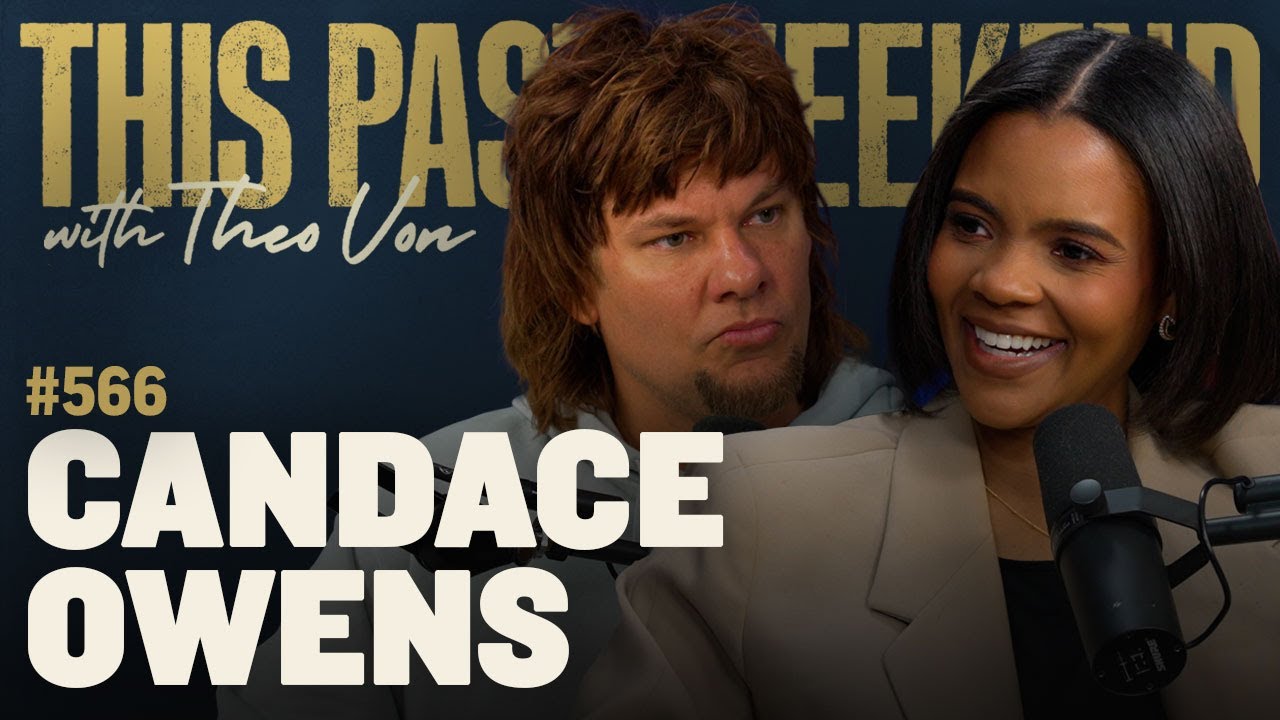
Candace Owens on Healthcare Fraud, Israeli Blackmail Operations, and Why Both Political Parties Are Selling Out America
2:07:08
Candace Owens and Ana Kasparian Unite Against Elite Control, War Propaganda, and Zionist Intimidation Tactics
1:25:29
Tucker Carlson Exposes How US Politicians Openly Celebrate and Fund Civilian Deaths in Gaza
12:20
Tucker Carlson Exposes Media Attacks on Thomas Massie Over Israel Lobby Criticism and AIPAC Spending
Tucker Carlson examines the intense media campaign against Congressman Thomas Massie, who faces the most expensive House primary in American history after criticizing America's relationship with Israel. Both mainstream CBS News and conservative commentator Mark Levin accused Massie of anti-Semitism for opposing foreign aid to Israel and exposing millions in campaign spending by the Republican Jewish Coalition and donor Miriam Adelson. Carlson argues that Massie's real offense wasn't bigotry but stating an undeniable truth: that a foreign country's supporters are influencing American politics with campaign contributions based on loyalty to that nation rather than the United States. Even Israeli newspaper Haaretz acknowledged the Kentucky primary as "the most consequential Republican primary for Israel," confirming what Massie dared to say out loud.
May 21, 2026
The Most Expensive House Primary in History
Tucker Carlson analyzes the extraordinary political battle surrounding Congressman Thomas Massie, who became the target of a unified media assault after criticizing not Israel itself, but America's relationship with Israel. The congressional primary in Kentucky's fourth district has become the most expensive House primary in United States history, with over $32 million spent, primarily by pro-Israel donors attempting to unseat the incumbent Republican.
What makes this race remarkable is not just the unprecedented spending, but the coordinated response from across the American political and media spectrum. Both the liberal mainstream media and conservative commentators have united in their attacks on Massie, employing identical tactics and talking points to paint the congressman as an anti-Semite for his policy positions on foreign aid.
CBS News Ambush Interview
A CBS News interview with Massie exemplified the media's approach to the race. The reporter opened by noting the record-breaking $32 million spent on the primary, then asked Massie if it was worth it. Massie responded directly: "You'd have to ask Miriam Adelson on May 20th if it was worth it because, you know, they tried to buy my vote for 14 years and it was never for sale. They've tried now they're trying to buy a seat here in Kentucky."
The reporter then pivoted to accusations from fellow Republicans in the House Conference, stating that others had accused Massie "of all sorts of things regarding Israel, regarding the state of Israel, regarding Israeli government, regarding Jewish Americans." The reporter then asked point-blank: "Are you anti-Semitic?"
Massie attempted to explain the facts: "They're trying to tell you that it's anti-Semitic for me to expose the fact that the Republican Jewish coalition has spent millions of dollars in this race. That a dual citizen, Miriam Adelson, who even Trump says is more loyal to Israel than the United States, has spent millions of dollars in this race. Those are mere facts."
But the reporter interrupted, demanding: "Yes or no. Are you anti-Semitic?"
"Oh, hell no. Hell no, I'm not anti-Semitic," Massie responded. "But here's the danger that AIPAC runs. They've been too cute by a half. They've tried to get Mike Johnson and he's willingly done this. Conflate in resolutions on the House floor that anti-Zionism equals anti-Semitism. Or even worse yet, that if you don't support Benjamin Netanyahu's war in Gaza, then you're anti-Semitic. That's absolutely false. And it does Jewish Americans a big disfavor to equate the two."
Slander Disguised as Journalism
Carlson dissects the interview technique, pointing out that the reporter asked a question that wasn't really a question at all, but rather "slander posing as a question." There is no evidence that Massie is an anti-Semite, Carlson notes. "He's never said anything, not one thing anti-Semitic ever because he's not an anti-Semite."
Yet the reporter's method allowed him to say "anti-Semite" multiple times on camera, associating the term with Massie regardless of the congressman's actual views or statements. The reporter didn't even listen to Massie's substantive response about his policy objections to American foreign aid. He simply repeated the accusation: "Are you an anti-Semite? Yes or no."
Carlson emphasizes that Massie's critique of American foreign aid to Israel "has nothing to do with Judaism, Jewish ethnic identity, it has no connection whatsoever to blood libel or well poisoning or any of the historical examples that are often dredged up to compare people like Thomas Massie to." Massie is not a Nazi, Carlson states. "In fact, he's an anti-authoritarian, unlike the reporter from CBS News who's bludgeoning him over the head with slander."
Mark Levin's Identical Attack from the Right
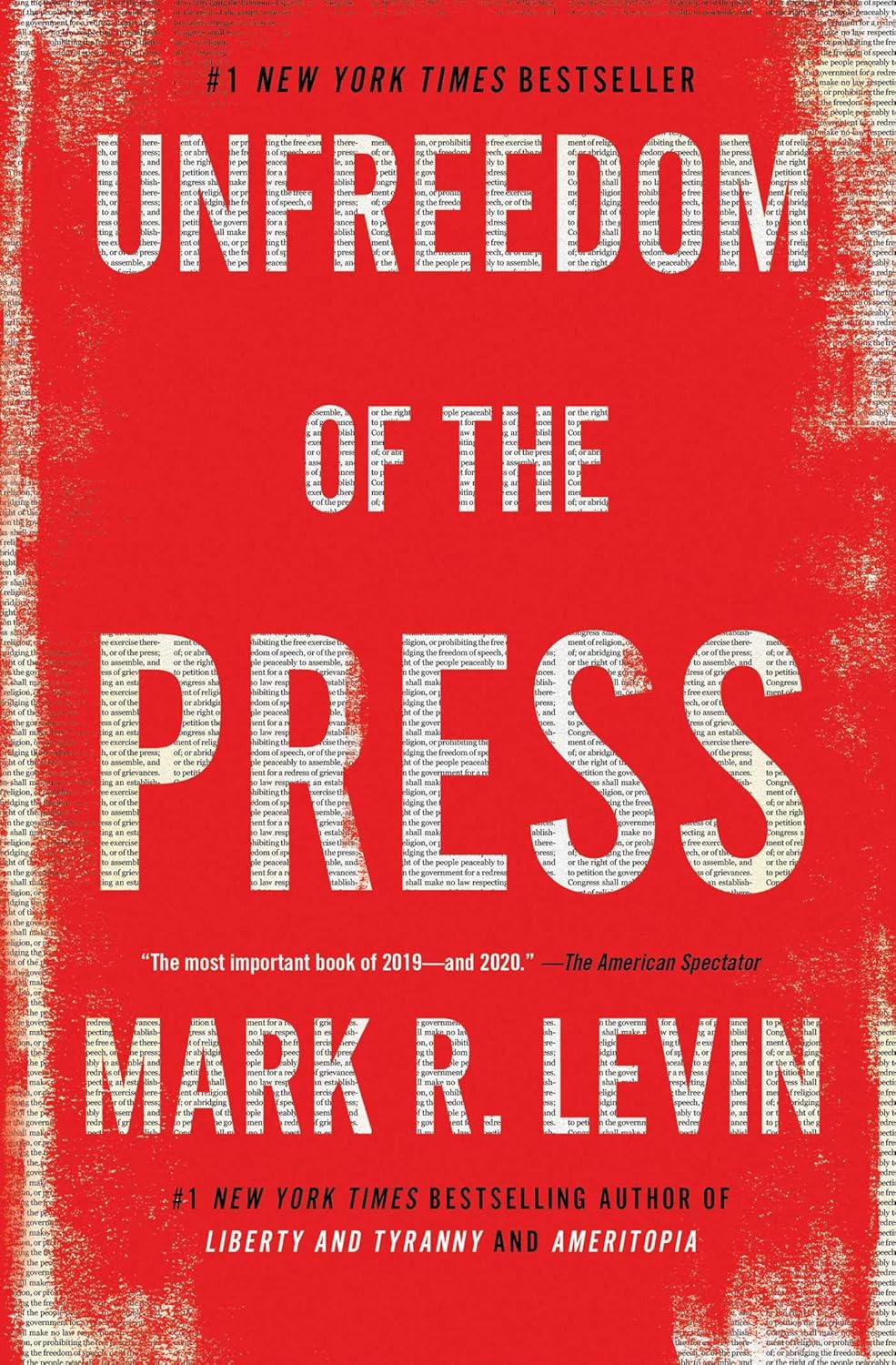
What makes this media campaign particularly revealing, according to Carlson, is that it wasn't limited to liberal mainstream outlets like CBS News. Conservative commentator Mark Levin, who spent much of his career denouncing the "lamestream media," deployed identical tactics against Massie.
Levin stated: "I'm looking at the support from Massie. It's the most radical jihadis in our country. It is Democrats. It is Tlaib. I mean, think of it's Rand Paul. The reprobates, the miscreants, and I underscore the malcontents are moving behind Massie and they're raising tons of money and Massie is supported by all the elements that support Hamas, Islamic Jihad, Hezbollah, Iran. Why is that? He's supported by all the American haters and Jew haters and many of the Christian haters in this country. Why is that?"
Carlson notes the absurdity of this characterization: "They're Jew haters. They support Islamic jihad, whatever that is. It's actually not. It's so ludicrous that it's funny. It's precisely what the CBS News guy just said to him. Well, clearly you're a Jew hater. You're an anti-Semite."
Why the Disproportionate Response?
Carlson asks a fundamental question: Why are political forces so determined to crush Thomas Massie? He is one Republican out of 217 in the House, the only member who hasn't taken money from the Israeli lobby. His single vote isn't stopping the flow of American aid to Israel or changing the status quo in any meaningful way.
"Why don't just leave him alone? Why force the issue? Why are they so mad at this guy? Why is Trump so mad at him? Why is Miriam Adelson so mad?" Carlson asks. "And of course the answer is because Thomas Massie was willing to say out loud that there is an Israel lobby. There is a foreign country whose supporters in the United States in positions of prominence are making campaign contributions purely on the basis of what's good for a foreign country. Their loyalty is not to the United States. It's to a foreign country."
This statement, Carlson argues, is simply factual. "Well, that's just true. It's just a fact. But you can't say that. Why can't you say it? Well, because it's true. That's why. If it was a lie, if you were claiming the earth was flat, they'd ignore you. But precisely because it is true. It's the truest thing. In fact, it's the definitive fact in American politics. You're not allowed to say it. And he did."
Israeli Media Confirms the Truth
To demonstrate that this isn't an anti-Semitic conspiracy theory, Carlson points to coverage in the Israeli press itself. The Israeli newspaper Haaretz, which publishes an English-language edition, ran a headline that directly confirmed Massie's point: "The most consequential Republican primary for Israel is happening in Kentucky."
"Why would the Republican primary in the fourth district of the Commonwealth of Kentucky, a place doubtless most Israelis had never visited or can locate, why would that be so important for Israel?" Carlson asks. "Well, because lots of things they tell you were not true are entirely true."
Carlson outlines the reality of the U.S.-Israel relationship: "First among them is Israel could not exist without the United States in its present form. Its ambitions would be at best vastly curtailed because everything outside its borders that Israel does is done with American tax dollars and with the backstop of the lives of American servicemen."
Without American support, Carlson explains, "the Greater Israel project is done. Israel can exist in its '48 borders. Maybe it probably can't hold on to its '67 borders, which is to say Gaza, West Bank, it's going to be a slog because the United States makes that possible. Israel's expansion is paid for and guaranteed by the United States taxpayer."
The Forbidden Truth
The core issue, according to Carlson, is that certain truths cannot be spoken in American political discourse. "Anyone who says that out loud, that is absolutely true. There's nothing more true in global politics than that. But anyone who says it reveals the game and must be destroyed. And that's why even in Israel, they know that beating Thomas Massie is priority number one."
The irony is stark: what would sound like an anti-Semitic conspiracy theory if stated by an American politician is openly acknowledged in the Israeli press. "A Republican primary in a minor Republican state, not even a state, a commonwealth, whatever that is, is being orchestrated from Israel with Israel's interests in mind, not America's interests. What are you, a Nazi? Not in Israel, you're not if you say that. Because it's true and they said it."
Carlson's analysis reveals a political environment where stating factual observations about foreign influence in American politics results in career-ending accusations of bigotry, while the very forces being criticized openly acknowledge their influence in foreign media outlets. Thomas Massie's real offense wasn't policy disagreement or prejudice—it was breaking an unspoken rule by saying out loud what everyone involved already knows to be true.