Up Next
Candace Owens Exposes Laura Loomer's Mental Health History and Allegations of Sexual Predation Amid Escalating Feud
16:20
Candace Owens and Ana Kasparian Unite Against Elite Control, War Propaganda, and Zionist Intimidation Tactics
1:25:29
Ana Kasparian Exposes the Pro-Israel Media Blackout on Epstein Files and America's Weakened Military
23:48
The Ritual of Denunciation
During a tense exchange with British interviewer Harry, Tucker Carlson was asked about Candace Owens and her commentary surrounding a controversial case involving the death of someone named Charlie. The interviewer suggested that Owens had been "putting out some pretty wacko stuff" and questioned whether Carlson should distance himself from her theories about darker forces and potential government cover-ups.
Carlson immediately recognized the setup. "So am I going to attack Candace Owens because you think—" he began, before the interviewer interrupted to clarify he wasn't asking for an attack. Carlson's response was direct: "I'm not going to do that, Harry."
He then explained his position on what he sees as a political ritual: "I'm going to give you the benefit of the doubt as a foreigner of not understanding our politics. But the whole ritual of, you know, this person said something I don't like, in order to be a good person you must denounce this person—obviously I'm never going to, I would die before I played along with that."
The Pursuit of Truth Over Compliance
Carlson emphasized that he doesn't recognize anyone's moral authority to compel such denunciations. He pivoted the conversation to a broader principle: "I would say broadly, not about Candace, whom I love, but about all people, getting to the truth is the most important thing. I've devoted my life to it. I haven't always done a very good job at all, but it still remains to this day my animating motive. I want to know what the truth is."
He challenged the premise that citizens should simply accept government statements without question: "If you're telling me that because the US government or some law enforcement agency issues a statement that doesn't even make sense, that I'm required somehow morally to accept that and not ask any questions—like, can you hear yourself? I mean, what are you saying?"
Questioning Government Narratives
The interviewer attempted to clarify that he was simply trying to understand Carlson's position, given that a legal process was underway with someone potentially facing the death penalty. Carlson pushed back, noting that the defendant hadn't even entered a plea yet and questioning the basic facts of the case.
When the interviewer suggested that conspiracy theories were "spectacularly unhelpful" to achieving justice, Carlson asked pointedly: "Unhelpful to whom?"
He then delivered a sharp critique of British versus American traditions: "In my country, we have a long tradition of freedom, and that means that every person is allowed to come to his own conclusions based on the facts and consistent with his own conscience. Our Bill of Rights, unlike yours, guarantees that right. That's why we don't send people to prison for Facebook posts."
Carlson continued: "If the government issues a description of what they say happened and it doesn't make sense to you, I'm not sure who it's quote 'unhelpful' to, to ask, like, what does this mean? What are you saying? Why is that unhelpful? Are you saying that the government always reaches the right conclusion?"
The Presumption of Innocence
When the interviewer expressed concern about risks to the trial and potentially giving the defendant ammunition to suggest the case against him was flawed, Carlson identified a fundamental problem with the framing: "But you're assuming he's guilty. Like, that's not our system. We don't pronounce people guilty without hearing the evidence. I don't know what country you're from. That's not how it works here."
He explained the American justice system: "We don't put anybody to death unless we're sure they actually did it. And we're sure they did it because we've heard all the evidence, we've heard the counterargument against that evidence, and then citizens make up their mind. So that's our system. That's how we arrive at justice. We don't just assume because we heard three things on Twitter that someone is guilty and deserves the death penalty."
Carlson added his personal assessment while maintaining the principle: "It looks like this guy did it. From everything I've heard, it sounds like he did it. I don't know. I still don't understand the story. And I think that's fair to say. It's not unhelpful to say that. It's just true. And by the way, it's never unhelpful to tell the truth. The whole mandate in life, especially our business, is just tell the truth."
The Darryl Cooper Controversy
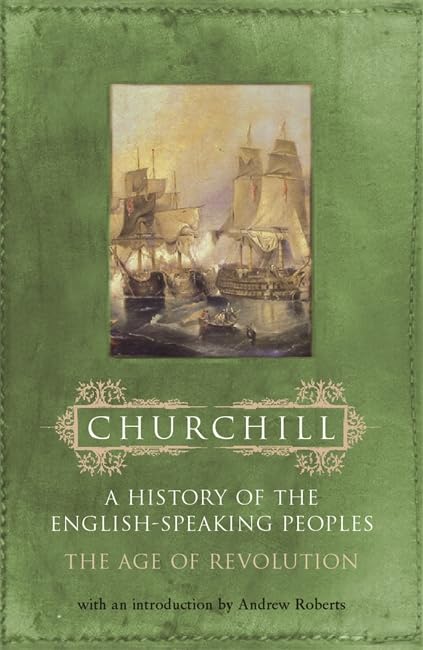
The conversation then shifted to Carlson's interview with Darryl Cooper, with the interviewer bringing up Carlson's past criticism of Pat Buchanan for "needling Jewish people" and suggesting hypocrisy given Carlson's platform for Cooper, who made controversial statements about Winston Churchill and World War II.
Carlson defended Cooper's character: "Darryl Cooper's like actually kind of liberal and very moderate. I thought that episode was really interesting and I really like Darryl Cooper enormously as a person. And I think he's an honest person. I don't know if he's right about everything, but he seems motivated by a desire to find out what's true."
When the interviewer stated that Cooper called Churchill "the chief villain of the Second World War," Carlson responded: "No. Okay, look, I'll tell you what I think, which is anytime you are sending money and munitions to Joseph Stalin, who was the greatest mass murderer in the history of Europe, killed more Christians than any person in history, more than Nero, then you're on the wrong path."
The Stalin Alliance Debate
Carlson made his position clear: "How about this? Don't send weapons to Joseph Stalin. It's not an endorsement of Hitler. I loathe Hitler. I'm not pro-Hitler. Hitler's disgusting. But I don't think that any government should ever send weapons to Joseph Stalin. Like, that's just not hard. And we did. And your government did enthusiastically. And it's very shameful that you did that."
He continued: "Why is that—you're not allowed to say that? I don't understand why is that. I'm not a Holocaust denier. I'm not anti-Semitic. I just don't think you should send weapons to Joseph Stalin because he murdered tens of millions of people."
The interviewer pointed out that this logic would make Stalin, not Churchill, the chief villain besides Hitler. Carlson reminded him of historical facts: "Let me remind you of your own history. Who facilitated those weapons transfers? It was Winston Churchill. It was your prime minister who convinced our president that we needed to support Joseph Stalin."
He expressed moral disgust at the alliance: "I find it disgusting to arm some atheist monster who's murdering Christians, murdering priests like wholesale, blowing up churches. No, I don't think so. I'm not for that. And no amount of screaming by Ben Shapiro is going to make me for that. I hate Hitler, obviously. Let me say it again: I'm very anti-Hitler."
Questioning the Victor's Narrative
Carlson then posed a provocative question about the outcomes of World War II: "Look at your country now. It's pathetic. Like, how is that a win? As I said to Piers the other day, I was like, 'How did you guys win?' You go to Japan—Japan has problems, but Japan is a wonderful, functional, beautiful, clean country. Your country's not clean. Neither's mine."
He emphasized the importance of order: "Cleanliness is really important. If your cities are dirty, you know you've gone way off the rails. And by the way, the Victorians would never have—they believed, they understood that order was the first thing God created out of chaos. And that is a virtue just by itself. Order is a virtue."
Carlson described the state of London: "You walk through London—parts of London are wonderful. Parts of London are just absolutely filthy. They're like New York or Philadelphia. Like, that's not acceptable. And why not just say that? And why is it the victor countries that are the worst? Like, what was that?"
Refusing to Be Silenced
Carlson concluded by rejecting attempts to shut down historical questioning: "Someone who can't reassess that without screaming 'Holocaust denier'—it has nothing to do with Jews. It's literally nothing to do with Jews. I'm just like, what is that? Shut up. Well, I'm not going to shut up because I haven't said anything wrong. Everything I've said is reasonable and you know it's reasonable."
He ended with a final challenge: "So why the attempt to police reasonable observations? Like, what? Why?"
Video Transcript
[00:00] your good friend Candi Owens has been
[00:03] putting out some pretty wacko stuff I
[00:05] would say would be my opinion on the
[00:07] death of Charlie. Um
[00:10] [clears throat]
[00:11] it's not helpful, is it that, you know,
[00:14] at that time of an incredible national
[00:17] upheaval and obviously personal and
[00:19] familial family tragedy, uh to have
[00:22] someone like that picking it picking
[00:24] apart the argument and picking
[00:26] suggesting that there are darker forces
[00:29] at play here that the US government have
[00:31] a hand in covering up it. Just can you
[00:33] see why people get upset by that and and
[00:35] would like you perhaps to sort of
[00:37] distance yourself from that sort of
[00:38] thing.
[00:40] [laughter]
[00:43] >> Uh pretty funny. So am I going to attack
[00:46] Candace Owens because you think
[00:47] >> I'm not asking you to I'm not asking you
[00:48] to attack her.
[00:49] >> I'm not going to do that, Harry.
[00:51] >> Probably not going to do I'm not I'm
[00:53] going to give you the benefit of the
[00:54] doubt as a foreigner of not
[00:55] understanding our politics. But the
[00:57] whole ritual of you know this person,
[00:59] this person said something I don't like.
[01:01] In order to be a good person, you must
[01:03] denounce this person. Obviously, I'm
[01:04] never going to I would die before I
[01:06] played along with that. I I don't know
[01:08] anyone who's saying that who was the
[01:09] moral authority to compel me. I don't I
[01:11] don't know anyone saying that it was any
[01:12] moral authority at all. And I would say
[01:15] broadly, not about Candice, whom I love,
[01:19] but about all people
[01:22] getting to the truth is the most
[01:24] important thing. I've devoted my life to
[01:26] it. I haven't always done a very good
[01:27] job at all, but it still remains to this
[01:30] day my animating motive. I want to know
[01:33] what the truth is. Again, I I don't
[01:35] always get there. I often usually don't
[01:37] get there, but I want to be the guy who
[01:40] cares what's true.
[01:42] A B if you're telling me that because
[01:44] the US government or some law
[01:46] enforcement agency issues a statement
[01:48] that doesn't even make sense that I'm
[01:50] required somehow morally to accept that
[01:52] and not ask any questions like can you
[01:55] hear yourself?
[01:56] I mean are what what are you saying?
[01:58] >> No, I'm I'm I'm just saying I'm trying
[02:00] to understand that the point I'm making.
[02:02] >> No, I'm trying to understand why you
[02:03] answer my question. What No, hold on.
[02:05] What are What What are you saying? So,
[02:06] if you're saying that that if a law
[02:08] enforcement agency issues an explanation
[02:11] that doesn't actually answer like basic
[02:13] key questions about what happened that
[02:15] I'm somehow a bad person for asking a
[02:18] follow-up question.
[02:18] >> No, I don't think I'm not I'm not saying
[02:20] that at all. I'm saying that why why
[02:21] there is a legal process undergoing and
[02:23] why a guy is standing in an American
[02:25] courtroom today potentially facing the
[02:27] chair for his role in this that case,
[02:30] you know, needs to
[02:31] >> he's in I don't think he's in a
[02:32] courtroom today. I don't think he's pled
[02:34] either way in this case. He was he was
[02:35] in court. He was in court this afternoon
[02:37] for for a hearing. Did Did he plead?
[02:41] >> It's ongoing as we as as as we as we go
[02:44] on. I think it was a I think
[02:45] >> so. I'll tell you my position as
[02:46] >> No, just let me just finish my point.
[02:48] Let me just finish my point. My point is
[02:49] you asked my question. You asked what
[02:51] I'm saying. I'm saying is it's
[02:52] spectacularly unhelpful to have
[02:54] conspiracy theories uh you know and you
[02:56] know questioning the
[02:58] >> unhelpful to whom?
[02:59] >> Unhelpful to the to hopefully getting
[03:01] justice for the guy that put a bullet in
[03:03] in that young man's neck. UN in what
[03:05] sense why is it okay okay if a
[03:08] government issue I mean I think this is
[03:10] kind of why your country is jumping off
[03:11] a cliff collectively because it's like
[03:13] well the government said so
[03:14] >> in my country we have a long tradition
[03:17] of freedom and that means that every
[03:21] person is allowed to come to his own
[03:23] conclusions based on the facts and
[03:24] consistent with his own conscience our
[03:26] bill of rights unlike yours guarantees
[03:28] that right that's why we don't send
[03:29] people to prison for Facebook posts so
[03:32] if the government issues a description
[03:34] of what they say happened and it doesn't
[03:36] make sense to you. I'm not sure who it's
[03:38] quote unhelpful to to ask like what does
[03:41] this mean? What are you saying?
[03:43] >> And you know, I I I'm not referring
[03:45] specifically to Candace Owens or or
[03:47] anyone else, but like what I what is
[03:49] what are you even talking about? Why is
[03:51] that unhelpful? Are you saying that the
[03:53] government always reaches the right
[03:54] conclusion? Is that what you're saying?
[03:56] >> No, I'm not saying that at all. I'm
[03:57] saying there's a risk though that that
[03:59] during a live trial essentially that
[04:01] this risk to whom a risk to the justice
[04:03] a risk to the trial collapsing a risk to
[04:05] giving this guy ammunition to perhap you
[04:08] know to suggest in a courtroom that his
[04:10] that the case against him is somehow
[04:11] flawed.
[04:13] >> But you're assuming he's guilty. Like
[04:14] that's not our system. We don't we don't
[04:16] pronounce people guilty without hearing
[04:17] the evidence. I don't know what country
[04:18] are you from. That's not how it works
[04:20] yet.
[04:20] >> I'm not assuming he's guilty. I'm saying
[04:21] he's on trial right now. We don't put
[04:24] anybody to death unless we're sure they
[04:27] actually did it. And we're sure they did
[04:30] it because we've heard all the evidence.
[04:31] We've heard the counterargument against
[04:32] that evidence and then citizens make up
[04:34] their mind. So that's our system. That's
[04:37] how we arrive at justice. We don't just
[04:38] assume because we heard three things on
[04:40] Twitter that someone is guilty and
[04:42] deserves the death penalty. Like that is
[04:43] not justice. That's like African
[04:46] justice. And we just try not to do that
[04:47] here. So I don't know. It looks like
[04:50] this guy did it. From everything I've
[04:51] heard, it sounds like he did it. I don't
[04:53] know. I still don't understand the
[04:55] story. And I think that's fair to say.
[04:57] It's not unhelpful to say that. It's
[04:59] just true. And by the way, it's never
[05:00] unhelpful to tell the truth. The whole
[05:03] mandate in life, especially our
[05:05] business, is just tell the truth.
[05:07] >> Yeah. Do you
[05:09] >> do you you once gave a an interview
[05:11] where you accused Pat Buchanan of of
[05:14] needling Jewish people and
[05:16] >> Oh, yeah.
[05:17] >> That's Patan up and down. [laughter]
[05:20] you had a you had a bow tie on back in
[05:23] in those in those days. But that
[05:25] accusation and it has been thrown back
[05:27] at you, you know, for inviting Daryl
[05:29] Cooper onto your onto your show. Uh, you
[05:32] know, the guy who said that Churchill
[05:33] question I was thinking I was think of
[05:36] World War II. Yeah. Daryl Cooper. So
[05:38] yeah, but I mean it's
[05:39] >> Daryl Cooper's like actually kind of
[05:40] liberal and very moderate and I don't
[05:42] really know that episode which I thought
[05:46] was really interesting and I really like
[05:47] Daryl Cooper enormously as a person. And
[05:49] I think he's an honest person. I don't
[05:51] know if he's right about everything, but
[05:52] he seems motivated by a desire to find
[05:54] out what's true. I'm not exactly sure
[05:56] what Daryl Cooper said to cause this
[05:59] like world historic event.
[06:01] >> He said that Churchill was the chief
[06:03] villain of the Second World War.
[06:05] >> No. Okay. I I don't look I'm not I'll
[06:08] tell you what I think which is any
[06:09] anytime you are sending money and
[06:12] munitions to Joseph Stalin
[06:15] who was the greatest mass murderer in
[06:18] the history of Europe killed more
[06:19] Christians than any person in history
[06:21] more than more than Nero then you're on
[06:24] the wrong path. How about this? Don't
[06:26] send weapons to Joseph Stalin. It's not
[06:27] an endorsement of Hitler. I I loathe
[06:29] Hitler. I'm not pro Hitler. Hitler's
[06:31] disgusting. But I don't think that any
[06:34] government should ever send weapons to
[06:36] Joseph Stalin. Like that's just not
[06:38] hard. And we did. And your government
[06:40] did enthusiastically. And it's very
[06:42] shameful that you did that. And why is
[06:44] that? You're not allowed to say that. I
[06:46] I don't understand. Why is that? I'm not
[06:48] a Holocaust denier. I'm not
[06:50] anti-Semitic. I just don't think you
[06:52] should send weapons to Joseph Stalin
[06:53] because he murdered tens of millions of
[06:55] people.
[06:55] >> That would therefore make Jose.
[06:58] >> I get that. I agree with that. But that
[07:00] would that would surely that would
[07:02] surely make Joseph Stalin not Winston
[07:04] Churchill the chief villain you know
[07:06] excluding Hitler if okay but okay let me
[07:10] remind you of your own history who
[07:11] facilitated those weapons transfers it
[07:14] was Winston Churchill it was your prime
[07:17] minister who convinced our president
[07:20] >> that we needed to support Joseph Stalin
[07:23] like no no that is wrong Christian I
[07:27] find it disgusting to some atheist
[07:29] monster who's murdering Christians,
[07:31] murdering priests like wholesale,
[07:33] blowing up churches. No, I don't think
[07:35] so. I'm not for that. And no amount of
[07:38] screaming by Ben Shapiro is going to
[07:40] make me for that. I hate Hitler,
[07:42] obviously. Let me say it again. I'm very
[07:44] anti-Hitler.
[07:44] >> That goes with I think that goes for
[07:46] that.
[07:47] >> But is Churchill the chief villain? I
[07:48] mean, obviously a leader dear to dear to
[07:51] >> the chief villain. I mean, look at your
[07:52] country now. It's pathetic. Like, how is
[07:54] that a win? As I said to Pierce the
[07:56] other day, I was like, "How did you guys
[07:58] win? You go to Japan. Japan has
[08:01] problems, but Japan is a wonderful,
[08:02] functional, beautiful, clean. Your
[08:05] country's not clean. Neither's mine.
[08:07] Like, cleanliness is really important.
[08:08] If your cities are dirty,
[08:11] you know, you've gone way off the
[08:14] rails." And and by the way, the
[08:16] Victorians would never have they
[08:18] believe, they understood that order was
[08:20] the first thing God created out of
[08:21] chaos. And that is a virtue just by
[08:25] itself. Order is a virtue. And you walk
[08:27] through London, parts of London are
[08:28] wonderful. Parts of London are just
[08:30] absolutely filthy. They're like New York
[08:31] or Philadelphia. Like that's not
[08:33] acceptable. And why not just say that?
[08:36] And why is it the Victor countries that
[08:39] are the worst? Like what was that? And
[08:41] no, someone who can't reassess that
[08:43] without like screaming Holocaust deni.
[08:46] It has nothing to do with Jews. It's
[08:47] literally nothing to do with Jews. I'm
[08:48] just like, what is that? Shut up. Well,
[08:51] I'm not going to shut up because I
[08:52] haven't said anything wrong. Everything
[08:54] I've said is reasonable and you know
[08:55] it's reasonable.
[08:56] >> And so, like, why the attempt to police
[08:59] reasonable observations? Like, what?
[09:01] Why?
Comments
Be the first to comment on this video.