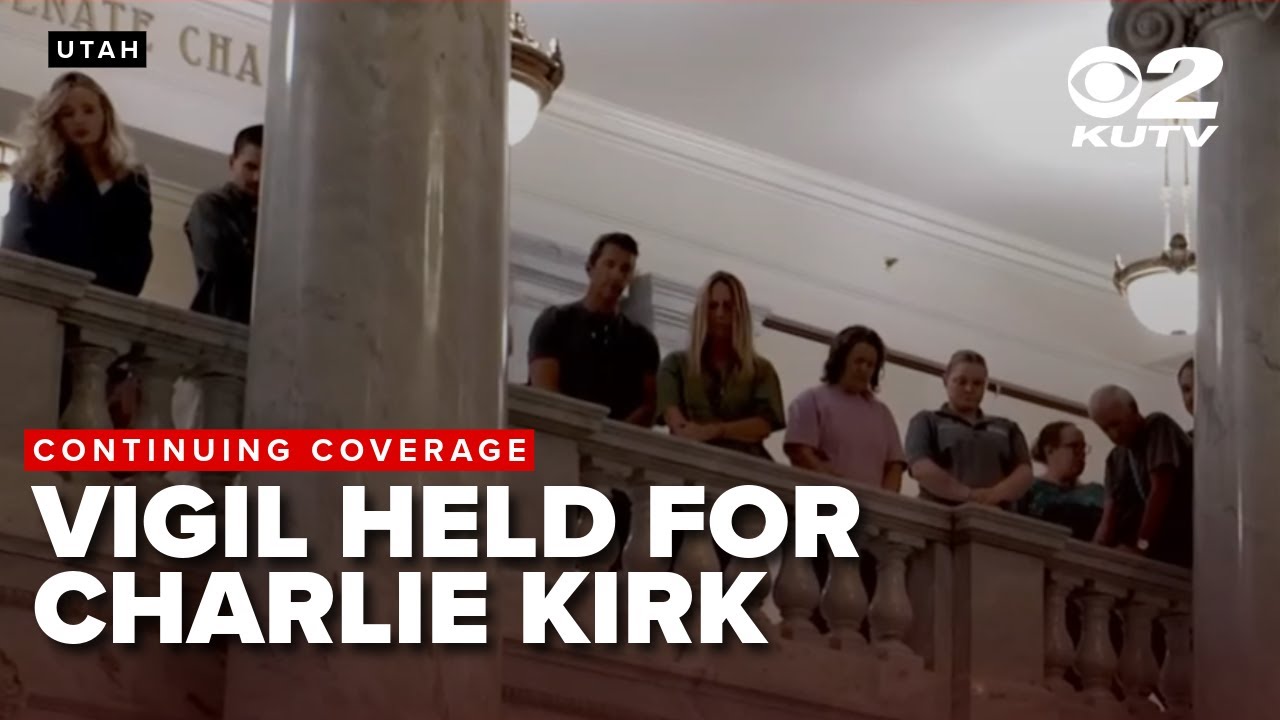
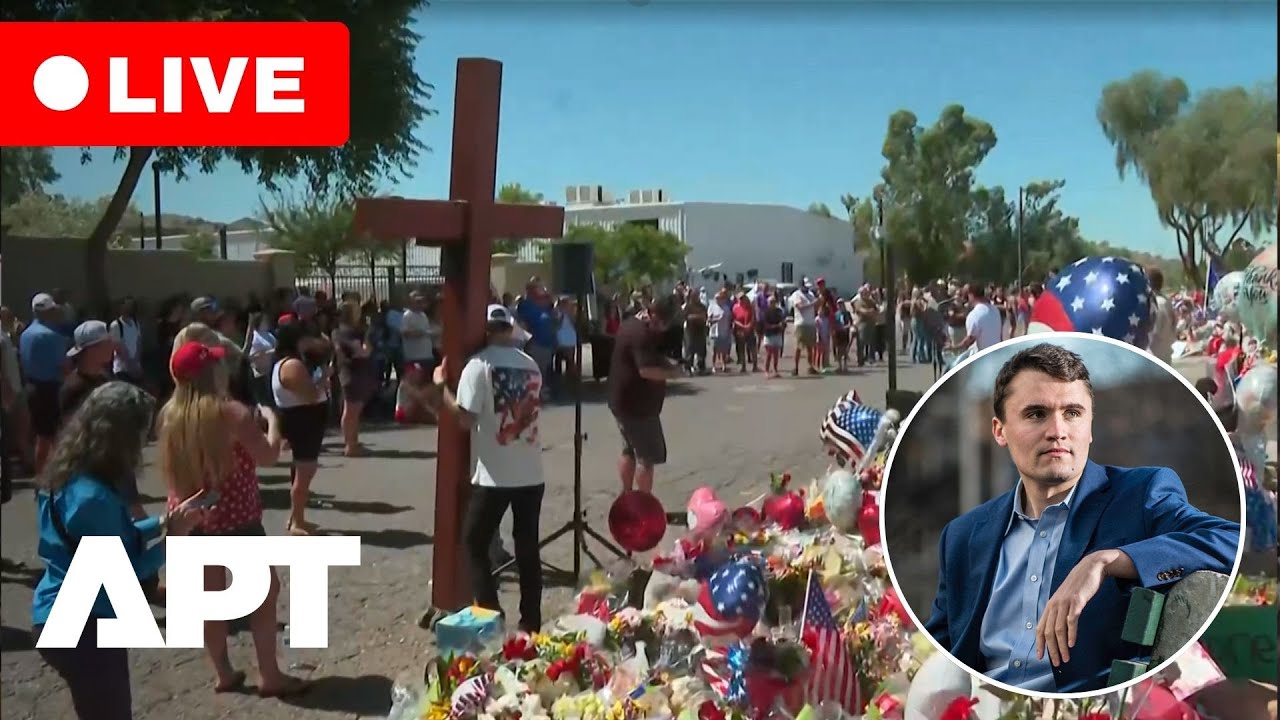
Utah Valley University Hosts Vigil for Unity Following Charlie Kirk Tragedy on Campus
Enjoying this? Share it with someone who needs to see it.
Up Next
University of Tennessee Honors Charlie Kirk as Hundreds Gather to Remember Conservative Activist's Legacy
2:15
Andrew Kolvet Reflects on Charlie Kirk Memorial Service and the Movement's Future Under Erika Kirk
8:49
Tragedy at Utah Valley University: Charlie Kirk Shot and Killed During Campus Tour at Age 31
22:01
Utah Valley University Hosts Vigil for Unity Following Charlie Kirk Tragedy on Campus
Utah Valley University gathered for a solemn vigil following the loss of Charlie Kirk, who was killed on campus in an act of violence that shook the entire community. The event brought together students, faculty, faith leaders, and university presidents from across Utah to mourn, heal, and recommit to the values of unity, peace, and respect. Speakers including Elder Matthew S. Holland, President Astrades Tuminez, and student body president Kyle Cullymore called on the community to transform grief into action, choose compassion over division, and honor Charlie's legacy by defending ideas with courage while treating one another with dignity.
Utah Valley University held a vigil for unity following the tragic death of Charlie Kirk, who was killed on campus on September 10 in an act of violence that left the entire community reeling. The solemn gathering brought together students, faculty, staff, faith leaders, and student body presidents from universities across Utah to mourn the loss, support Charlie's widow Erika and their children, and recommit to the values that define UVU as a place for everyone.
The ceremony opened with the presentation of colors by the ROTC and the national anthem performed by UVU student Olivia Blackwell, setting a tone of reverence and patriotism. Throughout the program, speakers emphasized themes of courage, faith, forgiveness, and the power of choosing unity even in the face of unspeakable tragedy.
Remembering Charlie Kirk's Legacy of Courage and Faith
Charlie Kirk's widow spoke briefly but powerfully about her husband, noting the sacrifices he made and expressing pride in the work he did on campus and beyond. In video clips shared during the vigil, Charlie reflected on how he wanted to be remembered, stating that above all, he wanted to be known for his courage and his faith. He emphasized the importance of standing up for ideas rather than running from them or trying to silence them—a message that resonated deeply with those gathered.
UVU student Caleb Chilcott, a member of the Turning Point USA chapter, reminded attendees of Charlie's words about unity: "We are strongest when we put aside what divides us and focus on what makes us one." He also quoted Charlie's call for courage, saying, "If you believe in something, you need to have the courage to fight for those ideas. Not run away from them or try to silence them." Caleb encouraged the community to find the bravery to reach across differences, listen to each other, and extend kindness even when it isn't easy.
Faith Leaders Call for Forgiveness and Healing
Dr. Juliana Boreio Goates, Professor Emerita of chemistry at Brigham Young University and commissioned Catholic lay ecclesial minister, spoke about the role of forgiveness in healing. She noted that the world's major faiths—Judaism, Christianity, Islam, Hinduism, Buddhism, and Mormonism—all recognize forgiveness as essential to healing. She cited examples from scripture, including Joseph forgiving his brothers and Jesus saying from the cross, "Father, forgive them for they know not what they do."
Dr. Goates also referenced modern psychology, citing research from Psychology Today that shows forgiveness has measurable physiological benefits, including reduced levels of cortisol and improved mental health. She encouraged attendees to make conscious, intentional efforts to look for whatever is true, honorable, just, and gracious in those who have wounded them, starting with recognizing shared interests and moving toward more substantive issues of personhood and politics.
She closed with the prayer of St. Francis of Assisi: "Lord, make us channels of your peace. Where there is hatred, let us bring love, and where there is injury, let us offer forgiveness."
Elder Matthew S. Holland Offers Hope from History
Elder Matthew S. Holland, former UVU president, author on civic charity, and general authority seventy for the Church of Jesus Christ of Latter-day Saints, spoke about three harbingers of hope in this dark moment. First, he pointed to UVU itself, noting that the university was created to provide space for anybody who needed access to higher education and has always remained a place for all. He said UVU is not just equipped to survive this moment—it's built for this moment.
Second, Elder Holland reminded attendees that America has faced worse divisions in the past and emerged stronger, citing Abraham Lincoln's call during the Civil War to act "with malice toward none, with charity for all." He quoted President Russell M. Nelson's recent Time magazine article stating that "anger never persuades, hostility never heals, and contention never leads to lasting solutions."
Third, he noted that the tears shed on campus are actually a sign of hope, quoting Queen Elizabeth's words after 9/11: "Grief is the price we pay for love." He encouraged the community to mourn with those that mourn and comfort those that stand in need of comfort, emphasizing that mourning together is one of the ultimate signs of discipleship and humanity.
President Tuminez Calls Community to Action
UVU President Astrades Tuminez opened her remarks by reading from Psalm 22, which begins with the heartbreaking verse, "My God, my God, why hast thou forsaken me?" She acknowledged the shock, grief, abandonment, fear, and hurt that have filled hearts since September 10. She expressed deep condolences to Erika Kirk, her children, and all of Charlie Kirk's family and friends, as well as love for the entire UVU family that has been hurt.
President Tuminez then contrasted that despair with the hope found in Psalm 23: "The Lord is my shepherd; I shall not want... Yea, though I walk through the valley of the shadow of death, I will fear no evil... Surely goodness and mercy shall follow me all the days of my life." She testified that despite the wounds, she has seen goodness and mercy throughout the community's response—in hugs, mental health support, law enforcement protection, prayers, patience, grace, and thousands of acts of kindness.
She noted that UVU suddenly materialized on the world stage because of a grievous act of violence, but media everywhere have also told stories about the beauty of community on campus. She said the world is beginning to see a university community that is not afraid of differences, where people are willing to believe in and practice care for one another.
President Tuminez ended with three calls to action: First, be grateful for our broken hearts, which soften us to connect with one another. Second, pause when anger rises and ask what we have in common with those we think might be our enemy. Third, support UVU and be patient as the university recovers, offering opportunities for skills building in dialogue, peacemaking, and hard conversations.
Student Body President Issues Powerful Challenge
UVU student body president Kyle Cullymore delivered one of the most powerful addresses of the evening, asking how we can talk about peace when hearts are heavy and fear, hurt, and pain still feel so close. He said peace begins with hope—not shallow hope that ignores tragedy, but the kind that comes from searching the depths of our souls, the kind that doesn't erase pain but helps us carry it and turn it into something beautiful.
Kyle noted that the tragedy reminded everyone how fragile life is and how deeply we need each other. He observed that when you're running for your life, the differences that used to seem so big become small, and he asked why it takes tragedy for us to see that we're all human.
He challenged the community to stop villainizing those we don't understand, disagree with, or have been hurt by. He said labels only divide us and make it easier to dehumanize each other, causing us to forget the basic truth that we are all humans endowed with the inherent right to life, liberty, and the pursuit of happiness.
Kyle emphasized that "a place for you" must become more than just words—it must become something we live. He called on the community to see one another not as enemies or stereotypes, but as people with stories, families, struggles, and dreams.
Drawing on physics and psychology, Kyle noted that energy transforms rather than being destroyed, and that emotions can build up pressure waiting to be released. He said perhaps the feelings of being shaken up aren't fully bad—maybe it's in this moment where we feel shaken and unsure that we have to make the most important decision: to be proactive and redirect feelings of pain, guilt, and fear into action.
Kyle committed to being shaken into action, to build relationships instead of hostility, to strive for understanding instead of judgment, and to give grace instead of punishment. He challenged everyone to show the nation what it means to love your neighbor, to embody the core principle of exceptional care through compassion, listening, and resilience.
A Candlelight Ceremony of Commitment
The vigil concluded with a candlelight ceremony as students from across the university and student body presidents from Utah State University, Weber State University, University of Utah, Westminster University, Salt Lake Community College, Brigham Young University, Snow College, Southern Utah University, and Utah Tech University joined on stage.
Kyle Cullymore invited everyone to light their candles together, saying, "Let these flames represent more than this simple night. Let them be a promise that we will carry this light into the places where darkness lingers. That we will keep choosing compassion even when it is hard. That we will see each other as humans first."
As candles were lifted high throughout the arena, the community stood together in a powerful visual representation of unity, peace, and hope. The ceremony emphasized that peace can begin here, with each person present, and that this can truly be the moment where hope rises, healing begins, and the community walks forward together.
Musical performances throughout the vigil included the Utah Valley Institute Choir performing "O Love That Wilt Not Let Me Go" and the Utah Valley Interfaith Choir performing "Let There Be Peace on Earth," with the poignant refrain, "Let peace begin with me."
The vigil ended with thanks to all who attended and a reminder to carry forward the spirit of peace, respect, and unity into the days ahead, holding Charlie Kirk's family, students, and the entire community in their hearts.
Video Transcript
Heat. Heat.
Are you
[Applause] heat?
Heat. Heat.
Welcome to Utah Valley University. We invite you to take your seats as we
prepare to begin. Thank you for being here in a spirit of unity and respect.
We kindly ask that all join in creating a peaceful and reverent atmosphere,
honoring both this occasion and one another. As you find your place, we
invite you to move toward the center and sit together as one community. UVU is a
place for everyone and only by coming together can we create the harmony this occasion deserves.
Heat. Heat.
[Music]
[Music]
There's [Music]
no [Music]
Heat. Heat. [Applause]
Welcome to Utah Valley University. Our program will begin shortly. Please take
your seats moving in toward the center where possible so that we may gather
more closely as a community of unity, peace, and respect.
[Music]
Heat. Heat.
[Music]
Our
program will begin in just a few moments. We ask that you take your seats
filling in toward the center as you do and help us maintain an atmosphere of peace, respect, and unity.
[Music]
Heat. Heat.
[Music]
Heat. Heat.
Good afternoon. On behalf of Utah Valley University, thank you for joining us for
the vigil for unity. Today we gathered to come together to heal, to reaffirm our shared values, and
to remember the life of Charlie Kirk as a public figure, a husband, a father,
and a friend. We ask that all present join in maintaining an atmosphere of
peace, respect, and unity throughout today's program. This is a time for
healing, for hope, and for strength. Together, as students, as a community, and as a
nation, let us move forward with resilience and care.
Please rise for the presentation of the colors by the ROC. The ceremonial rifles used in the
posting of the colors are non-functioning firearms.
Mark time marked color guard hold
center face. Our national anthem will be performed by
UVU student Olivia Blackwell.
Oh, say can you see
by the dawn early light
what so proudly we held
at the twilight last gleaming
who brought stripes and bright stars
through the peril fight.
Or the ramp parts we watched
were so gallently streaming.
And the rockets red glare. The bombs bursting
in air gave proof through the night
that our flag was still there.
Oh, say does that star spangled
b
or the land of the free
[Applause] and the home
of the Prayer.
[Music] [Applause]
I have to say this without getting emotional, but I'm very proud of my husband and I know many of you are too.
you have worked so hard and I know a lot of you have seen obviously his videos on
Tik Tok and all the stuff he does on campus but no one gets to see him from
my angle except for myself and our children
that's the best and the sacrifices that he made this here.
He's amazing. I'm very blessed and I I would not have been able to do any of it without Erica. And that's the
real truth. I'll tell you what, if everything completely goes away, how do you want to
be remembered? I want to be I want to be remembered for for courage, for my faith. That that would be the most
important thing. Most important thing is my faith in my life.
[Music] We now invite you to join us in a brief
moment of silence.
Thank you.
We welcome the Utah Valley Institute Choir.
[Music]
Oh love. Oh love.
Oh love that will not let me go.
Oh, I rest my way.
I give thee of my own and in my Oh sh
[Music]
that seeks me through the pain.
I cannot close my heart to thee.
I trace the rainbow through the rain and
the proise is not made.
Morn shall [Music]
tearless
[Music] [Applause] [Music] [Applause]
[Music] will not Bless me all
love. I bless my weary
soul in thee.
I give thee back. [Music]
I give thee back the life I own.
Give thee back the life I own. And in
the ocean that says
shall richer full be.
[Music]
Oh, for
all [Music]
[Music]
Oh love that will
not let me go.
We invite Caleb Chilcott, UVU student and part of the Turning Point USA
chapter to the podium.
Good afternoon. It is a privilege to share a few words with you today as we remember and honor Charlie Kirk. Charlie
often spoke about the importance of unity. He once said, "We are strongest when we put aside what divides us and
focus on what makes us one." Those words feel especially meaningful right now. In
times of loss and hardship, it can be easy to focus on differences. But
Charlie reminded us that our true strength is found in what brings us together.
He also reminds us about courage. Charlie said, "If you believe in
something, you need to have the courage to fight for those ideas. Not run away
from them or try to silence them." I think courage in this moment doesn't
just mean standing up for what we believe in, but also finding the bravery
to reach across differences, to listen to each other, and to extend kindness
even when it isn't easy. As I reflect on those words, I find comfort in the promise of scripture.
Psalm 34:18 tells us, "The Lord is close to the brokenhearted and saves those who
are crushed in spirit." That verse reminds us that God sees us in our pain
and that he draws near when we feel at our lowest. Even in grief, we are not alone. We have
one another and we have our faith and we have the strength that comes from unity.
So tonight as we gather in this vigil, I hope we can take Charlie's words and the
scripture to heart. Let us remember that our strength is found when we stand
shouldertosh shoulder. Let us choose courage. Courage to listen, courage to
love, and courage to heal together. My prayer is that tonight as we leave,
we carry forward a renewed commitment to peace, to respect, and to unity because those
values are what will help us move forward together. Thank you.
We welcome Dr. Juliana Boreo Goats, Professor Ammerida of chemistry at
Brigham Y Young University and commission Catholic lay ecclesial minister.
I'm very honored to speak to you today. My words are offered in support of the
visual's goal of unity, peace, respect, and healing.
I tend to think of healing as the first step. one that enables unity and then
unity gives rise to peace both within all of us individually and with our
relationships with others. Thus broken by the trauma of last week,
the brokenness in our communities, our country and the world, healing seems
essential to achieve unity and peace and respect.
The world's major faiths, Judaism, Christianity, Islam, Hinduism, Buddhism,
and Mormonism, of course, all recognize that an essential step to healing
is forgiveness of those whom we have perceived to wrong us.
A common theme across the faith traditions is also that forgiveness flows from the divine, however we see or
name that figure. But each tradition also views forgiving
our transgressors as reflecting divine mercy.
We are called to act toward others as the divine acts with us.
In the Old Testament, we see Joseph, he of the amazing technicolor dream coat,
forgiving his brothers and making a home for them in Egypt when their homeland is
beset by drought and famine. In Luke's gospel in the New Testament,
Jesus says from the cross, "Father, forgive them for they know not what they
do." Jesus not only forgives his crucifiers,
he asks the father for mercy for them. Forgiveness.
UVU is a diverse campus, not only a community of divi, excuse me, diverse
faith believers. It also includes those who have been hurt by faith communities,
those who have walked away as well as those who have never belonged.
To speak to them, let me speak for a moment from the domain of science,
specifically modern psychology. A recent article June 2025 in Psychology
Today looks at forgiveness outside the realm of faith.
It reports beneficial physiological and neural responses to forgiving, letting
go of hurt. When we hold grudges or nurse angry
emotions, we are likely to experience depression and PTSD.
Those who practice forgiveness reduce physiological levels of cortisol, a
stress hormone. Functional MRI studies show the neuron
neuroanatomy of forgiveness, mental pathways associated with empathy and the
perception of others. There's more to the health value of forgiveness. So I encourage you to read
the article. I am a person both of science and faith.
And I'm going to return to the Philippians passage which you will hear uh a bit later. I believe that it offers
a process to begin to forgive, to begin to see the them in a different light.
And so I encourage you to listen when this student recites that Philippians,
but I'm just going to give you a little snippet of it right now. Could each of us going forth make conscience,
conscious, intentional efforts to look for whatever is true, honorable, just,
gracious in those who have wounded us. It can start by recognizing things we
share like an allegiance to the same sports team or interests in books,
music, movies, outdoor activities. Begin there and maybe we can move toward
the more substantive issues of personhood and politics that divide us.
Now, I'm going to close with some words from my beloved St. Francis of Aisi.
Lord, make us channels of your peace. Where there is hatred, let us, oh love,
and where there is injury, let us offer forgiveness. Thank you. And may God bless you and
grant you peace and healing. [Applause]
We welcome Elder Matthew S. Holland, former UVU president, author on civic
charity and general authority 70 for the Church of Jesus Christ of Latter-day Saints.
Dear friends, we gather today in the shadow of profound sorrow and the light
of shared hope. In this solemn moment, my wife Paige and my children join me in
noting that our deep love for this institution developed through nine glorious years of
living on this campus has never left our hearts. In fact, that love beats today
strong as ever. The firing of a single bullet on this
campus last week left wounds seen and unseen in every direction. The first and
foremost casualty was Charlie Kirk. His life precious as is all human life was
cut short and a young family is left to grieve. Our earnest prayers continue for the
Kirk family. Additionally, this lone act of violence
pierced hearts and minds everywhere, as well as the soul of this institution and
that of the nation and even the world in which we live. In response, it's natural
and fitting for UVU to ask, can we possibly heal? Can we bridge the chasms
of the disagreement among us? Can we reclaim some semblance of peace ruptured
by this one despicable act? I am only one voice, but the answer for
me is yes. The first harbinger or signal of my hope for peace and unity is UVU
itself. This remarkable institution was created to provide space for anybody who needed
access to higher education in some form. Since then, this school has always
opened its doors widely to students from any economic, political, religious,
cultural, and academic background. In every phase of its development, it has
by vision, policies, and practice remained a place for all.
Thus, UVU seems not just equipped to survive this moment, it's built for this
moment. It's a place where students across a wide range of viewpoints and backgrounds can be equipped to explore,
debate, and defend different ideas, but with a common commitment to fairness,
dignity, and respect for all. What happened last week was an
unimaginable violation of everything UVU has stood for and become.
What I know about this incredible school is that such a moment is likely to
elevate rather than derail its historic core commitments.
Another harbinger of hope is that while this nation is reeling from a level of
division not seen in recent times, America has a solid history of facing
even worse and coming through such even stronger. Current animosities may appear that they
will only further fester and expand, but our past should help us see, perhaps
even expect, that things can change for the better. From some of the most
precarious moments of our national origins and founding to a civil war and
the violent days of the civil rights era, leaders and movements have emerged
to couple the strength of our ingenious constitutional order with civic appeals
to a rich stock of religiously grounded ideals, especially that of Christian
love to show us a better way forward in arguably the moment moment of our
deepest divide, Abraham Lincoln stepped forward and declared to the North and
South alike that while we must be firm in the defense of that which is right,
we must always do so with malice toward none, with charity for all.
It's been wisely observed that hope is being able to see that there is light
despite all of the darkness. To those tempted to see only darkness now, I
invite you to look carefully at the light of our past and gather hope for
the future. It's a future you can help create by rejecting the boiling acids of
hatred and revenge. In the spirit of Lincoln and other greats, you can hold
that while passionate disagreement may have strained, it must not break our
bonds of affection and with classmates and fellow citizens who hold views and
values other than our own. A timely and prophetic reminder of this point came
just this month in a Time magazine article by President Russell M. Nelson, who urged that anger never persuades,
hostility never heals, and contention never leads to lasting solutions.
My final harbinger of hope is actually all the tears that I've seen shed. After
the 9/11 attacks, Queen Elizabeth famously said, "Grief is the price we
pay for love." The recent emotions on this campus are in many respects a healthy sign that you
do love. You do care for your neighbor. The shortest verse in scripture is John
11:35, which simply reads, "Jesus wept." The
setting was Jesus's encounter with two sisters grieving over the loss of their brother Lazarus. From a Christian
perspective, he who held power of life and death and was about to exercise that
power to raise Lazarus from the dead still could not hold back his tears when those close to him were hurting.
Mourning is not a weakness. It is the loving gesture of a soul that has
witnessed pain and chosen not to turn away. In the Latter-day Saint faith, the Book
of Mormon teaches that one of the ultimate signs of Christian disciplehip
is a willingness to mourn with those that mourn. Yay. And comfort those that
stand in need of comfort. Whatever your belief or tradition, my
hope for all of us is that we will not wait for grief to come knocking on our door before we actively respond with
compassion to those who are hurting. This is a time for shared burdens and
collective healing. The old English poet John Dunn taught that no man is an
island entire of itself. Each is a piece of the continent, a part of the main.
When one student suffers, we all do. And when another is comforted, we are all
lifted. Evidence that you are already responding this way is everywhere.
What an inspiration you are to me and what a signal you are. Uh what a signal
you are sending to the world about what it means to be part of the UVU community.
When we mourn together, when we show forth love despite our differences, when
we create spaces for all to come and learn and discuss and debate with
honesty and civility, we are making room for something sacred. We are making room
for peace. Jesus Christ promised, "Peace I leave
with you. My peace I give unto you. Let not your heart be troubled, neither let
it be afraid." Peace in its most fundamental sense is
not the complete absence of hostility or conflict, though it aims for that. It is
the calming presence of goodness and God in our lives despite surrounding
challenges. In this sense, the fearless resolve of UVU to move forward seeking
unity and overcoming evil with good is a signal that in very real ways peace is
already here. In a world currently torn by too much malice and division, God
bless you for coming today. Determined to be peacemakers, determined to rise
above the darkness of the moment with consistent acts of courage and
compassion. You are already the hands and hearts by which peace rather than
hate will prevail on this campus. May heaven help you in your every effort to
do so is my prayer offered in the name of Jesus Christ. Amen.
We invite UVU student Whitney Willardson to the podium to read Philippians
4:8.
Whatsoever things are true, whatsoever things are honest, whatsoever things are
just, and whatsoever things are pure, whatsoever things are lovely, whatsoever
things are of good report. If there be any virtue, and if there be any praise,
think on these things.
[Applause] We welcome the president of Utah Valley University, Astrades Tuminez.
[Applause]
Hello. Can you Good afternoon. Thank you to all the
speakers and singers and every individual who made this vigil for unity
possible today. Thank you to this beloved community and
I am looking at all of you for your presence as we mourn.
Thank you for your service and kindness in the last nine days.
Thank you for believing in hope and unity.
Psalm 22 opens with one of the most heartbreaking verses in scripture.
My God, my God, why hast thou forsaken me? Why art thou so far from helping me
and from the words of my roaring? Shock, grief, abandonment, fear, and
hurt have filled our hearts since September 10.
A father and husband was killed on our campus. A wife and children were left
bereff. And thousands in our own UVU family experienced trauma.
I express again my deep condolences and prayers for peace to the widow of
Charlie Kirk, Erica, her children, and all of Charlie Kirk's family and
friends. I express again my love for the UVU
family that has been hurt. As I read my scriptures, I am astonished
that the despair in Psalm 22 is immediately followed by the hope of
Psalm 23. The Lord is my shepherd. I shall not
want. He maketh me to lie down in green pastures.
He leadth me beside the still waters. He restoreth my soul. Yay, though I walk
in the valley of the shadow of death, I will fear no evil, for thou art with me.
Thy rod and thy staff, they comfort me. Thou preparest a table before me in the
presence of mine enemies. Thou anointest my head with oil. My cup runth over.
Surely goodness and mercy shall follow me all the days of my life.
My beloved UVU community, surely goodness and mercy shall follow us all
the days of our lives. I have seen goodness and mercy.
Our community, though wounded, showed up to serve one another. We hugged each
other. We offered trauma and mental health support. We restored belongings.
Our law enforcement partners helped us feel safe again.
Hundreds, if not thousands, offered prayers for peace, clarity, and resilience.
We listened and gave each other patience and grace. Our friends, neighbors, and visitors
organically created memorials, doing so peacefully and reverently.
I have seen goodness and mercy. Our faculty, staff, and students
returned to campus. Our students described their return
using words like scared, violated,
devastated, sorrowful, hearts hurting.
At the same time they also said my dream of an education is still strong.
We will get through it. My professors have supported me. I am thankful for my
friends most of whom I met here at UVU. Here president have a green heart
sticker. I have seen goodness and mercy.
UVU materialized suddenly on the world stage because of a grievous act of violence.
But media everywhere have also told stories about the beauty of community on
this campus. They have featured our hard-working and resilient students.
They have narrated ordinary acts of kindness that underline the extraordinary nature of human
connection. Now the world is beginning to see a university community that is not afraid
of differences where people imperfect as we all are
willing to believe in and practice exceptional care for one another.
The prophet Isaiah said, "How beautiful upon the mountains are the feet of him
that bringeth good tidings, that publisheth peace."
And I will repeat, St. Francis of Aissi, friend of brother sun and sister moon
and of all God's creation. And this is his prayer.
Lord, make me an instrument of your peace.
Where there is hatred, let me so love. Where there is injury, pardon.
Where there is doubt, faith. Where there is despair, hope.
Where there is darkness, light. Where there is sadness, joy.
Let me end with a call to action. First,
let us be grateful for our broken hearts.
They may be broken for different reasons, but the pain is the same.
The poet Roomie said, "These pains you feel are messengers.
Listen to them. Our broken hearts soften us to connect with
one another as humans, as citizens and residents of Utah and America, and as
children of the divine. In prayer, let us openly say, "Thank
you, God, for my broken heart."
Second, in the coming days, weeks, and months, let us pause and slow down when
anger rises in our hearts towards those we think might be our enemy. Let's ask
ourselves, what do I have in common with them? Is there a family member, a colleague,
classmate, or neighbor I need to get to know better and forgive?
What small step can I take to mend what is broken?
And third, and finally, I ask you to support UVU and be patient with us as we
recover from this tragedy. We will help every student succeed. We
will offer opportunities for skills building in dialogue, peacemaking, and
hard conversations. We have a long and difficult road ahead
and we can only succeed if we unite. I am honored to be a part of this
beloved community and I urge each of us to remember
that love can be stronger than fear. May peace, love, and grace
heal us in all the parts that we are broken.
Thank you so much with all my heart. Thank you.
We welcome the Utah Valley Interfaith Choir.
[Music]
Let there be peace
on earth and let it begin
with me.
Let there be peace
on earth. The peace that was meant
to be with
our creative
[Music]
each other in
[Music] this
with me. Let this be a moment
now. With
every step I take,
let this be my sorrow
to take each moment and live each moment in
peace eternal.
Let me peace on earth
and let it begin with me.
[Music]
Peace on earth and let it be
with me. [Applause] Let
there be peace on earth.
The peace that was meant to be.
We are creating.
[Music]
[Applause] [Music]
Let me begin
with me. Let this be the moment
now. [Music]
Every step I take, let this be my soul
to [Applause] [Music]
Let there be peace on earth
and let it be with me.
[Music]
Have peace on earth
[Music] and let it begin
with me.
[Music]
We welcome UVU student body president Kyle Cullymore.
Thank you so much for the beautiful music, the words we just heard. Let peace begin
with me. Let this be the moment now. What a powerful phrase and what a much
needed plea in this moment. But let's be honest, peace feels so hard to talk about right
now. How do we talk about peace when our hearts are heavy?
How do we talk about peace when fear, hurt, and pain still feel so close?
I believe peace begins with something simple yet so powerful. Hope.
I don't mean a shallow or a surface level kind of hope that ignores the reality of the tragedy that happened on
our campus or the kind that just tells us to move on. I mean the kind of hope
that we can find only when we willingly search the very depths of our souls. The
kind of hope that tells us that even though we've all been through something
dark, we know the sun will rise again. The kind of hope that doesn't erase our
pain, but helps us carry it and turn it into something beautiful.
That hope is what allows us to keep going. To reach out,
to look beyond ourselves and see one another, not just in these easy, not
just in the easy times, but especially in these harder, darker times.
This past week and a half has reminded me of how fragile life can be. And a
couple of seconds, countless lives were changed. The tragedy on our campus has
reminded me that violence doesn't just happen out there in the world somewhere.
Doesn't touch me, but it can touch so much closer than we've even imagined.
It has touched our campus. It has touched our classrooms, our friends, and
our families. It has reminded us how deeply in times
of need, we utterly and desperately need each other.
As many of us here, students, faculty, staff, community members learned so
unfortunately is that when you're running for your life, scared and not knowing what's
going to happen, those differences between us that used to seem so big turn
into something so small. Why? Why does it take a tragedy for us to
look and see that at the end of the day, we're all human? Why do we wait for a wife and a children
to lose their husband and father to say enough?
And how in a time of tragedy, instead of coming together, do we continue to attack and isolate one another?
In moments like this, it can be tempting to close ourselves off,
to build walls around our pain, to put blame on one person or on one opinion,
or sometimes on a whole group of people. We as a community need to stop
villainizing those we may not understand, we may not dis we may disagree with, or
may have been hurt from. We must stop putting labels on one another. All these labels do is divide
us and limit how we see one another. When we treat each other based on these
labels we give, that divide continues to grow and grow and grow. It becomes
easier to dehumanize each other because we don't remember the basic truth that
we are all humans endowed with the inherent right to life,
liberty, and the pursuit of happiness. Peace,
real peace, is never found in isolation or in blame or most importantly in
violence. It's found in community.
One of the things to me that makes UVU so special that I've devastated for our
students and our community here is that we live by a promise that this is a
place for you, for each of us. No matter where we come from,
what we believe, or how we see the world, this was a place where we all
belonged. And this is still a place where we all
belong. We need to ensure that the phrase a place for you does not just stay a cute
promise or the saying that we have on the wall, but we make it more than just
these words. It must become something that we live.
Living it means choosing to see one another not as enemies, not as these stereotypes, and most importantly, not
less than someone deserving of life, but as people, as fellow human beings, a
person with stories, a person with families, a person with struggles, but
most importantly, a person with dreams. Too often we fall into this trap that
convinces us that we're divided into sides. That we're enemies because we
disagree or because we see the world differently. But here in this community here at UVU,
we have the chance to be something different. We can show the world what it means to
listen. We can be the kind of place where disagreement doesn't erase our
dignity. where differences don't erase our humanity.
We can be an example to a hurt community and an even more broken nation.
My invitation tonight is simple. Let's not let this tragedy define us and
this university and this community that we love, but let's define this moment by
how we will respond. myself as well as countless others have
been deeply deeply impacted from this experience. If it feels too much or too
heavy, know that you're not alone. And please make sure you reach out for a professional for a health to a
professional for help. But I wish to share one feeling I've had
and it's this feeling of being shaken up. For those that were on campus that
day, you probably are felt that same shaken up. Since we're a university, I
feel like it's appropriate to share some insights from physics and psychology that I've had. In physics, there's a law
called the law of conservation of energy. Right? This law states that energy isn't created or destroyed, but
instead it transforms. In psychology, Sigman Freud, a
significant figure in psychology, shares an example of an emotional hydraulics,
stating that our instincts or emotions can build up, creating a sense of pressure and energy
waiting to be released. And we must learn how we can revert that
emotion into action instead of allowing it to eventually become too much to control.
I realized maybe these feelings aren't fully bad. To be shaken up, to be
confused, to be conflicted, to be in fear. Maybe it's in this moment where we feel
shaken, where we feel unsure or we don't know what to do that we have
to make the most important decision. I have to be proactive and redirect
these feelings of pain, these feelings of guilt, the feelings of fear, everything in between and turn it into
action which I commit to you that I will be doing.
The question I would ask everyone here is, are we going to shake ourselves into
action? Are we going to allow these feelings to shut us down and continue to
further this divide? Like I said, I'm choosing to be shaken into action,
to build relationships instead of hostility, to strive for understanding instead of
judgment, and to give grace instead of punishment.
I'm also choosing to have hope. Hope in you.
hope that everyone here tonight that we move forward together and show the
nation what it means to love your neighbor. Let's show the community, the nation,
and the world what our core principle of exceptional care looks like. By how we
show compassion before casting judgment. By how we decide to listen instead of
assume. by how we embody resilience even when we feel our hope is lost.
We have a new responsibility whether you were ready for it or not. When someone
in our community feels invisible, let's be the one who notices.
When someone feels overwhelmed, let's be the one who sits and listens.
When someone feels alone, let's be the one who sits besides them because in
those small and those simple and those ordinary actions is where we will find
extraordinary peace. And I can promise you that because the past couple of days
when I've seen myself, my fellow students, and every single stranger on
our campus lean into their humanity and decide to love first. I've seen spirits
rise, bringing our whole community with them. But it takes each of us.
I hope one day when we look back on this time, we don't only remember the fear and the loss. I hope we also remember
the moments of kindness, the moments of courage,
the moments when we chose to see each other as human and chose to walk forward
together despite our differences. That is how peace begins.
That is how hope grows and that is how healing will truly happen. So tonight,
let's make this our moment. Let peace begin with me.
Let peace begin with us, with you. Let peace begin with us. And let this be the
moment. Now, as we come to the close of this vigil, I
want to acknowledge the individuals that will be joining me on the stage.
We have students from around our university who will be taking position on the choir stands in the back as well
as the student body presidents from all around our state. Utah State University,
Weaver State University, the University of Utah, Westminster University, Salt
Lake Community College, Brigham Young University, Snow College, Southern Utah
University, and Utah Tech University.
I also want to take the time to acknowledge each one of you who gathered here tonight with us or those that are
watching from afar. Your being here is a reminder that even
in the hardest times and in these hardest moments, we do not face them
alone. We are all here to join in this movement.
A moment where we together commit to unity. A moment where we together commit to
healing. A moment where we together commit to humanity.
Together we have grieved. But we have also remembered what
humanity can look like. And we have chosen to stand as a community that
believes in peace, in dignity, and in the power of hope.
In your hands, please take out your candle. And if you
haven't, so join us in lighting our candle.
And as we light them together, let these flames represent more than
this simple night. Let them be a promise that we will carry
this light into the places where darkness lingers.
That we will keep choosing compassion even when it is hard.
That we will see each other as humans first. As you light, lift your candle high. And
if you're able, please stand with us. words of unity,
of peace, of respect. Be sure to not let them only stay on
this screen above us, but allow them to find a place in your hearts and in our
daily lives. And as we leave tonight, may these small
lights remind us of a greater truth that peace can begin here with us. And let
this truly be the moment now where hope rises, where healing begins, and where we walk
forward together. Thank you.
[Applause]
[Music] [Applause] More darling. More.
[Applause] [Music]
On behalf of Utah Valley University, thank you for being with us this afternoon. As we conclude the vigil for
unity, we remember Charlie Kirk and we hold his family, our students, and our
community in our hearts. May we carry forward the spirit of peace, respect,
and unity into the days ahead. Please exit peacefully and take care of one