Tragedy at Utah Valley University: Charlie Kirk Shot and Killed During Campus Tour at Age 31
Enjoying this? Share it with someone who needs to see it.
Up Next
Memorial Services Planned for Charlie Kirk After Fatal Shooting at Utah Valley University
2:24
Megyn Kelly Reports on Charlie Kirk Assassination: Donald Trump Jr. First Interview After Friend's Murder
1:44:37
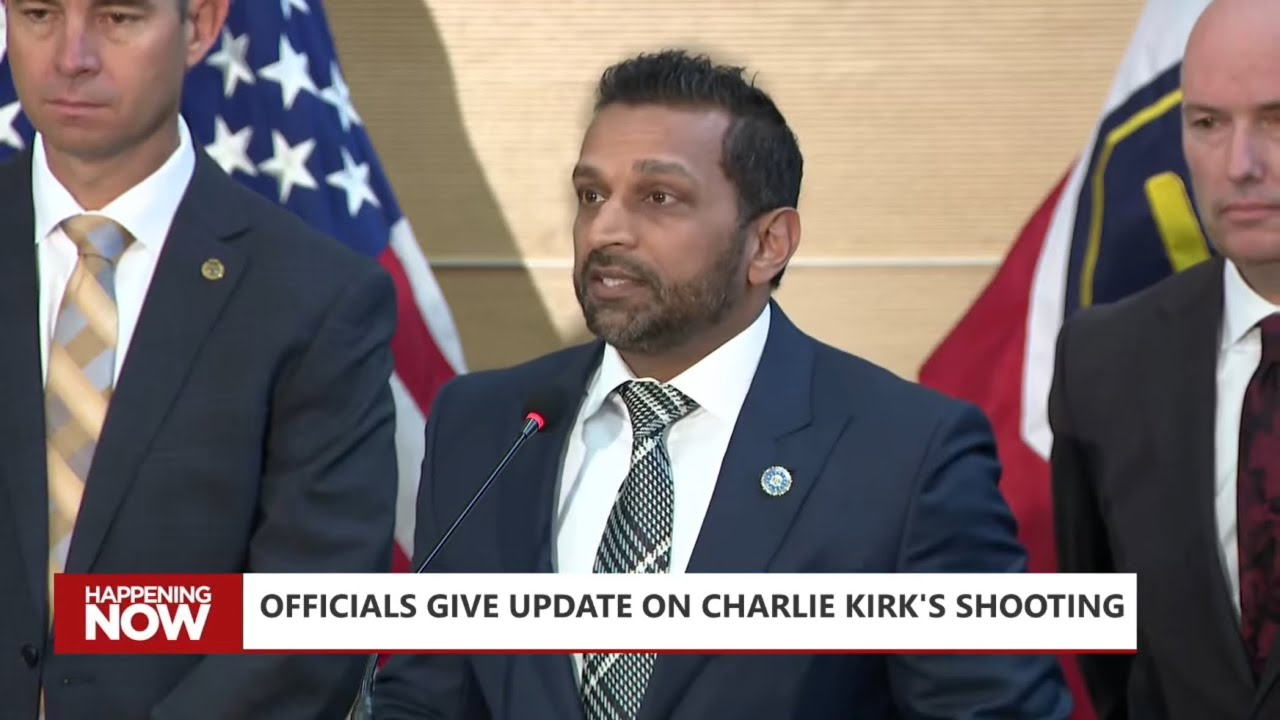
FBI Director Kash Patel and Utah Governor Spencer Cox Announce Arrest in Charlie Kirk Assassination Investigation
32:41
Tragedy at Utah Valley University: Charlie Kirk Shot and Killed During Campus Tour at Age 31
Charlie Kirk, founder of Turning Point USA, was shot and killed at Utah Valley University during a campus speaking tour. Kirk, 31, leaves behind his wife Erika and two young children. The shooting occurred around 12:20 p.m. on the UVU campus in Orem, Utah, sending the campus into lockdown as law enforcement launched an intensive search for the suspect. Throughout the day, multiple individuals were detained and released as persons of interest, including suspects referenced by FBI Director Kash Patel, creating confusion about whether the shooter remained at large. That evening, Utah state legislators, college republicans, and community members gathered at the Utah State Capitol for a vigil honoring Kirk's life and legacy. Speakers remembered Kirk not just as a political activist, but as a missionary, a devoted father, and a champion of free speech who inspired young people across America to think critically and stand courageously for their beliefs.
Charlie Kirk was shot around 12:20 p.m. at Utah Valley University in Orem, Utah, suffering a single gunshot wound that would claim his life. Kirk, 31, was on campus as part of his national speaking tour, where he regularly visited college campuses across the country to engage students in open dialogue and debate about political and cultural topics. Through his organization Turning Point USA, which he founded at age 18, Kirk had made a career of fostering these sometimes heated but always open conversations with college students.
The campus was immediately shut down as law enforcement from local and county levels descended on the area. Officers were seen combing through neighborhoods surrounding the campus, periodically checking their phones as if referencing a photograph while scanning pedestrians and residents. Law enforcement knocked on doors, searched areas of heavy brush, and used canine units to check underground culverts. It was clear that authorities had someone specific they were searching for from the early stages of the investigation.
Confusion Over Suspects and Persons of Interest
The hours following the shooting were marked by confusion and conflicting information about potential suspects. Videos began circulating on social media showing an individual being detained on campus. This first person taken into custody was later identified during a press conference as someone well-known in Utah's political activist circles who regularly attended political events. This individual was cleared and released earlier in the day.
At approximately 4:15 p.m., during a news conference, both the governor and local police confirmed that a person of interest had been taken into custody. Meanwhile, FBI Director Kash Patel stated that a suspect was in custody, creating confusion about whether authorities had identified the actual shooter or were still investigating potential persons of interest.
Within hours, it was learned that the initial suspect referenced by the FBI director had been released. This raised urgent questions about whether there was still an active manhunt underway for the individual who shot Charlie Kirk. Descriptions had circulated of someone in dark clothing and possibly someone seen on a rooftop, but without official confirmation, the community remained uncertain about whether the shooter was still at large.
As evening approached, the Utah Department of Public Safety was expected to release additional information, but many questions remained unanswered about the status of the investigation and whether the public should remain on alert.
Vigil at the Utah State Capitol
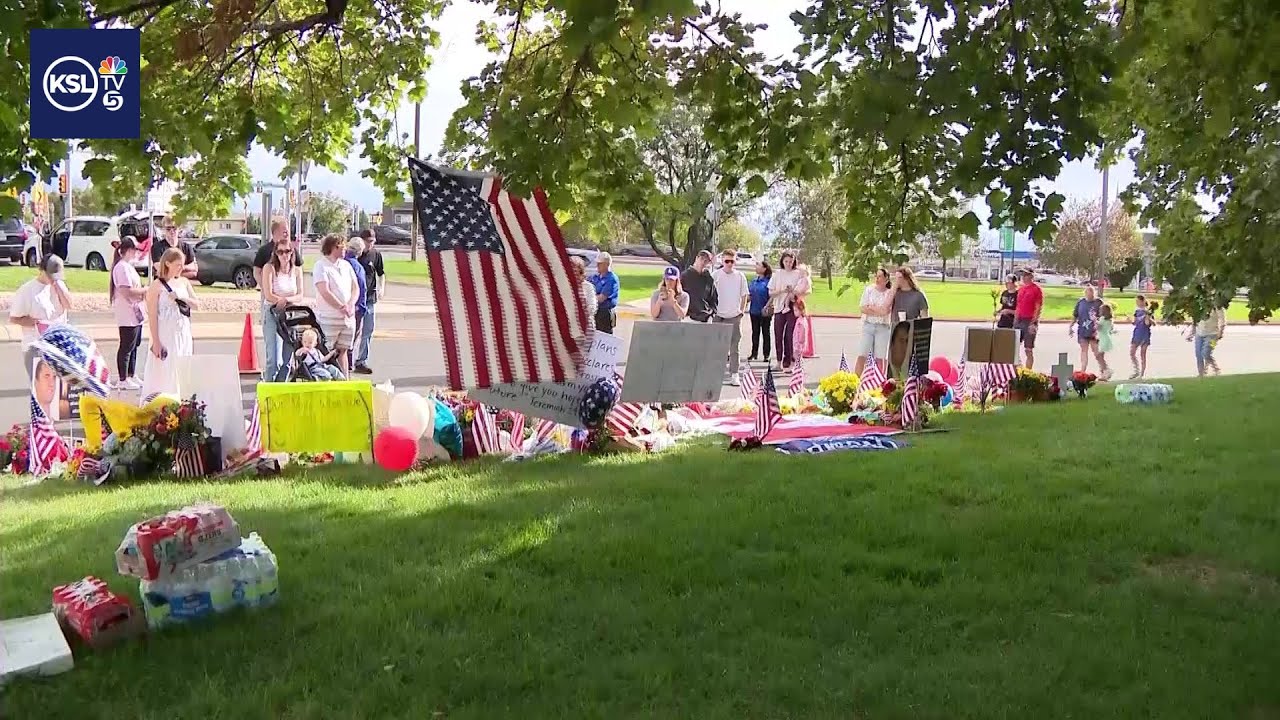
That evening, Utah state legislators, community members, and young people who had been inspired by Charlie Kirk gathered at the Utah State Capitol for a vigil honoring his life and mourning his death. The event brought together political figures and ordinary citizens united in grief over what many called a senseless act of political violence.
Representative Oxier opened with remarks emphasizing Kirk's belief that America's best days were still ahead, despite the challenges facing the nation. He expressed condolences to Kirk's wife Erika and their two children, acknowledging the unmanageable loss they now faced. The representative called on the community to provide unwavering support, love, prayers, and strength to the family during this profoundly difficult time.
Remembering Charlie Kirk's Impact on Young People
Rory Stewart, representing the Utah College Republicans, spoke about Kirk's deep belief in the power of young people to make a difference in their communities and country. Stewart described how Kirk encouraged students to think critically, speak up, and take ownership of their future. As a college student himself, Stewart said Kirk's message resonated personally, giving him and many others the confidence to stand up for their beliefs on campus.
"Charlie was bold," Stewart said. "He challenged us not to shy away from hard conversations and to be proud in our beliefs and to carry ourselves with courage and conviction. Whether you agree on every issue or not, you couldn't deny his passion for America and his tireless energy in fighting for what he believed in."
Fourteen-year-old Christy Horlocker offered a touching tribute, sharing how she and her brother would watch Charlie Kirk's videos together and learn from them. "He wasn't just all about politics," she said. "He was a missionary. He was teaching what was right. And that's what I loved about him."
Calls to Continue Kirk's Mission
Representative Jake Sawyer thanked the first responders, officers, and medical teams who rushed to the scene and continued working through the tragedy. He described Kirk as fearless, someone who spoke truth and stood firm, inspiring countless others to do the same. "His voice made people feel less alone and his courage gave others the strength to stand," Sawyer said.
But Sawyer emphasized that Kirk's work didn't rest on one man's shoulders. "If Charlie taught us anything, it's that this fight doesn't rest on one man's shoulders. It's on all of us," he declared. He called on those gathered to carry forward Kirk's courage, conviction, and love for the nation, stating his continued belief in Utah and America.
Representative Kerianne Lisenby spoke passionately about the attempt to silence Kirk's voice through violence. "The senseless violence that took Charlie Kirk's life today is a heartbreaking attempt to silence a bold voice for truth. But it will not succeed," she proclaimed to applause. She emphasized Kirk's unwavering commitment to free speech, the sanctity of life, and conservative values including faith, family, and freedom.
Kirk's Vision Beyond Politics
Lisenby shared Kirk's own recent words about his hopes for young adults, noting that he wanted them to lead more meaningful lives that would actually result in spending less time on social media. His prescription was for young people to "channel their frustration toward the transcendent" and "focus on the transcendent instead of on tearing everything down."
While Kirk used technology and his talent for debate to trigger what he called a "cultural great awakening," he believed the next American revival wouldn't happen on TikTok and wouldn't be spurred by political triumphs alone. Instead, he said it would show up in rising church attendance, marriage rates, and child births.
Historical Context and Legacy
Lisenby drew parallels between Kirk's assassination and other moments in American history when political violence claimed the lives of prominent figures. She quoted Earl Warren's eulogy for President Kennedy: "What moved some misguided wretch to do this horrible deed may never be known to us. But we do know that such acts are commonly stimulated by forces of hatred and malevolence such as today are eating their way into the bloodstream of American life."
She also referenced Frederick Douglass reflecting on Lincoln's legacy and Coretta Scott King's words after Martin Luther King Jr.'s death, emphasizing that while bullets can kill a man, they cannot kill ideas or silence truth. "I hope and am confident that we will all be able to say the same of Charlie Kirk," Lisenby said.
She predicted that Kirk's assassination would "go down in the annals of history like Martin Luther King and JFK as this shot heard around the world and as a turning point in America." Her words were met with chants of "USA! USA!" from the crowd.
A Moment of Unity
The vigil concluded with a closing prayer from former Representative Brian King, who had served as minority leader in the Utah House for many years. King's presence was particularly significant as he represented a different political perspective, underscoring the bipartisan grief and condemnation of political violence.
"We come here, heavenly father, not on one side of the political spectrum or another. Not as Democrats or Republicans, not as team red, not as team blue. We come here as Americans. We come here as Utahns," King prayed. He emphasized the importance of basic freedoms, especially the freedom to express diverse viewpoints and perspectives "without violence and without disrespect," recognizing that "the bonds that keep us together as Americans are greater than the differences of opinion that at times we may feel strongly about."
King specifically prayed for Erika Kirk and Charlie Kirk's two children who would now grow up without their father, asking that they might feel God's spirit with them during this unimaginable time.
Charlie Kirk leaves behind a legacy of fearless advocacy for conservative principles, a commitment to engaging young people in political discourse, and the organization he built from the ground up as a teenager that grew to influence millions across America.