Up Next

House Resolution 719 Honors Charlie Kirk Following Tragic Assassination on September 10th
35:15

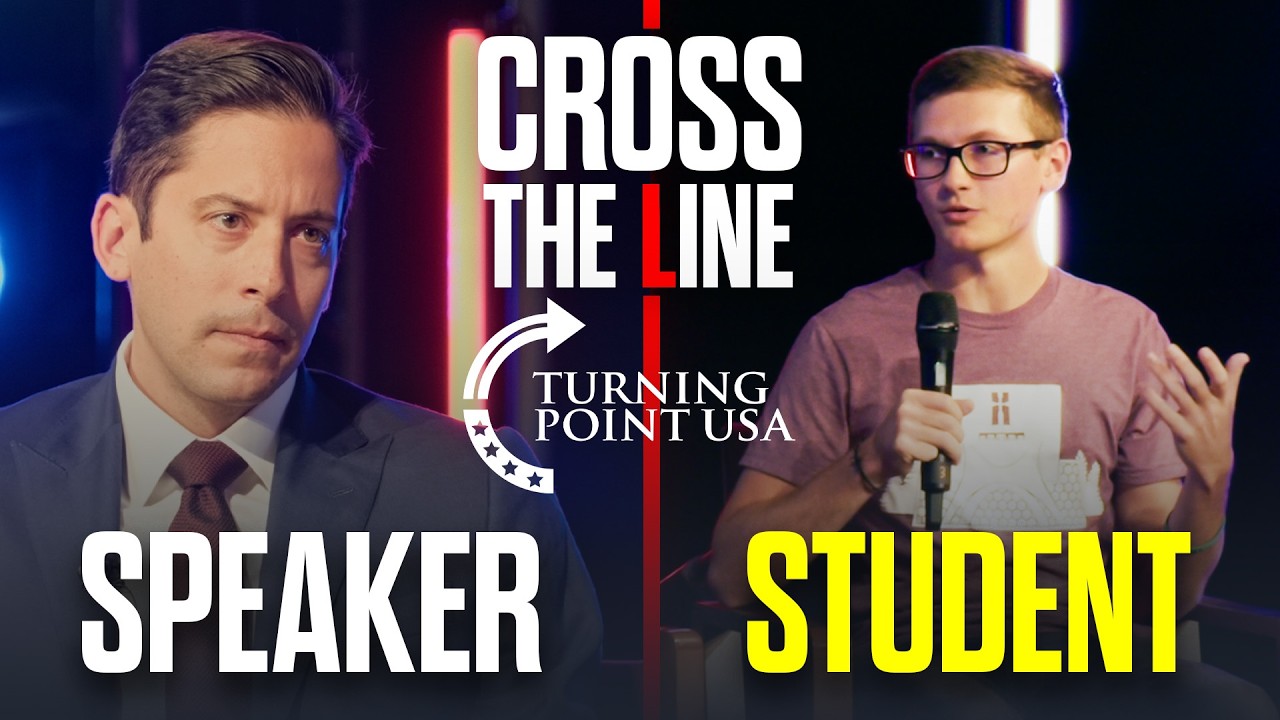
Charlie Kirk Confronts UT Austin Students on America's Greatness, Lockdowns, and Abortion Rights in Live Debate
1:37:59
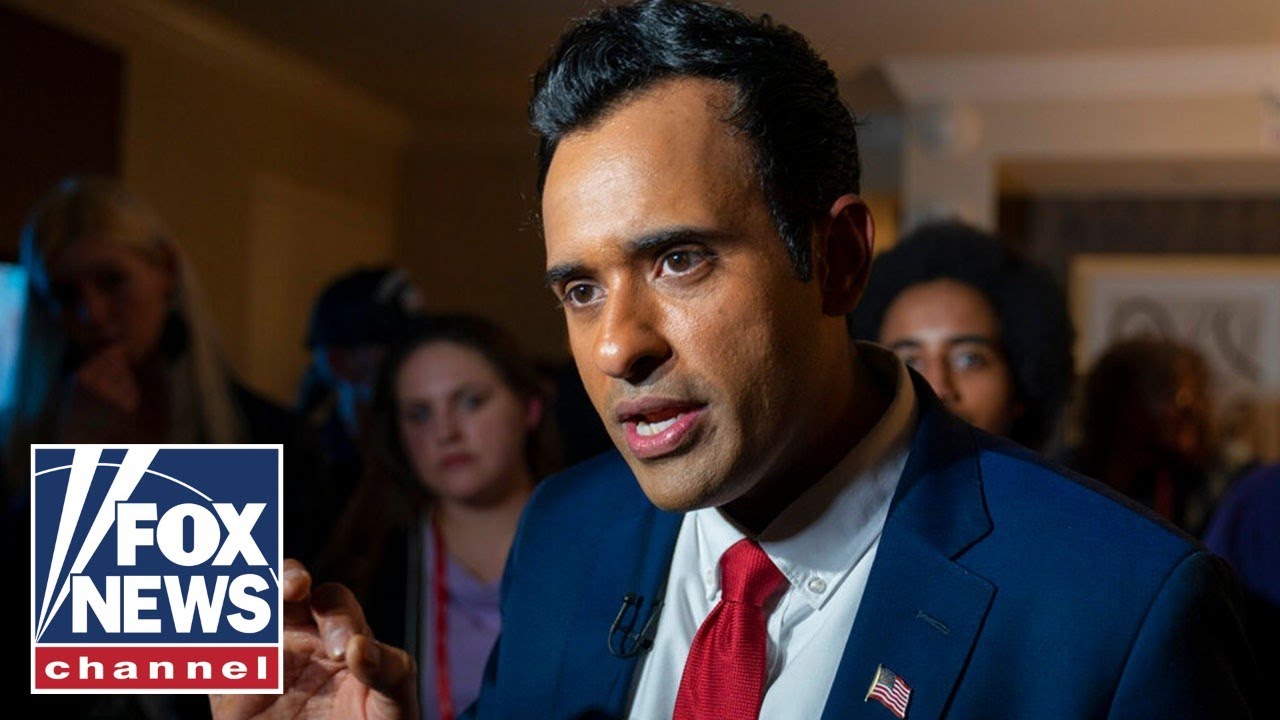
Vivek Ramaswamy Honors Charlie Kirk's Vision at Montana Turning Point USA Event and Addresses Trump's Crime Crackdown
7:01
Vivek Ramaswamy Honors Charlie Kirk's Legacy at Montana Memorial Event Following Campus Assassination
Vivek Ramaswamy delivers a powerful address at Montana State University following the assassination of Charlie Kirk, calling on conservatives to honor Kirk's legacy through faith, truth-seeking, family, and civil engagement. Ramaswamy challenges the movement to choose between defeating the left or saving the country, advocating for principles over politics. Governor Greg Gianforte opens the memorial, sharing personal memories of Kirk and outlining four ways to continue his mission. The event features candid Q&A on abortion, Israel, immigration, mental health, and the nature of American identity in the wake of political violence.
A Nation Mourns and Reflects
On October 7th, two years after the tragic terrorist attack in Israel that claimed 1,200 innocent lives, another somber anniversary marked the calendar. Just weeks earlier, on September 10th, conservative activist Charlie Kirk was assassinated while speaking on a college campus in Utah. At Montana State University in Bozeman, hundreds gathered to remember Kirk's life and recommit to his mission of defending faith, freedom, and love of country.
Montana Governor Greg Gianforte opened the memorial service with a prayer, asking God to comfort those mourning and to turn this tragedy into a turning point for the nation—away from divisiveness and violence, toward engagement and reconciliation. Gianforte shared personal memories of meeting Kirk 13 years ago when Charlie was just 18 years old, recalling hiking trips in Highlight Canyon and being one of Turning Point USA's earliest financial supporters. He and his wife Susan wrote the second check Turning Point ever received.
Four Ways to Honor Charlie Kirk's Legacy
Governor Gianforte outlined four specific ways Americans can honor Kirk's memory. First, pursue faith in God. Kirk himself said he wanted to be remembered most for his faith and courage. Gianforte emphasized that for Christians, faith provides the foundation, peace during storms, and unconditional love. He challenged those who don't know Jesus to seek out believers in the audience and ask hard questions, echoing Erika Kirk's recommendation to find a Bible-believing church.
Second, seek truth and understanding. Despite not being a college graduate, Kirk educated himself in economics, history, philosophy, and theology, challenging his learning through respectful debate. Gianforte shared that he maintains a reading journal and pushes himself to read at least 50 books per year, recommending others start with Charlie Kirk's book recommendations and follow the threads of the great conversation.
Third, fall in love, get married, and raise a family—Charlie's exact words about finding purpose in life. Gianforte, married to his wife Susan for 37 years with four children raised in Bozeman, testified to the difficulty but profound joy of marriage and family. He stressed these bring more fulfillment than any career.
Fourth, love your neighbors and engage. When we see every individual as created in God's image with inherent worth, we love them and seek to understand them—even those who disagree. Charlie loved every person he interacted with, even those who were disrespectful. Gianforte urged following Charlie's example of disconnecting from social media at least one day per week and engaging face-to-face in respectful dialogue.
Vivek Ramaswamy's Challenge to the Conservative Movement
Former presidential candidate and Ohio gubernatorial candidate Vivek Ramaswamy took the stage, fresh from hiking at Lava Lake, noting he had been with Charlie Kirk in Montana just months earlier in June. Ramaswamy posed a fundamental question to the conservative movement: Is the goal to defeat the left or to save the country? He argued these were the same goal last year, but going forward they may not be.
Ramaswamy pointed to Erika Kirk's act of Christian forgiveness toward her husband's killer as a profound example. While she forgave the murderer, he will still face execution after conviction—both outcomes consistent with Christian faith and American values. This balance, Ramaswamy suggested, offers deep wisdom for the movement.
He challenged conservatives to stand firmly for truth—that God is real, there are two genders, reverse racism is racism, an open border is not a border, and the nuclear family is the greatest form of governance. Yet simultaneously, he urged viewing those who believe falsehoods not as enemies to be conquered, but as fellow citizens who have lost their way and must be shown the light.
The Fork in the Road
Ramaswamy presented the conservative movement with a stark choice: play the left's game of silencing, canceling, and punishing, or stick to the principles of the American founding—freedom, merit, rule of law, and pursuit of excellence. He firmly advocated for the latter, declaring that conservatives should not care about "owning the libs" but rather about owning responsibility for saving the country.
Drawing a parallel to George Washington's army at Valley Forge in the winter of 1777, Ramaswamy noted they persevered not out of hatred for their enemy but belief in the ideals that would spawn the greatest nation in history. Charlie Kirk had that same conviction, repeatedly saying that the greatest weapon against lies is truth spoken with courage. He practiced this by stepping into hostile college campuses and winning arguments, not wielding weapons.
Ramaswamy acknowledged some on the right argue now is the time to use levers of power to stamp out dissent while they can, knowing the left won't show restraint when they return to power. He firmly rejected this approach, insisting that when conservatives lower themselves to play by those rules, they lose their identity as Americans.
What Does It Mean to Be American?
The question of American identity formed the core of Ramaswamy's address. He revealed this was the subject of his last in-person conversation with Charlie Kirk on August 25th. When asked what an American is, Kirk responded in his classic form: "I don't have the answer, but I'll tell you what it's not. It's not a race. I know that. But it's not just paperwork either."
Ramaswamy expanded on this, arguing America is a nation defined by ideals, not race or government documents. If you're descended from a particular lineage but don't subscribe to American ideals, you're not really an American in the truest sense. Conversely, if you enter legally, work hard, assimilate, take the oath of allegiance, and embrace the ideals, you're every bit as American as anyone else.
He quoted Ronald Reagan: you can move to Italy, Germany, China, or Japan but never truly become Italian, German, Chinese, or Japanese. Yet you can come from any of those countries to America and become an American by pledging allegiance to the ideals in the flag. This is why there's an American dream but no Canadian, British, or Chinese dream.
The New American Dream
Ramaswamy outlined what being American means in 2025: believing in merit regardless of genetics, being judged on character and contributions rather than skin color, upholding rule of law (meaning your first act in the country can't be breaking the law), protecting free speech and open debate without censorship, embracing accountability and courage, refusing to equate hardship with victimhood, maintaining ambition to achieve the impossible, and preserving the belief that America's founding legacy and purpose are immortal.
He acknowledged Gen Z's justified jadedness—job markets feel like an illusion with debt burdens, home ownership seems impossible, and free speech feels threatened when people are assassinated for their views. He admitted Republicans, including himself, have a responsibility to deliver economic pathways back to success. If they fail, they have nobody to blame but themselves.
Yet he urged young people not to be cynical about America, calling it still the last best hope on Earth with nowhere else to escape. He'd rather live in a country with ideals it falls short of than one with no ideals at all. It's time to revive a new American dream celebrating success over victimhood, building more homes to reduce housing costs, hiring based on merit not skin color, ensuring hard work leads to a good life, providing world-class education as every child's birthright, protecting free speech without violence, ensuring safe cities, maintaining civil disagreement, and uniting the nation.
E Pluribus Unum
Ramaswamy concluded that the true strength of America is not diversity but what unites across diversity: E pluribus unum, from many one. This principle won the American Revolution, reunited the country after the Civil War, won two world wars and the Cold War, and still gives hope to the free world. If this vision is revived over group identity, victimhood, and grievance, then no nation, corporation, virus, or campus shooter can defeat America.
Questions from Students
The remainder of the event featured extensive Q&A between Ramaswamy and students. Topics included abortion and medical necessity, with Ramaswamy affirming all life matters while noting medical tradeoffs between mother and fetus are exceedingly rare thanks to modern medicine. He emphasized the abortion debate primarily concerns elective abortion, not the ultra-rare cases where the mother's life is at risk.
On Israel, a student asked about Ramaswamy's previous stance against foreign aid. He clarified he loves Israel and the Jewish people, and what Israel needs most is diplomatic support to defend itself, not necessarily dollars. He affirmed nations should determine their own defense when attacked. While acknowledging complex foreign policy debates exist, he urged everyone to unite on the basic truth that the 1,200 innocent people killed on October 7th were wrongly murdered.
Regarding political violence, a student noted a Virginia Democrat attorney general candidate wished his opponent and their children were dead in leaked texts, and that polls show one in three leftists say physical violence is necessary for social change. Ramaswamy emphasized the normalization of political violence is unamerican and unacceptable. He called for leaders on both left and right to stand firm that words are not violence, violence is violence, and violence is never an acceptable response to words in America.
On legal immigration, a student who worked in an immigration office expressed opposition to much current legal immigration. Ramaswamy agreed the current system doesn't serve American interests, advocating for merit-based immigration with one sole purpose: serving the interests of U.S. citizens already here. He supported recent White House steps requiring higher payment to hire foreign workers, framing this as a reasonable approach. However, he stressed ending illegal immigration is a precondition for even having the legal immigration debate.
Mental Health, Suicide, and Purpose
Multiple students raised mental health concerns. One noted depression and anxiety rates jumped from 8% to 20% over 20 years, calling it the biggest threat to society's future. Ramaswamy agreed it's an epidemic alongside fentanyl and suicide, not accidentally coinciding with psychological and political poisons like wokeism, transgenderism, climatism, and COVIDism—all symptoms of a deeper void of purpose and meaning.
He argued symptomatic whack-a-mole won't work. The solution is filling the void with real things: a vision of American national identity, self-confidence from stable two-parent families, and revival of faith. Quoting Blaise Pascal, he noted if you have a God-sized hole in your heart and God doesn't fill it, something else will. He advocated starting with faith, family, and patriotism—pick at least two.
In government, he proposed early detection in schools, bringing back physical education and the presidential fitness test as early as kindergarten (since physical and mental health are two sides of the same coin), serving healthier food in cafeterias, and reviving civic education. He pledged that in Ohio, every high school senior will have to pass the same civics test immigrants take before becoming voting citizens.
Another student noted 2.2 million American adults attempted suicide in 2024, with attempts growing exponentially each year and 70% being male. A stigma makes men feel they can't talk about feelings without appearing weak. Ramaswamy's message to men considering suicide: there's a better way, life is beautiful, hardship is universal, and opening up about struggle is actually strength, not weakness. He urged relying on people who are rooting for you—parents, siblings, friends, spouses—and finding activities that give purpose. Taking one's life wastes the unique God-given gift each person possesses, and we have a moral duty to make use of those gifts.
Practical Solutions and Standards
When asked what leaders can do to help young people facing a tough job market, Ramaswamy offered tangible solutions. First, address the housing crisis by building more homes. Bureaucrats at state and local levels have land use restrictions preventing smaller starter homes from being built, crushing the American dream under red tape that must be cut.
Second, fix the educational achievement crisis. He delivered uncomfortable truth: 75% of eighth graders aren't proficient in math at their age level, and 70% aren't proficient in English. Top Chinese regions are four full years ahead of average American students. The solution requires courage to bring standards back through school choice combined with actual standards in public schools. His specific pledge for Ohio: if you cannot read by the end of third grade, you don't advance to fourth grade until you can. He explained this isn't cruelty but compassion, as third grade is when students transition from learning to read to reading to learn—a transition that determines success trajectory. Mississippi went from 49th to top 10 in fourth grade literacy using a similar third grade reading guarantee.
Faith and American Identity
In a personal exchange, a student questioned how Ramaswamy's Hindu faith aligns with Turning Point's Christian values, expressing confusion about a "polytheistic ideology" supporting a "monotheistic perspective." Ramaswamy clarified he's an ethical monotheist from the Advaita philosophy of Vedanta tradition, believing in one true God who resides in all and appears in different forms. He drew a parallel to the Christian Holy Trinity, noting every religion reconciles the one and the many, and Christians aren't polytheists for believing in Father, Son, and Holy Spirit.
He emphasized he's running to be governor of Ohio, not pastor of Ohio, and didn't run to be pastor of America but president of the United States. When pressed whether Hinduism makes someone inappropriate for U.S. president, the student said no, opening dialogue about religious pluralism and American leadership.
A Call to Continue the Mission
Throughout the evening, the message remained consistent: Charlie Kirk's assassination must not silence the movement he built. His legacy lives through pursuing faith, seeking truth, building families, and engaging neighbors with love and respect. As Governor Gianforte concluded in prayer, the obligation has passed to everyone who believed in Charlie's mission. Quoting Pete Hegseth, he declared: "Well done, Charlie. We've got it from here."
The memorial event embodied Charlie Kirk's approach—open dialogue, tough questions, respectful engagement, and unwavering commitment to American ideals. Students from across the political spectrum approached the microphone, and each received thoughtful responses focused on principle over partisanship. In a time of deepening division and political violence, the gathering demonstrated that civil discourse remains possible when grounded in shared love of country and recognition of every person's inherent dignity as created in God's image.
Video Transcript
comfort them at this difficult time of mourning. Lord, we are thankful for each and every soul that is here with us tonight and those that are joining us online as we gather to celebrate and continue the great work of your servant Charlie. Lord, we pray tonight that this tragedy could truly be a turning point for our nation. Turn us away from divisiveness, separation, and violence, and toward engagement, respectful dialogue, and reconciliation. Lord, help us to know you and your ways. You promise in your word that you will work all things together for good for those that love you and are called according to your purpose. We hang on that promise for your glory and our benefit in the name of Jesus. Amen. Well, it is great to join you tonight as we continue the mission that Charlie started a little over a decade ago. My wife Susan and I first met Charlie 13 years ago. He was 18 years old. We were grateful to get to know Charlie and host him in Montana and to our home many times. Charlie always was eager to come to Montana. One spring, Charlie and I spent three days together, just the two of us, hiking up in Highlight Canyon. Since his assassination, I have thought of that time and our friend often. Susan and I were honored to help provide financial support for Charlie during the early days of Turning Point. In fact, he told us once a number of years ago that Susan and I actually wrote him the second check that Turning Point ever received. [Applause] and we've supported Charlie and Turning Point ever since. We loved Charlie and Turning Point's mission of faith, freedom, and love of country. You know this, he was fearless and persuasive. He went where he was not welcome and engaged respectfully in dialogue. He gave voice to those who had been shouted down and cancelled. He spoke truth. He gave all of us courage. He will be sorely missed. But the work of Turning Point USA continues and has been amplified by his passing. The question for each of us tonight is how do we continue Charlie's work? I want to suggest there are four things we can do, each and every one of us. The first way to honor Charlie Kirk's legacy is to pursue faith in God. Charlie said, and I quote, "I want to be remembered for courage for my faith. That would be the most important thing. The most important thing is my faith." End quote. Why would he say that? For Christians, our faith is our foundation. It is our rock. For those that know and love Jesus, faith in him provides peace during the storms of life. Acceptance in the face of our failures and unconditional love that could be found nowhere else. Scripture says, "I could do all things through Christ who strengthens me." As a young man, I have to say that was a hard lesson for me to learn. I thought I was in charge of my life. Boy, I was wrong. As I worked harder and harder to control the outcomes of my life, I got more and more frustrated. It was only when I accepted Christ that I realized the only things I can control are my attitude and my effort. The rest is in God's hands. Maybe you have felt or are feeling that same frustration that I felt. Jesus will take it away. Who here knows Jesus? Raise your hand. Praise God. Let me just say if you did not raise your hand right now, one way you can honor Charlie is to seek out someone here in this audience who did raise their hand. Ask them all of your hard questions. Seek the truth. Search the Bible. And then do what Erica Kirk recommended when she first addressed the nation. Find a bibleelving church and start attending. You will be glad you did. The second way we can honor Charlie is to seek truth and understanding. Charlie was not a college graduate. He educated himself and frankly better than most college graduates. He disciplined himself to learn economics, history, philosophy, theology. He read what the great minds had written. He studied the Bible. And then he challenged what he learned against the thoughts of others who disagreed with him in respectful debate. Charlie knew what many readers know. History tends to repeat itself. And if we want to chart a course for the future as leaders, and I see many future leaders down here in front, we have to understand the past. To honor Charlie, I invite you all to join the great conversation. About 20 years ago, I started a reading journal. It's just a spiralbound notebook that I keep in my bedroom. And every time I finish a book, I write down the date, the title, and the author. I push myself to read at least 50 books per year, almost exclusively non-fiction. I find it stranger than fiction. As you read, authors reference other writers and works that have influenced them. Those are the threads of the great conversation. Follow them. You might ask, "Where should I start?" That's easy. Charlie left us a list. Just Google Charlie Kirk's book recommendations. Start there and follow the threads. The third way we can honor Charlie is to fall in love, get married, and raise a family. [Applause] >> Those were Charlie's exact words. If you want purpose in your life, get married and raise a family. Few things in this life can bring more joy and fulfillment much more than a successful career which will fade away. Charlie loved Erica and his two young children. Staying married and raising a family is not easy. In fact, it's really, really hard. But few god orained institutions can bring more joy. Susan and I have been married for 37 years [Applause] and we raised our four children right here in Bosezeman, Montana. I I could not have done what we have done together in business or public service without Susan at my side. She is my partner, my dearest friend and I love her completely. [Applause] We love each one of our children unconditionally. We pray for them every day. Takes take Charlie's advice and don't miss out on God's gift of marriage and family in your life. The fourth and final way we can honor Charlie is to love our neighbors and engage. When we accept Christ as our savior and we start to understand God's perspective from the Bible, we learn to see every human being as created in the image of God. Each individual is has inherent worth, value and purpose. This perspective permeated every interaction that Charlie had. When we when you see every individual as having intrinsic worth and nobility, you love them. you seek to understand and engage with them. Charlie loved every person he interacted with, even the people that were nasty and not respectful to him. But that's God's plan for each one of us. Dallas Willard called it the divine conspiracy. God's plan for the world is to overcome evil with good. Charlie did that. The Bible says, "The light shines in the darkness, but the darkness did not overcome it." What is that light? The Bible tells us it's Jesus. Charlie did not know his assassin, but I have no doubt that he loved him. At the memorial, Erica said Charlie went to campuses specifically to engage young men just like the man who killed him. Erica, knowing God's plan and an astounding act of Christian forgiveness, forgave the shooter even after he took her husband and the father of their children. Jesus said, "Love your enemy and pray for those who persecute you. Do what Charlie did. Love your neighbor even if you disagree with them." Are some of your neighbors hard to love? Pray for them. God will change your heart. We must also engage face to face. We cannot and should not retreat into the dark corners of social media. Seek out people with different views. Engage them in respectful in-person dialogue. Go get a coffee. Jordan Peterson said, "Go into every conversation expecting to learn something." I think that's good advice. I try and follow it in my own life. One other quick comment about social media. Don't get sucked in. It's very addictive. Charlie disconnected and turned off his cell phone at least one day a week. So, he it did not get an upper hand in his life. We should all do the same. My friend and fellow Governor Spencer Cox said it very well recently, and I quote, "Log off, turn off, go outside, touch grass, laugh with your friends, hug a family member, serve your neighbors, remember what happens online is not reality." End quote. That's another way we can honor Charlie. I personally think that after the salvation promise of the Bible, the next greatest promise in scripture is Romans 8:28, which says, "All things work together for good for those that love God and are called according to his purposes." The word is clear. It says, "All things work together for good, even tragic evil things. God promises to use them all for his glory and our good." He's doing that with Charlie's tragic death. But the baton has now been passed to us. It's our obligation to pick it up and carry it forward. We are all Charlie now. In the words of Pete Hsith, "Well done, Charlie. We've got it from here." I hope you'll join me in that. As I conclude, please join me again in prayer. Heavenly Father, thank you for Charlie Kirk and his work here on earth. Please give Erica the strength and wisdom she needs and surround her with people to support and uphold her. We pray for the Turning Point team and the tremendous opportunity in front of them. for each person within my hearing to honor Charlie's life. I pray that we pursue you with vigor, seek truth and understanding in our lives, have the blessing of our own family, and love our neighbors as ourselves. And Lord, we pray, may your will be done on earth as it is in heaven. In the name of Jesus, amen. Thank you. >> Who are you? >> My name is Charlie Kirk and I love America >> because I love talking with people I disagree with. >> Started an organization that's now on a thousand plus campuses to save the greatest culture and country ever to exist. >> Our family's divided. We're divided the same way the nation is divided. Will anything ever be remedied. A nation divided against itself will not stand. Neither will a family divided against itself. Why do you think your son is conservative? You as a father should listen to your son. >> I used to be at one point on my father's side. Upon doing my own research and seeing things firsthand, I've switched sides. We talk every day about politics to the point where it's divided us. >> Father son divide is more important than politics. Really try to come down at what generational perspective do they have. Never let politics get in the way of the beautiful relationship between father and son. And my question for you is, do you have any hate against the LGBT community? >> How could I hate that which I have a heart for? I might not agree at that for some of the lifestyle choices that some people make, but of course not. And if someone said, Charlie, what's your view on marriage? I say, I believe marriage has been one man and one woman. Do I have hate in my heart for somebody that doesn't choose the lifestyle that I believe that God laid out in the scriptures? Of course not. >> Yeah. How what has this been for? I go around universities and have challenging conversations because that's what is so important to our country is to find our disagreements respectfully because when people stop talking that's when violence happens. >> You could see that happen all across the world. >> I treat >> because I I love talking to people I disagree with. When people stop talking that's when you get violence. That's when civil war happens because you start to think the other side is so evil and they lose their humanity. First, I just want to say I don't agree with you on a lot of stuff, but I I really respect Now, I think you don't agree with me on a lot of stuff, but I really respect that you'll have a dialogue. I think one of the big problems in this country right now is like people can't have a dialogue and people like don't even know how to like have a dialogue and use logic and like have an actual argument like you do. So, how do we improve that as a country? How do you think we get more people that can argue like that on both sides of the aisle? I think this event is a great example of it, right? I think that this event is we need to have differing opinions. We need to have people that don't share the same worldview and see which one is better and try to find common bond. You should have your own discussions like this every day. You should try to model it and try to have you know back and forth and that's what makes the country strong and great civil dialogue. Joining us now is the next governor of Ohio. Congratulations to my friend and great patriot Vav Ramaswami. Vav welcome to the program. [Music] [Music] I love Montana. I love you guys. Thank you for the warm welcome. I love the state. It is one of the most beautiful places on planet Earth. I came here, I love this. I came here straight from uh hike at Lava Lake. I think we uh bit off six miles a little faster than we could chew. But we were here actually only a few months ago in June enjoying the beautiful views of the mountains in Dylan, not far from where we are right now with our friend Charlie Kirk. Actually, he and I were there for an event together. And it is good though in a much more emotional state to come back to commemorate him. And I just want to say before we get started to Governor Jen Forte, I know you did a great job. Really appreciate your warm welcome. You're lucky to lead this beautiful state and this beautiful state is lucky to have your leadership as well. So, thank you. And give your governor a round of applause. Thank you. Thank you. So we get together today in remembrance of actually two different tragedies. Today is October 7th. Two years ago today, a group of terrorists abroad killed 1,200 innocent human beings in Israel. And on September 10th here at home, a terrorist in Utah assassinated our friend Charlie Kirk while he was peacefully speaking on a college campus like the one where we are right now. We're on a college campus tonight. We remember exactly that tragedy of Charlie Kirk. And for years, college students with conservative views, like many of you, were taught to shut up, sit down, and keep their views to themselves. But thanks to one man, I give this to one man above everybody else. Thanks to one man over the last year, we reached a new dawn in this country. Young conservatives like many of you started to feel free to speak in the open again as proud Americans. You showed up at the ballot box last November in unprecedented droves to reelect Donald Trump to his second term as US president. You all did that. You made that happen. And yet, it was less than a year after that victory that the man who inspired you to show up was assassinated in cold blood on the very first event of the campus tour that we're continuing here tonight. And just like October 7th, I worry that September 10th is going to represent a form of generational trauma that isn't going to heal easily. It's going to last for a long time to come. And the question for us now is what we actually do about it. See, Charlie, I had a chance to get to know him really well over the last year. He had a special tactic for dealing with the really hard questions. He would tell you, "I know what it's not. I know it's not more violence." That's what he would say if he were here. But I know it's not to back down either. And the truth is tonight, I I don't want to feed you platitudes. I don't want to just tell you what you already believe. I want to ask a hard question. The truth is we face a hard choice ahead for our movement. It is a fork in the road. It is a fork in the road for the future of the conservative movement. And it's a hard question to ask ourselves. Is our goal to defeat the left or is our goal to save the country? Last year, I believe these goals were one and the same. But going forward, I don't think they quite are. Last month at Charlie's memorial service, his wife Erica bravely stated that she forgave Charlie's killer. Yet, at the same time, that murderer will also be executed by lethal injection after he's convicted. An outcome that I, like many of you, believe is just. Those two things are not contradictory. Both of those things are consistent with Charlie's Christian faith. Both of those things are consistent with the values that our nation was founded on. And there's deep wisdom in Erica Kirk's lesson for our country and for our movement. See, on one hand, we conservatives have an obligation now more than ever to stand up for truth over falsehood. To stand up for the truth that God is real. To stand up for the truth that there are two genders. to stand up for the truth that reverse racism is racism, that an open border is not a border, that the nuclear family is the greatest form of governance known to the history of mankind. And yet we can still stand for those truths while viewing those who believe in falsehoods. Not quite as our enemies who must be conquered, but instead as our fellow citizens who have lost their way and must be shown the light. not to berate them and banish them, but to pray for them and even on rare occasions to actually persuade them while still beating them soundly at the ballot box to make sure that their misguided ideas never turn into law. We win with ballots, not bullets. That's who we are. That's who we are as Americans. That's the choice we face ahead. Do we play the left's game? silencing, cancelling, punishing, authorizing the government to pick winners and losers in the private sector. Or do we stick to the principles of the American founding, freedom, merit, the rule of law, the pursuit of excellence. It is a fork in the road for our movement. And I believe the answer is crystal clear. We don't care about owning the libs. Not anymore. We care about owning responsibility for saving our country. It is not just about what we stand against but what we actually stand for. Individual, family, nation and God beats race, gender, sexuality and climate. If we have the courage to stand for what is right, what is true, what is good, what is beautiful, that has always been the American way. In the dark winter of 1777, George Washington's army shivered at Valley Forge. They were starving, outnumbered, poorly clothed. And many of them believed the revolution was doomed. What kept them going wasn't hatred of their enemy, but their belief, their conviction that they were fighting for the ideals that would spawn the greatest nation known to the history of mankind. And you know what? Charlie Kirk had that same conviction. He used to say again and again that the greatest weapon against lies is not censorship. It is truth spoken with courage. He practiced what he preached by stepping into the lion's den of college campuses, handing the microphone to his fiercest critics, and then daring to win the argument. That was Charlie's Valley Forge. And even when the bullets came at him, he was still fighting with words, not weapons. That is the beauty of his legacy. We have to remember and respect that, not just as conservatives, but as Americans. Now, some of my friends on the right, good friends on the right, will argue that now isn't the time to go soft, hold hands, and sing kumbaya. If we don't utilize the levers of power now, if we don't stamp out toxic disscent now, if we don't rectify the country now, then we never will. And that we have a short window to act right now. And we got to step up and seize the moment. And even if we show restraint and even grace ourselves, the left won't show us that same courtesy when they're in power, which means that their side may win in the long run. And if that means then removing certain voices from network television or pressuring private companies to take action against disscent, then we should bite our tongue and do it while we can. We have to remember what time it is in America. That's how the argument goes. And I understand why many patriots on our side find this compelling because it is certainly true that terrorists just like those who struck on October 7th, just like those who struck Charlie Kirk, the one who did on September 10th, will always be willing to do the things we aren't willing to do. Which creates an asymmetric terrain that makes our victory all the more difficult because terrorists have no hope for their future. That's why they're hellbent on destroying ours. What scares them more than anything is somebody with hope, somebody who gives people hope, somebody who lives with joy and purpose and meaning. Somebody like Charlie Kirk. That's why they attack. So, how do we respond? Do we turn around and fight the Pharaoh on the shores of the Red Sea, or do we cross? The answer, my friends, is that we keep going. Their brutal tactics should never cause us to change who we are. But when we lower ourselves to play according to their rules, when we concede the idea that might makes right, that we settle our disagreements with force rather than debate, then we lose the very thing we were fighting for, and that is our identity as Americans. What exactly is that identity? We ask. Thank you. That is the question of our generation. is the most important question for your generation. Really, to put America first, we first have to answer what America is. And it turns out this was actually the subject of my very last in-person conversation with Charlie when he visited Ohio on August 25th. The last time I ever saw him in person, we had a very private conversation, just the two of us, one-on-one. What's an American? I asked him. And in classic Charlie form, he told me, "I don't have the answer, but I'll tell you what it's not. It's not a race. I know that. But it's not just paperwork either. That much I know." I agree with what Charlie said. Our shared American identity isn't about a race and it isn't about government paperwork. We're a nation defined by a set of ideals that ex that united an extraordinary group of people 250 years ago. If you're the descendant of a particular race or lineage, but you don't actually subscribe to those ideals, then you're not really an American, not in the truest and deepest sense of that word. And if you happen to have physically entered our country and been granted a piece of paper by the government, but you don't actually believe in the ideals of our country, then once again, you're not really an American. Not in the deepest sense of that word. But if you do believe in those ideals, wait your turn. Enter the country legally. Work hard. Play by the rules. make your contributions, take your oath of allegiance to the country, assimilate into the country, and become a citizen, then you're every bit as much of an American as anybody else in this country. Thank you. And you see, that is what makes America different from every other nation in human history. As Ronald Reagan once said, you can go to Italy, but you'll never be an Italian. You can move to Germany, but you would never be a German. You can live the rest of your life in China or Japan. You would never be Chinese or Japanese. Yet, you can come from any one of those countries to the United States of America, and you can still be an American so long as you pledge allegiance to the ideals enshrined in our flag. You work hard, make your contributions, play by the rules, pursue the American dream. It is called the American dream for a reason. There's no such thing as a Canadian dream. There's no such thing as a British dream. There's no such thing as a Chinese dream. The American dream is distinctive. It is what makes American exceptionalism possible. Now, the woke vision of our identity rejects that American idealism. On the woke worldview, your identity is based on your race, your gender, your sexuality, or your lineage. If you're one race or gender, you're an oppressor. If you're another, you're a victim. The remedy to past discrimination on their view is present discrimination. The remedy to present discrimination is future discrimination. That woke worldview is fundamentally at odds with the American founding. Because we are the country where regardless of your race, your gender, your sexuality, your religion, or your lineage, you can still be a citizen of this nation so long as you subscribe to and live by our national creed. So what does it mean to be an American in the year 2025? It means we still believe in those ideals of 1776. It means we believe in merit. That the best person gets the job regardless of their genetics. That you are judged not on the color of your skin but on the content of your character and your contributions. It means we believe in the rule of law. And I say this as the proud son of legal immigrants to the United States. That means your first act of entering this country cannot break the law. It means we believe in free speech and open debate without censorship. Whether you're Nick Fuentes or Alex Jones or Jimmy Kimmel, it means that words are not violence. That violence is violence and violence is never an acceptable response to words. It's not just about our constitutional principles. Thank you. That's America. That's who we are. [Applause] It's about our Constitution, but it's about even more than that. It's about a culture that is distinctive to our nation. It means we believe in accountability. It means that we are courageous, that we're brave, even heroic when called upon to serve our country, that we take bold risks. Sometimes we fail, but we still pick ourselves up and do it again. It means we don't view that hardship as the same thing as victimhood, because hardship from time to time is what teaches us who we really are. It means that we're ambitious to achieve the things that we were taught to believe were impossible from landing on the moon to landing on Mars. It means that just like our founding fathers, we are deeply curious about the world that we inhabit. And that it is our manifest destiny to lead it. Not for our own sake, but for the sake of history and posterity. It means that we believe the legacy of our founding fathers is immortal. It means that we believe the soul of the United States of America is immortal. It means we believe that America's purpose in the world is immortal and that we have a moral mandate to preserve it. That is who we are as Americans. That was the spirit that Charlie Kirk tried to revive on college campuses like the one where we convene tonight. That's what he fought for. And if we're being honest, we've lost our conviction in that American dream. And for Gen Z, I can understand why. Right now, it feels like the job market feels like an illusion to young college graduates who face a tough job market with debt on their shoulders. Home ownership feels like an illusion to young workers who feel like they've done their part but still can't get ahead. Free speech feels like an illusion when you watch the people who share your viewpoints assassinated in cold blood for expressing them. I understand why many of you feel jaded. You elected Republicans, the side that I traveled across this country last year to campaign for. The side that Charlie Kirk traveled this country to campaign for last year to deliver you an economic path back to success, a real path back to the American dream. And I'll be the first to say this, that is up to us to deliver to you. And if we fail now, we've got nobody left to blame but ourselves. I say that as somebody who's running for governor of my own home state of Ohio next year. That is the standard I want you to hold me to. We expect that. That's on us. But in the meantime, don't be cynical about our country because it's still the last best hope that we have on planet Earth. There is nowhere else in the universe left to escape. The United States of America is still the last best chance in human history of a place where you can pursue your dreams and speak your mind. Where you work hard, play by the rules, live a good life, and dream for an even better life for your kids. where you get ahead with your own hard work, your own commitment, your own ingenuity, and your own dedication. Are we imperfect as a nation? Sure, we are because we're a nation of human beings and not gods. But I would rather live in a country that has ideals and falls short of them than to live in a country with no ideals at all. So, it is time for us to now roll up our sleeves and revive a new American dream in this country. A new American dream where we celebrate success over victimhood. A new American dream where we bring down the cost of housing by building more homes. A new American dream where the best person gets the job regardless of their skin color. A new American dream where if you work hard, you can afford to live a good life for yourself and for your family. A new American dream where every kid in this country gets the worldclass education that is their birthright as an American. A new American dream where you can speak your mind in the open without somebody putting a bullet in your neck. A new American dream where you can walk in the downtown of your city without looking over your shoulder for fear of being assaulted. A new American dream where you can disagree with your friends and still get together with them at the dinner table. A new American dream where we are no longer a house divided but a nation united. a nation whose true strength is not our diversity but that which unites us across that diversity. And the beauty of this new American dream is that it is the same one that has guided us at every step of the way for the last two and a half centuries just as it will for the next two and a half centuries. E pluribus unum from many one. That is what won us the American Revolution. That is what reunited us after the Civil War. That is what won us two world wars and the Cold War. That is what still gives hope to the free world. And if we can revive that dream over group identity and victimhood and grievance, then nobody in the world, not a nation, not a corporation, not a virus, not a campus shooter is going to defeat us. That is what American exceptionalism is all about. That is who we are as Americans. Thank you for coming out tonight, guys. We love you. May God bless you and your families and God bless our United States of America. Thank you guys. God bless you. [Applause] So, I think we have some microphones and get this party started. All right, let's uh let's line up and we're ready to rock and roll tonight. Come on up. And while we're doing that, can we give our friends in law enforcement a round of applause for keeping this place safe tonight? Thank you. and give another round of applause to the staff at Turning Point who are keeping Charlie's mission rolling every day. These people are heroes. They're behind the curtain. You don't see them. But thank you. Thank you for making it happen. And we'll line up and keep the evening going. Tell me your name, ma'am. >> Jillian. >> Jillian. Good to meet you. >> My question is as follows. I believe that abortion is the killing of an innocent child. But is it feasible to legislate on this issue fairly without causing unnecessary harm? For example, in 2012, Dr. um Hala Pavanara died after being denied an abortion after a prolonged miscarriage from septic septacmia. How do we ensure that doctors aren't prohibited from performing necessary care when women's lives are at in danger and they aren't um when they aren't in immediate danger but they soon will be if action isn't taken. This relates both to anil analy sorry >> take your time. Yeah. >> And um hyper hypermesis gravidarium many other potentially deadly conditions. Yes, the fetus's life matters, but don't we have a duty to let medical professionals operate in the best interest of the mothers as well during these situations? How can we facilitate doctors being consulted in the crafting of bills that are incredibly medically complex? >> So, I want to thank you for your question. I will start with where we have firm agreement that unborn life is life. We all agree on that. And I think that even those who think they don't agree, when they think about it, at least agree on that premise. Now, thanks to advances in modern medicine, it is exceedingly rare. Like when I say exceedingly, not somewhat rare, exceedingly rare where there is a trade-off between the life of the mother and the fetus. There is a million other reasons why many abortions are performed each year. The idea that that ranks anywhere near a top or even prevalent reason isn't the case thankfully to the miracles of modern medicine which you point out in the year 2025. That isn't really where the frontier of most abortions being committed are about. When we're pro-life, do we mean it womb to tomb? That's what I say. Absolutely. Every life, born and unborn, matters, and that's what we got to stand for. So, do we want medical professionals to push the frontier of making sure that the life of the mother is fully respected at every in every instance of her getting medical care? Of course. And it's deeply personal to me actually. Well, I'm a father of two sons, but my wife, one of the reasons she's not here is she's pregnant in the second trimester with our first daughter who we hope to welcome early next year. Thank you. So, like your dad, I'll be a girl dad. But um but I would say that while that's a worthy discussion to have in so in a tiny sliver of cases and we want to continue to advance the frontiers of modern medicine, I don't want to let that distract us from where the real abortion debate rests which is elective abortion which is a totally separate question from those rare rare ultra rare instances where you're talking about the life of the mother at risk where we're on the same page that that is a top priority because all life is life that deserves respect. Thank you. I appreciate your question. Thank you. >> Hello. >> How you doing, man? >> Doing pretty good. Um, I'd like to say thank you for being here. Um, because I mean we're in an era of political violence on campuses and I mean it's bold to be here. >> Well, it takes two to say thanks to that man. So, thank you. Thank you for being here. What's your name? >> Uh, Ashton. >> Ashton. >> Yeah. Um, so my question is in relation to uh Israel. Um I mean obviously we're in the wake of the October 7th attack two years ago and I know that um previously you had taken a stance against sending uh foreign aid to Israel. I mean correct me if I'm wrong. Um and I was wondering do you still believe do you still believe in that that we should not fund them and fund them in um their national defense and such? Yeah. So here's my perspective is and I think I don't want to speak for Charlie per se although he and I talked a lot about this issue and I think we were in a relatively similar place where I love Israel and I love the Jewish people and what I one of the things I love about Israel is that it has created a country that is able against all odds to defend itself to the fullest and what they need from true friends true friends isn't green pieces of paper so much as actual diplomatic support to be able to defend themselves if somebody attacks the United States at our southern border. I sure as heck don't want any other country telling us what we can do in response. And I think that Israel similarly wants to be a nation where they get to determine what their natural defense to the invasion of their own borders is too. So that's a technical question around piping and plumbing of dollars when that's not the real issue. Now, and this is all I I'd like to say about this issue today because there are certain days for political debate and there are certain days for remembrance. Today is a day for remembrance. There was 1,200 some innocent people killed in cold blood. The act of Hamas two years ago that was subhuman and that was wrong and we're all united behind that. Whatever your foreign policy funding, you know, technocratic bispo bif focal spectacle accounting debate might be. That's something we all agree on and we're we're rock solid on. And I also think the beauty of our country is that look, we're a country where I've been frustrated with our government for the last half decade. You you think about the four years under President Biden. I was proud to live in a country where I could criticize my government. Israel is a country which is a free country where they can criticize their government and they're free to criticize America. There's people from here who were free to criticize Israel. That's great. But at the end of the day, if we acknowledge that on this issue, if we can all just chill a little bit and acknowledge that what happened on October 7th was wrong, that nations ought to be able to determine how they actually defend themselves and true allies support one another's right to do so. I think we found 80 90% common ground on an issue that's often like the last one on the issue of abortion made out to be far more complicated than it needs to. And that's where I am on the question. So, thank you, my man. All right. Is there any can I mention one more thing? >> Why not? >> Um I mean you mentioned allies and such. Would you say that Israel is an ally of us and that we are an ally of them? Like is >> I would say yes. >> Even after the USS Liberty attacks and the Leavon affair. >> So look so so look I I I like I like challenging questions. You know you know you know me. It sounds like from from where we're at and I and I believe I said it before, I'll say it again. I believe it is the right of a US citizen to be able to criticize the United States and to ask critical questions of any other country just like it's the right of a citizen of another free country to ask tough questions of the United States. Today is a day for remembrance and for the people who are you know it's a heated issue can have politics all over within the right and the left on this issue. I just think today is a day where it would be a beautiful thing if we can all unite around the idea that 1,200 Israelis, innocent human beings who died on this day, October 7th, 2 years ago, were wrongly killed. Can we unite on that? >> Yes%. >> If we can unite on that, then I think we made progress for today. And that's not to forestall all kinds of debates about public policy going forward. Thank you, my man. All right. I appreciate you being here. >> Thank you. >> Uh just one second. I need to I'm just going to read it oneon-one off of this text that I got. >> Okay. >> Okay. >> Who sent you the text? >> Uh it's a it's our teacher at our school. I'm just asking on behalf of him. >> Fair enough. >> Okay. Uh the Democrat running for attorney general in Virginia said in leaked text that he wish his political opponent as well as his children were dead. And no Democrats condemn those words. Today a poll came out showing that one in three leftists say that physical violence is necessary to affect social change. Do you think that the nation can come back from this level of hatred the political left has for conservatives? >> We must. Whatever is necessary is always possible. So, do you believe it's possible? I do. >> But do we have work cut out for us ahead? Absolutely. >> The normalization of political violence is unamerican in this country. It's unacceptable. And I think that what one of the things I've noticed is no one on the right is going to manage to convince someone on the left just as somebody on the left is probably going to have a hard time convincing someone on the right of the same thing regarding our regard although I personally believe the numbers are asymmetric in one direction. So what we're going to need is actually leaders with a spine on the left who we disagree with deeply to still stand up and say that no matter what you think words and this is one of the sins of the work woke movement the idea that words are violins. That's where a lot of this began, right? That intellectual slippage between words, >> the free debate and challenge in the marketplace of ideas. That idea, you would hear it a few years ago, that words are violence, that I am harm, that microaggression is the equivalent of physical harm to me. That crossed an American boundary into something anti-American. The idea if you turn words into violence, then I guess somebody could think violence is justified in response. We on the left and right have to be united. That words are not violence. Violence is violence and violence is never ever never ever ever in the United States of America an acceptable response to words. Period. Thank you. I appreciate that. >> Thank you. Thank you. >> Okay. So, my question is is that over the past year uh prior to his assassination, Charlie Kirk became increasingly against legal immigration. And I know over Christmas you had uh defended it on Twitter numerous times. I'm wondering if you've changed your view at all in talking to Charlie about this. I've worked myself in an immigration office for a number of years and have very much become against a lot of the legal immigration we see. So I'm curious if your views have changed on that. I would say my views have been pretty consistent over time and they're consistent with what I reflected in my speech which let's start with where we need to begin. I think based on your question I assume we would find alignment here but I hope we do. We have doubledigit numbers of millions of people who entered the country illegally and my view is if you entered the country illegally it is perfectly just for you to be returned to your country of origin. We haven't done that. So I agree that first but >> and that would constitute something where we have still 10 plus million numbers to go before we get to that question. Now the second separate question is what should the legal immigration policy of the United States look like? Is the legal immigration policy of the United States right now serving the best interests of our country? >> I think the answer to that question is no. I agree with you. >> So what I favor and have long favored and we got to have the courage to actually just stop bucking to, you know, the last person who complained in your ear to actually speak truth is we need a legal immigration system that accomplishes one thing. Does it serve the interests of the United States citizens who are already here? That should be the sole purpose. Now, the question is, we may disagree on exactly how we do it. But at least we're aligned on the goal. The goal of US immigration policy is to serve the Americans who already reside here. Then we have a question of what a merit-based system looks like. Now, the White House took some steps recently to say that, you know what, people should have to pay more to be able to actually hire someone from another country. I think that's actually a reasonable approach. If somebody's asked to put their money where their mouth is, that's a reasonable approach for framing the question of how we think about legal immigration to the United States. But I think that that is a tough question. We're going to have to roll up our sleeves and actually ask the question, what best advances the interests of the citizens who are already here. And a precondition for even having that debate is actually to have ended the illegal immigration crisis in this country that we can't just sweep under the rug to punt for this other complicated question ahead of us. That's where I land on the question. So, thank you for your for your input. >> Thank you. >> Appreciate it, man. >> Hi, nice to meet you. Uh, my name is Luke. I got a question. Here we go. Um, so in my opinion, the mental health crisis in America is the biggest threat to the future of society. And the numbers speak for themselves as in the past 20 years, the reported uh depression and anxiety rates have gone uh from 8% to 20%. and this exponential growth almost as high as Nancy Pelos's uh investment returns. But anyways, um it feels like the scale of this mental health issue is overlooked and frankly being abused. Uh whether that is through social media ecospheres and algorithms within school systems or promotion of radical eth uh radical left agendas such as transgenderism. Uh so how will people realize this massive issue that affects all of us right now and what should we do about it? >> Look, it's an epidemic in our country. Depression, anxiety, fentanyl, suicide, all spreading like wildfire. And it's not an accident that happened over the same period that we see the rise of psychological and polit political poisons. Wokeism, transgenderism, climatism, COVIDism. These are symptoms in my view of a deeper void of purpose and meaning in our country, particularly amongst young people. I'm not young compared to you guys, but in my generation, millennials, we see it. In your generation, Gen Z, we see it. You have to fill that void with the real thing. So, here's what I don't think is going to work. I don't think just symptomatic whack-a-ole is going to work. I think we have to fill that void, that black hole, with the real thing, with a vision of American national identity that runs so deep that it dilutes the poison to irrelevance. With a self-confidence that comes from having two parents in the home, in a stable nuclear family that gives a kid the foundation to believe they can jump higher when they do so from a stable foundation. The revival of faith in our country, mediated not through the government, but through our culture. something that Charlie Kirk I know was very focused on as well filling that vacuum in the heart of every person. It was actually a a French scientist who once said that it's Pascal Blae Pascal who said if you have a void the size of hole the size of God in your heart and God doesn't fill it something else will instead the way I look at it is faith family patriotism start with just pick two okay it can't be zero that's where we're beginning now where can public leaders such as in government make a difference I think our schools are a good opportunity to start early detection in schools is a big opportunity use an education system that revives the self-confidence of our young people. Bring back physical education at a young age. Bring back the presidential fitness test, PE as early as kindergarten. Physical health and mental health are two sides of the same coin. Serve healthier food in the cafeterias. Revive civic education even in high school. I personally think we do that with some standards. I think every high school senior who graduates from a high school in this country should have to pass the same civics test that frankly every immigrant has to pass before that immigrant becomes a voting citizen. You got to know something about your country to be proud of your country to be proud of yourself. But I want to give you credit for putting your finger on the pulse of something that knows no partisan boundary. It's not about black or white or left right, Democrat, Republican, urban, rural. what you described, the mental health epidemic, if you look at the numbers, it knows no demographic or partisan boundary. And we really want to fix the country. We're going to fill that vacuum in the heart of a generation. It's the job of leaders like myself, governors like those of us who are here and leaders at every level, high and low, including all the way to including the household, to play their role in stepping up and reviving that missing sense of purpose in our country. And if we do that, I think the peak of this mental health epidemic will be behind us. >> Thank you. >> Thank you, my man. appreciate it. >> Hello, I'm Raleigh. Thank you for being here. >> Um, you talked a little bit about social media and obviously it affects a lot of young people and there was a friend of Charlie's, her name's Candace Owens, you probably know her. She's made a lot of videos and a lot of people have watched these videos and I was just wondering what your opinion was on some of the claims she's brought forward. >> So, I'll share with you something that's been true of my experience of social media over the last year. U one of the things that's hard about being in politics is on one hand, you got to use it, right? I've got millions of followers. It's a great way to at least tell people what you think, but to do it while consuming less of what it sends me back. So I would say over the last year since I left the presidential race, one of my learnings is you think about even the last question about mental health, you got to practice what you preach and set a model. I use it to send the messages I need to send and I try to consume as little of it as I can back in a response. That's put me in a better place in my own life. One of the things I've also learned is that there is such a gap between what and I learned this from running for president. such a gap between what exists in the algorithmic and often even artificially astroturfed created response-based echo chamber in the social media world versus what exists in three dimensions even in rooms like the one where we are tonight. So one of the things I'm aiming to do is if somebody has a question for me and I want to have real dialogue in the real world, I'm going to come here and do it this way. It's a lot better this way. And so if somebody wants to ask me any question you want, anything's going to be fair game. But I think that getting into the rabbit hole of of the minutiae of an online world that feels increasingly I'm happy to say in my life foreign to me that's the way I'd actually like to keep it. So if somebody else has a question of what you said I'll address it but about addressing what's come up on the online echo chambers outside my scope of focus right now. Thank you. >> Thank you. >> Appreciate it. >> Uh my name is Adam. Uh I'm still in high school. I'm trying to finish high school up this year, but I'm wondering where can I start off, where I could carry Charlie's legacy in Callisville. >> Say that again. I just want to hear. >> I'm trying to carry Charlie's legacy in Callispel, but I'm wondering where I could start and where are some where what are your tips for me? >> Sure. The first tip is and Charlie embodied this better than probably anybody I know. When you are the only person in a room, say it's in your high school, say it's in a club you're a part of, say later it's a it's an organization you join. When you're the only person in a room who believes what you do, you have an obligation to your country to stand up and say it. Say it with a spine. Say it with conviction. Say it with respect. And I think that that's one of the things if you think about carrying on Charlie Kirk's legacy. I did so many of these events in college campuses across the country with him last year. We went to the University of Pittsburgh, we went to Georgia, Georgia State, we went to University of North Carolina, others. And one of the things he would always say, and I I enjoyed this, right, we we were good pair in this sense, is when somebody would come up to the mic, and even if it happens tonight, we'll say the same thing. It could be somebody, it's a predominantly conservative room, if I'm reading it correctly, but somebody from the left comes up. We don't sneer at them. We let them ask their question and then we're going to address it directly headon. But we may say that the other side doesn't extend us that courtesy and response and that's probably right. But we don't hold ourselves to their standards. We hold ourselves to our own standards. And if you want to carry on my friend's legacy, our friend's legacy, that's what you do. Hold yourself to your standards regardless of what the other side does. That's my best advice to you. Thank you, young man. All right. Good luck with high school. Good afternoon, sir. My name is P. >> Good afternoon, sir. My name is Payton Matanoitz and >> Afternoon, man. It's like Yeah, I'm I'm from Ohio. Two I'm two hours ahead. It's like night time for me. Good to see you. >> With uh rising global tensions, including situations like Venezuela, do you believe the US should prioritize maintaining a strong military presence abroad or should we shift focus more toward homeland security using assets like National Guard and ICE to protect our borders and internal security? So before we get to the eitheror, the number one thing we need to do is I think we need a restoration of both US hard power and soft power. Both of those aren't in the place where they need to be. I think it's unacceptable if you have hypersonic missiles operated by other countries in an era of potential risks of nuclear risks where Russia or other countries have hypersonic missile capabilities ahead that of the US. No, we need a restoration of our hard power capabilities. Not rhetoric, not just the not just the chest thumping, but actual tools. Our military-industrial base, our ability to produce actual hard military power, god forbid, in the situation that we need it, which we hope we don't have, we need to actually have hard power to the fullest. And then I also want to see a restoration of soft power. You know, I think that part of the US's cultural cashier around the rest of the world, even the dollar as the reserve currency of the world, is a great form of soft power. So, I want to see both of those things. And I think if we're strong in raw hard power that actually goes with handinhand with having strong borders. So to me it's not an eitheror. It's a commitment to do what we actually know where we're short. And it's easy to deflect on the fact that we're behind on certain capabilities like ship building like we're going to hit a nater in the number of our of our ships in the South Pacific precisely around the time where you know Taiwan might be vulnerable to Chinese incursion. This is not a moment to change the subject from the main show. You can change the main show to a lot of peripheral questions around US military power. I'd say keep the main thing the main thing. Restore hard power, restore soft power, and then use it to do what actually best protects American interests rather than ancillary interests. That's the order where we go. And I think that if we do that, we're going to be well on our way to restoring our international position of military strength where we've historically been. Thank you. >> Thank you. >> Uh first off, I want to say thank you so much for coming. >> Thank you, man. Uh in 2024, 2.2 million adults in the US attempted suicide. Each year, the amount of attempts exponentially grows. Around 70% of these attempts are male. There's a stigma that makes a lot of men feel like they cannot talk about their feelings because it might make them quote unquote weak. My question for you is, what message do you have for all the men out there that feel that their only option in life is to attempt suicide? You're putting your finger on a on a tough issue, but a real issue. And you think it even been veterans, the rate of veteran suicide, for example, just one segment of the community is unacceptable. People have served our country. My message to those young men is there's a better way. Life is beautiful. Hardship is something we all encounter in our own ways. And it is not weak to open up and talk about it. It is actually a source of strength to be able to admit to yourself and then open up to the people around you. There are people around you who are rooting for your success in life who you may not even know exist. Maybe it's your parents. Maybe it's a brother or sister. Maybe it's a friend in class. Maybe it's your spouse. But rely on the people around you who are rooting for you. Don't be afraid to stand up and actually talk about your struggle. But that admit that that's actually true strength and then find other ways to find your way out of the black hole that you might be in. I mean, I think that we live in a time where people have given up on the current job market. You can take up work yourself in your own way. I mean, starting start with your own home. Start with taking on activities that give you purpose. Go outside for a run. Touch some grass. There is so much in this short life that we're given that gives us meaning that turning to just darkness and ending this great gift we've been given of our life isn't the right way to do it. Open up. That's not weakness. That's true strength. Take it from a man who considers himself to be strong in the same way. We all go through our struggles. But if you're able to talk about it, if you're able to rely on the community around you, and then you're able to find other things that give you real meaning in your life, even if it's outside of what your traditional job is, do it. Because we need you. The world needs you. The world is a better place with you here. God gives every one of you, every one of us, our own unique God-given gift, distinct from every other person in the world actually. And partly the beauty of our country is that we're the place where you get to make the most of your own unique God-given gifts without anybody standing in your way. And so if you don't want to do it out of selfish indulgence, do it out of your moral duty. You have a moral duty to make use of the gifts that God gave you. take the time to figure out what they are, put them to use, and we're behind you as you make the best of your attempt. All right. >> Thank you so much. >> Thank you, man. Appreciate it. [Applause] >> Yellow. My name's Owen. Um, you talked about young people needing to not get like discouraged by the job market and the things sort of stacked against them. What are some things that maybe you could do or people in power that you could advocate for that could help young people in this tough time for them? >> So, there's so much we can do. I'll give you a few things that are really tangible in the here and now. Number one is the cost of housing feels way too expensive for young people because it is too expensive for many of those young people. How do you fix that housing price crisis in our country? build more homes to bring down the cost of actual housing. The people stopping you from doing it are actually a lot of bureaucrats that exist, not even at just the federal level, but the state and local level, who have land use restrictions that say, "Well, I don't want those smaller homes built around where I am." Those land use restrictions are destroying our country because it's a double whammy. Not only are there fewer homes, there's fewer single family or even two-bedroom homes that a young person might want as their starter home. That's number one is the American dream is being crushed under a pile of red tape. We got to cut that red tape and do it with pride. That's on housing. Number two, I'll go to the other end of the spectrum for the long run is we have an obligation as leaders to fix the educational achievement crisis in our country and it is a crisis. All right? And a lot of people get upset when I say this. The reason they get upset is sometimes the truth hurts. But if you care about somebody, you give them the truth. If you care about yourself, you can tell them what they want to hear. I'm going to give you the truth. Right now, 75% of eighth graders in our country are not proficient in math at their age level. 70% of them aren't even proficient in English. You could debate how you cut the statistics, but even amongst the some of the top regions in China, the average student is four full years ahead of the average student in the United States. That doesn't work for us. It's an uncomfortable message to hear. It's uncomfortable not because it's false, but because it's true. But we're not going to sit here and just watch that happen and throw our hands in the air. We're going to turn that ship around. We got to turn that ship around by having the courage to bring standards back to our public schools. Both through school choice that gives every parent what I believe is their right to send their kid to the best possible school they can, but to combine that with also, and we'll give you a round of applause for school choice. We'll take that. We know that works. But to go further and bring actual standards back to our public schools as well. I'll give you one example, one tangible example. You asked me for specific. I'll give you specific. >> You said you were going to you're running for the governor. That's I first >> found out about you from when you were running for president and I really enjoyed watching the debate. >> Thank you. >> But um I just it I feel like it's really easy to talk about what we need to do. Yeah. We need to talk about more like what people are going to do. >> Yeah. So, let me give you one example what we're going to do in Ohio. I'll make this pledge for reforming education in Ohio. If you cannot read by the end of third grade in Ohio when I'm governor, you're not going to fourth grade until you actually can. Okay. Standards. That's not compassion. Passing a kid along. Passing a kid along like a widget on an assembly line is cruelty. Because here's one thing you take away about education. It's this. That's the age where you need to make the transition from learning to read to reading to learn. If you never make that transition, your chance of achieving success in life falls like a rock off a cliff. If you do make that transition, your chance of achieving success goes through the roof. So, we know how to get this done. In fact, Mississippi, which was 49th out of 50 states in the country, is now in the top 10 in fourth grade literacy because they adopted the third grade reading guarantee, similar to what I'm describing. So, this can be done. we put man on the moon, we can get this much done. And we owe it to your generation and the next one to do it. My skin in the game is, as I said, I'm raising two two young boys and God willing, early next year, a young daughter. We owe it to our kids and their generation. That's our duty to you. And when you say we're going to do, we're going to do that in Ohio and set a model for the country. Thank you, my man. >> Thank you. >> Appreciate it. Thank you. [Applause] I have a personal question. It's allowed. you so based on the press based on what the press says about your beliefs you call yourself a Hindu but you also call yourself Christian >> I don't call myself Christian I call myself a Hindu >> okay so based on what the turning points values are which is Christianity um I'm a little confused on why um you believe in a you I don't know wouldn't it be logical to conclude that a monotheistic organization would be more I don't know. I I guess I just don't understand why um a I guess a polytheistic ideology would support some sort of I guess monotheistic perspective which which Christianity is. So I guess I guess I'm wondering why you have Christian values in that way. >> Sure. Happy to address that. What's your name, sir? >> Uh Liam Birmingham. >> Liam. So so tell me about what you know about Hinduism. >> Uh Hinduism is a polytheistic uh religion that um >> so so with due respect, I'll just cut in right there because there's one thing I have a little bit of authority on. I I'm actually I'm actually a monotheist. I believe there's one true god. It's from the vidanta tradition of adveeta philosophy. Not stuff that, you know, we need to spend a ton of time here on, but since you asked about it, I wanted to address it. I believe there's one true God. Now, let me let me just ask you because I know that may be a hard thing to process. Uh, what's your faith? >> I'm a Christian, a follower of Jesus. >> Great. Do you believe in the in the Holy Trinity, the Father, the Son, and the Holy Spirit? I >> think I think a lot of people here do. So >> good. And and and that doesn't make you a polytheist, does it? >> Probably not. No. >> Great. Because I think this is one of the it's a great spiritual question. There's good dialogue here is every religion has its reconciling of the one and the many. And so in my faith, I believe there's one true God. He resides in all of us. And he appears in different forms, but it's one true God. So I'm an ethical monotheist. That's the way I would describe my faith. Now, I will tell you, I'm not running to be pastor of Ohio. I'm running to be governor of Ohio and I didn't run to be pastor of America. I ran to be president of the United States of America. Is it Can I ask you a question in response because I love dialogue like this. >> Sure. >> Do you think it's inappropriate for someone who's a Hindu to be say a US president? >> No, I think it's No. Well, >> you be honest. >> Isn't Hinduism Well, I mean I mean I can ask yourself that Hinduism believes in uh Shiva and uh what is it? uh the the the flute the flute god I for I forget >> right Krishna who's you're thinking of so so the one thing for you to take away from you know about my faith is I'm an ethical monotheist I believe in one true god the adva philosophy of venant and I think that as you think about the holy trinity and what that means for you're not a polytheist either that's a similar philosophy and I'd love to kind of continue that over a religious dinner conversation sometime but >> but you also call yourself a Hindu as well >> I am a Hindu I am a Hindu So, so, so I'd like to So, so we're we're here mostly I love to have spiritual discussions. We can continue this another time. What what I'd like to focus on today though is actually what whe
Related Books
Browse Conservative Books