Why Mocking Charlie Kirk's Death Reveals a Disturbing Double Standard on College Campuses Across America
Enjoying this? Share it with someone who needs to see it.
Up Next
Cam Higby Presses a College Student Who Isn't Sad Charlie Kirk Was Killed Over ICE
6:41
Brandon Tatum Defends Charlie Kirk Against Pastor Critics Calling Him Racist and White Supremacist
15:27
Nate Freedman Confronts College Students About Charlie Kirk Assassination to Expose Campus Attitudes Toward Political Violence
29:02
Why Mocking Charlie Kirk's Death Reveals a Disturbing Double Standard on College Campuses Across America
When students at multiple universities mocked Charlie Kirk's death, they exposed a shocking double standard that runs deep in American academia. While any mockery of loss would spark outrage if directed at certain figures, these incidents reveal how hatred has become acceptable in campus culture when aimed at conservative voices. From a student confrontation that devolved into racial gaslighting to explicit celebrations of violence, these moments force an uncomfortable question: why is this behavior tolerated? Universities responded with expulsions and investigations, but the underlying sickness in campus culture remains. This examination of the incidents, including statements from Charleston White and responses from Texas State University, confronts the selective empathy that defines modern political tribalism.
The loss of Charlie Kirk sparked a wave of responses across social media and college campuses, but some reactions exposed a disturbing sickness in campus culture. Videos emerged showing students openly mocking Kirk's death, revealing a double standard that would never be tolerated if the political roles were reversed. These weren't isolated incidents of poor judgment—they were calculated displays of hatred performed in public spaces, designed to inflict pain on those grieving.
The question isn't whether people have the legal right to express vile opinions. They do. The question is what it says about our universities when students feel emboldened to celebrate violence and mock the dead without fear of social consequence. When examining these incidents, a pattern emerges: this behavior wouldn't be tolerated if directed at figures on the other side of the political spectrum, and everyone knows it.
The First Incident: Gaslighting and the Race Card
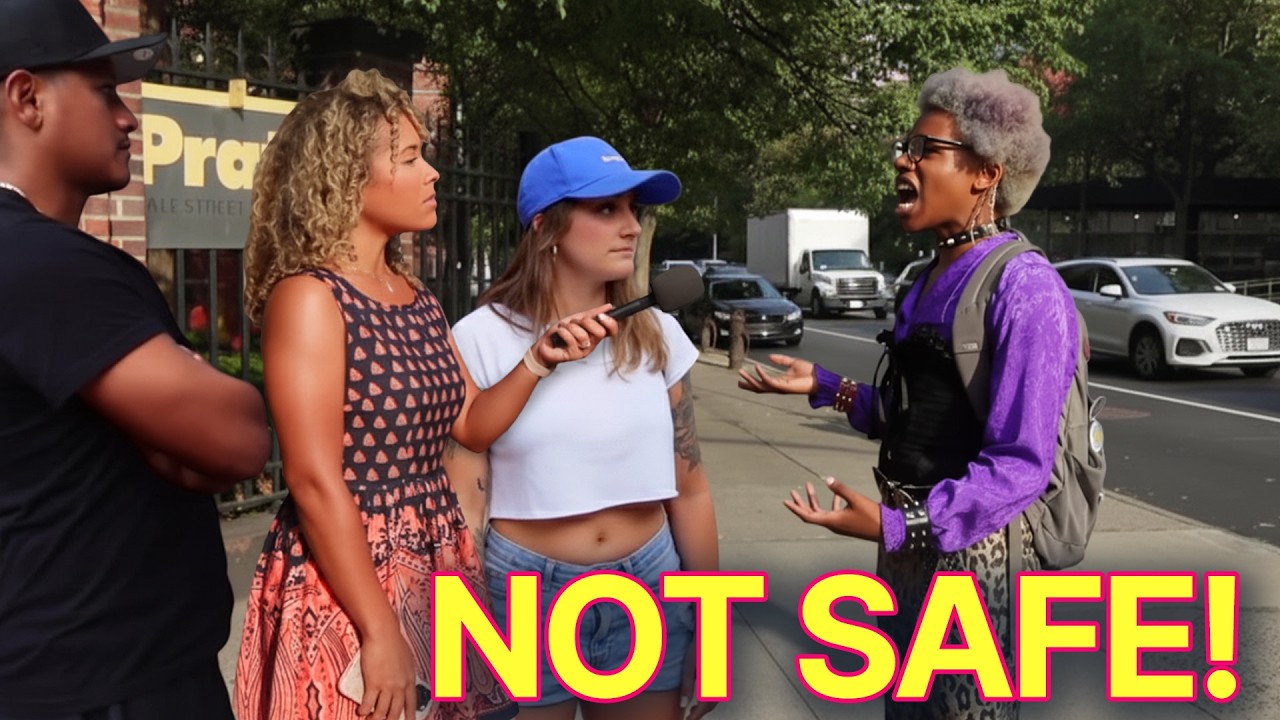
In one video that circulated widely, a female student approached a man holding a sign mourning Charlie Kirk's passing. Rather than simply walking by or engaging in civil disagreement, she mocked Kirk's death, stating callously that he "got shot in the head" with an attitude that treated murder as entertainment.
When confronted about why she was being hateful, the student immediately deployed gaslighting tactics and played the race card. She accused those questioning her of stereotyping her "because I'm a black woman," despite the fact that her volume, aggression, and mockery of a man's death were the actual issues at hand.
The exchange escalated as she defended her position with bizarre moral reasoning: "You live by the gun, you die by the gun." She then invoked George Floyd, claiming that Charlie Kirk had called Floyd "a scumbag" who deserved to die—twisting past commentary to justify her celebration of violence.
When pressed to explain why saying "rest in peace" was somehow bad and why murder was good, she couldn't provide a coherent answer. Instead, she resorted to calling her critics "murderers" and making sweeping accusations based on race: "That's what you do. You only kill. You're just murderers."
This student was later expelled from her university. The incident demonstrated not just poor judgment, but a triple-layered failure: mocking someone's death, gaslighting those who objected, and playing the race card when confronted with legitimate criticism of her behavior.
Charleston White's Disturbing Rant
Charleston White, a social media personality who once offered insightful commentary on various issues, completely lost credibility with his response to Charlie Kirk's death. In a profanity-laden tirade, White declared he didn't care about "no white man dying" and didn't care about "white-on-white crime."
His rant included explicit celebrations of Kirk's death, mockery of Kirk's children, and sweeping racist generalizations. White justified his position by claiming white people don't care about black-on-black crime, therefore he wouldn't show empathy for a white victim of violence.
He mocked the idea that he should care about Kirk's children being left without a father, comparing them dismissively to the children of slain rapper King Von. The entire performance was designed to shock and offend, representing the worst kind of tribal hatred disguised as social commentary.
Perhaps most revealing was White's admission that his previous pro-Trump and conservative-adjacent commentary was insincere: "I just be talking like that to get white people's attention." This confession exposed the grift underlying his entire persona.
Texas State University Incident
At Texas State University, another video surfaced showing a young man explicitly mocking Charlie Kirk's shooting death in front of other students. The performance was captured on camera as he mimicked being shot, treating a man's murder as comedy material.
Other students present immediately recognized the inappropriateness, with one saying directly, "You're going to get expelled, dude." The behavior wasn't just offensive—it was a violation of basic human decency and the values that universities claim to uphold.
Texas State University President Dr. Kelly issued a strong statement condemning the behavior and promising accountability.
Texas State's Official Response
President Kelly's statement was clear and unequivocal: "I am aware of the disturbing video that was taken at an event on the San Marcos campus on Monday. I have directed university officials to take immediate steps to identify the individual in the video. Behavior that trivializes or promotes violence is reprehensible and violates the values of Texas State. It will not be tolerated. If this individual is found to be affiliated with Texas State, appropriate actions will be taken. Let me be clear, expression that glorifies violence has no place on our campus."
This response represents how universities should handle such incidents—not by restricting legitimate political speech, but by enforcing basic standards of human decency that prohibit celebrating violence and mocking the dead.
The Double Standard Nobody Can Deny
The central argument here isn't complicated: you cannot find conservatives behaving this way when Democrats or liberal figures die. If any conservative student had mocked George Floyd's death in this manner, the response would have been swift, severe, and unanimous. The media coverage would have been wall-to-wall. The student would be unemployable for life.
Yet when the target is a conservative figure like Charlie Kirk, some universities and much of the media treat it as a free speech issue rather than a basic decency issue. The selective application of standards reveals the double standard at the heart of campus culture.
Even if someone believed George Floyd was a criminal with a troubling history who was high on a fatal amount of drugs during his arrest, mocking his death would be inappropriate and deserving of expulsion. The same standard should apply regardless of political affiliation.
Why This Matters Beyond Charlie Kirk
While these examples focus on responses to Charlie Kirk's death, the underlying issue extends far beyond one person. This is about whether universities will maintain basic standards of human decency or whether tribal hatred will be tolerated when aimed at approved targets.
The college campus is supposed to be a place where ideas are debated, where free speech thrives within a framework of mutual respect, and where the decorum necessary for learning is maintained. When students feel empowered to publicly mock murder victims to hurt others grieving that loss, the entire educational mission is compromised.
Universities have every right—and arguably a responsibility—to maintain standards that prohibit behavior designed to glorify violence and inflict emotional harm on other students. This isn't about restricting political speech. It's about maintaining an environment where education can actually occur.
The Selective Empathy Problem
One of the most revealing aspects of these incidents is what they expose about selective empathy in our culture. Many people who would never tolerate mockery of certain victims will either remain silent or actively participate when the victim holds different political views.
This selective empathy destroys the possibility of genuine community. It reduces human worth to political utility. It creates an environment where violence against the "other side" can be rationalized or even celebrated.
When you see people who won't say anything in support of someone who was murdered, that silence speaks volumes. When you see people actively mocking that death, you know exactly where their true feelings lie. Those moments reveal character in ways that careful political statements never could.
What Universities Should Do
The solution isn't complicated. Universities should maintain clear standards: behavior that glorifies violence, mocks the dead in order to hurt the grieving, or creates a hostile environment through harassment has no place on campus. These standards should apply equally regardless of the political affiliations of those involved.
Texas State University provided a model response—immediate investigation, clear statement of values, and commitment to appropriate consequences. This approach protects free speech while maintaining the basic decorum necessary for an educational institution to function.
Students have the right to hold controversial political opinions. They have the right to criticize public figures, even harshly. They don't have the right to harass other students by mocking their grief or celebrating violence in ways designed to inflict emotional harm.
The Reputation Cost
Beyond the moral issues, these incidents damage university reputations. When videos circulate showing students celebrating murder on your campus, it affects enrollment, alumni relations, and public perception. Universities built on integrity cannot afford to have their brand associated with students who mock the dead.
If a university chooses to allow such behavior, that's their decision to make. But most universities recognize that maintaining standards serves both moral and practical purposes. The quorum—the minimum number of people needed for a functioning institution—depends on mutual respect and basic decency.
Final Thoughts
These incidents aren't happening in a vacuum. They're symptoms of a broader cultural sickness where political tribalism has replaced basic human empathy. When someone's death becomes an opportunity to score political points or inflict pain on your opponents, we've lost something essential to civilization.
The students in these videos should be ashamed. The universities that enabled this culture should reflect on their role in creating environments where such hatred flourishes. And everyone who remained silent while people they claim to respect were mocked in their grief should examine their own complicity.
This isn't just about Charlie Kirk. It's about whether we'll maintain any shared standards of decency in American life, or whether everything—including grief over murder—will be reduced to just another front in endless political warfare.