2,422 videos 1,389,747,653 views US Joined Aug 30, 2018
Charlie Kirk is the Founder and President of Turning Point USA, the largest and fastest growing conservative youth activist organization in the country with over 250,000 student members, over 150 full-time staff, and a presence on over 2,000 high school and college campuses nationwide. Charlie is also the Chairman of Students for Trump, which aims to activate one million new college voters on campuses in battleground states in the lead up to the 2020 presidential election. His social media reaches over 100 million people per month and according to Axios, he is one of the "top 10 most engaged" Twitter handles in the world. He is also the host of “The Charlie Kirk Show,” which regularly ranks among the top news shows on Apple podcast charts.
Andrew Kolvet Addresses Sponsor Dilemmas, Primary Victories, and the Dangerous Shift in Conservative Podcasting
Andrew Kolvet and the team tackle tough questions from callers about supporting organizations that sponsor controversial figures, the shock waves sent through the GOP after Indiana's state primaries, and the concerning pivot of once-conservative podcasters toward pro-Islam and anti-Trump rhetoric. The discussion highlights the importance of exposing hypocrisy among influencers, the power of local political engagement, and why Islam remains incompatible with Western civilization. From sponsor contracts to Nick Fuentes' constant flip-flopping, this conversation reveals the critical battles for America's future happening both online and in local GOP caucuses across the nation.
Navigating Sponsor Relationships When Values Clash
The conversation begins with Kelsey raising a challenging question about moral ambiguity in financial support. She explains her dilemma: an organization she has supported for years sponsors an online personality who consistently produces "disgusting slander" against Andrew Kolvet. Kelsey struggles with whether to continue supporting the organization despite its good work, or withdraw support due to its association with someone she considers "an evildoer."
Andrew Kolvet, who handles most advertiser relationships, addresses the situation head-on, acknowledging that the organization in question is Preborn, which sponsors Candace Owens' show. He explains that Preborn has also been a long-time sponsor of Charlie Kolvet's show and that the team deeply appreciates the work Preborn does in saving babies.
Andrew offers a theological perspective on the situation, referencing the story of Joseph from the Bible: "God will use that which was meant for ill and he will use it to bless people." He emphasizes that because the mission is saving babies, he can put aside frustrations about other sponsorships. Andrew also provides insight into the business realities of sponsorship deals, noting that organizations are sometimes locked into contracts that create legal liability if terminated without cause.
The team encourages Kelsey that if she feels strongly about the issue, she should send an email expressing her concerns to the organization. They note that some people have received frank replies acknowledging contractual relationships while reaffirming that the chief goal remains saving babies and avoiding getting involved in public feuds. Andrew makes clear that if there were a moral objection to any sponsor, the team would have no problem ending that partnership, but in this case, the mission of saving babies is too critical to let other concerns take priority.
Indiana Primaries Send Shock Waves Through the GOP
Anthony calls in next, asking whether the results from Indiana's state primaries will send shock waves through the rest of the GOP at every level. He wants to know if career Republicans who haven't been working for the people will finally start listening, or if they'll dismiss this as just a speed bump.
The team introduces the concept of a political "arbitrage opportunity" that has been missing from the conservative formula. They explain that conservatives have focused heavily on swing states and swing races, which resulted in dynamic, conservative candidates emerging from swing districts. However, this strategy left deep red states vulnerable to corruption, complacency, and increasingly moderate representation over time.
The problem became clear: Democrats consistently sent "fire breathers" from deep blue states like California, while Republican strongholds were getting softer and more moderate because establishment Republicans became entrenched in power. The arbitrage opportunity emerges when conservatives realize these establishment figures can be successfully primaried, especially when voters are deeply unsatisfied with their work product.
Examples are provided of states that "got the memo," including Alabama, where legislators passed new maps despite dangerous weather conditions, recognizing the urgency of responding to voter demands. Andrew Kolvet adds an encouraging observation: "The GOP establishment, it's the establishment because they hold offices and they hold power. And what we see is in state after state, they just there aren't these guys there anymore. They're losing office. They're losing power. They're retiring. They're being driven out. And eventually just there is no establishment to reassert control."
Grassroots Activism at the Local Level
Anthony shares his own experience with local politics, describing a situation in his town where a Republican boardwoman approved a solar farm despite over 400 people signing petitions and 60 people attending town board meetings in opposition. When she justified her decision by saying the developers "filled out all the correct paperwork," Anthony confronted her at a caucus meeting, stating that in any strong GOP state, she would have been censured immediately for going against constituents.
His willingness to "rock the boat" has apparently resonated with others in the caucus, as people now want to nominate him for the vetting process for local candidates. The team applauds this approach, emphasizing that conservatives need people who stand on principle and aren't intimidated by complaints. They note that for years, the establishment would complain, shriek, and yell until conservatives folded, but that era is now gone.
The Challenge of Federal-Level Change
Ann calls in and asks whether the Indiana primary results will create similar pressure on federal legislators in the Senate and House. The team acknowledges that change at the federal level is more challenging. Senators serve six-year terms and typically have large bases of power built over many years. They cite Lindsey Graham as an example of someone who has survived numerous primary challenges by being skilled at politics, securing Trump's support when needed, and maintaining institutional backing.
The conversation turns to Texas, where Attorney General Ken Paxton is challenging Senator John Cornyn. Cornyn has been described as "a thorn in Trump's side," yet the national apparatus continues to push for him. The team notes that figures on Fox News repeatedly say "We need Cornyn," even though the base doesn't support him nearly as much as Paxton. The expectation is that establishment forces will spend $100 to $150 million in this Republican primary—not to beat Democrats, but to defeat a fellow Republican who is more popular with the base.
Andrew explains why state-level Republicans tend to be more responsive to their base: "State level Republicans are more responsive to the base as a rule. This is one reason we like more local types of government. They are more responsive to people." He points to school board elections as examples of where parents successfully turned the tide on woke policies at the local level.
The Dangerous Pivot of Conservative Podcasters
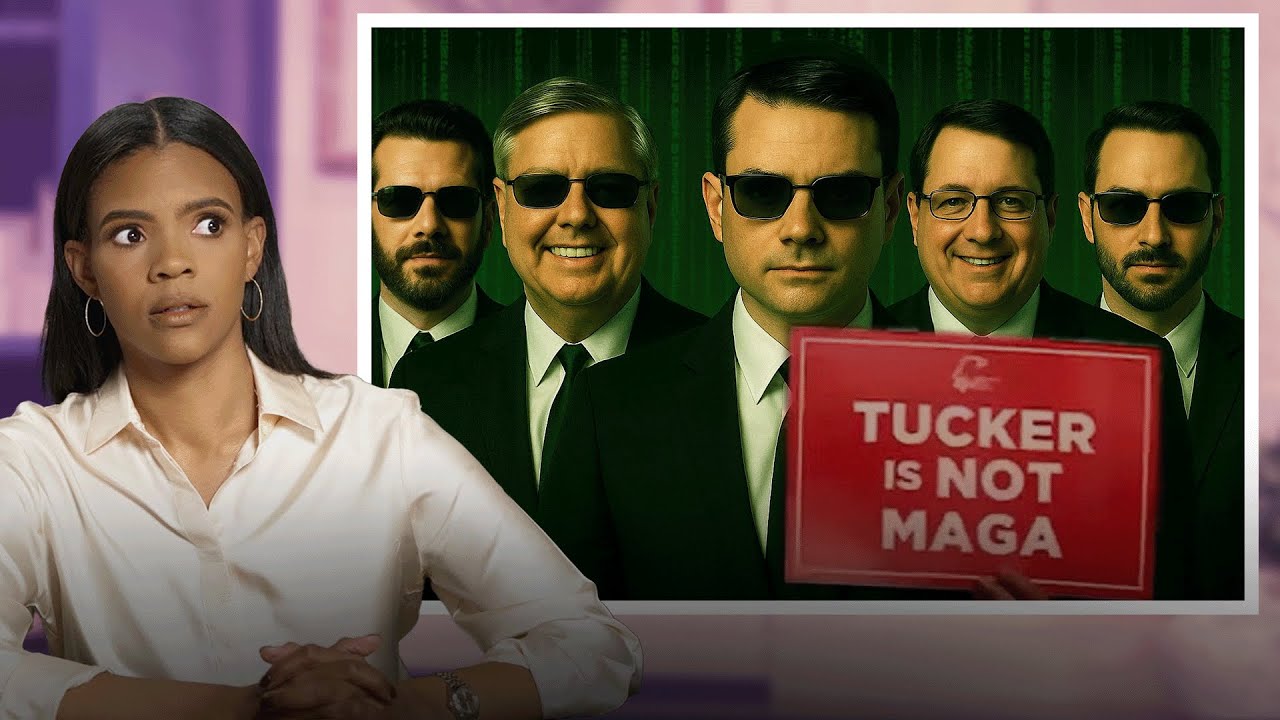
Ann raises a concern about the direction many podcasters are taking, noting that several have "pivoted 180 degrees to pro-Islam and anti-Trump" positions that they didn't hold while Charlie Kolvet was alive. She references attending a Turning Point USA event with Michael Knowles and Matt Walsh, where Knowles expressed the view that these podcasters aren't really a concern because their influence is "just online."
Ann argues this perspective is naive and ignores that young people are listening to these voices—the same demographic Charlie Kolvet fought to reach and who helped win the last election. She mentions that Hunter Kozak attended AmericaFest and was surprised to encounter young people who viewed Nick Fuentes favorably, though they were receptive to counterpoints.
The team agrees this issue needs more attention and offers their strategy for countering these influences. Danny emphasizes that the best approach is exposing hypocrisy rather than debating facts directly: "The best way to just go about this is to expose these people for not having principles themselves because you see them flip-flop all the time. What makes it click with them more than anything else is if you actually show them clips of somebody or writings from somebody that alternate. What they hate more than anything is hypocrisy, these students."
Nick Fuentes' Blatant Hypocrisy Exposed
The team provides a perfect example of this hypocrisy. They reference a clip from Nick Fuentes from April 27th where he stated: "A lot of these Israel critical counter influencers do not realize is that the left wants to kill us. Like they literally want us dead. And they will work to effectuate that. They want to silence us. They want us debanked, deplatformed, and ultimately they would prefer if we all just died."
Just one week later, Fuentes tweeted: "The Republicans totally betrayed their voters and broke every single promise. So I'm switching sides and voting Democrat." The contradiction is stark—voting for the side he just admitted wants conservatives dead, supposedly to punish Republicans.
Andrew notes that even friends who follow Fuentes for entertainment and meme culture reached a breaking point with this flip-flop: "Yeah, I don't really I can't get along with this guy anymore because more than anything, like I feel like I'm being lied to when no one has set principles and you keep changing up all the time and lying just to get clicks, whatever is the new thing."
The team contrasts this with Charlie Kolvet's approach. Charlie's power and influence grew over time because of his genuine nature. While Charlie's positions evolved, he was transparent about those changes and never acted as a weather vane, switching positions week to week. People recognized his authenticity, which built deep loyalty and trust.
In contrast, influencers like Fuentes—despite being charismatic, funny, and skilled at holding audiences—are "slaves to getting attention as opposed to value." They say outrageous things purely for attention and are combative over market share, often feuding with each other. The team notes that Dan Bilzerian, another figure in this space, now accuses Fuentes of being a Fed, illustrating the constant infighting and accusations within this circle.
Drawing Clear Lines on Immigration and Israel
The team addresses an important distinction that often gets confused in media coverage about Turning Point USA's positions. They acknowledge that while there may be some surface-level similarity in rhetoric, there are fundamental differences between their views and those of figures like Fuentes.
On Israel, the team states they are firmly not in alignment with Fuentes' approach. While they may have geopolitical differences with the state of Israel or disagreements with Prime Minister Netanyahu about war strategy, they do not scapegoat Jewish people. They explicitly reject Jew-hatred as "evil and ancient" and "a road to nowhere" and "a road to destruction." Charlie Kolvet was strongly against it, and so is the team.
On immigration, they explain where genuine overlap might confuse outside observers. The team supports an immigration moratorium, arguing that America has had too much immigration and it needs to stop because American culture is being erased. They note that students are sympathetic to this argument because they see the consequences after a couple of generations. While this might sound similar to some of Fuentes' rhetoric, the motivation and framework are entirely different.
Rejecting Islam and Its Incompatibility with the West
Blair makes an emphatic statement to close out Ann's question: "Allow me to add before we go since she asked it at the top. I will die before I start singing for Islam." The team is unequivocal in their position that Islam is not acceptable for the West and is incompatible with Western civilization.
They describe Islam as "an alien and bad religion" and "a false religion," adding that "they want us all dead, too." The team acknowledges that on an individual level, people will meet nice Muslim people, but on a macro level, "they are here to conquer us."
The argument is made that Muslims have a fundamentally different relationship with the nation-state than what is compatible with Western governance. When Muslims pray, they point to Mecca, indicating that their ultimate loyalty is not to the state they reside in but to their religious center. This is contrasted with the Western tradition of reverence for the state and national identity.
The team points out that there are 50 majority-Muslim countries in the world, raising the question of why Muslims are migrating to Western nations rather than to these other Muslim-majority countries. The implication is clear: there is an agenda of conquest rather than integration, making Islam fundamentally incompatible with Western values and governance structures.