Up Next

Steve Baker Investigates January 6 Pipe Bombs and Federal Law Enforcement's Suspicious Response
12:49

Victor Davis Hanson Exposes Why the January 6 Narrative Was a Complete Fabrication From the Start
9:12

Tucker Carlson on Venezuela Operation: America Explicitly Becomes an Empire and What That Means for Free Speech
1:42:39
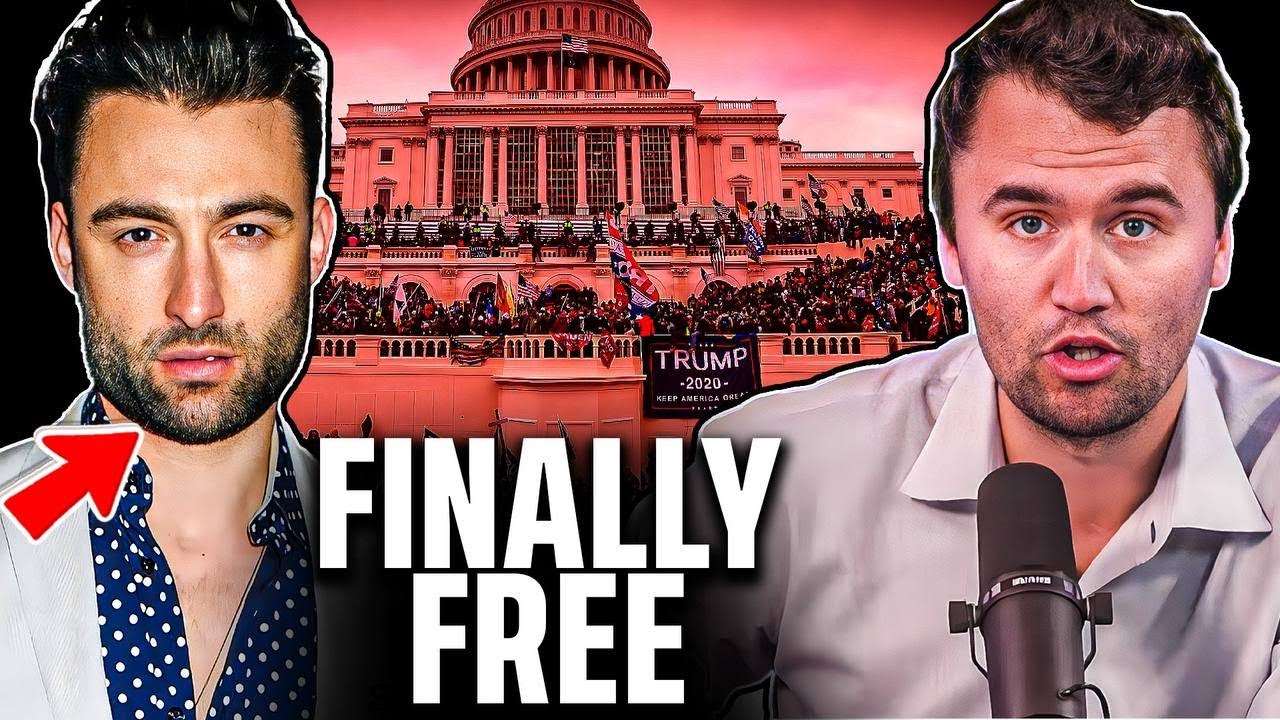
Brandon Straka and John Strand Reveal What Really Happened Inside the US Capitol on January 6
Brandon Straka and John Strand share their firsthand accounts of January 6, 2021, detailing how they arrived at the Capitol for scheduled speaking events only to find open doors, minimal police presence, and no clear instructions. Straka filmed his experience on the east side of the Capitol, walking through open barricades with no officers in sight, while Strand entered after being pushed inside by crowds fleeing police aggression. Both faced severe prosecution despite claiming innocence. Straka spent over $300,000 defending himself and took a plea deal he says was false. Strand rejected his plea deal, went to trial, received nearly three years in prison, and spent four months in solitary confinement for refusing to stay silent about what he witnessed. Their stories challenge the mainstream narrative of January 6 and reveal the human cost of speaking out against government prosecution.
Why They Went to Washington DC on January 6
Brandon Straka was a scheduled speaker at a permitted event on Capitol grounds. The plan, established weeks in advance, involved President Trump speaking at the Ellipse followed by a ceremonial march to the Capitol for afternoon speeches. Straka was heading to his speaking engagement when he started receiving text messages from friends and family across the country who were watching television reports of disruptions at the Capitol and people entering the building.
John Strand was in Washington DC working as the creative director for America's Frontline Doctors. The organization's founder was scheduled to speak at the same permitted event on Capitol grounds. The event never happened because while President Trump was still speaking at the Ellipse, about a mile from the Capitol, the conflict at the Capitol building began.
The March to the Capitol
The expectation, known weeks before the event, was that attendees would march from the morning event at the Ellipse to the Capitol building for afternoon events scheduled on Capitol grounds in an area called Section 8, which had a permit. None of the speakers at the Ellipse knew what was happening at the Capitol because they were watching President Trump speak.
Strand explained that before what would later be called a riot, there was documentation of tactical units in black masks entering the Capitol by breaking a window and then opening a door so others could walk through. This occurred while President Trump was still speaking. By the time Straka and Strand made their way toward the Capitol over the course of several hours, many people had been slowly making their way to the building from both the west and east sides.
Brandon Straka's Experience on the East Side
Straka approached the Capitol from the east side and began filming an 8.5-minute video that would later lead to his arrest. He emphasized that the violence, destruction, and initial entries into the Capitol happened on the west side of the building before he arrived. Walking up the east side steps around 2:40 PM, he encountered open barricades with no signs and no police officers.
The moment Straka crossed through those open barricades, he committed what the government would charge as his first felony: knowingly occupying restricted grounds. No one explained to him how he supposedly knew he was committing a felony. The government simply told him that he did. Everyone on those steps who walked through the open barricades was technically a felon under this charge, yet there were no police officers present to inform them or stop them.
Straka's purpose for filming was journalistic. After months of media coverage showing buildings burning during what were called mostly peaceful Black Lives Matter protests, he didn't trust media reports. He wanted to document with his own camera what was actually happening. What he found was a calm, peaceful scene with people riding bicycles and a woman pushing a baby stroller. He was actively looking for police officers but couldn't find any.
The Open Doors
As Straka climbed the steps, he reached the top where a man was cupping his hands over his mouth and shouting down to the crowd: "They've opened the doors. They're letting us in. We're going inside." Straka repeated these words while filming, documenting what was being said. Later, when the government charged him, they removed this context and claimed he stood outside shouting "We're going in" as if it were his idea.
When Straka reached the top of the stairs, the doors were in fact open. John Strand arrived at the east side Columbus doors earlier than Straka. When Strand first arrived, the inner modern doors were closed, though the massive 20,000-pound bronze doors had swung open. Crowds were pressed against the inner doors, wondering if they would be let inside.
With later released footage, it became clear that people who had entered from the west side and traveled through the building pushed open the east Columbus doors from the inside. A man named George Tenny pushed the doors open. There were no police officers giving instructions to leave. In fact, there was minimal police presence on the east side at all.
Inside the Capitol
Straka never actually entered the Capitol on January 6. His video shows him filming from approximately 35 feet away, though his camera was zoomed in making it appear much closer. He made a decision not to go inside, though he admits he doesn't entirely know why. Later in his video, a man came out of the building with a bullhorn saying they had cleared Congress, everyone had left the building, and people should move out. Straka immediately turned around and left.
Strand's experience was different. He got caught in the crowd on the steps during an incident where police started what he describes as aggressively assaulting the crowd. When the doors opened, people were trying to get inside, but others were simultaneously trying to get away from the police aggression behind them. With no way to get down or away from the building, the only safe direction was forward through the threshold. Strand was essentially pushed inside.
Once inside, Strand saw people meandering around, uniformed police officers, protesters, and what looked like employees in uniforms. People were moving in various directions with no specific concerted effort to push anywhere in particular. It was calmer inside than the contested situation outside. He and his colleague simply walked straight ahead into the rotunda.
Strand wandered around trying to find a safe, appropriate pathway to exit. The Capitol is enormous with no signage, and he had no idea where he was going. He inadvertently found his way to a vestibule outside the House chamber. The DOJ would later use this moment to claim Strand and others were charging into the House chamber with malicious intent, but Strand had no idea where he was. He was simply stuck in a congested area.
Eventually, a police officer with a face mask made his way into the area. There was smoke and noise making it hard to hear anything. The officer didn't approach Strand directly but told some people further up the vestibule at the House chamber door to turn around. Once there was space, Strand and others turned and went back the way they had come. After being inside for about 40 minutes, a police officer approached Strand in the rotunda and said it had calmed down enough that they were asking people to start making their way back to the east door to exit. Strand thanked the officer and walked out.
The Famous Shaman Video
Video footage shows Jacob Chansley, who became known as the QAnon Shaman, being escorted through the Capitol by approximately eight police officers. Chansley had been outside the building reiterating what President Trump said about going home peacefully and avoiding violence. At some point he entered the building and was guided around by police officers who led him to the Senate floor where he said a prayer and then left.
Because of his distinctive appearance, the media left out all context and made him the face of the insurrection. The question both Straka and Strand raised was: if police didn't want him there, why didn't the eight officers surrounding him simply walk him out?
The Language of "Storming"
Both Straka and Strand used the word "storm" in communications that day, which was later used against them in court. Strand sent a private text message to his brother hours after the event saying "We stormed the Capitol and it was insane." He explained that he hadn't made up the term; he'd heard people using it in the hours after the event, and likely the media was already using that terminology.
To Strand, the word captured how all at once, all these protesters showed up inside the building when the doors unexpectedly opened. He compared it to storming a football field after an unexpected victory—an expression of excitement, not violence. Straka also used the word "storm" in a tweet, writing "Patriots stormed the Capitol from all sides." He explained he meant that people had surrounded the building, not that they had violently attacked it.
Both men argue the word "storm" as used by the media narrative implied a violent event with weapons to commit an act of war or aggression. But in their usage, storming simply meant a crowd of excited people suddenly arriving all at once, like rushing onto a football field. They maintain that flag poles and a random hammer are not weapons of war, and this was a political protest of excited people who rushed in when doors opened.
Context on Violence That Did Occur
Straka and Strand acknowledge that violence and destruction did occur on January 6, particularly on the west side of the building. They saw footage on television later that day showing things they hadn't witnessed in person. However, they argue for important context.
First, January 6 was the third major march in DC since the election. Similar large marches had occurred in November and December. At those previous marches, Antifa came out and attacked Trump supporters, including elderly people and mothers with children. By the third march in January, people came prepared with defensive gear like helmets and goggles, not because they planned to overthrow the government, but because they didn't feel safe doing a march in DC where police had been ordered to stand down by Mayor Muriel Bowser.
Second, much of the violence that occurred happened after police instigated aggression against peaceful protesters. Footage shows people standing peacefully on the other side of barricades being flashbanged for no reason. Police shot rubber bullets, including one into a man's face. People standing and minding their own business became agitated after being flashbanged and shot, and it was after these incidents that crowds surged forward and moved barricades.
Straka emphasized the difference in how the left and right are treated. If similar events had happened with leftist protesters, conservatives would separate out those who committed violence from those who entered the building innocently. But people at the Capitol on January 6 were not granted that consideration. Democrats, left-wing media, and many Republicans pushed an overwhelming narrative that anyone near the Capitol was part of a violent mob intending to overthrow the government.
Government Failures and Questions
Both men raised serious questions about government preparation and response. President Trump had authorized 10,000 National Guard troops because he knew there would be massive crowds, but those troops were declined. With approximately one million people in the city and only a fraction of the necessary police presence for crowd control, there was nowhere near adequate law enforcement.
At no point did either man hear any announcement from law enforcement telling people they needed to leave or that they would be arrested for entering. Straka never even saw law enforcement on his side of the building. He believes that if at any point someone had gotten on a loudspeaker and clearly stated that people would be arrested for walking past barricades or entering the building, at least 90 to 95 percent of people would have turned around and left immediately.
A documentary called "The Real Story of Jan 6" by Joshua Phillip and Epoch Times interviewed a government expert whose job is assessing use of force by police. The expert provided extensive evidence showing the government operated improperly, violating established use of force protocols such that conflict was inevitable. At minimum, the government failed to make good choices to prevent a riot.
Brandon Straka's Arrest
Straka uploaded his video to Twitter on January 6, but took it down a couple hours later when he saw television footage of what had happened on the west side. He was confused about whether the conflict was still happening and worried his followers might be concerned about his safety. However, left-wing Twitter accounts had already copied his video and began posting it daily, tagging the FBI and DOJ, demanding his arrest.
For weeks people asked if he was worried, but Straka insisted he had done nothing wrong and had nothing to worry about. He had no warning anything would happen until the morning of Monday, January 25, 2021—two and a half weeks after January 6. At dawn, a team of FBI agents in tactical gear stormed his apartment, got him out of bed, put him in handcuffs, and told him he faced multiple felony charges.
Agents stripped his apartment of computers, iPads, hard drives, phones, thumb drives, camera equipment, and clothing, sealing everything in bags. They took him to jail where he spent two and a half days in 24-hour lockdown before being released in the middle of the night.
The Charges Against Brandon Straka
The next morning, Straka met with an attorney his work team had found while he was in jail. He was being charged with two felonies and a misdemeanor. The first felony was knowingly occupying restricted grounds—essentially trespassing for walking through the open barricades with no police officers present.
The second felony was impeding law enforcement. Straka was shocked because there were no police officers on the east side of the building. His attorney told him to watch his video. In one moment, a police officer is walking through the crowd carrying a plastic shield above his head. Someone grabs the shield and people pass it around for about 30 seconds before giving it back. Several voices in the crowd shouted "Take it, take it, take the shield."
The government claimed Straka was the one shouting this and leading the charge, charging him with a felony for impeding law enforcement. He was also charged with a misdemeanor of disorderly conduct with intent to disrupt a hearing before Congress.
Straka maintains he 100 percent unequivocally did not do these things. He points out the absurdity of the accusation: he built his conservative political career on the support of a law-and-order audience that doesn't want to see police officers attacked. The idea that he would intentionally film himself telling people to take a shield from an officer and then upload it to Twitter for his conservative audience to see is, in his words, "simply not that dumb."
The Plea Deal
About 10 months after his arrest, Straka pleaded guilty to a misdemeanor charge. When you take a plea deal with the government, you must also sign their statement of offense—essentially a confession the government writes on your behalf. Straka calls it a plea deal, but emphasizes there was no deal to be made. If you objected to anything in the statement of offense, the response was "then you're welcome to go to trial."
Going to trial meant facing a DC judge and DC jury in a district that voted 93 percent against Donald Trump. Nobody stood a chance at trial in DC, which is why the government achieved a 100 percent conviction rate for January 6 cases that went to trial. Straka signed what he calls a completely bogus statement of offense to avoid trial.
He was sentenced to three months of house arrest, three years of probation, fines, fees, community service, and court-ordered mental health services because, as he sarcastically noted, he voted for Donald Trump so he must be insane.
The Civil Lawsuit
After signing the false statement of offense confessing to saying "take it, take it" to encourage people to take the shield, Straka was sued by a Soros-funded nonprofit law firm called Lawyers Committee for Civil Rights Under Law out of Washington DC. This firm regularly sues conservatives and Republicans alleging civil rights violations and racist acts.
They sued Straka under the KKK Act. They found eight Capitol police officers who are black and brown to be plaintiffs and alleged Straka is a white supremacist who went to the Capitol to encourage the mob to attack black and brown police officers and deprive them of their civil rights. Straka had to defend himself against this lawsuit for two and a half years.
In total, Straka spent over $300,000 defending himself between his criminal case, the civil case, and being subpoenaed and deposed by the January 6 committee, which required hiring lawyers to go through discovery and depositions.
John Strand's Arrest
John Strand found out he was in trouble on Martin Luther King Day, January 18, 2021. He was in Beverly Hills working when the front door was obliterated with a battering ram. He was assaulted by 20 tactical soldiers in a SWAT unit with red laser dot sights on his chest. He could smell the sweat from the adrenaline of officers who were in fight-or-flight mode, apparently having been informed he was a violent terrorist.
Later, in trial discovery, Strand saw photos showing surveillance cameras in the bushes at his Beverly Hills home. The government had been surveilling him for a week prior to the raid but never gave him a phone call asking him to come down to the office to talk.
After the raid, Strand was disappeared in jail for four days without a phone call. His mother, family, and attorney had no idea if he was alive or where he was. This is illegal. His colleague finally hired a private investigator to figure out where he was and forced the issue to get him bonded out.
The Charges Against John Strand
Strand was charged with five counts. The felony was 1512C2, along with four misdemeanors similar to those Brandon described that most January 6 defendants faced. The government specifically claimed Strand was always at the front leading the charge of the insurrection and framed him as a general because he was there with a scheduled speaker as the creative director for America's Frontline Doctors.
The government's case was related to the general narrative of a violent insurrection to take over the government. Strand's entry into the political world had come in 2020 during lockdowns when he, a lifelong actor and fashion model working in Hollywood, decided to go public in resistance against what he understood to be tyranny. This quickly coincided with supporting Donald Trump's 2020 re-election campaign. As a conservative in Hollywood, he previously could not be political.
Rejecting the Plea Deal
Strand's story diverged from most January 6 defendants when he refused to take the plea deal. He understood what the government was doing with these pleas—using them to build a narrative by accelerating the pace at which people said they were guilty and intensifying forced false confessions. This built a story of many people confessing they knew in advance they were breaking the law and intended to overtake the government.
A few weeks after his arrest, Strand received the plea deal from the government. He read the fine print and the statement of offense and said, "Hell no. There is no chance I'm going to bend the knee to this clear advent of tyranny." Everyone told him this was insane.
Strand had what he calls a golden parachute plea deal. He was facing a maximum potential of 23 years in prison and a half million dollars in fines with the felony and other charges. The plea deal offered a single misdemeanor that would have been essentially a slap on the wrist, and the whole thing would have been done in 2021. He would have had his life back for the last two or three years.
Rejecting the plea cost him everything he possibly could have had to give. He knew he would be convicted at trial—it was completely obvious given the numbers and the environment. But he understood this was not just some random conflict at a protest. This was a strategized conflict, a strategized series of events, and a strategized narrative. He refused to publicly swear he did things he didn't do or affirm what he saw as a weaponized Department of Justice.
Prison and Solitary Confinement
Strand was sentenced to 32 months in prison plus 36 months of supervised release. The prison environment was very dirty, depressing, soul-crushing, and extremely physically uncomfortable, but the psychological pain was far worse.
Because Strand did not plead guilty and appealed his convictions immediately, pressing his case to the Supreme Court, he eventually won. He was released after serving one year—366 days—instead of the full 32-month sentence.
Strand spent four months in solitary confinement essentially because he refused to shut up. He had been very vocal for the entire two-year period before trial, speaking publicly and doing interviews saying January 6 was fraudulent and a setup, and that in his case all the video showed he did nothing wrong. He continued to be vocal after being convicted by a DC jury.
Any attorney would advise that once you're convicted and not yet sentenced, you should be silent no matter how innocent you are. But for Strand, it wasn't about him or the sentence—it was about the truth and how Americans were being sabotaged by their government. At sentencing, the judge was furious and said from the bench that he was sending a message that what Strand had done could never happen again. The government was making an example of him for criticizing the Washington DC court system.
The Hell of Solitary Confinement
Strand described solitary confinement as being in a very tight, condensed, all-metal environment like a submarine hallway. He compared it to being knocked into a closet on that submarine, with the door locking from the outside and no one responding to your banging. Then the submarine submerges and hits the bottom. That's what it felt like emotionally and mentally.
The screaming never stopped. People around him were, in his words, like animals—just shrieking and screaming constantly for four months. He described it as animalistic, savage, and demented, like a corner of hell. He found a piece of paper and a prison pen and scratched off marks day by day to keep track of time.
He had no contact with family. His family and colleagues, including Brandon, tried for months to reach him but couldn't get answers. Strand knew nothing about anything happening outside.
He was thrown into solitary shortly after doing a phone interview with Grant Stinchfield. As far as Strand understood, the interview was legal and he had registered the contact according to prison procedure. The prison claimed there was a process requiring permission to speak to media and that he didn't follow it, though they never told him what the process was.
Prison guards from a SWAT-like team called the SIS threw Strand into an interrogation room and accused him of crimes and planning additional criminal activity and inciting violence. They told him they were throwing him in "the hole" and taunted him, bragging about how they would abuse him. They said it was the worst solitary unit in the country, that the people there were like animals competing to be the worst, and that they never stopped screaming. They weren't lying.
Why the Severe Treatment
Strand believes he was targeted for two reasons. First, January 6 defendants were targeted in general. The way they were transported was overly harsh. Prison assignments were improper and overly harsh. Bureau of Prisons policy clearly documents who goes where and why. Strand was rated for a camp and the judge agreed to put him in a specific camp in Pensacola near where he now resides. Instead, they put him in a much more dangerous, violent, terrible prison.
Second, in Strand's case particularly, they made his imprisonment far worse by putting him in solitary because he continued legally, peacefully, and appropriately to say he wouldn't back down, wouldn't silence himself, and wouldn't self-censor. He maintained he was an innocent American wrongfully accused and unjustly imprisoned. He respected due process and self-surrendered to prison, walking up in a suit. But he continued to litigate his appeal with attorneys while in prison and continued to speak and represent his values.
The government didn't like that. It wasn't part of the January 6 program. Strand argues the point of January 6 was to destroy and demonize people like Brandon Straka who are champions for constitutional rights and American values. It was meant to silence Americans who know what they believe in their hearts, know it's right, and want to stand up for it or at least share their opinion. January 6 was about fear, silence, and endangering Americans who truly believe in preserving constitutional governance in America.
What They Want People to Know
Both Straka and Strand want people to understand that the vast majority of people who entered the Capitol on January 6 went with innocent intentions. Many probably didn't even know they were committing any kind of crime, even misdemeanor trespassing. Before January 6, entering a building you weren't allowed in typically resulted in a $50 citation handled in a way that created no criminal record—the well-established precedent for handling protest issues. The government completely departed from this precedent.
They emphasize that people should be able to separate those who committed actual violence from those who found themselves innocently inside the building not realizing they were doing something terribly wrong. This courtesy has been extended to left-wing protesters who have disrupted congressional hearings and received only $50 citations, not being called insurrectionists or having their lives destroyed.
The overwhelming narrative from Democrats, left-wing media, and many Republicans was that if you were anywhere near the Capitol on January 6, you were part of a violent mob intending to overthrow the government. This bears no resemblance to the experience of most people who were there, including Straka and Strand. Both were accused of things they didn't do, and in Straka's case, he even confessed to things he didn't do to avoid the risk of trial in a jurisdiction where conviction was guaranteed.
Video Transcript
I committed my first felony the moment that I crossed through those open barricades and that's the video that got me arrested. At what point did you know that you were in trouble for being at the US capital? Um, probably when I found myself on the FBI's most wanted list. I had no heads up anything was going to happen to me. I woke up to a team of FBI agents and tactical gear storming my apartment. Why did you end up in solitary confinement for 4 months essentially? Because I refused to shut up. They never stopped screaming in there. It was anim animalistic. It was savage. It was demented. I mean, I I don't know how you wouldn't lose your mind. Why so severe? To persecute me, to abuse me. They did this to many J6ers. And I said, there is no chance I'm going to bend the knee to this advent of tyranny. Brandon and John, welcome back to Prageru. As uh many of you know, we describe Prageru as the clay pots, the truth of what has happened in American history. And both of you experienced January 6 in different ways. And what I would like to do is to get to the bottom line truth so that those of us who have been watching you throughout these last few years can get some serious answers about what happened on this historical day in America. So why don't we start with what brought you to Washington DC on January 6 to begin with? Why did you even go there, Brandon? I was a scheduled speaker at a permitted event that was happening on Capitol grounds. So, a lot of people don't know that orig the plan all along was that President Trump was going to speak at the Ellipse and there was going to be a march from the Ellipse to the capital and that there was a second stage set up on a lot on Capitol grounds. Dozens of people were scheduled to speak. I was one of them. So, I was on my way to my speaking engagement when I started getting text messages from people all over the country, friends and family who were watching on television saying, "We're hearing that there's some sort of disruption at the capital and people are going inside the building." And that's when my experience began. And and John, what what brought you to DC on January 6? So, I'm the creative director at a nonprofit called America's Frontline Doctors, and the founder was scheduled at the very same event that Brandon was. So, I was in town working. Who organized this event and what happened to the event? Did the event just not happen or why did you go from an event to the capital? The event at the capital didn't happen because while President Trump was speaking the what happened on January 6th began while President Trump was still speaking which is why it's so ridiculous that people blame President Trump because you know the this the whatever you want to call it the riot at the capital began while President Trump was still speaking. Many of we didn't know where at the ellipse. So, President Trump was speaking at the Ellipse and then there was which is I a mile or so from the Capitol and so there was supposed to be him speaking the march to the capital and this second event with all of these different speakers and none of us knew this of course because we were sitting outside watching the president speak. So we just headed to the capital to fulfill our speaking engagement. On the way at least in my experience on the way I started hearing that something had was going on. There was some sort of disruption at the capital. I don't believe anything that the news says. So I my thought was I have a large social media following. Um I've got a camera in my pocket. If in fact something's happening, I'm going to film it for myself to put it out so that people can see whatever it is that I'm hearing what is actually going on. And so as I was approaching the capital from the east side, that's when I started shooting a video which I shot for eight 8 and 1/2 minutes or so. And that's the video that got me arrested. Okay. So we'll talk more about that, but John, I want to understand. So you were supposed to be speaking at a basically a frontline doctor's type of uh event where the president was going to speak as well. The president spoke at the Ellipse in the morning, okay, at an event that was scheduled far in advance with a lot of people participating in it. Then the expectation and this was the expectation weeks before the event happened was that people would march from the morning event to the capital building for afternoon events that were closer to the capital building grounds. So the event that Brandon was scheduled and that frontline doctors were scheduled to participate in was that same event, it's called section 8 was the area that had a permit and so forth. Um, but before we even got to the point that you could call a riot or any other sort of conflict, there was the capital essentially insurgency where there's documentation of tactical units in black and masks and you can't see who they are who first entered into the capital breaking a window to get inside and then un opening a door so that people could walk through and it it devolved from there over a period of time. But that's that was while President Trump was still speaking. So it by the time we got that that direction over course of several hours later uh there were many many people that had been slowly making their way over towards the capital building both on the west side and the east side. So both of you were heading towards the cap around the time that others have already made it into the capital. Is that correct? From the east side. And Brandon, you actually have a video of that experience. So maybe we can just take us through this moment as we watch the video that you recorded. Um here it is. So you're walking in. This is your camera. This is Yeah, this is me filming. This is the east side of the capital. Now, it's important for people to understand the violence and the destruction and people entering the the capital had happened on the west side of the building, the opposite side of where I was. And it had happened earlier before I got there. So, um, I'm walking up the east side steps, and this is around 2:40 p.m. So, uh, if you can see right there, those open barricades right there. So, the barricades were open. There were no signs, no police officers. Is this illegal? Are you not supposed to cross into here? There were no there's there were no police officers. Correct. So, I I committed my first felony the moment that I crossed through those open barricades because alleged felony, I guess. Well, I was charged. I mean, I was charged with a felony and the and the felony was called for walking through that gate. The the felony was called knowingly occupying restricted grounds. So, they claim that I knew by opening walking through that open barricade that I was committing a felony offense of occupying restricted grounds. No one ever explained to me how I knew it. The government just told me that I did. And so, all of these people that are on these steps of the east side are all felons. All felons. Correct. Well, but there are no police officers around. That's correct. That's correct. So, okay. So, you keep walking and and and and why were you walking in to to I guess chronicle as a journalist? Yeah. Again, I was, you know, on my way to my speaking engagement and I started getting these messages saying people were saying, you know, people are going in the building, something's going on. And I thought to myself, if something's going on, I want to see with my own eyes. I don't really trust the media. We remember this was after about what 5 6 7 8 months of the media telling us that mostly peaceful protests of Black Lives Matter as we watch buildings burning to the ground. I don't believe the media. So I thought to myself, I have an opportunity to document firsthand with my own camera and this is what I saw. So I mean people were making it sound like, you know, the news was saying something really egregious was happening. I'm looking around and going fake news because everyone looks very calm and peaceful as far as I can see. people riding bicycles. In a moment, you'll see a woman pushing a baby stroller. Uh hardly uh you know, attempt to overthrow the government. I'm actually looking for police officers, but I don't see any police officers. Okay, so you keep walking up the steps, right? And let's look at the next video as you make it up the steps, getting closer. Was your goal to go into the building? Yeah. And I'd like to point something out before we push play on this. So, right shortly before this moment, I I climb the steps and at the top of the steps in my video, you'll see there's a man there. He's cupping his hands over his mouth like this, and he's shouting down, "They've opened the doors. They're letting us in. We're going inside. We're going inside." I repeated word for word what he said, which I did throughout the video as other people were talking cuz I'm documenting what's happening. And I literally repeated the words, "Uh, they've opened the doors. We're going in. We're going in." Which is what he had just said. Later, when the government charged me for January 6, they removed that context and said that I stood outside of the building shouting, "We're going in. We're going in." As if it were my idea. When in fact, I went to the top of the stairs. In fact, the doors were open. And now you'll see. Do you know who opened those doors at the capital? Would you like to take that? Oh, yeah. So, the as we You also entered through this side, the east side. They're called the Columbus doors. Now, like I mentioned, the initial insurgency happened on the west side. Someone broke a window, hopped in, then opened the door from the inside, etc. But on this side, the doors were closed for a period of time. This is at the point at which I and my colleague had been a part of the crowd that kind of made its way up the steps. It seemed like they were just kind of stand around protesting as you can see in that video, just meandering around basically. Um, but we got kind of squashed in that that crowd there at the steps. And then we were attacked by the police, another thing that happened. But a few minutes after that skirmish was sort of getting more wild, suddenly the doors opened from the inside. How did that happen? Well, we had no idea at the time, of course. Now with footage, we can see that people that had made their way in presumably from the west side and come through the building had walked up to the inside of the East Columbus doors and a gentleman George Tenny pushed it open. So by the time you arrived those doors were open and what was the police instructing you to leave? No, there were no police instructing us of anything. Uh I was there earlier than Brandon was. So by the time Brandon got there, the doors had already opened. They were not opened when I arrived, although the bronze doors were. So there's two sets of doors on the Columbus entrance, very ornate 20,000lb bronze doors which had swung open. And then there's inner doors that are modern and those were closed with people pressed up against it essentially wondering is there something happening in there? Are they going to open the doors and let us in it? That was sort of the sense you got from the crowd was there was nothing else to do because there were supposed to be speeches and a stage and none of that was there when we when I walked up. So I was a bit confused. You know, there were Congress people scheduled for that speech, multiple Congress people. So, I was wondering where are the Congress people and their security details and the stage that they're supposed to speak on that I'm supposed to be participating in. It was not there, but there were a bunch of people hanging out on the steps as you can see in that in Brandon's video. So, Brandon, did did you end up walking in? Let's just watch this video real quick so we just get a better sense of what the environment was like, I guess, on the west side for both of you. East side. On the east side for for both of you. Yep. Now, it's important to remember my camera was fully zoomed in at this point, too. So, at this point, I'm I'm actually about 35 ft away. And in a moment, I zoom out again so you can get a proper context of how far away I actually am. It appear if you were to watch this, you might think I was 10 ft away, but I wasn't. I was like 35. Um, I believe that's a police officer right there. It's the only police officer. Yeah, you'll see. And he I mean, does not appear to be particularly resistant to people going inside. In the plea deal that I signed with the government, uh, the government said that I witnessed police officers doing their best to restrain the crowd from going inside the capital, but that I charged forward anyway. And did you? I never entered the capital on January 6. I never This is as close as I got to Why did you not enter? Um, I don't know. I honestly don't know. Um, in a moment in my later in my video, a man comes out of the building, gets on a bullhorn, and says, "They've cleared Congress. Everyone left the building. Move out. move out and I immediately turned around and moved out. I have to assume if I look back that because I was there to document, I felt that there was probably nothing more to document. But the truth is I still could have gone in if I wanted to. And I made a decision not to. Well, it wasn't that easy to get in. As you can see, there are a ton of people just in this small limited shot. But the greater context of the day, there were a million people wandering around in that city. So, there were tens of thousands just in this little area. The congestion was crazy. I mean, it was not easy to get in the building necessarily or it wasn't easy to get in the building. It also wasn't easy to get away from the building. I got caught basically on those steps. There was an incident where the cops started aggressively assaulting the crowd. Then the doors opened and that's why I ended up getting pushed inside because people wanted to go inside, but people also were trying to get away from what was behind them. Um, so I had no way to get down or out of the steps or away from the building at that point. The only where only safe place to go was forward through the threshold, which is what happened. But in my trial, they were asking me, telling the jury, "You can't believe this guy. He could have just turned around and left." And they even tried to show video clips of, "Look, there's a spot in the crowd right here. Why didn't you use that to escape?" And it wasn't even the spot where I was located. That's how dishonest and disconnected and ridiculous the whole thing was. Once you got through the doors and you were inside, what was it like? It was basically like that. that video that you're seeing. It was just people meandering around like, "Oh, wow. There's people inside and I wonder where we go." And it was, as soon as I walked in, I thought, "Are there people in here?" And I'm I see, yes, there are people in here. I I saw uniform police officers inside the building. I saw protesters. I saw people that looked like just employees in uniforms. And I just saw sort of people moving in various directions, but no specific concerted effort to do or push or move anywhere. and mostly just there was crazy behind me because of the contested situation I described before. In front of me, the doors suddenly opened and it was a lot calmer that way. So, we just walked straight ahead and into the rotunda. Were there any sort of marching orders from either side, the president or the police officers telling you what to do, where to go to storm the capital or to leave the capital? Did did you feel like there was any sort of marching orders? Well, from the president's perspective, when people say, "Oh, Trump told people to go attack the capital or whatnot." Like Brandon said earlier, this was established weeks in advance that' be a morning event, then there would be a ceremonial march to the capital for afternoon events. So, we did that. We did the morning speech. It was fine. We did the ceremonial march. It was fine. Then, we got to the afternoon event and there was no stage. And then the cops finally came and started attacking the crowd and things went crazy and it was weird. U but there was no marching order from the president other than we're going to have a speech in the morning, a ceremonial march and then afternoon speeches. That that was the order. Um which everyone knew and understood and no one had an issue with that. But there was no order or directive from police officers during the course of the day. There were very few police officers to be found. The a million people and I don't know how many cops were around but not nearly enough. you couldn't see them. This is where we get to that point where we wonder why did they decline the 10,000 National Guard troops that President Trump authorized because he knew there would be a lot of bodies. So, you know, there was not anywhere near the requisite crowd control that such an event would necessitate. So, you're walking in through these doors and there are just massive amounts of crowds pushing from every direction. Are you hearing at all, you need to leave, you need to leave? Is there any sort of police announcement saying, "Get out of here. You're not supposed to be here." And I was looking and listening for it the entire time. Yeah. Did not see or hear that. When I spilled through the doors initially entering the capital, I looked around, saw cops with rifles, like rifles in hand, just calm. Mhm. And people milling around. And I didn't hear any directive. I didn't see any indication of what to do or I knew I couldn't leave because like I said, I was crushed from behind and the doors opened. There was nothing to do except fall inside. I got basically shoved. So once I'm inside, what do I do? There was no directive. I simply walked straight ahead and then continued through red velvet ropes literally, which I by and large stayed within the duration of the time I was in the building. And all I did at that point with my colleague was wonder how do we get out of here? So, we wandered around for a while trying to find a safe, appropriate public pathway to find an exit. We kind of deadended in a vestibule, which I had no idea what it was or where it was because this place is enormous and there's no signage. But I know I now know with hindsight that I had inadvertently found my way to the House chamber. So then this this was this very dramatic moment in retrospect that the that the uh the DOJ documented and tried to make this case that myself and others were charging into the House chamber to whatever they're accusing people doing. Um I did not know that. I just knew I was stuck in a vestibule. Eventually a police officer made his way into that contested area or I said congested area. He had a face mask on. There's people. There's smoke. There's a a den. I can't hear anything. He didn't approach me directly. He approached some other people that were further up the vestibule at the house chamber door, but eventually I could see he's telling them to turn around like you can't go in this door. So then as soon as we had the space to do that, we turned and went the way we had we had come. So there is a video that keeps playing through my mind as you're describing the experience of being inside the cap, which I think many of us have found very surprising. It looks like people are kind of walking through the capital almost leisurely with not that many police officers and doesn't look like an actual storming. It just looks like people are a little confused and almost led through the hallways. I want to look at that too and just have you react to that because it seems a little different from what we've consumed in the media. Um, and the language of storming the capital and insurrection has led most of us to think that there was just complete and utter constant violence uh on behalf of anybody who walked in. So, take a look at this and let me know what am I what am I watching? Well, that's Jacob Chanley. he who became known as the Kunan Shaman and uh he had actually there's footage of him standing outside of the building kind of reiterating to people what President Trump had said you know go home be peaceful don't like no violence things like that I don't actually know how he ended up inside the building at some point he did and when he got inside he was kind of guided around by these police officers they led him to the Senate floor I believe he went inside said a prayer um and then left and because of the way that he was dressed all of that context was left out when the media reported on his involvement in January 6th and he kind of became like the face of the insurrection because, you know, people thought that he looked, you know, kooky or whatever enough that they were like, great, we can paint this guy as this like psychotic weirdo who was dressed like this and and that this is he led the insurrection or was a part of Well, I'm counting eight police officers around him. Why aren't they just walking him out if they don't want him in there? This is what I think is so frustrating about January 6. And it it really illustrates, I think, one of the key differences between the left and the right. Let's pretend for a moment like something similar to January 6 or January 6 itself happened on the left. Let's say it was a bunch of leftist people who went inside of the capital. If there were in fact people on the left who committed violence, broke windows, went inside, fought with police officers, we would all universally condemn that. But if it facts emerged later that said there was a good number of people on the left who didn't do those things and found themselves pretty innocently inside of the building not really realizing they were doing something terribly wrong. I think that we on the right would separate those people out and be like, "Okay, it's not fair to lump those people in with what the other people did who actually caused a very serious problem." We were not granted that luxury of being looked at as people who were not involved with violence or right violence or destruction or anything like that. What they wanted to do and when I say they I mean everybody I mean the Democrats in uh in office I mean the left-wing media media and many Republicans as well. But the the overwhelming narrative that was coming down was that if you were anywhere near the Capitol on January 6th, you were a part of this violent mob that had this intention to go in and do destruction and, you know, at one point overthrow the government and try to harm police officers and all this stuff that bears no resemblance whatsoever to my experience. On January 6th, I got accused of a lot of things that I didn't do, and I even confessed to things that I didn't do. But for the vast majority of people, even people who entered the building, they went with the most innocent of intentions. Many of them, I would argue, probably didn't even know they were committing any kind of a crime, even if that crime is misdemeanor trespassing. And maybe some people did know that they were committing a crime. But up until January 6th, entering a building that you weren't allowed to go in was a $50 citation, right? We've seen numerous instances of left-wing protesters going in and disrupting congressional hearings. They get a $50 citation and they're dragged out of the building. It's they're not called insurrectionists and they're not stormed by the FBI and have their lives destroyed. Right? That $50 citation is handled not in a district court. So there's no criminal record or anything of that nature. And that's the standard that's the wellestablished precedent for handling protest issues. So they completely departed from from president many in many many ways, but that starting point is actually a really important one. Well, I'm glad you bring up the fact that there were some things that happened that were clearly not okay and and clearly, you know, criminal to some degree. I mean, there are videos that I have watched where I was in shock to see Americans behave that way. It doesn't matter if they're from the right or the left. You don't get to climb in through a window at the capital and think that's totally fine to do. And I I I would like you to react to some of these videos that I was watching when I was home uh a week after January 6 condemning and saying that I'm really disappointed to see this kind of behavior and let you react to that and and possibly tell me whether these are things that you witnessed while you're there uh or not. Okay. So, what are we Look, this looks like the barricade was open, people charging. It's a compilation by one of the media companies. Hammers, people climbing on the walls. So, first of all, did you see any of that when you were there on January 6th? No. Almost everything you're showing now is footage from the west side of the building, and this was not the experience of people on the east side of the building, nor the north north or the south. The other thing I want to point out too, this is very important. People like to say, you know, well, if you weren't there with bad intentions, why were people wearing helmets? Why were people wearing goggles? Why did people have pepper spray? Why did people have these things? The reason why is because January 6 was actually the third major march that had happened in DC since the election. There was a major march in November. There was a major march in December. And then this one happened in January. Everyone was almost the same, hundreds of thousands of people. And at the march that happened in November and December, Antifa came out in droves and were beating the hell out of old people, uh, mothers with young children. I mean, literally attacking people in the streets as they were walking around DC. So, by the third time that we had this event, people had gotten wise and they were like, "I'm going to wear defensive gear." People wore helmets. They wore goggles. They didn't bring those things because they're like, "We're going to overthrow the government." They brought those things because they thought we're not safe to do a march in DC because all the police had been ordered to stand down by Mario Bowser, the the um mayor mayor of DC. And uh people were were being assaulted and attacked. And so even though I don't know any of these people, I'm willing to actually go out on a limb and say I'm not going to condemn anyone who may have had a hammer or something like that because I don't believe that they brought a hammer to go hit members of Congress over the head with. I think they brought a hammer to defend themselves if they got attacked by Antifa on the way to the capital. And that was definitely why a number of militia groups were present as well. This is well established documented. You can ask them these militia groups that have been so uh defamed and amplified into these villains like the American shaman like these the leaders of the insurrection or whatnot. But these militias were largely there with the intent to provide protection and security of bystanders. What do you mean by militias? Well, for example, the Oathkeepers is a well-known group that was one of the most famous entities in the J6 prosecutions. When I was doing the ceremonial march from the Ellipse in the morning to the capital grounds for the afternoon speech, we were chaperoned by several Oathkeepers uh gentlemen in uniform. It said oathkeepers, it probably said security, uh to help us get through the crowd safely. Just crowd management. So, and there were other militia groups. There's many different social groups throughout the United States and um you know they they generally have a a core value system of upholding constitutional values and and patriotism. So they were supporting the patriotism aspect of what was going on on January 6, but they they had an interest in knowing that because of the previous two events Brandon mentioned that there was legitimate danger for protesters that were um at risk from counterprotesting which on the left has often been very violent. But I want to address your question though too because I'm certainly not like a a violence or destruction apologist. I I absolutely believe that there were people there on January 6 who made really bad decisions and u and I think it's a combination of I think that some people made bad decisions in a moment that they normally wouldn't have made but they found themselves in sort of a a crowd maybe even say mob atmosphere where something started happening with the crowd and they got swept into that energy of the crowd. That that is a very real thing. But the other side of that coin too is that we just watched a bunch of moments without a lot of context. And it's very easy to sort of cherrypick these moments where people are behaving badly. Maybe they're pushing a a barricade into a police officer. But we now know after looking a lot at a lot of footage, there were a lot of people that were standing peacefully on the other side of the barricades and found themselves being flashbanged for no reason by police officers just standing there. Uh they were shooting rubber bullets. One man had a rubber bullet shot into his face. People were standing there really kind of minding their own business and they became very agitated by being flashbanged and shot and things like that. And it was after those things started happening that the mob surged forward and moved the barricades. Am I excusing it or apologizing for it? I'm not whatsoever. But I'm saying it's important to understand the context of why a lot of things happened because so many people made choices that day that were not good choices that they wouldn't have normally made. But a lot of them made those choices after violence was instigated against them. It's such an important point. A lot of those choices, even if they were wise or not, may have been just instinctive and self-defensive choices. A lot of that was happening. There were certainly some just bad choices that shouldn't have been made um on pro on the part of protesters and police officers. But there was a lot of instinct, self-defense, and conflict that was generated by government actions both before and during. Um, if people have not seen it, the real story of Jan 6 is a piece done by Joshua Phillip and Epic Times where they interview a government expert that his whole job is assessing the use of force by police forces. And he it is not just a flippant comment or example here or there. Brandon did a great job listing out some examples, but there is a staggering amount of evidence to show that the government operated uh wildly improperly, violating established use of force protocols such that it's clear what was going to happen. I'm not going to assess motives that they wanted that to happen. I think you can follow those clues yourself, but there's no doubt with the actions that were taken, the inevitable result was going to be conflict. They they created a riot. That's definitely what happened. Well, they and at at the very least, they certainly didn't make good choices to prevent a riot. I'll put it that way. Because one thing I do know about Trump supporters, even if it's uh a Trump supporter who by nature is maybe a little bit rowdy or rockus and, you know, maybe not the same kind of constitution you and I may have, if at any point anyone had gotten on a loudspeaker or a number of uh uh bullhorns and said, "You will be arrested if you walk into the building or if you walk past that barricade, you are going to be arrested." At least 90% maybe 95% of the people would have turned around and left. They would have said, "This is not worth it. I don't want this. That was never said. Well, this is why I kept asking both of you that same question. At at any point in time, did you hear law enforcement say to you, "Go home." Now, I never even saw law enforcement. I literally never saw law enforcement on the side of the building I was on. Yeah. I had three exchanges with police officers. Um, they didn't tell me anything the first couple of times other than general like this way and we went that way. Um, this is after I'm inside the building. Before I got in the building, I could not find any direction from a police officer. So, to answer your question, no, heard none of that. But at the very end, a police officer walked up to me in the rotunda. This is after we've been in there for 40 minutes or so, and we're just like Dr. Gold had already given her speech. We're just standing there like, "When can we get out of here? And how can we get out of here?" And a police officer walked up to me and he said, "Hey, I think it's calmed down enough that we're asking people to start making their way back to the east door to exit. So, we're just asking you to do that." And I said, "That sounds great. Thank you, sir." and walked out. The Rolling Stone uh published a piece about you. Yes, they did. Now, they've written all kinds of things about you and we can get into it, but one of the things that they reported was that you sent a private text message that says, "We stormed the capital and it was insane." Yes. Yes. I actually love this question. So, it's really important to understand the context, right? Um, at the time that this all happened, I was not expecting to be going inside the building and then suddenly the doors opened and people were going inside and we were getting attacked by cops. That was definitely insane. So, just the unexpected nature of everything to me was encapsulated by the word, this is insane. What's going on? But the storming word, first of all, I didn't make that word up. I'd heard people saying this in the hours after the event happened. So, that text message was sent hours after the event occurred. It wasn't while you were there. No. Okay. No, it was it was hours later. Uh my brother checked in like he starts seeing the things on the news and he's thinking I know my brother John Strand is there and I'm worried maybe he got hurt or like what's going on? This seems kind of crazy. And I said yeah it's insane but we stormed the capital because at that by that point we'd already gone inside then gone out. I kind of assessed what happened. How did we get in the building? And the storming word, I'd heard people use it, but in my mind it was basically like when you are at a football game for your high school and you know, everyone's there. Grandparents, it's just a huge crowd. You've been waiting for this game all year. You're behind in the fourth quarter. You think you have no chance to win and then somehow they they go the length of the field. The last couple seconds they score touch and they they win and you had no idea what's going to happen. You storm the field. You're excited. So, I just saw these protesters excited to be here, a little bit confused. Like I said, there were supposed to be speeches that didn't happen and whatnot, but the doors opened and people were in the building waving their flags and like, well, here's our last stand. We're we're protesting a stolen election or whatever their their complaint was. And so, storming the capital was just this recognition that, oh my god, all at once all these protesters just showed up all at once inside of the building. At any point in time did anybody tell you to storm the capital? No. It's very interesting the way you describe this because it almost sounds like the media inculcated into you that language of storming the capital. What are the chances that you will send a text message to a private text message to your brother using the term storm the capital and meanwhile the media is building an entire campaign with that language? It It's almost like they got you. Yeah. Like I said, I I would not have used that term of my own mind. I had heard a bunch of people in the hours after the event saying that. Probably there were already media reports using the terminology, I would guess. But I just heard people in conversation storming the capital. Oh, storm the capital. And I mean, I saw a whole bunch of people suddenly arrive and then suddenly go in when the doors opened, which I didn't expect the doors to be open. I didn't like why are the why is the crowd going in the building? Um, but also why isn't the stage here and where are the Congress people that we were scheduled to speak with? I had a lot of questions. Can I address that word storm, too, because it's it's such an important point that you're making of like the words that we used and the information that we had at the time that we used them, which we didn't have any way of knowing later what the narrative would become and how the words we were using were going to be misinterpreted on purpose. But I also used the word storm in a tweet that I had put out that day. I I said something about patriots stormed the capital. I think I said patriots stormed the capital from all sides. I will never forget why I said this. So, I was on the east side of the building. I walked to the southeast corner and I walked to the northeast corner. And when I walked to the southeast corner, I saw that there were people on the south of the building. And then I went to the northeast corner and I saw that there were people on the north of the building. And I thought to myself, "Wow, there are people on all sides of this building." Like I remember thinking that and in my mind I thought to myself, "Wow, Patriots stormed the C." Like to me the word stormed was synonymous with surrounded. They surrounded the capital because people are they want to be heard. They want to be seen. They want to be recognized. They stormed the building. And I wrote patriots stormed the capital from all sides. I literally meant people had there were so many people there that they had surrounded the building. That's what I meant when I said storm the building. But it was used against me in court too. And they said, "Oh, Stro said, you know, the patriots stormed the capital." And I I didn't have any idea at that point that I had written that what had happened on the other side of the building. Oh yeah, it's interesting where that word came from with all of you. It's like it but I think it was a media plant word and a part of the narrative building that was going on. But at the moment when it happened again when you rush the football field, the word to describe that is storming. It simply means everyone's excited and arrives all at the same time. That's what it means. The reason that it gets misused here and they're using it on purpose is because storming when there are no weapons and there is no ill intent. That kind of storming is simply excitement. It's a crowd. Storming as used by the left-wing narrative about January 6th is that this was a violent event with weapons to commit an act of war or aggression. But I'm sorry, flag poles and a random hammer are not weapons of war, right? Like we need to be real about this. This was a political protest of excited people that suddenly rushed in the door. You could say that's storming in the sense of storming the football field. That's fine. That's what I texted to my brother. At what point did you know that you were in trouble for being at the US capital? Um, probably when I found myself on the FBI's most wanted list. When was that? When did you know that you were in trouble? The day after, the day of when you were walking out of the capital. Did you know you did something wrong? No, definitely not when I walked out. Um, I can tell you how I know I didn't think I did anything wrong cuz I just stood there on the steps for another 45 minutes chatting about it. So, normally, yeah, normally when you when you do something and you know it's wrong, you don't hang around, right? You you leave the scene. Um, so we chatted for almost an hour on the steps again. That's probably when I started hearing the storm phrasing and and different things. That's when I heard a report that Ashley Babbot had been shot and killed. I was standing on the steps after I had after walked out. famous piece of video from my uh trial where some cops walk out of the building. You know, they had finished up and we're leaving. This is I'm standing on the steps. This is an hour after I'd gotten out and I'm clapping and and and saying, "Thank you. Thank you. Back the blue. Thank you. Thank you." I'm applauding them. I appreciate them. I knew they had a crazy, you know, tiresome day. I didn't know the full extent of what had happened at that point, but I knew it was chaos. Um, and they used that to try to show the jury. They froze it at one point where I was doing a fist pump, like because I do that when I'm excited. And they're like, "Look at this guy. He's angry and insulting the cops and etc., etc. They completely lied about all of this, but I was standing there just talking about it." So, no, I had no idea that I had done I I did not do anything wrong, actually. So, when did you find out, Brandon, that you were in trouble? So, that video that I shot, I immediately uploaded it to Twitter that day, like very shortly after I I filmed it. And then I went back to my hotel room a couple of hours later. When it but got back to my hotel room, I turned on my television and that's when for the first time I started to see what had happened on the west side of the building. I had no idea until I saw it on my television in my hotel. I became very confused by what I was seeing because I didn't know if it was something that was happening live like like this uh this uh conflict had broken out after I left or what it was. And my hand to God, I never in a million years dreamed or thought that I had done something wrong. I wasn't worried about that in the least. I was worried that my followers would be concerned about me because I had uploaded this video and they might be like, "Oh, is he there in the middle of some sort of scuffle? Is he okay?" I was like, "I don't know what's going on, so I'm just going to take the video down." I took the video down, but it had already been copied by left-wing Twitter trolls who then began posting it every day, repeatedly on Twitter, and tagging the FBI and the DOJ and saying, "Brandon Stro was there. He was a part of the insurrection. You you have to come and get him." People kept asking me for weeks, "Are you worried?" And I said, "No." I said, "I don't like this kind of attention." But I said, "I didn't break the law, so I don't have anything to be worried about." I had no heads up anything was going to happen to me until the morning of Monday, January 25th. Uh, I woke up at dawn. This is 2 and a half weeks after January 6th. uh to a team of FBI agents and tactical gear storming my apartment at dawn, storming my apartment at dawn. Uh get me getting me out of bed, putting me in handcuffs, and telling me that I was facing multiple felony charges for what I had done on January 6th. And they began stripping my apartment of my computers, my iPads, hard drives, phones, thumb drives, camera equipment, clothing, taking my things, sealing them in bags, cuffing my hands behind my back, and taking me to jail. And then what happened? Well, I spent two and a half days in jail, 24-hour lockdown, and then I was released from jail. And when I was released from jail, the first thing I did the next morning, I was I was released in the middle of the night. The next morning, I went to have an a meeting with my attorney that my work team had found for me while I was in jail. And um he began to explain to me the situation. I said, "What the hell is going on?" And he said to me, "Well, you're currently being charged with two felony charges and a misdemeanor." And I said, "What are the felonies?" And he said to me, "Well, felony number one, knowingly occupying restricted grounds." In other words, that was when you walked through that open gate through the open barricades. Yes. So, in in other words, trespassing uh on capital grounds, but I was being given a felony for that. Felony number two, uh uh impeding law enforcement. And I my eyes bugged out and I said, "What are you talking about? There are no police officer. There were literally no police officers on the east side of the building." And my attorney said to me, "Have you watched your video?" And I said, "No." Oh, I was like, I've actually never seen it. I shot it. I uploaded it to Twitter. I deleted it, but I've never watched it. And he said, well, you need to watch it. Because he said, there's one moment in your video where one officer is walking through the crowd on his way into the capital and he's carrying a plastic shield above his head as he's walking through. And these guys, one of these guys grabs the shield out of his hand and they start passing it around for about 30 seconds. Then they give it back to him. And while that's happening, you hear several voices in the crowd sh some are shouting, "Take it. Take it. Take the shield." I didn't even hold my camera above my head like this, you know, and there were just hundreds of people around talking, you know, I'm going, "Well, that's you. You're the one shouting to take the shield that I was leading the charge to do this." And so they charged me with a felony called impeding law enforcement. And then they charged me with a misdemeanor of disorderly conduct with an intent to disrupt a hearing before Congress. But one more point I want to make really quickly because John said earlier uh normally I I don't remember but you said something about like normally people don't uh want people to see the crime they're committing or whatever. You don't hang around at the scene after there you go. Yeah. So I want people to really think about this because by the way I took a misdemeanor plea deal and I in as a part of my misdemeanor plea deal I had to say I did those things. They wouldn't offer me a plea deal unless I confessed to doing them which I 100% unequivocally did not do. Didn't do it. Um, but yeah, I I was like, so, you know, I've had this amazing uh career in in politics that I never thought was going to happen. And this career is fueled by the support of my conservative audience. Without the the loyalty and support of my conservative audience, I would have no political career, which I love. If there's one thing I know about my audience, they don't want to see police officers being attacked. They're law and order kind of people. The idea that I would go to the capital, film myself telling people to take a shield from an officer, and then intentionally upload that video to Twitter so that my conservative audience could watch me doing it is so stupid. I I'm simply not that dumb. But what they wanted was to create the story that the Walkway campaign founder was a violent anarchist who went to the capital to encourage people to assault officers and encourage people to storm the building. That's the story they wanted. So that's the story they created. Brandon, what happened once you took the plea deal, which you say you're not guilty of, but you you took the deal, then what? Were you able to walk away? Well, no. So, I I plead guilty to a misdemeanor charge about 10 months after I was arrested. And when you plead guilty to uh you take a plea deal with the government, you also have to sign what's called their statement of offense. So, um the statement of offense is essentially the the confession that the government writes on your behalf. Now, it's called a plea deal, but there was no deal to be made. If there was anything in your statement of offense that you objected to, the response that all of us got was, "Well, then you're welcome to go to trial." And going to trial means you go before a DC judge and a DC jury because they wouldn't release jurisdiction of any of these cases. This is a district that voted 93% against Donald Trump. I say against Donald Trump because nobody voted for Joe Biden. People only voted against Donald Trump. They hate Donald Trump. They hate his supporters. They hate guys like us. Nobody stood a chance going to trial in DC, which is why they've gotten a 100% conviction rate on trial uh for January 6 cases. So, I signed their completely bogus statement of offense. I got a misdemeanor plea deal. I was sentenced to 3 months of house arrest, 3 years of probation, uh fines, fees, community service, and um court-ordered mental health services because I voted for Donald Trump. So, obviously, I'm insane. Um, but in addition to that and and we don't have to get into it, when I fi signed their false statement of offense, I was then sued once I confess confessed to uh having said the words take it, take it to encourage the crowd to take a shield from an officer, a Soros funded nonprofit law firm called Lawyers Committee uh for civil rights under law out of Washington DC. This is a uh nonprofit law firm that compulsively uh sues conservatives and Republicans alleging civil rights violations and racist acts on behalf of conservatives. They sued me under the KKK act. They went and they found eight Capitol police officers who are black and brown to be the plaintiffs in their case and alleged that I'm a white supremacist who went to the capital to encourage the mob to attack black and brown police officers and deprive them of their civil rights. And that's something else I had to go through for two and a half years. What did all of that cost you? All in, I spent over $300,000 defending myself between my criminal case, that civil case, and I was also subpoenaed and deposed by the January 6 committee. So, I had to hire lawyers to go through all of the discovery and the depositions of of the J6 committee. Wow. John. Wow. I I mean, Brandon's story sounds really horrible until you actually hear John's story. So, if you think that's bad. Yes. If you think that's bad. So, John, when did you find out that you were in trouble and what was that like? Oh, man. That was Martin Luther King Day. It's January 18th of 2021. I was in Beverly Hills working. Um, and uh the front door was obliterated with a battering ram. I was assaulted with 20 uh tactical soldiers in a SWAT unit um with red laser dot sights on my chest. And I I mean I could I could smell the sweat from the adrenaline of these officers who were in fight orflight mode thinking that they might get killed because apparently they were informed I was a violent you know terrorist that they were um attacking. Meanwhile they were I saw photos at trial and discovery. Guys in the bushes with surveillance cameras in the bushes in Beverly Hills surveilling me at home for a week prior. Wow. But they never gave me a phone call to say, "Hey, can you come down to the office so we can talk about this?" No, they just assaulted us and and demolished our front door and disappeared me. Disappeared me in jail for four years. Four days without a phone call. Four four days. My mother, my family, my attorney. No one knew if I was alive or where I was. So that's illegal. Um they finally found my colleague hired a PI to figure out where I was and forced the issue to get me bonded out. So then of course I knew I was in trouble. What were you charged for? I was charged with five counts. The felony was 1512C2 along with the four misdemeanor that Brandon described that pretty much everyone. And what specifically did they say that you did? They specifically said that I was always at the front leading the charge of this insurrection and framed me as, you know, the Magazlander general because you were a speaker there. Um, I mean, I was I'm the creative director at America's Frontline Doctor, so I was with a scheduled speaker and I was there doing my job that day. The the case that the government made though was more related to the general narrative of a violent insurrection to take over the government. Mhm. Um, and you know, my entry into this whole world, um, I I have been a lifelong actor, fashion model, working here in Hollywood for many, many years. was not political because you can't be if you're a conservative. Um, but in 2020 with the lockdowns, I decided to go public in resistance against what I understood to be tyranny and that quickly coincided with supporting the 2020 campaign for re-election for Donald Trump. So, they sent you to jail. Yeah. So, just can you just describe to us how that went down? I mean, you got three years in prison and four months in solitary confinement. Is that right? Well, they didn't sentence me to that exactly. Um, not to the solitary confinement. Um, but I diverged from most January 6 stories at the point where I refused to take the plea deal. So, Brandon's talked about the plea a lot. Um, we don't have enough time to get into all the details because the the what they did with these p was very very evil and and very very specific and strategic in what they did and how they did it. um in order to uh accelerate the pace at which everyone just said I'm guilty to accelerate the uh intensity of those forced false confessions that Brandon has detailed very nicely. So they built a whole narrative of many people that are saying I confessed I knew in advance I was breaking the law. I knew in advance I had the intent to overtake the government etc etc. This was the story they're building and they got a bunch of people with a proverbial gun to their head to say yeah I did this. So I understood before shortly after the event happened, like a few weeks after it happened, I got arrested. I was disappeared 4 days, settled down, kind of figured out what is going on here, and then I got the plea deal presented to me by the government. And I and I realized where this was going. I read that fine print. I read that statement of offense and I said, "Hell no. There's not a chance in the world that I am going to publicly swear that I did these things, that I'm going to publicly affirm the weaponized Department of Justice and what it is doing to the American people. There is no chance I'm going to bend the knee to this clear advent of tyranny. Uh so I I told my attorneys and my family and my colleagues and Brandon, I said, "I'm not taking this plea deal." And everyone's basically said, "That's insane." What did it cost you to not take the plea deal? I mean, I had a golden parachute plea deal in this case, and this is also pretty unusual in January 6. Um, most people, some people had a plea deal that involved a single misdemeanor, and they took it. Some people had a plea deal that still involved felonies and multiple years of prison. So, a few people went to trial, not that many, but those who went to trial typically were facing felonies and years and years of prison either way. In my case, I was facing 23 years of potential prison and a half million dollars in fines with this felony and the other charges. Or I could have a single misdemeanor and go over 20 years in prison. I was facing 35. Yeah. With my I mean, these these numbers just sound so massive. They're insane. Some people had multiple felonies that would have racked up to 50, 60, 70, 80 years of potential maximum prison time. Um, but I was facing a maximum potential of 23 years, but that was the weight of the charges that were brought against me. Massive. totally insane. And a single misdemeanor at that point would have more or less been a slap on the wrist and the whole thing would have been done in 2021. Like I would have had my life back for the last 2 or 3 years. Y So it cost me everything. That was the answer to your question. It cost me everything I possibly could have had to give. Um I knew I was going to be convicted at trial. It's completely obvious the numbers beared out. But I also just understood again what part of the movie we were in here. This was not just some random conflict at a protest. Uh this was a strategized conflict and a strategized series of events and a strategized narrative. Storm the capital. All these things that we've been talking about, these terms that you're hearing, this is part of a plan. This is part of a story. Um and unfortunately, the left is very good at telling stories that advance their causes um and and put Americans in danger. So you end up going to prison. Yeah. Can you just describe that? It's what was prison like to describe. Um, it's very dirty. It's very depressing. It's soul crushing. Um, it's extremely physically uncomfortable. But the psychological pain is far worse. How long were you in prison? I was sentenced to almost 3 years. I was given a 32-month sentence plus 36 months of supervised release. I did not take the plea though, so I appealed the convictions immediately and pressed my case while I'm in prison to the Supreme Court and I won. And because I did not plead guilty and I won at the Supreme Court, I was then released after having served a year, 366 days. Why did you end up in solitary confinement for 4 months? Essentially because I refused to shut up. What? What? I I had been very vocal for the whole 2year period before the trial. So January 6th happens, but I don't go to trial for almost 2 years later. I was continued to remain vocal after having been convicted by a DC jury, speaking publicly, doing interviews, saying it was fraudulent. J6 was a setup. And in my case particularly, all the video shows I did nothing wrong. I plead not guilty because I am innocent. I knew the jury would convict me in advance anyway because it's DC. I said that publicly in advance. I was proven right. I continued to castigate a fraudulent system and a dishonest and and very partisan judicial process, a weaponized government. I continued to expose and highlight this for 8 months after trial before I was sentenced. That's insane. Any attorney will tell you once you're convicted and you have not yet been sentenced, zip. doesn't matter how innocent you are. Don't don't urge the judge to hurt you any more than he has to. Um, but I didn't do that because it wasn't about me or the sentence. It was about the truth and and how Americans were being uh sabotaged by their government. Um, so when I finally got to sentencing, the judge was furious. He said it from the bench that I'm sending a message that this can never happen again. People cannot basically do what I had done, which was to speak publicly and criticize the government. They made an example out of you. Yeah. That's the textbook definition of fascism. The government said the the the from the bench, he said, "I'm going to send a message. If you criticize the Washington DC court system, you go to prison for years is what happens." What was it like in solitary confinement? That's a really hard question to a answer. Um at least in a brief moment. Uh it was terrible. It was it would be very easy to despair and find yourself not believing you could survive that people commit suicide in those circumstances quite frequently. Um it was horrific. It was kind of like um imagine if you were on a submarine. So you're in a very tight condensed environment. It's all metal. It's harsh. It's uncomfortable. It's kind of nerve-wracking. and you are in some hallway and somebody kind of knocks or trips you into this door and suddenly the door shuts and you realize it's locked from the outside and you're in this closet on a submarine and you're banging on the door like what happened? Let me out of here. No response, no answer. And then suddenly you hear this sounding and suddenly you realize the submarine is sinking. It's submerging and then it hits the bottom. That's what it felt like emotionally and mentally. Yeah. You keep hanging on the door. No one answers. You're trapped at the Bible. You have basically that books. I did get a few books. That was life-saving. Yeah. I made sure I got a Bible. What did you read when you were in solitary confinement? I read the Psalms a lot. Yeah. I say the Psalms felt three-dimensional as I read them. I was Did your family know you were in there? Were you able to connect? I had no idea. I I knew nothing about anything. We didn't know. Nobody knew. We tried for months. We just didn't hear from him. didn't know what was going on and then we couldn't get answers. No one would answer. I I knew nothing. I I knew absolutely nothing except I had done an interview with Grant Stinchfield who has been a stalwart supporter from the beginning just saying what happened to you? What's going on? So I had done an interview from in prison just on the phone. Uh as far as I understood it was legal. I had registered that contact according to the prison procedure. So I just made a normal phone call had an interview thrown into solitary shortly after. Oh, that was the punishment that you spoke to the public while you were in there. Yeah. Was that illegal to do or No, they the prison will claim that there's a process by which you have to ask their permission or whatever and that I didn't follow the process. They didn't tell me what the process was. They didn't tell me anything. So, so speaking to the media from prison is what sent you into solitary confinement. That's definitely what got me there. Yeah. Did you have a sense of time in solitary confinement? Did you know you're there for 4 months? Did you know how long you will stay there? I mean, I found a piece of paper and a prison pen, which is like this, and and scratched off scratch marks day by day. Could I say something on your behalf? Yeah. He and I have talked about his experience in solitary confinement, and I don't know, maybe there's things you just don't even want to think about or talk about, but I mean, John has described screaming all night long, like a screaming from around you that never ever stops. and the the being on the brink of losing your sanity because you can't have a there's not a moment of quiet. There's not a moment where people and forgive me for saying this, but I mean he's described like the people around him like like he was in a cage surrounded by animals. I mean like like just the shrieking and screaming of animals that doesn't stop for 4 months. I I mean I I don't know how you wouldn't lose your mind. The prison How did you not lose your mind? The prison guards or despair. the there's a a a group of guards called the SIS. It's their invest it's like the SWAT team in prison basically. And these guys threw me in a interrogation room and were interrogating me. This is like a scene out of a movie. Asking you what? They were not asking, they were accusing me of crimes. They were accusing me of planning additional criminal activity, inciting violence. It was insane. And they said, "We're throwing you in the hole. And if you think prison has been bad, just wait until you have a few weeks in the shoe. They're like taunting me. They're bragging about how they're going to abuse me in there. They told me this is the worst shoe in the country. This is Miami FCI said the worst solitary unit in the country. The people in there are like animals. They're all competing about who can be the worst piece of garbage. And they never stopped screaming. And he wasn't lying. They never stopped screaming in there. It was anim animalistic. It was savage. It was demented. It felt like a a corner of hell in your imagination and you couldn't get out. Why do you think they punished you that way? Were you targeted in particular for this January 6? Like why you and why why so severe? Two things. Number one, J6ers were targeted in general. Um many different examples of this. The way that they transported us was overly harsh. The the assignment of the prison was improper and overly harsh. BOP policy is extremely well documented exactly who goes where and why. I was rated for a camp. I actually I actually requested that specific camp in Pensacola cuz I now reside in Florida. So that was the territory. The judge said, "Yes, put that on the record. That's fine." But they didn't put me in that prison. They put me in a much more dangerous, violent, terrible prison than that camp. Why? Why? To persecute me. to abuse me. They did this to many J6ers. But in my case particularly in that terrible prison, they made it far worse by putting me in this isolation environment. But it's because I continued legally, peacefully, appropriately to say, "I won't back down. I won't silence myself. I will not self censor. I still have constitutional rights. I am an innocent American wrongfully accused, unjustly imprisoned. But I am I am respecting due process. I self-surrendered myself to that prison. They didn't drag me in there. I walked up in a suit and said, "Here I am." But I had an appeal which I continued to litigate with my attorneys while I'm in prison. So I continued to speak and to represent my values and to and to do my part to stand up for this country. And they didn't like that. That was not part of the J6 program. The point of J6 was to destroy and demonize people like Brandon that are champions for constitutional rights and American values. It is to silence Americans who in their heart know what they believe. They know it's right and they want to stand up for that or they at least want to share their opinion about it and they they feel endangered. That's what J6 was about was fear and silence and endangerment of of Americans who truly believe in preserving constitutional governance in America. Who gave you hope if at all that the nightmare
Related Books
Browse Conservative Books