Up Next

Candace Owens Confronts House Committee on Democrats Using Black America as Political Pawns for Power
45:46
Candace Owens Shares Her Journey From Protestantism to Catholicism Through Politics and Persecution
35:55

Niall Ferguson Explores Two Competing Historical Narratives of Donald Trump's Political Legacy and Impact
6:40
Brandon Tatum Reveals How Football Dreams Died and Police Career Sparked Conservative Rise
Brandon Tatum's path from All-American football star to viral conservative voice wasn't planned. After going undrafted despite elite athleticism, Tatum found himself changing flat tires and responding to suicides as a Tucson police officer. A single video defending Donald Trump at a 2016 rally changed everything, catapulting him from the night shift to national prominence. In this conversation, Tatum unpacks his journey through poverty, depression, viral fame, and the media narratives around police shootings that he says distort reality. He speaks candidly about Colin Kaepernick, George Floyd, Candace Owens, and why he believes Derek Chauvin deserved jail time, even as he challenges the racial narrative surrounding the case.
From the Projects to All-American Glory
Brandon Tatum grew up in Fort Worth, Texas, in a fractured home where his parents couldn't stand to be in the same room. His father, a firefighter who escaped the projects through sheer determination, and his mother, whose own mother had her at age 12, represented two sides of struggle and survival. Despite the chaos, Tatum and his brother found structure in Texas football culture—church on Sunday, practice the rest of the week.
Both brothers became US Army All-Americans, the highest honor for high school football players in the nation. His brother headed to the University of Texas, a powerhouse program that regularly sent players to the NFL. Tatum wanted to follow, but Texas had already filled their defensive back positions. Instead, his high school coach pointed him toward the University of Arizona, where coaching legend Mike Stoops and his brother—who had coached Tatum's idol, Sean Taylor—were building something special.
The Collapse of a Football Dream
Tatum arrived in Arizona as one of the most athletic prospects in the country: 6'2", 215 pounds, with a 44-inch vertical leap, a 4.3-second 40-yard dash, and bench press numbers that rivaled NBA athletes. But his attitude was terrible. He had gold teeth, tattoos, and a chip on his shoulder. Conflicts with coaches landed him in the doghouse. He never started a single game.
The fall from All-American to benchwarmer devastated him. It drove him to his faith—he became a born-again Christian during his sophomore year. But faith didn't fix his football career. By the 2010 NFL draft, despite having an agent and projections to go in the sixth or seventh round to the Oakland Raiders, Tatum sat at home with his pregnant fiancée and family, watching round after round pass. When the Raiders picked a defensive back from Michigan in the seventh round, he knew it was over. He ran into his front yard, ripped his shirt, and cried. He was angry at God.
A year later, the NFL locked out during his tryouts. The door literally shut in his face. Tatum had a son on the way and had to make a choice: keep chasing a dream that kept rejecting him, or become the father he needed to be.
A Ride Along That Changed Everything
Tatum applied for jobs all over Tucson. One of them was with the police department. Growing up, he hated cops—his first interaction with them was getting arrested at age eight for smoking marijuana in a vacant house with his cousins. He'd been smoking since age seven. The media and his community taught him that police were racist enforcers out to get black people.
But something had shifted in him. He agreed to do a ride-along with Officer Sean Payne, expecting it to be easy. The first call was helping an elderly woman change a flat tire. Simple enough. The second call was a suicidal teenager actively cutting his wrists. Tatum's heart pounded as they flew through residential streets at 80 miles per hour, swerving through intersections, kicking down doors. Blood was everywhere. The officers talked the kid down, stepped over sleeping teenagers on the floor, and saved a life.
When they got back in the car, Sean Payne calmly resumed their earlier conversation as if nothing had happened. Tatum was stunned. In that moment, his view of heroism shifted. Football players were no longer the pinnacle. Sean Payne was. Tatum wanted to be a cop.
Becoming the Voice Cops Couldn't Have
Tatum excelled in the academy, breaking records in the 200-yard dash and vertical leap. He loved the job—night shift, constant adrenaline, pulling his gun almost every shift, fist fights weekly. He became a spokesperson for the department within two years, joined SWAT, and trained rookie officers. He was on track to become a chief one day.
But politics entered his life in 2016. Tatum had grown up as a Democrat—that's what black people did. He voted for Barack Obama. But when Obama repeatedly bashed police officers over incidents like the Cambridge arrest without retracting his statements even after facts emerged, Tatum couldn't support him anymore. He started looking at Republicans. Ben Carson was his favorite. Then Donald Trump entered the race.
Tatum didn't take Trump seriously at first. But when Carson endorsed him, Tatum paid attention. He went to a Trump rally in Tucson, expecting chaos based on media coverage. What he found was the opposite: protesters screaming, burning incense, blocking doors, calling him a white supremacist. Inside, the crowd was diverse, kind, and energized. Trump said everything Tatum believed about America.
Tatum made a video about the experience, posted it, and went to sleep. He woke up to 35 missed calls—Sean Hannity, Fox & Friends, BBC. Donald Trump had shared his video. He was one of the only black men publicly supporting Trump at the time, and it went viral.
The Colin Kaepernick Rant That Exploded
For about a year, Tatum made Facebook Live videos while working as a cop. He had no idea how to edit, didn't know you could make money from content, and didn't care. He just wanted to speak truth. But in 2017, he hit a low point. The stress of policing—dead children, decapitated bodies, domestic violence, suicides—was taking a toll. He was depressed, not answering his parents' calls. His father flew out to check on him.
During this time, a friend from Australia kept pushing him to make a video about Colin Kaepernick kneeling during the national anthem. Tatum resisted—everyone had already made videos. But then a former teammate, an NFL player, texted him during an argument: "You're just mad you didn't make the NFL." That hit a nerve.
Tatum went to his car, put on his SWAT hat, and ranted for several minutes in a hot garage. He didn't say what he planned to say. He was just angry. He posted it and went to sleep. When he woke up, his phone was exploding. The video got 70 million views. His life changed overnight.
Turning Point, Candace Owens, and Going Independent
A company called Conservative Tribune offered Tatum $20,000 more than his police salary and bought his social media for $30,000. He left the department—not because of scandal, but because the offer seemed too good to refuse. Three months later, Facebook changed its algorithm and the company collapsed. They gave him an ultimatum: stay the year or leave now and get his social media back for free. He prayed for exactly that outcome.
Around the same time, Candace Owens—then going by Red Pill Black—reached out on Twitter. They met at a restaurant in Phoenix with her family and argued politics for three hours until they got kicked out. She brought him to Turning Point USA to work with her and Charlie Kirk as the urban engagement director. From there, he built his platform and eventually went independent.
The Media Manipulation of Police Shootings
Tatum became one of the most important voices during the 2020 protests because he could explain use-of-force policy in a way white cops couldn't without being called racist. He methodically broke down cases like Michael Brown, whose "hands up, don't shoot" narrative was debunked by Barack Obama's own DOJ—yet Obama attended his funeral and never recanted. Eric Garner, Tatum explained, died of a heart attack during a lawful arrest after resisting 47 prior arrests. The media didn't care about facts.
On George Floyd, Tatum is blunt: Derek Chauvin deserved to go to jail. Chauvin ruined policing. There's no evidence the incident was racial, but Chauvin's actions were inexcusable. Tatum, trained in the same protocols, says you don't kneel on someone that long while they're in distress. You roll them into recovery position and render aid, even if you think they're faking. Chauvin didn't. That's why he's in prison.
The Cost of Supporting Israel and Trump
Tatum says he's never experienced more open racism than after supporting Israel. The new accusation—being a "voice for white supremacist talking points"—comes even from people like D.L. Hughley. Tatum explains that the left has morphed its strategy: if you're black and conservative, you're no longer protected by the usual rules. You're a traitor to your race, a puppet for white people, a sellout. And if you support Israel, all bets are off. People openly call for violence against you.
Defunding the Police: What Really Happens
Asked about people like Mamdi, who campaigned on defunding the police and may become mayor of New York, Tatum warns that America would become a third-world country within six months if police were actually defunded. He explains that most politicians use the rhetoric without follow-through because funding is already set. But when it does happen, the consequences are severe: demoralized officers, early retirements, inability to recruit, and a flood of bad cops with power trips filling the void. Crime doesn't go down—it just stops being reported because people lose faith in getting a response. Some cities, Tatum says, will never recover.
The Role of Generational Trauma and Cultural Miscommunication
Tatum acknowledges that some racism in policing is real, and some comes from cultural insensitivity. White cops patrolling black neighborhoods without understanding cultural norms—loud talking, sagging pants, different expressions of emotion—can create friction that gets labeled as racism when it's often miscommunication. But much of the current hatred toward police, he argues, comes from generational trauma passed down from the days of segregation and Jim Crow. His grandmother's experience shapes how his generation sees cops, even though policing has changed dramatically. The trauma is real, but it's being weaponized by politicians and media to manipulate emotions and push narratives that no longer reflect reality.
Video Transcript
The amount of conspiracies [music] around Charlie Kirk's death is literally one of the craziest things I ever experienced. People are making money off [music] Charlie Kirk's death. What they're doing is going to mar his legacy forever. I have never had people be more openly racist against me until I supported Israel. People who hate Jews [music] will find any reason, any conspiracy to believe to make Jews wrong. They run America. We run Israel. Tucker Carlson wrote a text [music] message when he was with Fox News. I don't know if you guys seen it. Why did you say that you hate Donald Trump when you were [music] promoting to the world that you loved him and you were supportive of him and y'all were friends and everything like that? Why did you say that? Dang, Tucker. Either you were fake then or you fake now. [music] Don't glorify these people like they're gods. Many of these people aren't who you think they are. Trigonometry is proudly independent and sponsors like Hillsdale College make that possible. Access their free library of world-class educational courses at hillsdale.edu/trigger. >> Officer Tate and Brandon Tayen. Welcome toometry. >> Oh, thanks for having me. I've been excited to come here. >> Yeah, it's great to have you. Uh, listen, before we get into like what you think and your opinions, and there's a lot going on right now that's going to be fun. >> Tell us about you. Who are you? What's your what's your story? What's your journey through life? >> Yeah, it's it's a long one. I hope you got enough time. I mean, we got loads of time. It's very expansive. So, um I growing up I grew up in Fort Worth, Texas. U which is about, you know, 3 and a half hours from where we at now. And um I grew up in a very dynamic background. You know, my mom and dad split up when I was really young. I never even saw them together really. Um and and to be honest, they didn't even like each other most of my life. You know, they could they couldn't even be in the same room together. Um, and it was a it was an interesting dynamic because it was me and my brother. We would travel, you know, stay with mom, stay with dad. And one of the beautiful things that I had growing up was that I did have a dad and my dad was always there, firefighter, loyal guy. And but we had a a very dynamic upbringing because on one side of my family, we had a you know, people were struggling, poverty. Um my grandmother had my mom when she was 12 and so we had that dynamic growing up and then also my dad was a you know he came from the projects and which is in poverished area and he made he's a self-made man so he he made some of himself. So we had a dynamic of seeing both sides of it growing up. >> And football in Texas is a big deal, right? You go to church and you play football. And so that's what we did growing up. And me and my brother were both all-Americans. We went to Dunar High School, which is a school in the inner city, a lot of violence, but a lot of talent comes from that school. >> And my brother and I were US Army All-Americans in the context of the United States football is that you're the top player in the entire nation. So my brother led the way. He was a year ahead of me. He went and played for the University of Texas. I came out of college. I played for the University of Arizona. And the interesting thing is that going to Arizona, Arizona was a terrible team, right? My brother went to Texas. Texas and Austin is like the team. They won a national championship. My brother was there. I mean, five or six guys go to the NFL almost every single year. And for some reason, it's not really some reason, I wanted to go to Texas. And as all-American, I had a scholarship to go to just about every university. And Texas is the only school that did not offer me a scholarship because in my brother's class, they offered all of the top defensive backs in his class. Like six of them were all Americans. So they didn't have any space for me when I came out. We we ventured in me playing running back or another position to try to get me on the team, but it never manifested. And my high school defensive back coach one day told me, "Have you ever thought about University of Arizona?" And when you are all-American athlete, you will have a a bin this the size of this table as deep as from the top of the to the floor full of letters from universities that are coming after you, sending you letters, trying to get you to come to your university. So he had mentioned uh University of Arizona. He's like, "You need to take a look at University of Arizona. It's like a hidden gem." Uh one of the best college football coaches uh in the nation was coach Mike Stoops at the time. He coached at Oklahoma and he had become the head coach there. One of my favorite athletes growing up was Shawn Taylor. He played at University of Miami and the defensive back coach at University of Miami who coached him was also a Stoop's brother. He was coach Stoop's younger brother. He had gone to Arizona. So my favorite player uh and the coach that coached my favorite player was at Arizona and one of the best coaches had become the head coach. So it it it sparked my interest. I went back into my bin, full all these letters and I started pulling them out and uh University of Arizona kind of stood out to me. their defense went from being the worst in the league to being one of the best in the league. And I said, you know what, this is an opportunity for me to go to a university and play early and go to the NFL. That was my dream. And I get there and of course I came from a a kind of a rough background. So my attitude was bad. You guys wouldn't even recognize me to be honest from back then. I had gold teeth in my mouth. I got tattoos all over me. And I had a a terrible attitude. So as soon as I get there, I get in the doghouse pretty quickly because I didn't like the coaches yelling at me and the things that they would say would would spark me. I'm talking about throwing my helmet, fighting, want to fight people and and so I I I didn't come to the situation prepared and I was in a doghouse. I didn't play much in college. It was very tumultuous. And coming from being an all-American football player, being the guy to going to a university and riding a bench and never really playing, being in a dog house was just devastating for me. And it really brought me to my faith because growing up believing in God, being a Christian my whole life, I wasn't very serious about it when I was younger. But when I got to college and everything had fell apart, it really drove me to want to find my faith in God. So in 2008, which was like my sophomore junior year at the university, I got saved. I became a Christian. And um it really changed my life personally, but it didn't change my football career. My football career was still going south fast. And so my career, I never played um a started a single game. I played special teams and um although I was one of the best athletes on the team by far. And so that was a very very difficult path for me going through college. >> So by the end of my college career, um I was such a good athlete even though I didn't play, I still had an agent and I still was in the 2010 NFL draft. And I never forget this and it's a lot to the story and I we can go back and hit a couple of these points cuz I I had a a young son when I was uh or at least my fiance was pregnant when I was in college during this period of time. So, I get out, my agent tells me that the Oakland Raiders were going to draft me in the sixth or the seventh round, which is still pretty impressive to not play at all. And I get to the draft. I threw I were in the draft. I threw a draft party at my house. My whole family shows up and we're watching the draft. And the way the draft works in the NFL is that you have day one and day two. Back then, now they do it over multiple days, but day one was like one through four rounds, which means that you're the top player in the nation all the way to one of the top competitive players. And then the second day is the fifth through the seventh round, which you are kind of a later player. Either you are really, really good and they get a chance to steal you later because you have a little baggage drama or you're kind of a decent player that's just good enough to make the draft. So I'm in the house. We got it on the TV plan. All of my family is thinking he made it. I'm going to make it out the ghetto. Like I'm the ticket to my family. Cuz nobody in my family has ever made that much money. No, nobody in my family has ever been that famous. We're sitting there watching the draft. My my fiance is pregnant at the time with my my my youngest now my oldest son and I'm watching the draft go. My agent calls me. It's the sixth round. They're picking out an order. He's concerned. He's like, "They're picking a defensive back. They told me they wouldn't pick a defensive back." Long story short, man, they get to the seventh round. Oakland Raiders go to pick and they pick a guy from the University of Michigan. And that's when I knew it was over. Like, I didn't get picked. And in front of my family, I'm embarrassed. You know what I mean? Everybody's there. They're like, "What's happening?" I don't know how to tell them. They don't know how to look at me and say, "We're going to go home now cuz you didn't get drafted." And I remember running out of the house. I was crying. I ripped my shirt in the front yard. And I was devastated. And as a Christian, I was mad at God. I said, "You know what, God? How could you do this to me? I've been faithful to you all this time. I'm one of the best athletes to play college football at that time as far as athleticism. I ran a 43 and a 40. Um, I did the bench like 26 times, which is like better than almost all of the guys in the draft. >> Now, at my draft proday, I didn't run a 4-3, but that was my fastest time running a 4-3. I was a big safety. I know 6'2, 215. I was one of the biggest safeties in the draft. I a 44 inch vertical leap. >> Um 117 on a broad jump and then if you if you understand the combine in context, this was very impressive. >> Well, 44inch vertical, that's like NBA vertical. Yeah, that's the NBA. That's one of the top vertical leaves if and and I did numbers like this when I was a freshman coming out of high school. That's how athletic I was >> and because you know the drama that happened on the football team when I when it came to my proday, I didn't train. I didn't have the right training, whatever. So, my stats were kind of mediocre by the time I got to the draft. However, but the totality of what my athleticism was was far beyond what most NFL players were. And so that was really hurtful to me. And I was I remember being mad at God and saying, "You know what, God? How could you do this to me?" But God had a bigger plan, man. And so after that happened, I tried out for another year. They had the NFL lockout the day of my triyouts with the NFL teams the following year. And in the NFL lockout, you cannot train as a free agent in front of any of the scouts. So I paid $400, trained in Texas, went to Arizona, show up the day of they locked the NFL draft out. I remember them shutting the door, this big gate to the field. They shut the shut the door and said, "Look, free agents, we can't even look at you. I'm sorry." And I'm like, "We can't be on the field. We I can't just be out there. Maybe I can do some, you know, some bench press or something in the locker room and show you guys what I could do." And they're like, "We we we can't see anything from you." And I was devastated again. But God always has a plan. And I learned that over time because right after that I had my son and I had to make a decision as a man to say I have to be a good father. I cannot continue to chase something that's not really yielding results. I got a kid and so I applied for everything in the city of Tucson which is where I lived at the time and the police department was a part of that application. Now growing up I didn't like police. My first interaction with police, I got arrested when I was eight years old for smoking marijuana in a vacant house. And it was actually me and six of my other cousins. And it was a very >> Hang on a second. 8 years old and you were smoking weed. >> 8 years old is when I stopped smoking weed because of this situation. So when I was seven, my older cousins, we would go over the house and they would buy weed for us and we would all smoke. Now imagine a seven-year-old smoking weed. I mean, it was it took a toll on me. Now I can't remember nothing because of that. But um so that's how we that's kind of how we grew up. And so I remember the cops that day we were we were going to the vacant house and we knew better. You know the grass was this high. We knew it was a vacant house. You know, of course we told my dad and my family that we didn't know. My cousins kind of set us up in this situation, but we knew better. We were in the house. There were needles everywhere cuz people would go and squat in the house and do drugs. And that's kind of why we went there so we could smoke with just six, seven of us. We could smoke in privacy. And I'll never forget, and I wrote this in my book, um that we were sitting there in a circle. We were smoking with like a a a black and Miles. We were smoking those while we rolled the the blunts. We were getting ready to smoke and the cops burst in the door in the front, in the side, they had guns drawn on us. It was dramatic. And so that was my first experience with cops. And growing up black in America, you're taught to hate the police. You're taught that they are racist white people that's just out to get you. But fast forward to becoming a man, um, being saved, God kind of changed my perspective on these things. So, I applied for the police position and they ended up calling me back. Now, I knew nothing about real policing. So, I remember thinking to myself like, "Let me give this a try. Let me be open-minded. I'm going to do a ride along and see if I really like this." And I don't know how much you guys know about law enforcement in in America, but >> as a civilian, you can do a ride along and just ride in a a shift with a police officer and you get to experience everything they experience except for if they have to shoot somebody or they get into a shootout or something, they they have you sit in the car and wait so you don't get killed. But you do sign a waiver that if I get killed, it's not the police fault, right? >> So I do a ride along with a guy, Sean Payne. I'll never forget. He's one of the greatest men I ever met. and we do this ride along and you got to think I'm an athlete. I'm a tough guy. I grew up in the hood. So I'm like this is going to be a cakewalk for me. First call we take was a a elderly woman on the side of the road. She was we helped her change a flat tire. I remember looking at Sean and being like, you know, this is this is a simple job. Like I think I could do this. It's not like what you know like they have this big crazy show in America. They probably show it all over the world. It's called Cops. Yeah. And as a kid, you watch that all the time and you, you know, but that's not really what how it happens, right? It's a lot more to it. So, we do the ride along, we go to that call. The very next call was a suicidal subject. It was a young kid actively trying to commit suicide. He was cutting his wrists. He had the knife in his hand. And me and Sean get in the car, we take off, and we're going 80, 70, 80 miles per hour down residential streets like this. And literally, my heart is about to jump out of my chest cuz I had never driven that fast in any context. And we're dodging through traffic. I remember we get to an intersection. People don't know how to move to the right because when when the siren's on, you're supposed to move to the right. Let the emergency vehicle go. People are panicking. They're stopped in the middle of the street. We're swerving around people. We're going through red lights. And we finally get to the scene. We're running through this apartment complex trying to find a unit cuz they didn't really know which unit it was. We get to the unit. It's everything is quiet. And they warn me. They say, "Have you ever seen a person who had been killed? Have you ever seen a person who's Cuz they thought the kid may have gotten a gun and shot himself in the head. So they're preparing me for this gruesome sight. And now my heart is racing cuz I've never seen anybody dead before. And they go, they let me sit at the end of the the staircase, which is about two or three doors down from where they're dealing with the subject. They force entry. They kick the door in. They go in. Then they let me come in and watch. And this kid is at a table like this with a knife in his hand. Blood is everywhere and he's cutting his wrist. And thank God he's doing it incorrectly because if he done it correctly, he'd have been dead before we got there. But he's cutting his wrist. And the crazy thing that happened here is that they're be they were beating on the door first. Nobody answered. So that's why they thought he killed himself. When they kicked the door in, there's a bunch of kids and I call them kids. They were probably in their teen like teenagers and they were all asleep on the floor like making little pallets like a sleepover. And so we we're stepping over these kids to get to him in the back room. And uh Sean Payne was able to convince him to drop the knife and then end up taking him into custody and take him to what we call the crisis response center for people who are want to commit suicide or danger to themselves and others. And I remember getting back in the car cuz Sean was a lead police officer. He didn't have to do most of the investigation. He just led the the the action and then he was able to get back in the car and take me. And uh I remember getting back in the car and my heart is racing from the drive. I haven't even processed this kid with blood everywhere and them convincing him to drop the knife and how dramatic that was. And we get back in the car, my heart is racing and Sean gets in the car and he resumes the conversation we were having back at the traffic stop with with the other and he's like, "Uh, what were you saying about your family?" And I and I'm I'm stunned. I'm like, "What family?" I I can't even think straight. >> And I remember in that moment >> because I had idolized uh football players, right? They were the greatest people, right? to me in my in my purview, these were the elite people of society. And I remember looking at Sean and being like, "This guy's a freaking hero. How does he compose himself after all of this drama?" And I remember asking him like, "Dude, like like do you do stuff like this every day?" And he laughed at me. He like, "Yeah, we do this every day." And I remember in that moment, I said, "I want to be a hero like Sean and I want to be a cop now." And so I finished the process. I became a cop. Um, and of course because I was an athlete, you know, I broke all the records at the academy with the with the we had to run a 200 yard the vertical leap. I think I still have the record for the vertical league. Nobody's ever close. >> Um, and it was a great career, man. It was a very uh big change for me, but it was it was right on par with being an athlete. You know, you have the team camaraderie, the adrenaline rush every day was out of control because like Sean said, like we do stuff like this every day. I think every single day on my shift, I probably pull my gun out at least one time. Almost every shift. Uh whether it's clearing a house or whether it's a combinant, every day chasing people down, fighting. I mean, fist fights almost almost every week we I had a fist fight with somebody. And it was very dynamic. I worked the night shift, which is the fun shift, right? The daytime all the normies are up and the kids going to school. At night, it's just you and the bad guys cuz every rational person is asleep at midnight and 1:00, 2:00 in the morning. >> And I I accelerated through the department pretty quickly because of my demeanor and my athleticism and how hard I was willing to work and working well with a team. I became a spokesperson for the police department with two years on, which had never happened before. >> And that was a pretty fun position. Then I joined a SWAT team. Uh I was a field training officer. I trained new officers how to be officers, which was another dynamic, you know, riding the car with a rookie cop and they letting them drive and they don't know how to drive. They don't know how to go to the calls. They don't know how to read the signs. Like now we use GPS. When you're a cop, you don't use GPS whatsoever. You have to understand 100 blocks. So like when we were trying to find this location, you know, I I knew right away which side of the street it's on based on the numbers. And if you understand the grid of a city, it's it's pretty mathematical. you can find an address in the grid which just off your memory knowing 100 blocks and so that's kind of how we had to do which was very difficult for young officers but I go on do that and then while I was a cop I became political >> did you know that the biggest threat to your retirement is not something that's talked about often the increased longevity of American citizens means default retirement accounts like IAS 401ks and TSPs may not suffice if you have over $50,000 in your retirement account Get instant access to a free two-minute report from Augusta Precious Metals that reveals the one step you can take to secure your financial future. Visit trigger gold.com or text trigger to 35052 today. [snorts] Growing up black in America, you're a Democrat. You you Republicans are racist white people is what you grow up knowing. So, I kind of still had a little bit of that Democrat mentality when I became a cop. I voted for Barack Obama and I was still like leaning towards racism is an issue and different things like that, but hanging around my guys on the department, they begin to kind of call me out on it, man. Like, like, look, the things that you believe aren't the things that they're representing. You know, look at what their platform is. You're a Christian. You believe you're pro-life. You know, uh you believe in lower taxes. Like, that's not what they're preaching. And then Barack Obama, and this is what just completely eliminated my thoughts and support for the Democrat party was that he was bashing police officers. It was the Cambridge Police Department who they ended up arresting a guy who was actually a homeowner. But the scenario was very complex, right? This guy's going through the window of his own house, but the neighbors don't know it's his house. He's breaking out the window. He gets in and then when the cops get there, they just, "Hey, sir. This is this your house?" He go, "It's my house." He gets belligerent and he won't show him ID and they're like, "Look, dude. We're just trying to check and see if this is your house." And then it got to a confrontation. Barack Obama commented on that without knowing any information. He bashed those police officers and then when the truth came out cuz the body camera came out. He never recanted his statement. He would go story to story to story bashing police officers and never recanting when the information came out that he was wrong. And I remember thinking to myself like I will never in my life support anybody that can't support the men and women that wear that uniform. And I just said I can't look at the Democrats the same. I'm going to start looking at Republicans. Ben Carson was my favorite. I'm sure you guys are familiar with him. One of the greatest men to ever live in American history, world history actually when it comes to him separating conjoined twins from the head at you know infants. And he was running for office and Donald Trump was running for office. Now the context of Donald Trump, I don't know what the people are smoking today, but back then before Donald Trump ran for office, he was the man. Donald Trump was world known. He's uh, you know, a real estate guy that make a lot of money. Everybody loved Trump. Nobody said anything bad about Trump unless they were jealous of his success. So, he's running for office. And you got a serious man that's a Christian and you got Donald Trump. And at the time, Donald Trump to me, it was like he was kind of like mocking the political process, right? He go in, he say whatever he want to say. He's making these people look stupid because they got to read a script and they got to say all these things, right? And he's just saying whatever come to his mind. And in my mind, he was just doing that getting fame. You know, he's on television, name recognition, and he's going to go off and be a billionaire doing his own thing. >> But Ben Carson drops out of the race and he endorsed Trump >> and I'm like, Ben Carson is not a fool. like there's got to be some reason why he's endorsing Trump. I mean Trump and he was leading in the poll at the time Donald Trump was. So in Tucson, Donald Trump has an event. He has a rally. >> And so I worked the night shift and I said I'm going to go I'm going to stay up and I'm going to go to this rally. I need to see if this guy is real. I mean he's really serious about this or he's just a celebrity going on tour. And and in the media during that time, Donald Trump was considered a racist. he was uh they show these videos of him kicking black people out of his rallies and it it was this whole sentiment of the white supremacists who were backing this guy and and this racist guy who's now doing all these things. But I get there and the protesters were out of control. They were screaming at people. Somebody somebody yelled at me and said I was a white supremacist and you know how stupid that is. I mean probably the black only black guy I'm a white supremacist. And I get into the event. So I see how crazy and lunatic they burning incense. I mean, they trying to block the doorway. All my cops, all my cop friends are there trying to protect people. They got to lock arms so they don't bum rush the doors. I mean, it was insane because Hillary Clinton had just come the day before. Her and Bernie Sanders did at the same venue. Nobody cared. Nobody showed up. There was no there was no confrontation or nothing. They just came and went. But for some reason, when Trump was there, they were acting a fool. We get into the event, everybody was nice. Everybody was cool. It was like America. Everybody was blended. You had black, you had white, you had veterans, you had all this stuff. It was very different than what the media was showing. Donald Trump come out, he's a rock star. Everybody loved him. He said everything that I believed in that I wanted America to be, Donald Trump was saying those things. And he kind of won my vote. And I said, you know what? The media was so deceptive and the the lies that had been told was so ridiculous that I said, "I'm gonna make a video about it." Now, I didn't make a video because I was a social media guy. I was not on social media whatsoever. I would just post scriptures on social media. I was a cop. And as a cop, you have to avoid social media stuff all together. >> So, I just didn't want to type out my whole experience on some news thread. So, I said, "I'm going to make a video." And I made a video, went to sleep, and thought nothing of it. I wake up to 35 minutes calls. Now in my mind I'm like, "Oh, did I miss my shift? Am I fired?" Like what happened? I didn't think nothing about that rally or that video. I started to look through my phone. I see Sean Hannity, the Fox and Friends, the people that are calling me, the BBC called me and like I could see it on the call ID. And at the time I wasn't into politics like that. So I had no idea. I never even watched Fox News. Um I never I didn't know who Sean Hannity was. None of those things. So, I get to the I call the police station and I'm like, "Hey, what happened?" Like, "Why are these people calling me?" And they're like, "You made some video." And I still didn't know what they were talking about cuz I didn't think nothing of this this rally. And I'm thinking to myself like, "What video did I make?" Like, like, "Am I in trouble? Am I going to get fired?" And then it dawned on me like, "Oh, that Trump rally video." And she's like, "Yeah, you went to a rally or something." I'm like, "Oh, shoot." And that kind of is where it all started. It went viral. And one reason because Donald Trump shared it. And I think that at the time I was one of the only black men who openly said something positive about Donald Trump publicly. And I think that's why it went viral. And from that point on, I became a Republican. Um I was a Trump supporter and I continued to realize that maybe I do have a voice. Maybe I should continue to speak the things that I'm saying. And I would make Facebook videos live cuz I didn't know how to edit videos. I didn't know you could make any money off this stuff. I was a cop. I love being a cop. I wanted to be a chief one day. I I think nothing about social media. So, but I just kept making these videos and they kept going viral. I did that for about a year. And in 2017, Colin Kaepernick, he had done it in 2016 or something like that. This is when that knucklehead was kneeling for the national anthem. And kneeling for the national anthem in America for rational people is blasphemous. >> Mhm. You know, not everybody, even to this day, everybody stands for the national anthem. You put your hand over your heart, even if you don't like the country or not, it doesn't matter because the historical context of all that we've done in this country is all encapsulated in the national anthem, right? The the strides that we made forward, going from slavery to equal opportunity for everybody in America. >> And so him doing that was very u angering to people like me that love my country and, you know, all of that stuff. And so I made a video one day and it's it's a deeper story because being a police officer comes with a lot of stresses, you know, and you see the most horrifying things on a day-to-day basis. I mean, decapitated people, dead children. Nobody calls you when they're having a good day, right? They're not they're not inviting you to the wedding. They're inviting you when somebody got stabbed at the wedding and the the marriage is just falling apart. So it comes with a level of of of turmoil that that that meticulates down into the every other aspect of your life if you don't if you let it get to you. And so at this point to be honest and I never really talk about this but I was in a slight depressed state at this point um I had considered and not in any meaningful way right but I consider do I even want to live anymore and it's some more detailed stuff I I don't you know I don't want to get too crazy about it but I was at a very low point to the point where my dad was was calling me and I didn't answer the phone and my parents are like you're not answering the phone something's is wrong. We're going to fly out there. So, my dad had flown out and my stepmom had flown out to to Tucson. They came. I had no groceries in the in the in the refrigerator. Being a cop, you barely make any money. I was living check to check. And so, I'm in this like very depressed state, but I'm not telling anybody, right? I'm just kind of accepting it on my own. And my dad and them came out and they stayed with me and it made me feel a lot better. They bought me groceries. And so, I'm feeling good. We all my my dad, stepmom, and me, we all gonna take a nap. We had all been out there during the day. We're going to take a nap. And um and I'm laying in my bed and one of my friends that I became really friends with lived in Australia at the time. And when I made that first vir video, me and him became friends. And he had told me he cuz he had called me right when I was taking a nap, right before I went to sleep, and he said, "Hey, Brandon, you got to make a video about Colin Kaepernick." And I said, "You know what, man? Everybody's made videos about him. I don't need to make an additional video and be just one more person talking about it." One of my friends, James C. Harris, he was a radio guy. He had made a video had 14 million views. And I'm like, there's nothing more I need to say about this. You know, I'm going to take a nap. I'm going be done with this stuff. He said, "No, man. Like, there's something to this. Like, you have a unique perspective. You need to make a video." >> And I kind of thought about it. I brushed him off. While I'm laying down, I'm texting a guy, uh, arguing with a guy who I play football with, who played in the NFL, who was on my team. We actually played the same position. He played safety at the University of Arizona. me and him going back and forth and he hit me with something that was like I consider lowblow. We're arguing about Colin Kaepernick and he tells me, "You just mad cuz you didn't play in the NFL." Mhm. >> Now, you [laughter] know that all of that came to one bubble when he said it and I just got infuriated and it brought in perspective that like, you know what, screw you because being a police officer is a lot more honorable and and and have more integrity than being a just a football player. You know, being a football player, you lose a game, you you you know, you're sad, you come back, you play another game. In policing, there's no there's no losing games. you you you don't come home, your family will never see you again. And the wins and losses in policing versus football is a different scenario. So, I get I get mad. I go to the car, put my SWAT hat on. I'm sitting in a hot car in the garage cuz, you know, I'm thinking I'm just going to rant for like 5 minutes. I get in there, man. I do this rant. Didn't say nothing I wanted to say, right? I had this plan of what I wanted to say during the rant. I do this rant. I didn't say really nothing I wanted to say. I was just really angry. I get out the car. I go to sleep. Take my nap. I wake up and my phone is going ding ding ding ding ding ding ding ding ding every second for like it was doing this for like a week straight. That video had gotten 70 million views of me in my car and I remember riding with my guy uh Jake and we were riding and he was driving and I'm I'm the passenger on duty and I was I was just looking at my phone and these these notifications are going off and millions of views coming in and I remember telling him like dude I think this going to change my life and he was like you say it about every video you make. I'm like no dude like this is crazy like it's a million views almost >> every few hours and it did. It changed my life because a organization out of out of Anthem, Arizona, which is just north of Phoenix, they and it was it's a little backstory because I had met with them before cuz they were thinking about me doing some work with them while I was a cop and I wasn't popular enough for them at the time, right? So then this video gets 70 million views and they call me and they go, "Hey, we want to offer you >> a job. We want to offer you to be the spokesperson of uh Conservative Tribune was the was the company at the time." and they were going to pay me $20,000 more a year than I made as a cop. They bought all of my social media, which was the worst thing that I could have done, but God rescued me. And I'm going to tell you about that. They bought all my social media for like $30ome,000. Now, you got to think I only made $45,000 a year as a cop before taxes. So, really, I was making about $30,000 or something a year after tax. So, you the the financial offer that they gave me was almost something I couldn't really refuse. and they said, "Look, it's just a year. If you don't like it, you can go back to being a cop." And I said, "I'm gonna give it a try." So, I left the police department. And some people online, they go, "You left because of the affairs thing." They love me on the police department. I was the mouthpiece of all the cops that couldn't speak out. And the unique part about it cuz I was black. And so, being a black cop was very different than the white cops because a white cop will come out and criticize a shooting against a black man and they call him a racist. I come out and criticize and they couldn't call me a racist. It wouldn't stick. You know, it sounds stupid calling a black man a racist. And so they people in the police department love me. All my lieutenants, captains, they were like, "Keep going, Brandon. Keep telling the truth." So I go, I leave and I join them. And 3 months in, Facebook changed their algorithm. They were getting 20,000 getting about 40,000 concurrent views 24 hours a day, 7 days a week. When when Facebook changed their algorithm, it went down to two 2,000 views concurrent. I mean, they lost they pretty much lost their company. And this is right around the same time I met Candace Owens. She had hit me up on Tik Tok. I mean, it was no, not Tik Tok, it was uh it's Twitter at the time, not ex. So, it was Twitter. She hit me up like, "Hey," and this is when she first started. She was Red Peel Black. She wasn't even Candace Orange. She had made some little amateur video and it was viral. So, her and I were like two viral black conservatives at the time. And we we became really good friends, you know, we met. There's a whole story about the first time we met and I have to tell you that. But we met and then so therefore when they started going out of business, they gave me ultimatum. They said, "Look, we promised you a year. So you can stay for the rest of the year and then we we may have to let you go if if nothing improves or you can leave now and we'll give you back all of your social media for free." And of course, I was like, at the time, I was already praying to God. God, please let me get my social media back. I think this is a mistake. you know, all of my they own everything I have. And at the time when they bought it all, I didn't have much. So now it's worth hundreds of millions of dollars. But at the time, I had 34,000 subscribers on YouTube, 34,000 subscribers on t on on um X or Twitter, and I had 100,000 subscribers on Facebook, but my stuff was just blowing up. And so Candace hits me up cuz she was begging me to come to Turning Point with Charlie and her. And uh when I when when they finally was like, "Hey, we're going to let you go." I called Candace. I said, "Hey, I'm I'm I'm free now. I'm a free agent." She's like, "You got to come to Turning Point with me." And I became the the uh I took about a month off and I became the urban engagement director. She was the spokesperson or something like that. And then Charlie obviously ran Turning Point. So that's when I transitioned to Turning Point. And from there it was it was history, you know, from Turning Point to going on my own. And then I'm where I'm at now. But I got to tell you the story about how I met Candace because this is just indicative of who Candace is. And so who she really is. You know, people don't really know Candace. They they see they think they know Candace. But Candace, she hit me up and her family lives in uh Phoenix. Some of her family, her dad and some family members. And we're very close like even to this day. You know, her her aunt was at my son's football game yesterday or two days ago. So she say, "I want you to meet and let's see if we, you know, have some connection and we can do content together." So she lands and Mesa, we go to this restaurant. I'm thinking it's just me and her. So we go, I show up. Her whole family is there and we argued, me, Candace, and one of her other family members against the other family members who were leftist or not even leftist, they were Democrats. And we literally argued until they had to kick us out of the restaurant for like three hours of just arguing and arguing. And that was my first time ever meeting Candace in person. So fast forward, we're at Turning Point. We come together, Charlie. And then that led me to where I'm at today. >> I mean, >> I know it's a mouthful. >> No, no, no, no, no, no. It's >> You set the record for the longest first answer in the history of trigonometry. >> I was thinking y'all going to stop me at some point. >> Why would we stop you? That was fascinating. If you enjoy trigonometry, the chances are you don't need to be told about the importance of upholding free speech and freedom of thought. That's why we recommend Hillsdale College's free online course called Totalitarian Novels. It examines how great writers like Orwell Huxley and CS Lewis warned against the systems that twist truth and control minds. Visit hillsdale.edu/trigger to see for yourself. Across eight lessons, you'll revisit 1984, Brave New World, Darkness at Noon, and That Hideous Strength. Books that reveal how tyranny disguises itself as order, comfort, or even progress. Taught by Hillsdale's president, Larry P. Arn. The course connects these stories to the challenges we face today. Censorship, conformity, and the slow erosion of truth. It's free to enroll with lectures, readings, and study guides included. Go to hillsdale.edu/trigger edu/trigger and dig into totalitarian novels. That's hillsdale.edu/trigger. A worldclass education entirely free. It's a wonderful story packed with, you know, twists and turns. you know, starting off as a football player and what you call yourself, which is a black conservative, which is really interesting because when you came out or came out as it were, not literally like that, but you know what I mean. And you said, you know, they could never call a black man racist or that's stupid. I was like, yeah, they can. I've seen it happen loads. But why does that happen? Why is it the moment someone who is black or an ethnic minority says an opinion that is mildly conservative, all of a sudden that epithet is held at you, >> right? Cuz at first they couldn't. Now >> they can morph themselves into whatever they want to try to claim that you are the black face of white supremacy is what they say. >> I mean, I literally had D Hugley just yesterday say that I'm a voice for pushing white supremacist talking points, which is the stupidest thing you ever say. But when it first happened, when Trump was it was an anomaly. Trump was never considered a racist. Then they made him a racist. But then all the black people support him, people hated on you, but they really couldn't really put their finger on it. They couldn't just call you a racist. That was that was a dynamic that didn't exist at the time. But then now it is absolutely crazy what they say now because they were losing the battle of ideas when the anomalies occurred. Like if a a person who was gay was supporting Republicans or supporting Christians or something, it was like their mind started popping because that's not in their bingo cards. >> And now they've morphed into finding a position to put you in now. Now they can openly say that you're working for the white man and you're working for white supremacy and and you're a traitor to your race or you're a trader to your gender or you're a traitor to the movement. And they they've been able to morph that into reality. I think it's completely ridiculous. But they don't operate in reality. They operate off emotions and they weaponize empathy to get the people that they don't like that are saying the things that contradict their entire existence. They they try to pigeon hole you so people don't talk about you anymore or at least they have a negative perception. They don't want to hear what you have to say. So now I'm framed as a black man who don't know my identity. You know, I'm I'm now a black man who love white people more than I love my own people. Like they say that I'm lost. I'm I'm I'm a slave on the plantation, which is obviously the complete opposite of what the reality is. >> But what I don't understand is how they don't have just it's not intelligence, but just the self-reflection to go, "Oh, what I'm saying is racist." Like some of them openly use racial slurs. >> Oh, yeah. >> And you see white people doing it. >> Oh, yeah. to black people because they have a conservative voice. You go, "My man, this is not a good look." >> Yeah. We don't count anymore to them in their um perspective of hierarchy of victimhood. Like, we don't count anymore. If you're a liberal and a black person and a white person say anything to you that could be an affront to your identity, to them, they will counsel white people over that. But if you're on this side, you don't count anymore as a black man. You don't count anymore as being gay or whatever you are that's opposed to their ideology, you don't get the exceptions anymore. Somehow racism is a big thing in this world and and um discrimination against blacks is a thing to them. But then if you're black and conservative, it don't matter. They don't care. They will discriminate against you. They will be racist against you, black and white. And and there's another dynamic, and I'm sure we'll get to that point. Now, if you support Israel, oh, it's I have never had people be more openly racist against me until I supported Israel. So, now that's another like we go on the table a perspective is like you're a conservative now. You voted for Trump. You you have no exceptions, but they still kind of hold off a little bit. You support Israel. All bets are off. They can say they want to kill you and everybody will turn the blind eye to it. There's so you're bringing up so many things that I want to like we've got Israel, we've got Candice, we've got but there's something interesting. I mean, I feel like you guys are having conversations maybe a couple of years old because the new left, the Mamani type of people, >> they've moved on from the racial stuff. I noticed they don't play that game anymore. They're talking about economic inequality, which I think is a real issue in in both our countries. But I wanted to ask you about Mandi because it looks like he's going to be the mayor of of New York, >> which is insane. and you're a former police officer and this is a guy who is on record over and over and over saying defund the police. >> First of all, before you give your opinion about that, what would happen in America if you defund the police? >> If you actually don't have as many police officers, >> yeah, we we'll we'll turn into a third world country. I mean almost I don't know give you six months if you I well let's let's talk about defunding the police because the politicians say things that are not real like they use defunding there's two sides of it. There's the rhetoric of defunding the police and there's actually defunding the police. >> A lot of times they use the rhetoric but they never really defund the police because it's it's fiscal year funding right? So they go we're going to defund the police. we're going to defund the police, but the police funding is already exist. So they tell people that to get them to vote for them and then in reality they never really defund the police. But then there's people who actually do defund the police, which and and and they lie about statistical data points because when you defund the police, therefore you have less police out, less arrests are happening, therefore the crime has gone down. >> Wait a minute. That's not really what's happening. It's just that you don't have enough police to actually stop people from robbing other people. And when the people have lost trust that they can't call the police and get a real response, they quit calling. That don't mean that they stop getting robbed. That don't mean that people aren't breaking in their cars. That don't mean that sexual assault is not happening. That don't mean that shots are not being fired in the middle of the street. It's just that they're not reporting because they're not responding anymore. When you defund the police, you demoralize the police. Cuz the rhetoric is demoralization even before you actually take the money. When you show the police department men and women that go out and put their life online every single day putting their goals, aspirations, lifestyle, family aside to protect people who are perfect strangers. When you when your city say they don't really care about your service, it becomes demoralizing. Then cops are saying, "Well, they don't care about me, so I'm not going to go over up and beyond to do my job. I'm just going to answer the call when they call. Because in America, there's a thing called proactive policing, which is the biggest proponent of successful policing that exists is proactively policing. That means that before a person call after they've gotten robbed or raped or something, you are out patrolling and looking and identifying things that could be an issue, >> stopping out with people that are suspicious, and then you find out that that person is wanted for murder. You know, like that proactive side. So when when they say they're going to defund you, the morality drops, cops stop doing their job and you know, as far as they they begin to do the bare minimum. Then you have cops that people that don't want to apply for the police department. >> So you're left with two things when it comes to that category is that good cops don't show up. The bad people who just want a job or they got power trips, they show up to the job. So now you've influxed bad cops into the scenario and good cops don't want to join and good cops with veteran um experience begin to retire early. That's before you ever take the money. Then when you get to the point where you're starting to take the money, you are now depleted and you cannot recruit. And so you have cops that are disgruntled waiting to retire, cops that don't want to work. Then you cut the resources back from policing. So it's less cops. Then you can't recruit any cops, so it's even less cops. Then the public is now running a muck. People are committing way more crimes. And then they want to refund the police, but you have no police because you've lost trust. So that whole scenario is so detrimental to the success of policing in America that some places never recover. Some places will never recover. They will never have adequate law enforcement because you cannot have a mammi say all the things that he said, lose the trust from NYPD and then all of a sudden he say, "No, I want to start recruiting again." And they don't believe you. You're not going to really be you you're a politician running your mouth. You're not really going to do anything for us. So if in fact all of the cities who were saying these things actually defunded the police, we would we wouldn't have a country anymore. And I think people don't understand that. And one reason is because they don't know what cops do on a day-to-day basis. Thorting the people before they kill you is something that police do actively. Arresting people and putting them in jail, people who would commit habitual crimes is something that they do. The bark and dog call, the disturbance call, neighbors having conflict that will lead to violence if there's no intervention. Mentally ill people in this country running around everywhere we go. We were we were just driving over here and a guy is sticking his middle finger up and I don't know ghosts. That guy's mentally ill and the public is not equipped to deal with a person like that one to one, right? Many of you go to the bus stop and this guy's crazy. What do you do? Then he stab and kill you, >> right? Versus >> a cop will pull over and check on him and be able to take him to a facility if necessary. So, you know, it we're in a bad precedent if we begin to have Money's leading these cities because it's not based on reality. It's based on a virtue signal. It's based on saying, "Hey, hey people, constituents, let me play on your emotion, your victimhood. >> You are being mistreated by police. They're racist." Yeah. We're going to defund them. We're going to bring public servants or or not public servants, we're going to bring um civilians in to take over these things where police are too aggressive. Yeah, that makes sense. And they weaponize emotionalism against people to get the vote. And then they get in office and they've effed over people. And what they do is they don't fix it. They continue to blame other people for the fallout. Now Trump is the problem cuz he's bringing in the National Guard. No. No, he's not. You guys effed over the people by defunding police and all of that. And now the crime is out of control and now the federal government has to get involved or the people will just it be inhabitable. Uninhabitable. they can't live in an environment like that. And then, you know, it goes the cycle goes and then the communities go to crap and it's a it's a negative scenario all around. >> And where does this perception come from? I mean, you talked when you were talking about your own story that growing up you were taught the police are racist, the police hate, you had bad experiences yourself with is is the perception of the police being racist. Does that come from a history of being racist or present that there are some people who are racist within the police? Is it more of a myth? Like where where do you come down on that? >> Uh it's it's a multitude of things. There are situations where people experience real racism from police officers, right? And then you have the dynamic of white cops patrolling black communities and there's a dynamic of racism that has occurred previously and there's also a dynamic of people being racially insensitive. Meaning if you don't live in a community, you don't know community norms and therefore conflict happens between people and there's miscommunication, right? A cop enforce the law, but they don't understand that. Like for instance, black people have cultural differences just like any other culture. And if you don't understand the cultural difference, you're insensitive to the cultural difference and people will see that as an affront versus seeing it as we're just different. So, a cop may be heavy-handed on a scenario that in the community is not as big of a deal. Like loud demeanor, like black people are loud. Not all, but it's it's a thing, right? Black people talk loud. They are more I I don't know. I want to say flamboyant to a certain degree. They're more >> I want to say aggressive. It comes across as more aggressive, but black people in the community don't see it as aggressive. Right. Loud talking. um >> loud music. Some people are sagging their pants and in the community it's not as a big of a deal. But when you're a cop and you never lived in the community, now you see that, oh that's a threat. And the miscommunication has happened over time. The cultural dynamic and miscommunication has happened over time. And people pass that trauma down through policing when policing have changed a lot. Right? It's no longer police are are enforcing segregation laws. But my grandmother still feel the effects of segregation laws and grandmother pass it down to your dad and your dad pass it down to your son. But policing have changed. There's no Jim Crow laws anymore. Policing have become a lot more dynamic. There's a lot more accountability. So some of it is coming from a history of racism in part and a history of a dynamic of racial clash without understanding. and the white man is the enforcer, the black man is the on the other side of it. And I think some of those things metriculate down in a way that it shouldn't have. I wish that people would mold with society and have open communication, but it doesn't occur like that. So my people in my community telling me to hate police come from something that I've never experienced and that's not even real in my time. And I now see the world through a lens of somebody else's trauma that I don't really have a real experience with. So now when I see a cop that pulled me over, I'm looking through the lens of my grandmother, great-grandmother, >> and I'm like, "Oh, they're pulling me over cuz I'm black, right? Cuz this is what they do." When in reality, that's not what they do anymore. This is not a reality. But I have made it a reality. Which creates hate in my heart for cops. And then if you if it's unchecked, you begin to teach your kids the same scenario. And then all it takes for politicians and the media is to weaponize the emotional experience. [snorts] >> If you're a homeowner in America, you need to listen to this. >> The FBI has been warning about a type of real estate fraud on the rise called title theft, or as it's otherwise known, house stealing. And your equity is the target. Here's how it works. Criminals forge your signature on a single document, use a fake notary stamp, and file it with the county. And just like that, on record, they own your home. >> So, when is the last time you checked on your home title? If the answer is never, you need to do something about it right now. >> That's why we've partnered with Home Title Lock so you can protect your equity and find out today if you're already a victim. Use our promo code trigger at hometitlelock.com and you'll get a free title history report, plus a free trial of their milliondoll triple lock protection. That's 24/7 monitoring of your title records, urgent alerts to any changes. And if fraud occurs, the US-based restoration team will spend up to $1 million to fix it. Title theft can happen to anyone with US property, especially those who own their home outright. Learn more and see if your property has been tampered with. Click the link in the description or go to hometitlelock.com promo code trigger. That's hometitlelock.com promo code trigger. >> This is the thing I was going to ask you about, man, because I remember I was completely apolitical. I was coming to the US and must have been 2014 when Michael Brown was shot. >> Yeah. And I was staying with friends of mine who were black and they were talking about it on social media all the time on Facebook. I see every day all this. So I was like, let let me read up on it. So I read I spent I think a whole week I didn't have that good a job at the time. I had lots of spare time reading the transcript of the grand jury thing, right? And I was like and I kind of realized like I I what the media was saying and what actually happened according to all the evidence were two very different things. Um and then case after case after case and look correct obviously George Floyd was such a a huge explosion in our country as well as yours and to this day I don't know what happened right but what what I do know everyone thinks happened it was a racist incident >> right >> no one has ever explained to me what the evidence of that is now maybe there is evidence of that I don't know but I haven't heard it >> there's there's no evidence of it it's the same traumatic experience passed down the lenses of racism applied, media manipulation for views, clicks, and pushing propaganda. Michael Brown, see, as a this is what this is how I became very important in the space because cops can't talk about this stuff, but I could talk about it. So, as a cop, >> you mean white cops can't >> white cops can't talk about which which is like the majority of cops. >> Um, well, majority of cops, the majority of the country. When you go to the south, there's way more black cops. I mean 50% of the Georgia police department is black. So, you know, in the south where most black people live, but the majority of the country is white. Um, so as a cop, when you listen to the story and it says Michael Brown had hands up, don't shoot and was executed in the middle of the street. The cop walked up to him in a black neighborhood and shot him in the head. Now, the media wants to push the narrative because you know how crazy that sound. You know, I mean, people are going to be mad, uproar, clicks, watching, they want to see what's going on. They manipulated that. As a cop, you're like, that [clears throat] don't seem reasonable. A white cop in a black neighborhood has a young man with his hands up in front of everybody and walk over and shoots him in the head and executes him. That didn't happen, right? And so, a person like me is like, let me look into this a little more. But people who are low information, people are susceptible to media manipulation, they jump, hook, line, and sinker. Some of the witnesses on the scene said he was had his hands up and he was shot. I said, "No, no, no. Let me look into this real quick." And then when you go to look at it methodically, you go, "Yeah, he pretty much did a a strong armed robbery situation at a store. The cop didn't know it, but he goes off. He walk he's walking in the middle of the street. Him and another guy. Cop tell him, "Please get out the street." The other guy gets off the street, he's on the sidewalk. Michael Brown said he wasn't going to do it. He's 6'5 or 63, 300 lb kid. The cop don't know that he's 17, 18. That like a grown man and he's defiant. So then we, as we know the scenario, you know, he tries to take the cop's gun. There was a fire, the shot fired, he charges the cop, the cop shoots him. Barack Obama and his DOJ did a full investigation which and and before the investigation was completed, Barack Obama and his DOJ went to Michael Brown's funeral. Now, as a cop, we know that it didn't happen that way. But why is the president doing this? He's virtue signaling. The DOJ did a conclusive investigation that the police officer acted appropriately and according to policy and was cleared. Not only locally, state, but the federal government, Barack Obama never recanted, never said anything about it, but the images in the minds of black people who has this generational trauma that's been passed down, see that Barack Obama went to the funeral of this young black man. God is my witness. You can go to probably 40, 50% of black people today and they still think Michael Brown didn't do nothing. >> They still think he had his hands up. on the news they said remember they had a I don't know if you guys remember this in America they had a moment of silence where people in the new media had their hands up for Michael Brown he never it never happened [snorts] and this has happened time and time again I write it in my book beating black and blue I write I did I went through every shooting and methodically explained exactly what happened in the manipulation uh Eric Garner who's the guy in New York I can't breathe I can't breathe that's where that started I I I said cuz as a cop you know protocol you know use of force policy you know the force continuum and all this other stuff that you know as a cop as soon as I saw it I said no the cop is going to be cleared >> he he this guy had been arrested 47 times already he was clearly combating um and they didn't try to kill him you know they they tried to they talked to him they tried to use soft control and they go and they escalated through use of force policy which is according to the policy they did everything within policy this guy happened to be a big guy out of shape he had a heart attack and died they tried to render aid everything I'm like they're going to be cleared. But the media don't care about that. They won't interview a police officer and say, "Hey, what you think about this?" They run with a narrative to get everybody worked up. That's why I became really popular in 2020. I went from 400,000 subscribers to two to 1.2 million in in one month because I was one of the only people who could have a voice that was the voice of reason in all these police shootings because I can articulate very clearly the policies that I'm saying and the law and I put it all together. So it that was one of the dynamics that really hurt us was we didn't have enough people that could have a voice bigger than the media that would at least tell the truth about some of these shootings. >> And so what is your perspective on the George Floyd situation? What do you think happened there? >> Yeah, I don't think it was race related. There's no evidence of it. Like you can't just project that it's race because it's a white and a black person, right? If you look at the full the fullness of Well, first of all, let me start with this. Uh Dar Schovin is a nut. I don't support him and I hope he go to jail. He deserved to go to jail. He ruined policing. He dang ruined policing unilaterally. Because of his stupidity and and I'm going to get backlash from the conservatives on this and I don't give a f. I was a cop and I did the job. You don't sit on a man like that that long while he's grimacing and complaining that he's having a, you know, a heart attack or whatever he's complaining about. We were not trained to do that. In the academy, we're trained to cover your own butt, right? Meaning that if you think the person is faking or not is irrelevant. You have to show a level of uh concern and at least do your due diligence in making sure that you roll a person in a recovery position, give them the aid that they deserve, even if they lie. I've had people lie a 100 times to me. It doesn't
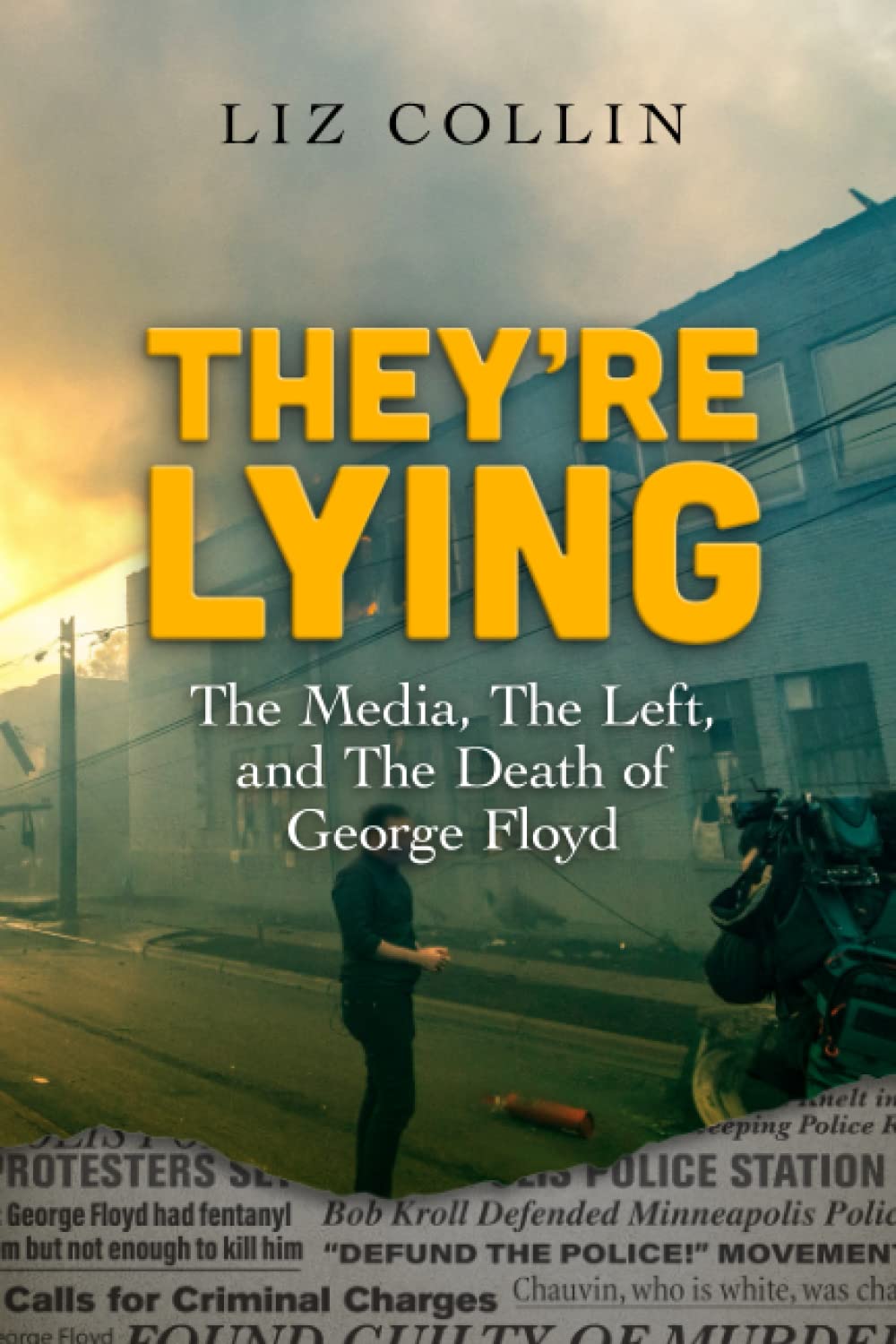
Related Books
Browse Conservative Books