Piers Morgan Reveals His Honest Take on Israel-Palestine After Removing His Journalistic Hat
Enjoying this? Share it with someone who needs to see it.
Up Next
Kim Iversen and Dr. Chloe Carmichael Unpack Cancel Culture's Devastating Impact on Mental Health and Free Speech
23:21
Nick Freitas Analyzes Tucker Carlson's Trump Apology and the Growing Conservative Split Over Iran and Israel
41:21
Samantha Power Wrote a Pulitzer Prize Book Against Genocide Then Allowed One to Happen
11:37
Piers Morgan Reveals His Honest Take on Israel-Palestine After Removing His Journalistic Hat
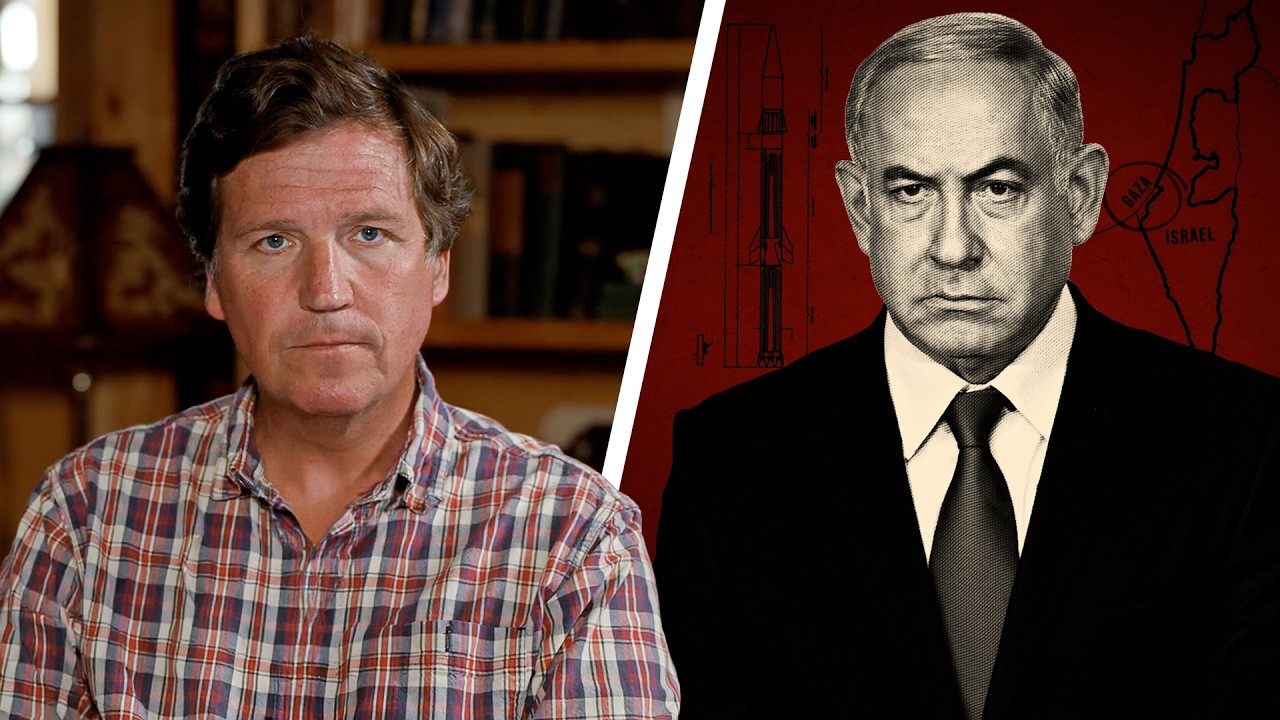
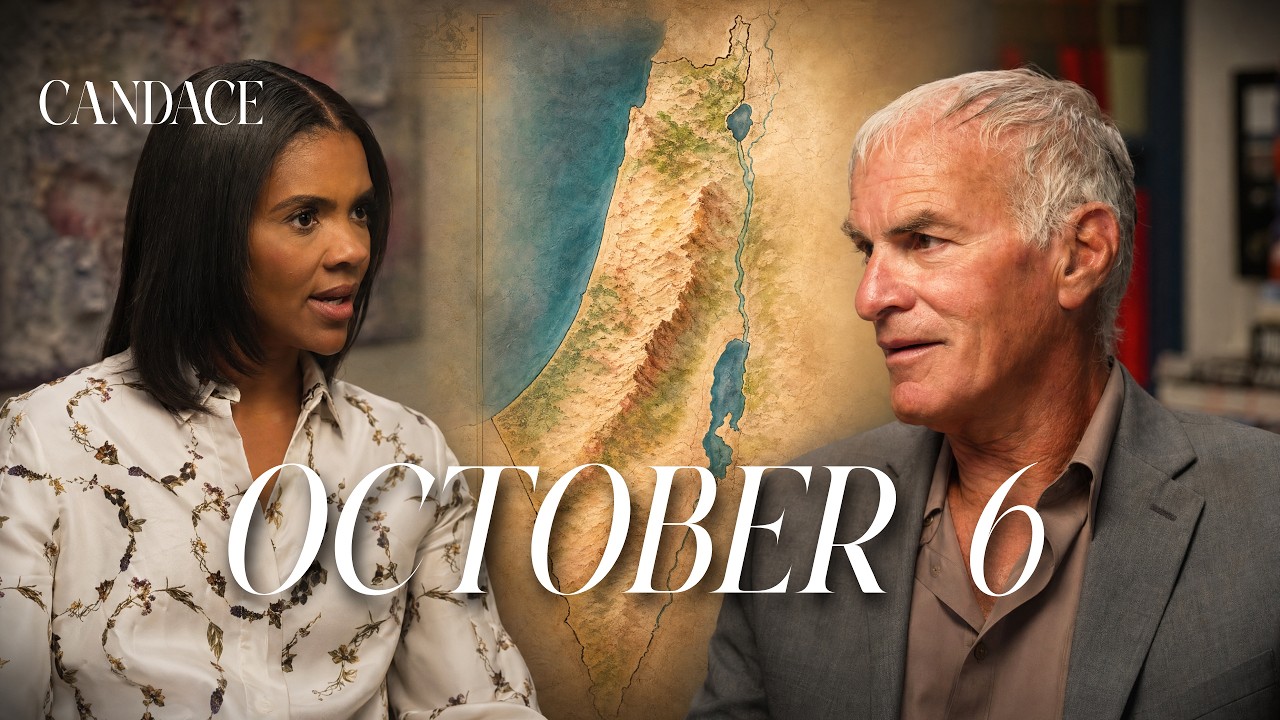
Piers Morgan sits down with Candace Owens to discuss his career evolution, the battle for free speech in Britain versus America, and his complex views on the Israel-Palestine conflict. Morgan opens up about his firing from ITV after refusing to apologize for disbelieving Meghan Markle, the role Markle played behind the scenes in his termination, and why he's shifted from traditional journalism to becoming what he calls "the ringmaster" of YouTube debates. He candidly shares his thoughts on October 7th, Israel's response in Gaza, and why he believes the conflict has gone beyond acceptable bounds, while acknowledging the complexity that makes easy answers impossible.
From Jerry Springer Comparisons to Journalism Philosophy
Piers Morgan opens the conversation by embracing a comparison to Jerry Springer, recalling their time working together on America's Got Talent. Morgan shares fond memories of Springer—a British-born mayor of Cincinnati turned TV host who created one of the most successful shows in television history while openly acknowledging it was "the worst show on TV." Morgan sees a parallel in how both served as ringmasters for compelling human stories, regardless of how others judged the content.
When pressed about whether he's merely a "chronic fence-sitter" without real convictions, Morgan pushes back. He explains that he's returned to his roots as a journalist, particularly over the last few years as his YouTube platform has grown. "I don't think journalists should be ideological about the news," Morgan states. He positions himself as someone who hosts ideologues from both left and right, serving as the facilitator of their debates rather than a participant pushing his own agenda.
Morgan acknowledges that three or four years ago, he would have identified as "little left of center," but the extreme positions of the woke left have pushed him toward the center or even center-right. However, he refuses to accept labels like conservative or liberal now, instead insisting: "I say I'm a journalist, and my job is to actually hold everyone to account."
The Danger of Snap Judgments and Media Narratives
Morgan discusses how he's learned not to accept media narratives at face value. He points out that people often form opinions about public figures based on edited clips on TikTok or twisted soundbites without understanding the full context. He applies this principle to himself as well, noting that when he asks people what controversial view of his they find most objectionable, they struggle to answer because they've only seen decontextualized clips.
This philosophy extends to how Morgan approaches his guests. Rather than accepting predetermined narratives about controversial figures, he does his own research, examines what they actually said, and considers the context before forming conclusions. This approach, he argues, often leads to very different conclusions than the easy pigeonholes people prefer.
The Meghan Markle Incident and Battle for Free Speech
Morgan provides detailed insight into what led to his departure from ITV's Good Morning Britain. After Meghan Markle's interview with Oprah Winfrey, Morgan publicly stated he didn't believe many of her claims. ITV gave him an ultimatum: apologize for disbelieving her, or lose his job. Morgan refused and left that afternoon.
What Morgan didn't know at the time—and only discovered two days later—was that Meghan Markle had written a personal letter to the chief executive of ITV, a woman, saying: "I write to you as a woman and as a mother. You have to fire him." Morgan believes that had he known about this letter during the deliberations, he would have fought back differently and made the duchess's interference public.
Even more striking was what happened to Sharon Osbourne on The Talk. Osbourne was fired simply for supporting Morgan as a friend, without even endorsing what he'd said. When asked by co-host Sheryl Underwood to defend Morgan's "racist" comments, neither Underwood nor anyone else could actually identify what racist thing Morgan had supposedly said. The show was eventually canceled, which Morgan views as appropriate given they fired someone for the crime of talking on a show called The Talk.
Ironically, Britain's television regulator Ofcom later ruled in Morgan's favor, stating that preventing him from expressing his opinion about Markle would have been "a chilling infringement" of his free speech rights. Morgan finds it bizarre that a media company needed to be told this by a regulator.
Public Response and the Free Speech Movement
Morgan describes how public sentiment shifted dramatically within 24 hours of his departure. He went from being in the center of controversy to feeling like "the Pied Piper," with bus drivers honking, cab drivers cheering, and members of the public crossing streets to shake his hand and hug him. They understood the situation wasn't really about Meghan Markle—it was about defending free speech.
Morgan connects this to Britain's historical identity, noting that Churchill fought the Nazis for freedom, democracy, and free speech. People lost their lives on battlefields so that citizens could exercise their right to speak freely. His book "Wake Up," which was around number 2,000 on Amazon's chart before the incident, shot to number one within three days and stayed there for weeks.
Morgan sees the 2024 Trump election victory as validation of his arguments. Beyond cost of living concerns and illegal immigration, he identifies a third major factor: rejection of what he calls "the woke mind virus." Young men in particular, he argues, were "just done with this crap" and exercised their right to freedom of thought and expression by voting for Trump and embracing figures like Elon Musk.
Britain Versus America on Free Speech
Owens observes that Morgan is "quite American" spiritually—willing to take fights head-on and stand by his principles—while British society tends to prefer politeness over confrontation. Morgan acknowledges this cultural difference, explaining that Britain has a very strong establishment rooted in the monarchy, class structure, and historical privilege that Americans don't fully understand.
"If you dare to take on the establishment, then you can end up in very hot water very quickly," Morgan explains. British people are naturally more reverential and polite, still "doffing their cap to the monarchy." He jokes that if it weren't for King George III, America might still have a monarchy—"and you might even have King Piers."
Morgan expresses deep concern about the current state of free speech in Britain under Keir Starmer's government. He finds it disturbing to see grandmothers arrested and imprisoned for offensive Facebook posts, even when those posts are "horrible and vile." He quotes Churchill's principle that free speech isn't about hearing things you agree with—it's about allowing speech you vehemently disagree with, short of direct incitement to violence.
The contrast with America's First Amendment is stark. Morgan views the First Amendment as "an amazingly strong powerful tool" that Britain lacks. While he doesn't agree with everything Elon Musk says, he credits Musk with identifying a dangerous trend: "the natural instinct these days is to censor people."
A Day in the Life of a News Junkie
Morgan describes himself as a news junkie from childhood. At age seven or eight, he would read headlines from the Daily Mail to his mother and ask about the stories—behavior he acknowledges wasn't normal for a child. He had journalism in his blood, with several journalists on his mother's side of the family.
Today, Morgan still gets five newspapers delivered to his doorstep every morning: the Times, the Telegraph, the Daily Mail, the Sun, and the Financial Times. He loves "the thud of newspapers," even though he recognizes this makes him part of a dying generation. His sons, ages 31, 27, and 24, read everything on their phones.
Morgan wakes early—"sleeping's cheating," he says—and by 5:00 a.m. is reading through the papers with his "old editor's eye." Then he moves to his phone, checking American sites like the New York Post, New York Times, and LA Times, along with X (formerly Twitter) to see what's trending. By 7:00 a.m., he has a comprehensive snapshot of the news landscape.
Around 10:00 a.m., his showrunner Alex calls to discuss the day's planned segments—typically a mixture of one-on-one interviews and debates on current topics. But Morgan emphasizes that anything can change in a heartbeat. He describes nights when he's congratulating himself on a show well done, opening "a bottle of fine French Bordeaux," only to hear that Trump has been shot, knowing "that's the next 3 weeks gone then."
Cutting Through the Noise
Morgan believes that on platforms like X, "10% of the people make 80% of the noise," usually from the extremities. His goal is to cut through that noise and reach more interesting, rational debate with people who have done the work to formulate informed opinions—even when he disagrees with them.
He particularly values debates with Owens because even when they disagree, he finds the conversations substantive. "You've put the yards in to formulate your opinion," he tells her. "You're not just thinking of the first thing you've seen on TikTok." He's become less intransigent than he was earlier in his career, often ending debates by telling guests he's learned from the conversation.
Morgan enjoys debates where both sides know the facts but interpret them differently—not challenging the reality of what happened, but disagreeing about what it means. He points to journalist Jonathan Freedland's observation that if you go back to 1948, you could construct a powerful argument for both Israel and the Palestinians based on the same set of facts.
Morgan's Honest Take on Israel and Palestine
When Owens presses Morgan to remove his "journalistic hat" and share his personal views on Israel and Palestine, he offers a nuanced perspective that he admits is complicated.
Morgan states unequivocally that October 7th was "one of the worst things I've ever seen." However, he believes "the retribution by Israel has now gone way beyond what is acceptable." He takes issue with framing Israel's actions as genocide purely from a technical standpoint, noting that the definition of genocide would typically involve a much higher death toll.
He acknowledges Israel's central argument: Hamas launched a massive attack with 3,000 people crossing the border, killing 1,200 people, wounding nearly 7,000, and kidnapping 250 people including babies and Holocaust survivors. Hamas deliberately embedded itself in civilian areas for self-protection, knowing Israel would respond.
"What is a proportionate response?" Morgan asks. He admits he doesn't have the answer and didn't know at the outset what would constitute an acceptable response to the scale of October 7th. But he now believes Israel has gone "way beyond what is acceptable," particularly in attacks on refugee camps.
Morgan describes the leveling of Gaza as "completely out of control," with much of Gaza now unoccupiable. He calls the aggressive expansion on the West Bank "a form of terrorism which is completely unacceptable." He acknowledges that some of Netanyahu's cabinet members have used language that "bordered on genocidal," and that some would "have no problem if all the Palestinians left Gaza right now."
While not calling the current situation a genocide, Morgan doesn't rule out that historians might look back in two years and make that determination if all Palestinians are forced from Gaza. He prays that doesn't happen.
The Path to Peace
Morgan believes the only way forward is "fresh leadership on all sides," drawing a comparison to Northern Ireland. After decades of horrific conflict between the IRA and loyalists, leaders like Bill Clinton and Tony Blair came together determined to achieve peace—and they succeeded. Today, people in Northern Ireland "live in relative peace and safety" among former enemies.
"It would be amazing to think that could happen," Morgan says of Israel and Palestine, "but I think we're a long way off that now."
The Courage to Speak Honestly
Owens compliments Morgan's honesty, noting that it takes "tremendous fortitude" to say what's happening has gone too far when so many people are afraid of losing their jobs. She describes what she calls "Likud party media in America" that has a "stranglehold on the media" and will "libel you and smear you and pretend that you're like a Nazi sympathizer."
Morgan agrees that the fear is real but notes that "the media game has changed." The traditional gatekeepers no longer have the power they once did, and voices willing to speak honestly—even when it's uncomfortable—are finding audiences eager for substantive discussion rather than partisan talking points.