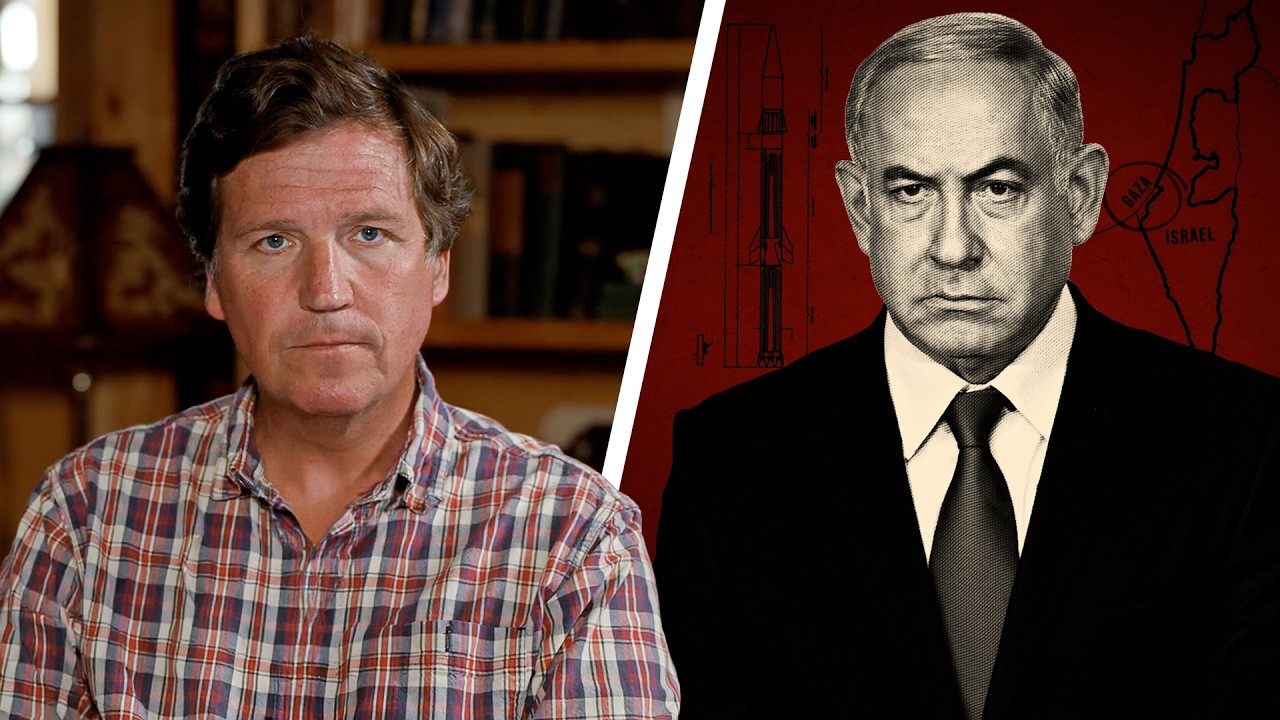
Norman Finkelstein Explains Gaza's History as a Concentration Camp Since 1948 and the Nat Turner Parallel
Enjoying this? Share it with someone who needs to see it.
Up Next
Piers Morgan Responds to Viewer Criticism on Putin, Ukraine War, COVID Censorship and Middle East Conflict
14:17
Samantha Power Wrote a Pulitzer Prize Book Against Genocide Then Allowed One to Happen
11:37
Charlie Kirk Explains Why Honoring the Sabbath Will Change the World and Addresses Israel Criticism
15:39
Norman Finkelstein Explains Gaza's History as a Concentration Camp Since 1948 and the Nat Turner Parallel
Norman Finkelstein provides a historical account of Gaza from its origins in 1948 through October 6, 2023, documenting how observers from UN officials to Israeli security leaders consistently described it as a concentration camp. He traces the expulsion of 300,000 Palestinians to Gaza during Israel's creation, the Egyptian administration period, the 1967 Israeli takeover, and the 2006 blockade that calculated caloric intake to avoid starvation scenes. Finkelstein draws a controversial parallel between the October 7th events and the Nat Turner slave rebellion, arguing that understanding either requires acknowledging the conditions people lived under, not just the violence that resulted.
According to Finkelstein, the story of Gaza begins in 1948 with the creation of the State of Israel. During this period, approximately 90% of the indigenous Palestinian population of Israel was expelled—about 750,000 people in total. Of those expelled, roughly 300,000 were forced into Gaza, which is when Gaza became what it is today. Currently, about 80% of Gaza's population are refugees from the 1948 war or descendants of those refugees. Under international law, descendants of refugees are still counted as refugees. Gaza is also approximately 50% children.
Consistent Descriptions as a Concentration Camp Across Decades
From the moment Gaza came under Egyptian administration after the 1948 war, outside observers consistently described the territory in stark terms. Finkelstein notes that each time someone visited Gaza to work there or assess the situation, they described it as a huge concentration camp—and this was still under Egyptian rule.
ELM Burns, the main UN official in Gaza, wrote a book titled "Between Arab and Jew" in which he described Gaza as a huge concentration camp. In 1967, during the June war, Gaza came under Israeli control. In July 1967, Senator Al Gore—father of the presidential candidate—visited Gaza and testified before the US Congress, describing Gaza as "a huge concentration camp on the sand."
Fast forward to 2002, when one of Israel's leading sociologists, Baruch Kimmerling, wrote a book called "Politicide" in which he described Gaza as "the biggest concentration camp ever." In 2004, the head of Israel's National Security Council, Giora Eiland, who remains active behind the scenes in the Netanyahu government, also described Gaza as a huge concentration camp. Finkelstein emphasizes that this was before Israel imposed the blockade of Gaza—it was already a horror show since 1948.
The 2006 Blockade and Humanitarian Minimum Diet
In 2006, Israel imposed a blockade on Gaza, deciding what goes in, what goes out, who goes in, and who goes out. They put Gaza on what they called a "humanitarian minimum diet." Finkelstein stresses this is not hyperbole or poetry—they literally calculated the caloric diet of everyone living in Gaza and admitted just enough food to avoid scenes of starvation. This was 2006, not after October 7th.
The blockade prohibited baby chicks from entering Gaza. It prohibited chocolate, potato chips, and condiments. No cinnamon was allowed in Gaza. According to Finkelstein, the goal was to create such intolerable conditions that the population of Gaza would overthrow the government that they elected.
Gaza on October 6, 2023
By October 6, 2023, the Economist magazine described Gaza as "a human rubbish heap." The leading UN official on Gaza described it as "a toxic dump." Sixty percent of the young people in Gaza—the people who burst the gates on October 7—were unemployed. All they had to look forward to each morning was pacing the perimeter of this tiny parcel of land: 26 miles long (the length of a marathon) and 5 miles wide.
Finkelstein emphasizes that Gaza was exactly what the UN official said, exactly what Al Gore's father said, exactly what the head of the Israeli National Security Council said. The people were born into, languished in, and were destined to die in a concentration camp. It was like an elephant burial ground.
Reckoning with October 7th
Finkelstein acknowledges that what happened on October 7 was awful, with significant magnitude. Approximately 1,200 people were killed—close to 800 civilians and 400 combatants (members of the Israeli Defense Forces). While he's aware of stories about Israel having killed some of its own people, he investigated as best he could and concluded that the true number, with room on the margins for error, shows that everything was overwhelmingly committed by Hamas.
He explains that in politics, there are many levels: the facts, your political judgment, your legal judgment, and your moral judgment. These don't come directly from the facts—they go through many filters or sieves before you get a moral judgment.
The Nat Turner Parallel
When trying to think through the moral dimensions, Finkelstein latched onto the Nat Turner Rebellion—the largest slave revolt in American history. All historians agree that Nat Turner gave the order, which he never denied: "Kill all white people." They proceeded to go on a rampage lasting less than 48 hours, hacking men, women, and babies. It was brutal.
But then something struck Finkelstein. Historian Stephen Oates tried to understand Nat Turner's motivation. Oates noted that Nat Turner was universally recognized as very smart—white or black, everybody agreed. There was a huge gulf for Nat Turner between what he aspired to be in life and what he was destined to be because he was a slave. As Oates put it, Nat Turner knew that his only earthly existence was to be born into, languish in, and die a slave.
According to Finkelstein, that was the young people in Gaza. By October 6, 2023, Gaza had vanished from the news. He spent about 15 years chronicling the details of what was happening in Gaza, beginning roughly in the early 2000s. By 2020, he gave up—a fact he's not proud of—because he was writing books that were getting more and more detailed, with micro detail, and nobody was reading them. His last book, "I Accuse," sold 370 copies, of which he purchased half himself, because it was about a case related to Gaza in the International Criminal Court and he hoped to influence the court through his research.
By 2020, he asked himself whether he would just stubbornly persist in the face of the fact that nobody cared. That was the situation in Gaza—it had vanished from the political scene. By October 6, 2023, all the talk was about whether Saudi Arabia would join the Abraham Accords. Nobody was talking about Gaza anymore.
Understanding Religious Fanaticism in Context
Finkelstein notes that the people of Gaza basically did what Nat Turner did. He asks us to imagine an account of Nat Turner that doesn't mention he was a slave—just this crazy religious fanatic. Nat Turner was indeed a religious fanatic, no question. He used the language of the Bible to try to make sense of his condition. That's what being a religious fanatic meant.
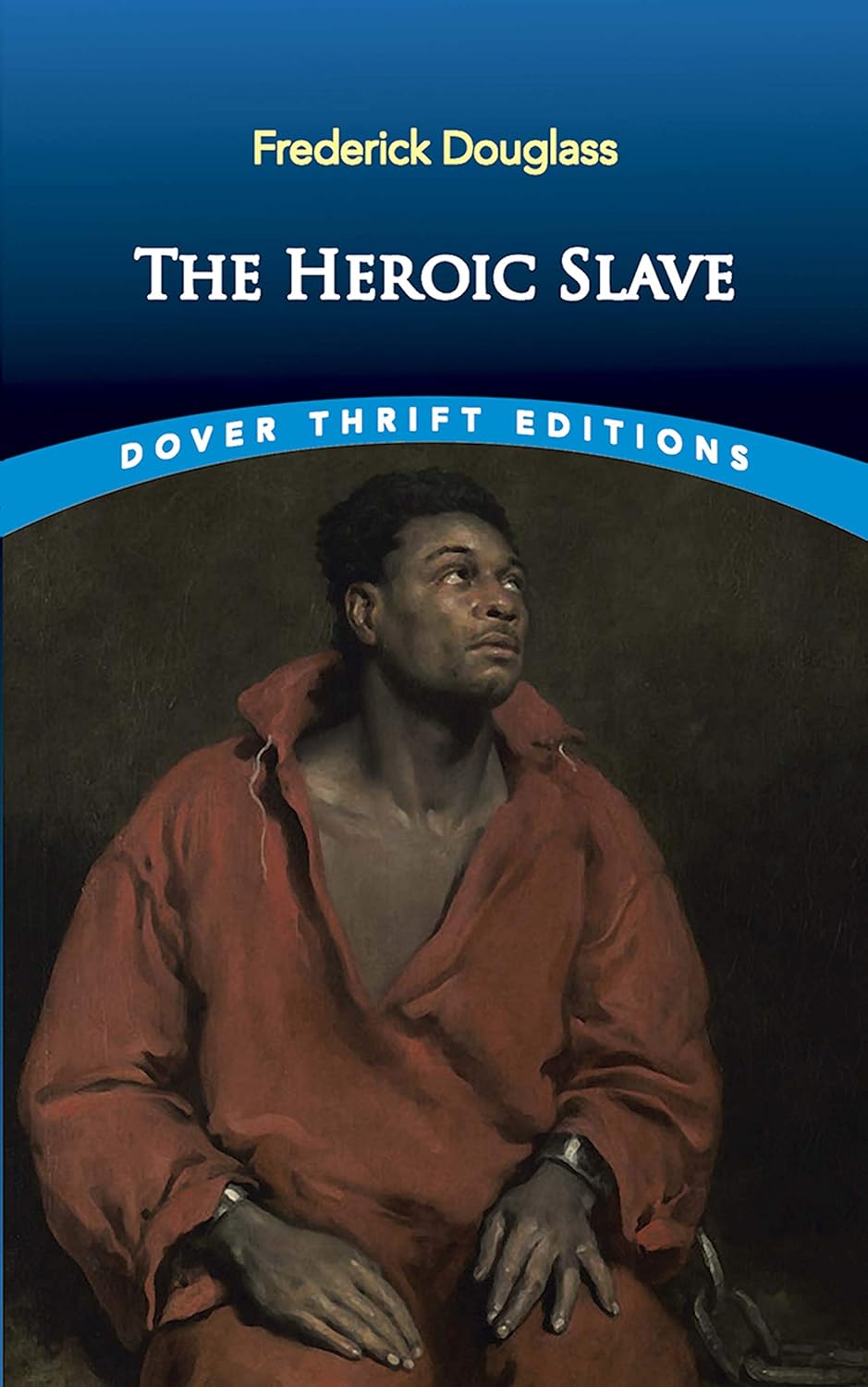
John Brown, who led the insurrection before the Civil War, was also a religious fanatic who deeply, fanatically believed slavery was an abomination. When Frederick Douglass, the great abolitionist, went to meet John Brown, Douglass commented in one of his three autobiographies that Brown just wouldn't stop talking about slavery. Douglass said he was boring, a fanatic, a Johnny one-note about slavery.
Nat Turner was also a religious fanatic. But Finkelstein argues, imagine if you tried to make sense of the Nat Turner Rebellion by focusing only on his religious fanaticism—like focusing only on the religiously fanatical Hamas—and not mention the guy is a slave.