Trump's Legacy Over: Why His Jeffrey Epstein Response and Israel Policy Betrayed the MAGA Movement
Enjoying this? Share it with someone who needs to see it.
Up Next
Megyn Kelly and Anna Kasparian Expose Pressure Campaign Against Charlie Kirk Before His Death
11:27
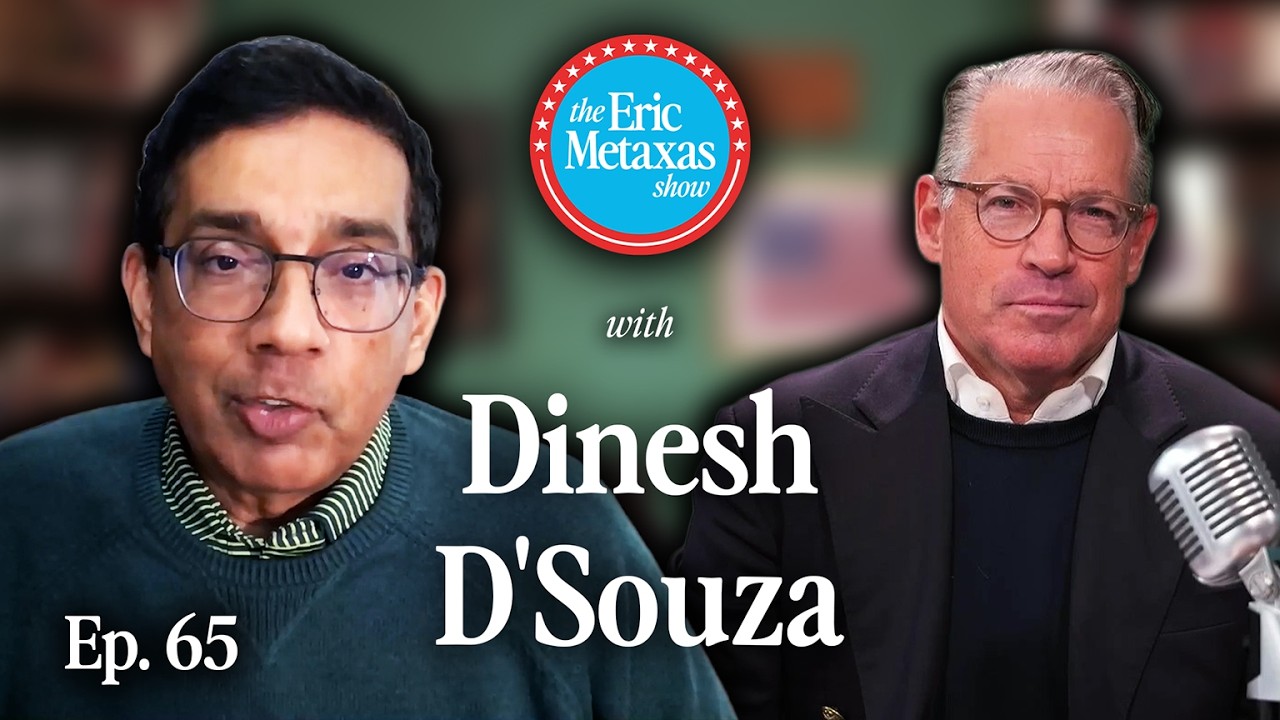
Eric Metaxas and Dinesh D'Souza Expose Tucker Carlson and Candace Owens' Troubling Shift on Israel and Anti-Semitism
34:15
Candace Owens and Ana Kasparian Unite Against Elite Control, War Propaganda, and Zionist Intimidation Tactics
1:25:29
Trump's Legacy Over: Why His Jeffrey Epstein Response and Israel Policy Betrayed the MAGA Movement
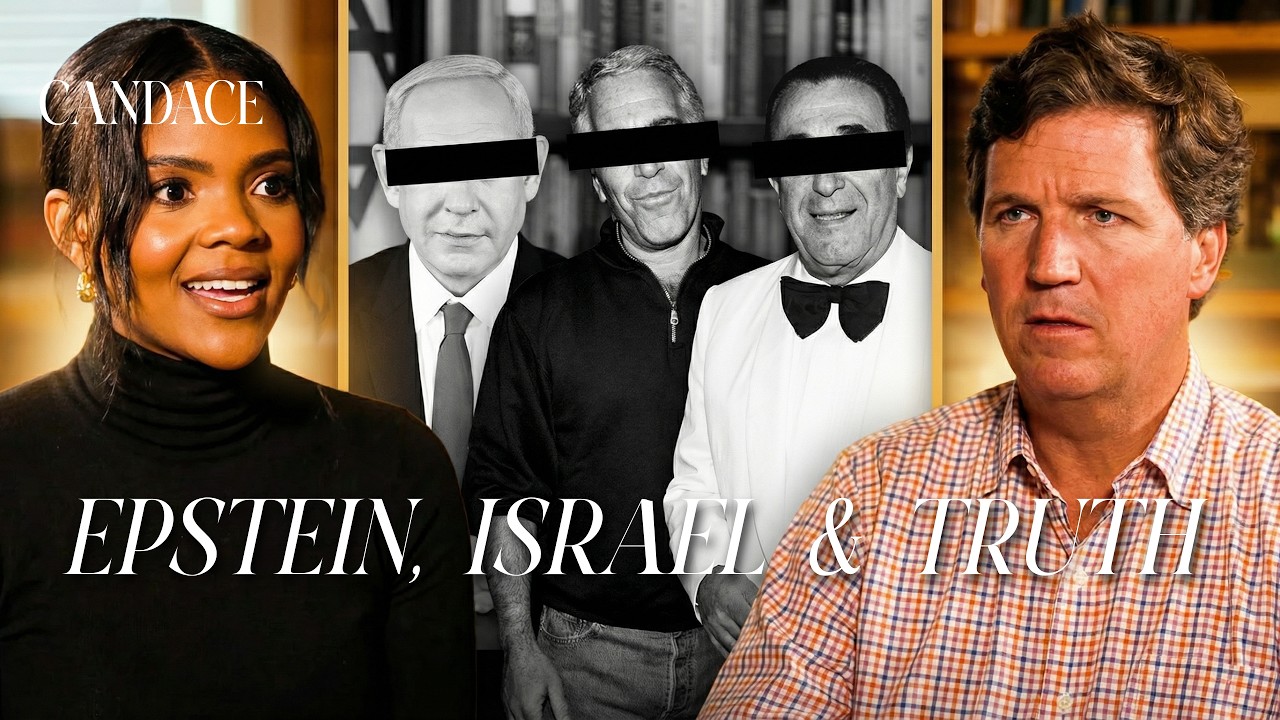
Two commentators dissect what they view as the collapse of Trump's political legacy through his handling of Jeffrey Epstein questions and Israel policy. They argue Trump's dismissal of Epstein concerns, a foundational issue for his 2016 victory, represents a calculated betrayal of his base. The conversation explores whether Trump is being controlled, examines allegations of planned false flags, and questions the administration's threats to deny disaster relief to states that boycott Israel. What began as hope for a different kind of presidency has devolved into what they see as gaslighting and treason against American interests.
The conversation opens with a blunt assessment: Trump's legacy is finished, and the MAGA movement as it existed under his leadership is over. The turning point? Trump's response to continued questions about Jeffrey Epstein. When Trump dismissed concerns about Epstein and told supporters focused on the issue that he didn't want their support, it represented what the speakers view as a fundamental betrayal.
One speaker expresses shock at Trump's social misstep, noting that Trump typically reads rooms well and possesses strong social skills. The gaslighting nature of the response—pretending not to understand why supporters care about Epstein—felt more insulting than an outright dismissal would have been. As one puts it: "I would have preferred you saying, 'F you. Na-na-na-boo-boo, you can't touch us. We have so much power.' Because then I would have appreciated the honesty."
The conversation emphasizes that concerns about elite pedophile networks aren't fringe conspiracy theories but rather patterns that have emerged in every late-stage civilization throughout history. From Rome to the present day, decadent periods feature powerful elites operating beyond consequences, protected by mutual blackmail and institutional capture.
Epstein as the Symbol of Everything MAGA Opposed
Jeffrey Epstein represents far more than one criminal, the speakers argue. He symbolizes the entire secret architecture of power—the way elites operate for their own enrichment and protection rather than for the people they claim to serve. This understanding formed a central plank of the 2016 Trump movement, alongside border security and free speech.
The Epstein case unlocked suspicions about how power truly functions: Democrats and celebrities engaged in backdoor deals, living lives of sexual degeneracy and legal immunity that would destroy ordinary citizens. This cabal of elites, insulated from consequences, became what motivated millions to take a chance on an unconventional candidate like Trump.
For Trump to now dismiss these concerns—and for Attorney General Pam Bondi to claim uncertainty about whether Epstein worked for intelligence agencies—strikes the speakers as insulting gaslighting. They point out that Trump's own administration officials and sons previously highlighted Epstein's importance. The betrayal isn't just of supporters but of Trump's own stated principles and the movement that brought him to power.
The Gaslighting That Reveals Class Contempt
One speaker notes something particularly offensive about the nature of the gaslighting: its academic quality. The dismissal of Epstein concerns carries the tone of credentialed elites looking down on common people who lack advanced degrees but possess superior common sense. Blue-collar workers who understand what Epstein represents, even without Ivy League credentials, recognize what's obvious: Epstein didn't kill himself, his network matters, and the cover-up continues.
Trump lost something almost magical in that moment—his ability to bridge the class divide. Despite coming from wealth and elite circles, Trump had maintained a connection with working and middle-class Americans. His Epstein response destroyed that connection. He suddenly became one of "them"—the dismissive elites who think common people are too stupid to understand what's happening in front of their faces.
The speaker describes it as Trump taking "a steaming pile" on his legacy, his supporters, and the foundational assumptions that got him elected. This wasn't merely lying to supporters; it was denying his own identity and the movement he claimed to lead. As one puts it: "What could move Trump to betray himself? That's what I'm interested in now. Now it's the why. What does Israel have on Trump?"
The Israel Question and Disaster Relief Blackmail
The conversation shifts to what the speakers view as the worst period of their public lives: watching the administration threaten to deny disaster relief to American states that participate in boycotts of Israel. The Department of Homeland Security website explicitly stated that discrimination was prohibited against companies doing business with Israel, effectively requiring states to oppose the BDS (Boycott, Divestment, Sanctions) movement to receive federal disaster aid.
When the language was removed after public outcry, DHS attempted to deny it had ever existed—despite screenshots and archived pages proving otherwise. X (formerly Twitter) added community notes to DHS posts, pointing out the misleading claims. One speaker calls this potential treason: denying Americans in need during disasters because of their political stance on a foreign country.
The speakers note Trump rolled back the BDS-related restrictions but not the overall policy direction favoring Israel above American interests. Stephen Miller's involvement in these policies particularly disappointed those who had hoped for a different kind of administration. The contrast is stark: talking about withholding disaster relief over sanctuary cities is presented as psychopathic, but actually implementing such policies over Israel boycotts is even worse.
Gaza, the West Bank, and Netanyahu's Plans
The conversation addresses Miriam Adelson's hundred-million-dollar contribution to Trump and what she allegedly purchased: American acquiescence to Israeli annexation of not just Gaza but also the West Bank. Trump is accused of looking the other way as Israel goes "door to door" traumatizing Palestinians in the West Bank, while simultaneously punishing Americans who express outrage at Gaza.
One speaker argues that by the time current policies conclude, "Netanyahu's Israel will have eclipsed Hitler's Germany by many counts morally speaking and probably by the numbers, too." They point to the manner of "exterminating innocent children" as evidence. The speakers note the hypocrisy of Israeli propaganda using population-ratio mathematics to emphasize October 7th casualties (claiming equivalence to massive American death tolls) while refusing to apply the same mathematics to Palestinian deaths.
The discussion recalls Trump's earlier signals of potential American presence in Gaza—perhaps even a Trump Tower—which visibly displeased Netanyahu. The rapid shift from that position to giving Israel carte blanche to "take it all" raises questions about what changed and why Trump abandoned his earlier stance.
October 7th as Planned Event
Both speakers express certainty that October 7th was a planned false flag operation. They cite multiple pieces of evidence: the unprecedented failure of the Iron Dome defense system, IDF troops moved away from the border before the attack, the last-minute relocation of a music festival to the border area, pilots grounded for hours despite proximity to the violence, Israeli intelligence ignoring a detailed hostage plan, and Egyptian warnings about border build-up being dismissed.
One speaker recounts meeting someone in Israeli intelligence who casually mentioned Mossad knows intimate details about American Catholic bishops (claiming 88% are homosexual). The implication: an intelligence service with that level of penetration into foreign institutions couldn't possibly miss massive preparations on their own border. The failure had to be intentional.
The speakers suggest Netanyahu's administration planned the expansion years in advance, coordinating with events in Syria. They question whether Trump knew about these plans and when. The reactive, coordinated response from pro-Israel media figures to any genocide criticism suggests preparation and placement of sympathetic voices throughout media.
The Bolshevik Connection and Victimhood Mythology
One speaker raises questions about historical narratives, suggesting some who claimed victim status after World War II—mentioning Elie Wiesel and Robert Maxwell by name—may have actually been "working for other people doing demonic things." The suggestion is that some Bolsheviks, who had engaged in mass murder of Christians, "laundered themselves" by adopting victim identities alongside genuine Jewish victims of the Holocaust.
This leads to discussion of how victimhood mythology can justify atrocities. When a nation defines itself by historical persecution while encouraging the belief that anything it does is justified by that victimhood, dangerous dynamics emerge. The speakers compare this to why rape victims don't sentence their attackers and why orphans aren't given guns: trauma victims need "grown-ups in the room" making rational decisions, not weapons and power.
Allowing a state that "murders its own people by omission or commission" to possess nuclear weapons while believing itself to be "history's greatest victims" creates an untenable situation. The combination of enormous destructive capability and a persecution-based identity that justifies any action cannot be permitted to continue unchecked.
Jared Kushner's Investments and Family Interests
The conversation touches on Jared Kushner's financial investments in Israel as a potential explanation for Trump's policy positions. One speaker suggests Trump's concern for his family's legacy and financial interests may override his political commitments. The implication is that Trump's children and son-in-law have financial stakes that align with Israeli expansion and development projects.
This financial entanglement potentially explains Trump's abandonment of earlier, more independent positions on Israel-Palestine issues. If the Trump family business empire has significant investments dependent on Israeli cooperation and expansion, then American policy becomes subordinate to private family interests—a clear conflict of interest and potential betrayal of the presidential oath.
What Comes After MAGA
The conversation concludes with both speakers agreeing that Trump's legacy is over and MAGA as a Trump-led movement has ended. The question becomes what MAGA will evolve into without Trump at the helm. The movement captured real grievances and insights about how power operates, about elite corruption, about the need for border security and free speech protection.
Those concerns don't disappear because Trump betrayed them. The question is whether a new formation can emerge that remains faithful to those original insights while rejecting the compromises and betrayals that have characterized Trump's second term. The worst few days of their public lives have forced a reckoning: the movement must "pivot and recognize whether or not we can emerge as something else."
The anger in the conversation is palpable—not the anger of people who feel they backed the wrong candidate, but of people who feel their correct instincts and concerns have been validated while their chosen champion has abandoned the field. They saw the problems clearly; Trump simply wasn't the solution they hoped he would be.

















Comments
Be the first to comment on this video.