Candace Owens Exposes Jeffrey Epstein's Connections to Foreign Intelligence and Israel's Control Over U.S. Government
Enjoying this? Share it with someone who needs to see it.
Up Next
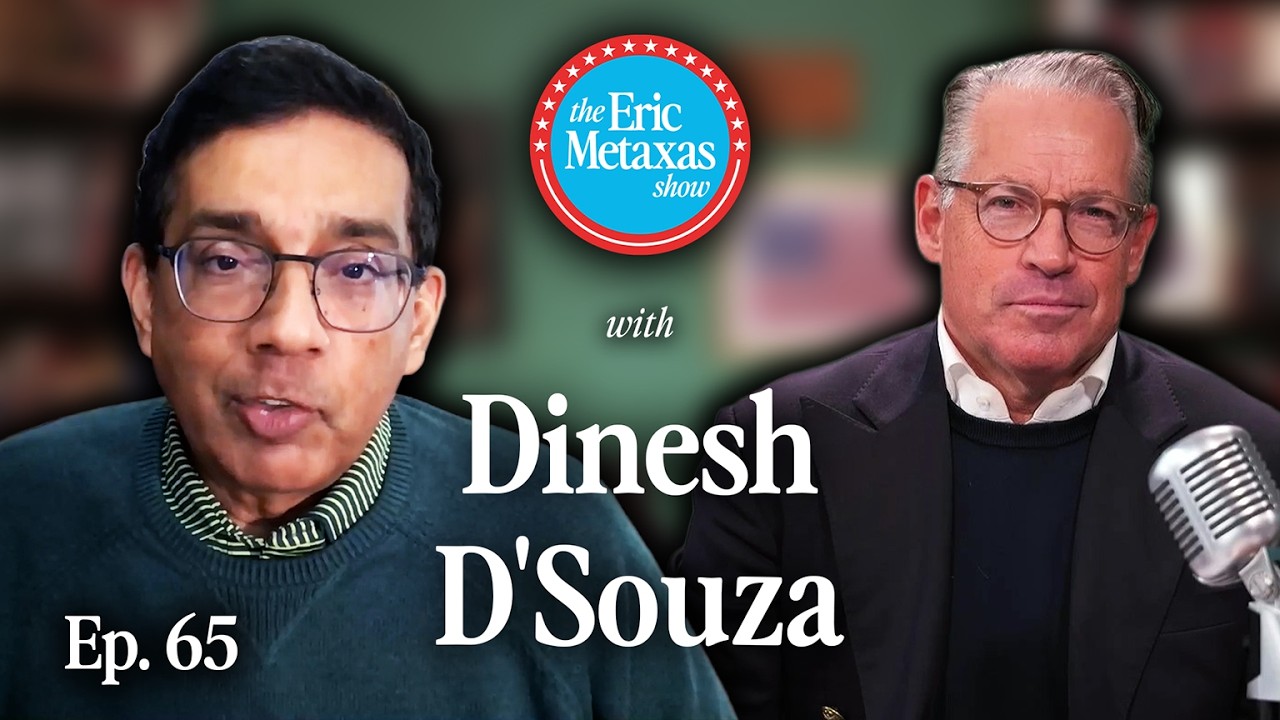
Charlie Kirk and Dinesh D'Souza Face Backlash After Telling Conservatives to Trust Government on Epstein Files
20:11
Tucker Carlson: Charlie Kirk Said 'Go Max' on Jeffrey Epstein and Israeli Intelligence Claims
14:28
Candace Owens and Elizabeth Lane on Israel, Frankism, and the Occult Network Behind Modern Geopolitics
17:57
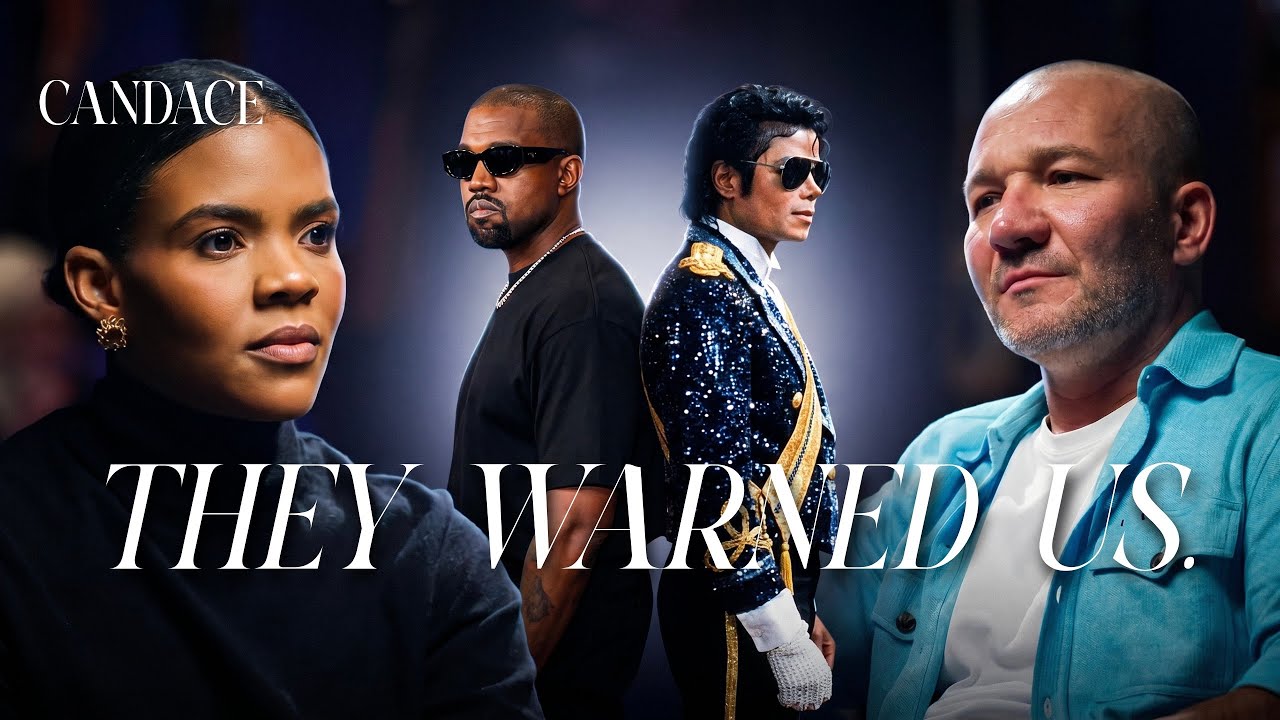
Candace Owens Exposes Jeffrey Epstein's Connections to Foreign Intelligence and Israel's Control Over U.S. Government
Candace Owens delivers an unfiltered examination of the Jeffrey Epstein case, questioning why American officials claim ignorance about Epstein's alleged intelligence connections when former Mossad agents have publicly stated he worked for Israeli intelligence. She challenges Attorney General Pam Bondi's testimony and discusses the broader implications of foreign influence on U.S. sovereignty. Owens also reflects on her personal transformation from working with conservative organizations to taking controversial stances on Israel, explaining how her commitment to truth over financial security has shaped her journey. She argues that people globally are experiencing a spiritual awakening, recognizing patterns of deception and demanding authentic answers to questions that have long been considered taboo.
The Epstein Case and the Failure of Authentic Leadership
Candace Owens opens with a provocative statement about political authenticity, expressing frustration with what she perceives as gaslighting from government officials. She argues that if powerful entities truly control the population, she would prefer they be honest about it rather than maintain pretenses. This sentiment sets the stage for her deep dive into the Jeffrey Epstein case, which has become a focal point of her investigative work.
Owens specifically calls out the disconnect between publicly available information and official government statements. She references Attorney General Pam Bondi's testimony where Bondi claimed not to know whether Epstein was working for another country—a response Owens finds deliberately evasive and insulting to the intelligence of Americans.
Documentary Evidence of Epstein's Intelligence Connections
Owens presents what she considers clear evidence of Epstein's connections to Israeli intelligence. She cites Ari Ben-Menashe, a former Mossad agent who is on record stating that Robert Maxwell introduced Jeffrey Epstein to intelligence operations, specifically mentioning his involvement in weapons dealing. This testimony, Owens argues, should be impossible for the Attorney General to have missed.
She also references Victor Ostrovsky, another former Mossad agent who defected and wrote the book "By Deception," which details Mossad operations. According to Owens, Ostrovsky has publicly stated that Epstein worked with Israeli intelligence. The fact that she can access this information while government officials claim ignorance strikes her as deliberately dishonest.
The Robert Maxwell Connection and Historical Revisionism
Owens addresses what she calls one of the biggest lies in the Epstein narrative: the claim that Jeffrey Epstein didn't know Robert Maxwell, Ghislaine Maxwell's father, who is widely acknowledged to have been a Mossad agent. She states that the current story being fashioned for public consumption suggests Ghislaine and Jeffrey met after Robert Maxwell's death, which she categorically disputes.
According to the testimony of Ari Ben-Menashe that Owens references, Epstein was brought into intelligence operations during the Iran-Contra scandal in the 1980s. This means, by her timeline, that Epstein has been working for Israeli interests for decades—information she finds remarkable that she possesses while high-ranking government officials claim ignorance.
Questions of American Sovereignty
Owens makes one of her most controversial claims: that Israel controls the U.S. government and that America hasn't been a sovereign nation since the assassination of President John F. Kennedy. She is explicit about who she believes was responsible for JFK's death, stating directly that she means Israel when she says "they."
She argues that Trump is powerless against Israeli influence and that there will never be a public resolution to the Epstein story because of this control. This leads her to discuss what she sees as a taboo that must be broken—the ability to criticize Israel without being immediately labeled or silenced.
Israel, Gaza, and a Personal Transformation
Owens describes her complete transformation regarding Israel, noting that she went from working for PragerU—an organization known for its pro-Israel stance—to stating she will never support Israel. She attributes this change to what she describes as Israel's "demonic" actions, particularly referencing the humanitarian situation in Gaza and what she characterizes as a starvation campaign against children.
She specifically mentions footage she's seen of Israeli forces "playing hunger games"—throwing food at people and killing some while seeing who survives. These images, she says, should serve as a wakeup call to anyone willing to look at what's happening. She emphasizes that she doesn't care what negative articles are written about her for taking this stance, as they've already exhausted their attacks on her.
The Birthright Trip and Propaganda
Owens discusses a hot mic moment involving Jonathan Greenblatt of the Anti-Defamation League (ADL), where he was caught saying they need to get TikTok under control because of a "generational issue," comparing it to what they accomplished with Birthright trips. She interprets this as an admission that the Birthright program—which offers free trips to Israel for young Jewish Americans—was designed as a propaganda tool.
She argues that Jewish Americans have been propagandized into believing they must support Israel regardless of its actions, and she hopes they're now having conversations about this. Her broader point is that allowing identity to shape morality is problematic, whether you're Black and feeling pressured to support BLM, or Jewish and feeling pressured to support Israel. She believes individuals should form their moral positions based on principles rather than tribal identity.
Identity Versus Morality: A Universal Principle
Tucker Carlson highlights what he considers a profound point from Owens: that allowing your identity to determine your morality is deeply problematic. He notes he's never heard anyone frame it that way before. Owens expands on this, expressing concern that society is moving toward a world where all ethics are situational, dependent on tribal identity rather than universal standards.
She positions herself as someone who operates by principles—unchanging standards that apply regardless of who is affected. This approach, she argues, is what has allowed her to survive and even thrive after taking controversial positions that cost her professionally and socially.
Surviving Cancellation and Spiritual Warfare
Owens reflects on her experience of being targeted and canceled, describing it as a form of temptation. She explains that the pressure to remain silent—to not speak about Gaza, to maintain comfortable relationships and financial stability—is what she views as being tempted by Satan. The primary weapon used against her, she notes, is financial: lawsuits, threats of being sued for billions of dollars, the promise of crushing her economically.
Yet she survived what she calls the worst year of attacks and came out thriving, measured by her podcast numbers, her growing family (she's now a mother of four), and her sense of purpose. Carlson points out that not only did she survive, but she's thriving in ways nobody predicted. Owens attributes this to refusing to compromise her soul for comfort or money, choosing truth even when it was harder.
A Global Spiritual Awakening
Owens believes something significant is happening globally on a spiritual level. She sees her own survival as proof of this. She notes that her podcast attracts millions of daily listeners from around the world—people using VPNs to access her content in countries where it might be restricted. What they respond to, she believes, is her authenticity: she's not presenting herself as an authority like mainstream media figures, but rather as someone learning alongside her audience.
She contrasts her approach with that of CNN's Jake Tapper, who she says used the word "deranged" six times in the first minute when discussing her—a tactic she connects to Sigmund Freud's theories of diagnosing and dismissing rather than engaging with arguments. The fact that mainstream media constantly tries to crush dissenting voices, she argues, is evidence that those voices are hitting on truths that threaten established narratives.
The Power of Asking Questions
Owens expresses particular joy in how figures like historian Darryl Cooper are received. She finds it funny that Cooper—who she describes as "a nice historian"—is portrayed by media as dangerous. This disconnect, she believes, makes people curious: if this obviously reasonable person is being attacked so viciously, what truth has he uncovered that threatens the establishment?
She notes that asking questions about World War II narratives, in particular, triggers intense reactions. She mentions that the history textbooks Americans learned from were printed by Robert Maxwell—the same Robert Maxwell connected to Epstein and acknowledged as a Mossad agent. This leads her to ask deeper questions about how minds have been shaped from childhood, why people have emotional responses to certain topics, and what questions they've been conditioned not to ask.
The Absurdity of "Just Asking Questions" as an Accusation
Owens highlights what she sees as the final absurdity in the establishment's response to dissent: the phrase "You're not just asking questions," said as an accusation. The implication is that asking questions itself is suspicious, that seekers of truth must have nefarious motives. She finds this revealing—if the establishment had truth on its side, they would welcome examination and questioning.
She argues that the fear of questions, the demand to stop exploring and learning outside approved channels like the public school system, reveals that something is being hidden. An innocent party, she reasons, would never fear investigation. The worldwide response to her work and similar content, she believes, shows that people can see through the gaslighting and recognize when they're being lied to.
Israel as an Unintended Catalyst for Unity
In an unexpected observation, Owens suggests that Israel's actions in Gaza have become a unifying force, bringing together people across traditional political divides. She mentions Tucker having Ana Kasparian on his show—Kasparian being a progressive commentator who has been critical of Owens in the past. Yet Owens has maintained that she likes Kasparian because she perceives her as authentic, even when they disagree.
This strange unity across left and right, across racial and religious lines, represents something significant to Owens. For the first time, she sees the entire world in lockstep, recognizing that something profoundly wrong is happening in broad daylight with no one stopping it. This global awareness, this collective recognition of injustice regardless of tribal identity, represents the kind of principle-based morality she advocates for.
Truth as the Ultimate Authority
Throughout the conversation, Owens returns to a central theme: commitment to truth above all else. She frames this in explicitly Christian terms, referencing Jesus as "the way and the truth and the life." She believes everyone is being tested right now—presented with the choice between comfortable lies and difficult truths. Many are failing that test, she acknowledges, but many aren't.
Her message to her millions of listeners is that there is something far bigger than money, a higher authority than financial pressure or social acceptance. When you commit yourself to truth and do the moral, principled thing, even when it costs you, you are ultimately rewarded. This spiritual framework is what allows her to maintain joy even while being constantly attacked, and it's what she hopes will inspire others to choose authenticity over compromise.