Megyn Kelly and Anna Kasparian Expose Pressure Campaign Against Charlie Kirk Before His Death
Enjoying this? Share it with someone who needs to see it.
Up Next
Ana Kasparian Exposes the Pro-Israel Media Blackout on Epstein Files and America's Weakened Military
23:48
Candace Owens and Ana Kasparian Unite Against Elite Control, War Propaganda, and Zionist Intimidation Tactics
1:25:29
Megyn Kelly Brokers Peace Between Candace Owens and Erika Kirk Following Charlie Kirk's Death
25:15
Megyn Kelly and Anna Kasparian Expose Pressure Campaign Against Charlie Kirk Before His Death
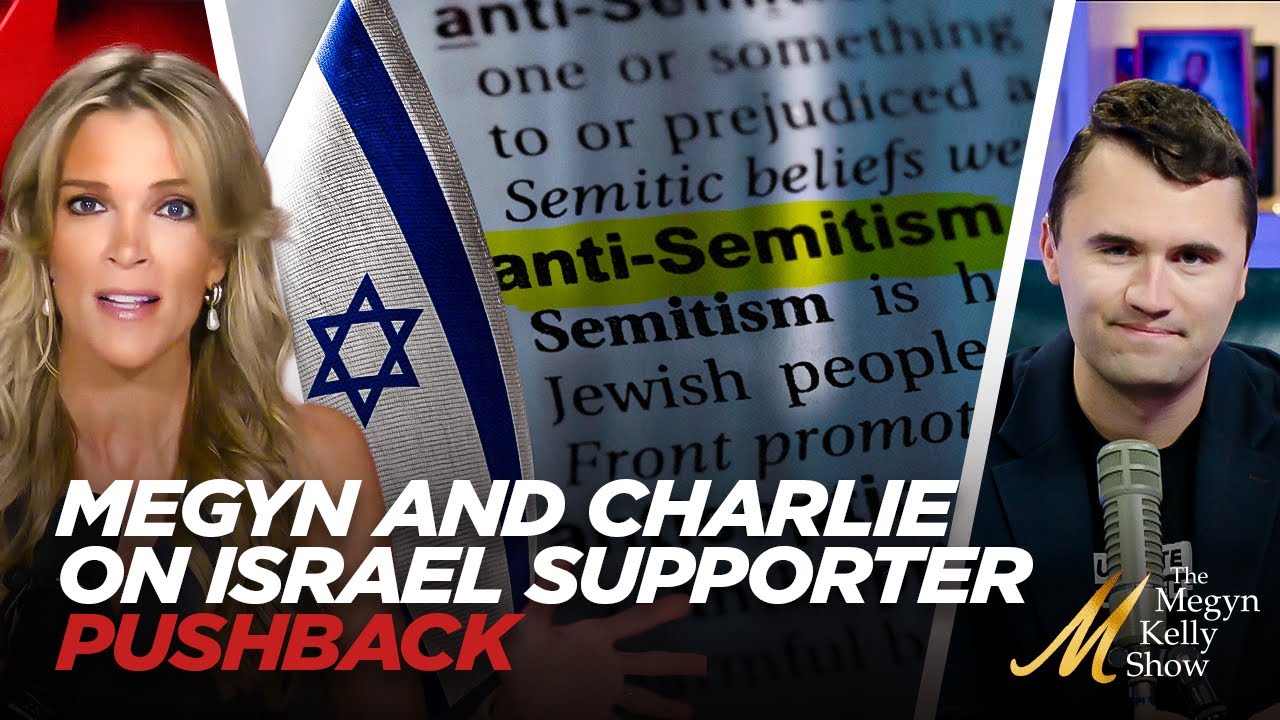
Megyn Kelly and Ana Kasparian discuss the intense pressure campaign directed at Charlie Kirk in his final months, revealing how questioning Israel's role in the Epstein scandal led to accusations of anti-Semitism against both Kelly and Kirk. Kelly recounts their conversation at a Turning Point USA event where Kirk encouraged her to challenge the DOJ's refusal to release Epstein files, and how that discussion sparked vicious attacks from pro-Israel donors and organizations. The conversation explores why independent podcasters, rather than prominent Democrats or Republicans, have become the loudest voices questioning U.S. foreign policy, and examines the coordinated efforts to silence those who ask questions about intelligence connections to Jeffrey Epstein.
April 9, 2026
Independent Voices Challenge the Political Establishment
Megyn Kelly and Ana Kasparian examine why independent podcasters have emerged as the primary voices challenging current U.S. foreign policy decisions, while traditional politicians from both parties remain largely silent. Kasparian notes that historically, the left has been more critical of the U.S.-Israeli alliance, but conservative voices questioning this relationship represent a significant shift that threatens long-standing political support.
The conversation reveals how questioning Israel's actions, particularly in Gaza, has awakened conservative audiences to foreign policy issues they previously avoided. According to Kasparian, when Israel begins losing support among American conservatives, the overall U.S. support for Israel faces genuine jeopardy. This explains why campaigns against conservative figures who ask questions have become increasingly aggressive.
The Vicious Campaign Against Those Who Question
Kasparian describes the brutal tactics used against those who dare to question Israeli policy or intelligence connections. She shares personal experiences of family members—people with no political involvement whatsoever—being contacted at their workplaces and questioned about her political views. These family members don't follow international news or engage in political discussions, yet they found themselves targeted simply because of their relationship to her.
However, Kasparian observed that the campaigns against Charlie Kirk and Megyn Kelly were even more ferocious than those directed at her. This increased intensity reflected Kirk's historical support for Israel and Kelly's prominent platform, making their questions particularly threatening to established narratives.
The Real Story Behind the Candace Owens Controversy
Kelly clarifies the actual origins of the controversy surrounding her refusal to denounce Candace Owens. Contrary to popular belief, the initial pressure didn't center on Owens' comments about Erika Kirk. Instead, the campaign began because Kelly wouldn't condemn Owens for asking questions about Israel in the wake of Charlie Kirk's death.
Kelly explains her position clearly: "How about you're responsible for what you say and Candace is responsible for what she says. Period. End of story." She notes that while she disagrees with Owens about Erika Kirk—a fact she has stated repeatedly and that Owens acknowledges—she refuses to denounce Owens for investigating potential Israeli connections to Kirk's death.
The friendship between Kelly and Charlie Kirk deepened over their shared experience of immense pressure to remain unquestioningly pro-Israel. In a conversation one month before his death, both expressed frustration and offense at being labeled anti-Semites for having the mildest conversations about Jeffrey Epstein. Kirk had grown exasperated with the accusations and was attempting to give voice to young Republicans who were already questioning U.S.-Israel policy.
Charlie Kirk's Final Months Under Pressure
Text messages that emerged after Kirk's death revealed his frustration with Jewish donors who were threatening him. Kelly emphasizes that Kirk was being tortured—her word—by these pressure campaigns during his final two months alive. Critics wanted Kelly to condemn Candace Owens for merely mentioning Israel in connection with Kirk's death, but Kelly refused because she supported asking those questions completely.
Kelly maintains her belief that Tyler Robinson was responsible for Kirk's death while simultaneously supporting investigation into whether others were involved. She sees nothing unreasonable about Owens asking these questions. When critics couldn't successfully attack Kelly on this front, they waited until they found something they considered more persuasive—Owens' comments about Erika Kirk—and attempted to force Kelly to condemn Owens on that basis or be labeled a bad person.
Kelly's response remains unchanged: "I will never bend the knee to these bullies who tortured Charlie. At a minimum, they tortured Charlie in his last two months on Earth. That's a fact."
Candace Owens Reveals the Truth
Kasparian gives credit to Candace Owens for revealing the truth about what Charlie Kirk experienced in his final months. This revelation proved important for the public to understand, even as critics initially called Owens a liar. The text messages ultimately vindicated her claims, showing that Kirk was indeed under enormous pressure from donors and organizations demanding his unwavering support for Israeli policy.
The Epstein Files and Media Cover-Up
The conversation shifts to the Jeffrey Epstein files and the notable media personalities who appeared to participate in covering up their significance. Kasparian observes that specific American media figures repeatedly claimed the public didn't care about the Epstein files, insisting Americans were focused on other matters. This narrative proved false—Americans did and do care about the Epstein files.
Kasparian suggests paying attention to which media figures downplayed the importance of these documents, questioned their relevance, and appeared to participate in efforts to minimize their impact. She asks the crucial question: What are these media personalities afraid of regarding the release of the Epstein files?
Fake Transparency and Legal Loopholes
Kelly expresses frustration with what she calls "fake transparency" regarding the Epstein file releases. Congress passed a bill into law demanding disclosure, but it included massive exceptions allowing the Department of Justice to remove any documents they deemed problematic or potentially damaging to specific individuals. As a lawyer, Kelly sees the glaring loopholes in the legislation.
This situation may actually be worse than if nothing had been released, Kelly argues, because now the government can claim full disclosure while hiding crucial information. The DOJ has announced it's finished releasing documents, but Kelly suspects a trove of materials exists somewhere that may never see public release. She questions whether the full truth will ever be known.
What Was Actually Released Matters
Despite Kelly's concerns about what remains hidden, Kasparian argues that what was released still holds significant value. She credits the Trump administration for not doing a better job of covering up what they did release, which allowed investigators to draw direct links between Epstein and the Israeli government.
The released documents revealed Epstein's involvement in foreign policy, including striking deals between Israel and the United Arab Emirates and facilitating agreements regarding cyber weapons between Israel and other countries. While these aspects of the story lack the scandalous appeal of powerful figures engaged in criminal sexual behavior, Kasparian considers it essential to understand how Epstein functioned as a tool for intelligence organizations, particularly Mossad.
The Turning Point USA Conversation That Started It All
Kelly recounts in detail the conversation with Charlie Kirk at a Turning Point USA event in July that ignited the controversy. Backstage, Kirk wanted to focus the discussion on Pam Bondi, who had just caused an uproar with a DOJ memo stating the government wouldn't release additional Epstein materials. Kirk told Kelly to "go for it" on Bondi—echoing his famous instruction to Tucker Carlson to "go Max," a moment Kelly has on tape and released publicly.
Kirk explained he couldn't directly attack Bondi himself because of his proximity to the Trump administration, but he was happy for Kelly to repeat what she had been saying on her show all week. Kelly agreed, and Kirk led a Q&A session that devoted substantial time to Epstein and Bondi's multiple Fox News appearances dismissing the importance of the files.
During the discussion, Kirk asked the Turning Point USA audience if they cared about Epstein. The crowd responded with an emphatic yes. Kirk then asked Kelly if she thought Epstein worked for intelligence agencies. She responded that it seemed likely. When asked whose intelligence, Kelly said she wasn't an expert but it probably was Israeli.
Anti-Semitism Accusations Over Intelligence Questions
That moment at Turning Point USA became the basis for accusations that both Kelly and Kirk were anti-Semites. Kelly finds this particularly absurd given her years of ardent pro-Israel advocacy, defending Israeli policy and speaking out forcefully whenever American Jewish individuals faced harassment on college campuses or elsewhere. She admits she didn't closely follow the day-to-day developments of the Gaza war, but she consistently defended Israel on issues that mattered.
Charlie Kirk had an identical record of pro-Israel advocacy. Yet official American Jewish organizations publicly condemned both of them as anti-Semites based on their Epstein conversation. Both Kelly and Kirk were stunned by the accusation.
The Outsized Reaction Makes Sense Now
Kelly now understands that the reaction was outsized compared to the alleged offense because powerful interests couldn't allow them to pursue this line of questioning. The action wasn't proportional to the sin because the goal was to prevent any serious investigation into intelligence connections to Epstein. Kasparian agrees, noting that the pattern of who gets attacked, how viciously, and why reveals the actual stakes involved in these questions.