
Up Next

Mysterious Aircraft Activity Surrounding the Charlie Kirk Assassination: Investigating the Unexplained Flight Patterns
1:15:29

Turning Point USA's Accepts Candace Owens Public Challenge to Answer Questions About Charlie Kirk's Assassination
1:05:43
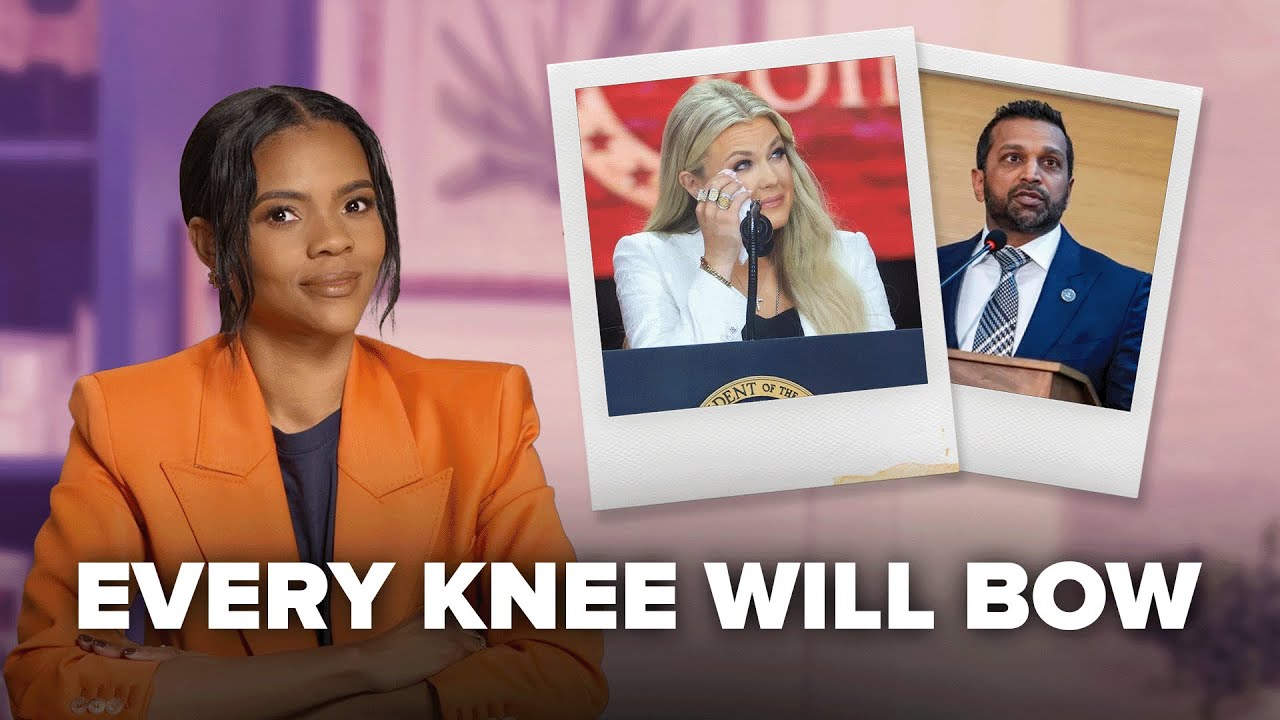
Candace Owens Investigates Charlie Kirk Assassination After Erika Kirk's Powerful Forgiveness Speech and Kash Patel Statement
1:00:21
Related Books
Browse Conservative Books




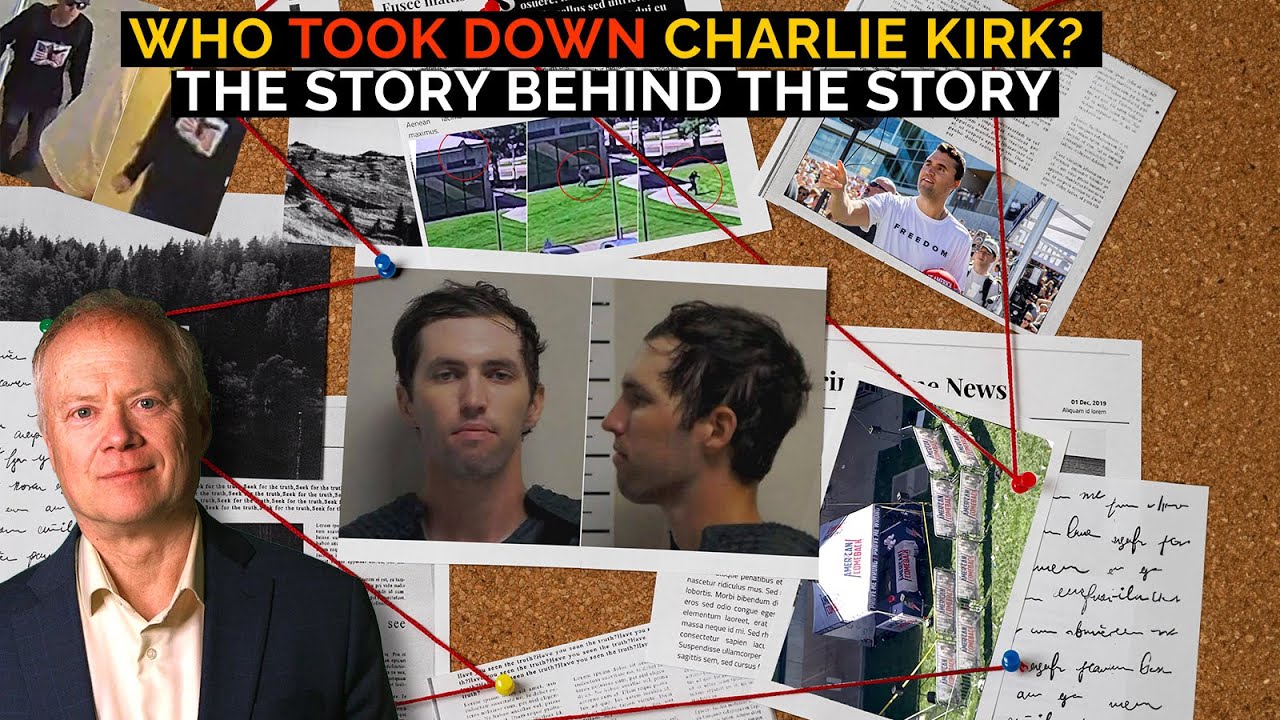
Cameron Vance Was at the Event and Explains Why So Few Videos of Kirk's Shooting Are Online
Cameron Vance was on the ground at Utah Valley University when Charlie Kirk was shot. With over 3,000 people at the event, many have asked why only five or six videos of the shooting have surfaced publicly. Vance, who runs a channel approaching half a million subscribers, breaks it down: most people with footage turned it over to law enforcement, many deliberately chose to exclude the shooting moment out of respect, and those who did post it may not have realized at the time that Kirk would not survive. He also addresses the chaotic immediate aftermath, an active shooter lockdown with police in protection mode rather than investigation mode, a Turning Point USA film crew pulling SD cards to preserve footage, and hundreds of people sheltering in place or evacuating while first responders worked to locate and contain the threat.
3,000 People Were There — So Where Is All the Footage?
Cameron Vance was present at Utah Valley University on September 10th when Charlie Kirk was shot. With more than 3,000 people at the event, many have since asked why only five or six videos of the moment have circulated online. His answer: hundreds of cell phone videos almost certainly exist, and some of the more complete footage may have come from professional cameras on site — but the vast majority of it was handed over to law enforcement rather than posted publicly.
Those who did share their footage with the creator, reached through his other channel with nearly half a million subscribers, deliberately left out the moment of the shooting. Out of respect for Kirk and his family, they did not include it. They shared it with local law enforcement instead.
The Ethics of Death Footage Being Permanently Online
Vance raises a difficult question directly: is it a tragedy that Charlie Kirk's death footage exists permanently on the internet, where his wife and his children — when they are older — will be able to find it? His answer is yes, without hesitation. But he also acknowledges why the footage that did get out mattered.
"I think the release of the videos served as an example of the political violence that the left is capable of," he says. Without that footage circulating, he argues, the public response would have been different and the movement that has formed around Turning Point USA's continuation of Kirk's legacy may not have taken on the same intensity.
He draws a comparison to Steve Irwin, who was killed on camera by a stingray. Irwin's wife chose to have that footage destroyed. Charlie Kirk had no such protection — the phones were already out, and once the footage existed, it spread within minutes. Vance himself called his wife from the campus 10 to 15 minutes after the shooting to tell her what had happened. Less than half an hour later, she sent him the most widely shared video of the moment. It had already traveled that far that fast.
What To Do If You Have Footage on Your Phone
Vance is clear about what anyone holding relevant footage should do: turn it over to investigators. A phone containing footage of a crime can be treated as evidence. If someone has communicated footage of a crime to you, government investigators can potentially seize that electronic communication if they determine it is relevant to the investigation. The right move is to hand it over proactively and let authorities work with it rather than posting it publicly.
The Active Shooter Response: Protection Mode, Not Investigation Mode
Several theories circulating online have questioned why the area was not immediately locked down with crime scene tape and why the Turning Point USA film crew appeared to be packing up equipment rather than leaving everything in place. Vance addresses both directly.
In an active shooter scenario, law enforcement's first responsibility is to locate and neutralize the threat, not to secure a forensic scene. Officers on the UVU campus were deployed to protect people, sweep the grounds, and contain the situation. Crime scene tape, perimeter setup, and evidence collection come after the immediate threat has been addressed. In the meantime, the crime scene may be compromised — but cameras, existing footage, and the recordings the event team was already making can reconstruct what happened before investigators arrived.
"Police are not in investigation mode right now," Vance says. "They're in protection mode."
He describes what it looked like inside the campus buildings: a student passing out in a hallway, people being guided into counselor offices, others debating whether to shelter in place or evacuate, lights being turned off, groups moving quietly through corridors. Vance himself chose not to shelter in place, instead walking the campus to talk to witnesses about what they saw.
The Film Crew and the SD Cards
Some online commentators questioned why Turning Point USA's media team appeared to be breaking down their camera setup in the immediate aftermath rather than leaving equipment where it was. Vance explains: they were pulling SD cards to protect the footage. In a chaotic and unsecured environment, the concern was that someone could grab the cards. Candace Owens later stated she saw the footage that was on those cards. Securing the recording was the priority — not abandoning the equipment, but making sure the evidence it contained did not disappear in the confusion.
Crime Scene Protocol and the Bigger Picture
Vance explains that proper crime scene protocol works from the outside in — establishing a wide outer perimeter first, then moving people off campus, then progressively tightening the scene. The fact that this process takes time and leaves a window where the scene appears unprotected is normal, not suspicious. It is the procedure, not a deviation from it.
"In the void of information, the public will fill it with conspiracy theory," he says. "Where's the autopsy report? Ballistics? No exit wound? A lot of things don't add up." He acknowledges the frustration of waiting for an FBI investigation to produce answers, but frames that frustration as the natural result of official silence rather than evidence of anything being hidden.
Was There a Drone Flying Over the Event?
Vance closes by addressing a claim appearing in his comments: that a drone was flying over the event during the shooting. He says he never saw one, and it does not appear in any of the 10 to 20 minutes of footage he captured from the time Kirk took the stage. He asks anyone with verified footage of a drone in the air that day to share it in the comments — he says he would genuinely like to see it if it exists.
Video Transcript
[00:00] There were over 3,000 people at the
[00:02] Charlie Kirk event. So, a lot of people
[00:04] are asking, "Where is all the cell phone
[00:06] footage of Charlie when he got shot? Why
[00:09] are there only five or six videos out
[00:11] there that actually show the bullet
[00:14] entering his neck?" So, yes, there's
[00:16] probably hundreds of cell phone videos
[00:18] of Charlie's assassination, even some
[00:21] angles from more professional cameras,
[00:23] but that footage, but that footage has
[00:24] been turned over to the authorities, not
[00:27] all posted online. In fact, the people
[00:29] who did post their footage, I hope they
[00:31] did it, thinking that Charlie would pull
[00:32] through, instead of publicly posting the
[00:35] death footage of a husband and a father.
[00:38] I remember as I was leaving the campus
[00:39] 10 or 15 minutes after the shot rang
[00:41] out, I called my wife. I said, "Charlie
[00:44] Kirk just got shot in the neck." And she
[00:47] didn't believe me. She just said, "What?
[00:49] What are you talking about?" Less than
[00:51] half an hour later, she sent me a video
[00:54] on her phone, the video that's probably
[00:56] shared the most. right up front when
[00:58] Charlie was shot. That's how quick that
[01:00] video spread. It was like wildfire. Is
[01:02] it sad that Charlie's death footage will
[01:04] forever be online for his wife to find
[01:07] his kids when they've grown older?
[01:09] Absolutely. I think the rel I think the
[01:12] release of the videos that did get out
[01:14] of the shot served as an example of the
[01:18] political violence that the left is
[01:20] capable of. It was so graphic it
[01:23] couldn't help but be polarizing. I think
[01:25] without that footage getting out, there
[01:28] wouldn't be such a movement behind
[01:30] Turning Point USA and continuing on
[01:33] Charlie Kirk's legacy. So, no, I'm not
[01:36] glad that that footage got posted online
[01:38] shortly after he was shot, but I
[01:40] understand that it was necessary to show
[01:43] the level of violence that was involved
[01:47] on September 10th. After Charlie was
[01:49] assassinated, I requested videos of the
[01:52] event from my subscribers on my other
[01:54] channel that has almost half a million
[01:55] subscribers. I was looking to do a
[01:57] Charlie Kirk memorial video, not so much
[02:00] looking to analyze the shot, but every
[02:03] single person that sent me video footage
[02:05] out of respect did not include the shot.
[02:08] They did, however, share it with local
[02:10] law enforcement.
[02:16] If you have evidence of a crime on your
[02:19] cell phone, your phone can be considered
[02:22] evidence. If somebody communicate with
[02:26] you with evidence of a crime, the
[02:29] government can then seize your
[02:30] electronic communication depending on if
[02:32] they feel like it's relevant in an
[02:34] investigation. The best thing for you to
[02:36] do if you have footage is for you to
[02:38] turn it over to the investigators.
[02:40] >> This subscriber, for example, her name
[02:42] is Missy. She, like many others, was
[02:45] traumatized to watch the person she came
[02:47] to see speak and was supporting be
[02:50] murdered in front of her. The initial
[02:52] cell phone footage that was released,
[02:54] who knows who posted that. I feel like
[02:56] when you're on the outside looking in,
[02:58] there's a morbid curiosity. You want to
[03:01] see this happen in 4K. You want to see
[03:03] this in slow motion. You want to analyze
[03:06] it frame by frame. It's like when Steve
[03:08] Irwin was killed by that stingray.
[03:10] Everybody's looking for his death
[03:11] footage. At least for Steve, he didn't
[03:14] have a couple cell phones recording him
[03:16] where anyone could choose to upload that
[03:17] to the internet. His wife chose to have
[03:20] the death footage destroyed. I can also
[03:23] say that a lot of people didn't just sit
[03:24] there with their phones out. They were
[03:26] listening to what Charlie was saying.
[03:28] These events are recorded in their
[03:30] entirety and posted on YouTube. I don't
[03:32] see what the benefit would be to sit and
[03:35] hold your cell phone up for the entire 2
[03:37] or 3 hours that he's speaking when
[03:39] you're already standing there and you
[03:40] can see it better online afterwards.
[03:43] What's most frustrating is having to
[03:45] wait to have patience on the FBI
[03:47] investigation. Where's the autopsy
[03:49] report? Ballistics. No exit wound. A lot
[03:52] of things don't add up. And in the void
[03:54] of information, the public will fill it
[03:56] with conspiracy theory. This is the
[03:59] setup. This is the setup for the canopy.
[04:01] Everybody's talking about a trapoor.
[04:04] This is before the canopy was set up.
[04:07] This subscriber must have showed up an
[04:09] hour or two before the event even
[04:10] started because by the time I got there,
[04:12] and I was about 10 minutes early, there
[04:14] was already thousands of people crowded
[04:16] around this area. So, this is when
[04:19] Charlie came out.
[04:26] [Applause]
[04:37] A lot of people are saying after he
[04:38] shot, why did his film crew run and take
[04:42] down the camera?
[04:43] >> You think Turning Point media guys, he
[04:46] in on it. Play the clip. He in on it,
[04:48] man. Charlie just got Charlie just got
[04:51] shot right here. And what do you think
[04:53] people are doing? They don't have time
[04:54] for investigators to come lock the scene
[04:56] down. This is a massive scene. We don't
[05:00] see any yellow tape. Yellow tape. First
[05:03] of all, a shooting occurred. Cops are
[05:05] trying to eliminate the threat.
[05:07] >> This was an active shooter scenario. The
[05:10] entire campus went on lockdown. Police
[05:12] were deployed not to secure the scene
[05:15] and start their CSI. They were deployed
[05:18] to try to secure the campus. For
[05:20] example, this girl passed out in the
[05:22] hallway. Uh, so we took her into like a
[05:24] counselor's office or something in the
[05:26] building.
[05:27] >> I have her cup. How about that?
[05:29] >> J, you can go.
[05:32] You can go. Are you going to come in
[05:34] here or no?
[05:38] >> You're all right. You're all right.
[05:40] You're going to be fine.
[05:41] >> You're far away.
[05:42] >> Let's go. Come on. Let's go. This is
[05:44] safe. Let's go. Let's do You guys see
[05:46] the light? Let's turn off the light.
[05:50] Where did go?
[05:52] >> Is there an exit? This way.
[05:53] >> Uh, this is
[05:54] >> I think we're going to shelter in place.
[05:55] >> Here. Come here. Come here. This way.
[06:00] >> You want to go that way?
[06:01] >> Let's go over here.
[06:02] >> Let's go over here.
[06:04] >> Are you good?
[06:05] >> I'm going to pass it.
[06:06] >> Okay. Just come and sit here. Are you
[06:08] okay?
[06:08] >> No. I'm so sorry. And this place is a
[06:11] total mess here. You sit here. Can you
[06:15] even be okay? Okay.
[06:17] >> I mean, I didn't shelter in place. I
[06:18] just kind of left to go talk to people
[06:20] about what they saw. But yeah, it was a
[06:22] lockdown. Police are not in
[06:23] investigation mode right now. They're in
[06:25] protection mode.
[06:27] >> They don't know if it's multiple
[06:28] shooters. They don't know if they can
[06:29] find a shooter. They got people
[06:31] distracting them. They don't have time
[06:32] to come set up a crime scene tape.
[06:36] That's for officers that are not
[06:37] actively involved in trying to stop a
[06:40] murderer. That comes a little later.
[06:42] Yes, the crime scene could be
[06:44] compromised, but they have cameras and
[06:46] they have footage and they have all that
[06:47] that can tell the story of what happened
[06:49] before they got there. Like I was
[06:51] saying, they record this entire event
[06:53] and the film crew was saying that they
[06:55] were getting out the SD cards. Candace
[06:57] Owens said she saw the footage on the
[07:00] cards. They were trying to secure that
[07:02] footage so no evildoers could come and
[07:05] try to grab the card for whatever
[07:07] reason.
[07:08] >> So, they're not going to have the thing
[07:09] out. And then for those of you who had
[07:11] never done the investigation, you set
[07:13] the perimeter first. So the crime scene
[07:16] tape is going to start outside of the
[07:18] perimeter. They're going to have to
[07:20] crime scene tape the campus off. Then
[07:22] they're going to try to get the people
[07:23] off the campus and then they're going to
[07:25] begin to to make the crime scene smaller
[07:27] and smaller and smaller. Now, I have
[07:28] heard in my comments that there was a
[07:30] drone flying around during the event. If
[07:32] there was, I never saw it. It was never
[07:35] in any of my footage and I filmed for a
[07:37] good 10 to 20 minutes at the beginning
[07:40] of when Charlie started speaking. If
[07:42] anyone has some verified footage of a
[07:45] drone flying during the event, drop a
[07:48] comment down below. I'd be really
[07:49] interested to see that. Don't forget to
[07:51] like and subscribe for the YouTube
[07:52] algorithm so this video doesn't get
[07:54] suppressed. I'm Cameron Vance and I'll
[07:56] catch you in the next video.


Comments
Be the first to comment on this video.