Camron Vance Conducts Ballistics Tests on the Charlie Kirk Assassination Theories and Evidence
Enjoying this? Share it with someone who needs to see it.
Up Next
Sierra Gillespie Investigates Conspiracy Theories Surrounding Charlie Kirk's Murder and What Evidence Actually Shows
37:09
Jon Aaron Bray Presents Technical Analysis of Charlie Kirk Incident Using AI Enhanced Frame by Frame Investigation
1:56:34
Gary Melton and Blake Bednarzz's Debate on Charlie Kirk Shooting: Forensic Evidence, FBI Video Analysis, and Ballistic Testing Examined
2:35:46
Camron Vance Conducts Ballistics Tests on the Charlie Kirk Assassination Theories and Evidence
Camron Vance presents extensive ballistics testing to examine competing theories surrounding the Charlie Kirk assassination. Using ballistic skulls, various calibers including 9mm, .30-06, and .32 caliber rounds, Vance tests the plausibility of different shooting scenarios, from elevated positions to exploding microphones to concealed palm pistols. The investigation includes audio analysis comparing gunshot sounds, body armor deflection theories, and trajectory testing. Vance finds discrepancies between the official FBI report citing .30-06 as the caliber and the actual wound patterns observed. Through meticulous recreation of the UVU courtyard shooting environment and detailed forensic examination, Vance raises questions about whether a second shooter was involved, suggesting Tyler Robinson may have been a fall guy while the real assassin escaped detection.
Camron Vance begins his ballistics investigation by setting up a testing environment that closely mimics the UVU courtyard where Charlie Kirk was assassinated. The location is surrounded on all sides by cliff faces, creating acoustics and spatial conditions similar to the actual crime scene. Using a ballistic skull as a stand-in for human anatomy, Vance prepares to test multiple theories about how Kirk was killed and from what position the fatal shot was fired.
Testing the Behind-the-Ear Entry Wound Theory
One prominent theory suggests Charlie Kirk was shot from the right side, with the bullet entering behind his ear and exiting through the side of his neck. Vance notes this would require an extremely angled shot, meaning the shooter would have needed to be at an elevated position. Using a 9mm hollow point round—which expands upon hitting soft tissue—Vance fires at the ballistic skull from this angle.
The first test yields unexpected results: the subsonic hollow point bullet lodges in the neck area without creating an exit wound. Vance then switches to a supersonic round, which does produce a definite exit wound along with skull fragmentation and significant damage to the rear of the skull. The hollow point ammunition causes the skull to shatter considerably.
Testing the Official FBI Caliber: .30-06
According to official reports, the FBI determined that a .30-06 rifle round killed Charlie Kirk. Vance uses a soft-tip bullet designed to aid expansion and remain lodged in tissue rather than pass completely through. He notes this type of ammunition would be most likely to stay inside someone. However, as the test demonstrates, even with soft-tip ammunition, the .30-06 leaves a massive exit wound.
Vance references what he calls a peculiar statement from the doctor who treated Kirk, who called him "a man of steel" and said it was miraculous the bullet didn't penetrate all the way through. Vance expresses skepticism about this claim, stating that if Kirk was hit in the C3 or C4 vertebrae in the spine, there's no plausible way it wouldn't have blown out the back of him.
Using 180-grain ballistic tip .30-06 ammunition—a hunting round designed for rapid expansion and devastating shock—Vance demonstrates the kind of damage a shooter would inflict if looking to kill and create the most life-threatening wound possible. The results show catastrophic damage inconsistent with the wounds described on Kirk's body.
Comparing Multiple Calibers
To provide context for the damage different calibers cause, Vance tests several ammunition types on the ballistic skull. Starting with .32 caliber, a relatively small round, the impact is barely visible. He then tests 5.56mm ammunition, which many people requested despite the FBI's official .30-06 determination.
Vance points out a critical discrepancy: based on his testing and "hundreds of others, from hunters, from gun experts to snipers," a .30-06 rifle round leaves a much bigger hole than what was observed on Charlie Kirk's body. This inconsistency between the official story and the forensic evidence becomes a central theme of the investigation.
The Body Armor Deflection Theory
An early theory proposed that Charlie Kirk was wearing body armor and was shot in the chest, but the armor deflected the bullet off its edge into his neck. To test this, Vance obtains a Level 3A soft armor panel and places it on a mannequin named Bob.
Vance immediately notes several problems with this theory. First, the armor is very obvious even under a black shirt, and even more pronounced under Kirk's Freedom shirt. The panel creates a clear silhouette that would have been visible in footage. Second, the armor is soft and flexible, designed to defeat pistol rounds up to .44 Magnum by absorbing and dispersing impact—not deflecting rifle rounds like a steel plate would.
The armor packaging explicitly states it is "not intended to protect against rifle fire." Vance questions whether soft armor could cause a .30-06 round to ricochet rather than simply penetrate. To test the theory, he attempts to shoot the very edge of the armor panel with hard-tip .30-06 bullets, positioning his shots to potentially deflect upward into the neck area. He even tapes paper to the mannequin's face to detect any ricocheting fragments.
The results are definitive: every single rifle round penetrates the armor completely. There is no deflection whatsoever. Vance concludes this theory is implausible.
The Exploding Lavalier Microphone Theory
Another theory circulating suggests Kirk's lavalier microphone exploded, sending a projectile into his neck. Vance points out fundamental problems with this idea: "How do you control an explosion and shoot a projectile in your intended direction? Sounds awfully like a bullet."
If a microphone simply exploded with a projectile inside, there would be no way to ensure it would hit Kirk rather than flying in a random direction. The most that could work would be loading a bullet into the microphone with an electronic remote trigger that fired through a chamber—essentially creating a gun.
However, Vance identifies a critical flaw: even if the microphone was flush against Kirk's chest, the bullet trajectory would not angle into the neck but would shoot past it. An alternative version of this theory suggests the projectile went up through Kirk's skull, bounced around, and exited the neck, but no wound was observed under Kirk's chin to support this.
The biggest evidence against the exploding microphone theory is the magnet that attaches the lavalier. If the microphone exploded, this magnet would pop off. Vance tests this by placing a CO2 canister beneath a microphone magnet to simulate an explosion. The canister not only jettisons the magnet but leaves a sizable hole in the shirt—neither of which was observed on Kirk.
Camera Gun and Palm Pistol Theories
Some have theorized that Kirk's cameraman was involved, concealing a pistol below his camera rig or using a palm pistol. Vance examines the video footage and sees no felt recoil from the cameraman. Additionally, no one looked in the cameraman's direction after the shot, which they would have if someone standing right next to them fired even a subsonic round.
Vance notes that palm pistols typically use .32 caliber ammunition, which is a light round and not particularly accurate. He points out it would have been easy to bring a gun into the UVU event since people weren't checking bags, and UVU is a concealed carry university where anyone 21 or older with a permit can legally carry a concealed handgun.
Audio Analysis: The Smoking Gun
Rather than focusing on video analysis, which Vance says can lead people to see things in pixels that aren't there, he turns to audio forensics. He notes that many people overlook the audio of the shot, which can reveal crucial information about the type of weapon used and the shooter's distance.
Vance switches his camera audio to an external microphone and records shots from 9mm and .32 caliber handguns positioned to the right side of where Kirk would have been standing, matching the microphone positions from videos of the actual shooting.
He explains that supersonic bullets break the sound barrier, creating a sonic wave that arrives before the actual gunshot sound. When close to a gun, the sonic boom and gunshot occur almost simultaneously. The closer the gun, the less separation between these sounds. From his pistol tests at close range, the boom and crack are indistinguishable.
Vance then fires an AR-15, .300 Blackout rifle, and .30-06 from distances of 50, 100, and 150 yards to capture the distinct separation between sonic boom and gunshot that occurs at distance. When comparing these audio waveforms to the actual audio from Kirk's assassination, Vance identifies a clear sonic boom followed by the crack of the gunshot—a pattern consistent with a distant rifle, not a nearby pistol.
He notes particular similarity to the .30-06 waveform at 150 yards. Comparing the actual shooting audio to his test recordings with background noise, Vance states: "My dilemma here is it sounds like a .30-06, but the wound doesn't look like it was made by a .30-06."
The Second Shooter Theory
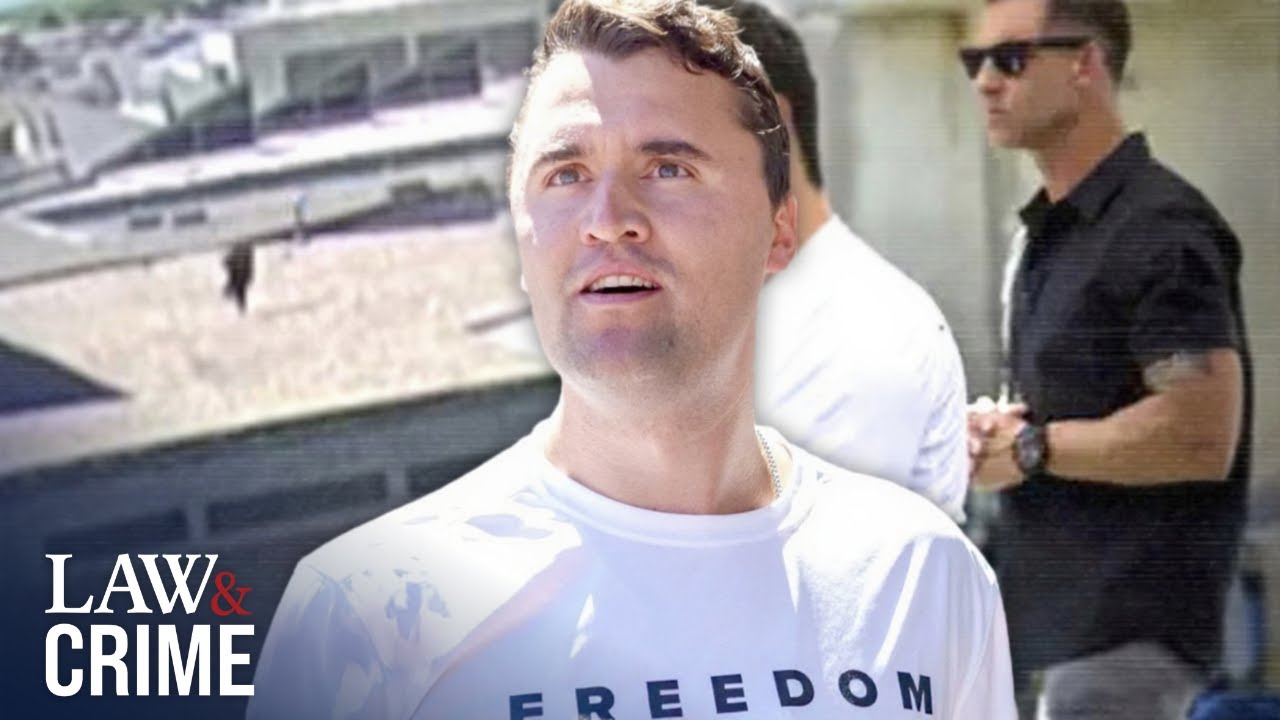
Vance concludes by presenting what he considers the most plausible theory: that there was a second shooter and Tyler Robinson was the fall guy. He points to suspicious behavior captured on video, including a man pumping his fist saying "USA, USA" immediately after the shot, a person identified as a child predator claiming "I'm the shooter," and footage of a man dressed in black running along a rooftop.
Critically, Vance notes there is no verifiable footage of Tyler Robinson ever holding the murder weapon. He announces plans for a future video that will examine Tyler Robinson's path, text messages, and set up a live-fire scenario to test whether a second shooter theory is feasible.
Final Thoughts
Vance acknowledges the limitations of his investigation, stating he's working with incomplete information and encourages viewers to combine his findings with other opinions and their own judgment. He emphasizes taking everything with a grain of salt and accepting that the full story may never be known. He requests viewers like and subscribe, noting that platforms tend to suppress this type of content, and promises further investigation in upcoming videos.