
Up Next

Stephen A. Smith Sits Down With Candace Owens: Black Conservatives, Harvey Weinstein, and Why Democrats Lost
1:01:59

Tucker Carlson Exposes How US Politicians Openly Celebrate and Fund Civilian Deaths in Gaza
12:20

Candace Owens Shares Her Devastating Story of Digital Activism Turned Eating Disorder and Five Years of Pain
16:15
Related Books
Browse Conservative Books







Candace Owens Confronts Double Standards After Congresswoman Uses Racial Slur Against Black Conservative
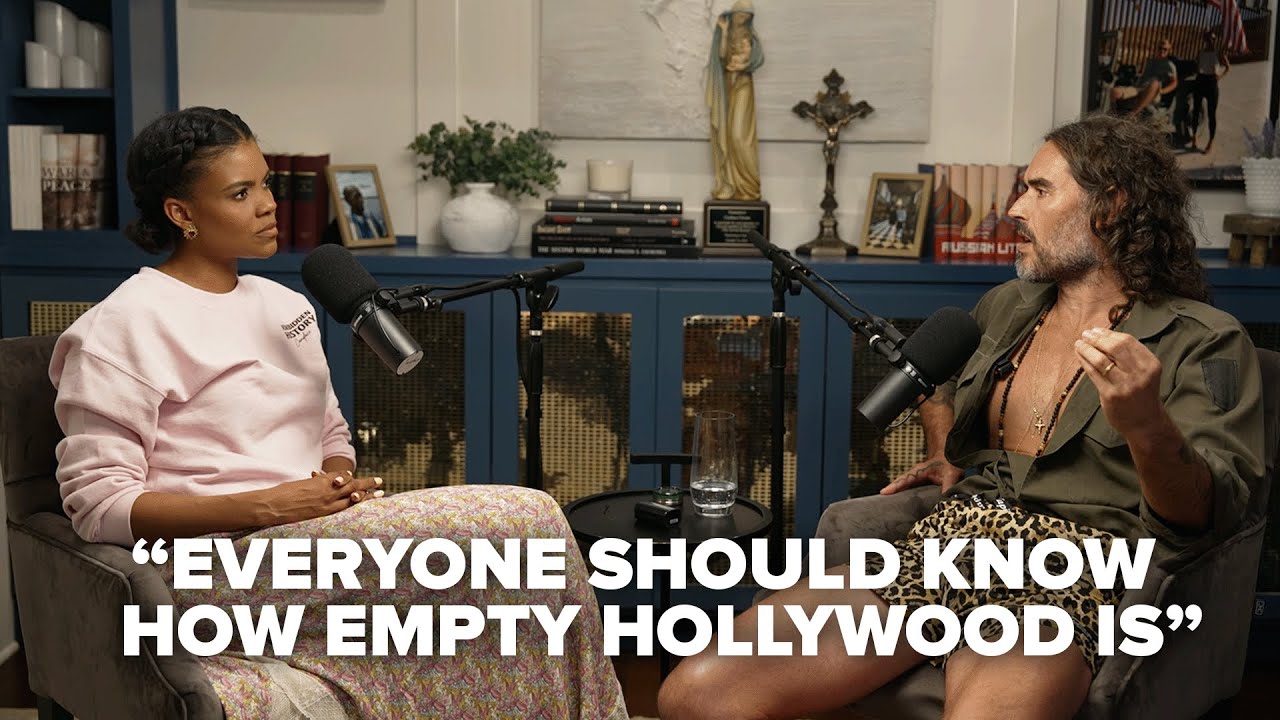
Candace Owens addresses a troubling double standard in American politics after a sitting member of Congress referred to a black conservative as a "token," calling it a clear racial slur by any measure. Kirk argues that the Left receives a pass for language that would end careers on the Right, highlighting how such inflammatory rhetoric, both racist and anti-semitic in this case, goes largely unchallenged when it comes from progressive voices. He challenges listeners to imagine the reversed scenario: if a conservative had used similar language against someone on the Left, the consequences would be immediate and severe. Kirk's response on social media sparked a broader conversation about accountability, political bias, and the unequal application of standards in public discourse. This moment reveals deeper questions about who gets to define offensive language and who faces consequences for crossing the line.
The Double Standard in Political Discourse
Candace Owens confronts a disturbing reality in modern American politics: the glaring double standard that exists when it comes to offensive and racially charged language. After a sitting member of Congress referred to a black conservative as a "token" and accused them of participating in "tokenism," Kirk called out what he sees as a clear racial slur that would never be tolerated if the roles were reversed.
According to Kirk, this type of language constitutes a racial slur by any reasonable standard. Yet when it comes from the Left, it receives minimal scrutiny or consequences. The asymmetry in how such incidents are handled reveals a troubling pattern in American political culture.
Imagining the Reversed Scenario
Kirk challenges his audience to consider what would happen if the situation were flipped. If a conservative had used similar language against someone on the Left—particularly language with racial undertones—the fallout would be immediate and career-ending. The person would face widespread condemnation, calls for resignation, and potentially lose their position entirely.
This thought experiment highlights the inconsistency in how offensive language is policed depending on the political affiliation of the speaker. What is considered unforgivable on one side is often dismissed or rationalized on the other.
Kirk's Response
Rather than let the comments go unchallenged, Kirk responded forcefully on social media. He pushed back hard against the congresswoman, refusing to accept the normalization of such language. His response was rooted in the belief that silence in the face of this kind of rhetoric only enables it to continue and worsen.
Kirk argues that this particular congresswoman has been getting away with far too much for far too long. Her comments aren't isolated incidents but part of a pattern that includes both anti-semitic and racist rhetoric. The fact that she continues to serve without significant consequences speaks to a larger problem of accountability in political leadership.
The Broader Implications
This incident raises important questions about the state of political discourse in America. When racial slurs are tolerated based on the political ideology of the speaker, it undermines any claim to consistent moral standards. It suggests that the rules apply differently depending on which team you're on, rather than being based on universal principles of respect and decency.
The acceptance of such language from the Left creates a permissive environment where increasingly inflammatory rhetoric becomes normalized. What starts as overlooking "minor" offenses can escalate into acceptance of more egregious behavior, all justified by political alignment.
Video Transcript
[00:00] the idea that a sitting person in
[00:01] Congress can refer to a black
[00:03] conservative as a token or say that
[00:06] they're participating in tokenism that's
[00:07] a racial slur any standards this is what
[00:09] what I mean when I say that we give a
[00:11] pass and an okay people on the Left
[00:13] could you imagine me was the other way
[00:14] around if somebody had used a slur
[00:16] against somebody that's a concern you
[00:19] just learn against somebody that was on
[00:20] the left it would never be permissible
[00:21] you could never do it
[00:22] so I obviously hit back hard on her on
[00:24] Twitter I think that she's getting away
[00:25] with way too much things that are both
[00:27] now anti-semitic and racist


Comments
Be the first to comment on this video.