Candace Owens Faces Lawsuit From French First Lady Over Bizarre Transgender Conspiracy Theory Claims
Enjoying this? Share it with someone who needs to see it.
Up Next
The Bulwark Sits Down to Reckon With Charlie Kirk's Legacy the Day After His Assassination
11:13
Tim Miller and Will Sommer Break Down Candace Owens' Macron Assassination Conspiracy Theory
16:08
Will Sommer Analyzes Right-Wing Media's Battle Over Charlie Kirk's Legacy and Turning Point USA
17:25
Candace Owens Faces Lawsuit From French First Lady Over Bizarre Transgender Conspiracy Theory Claims
Candace Owens finds herself in legal trouble after her eight-part documentary series claimed French First Lady Brigitte Macron is transgender. The lawsuit, filed by the Macrons in the United States, alleges Owens spread defamatory conspiracy theories that went beyond simple misgendering to include accusations of medieval cults and identity theft. Will Saletan breaks down the case with Sonny Bunch on The Bulwark, exploring how Owens' inflammatory content strategy may have finally crossed a line that even America's strong First Amendment protections won't shield her from, especially with the Macrons hiring the same legal team that destroyed Gawker.
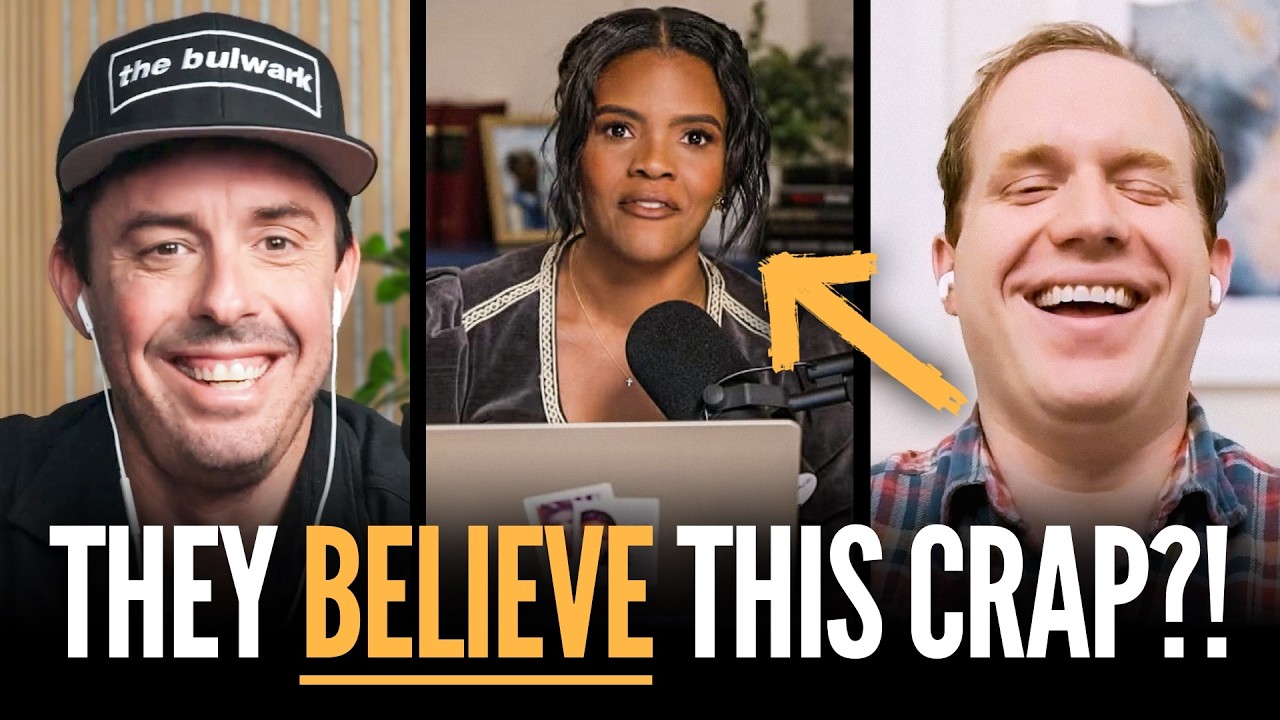
Candace Owens, the popular conservative YouTube personality, is facing a defamation lawsuit from French President Emmanuel Macron and First Lady Brigitte Macron. The case centers on an eight-part documentary series Owens produced several months ago that made extraordinary claims about Brigitte Macron, alleging she is transgender. According to Will Saletan, author of The Bulwark's False Flag newsletter, the situation represents a collision between right-wing conspiracy theories and international politics.
The lawsuit, filed in the United States despite the plaintiffs being French, spans nearly 300 pages and details the extensive claims Owens made in her series. These weren't simple allegations about gender identity but rather sprawling conspiracy theories that implicated the Macron family in what Owens characterized as centuries-old schemes.
The Outlandish Claims in Owens' Documentary Series
Owens' documentary went far beyond suggesting Brigitte Macron is transgender. After watching the series, Saletan described it as "truly crazy" and detailed some of its more outrageous elements. According to the videos, Owens claimed that Brigitte Macron might actually be Emmanuel Macron's father, and that the couple is part of a medieval cult that has worked to undermine the world for centuries.
The series proved hugely popular, elevating Owens' brand significantly. High-profile figures like Joe Rogan became convinced by the claims, and the content spread widely across platforms including TikTok. Owens herself has been vocal about the series' success, posting about viewership numbers and stating publicly that she is "staking my career on this" because she so fervently believes in her claims.
The evidence Owens presented in her videos was questionable at best. Much of her argument rested on subjective assessments of photographs of Brigitte Macron as a younger woman. Saletan noted that Owens would point to pictures from when Brigitte was a teacher and essentially argue that she didn't look attractive enough to be a woman, asking viewers, "Is that really hot? No, she looks ugly."
The Legal Strategy Behind the Macrons' Lawsuit
The Macrons have retained Harder LLP, the law firm that successfully destroyed Gawker Media on behalf of Hulk Hogan and Peter Thiel. This choice signals that the French First Couple is taking the matter extremely seriously and has brought in what Saletan called "the big guns" of defamation law.
Filing a libel lawsuit in the United States presents unique challenges, as American law provides strong First Amendment protections that make such cases difficult to win. The lawsuit will need to demonstrate that Owens acted with actual malice and that the Macrons suffered quantifiable damages. According to the complaint, Brigitte Macron has experienced significant emotional distress from these allegations, which originated with far-right writers in France before Owens "really picked it up and popularized it and really professionalized these claims."
The lawsuit also addresses the broader impact on the Macron family. Owens' theories implicated Brigitte's brother, claiming he is actually who Brigitte Macron "really is" and that she adopted the Brigitte identity. This has allegedly terrorized the entire Macron family.
Owens' Response and Defense Strategy
According to Saletan's conversations with someone in Owens' camp, she has not yet been formally served with the lawsuit but is not backing down. Her team views the situation as potentially creating a "Streisand effect," where attempts to suppress information only make it more widely known. Owens plans to address the lawsuit on her show and is standing by her claims.
This defiant stance comes despite the fact that winning a defamation case typically requires the defendant to prove the truth of their statements—something that appears extremely difficult given the nature of Owens' claims. Her team seems to be banking on the difficulty of winning libel cases in America and the increased attention the lawsuit will bring to her content.
Owens has made clear that the documentary series has been "very financially lucrative for her and really increased her audience." This admission could prove problematic in court, as it demonstrates a financial motive for making sensational claims regardless of their veracity.
The International Political Dimension
The case has taken on unexpected international significance. Owens claimed on her show that multiple people in the Trump administration told her to stop talking about the Brigitte Macron conspiracy theory. More remarkably, she stated that President Trump himself called her to relay that President Macron was holding up the Ukrainian peace process because he was so angry about her YouTube videos.
When Saletan asked the White House about this claim, they responded, "We're not going to comment on Trump's private conversations"—a non-denial that suggests the conversation may have actually occurred. Saletan noted that in a world where proximity to Trump is currency and lying about such contacts can be career-ending, Owens likely wouldn't fabricate such a story.
The scenario appears plausible: if something were bothering Brigitte Macron to this degree and Emmanuel Macron had access to Trump, it would be reasonable for the French president to ask his American counterpart to intervene. The claims have apparently reached a level where they're affecting diplomatic relations between two allied nations.
The MAGA World Reaction
The lawsuit has created a complex dynamic within conservative circles. On one hand, there's a natural "rally round the flag" instinct to defend an American content creator against a foreign government. On the other hand, many of the more mainstream elements of the conservative movement have been urging Owens to drop the subject because she "sounds insane."
Saletan noted that Owens is already somewhat isolated from former allies for other reasons, particularly her strong anti-Israel stance and her recent campaign attacking Holocaust survivor Elie Wiesel. These positions haven't built her many alliances within the broader conservative movement, leaving her more exposed in this legal fight.
The case also highlights a tension in right-wing media between sensationalism and credibility. As Saletan explained, "making big splashy deranged claims" is often how content creators build audiences on the right, while more substantive policy discussions about topics like tax cuts seem boring by comparison. This creates an incentive structure that rewards increasingly outrageous content.
The Evolution of Right-Wing Conspiracy Theories
Saletan placed the Owens case in the context of how right-wing media conspiracy theories have evolved since 2016. From Pizzagate through the Dominion Voting Systems lawsuits, right-wing media had been prone to making very specific accusations against particular individuals—"this guy did it" style claims.
However, after the successful lawsuits by Dominion and others, there was a noticeable shift toward vaguer accusations about "nefarious cabals" without naming specific people, or targeting "libel-proof" public figures like Barack Obama. Owens' approach of making highly specific claims about a particular person—even a public figure like Brigitte Macron—represents something of a throwback to the earlier, riskier style of conspiracy theorizing.
The Macrons' decision to pursue legal action, despite the risk of amplifying the claims through what's known as the Streisand effect, suggests a calculation that allowing the theories to continue unchallenged would be worse. As Saletan noted, the lawsuit will now be covered by outlets like The New York Times that had previously and understandably avoided addressing these claims.
What Comes Next
Legal experts suggest the case could be lengthy and complex. While American defamation law favors defendants, especially in cases involving public figures, the sheer volume of documentation in the 300-page complaint and the apparent financial motivation behind Owens' content could strengthen the Macrons' case.
The involvement of Harder LLP adds another dimension. This is the firm that successfully bankrupted Gawker Media, demonstrating that even with America's strong First Amendment protections, the right legal strategy can prevail in defamation cases, particularly when the defendant's financial gain from the defamatory content can be demonstrated.
For Owens, the incentives are mixed. Backing down would undermine her credibility with her audience after she staked her career on these claims. Fighting the lawsuit, regardless of the outcome, will likely continue to increase her visibility and potentially her revenue. As Saletan noted, her husband is reportedly very wealthy, which may insulate her personally from financial consequences, though her company could still be at risk.
The case also raises broader questions about the limits of acceptable discourse in an age of social media-driven conspiracy theories. While American law provides broad protections for speech, those protections are not absolute when false statements cause demonstrable harm to identifiable individuals. The Owens-Macron case may help define where those boundaries lie in the modern media landscape.