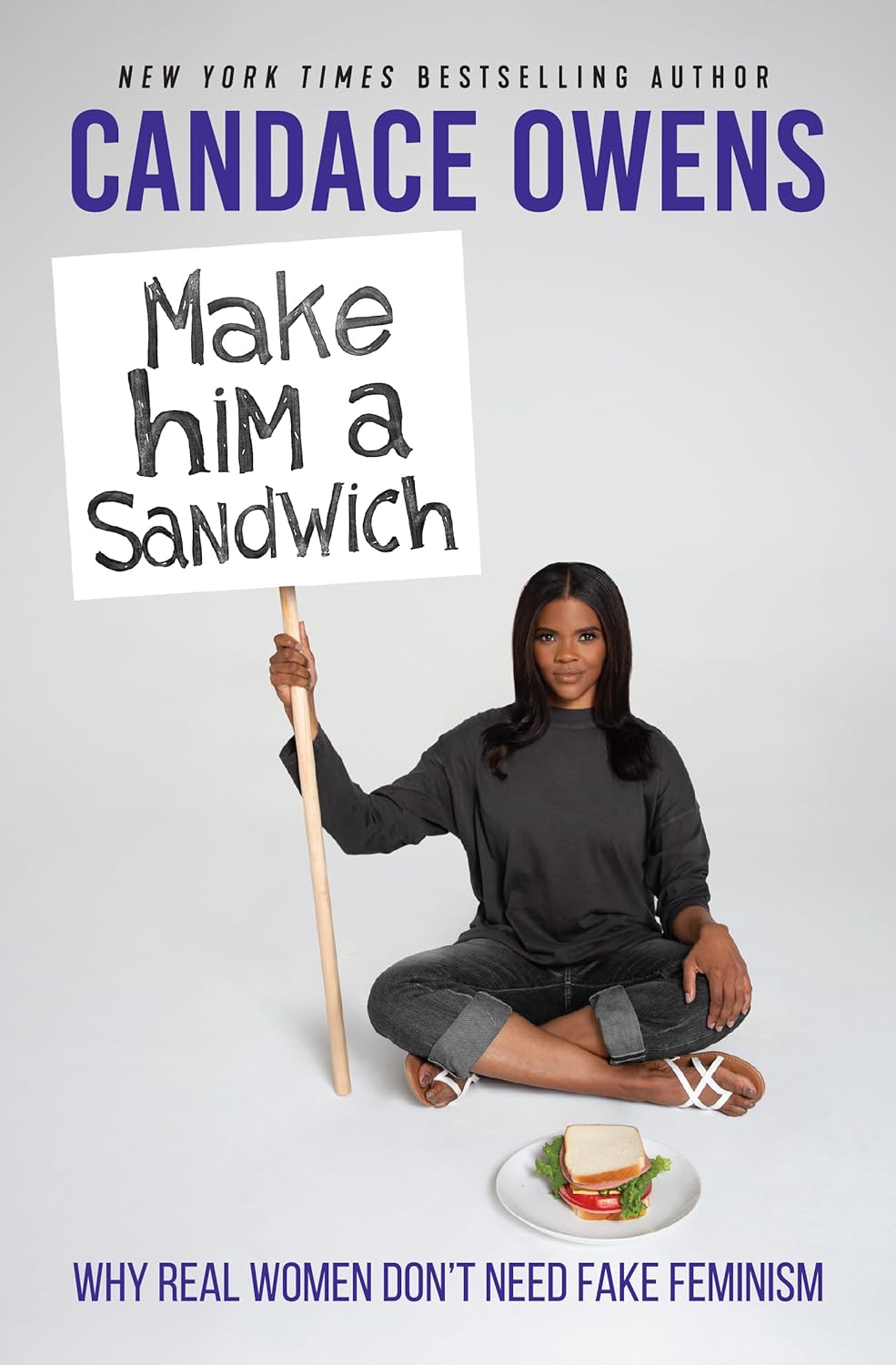
Candace Owens Goes Viral With Explosive Charlie Kirk Conspiracy Claims, But There's Another Side
Enjoying this? Share it with someone who needs to see it.
Up Next
The Coordinated Effort to Silence Candace Owens Follows a Familiar Historical Pattern
23:02
Lionel Declares Candace Owens Queen of the Internet After Critics Accidentally Crown Her in 2025
24:20
Jeremy Boreing Exposes Candace Owens' Conspiracy Lies About Charlie Kirk's Murder
2:09:08
Candace Owens Goes Viral With Explosive Charlie Kirk Conspiracy Claims, But There's Another Side
Candace Owens sparked massive controversy by claiming Charlie Kirk was "betrayed by everyone" and promising to "burn the house down" with revelations about his death. But critics argue she's seeing patterns where none exist, trusting herself "a thousand percent" without proper fact-checking. Meanwhile, alternative explanations emerge that challenge her narrative, raising questions about conspiracy theories versus ground truth. This analysis examines both sides of the debate and why critical thinking matters more than ever when evaluating sensational claims.
Candace Owens went viral with dramatic statements about what really happened to Charlie Kirk. In a video that spread rapidly across social media, Owens declared: "Don't worry about the gag order in the Charlie Kirk case. I plan to violate it on the world's behalf. The things I've discovered this past week are enough to burn the house down. Yes, Charlie was betrayed by everyone." After making these bold pronouncements, she disappeared from public view for two weeks.
Her claims immediately sparked debate about whether she had uncovered genuine evidence or had gone too far into conspiracy territory. While some supporters praised her willingness to challenge official narratives, critics began questioning her methodology and fact-checking processes.
The Conspiracy Theory Debate
Media analysts have raised concerns about Owens' approach to investigating the Kirk case. One critic distinguished between different types of conspiracy theorists: "There's a big difference for me between somebody like Joe Rogan who enjoys conspiracies but feels very tethered to reality and somebody like Alex Jones who really does find a lot of early stuff but literally every day is World War III and everything is a conspiracy."
According to this analysis, Owens has "marched her way out of the journalist box" and into "the 'I see patterns where patterns don't exist' conspiracy theory box." The concern centers on whether she has an "internal rubric" to anchor herself and determine what's plausibly true versus merely intriguing.
Critics note that while Owens can "make a wild claim and produce receipts," other people can produce counter-receipts that challenge her narrative. The question becomes: does she have the internal metrics necessary to judge competing evidence fairly?
Trust and Self-Doubt in Investigation
One media personality explained their own approach: "I've got that internal metric by which I judge things. I know better than to trust myself 100%. Just blanket. Even if I think I have all the receipts, I still don't trust myself 100%." This stands in contrast to what they perceive as Owens' approach: "She trusts herself a thousand percent. And I cannot figure out how life has taught anybody that that's the right thing to judge things by."
This philosophical difference highlights a fundamental question in investigative work: how much should investigators trust their own conclusions, even when they believe they have solid evidence?
Political Benefits and Suspicion
Some observers acknowledged legitimate reasons for questioning official narratives: "There's so much political goodwill that came from Charlie Kirk's death. There's so much political benefit that happened from it. Even if it's 1% of me, I do have a certain level of suspicion to how clean it was."
This acknowledgment reflects a broader tension in public discourse—the line between healthy skepticism and unfounded conspiracy thinking. While questioning official narratives can be valuable, determining which questions have merit requires careful analysis.
The Constellation Analogy
One analyst used an astronomical metaphor to explain how investigators can go astray: "When I craft a deep dive, I'm writing from a very specific angle. These are constellations. When you look up at the sky, you really do see stars. The constellations are made up, but the constellations help you navigate. These are made up, but they're useful."
The danger, according to this view, comes from "overindexing on these are so useful that I'm going to forget that they're made up." The stars are real—the patterns we draw between them are human constructions that should be held lightly and revised as new information emerges.
The analyst continued: "I feel like these guys are getting stuck because it's so lucrative from a YouTube perspective. They're getting stuck in the constellation of it all instead of realizing those are just approximations and drilling down even deeper to really fact-check and get to the truth."
Ground Truth Reporting
The importance of boots-on-the-ground reporting emerged as a key theme: "Being on the ground and reporting from the ground adds a ton of credibility. I don't know if Candace has—it's possible she has—but I think that's a pretty important takeaway here."
Without firsthand investigation at the scene, even well-intentioned investigators risk building theories on incomplete or secondhand information. The question of whether Owens conducted on-site investigation remains relevant to assessing her claims.
Alternative Explanations Emerge
Importantly, counter-narratives to Owens' claims have surfaced, with some investigators presenting alternative explanations they find equally plausible. One such investigator examined physical evidence that Owens hadn't addressed or had interpreted differently.
This investigator pointed to specific details: "His shirt puffs up right before he gets hit. What they're saying is that that's the concavity—the air moving around it as the bullet is coming towards him. The disturbance in the air hits him before the bullet actually hits him."
Additionally, this alternative investigation cited evidence suggesting the perpetrator "goes on Discord and essentially admits to the crime. This is not somebody who was like, 'Oh, I'm definitely going to get away with this.' It feels more and more like this was somebody who did it, was prepared to be a martyr, and wanted to make sure that nobody else got in trouble for this."
The Importance of Steel-Manning Arguments
One commentator emphasized the importance of understanding opposing viewpoints: "Once I have a belief about something, I want to go find people that say the exact opposite and hear what they have to say. If you can't argue the other person's side, you don't understand very much of it."
This approach guards against echo chambers where people "build their entire frame of reference because they go down one path with one person they trust and just parrot back what that person is telling them, without actually building up from cause and effect."
The goal isn't to simply hear what confirms existing beliefs but to "find what is true, thinking up from first principles, thinking of the world through the lens of physics."
Physical Evidence Under Scrutiny
The alternative investigation highlighted specific physical evidence that challenges conspiracy narratives:
Scrape marks potentially matching a weapon being dragged were found at the scene
Freeze-frame analysis appears to show a gray towel, matching claims that the weapon was wrapped in a towel
Authorities have reportedly confirmed finding the weapon wrapped in a towel
A ruler or tape measure was photographed next to the scrape marks for scale
One observer noted: "I didn't know that they found scrape marks that potentially match a weapon. I didn't notice the gray towel, but people are saying if you really freeze frame it, you can see that there's a gray towel behind him. This guy is saying he saw it with his own eyes—it's got a ruler next to it, so you can see how long the scrape is."
Occam's Razor and Plausibility
When evaluating competing theories, Occam's Razor—the principle that the simplest explanation is usually correct—becomes relevant. One analyst explained: "When I hear another plausible explanation, I'm like, 'Oh, that's also very plausible.' And if I'm honest, it's Occam's Razor. It's the most simple answer and therefore is the most likely to be true."
This doesn't mean the simplest answer is always correct, but it does suggest that more elaborate theories requiring multiple coordinated actors and cover-ups should be held to higher standards of evidence.
The analyst continued: "I had to put a front runner of 'I need an answer for why those texts don't feel right.' Now I have an answer that fits Occam's Razor better, does not require there to be some big conspiracy."
The Risk of Premature Conclusions
Critics of conspiracy theories about the Kirk case aren't necessarily saying no conspiracy occurred. Rather, they're arguing against premature certainty: "I'm not saying that this isn't a conspiracy. I'm just saying there are other plausible arguments being put forward and it's a little premature to leap to '100% because Charlie Kirk said that he's going to stop being pro-Israel, he was killed by the Jews.'"
This represents a call for intellectual humility—holding conclusions tentatively while remaining open to new evidence, rather than declaring certainty based on incomplete investigation.
Dismissing Arguments Versus Engaging With Them
One observer criticized those who dismiss alternative theories without engaging their substance: "Aluminum foil hats are very out right now. They're calling this just another dude on the internet talking. Rather than dismiss the arguments by saying he's just another guy on the internet, show me how the things that he's saying don't make sense. If there's a breakdown in the logic, fair enough."
This call for substantive engagement rather than dismissive labeling applies to all sides of controversial debates. Ideas should be evaluated on their merits, not on the credentials or perceived credibility of those presenting them.
Building Worldviews From First Principles
The broader lesson extends beyond this specific case to how people construct their understanding of reality: "A lot of times people build their entire frame of reference because they go down one path with one person that they trust. They build the worldview and they just parrot back what that person is telling them, but they're not actually building up from cause and effect."
The alternative is thinking "up from first principles, thinking of the world through the lens of physics"—starting with basic, verifiable facts and building conclusions from there, rather than starting with a preferred narrative and selecting supporting evidence.
One analyst emphasized: "You don't want to put yourself in the echo chamber where you're just hearing the thing you want to hear all day. You want to find the people that say the exact opposite thing that you believe. If you force yourself to go outside of that, you can really begin to make your worldview useful."
The YouTube Factor
Some observers suggested financial incentives might influence how certain personalities approach conspiracy theories: "I feel like these guys are getting stuck because it's so lucrative from a YouTube perspective. They're getting stuck in the constellation of it all."
This raises uncomfortable questions about whether content creators might be incentivized to present increasingly sensational theories rather than conducting careful, measured investigation that might yield less dramatic conclusions.
The Value of Competing Narratives
The existence of multiple plausible explanations for the same events serves an important function in public discourse. By forcing people to evaluate competing claims, it exercises critical thinking skills and prevents any single narrative from achieving unquestioned dominance.
As one observer noted after watching an alternative explanation: "Watching that interview, I was like, 'Oh, this guy puts together things.' There really does seem to be a thing that could potentially be a towel with scrape marks. It's potential—certainly not definitive at this point—but it gives you the ability to think through the arguments from first principles. Could this be plausible? If it can be plausible, then how exactly are we ruling it out?"
Conclusion: The Ongoing Quest for Truth
The debate over what happened to Charlie Kirk illustrates broader challenges in contemporary information environments. With access to more data than ever before, the difficulty lies not in finding information but in evaluating it properly.
Candace Owens' viral claims represent one approach—bold assertions backed by selected evidence, presented with high confidence. Alternative investigators present competing narratives with different evidence. The public must navigate between these competing claims without necessarily having access to all the facts.
The most responsible approach may be intellectual humility—acknowledging legitimate questions while resisting premature certainty, evaluating evidence from multiple sources, and remaining open to revision as new information emerges. Whether investigating this case or any other controversial issue, the goal should be getting as close to truth as possible, not simply constructing the most satisfying or attention-getting narrative.