Up Next

Candace Owens Exposes Overwhelming Evidence Manipulation in Charlie Kirk Assassination Trial
1:23:19
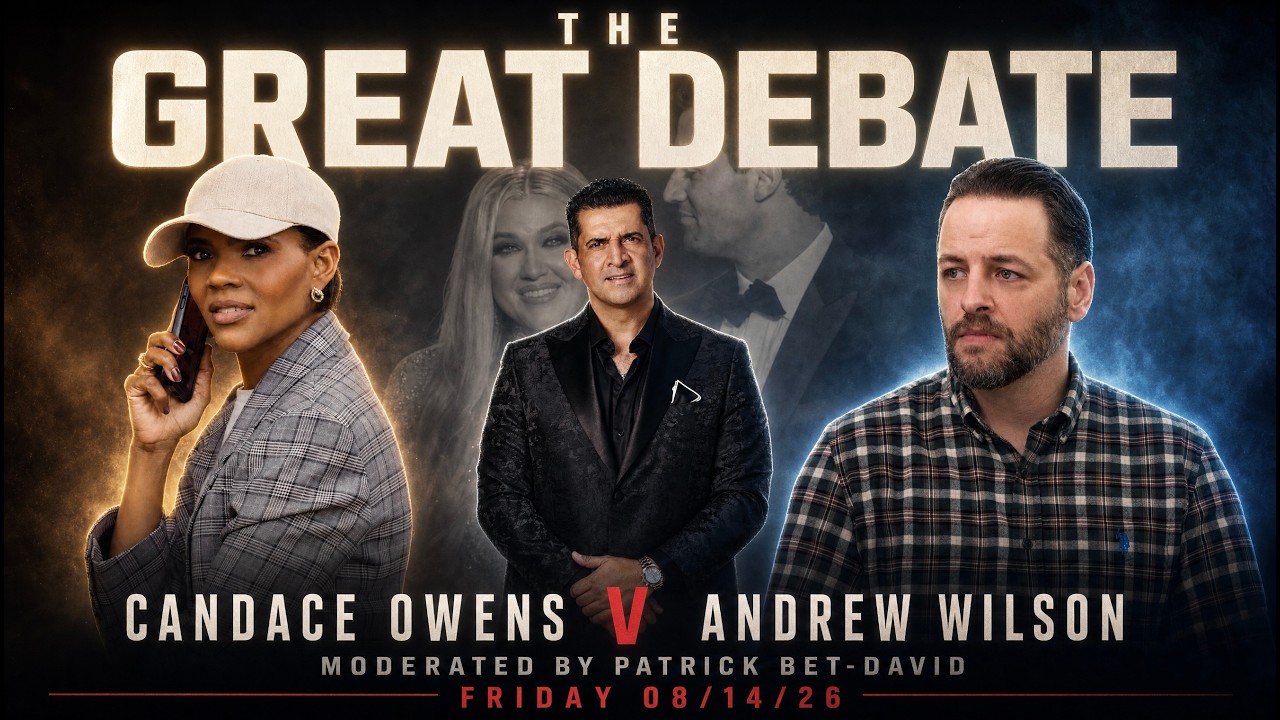
Andrew Wilson and Candace Owens Clash Over Tyler Robinson and Charlie Kirk Assassination Evidence
3:11:07

Megyn Kelly Defends Candace Owens, Destroys Bari Weiss and CBS News in Scathing Interview with Tucker Carlson
9:11
Jeremy Boreing Exposes Candace Owens' Conspiracy Lies About Charlie Kirk's Murder
Jeremy Boreing confronts the disturbing conspiracy theories surrounding Charlie Kirk's death, calling out Candace Owens for profiting from lies while the real trial unfolds in Utah. As evidence mounts against Tyler Robinson, including DNA, video footage, and parental testimony, Owens continues spinning narratives about exploding microphones, foreign governments, and manufactured plots. Boreing reveals his personal history with Owens, explains why courts expose her tactics, and announces his acquisition of Jeremy's Razors as a symbol of rebuilding after loss.
Preliminary Hearing Reveals Evidence Against Tyler Robinson
In a Provo, Utah courtroom, prosecutors began presenting evidence in the case against Tyler Robinson, accused of murdering Charlie Kirk. The preliminary hearing, designed to establish probable cause for trial, revealed forensic evidence, video footage, and medical examiner findings. Charlie's parents and widow attended, listening to testimony about the worst day of their lives.
Candace Owens dismissed the proceedings as a "show trial," claiming the real trial would come later and that followers should expect "tears and an orbit of her payrolled influencers trying to convince you that the unvetted evidence is overwhelming." She positioned herself as a warrior against "demons," but Jeremy Boreing argues the real demonic force is Owens herself—profiting from accusations and lies while tormenting a grieving family.
The Nature of Preliminary Hearings
Mark Meckler explained that preliminary hearings differ from full trials. Rather than proving guilt beyond reasonable doubt, prosecutors need only demonstrate probable cause—that sufficient evidence exists to proceed to trial. The defense can cross-examine witnesses but primarily tries to keep evidence from being admitted. Most states don't use this procedure, but Utah's system provides the public with a comprehensive summary of the case early in the process.
The hearing has already debunked many conspiracy theories. Evidence shows Tyler Robinson was on campus multiple times, his DNA was found on a towel and screwdriver at the scene, and video footage tracks his movements. Despite conspiracy theorists claiming this evidence doesn't exist, it has now been presented in court under oath.
Candace Owens' Manufactured Conspiracies
Candace has built her narrative on anonymous sources providing unverifiable information. She suggested the French Foreign Legion and Israeli agents were involved, that a $1.5 million hit was out on her life (after which she went to Dollywood), and that Egyptian planes were somehow implicated. Each theory fades as new ones emerge, with no accountability for previous false claims.
Gary Melton, who has spent nine months fact-checking Candace's allegations, noted that she uses rhetorical techniques to make speculation sound like established fact. She'll begin an episode saying she's "just speculating," but within minutes refers back to that speculation as confirmed truth. This approach, combined with her broadcasting talent, makes her extraordinarily persuasive to audiences who lack the expertise to evaluate her claims.
The Exploding Microphone Theory
One of the most absurd conspiracies Candace has promoted is the "exploding microphone" theory—that Charlie wasn't killed by a gunshot but by an explosive device in his microphone. Gary Melton, with his Special Forces background in explosives, explained that explosions create visual and auditory signatures that simply weren't present. There was enough energy to kill a man but supposedly not enough to burn his shirt or create visible explosive damage.
The theory contradicts basic physics, including Newton's third law. If an explosion powerful enough to be lethal occurred, there would be clear evidence—yet the microphone remained attached to Charlie's clothing, and fabric showed no burns or holes consistent with explosive force.
Ballistics: The 30-06 Round
A persistent conspiracy claims a 30-06 round couldn't have produced the wound pattern observed in Charlie's death. Conspiracy theorists argue that such a powerful round would have created massive exit wounds and more visible damage. However, ballistics experts note this is an atypical but not unprecedented result.
Gary Melton cited multiple cases where 30-06 rounds produced similar results with no exit wounds—Martin Luther King Jr. (shot from 65 yards), Chuck Ritter (shot with ballistic equivalent 7.62x54 from 25 yards), and Shane Hill. All involved spinal impacts where the bullet deflected downward and remained in the body. The spine's structure can dissipate kinetic energy and cause bullets to fragment or change trajectory.
When a round doesn't hit dense bone or tissue capable of stopping it, particularly in soft tissue like the neck, the bullet can pass through without releasing all its kinetic energy in the way conspiracy theorists expect. The preliminary hearing revealed the round hit Charlie's spine and deflected, which explains the wound pattern.
Jeremy Boreing's Personal History with Candace
Jeremy Boreing revealed his personal history with Candace Owens, dating back to when she was unknown and struggling financially. During her early days speaking for Turning Point USA, Candace was making only $1,600 monthly while her rent exceeded that amount. Boreing offered to pay her $2,000 monthly simply to support her work, asking nothing in return.
After a short time, he received what he described as "the most vicious text I've ever received from anybody" where Candace essentially ended their relationship without explanation. He noted this pattern repeated with Charlie Kirk, Prager University, and DailyWire+—each relationship ending with Candace being "vicious."
Boreing described Candace as having a "superpower" to convince people they are wrong even when she's clearly in the wrong. Her personality disorder, he suggested, allows her to believe whatever she says the moment she says it, making her capable of passing a lie detector test because truth emanates from her as the center of her own universe.
Social Media and the Third-Worldization of Truth
The panel discussed how social media has fundamentally changed information warfare. Will Chamberlain noted the shift from "guilt culture" (feeling wrong because you've done something wrong) to "shame culture" (feeling bad because others see you've done something wrong). This resembles systems in parts of the developing world where admitting fault is the ultimate embarrassment.
With views coming from anywhere globally and bots creating manufactured consensus, podcasters face distorted incentives. Gary Melton emphasized this is "fifth-generation warfare"—foreign adversaries exploiting social media to divide Americans, with Candace as either a "useful idiot" or willing participant after her Russia trip.
Jeremy Boreing argued the ubiquity, ambiguity, and anonymity of social media create manufactured social proof that pulls people toward mob-approved beliefs without understanding that much of the mob isn't American or even human. This manufactured shame—feeling wrong because the internet mob says so, even when you haven't violated your own conscience—is unprecedented in human history.
The Power of Gish Galloping
Conspiracy theories thrive through "gish galloping"—overwhelming audiences with rapid-fire false claims. Each person can recognize one or two falsehoods in their area of expertise but may doubt their judgment when confronted with dozens of other claims they can't personally verify. This creates a "preponderance of false evidence" that feels convincing despite being built on lies.
The preliminary hearing exposes this tactic because courts don't allow gish galloping. As Mark Meckler explained, courts are "as good an engine for truth as humans have devised." Rules of evidence and procedure represent accumulated wisdom from thousands of judges over hundreds of years. You can't dodge questions indefinitely, shout accusations, or manufacture new theories when challenged under oath.
Building Conservative Institutions
The conversation turned to the need for conservatives to build lasting institutions rather than just winning elections. Mark Meckler noted that in 16 years in politics, no one has presented him with a plan to "save the republic"—only plans to win the next election or pass specific policies.
Jeremy Boreing emphasized that conservatives believe in institutions by nature. "You can't be anti-institution and be a true conservative," he argued. Conservatives believe in tradition, culture, law, and building on the best of the past. The current radical, revolutionary, dispirited moment makes it hard to know who to trust, but conservatives must build new institutions that people can trust.
These institutions will eventually become corrupt and need replacement—there is no utopia. But culture and nationhood require institutions. You can't have community among 330 million atomized individuals without consensus mechanisms and shared standards for measuring truth.
Jeremy's Razors: Fighting Back Through Business
Jeremy Boreing announced his acquisition of Jeremy's Razors from DailyWire+. The company began four years ago when Harry's razors pulled advertising from DailyWire+ after a two-follower Twitter account complained about the network's stance that "boys are boys and girls are girls." Harry's called it "values misalignment" and deemed DailyWire+ "reprehensible."
Rather than accepting advertiser blackmail—where companies not only pull funding but publicly denounce conservative hosts—Boreing launched a competing razor company. The strategy was to build institutions that fund conservative media through product sales, mirroring how left-wing media gets funded by mainstream corporate advertising dollars.
Jeremy's Razors sold 40,000 subscriptions in its first week, generated $10 million in year one and $19 million in year two. By year two, it represented 10% of DailyWire+'s total revenue. To date, the company has fulfilled over one million orders and generated over $55 million in revenue.
Lose-Fundraise Versus Win-by-Winning
Boreing contrasted the conservative nonprofit model with for-profit business. Most conservative institutions operate on a "lose-fundraise" cycle—they win by losing because defeat generates outrage that drives donations. Getting cancelled, losing an election, or facing opposition becomes the best fundraising opportunity.
"What I love about business, what I love about for-profit business, what I love about Jeremy's Razors, we only win by winning," Boreing explained. The company must make products customers want at expected quality levels and fulfill promises—only then do customers voluntarily exchange money for goods. Success requires actual success, not manufactured victimhood.
Agency and the Freedom to Fail
Jeremy Boreing emphasized agency as the cure to national despair. Merchants of despair on both left and right want people to believe they're powerless. America was built by people who believed they could and then did—that's what freedom means.
"Freedom ultimately is the freedom to try and the freedom to fail," he argued. The founders gave this freedom in law; Christ gave it in spirit. Without freedom to fail, there's no freedom to try. Harry's had the freedom to fail and took it. Jeremy's Razors had the freedom to try and took it.
Boreing shared Henry Ford's story—two failed car companies before the third became Ford Motor Company. The second failure even became Cadillac after Ford was kicked out. "I don't think that failure is what stands between us and the future. In fact, I think failure is a feature, not a bug."
He urged viewers not to see themselves as victims, even in failure. Make corrections and try again. "The future belongs to those who build it. So what I'll say to you about Jeremy's Razors is that Jeremy's Razors is a razor for people who believe that they can and who do."
Video Transcript
On Monday, in a courtroom in Provo,
Utah, prosecutors began laying out the
evidence against Tyler Robinson, the man
accused of murdering Charlie Kirk. The
forensics, the video, the medical
examiner's findings, Charlie's parents
are sitting in that room. His widow is
sitting a few feet from the man accused
of killing her husband. Listening to the
worst day of her life read back to her
over and over under oath. Candace Owens
looked at that and called it a show
trial, telling her audience to expect
nothing but quote EEA's tears and an
orbit of her payrolled influencers
trying to convince you that the unvetted
evidence is overwhelming and undeniable.
She said the quote real trial would come
later. One of the more extraordinary
things a free people does, sit down
under rules, under oath in front of the
cameras for the whole world to see and
establish with facts and evidence what
really happened to a man executed in
broad daylight in front of thousands of
witnesses has been dismissed by Candace
as theater because the truth threatens
to shatter her empire of lies. And of
course, the whole thing is a lie in its
own terms because a preliminary hearing
isn't actually a show or a trial. It's a
procedure to decide one thing, whether
the case is strong enough to actually go
to trial. Candace knows that, of course,
she's betting that her audience doesn't.
As the hearings in Utah began, she
posted something else. Quote, "One more
fight, Charlie." She wrote, "I don't
fear these demons. We will win."
Candace has cast herself as the warrior,
the one with spiritual insight, the one
with strength who perceives the demons
that the rest of us are too asleep or
too compromised to see, and who's picked
up Charlie's sword to go to war with
those demons on his behalf. So, okay,
she wants to talk about demons. That's
fine. There is something truly demonic
about this entire affair. But the
demonic force here isn't Erica Kirk, a
widow now raising two children without
their father. And it isn't Charlie's
closest friends, either. the men and
women who stood beside him in life and
now stand beside his family in the wake
of his death. And of course, it's not
the organization that Charlie bled to
build or the mission that he poured his
life into. That's missions now
straining, by the way. Trying to carry
on the work of Charlie Kirk without
Charlie Kirk is no small thing. It also
isn't Israel, which has absolutely
nothing to do with Charlie's death. And
it isn't our own federal government,
which also has nothing to do with it.
It's not the Egyptians or the French or
whoever else is going to be named on a
list that seems to grow every day. an
endless roster of people and nations and
institutions that Candace has slandered
one after another after another. No, the
demons here are in the man who pulled
the trigger. And the demons are in
Candace Owens. The name Satan means
accuser, as in the one who stands and
points at the innocent and says guilty.
That's exactly Candace Owens to a tea.
Her entire enterprise is built on
accusations and lies. a co-mingling of
narcissism and resentment and ambition
and probably some real grief. Charlie
was once her friend after all. All of
that though has fused into something
genuinely sinister. A person who can
look at a grieving widow in a courtroom
full of evidence and calculate coldly
that the profitable play is to set fire
to both isn't confused. She's not
misinformed. She's doing evil as she's
doing it on purpose. She's doing it for
money and she's doing it for fame. Blake
Nef said it best on X this week. quote,
"As Charlie once told us, Candace is
very easy to understand once you realize
all she cares about is money." I would
add to Charlie's indictment and fame.
Candace wants to be Oprah. She wants to
be very rich and very famous, the
wealthiest and the most famous person
that she can be. But you can't slander
the dead and torment the living and
profit from the whole affair and walk
away with your soul intact. It just
doesn't work that way. Candace is
gambling her own soul and she's playing
with other people's lives and she's
going to lose both bets. Now, I
understand that in her mind she's
sitting on top of the world right now.
She's the most famous she's ever been.
She's the most followed she's ever been.
She's being rewarded more than she's
ever been rewarded for anything in her
life. If you do the math on what her
podcast, which was number one in the
world, is actually generating in ad
revenue right now, the number is
staggering.
But she isn't slaying the demons. She's
carrying them. and she's applauded for
it by a gullible and spiritually broken
audience every single day. Just today,
she tried to spin a whole new
conspiracy. This one about Ben Shapiro.
Ben mentioned that his security team was
in touch with Charlie's security team
almost immediately after the shooting.
Candace framed this as quote, "Ben
confesses." Just one little problem.
Candace and Ben had the same security
firm working for them at the time. Ben's
only security firm, by the way. He he
doesn't have some special secret IDF
security firm also working for him. He
only has the one and it also represented
Candace Owens at the time.
Interestingly, I was having lunch with
the founders of that security firm at
the very moment that Charlie was shot.
Yes, they did find out right away. Yes,
they were in touch with the members of
TPUSA security team right away. Yes,
they consulted with their own team right
away to ensure that their clients, which
included Candace and Ben, were also
safe. That's called being good at your
job. And these guys are very good at
their job. So, I guess if that implies
that Ben is guilty of involvement in
Charlie's murder, it also implies that
Candace herself is guilty of involvement
in Charlie's murder. But of course, it
doesn't actually suggest either thing.
It's just another random fact taken out
of context by Candace and surrounded
with implications and suggestions and
nods and winks and side glances and all
the rest and then thrown out to the
internet as still more proof that
something. I'm not actually sure what it
is we're trying to prove, except that
whatever it is that is the official
narrative can't possibly be the truth.
The whole thing would be comical if it
weren't so tragically sad and so damn
evil. Ben said on his show that it's a
sin to listen to Candace. Just so if
you're listening to her for
entertainment, you should be ashamed. If
you're listening to her for research,
you should guard your soul and guard
your mind. But listen, this whole thing
was never Candace's story to star in in
the first place, no matter how bad she
needs it to be. It's Charlie's story,
and right now, a real proceeding is
underway in an open courtroom laying out
piece by piece exactly what happened to
Charlie on that terrible September day.
Here to discuss that and more, my friend
Mark Meckler, co-founded Tea Party
Patriots, leads the Convention of States
Action, and is the CEO of JTN networks,
the parent company of Just the News.
Will Chamberlain is an attorney who uh
revived human events and now serves as
senior counsel at the Article 3 Project
and as VP for external affairs at the
Edmund Burke Foundation. And Gary
Milton, aka Paramount Tactical, who
served four combat tours as a US Army
Special Forces weapons sergeant and
sniper team leader and has spent nine
months going claim by claim by claim
through Candace's allegations with
actual sourced evidence. A thankless
job, but we're glad that you're doing
it, fellas. Thank you for being here.
Good to thanks for having us.
>> Mark,
>> tell us what's happening in Provo.
>> You know, I think this is really
interesting. It's different than the
legal system in most states. Most people
are not familiar with a process like
this. So, this is a preliminary hearing.
We don't see this in trials in most
states.
>> And what people are thinking of is a
full-blown trial where you have to prove
something beyond a reasonable doubt.
This is not that. In a preliminary
hearing, all they're trying to do is
demonstrate probable cause. In other
words, the attorneys come in, the
prosecution comes in, they bring
witnesses, they bring them before a
judge, and they're demonstrating to a
judge that they actually have enough
evidence to conduct a real trial. And
what the judge wants to make sure is
we're not going to waste the time of the
court, right? It's not a sham
proceeding. It's not a fake proceeding.
These are real charges with real
evidence behind them. I think it's a
great summary methodology, though. I
wish more states used it because I do
think it separates the wheat from the
chaff and the real cases from the fake
cases. And I think for the public, if
you're watching this and you're
concerned about this case, this is a way
for you to get the summary of the case,
the base evidence, the base facts in
hand very quickly.
>> Does the defense also present evidence
in this hearing?
>> No, actually, it's just the prosecution
showing that they have probable cause to
continue with a trial. So what role does
the defense play if any in the
>> I mean they can cross-examine the
witnesses and try to demonstrate that
it's not good evidence.
>> Prosecution is trying to put things into
the trial and the defense if anything is
trying to keep
>> that is correct out of the that's the
entire process and and folks need to
understand that probable cause way
different standard than beyond a
reasonable doubt. Right.
>> Right. It just means yep this looks like
something that should proceed and it's
nothing that would send somebody to
jail. A and yet one of the things that's
happening on the internet as people
watch the hearing is that they're seeing
for the first time a lot of evidence um
that they haven't seen before. And even
though we're not going to have proof
beyond a reasonable doubt uh of anyone's
guilt at the end of this, we we are
already seeing that a lot of the
counterfactuals that have been presented
by people like Candace Owens are in fact
untrue. We don't we don't need to
determine guilt to determine that many
of the things that Candace has put on
the record are just false. You've been
going through that better than anyone.
>> Yeah.
>> What have we learned this week that we
didn't know before?
>> Well, we learned all the evidence that
they said didn't exist actually exists.
>> Uh including [laughter]
including, you know, they they talked
about it. They didn't show all of it,
but they actually talked about how they
do have video evidence of the shooter,
the alleged shooter, allegedly Tyler
Robinson, moving into position, taking
the shot, being at the exact same exact
same place, the exact same time. And
then the other thing like
you know they're going to be be able to
link that up and sync that up to the
cameras there on the ground as well. So
it's not like there's this this this is
ambiguous in any way. And really at the
other the other end of this is I know
people keep talking about well we don't
see the exact we we can't zoom in and
see that like you know there's recoil or
a muzzle flash or whatever else. Um, but
at the same time, like a probably what
99 whatever percent of people get
convicted of murder all the time without
actual video evidence. And we just
happen to have that as well. So, I mean,
it's almost been comical to watch
Candace and many of her sick offense and
people downstream of her just crash out
and continue to attempt to distort
what's being said and what's being done.
Yeah, it does feel like a lot of the
voices that have been, you know,
providing counternarratives really for
the for the last almost year, the people
most invested in trying to reframe this
as being some sort of cover up, some
sort of conspiracy, you know, either the
uh the fault of foreign governments or
our government or TPUSA itself or just
the Jews trademark. Um,
they really feel like they're unraveling
on social media this week like you know
people are people who are normally
excellent Candace as an example is an
excellent broadcaster one of the most
gifted uh I get in trouble when I say
how talented she is because people hate
her and understandably they hate her but
when you say when you say yes the person
you hate happens to be one of the most
talented
>> it just upsets people but it's true
Candace hugely talented and yet she's
not comporting herself uh in any way
consistent with her level of talent and
sophistication uh or experience this
week. I mean, she really feels like
she's melting down and she's not the
only one. Um, what are you to what are
we to make of that?
>> I mean, I think it's she's freaking out
because you have a narrative that she's
been putting forward that is just
getting hit from all sides.
>> Yeah.
>> Um, and suddenly there's just this huge
slew of not only the existing facts that
need to be explained away, but the new
ones that everybody is seeing on video,
right? You know, he she made a big deal
of saying, I think on Shawn Ryan that
she didn't think that Tyler Robinson had
even gone to the campus. Well, they have
evidence showing him there four
different times with him him in in
person. She tried to say, "Oh, it's
she's he's not as tall." It's like,
well, okay, then why was he driving his
own car and why was his DNA evidence on
the towel and on the screwdriver in the
roof? I mean, it's there's going to be
so many distinct layers. I mean, even I
I was on uh with Jack and he pointed out
that there was there was new evidence, a
new factoid, which is that he went to
Chick-fil-A on campus. It's like, okay,
well, then he would have probably paid
with the credit card. If you'd paid with
a credit card, then that's another piece
of evidence that places him at the
scene. And the guy lived hours away. Why
is he there, right? What's he what's he
doing on UVU campus? Um, so you have all
these problems. And so now she's got to
come up with a sort of new fixation on,
you know, a random factoid maybe that'll
help her or she's got to, you know,
somehow but but in the end, I think the
easiest thing to do is start lashing out
at people. And so this this explains
lashing out at Ben.
>> Yeah. So a procedural question for for
those of you who know more about this
than I do. Um, how much of the
prosecution's ultimate case are we
getting in this hearing? You know, you
say that we find out, for example, that
he that Tyler Robinson was uh ordered
food at the Chick-fil-A on campus, and
you say, "So, probably there's a credit
card transaction or probably there's uh
would every piece of that have to be
presented as potential evidence here?"
>> No.
>> So, we're we're not seeing all the
evidence. You're hearing all the
testimony. We're just trying to get get
to a baseline that says this is enough
to proceed to trial.
>> Yeah. I think what what they're trying
to do is give the judge enough to say
probable cause. Honestly, watching the
evidence this week, we're done. I mean,
it's pretty hard to look at those
videos, to see him on campus, to watch
him limp in the way that you would limp
if you had a long gun down your pants.
All that stuff is enough to make a judge
say, "Okay, yeah, you
>> we're done with getting to the probable
cause threshold." You
>> that I mean, my opinion is they've
already done it. I don't know if you
would agree.
>> Oh, of course. I mean, like, think about
probable cause is the standard required
for somebody to make an arrest. It's the
standard required for a grand jury to
indict, right? Like if this had been
shown to a grand jury, would it have
been any problem for a grand for a
prosecutor to obtain an indictment from
a grand jury? No. Uh I think Utah seems
to again have this kind of unique robust
preliminary hearing that allows
cross-examination by uh the defense
attorneys. But even given that sort of
unique circumstance, this is still
overwhelming from the perspective of
probable cause.
>> So let's go through some of the actual
conspiracies that have been debunked one
by one this week. them. What are some
things that we I shouldn't say that we
now know are untrue because I suspect
that we all knew that they were untrue
already. You know, one of my favorites
uh is as recently as this morning, there
were still people in my uh in my
mentions saying, you know, why was there
never an autopsy? It's like, well, I've
only watched a few minutes at these
hearings and there was an autopsy. like
the the your fundamental premise that
there wasn't an autopsy has already been
completely discredited
>> as as if it were ever credible. Yeah.
>> In in the first place.
>> Um but it might be fun to kind of go
through a few more of those that that
you've picked up on this week, Gary.
>> Sure. Whether we're talking about
Candace or just going into Look, this is
this is where I came into this. Number
one, I I'd follow Charlie for many
years, was a big fan, and was I don't
remember if I was watching it live, but
within minutes, I was watching what
happened. I'm talking less than 10
minutes. I I actually think I was
watching a lot. But regardless, because
of my background, number one, it felt
personal, right? It's like this is a guy
that I feel like I know. And I think a
lot of people that watch us and you
know, they feel like they know us. They
have this personal connection with him.
Obviously, had never met Charlie prior
to that. So, I wanted to know what was
going on. I'm skeptical of the
government. Maybe they have something to
do with it. Although, even at the very
beginning, probably for the first week,
we didn't really start hearing in the
mainstream at least, any sort of these
wild conspiracies. But what we did see
right off the bat, like day two, we have
the allegedly, you know, Rick Cutler
with a palm gun. And I'm like, look
guys, let's just stop this. That's not a
palm gun. We don't see any recoil.
There's nothing between his fingers.
There's no way to aim that. And then it
moved to I don't know, some random kid
making a hand gesture. And then it went
into an iPhone gun. And and I started
debunking that like and this guy's like,
I don't know, 50 feet away. But what was
weird and and I knew something was
happening right then because down in my
comments I immediately saw you're a Fed.
Wait like I'm a Fed because I said it's
not a palm gum because we we clearly
don't have anything going. And then
immediately you're paid by the Jews. I'm
like I couldn't care less about Israel
or the Jews or or whatever else. Like
what is going on here? And I started
seeing that happen. And then we went
into um I don't know tunnels underneath
Charlie multiple camera guns. Uh there
was a
>> exploding microphone.
>> We'll get to that one because that one's
that one's super special right here in
my heart. Uh but you know, there was
there was all these things. Camera guns.
Um and then we also had tunnels
underneath Charlie. He was he was shot
from below. Um then we went into drones.
These drones were flying around that
were shooting Charlie. And all I was
doing at the time was going through
there and debunking this nonsense. And
it's not that hard.
>> [snorts]
>> Uh, and of course, you know, within the
first couple days, we were we're all
trying to we had very limited footage,
especially the first couple days, but
we're all trying to interpret an
extremely high-speed energetic energetic
event that's being filmed at 30 frames
per second.
>> So, you know, one of my first things was
like I thought he potentially had body
armor on and then like later on I was
like, "Hey, I'm wrong on this. I
confirmed that." But as we got more
information and things that come out
like just debunking these things were
suddenly an attack on something, right?
Because the attack was reciprocated.
There was a counter assault against me
saying there's no drones. And that's
where things started getting weird. And
back then probably around I don't know
October or so is when the first time
that I started hearing about the
exploding mic theory which again coming
from special operations I've worked with
a lot of explosives like there is visual
and auditory observables with an
explosion. I don't care if it's a shape
charge. I don't care what kind what you
got going on. Uh, it gets pretty obvious
like there was so much energy that
killed this man, but
it wasn't enough energy to create enough
heat to burn a shirt to
>> like create an actual explosion. We see
no we see nothing that we would
associate with any sort of uh of explos
explosive. And what I will say, I gave
Candace a lot of credit. I mean, for
months and months and months when people
would bring up the exploding mic theory,
I'm like, this is so dumb that not even
Candace is going to touch it.
>> [laughter]
>> You give her way too much now, Gary.
>> She was waiting for the end of that. So,
uh, you know, and now here we are. Now
she's convinced. And, you know, there's
a whole lot of other things in between
there that that took place. But, and of
course, you know, there's there's the,
uh, Charlie's not dead theory. And, you
know, which is one of the most
disgusting.
>> Um, but, you know, that's that's where
we're
>> when it happened.
>> I just pointed out your question was
what conspiracies have been disproven by
this hearing? And it seems like the
answer is zero because they were already
all disproven.
>> Yeah.
>> Yeah. [laughter]
>> So,
>> yeah, I was sitting with, as I said
during the monologue, I was sitting with
u the founders of FRG Security who uh
are are very good friends and who
provide all of the security for Ben and
all the security for Daily Wire. And at
the time, they did some of Candace's
security, not all. Um,
and they got they got the news, you
know, before I did. And in in fact, one
of them is who told me as we were
sitting there. Of course, they kind of
sprung into action. We we we're all
standing. It was a very surreal
experience. We're in this brand new sort
of steakhouse here in Nashville in a new
development. So, there there wasn't
anyone else there. And so, we sort of
had this whole section of this
restaurant to ourselves and we're
standing at the table. you know, not you
don't have a lot of self-awareness in a
moment like that,
>> right?
>> Um because we're in the booth like I I
think we're standing kind of
uncomfortably still like I am here
between the
uh
we only got to talk a little bit because
they were of course immediately working.
You know, they had concerns people, you
know, is this a isolated incident?
Should we do we need to be concerned for
our other high-profile conservative
clients?
But every every couple of minutes we'd
have a down moment, check in with each
other, check in with what was happening
in the news, what we knew or what we
were hearing from whomever we were
hearing something from. I remember when
the video first started circulating
and I said to to one of the fellas who
was a dev crew guy and you know those
guys
all the things that could be done they
did right during the war on terror. And
I said, I mean, obviously I knew Charlie
for a long time since he was a teenager.
And
you know, your reaction in a moment
where you see something like that is not
probably the way you would predict your
reaction to be. You're in sort of a
heightened adrenalized state. But we all
went through some version of this,
right? Where you
>> you're not you're not responding the way
you would script yourself to respond. In
in the state that we were in, I I was
somewhat emotionless because my emotions
were over here somewhere.
And I just said to uh to the f to to the
guy, I said, "Um,
can I can a guy come back from a hit
like that?"
And he said, "In my experience, no." And
something about
something about a guy who has experience
like it was a it was an understatement
by him, but it carried real authority,
you know, in in my experience of
watching people take bullets. No, it
kind of brought it all
>> right brought it all to me. And um for
that reason among others, one of the
worst uh conspiracies from the very
beginning is this. It couldn't have been
a 300 6.
Uh, and people will say it can't be a
300 6 because it is true that a 300 6
round contains an incredible amount of
kinetic
>> energy. And it's absolutely true that if
a 306 round had hit Charlie's spine,
there would have been an enormous
release of that kinetic energy. If it
had hit him in the head, a tremendous
release of that kinetic energy. Um,
but a 300 six going through your neck,
your neck doesn't even have there's
nothing to to stop that round if it if
it doesn't hit the spine. There's
nothing that's going to slow that round
down and release any of that kinetic
energy. It's actually the fact of it in
some ways being a high caliber round
like that with so much velocity behind
it in such a soft part of your body.
>> Sure.
>> It just doesn't even stop, right?
straight through. Uh,
I hate those kinds of lies the most. I
think the 306 lie or conspiracy is so
represent so representative of all of
the kinds of lies that get told in these
conspiracy theories because it contains
truth.
>> It's certainly true. If you've ever shot
a deer with a 30 six uh and hit its
center mass, it does a whole lot more
damage than what we saw happen to
Charlie. And so you're able to find
experts who will tell you, "Oh yeah,
yeah, that round would carry an enormous
amount of uh energy behind it and it
would do a whole lot more damage than
that
if it if it did something that it didn't
do,
>> right?"
>> And that's to me that's how all of these
are. Uh that you you find some little
something that you can make plausible
and then you present it with absolute
authority.
>> Yeah.
I'm telling you right now that could not
have been done by a 3006. People hear
that kind of authority and it sounds
completely plausible that it couldn't be
done by a 3006. And then you're able to
like on on that
>> uh almost like technicality
>> hang all of this now conspiracy.
I happen to have been sitting with
someone though who knows what it looks
like when a round hits somebody in the
neck. And so it was never it was never
in question. I think that when you
examine conspiracy theories, this is
true for probably most people when you
when you experience the sort of gish
galloping that happens in conspiracy
theories, the sort I call it the
preponderance of false evidence. So many
things that just aren't so, as Ronald
Reagan might might uh put it.
We can all in our own experience and
expertise find one or two of those
things that aren't right. Like, well, it
is it is weird that Charlie wasn't
wearing Kevlar. It is weird that there
were no eyes on uh the rooftop. It is
strange. You know, all these things that
in the moment do seem implausible to
you. And you go, but I know that 306
thing can't be true because, you know, I
know just a little bit more than the
average person about how that round
would actually release its kinetic
energy in that exact situation. But
there is something about the power of
gish galloping that that doesn't stop
you.
>> You go, "Well, that one's obviously
they're just wrong about that." But what
do you make of this? And then you're
able to just sort of elied
the actual evidence that would disprove
the conspiracy. You allied all of that
and go right back into the things that
can't be disproven. I think that's why
these guys are going so crazy this week.
>> Oh, yeah.
>> Because just thing after thing after
thing now is being laid bare before
>> being crushed. Yeah.
>> There's nothing. And no, they can't move
to the next thing fast enough to stay
ahead of
well to stay ahead of the the actual
fact of the the actual reality of the
situation.
That's what's amazing about this moment.
It's the last thing I'll say that
>> Candace thrives and people like her
thrive
on the internet because on the internet
they get to set the rules of the
discourse. The other thing that's
absolutely crushing them all this week
is that court is the one institution
left in American public life where they
don't get to set the rules. The rules
are inconstant law. The procedures are
inconstant law and you're held to a
standard. Now, we might say that there
are problems with the standard. We might
say that courts sometimes reach false
conclusions. Of course, it's not a
perfect system, but it is a system. It's
a system that you can't just skate
around by.
but what about why' they paint over the
parking lot so fast or whatever the next
thing that you want to move people's
attention to. The court doesn't actually
allow you to do that. It forces you to
deal with the evidence as it's
presented. And I think that those
boundaries uh are kind of like the elven
rope in uh in the Lord of the Rings. You
know, it burns as precious like they
they can't they can't bear the touch of
the actual constraints of the procedures
that they're having to face right now.
>> I think that's exactly right. I think an
interesting analogy uh kind of a little
bit off offbeat but uh are if you guys
are familiar with the trial of the David
Irving trial um David Irving the famous
uh Holocaust denier uh actually sued an
American author for defamation in
Britain and you know wanted to go to
court over it uh and they went to trial
and he lost and if there's a lot of good
books about it from like the expert
witnesses and other things and you know
the expert witnesses who are historians
were saying oh it doesn't make sense to
use a court is like an arbiter is like
an orbital forum for history, right? We
should be doing this in the academic
world. And after the trial, they're
like, actually, this is quite good for
an ar, you know, an arbitral forum
because uh there's something about
sustained questioning under oath that is
very that does not allow people to kind
of get away from things.
>> And you know, I I found this as a
lawyer, like when whenever you're asking
a question and somebody tries to dodge
the question, you can just there's no
time limit really. So, you're like,
"Well, thank you for dodging my
question. I will now rephrase my
question in a way that prevents you from
dodging it in the future."
>> Yeah.
>> And so, and that's just in
cross-examination. We are even even to
cross-examination of like defense expert
witnesses. We're just here. And so, I
think that that's a big problem, right?
Courts are actually about as good an
engine for truth as humans have devised,
especially American courts. I mean,
yeah,
>> you think about something, you know,
what are our rules of evidence and what
are our procedures? Well, they are the
product of the accumulated wisdom of
thousands of judges over hundreds of
years as to how to obtain truth from
people and from facts. And so that's now
what we're going to see in terms of this
trial.
>> And you can't just shout, "You lying
[laughter]
>> No, you'll get kicked out of court.
>> Get yourself in trouble or you maniacal
homosexual."
>> I'm not maniacal.
>> Right. [laughter]
>> That's terri That's a terrible
accusation.
>> That was my favorite comment about you.
>> You can't do that stuff. One interesting
thing also is that if you've never most
people have never felt real sovereignty
>> um if you are ever actually litigating
in front of a judge or you know just in
the presence of a judge under their
jurisdiction in that sphere they are
totally sovereign over you. They can
they can point at you and say you are in
a jail cell right now because they want
they think you're misbehaving,
>> right?
>> And and most people don't even
conceptualize of that. It's just it's a
remarkable it's a some judges abuse it.
Some judges are really obnoxious with
that and just are almost dictatorial in
the way they treat lawyers and uh
people. But what it does ensure is that
people do behave themselves.
>> Yeah. And run appropriately, it is a
totally controlled environment,
>> which is the exact opposite of a
conspiracy theory on the internet. It's
completely uncontrolled. And I think you
nailed some really important things
about how conspiracy theories spread.
There's always a kernel of truth in
them. You never look at a conspiracy
theory and find one that's just
completely untrue and they hang the
whole theory on something that's true
and then they play whack-a-ole, right?
If you disabuse them of a single notion,
they won't admit it. They'll just turn
away from that and they'll go to the
next theory and the next theory. There
is no end. There's literally never an
end. And this is what we're seeing with
Candace. And this is why you're seeing
Candace start to fall apart because the
further they have to move away from that
single kernel of truth, the more
ridiculous the story becomes, the easier
it is to prove what they're saying is
false. And eventually it results in
total collapse. In Candace's case, what
it usually results in, she just quits
talking about the thing and she moves on
to her next conspiracy theory. And I
think one of the reasons she's getting
so strung out here is she can't stop
talking about it. The trial is
happening. It's really interesting.
She's on vacation right now because she
can't talk about this thing. She's now
in legal jeopardy. There's just a lot of
things coming at her from all
directions. I think that's why you're
seeing her fall apart.
>> Yeah.
>> Well, and to her credit, what is she
good at is transitioning.
>> Yes.
>> From one thing to the to the next. You
know, one of the first things that I
addressed was, you know, the French
Foreign Legion were involved. And of
course, we had we had to have [laughter]
We had to have one Israeli something in
there.
>> There's an Israeli agent in there
working with the French Foreign Legion
>> and and she had all this
>> French foreign legion and just one Jew.
>> There's [laughter] always at least one
Jew. It was Alfred Drifus. Sorry.
>> It was a kosher croissant. Um [laughter]
but yeah, so you know she she she lays
this out and like always what we're
getting is anonymous sources providing
unverifiable information. That that is
the crux of what she does. And you know
she lays this out. I have so much
evidence of this. I can't show it to
you. This all this secret knowledge. But
let me tell you something. What is
happening here is the Mcron decided they
were going to kill Charlie because they
were so worried about me [clears throat]
highlighting the fact or bringing
bringing the fact that, you know,
unfortunately Breijgit has a penis. Like
that's what they were worried about. So
that's what they had to do. And then it
just kind of fades away. But before
that, now we have a $ 1.5 million hit
out on Candace and they're going to kill
her. She's so concerned about it that
she leaves directly from the studio to
go to Dollywood. And I don't know if
like they got their money back. I don't
know um how that works. But then we just
move into something else and like like
what happened to that? Like that is that
is quite the
>> the extremely sophisticated plot that
you laid out. And then how does the US
like do we just allow that? And of
course we get the Egyptian planes like
reconcile all of this for me and there's
no need to and the it's one thing for
Candace to do it but it is disappointing
to watch that so many Americans fall for
this. Yeah.
>> And never hold her to a standard of of
anything. And you can show and
illustrate lie after lie after lie or
omission after omission after omission.
and they're like, "Go, Max, Candace."
>> Well, I will say as someone who's worked
with Candace,
she has a remarkable ability to convince
you that you're crazy. Um,
there were times where I would walk into
a conference room to have, you know,
some conflict with Candace. we'd be
involved in some conflict with Candace
and my role would require me to to go in
and and try to, you know, deal with the
situation. And many times I would walk
out of the encounter
convinced that I had done something
wrong and that Candace had actually
never done anything wrong. I wasn't
actually convinced, but but I had
somehow been positioned. Yeah,
>> she had moved me on the chessboard to a
place of and she does it through all
kinds of rhetorical techniques, makes
herself the victim immediately, you
know, points out to you all the ways
that you failed to deal appropriately
with her along the way, which
precipitated whatever the ultimate uh
event was. Um,
but it is it is a true superpower that
she has. and she said, you know, if you
add to that something that I didn't have
with her, but that the audience does, a
parasocial relationship,
then she then her superpower is just
magnified that much more. You know,
everyone in public life has uh a
parasocial relationship with their
audience and vice versa. That's just the
it's the nature of the medium. It's the
nature of, you know, it comes with the
territory.
Particularly though this has become true
in the age of podcasting. You know it
was one thing to have a parasocial
relationship with Walter Kronite. Um I
always think about this great story uh
that Oprah I like to use an Oprah story
because Cand Candace has told me
multiple times that she wants to be
Oprah. Oprah told this story once and it
always stuck with me that she was in a
super fancy restaurant in LA
at the height of her power. You know
this is the late 90s or the early 2000s
or something. She's the queen of the
world. Uh, you know, she's a
billionaire. She's certainly the mo the
most famous woman in the world.
And she's engaged in some conversation
with some interesting someone. There's a
tap on her shoulder. And she turns
around and there's a stranger,
her eyes as big as saucers, and she
says, "Oprah, Elizabeth Taylor just
walked into the restaurant."
And Oprah was offended. She thought,
"You're tapping Oprah Win. I'm a
billionaire. I'm the most famous woman
on planet Earth. You're tapping me on
the shoulder to tell me that an actress
from 40 years ago just walked into the
restaurant. What? What on earth?" And
she says, "And then I realized, oh wait,
I beam into people's living rooms five
days a week. They sit in their
underwear. They change their kids'
diaper. They nurse their babies. They
have the flu and they're in their
pajamas. They don't have their makeup
on. And I sit in their living room with
them every day. And I tell them they
know my best friend's name and they know
that I'm struggling with my weight. They
know that I'm on this new diet. They
know that I just wrote a book. They know
what book I like. to see Elizabeth
Taylor, they have to drive to a temple
in the heart of town and pay an offering
and walk into a dark room and look up at
the at the 40-foot altar once a year,
>> right?
>> You know, twice a year if you're one of
the biggest movie stars in the world.
And she what she was describing there,
although we didn't have this language in
the vernacular in the same way that we
do now, is the nature of a parasocial
relationship. Elizabeth Taylor has a
parasocial relationship with her
audience. Of course, she does, but it's
a very minor one,
>> right?
>> Because part of what made a movie star a
movie star is that you didn't know much
about them. You
>> there was no intimacy.
>> You didn't have any intimacy, but she
had great intimacy with a daytime TV
host. And that doesn't even compare to
what you have now in the age of the
internet. Complete ubiquity. You know,
people spend three hours a day with Joe
Rogan, right? Or they spend an hour and
a half a day with Candace plus
Instagram. They see pictures of her with
her kids plus the things that she writes
on uh Twitter is just con the clips that
are coming at you constantly and it
forms in in the entirety of the audience
a sense that you have a relationship
with the person even though you don't.
We all
succumb to this to some degree.
>> Sure.
>> Uh but some people it's it's probably a
small percentage for some people this
becomes a kind of reality. you most of
us you you know like it man it really
feels sometimes like you know Joe Rogan
but you know you don't
>> right
>> right um but for some people I think
they actually don't even know that they
don't and so I say that of people like
Candace Candace cultivates that in her
audience
>> we all experience it you point a camera
at yourself you're going to experience
this to some degree she cultivates it
and if you add to that the superpower of
her personality disorder I think you do
wind up with a situ you wind up in a
situation where I I would suspect that
there are hundreds of thousands of
particularly women, though they're not
exclusively in the country right now,
who if you told them that whole story,
hey, you remember when when the French
took out a hit on Candace and then she
just went to Dollywood,
they would say, "Well, yeah, but that's
because Candace talked to Donald Trump
and he was protecting her." Or, "Well,
yeah, of course, but Candace has the
best security in the world." Or, "Well,
of course, but we would never let
anything happen to Candace." or just no,
that didn't happen
because they'll do anything to protect
the image of Candace that they've built
and that Candace has built with them.
>> Yeah.
>> Uh
>> I mean it's there is no evidence that
could impact it.
>> No, I mean it is it's genuinely cult
behavior. I mean that's what and the and
the brilliance that Candace has in all
this. I mean she's created a whole new
genre of entertainment. This is like a
murder mystery. Choose your own
adventure. Yeah. You get to cosplay as
an investigator and you get to join the
investigation. And by the way, I want
you to go out there. I know that you
people can find this information. I'm
not going to leave my studio. I'm not
going to go talk to anybody. I'm not
going to go to locations. I'm not going
to do any of those things. I'm not going
to talk to professionals. I'm not going
to talk to anybody that have has any
subject matter expertise in any of this.
I want you all to do that. And I have a,
you know, a a freaking murder mystery
email tip line where you can send this
information to me and you can feed me
new content and I, if you're lucky, I
will pull that out and I will read what
you sent me and give you a little credit
for it. But it is I mean there's a lot
of
>> It's like Candace AI.
>> Oh, it it's I mean it's it's like you
have to
>> you have to give her credit in those
areas. the way that she can manipulate
people.
>> Yeah.
>> And you know, what she does isn't
sophisticated,
>> but it's extremely well executed. And
like you said, I mean, she's she's
exceptional at it. She really is.
>> When you say AI, it's artificial
insanity, though. [laughter]
>> You know, I've known Candace for a long
time, like since way before she was
famous. And I first met her at a Turning
Point event. She was literally sitting
by herself. This shows you how unfamous
she was. She was sitting by herself at
breakfast. My wife and I went over to
chat with her. And I have a habit of
when I see young people coming up in
politics and especially if you see
somebody who flips from the left to the
right, everybody thinks it's cool. Like,
oh, they're getting famous, they're on
Fox News, they're on Daily Wire, Blaze,
whatever. It's like so cool and they're
so popular.
>> It sucks to be them at that point. It's
really hard. Everybody they know that
they knew from their former life hates
them, is attacking them. uh they're
they're being uh everybody's on them on
the right. We love you. You're
incredible. By the way, they're usually
going broke at that point in their lives
because every other way that they could
make money in the past, all those people
now hate them. Nobody's paying them. You
go on Fox News, you're not getting paid
to be on Fox News or whatever you're
doing that's making you famous.
>> And so, I just tend to go up to like I
just want them to know like if you need
anything,
>> I've I've been through this. It's ugly.
I'm happy to help or whatever. And so, I
did that with Candace and it was fine.
and we had a nice conversation and then
about 6 weeks later I just felt
compelled to call and check on her. You
said something which I think is so true.
If you spent any time with Candace, you
know, she's extraordinary.
>> Oh yeah.
>> I mean, she's just she oozes charisma.
She's articulate. She's intelligent.
She's pretty. I mean, she's got she's
the full package as a broadcaster. And
so I knew she was going to be really
famous. So I called her up and just
said, "Hey, how's it going?" And she was
frank and she said, you know, "Not
great." And I said, "What's going on?"
and she was telling me it's just rough.
I'm having a hard time making it. And I
said, "Well, this I have a kind of a
litmus test question with upandcomers
like, "What would happen if your car
broke down tomorrow?" And Candace told
me, "Oh, I'd be screwed. Like, I can't I
couldn't afford a a car repair." And she
said, "In fact, I have a I have a tire
that's flat right now. I can't repair
it. I literally So, here she is. She's
becoming famous. She's traveling around
talking for TPUSA. She's making
virtually no money. She can't fix her
tire on her car." And so I offered to
help her with that and I started paying
her. Like this is a story I've never
told publicly.
>> Wow.
>> And I just said, "Well, what do you need
to survive?" And she said, "Well, I'm
getting paid 1,600 bucks a month. My
rent is more than that. I'm watching my
YouTube for monetization.
How much do you need?" She said, "I need
about a,000 bucks a month to survive."
And I said, "Okay, well, I'll pay you
2,000." And she said, "Well, for what?"
And I said, "Just do what you're doing."
Because she was extraordinary. And I
just, you know, we could afford it out
of our nonprofit. I put her on the
budget. I started paying her and she at
some point said, "Oh, do you want me to
endorse Convention Estates?" I said, "I
mean, if you want to, but that's not why
I'm not doing this for that reason. I'm
doing it because you're a talent. You're
important. I think you're going to be
famous and do really great things. I
just want to help." So, I paid her. I
don't remember exactly whether it was a
month or two. It's relatively short. And
one day, I got a text from her that was
like the most vicious text I've ever
received from anybody in my entire life.
I mean, just cut me to the bone. said
something like, "I don't think who you
are who you say you are. I don't think
you're genuine. Don't ever talk to me
again."
>> And I literally the look on your face is
the look on my face.
>> Out of nowhere, just like what?
>> At zero, like out of nowhere.
>> Hadn't had a conversation. And I
basically said, "What the f are you
talking about?" And she said, "Was I not
clear? I don't ever want to talk to you
again. Lose my number." And I said,
"You're batshit crazy. like I don't even
know what this is. And that's the last
time I ever talked to Candace, right?
But it was my first evidence that she's
psycho. And the follow on to the story
is many years later. I knew Charlie
socially more than politically. We used
to hunt together. And so we would go
feeasant hunting and fishing together.
And so I was on a pheasant hunt with
him. This is when Candace was having her
explosion with Kanye. Remember she said
Kanye designed the logo for Blexit and
he said no. So this is all blowing up.
Charlie has now made her his
communications director. We're on this
hunt. Charlie's there. He's on the phone
constantly. He walks up to me, says this
really weird thing. He goes, "I think I
owe you an apology.
I don't like I'm not offended by
anything you've done that I'm aware of."
He goes, "You don't know." Nope. Okay.
Like, you don't owe me an apology. It's
fine. And I asked him a little bit
later. I'm like, I just I don't know
what that was all about, but I do have
one question. I got this super weird
text from Candace. like it was just the
meanest text I've ever gotten in my
life. I was just trying to help her. And
he pointed at his phone and he goes,
"Some people never change."
And that to me was the beginning of a
throughine, right? Like I saw, okay, I
don't know what's going on with her and
Charlie, but it's bad and she's being
vicious. She was bad and vicious to me.
She then goes to Prageru
and I kind of tried to warn the Prageru
folks like can't tell you exactly what's
going to happen but it's probably not
going to be good. She leaves Prageru. I
get told by folks at Prager you pretty
ugly. She ends up at Daily Wire. I'm
like oh my god my friends at DW
[laughter]
this is so bad. Obviously it goes poorly
there. There is a throughine from the
day I met her that she is a vicious
psychotic person.
>> Yeah. She's certainly capable of being
incredibly vicious. Uh, and she,
you know, she presents that as being
like a great defender of justice in her
public mission, but she has a she has a
high capacity to mistreat people in
person.
>> Yeah.
>> You know, one of in the
in the commercial that launched Jeremy's
Razors, which I don't always wear Gucci.
I'm just gonna say the best commercial,
[laughter] the greatest commercial in
history.
>> Kind of a kind of a big day for me
today.
>> Yeah, understand.
>> I only I only took I only took the
possession of the Gucci jacket again
about an hour before you guys arrived.
[laughter]
It showed up in a in a U-Haul. Well, I'm
going to wear it. Um,
at the beginning of the of the Jeremy's
Razor commercial, there's the bit where
I pull up in a McLaren and I jump out of
the McLaren and I just kind of throw the
keys without even looking at the
assistant who's trailing behind me, you
know. Uh, and I wrote that joke into the
Jeremy's Razers commercial because on
the on her first day working for the
Daily Wire, uh, Candace arrived at our
Nashville office and walked in the
office and literally just handed her
keys to the first person who she whom
she encountered [laughter]
because she had just she had just pulled
up in front of the building and got out
of her car. She wasn't even in a parking
spot. She just pulled up, handed her
keys to someone, and she did it with
such
nonchalants
that we laughed about it for months. And
I didn't perceive it to be
>> I mean, it's a little diva-ish, you
know, but I thought it was kind of
charming and funny in its own in its own
weird way, you know. I didn't I mean
obviously it's the very beginning of of
a relationship and you know everybody
seeing each other in the best possible
light but I did think it was funny
enough to write it into the Jeremy's
Razor commercial you know a few months
later when the time came came to make
that but I came to see this over time as
being really indicative of how she would
treat particularly junior staff you know
I had a PA tell me once I walked into
the building where we do all of our did
all of our daily wire production which
was separate from the building where the
offices
And I walked in and there's just this
junior employee standing at the door
holding a Starbucks cup. I said, "What
are you doing?" And she said, "Well, I
wait for Candace every morning to give
her her her Starbucks order." And I
said, "There's not there's not a
Starbucks nearby. Like we're we're in an
industrial district. We're, you know, 15
minutes from anything."
>> And she said, "Oh, yeah, yeah, yeah, but
it has to be hot when she gets here."
She says, "So just every 5 minutes or 10
minutes uh that goes by, I go and heat
it up in the microwave for for 30
seconds." And I said, "Well, what time
does Candace arrive?" And she said,
"Well, usually between 9:30 and 11."
[laughter]
[laughter]
>> So
>> that's 10,000 steps.
>> Oh my goodness. I mean, there microwave.
>> That's a lot, you know. That's a lot.
>> Yeah. Uh, look, but I think that's an
important story to add context to all of
this.
>> Yeah.
>> Because people see Candace in her
persona, you know, on her show, there's
a real human being behind there.
>> Yeah.
>> And for those of us who've had to have
encounters with that real human being,
it's not pleasant. She's not a pleasant
person.
>> Yeah. She can she can be incredibly
winsome.
>> Yes. in moments, you know, uh because
she is ferocious. There are times when
she's ferocious on your behalf.
Um and it reads as friendship. You know,
there there were times when she stood up
for me, particularly I'm thinking of the
the Steven Crowder incident
and she went on, I think it was on Tim
P, uh that day and and defended me. And
man, I appreciated it because no one can
do that the way that Candace Yeah.
Candace can do that, you know. But man,
when that eye turns on you that there
are no rules, it's a it's the all's fair
in in I don't know if there was any
love. All's fair and war for sure with
Candace. Uh she's not bound by she's not
constrained by any um normal
conventions. You know, she's not
constrained by loyalty. She's not
constrained by truth. You know, Dennis
Prager used to say that truth is not a
left-wing value. Um, I worry that more
and more truth is
for for huge swallows of the right now,
truth is not a right-wing value.
>> I agree with that.
>> But truth is certainly not a Candace
value. I think that Candace in whatever
whatever personality disorder it is that
she has. I think that she she'll
sometimes say, you know, I would pass a
lie detector test. And I think she
would.
>> I agree. Because I think whatever her
personality disorder is, it's one that
allows truth to emanate from her. She is
the center of the universe. She is God
in her story. And when God says, "Let
there be light, light is." And if
Candace says, um, Jeremy is a maniacal
homosexual,
it's absolutely and completely true from
her point of view, the very moment that
she says it. And uh if tomorrow she says
Jeremy sexually harassed all the women
at the Daily Wire, you'll say, "I caught
you in a contradiction." But there is no
contradiction.
It was absolutely true that Jeremy's a
maniacal homosexual when she said it.
It's absolutely true that Jeremy
sexually harassed the female employees
at the exact moment that she said it. if
it is funny to her or useful to her or
amusing to her or part of some broader
conspiracy six months later to say
Jeremy's uh was castrated as a child and
is completely asexual and wouldn't even
be capable of having a sexual thought.
Well, that'll be completely true in the
exact moment that she says it. None of
those conventions bind her in any in any
way. And I think I think that is so
difficult for the average person. We
don't in our day-today lives encounter
someone like that. And it makes it
almost impossible to actually understand
her because you can't hear me say that
and and relate to it because no, I can't
relate to it. No one can relate to it.
Even knowing it about her, I would lose
track of it when I would go into to
rooms with her and I would get bested by
her in these moments. It's almost like a
glamour. It's not until you're out of
the room that you're like, every word of
that was a lie.
I knew that it was a lie the whole time,
but man, the p her her gifts make it
very powerful when she when she
>> we we knew. I mean, we knew this was a
lie within 48 hours, right? I mean,
within 48 hours, we had most all the
evidence we really needed to be like
Tyler Robinson was the guy clearly. I
mean, his parents turned him in,
>> right? Like, if his parents, you know,
>> the filthy Zionists,
>> right? Right. his I mean if any of these
conspiracy theories had even the
slightest ring of truth do you don't you
think his parents would get up and stand
up and say our child is innocent let him
go please
>> they haven't I mean and I guess it you
know but then of course you know Candace
what Candace is capable of is remarkable
but I of course she doesn't think she's
the bad guy I think there there's this
anecdote about somebody asked Kristoff
Waltz who played Hans Hans Landa um
asked him you know how do you play evil
so well and he's like Hans Landa doesn't
think he's evil Yeah.
>> Right. Like Candace doesn't think she's
evil. The point the point is of course
she just has blinders on, you know, has
moral blinders on and is just capable of
pursuing forward what she's doing.
>> Yeah. I think there's a broader social
philosophy going on here which is it's
not just Candace but as a society we've
lost the rational ability for shame and
glory. Shame and honor.
>> And so it used to be when somebody got
caught in a lie there was great shame in
that. Right? Honor meant you told the
truth. And if you actually got caught
outright in a lie, it was completely
humiliating and you would retreat from
the stage. That doesn't exist anymore.
If you look at the internet widely, if
you go on X, spend any time there, which
all of us do unfortunately. Uh sometimes
>> I'm only there to will to read will.
[laughter]
>> Funny. Well, what you're describing now,
this is this is guilt culture, right?
And actually what we're moving towards
is shame culture, which and they're
different, right? Guilt is feeling wrong
because you've done something wrong.
Shame is feeling bad because other
people have seen that you've done
something wrong. And that's what and
moreover it's like this is very uh I
don't mean I'm not trying to be racist
but very like Arab third world where
it's like
>> you know and it's sort of the problem in
our diplomacy where we expect them to
feel guilty about things but they'll
just keep lying because to admit fault
to admit wrongdoing
>> is the most embarrassing thing right
>> and you know maybe this connects to the
fact that I mean we sort of talked about
this or not really but the idea that
we're dealing with the problem of the
third world vacation of the audience for
podcasts right like right?
>> You know, before two years ago even, I
mean, everybody had to focus on a North
American audience, um, a western
audience. And now that a view is a view,
and you have the entire world coming in
to watch things, you're getting this
kind of very distorted from our
perspective, warped view of how things
work, of what audiences like, what
audiences will reward, and therefore
what's sort of anchoring and pulling
podcasters in that direction.
>> Yeah. Th this phenomenon
I think is maybe a part of the most
important thing that we're facing in our
culture right now.
>> You know, move move past the Charlie
hearing for a moment. Move past Candace
Owens,
what social media is becoming, the fact
that we all feel it changing, but we
can't really put our finger. We can't
really articulate exactly what those
changes are. Um but they are the changes
in social media are changing us.
>> Um I'm I'm convinced that it's the
biggest crisis. The biggest crisis in
the country isn't AI. The biggest crisis
in the country isn't Iran Iran. Biggest
crisis in the country isn't the
homelessness I'm sorry the the housing
affordability crisis. Although it's
these are all problems.
um the ubiquity of social media and the
ambiguity of social media and the
anonymity of social media uh are all
sort of con um there's this confluence
of those events
that is creating this sort of
manufactured social proof
that that convinces us that to that to
be a part of what's socially accepted um
is to be a part of what the the mob on
the internet tells us. And we don't even
fully understand that, you know, half
the mob isn't American, half the mob
probably isn't human. The anonymity of
the internet
>> obscures all of this, that there are
actual ex robust foreign intelligence
operations taking place under the guise
of the anonymity of the of the internet
to create manufactured social proof. And
we we're all being pulled toward these
ideas and these beliefs. You say shame
is being seen as being wrong.
>> Um but sometimes it's being seen as
being wrong even when we don't think
we're wrong.
>> In other words, it's not that I got
sometimes you feel shame because you
were caught. You uh a man cheats on his
wife gets caught. He did something
horribly wrong. He was perceived to have
done the thing that was horribly wrong.
He feels shame.
You know, if you didn't put a black
square on your Instagram account in the
middle of BLM, if you didn't have
incredibly strong convictions,
you may have known that it wasn't wrong.
I I know I'm not a racist. And yet, I
still may have felt shame in that. I I
mean, I have incredibly strong
convictions politically, but I think
millions of people felt shame in that
moment because because the mob was
perceiving that they had done something
wrong, even though they hadn't fallen
short of their own conscience in any
way. And so that there's like this
manufactured shame that happens. Social
media is driving all of that.
>> Yeah.
>> And and Candace Owens is the
culmination.
Like this is the only time in history
that that she could even exist the way
that she does. And it's because of, you
know, we can go into postmodernism, but
really it's we've gotten to this thing
where it was relative moralism, but now
it's relative reality. like I can accept
I'm only going to accept the facts that
I like and and there's nothing I'm not
only am I gonna believe in something
>> that has no evidence, I'm going to
believe in this something even though
there's overwhelming evidence against
it.
>> And that's where things get crazy.
That's where you get into these
conversations online or I've had people
on my podcast and disagree like like
help me to understand how you're coming
to these conclusions and there is no
answer. The answer is well what about
JFK? Remember JFK? Yeah.
>> You know what the CIA did? You know what
this like that that's you're pulling
again? You're gish galloping a bunch of
irrelevant things that have no actual
bearing on whether or not we have
evidence for this. Whether it's your
position on this or my position. Now my
position, I have DNA evidence. I have
video evidence. I have the parents
turning them in. I have five
confessions, admissions. We'll call them
admissions. Like you got nothing over
here. And now I got like we can see him
crawling into position. We see this guy
arrive in this car. Well, you know, we
lost track of him or or like we can't
see him perfectly on the roof. Well,
yeah, but I mean, we watch him on
multiple camera views. We see this guy
get out of the car. We see that same
person in the same clothes. Yeah, but
they could have switched him out or
something like something in between.
Like,
>> right.
>> I feel like I'm taking crazy pills. that
that is like this is the only time that
this con which is really what it is.
It's a fraud that that could exist and
it's because of the culmination of
social media, [sighs] you know, this
relativism that's been going on for a
really long time. The rejection of of
Christianity and God in this country and
a lot of other things, but a lot of
people are exploiting it. And first and
foremost, and you kind of touched on it
already, I do think this is fifth
generational warfare. Like I see that
our political and our foreign
adversaries, you better believe, are
exploiting this and capitalizing on this
moment and they're pushing this because
really what this is ultimately is
Candace, at least at one time, was a
useful idiot and they were using her to
divide the right, but then she goes to
Russia and now I'm not I don't know how
useful idiot she is. She's just a useful
tool that has been convinced to push
certain narratives.
>> I I want to push really quick.
So like
>> query whether it is is like a lack of
Christianity in the country. I mean
maybe but she professes to be a
Christian. Carrie Bowler professes to be
a recently converted Christian.
>> I don't know that it's I I feel like
it's uh whatever belief system you're
here to. I mean even like you know
>> Sure. I I would say I would say let let
me rephrase that. The lack of morals and
ethics.
>> Okay. Fair enough. Yeah. like however
however you want to frame that whatever
your foundational philosophy and and and
fundamentals that come from but that's
what we've because here again I even
remember when I was a kid like even it
was just societ society wrong to accuse
something someone of something heinous
without evidence matter of fact I
remember in my house and my parents
weren't all that like sophisticated or
you know aerodite but it's like okay
you're accusing this person maybe
somebody at school well what evidence do
you have like then don't do that just
the normal
>> like and now not only is it not
condemned it's encouraged incentivized
>> and extremely profitable
>> right
>> there's two pieces of this one one um is
co
>> I don't think you can really talk about
what's happening probably for the rest
of our lives
>> without talking about the the
government's overreaction to co
>> sure
>> the hubris of shutting down the world
breaking pe it broke people socially it
broke people spiritually it broke people
mentally it broke people econom
eomically.
>> Yeah.
>> Uh the institutions didn't lose our
trust for no reason.
>> Yeah.
>> The problem is once once you have no
faith in any institution, then you you
think you've been set free now to see
truth, but you've actually now been set
free from any standard of truth. You
know, the gatekeepers exist for a
reason. They they failed us. Absolutely.
I'm not defending their behavior, but
they didn't exist for no reason. We have
to have cultural community
uh institutions that we empower to have
to be some sort of gatekeepers to be
some sort of standard bearers and we've
lost that completely. The the other
piece is IQ that because of the third
worldification of social media now the
social social proof is when it looks
like everyone thinks one thing.
>> Yeah.
>> Right. Candace uses this and and you
know a lot of these guys Carlson all
these guys they love Yeah. Everybody
knows everybody sees what you're doing.
Obvious obviously
>> it's this they're they're invoking
social proof continually to make you
feel like if you disagree with them,
you're actually outside of
>> um the bounds of what's normal or or
what's acceptable,
>> what's agreed upon. But I I have a a
buddy who was special ops in Afghanistan
and he said that one day they were doing
something with some of their Afghany
army partners, Afghani military
partners. I don't know the term
and you know they were like we're going
to do this, we're going to do this.
We're going to do this and the guy's
like you're out of your mind. This
cannot be done. Yeah.
>> And they said something like you know we
hit a golf ball on the moon 1969. We can
do this or whatever. And the guy stopped
what was this saying we hit a golf ball
on the moon. We can definitely do this.
You had a golf ball on the moon. What
are you talking about? They said, "I'm
talking about
Americans went to the moon. We had a
golf ball on the moon. We do hard
things. This is a hard thing. We can do
this." The guy said,
"You cannot go to the moon. You can't."
He said, "Yeah, we put a man on the
moon. You cannot put a man on the moon.
The moon is this big."
[laughter]
And
obviously, it's easy to laugh at that
guy.
But in the developing world, in the
third world, um there's not a high
accumulation of IQ. That is just it's
not uh this isn't a race a statement of
racism. It's not a statement even of
genetics. I'm not making a statement
about eugenics. I'm making a statement
that uh part of what has allowed the
west to become the west is that because
we've had something approaching it's
grown out of centuries something
approaching market economics something
approaching human liberty those systems
incent high IQ they allow people with
high IQ to prosper which then allows
that to be something that you're
selecting for you know a as a as a
society evolves but That's not
necessarily true in the third world
where those kinds of systems and those
kinds of realities aren't the governing
philosophies of the world. They don't
necessarily select for high IQ in those
societies or at least they haven't up
until now.
>> And so when you allow the entire third
world anonymously onto the internet,
there are a lot of people who think that
the moon is this big. And people who
think that the moon is this big respond
to something other than facts. When they
use the term people will say all the
time, Candace brings facts and evidence
and all you bring is assertions or they
don't say they don't use the word
assertions.
>> Yeah.
>> She just brings the receipts. They
>> She brings the receipts. Yeah, that's
right.
>> They don't add anything to it because
there's nothing to it.
>> That's right.
>> And it's always strikes me because she
never actually provides any evidence.
She makes bald assertions. That's all
she does.
>> Um but because she makes them with a
kind of vigor. The other thing that
happens is Candace will say things like,
you know, you're gay or you're uh short
or you're awful. And people will reply
in my comments and say, "I bet you wish
you hadn't got out of bed. Candace owned
you. She totally destroyed you." And
I'll be like, "She didn't even lay a
glove on me.
>> She didn't even give me a bad hour, much
less a bad day. She said nothing." Uh
she she backed those assertions with
nothing. Pure hyperbole. uh not
hyperbole ad hominon, you know, just
just a hyperbolic ad hominon. Uh just a
personal attack and and it means nothing
to me when
>> an evil person has a low opinion of me.
That means nothing to me.
>> But to those people who are saying it,
she did win. And I actually think this
is a ve this is a very difficult
challenge for us as we try to
communicate truth into this new
information ecosystem is that if we
don't back
our truthful statements
with a certain amount of
passion
>> with a certain amount of attitude with a
certain fighting tenor
there's an entire group of people out
there who aren't capable of weighing
whether or not what we said was true on
the merits at all.
>> And we because we're being gentlemanly,
we're trying to communicate from a from
a place of maybe not area died exactly,
but just like well-mannered or, you
know, in a way that doesn't make us feel
shame to show ourselves in public.
>> We're trying to behave, you know,
decently. We actually just miss out on
it, but we lose half the audience right
there because it looks like if you
really believed what you were saying,
you'd attack her personally. Yeah. you'd
say that she's, you know, short, bald,
and ugly or whatever it is, you know,
>> what are we supposed to do with that?
>> Yeah.
>> Well, there's something freeing when you
can just speak, especially in public,
and you don't even have to think about
your words. You just kind of like as we
sit here and talk, I want to make sure
that I'm saying I'm speaking precisely
and I'm not overstating facts or like
there's something amazing when you don't
have to do that. And you can just say
you can use as much hyperbole,
exaggeration. You can emit whatever
facts. actually have to worry about any
of this stuff. And she does that and
she's very convincing. She's very
compelling because of that. Uh but
you're right, she has not put forth a
single bit of evidence on any of her
material claims. She will drop receipts
on things that don't even matter to what
she's saying. Whether it's, you know,
Israel killed Charlie Kirk, the United
States killed Charlie Kirk, uh you know,
Erica Kirk was at Fort Wuka, Brian
Harple was for Fort Wuka. we have
nothing of those things and yet people
and then on top of that it's all
insinuation and suggestion and one of my
favorite things that she constantly does
and I catch her on this all the time
it's like she'll actually start off an
episode where she's presenting something
new or somebody into the story whatever
it is and it she'll even say well you
know I'm just speculating but within
about 5 10 minutes she's referring back
to that thing as a fact we've already
established this is what's going on
Right.
>> And it it is
and I've seen this and again I don't
know if she was trained on some of these
tactics if some of those things were
just came to her naturally but you know
coming from special operations and
understanding how information operations
psychological operations work and
cognitive warfare works
>> she is very good at it and it's not
really sophisticated tactics but she
uses them in a way that she can blend it
seamlessly into the backdrop and if you
don't know what you're looking for. You
don't even know what's happening to you.
>> Yeah.
>> Right. Rhetoric is logos, ethos, pos,
right? It's not just logos.
>> That's right.
>> You know, I think there is a theme.
>> I think I didn't understand.
>> No. Oh, so this is, you know, basics.
You ever you know, logos, logic, ethos,
credibility, posing.
>> I love Legos,
>> right? Legos,
>> right? Legos. Legos are great.
[laughter] But I mean, the whole point
is that like this is this is all what
what you're describing is debates over
ethos, right? That's right. Ad homonym
isn't necessarily a fallacy. By the way,
I'd always hated being people are like,
"That's a fallacy." Whatever. It's like,
"Okay, but it's actually effective
though in a sense that uh it is a
fallacy." Um, but the idea being that
she's she's what she's engaging is a
credibility game, right? She's insult
insulting you, lowering your social
status. She's going after your
credibility by speaking with force and
vigor and power. She is elevating her
own credibility. It's totally separate.
And so, if you're gonna, you know, we
were joking backstage about college
debate and how people are speaking at an
extraordinarily high rate of speed that
think of that as pure logoentrism,
right? That is
>> that's facts. Don't care about your
feelings.
>> That's that's right. You know, and
>> many facts as you can issue,
>> right? But the scoreboard doesn't care
about your facts either, right? So,
sorry. Sorry, Ben. I like, you know, I'm
not trying to be mean. Um, but the the
point being that like what Candace is
doing, why it works is is she's playing
the ethos game when other people aren't
necessarily is important for the right
to learn how to play the ethos game,
too. That means insults, too. Like I
think you know on a random side note you
know this is one of the mistakes I think
for example the Israelis or the
pro-Israel side makes when they talk
about Gazin genocide right there's
there's a lack of contemptuousness for
the allegation right there's they're so
focused on defending themselves like no
look at the statistics we aren't doing
that and instead of just being like of
course we're not doing that you
like why would we could if we wanted to
and we're not
>> you know the because you're because
you're not forceful enough because
you're sort of looking weak and
defensive as opposed to contemptuous and
arrogant
which is actually, you know, maybe bad
in some broad moral sense, but good from
the perspective of persuasion.
>> Donald Trump actually understands this.
>> Yes,
>> Donald Trump uses ethos to to great
effect even today when he's speaking
about renewed bombing in Iran. And he
says, you know, we're not bombing them
at a very high level to be honest. You
know, a high level would be bombing
their bridges. And we could take them
out. I think I think in one day I think
we could take them out in one day. All
of them in one day. They couldn't do
anything about it. What was his answer
to Rand Paul in those early debates?
You're short and you're at 2% in the
polls, [laughter]
>> right? Like Rand Paul would make some
argument about policy and he'd just be
like, you're short and you're at 2% of
the polls.
>> Yeah.
>> Argue with that, right? [laughter]
>> I think part part of what we're dealing
with here is very old.
>> And Candace is doing something that goes
back that has plagued Christianity since
the beginning, which is she's practicing
a form ofnosticism.
>> Oh, yeah.
>> Right. So she is using secret knowledge.
I mean she actually uses the words I may
not know but I know know right and that
is
>> I may not know but I know
>> right that's purenosticism right? So she
has a secret knowledge and so for her
listeners they want to be in on that
secret knowledge. This is the
waynosticism has always worked. They
know something that the rest of us don't
know. So anytime we question it it's
like oh you just you don't know. You're
you're not in. You've been fooled.
You're the rube. You're the mark because
you don't know what we know. You don't
know what Candace knows. This is a very
old game. It plagued early Christianity.
I think it plagues any moral system that
has a serious moral foundation and
principles. Gnosticism is a really
dangerous philosophy.
>> I was associated with a gal who was very
high up in the Nexium cult. You familiar
with familiar story?
>> Yeah. And eventually this cohort of
women within that cult even allowed them
their genitals to be branded with a
branding iron. Um and you think well how
how could a person possibly get to a
place where they would allow that to
happen? And it is the constant promise
the con, you know, you're you're being
constantly brought along this Gnostic
journey toward inner acceptance or inner
knowledge ultimately, you know, where if
you if you just continue along taking
the steps and eventually they can take
you places that you would never in your
rational mind have allowed yourself to
go.
>> Yeah. You know what? We we have friends
that we've actually lost to this that
are not friends anymore that became
Candace acolytes and you can't reason
with them. There's literally I mean
you're dealing with this online
constantly. You are as well.
>> And well, I'm going back to the
ballistics discussion, right? And
>> and all these people that's impossible
this guy, it couldn't have been this
gun. And I was so frustrated because my
wife came to me one day and said, "Well,
our friend so and so says this gun
couldn't have done this." thought I'm
not the your level of expert, but me and
a little AI, like it's pretty obvious,
no problem to be a 3006. And so I did
the ballistics analysis. I produced an
entire report. I sent it to her and she
said, I know when people are lying,
there's nothing you could say that would
convince me.
>> Yeah.
>> It's like, what do you And that's I said
to my wife, like I don't know what to do
with that. Don't ever tell me what this
woman says ever again. I just it's a
waste of time. I don't want to deal with
it. Well, that's where you get into
narcissism or the fact that we're now
dealing with a religion, right? Because
it is it is faith without evidence or
faith in spite of evidence against it,
it's worse.
>> Yes.
>> So, you know, like early on we heard
those arguments and look like the other
thing that I think we do get into a
problem, especially on the the ballistic
side of this is like let's not pretend
that this isn't a an anomal an anomaly,
right? or it's an atypical result. But
with that being said,
>> it's not unheard of. As a matter of
fact, it's like, oh, you know what,
Gary, I know because I had a 30 odd six
that if I shot some like something would
explode. There's definitely an exit
wound. I was like, okay, well, what
about Martin Luther King? He was shot
from 65 yards away and we have a very
similar wound track and very similar
results with no exit. All right, hit him
in the jaw, hit him in his his spine,
and then it deflected downward, no exit.
Well, that's different. Like, no, no,
no. We started off with the the argument
that there's no way that the human body
can stop that round. But if we add
something in there now, Charlie Kirk is
now 143 yards away. 142 yards away,
almost exactly half the distance.
>> And now it and even if we go back to
Martin Luther King, do we know if it
hadn't hit him in the jaw that it would
definitely would have exited? No, you
don't know that. Okay. Now, we go to
Martin, we go to Charlie Kirk. Exactly.
almost exactly h twice the distance
away. And [clears throat] now it didn't
hit him in the jaw, but we hit his
spine, deflected downward, no exit. And
then we go to
>> Did it hit the spine? Is that
>> it? It did. It So it did hit his spine.
It hit him hit him in Well, here's what
has been relayed.
Basically, it was Andrew Kovette to
Stephen Gardner. Uh, and I could ask him
this specifically, but what what was
said was that it basically
it crashed into, and this is really
obviously low low technicality when it
comes to the wording of this, not very
specific, but crashed into the C1 uh the
C2, the C3, the C4, I don't know what
the last cervical vertebrae is, and then
the T1. Now, that doesn't tell us
anything. So, people are making all
these ridiculous uh animations where
it's like the round goes in here because
you're seeing one is obviously pretty
high. It goes in here, goes upwards,
goes downward and and it's like, "Oh,
yeah. This makes sense. This is the
magic bullet." Like, that's not what
happens when you're dealing with
hydrostatic shop shock. And you're also
dealing with the transfer of that much
energy. It could have hit him in the T1
and sent enough energy. And we also know
that that bullet fragmented. So it could
ascent fragments upward that damaged
those
>> those those those those vertebrae that
were north of T1. And then on top of
that it's just a tremendous amount of
energy. And I think immediate number one
just going back to your friend when I
saw what happened to Charlie. I was like
done.
>> That's done.
>> Yeah.
>> And and and then like I talked to my
wife about this she's like oh well they
just said he has a heartbeat. I was like
I don't care if they have a mechan if
they have him his heart is mechanically
beating his brain.
>> He's he's he's gone. like I and you know
there are definitely pictures where you
can see in the back where there's clear
separation of the vertebrae and you know
again but you have to look for these
things you have to think about these
things right now I know I only know four
people that have been shot with 30 odd
sex that is Charlie Kirk Martin Luther
King uh a fellow green brain named Chuck
Ritter he was actually shot with 762 x
54 which is the exact ballistic
equivalent of 3006 he was shot from 25
yards away. It also hit him. It went in
between his ribs, hit his spine,
deflected downward. Not only was there
no exit wound,
>> he's still alive and it was all caught
on video. And like he even posted his
like he came on here and he's like,
"Yeah, it can happen. Like that happened
to me. You're a liar." Okay, here's a
video of it. Here's a video of this
happening. Oh yeah, you're a liar.
Here's my medical records. Here's the
pictures of You're a liar. Uh and then I
just found somebody sent me a new one, a
guy named Shane Hill. also shot from a
very short distance away. A 30 out six
hit him in the spine. And what's
interesting to me, because look, I've
been shooting long range for over 20
years. It's what I do for I teach
long-range ballistics for a living. We
have our own line of long range
precision custom rifles. Like, this is
what I do. But what I don't sit around
and do, and most people don't, I don't
care how good they are at ballistics or
whatever else. Like, what we're not
there's, you know, there's internal,
external, and terminal ballistics. Most
people are not sitting around studying
terminal ballistics and and we just
don't
>> right
>> and on top of that specific to 30 odd 6
I thought it was a lot less likely to
stay in the body or it was more likely
to exit than even I and once I started
actually researching that piece and part
of that was saying
>> Gary yeah you're a ballistics expert but
do you really know that much about
terminal ballistics 306 have you studied
that and the answer is no so you start
going back and you hear about Martin
Luther King you start looking at what
was going on with that and there's a lot
of controversy around Martin Luther
King, but what has never been contested
was whether or not he was shot with a 30
sick. That's just not there. And we see
almost exact results. And then just
going back to the same parallels, it's
like,
>> okay, what was the muzzle velocity when
with the firearm and ammunition that
Martin Luther King, we already know that
he's going to hit get hit with more
energy because of it's a much shorter
distance,
>> right? But now, like what allegedly
Tyler Robinson was using, was it the
same muzzle velocity? Is it a different
type of projectile?
Was that round stabilized? And we can
get into the whole nerd nerd side of
that, but now was that bullet in
extreme, y'all? And I I do think there's
evidence of that. What we do see is an
atypical entrance wound. It's elongated
and larger than I would expect for an
entrance wound. And I think that round
was already tumbling or starting to
tumble before it entered. But
regardless, we have multiple examples.
And you can get into I started diving
into pathology reports and old military
pathology reports specific to 3006. It's
much more common than we think it is. It
reminds me of u I remember there was a
meme on uh way back when and it was a
showed a guy carrying around an
artillery round and it said what 45 guys
think they shoot. And [laughter]
>> you know it's it's like we don't really
understand the limitations of what
happens when it actually hits the human
body. And I do think there's something
specific and I don't know if anyone's
ever studied this
>> but when a human being a 220lb human
being like Charlie Kirk gets hit in the
spine. The spine is made to flex. The
spine is made to disseminate and
distribute shock.
>> Yeah.
>> And I think it does that. And again, I
know four people by name that have been
hit by 30 odd sex with no exit wound and
all of them were hit in the spine. And I
think there's something to
>> And we haven't seen this autopsy report
yet.
>> No, we haven't seen the autopsy report
at all. No.
>> And we will, right? That we will like
we'll see a lot more at trial. I think
we talked about that earlier, but
there's there's going to be a lot more
coming. There's going to be testimony,
right? You're going to have a whole
bunch of people up on the stand under
oath, not just, you know, the police
officer sort of narrating all these
various c you know, visuals that are
being used for the preliminary hearing.
You're going to have uh the I mean the
parents are probably going to get called
to the stand. You're going to hear the
direct explanation of like I mean what
they that the whole drama at home where
they confronted their son. None of
that's privileged. Like that's all
coming in. They have to testify to it.
Um and you know
>> Lance Twig will have to testify.
>> Lance Twig will have to testify. He's
got a community deal.
>> Well, and and there's a video. I don't
know if it was played today, but it will
be played this week. It's on the docket.
It's on the on the prosecution witness
and uh evidence report. Um but Lance
Twigs will have a video this week.
>> Yeah, there's like a video of his
testimony.
>> Yeah, a v I think a short statement or I
I don't know
>> video of like a police interview or
something like that
>> which wouldn't which wouldn't be allowed
at trial actually. That's an interesting
dynamic, right? You have to
>> confrontation clause requires you to be
able to confront your witnesses and
cross-examine them.
>> He will have to he will have to actually
show up. Um, yeah. You know, the you
you're not allowed to apply logic
though.
>> No.
>> So, like the entire question of, you
know, did the would a government do it
or would the Israelis have done it? You
know, you were a professional sniper.
Um,
if you were trying to plan how to kill
an incredibly high-profile person, would
you come up with as a professional,
would you come up with the plan of,
well, in broad daylight
in front of 3,000 witnesses, many of
whom are are running cameras.
>> Yeah. on a campus that has unknown
number of cameras running all the time
247.
>> I'm going to climb I'm going to climb up
on a roof in an exposed position uh and
take this shot with a un un
suppressed hunting rifle.
>> Yeah.
>> Like that would never if your government
asked you to do that, you would say,
"Hey guys, I think we probably ought to
think this through. There's probably
about 5,000 ways that we could do this
that don't involve me getting caught on
camera. The the fact that there isn't
video of him, you say, you know, most
people who are convicted of murder, we
don't have any video of them. And here
you have a lot of video, but maybe not
the very moment.
Luck is not a business model. If you're
the professional sniper, it's only luck
that there isn't video. It's only luck
that somebody didn't hear it and not
even try to record it, but just do this
and capture the shooter standing up
briefly to run off the roof like
>> Well, there's a flaw in your logic to
begin with, and that is and that is he
actually wasn't killed with that rifle.
>> Right. Right.
>> So, so, and this is this is where things
have always been crazy for me. It's
like, okay, Israel, I I I think we
narrowed it down. Israel was involved.
Clearly, United States had to be
involved because I don't know, Charlie
was definitely going to be a future
president. He was about to turn on
Trump. I I don't know. But but this is
the problem with all that. It's like
what we did is we put together this
extremely sophisticated, complicated
assassination plan and we've created a
pathy and it was so sophisticated, so
well executed that everybody got away
with it. But the one thing it's like
it's like Yeah. Hey man, you took the
shot from a different location that
nobody saw, nobody heard, nobody. Yes.
All right. Great job. You did that. What
was what were you shooting? 223.
What did we leave it with? What did we
leave with the Patsy? 30 yard six.
>> Yeah. [laughter]
>> Bad move.
>> Like that was the one thing that between
like the greatest militaries on earth,
both Israel and the United States, maybe
French. I I don't know right at this
point, but like that was the one thing
that we screwed up. I mean, if if we're
going to plan this and let's say we were
stupid enough to come up with this the
plan where we're going to do this in
broad daylight, which would make no
sense. Um like why 30 like 306 be the
worst one with, you know, like why would
we go with that? There's so many better
ways to do that.
>> Isn't the new theory that Twigs is like
a Fed or something like that? And
because Twigs was the one that actually
was there
>> was there right cuz the DNA because
right the it's the new fact they have to
explain is the DNA of Twigs being on the
screwdriver and the
>> I think Candace has imply has said that
Twigs is taller and since the person on
camera is obviously at least 6'2
possibly 6'3
>> right obviously
>> it must be Twigs
>> Twigs even though what where we would
see somebody that looks like has Twigs
appearance.
>> Yeah.
>> Right. And
>> this is after the Egyptians expended
millions of dollars flying around
chasing Erica for some reason,
>> right?
>> I mean, the the level of sophistication
here is the level of expense.
>> You guys just don't get it.
>> Yeah. Clearly,
>> that's the problem.
>> You know what? There's something going
on here that I think is actually the
most important weapon that we have,
which is mockery.
>> Yeah. Yeah.
>> Like part of we fall into this as
conservatives. No, let me debate the
facts with you. And you mentioned this
about Israel. instead of just saying
this is asinine. Yeah, you guys are
idiots. Like no rational person I think
we should use. OB obviously no rational
person would believe the stuff that
Candace is saying. It's so stupid.
>> And listen, there's a lot here. No one's
an expert on everything. I started off
saying that I suspect that the reason
that there's not the giant exit wound
that people would expect is because the
the round didn't actually connect with
anything that would cause it to release
that kinetic energy. you're making a
completely different argument, which is
that it did in fact hit the spine and uh
and deflected into the body.
>> That's also a that's also a perfectly
plausible answer to the to the question.
And I don't know, which is the one thing
you can't ever say in these situations,
>> right?
>> Well, I don't know.
>> Yeah. And the other thing they point to
is like, well, there's, you know, the
odds of that actually, well, the odds of
that is probably around 30% or more. and
and who knows? But um especially when
you start looking at the empirical
evidence that I found, it's like I know
four people,
>> right?
>> All shot with three out six,
>> no exit,
>> all no exit boom. I'm just saying right
now we're we're kind of we're betting a
thousand here. Not to say that again, I
still do think it's atypical. But the
idea is like, well, it's such a small
percentage. Like low percentage or low
probability things happen all the
freaking time,
>> right? That's why they're part of the
probability
>> by days. It's like one out of 20,000
days you're going to get into a car
wreck. And we've all been in car wrecks,
>> right?
>> Uh so just be and really at the end of
the day, I don't care if it's one in a
billion given the evidence that we have
just through the process of elimination,
>> there was no other gunshot,
>> right? Improbable compared to what?
Yeah. Right. Improbable compared to the
independent probability of Tyler
Robinson's car being there four times,
the DNA being on the towel and the
screwdriver. uh the video camera
depicting a person looking like him with
stumbling through around with a rough
rifle in his leg. the parent. I mean,
you know, the independent, you know,
okay, so it's like, oh, one in a 100
that a 306 rifle uh or a 306 bullet
stops in the body. Okay, compared to the
one in a quintilion probability of all
these other things being
>> almost all conspiracies, I say this all
the time, almost all conspiracy theories
uh happen because come into existence
because uh of the confluence of many
improbabilities. Mhm.
>> Because the truth is the shooting of
what the one of the things that we can
learn from the assassination of Charlie
Kirk is that the system is very robust
and works most of the time.
>> Mhm. [clears throat]
>> Because
conservatives speak all the time and
aren't shot. Why? Because think of all
the things that actually had to go wrong
in order for this to occur.
>> You know, Charlie has had at the time
very he has even better security now. He
had very good security at the time. Um
the
it's not easy to get a gun onto a
college campus in
>> So that was a open carry camp. I mean
that was that was that was a carry
campus.
>> Was it a carry campus?
>> So so so
>> not not easy to get a 306 onto the roof
of
>> Yes.
>> Uh
people miss,
you know, the average cop when they're
adrenalized misses when they
>> pull the trigger once.
>> Yeah. A lot of things had to happen
exactly the way they happened in order
for this to occur. And because each one
of those things is unlikely, the
confluence of all of them is extremely
unlikely. And when a thing happens, it's
extremely unlikely. It's very something
in the human brain wants to reject it.
>> It's like it couldn't it couldn't
possibly be what it appears to be. We
want to impose onto that chaos a kind of
order. And the conspiracy theory is
actually
more comforting
>> to a certain subset of people than the
truth. It's more comforting to believe
>> that Israel is so powerful and so
sophisticated that they actually know
exactly what the secondary and tertiary
effects of all of their actions are
going to be in such a way that they can
perfectly orchestrate and perfectly
manipulate these situations into
existence. At least that that means
somebody's in charge. At least that
means somebody knows what's going on.
So, you know, that doesn't bring me any
comfort, but I think it truly brings a
lot of comfort to a lot of people when
they see 9/11 happened. Think of how
many things have to go wrong all at the
same time for in order for 9/11 uh to
occur. Much better to believe that the
Jews just did it. Much better to believe
that that somebody somewhere
is actually an expert. that it isn't
just the DMV all the way down, right?
That the government isn't just the DMV
ad add infin add infin item,
>> right?
>> Um,
>> it is though.
>> Except [laughter] that it is. Well, and
you know, the irony of that though is
where you're trying to bring order to
chaos, which is kind of what what what
what's happening is you're saying, "Hey,
there's so many things that had to go
wrong here
>> that I'm going to introduce about 10
times more variables by putting this
other entity that that has so many other
pieces going on here that it it's it's
even it's so exponentially less probable
than just what you got there." And
that's the other thing too and again you
guys you know you've been around scary I
I I taught close protection and things
like that for a really long time. The
there those vulnerabilities this is the
one vulnerability that Tyler Robinson in
this particular instance
exploited but really if like there's
always vulnerabilities that could be
exploited. As a matter of fact like if I
was going to it's like Gary you have to
take this person out at this event like
UV right? It's like no problem. We're
going to do the same thing that they do
all over South America and that is I'm
going to wait for him to leave and when
he comes to the first stop sign, we're
going to put somebody out there to make
them stop and then we're going to shoot
up the car. Like that could have
happened. They weren't using they
weren't using armored vehicles. Uh we
could have exploited this a thousand
different ways. And they say, "Well,
well, you know, um he had access to the
roof." Well, if he didn't have access to
the roof, I've been to UVU and literally
there's plenty of windows and other
build like he could have found entrance
into one of those. And it's like, well,
it's the security team's fault. Well,
the security team is not the Secret
Service detail. like you know it's like
you're talking about the ability for
them to go and room clear all of these
secure those have people posted but
Tyler Robbins could have went in one of
these empty rooms either shot out a
window or opened a window and would able
to be like that's just the type like
Charlie Kirk was not the president of
the United States and even with the
president of the United States as we see
there's plenty of vulnerabilities there
as well but to pretend that let's be
let's be real most close security
protection details are just a heavy dose
of visual deterrence.
>> Yeah,
>> it's just a fact because if somebody
wants to take them out, they're going
to. And we're not going to worry about,
you know, when you got three when you
got 3,000 people in a courtyard and you
got a security team of 11 people. And by
the way, they know that that is a carry
campus. So, you know, 5 to 10% of the
people in there have firearms on them.
So, we're talking between 300 150
firearms within shooting distance, 25
yards of Charlie Kirk. It would only
make sense that you're that's what you
the most likely course of action or the
greatest danger is what we're paying
attention to. I mean, there other than
Martin Luther King, we don't really have
a precedent for a sniper shot taking
place on a non-politician and
specifically, you know, outside of a
president, right? It's never happened
before.
>> And
Charlie wanted to put himself in that
environment.
>> Yes.
>> You know, at Daily Wire, our security
team
would have objected in the strongest
possible terms to one of our guys
standing out in an exposed environment
like that. And sometimes
my job was to heed the advice of my
security team. Sometimes my job was to
override the advice of my security team
because and this is the problem that the
president faces but at a much smaller
scale. Sometimes you got to press the
flesh.
>> Yeah.
>> Sometimes you have to be out with the
people.
>> Yeah.
>> Um sometimes you have security's job is
to never let that happen. You know the I
I don't know what conversations took
place between Charlie and his team. I
know what would have taken place between
me and our team. It would have been no,
you cannot do that. And I would have
said but we have to do that for this
reason, this reason, this reason. It's a
business decision, not a security
decision.
>> Excuse me.
>> And we would have wrestled with that and
had an argument about it and each
presented our side and we ultimately
would have made the decision that we
thought was best. And sometimes that
decision isn't security first. Yeah, he
he understood the risk and I did have
long conversations with with I
interviewed Brian Harple. I've had
conversations with him and some of the
others security detail about that exact
thing. They were constantly trying to
get Charlie to take security more
seriously.
>> They were wanted him to wear a vest. His
wife wanted him to wear a he wouldn't,
>> you know, he didn't
I could tell what he didn't want them to
do was win through terrorism, right? He
didn't want to capitulate to change
anything that he was and I feel the same
way and I would probably do the same
thing and it probably you know if you
were in his position I'd probably end up
dead too but I would feel the same and
by the way Trump feels is kind of like
that as well right he's like he's like
get down no you know fight like you're
getting shot at uh [laughter]
but you know his
>> president
you know his security team wanted to
have bulletproof glass up there they
wanted those things ballistic protection
action. Uh, one of the things that that
he talked about that Charlie insisted
upon like they wanted the rope line and
you can see at UVU the the all the bike
racks that are sitting there that are,
you know,
>> being a hedge between him and the a
buffer zone between Charlie,
>> the area where the person was speaking,
he insisted that that was open between
him and the mic. So, right, we at least
had a direct line. That was that was
with Charlie. So, you know, he
understood the risk and um he was
willing to take those risks and he
thought what he was doing was that
important and how he was doing it was
just as important.
>> Yeah. If I I can tell you that at times
where I've put my guys on um the average
time I put them on a campus, there's
metal detectors.
>> Mhm. when we've put them in environments
where there are not metal dete. We've
put them on in in environments before uh
where it was constitutional carry or
whatever in whatever environment they
were in. And my team has still said,
"Well, we should still have metal
detectors." And there's times where you
have to say, "Well, you can't."
>> We're we're for people being able to
carry firearms.
>> Sure. And you in order to be for that,
you know, there are certain situations
where even in that environment, I still
think metal detectors are appropriate.
But there have been times where I've had
to say to our security, no, if you can't
bring in metal detectors, you know, the
whole purpose of this event is that.
But I will say that in those when I've
had my guys speak at those events, we've
asked them to wear Kevlar
>> or whatever to wear something under the
>> Sure.
>> You know, during the height of the Tea
Party era, I was
>> I was wearing Kevlar everywhere.
>> Yeah. It's awful. I mean, because the
threats were on and there were active
shooter threats and I was coordinating
with local police and you know, in the
beginning I I kind of thought it was
funny to be honest with you because
they'd be like, "Oh yeah, people are
going to try and kill you." And I'm
like,
>> "I'm just I'm just a regular guy. Why
would people try to kill me?" And they
started sharing threats with me. And
honestly, for my family's, you know,
peace of mind, I started wearing body
armor. It's terrible to wear body armor
to be honest with you. you you know it's
even the lightweight stuff is heavy.
Lightweight stuff isn't going to stop
most heavy duty rifle rounds.
>> It wouldn't stop a 30 odd six.
>> It wouldn't stop anything. It's not
going to stop a head shot or a neck
shot. So, you reduce your risk a little
bit, but you also are doing what you
were talking about Charlie didn't want
to do. And I understand that like you
don't want to give into it.
>> No,
>> you want to go out there and you want to
be in the fray. You know, I did an event
with you guys uh in Nashville and it was
the the uh rally against childhood
mutilation at the capital. I was there.
We were talking with your producer
before before this. She was there and I
went out into the audience and it was
nuts out there. I mean, you had Antifa
all blacked out carrying ARs. Fully
legal to carry long guns there at the
state capital like that. And I had a a
cameraman with me and I was miked up. It
was insane out there. I'm actually
wearing hearing aids right now. I'm
going to make a claim with you. They
damaged my hearing. I mean, they
literally had the bullhorns out. They
were feeding them back on me. And at
some point, I was out there just in the
melee enjoying myself to be honest. And
my cameraman just grabbed me by the back
of the shirt and he pulled me out. He
said, "Way too dangerous." Like open
firearms all around you. I I was not
wearing armor at the time. He's like, "I
can't protect you. I'm afraid you're
going to get killed. I don't want to be
the guy that gets that on film." and he
dragged me out. But the threat is real
when you're out there. And you as a CEO
were talking about this. I think this is
really important. We do this as CEOs all
the time. In general,
>> we are risk analyzers. That's our job.
There is a reward.
>> There was a reward for Charlie being out
there in that crowd. But somebody,
Charlie in this case, had to analyze the
risk and say, "I'm willing to take that
risk because I think the reward is great
enough." We've all said this. I know it
for sure. Charlie knew what he was
facing. Yeah. Like he
>> Charlie was willing to die for what he
was doing.
>> Yes. Absolutely. And if you had said to
Charlie that if you had asked him that
question directly like you could become
a martyr for this cause he would have
said I don't want to but fine. And like
if that's what it takes I'm willing to
take that risk.
>> Yeah.
>> But you have a question just broadly
speaking this is something that I
struggle with all the time. We started
by talking about Candace and all the
evil she's doing. It's not just Candace.
It's Candace. It's Tucker. It's Megan.
It's Nick Fuentes. There's a whole bunch
of them out there and and you know we've
now sort of talked the A-list but
there's a bunch of B and C list people
doing the same thing. What's the
strategy? Like what's the right
strategy? Cuz we can give all the facts
and figures you've talked about. We can
do that adnauseium and they just blow it
off.
>> You mean the strategy against them?
>> Yeah. What do we do against them?
Because that's what I care about. How do
we kill this virus or at least suppress
it? Well, I I've been talking about this
for a long time because you're right and
I think like you know what I talk about
in my podcast is like this is this
podcast is not for you to sit here and
listen. This is a call to action because
what we have is they believe whatever
they they don't have facts. They don't
have evidence. They don't have anything
backing up what they do but they are
passionate about what they are doing.
And yes, there's a huge
>> artificial
uh and I would say foreign adversarial
push that's taking place as well. But we
can I that's probably 30 40%.
>> Yeah. But there are real players. But
but they're are real players and most
most conservatives and this is why we
lose to the left as well, right? And
these are kind of we can go into
horseshoe theory and all this, but
there's a lot of similarities between
this woke right and the people that
follow Candace and the left and they
will go out there and they will share
content. They will push narratives. They
will be down in your comments, my
comments fighting with us, trying to uh
they're trying to demoralize us,
demoralize anyone that follows us,
anyone that was agrees with us. and
everybody else is like, I'm just here to
observe and I don't like it. But what I
do think is happening in the last month
or so and and I think this this hearing
will continue to push this and people
are done with it. And this is why I was
like soon as I saw that Candace was on
this exploding mic thing, I was like,
"Thank you, Jesus." Like
>> most people will bypass because they
don't know enough details about whether
or not there was a tunnel or the French
were involved. They're kind of, you
know, when I say most people, most
reasonable, logical conservatives that
don't like what she's doing, but aren't
in the the the weeds of it and they they
won't engage because they can't argue
it, right?
>> But when you throw out something like an
exploding mic, that again, enough force,
enough energy to kill a man. And by the
way, their claim, not mine, that it
destroyed the microphone itself,
>> but it didn't create a hole in a shirt,
didn't even come loose of the the
magnet.
>> No. no equal and opposite reaction like
like
>> Newton's third law still applies here
but you just want to suspend that. So I
mean the real answer is people have to
get engaged and understand that where I
think most conservatives like I dabble
in social media I don't sit there and
fight people like this is the
battlefront unfortunately uh and this is
how Russia, China, Iran and many other
of our adversaries are taking advantage
of this and and it's it may not be that
big of a thing now. I think what the the
ultimate effect of this is yeah we could
lose the midterms.
There's a delta between our perception
on X and and and and what's going on on
social media and reality. And it's it's
a lot less than we think. And I think,
you know, to me it was like the Thomas
Massie uh primary spelled it out for me.
It's like if you look, we're on X. It's
like this guy's going to win big time.
Everybody supported him. Kenneth Owen,
Tucker Carlson, and he just lost his
ass. Yeah.
>> Like he lost by a large margin. And
>> for an incumbent,
>> Yeah. 47 incumbent, that's a big loss,
>> right? Yeah, but we we got to we got to
mobilize people and they got to get as
passionate for saving the country and
for for truth as the people are that are
trying to destroy this country, trying
to undermine the fabric of this of of
our nation. And that is truth.
>> I think it's really good that the
Turning Point guys are defending
themselves more aggressively. I think
that's a really big part of it. Uh
because it's hard to get people to
defend you more aggressively than you're
willing to defend yourself. Yep.
>> Um so I think it's really good that
they've come out on offense. I think
they've chosen a really good time to do
it, which is this kind of the evidence
is being refreshed for everybody and
added to.
>> Uh, and so you just got to go out there
and conf, you know, just confidently
tell say the say the truth and do it in
a confident and somewhat arrogant
fashion, you know, like
>> like no, we're right and she's again
this is a nice beautiful thing. So I
don't want to use the R word if I don't
have to, but Right. That's that's what I
mean.
>> No, we believe in the resurrection of
the Rword around
>> Oh, good. All right. Okay. like, "No,
you're being retarded." Actually,
[laughter]
>> you know, I I love what you said, Gary,
because that that's kind of my sweet
spot, which is I'm an activist and
>> and I'm involved. That's all I've ever
done politically is lead activist
armies. And the one thing I tell people
is be engaged. Do not be an observer.
People will watch a podcast like this
and yeah, those guys are right. You're
awesome. And thank you. Like, we
appreciate it if you do that, but not
really. like we really need you engaged
and that means being in the comments and
that means telling people who are saying
stupid things, hey, you're
That's ridiculous. Don't say stuff like
that. Don't follow Candace Owens. She's
a And I really think and you're
saying it as arrogance. I I do think
it's mockery. Like mocking Candace for
what an idiot she is and the stupidity
of that the complexity and stupidity of
the things that she's saying. If if we
teach our followings to do that, then we
can crush them online and it's important
we do. It's not reality.
>> You say ridicule is the most
>> powerful% right. I think we we under we
underutilize ridicule agree as the sort
of you know
>> Yeah. I mean what you're talking about
is preaching to the choir and as it
turns out the choir is who needs to hear
it because they're the actual ones who
are motivated to show up.
>> Yeah.
>> Yeah. Keep them moral moralized.
>> Keep them moralized. I agree with this.
I I would also say we there's a policy
piece you know we we need uh at a policy
level even small government guy like me
um
social media deserves our attention
>> I agree
>> we have to you you can't just allow
foreign governments
>> uh to spend billions of dollars
manufacturing consensus in your country.
>> Yeah.
>> That has to be addressed and only the
government can address it. I I would
also say that um we need to take these
people to court whenever we can.
>> Agreed.
>> You know, Candace can't win in court.
Doesn't mean she'll never win a case.
>> Means that over time Candace can't
survive in a place where she can't
manufacture the rules or she's held to a
standard uh where there's a sovereign in
the form of of the judge. Um and then
the other thing is we have to build
institutions on the right. You know, a
lot of what we're surviving right now is
the death of the institutions postcoid.
>> Yeah.
>> Um post2020 COVID was it, but it wasn't
all of it. You know, BLM in the middle
of COVID and uh you know, followed by 51
current intelligence officials say it
was Russian disin just all of it. The
Hunter Biden lap, the whole thing, the
institutions just completely
failed uh and crumbled. But
conservatives believe in institutions.
We're not, you know, you can't be
anti-institution and be a true
conservative. Conservatives believe in
the power of tradition. We believe in uh
the power of culture. We believe in the
power of uh of law. Um we we want to
build on the foundations of the best of
the past. We're not radicals and we're
not revolutionaries.
And we live in a in a radical and
revolutionary and dispirited moment
right now where it's very hard to know
who to trust. And so we have to be the
ones that you can trust and we have to
build new engines of uh consensus which
over time will become corrupt and over
time will have to be replaced. We don't
live in a utopia. There is no perfect
solution. There's no perfect
institution.
But you have to have institutions. You
can't have a culture. You can't have a
nation without a culture and you can't
have a culture with 330 individual
totally atomized uh automatons. We have
to be able to come together and have
consensus and have community and have a
basis of how we are going to measure
what's true and what isn't true. And
it's unpopular to point to those things
in our incredibly populist moment. Um,
but there's nothing virtuous about
populism. Populism is a reaction to the
abuses of elitism. There's nothing
virtuous about elitism. Elitism is a
reaction to the uh excesses of populism.
America's always been something else.
that's been a republic. We believe in
republicanism. We believe in elected
representatives who have to both
represent us but also lead us, have to
tell us when we're wrong but not forsake
us. That that's an incredible tension uh
to maintain over time and it's in
disrepair at the moment. But it it is in
the genius of that tension that all good
government uh over the last 250 years of
this country has taken place. It's
having people who uh having people in
institutions who can both speak with our
voice and tell us when we're wrong.
How we get back to that is going to I
think will be the work the life's work
of all of us uh post 2020. I think it'll
take the rest of our lives to do
anything like it. But I think we have an
obligation to do it for our kids and for
the future of the country.
>> You just said something so important
which is having a long-term vision.
>> Yes. You know, so I I got engaged in
politics 16 years ago or so, and at the
time I said, "Well, we need a 40-year
plan." That was my view. And we as
conservatives are terrible at this.
Republicans particularly terrible. We
want to win the midterms.
>> Yep.
>> And then it's we want to win the
presidential election.
>> I travel all over the country. I've been
all 50 states. I've been in the capitals
in most. I spent way too much time in
Washington DC in my office there. Not
one time in 16 years have I had anybody
say to me, "Oh, I have a plan to save
the republic." Like, here's what we need
to do to save the republic. People tell
me how we can win a governorship, how we
can win the presidency, get a majority
in Congress, how we can pass a
particular policy. All of those things
are important. I'm not denigrating any
of them. But people damn well better
start thinking about how we save the
republic. And I I'm going to pitch my
own thing a little bit here, which is
that's why I do Convention of States
because it's a republic saving project.
I'm not going to fix the country
tomorrow or next year or the year after.
I've been doing this 13 almost 14 years
now because I actually care about the
institutions, reforming the institutions
and saving the republic. I would argue
there's a whole swath now. We call some
people call the horseshoe, right?
>> They're protoanarchists actually. like,
well, we can't trust any institution
ever. None of it matters. No court is
legitimate. No level of government is
legitimate. The the medical
establishment's no longer legitimate.
Industry is no longer legitimate. Well,
that's just anarchy. If you believe
that, if we believe that, we're gonna
lose to the leftists because they love
anarchy because that's how you get to
ultimate statism
>> because what the what the whatever term
we want to use, what the uh what this
movement on the right is fundamentally
is of the left.
>> Absolutely.
>> Their entire basis of truth is leftwing
in its orientation. Correct.
>> It's the globalist agenda repackaged for
the right.
>> Yeah, that's right. And it is it is
based on it is based on uh this thing
where we we have to hate Israel. And
then the other part of that is um
isolationism. That's that's what they're
pushing. And and you know when I first
saw what Candace was doing back in late
November, I saw like I was horrified by
what was happening. saw this was a
psychological operation that she but I
even then I had no idea that we were
going to dovetail this into you know
Tucker Carlson uh you know uh Megan
Kelly uh Joe Kent and all these other
people and you know what I've been
saying since like late December, hey the
goal here is to make sure that we lose
the midterms. If we lose the midterms,
we're most likely going to lose 2028.
And then they have a thing, project 2032
is what I've been calling it, where now
the Democrats are in power. And now this
new right-wing opposition party is going
to arise. And it looks like, and I was
saying it, it wasn't, but led by Tucker
Carlson to where it is this new right
that is going to attempt to assurp MAGA
in the same way that MAGA really took
over the Republican movement. And you
know what they want to do is they're
going to be pitching, hey, we got to get
away from Israel and it's isolationism.
And who wins when that happens? Like we
can talk about interventionalism. That's
dangerous. There is nothing more
dangerous for the United States than
extreme isolationism. Especially if we
let China, Russia, and bricks, for
instance, fill that void. And suddenly
the US dollar is no longer the standard.
We can no longer project not only
military might, but definitely not
financial might. And people are worried
about, you know, $5 gas, wait till it's
$20 a gallon. And and and and poverty,
everyone is living in poverty in here.
And that's the goal. I think that's
ultimately this slow transfer of power
to the globalists and you can get into
plurality, you know, like like whatever
you want to call it, communism,
socialism, but that is that is where
this party, this new woke right wants to
take the United States. and and this is
this is what's going to implement that
>> isolationism has always led to the same
place like this is not a new thing
Jefferson fought the Barbarie pilot
pirates and he didn't want to like he
was an isolationist at first
>> but the violence will come to us the
chaos will come to us this and
especially in the modern era when it
comes on a jet and it gets here in a
couple of hours or comes across the
Mexican border or the Canadian border if
we believe that the world will leave us
alone if we just leave them alone that's
just a fantasy It really is.
>> Yeah.
>> No, I mean and also like what what
country what global empire has done
better after giving up its empire? Like
how are the Portuguese doing? How are
the Spanish doing? How are the British
doing? They do you think their like
standard of living really improved? I
mean maybe they were forced to give up
their empire ultimately because they
lost a major war and so they just
couldn't keep it together. But
voluntarily handing it over and seeding
it to China. I mean I don't I don't
think people have fully understood that,
right? the people I remember it's like
the Joe Kent of the world who are saying
things like we should just unilaterally
withdraw from the Middle East almost
entirely. It's like well what are the
knock on consequences of that? What
happens to what do the Gulf nations do
in response to that? Well, they say well
we need a protector. We can't just be a
we can't deal with Iran alone. Can we
we're going to go to Beijing?
>> And then what happens when anything we
want to do in the Middle East or
anything we want to do with oil,
anything we any some sort of project
we're trying to accomplish anywhere in
the world and that country says, "Well,
that's great. we really like what you're
saying, but we have to talk to Beijing
before we talk to you and we need their
consent. Um because that's the that's
the way the world works inverse right
now, right? And China wants to do
something. Most of these countries will
say, well, we have to talk to Washington
first. What is this a better world for
the com normal American? I feel like
this is this is where that sort of pure
is is just extraordinarily naive and it
doesn't require adopting like this
democracy promotion nonsense that we
need to like build new democracies in
the Middle East to just say no actually
we have as a nationalist we have
significant national interests that are
implicated by these in foreign countries
and we need to resolve them in a way
that furthers our national interest
which is basically the Trump foreign
policy in a nutshell actually.
>> Yeah.
>> Yeah.
Well, gentlemen, I appreciate you
spending a good day with me. Um,
you know, a lot of great things have
happened for for me today. One of them,
my uh my show, The Pin Dragon Cycle,
opened in the UK on Amazon Prime today
and it opened as a top 10 show.
>> Congratulations.
>> So, it's a huge a huge day in that
regard. And then also, I was able to
today buy back Jeremy's razors from the
Daily Wire. Uh, you know, it was four
years ago when I got to look into a
camera with a flamethrower and burn down
a box of Harry's razors because Harry's
had said that
basic conservative ideas were uh were
reprehensible. The co-CEO of Harry's
said that we had values misalignment and
pulled all of his ads on our shows after
we had been a great partner to Harry's
for a number of years and extended them
our personal credibility and endorsing
their product. It was a great product
and we were happy to do it. But I think
people don't really appreciate how big
of a betrayal that is. When you say to
your audience,
I like this product. They believe you
because they believe you about other
things, right?
>> You talk to them about politics, they
believe what you say. You talk to them
about the news, they believe what you
say. You've won their trust by being
trustworthy. And so then when you say
this is a good product, they're that's a
very valuable thing that you're doing.
Uh so when you when you engage in that
with an advertising partner, the least
you can uh hope for from them is that
they won't say that you're bad publicly.
You're saying publicly you're good. They
are saying publicly you're bad. That is
a complete and total betrayal. Of course
advertisers come and go on shows. Uh
that's just business. An advertiser has
the right to leave for any reason. But
for years, the advertisers leveraged
this power over particularly
conservative host Rush Limbbo on
Hannity, Ben Shapiro to say, "If you do
what we don't like, we will signal to
the marketplace that you're bad." When
Ben appeared at the March for Life, we
lost millions of dollars of advertisers
overnight. And I went to our ad agency
and said, "Hey, we can't have this. We
can't be betrayed this way where they
not only take their money, but but
denounce us on the way out the door.
Tell their audience that we're not a
good product. uh tell other advertisers
who might be skittish that they
shouldn't be advertising with us. It
cannot be this way. And so from now on,
if an advertiser does that, I just want
you to know we're going to use the same
energy that we were using to tell the
audience that this company wanted their
business to tell the audience that this
company does not want their business.
And the advertising agency said, "You
cannot do this. You just this is the way
the world works. You have to accept the
way that the world works." And I said,
"Well, we don't we don't accept that
this is the way the world works. I don't
care if we lose all of our advertisers.
We're going to change this paradigm.
And then of course the day came when my
bluff got called and it was Harry's.
Harry's reacted to a tweet that had I'm
not kidding about this. It had two
followers. The the Twitter account had
two followers. And they told Harry's
that they should be ashamed of
themselves for advertising uh on a
network that says that fundamentally
boys are boys and girls are girls. It
was over the trans issue. And so Harry's
pulled their money, denounced us on the
way out the door, called it values
misalignment, said we were
reprehensible, and I called the ad
agency and said, "Of course you know
this means war." And they said, "Nope,
don't do it. We told you don't do it.
You can't do it. Uh you you cannot say
that Harry's doesn't want conservative
business." And I said, "Well, I'll do
you one better. I'm just going to launch
a razor company." Because
our fundamental mantra at Daily Wire was
it's not enough to critique culture, you
have to build culture. uh it's not
enough to lament loss and then fund
raise off of losing. Nope, you only win
by winning and we're going to win. And
so we started an alternative. We thought
we're going to tell our audience uh
these razor companies don't want your
business. Our razor company does want
your business. Proctor and Gamble spends
almost 10 billion dollars a year just
advertising.
And as far as I know, they don't spend
any of that money with conservative
hosts or conservative podcasts or
conservative shows or conservative
platforms or conservative networks. All
of that money goes to fund
broadly left-wing shows and leftwing
hosts and leftwing. Now, they might call
it mainstream, but the rules we we know
how that game gets played. The rules
that define mainstream are specifically
exclusionary of any ideas held by
traditional conservatives in this
country. We have to build the
institutions that can spend $10 billion.
Sometimes people say, "Why a razor? What
what's conservative about fundamentally
about a razor company?" I said, "Well,
we're conservative and it's our razor
company. It represents our values. It
loves our audience." And in success,
those organizations uh and institutions
as they ascend will spend more and more
money trying to speak to audiences that
are aligned with it and therefore do
what the left has been doing for years,
which is funding their media ecosystems
through product marketing. Uh and so
Jeremy's razors in that way was a very
missional thing from the very beginning.
What we were trying to accomplish was uh
yes making a great product and you know
that's not easy. Our first razor wasn't
great. Uh and so we failed and we
learned and we rolled out our second gen
Razor and it's unbelievable. It's a
fabulous product and people have been
using it now for years. In fact uh I
would say that Jeremy's Razor was not
only a success out of the gate but an
enormous success. That commercial the
>> best ever. Well, we we called it the
world's greatest commercial.
>> I think that's true.
>> The greatest commercial of all time. Uh
we sold 40,000 Razor subscriptions in
the first week. 40,000 not products, but
subscri recurring subscriptions in one
week off of that commercial because the
audience knows that you cannot stand for
this. You can't stand for the status quo
of giving your money to corporations
that openly hate you. We did $10 million
worth of razor sales in the first year
of Jeremy's razors. We did $19 million
of razor sales the second year of
Jeremy's Razors. The second year of
Jeremy's Razors, uh Jeremy's Razors
represented 10% of all of Daily Wire's
total revenue for that year. Uh to date,
I think we've sold over a million order.
We fulfilled over a million orders, done
over $55 million uh of revenue since
launching the company some four years
ago. Uh and when the Daily Wire said
that I could buy it a few weeks ago, we
began negotiations was a huge moment for
me. Obviously,
I lost Jeremy's razors when I lost the
Daily Wire 16 months ago. And losing
sucks. Losing is incredibly hard. Uh
losing a company that you've poured
yourself into for a decade that has sort
of been your way of projecting your
values and your worldview into the
culture. Um for a decade, an incredible
loss. It's a losing a company that's
allowed you to create so much great
content, to be a part of helping to
elevate so many great hosts, be a part
of so many great political wins is
incredibly devastating. But there's
something especially devastating about
losing a company that has your name
written on every single [laughter]
product and that has your face, you
know, on the on every single bottle.
That's a real blow. Um, and so in many
ways, I feel like, um, having this
opportunity to once again own Jeremy's
Razors and once again be CEO of Jeremy's
Razors is just a first step in
reclaiming a lot of the things that that
I've lost over the last year and a half.
And, you know, of course, we've been
doing that with this show, too. This
show was the first thing that I was able
to do after leaving Daily Wire, and I've
been proud to do it. It's given me the
opportunity to have my voice back in the
public discourse, which has been an
enormous blessing. Uh but today I get to
be a businessman again and I get to be
reunited with the brand that bears my
name and I get to re uh re-engage in the
battle to actually build the future to
build institutions. Um and I don't think
that Jeremy's razors will be the only
one uh that we launch or the only one
that we build but I am convinced that it
is the right first one. Um, it's it's a
real honor to have brought back on the
team, to have brought back on the
product, to be able to engage with
customers once again. You know, the
conservative movement for most of my
life has been powered almost exclusively
by nonprofits. And while there are many
very good conservative nonprofits, the
the sort of overarching premise of the
conservative nonprofit in my lifetime
has largely, but not exclusively, been a
cycle of what I call lose, fund
raise. And in that environment, you win
by losing.
>> Yeah.
>> The best thing that can happen to you is
you get cancelled off of some platform
or you uh lose some election or you uh
face some sort of opposition uh from the
government or from some cultural
institution. That's the best thing that
can happen to you because now
everybody's upset and you can go and
fund raise off of them being upset.
Well, that's a recipe for defeat. Even
by the conservatives own standards,
we're the ones who believe in the market
and yet we use uh as the primary vehicle
of promulgating for promulgating our
worldview the nonprofit mechanism
instead of the one that we actually
believe is more efficient. What I love
about business, what I love about
forprofit business, what I love about
Jeremy's razors, we only win by winning.
We have to make something that you want.
It has to be at a quality level that you
expect. We have to fulfill our promises
to you and only then do you give us your
money. You give it to us in exchange for
a good. you give it to us in exchange
for a service that you believe in. That
means that in order for us to win, we
have to succeed. On this show, we talk
about agency a lot. Agency is the cure
to all of the problems that hail our
country. What all of the merchants of
despair on the left and the right want
you to believe is that you are
powerless. That there is nothing that
you can do. This country was built by
people who believe that they could and
who then did. That's what freedom is.
Freedom ultimately is the freedom to try
and the freedom to fail. And our
founders gave it to us the gave it to us
in the law. Christ gave it to us in the
spirit. It is for freedom that Christ
has made us free. The apostle tells us.
What does that mean? Well, it means you
have the freedom
to lose. You have the you have the
freedom to fail. You have the freedom to
miss the mark. You don't have absolute
understanding. You don't have absolute
information. You don't have absolute
discipline. But because you're free to
fail, you're free to try. You'd have no
freedom to do anything if you don't have
freedom to fail. And in this country, we
have an enormous opportunity to fail.
Harry's had an opportunity to fail and
they took it. We had an opportunity to
try and we took it. That's what Jeremy's
razors is. That's what every one of us
as as Americans have as our birthright.
It's the opportunity to try. We take it
for granted. We think everyone has the
opportunity to try and it isn't true. It
is ours almost uniquely.
Certainly in the measure that we have
it, it is ours uniquely. I've absorbed a
lot of loss in my life. Almost every
businessman has absorbed a lot of loss
in their life. You know, Henry Ford
started three car companies. The first
two failed. In fact, the second one
didn't fail. It became Cadillac. He
failed and they kicked him out. Can you
imagine losing your second car company?
It goes on to be Cadillac and you must
think that you're totally finished.
Not Henry Ford. He was stupid enough to
try a third time and he started the Ford
Motor Company and he pioneered the
moving assembly line and he put the
entire country on wheels. One of the
great success stories in American or
human history. I don't think that
failure is what stands between us and
the future. In fact, I think failure is
a feature, not a bug. You should try and
you should fail and you should try
again. I'm not ashamed of my failures.
I'm proud of my failures because they
teach me. They give me the opportunities
to grow, the opportunities to try again.
I think that what every uh builder, what
every doer has in common is our
willingness to face failure and get back
up and keep on trying. And so that's
what we're going to do with Jeremy's
razors. That's why I'm so excited uh to
be back in control of it. And it's what
I want every single person watching to
do. Not start a razor company. I don't
need the competition.
>> I want you to do I want you to believe
that you can do. I want you to believe
that you can do in your own personal
life. In your in our politics, I want
you to believe that you can do in your
family. I want you to believe that you
can do I want you not to see yourself as
a victim. I don't want you to see
yourself even in failure as a failure. I
want you to see in failure that you're
just a person learning as you go. I want
you to make corrections and try again. I
don't know how we're going to defeat the
despair emergence. Um except I know
there's a lot of failure between here
and there and it's only our capacity to
get back up that's going to allow us to
do it. That starts with our fundamental
belief that we can make a difference,
that we can accomplish something great
if we just try and then we try. The
future belongs to those who build it.
So, what I'll say to you about Jeremy's
Razors is that Jeremy's Razors is a
razor for people who believe that they
can and who do. If you're a person who
believes that you can and who and who
then will, we would love to have your
business. If you're a person who
believes that you're a victim, go buy
one of those other shitty razors. Thank
you guys for hanging out with us tonight
and we'll see you next week.
Related Books
Browse Conservative Books