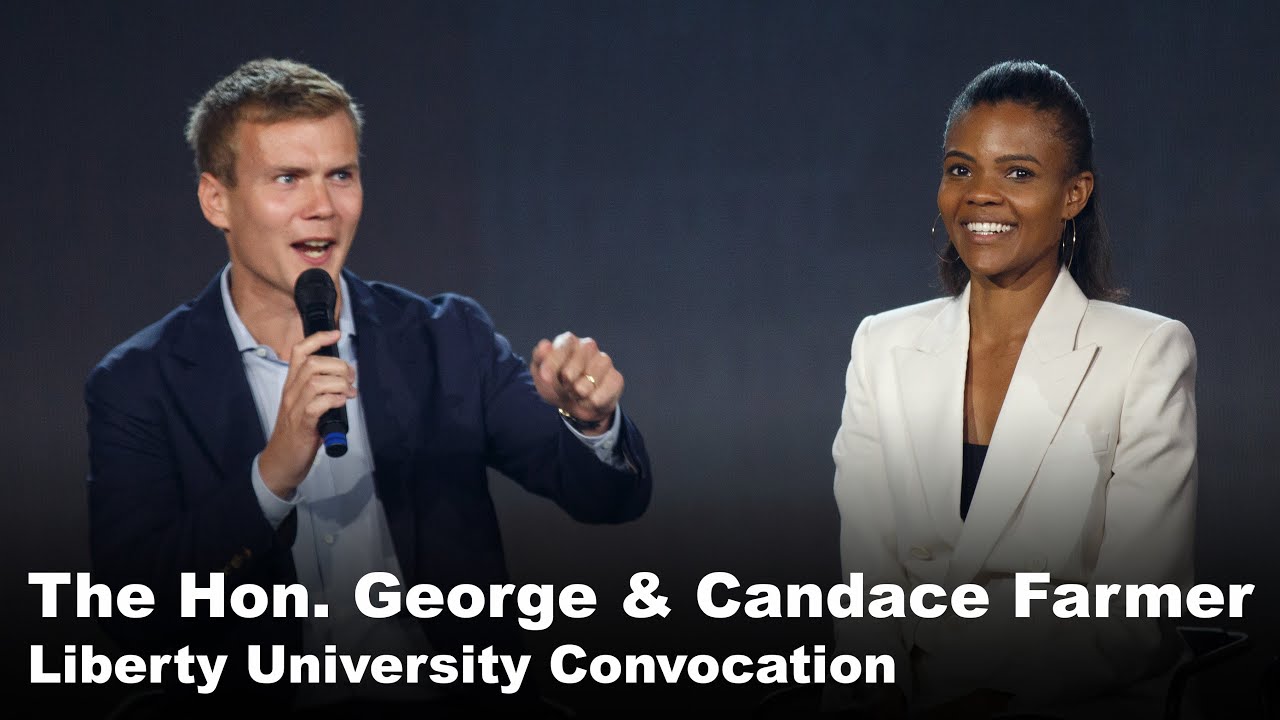
Candace Owens Shares Her Journey from Hate Crime Victim to Conservative Voice at Liberty University
Enjoying this? Share it with someone who needs to see it.
Up Next
Candace Owens on Victimhood Culture, Big Tech Power, and the Future of Black America
39:44
Charlie Kirk and Candace Owens Launch New Turning Point USA Headquarters in Arizona
16:58
Charlie Kirk and Pastor John Amanchukwa Challenge Wokism, Abortion, and the Destruction of Black Families in America
1:05:18
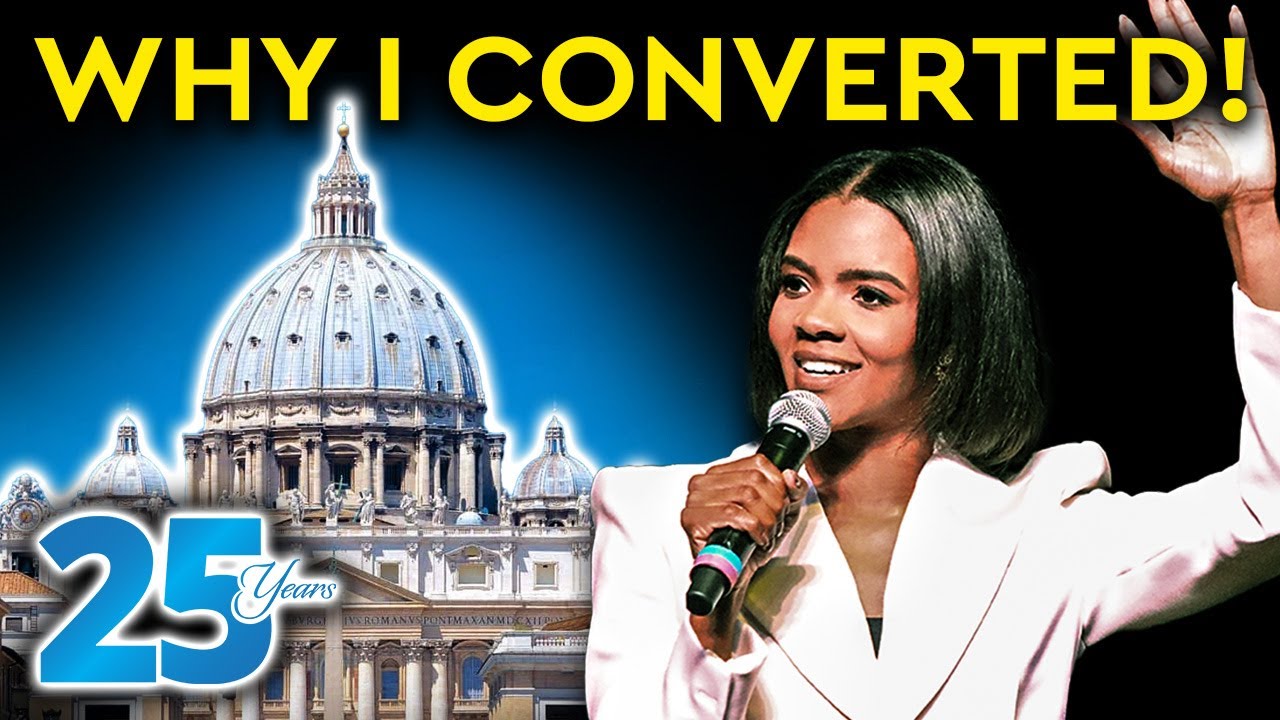
Candace Owens Shares Her Journey from Hate Crime Victim to Conservative Voice at Liberty University
Candace Owens delivers a powerful address at Liberty University, revealing how a racially motivated hate crime during her high school years led to years of anorexia and struggle. Through faith and meditation, Owens transformed her victim mentality into a mission to challenge narratives around race, abortion, welfare, and personal responsibility. She explains why she believes God positioned her unique experiences to become a voice in the black community, advocating for individualism over government dependence and encouraging young people to reject victimhood in favor of personal empowerment.
September 26, 2018
From Victim to Victor: A Personal Transformation
Candace Owens opens her Liberty University address with a compelling exercise, asking students to raise their hands if bad things have happened to them—everyone does. Then she asks who considers themselves a victim—almost no hands go up. This distinction between experiencing hardship and adopting a victim mentality frames her entire message and personal journey.
Growing up in Stamford, Connecticut, Owens lived in poverty with her two sisters in a small apartment plagued by roaches. Her grandfather eventually moved the family into his middle-class home when she was eight years old. There, he instilled a daily practice of Bible reading and Scripture discussion, awarding hot chocolate mugs based on their understanding. Though she later felt embarrassed about this Christian upbringing in public school, these foundations would prove essential to her later transformation.
The Hate Crime That Changed Everything
During her senior year of high school, Owens experienced a traumatic incident that would shape the next several years of her life. While watching Talladega Nights with her first boyfriend, she received four blocked calls that went to voicemail. The messages contained horrific racial slurs and death threats from four male voices, including references to Martin Luther King Jr., Rosa Parks, and threats to tar and feather her family.
The situation escalated dramatically when it was discovered that one of the perpetrators was the son of Connecticut's current Democratic Governor. The case drew FBI involvement, and Owens's face appeared on the front pages of newspapers throughout Connecticut and New York. The six-week investigation concluded with all four young men being arrested—the youngest was only 14 years old.
What the media coverage didn't capture was the devastating personal impact. For the next four and a half years, Owens struggled with anorexia, terrified that people would Google her name and find the story. The only control she felt she could assert over her narrative was through her eating disorder. She describes this period as one where she had fallen far from the girl who sat at her grandfather's kitchen table reading the Bible.
Finding Healing Through Meditation and Faith
While living in Manhattan and paying down student loans after majoring in journalism, Owens discovered yoga and meditation. In the silence and stillness, she began having conversations with herself for the first time in years, asking difficult questions about her happiness and life choices. Through this practice, combined with prayer and focus, she was able to overcome her anorexia.
This journey led to a profound realization: the hate crime hadn't just happened to her—it had also happened to the four young people who left those messages. A 14-year-old, a 15-year-old, and a former friend couldn't truly be racist, she concluded. They were young people learning to be mean in a generation with smartphones, where cruelty could be delivered without face-to-face contact. She recognized that adults had labeled her a "victim" and called children "racists," when a simple apology and understanding might have prevented years of suffering for everyone involved.
A New Perspective on Divine Purpose
Owens shares that she had been angry with God for many things: growing up without money, accumulating $150,000 in student loan debt without completing her degree when Sallie Mae collapsed, and experiencing the hate crime. But her perspective shifted dramatically when she began to believe that God picks people to have specific experiences—both good and bad—for a purpose.
She now believes God wanted her to have her parents, to grow up in a dysfunctional and impoverished household, and to go through the hate crime. In her view, these experiences uniquely positioned her to challenge narratives from the Left because she has lived through everything they claim holds people back.
In early 2017, after a night of drinking, Owens woke up crying with an overwhelming sense that God wanted her to quit drinking. She immediately stopped and uploaded her first YouTube video titled "Mom, Dad, I'm a Conservative." Her third video, attacking CNN's narrative after Charlottesville that the KKK represented a real threat to black Americans, garnered 26 million views worldwide.
Challenging Narratives on Race and Victimhood
Owens positions herself as a voice challenging the narrative that America is fundamentally racist. She argues that CNN was trying to convince black Americans that they should fear the KKK coming after them for not voting for Hillary Clinton. Instead, she encourages people to believe their own experiences rather than what they see on television screens.
She describes what she does as "Kanye-rants"—passionate four-minute speeches challenging Americans to recognize that the country is diverse and provides opportunities for people from humble beginnings to use their voices and reach millions. She asks what other country in the world allows someone to flip open a laptop, rant for four minutes, and reach 26 million homes.
Taking on Feminism, Planned Parenthood, and Welfare
Owens directly addresses several controversial positions that have earned her labels like "Anti-Black" and "Nazi sympathizer." She speaks against what she calls a radical form of feminism that positions men as oppressors, arguing that men are born from women, are our sons and husbands, and deserve to be fought for. She points to the Brett Kavanaugh hearings as an example of what she views as a cultural war on men that should terrify everyone.
On Planned Parenthood, Owens acknowledges that the organization provides services like birth control and mammograms but maintains that "they are also murdering people." She researched the history of eugenics and learned that the organization was founded by someone who "quite literally said that black people need to be exterminated like weeds." She highlights that 900 black babies are aborted every day, totaling 18 million since 1973, while CNN focuses attention on the 16 unarmed black men shot by police annually. She argues that the black population growth has stagnated due to abortion.
Regarding welfare, Owens states she doesn't believe in the system because it has earned people "absolutely nothing" since LBJ implemented The Great Society Act, which he allegedly referred to as the "N-word Bill." She believes the Left wants government to replace God in people's lives, making them turn to government for every solution rather than to faith or community.
The Gift of Kanye West and Dragon Energy
Owens expresses deep appreciation for Kanye West, noting his song "Jesus Walks" as an example of him making Jesus cool in Hip Hop when people told him he couldn't. She argues that the gift of his seven-word tweet—"I love the way Candace Owens thinks"—was opening people's hearts and minds to a different perspective. His wearing of the MAGA hat, she believes, completely destroyed prevailing narratives.
Owens enthusiastically declares her love for Donald Trump, first noting that he's "pointedly hilarious" and expressing genuine confusion about people not enjoying his presidency. Beyond humor, she praises him as an unbelievably strong leader, particularly highlighting his statement to the United Nations assembly that America will be governed by Americans and not by globalists.
What Trump, Kanye West, and Owens have in common, she explains, is what Kanye describes as "dragon energy"—but what she identifies as individualism. It's believing in yourself and standing up when everyone tells you that you can't think a certain way because of your race or gender. It's being governed by what you believe to be truth and living up to expectations you set for yourself.
A Message of Empowerment and Faith
Owens concludes by emphasizing that she believes every person has had experiences prompting them to do something great in the world. When people believe in themselves and align with the universe and God, the universe opens itself up to them—as it did for her. While not everyone will quit their job to make YouTube videos, she insists there's a cultural war happening and everyone can participate in some way.
Her focus remains on presenting a new perspective to the black community, which she believes desperately needs new voices. She wants to stand on platforms and tell people it's not cool to be a victim, that there's no value in victimhood. Her controversial message is simply that she believes in people—that they can succeed without government handouts, based on good ideas, hard work, and Jesus Christ.
She argues that if everyone woke up with confidence believing they could contribute something meaningful to the world, government would naturally shrink. When faced with problems, people would turn to God and their communities rather than arbitrary welfare systems. This message, she believes, is why she's considered a threat to the Left and the establishment—because it promotes self-reliance and faith over government dependence.
Video Transcript
>> JERRY FALWELL: Well, we have two exciting
Convos today and Friday before Fall Break.
And I want to first tell you about an opportunity.
You know, Liberty’s only three hours from
Washington D.C. so we try to give our students
an opportunity to get involved in national
politics.
Penny Nance is head of Concerned Women for
America; she’s on our board; she went to
Liberty.
Her daughter- is her daughter still here,
Clara?
Anyway, she’s called me this week and she
said that Yale is sending a large group of
students to protest tomorrow the appointment
of Judge Kavanagh to the Supreme Court.
And so, she offered to pay for 150 of our
students to come up tomorrow.
We agreed to match that.
We’re going to send buses for 150 more.
So, if you want to be excused from classes
tomorrow, go to Washington, and counter what
the Yale students are doing, support Judge
Kavanagh.
We’ve got 300 spots for you.
[APPLAUSE]
The only bad news is you have to leave very,
very early in the morning, like 2:30, sorry.
[SHOCK]
But you can sign up and get more information
at the tables at sections 109 and 110 and
text CWA to Liberty’s zip code 24502 to
get more information.
And we hope you’ll take- we hope you’ll
take advantage of the opportunity to make
a difference in national politics tomorrow.
Today’s speaker is Candace Owens.
She’s Communications Director for Turning
Point U.S.A. She’s known for her criticism
of the Democratic party.
She has guest hosted on FOX News, MSNBC, CNN.
She’s amassed 560,000 Twitter followers.
She’s one of the young people that are really
making a difference in our country.
We have recent graduates like Cabot Phillips
and Hannah Sherlacher, others who have worked
with Campus Reform.
And us old guys might have age and wisdom,
but you guys listen to the young ones more
than you listen to us.
So, she’s making a difference with the new
generation in ways that us old folks can't
do.
But she’s- Kanye West tweeted this year
that “I love the way Candace Owens thinks,”
in response to Candace’s interaction with
protesters at the event that she was referring
to.
But please welcome to Liberty University Candace
Owens.
[VIDEO]
>> REPORTER: Candace Owens is Turning Point
U.S.A.’s Communications Director.
>> REPORTER: For folks who are unfamiliar
with your story, a couple of weeks ago you
were at a town hall and you confronted a Black
Lives Matter protestor, and you countered
what they were saying.
And then a day or two later Kanye West said
he liked the way you thought.
And then everything unraveled on the political
Left where they came after you.
>> CANDACE OWENS: What’s so dangerous about
a black woman believing that she can do it
without government handouts?
What’s so dangerous about a black woman
that’s promoting independence of thought
in the black community?
>> REPORTER: Earlier this morning, friends
of this program, Charlie Kirk and Candance
Owens, were brutally harassed by far Left
protesters.
They were having breakfast.
>> OWENS: Antifa attacked me.
This is an all-white gang that attacked me
and attacked all black police force.
I think independently. I’m a free thinker.
And I don’t believe that because I have
a certain skin tone that I absolutely have
to subscribe to all these ideas, which on
paper do not make any sense whatsoever.
[END]
[APPLAUSE]
>> OWENS: Hello.
This is honestly such a blessing, I’m so
grateful to be here.
I cannot thank all of you enough for coming
here to hear me speak.
I want to start off by asking you guys a very
simple question.
By a show of hands, how many people in this
room have had bad things happen to them?
Everyone, okay.
Everyone.
Now I’m going to ask a similar question
but it’s going to be different.
By a show of hands, how many people in this
room consider themselves a victim?
Wow, really impressive.
Normally I get a few hands, and that’s really
impressive.
So, the differences in these questions is
a difference in mentality.
I have been smeared, libeled; I have been
protested. I have been kicked out of restaurants.
I have been assaulted because I go around
with a very simple message, which is that
bad things happen to everyone, but a victim
mentality is not something that you should
possess because a bad thing happens to you.
This has earned me the title of being called
“Anti-Black”, “Anti-LGBT”.
I have been called a “Nazi sympathizer”
among other things because I have this idea
that if we don’t accept ourselves as oppressed
we accept ourselves as the victor of our experiences,
then we can achieve more in life.
So, let me tell you a little bit about me
that you’re not going to find in all of
these articles that basically want people
to believe that I am somehow a White Supremacists,
which is quite impressive that I get called
a White Supremacist.
[LAUGHTER]
I grew up in Stamford, Connecticut.
I did not-
[CHEERS]
Yes, is there some Connecticut love here?
That’s awesome.
I grew up in Stamford, Connecticut, in a really
small apartment I shared with my sisters.
I have two sisters.
Did not grow up- I grew up in poverty, my
family didn’t have much.
We had the exterminator coming into our apartment
when I was a little girl to get rid of the
roaches every week because we lived in a low-income
housing structure.
About the time that I was eight years old,
my grandfather decided- he came to our apartment
and he said, “I really don’t want my grandbabies
to live in this sort of a situation.”
And he moved us into his very middle-class
house.
Now, my grandfather is a very-very-very pious
man.
Living in his home meant that every single
morning I was meant to read the Bible.
He would pick a Scripture and me and my brothers
and sisters would sit around the table and
he would ask us questions.
And based on our understanding of the Scriptures
and the Bible we would be awarded different
hot chocolate mugs in the morning.
I never really in my life thought that that
was a meaningful way to grow up.
In fact, when I was introduced to the public
school system I was embarrassed.
I was embarrassed about my relationship with
God.
I wanted it to go away.
I didn’t want people to know that my grandparents
were so Christian, that they wanted us to
read the Bible every morning.
That wasn’t cool. That wasn’t a cool way
to live.
And so, I shed that.
I shed that, throughout most of middle school
I hid it, and in high school, I completely
shed it when my grandparents moved down South.
In high school I had a very unique experience
happen to me, which reporters and journalists
do not like to report on because it completely
disrupts their narrative that I don’t understand
that bad things happen to black people, that
I don’t understand that there’s racism
in the world and that people can be hurt by
racism.
When I was in high school I was- I had a boyfriend.
It was my first boyfriend. I thought I was
really cool.
And he and I went to watch a movie at his
house, we were watching Talladega Nights.
It’s a great movie if you guys haven’t
seen it.
[CHEERS AND APPLAUSE]
For those of you that have seen it, I never
know what to do with my hands just like Ricky
Bobby.
[LAUGHTER]
So, I was watching Talladega Nights and my
phone rang, and it was a blocked call, and
I don’t pick up blocked calls so I sent
it to voicemail.
My phone rang again, I sent it to voicemail
again.
My phone rang four times.
By the time the movie was over I had four
missed voicemails, which was really an insane
thing.
So, I went home and I listened to the voicemails
after a great night, and what I heard was
something really horrific and terrifying.
On the other end of the line there were four
male voices and they were alternating.
They were calling me the N-word.
They were saying that they were going to put
a bullet in the back of my head as they had
done to Martin Luther King.
They were calling me Rosa Parks.
They were telling me that they were going
to tar and feather my family.
It went on for a really intense, I would say,
five minutes.
And when I hung up the phone the first thing
that I did was I broke down and I cried, because
I couldn’t think of four people that would
say those words to me.
I couldn’t even think of one person that
would say those words to me.
Here I am, I’m a senior in high school,
living my best life, and I get these terrible
messages.
So, I went to bed and the next morning I had
a class, a Philosophy class, and we happened
to be talking about racism.
And I told my teacher, I rose my hand and
I told him what happened.
I said, “Mr. Forker, I got these terrible
messages.”
And I played them for him, and he was so horrified
that he said, “Get up right now, we’re
going to go to the principal and you’re
going to report these messages.”
The principal immediately called the police,
and that was the beginning of what would represent
a very dark life- a dark period in my life.
It turned out, by some random stroke of my
own misfortune, that I did not know as I had
said three of those people in the car.
One of those three people in the car that
night that left me those messages happened
to be the current Democratic Governor of Connecticut’s
son.
And instantly this case was elevated and my
face, a high school senior, was splashed on
the front pages of every newspaper in Connecticut
and in New York, calling me a “victim,”
A “victim” of a hate crime.
That’s a really-really-really heavy word.
A “victim” of a hate crime.
It turned out that one of the kids in the
car was a former friend of mine and I used
to hang out with him and a group of my friends
all the time.
And once I got a boyfriend I did what most
girls do and I just wanted to be with my boyfriend
and he was hurt.
And one night he got into a car and he was
drinking, and with three people that I didn’t
know.
And they decided to leave me these voicemails.
Now of course because a politician’s son
was involved the FBI had to get involved to
trace the origins of the messages because
nobody wanted to come clean and say that they
had left them.
So, I went from watching Talladega Nights
to being a front-page cover story, to being
called a victim, to having everyone in my
high school debate whether or not the messages
were real. Why the FBI investigated it.
Of course, the messages were real, of course
after the FBI concluded their 6-week-long
investigation they determined that I did,
in fact, receive these messages from these
men, and 6 weeks later all four of them were
arrested.
The youngest person in that car was only 14
years old.
And then, of course, after the entire world
was debating it, reading Letters to the Editor
where people wither called me a liar, a hero,
a victim, it was over, just like that.
The press was over, they were ready to move
on from this situation.
And that seems to be a common theme.
We’re looking for the oppressed and the
oppressor.
These kids were labeled “racist”, I was
labeled “victim”.
How did that turn out for me?
Well for me it turned out into 4-and-a-half
years of anorexia.
The next years of my life- that title, I was
so scared, going into college afraid that
people that I was meeting were going to Google
me and they were going to find this story,
that they were going to find that I was a
victim, that they were going to think that
I somehow started this or I deserved it, or
they were going to take a side in the same
way that the people in my town had taken a
side.
The only way that I felt that I could assert
control over myself and over my narrative
was through having anorexia.
It took 4-and-a-half years of me having an
eating disorder before something woke up in
me.
I was living in Manhattan, I was paying down
student loans.
I went to school and I majored in, quite ironically,
journalism, something that I don’t believe
in as much today.
And I began to take yoga classes.
And I had lived a life partying throughout
college, drinking, really had fallen far from
the girl that sat at the kitchen table with
her grandfather reading the Bible.
My friends said, “Let’s take a yoga class.”
I went to yoga class, and suddenly that silence,
that mediation, you know, the prayer that
people have, I really for the first time in
a really long time was able to have conversations
with myself.
“Candace, what are you doing?”
You know?
“Why are you doing this?
Why are you living this life?”
Are you happy?”
The answer of course was I was not happy.
I wasn’t happy being a victim; I was miserable.
I was allowing it to eat me alive.
I was able to meditate my way- and people
say, “How did you get over your anorexia?”
Mediation.
Yoga.
I was able to meditate myself back into health
with conversations, and prayer, and focus.
And here’s what I discovered.
What happened to me in high school didn’t
just happened to me, it happened to the four
kids that left those terrible messages.
Because a 14-year-old, a 15-year-old, a person
that was my former friend, they can't be racist.
That’s a heavy word.
That’s a really heavy word.
What they were young kids that were trying
out what it was like to be mean in a generation
that has smartphones, in a generation that
can send text messages, can send Facebook
and Instagram messages around the world in
a matter of nanoseconds, something that the
adults that had raised us had never experienced
before in their lives.
We are the “LOL” generation.
When I was a little girl my dad had a beeper.
He didn’t have Twitter, there was no Facebook,
there was no Instagram.
And parents and teachers never thought about
how that might impact us growing up when you
no longer have to look at someone to just
be mean.
When you can just say a mean tweet, leave
a mean comment.
It’s so easy in this generation to be mean.
And I thought to myself, “Wow, imagine if
as opposed to calling me a victim, which ruined
4-and-a-half years of my life, as opposed
to calling children racists, which I’m sure
ruined years of their lives, what if the adults
in this situation tried to pause and actually
understand how everybody was impacted.
What if the adults tried to understand what
it’s like being a kid coming up in this
generation, how easy it was for us to be mean?
What if the politician just made his son say,
“Sorry”?
No one says sorry anymore, that seems to be
going out style because people are constantly
trying to get away with everything.
I was angry with God for a lot of things in
my life.
I was angry that I didn’t grow up in a family
that had any money, I was angry that I had
$150,000 in student loan debt, and no degree.
I had to drop out because Sallie Mae collapsed
and I couldn’t get my loan in my senior
year.
I was angry with God because I had this horrific
situation happen in high school, and I was
a victim and he allowed that to happen to
me.
That was my mentality.
Then all of a sudden, I had a different perspective,
and this perspective changed my life.
And it’s what I try to tell everybody that
is going through something bad.
Whether you believe it or not is up to you,
but I can tell you that it transformed my
life.
I believe that God picks people to have experiences
in their life, the good ones and the bad ones.
I believe that God wanted me to have my parents.
I believe that my God wanted me to grow up
in a house that was dysfunctional.
I think that he wanted me to grow up impoverished.
He wanted me to go through a hate crime, as
it was classified, in high school.
Because whose better positioned to attack
the Left’s narrative than somebody who has
lived through all of that?
In 2017- in early 2017 I had such an interesting
moment.
I was still drinking, and suddenly after a
night of drinking I woke up in the morning
and I just broke down crying.
It was the most bazaar thing, nothing happened.
There was nothing eventful that happened.
I broke down crying and I said to someone
close to me, “I have this feeling,” and
it was the first time that I had said that
God wanted me to do something, “that God
wants me to quit drinking.”
Just like that I just quit drinking because
I broke down crying in a room and had a sense
that God wanted me not to poison my body anymore,
that he wanted to be able to open the universe
up to me in a way that it had never been opened
up to me.
I quit drinking and I uploaded my first YouTube
video which was called “Mom, Dad, I’m
a Conservative”.
What happened next, I could have never predicted.
My third video got 26 million views worldwide.
It was me attacking the narrative that CNN
was trying to sell to me after, which I’m
sure you guys remember here in Virginia, the
Charlottesville debacle.
CNN when I went home was trying to sell to
me as a black American that the KKK was alive
and well, that a real fear that I have to
have walking down in the street is that a
guy on horseback and a white hood is going
to come because we didn’t vote for Hilary
Clinton.
And I said this is ridiculous.
Honestly, we’ve had enough of this narrative,
it’s time for someone to be a voice in the
black community.
And I just started ranting.
I always call it, what I did for 4-and-a-half
minutes was a Kanye-rant.
I challenged Americans to believe their experiences
versus what they see coming out of their T.V.
screens, because what I see is that I grow
up- I grew up in a country that is not racist.
I grew up in a country that is diverse, I
grew up in a country that has given opportunities
to so many people, including myself, to be
able to start from humble beginnings and to
use my voice and to be able to share it.
Tell me in what other country in the world
do people have those sorts of opportunities
that they could flip open a laptop, Kanye-rant
for four minutes, and reach 26-million homes?
I attack a lot of narratives on T.V.
I’m so for those of you guys who follow
me on Twitter you see that I am going after-
I go for the jugular a lot about tons of things.
I speak out against Feminism because it’s
not Feminism.
What’s happening today is a radical form
of a women’s moment, the idea that we don’t
need men, that men are always and constantly,
once again, the oppressed versus the oppressor.
I have news for people that do identify themselves
as Feminists, men are not dropped off by the
stork.
They are born, we are the people that have
to carry men for nine months.
They are our little boys, they are our sons,
they are our husbands.
The idea that somebody can live a life in
the way that Brett Kavanagh has lived his
life, and to have what has happened to him
over these last couple of weeks happen to
him should terrify everyone.
This country needs due process, but beyond
that, this country needs women to find their
voices and to fight for our men.
Because what is happening right now is a cultural
war on men.
[APPLAUSE]
Quite controversially I also speak out against
Planned Parenthood, and I know-
[APPLAUSE]
In school, I learned that choice was good.
The word ‘choice’ is good.
The Left is incredibly good at linguistics.
“Planned Parenthood” – that sounds nice.
I want to plan my parenthood.
But in reality, they’re murdering babies.
“Choice” – choice is good.
I want choices.
But in reality, one of those choices is to
murder.
When I looked into Planned Parenthood and
the history of eugenics and the fact that
is was founded by a woman who quite literally
said that black people need to be exterminated
like weeds, when I looked into the numbers
and understood that 900 black babies are aborted
every single day, and yet CNN wants me to
pay attention and be upset and enraged and
to boycott and to protest for the 16 unarmed
black men that are shot and killed by police
per year?
No voice for the 18 million black babies that
are ripped from the wombs of their parents
since 1973, that’s acceptable.
They’ve branded that as okay murder.
That is the focus that I try to deliver to
the black community to understand that our
population growth has stagnated, and it is
due to the fact that we are being taught to
murder our children.
That has labeled me as somebody that’s controversial.
“She doesn’t believe in Planned Parenthood.”
I tell you what else I don’t believe in,
I don’t believe in the welfare system.
[APPLAUSE]
You know, I make strong statements and I say
that I don’t believe in the welfare system
because I look at what it has earned people
that have gone on to the welfare system.
Absolutely nothing.
Since LBJ put in place The Great Society Act,
which he referred to as the N-word Bill, it
has completely decimated our communities.
A question that I’ve always asked myself,
and I’ve had this conversation with my partner
Charlie Kirk, is why is it that the Left mocks
God?
It’s a weird thing.
Like, you know, there’s a lot of things
you can make fun of, but it’s very weird
when you start making fun of Jesus Christ
and that becomes normal.
When Joy Behar is just openly mocking Christian
on The View when they're openly mocking the
fact that our Vice President Mike Pence has
respect for his wife and believes in Jesus
Christ, why would they do that?
The welfare system is an interesting study
as to why.
My belief is that the Left wants to grow government.
It wants government in many ways to replace
God is people’s lives.
It wants people to turn to government for
solutions, for every solution.
Someone had told me that, “Hey, Candance
the argument for Pro-Choice is that Planned
Parenthood also does a lot of great things.”
And I’m sure that’s true.
You know, they supply birth control pills
and they conduct mammograms, and women can
go there for other health concerns.
And I say that’s really great, but they
are also murdering people.
There is no justification for murdering people.
How do we get to a point in society where
people understand the value of a human life
if we don’t have people boldly and courageously
standing up and speaking out against these
systems which are meant to make us place so
much faith in the government?
So much faith that the government can fix
all of our issues, so much faith that the
government understands how many human lives
are worth being born, how do we reverse that?
Every single person in here, I believe, has
had a series of experiences that are prompting
them to do something great in this world.
At the moment that you believe in yourself,
at the moment that you get back to your center,
that you align yourself with the universe,
with God, the universe will open itself up
to you.
It certainly did for me.
Maybe not every person is going to do what
I did.
Maybe not every person is going to quit their
job and decide that they’re going to make
YouTube videos.
But make no mistake, there is a cultural war
happening and every single one of you can
do something and participate in it in some
regard.
My focus obviously has been on presenting
a new perspective to the black community.
I think we are in desperate need of new voices
in the black community.
We are in desperate need of somebody that
will stand on a platform and say, hey, it’s
actually not cool to be a victim.
There’s no value in being a victim.
You win no awards for being a victim unless
you’re Colin Kaepernick.
[LAUGHTER]
I think he made a pretty sweet deal off of
being a victim, so credit to him where credit
is due.
But the message that he is selling to people,
of course, is not going to get them anywhere.
At the moment that you believe that you can’t,
you won't.
At the moment that you believe that you can,
you will.
Why is that controversial?
Why wouldn’t the Left want to tell the truth
about, that I stand on this stage and I tell
people all across the country that I believe
in them?
That’s what I’m saying.
Every time I stand on a stage in a room at
a university, at a college, I say, “Hey
guys, I believe you.
I believe in you.
You can do it without government handouts.
You can do it based off of good ideas.
You can do it based off of hard work.
You can do it with Jesus Christ.”
[APPLAUSE]
Of course, if every single person in the world
thought that, if every single person in the
world woke up with confidence and said, “I
can do it and I can contribute.
And my life, my birth has meant something,
it means something to this world and I’m
going to contribute something,” you would
see, naturally, that government would shrink.
That when people are faced with problems they
wouldn’t run to an arbitrary welfare system,
they would turn to God, they would turn to
their communities, and they would nurse themselves
back to health.
That’s what you would see.
And that is why I believe in my heart that
I have been considered a threat to the Left
and to the establishment.
Kanye West, man, he’s a wonderful man.
[APPLAUSE]
It’s so great to look back at everything
now and of remember his song Jesus Walks.
How many of you guys know that song?
[CHEERS]
And he made that song- he made that Hip Hop
song because people told him that he couldn’t
talk about Jesus and he couldn’t make Jesus
cool.
So, he made it a number one album.
He made it a number one track talking about
Jesus and felling that Jesus was walking with
him in what he was doing.
The gift of Kanye West isn’t because he
is one of the biggest stars in the world.
The gift of Kanye West in that simple seven-word
tweet.
That broke the internet, “I love the way
Candace Owens thinks,” is that he opened
people’s hearts and people’s minds to
a different perspective.
The gift of Kanye West putting on the MAGA
hat was that it completely destroyed the narrative.
I love Donald Trump.
[CHEERS AND APPLAUSE]
First and foremost, he’s pointedly hilarious.
I actually genuinely feel bad that there are
people that are not enjoying Donald Trump
in office.
Like I just- I don’t understand how they
don’t understand how hilarious Donald Trump
is.
Aside from that, he’s an unbelievably strong
leader, to stand in the face of the entire
United Nation’s assembly yesterday and to
stay that America will be governed by Americans
and not by globalists.
[APPLAUSE]
What is that President Donald Trump, Kanye
West, Candance Owens have in common that we
have grown so fond of each other?
I think Kanye West describes it as “dragon
energy”.
And to me, I think it’s individualism.
It’s believing in yourself.
It’s standing up in the face of everybody
telling you can't.
“You’re not allowed to think that - you’re
a black man!
You can't think that.”
“You’re not allowed to think that - you’re
not a woman.”
“You have to think this because you’re
a woman.”
It’s standing up in the face of all of that
and saying no, I am my own person.
I am governed by what I believe to be the
truth, and I can live up to any expectation
that I set for myself.
I think that is an energy, that is a love,
and that is a passion that I hope that I work
every day to share with the world.
Thank you guys so much for having me.
[CHEERS AND APPLAUSE]
>> DAVID NASSER: Candace is probably one of
our most requested guests.
And obviously, you can see why.
I think today’s lunch at the Rot will have
some very interesting conversations that you
started for us today.
And I do believe- I do believe that you’ll
carry the conversation like you did here.
I love that we can come in a room and always,
always hear each other and then it’ll hopefully
help us grow as individuals.
Can we thank her just one more time for being
here?
Very busy person, thankful for you.
[APPLAUSE]
Hey, tonight- tonight at campus community
we’re going to talk about some of the things
that Candace even touched on.
But I do want to say this to you, Candance
touched on anorexia and Candace touched on
a few other things that might be a bit of
a personal issue for you, even sexual harassment.
If you are a victim in the sense that someone
has invaded your life or has hurt you in some
sense, or if you struggle with anorexia, just
know that our Shepherd’s department is always
open and available to minister to you and
that they’re always at Dorm 17 and available,
all right?
We love you, we care about you.
We’ll see you tonight at Campus Com, 6:30.