Up Next

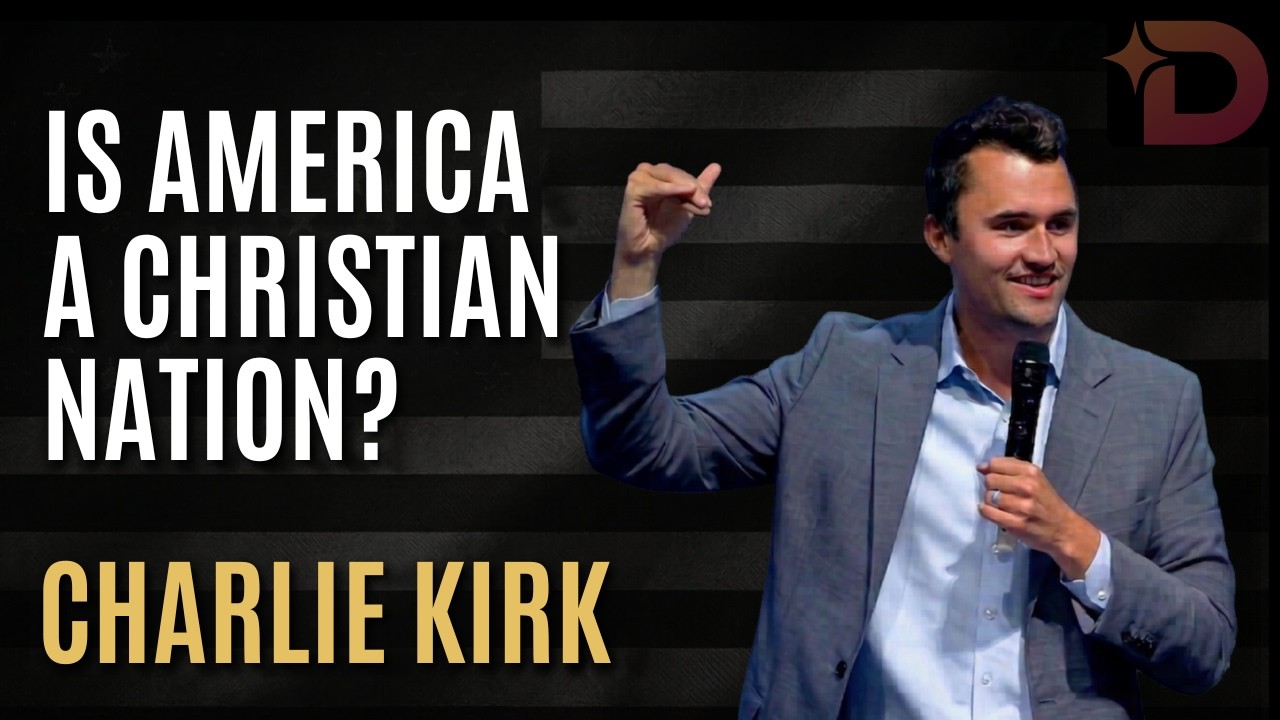
Charlie Kirk Confronts Marxism, Evil, and the Church's Role in Modern America at Miami Synagogue
1:34:28

Charlie Kirk and Jack Hibbs Unpack America's Cultural Revival and Young Men Flooding Back to Church
50:54
Charlie Kirk and Andrew Wommack Challenge the Church to Rise Up and Vote in the 2024 Election
2:10:23
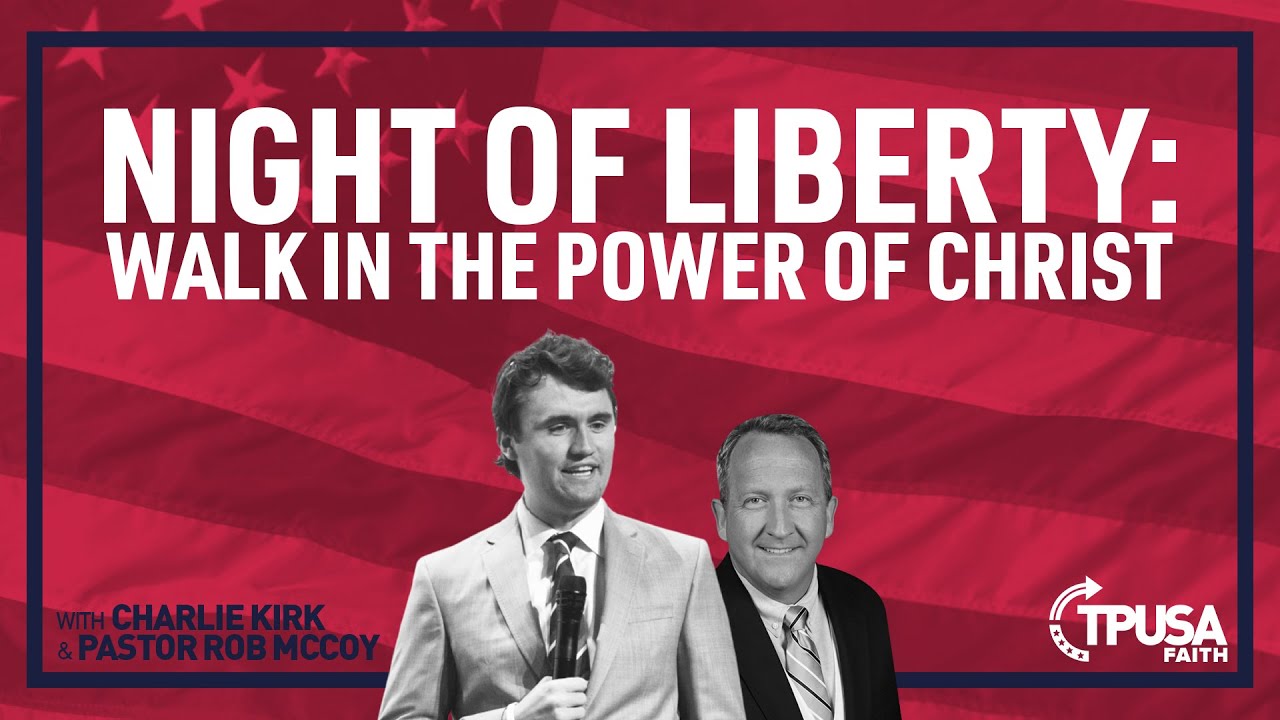
Charlie Kirk and Pastor Rob McCoy on Fighting Cultural Chaos and Taking Back California for Godly Reasons
Charlie Kirk joins Pastor Jack Hibbs and Mayor Rob McCoy at Calvary Chapel Chino Hills to address the spiritual war facing America. Kirk argues that the modern left operates as a religion intent on creating chaos through open borders, gender confusion, and moral relativism. He contrasts this with the order that biblical principles provide, discussing everything from Trump's parenting rules to why Jesus wasn't a socialist. McCoy challenges the church's silence on cultural issues, arguing that pastors must be the counselor to the sovereign people. Together, they make the case that America's crisis isn't just political, it's fundamentally spiritual, and only a church awakening can restore order to the chaos.
The Battle for Information and Truth
Charlie Kirk opened his remarks at Calvary Chapel Chino Hills by invoking the Apostle Paul's warning to Timothy: "Guard that which has been committed to your trust and avoid profane and vain babblings and things offered up as falsely called science." Kirk emphasized that we live in an age defined by a battle for information, where contending for the faith means engaging not just in Sunday school, but in the office, the park, the church, and the broader world.
Kirk celebrated the young women running for office in California who are willing to die for their convictions, while also calling for more men to step into leadership roles. He stressed that the goal isn't merely to take back California for political reasons, but for godly reasons—specifically, the freedom to preach the gospel. Kirk reminded the audience that Jesus Christ died on the cross for our sins, rose again on the third day, and is the way, the truth, and the life. He urged those unfamiliar with these truths to read John chapter 3 and give their hearts to Christ.
Pastor Rob McCoy: The Role of the Church in Culture
Pastor Rob McCoy, who sits on the City Council for Thousand Oaks and served as mayor during the Borderline Bar shooting and simultaneous wildfires, introduced Kirk with powerful context about the church's role in American culture. McCoy argued that the church has become anemic—not in preaching salvation, but in understanding the full scope of the gospel's application to culture and government.
McCoy traced the concept of grace back to Genesis 15, where Abraham believed the Lord and it was credited to him as righteousness. He explained that 430 years after Abraham, God gave the law to three to five million Jews who had been enslaved in Egypt. After their miraculous deliverance through ten plagues and the parting of the Red Sea, these millions lived together for 40 years in the wilderness without a police force or standing army—because they had moral law at the center of their community.
Drawing from 1 Corinthians 6, McCoy noted that Christians are now the temple of the Holy Spirit. Just as the temple was at the center of the Israelite community, believers are called to be moral preservatives—the salt of the earth—infused throughout culture. He explained that when Jesus asked "Who do men say that I am?" at Caesarea Philippi, surrounded by temples to various gods and goddesses, and Peter declared "You are the Christ, the Son of the Living God," Jesus responded by saying "Upon this rock I will build my ekklesia"—not church in the religious sense, but assembly in the governmental sense.
Turning Point USA: Building a Bridge to Faith
McCoy described Turning Point USA's unique role in the cultural landscape. Drawing from Galatians 3:23-24, which teaches that the law is a schoolteacher to point us to Christ and keeps us safe until faith comes, McCoy explained that Kirk has built a bridge through a secular organization that invites young people from every background. While some may take issue with who participates in Turning Point USA, McCoy argued that Kirk provides them with moral law so they can come to faith. The work is political, but the byproduct is spiritual.
Kirk expressed deep appreciation for pastors like Jack Hibbs and Rob McCoy, noting how few pastors demonstrate courage in today's broken culture. He recounted confronting pastors across the country, asking what it will take for them to speak up: 4,000 abortions a day? Drag queen story hour for three-year-olds? The complete shutdown of churches? Kirk identified two reasons for pastoral silence: many don't know how to react because they've been taught Christianity should be absent from politics, while others are actually complicit, believing in a Christian Marxist worldview that conflates love with tolerance of sin.
The Left's Religion of Chaos
Kirk made a striking argument that leftism functions as a religion, with adherents who take issues like abortion funding as seriously as a devout Jew takes Yom Kippur. He observed that leftists will protest and march in the streets as if someone is trying to take away their holiest day of the year. The left views their ideology religiously, which is why Christians must understand this is fundamentally a spiritual battle.
Kirk outlined a critical framework: one side wants to create chaos, and the other wants to bring order from the chaos. Everything the left does seeks to create more chaos—open borders create chaos by definition, creating racial tension creates chaos, having people confused about their gender from a young age creates chaos. When young people have lived in a decade of chaos from age 8 to 18, not being sure what gender they're supposed to pick or if there's a God at all, there's a need for awakening, revival, and rebirth.
The good news, according to Kirk, is that Christians have the answers. The Holy Word of God is the same today as it was 2,000 years ago and will be 2,000 years from now. The Word tells us how many genders there are, how to interact with government, how to behave in marriage, and how to approach immigration, borders, rule of law, and sovereignty. In contrast, if you ask a leftist for their reference point, every single one will give a different answer—the Communist Manifesto, the Rachel Maddow Show, NPR, the LA Times. Without a central reference point like the Word, they remain confused, and confused people try to create more confusion and chaos.
Confronting the Ivy League
Kirk shared his experience speaking at Brown University in December, joking that if you want your child to hate America, send them to Brown. He described being met with protests and opposition, but noted that what made the audience most upset wasn't his support for President Trump, building a wall, enforcing immigration laws, ending abortion, or saying there are only two genders. What drove them to visible and physical rage was when he said our rights come from God, not from government.
This statement was met with repulsion because it forces hyper-entitled leftist students to admit they're not the most important person in the world. It requires acknowledging that God matters more than they do, and what He did for them matters more than their own desires. This admittance challenges them to drop the lifestyle they've been following, to be more humble, and to behave differently—all things Christians are called to be.
Kirk realized this is the core spiritual battle: the left is fighting for the abolition of belief in the divine. If we don't recognize this as a spiritual war first and foremost, we're just arguing details when there's a much bigger picture at play. Once you get a college leftist to admit there is a God—ubiquitous and omniscient—who has power over them and has granted rights to them, then suddenly government doesn't matter as much. That clump of cells they call a fetus might actually be a life. Right and wrong are no longer opinions but truth written in the Word.
The Confusion of Modern Freedom
McCoy raised an important point about how young people conceptualize freedom differently than Scripture defines it. He referenced the words inscribed in the stairwell of Harvard Law School since 1911: "The law is the wise restraints that make men free." You apply restraints toward evil in order to pursue excellence.
Kirk explained that young people have been taught to view freedom as the ability to drink whatever they want, put whatever they want in their bodies, use whatever words they want, visit whatever websites they want, and stay up as late as they want. This, Kirk argued, is actually bondage. You will not be a productive, happy, or fulfilled person if you live that way for a day, a year, a decade, or a lifetime.
The lie that passes without being countered is that what is easy is necessarily good for you. The truth is that what is good for you is sometimes difficult. Kirk noted that the sin that was impermissible for him as a high schooler eight years ago is now widespread for 12, 13, and 14-year-olds. He's talking about drugs more lethal than ever, access to mobile technology, and websites that would have been forbidden. Young people are diving into more dangerous and pervasive sin at younger ages, and by the time they're 18 or 19, you have a miserable generation. This is why suicide rates have gone up so alarmingly.
Interestingly, suicide is a unique first-world problem. The poorest countries in the world have much lower suicide rates than America, despite sometimes lacking access to medicine, food, and clean drinking water. Why? Because people choose that unthinkable option when they think freedom is the freedom to continue to indulge in whatever they want. But what the Bible tells us—and Jesus said this clearly—is that freedom from sin and addiction brings actual liberty. Liberation from bondage is the message young people are waiting for.
President Trump's Family and Leadership
Kirk shared insights from his relationship with the Trump family, noting that you can't fake good kids. He's gotten to know Don Jr., Ivanka, Eric, Tiffany, and Barron, and the President had specific rules for his children from a very young age. First, if you need to reach me, it's one ring—I'll always pick up the phone. Every child will tell you they had direct accessibility to their father no matter how important the meeting.
The President also imposed three very big rules: no drugs, no alcohol, no cigarettes. He was intentional about raising outstanding citizens who have been unfairly treated by the media. Kirk contrasted these three outstanding citizens with other people who serve in government, leaving the comparison unfinished but clear.
When people say they don't like the President's tweets, candor, or tone, Kirk and McCoy have a response. Kirk asked: who appointed better justices, George W. Bush or Trump? Not even close. Bush gave us John Roberts, who is questionable at best, while Trump gave us Gorsuch and Kavanaugh, plus 187 circuit court judges. Who cut Planned Parenthood funding versus who expanded it? Who took on the Iranian threat and killed Qasem Soleimani? Who moved the embassy to Jerusalem, recognized the Golan Heights, cut funding to the Palestinian Authority, and signed executive orders for religious liberty?
Kirk used an analogy: America was drowning in the middle of the ocean under bipartisan ruling class rule. The real division in America isn't right versus left, but ruling class versus working class. Finally, a helicopter came to rescue us. We were pulled from the water, able to breathe again, resuscitated and revitalized. Yet the first thing we say to the person who rescued us is, "I don't like your tweets very much." Is a smooth politician who lies to your face and continues the destruction of the family and country something you vastly prefer, or someone who biblically might embody Samson—called by God in an unusual time for a very specific purpose to save a gift and blessing from God?
Samson and God's Unusual Choices
McCoy developed this Samson analogy further. He noted that he's spoken to over 20,000 pastors across the country trying to awaken them to mobilize the 60 to 80 million evangelical Christians, half of whom aren't registered to vote. Of the half that are registered, only half vote in presidential elections, and only 12 percent vote in non-presidential elections.
The pushback he receives is moral pietism: "I can't vote for a man who's been married three times and divorced twice and is caustic on Twitter." McCoy responds by asking people to name one moral thing about Samson's life. Samson was in a prostitute's bed all night and the Spirit of the Lord came upon him—not once, but twice. He went to pay off a gambling debt and the Spirit of the Lord came upon him. His downfall was women and his iconic hair. Yet Samson is in the Hall of Faith in Hebrews 11.
Why? Judges 14:4 explains: "What Samson's parents didn't realize is God was seeking an occasion to move against the Philistines." Samson was willing to do what God's people weren't—confront the evil in their culture. Samson and Jesus are the only two babies in the womb prophesied by God before they were born to lead God's people. Samson was raised with a Nazarite vow and was homeschooled, yet the very first words recorded out of his mouth were "That Philistine woman, I want her. Go get her."
McCoy explained that there are seven mountains of cultural influence: arts, entertainment, media, business, politics, religion, education, and family. In politics, the currency is winning elections; in media and arts entertainment, it's selling movie tickets. Looking at President Trump across these mountains: arts and entertainment—he had the number one television show in America; media—he's mastered Twitter; politics—he took out 17 Republican candidates and the most heavily funded Democrat candidate in history; business—the Trump brand is world-renowned. This is a man equipped across every mountain of cultural influence.
Why did God pick him? Because there were no Christians available. Some candidates running were Christians, but were they equipped in every mountain of cultural influence? Unless the body of Christ steps up and does its job, encouraging people to engage in the public square through work like Turning Point USA that's political with a spiritual byproduct, God will use unusual instruments.
Jesus Was Not a Socialist
During the Q&A portion, a young person asked about college students claiming Jesus was a socialist. Kirk responded that first of all, the fact that Jesus might have been something of an ideology developed 1,800 years after He lived is an insult to Him being King of the world, Savior of the world, and part of the Trinity as God Himself. He was nothing more and nothing less than God divine and the Savior of the world—not a Marxist or adherent to any failed working-class ideology developed in the mid-1800s.
What people are really trying to say is that Jesus was a collectivist who would hate private property ownership and capitalism. Kirk pointed to the Parable of the Talents, where an owner distributed currency to workers. The individual who produced the most from the original investment was most pleased in the owner's eyes. The one who produced marginally was somewhat pleased. But the person who did nothing with the gifts given was told they would be put into eternal damnation—one of Jesus's harshest repudiations in the four Gospels.
To sum it up: what system allows people in the body of Christ to multiply most effectively for the kingdom? Are people multiplying in the Soviet Union or Venezuela, where they can't even eat? For multiplication to happen, you must have individual freedom and individual liberty. You must have a system that allows multiplication to occur.
McCoy added that Congressman Bob McEwen gave a message at the church explaining that for wealth to be created, two parties have to benefit. If you're a farmer and I'm a baker, I buy grain from you at a market price. With your profit, you buy more fields and hire more workers. With the grain I buy, I bake bread, and with my profit, I buy more ovens and hire more workers. This creates wealth.
In socialism, we take the disparity between rich and poor and try to create equality by taking from one and giving to another. Using a classroom analogy: you're getting an A because you do your homework, study hard, get up early, and go to bed late. Someone else is lazy and getting an F. Socialism says we'll take two grades from you and give them to the other person so you both have a C. What happens next time? You won't work as hard, and the other person will wait for a handout. Production decreases. You can take the fourth greatest economy in the Western Hemisphere—Venezuela—give it socialism, and now they're eating their zoo animals. It destroys a country. You can vote yourself into socialism, but you'll have to shoot your way out.
Individual Compassion Versus Collectivized Coercion
Kirk made a final critical point: Jesus called us individually to be extraordinarily compassionate, long-suffering, and loving. However, He never once made the argument for a coercive collectivized government to do that for you. He never said to abdicate that authority to the state or bureaucrats. Instead, socialism gives people an excuse not to be generous, not to give to charity, not to show up at the soup kitchen, homeless shelter, pro-life clinic, or pregnancy crisis center. Socialism creates an excuse: "Someone else is taking care of that." It creates selfish, self-centered, and secular people, while capitalism is actually altruistic, as evidenced by increased giving in capitalist societies.
The Reality of Socialism
McCoy shared his personal experience visiting Russia 16 to 17 times, collectively living there for about half a year. He saw an entire population of individuals who were lifeless—their government had sucked hope out of them. There was no compassion toward others, not because Russians don't have hearts, but because they had no capacity to help the person hurting. Everybody was exactly the same, wore exactly the same clothes, lived in exactly the same flats, and functioned exactly the same way.
God was banned in Russia. In Red Square in Moscow, an 80-year-old grandmother came up to McCoy, grabbed him by the face, cried, and kissed him because he was preaching the gospel. She said, "I was 10 years old when the Communists came into our home, took our Bibles, took our cross, and told us God did not exist. I was praying for 70 years to hear the gospel again." That kind of thing happens in socialist worlds.
Hugo Chavez would not allow God to be preached in Venezuela when he was alive. China cannot tolerate it because God is competition. God gives meaning and purpose. The Scriptures demand that every one of us will stand and give an account in the day of judgment for what we did with our lives. If socialism is true, then God is false. God is true and socialism is wrong because socialism gives you the excuse not to get involved in doing anything. Young people are being sold a bill of goods by overpaid, egocentric professors who have been educated beyond their intelligence and live in the wrong country.
The Importance of Family
An audience member raised an observation about how far America has drifted from its origins where God is inscribed in stone all over the country. The person analyzed when this happened and concluded it was when the family started falling apart—mothers going off to work, fathers leaving homes, creating fatherless homes.
Kirk responded that the left has been on a campaign to destroy the nuclear family for 50 or 60 years. In fact, The Atlantic recently ran a front-page article titled "The Nuclear Family Experiment Was a Tragic Mistake." Why? Because the family unit is biblical and self-reliant outside of the state. Kirk pointed to profound things that happened in the 1960s and 70s: the Great Society Act passed by President Lyndon Baines Johnson, which in a sinister fashion destroyed the American family, specifically the black family, through welfare state quasi-socialist policies that allowed Marxist ideas to infiltrate inner cities. People became dependent on and addicted to government programs at the expense of somebody else.
More fundamentally, America stopped teaching the Bible in schools and removed prayer from schools. Kirk is waiting for a revival and believes we should be unapologetic about this. He advocates for federal legislation that if you receive any money from the federal government, you should teach the Bible in public schools. Some Republicans disagree, citing separation of church and state.
McCoy interjected that Thomas Jefferson and John Adams saw the direction of the nation and when there were reports of children assembling for school without a Bible, they made sure a Bible had to be placed in educational settings or else it wasn't considered a school. The very first public school act was the Old Deluder Satan Act, designed to teach children to read so Satan couldn't deceive them and they could learn from the Scriptures.
Kirk argued that right now we do have religion in our schools—it's called leftism, a core of beliefs and values. The absence of teaching the Bible at all, even as a historical document, leaves a vacuum. People will naturally come to the conclusion that the Bible is the Word of God by being exposed to it. They'll understand the stories, history, and wisdom within the text. Yet we've strategically removed it from public schools while still teaching the Quran and leftist ideologies at alarming rates. The single book that has answered all our problems—5,000 years of history, 66 books, 35 authors—is the book we decide not to teach our youth.
Practical Steps for Engagement
Kirk encouraged young people interested in getting involved to visit TPUSA.com, where Turning Point USA is now active on 2,000 high school and college campuses across the country. He offered general advice: we need to ask high school seniors why they're going to college, not where. We do a bad job over-glorifying the institution of college and stigmatizing carpenters, electricians, and tradespeople as somehow less intelligent.
Kirk pointed out that when the media divides America for presidential polling, they use categories like "college educated" and "non-college educated," subtly saying "here's what the smart people think and here's what the dumb people think." Kirk believes it's actually the opposite—non-college educated people are often far more wise than college educated people. This subliminally pressures parents to ensure their kids are never in the "non-college educated" category.
If you want to play Russian roulette with your kid's values, send them off to college. They may come back someone completely different. If they want to be a lawyer or doctor or something very specific, and they got into a very good school that's financially realistic, then college might be the best option. But we have way too many people going to college in America—about 90 percent too many. It should be about career preparation, not ideological exploration. A child who sat down and watched every PragerU video would be infinitely more wise than the professors teaching them at universities.
Kirk shared contrarian advice: have your children divest from social media at the youngest possible age. This from someone who has millions of followers and relies on social media to get his message out. Kirk himself only has Twitter, with his team managing the rest, and it's been one of the most liberating things he can describe. He talks to young people, especially young women, who cite social media as what they're most anxious about. It's a driver of comparison and bad behavior, and it's not mandatory.
Another contrarian idea: consider taking a gap year before college. If a young person is passionate about something, find an expert in that field—guaranteed there's one in a church this size. Look them in the eyes, dress appropriately, and say: "You don't have to pay me. I'm deeply passionate about what you're doing. Will you allow me to study under you and mentor under you for one year for no pay? I will do whatever you ask because I'm passionate about this thing. Please give me a chance." In a church community, they'll probably say yes.
You'll learn more in that one year than in four years at a university. You might discover after two months that you're not actually passionate about that thing—that's really good to find out with no debt, no sorority or fraternity to rush, no fake friends. Or you might find it is your passion, learning from an expert for free. In one year, you'll be 100 times more qualified than someone who went to the University of Southern California studying the same thing.
Call to Action: Adopt a Voter
Kirk's primary call to action was the "adopt a voter" program. Before Election Day, find one person in your life who you know is going to vote—a likely voter—and spend time with them. Shepherd them, inform them, show them videos, almost pester them until they commit to vote correctly. If every single person in the church did that, it would double the impact instantaneously.
Everyone worries about the macro—"What do I do to fix the big problem?" What the left has done so well is say, "We're just gonna start with your kid," and they did that a hundred million times over the last 60 years. That's how they've been able to take over. They start with kids for many reasons, but one is they're terrified of adults.
McCoy challenged the audience with statistics: there are 15,280,000 evangelical Christians in California. Half are not registered to vote. Of the half that are registered to vote, only half of those actually vote. So only 25 percent of evangelical Christians vote—12 percent in non-presidential elections. McCoy and his wife commit to this every election: you tithe to your church, and candidates are coming to you asking for your consent to legislate your sovereignty. The way you give consent is through support and voting.
Kirk emphasized the need to pray for leaders by name. When he travels the country, he asks people to name their five school board members that they pray for by name, along with the issues they're dealing with that allow children in the community to live quiet and peaceable lives in all godliness and reverence. Most don't know their names. If you want to make a difference, step into the public square, go to school board meetings, support candidates, educate yourself, and take back the culture.
Engaging with Those Who Disagree
A young person asked if Kirk reaches out to employees who have different beliefs. Kirk answered yes, explaining that Turning Point USA has a diverse organization—not necessarily politically for obvious reasons, but they try to have a Socratic, democratic marketplace of ideas. His advice for every young person: be unafraid from a very young age to do what the left refuses to do, which is talk to the other side.
It's very tempting not to want to talk to liberal relatives, friends, or neighbors. Do what they refuse to do—live by the golden rule. Talk to the person down the street with the Bernie Sanders sign, the "Coexist" bumper sticker, and the Planned Parenthood sticker. Maybe they're one conversation away from a completely changed worldview. Kirk has seen it happen more times than you could imagine. People working for him at Turning Point USA were marching in the streets for Trump's impeachment two years ago. All it took was someone with a table on a college campus looking them in the eye and saying, "I believe in a system of government where all lives matter and your life matters, that believes in individual liberty and dignity and American sovereignty and American excellence."
You'd be amazed at how shallow and fragile leftism is when Christians and conservatives look at leftists in the eyes, love on them, preach to them, and communicate with them as human beings. They're waiting for us to do that.
Video Transcript
listen before we go any further tonight we're here tonight because for example Paul told Timothy right before Paul was heading off to his death the Apostle Paul he warned Timothy and he said o Timothy guard that which has been committed to your trust of avoid profane and vain babblings and things offered up as falsely called science today we live in an age of a battle for information yes I'm gonna get more letters I'm gonna tell you right now I'm gonna get more letters tonight like every Sunday where we're turning you into the IRS we're gonna you can't do that what you just did on stage let me tell you the scripture tells us to contend earnestly for the faith that means everywhere that means not only in Sunday school that that's not a little in the office place that's not only in the park it is in the church and it's in the world that you and I live in and so the fact of the matter is these young women are willing to die for their conviction and I'm glad they're running but we need more men also to run for office too and and lead the way we need to take back California but here's the thing not take back California for political reasons we need to take back California for godly reasons for godly reasons and that is the freedom to preach the gospel and the gospel is that Jesus Christ died on the cross for your sin and my sins Jesus Christ God incarnate God in the flesh rose again from the dead on the third day and Jesus Christ is the way the truth and the life and he said nobody can get to the Father but through him jesus said you must be born again to enter the kingdom of heaven and so you make sure that you read your Bible if you don't have a Bible we'll give you a Bible but you need to read John chapter 3 if these words I just said to you are strange you need to read John chapter 3 that's Jesus's letter to you and you need to give your heart to Christ and follow Jesus and Lord willing soon we won't need a California and we won't need an America because we'll be in heaven with forever so until that time comes I'm gonna introduce tonight really a guest in yet a host this brother of mine we were separated at birth he is he sits on the City Council for the city of Thousand Oaks he was the mayor of Thousand Oaks when all of the horrific shootings took place at that at the bar and corral thing borderline bar the whole catastrophe of that and at the same time remember the fires that were going on and Rob McCoy being the mayor City Council but first of all Rob McCoy through it all was still the pastor of his church give her a warm welcome tonight to pastor Rob McCoy and not to mention that I think you might be in the future one of the soon-coming governors of California if I have it my way so but that's something that's something we won't tell anybody about yet Thanks you know what I'm gonna do I'm actually going to have you introduce our special guest house that whatever Frost your cupcakes yeah all right I got this yeah well first of all stay here pastor Jack because I know our guest wants to talk about you and he wants to do it Friday wanted I'm glad to be talked about I'm not asking for permission he doesn't need an introduction but I will do it anyways he's uh there's 21 hundred chapters Charley Couric areas areas [Applause] you wanna you were set you wanted to say I liked him at least get it up no we were just gonna talk about you I'm going to turn my back no I just wanted to say quickly I travel the country a lot I go to a lot of different churches our country would be in a much better position if we had a hundred or 500 or a thousand jackets and he is courageous he has conviction and the Kingdom in the country need more people and more pastors that stand up for truth like Jack kids so Jack than men god bless you thank you well you wanted to sit down I want to stand for a little bit my back hurts so Charlie and I got connected through a couple of events and we've just been knitted at the hip ever since and I've just come to deeply appreciate him and I'm gonna set the stage because you're familiar with what Charlie does but I wanted to tell you from a unique perspective as a pastor had a politician how critical the work that Charlie does around the country and Turning Point USA the church is anemic in this one sense that we we love the gospel that's not the anemic part but we have truncated the gospel and made it my Opik and what I mean by that is we we love the idea that we're saved by grace through faith it's a gift of God not of works lest any man should boast amen and we've all been saved by that now we know that in Ephesians chapter 3 but that saved by grace didn't begin in the New Testament you go back to Genesis 15 and God said that Abraham believed the Lord and it was accredited to him as righteousness so grace was in Genesis 15 that's the proto that's the very first appearance of it and here we have it in the New Testament we're all saved by it so Abraham was saved by grace he was looking forward to a point in time by faith which was a cross we look back to a point in time by faith which is the cross but what happened is after Abraham got saved he was a father of the faithful 430 years later God gives the law why three to five million Jews were enslaved in Egypt God delivers them because they're crying out in their slavery which God never intended he had created government through the noetic Covenant and so these three to five million people are delivered from slavery by ten miraculous plagues the last being the Passover the the Angel of Death passing over the Lamb and you know the story they go into the wilderness after Pharaoh's army is vanquished in the Red Sea and drown and they end in the wilderness which is a polite way of saying desert and why they're there their clothes don't wear out their shoes don't wear out food is provided every morning in the form of manna and water where there wasn't water appears and got even blows quail off-course to feed them forty years and then Moses goes up on Mount Sinai and God gives them a downloaded moral app the Ten Commandments first five is vertical our relationship with the Lord second five is horizontal our relationship with each other where you see the cross the fifth commandment is a flip because it's not only honor that mother and father the only one that comes with a promise you'll live long on the earth it's to honor your father in heaven and honor your mother and father because that's the the order of family and the building block of society he comes down the mountain there's a party going on Golden Calf they're all in debauchery and he brings the law that law is placed in the center of the community which is the temple and the the nation revolves around it now the greatest miracle of all of all the ones I've listed is that three to five million people live together for 40 years without a police force or a standing army because they had moral law now the church in the last 50 years has abdicated responsibility of educating its congregants to engage in the public square we have become moral pietistic politics is dirty but as aristotle said politics is the highest form of community a bit applies morality and sociability what Charlie Kirk and turning-point USA does that has been instrumental for me as a minister who understands the pulpit but more importantly the political side where I'm waiting for the church to help is it Charlie builds a bridge out of Galatians chapter 3 verses 23 and 24 the law is a schoolteacher to point us to Christ and it keeps us safe until faith comes so he has a secular organization that invites every realm of young people and some of you are gonna take issue with who participates in turning-point USA don't because he provides them the law so that they can come to faith what he does is political the byproduct is spiritual welcome with me Charlie Kern [Applause] and it excellent Rob super well said it has been an amazing mentor to me personally and it's incredible to see how few pastors have courage in this broken culture and Jack and Rob or two of them and when I visit some of these churches and I confront you know some of these pastors as as lovingly as I can I say what's it going to take is it gonna take 4,000 abortions a day for you to speak up is it gonna take drag queens story hour for three-year-olds for you to speak up is it gonna take you know for them for the church to be totally shut down for you to speak up and I I wonder where's the line that's gonna be crossed for unfortunately there's two ways to organize the thinking of it which is part of the church is basically they're silent because they don't know how to react right and they've been taught that Christianity and the church should be absent of politics which is wrong it is incorrect the other part is and there's a faction of this which is they're complicit in it is that they believe in a almost a Christian Marxist worldview and they conflate wrongly that the teachings of love and tolerance of sin and may conflate them in a in a very dangerous way and an example would be where you see the you know some of these churches come out and they say not saying any names and some pastors and they say well it's not our position to take a stance on life or abortion and I ask myself what on earth would you take a stance on if anything then you are the moral center of a community and if you can't take a very simple stand of when human life begins why should we trust you with anything else from that point forward at all you know charlie our founders gave us the seven articles of the US Constitution and it's interesting that it it begins with the preamble that did that declares who the sovereign and America is and every nation has a sovereign in America the sovereign is the first three words the preamble We the People but every sovereign needs a counselor the president has his cabinet right Kings have their councilors our founders understood after they gave us a seven articles of the Constitution that didn't give us any right to protect the rights given to us by God and then they gave us the counselor the First Amendment the freedom of speech freedom of the press freedom of religion the freedom to peaceably assemble for a right of redress of grievances against the government and the ideas the pulpits are supposed to be the counselor to the king you and if the press is bought and the pulpits are silent the King is in trouble and I am so grateful you have a wonderful wonderful counselor not only Jesus but yet pastor Jack and then and what we have to look at the other side left ISM if you will for lack of a better term as a religion and they view it as a religion and California is a perfect test case of what happens when this religion goes unchecked when we don't view it when we have to view this as a sinister force that will deconstruct a culture or a state can I want you to think about this for a second the left takes the welfare state they take abortion funding as seriously as a devout Jew will take Yom Kippur if you dare take away abortion funding to a leftist they will protest they will barks in the streets as if you are gonna take a religious for a religious do the whole religious Jew the holiest day of the year out of their capacity to do it they view this religiously and so then I I'm just amazed but I'm inspired by churches such as this and they're starting to pop up more and more because it's going to be the church which I believe is the sleeping giant in this country that will be awakened to actually fix this I'm I'm amazed at how pastors will get up and they will give great and terrific sermons on salvation and on eternal into eternal damnation or eternal salvation and they won't care about if they're offending anyone about their eternity but when it comes to men who think they are women participating in high school sports that's way too political that's something that we can't can't take a stance on you know I grew up in the suburbs of Chicago and Palatine high school was the kind of a poster child for this entire transgender nonsense debate where a man who thought he was a woman wanted access to the female locker room and it was lawsuits three years of lawsuits and the church was silent now the church in the in the local area did not participate in school board races in the mayor election the state rep races and eventually through lawsuits and the capitulation of the school board this man who thinks he was a woman is now allowed to go into the female locker room now it takes us and the you know pastor Rob can tell us what a couple chapters before God says you know and he created man and woman it's not that complicated it's basically as when full when is the dets when did the church become the defenders of science right and two genders right there's only laugh at that thank you and there are only two genders scientifically biologically realistically spiritually and theologically it's it takes if if you believe there are more than two genders you must have a Doctorate degree from a California university that's something that you must be taught that it's not self it's not so self evidentiary and but what what is the goal of the modern left and I hope this can make sense for everyone here and we have to boil it down as simple as this there's one side that wants to create chaos and one side that wants to bring order from the chaos everything the left does seeks to create more chaos open borders create chaos by definition creating racial tension creates chaos having people confused about their gender from a young age creates chaos and what's happening more times than not and here's the good news I can deliver to all of you because I visit these campuses is when young people have lived in a decade of chaos from age 8 to 8 of not being sure what gender they're supposed to pick not sure if there's a God at all whatsoever all of a sudden there's a need for awakening and a revival and a Roberta and a rebirth and you've seen some really good signs and indications of this and guess what we have these answers because our book the Holy Word of God is the same as today as it was 2,000 years ago and we have the end it will be 2,000 years from today it'll be exactly the same is that first there was the word and the word tells us with what the word tells us how many genders there are how to interact with our government how we should interact in marriage how we should interact civilly and yet in immigration immigration borders rule of law sovereignty yet if you ask a leftist what is your reference point every single one of them will give you a different answer well they might say it's the Communist Manifesto they might say it's the Rachel Maddow Show they might say they might say it's NPR well they might say it's the LA Times where if you if you think about it if they do not have a central reference point like the word that's why they're so confused and confused people try to create more confusion and more chaos and so we as Christians have to look at a secular world that more than any other time I think in the history of this country is breaking under the sin of pornography the addiction of drugs and the brokenness of divorce and people that are just waiting for the order that the Bible and the word can give is that each one of you can offer not just eternal life to individuals that are suffering and confused but you can give them very specific rules for their life that will say here's some order to the chaos that you might be believing you might be living through you know you touched on that Charlie because as we looked at it earlier with the temple being in the center of the community and then 3 to 5 million Jews living without a police force are standing army because the moral law was brought what's interesting is you get the 1st Corinthians chapter 6 and it says you're the temple the Holy Spirit you and and and when when Jesus took his disciples up to Caesarea Philippi the headwaters of the Jordan long journey from Galilee he gets up there and it's a park-like setting if you've ever been there and every God and goddess has a temple built by every culture so a cacophony of noise of all these people worshipping Bacchus and Aphrodite etc and in the midst of the cacophony of noise Jesus says who do men say that I am and they say some say you're John the Baptist others say lazy but who do you say that I am and Peter says you're the Christ the Son of the Living God and Jesus says blessed are You Simon bar Jonah for flesh and blood has not revealed this to you but my father in heaven and upon this rock I'll build my no no no King James said church Tyndale and the Geneva Bible and the original translators of the Masoretic text said that assembly you see Jesus co-opted a secular term he didn't say synagogue or temple which would have been a religious term he used a word ekklesia which is a governmental term which means an assembly and you are an assembly of believers the temple the Holy Spirit infused in the culture to cause it to rise to the glory of God now you gather in this larger assembly to be fed but you go back out and you are that moral preservative you're the salt of the earth and so what Charlie's touching on God bless you man you lighten it up well and and so I go to college campuses to students that refuse to believe in God refuse to believe in a higher power and I last spoke to you guys here and what a warm welcome you guys gave me and thank you for that this is a church unlike any other except maybe Rob's Church which is pretty extraordinary seriously I had only I have the gift of preaching a church down to Amanda sighs I like Jack it's it's an extraordinary it's extraordinary this this church is unlike any other in it because it's the courage of the leadership and it's the conviction of the leader and it's it's it's something that could be duplicated and a blueprint for the rest of the country but I spoke at Brown University in mid-december and I spoke with you before that and we live to tell and I live to tell about it and if you want your child to hate America send them to Brown University that's all I have to say if you want to turn them into an anti-american godless atheist unhappy radical send them to Brown University and so Brown University is in Rhode Island it's in Providence Rhode Island it's one of the ruling class universities basically if you get into this school just by saying you went to Brown University you've been admitted to a country club of sorts that you'll get jobs you don't actually deserve to get just because you went to brown there's only about ten schools like that in the country California's home to one of them it's in Palo Alto let you figure out which one it is but basically and there's nothing against the institution out against the people that go there but you know exactly the type of school that I'm describing that as soon as you get through that door they protect their own so I spoke there and I was met with protests and opposition anger and vigor but the thing that got them the most upset the thing that got the most mockery the most repulsion the thing that made them out of their chair the thing that made them almost visibly and physically irate is when I said our rights come from God not from government that is what drove them nuts it wasn't when I said that President Trump is doing a great job it wasn't that I said we need to build a wall it wasn't that I said we need to enforce immigration laws that we need to end abortion their time that there are only two genders all that stuff is true and I said all those things that was just the first 30 seconds it was instead instead it's what I said where do our rights come from because when I say where our rights come from which John Locke recognized right which our founders were inspired by and our entire framework of government is designed around all of a sudden I'm admitting to the brown hyper entitled leftist Marxist you're not the most important person in the world you're you actually don't matter as much as he mattered and what he did for you mattered and that admittance was met with and I kid you not a visible repulsion now why what's because they might not be able to continue to live the way that they think they should live that they might have to drop the lifestyle that they've been following that they might have to behave differently that they might have to drop the hubris or be more open mind or be more humble or other things that were called to be you know in the word and it struck me right then and there that this is really what it comes down to all of this matters the fight for life the fight for basic biological standards the fight for school choice the fight for taxes the fight for sovereignty to fight for borders however if we don't recognize this is a spiritual war first and foremost that they are fighting for the abolition of a belief in the divine then we're just arguing X's and O's when there's a much bigger picture at play here because as soon as you get a college leftist especially to admit that there is a god a ubiquitous and omniscient God that has power over them that has granted the rights to you all of a sudden maybe government doesn't matter as much all of a sudden that clump of cells that they think is in that they call a fetus actually might be a life if you admit there's a God all of a sudden right and wrong or not an opinion anymore right and wrong our truth that is written in the word because if you believe there's no God right and wrong is just a matter of opinion it's just well this is what I think is right and this is what I it's called moral relativism and what does that got in the world 60 million abortions since Roe vs. Wade where we have an epidemic of pornography in our country that the whole culture just is acting as if it doesn't exist right now in America and you see this happen until we recognize where the rights come from from a divine then that is the discussion that really needs begin to happen and what was so telling to me though it might when I closed out my time at Brown and my conversation was of course the opposition the antagonism but once you stood firm and you did not care about the arrows the names the protesting and the screaming finally they begin to crack yes after 40 minutes of protesting in an hour of protesting something happens that does not usually happen in the mind of an Ivy League Marxist leftist they began to think and there's a difference between following and thinking and God gave us a heart but he also gave us a mind analytically and rationally and if you rationally look at leftism you will come to the same conclusion that it is a force of cultural chaos and destruction that will destroy everything that comes in contact with chaos in order remember that dichotomy everything they stand for is about creating more chaos now why else do they want chaos when you create chaos it's a great excuse for totalitarianism when you create chaos it's a wonderful license exactly it's a wonderful license to create a king a dictator a ruler and rob can expose gonna say the Hegelian dialectic but we don't have time for that charlie when you go on these campuses and i imagine one of the struggles with young people and i think it's difficult for the church to reach young folks and especially with a conservative message because their concept of freedom is different than really what the scripture says freedom is this is such an important point now i let me just preface it by saying in the stairwell the law school at harvard and they've been doing it since 1911 they say the laws the wise restraints that make men free so you apply restraints towards evil in order to pursue excellence but the younger people and especially the schools that are indoctrinating them dictate freedom in a separate way why don't you touch on this it's a conflation of terms so young people believe freedom or they look at freedom as i can drink whatever i want to drink whenever i want a drink I can put whatever I want to put in my body I can do it on what sectionally at any time I can use it ever word I want to use and go to whatever website I want to use I could stay up as late as I want to stay up is bondage you will not be a productive happy or fulfilled person if you do that for one day one year or one decade or a lifetime now the lie that we take teach young people we allow this to pass by and we allow this to pass by without countering is not only we have to say what is easy is not necessarily good for you but what is good for you is sometimes difficult well I find when I find these 18 and 19 and 20 year olds is younger and younger and those of you that have high school kids are gonna not an agreement is that the sin that one that was impermissible for me as a high schoolers all of a sudden widespread for a 12 and 13 and 14 year old yeah I'm talking about drugs that are more lethal than ever I'm talking about access to mobile technology that week and I only went to high school eight years ago I'm talking about websites that would have been forbidden from any sort of person to visit all of a sudden you're seeing young people dive into more dangerous and dangerous pervasive sin at a younger younger age by the time they're 18 and 19 you have a miserable generation this is why suicide rates have gone up so alarmingly it's it's really interesting when you look at the epidemic of suicide in America because suicide is a unique first world problem if you look at the poorest countries in the world their suicide rates are much lower than our country it would be the exact opposite you would think right they they sometimes don't have access to medicine food clean drinking water yet their suicide rates are so much lower and they keep why is that what's because the reason that people choose that unthinkable choice sometimes is because they think freedom is the freedom to continue to indulge in whatever they want to indulge however they want somehow at the end of this tunnel if I just take one more hit and I just visit this website one more time if I stay up to 5:00 a.m. one more time that will bring me happiness but what the Bible tells us and Jesus said this so clearly it's freedom from that sin it's freedom from that addiction that will bring you actual Liberty the liberation from that bondage and that's the message that young people are waiting forever single day if you went to school eight years ago I went to school 38 years ago yeah now with this idea the Apostle Paul and he wrote this in Galatians he says stand fast therefore in the Liberty for which Christ has set you free and when he wrote that he wrote that in prison now Liberty can come even though you're having to contend with culture Liberty in a sense means doing the right thing and and I look at Liberty and morality as as equal in a sense morality is not doing what's wrong so I'd say this is a room of moral people you don't do what's wrong most of the time but characters different character is doing what's right so if your child comes home from school and says mommy daddy all the kids in the school called Susie fat but I didn't you'd say well that's the moral thing to do but where's your character and they'll say what do you mean why didn't you tell the other children to stop it now when the body of Christ starts getting character and when I was touched by in the back room talking with Charlie's is he's I think you're the most visited citizen to the White House in the I says he wouldn't say that but it's true the president looks at his tweet every morning which is kind of exciting what I wish he'd tweet about me that'd be really tweet tweet but when we were back there the the thing that Charlie and I hear continually is this caustic approach to the president and they don't like the way that he his mannerisms in the rudeness and the things of that sort but you touched on his kids and the fact that he enforced a moral law raising them you can't yeah yeah she can't fake good kids and I've had the amazing opportunity to contrast it with some of the Christian families you've run into that was profound and I'm gonna say it as as lovingly as I can with I love trying to offend anyone I'm gonna stand up because I'm old dirt I got I've got I've got to know Don jr. vodka Erik Tiffany and a bear in a little bit but the other Ford quite well you can't fake good kids that's what I've learned from my travels and from my numerous experiences since starting turning-point USA in dealing with students in dealing with kids the President had a couple rules for his kids from a very young age first and foremost if you need to reach me it's one ring I'll always pick up the phone I'm immediately accessible and every single kid every Valkyr Jared Ivanka Eric and Don to a tee will tell you they needed to reach their father it's one ring straight to matter if he's in the most important meeting developing the most important building in the world direct accessibility and he had three very big rules for his kids no drugs no alcohol no cigarettes three rules and he imposed it from a very from a very very young age and he was intentional with raising three I think outstanding citizens of the world that have been so unfairly treated by our media by the way and you look you juxtapose these three outstanding citizens with other people that serve under we'll just end with that so that's all I have to say with that however I would i zero tolerance policy that the president always had for those three things in particular and he would repeat it no drugs no cigarettes no alcohol and I think you know people say let's say well Charlie I don't like the president's tweets I don't like his candor and his tone and rob has a very very good response to this and I'm a little bit fatigued answering this question but I asked myself the question I say so George W Bush probably was more of your you know your tone yeah I liked him he was always smooth how many times did he speak at the march for life no never none he was married to a Perot bortion activist who appointed better justices george w bush or trump not even close we have john roberts under bush whose questionable at best we have got Gorsuch in Cavan on 187 circuit court judges who cut plant funding the Planned Parenthood Trump who expanded it george w bush who actually took on the Iranian threat and killed Kasim salep Qasem Soleimani President Trump so we'll move the embassy who moved the embassy to Jerusalem who recognized the Golan Heights who cut the funding to the Palestinian Authority who has sign executive orders for religious liberty and has his vice president pray over him almost daily a very godly man Mike Pence who I've had the opportunity to spend time with and so I get a little fatigued and we're answering this question but here's the analogy I always use America was drowning under bipartisan ruling class rule so if you want to know how America's divided it's not right versus left its ruling class versus working class okay the ruling class is both parties you don't have to explain that we're all from California okay yeah but we were drowning in the middle of the ocean under the ruling class and finally there is a light that came in the distance of a helicopter that was going to rescue us from the middle of the ocean and we get rescued and the person finally we can breathe again and we look up and the first thing we asked for the person who rescued us is oh I remember you I don't like your tweets very much you're breathing you're living you're able to advance you've been resuscitated and revitalized and you look at the person that might say something that you might not find favorable and someone and you say well you know yeah thanks for that whole life-saving thing thanks for that you know I'm able to continue my life but your tweets don't really check out with me and I say to myself is a smooth politician who lies to your face and continues to ruction of the family and the country something that you vastly prefer or someone that biblically might embody Samson and Robb will be able to articulate this very very well who was called by God in an unusual time for a very specific purpose and mission to save a gift and a blessing from God that is someone that I want fighting for us talk about Sanford okay I'm supposed to give him segues to talk and he gave me one that's really sweet the Lord gave me this picture because I would travel the country was I've spoken over 20,000 pastors across the country trying to awaken them to move the 60 to 80 million evangelical Christians half of them aren't registered to vote and of the half that registered to vote only half of those vote in a presidential election 12 percent non presidential it's apathy and and I get a pushback I can't vote for a man has been three times married and twice divorced I say look fine and then he's caustic on his Twitter's I hear it all the time it's moral pietism and I say well that's fine but just make sure you take Samson out of the Hall of faith and they say what do you mean I said name one moral thing about Samson's life he was in a prostitutes bed all night and the Spirit of the Lord came upon him I can't teach that in Sunday school not once but twice he went to pay off a gambling debt and the Spirit of the Lord came upon him and his downfall was women in his iconic hair I'm not gonna go any further with that but my point is this why is he in the Hall of faith in Hebrews 11 why would God pick a guy like that judges 14 for what Samson's parents didn't realize Manoah and his wife and by the way Samson and Jesus are the only two babies in the womb prophesied by God before they were born to lead God's people and Samson was raised with a Nazarite vow he was home-schooled wait wait wait you're not gonna like the second part of this he went off the rails because the very first words recorded out of his mouth were that Philistine woman I wanted go get her so watch the homeschool thing my point is this my point is this why would God choose of judges 14 for what Samson's parents didn't realize as God was seeking an occasion to move against the Philistines Samson was willing to do what God's people weren't confront the evil in their culture now there's seven mountains of cultural influence arts entertainment media business politics religion education and family and of those seven miles of cultural influence there's a currency in each one of them in politics it's winning elections and media in arts entertainment selling movie tickets etc so let's look at moving that culture and let's look at the current president arts entertainment he had the number one television show in America media just he's mastered that the Twitter world politics he took out 17 Republican candidates and the most heavily funded Democrat Canada in the history of the nation business Trump brand is world-renowned we can just go through the whole thing this is a man who's equipped and if you don't like him fine but you know why God picked him because there were no Christians available now some of the candidates running were Christians but were they equipped in every mountain of cultural influence so there are times where it unless the body of Christ steps up and starts doing his job and encouraging people to engage in the public square and the work that Charlie's doing that's political in the byproduct spiritual this is why I wanted him to come Jack invited me to speak you don't need to hear from me and I'm gonna shut up in a minute I wanted him to speak because this is critical we need to infuse this next generation with moral knowledge they'll come to faith but the law will point them their support this man Charlie you got a podcast the Charlie Kirk show yes I've subscribed to it already if you haven't the last time we were here you guys took the show to number three because you signed up on it that is true and some how to do it I will and then we do want to get to some questions we're not done yet I know we're not done yet oh no no no just I want to thank you guys for the blessing you guys gave me last time I it so basically I have a podcast comes out three to four times a week interview everyone from the vice president to Ben Shapiro to Senator Rand Paul to Senator Ted Cruz some great content on there if I may say so myself but I I plugged it I asked you guys to look it up on your phone on the podcast app and we beat the New York Times for like five days straight just this room so for those of you for those of you that helped you guys can make sure you're subscribed or help your friends subscribe but if you guys would do that today it's a huge blessing to me each one of your phones can do it and it's free of charge so thank you and one more thing tell them this is really cool because I have a copy of it already tell him about your book oh yeah well I have a book coming out in early March my goodness two weeks from now the president's endorsed it which we're really excited about I could do a whole speech on this but it's called Magga doctrine the only only ideas that will in the future I make the argument that the Trump movement cannot be a moment it has to be a movement that what he what he has done is a fundamental recalibration of ideas that we otherwise would not be considering at all whatsoever on trade and immigration and foreign policy and endless Wars standing for life impartial judges and so I actually analyze and develop what his doctrine is philosophically so it's available available for presale that is not free of charge that way that is the charge but if you guys are looking for some way to help you help me get on the New York Times bestseller list which we might do if you guys all helped out you guys can order it for pre-order maggot doctrine so thank you for the shameless plug opportunity but hey that's my job all right we're gonna do some questions cuz we got about what 8 will 70 minutes will go till they kick us off ya know there's always a significant it's a suggestion you gotta and and look I put my jacket on so you guys here's the rules to the questions you're gonna ask your question you're not going to make a statement put a caboose on the end of that train okay and if you're gonna make a statement then the guys in the sound booth are gonna cut you off ask a question and let it be answered okay second thing is this is a church gathering this is a 501c3 religious assembly and if somebody's here to disrupt a religious gathering you should know that it's a federal offense and there are federal and state officers and local officers here present we do love all of you we love all of you but the rule of law is the will of God and if you get arrested look we made a big mistake one time we had a heckler who started over here in this section started screaming al-akbar and security took him out sideways then the then the police asked me if I wanted to press charges and I gave him the gospel and we didn't press charges which turned out to be a huge mistake nine months later he was arrested in a terrorist scheme so we take this very seriously so we'll visit you in prison we'll send you packages but that's that's the rules man you even got me nervous I'm gonna go okay all right so who was asked the first question you want to get a microphone Joel you have the mic he's all set okay Donohue go get him that's a joke for the older people you might want to get a microphone it works Democrats always go after the Republicans so for instance they get Republicans thrown out of office you know the bible's quid pro quo he actually admitted to it but nothing happens to him but two Republicans they lose their seats or get thrown in jail look I mean I talk about this quite often there's we don't have a justice system in our country right now unfortunately and hopefully Attorney General Bill Barr can get this sorted out what's happening a Roger stone is one of the great end justices that I've seen in in recent memory where you have Andy McCabe James Comey John Brennan and all these others that have had any mccabe in particular that has had criminal referrals be totally dismissed and Roger stone that's facing anywhere between seven to ten years in prison it just feels as if and it just not a feeling analytically that if you're against this president right now you're going to be held at an absolutely unfair level of justice and they're gonna throw you in prison and throw the keys away but if you're in the opposition you could basically do whatever you want we have senators violating the Logan act illegally meeting with array overseas and there will be no criminal charges being held there whatsoever illegal spying against our president from the FISA abuse look if you see actually a picture of Lady Justice Lady Justice is supposed to be blind it's supposed to be blind to class to income any sort of prejudice it doesn't shouldn't matter what political party you are unfortunately we're living through a time of very very partial justice not impartial justice and that's where the ruling class working class divided really comes in because what they want to do is they want to create show trot show trials which is a Soviet tactic of trying to create an example of anyone that dares side with the insurgent Donald Trump that hey if you if you side with him we're gonna take your life away in your family away and we and that little doubt all the sudden might make people back away I think it's having the opposite effect I actually think that it's making people grow more fervent in their support of the president be more convicted than ever before to contribute and to knock on doors and to go vote for the president I think it's having the exact opposite effect but your observation is exactly right you got to make the answer shorter because there's a lot of people ok just quick question about I've had a lot of college students from their colleagues say like Jesus is a socialist but I'm just scriptural references that you would say just back against that thank you for the question I get that quite a lot and I get I get the question charlie didn't you know Jesus was a socialist well first of all the fact that Jesus might have been something of an ideology that was developed eighteen hundred years after he lived is an insult to him being king of the world and savior of the world and part of the Trinity as God and himself he was nothing more nothing less than God divine and the savior of the world and say oh he was a Marxist so let me get this straight so Jesus was something that was a working class failed ideology that was developed the mid 1800s nonsense but they're really trying to say what would their what they're trying to say but they won't say it's like oh Jesus was a collectivist that Jesus would hate the system of private property ownership and he would hate the system of markets and of capitalism I point to you to a very important parable and a very important recurring theme of Jesus's testimony which is the theme of multiplication specifically in the parable of the talents the parable the talents as all of you know was a parable of a owner if you will distributing a certain amount of talents which was a which was a unit of a currency to each of the individuals that worked for him and the individual that produced the most from the original deposit if you will or the original investment was most pleased in the eyes of the owner and the individual that produced marginally but some what was somewhat police but the person who did nothing with the gifts that they were given was basically said they would be put into eternal damnation it was one of Jesus's most harsh repudiation of action in the entire four Gospels and to kind of sum it all together though you have to ask yourself the question what system allows the people in the body of Christ to multiply most effectively for the kingdom our people multiple people multiplying in the Soviet Union where people multiplying right now for the kingdom in Venezuela where they can't even eat in order for multiplication to happen you must have individual freedom and individual liberty in order for people to multiply you must have a system that allows multiplication to occur Bob McEwan gave a message here where he covered that congressman McEwan and one of the things he often says is he says that that for wealth to be created two parties have to benefit so if you're a farmer and I'm a baker I'm gonna buy grain from you at a price that the market will bear and with the profit you make you buy more fields hire more workers with the grain I buy I bake bread and when I sell it with the profit I make I buy more ovens hire more workers and it creates wealth for well to be created two parties have to benefit now in socialism we were and this is why young people are drawn to it because they see the disparity between the rich and the poor and they think that this is a system that works even though it's failed in 40 countries over the span of 6,000 years even though it's a late comer it's already had massive failure but I tell young people I say listen you're getting an A in class because you do your homework and you're small and you get up early and you go to bed late and you do what's necessary you don't do squat you are lazy and shiftless and you were you're pathetic quite also and I don't know you illustratively speaking hey it's okay it's okay you're you're getting an A and you're getting an F and so we're gonna make equality we're gonna take two grades from her and give them to you so you both have a seat well what happens is the next time grades come out you're not going to work as hard what's the point and you're gonna be waiting for your handout so Productions going to decrease so you take the fourth greatest economy in the Western Hemisphere Venezuela and and you give it socialism and now they're eating their zoo animals it destroys a country you can vote yourself into socialism but you're gonna have to shoot your way out end of story and a lie sorry no no jack jumpin no I want one final point is that Jesus called us individually to be extraordinarily compassion compassionate and long-suffering and loving individually however he never not once made the argument for a coercive collectivized government to do that for you to abdicate that authority to say that the state or the bureaucrat should do that never never instead socialism gives people an excuse not to be generous socialism gives you an excuse not to give the charity socialism gives you an excuse not to show up at the soup kitchen to not show up at the homeless shelter to not show up at the pro-life clinic or the pregnancy Crisis Center all the Sun socialism is Oh someone else is taking care of that yet it's fine socialism creates selfish self-centered and secular people and capitalism is altruistic we see a increase in giving the capitalist right jax-ur I tell you something that Charlie just with his words I saw the pictures I've seen this in real life does anybody remember what the acronym USSR means what it's so it's socialist I've been to Russia 16 17 times collectively I probably lived there for if you put all those visits together probably half a year with every visit with every stay with every bit of work that I did there you see not some but an entire population of individuals that are lifeless their government has sucked hope there is no hope it has sucked hope out of them there's no compassion towards someone else not because Russians don't have hearts is that they didn't have any capacity to help the person that was hurting everybody was exactly the same they wore exactly the same clothes and they lived exactly the same flats and they functioned exactly the same way I lived it I saw it and you need to know that the young people today don't have a clue of what that does to a human soul that's why God was banned in Russia that's why on in Red Square in Moscow I had a babushka 80 years old grandma come up and grab me by the face speaking in Russian crying and kissing me because I was preaching the gospel and she said I was 10 years old when the Communists came into our home and took our Bibles and took our cross and told us that God did not exist and she said I I was praying for 70 years to hear the gospel again that kind of stuff happens in socialistic world's do you think Hugo Chavez was going to allow God to be preached in Venezuela when he was alive they can't tolerate it China cannot have it because God to them is competition God gives meaning God's God gives purpose and bottom line second final point is this the Scriptures demand that every one of us will stand and give an account in the day of judgment for what we did with our lives if socialism is true then God's false God is true and socialism is wrong because socialism gives you somebody said it the excuse to not get involved in doing anything it's godless it doesn't work and kids are being sold a bill of goods frankly by overpaid egocentric professors that live in the wrong country now they've been educated beyond their intelligence and it's tragic first of all thank you very much for coming I had a maybe an observation I was wondering what your thoughts were on this so seeing how our country like the origins and how God is like inscribed even in stone like all over a country and just seeing how far away we've drifted from where we started I started kind of analyzing trying to figure out when that happened and my only thoughts were when the family started kind of falling apart and seeing mothers kind of going off to work and seeing children kind of fathers then leaving the homes home fatherless homes and so I'm trying to figure out I wanted to see what your thoughts were on this what your thoughts were on the family and the impact that and how important that is in order for the change that we're hoping for it to come sorry I'll start I mean look the the left has been on a campaign to destroy the nuclear family for 50 or 60 years in fact you saw the front page of The Atlantic this week that said the nuclear family experiment was a tragic mistake you could you could check it out yourself at the Atlantic now why is that well the family unit is biblical the family unit is self-reliant outside of the state and look I'll point to something that happened in the 60s and 70s some very profound things happen we had the Great Society Act passed by President Lyndon Baines Johnson who in a sinister fashion destroyed the American family specifically the black family through the welfare state quasi socialist policies that allowed Marxist ideas to be infiltrated into our inner cities and people became more dependent on the federal government and were addicted to government programs at the expense of somebody else but also some more fundamental things we stopped teaching the Bible at our schools and we got prayer out of our schools and so I'm waiting for a revival that happened Polly caleda point spiritually we should be unapologetic and talking about this and even some Republican Christians disagree with me on this because they point to a false talking point where I say that we should pass federal legislation that if you receive any money from the federal government you should teach the Bible in public schools and now people say well Charlie what about separation of church and state now I say wait a second I'll get to that second but first Jack did it - it's ok keep going did you no no no ohh I'm just I'm just interrupting did did you know some guy by the name of Thomas Jefferson when they saw him and John Adams saw the direction of our nation with the children that there were there was there were reports that children were having either classroom settings or homeschool settings that they were assembling for school without a Bible and did you know that Thomas Jefferson and John Adams made sure that a Bible plate what a Bible had to be placed in a place of Education for children or else it wasn't a school our founding fathers women's the last time you heard about that right very first public school act was the old state in deluder act and that was to teach children to read so that Satan couldn't deceive them and they learn from the scriptures the New England primer Charlie finished sorry and so that they say some Republican Christians don't want to fight this battle because they say separation of church and state incorrectly they also don't understand that right now we have religion in our schools it's called leftism that is a religion it's a core of beliefs its values so the absence of the Bible not teaching the Bible at all even as a historical document you don't need to necessarily teach it as the Word of God people will naturally come to that conclusion by being exposed to the Bible and they will understand the stories in the history and the wisdom within the text however we've removed it strategically from the public schools by the way public schools are still teaching the Quran and they're teaching leftist ideologies at alarming rates the single book that hasn't answered all of our problems 5,000 years of history 66 66 books 35 authors that's the book we decide not to teach our youth you look at the 1960s and 70s after the greatest generation you are the sexual revolution you had the attack on Christianity you had the wrong ruling of Roe vs. Wade which has been a 50-year crusade on the destruction of the American culture and it has to be the church that will rise up in revival against men we can do one more questions ministry we have a children's there also yeah those who you guys kick me out they got we just got them talking about family we just got done talking about family but the problem is they all got kids that's fine so that's not a problem nuts that was a joke was the blessing is is a blessing as if children are blessing from the Lord Buster just just joking just joking so which whichever one of you has the most amazing question well just go Wes off she knows we do two more Jack jumar two more good yeah two more hi good evening thank you for being here and what I want is some guidance for young people I have a 16 year old daughter al or a granddaughter or Laura who is just an excellent student strong Christian girl she's in North Carolina she clerked at the state government this this summer and is involved on debate and everything has gone has found your site and really appreciates what you do and wants to know how does she get involved with your group secondly for for any young people that have that type of desire to fight for their country and and to use all the gifts that God has given them what can you just talk about some of the some of the logical paths they need to take and consider classes education and if you would just speak to that happy to so thank you for the questions so if anyone that might be interested in getting involved with turning-point USA we're now on 2,000 high school and college campuses across the country we had 5,000 students that are the Year event website is a great place for her to start she can fill out a form there it's a super easy website to remember TP usa.com so USA with the TP in front of it and we're bringing these ideas to high school and college campuses every single day I personally visit dozens every single semester and I give this exact same message to sometimes very very hostile College crowds so here's some just general advice that I have when it comes to young people college and in general we need to ask high school seniors hey why are you going to college not where are you going to college we we do a we do a really really bad job of over glorifying the institution of college and stigmatizing carpenters electricians trades people as somehow less intelligent I want you I want you to think very clearly about this think about this when you're gonna watch presidential polling the media is gonna divide America for you you know how they divide it for you the approval rating of the president for college educated and non college educated what are they saying for you here's what the smart people think and here's what the dumb people think in fact I think it's the opposite I think the non college educated people are far more wise than the college educated people what that subtly and subliminally does to parents out there is they say I don't want my kid to ever be in the non college-educated category if you want to play Russian roulette with your kids value send them off to college they may come back someone completely and totally different they want to be a lawyer or a doctor or something very specific and they got into a very good school that is financially realistic for you then college might be the best option for you we have way too many people going to college in America like 90% too many people going to college it should be about career preparation not ideological exploration and people all the time they say well Charlie where is my kid going to get hit knowledge if that if your child sat down and watched every single Praeger you video they would be infinitely more wise than the professors that would be teaching them on the universities in closing a sign I know we got children's ministry I don't want to get in the way of that but look there's a lot of advice I give to young people I'm a contrarian I'm a radical with this way which is have your children divest from social media at the youngest possible age and this is somebody who has millions of followers on social media and I rely on social media to get my message out so maybe pick one social media platform that you'll have for your kid maybe I only have one it's just Twitter my team manages the rest it's been one of the most liberating things I can possibly describe to you I don't have Instagram I don't have Facebook I don't and all of it gone I just do Twitter it's just there's a special relationship with Twitter and I just really enjoy but seriously the amount I talk to young people all the time especially young women I say what are you most anxious about social media social media it's a driver of comparison it's the driver of bad bears it you don't need to have it it's not mandatory and I know that's a radical radical idea and the other contrarian idea that I have for young people is to really consider taking a gap year before going to college taking one year to if there's something you're really passionate about I guarantee you the size of this church there's an expert in this church that is in that field IMX I am passionate about media I'm passionate about cars I'm passionate about plumbing I'm passionate about the trades find that person in this church this is a young person I'm talking to right now look at them in the eyes dress not how you might dress like this this is fine nice look at them in the eyes and say you don't have to pay me I'm deeply passionate about what you're doing will you allow me to study under you and mentor under you for one year for no pay I will do whatever you ask because I'm passionate about this thing please give me a chance and in a church community they probably will say yes you will learn more in that one year about either your you might not actually be passionate about that thing after like two months that's a really really good thing to find out guess why no debt right no sorority or fraternity you had to rush of people that call you call you friends and they're really not you'd have to go through any of that right or you actually might find that is something your passion about you're learning from an expert and you're learning for free in one year you will be 100 times more qualified than someone that went to university Southern California studying that same thing so anyway like this allows you guys we're gonna we're gonna have to go quick so run charlie we're gonna have to go quick yeah all right here we go so which means we have to have them back right so here's your question hey Charlie great to see you on my side of the coast for once Genevieve Peters I see you speak all the time and you were on fire tonight oh thank you question you have a amazing amount of American activists in this room and I need to know how do we take back the ground that Islam has actually gained in our education system as well as our government system as well as our financial systems it is an urgent urgent question look I'll screw it as quick as I possibly can can I just say one thing yeah I know you don't want me to answer the question and then I have something to say after all three of you to answer event the Bible says to pray for kings in the and those in authority that will live quiet and peaceable lives in all godliness and reverence that's a pastoral epistle I ask people all the time when I travel the country named through me your five school board members that you pray for by name and the issues they're dealing with that allow your children in your community to live quiet and peaceable lives in all godliness and reverence and they don't know their names you want to make a difference step into the public square go to the school board meetings support candidates educate yourself and take back the culture and I know I'm trying not to point my finger because in 2014 was like everyone else I had no clue I didn't know politics from you know elbow from my earlobe but I know more now engage take it III have one call to action on this and Jack will enjoy this which before I before election day if I come back here do a program called adopt the voter find one person in your life that you know is going to vote a likely voter and spend time with them shepherd them inform them show them videos almost pester them about this until they commit that they will vote correctly if every single person and this church did that it would double instantaneously and you'd be amazed everyone is worried about Matt crow macro macro what do I do to fix the big problem what the left has done so well as they said we're just gonna start with your kid and they did that a hundred million times over the last sixty years and that's how they've been able to take and by the way they start with your kids for a lot of reasons but one of them is they're terrified of adults that's why they start with your kids okay listen act for America you familiar that you want to know stuff about Islam had to expose Islam in the public place act for America Bridget Gabriel's doing a great work she's got chapters all across to America pulling the mask off of Islam's infiltration into the public school system okay and then there was a young man Ben was that your son does he have a question here buddy you want to ask it I knew we had more time um do you do you reach out to your employees if they have different believes than you it's a great question the answer is yes I mean we have we have a very diverse organization not necessarily politically for obvious reasons but look we try to have a Socratic Democratic marketplace of ideas and one piece of advice for every young person and give it up for the young man that had the courage to ask that question more courage than I would have have is be unafraid from a very young age to do what the left refuses to do which is to talk to the other side it's very tempting not to want to talk to your liberal relatives or talk to your liberal friends or your liberal neighbors do what they refuse to do and that that is living by the golden rule isn't it which is it's hard for the person down the street that has the Birdie Sanders sign and the coexist and the Planned Parenthood bumper sticker but maybe they're one conversation away from having a completely change of worldview I have seen it happen more times than you could possibly imagine I have people working for me at Turning Point USA that were marching in the streets for Trump's impeachment two years ago and all it took was someone with a table on a college campus to look at them in the eye and say I believe in a system of government where all lives matter and your life matters that believes in individual liberty and dignity and American sovereignty and American excellence and you'd be amazed at how shallow and how how fragile the leftism is when we as Christians and conservatives look at leftists in the eyes love on them preach to them and communicate communicates them as human beings they're waiting for us to do that in all the time okay Rob time I got the podcast it real simple yeah so you heard two candidates tonight i'm running for reelection in november and i want to say this to you my wife and i commit this and as citizens of California there's fifteen million two hundred eighty thousand evangelical Christians half you of registered to vote the other talks you're talking so conservative they're not gonna they're gonna miss it know that no cuz that's very important fifteen million evangelical voters in California half of them are not registered to vote of the half and register to vote they only half of those register to vote vote got that so 12% 25% of us vote but here's the challenge to all of you and my wife and I commit to this every election you tied to your church these candidates are coming to you and it's called consent of the governed they're asking for your consent to legislate your sovereignty and the way you give consent is suppor
Related Books
Browse Conservative Books