Up Next

Charlie Kirk Explains Why the Church Must Rise Up to Preserve American Freedom and Liberty
51:21

Charlie Kirk Exposes Five False Religions Replacing Christianity and Fighting For America's Future
1:50:19

Charlie Kirk Destroys the Myth That America Was Not Founded on Christian Principles
5:37
Charlie Kirk and Rob McCoy Reveal Why Truth Binds Israel, Church, and America Together
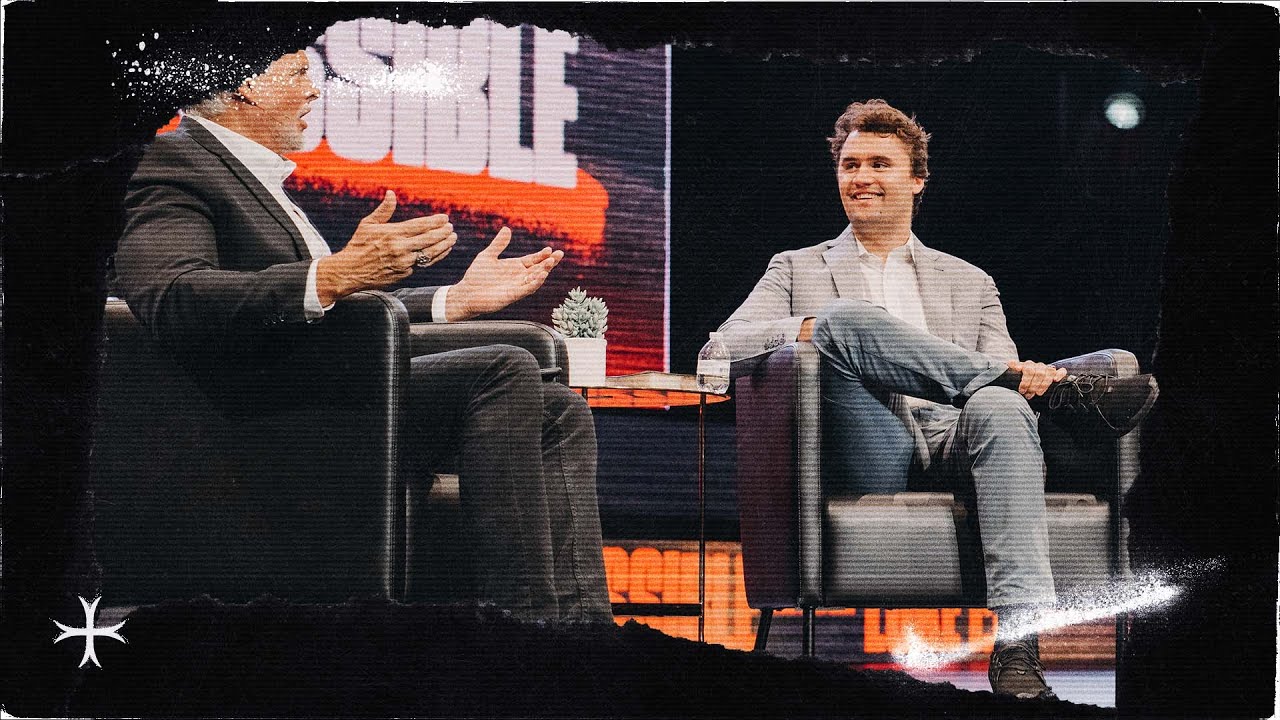
Charlie Kirk and Rob McCoy join Pastor Greg Laurie to unpack the common thread connecting Israel, the church, and America: truth. From Jerusalem to the Constitution, they explore how biblical truth shaped Western civilization, why the American church has failed its prophetic calling, and what believers must do to reclaim the public square. McCoy shares how the Constitution guided his defiance of tyrannical lockdowns, while Kirk exposes the crisis facing a generation robbed of freedom. This conversation challenges every Christian to understand their role in preserving liberty and speaking truth in a culture that increasingly rejects both.
The Foundation of Truth in Israel, Church, and Nation
Pastor Greg Laurie opens this conversation by returning to a pivotal moment: Jesus standing before Pilate on Passover, declaring, "For this cause I was born, and for this cause I came into the world, that I should bear witness to the truth. Everyone who is of the truth hears My voice." Pilate's response—"What is truth?"—echoes through history as the defining question of every generation. Laurie frames the discussion around a central premise: there is a common thread between Israel, the church, and America experiencing their full potential in God's purposes, and that thread is truth.
Charlie Kirk emphasizes that Israel serves as archaeological proof of biblical truth. He explains that traveling to Israel transforms how believers read Scripture, putting the Bible "in technicolor" as they visit real places where real events occurred—Capernaum, Hebron, the Old City of Jerusalem. Kirk notes that unlike academic attempts to dismiss the Bible as mythology, archaeological discoveries consistently confirm rather than contradict Scripture. This physical evidence matters in a culture drowning in relativism and nihilism.
Rob McCoy builds on this foundation by connecting Israel to the origins of representative government. He points to Exodus 18, where Jethro advises Moses to appoint godly leaders over thousands, hundreds, fifties, and tens—establishing federal, state, county, and local governance structures. Following this in Exodus 20, God gives the Constitution in stone: the Ten Commandments. McCoy argues that three to five million people lived together for forty years in the wilderness without a police force or standing army because they operated under moral law. This principle—that moral law must precede civil law—remains the foundation of any society that will endure.
Anti-Semitism and the Spirit of Amalek
When asked about anti-semitism on college campuses, Kirk doesn't mince words: "It's widespread, it's institutionalized in the entire Democrat Party." He points to representatives like Ilhan Omar as examples and references Dennis Prager's book "Why the Jews," which explores the historical persistence of Jewish hatred. Kirk identifies the core theological threat: secularists oppose any group that organizes around the acknowledgment that there is something greater than themselves. The existence of God's chosen people serves as a constant rebuke to human autonomy and pride.
McCoy introduces the concept of Amalek, the nation that attacked Israel's vulnerable—children, elderly, and infirmed—as they left Egypt. God commanded the complete destruction of Amalek and declared in Exodus 17 that He would "have war with Amalek from generation to generation." McCoy explains that the spirit of Amalek isn't limited to a bloodline but represents an ideology: "Anything you want to establish, we will deconstruct." This spirit manifests in those who prey on the weak and seek to tear down what God builds. Tragically, this spirit has even infected some Jewish thinkers—Sigmund Freud, Karl Marx, and leaders during the Spanish Inquisition—demonstrating that the battle is spiritual, not ethnic.
The conversation highlights a perplexing reality: approximately seventy-eight percent of American Jews vote Democrat despite that party's hostility toward Israel and biblical values. Kirk and McCoy note that often the most vocal critics of Israel and those who stand for Israel are themselves Jewish, illustrating how the fear of man can override the fear of God even among God's covenant people.
Communion, Passover, and the Roots of Christian Faith
Laurie makes a crucial theological point that many Christians miss: the heart of Christian faith is expressed through communion, a sacrament rooted entirely in Jewish Passover. Jesus inaugurated the New Covenant during a Passover meal, using unleavened bread that was pierced and striped—symbols of His body. The New Covenant, while offering forgiveness of sins and the indwelling of the Spirit to all who believe, was given to Israel. The world is invited into a covenant made with the Jewish people; there is no separate covenant given directly to the church.
McCoy adds a fascinating detail: Passover is the longest-running family meal in world history, celebrating freedom. When Christ came declaring He would set captives free, He was speaking the language of Passover. The only Greek word in the Passover Seder is "Afikomen," which means "He came"—a prophetic pointer to the Messiah that most Jewish celebrants don't recognize. This illustrates how Christianity's roots are entirely Jewish, and understanding this context brings clarity and depth to Christian practice.
Laurie laments that in 325 AD, Constantine outlawed celebrating Christ's death, burial, and resurrection in its proper biblical context. This is why Christians today celebrate Good Friday and Easter on dates disconnected from the Jewish calendar, while Passover occurs on the biblically appointed days. He encourages believers to see through a Jewish frame of reference to more clearly understand God's beautiful plan in Christ.
The Church as Ekklesia: Reclaiming the Public Square
Kirk delivers a pointed critique of the modern American church, stating bluntly: "The American church has basically become a YouTube channel and nothing more. And before that it was a rock concert with a Ted talk." He explains that the English translation "church" is actually a filler word masking the original Greek term "ekklesia," which William Tyndale was killed for properly translating. Ekklesia means a political gathering, a civic assembly, a community engagement forum.
In ancient Athens, when citizens were called to ekklesia, they fasted and prayed before gathering to vote on political matters affecting their community. The assembly unified around two core principles: eleutheria (freedom) and isonomia (equality)—the same two principles America's founders used to establish this nation. Kirk emphasizes that Jesus said, "On this rock I will build my ekklesia"—my public square gathering, not merely a building where people sing songs once a week.
For pastors who claim the church shouldn't be involved in political matters, Kirk identifies three motivations: cowardice (fear of losing tithes or receiving angry emails), secret liberalism, or genuine ignorance about how to navigate these issues. He calls for grace toward young pastors in the third category while insisting the church has both biblical precedent and moral obligation to influence government. Daniel, Nehemiah, Jeremiah, Esther, Mordecai, Joseph, Moses—all of Scripture's heroes engaged with secular government to advance God's purposes.
McCoy reinforces this by critiquing Rick Warren's recent statement that Jesus never told believers to do anything but build the church. McCoy responds: "The word church is a filler word. Ekklesia means political gathering. Jesus said build my public square civic gathering community engagement spot." When pastors claim they're "not political," they're actually making a conscious decision to withhold truth from the sphere of influence that impacts everyone's lives—a direct violation of the Great Commission to make disciples of all nations.
The Failure of California's Apolitical Church
McCoy delivers a sobering assessment of his own movement. Pastor Chuck Smith founded Calvary Chapel in 1968, breaking from the Foursquare Church to reach burned-out hippies who had lost hope in political figures like John F. Kennedy, Bobby Kennedy, and Martin Luther King Jr. after their assassinations. Chuck and Kay Smith deliberately avoided politics, focusing exclusively on teaching the Bible verse by verse, chapter by chapter, book by book. The result was phenomenal: ten thousand percent growth and 1,800 Calvary Chapels planted across the nation—conversion growth, not merely transfer growth.
But McCoy asks the hard question: What does California have to show for fifty-two years of apolitical Bible preaching and massive church growth? In 1968, California had the fifth largest GDP in the world, had just completed the engineering marvel of the California Aqueduct, and had Ronald Reagan as governor. Today, California leads the nation in gas tax, sales tax, income tax, corporate tax, debt, homelessness, and poverty. California authored no-fault divorce (signed by Reagan in 1970), transgender bathroom bills, and radical sexual education curriculum. Most devastatingly, California leads the nation in abortion—having aborted more children than the entire population of Canada.
McCoy's conclusion is direct: "Fifty-two years of preaching the Bible, ten thousand percent conversion growth, and we lead the nation in abortion. Where's the power of that gospel? While we've been doing church buildings, budgets, and baptisms, the secular progressive left has dominated the ekklesia. We need to wake up and take that ground again."
Truth, Discipleship, and the Great Commission
Laurie poses a fundamental question: If Christians do not speak publicly about moral and ethical issues facing the nation, who will? Where will people learn about ethics? How will a nation learn to distinguish right from wrong? Kirk builds on this, noting that the Bible commands creating disciples of all nations, not merely converts. Discipleship is detailed, demanding work requiring years of intense study and practice. When churches claim "we don't do politics" while simultaneously claiming to possess the truth, they're making an incoherent statement.
Kirk frames it sharply: "You're saying you have the truth, and you're intentionally deciding to withhold it from a sphere of influence that impacts all people. You have the truth and you're making a conscious decision not to put it into a place that actually affects everyone. That is directly against the Great Commission."
McCoy shares how he confronted the largest church in California (Saddleback, led by Rick Warren) after they claimed they weren't political and therefore wouldn't open during lockdowns. He pointed out their contradiction: "You say you're not political, but you kept your homeless ministry and counseling ministry operating. Yes, you're political—you just choose not to acknowledge it. You're saying you don't care for your community. Our church is open with a virus that has a ninety-nine percent survival rate while we're being fined every day because we're contending for those who've been abused and quarantined with their abusers, the elderly forced to die alone, the sixty-five percent of businesses shut down that will never reopen. You're telling me you're not political? You're complicit. Your definition of Romans 13 as unlimited submission to tyrannical authority is causing the homelessness and poverty you're fishing downstream to address with your ministries. You helped create the human waste you're now trying to rescue. Set the captives free. Get a backbone. Get a spine."
Romans 13 and the Limits of Government Authority
Both Kirk and McCoy address the widespread misuse of Romans 13 to justify unlimited government obedience. McCoy explains that while Romans 13 says God appoints positions of authority and we must submit to them, it also clearly states they are there "for our good." Jonathan Mayhew, a famous American pastor who died in 1766 (ten years before the Declaration), preached the sermon that John Adams credited with starting the Revolution. Mayhew's interpretation: "Disobedience to tyrants is obedience to God." If a ruler isn't doing good according to Scripture, he is not the legitimate authority Romans 13 requires us to obey.
The United States Constitution's preamble declares who the sovereign authority is in Romans 13: "We the People." Those who govern do so by the people's consent. Their power is on loan and constrained by the seven articles of the Constitution they swear to defend. When government violates constitutional constraints—particularly First Amendment religious liberty—the Declaration of Independence declares it is the right and duty of citizens to push back against tyranny. Apathy won't win the day. Sending angry emails to friends won't win the day. Citizens must contribute to campaigns, walk precincts, host coffees, understand the legislature, attend school board and city council meetings, and remain vigilant.
The Biblical Roots of the Constitution
Kirk provides a masterclass on how the Declaration of Independence and Constitution emerged from biblical worldview and Judeo-Christian principles. The Declaration references God four times—as lawgiver, law interpreter, executor, and overall sovereign—directly reflecting Isaiah's framework for legislative, executive, and judicial branches. The phrase "laws of nature and nature's God" signals Thomas Jefferson's familiarity with John Locke, Thomas Hobbes, Isaac Newton, Thomas Aquinas, and Augustine—thinkers who wrestled with integrating biblical revelation and scientific reason.
The Constitution, authored primarily by James Madison, operates from a biblical understanding of human nature: people are basically bad, naturally inclined toward tyranny and abuse of power. This contrasts sharply with modern university teaching that people are basically good. Kirk notes that only people living in America's exceptional civilization can believe humans are naturally good—they've been hypnotized by their own protected environment. The Founders, understanding human depravity, structured the Constitution with negative rights—not telling citizens what they can do, but telling government what it cannot do to citizens.
The First Amendment protects speech because, as Kirk explains, God spoke creation into existence. Speech and truth are inseparable throughout Scripture and distinguish humans from all other creatures. The Second Amendment protects the ability to defend all other rights. The Fourth Amendment prevents government intrusion into private property. The Fifth, Sixth, and Seventh Amendments establish legal protections drawn from William Blackstone, a Christian who articulated the legal framework America enjoys. The Tenth Amendment ensures that anything not explicitly addressed defaults to states and people—acknowledging the list isn't exhaustive.
John Adams said only a moral people could operate under this framework. Without an active, vibrant church calling out moral rights and wrongs, the entire system will implode in one generation. Kirk emphasizes that liberty is hard, requiring responsibility, direction, aim, and self-control—not self-esteem. Harvard Law School's stairwell inscription captures biblical wisdom: "The law is the wise restraints that keep you free." What we don't do actually keeps us free—that's wisdom, which comes from God. Colleges without God have no wisdom.
The Lockdown Generation and the Intergenerational Failure
Kirk delivers a stinging indictment of the lockdown response, noting that when he describes "the angriest, most ungrateful, resentful, and arrogant generation in American history," people assume he's talking about young people. But he asks: what if he's talking about baby boomers? The older generation said, "I don't want to die, so I'm going to make sure my kids don't have sports, no commencement ceremonies, no normal childhood." They destroyed the next generation's lives for a year based on safetyism rather than wisdom.
There's a critical difference between the virus and the lockdown. The lockdown was a conscious decision, not a meteorite that came out of nowhere. California locked down and remains locked down, yet has higher virus rates, death rates, and hospitalization rates than open states like Florida. The lockdowns accomplished the exact opposite of what was promised. The ruling class voluntarily put twenty-five million people out of the labor force, creating conditions ripe for socialism. You can criticize liberal Starbucks baristas, but at least they're working—unlike a society that shut down everything and told everyone to stay home.
Kirk addresses teenagers directly: This was done to you. You didn't ask for this. It will go down as one of the most immoral and awful decisions made by parents voluntarily deciding their kids shouldn't live the same life they lived. But McCoy offers the counter-message: Don't become a victim. Don't use what happened to you as an excuse not to engage. Charlie Kirk started Turning Point USA at eighteen, taking a gap year from college—a gap year that's now lasted nine and a half years. This generation was born in adversity, and those are the ones who change the world.
Practical Action Steps for Engaged Citizenship
The number one question Kirk receives is: "What do I do?" His answer starts with five priorities in order: God (vertical relationship), family, work, church and charity, and freedom and liberty. The most important thing anyone can do is give their life to Christ. The second most important thing is making sure they can continue doing the first thing—or else believers will be sharing the gospel from prison, which is not an exaggeration given current cultural trajectories.
Every Christian is morally commanded at minimum to fill out a ballot and submit it. This basic civic duty takes seven to twenty minutes yet half of church-going attendees don't vote. Kirk points out the irony: people will wait four and a half hours for cheap Chinese-made TVs on Black Friday or sit in traffic for hours to glimpse LeBron James ("who hates your values"), but act like voting requires Navy SEAL training. A vote is a reflection of values—a beacon signaling which leaders represent God's values versus opposing values. When elections don't work or feel fraudulent, that pressure release valve disappears, and citizens feel leaders don't accurately represent them.
Christians are biblically mandated to contest for every inch of ground, especially when abortion remains legal, men invade women's locker rooms, female sports are being destroyed, and one million children are aborted annually. Pastors like Timothy Keller who claim "the Bible doesn't tell us the best way to limit abortions" are making arguments equivalent to 1830s ministers saying "the Bible doesn't tell us the best way to end slavery." The answer is simple: make it illegal. Go after abortion doctors and predators who lie to young women. The nation will be judged harshly for these moral injustices, and churches will be held to even higher account.
Local Engagement and School Board Accountability
The roadmap for action must always start local, which is actually the toughest political involvement. Local issues offend the most people and create the most difficult disputes. When Laurie asks the room if anyone can name every school board member they pay taxes for, not one person raises a hand. McCoy states bluntly: "That's why we've lost the country." At a teacher union gathering, every person could name all five board members. That's how the 1619 Project, post-modernism, and secularism infiltrated schools.
This disaster is of our own making. We did this to ourselves. But it's not too late to reverse course. The tools are at our disposal. American government—of the people, by the people, and for the people—is a citizen participatory system. Early American pastors preached every founding document before it was written into law. They read the Bible and crafted sermons addressing immigration (all three Hebrew words for immigration pertain to assimilation), capitalism, transportation, and every contemporary issue. Scripture covers everything, but accessing that wisdom requires work—study to show yourself approved, a workman who need not be ashamed, rightly dividing the word of truth.
Many pastors avoid these topics because it's easier to get people to raise hands, put money in buckets, build buildings, and feel good. But when COVID hit, churches that remained closed revealed their priorities. McCoy's message to them: Just stay closed. Meanwhile, churches that stayed open while being fined daily contended for the abused quarantined with abusers, the elderly forced to die alone, and the sixty-five percent of businesses destroyed. These churches understood their prophetic calling as the conscience of the state, the guide and critic—never the tool—of government.
Conclusion: Recommitting to Truth and Community
Laurie issues a final call for every follower of Jesus Christ to recommit to consistent contribution to a local assembly. Paul addressed Corinth's consumer mindset by illustrating the church as a body with various members, each crucial to the health of the whole. The hand cannot say to the foot, "I don't need you." Western consumer culture trains people to ask, "What's in it for me?" but believers must think differently. God has called each person to make a contribution, to bless and help specific individuals. Love is active service. Everyone is part of that Body.
First Peter warns that Satan prowls like a lion, targeting those who are isolated. Sin demands to have a person by themselves, withdrawing them from community. As Dietrich Bonhoeffer wrote, the more isolated a person is, the more destructive the power of sin becomes. Laurie speaks from a pastor's heart: Don't be isolated. Step into community. Recommit to local ekklesia. The common thread binding Israel, the church, and America together is truth—truth as fact, truth as revelation, truth as a person (Jesus), truth as the Word of God, truth that sets people free. In these last days when many will not love truth and will be given over to delusion, the church must stand as the ground and pillar of truth, contesting every inch of ground for God's purposes and the future of civilization itself.
Video Transcript
[Music] we're gonna jump right in well listen i have two very special individuals to introduce and um so first of all let me just say i i just love these guys so much i'm so grateful to know them and count them as friends and i i get to introduce pastor robin just a little bit i mean we're peers and we've known each other for so many years i just love you man i thank god for your leadership rob mccoy thank god for your leadership thank god for you so i'm gonna introduce them a little bit but i i just i just thank god for pastor rob mccoy pastor calvary chapel thousand oaks and and uh of course we have of course charlie kirk with us here tonight it was just so great that he's here so you know i mentioned this i mentioned this this morning i want to say it again when i think of charlie i i think of courage i think of churchillian courage i think of unique very unique oratorical skills of a young benjamin netanyahu and leaders are learners and he's constantly learning and absorbing and adjusting he's just just a great heart and just really proud of him and needless to say as you well know he's the founder and president of turning point usa a new york times best-selling author and how many of you listen to his podcast that carry on said okay love it right and uh listen to him on the radio how many of you listen to him on the radio okay well we do you know actually podcasts so um uh look let's just jump into this let's welcome charlie couric rob mccoy yay god i love you god bless you i love you god bless you you sit here you sit here yay yay that is so awesome hey is there energy in this uh room tonight i mean so look we're gonna jump start tonight by returning to a conversation that jesus had actually with pilate uh the very day that he ended up giving his life on the cross which was passover he's a great passover language a big idea but it was according to a divine prescription uh pinned on the heart of god from eternity past and actually that passover connection continues into the future but um there he's in jerusalem we've all been to jerusalem you guys missed jerusalem or what by the way wait a second hey thank you for being with us thank you for being with us oh my gosh i'm so excited i just want to jump into this wait rob we got to turn your mic on we got they were supposed to do that no actually greg is the most thankful person i've ever no i don't really have that really you value what is the value and i'm really happy it's really great yeah amen do you have that let me just make sure this he's good okay awesome i'm good right you can hear me okay pastor mccoy thank you for coming thanks for having me i'm i'm rubber you're glue whatever compliment you gave me bounces off me sticks to you he should write a book he should write a book he would be a new york times bestseller mccoyisms okay so returning back were we in jerusalem we were in jerusalem right very important conversation and um so jesus said this he said to pilate you rightly say that i'm a king for this cause i was born speaking of his humanity for this cause i came into the world speaking of his deity god came down it's like how much does hamlet know of shakespeare it depends how much shakespeare writes himself into the play of life has god wrote himself into the play of life you better believe it he's revealed himself in his son so this is what jesus was saying in essence and he said that i should bear witness to the truth and everyone who is of the truth hears my voice think about that there's truth there's there's there's a divine meaning to life there's an authoritative meaning to life and um and pilate asked the question what is truth and then he walked away and maybe he walked away with a sigh like oh man what is truth uh maybe he walked away with the sneer maybe kind of walk mocking it but we need to return to this conversation the academic fashion of today is increasing form of nihilism which is really the belief in nothing if there's no uh god there's no authoritative meaning to life's existence and therefore nothing is true good or beautiful in any absolute sense so so you know it's like why care about life so um look here's the thing before i start asking questions because i know you want to hear from charlie and rob is just want to narrow a little bit this idea of truth there's fact-based truth like here we are rise church thank you for being here and or the southern california has beaches or mexican food is the best food that exists you know i mean those are fact based truths right but then there's then there's like like like who is god and and what is life and what is the meaning of life truth is a plan truth is a person jesus said i'm the way the truth and the life truth is the word of god is divine revelation truth sets us free and yet scripture says that in the last days people will not love truth they won't love truth and as a result they will be given over to delusion i'm so concerned about that for so many so here's the big idea watch this we're gonna we're gonna see there's a common thread between israel and the church and our nation and experiencing our full potential and the purposes of god and that thread is truth and it's so important almost going to ask a question it's so important to talk about israel i mean israel's a little bit like a top button on a shirt and if you don't get the top button right it just kind of throws everything off so when you think israel i want you to think it's true rob is that true i'm tracking you you're chucking no it is true [Laughter] it know it is true yeah it is very i got dressed this morning and that's why i have a sweater because it's all discombobulated there you go that's right exactly right so i mean let's just narrow this down i want to ask i want to ask charlie a question listen jesus is one of israel's own right he came he gave his life he resurrected his sin he's coming back to israel when you think israel you need to think nation you need to think the descendants of abraham isaac and jacob you need to think a land you need to think of a remnant and then that is our jewish followers of jesus are the faithful remnant of israel you need to think of the fact that the modern state of israel is actually a fulfillment of bible prophecy because jesus is coming back not to san diego he's coming back to jerusalem and one day the nation of israel will live for full potential in the kingdom age jesus said assuredly i say to you that in the regeneration when the son of man sits on the throne of his glory you have followed me and also will sit on the 12 thrones judging the 12 tribes of israel so i want us to unpack this and then we're going to move to the church and then our nation and we're going to do some real practicals so charlie you were in jerusalem when the embassy was dedicated and i know you've been to jerusalem numerous times we've been talking about uh israel all day but um and and i know that you by helicopter travel from jerusalem all the way to the golan hats holland heights which is northern israel in the land of israel i would love for you to share with us uh how you were impacted and what what were the takeaways from having been in the land of israel what do we need to know well first of all it's great to be here and what a great pastor is in a phenomenal church this is serious um if you haven't if you've never been to israel uh you're missing out this is something that we all share in common you see when you when you the academics they try to compare the bible to every other book and as soon as you go to israel you realize these are real places and real things that occurred it almost puts the bible and technicolor in real life and so you get to go to capernaum you go to jesus hometown you go to where jesus walked on water you go into the old city and even you get to see uh hebra the uh where abraham purchased land like the first real estate deal ever done in the history of the world and so for me israel is very close to my heart i love it and i think that we need to do a much better job of understanding its importance and articulating it and israel plays a very important piece for archaeological truth as well uh because there's never been a singular archaeological discovery that has contradicted the truth of the bible the opposite is true the more we dig the more archaeological uh excavations we do the more it actually confirms the bible and so i want to go back to something you also mentioned greg which is this idea of truth and i want to explore this place because this is really the crisis of our nation right now and we're in the midst of a theological debate in our country and most of the churches have been completely silent and rob is my pastor and rob is probably one of the most if not the most courageous pastors in our country alongside greg and james and the theological debate happening in our country is very simple we as christians believe a lot of things but two things we believe that the dominant secular political forces do not believe is that there is a god and you are not him it's very simple and that that's the theological debate that's happening in our country whether or not you uh rather not we admit it or we recognize it and so this idea of truth was really the central organizing principle of the entire western experiment and it you can go from the magna carta to the mayflower compact to the declaration to the u.s constitution which is there was the truth and a truth that every single one of the authors of those documents recognized and the first of which is that there is a creator that wants to get into touch or in contact or closer to you and your rights your existence comes from that creator that's right and any government that we organize must recognize that before anything else that seems we take that so for granted now and in the last year we have seen the single greatest erosion of religious and individual liberty in american history and the church has quite honestly failed that test and we talked about this earlier but the church founded this nation black robe regimen william bradford roger williams activist pastors contesting the public square founded this nation and it was not by mistake and so and that through line goes from the holy land of israel to god's chosen people to the hebrews to jesus christ to this incredible point of history where the texts of the greco-roman ancients were rediscovered which actually really in some ways started another christian reformation which then led to the the pilgrimage and it's a really interesting thing pilgrim um which is you know we we call people that came to america pilgrims but a pilgrimages traditionally go to the holy land right and so why would you call people going to america pilgrims that doesn't make any sense was because they actually were in pursuit of god's purpose to try to create a new israel right to try and create god's what god wanted for human beings here on on this earth and that's what the mayflower compact is all about i encourage you all to read it it's a phenomenal document where they didn't even know they were going to survive the journey in the midst of a winter in the middle of the atlantic ocean you know what they essentially say if we survive we need to have an agreement amongst each other 120 people were on board 42 families signed it and they ended up surviving and it's really interesting there's a lot of good historical analysis that some people decided not to sign it they just abandoned the mayflower as soon as it hit america and from that point forward it was a recognition that you're not ultimately in charge there's a creator above you and really what we're playing out right now in 2021 believe it or not is a multi-thousand year play to use your analogy from the death burial resurrection of jesus christ to his ministry to the truth spreading across the world to a civilization that decided to organize around those ideas and now whether or not we want to continue them so there is a direct through line there greg and i think you pointed out perfectly yeah i love that listen yeah let me ask you you know the scriptures make it very clear that the lord will bless those who bless israel um let's talk a little bit about the the christians responsibility to to israel and israel means what the descendants of abraham isaac and jacob we talk about the land of israel so let me ask you rob do you believe in the the promises that god gave israel of a homeland and is it a call of believers because we believe all scripture is given by inspiration of god by the way when paul wrote that the new testament wasn't written so he's thinking of the hebraic scripture he's thinking the tanakh you know genesis to malachi um do do do do should believers stand for israel's right to their homeland yes yeah and i just want to say i feel like a corn dog at the del mar fair under these heat lamps i told you listen someone write this down we we could we could do a book i'm telling you no i know i i would i would benjamin israeli who was the prime minister for queen victoria he was jewish and he said to the queen who was instrumental in making sure that the gospel went throughout the british empire and she was always contending with them about christianity and he said the greatest proof for your faith is the nation of israel or the land of israel and the fulfilled promises and you just even look at its inception it doesn't make any sense you look at a language it's the only language on the face of the earth hebrew that was a dead language not spoken in a nation and then it was revived and it is the language of israel try teaching an entire country a new language that's miraculous and and there's thousands of those types of things and then the promise comes because to honor israel is to honor truth that's right not to say that they corner the market on truth but that is where representative form of government started god through jethro said appoint godly men are not covetous over thousands hundreds 50 10 federal state county local government representative so they they had a representative form of government a republic and then they had a constitutional republic because following exodus 18 uh then you get to exodus 20 and god gives the constitution which is the ten commandments it's a the constitution is a roman cognate for statute it's it's an immovable object that people must honor and it and it reminds you of something so this statute these ten commandments coming down in stone tablets this is how you live and you think three to five million people lived together for 40 years in a wilderness without a police force or a standing army because they had moral law that's the critical nature of any nation that will survive moral law then proceeds to civil law and if you don't have an absolute it's not the rule of law it becomes the rule of the ruler yeah it's good oh it's good well said well said listen i i i wanted to ask both of you about anti-semitism a little bit because uh let me just frame it this way revelation chapter 1 verse 7 says that we're moving obviously into the future the future holds something jesus holds the future he's the king he is coming again uh when we receive communion i mean we are celebrating the past present and future work of jesus and when he returns the bible says every eye will see him be before the world sees him actually jerusalem will turn to him that paul said that all israel one day will be saved now speaking of national israel jesus said you'll not see me until you say blessed is he who comes in the name of the lord so there is a generation of our jewish friends who look upon him whom they appear zechariah chapter 12. so what am i trying to say there's a spiritual battle taking place all throughout history there's been this crazy um hatred and animosity towards jews i want to ask you a question you are on the front lines of ideas on our on our universities um do yeah i mean this is it's a rhetorical question but does anti-semitism still raise its head today and how is it doing so what do we need to be aware of with regard to that yeah i mean it's it's widespread it's institutionalized in the entire democrat party i mean it's not even a question i mean elon omar is a great example of that and there's a great book that dennis prager wrote uh called why the jews and it talks about why this continues to repeat over hundreds and hundreds of thousands of years and so yes it's very much alive and and we as christians must do everything we possibly can to stop any form of hate especially against god's chosen people and and so but this is this has been something that um is not nothing new and ignoring it is is by any definition a huge mistake and what what the secularists are most worried about is any sort of group of people that tends to organize around something that is an acknowledgement that they might not be the most important thing in the world and and so you know what's what's still perplexing to me is how so many jews vote democrat i just don't understand it because they're voting for a party that does not represent their values at all 78 of jews vote democrat and they don't even care about israel they don't care about any of those issues at all which is just perplexing to me um but yeah i wish it wasn't that partisan but it is and so look it's raging on college campuses it's institutionalized it's it's funded a lot by foreign dollars and i'm going to point out no please like they can if you want i know i'd love to i mean charlie sees this every day yeah and then even when he stands for israel it's jews that come against you all the time yeah you say like charlie israel's a terrible place it's an apartheid state it's racist it's xenophobic you know so the biggest vocal of critics against standing for israel jews may i ask in exodus 17 when the lord brings the israelites out and he vanquishes the egyptian army and then he says you're going to have your first battle and this is going to be you fighting i'm not going to vanquish your enemies you're going to be in charge of it and they take on a guy by the name of amalek and joshua's in the battle he's fighting moses is up there holding up his arms aaron and her hold him as they go down he loses as it goes up they win because he's old and you know feeble and josh was like hold him up you know i'm trying look at you you're crazy you [Laughter] so so joshua ends up winning and god says to joshua in exodus 17 he says then the lord said to moses write this for a memorial in the book and recount it in the hearing of joshua that i will utterly blot out the remembrance of amalek from under heaven and moses built an altar and called it by name the lord is my banner jehovah nessie for he said because the lord has sworn the lord will have war with amalek from generation to generation and then balaam's fourth prophecy in numbers critical he said he said amalek was the first among the nations but shall be last until he perishes and amalek they were the ones that preyed on the jews when they were coming out of egypt and they went after their children and the elderly and the infirmed and they prayed on them and god said wipe them off the face of the earth he told saul to wipe them off the face of the earth this spirit of amalek and the reason why god says they're going to be plaguing you the entirety of civilization and it's not a bloodline no it's it's an ideology anything that you want to establish we will deconstruct the left only deconstructs god builds and he builds by moral law into civic uh civic law amalek comes to steal kill and destroy he's he's authored by the enemy of the world he's a he's a cancer he preys on the host until the host dies and then leaves it desolate and god said you will contend with that and the tragedy is the spirit of amalek isn't in a bloodline it even falls in the hearts of certain jews sigmund freud was jewish karl marx was jewish they've been instrumental in anti-semitism and even i can't remember his name but in the spanish inquisition he was the one who was in charge of it he was jewish it can be in all of you where you're more concerned with fear of man than you are with the fear of god to honor him and to keep his statutes that's how amalek gets in there you go sorry well well said you know look listen the heart of [Applause] the the chief expression of our faith is found in a sacrament which carries the idea that it's a part of a process of our growth and is also identified as an ordinance i'm talking about communion which is a breaking of unleavened bread that is pierced and is striped that is symbolic of the body of jesus and um and so yeah what was i just saying i just lost my train of thought i am so sorry sacrament uh i don't yeah i don't know okay i'm so sorry okay i got it okay something about israel that's right just a little longer i promise one more thing so at the heart of our faith the heart of our expression of faith is communion right now i just simply want to say this is is that jesus said that the cup represents the inaugurating of the new covenant amen okay so new covenant is a multifaceted not only does it speak of forgiveness of sins the indwelling of the spirit where we have relationship with god the most intimate way it speaks of the preservation of the jewish people and ultimately all israel knowing the lord and the world being blessed it's all of those things that jesus inaugurated with his blood but it was a covenant given to israel from which the world is invited into there's no covenant given directly to the church we just need to remember the roots of our faith that is very very important can i hear any means of that i want to okay so let's move on let's talk about no you're not jumping on that's a good one yeah no go ahead communion passover is the longest running family meal in world history and it celebrates freedom and when christ came he said he came to set the captives free and passover to the jews is a celebration of freedom and the only greek word in in the passover the only greek word in the passover and it's in the passover line is afi komen yeah it's a greek word means he came yeah jews don't know that you might want to tell them yeah well well let me just say something i mean we can make some real progress charlie have been talking about it 3 25 constantine outlaws the celebration of the death burial and resurrection in the context in which it took place i mean that that's why you know we're gonna have our jewish friends celebrating passover on march 26 27 while while we schleps are celebrating good friday that like a week later not aligning with the biblical calendar so um i mean when jesus when jesus of course is explaining this incredible revelation that's unfolding from eternity pastor eternal future now through him in the messiah i mean days matter it's passover and so we we need to re we need to see this through a right lens which is really a jewish frame of reference we do we're going to see more clearly this beautiful plan that is in christ so um good hey listen can we move on sure thank you very much for that contribution let's talk about the church i'm a storehouse of worthless knowledge no you don't so jesus came into the region of caesarea philip i asked his disciples saying who to men say that i am the son of man so they answered and said some say john the baptist elijah there's jeremiah one of the prophets he said to them but who do you say that i am simon peter answered and said you are the can someone tell me christ right the son of the living god jesus answered and said blessed are you simon barjona flesh and blood has not revealed this to you but my father in other words highest approval from heaven and i say to you that you peter and on this rock i will build my church and the gates of hell shall not prevail against sin so if we ask the question what is the chief mission of the church i'm going to quickly answer but i want i would like your feedback on something and that is the chief mission of the church is upreach it's relationship we worship god glorify him it's in reach we have a responsible to each other uh we all make contribution of the greater whole and it's outreach as well we help people physically bear burdens emotionally and make jesus known and more and more so i i would like to ask both of you your comment on what martin luther king said that the church must be reminded that it is not the master or the servant of the state but rather the conscience of the state it must be the guide and the critic of the state and never its tool if the church does not recapture its prophetic zeal it will become an irrelevant social club without moral and spiritual authority would you guys both comment on that yeah yeah i mean that that's where we are uh basically and so you know the the american church has especially in the last year uh basically become a youtube channel uh and nothing more and before that it was a rock concert with a ted talk right and we all kind of know those churches around here but look and the so good the english the english translation says church but that word is a filler word so william tyndale went back and translated the bible he got killed for this uh for committing heresy because he actually found out the real word was ekklesia and ecclesia and you know i read what rick warren wrote and this ridiculous piece of um commentary you and i have a lot of respect for what rick warren did not what rick warren is doing he runs saddleback church uh and he said you know nowhere did jesus christ ever tell you to do anything but build the church i say whoa rick you're way smarter than that man i mean the word church is a filler word ekklesia going back to the greek that means political gathering an ecclesial let me say this jesus said on this rock build my public square civic gathering community engagement spot that says that that's the right word and so our new kind of 21st century view of the word church is actually completely misaligned with the interpretation of what an ecclesia is so in in greek time let's say they had an ecclesia in athens they said okay tonight we're having and i could see everybody so they fasted and prayed before they went into it they went in and they would vote on political matters in the community the door unified around two words eleutheria isonomia freedom and equality i wonder what country started around those two words right and so for pastors to even contend a little bit that the church does not should not be actively involved in political matters and then try to use the very same scriptures against it is just not correct and you used it perfectly but also in the old testament people that are framed as heroes they all were trying many of whom are trying to influence secular government for god's purpose daniel nehemiah jeremiah esther mordecai joseph and the list goes on from there moses yeah precisely and so this idea that christians or god's people are absent from these decisions is just not true at all and there's no historical or biblical backing for it what the pastors are really saying is one of three things i'm too much of a coward to comment on political issues because i'm afraid that someone's going to send me an email it's number one or that i'm going to lose tithes and offerings and people are not going to show up or number two i'm actually secretly a liberal and i don't want to tell you or or number three and this is where we need to have some grace and be you know shepherds is i don't know how to talk about it because it's really intimidating and that's where i think we need to step up and tell these young pastors like hey let's walk through how exceptional this country actually is amen let's walk through where our rights come let's walk through because there is and i can tell you and the deeper i get into the text the deeper i get into the ideas that built the west the more convicted and compelled i am to then go do something about it and so what i think is that there's the superficial shallow understanding of what kind of civilization do we have and why we're here and i encourage all of you and i think the christian world needs to do a much better job of this go deeper into the ideas of western civilization and and understand your aristotle know your socrates and i know it could be intimidating hillsdale.edu does an amazing job of these courses and a digestible 20 or 30 minute format because you'll find this a lot of you are probably asking tonight okay charlie i agree with all this what do i do what do i do and i'm going to give you some action steps around the five priorities we talked about this earlier right which is god family work church and charity freedom liberty the five priorities in order god first a vertical relationship for our engagement in the public square but more than anything else is the deeper you get into the ideas everybody the more you'll realize that we as christians have a moral obligation to get involved in the final thing i'll say is this is that this civilization is unique because it was the first civilization that a bible-believing church actually created think about that no other civilization was created by the bible-believing church and so what was the product well the product was the greatest wealthiest most benevolent superpower country ever to exist in the history of the world you want to know why the country's slipping it's because the church slipped well before it it's because the church cared much more about big budgets big buildings and baptisms i love baptisms but and rob can you know i'll i'll kind of hand off the baton here because by the way we all we take each other's stuff and it's great so every you're going to hear some stuff i said earlier but rob talk about calvary chapel how successful calvary has been and then has it really made california for your state yeah so pastor chuck greg and i adore him we are who we are because pastor chuck did what he did and he he took us verse by verse chapter by chapter book by book through the scriptures he started calvary chapel in 1968 he broke away from the foursquare church and in 1968 he and his wife kay looked out at a sea of humanity of all these burned out hippies who had put their hope in political figures john f kennedy bobby kennedy reverend king and in 1968 as you know bobby kennedy jr was shot reverend king was shot on a balcony in memphis tennessee we had the milai massacre and the ted offensive our young people were dying in fields in vietnam and the names we couldn't even pronounce and people were checking out of the church and going into eastern religions and experimenting with drug use and chuck and case all these burned out hippies and they just decided to reach out to him and they were burned out on politics so they reached him with the word verse by verse chapter chapter book by book main thing the plain thing plain thing the main thing preached it they deliberately avoided politics and they had 10 000 growth 1800 calvary chapels since 1968. now now check this out in 1968 in california we had the fifth largest gdp gross domestic production we had the california aqueduct that had just been completed a work of engineering a marvel just phenomenal we were the the state of the future and we had reagan as governor [Laughter] 52 years later while we've experienced ten thousand percent growth with the harvest crusades and somebody loves you crusades you know south of van nuys there's more calvary chapels and dunkin donuts but we've been apolitical for 52 years and and that 10 000 growth was is conversion growth not transfer growth so what do we have to show for it well we no longer have the fifth largest gdp we probably have the sixth we have the highest gas tax sales tax income tax corporate tax we lead the nation in debt we lead the nation in homelessness we lead the nation in poverty were the authors of no fault divorce that reagan signed into law in 1970 that decimated marriage across the country were the authors of transgender bathroom bills and the secular progressive sexual education curriculum that's nauseating you can't even talk about it but here's the kicker 50 52 years of preaching the bible 10 000 growth conversions and we lead the nation in abortion we've we've aborted more children the entire population of canada where's the power of that gospel while we've been doing church buildings budgets baptism the secular progressive left has dominated the ecclesia and we need to wake up and take that ground again [Applause] so why are you guys looking at me [Laughter] so so it's not just evangelism i i mean the thing is we're to know jesus we're to make him known uh i mean what is ministry it's uh it's to help people physically bear burdens emotionally make jesus known but it's more isn't it i mean if i if i ask you if christians do not speak publicly about moral and ethical issues facing a nation who will right yeah i mean where will people learn about ethics where will a nation learn about how to tell right from wrong yeah and so first of all it's you're exactly right greg and the bible clearly says to create disciples of all nations not converts of all nations discipleship is hard it's detailed it takes work it takes many many hours if not years of intense study of refining that that practice and so for the church that says we don't get into politics well you have the truth right this let's say church down the street that remains closed or whatever and so they don't want to open right they say that we don't do politics but they claim they have the truth so let me make sure i understand this you have the truth and you're intentionally deciding to withhold it from a sphere of influence that's what they're saying that we have the truth and we actually are making a conscious decision not to put it into a place that actually impacts all people that's what they're saying and so that is directly against the great commission very well said charlie inspired this because he wrote a letter to the largest church in california whose name he mentioned earlier and and i'm new to this guy so i just whatever bring it on [Laughter] i'm 56 i can't stand in the ring as long as the young man can so so think about this the largest church in california the response when they said we're not political we won't open because we don't want to endanger our community but we have our homeless ministry still operating and our counseling ministry still operating and the response i gave was yes you're political you just choose not to acknowledge it and in addition you're saying that we don't care for our community our church is open with a virus that has a 99 survival rate while we're being fined every day because we're contending for those who have been abused that have been quarantined with their abusers the elderly who've had to die alone the 65 percent of the businesses that have been shut down and will never reopen we're contending for them and you're telling me you're not political yes you are you're complicit with your definition of romans 13 of unlimited submission to a tyrannical authority that is causing this homelessness and this poverty and you usage your guilt by fishing downstream to fish out the human waste you helped create with your homeless ministries because you created the poverty because you won't contend against tyranny set the captives free get up get a backbone get a spine like you so sorry no listen isn't this fun no i just love you i love you pastor i'm very very proud of you very very proud of you thank you very very proud and uh go ahead no i was just gonna say rob there might be a recall coming very soon and there might be a name [Applause] so look i i want to ask a practical question you guys and i'd love for both of you to to to respond to this and that is with regard to a lens by which we vote for our leaders should christians support the candidate who best represents the moral and political values consistent with biblical teaching no matter what his or her religious background or convictions are i'll let rob answer the second part of that um well i just i mean i he you would know the theology behind that a lot better but i'll the first part of it uh kind of goes back to those five priorities i talked about which is you must make sure you have a vertical relationship god first and then families and we'll well i want to build that out you don't want to build that up we got to get to that be awesome and then work which is a very important part of life church and charity freedom and liberty and as i often say the most important thing you can do is give your life to christ the second most important thing is make sure you can do the first thing which or else we're all just gonna be sharing the gospel from prison and that's not an exaggeration as i meet these wonderful people here tonight who's from romania they know what real communism is right they know what and this is not even one generation away this is 25 years away from the type of tyranny that we can see so look i i would make the argument even beyond that i i think that we are morally commanded at the very least to fill out a ballot and submit it like that's so easy i mean that that is a seven to ten minute exercise at most maybe 20 minutes at a provisional election when you've all these judges you've never heard of right maybe and what always perplexes me is that people will wait four and a half hours for some garbage you know chinese made tv on black friday you know they'll they'll wait in traffic for two and a half hours to go for go see a glimpse of lebron james who hates your values you know to go wait at the staples center then two hours back yet i have to be lectured like this like as if voting is going through seal training and coronado like i mean no this is this is a real thing and it's it's like that is the most basic not even basic it should be it shouldn't even be a discussion right it should be eating drinking vote it's like that simple right and yet half of church going attendees vote rob knows the stats better than i do only half of people that regularly go to church and so that's the very basic all right and so then beyond that i believe that god cares about everything that you do and a vote is a very significant thing that you do because the way that our system of government works which is the correct system of government is that your vote is a reflection of your values or god's values right so that is your short moment in time to kind of send a beacon to send a signal hopefully all of us together saying we want this leader not that leader because they represent these values and these ideas and not those values and those ideas and we take that for granted that's what elections actually are right it's your ability it's your opportunity to be able to scream at the top of your lungs privately by filling out the ballot now if you don't have elections or if you don't think elections work we've been through this in the last six six months then all of a sudden that pressure release valve disappears right all of a sudden you feel as if your leaders are not an accurate representation of that so for the i think christians are biblically mandated to contest for every single inch possible especially it'd be one thing if we had outlawed abortion and we didn't have men going into women's locker rooms and we didn't we didn't see the destruction of female sports i mean we are seeing things that are such in flagrant violation to natural law where we are aborting one million children every single year in this country and then i have to see timothy keller who's allegedly a pastor come up and talk about how the bible does not tell me what the best way to go about limiting abortions are it would be like saying in the 1830s timothy keller saying the bible doesn't tell me the best way to end slavery how about this you make it illegal like it's really not that big of a deal that's right you go you go out you go after the abortionist and the abortion income doctors right the abortion predators that prey on our young women and lie to them about what's actually happening and and so look long and short of it is that we will be judged harshly our nation will be judged harshly for these moral injustices and churches and christians will be held at a higher account here and that's why i just love these two men here because you've made a decision and that comes at a cost to contest for moral truth in our time and so i'll let rob answer the second part of that well [Applause] so in california we have 15 million 280 000 self-professing evangelical christians of which half are registered to vote of the half that are registered to vote only half of those vote in a presidential election 12 vote in a non-presidential election if you just get off your keister you could change the state you could do poll watching you can walk precincts and by the way you want to say to me as pastors and christians that i'm in violation of romans 13 because i'm violating the governor's order and we're wide open and you're already telling him too oh romans 13 thank you assuming that he taught them that's right romans 13 says that god appoints all positions of authority and that they're appointed by god and we must submit to them but it also goes on to say that they're there for our good and a famous american pastor who died in 1766 10 years before the declaration his name was jonathan mayhew and he interpreted that and it was john adams who said that was the sermon that started the revolution disobedience to tyrants is obedience to god and what he said of romans 13 he said if that tyrant isn't doing good according to the scripture then he's not the authority [Applause] and now now jonathan mayhew passes off the scene and we take on the greatest nation on the face of the earth great britain we secure constitutional republic and the preamble of the of the constitution declares who the sovereign the authority is in romans 13. first three words we the people now those who govern governed by our consent that powers on loan and they're constrained by the seven articles of the us constitution that they swear to defend and that's one of the reasons why i stepped out of office because i could not tolerate a governor violating the first amendment and a council that wouldn't stand in its defense and so if they violate that it says in our birth certificate by the way we're the oldest country on the face of the earth 244 years under one article of incorporation in our birth certificate it declares that it's our right and our duty to push back to tyrants and if you're apathetic apathy won't win the day sending visceral emails to your friends won't win the day you contribute to campaigns you walk precincts you host coffees in your home you understand the legislature you sit in that school board you sit in that city council meeting and you're going oh they're boring yeah they are i sat through a six-hour meeting on the circumference of oak trees but do it anyways because those decisions will take your private property you must be vigilant this is a government of the people by the people and for the people and you don't delegate or relegate that to somebody else while you go about accumulating wealth to buy a house that's too big and you don't need these the the space and you're buying things you don't need with money you don't have to impress people you don't know stop it just get involved and establish liberty and and this is the the action point right because the number one question that i get from people is what do i do and i want to thank all of you that are subscribed to our podcast i see your emails and it means so much to to us and you support us especially in this kind of culture of digital assassination where you could just be eliminated overnight so a loyal listener base really is touching i mean that thank you and so the number one thing that people say is all right i'm motivated i'm convinced i want to do something what do i do right and so the roadmap must also always always start local amen and that's actually the toughest political involvement you will offend the most amount of people you will get in the toughest disputes getting over the local disputes right and even like you say well what does that mean is anyone here able to name every school board member that you pay taxes for anyone not one person that's why we've lost the country that's it and and and not one person and i by the way five years ago i couldn't name mine either and so i'm equally as guilty but you know who can name the five if all of a sudden i asked a teacher union gathering they'd say oh yeah mr clark mrs smith mrs jones mr you know mr beckwith whatever the point is that that's how the 1619 project that's how post-modernism that's how secularism got into all of our schools and we like them and it's a harsh teaching i know that this is of our making we did this to ourselves it's not too late we can reverse course and change the trajectory because the tools are all at our disposal and this this government we have by the people and for the people is a citizen participatory government i love it listen we're talking about the influence of ideas we're talking about ideas matter righteous the righteous shall live by faith i mean what is faith faith is being informed by the truth of who god is and the truth of the personal work of jesus christ and you know is this something tangible you know you know paul talked about ideological strongholds uh arguments and and that we take ground by making the truth known idea ideas are intangible but they influence us in a tangible way right i mean it what what informs our thinking if love is informing our thinking of the truth of who god is is informing our thinking it impacts their life even down on a biological cellular level not to mention our lifestyle actions that that have consequence so what what i hear you guys saying and i just fully agree is his ideas matter um and you know we were talking about truth i mean what is truth there's fact-based truth but it's also truth of revelations like we don't know we don't even know why we're here who god is you know what's the meaning of life unless he revealed it to us and and the lord has he's revealed himself to us so truth is a plan truth is a person truth is the word of god truth sets us free and and the church is the ground and pillar of the truth and um look this unique time of covet has not the relevance of the ecclesia come into greater focus where are we going to learn truth outside of the church would you guys like to comment on that i'd love to yeah please so if you look at the transcripts of the early pastors on the eastern seaboard during the founding of the nation every founding document we have was preached first in the pulpits of america and what we've done to the gospel the ulangelian the good news and the good news is that christ has come to set the captives free he paid the price we were on the slave block of sin he set us free by his death burial and resurrection that's good news but the discipleship because the word is true and jesus is the word he's the alpha and the omega the a and the z he's the entire alphabet of god whatever god wanted to say to man he said it through his son our founding pastors read that bible and put together sermons that would blow your mind because today all of our sermons we've caused the gospel to be truncated and myopic we want to see people raise their hands do you believe in the death burial resurrection of christ you believe in your heart for this your tongue saved the glory of the father god bless you i see your hand god bless you it's here god bless you and i do that i don't despise it i'm just saying that's the beginning that's like a very beginning starting point god says make disciples our founders spoke on immigration did you know that the three words in hebrew for immigration all pertain to assimilation the foreigner the stranger all of them to assimilate you want to come in abide by our constitution our statute our it's all in there it teaches on capitalism transportation it covers every issue and you go i'm just i i'm i'm exegetical i'm versed by verse chapter by chapter book book but so am i and i still cover those topics it takes a lot more work but you know what the bible says study to show yourself approved unto god a workman who need not be ashamed rightly dividing the word of truth we we don't want to go into those areas as pastors because it's a lot easier to get people to raise their hands and put money in a bucket and build a building and feel good about ourselves not that guy and pastors are starting to wake up because when this hit is covet hit well let me just scam democ i've lost i've lost friends to it and and it's it but but even their admis admission is it's a severe disease for a small segment of folks why have we decimated everybody and and i i just i look at that and i think pastors need to wake up because the ones that are shut just stay closed just stay close and so and the the idea of truth and how that actually comes to our civilization is that if you do not have people at least desiring to see truth or young people in the pursuit of truth then you're going to live through what we're living through right now which is the angriest most ungrateful resentment and arrogant generation in american history yeah which generation am i talking about yeah yeah see i'm not allowed to say that about baby boomers right because you all nod your head when i talk about my generation because you're like oh you must be talking about young people what if i talk about the older generation that said no i don't want to die but i'm going to make sure that my kids don't have sports no problem no commencement so you assumed i was talking about my generation ouch right you assume that oh yeah the young kids they know what they're doing meanwhile let's shut down all the schools all this because some some particle might flow into my window you destroyed the next generation's lives for a year and it happened because we decided not to get deep into the scriptures contest for the rule of law and quite honestly we were treated to safety ism not to wisdom in the last year and the the consequence of this will be a generation that will be defined not by a meteorite that came out of nowhere the way it's been described there's a difference between the virus and the lockdown and the lockdown was a mistake the lockdown was a conscious decision that was made let me just tell you right now california locked down it's still locked down and still i can't go indoor dining why do you guys have the higher virus rate higher death rate higher hospitalization rate than an open state of florida maybe because the lockdowns have done the exact opposite than what you've been told we've been saying this since the very beginning and yet the ruling class the leaders the safety ism people that run our country have um have put my generation and that younger in a very difficult position and it will take and people say well how do we prevent socialism from coming here how about you don't put 25 million people out of the labor force voluntarily and you can say what you want making fun of starbucks baristas being very liberal at least they're working yeah yeah i mean then you're just like i'll shut down everything and so then we we have this we have this set of affairs right now where um i i think that there's the best path forward is obviously to pursue biblical wisdom and engagement and involvement but we can build this out further if we want but i i just there there is plenty of blame to go around to every single generation but the younger generation if you're 14 15 and 16 year old in this room this was done to you yep you didn't ask for this and it will go down as one of the most immoral and awful decisions done by parents voluntarily deciding that they don't want their kids to live the same sort of life they live well let me add an application before we move on thank you very much charlie thank you very much that was beautiful um listen i i want to encourage every jesus christ follower to make sure you recommit to your contribution to a local assembly amen i've just recommit be super consistent okay paul addressed the mindset of consumerism in corinth and the i the idea that you know the hand illustrating that the church is like a body and there's various members all of which are so important to the health of the whole that the hand can't say to the foot i don't need you and vice versa so we live in such a we live in the west we live in a consumer culture the stinking consumer culture that's like i'm asking what's in it for me but it's like we need to think look there are individuals to whom god has called me to make a contribution to bless and to help other people that's what love is all of us are a part of that so i just i just want to say like i totally want to encourage you seriously double down commit to a local assembly everybody needs a home church where they are known and they know others and they are serving and making contribution can i hear an amen did that okay and let me just say and let me just say just real quick look there's a there's a passage in first peter that peter's just saying and i'll paraphrase it that and i believe totally believe in spiritual warfare there's a darkness behind the darkness and he just said that satan's like like a lion and a lion kicks off those who are isolated so i'm just speaking from a heart of a pastor and a brother and that loves you you don't be isolated i mean step into communities bonhoeffer i mentioned this morning said sin demands to have a man by himself okay withdraws him from the community the more isolated a person is the more destructive will be the power of sin over them okay so let's recommit to local ecclesia can i hear an amen okay hey listen we're going to be here till i don't know about 8 30. i'm having the greatest time i know um i want to ask you guys let's talk about how truth now moves from israel to the church it's this common thread to our nation the ideological inspirations behind the declaration of independence and constitution i i i have questions for both of you charlie can you help us understand the roots of the declaration of independence and the constitution and then rob would you follow i want to ask you how as a pastor the constitution has impacted your leadership amidst this pandemic sure charlie yeah it's a phenomenal point and i i really want to focus on this because we are we've been given a gift from god which was the declaration the us constitution and where we are today and they're different documents with different arguments being made and the declaration was one of those beautifully written documents and i encourage you to go read the original draft of the uh of the declaration in thomas jefferson's own handwriting and it really shows thomas jefferson's heart towards the sin of slavery where yes he himself owns slaves but then he's blaming king george for bringing this sin and importing this sin into the united states so the founders were wrestling with this in real time which is not anything that all of us sinners are unfamiliar with right wrestling with the sin of our times and how do we deal with this and so look the the the document kind of progression magna carta was a huge deal it was a big deal in britain and then the mayflower compact than the declaration but what is the declaration really arguing the the declarations almost submitted as a legal briefing which very well was a birth certificate or it could have been a death certificate it's what it's the most consequential political document ever written where the result was completely unknown and uncertain they didn't know if king george was going to like come and send a bunch of guys to tell them to calm down now they now where did they sign the declaration philadelphia dangerous they're they're right there on the water they're provoking a naval threat or an armada could have come at any time and had a complete total you know writ for their arrest and they could have been hung publicly they knew that when they were signing they didn't know how this was going to escalate in what way but they knew that this was basically an official severance document you know god has mentioned four times in the declaration four times why four times four times because it's god the law giver god the law interpreter god the executor and then god overall that's directly from isaiah legislative executive judicial bingo in the declaration it says the laws of nature and nature's god where does that come from that little sentence right there if you know your enlightenment philosophy is showing thomas jeffrey is showing anyone who's reading hey i know john locke i know thomas hobbes i know sir isaac newton i know thomas aquinas i know augustine and now we're going to try to start a civilization based on these ideas and if those of those words are unknown to you let me just say it this simple those guys wrestled with this idea of biblical revelation and scientific reason and maybe we bring them both together and try to start a civilization around it that's what made things so different that man in his natural state who is man in the natural state you put a man in the woods who is he he has consciousness he's able to maybe start property he's able to have his own ideas have speech all of those are therefore necessary for protection of the abuse from the government and so from the declaration then we have the u.s constitution the author of the us constitution is james madison amongst others but he's really known as the father of the us constitution the constitution is a separate document the constitution's a compact the framework now the the founding fathers came from a belief that most university professors do not have and most young people do not have and in fact if i went to if i if i went down the street to university of san diego and i asked you know a typical political science course do you think people are basically good or basically bad most young people would say basically good now those of us that know the bible that know natural law and we've spent any time around human beings we know that people are naturally bad only people that live in america can believe that people are naturally good because people in america are actually basically good because of the civilization that we have they've been hypnotized to believe that every human being operates this way we know that any sort of basic observation of history doesn't tell us this so the founding fathers said okay human beings are now natural they're more likely than not to abuse power they want there's this temptation to become a tyrant to become a czar a caesar which is where we get the word czar from so what do we do to prevent against that so the founding fathers instead of putting positive rights they did negative rights it's a very big difference they did not tell you what you can do this is again this is the this is exactly the opposite of how it's taught in our school it instead told the government what it cannot do towards its citizens citizen going back to the ancient greek means co-ruler right so that we are co-rulers of this compact so it goes back to we the people the opening argument but then it goes through and says okay you and your natural state you can speak now where did they get this idea of speech from well right in the beginning of the bible god spoke it into existence god spoke it into existence speech and truth are always tied together all throughout the scriptures that's what separates us from every other creature absolutely and i'll tie this up super quick so the second amendment the ability to protect all the other amendments the fourth amendment that the government can't come into your private property the fifth sixth seventh amendment dealing with law thank you william blackstone who is it was a christian who articulated more than anyone else the legal framework that we enjoy in this country and then the tenth amendment which is that all rights not articulated or anything that's not talked about by default goes to the states and the people so they're basically like this is not an ex exhaustive list so the things that we haven't covered it's now you it's you and your natural state now you contrast that with every other constitution of a european country instead it's the exact opposite it's the centralized bureaucracy that basically is the sovereign we're the ones in charge that's how it works in brussels that's how it works in paris that's how it works in most european countries now it was either adams or madison that said only a moral people would be able to operate under this framework adams and it was atoms yeah and so if you do not have an active and vibrant church that is calling moral rights and wrongs in one generation this whole system will implode upon itself in one generation because here's one thing that we don't talk about enough to our young people liberty is very hard liberty requires responsibility liberty requires direction liberty requires aim and liberty requires your ability to what have self-control not self-esteem we teach our young people self-esteem not self-control as rob says in the in the in the stairwell of the harvard law school it says the law is the wise restraints that keep you free what restraint free that doesn't make any sense you mean what i don't do actually keep me free yes that's called wisdom we get it from the bible colleges don't have god therefore they have no wisdom and so that's biblical as well close it all up true close it all up the us constitution what this is such this is the the biggest point of all why has the constitution remained steady and constant and it's more relevant than ever before why it's because no matter what your professors tell you or what the social media people tell you or what the hollywood celebrities tell you human nature is unchanging so it was not written for the times it was written to stand the test of time because no matter what technology we have the quicker we communicate we're dealing with the same problems in different ways but the same problems today than we were back then these documents the constitution is a collection of all that biblical wisdom constituted into a government and a framework that basically says here's liberty can you handle it very good thank you well i've had to sit in a three-hour podcast with him and you get stretch marks on your brain i want to make a comment to those 15 16 year olds that charlie had spoken to okay i'm sorry but let me tell you something you're not a victim don't don't go oh look what my parents said to me he started turning point at 18 took a gap year from college that's now nine and a half years still on a gap year and and and don't don't use what's happened to you as an excuse not to engage exactly right this is the greatest generation because you've been born in adversity and those are the ones that change the world i love that i love that let me answer the question okay so the question as i recall was that how has the constitution affected me as a minister yeah i mean how has the constitution affected you as a minister no no no yeah no no it's even more specific how is the constitution impacted the way you've led you've led this last year in particular yeah yeah so it was it was apparent to me that and as i shared earlier looking at romans 13 and then looking at the first three words of the preamble we the people throughout history kings and presidents all need cabinets and you know kings need counselors so our founders looked at our nation and they were going to give the power to you and he said we got to give him some counsellors so the very first amendment was establishing your counselors your cabinet freedom of religion freedom of the press freedom of speech and the freedom to peaceably assemble for right of redress of grievances against the government now if the press is complicit and they've been bought and the pulpits are spineless and don't teach truth your speech is stifled and your assemblies are ignored and so i was a city councilman i swore to defend that constitution and i realized i didn't know what was in it i've watched military personnel swear to defend the constitution against all enemies foreign and domestic you don't have a clue what's in it how can you defend something you know nothing about and as i started to look at that from my office that i was holding i started to realize this is bigger than i ever thought it was and then we went in a year ago come april 4th april 4th is easter this year last year it was palm sunday yeah it's april 3rd i'm a sitting city council member i just finished my turn um we've gone through the borderline shooting 12 of our young people been shot in a dance hall two of them were from my congregation as mayor we got a park dedicated to them one year they still don't have a park for sandy hook shooting i serve that city i loved them i i was up for re-election in november and then april 3rd saturday night the governor decides that we aren't allowed to celebrate our holy
Related Books
Browse Conservative Books