2,422 videos 1,389,747,653 views US Joined Aug 30, 2018
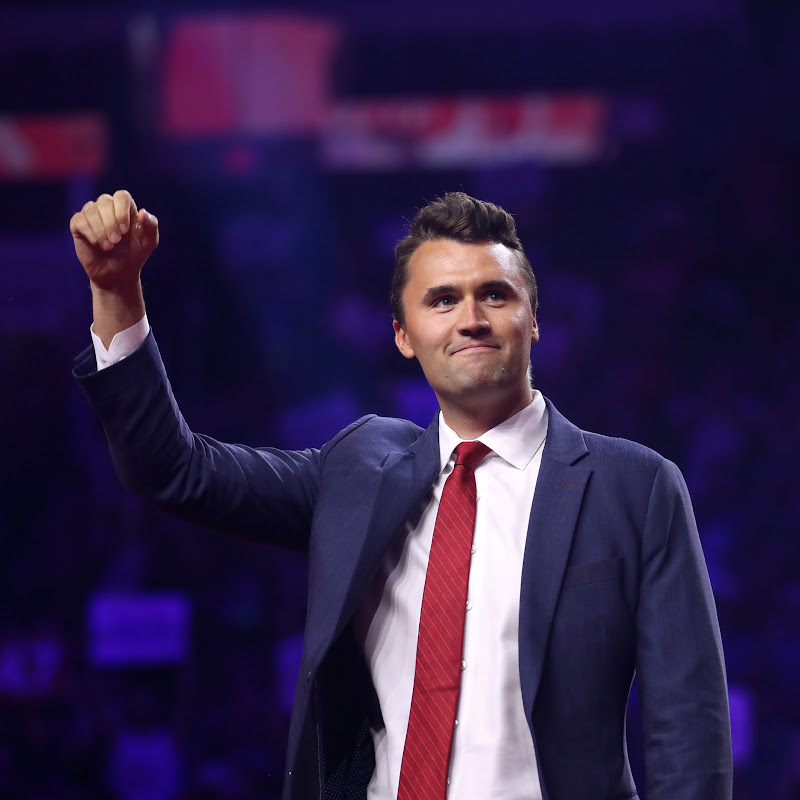
Charlie Kirk is the Founder and President of Turning Point USA, the largest and fastest growing conservative youth activist organization in the country with over 250,000 student members, over 150 full-time staff, and a presence on over 2,000 high school and college campuses nationwide. Charlie is also the Chairman of Students for Trump, which aims to activate one million new college voters on campuses in battleground states in the lead up to the 2020 presidential election. His social media reaches over 100 million people per month and according to Axios, he is one of the "top 10 most engaged" Twitter handles in the world. He is also the host of “The Charlie Kirk Show,” which regularly ranks among the top news shows on Apple podcast charts.
Charlie Kirk and Calvin Robinson Respond to Bishop Mariann Edgar Budde's National Prayer Service Rebuke of President Trump
Charlie Kirk and guests Calvin Robinson and Jack Hibbs respond to Bishop Mariann Edgar Budde's controversial National Prayer Service sermon where she lectured President Trump on immigration and LGBTQ issues during what is traditionally a ceremonial prayer for the new administration. The Episcopal bishop's decision to use the National Cathedral pulpit to challenge Trump on policy rather than preach the Gospel sparked intense debate about politics in the pulpit, scriptural authority, and the state of modern Christianity. Kirk argues the moment actually exposed the bitterness of the American left, while Robinson and Hibbs question both her theological approach and her authority to hold the position.
President Trump attended the National Cathedral for the National Prayer Service, a traditional event following presidential inaugurations. What typically serves as a ceremonial occasion to pray for the president, the vulnerable, and peace became something entirely different when Bishop Mariann Edgar Budde, the first woman to hold the position of Episcopal Bishop of the Diocese of Washington, took to the pulpit.
Instead of offering prayers and blessings for the new administration, Bishop Budde used her platform to directly challenge President Trump on immigration and LGBTQ policies. Her sermon addressed gay, lesbian, and transgender children who "fear for their lives" and immigrants who "pick our crops and clean our office buildings" but "may not be citizens or have the proper documentation."
"I ask you to have mercy upon the people in our country who are scared now," Bishop Budde said. "There are gay, lesbian, and transgender children in Democratic, Republican and independent families, some who fear for their lives. And the people who pick our crops and clean our office buildings, who labor in poultry farms and meat packing plants, who wash the dishes after we eat in restaurants and work the night shifts in hospitals—they may not be citizens or have the proper documentation, but the vast majority of immigrants are not criminals. They pay taxes and are good neighbors. They are faithful members of our churches and mosques, synagogues, and temples."
Charlie Kirk's Reaction: A Window Into the American Left
Charlie Kirk offered a perspective that might surprise some. Rather than simply condemning the bishop's actions, he suggested there was value in what occurred. "I'm actually glad she did this," Kirk said. "It shows the bitterness, the improper behavior, the violating of customs of what the American left has actually become—the sloppy theology."
Kirk's argument centers on the idea that Bishop Budde's sermon exposed the true nature of progressive politics infiltrating religious spaces, demonstrating how far certain denominations have strayed from traditional roles and scriptural teaching.
Calvin Robinson: A Missed Opportunity to Preach the Gospel
Calvin Robinson, a priest and broadcaster, agreed with Kirk's assessment while offering a detailed theological critique. "I share your take actually in that it's good that this was exposed because we've just had 48 hours of jubilation and I'm still euphoric," Robinson said. "But it's good to be reminded of why we had to fight and why it was important that we won because of people like this."
Robinson pointed out the extraordinary opportunity Bishop Budde squandered. "She's got the best opportunity she'll ever have in her life to put forward the gospel to many people who will never hear it in their lives. This is the National Cathedral, all eyes are on her in this moment. Now as a Christian, she could stand there and say Jesus Christ is our Lord and Savior, He died on the cross for our sins, He offers every single one of us salvation, all we have to do is repent of our sins and have faith in Him, come to church, this place is open for you, you are welcome here. She could have said that. She could have proclaimed the gospel. Instead she chose to lecture Donald Trump on her leftist, radicalist, extremist politics."
Robinson also took issue with the substance of her message, particularly her comments about immigration. "What's interesting is what did she say at the pulpit? 'Oh, we need these immigrants for our menial labor. You know, who's going to clean my dishes? Who's going to make my coffee? We need these people. We need these servants,' essentially is what she's saying," Robinson observed. "Of course, she's doing the whole thing of conflating illegal immigration with legal immigration, saying not all immigrants are criminals, lots of them pay taxes. Yes, the legal immigrants pay taxes because they can work. Illegal immigrants do not pay taxes because they work illegally, therefore they are criminals because they're here breaking the law illegally."
As someone who is himself a legal immigrant to the United States, Robinson emphasized the importance of the distinction. "As someone who is not a US citizen that is living and working in America, I'm thankful that there are some legal entries for people to come into this country, but there should not be people coming in illegally, breaking the law. Nobody should be breaking the law. That should always be punishable, that should always be a crime."
The Question of Scriptural Authority
Robinson went further, addressing what he considers a fundamental violation of church law. "She's also breaking the church law by being at the pulpit in the first place, Charlie. You know, the scriptures are very clear on this, that women cannot become bishops. A bishop should be a husband of one wife. It says it. It goes as far as saying a woman should be silent in church. I know some people with modern ears will cringe at that, but this is what the scriptures teach us. If we followed the scriptures, we wouldn't be in the mess that we're in right now."
This theological argument strikes at the heart of ongoing debates within Christianity about biblical interpretation, the role of women in church leadership, and the tension between traditional doctrine and modern progressive values.
Bishop Budde Defends Her Sermon
In her own defense of the sermon, Bishop Budde explained her motivation: "I wanted to counter as gently as I could with a reminder of their humanity and their place in our wider community. And I was speaking to the president because I felt that he has this moment now where he feels charged and empowered to do what he feels called to do. And I wanted to say, you know, there is room for mercy, there's room for a broader compassion. We don't need to portray with a broad cloth in the harshest of terms some of the most vulnerable people in our society."
Jack Hibbs: Arrogance and False Prophecy
Pastor Jack Hibbs offered perhaps the most forceful response to Bishop Budde's sermon. "Who does she think she is?" Hibbs asked. "Don't let her little frail demeanor fool you. The magnitude of arrogance and pride that she exhibited to disgrace the US president, to school him like she did, on top of the overwhelming fact that she has no business being there—and that's according to the scriptures—she's usurping an authority, she's in a position that the scriptures, First and Second Timothy, says ought not to be happening."
Hibbs characterized Bishop Budde as "so out of touch" or aligned with a particular political side, describing her as "the prophet of nothingness, the prophet of wokeism, the prophet of defending those that are hurting."
Drawing on his personal experience, Hibbs challenged Bishop Budde's framing of immigration policy. "Are you kidding me, Charlie? I've been to the border numerous times. I saw the border before Trump took office, I saw the border after Trump took office, and I spoke to border agents. You want to talk about mercy? They told me what was going on and what stopped when Trump in his first term took power. That was an act of mercy because things were shut down. People—the trafficking—began to diminish and things, Law and Order, began to prevail."
Hibbs concluded with a biblical warning: "This person should be embarrassed, but I don't think she will be. And whoever was responsible for having her up there did a great dishonor to the National Cathedral and to really what is called faith in Jesus Christ in this nation of ours. Because the Bible tells us, Charlie, you know this well, that in the last days there's going to be false prophets, false teachers, false representations of what is Christianity, disguising themselves in the place of religion but denying the power thereof. There was no obedience to the word of God on this and it was certainly not her place to say what she said in a public setting like this. Disgraceful, but frankly not surprised, sad to say."
The Deeper Battle Over American Christianity
The controversy surrounding this National Prayer Service sermon represents far more than a single awkward moment. It reflects fundamental divisions within American Christianity over biblical authority, the proper relationship between church and politics, immigration policy, LGBTQ issues, and the role of religious leaders in public life.
For Kirk, Robinson, and Hibbs, Bishop Budde's sermon exemplifies how progressive theology has infiltrated and corrupted traditional Christianity, replacing gospel proclamation with political activism and abandoning scriptural authority for contemporary social causes.
The incident also raises questions about the future of interfaith and ecumenical events involving political leaders. If traditional ceremonial occasions become platforms for political lectures and policy disagreements, will future administrations continue to participate in such events?
What remains clear is that the National Prayer Service of 2025 will be remembered not as a moment of unity and blessing, but as yet another battleground in America's ongoing culture wars—with the pulpit itself becoming the front line.