Up Next

Charlie Kirk Debates Structural Racism and America's Founding Anti-Slavery Movement with College Student
3:04

Charlie Kirk Hosts Gen Z Conservative Leaders for Raw Discussion on Israel, Foreign Aid, and American Priorities
22:47

Charlie Kirk Defends Strong Men, Traditional Values, and Free Speech at Oxford Union Debate
1:39:10
Charlie Kirk and Dr. Rashad Richey Debate COVID Mask Mandates in Schools and Parental Rights
Charlie Kirk hosts Dr. Rashad Richey for a spirited debate on COVID-19 mask mandates in schools. Kirk argues that masks harm childhood development and that children face minimal risk from the virus, advocating for parental choice over government mandates. Richey counters that mask mandates protect students, families, and communities, citing scientific consensus and comparing masks to existing vaccine requirements. The debate explores data conflicts, scientific authority, civil liberties, and the tension between safety protocols and individual freedom. Despite deep disagreement, both demonstrate authentic dialogue on one of America's most contentious issues.
Welcome to Debate Night
Charlie Kirk opens Debate Night at Turning Point USA headquarters by emphasizing the importance of debate to America's constitutional republic. Shared ideas inspire collaboration and innovation, he explains, while debate makes way for empathy, wisdom, and cultural progress. America's uniqueness lies in allowing the best ideas to win—both as a means for progress and the essence of freedom. When threats to debate suffocate conversation in churches, classrooms, and dinner tables, and when students receive failing grades for their viewpoints, American institutions suffer. Debate Night exists to present two sides of an issue and let both points breathe, not for winning arguments but for exercising and preserving the right to free speech.
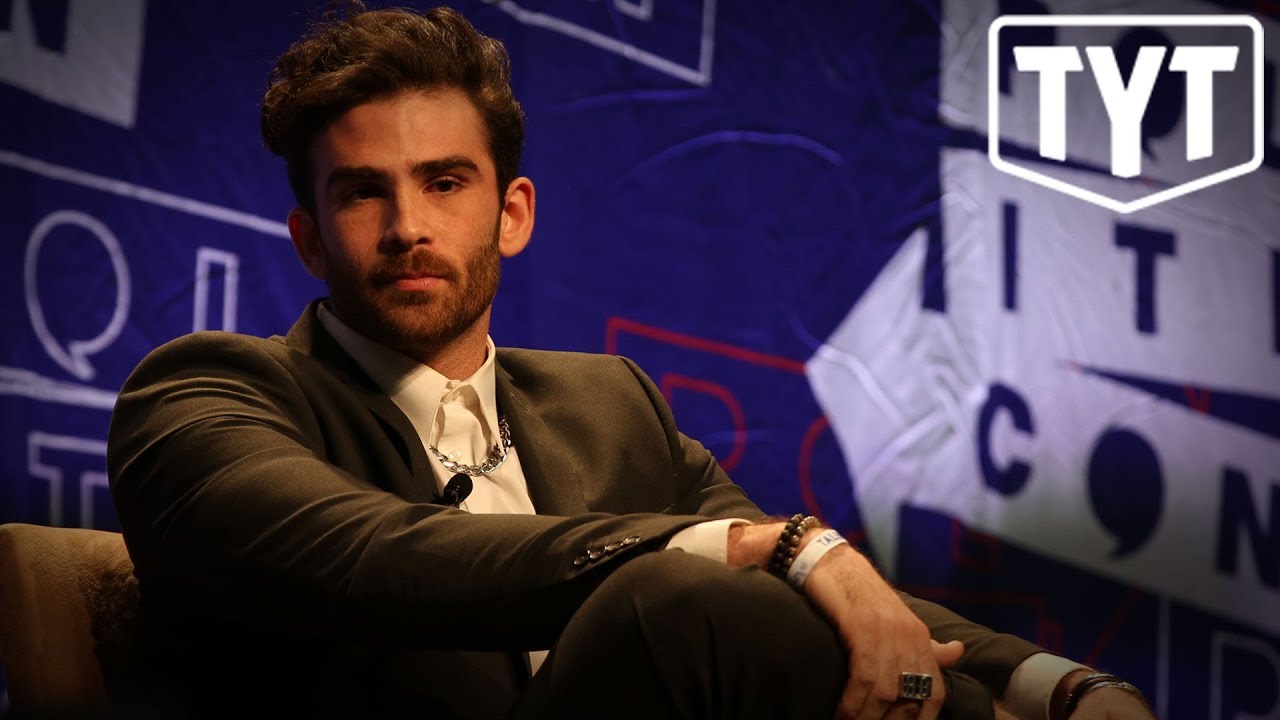
Tonight's special guest is Dr. Rashad Richey, host of the acclaimed show Indisputable on The Young Turks Network and the Rashad Richey Morning Show airing daily on News Talk 1380 WAOK. Dr. Richey has appeared on MSNBC, Fox News Channel, Black News Channel, and BBC America as an analyst on social justice and cultural issues. He serves as president of Rolling Out magazine, which reaches over 2 million readers monthly. His Rashad Richey Foundation works to improve lives of children in at-risk communities. Tonight's debate tackles COVID virus restrictions and mask mandates in schools.
Dr. Richey Makes the Case for Mask Mandates
Dr. Richey begins by arguing that mask mandates in schools are 100% appropriate. The vast majority of American voters support mask mandates for school teachers and students, he notes. Critics claim masks intrude on civil liberties, but dress codes and vaccination mandates already exist without such controversy. In fact, 100% of all public schools in the United States require vaccination to enter—that's already a vaccine passport in play. Additionally, 92% of private institutions require vaccines for attendance.
The mask mandate protocol exists for student safety based on verifiable science, Dr. Richey continues. About 90% of those in the scientific field say masks decrease the spread of COVID-19. Yet around the country, people are fighting school teachers and threatening school board members over mask mandates. This level of activity at school board meetings is unprecedented for any issue besides these mandates. School boards have statutory authority to implement administrative law given to them by states based on the construct of the 10th Amendment. These school boards operate well within their constitutional right and statutory authority to implement protocols just as they establish dress codes, vaccination requirements, teacher credentialing requirements, and standards for passing to the next grade.
Charlie Kirk Questions Risk to Children
Kirk responds by asking whether the Chinese coronavirus or the Fauci virus poses a serious threat to children. Dr. Marty Makary wrote a piece for the Wall Street Journal where he studied over 40,000 children with the virus and was not able to find one child who died from the virus who did not have underlying health conditions or some immunocompromised condition. The New York Times published annual death statistics among children in the United States per 100,000 people. Children aged 5 to 14 have a 2.1 per 100,000 chance of dying from cancer, 1.9 from vehicle accidents, 1.5 from suicide, 0.7 from homicide, 0.6 from cardiovascular disease, 0.5 from drowning, 0.3 from flu, and 0.2 from COVID.
Kirk emphasizes these are not percentages but rates per 100,000. If children face greater risk riding in a car to school than from COVID, why mandate masks for children? The discussion involves two separate questions: do schools have the ability and authority, and is it a good idea? Starting with whether it's a good idea, Kirk calls it awful—bad for interaction, bad for childhood development. Mental health issues are already increasing dramatically. Telling a child who faces minimal risk of dying from a virus that they must change how they interact constitutes child abuse, in Kirk's view.
The Delta Variant Debate
Dr. Richey counters that the Delta variant has changed the situation. Children now not only contract the virus but experience adverse reactions like never before. In Jackson County, Mississippi, a school superintendent ignored all COVID-19 protocols, claiming to live a life external to pandemic fear. His school system has a 7% COVID-positive rating and has already lost a school teacher. Another dynamic people aren't considering: children don't go to school in silos. Children who carry COVID-19 can infect their social environment—parents, grandparents, other peer groups, and people their families associate with. The issue becomes the ecosystem of safety, not just the silo of the school system.
Kirk responds by citing medical professionals on the Delta variant. Dr. Roberta DeBiasi of Children's National Hospital told NPR's Ari Shapiro that children remain about 12 to 15% of all COVID cases and 3 to 4% of all hospitalizations, with no huge change even with the Delta variant. The Boston Globe asked whether the variant is more severe in children. Dr. Sharid Doran, an epidemiologist at Tufts Medical Center, said no—she has not seen any peer-reviewed data or data from a reliable source to suggest that. Kirk submits there is no data showing the Delta variant has harsher effects on children; in fact, the data shows the opposite.
Conflicting Studies and Scientific Consensus
Dr. Richey cites CDC directives showing the Delta variant more adversely affects young people than the original virus. In Alabama, hospitals have run out of ICU beds for the first time. Alabama leadership blamed this on children going to hospitals who didn't go before with the original COVID virus. They're now being hospitalized like never before, with over 400 children hospitalized for COVID at last count—a fraction of that number during the first onset of the virus.
Kirk questions whether people are being hospitalized because of COVID or with COVID. The Atlantic published an article where Dr. Doran, the epidemiologist at Tufts Medical Center from Boston, disagreed with the CDC, saying the Delta variant is not a significant risk for children. She stated, "As we shift from cases to hospitalizations as a metric to drive policy and assess risk, we should refine the definition of hospitalization. Those patients who are there with rather than from COVID don't belong in the metric." When Dr. Richey says 400 kids are hospitalized with COVID, Kirk suggests that number might be even 50 times too large.
The debate explores what happens when studies conflict. Dr. Richey explains that science is not a fact but a field of study. While some things are scientific facts like gravity, science involves studying research surveys, laboratory experiments, and real-world research experiments. For those reading data from experts, the approach is to determine the majority sentiment and consensus among the scientific community. That's how independent thinking individuals derive conclusions based on available research. There will always be clashing opinions and conclusions, but this isn't a 50/50 split—it's 7% of scientists saying one thing compared to 92-93% saying another.
The Question of Mask Effectiveness
Kirk expresses fascination with the 7% willing to buck the consensus and pursue things they've found in the scientific method to be true. He notes the CDC has contradicted itself on masks, vaccines, COVID surviving on surfaces (initially saying up to 5 days), and almost everything else. If they've been wrong on the science, why trust them now? Dr. Richey responds that trusting them depends on the issue—which is called confirmation bias. The CDC issue isn't about discrediting all scientists.
On COVID surviving on surfaces, scientists initially said it could be there for 18 days based on a cruise ship where the virus remained after 15 days, even after everyone was evacuated and the ship was cleaned top to bottom. They reported this as part of the scientific field of study, wanting people to be warned about active virus cultures. People ran with it, but that was in a particular environment conducive to virus growth and preservation. Context matters.
Kirk notes that outliers in science sometimes end up being true. The lab leak theory was once considered a conspiracy theory but is now the prevailing wisdom. The heliocentric theory that we revolve around the sun, authored by Galileo, used to be an outlier. Newton's first, second, and third laws required investigation and proof. It used to be scientific consensus that eugenics was good and sterilization of women would improve humanity. Sometimes these "what if" studies are right—what if there's some truth here? What if the majority of scientists are telling the truth?
Dr. Richey says he entertains and dismisses claims on an issue-by-issue basis. For example, a majority of scientists are saying we need to entertain another round of lockdowns in certain parts of the country or world to stop the virus. Kirk thinks that's a big mistake, citing both socioeconomic and epidemiological factors. Israel was held up as a beautiful country with mass inoculation but has gone through a fourth lockdown and is on its fourth booster shot. Sweden, which probably had the most mature and prudent response to the virus, is wide open and has banned Israeli citizens from coming in. Kirk says he doesn't need a PhD in epidemiology to see that whatever decisions Sweden made seemed far more prudent than Israel's.
Mental Health and Childhood Development
Kirk raises the mental health crisis: a 90% increase in suicide through March from 2019 to 2020, nearly doubling of mental health issues, and a 333,000 increase in intentional self-harm claim lines. He asks whether forcing children to wear masks will help or hurt America's mental health crisis. Dr. Richey asks for clarification—is Kirk saying a kid wearing a mask and adjusting to a new social norm yields this result? Kirk clarifies he's asking whether masks have any impact on mental health. Dr. Richey says they have an impact, but COVID-19 has an even stronger impact on social development because of the risk of death.
Kirk counters that the risk of death for children is so low. Dr. Richey responds that this isn't about a silo of just kids in an educational system—it's about kids connected to a greater community. The COVID-19 virus has ravaged the black community, not just because children wear or don't wear masks but because of other variables like healthcare inequity. Children can infect parents and grandparents. If mask mandates are such a bad idea, is Kirk disagreeing with over 60% of Americans who care about their children and want mask mandates for their safety?
Parental Rights Versus Majority Rule
Kirk says he has a difference of opinion, and thankfully the American system doesn't make something law just because 60% believe it. He returns to New York Times data showing COVID poses less risk to children than flu, pneumonia, drowning, cardiovascular disease, suicide, homicide, and vehicle accidents—all per 100,000 children. If the view is to make safety a priority over liberty, should we ban driving? Dr. Richey responds that we're okay with making sure kids have prerequisites to drive—a learner's permit and training process—because driving is dangerous. Being a passenger in a car also has danger.
If the view is to make safety a priority over liberty, then Kirk asks about that principle. Dr. Richey notes that God made people without clothes, yet we wear clothes for biblical reasons and because indecent exposure is illegal. Kirk counters that God also gave us a face for a reason—to interact, empathize, and communicate through expressions. He asks whether this debate would be better or worse if they wore masks. Dr. Richey says it would be the same for him—he teaches college classes with a mask, all students have masks, he attends law school where everyone has masks including the professor. He's been in schools when they first started back where masks were required, and real teachers are able to teach with a mask on through pedagogy.
Dr. Richey presses Kirk on the benefit of protecting children by requiring masks, dress codes, and particular behavior standards. Are these directives inside a school system to protect the overall and general safety of students a good idea? Dr. Richey says yes, Kirk says no. Kirk responds that Dr. Richey's premise is false—the data shows children aren't at considerable risk from the Delta variant and don't wear masks properly. Dr. Richey says 98% of kids do wear masks properly if you've been inside school systems recently during the comeback with masks and social distancing—those kids were well-behaved and adhered to protocols.
Mask Studies and Data Interpretation
Kirk cites Steven Petty, one of the most certified experienced industrial hygienists and exposure experts in the country, who found that if a mask is adjusted by even 3.2%, it totally invalidates any efficacy. Most mask studies are done in laboratory-style environments, not with six-year-old children who move the mask constantly. If kids aren't going to wear them properly and cloth masks are basically a joke, why subject them to this kind of submissive cloth face diaper?
Dr. Richey corrects the data, calling it an outlier dataset. About 92% of the field of actual research scientists agree that masks decrease the spread of COVID. The only deviation from that agreement is by how much—the lowest end is 10%, the highest is 91%. A University of California study from just days ago, titled "Still Confused About Masks," highlighted a lab study showing respiratory droplets (how the virus travels with viral load) generated from saying a simple phrase. These droplets measured 20 to 500 micrometers. Having a cloth in front of the mouth decreased transmission by virtually 100%. This contradicts individuals who say cloth masks do nothing. Cloth masks are now recommended for public use by the CDC and World Health Organization. Even the data Kirk cites that says masks don't do as much shows at least 10% effectiveness, while the majority shows 80 to 90% effectiveness.
Kirk asks whether the study factors in whether children wear the mask correctly, touch it constantly, and remove it. Dr. Richey responds that the study factors for droplets transmitted. The argument Kirk makes is about education—young people need to be more educated. As a former high school teacher, Dr. Richey notes that high school students and even grown folks may not wear masks properly. Part of the issue is education and proper mask wearing. Kirk is making Dr. Richey's argument for him: if worn properly, masks decrease the spread of COVID.
Constitutional Carry and Voting Rights Comparison
The debate shifts to broader principles. Dr. Richey argues that masks make children unfamiliar with one another and harder to communicate, but Kirk's argument continues that it actually stunts childhood development. Dr. Richey responds that he doesn't blame all mental health issues on masks—COVID-19 has a stronger impact on social development. Kirk questions whether we're talking about a silo of just kids or kids connected to a greater community.
The conversation moves to constitutional questions. Dr. Richey brings up Texas's constitutional carry law, which requires no ID, no permit, no bureaucracy for carrying a gun. Kirk is a big fan of constitutional carry because bearing arms is a constitutional right. Dr. Richey asks whether voting is also a right. Kirk says it depends on whether you're a felon, but yes it's a right—just as felons can't have guns. An extreme libertarian might say felons should vote, but voting becomes not a right when it's not secure.
Dr. Richey makes the point that constitutionally, the right to bear arms can be limited—you have to age into that right based on state law, and it can be taken away based on criminal activity. Rights are conditional under the current agreement with government. If Kirk is a big fan of constitutional carry (no ID, no permit, no bureaucracy for guns), why doesn't he believe in constitutional voting (no ID for voting)? Kirk responds that voting is how we build our government, while guns defend against usurpation. Voting expresses values and puts people in positions of power. If there's any question in the efficacy, integrity, and transparency of elections, the entire system falls apart. That's why he believes in transparent and fair elections. The idea that Georgia has oppressive voter laws is wrong—they have 18 days of early voting (way more than Delaware), allow Sunday voting for souls to the polls, and more.
Federal Authority and Local Control
Dr. Richey connects this to COVID mandates. Everything they're discussing about regulatory agencies, mandates for vaccines or masks, or protocols for COVID-19 derives from the Constitution. If Kirk believes in the Constitution, why dismiss Article 1, Section 8, Clause 3 or the 10th Amendment, which gives states, regulatory agencies, and school boards these particular powers? These powers are expressions of the Constitution. Kirk clarifies he's making a moral argument against kids wearing masks to school and against imposing oneself into a parent's decision to have their child wear a mask or not. He hasn't made a constitutional argument because the courts are open on this discussion.
Kirk notes the Constitution depends on state constitutions, precedents, and court decisions. Courts change their minds all the time—Dred Scott was reversed, forced sterilization of women in the 1920s was reversed, Jim Crow was reversed. Dr. Richey responds that Jim Crow was not in the Constitution. Kirk says they used the 10th Amendment and the state's rights clause in a bizarre way. Dr. Richey agrees—they used the state's rights clause and perverted the statute. We've always had those who mishandle statutory legislation. Kirk is making a moral argument and an argument about childhood development the whole time.
The Fundamental Question of Force and Choice
Kirk emphasizes he's disagreeing with parents—the data shows over 60% of parents support mandates. What about the 40%? Is Dr. Richey okay with saying 60% of parents can use force against 40% of parents through a mandate? Dr. Richey says yes—they can use a mandate for vaccines, dress codes, and behavior standards. Kirk asks: if 60% of Americans wanted to take rights away from Black Americans, would that be okay? Dr. Richey calls that argument inappropriate because that's the argument used for Jim Crow. It was an evil argument back then and remains one now.
Dr. Richey clarifies they're talking about the safety of children and mask mandates inside a local school system that the majority of taxpaying Americans agree with. Kirk is in the minority here. Kirk responds that he doesn't believe just because a majority of people believe something, they should force the other side. On this case, he's with the minority who believe in parental choice.
Closing Thoughts and Mutual Respect
Dr. Richey declines to make a closing argument that simply argues with Kirk. Instead, he acknowledges that Kirk is a brilliant mind and what he's doing at Turning Point USA will provide clarity. They don't have to agree. The push and pull of the republic or democracy is based on open, free, transparent, and authentic dialogue. Even though Dr. Richey disagrees with Kirk about 90% of the time, Kirk is authentic in what he believes. Dr. Richey says he would go to war for Kirk any day.
Kirk thanks Dr. Richey and notes this sort of discussion is exactly what makes America special—the ability to disagree and still figure out what to do together. This is what debate is all about, and this is why America remains a place where the best ideas can still win through conversation rather than coercion.
Video Transcript
welcome to debate night everybody my name is Charlie Kirk debate is at the core of our constitutional republic shared ideas Inspire collaboration and Innovation debate makes way for empathy and wisdom and it shapes our culture America is a unique place we allowing the best ideas to win is both the means for progress and the essence of Freedom threats to debate suffocate the air within churches and classrooms spoil dinners amongst friends and give unwarranted failing grades to college students and deprive American institutions of conversation that is over starting now on debate night here all ideas are welcome and conversation is the point we'll present two sides of an issue and let both points breathe this isn't for the sake of winning an argument but for exercising and thus preserving our right to free speech America is not debatable but ideas are tonight's debate tackles fouchy virus restrictions and mask mandates in schools but the conversation can go anywhere tonight's special guest is host of the acclaimed show indisputable on The Young Turks Network as well as the Rashad Richie Morning Show airing daily on News Talk 1380 Wok you may also know our guest from MSNBC The Fox News Channel black News Channel or BBC America where he regularly stars as an analyst providing insights on things that he calls social justice and cultural issues he is the president of Rolling Out magazine which reaches over 2 million readers every single month and his passion for building a better world for America's youth sparked the Rashad Richie Foundation which helps improve the lives of children in atrisk communities he's a lecturer a professor analyst host writer and editor at large tonight's guest is a dynamic force and I'm thrilled to have him here and he's objectively a very nice person please join me in welcoming Dr Rashad Richie to debate [Music] hey everybody Welcome to debate night here at turningpoint USA headquarters honored to have with us today Dr Richie a very well-known radio talk show host in Atlanta also a college professor amongst many other things I'm sure I'm forgetting and today we're going to be talking about covid mandates schools masks and so much more the way that this conversation will go is Dr Richie will begin with some thoughts uh for 2 minutes uninterrupted I'll respond with 2 minutes uninterrupted and we'll go back and forth in that format for about a minute each and we'll take about a 10-second break or a little bit break and uh then we'll just kind of have at it and so Dr Richie thank you for being here and the floor is yours you about to be in trouble Charlie all right here's the thing mask mandates in schools are 100% appropriate and here's why first of all the vast majority of American voters actually support mask mandates for school teachers uh and for those who are inside of the school system uh but let's look at what it actually does a mask mandate people that argue against it they say this is an intrusion on civil liberties but think about it a dress code is that an intrusion on civil liberty a vaccination mandate is that an intrusion on civil liberty let me bring you back to K through2 education again 100% of all public schools in the United States of America require vaccination to enter that's your vaccine passport already in play 92% of private institutions require a vaccine in order to attend let's go to the mask mandate The Mask mandate protocol is in place for the safety of students this is based on verifiable science 90% of those in the field of science the field of study they say that yes it actually decreases the spread of covid-19 but now you have people around this country literally rather than throwing on the mask they rather throw fist they're fighting School teachers they're fighting those that are oppos them and they are threatening to fight school board members because of a mask mandate I have not seen this kind of activity at Schoolboard meetings over anything except for these mandates but remember mandates are already in place School boards have the statutory authority to implement administrative law given to them by the states based on the construct of the 10th Amendment of the US Constitution these school boards well within their constitutional right and statutory Authority in order to implement such a protocol just as they have the ability to say here's the dress code here's the vaccination requirement here's the teacher credentialing requirement and here's what it takes to pass to the next grade minutes very good thank thank you Dr Richie so here's how i' first respond first of all we have to ask ourselves the question is the Chinese Corona virus or the fouchy virus a serious threat to children that's the first question and so Dr Macker wrote a story wrote a piece I should say for the Wall Street Journal where he studied tens of thousands it was over 40,000 children with the virus and was not able to find one child that died from the virus that did not have underlying health conditions and that did not have um some sort of immuno compromised condition and so you look even more broadly than that this is from The New York Times I just want to read this which is annual deaths among children in the United States now this is per 100,000 people people so children 5 to 14 years old have a 2.1 per 100,000 chance of dying from cancer a 1.9 per 100,000 chance of dying from vehicle accidents 1.5 per 100,000 to die from suicide we'll get back to that in a second 7 from homicide 6 from cardiovascular disease 0.5 from drowning 3 from flu and .2 from Co now now that's not percentage that's per 100,000 so the question is if children are at a greater risk of riding in a car to school then why all of a sudden should we now mandate the masks for children so I think we're talking about two different things and I think we'll have a fun time going back and forth at the unscripted part of this is do schools have the ability and the authority and is it a good idea I'm going to start with whether it's a good idea then we can get into the other one it's an awful idea it's bad for interaction it's bad for childhood development we already see the in inre in mental health issues that I will go through some of the numbers associated with that but everyone has kind of experienced that in their own way and saying to a child who is not at considerable risk of dying from a certain virus that you must change the way you interact I think is child abuse and the floor is yours you have one minute Dr all right so let's talk about uh the numbers yes okay uh the Delta variant has changed the game in many ways where now you have children who not only have the virus but they are experiencing adverse uh reactions from the virus like never before I take you to a place called Jackson County Mississippi there's a school superintendent uh this guy decided to ignore all covid-19 protocols he says he's going to live a life that's external of the fear of the pandemic well his school system they have a 7% uh covid positive rating they've already lost a school teacher here's the other Dynamic that people aren't considering you think children go to school in silos these children who can be carriers of covid-19 can infect their social environment such as their parents their grandparents other peer groups people that their families associate with and then it becomes an issue of the ecosystem of our safety not just the silo of the school system very good I I will respond so I'm glad you brought up the Delta variant so a lot of people have done some at least some initial studies of the Delta variant so according to Dr Roberta deasi of the Children's National Hospital was asked about Ari Shapiro from National Public Radio about the Delta variant the national public radio host said wait a second if kids under 12 are not vaccinated is is the Delta variant a significant risk and she said quote children are still somewhat between 12 to 15% of all covid cases and still 3 to 4% of all hospitalizations and we have not seen a huge change in that even with the Delta variant now I'll add to that where the Boston Globe not exactly you know a politicized paper to the right asked the question is the variant more severe in children Dr Sharon Doran epidemiologist at tpps Medical Center says no I have not seen any peer-reviewed data or data from a reliable source to suggest that so I would submit doctor that there is no data to show that Delta variant has any harsher cause in fact the data shows the opposite let me respond all right um so here's what we know about the Delta variant uh based on CDC directives uh the Delta variant is more adversely affecting young people than it has previous with the original design uh to suggest otherwise is silly and here's why you can go to a place like Alabama Alabama for the first time they have run out of ICU beds the Alabama leadership govern and Beyond they have blamed this on children going to hospitals that did not go before with the original covid virus they're now being hospitalized like never before and they're running out of ICU beds and at some point this week or next week they may run out of ICU beds that's because of the hospitalization not only of a adults but also of children at last count they had over 400 children hospitalized for covid they had a fraction of that during the First on onset of the virus almost perfect timing I got to give you credit for that it's almost like you do radio or something so I'll respond to this in a couple different ways and there's a lot more to unpack once we kind of go back and forth first we have to ask ourselves the question are people being hospitalized because of covid or with covid now this is something I've been saying for quite some time but the Atlantic which is publication I think we can both agree is not exactly on the right came out with this at the end of their article was actually just published recently where they asked the question and this is the same doctor Dr sharid Doran who's an epidemiologist at tough's Medical Center from Boston very reputable right so she disagrees with the CDC she says Delta variant is not a significant risk for children right and we're going to talk about what can what can what would you do when you disagree when you have competing studies because I think that would be an interesting discussion where she said quote as we shift from cases to hospitalizations as a metric to drive policy assess risk we should refine the definition of hospitalization those patients who are there with rather than from covid don't belong in the metric so I would just say doctor when you say 400 kids are hospitalized with covid we don't know that's necessarily true in fact some say that number might be even 50 times too large [Music] you told you okay all right here's the thing Charlie and I keep I keep hearing people make this argument that somehow it matters that children who have an underlying health condition are the ones who are dying or being hospitalized that doesn't matter Charlie the fact is that these are children and some of these children aren't even aware if they have an underlying condition and that's not 100% of the data so when we continue to create this Us and Them narrative that somehow says well the only children who are dying are those that have an underlying health condition well hell you can have an underlying health condition that does not make you any less significant as it relates to a virus or the spread of a virus that's preventable so are we having an argument about a civil liberty cuz if this is an argu argument about a civil liberty then the covid issue is a separate argument because you have no issue with your seat built mandate you have no issue with your mandate to have a driver's license even though you can buy a car without it you have no issue with these other mandates which are required for the safety of others but you have an issue with this mandate which we've already established that statutorily school boards have the authority to implement these mandates and American citizens by in are for the mandates in K through2 education so I'll get to the civil liberties in a second as as you notice I didn't mention at all I'm saying this is a bad idea right this is bad for children and also it's it's bad for teachers bad for an educational environment and so I want to reiterate one thing I'm not minimizing that it's children with underlying health conditions that are dying but children with underlying health conditions have a predisposition from dying from any sort of infectious disease and the vast ma majority of children in this country are healthy which is why we frame it in that way and so this kind of goes to this question a couple different questions and I would love to ask this question to you um let's just focus on whether this is a good idea then we could focus on whether the government has the ability do you think there are any downsides to Children wearing masks in schools hell yeah of course there are downsides to it they're downsides to wearing a seat Bel you know a percentage of people die every year for wearing a seat Bel but the vast majority of them have their lives saved so so let me be clear on this soad let me be clear on this there will always be be a cause and effect relationship with any social variable change implemented in our current structural Society no matter what masks create changes it is a social deviation from the norm but when you look at the risk of a child either having severe respiratory complications forever potentially dying or potentially infecting their parents or grandparents we weigh that we weigh the same variables as it relates to vaccines that are already mandated brother in the school system the vaccines that are already mandated are very clear Ms um measles polio every single one of them but do you have an issue with those it's a totally different type of vaccine first of all first of all those take 10 to 15 years on average to develop secondly they've just changed the definition of a vaccine so you have an issue with the vaccine not the intrusion or well again we'll get to the civil liberty part of it right so I'm not saying that a school does not have the ab to mandate certain things instead my argument is that this is detrimental to Children their development mental health issues their ability to interact and it doesn't even do what it's you say it's going to do so let me just read something that a study was done about masks that shows that if the mask is even adjusted by 3.2% it totally invalidates any sort of efficacy of a mask who did that study Charlie well this was written by Daniel Horowitz and was Steven Petty one of the most certifi experienced certified industrial hygienists and exposure experts in the country has a study that he did on this so Steven Petty the audience can look at it and they can have their own sort of interpretation now most of the Mask studies that you're probably going to mention are done in laboratory style environments not with six-year-old children and you can agree you've seen six-year-olds they're moving the mask all the time which totally negates any sort of potential benefit so if kids aren't going to wear them properly and the cloth mask is basically a joke then why sub why subject them to this kind of submissive kind of cloth face diaper all right so you incorrect on the data so let me go ahead and correct that data um first off uh the data that you're citing is what we call an outlier data set okay 92% of the field of actual research scientists agree that mask decrease the spread of covid as a matter of fact the only deviation from that agreement is by how much the lowest end is 10% the highest is 91 can I ask a question about that I get to yeah give me one second bro got all right so University of California they have a study uh and they uh posted this just a few days ago and if anybody wants to read it it's called still confused about mask okay one of the lab studies that they highlighted showed in a high-speed camera scenario respiratory droplets this is how the virus travels with the viral load those respiratory droplets were found within 20 to 500 micrometers that's your size they were generated from saying a simple phrase so just talking to somebody creates a viral load 20 to 500 micrometers right having a cloth in front of your mouth decreased it by virtually 100% now that flies in the face of individuals who say well cloth masks do nothing and remember cloth masks are also now recommended for public use by the CDC uh and the in uh the the uh World Health Organization So when you say they do absolutely nothing even the data that you site that says it doesn't do as much is at 10% Effectiveness the other data that's the majority of the data says it does it at 80 to 90% Effectiveness so I just want to make sure I'm understanding your position your position is that first of all does that study factor in whether they wear the mask correctly or not whether that they're touching the mask all the time and they're removing it does that study factor for that this study factors for droplets that are transmitted but think about it a seven-year-old is not going to not your issue brother think about it your issue the argument you're making with me is an argument of Education that that means that young people have to be more educated I'm a former High School teacher all right there are high school students that may not wear the mask properly there are grown folks that don't wear the mask prop properly part of Argent the issue then is education and proper wearing of the Mask you're literally making my argument for me that's part of the argument AR you're making my argument saying if you wear it properly then it does in fact decrease the spread of Co but they don't and they won't and you know that you're dealing with 8 nine and 10y olds the other part of the argument though is that it actually makes us unfamiliar with one another harder to communicate it stunts childhood development so I want to read some of these numbers and I want to I want to ask you do you think that masking children forcibly is going to help the 90% increase in suicide that we saw through March from 2019 to 20 is it going to help the nearly doubling of mental health issues or the 333.00 increase in intentional self harm claim lines is you're blaming all that on MK I'm I'm not saying that I'm asking you a question is that going to help or hurt America's Mental Health crisis let's be very clear brother because I want to understand exactly what you're asking are you saying that a kid wearing a mask and adjusting to a new social Norm yields this result no I'm asking you no it doesn't Yi that result there's nothing in the data set that says okay so you think that masks have no impact whatsoever potentially in mental health I just answer that question they told you they do have an impact but covid-19 has even a stronger impact on our Social Development because because the the risk of death brother is so low for children no brother no let me tell you where I come from when we talk about children Charlie we're not talking about a silo of just kids in an educational system we're talking about kids that are connected to a greater Comm Community I come from a community where this covid-19 virus brother has ravaged the black community and it's not just because children wear masks or don't wear mask it's because of other variables such as uh Health Care inequity Etc but if you look at children and just say well the mask thing is the only thing it's not just that we don't want young kids going back to infecting parents and grandparents and if it's such a bad idea Charlie are you dis agreeing with over 60% of Americans who say who care about their children you can't say these folks don't care about their children and they are saying in all of the survey data that we want mask mandates for our children so they can be safe what do you say to those parents that say that I have a difference of opinion and by the way thankfully we have a system just because you have 60% of opinion doesn't mean it necessarily only becomes law we'll get to kind of the I want to get to the civil rights in a second but it's such or becomes precedent or gets implemented or whatever it is so as I mentioned the New York Times said that covid you have a higher chance of dying from flu flu pneumonia drowning cardiovascular disease suicide homicide vehicle accidents so to be consistent for per 100,000 for children right okay are you okay with Banning driving so let's go to this I'm okay with making sure kids have a uh a a set of prerequisites in no to two Drive which wait a minute by the way that's already the law children do not get to drive just because they turn a certain age they have to get a learner's permit go through a training process in order to get that license we are and why do we do that Charlie we do that because we know that driving is dangerous that's why we do that right well also being a passenger in a car as well I'm I'm just saying has a danger right if your view is to make safety a priority over Liberty then I'm just asking because that is really the question right do you have the Liberty to be as God made you without a mask right that is God made you without clothes you got clothes on well and we wear clothes for a reason we know we know the biblical reason for that it's the law and you will be charged with indecent exposure God also gave us a face for a reason be able to interact and empathize to communicate so I can see your Expressions let me ask you a question do you think this debate would be better or worse if we had masks on uh it'll be the same for me really you think so let me tell you something brother that's interesting I I teach college classes lecture with the mask on all of my students have mask I go to law school we all have mask on my professor has a mask as well and I've actually been in schools when schools first started back where mask were required and let me tell you something about real teachers School teachers are able to teach with a mask on and without a mask it's called pedagogy and some of the really good teachers they're able to translate the message of the Mask into their care uh into their curriculum but once again you're avoiding something that's huge and right in our face is the benefit and this is a question of what you believe is the benefit of protecting children by saying you do have to wear a mask you do have to abide by a dress code you do have to abide by a partic particular Behavior standard are those directives inside of a school system to protect the overall and general safety of students is that a good idea I say yes you say no well not and I think you're coming from a false premise the data I showed is that they're not at risk and considerably from the Delta VAR thinking brother thinking about their families data I showed showed that they don't even wear the masks the data I also show also shows well the again 2 percentage of kids do not wear the mask properly I don't have data on that but if you've ever been around a six-year-old they don't wear anything properly they e dirt let me tell you something man let alone wear a mask proper Charlie and I mean this in all due respect I've been inside of school systems recently that did the let's comeback thing and let wear mask and let socially distanced those kids were well behaved they did not take the mask off they adhere to it even if a 2% adjustment doctor 2% it changes everything well it changes it based on the research that I have from 90% Effectiveness and it can lower down to 10% all right you got a lot of wiggle room in between that no scientist says that wearing a cloth mask is ineffective they just argue on the effectiveness with the majority of the science and majority of the data saying it is well over 50% of that's not true there's a study had a Denmark that shows there's almost no increas stud brother so that's a good qu I'm going to get to that in a second what happens when you have different studies what happens when the body of evidence contradicts because that's an important question right I that's a great question because that what how do you govern oneself when you have I have this study I have that study but I just want to make sure that the people watching can see where I'm coming from my perspective so let me just say kind of one other point on this where you said that am I willing to make adjustments for child safety and you kind of asked that was the open-ended question where I say it's not about that at all in fact the downside in my opinion fars far outweighs any sort of benefit especially when Dr mackery Who said I st he studied right here he studied 43,000 children with covid and was not able to find a single death now you say it's also a transmission issue Dr Macker also said that children quote are not significant carriers or super spreaders to adults so so we're going to have study Collision so go ahead so let's let's talk about study ision um once again outlier data what that doctor just quoted to say that children are not carriers of covid-19 is outlier data because over 90% of the field agrees based on research and study that kids are carriers of not only covid but of any virus and you literally just made that argument with me you literally just said Charlie that kids do not properly wear their mask and they're spreading things by not properly wearing their mask you have made the that was not arum I said if your argument was true and masks worked it would only be true if every child was a perfect automaton maske wearing student which of course we know not true do seat belt mandates work of course they do does everyone wear one do you know what's amazing about a seat belt Charli does everyone wear a seat Bel after you're in a car accident it doesn't give you natural immunity from getting in another car accident that's what makes this totally different does everyone wear a seat belt Charlie of course not do we then go back and unravel cuz only 49 states have seat belt laws do we go back and unravel the 49 State uh statutes because there are some people who will either a not wear them or B actually die because of them we don't do that Charlie because we see the benefit of wearing that safety belt that protocol or outweighs anything else so we haven't I've not been convinced by and let's talk about the data dat because we're going to we're going to collide on data but let me ask you a question when it comes to driving and safetyism do you think we should bring speed limits down to 20 mph which would definitely save lives is that a good handoff yeah so let me get back to that it used to be 15 miles per hour by the way is that okay with you because that would prioritize safety over Liberty well I think you always weigh it but let me answer your first question I get back to that one you talked about conflict in data right yeah like what happens when I have a study I have a study what do we do that's right so here's what happens science a lot of people misinterpret what science is they say science is a fact science is not a fact science is a field of study now there are some things that are scientific facts like gravity okay but science is a field of study and I do think sometimes scientists do themselves an injustice when they do not describe science as such it is a field of study now what does that field of study mean it means you study the field so what's the field of science all of these research surveys these research um these laboratory experiments these real world research experiments that's the field of study and so for you and I who are reading the data from these experts what we typically depend on is what is the majority sentiment what is the consensus among the scientist community and that is how we start to derive our conclusions based on the research that we're able to analyze independently as independent thinking individuals now you can still believe and outly your study if you choose it is contrary to the majority of the science that's available for review but that is still within your uh right as an American right so that is how you do it you're going to always have clashing opinions uh and conclusions but literally in research there's no 50/50 here there's not 50% of the scientists are saying this and 50% of the scientists are saying that literally you giving me uh eight 7% of what scientists are saying compared to 92 93% of what other scientists are saying that's the argument that you're making with me Charlie and I'm always fascinated by the 7% because they're willing to Buck the consensus and pursue things that they have found in the scientific method to be true and so I guess this is an an important question then we'll get into what do we do when we have these differences because that we're going to keep on going in circles of study versus study and I'm going to say well according to this doctor for example as I'll say Dr Deron Delta variant not severe in children and then I'll say Dr deazi said the same thing and Dr mackery and you'll say well the CDC said this I guess I'll ask you a question well let me ask you a question the CDC contradicted themselves on masks they contradicted themselves on vaccines they contradicted themselves on covid being on surfaces remember they said it could be there up to 5 days we know that not to be true they contradicts on almost everything if they've been wrong on the science of 90% of doctors why should we trust them now you know that's really interesting because uh you trust them don't you it depends on what issue exactly that's my point yeah so you trust them depending on what issue that is called confirmation bias so Charlie well it depends on the issue if they're talking about yeah Newton's Second Law then yeah I'll trust them on that they don't talk about that the the issue with the CDC is not about uh you discrediting all the scientists now I I take it back to one variable you just named um the covid the survival time of the virus right yeah like if is co able to be on this table for five right initially there were uh uh scientists that came out and said hell it can be up there for 18 days well in certain environments it can because that was based on a ship crew uh a a cruise ship where the virus was still there after days that's right brother it was there after 15 days everybody was evacuated they cleaned that ship top to bottom and they still found active virus on the ship so they came out and said Hey listen we're still learning this thing we are connecting it to the field of study which is called science and we want you to be warned that we have active virus cultures still on this ship and no one infected has been here for over 15 days they reported that and then people ran with it and said oh my goodness this thing survives for all of these days but that was in a particular environment and that environment was conducive to the growth and and the uh preservation of that virus that that's context that's important so you mentioned outliers you know those of us that are trying to answer the question what do we do about this I'm fascinated by outliers outliers in science sometimes end up being true in fact we've seen this you know we were told that it was a conspiracy theory that it came from a lab well that's kind of the prevailing wisdom now it definitely didn't come from some bat in the Himalayas it's looking more and more like it came from the Wuhan Institute of virology it also used to be an outlier to say that we revolve around the sun you the heliocentric theory of gravitational pull as you know authored by Galileo used to be an outlier in in science you know Newton's first second and third law the idea that an object at rest will stay at rest the the idea that there's Force equals masstimes acceleration these things had to be eventually investigated and proven I'll give you another example it used to be scientific consensus that Eugenics was good and the sterilization of women would improve Humanity now those are some extreme examples I understand but the point is that sometimes these the what if these studies are right do you ever wonder what if there's some truth here do you ever wonder what if the majority of scientists are telling the truth well of course I mean I entertain it and I dis I I dismiss it on issue by issue I'll give you an example like a majority of scientists right now are saying that we have to entertain another round of lockdowns in certain parts of the country or the world to try to stop the virus I think that's a big mistake I mean I'll listen to anything that they say well you may think that's a big mistake but you're you're saying that based on a socioeconomic Factor well I also scienic I could also say it epidemiologically right so let's look at Israel and Sweden right Israel was held up as this like beautiful country Mass inoculation they've now gone through their fourth lockdown they're on their fourth booster shot Sweden that probably had the most mature and prudent response to the virus is wide open and Sweden has now banned Israeli citizens from coming into Sweden and so I don't need you know a PhD and epidemiology to say hey whatever decisions they were making in Sweden seemed far more prudent than what they were doing in Israel and I suppose this is the question which is you have this multitude of studies many of many of these the consensus that was put forward so let's go back in time Dr Ronnie Jackson last year said do not wear a mask people stop wearing masks and now we're mask crazy that was a contradiction right remember they said that at first that children might be at risk that was a conjecture that was not necessarily a policy we now know it to be different the point is that we should always be entertaining the minority opinion in science right right brother and honestly that Minority opinion has ended up being true almost every time no sir no sir uh the minority opinion uh has said some pretty extreme things uh you have a minority opinion of people who believe uh that the Earth is still flat well I'm not one of those people I understand that I I do believe in a circular earth that could be proven in a variety of different ways but but remember you have some people that are willing to die by that sentiment they are so dogmatic about the Earth right and that's a scientific Factor that's earth science just because the data or the proclamation is an outlier does not mean it's true but here calling Dr D A flat earther is a little extreme that's not come on brother she's an epidemiologist at TS Medical Center you know good damn well you're kind of conflating those two things is what I'm I'm not presenting extrem examples you just gave very fair come on that's fine okay let's go to some simple things we learned about infectious diseases like you I've interviewed a lot of infectious disease doctors right um some of them have been in all across the United States and now they're right here all across the globe and now they're right here in the United States trying to fight this thing do you and I agree that mask decreased the spread of covid do we agree on that fundamental basic premise it's questionable I would only agree if it's a certain type of mask that is worn absolutely properly that followed the exact laboratory guidelines if and only then I would say maybe which almost no human being outside of a controlled sterilized labatory environment is wearing a mask that way how do you wear a mask properly by not touching it not adjusting it according to again Steven Petty one of the most certified experts in industrial hygienist he says that even if 2% of the Mask are is open 80% of the particles under 2.5 microns will escap thank you for saying that okay now what are is he talking about Charlie it could be the top or the bottom of the Mask I'm not exactly the terminology so if your mouth or your nose is exposed then it decreases the impact of what the that's not what he said okay goad but again I I'm not I'm not gonna I'm not gonna profess you know read it a lifelong you know student of mask wearing but brother read I'm going to finish it though right 2% of the Mask area open 80% of the particles under 2.5 microns will escape okay and he says that masks will be 100% ineffective he says he in blocking any particles that small when the area open area reaches 3.2% and he also says say that if it's even adjusted by 4% a small adjustment it could end at all and also you know this you could you could contaminate yourself not to mention Dr Macker says that if you wear the masks you could actually be reinfecting yourself and it lowers oxygen levels so there are some things to say that's really that's really interesting okay and I'm other people again I got you and then then we'll go into what we do about it I think that's interesting that is a Minority Report so so let me take you back to what he's referencing okay he's referencing having the mask not covering your poth hole all right that's what he's referencing the way it spreads through droplets primarily is through your mouth and through your nose once again I cite the study highlighted by the University of California that found in a high-speed camera 20 to 500 micrometers were generated from a simple phrase hello goodbye good to see you okay that simple phrase had thousands inside of those droplets that should viral load a cloth Mas not one that is required for medical or whatever right not that one just as a matter of fact in the study brother they used a cloth towel a wash towel in order to show that any covering is in fact effective [Music] so now this is the most important question right so half the country is on your couch half the country is on my couch it might be less than that according to you at 60% right so then the question is how do we govern ourselves right if we have differences of opinions on things that are constantly changing and confusing wouldn't the right answer be allow a parent and the child to make that decision outside of what a scho district might want to do against their wouldn't shouldn't we always Resort towards parental rights in situations like this let me ask you this Charlie um let's say we use the same standard for dress codes and school systems that is not about what the policy is it's about what the parent and the child wants to do would that be okay with you well first of all I think that a man a a certain level of address code I think is just actually really good for childhood development I would argue I'm actually very Pro dress code I would love to have kids wear shirts and ties so I think there could be an objective argument made that they'll pay more attention okay and but you can't make that argument for masks you there's a downside I don't think that if all of a sudden you said hey the nicer you dress the worse the environment it's the opposite there is a psychological downside of various studies prove it to dress like you no man see if I dress if kids dress like you you can't dress like me brother I know but if kids dressed like you everyone would be smarter so let let me say this Charlie there are studies uh and and listen man I I have a Doctorate in Education there are studies that show education is not just for academic achievement it's also for Social Development and there Comes A Time especially in the teenagers life where they would like to express themselves socially through their attire I'm actually more liberal as it relates to atire right I don't like dress codes as they are understand I'm more conservative I kind of I kind of like it I understand I understand the decen structure t-shirt right but but the issue is we can't create a standard that says we're willing to put your life in danger or your child in danger by because you have a personal um issue with the school policy and remember once again the vast majority of Americans are for the mask mandate policy so let's let's just go to this first of all I think it's somewhat of a red herring argument because some parents don't like to send their kids to private school because they have a dress code so there's some Choice there I guess what I'm saying though is that you support a school board coming into the school and saying every child must wear the mask why not make optional because here's what happens is that some parents are going to yield to my opinion some parents will yield to your opinion isn't the right decision just to let parents choose I think the right decision is to allow the elected representatives who were elected by those parents to enact administrative law to make Common Sense policies to protect the children and for them to listen to the science as it's collected uh locally I don't believe it's the right idea to do what the science has did in Florida which is to make a mask mandate ban which by the way way 70% of Republicans disagree with his ban on mask mandates and defunding school systems who are in who are in opposition to his executive action and a judge recently ruled that Governor dentus that that DeSantis in Florida was without legal Authority when he used an executive order to limit a governmental entity that exists by Statute if you want to start making executive orders to restrict other governmental uh agencies go through statutory processes through your legisl let me ask you a question first of all I love what DeSantis did and I love the idea coming in well there was a judge that is rehearing I think he actually just won on that but I will yield to this that there was an Iowa decision that just said where a judge said what happened in IA was unconstitutional so there there are a lot of rulings there I I I will give you that that it's an open-ended question but what DeSantis is doing is actually the anti of mandates he's telling every student in Florida you have as a taxpayer a moral right to be able to choose and you want to talk about local government you're talking about local government right you know what the ultimate local government is a parent and child there's nothing more local that well thank you for saying that because once again the vast majority of them are for mask mandates then let them mask their kid and let the other parents not mask their kids right once again once again just because their child has a mask right it doesn't mean the child next to them will have one and what is co what what are the mask for the mask is for the decrease primarily for the decrease of covid I I the decrease of the spread I want to read some stats man cause we've been all over the place most Americans are for the the uh vaccine requirement this is a Gallop poll that came out very recently you want to do vaccines that's fine okay happy to go into that all right let let's go to vaccines quickly 54 4% of American Support vaccine requirements and workplace settings 53% report uh that therefore for even if you're ding out they want you to have a vaccine um uh passport 61% of Americans would like to have that for air travel we don't have that yet you still travel without a a vacine some restaurants are starting to do but I'm talking about travel for travel we don't have that Canada is implementing that in the fall other countries are going to do the same if you're telling me that the school system just think about this and and I'm going back to vaccines if you're telling me that the school system has the legal authority to mandate various vaccinations that's a needle going into the body of a child they have the authority to mandate that but they do not have the authority to mandate a mask that is intellectually dishonest either the school board has the authority to mandate vaccines and masks or it is all governmental in you talking about measles MPS and rebella or you talking about and some children have at firste effects of those vaccines I would actually be more on parental rights of that but I I'm not going to the courts have ruled differently my personal right would be that children should be able to go to school without the measel mson rebella vaccine that's my own personal opin are you are you against vaccine mandates as a principal I I it depends on what you're talking about with that right are you talking about the current one that's being called a vaccine with a changing definition of a vaccine right so you have an issue with Co vac do I have a do have an issue with the one that was put on the marketplace without the usual 10 to 15 years of study and the peer-reviewed studies and the explosion V responses 10 or 15 years later you will agree with me well we'll see that's what you're saying I don't know the the issue here is Prudence right is how are we going to use practical judgment to see what's in front of us and ask ourselves the question should we use Force to all of a sudden say to a family you know what doesn't matter about all these studies that may very well might be a small percentage of doctors but you know what so great about science it's not an up or down vote we don't vote on Newton's third law okay so if there's not 100% consensus it is an open question and you have to keep on going through it in the scientific method follow follow the data well the data can send you in different directions as we've shown we're not going to we're asking ourselves what do we do so my opinion is that when things are confusing unclear and you have contradiction yield to rights let people choose don't use force all right man that's a funny argument to me let me tell you why uh there's a lot of disagreement about voting okay you got State legislates they have passed laws saying you need to do a b and c in order to vote you can't vote by way of absentee without having this prerequisite it's all over the place there is no Federal uniform to voting right there there is some there is the Civil Rights Act that's not true yeah very specific the the the Voting Rights Act I think is what you're referring to the Voting Rights Act was gutted by the Supreme Court a few years ago who set it aside and said the United States Congress needs to now handle this statutorily which is the reason why Southern States like Georgia Mississippi and others do not have to seek pre-clearance from the Department of Justice in order to change the electorate rules in their state before The Supreme Court set aside the Voting Rights Act they would have to get pre-clearance from the doj in order to change voting rules in their before we get to voting can you complete the point though because you were trying to connect voting with Co Texas they passed a uh a law they passed this legislative standard that said constitutional carry you're familiar with that big big fan of it all right I'm glad you're a big fan of constitutional carry right because it says you do not need a prerequisite in order to yes get a gun no license no government bureaucracy no ID no permit no nothing constitutional carry because bearing arms is what a constitutional right yes correct boom I'm good with that 100% is voting a right depends on if you're a felon or not but it is a right because of you're a felon you can't have a gun either yeah that's that's that's the question right so an extreme libertarian would say that that we shouldn't we should allow felons to vote we should allow people to vote voting is a right absolutely but it's also it becomes not a right when it's not secure you agree with that you don't want all of a sudden question your elections so let me now pose this to you constitutionally you have the right to bear arms yes that right can be limited you have to age into that right based on the state law yes okay you also can have that right taken away from you based on your criminal activity felon as we agree on y but you do agree it's a right yes but all I mean like look rights are conditional under the current agreement we've made with our government where the Second Amendment the Fourth Amendment there are exceptions I think there's far too many exceptions I yield to rights most of the time okay let's yield to rights on this and this is the point I'm making to you if you're a big fan of constitutional carry yes meaning no ID no permit no bureaucracy well I think that's an oversimplification of the Texas law no the Texas law says you don't need nothing as a matter of fact you just said felons can't buy the guns then how do they know if they're a felon exactly brother no no but EX exactly that's my point consti I think you're misunderstanding Charlie I've researched this up and down Texas law constitutional care does not require a prerequisite you can just get a gun carry it and no law enforcement agent agent can ask you for a permit nobody you can walk around with your G I understand the point you're making you say if you want to have La a fair policy on guns then why don't you want to have La a fair policy on voting is that the question you're making here's the point I'm making I don't know how that relates to co I'm about to help you brother if you believe in constitutional carry yes why don't you believe in constitutional voting well I do which means voter ID securing no ID for guns no permit for guns for guns vo let me tell you why voting is how we build our government I thought guns is how you defend your government it's true that's also true which is why we should have widespread gun gun ownership and we should be able to protect ourselves against a usurous government let me let me build this out all right and I finish my point I'm going to make the connection how it gets to co it's interesting okay but voting is how we express our values and put people in positions of power and if there's any question in the efficacy the Integrity the transparency and how those elections are done the entire system falls apart which is why I believe in transparent and fair elections and this idea that Georgia somehow has oppressive voter laws they have 18 days of early voting way more than Delaware has they allow Sunday voting which is souls to the polls which is I'm sure something you're very well aware with so that's a misinterpretation of that so I do believe in constitutional voting which is leave it to the states let the states do what they want to do with voting and that goes with gun laws as well as voter laws all right so let me make the connection okay uh constitutional carry in Texas no ID no permit uh again I think you're oversimplifying that law because there's let me tell you why there are federal laws like the Brady Bill in 1986 that says that felons cannot buy weapons that the the federal agents are able to get subpoenas against weapons you're oversimplifying it I'm not oversimplifying the Texas law the Texas law says we're not going to check a damn thing if you're walking around this state with a gun that's the T which I have no problem with that's a separate thing acquiring the weapon now you have no problem well remember uh you can purchase a gun from a private dealer without showing an ID they don't have to require that so you call that the Gun Show loophole that's been largely misrepresented but pretend you're right finish the argument we have we have to take a 10-second break in just a second but finish your let me make this quickly constitutional carry uh all good voting is a right constitutional voting ah wait a minute y'all need IDs now I'm big into constitutional voting okay all right now here's the final Point everything we're talking about as far as Regulatory Agencies mandates for vaccines or mask or protocols for covid-19 is derived from the Constitution there are two dynamics that the constitution allows no I never said it was unconstitutional it might be I said it's wrong wait a minute but if you different things that are constitutional that are wrong not everything that isti listen to my point brother if you believe in the Constitution why do you dismiss Article 1 Section 8 Clause 3 or the 10th Amendment of the Constitution which gives States and gives Regulatory Agencies and give School boards these particular Powers these powers are expressions but they're expressions of the Constitution no no no but I say they're wrong to do it not that they don't have a right to do it that's two totally different things so so you're making a moral argu I the whole time against kids wearing a mask to school yes not only that I'm making a moral argument of imposing oneself into a parent decision to either have their child wear a mask or not that's been my argument the whole time I have not made a constitutional argument you know why I haven't made a constitutional argument because the courts are open on this discussion I would but the Constitution is not well well the con again it dep depends on State's constitutions on precedents Court's decisions you know the law reciprocation state cannot override courts change their minds all the time we had Dread Scott praise God we were reversed that we had the for sterilization of women in the 1920s praise God we reversed that we had Jim Crow praise God we reversed that in the constition I'm intention well the con some people said Jim Crow Jim Crow was not in the Constitution now theyed the 10th Amendment to well they used the state's rights clause which is your argument right now in a bizarre way no no no they used a state's rights clause and perverted the statute so we've always had those who mishandled statutory legislation that's something common place I'm making a moral I had the whole time and and an argument about childhood development I get it but Charlie you're literally disagreeing with the damn parents the data shows that over 60% of the parents what about the 40% so you you are let me just make sure I'm clear then we have to take a 10-second break you are okay with saying the 60% of parents can use Force against 40% of parents they can use a mandate yes they can use a mandate for vaccines they can use a mandate for dress codes they can use a mandate for that so let me ask you this question if 60% of Americans wanted to take rights away from Black Americans is that okay that's a dumbass argument and let me tell you why because that's the argument they used to make for Jim Crow is a democratic AR it was an evil argument back then I agree and and let me be clear we're talking about the safety of children and mask mandates inside of a local school system that the majority of taxpaying Americans actually agree with in the minority here so we have Clarity I don't believe just because a majority of people believe something they should the other side on this on this case I'm with them I want to give you this opportunity just to kind of make your closing argument and kind of summarize it all together man let me say this brother I don't want to make a closing argument to argue with you what whatever just like I want I want to say this to you uh you are a brilliant mind what you're doing here thank you what you're doing here is going to provide Clarity we don't have to agree the push and pull of the Republic or the Democracy whatever you want to call it all right is based on open free transparent and authentic dialogue and even though I disagree with you about 90% of the time you are authentic in what you believe and brother I go to war for you any day oh thank you and this sort of discussion is exactly what makes America special and to be able to disagree and still figure out kind of what we're doing so we're going to take it if you guys want to watch the rest of this Charlie Kirk Show podcast hit subscribe on the Turning Point USA feed that's it for take go to the Charlie Kirk show and we're going to be back with more [Music]
Related Books
Browse Conservative Books