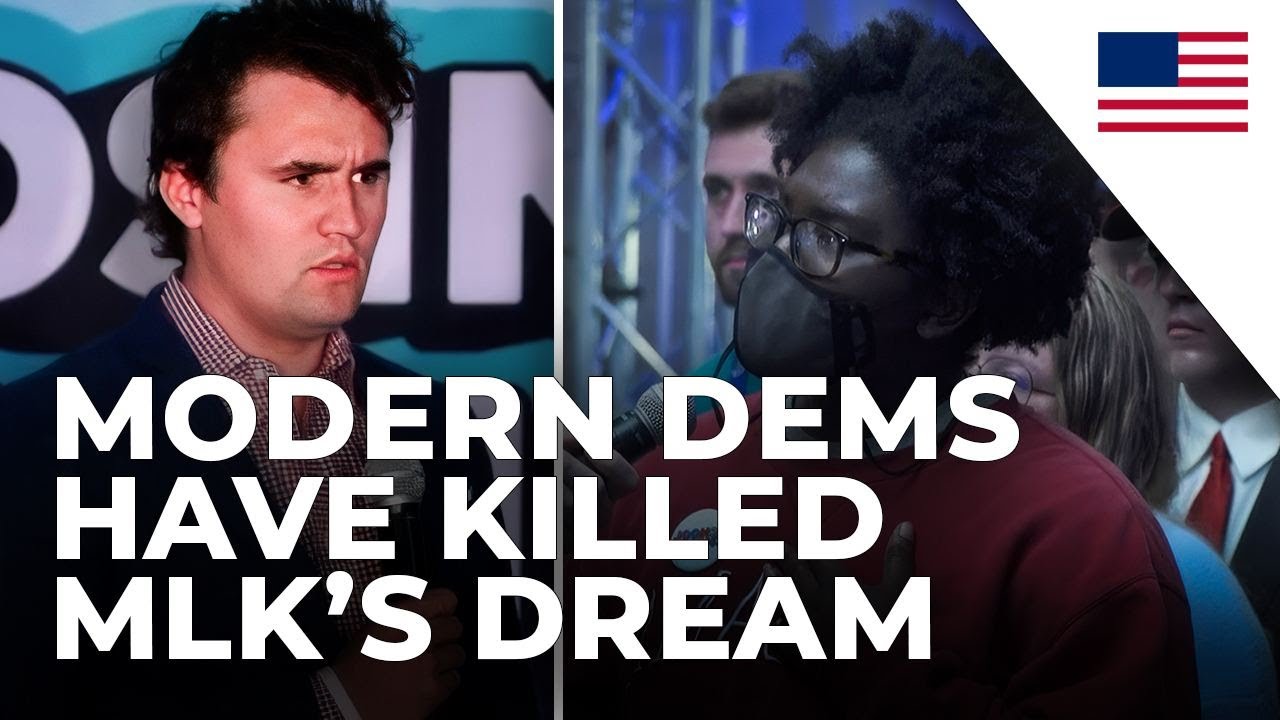
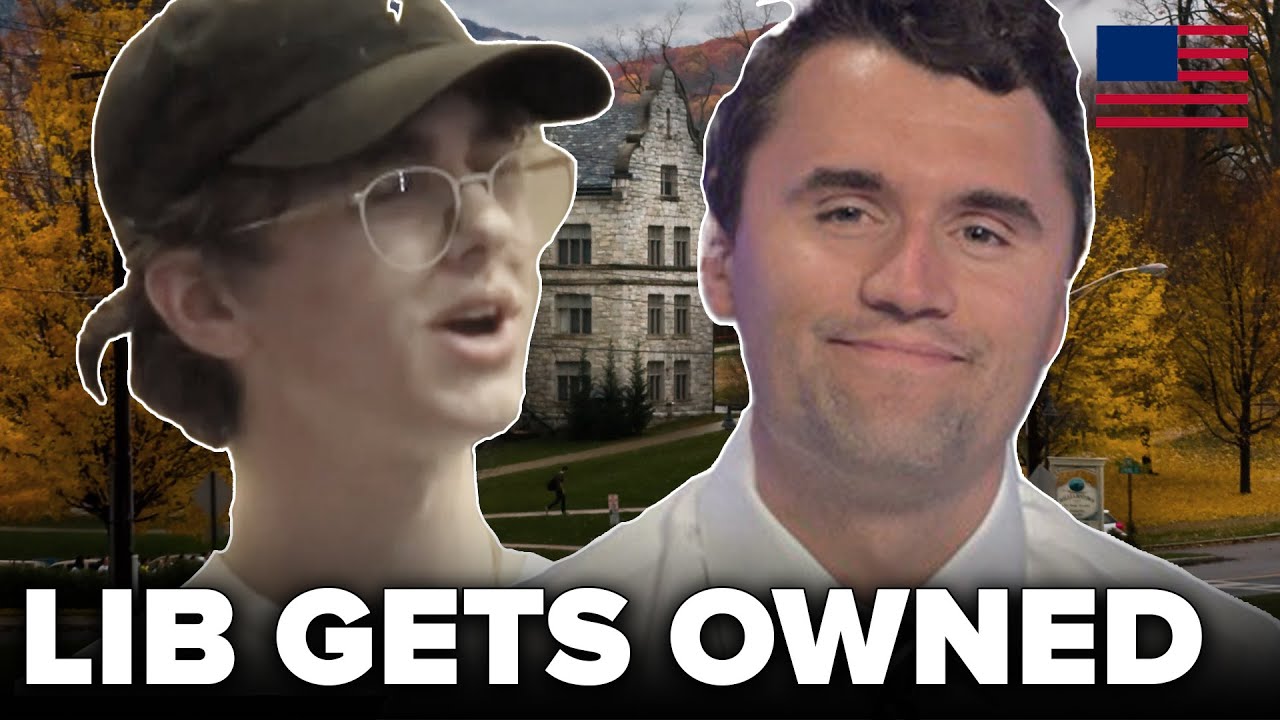
Charlie Kirk Debates Rachel Bitecofer on Critical Race Theory in Schools and Education Reform
Enjoying this? Share it with someone who needs to see it.
Up Next
Charlie Kirk Debates Critical Race Theory and Segregation with African-American Studies Student at University of Alabama
11:36
Charlie Kirk Unveils Bold Vision for Conservative Movement at Turning Point USA Event
17:08
Charlie Kirk Explains Critical Race Theory From Herbert Marcuse to the 1619 Project
2:57
Charlie Kirk Debates Rachel Bitecofer on Critical Race Theory in Schools and Education Reform
Charlie Kirk squares off with political strategist Rachel Bitecofer in a spirited debate about critical race theory, diversity education, and the proper role of government in school curriculum. While they clash over CRT legislation and race-conscious programming, the conversation reveals unexpected common ground on the importance of teaching honest history through original source documents, reducing political tribalism, and creating educated citizens. The debate moves from heated exchanges about segregated classrooms and safe spaces to thoughtful discussion about civics education, the failures of modern history teaching, and whether government should regulate what educators can discuss in classrooms.
Charlie Kirk faced off against political strategist and Strike PAC founder Rachel Bitecofer in a debate night powered by Turning Point USA, tackling one of the most contentious issues in American education: critical race theory in schools. What began as a charged political debate gradually revealed areas of surprising agreement between two figures on opposite sides of the political spectrum.
Bitecofer opened by acknowledging that most Americans, herself included, have little understanding of what critical race theory actually is as an academic concept taught in law schools. She reframed the conversation around diversity and inclusion education more broadly, questioning what role government should play in determining school curriculum. Kirk countered by pointing to the practical implementation of CRT principles in elementary schools and policy decisions, from segregated classrooms in Atlanta to black-only dormitories at Western Washington University.
Segregation Redux: The New Tribalism
Kirk argued passionately that modern diversity initiatives are recreating the very segregation that civil rights leaders fought to end. He cited examples including playgrounds in Denver that excluded white families, black-only graduation ceremonies at Columbia University, and chartered black-only schools. "I thought we kind of ended that chapter in our country," Kirk said, referencing the Civil Rights Act.
Bitecofer pushed back, suggesting these spaces emerge from students feeling isolated as minorities in predominantly white institutions. She asked Kirk to imagine being one of only ten percent at a university, suggesting such circumstances naturally lead people to seek community with others who share their experiences. Kirk rejected this reasoning entirely: "Whether I would have or not is irrelevant. Whether it's right or not... rebuilding the tribe is bad."
Unexpected Agreement on Community and Connection
The debate took a turn when both participants discovered they're passionate Oregon Ducks football fans. This led to a moment of genuine connection and an important insight from Bitecofer about Robert Putnam's book "Bowling Alone." She argued that Americans need more opportunities to interact across political and demographic lines, breaking down caricatures through shared experiences.
Kirk agreed enthusiastically, stating that finding commonality rather than emphasizing division should be the goal. "We should be trying to find things we have in common, not like okay you go to your corner and you go to your corner," Kirk said. Bitecofer concurred: "We need more people doing more things together." On this fundamental point about reducing tribalism and increasing cross-group interaction, they found substantial agreement.
Teaching History: Original Sources vs. Narrative Construction
The conversation shifted to how history should be taught in American schools. Kirk advocated strongly for teaching through original source documents, arguing this is "the only way to teach history." He suggested reading the oral arguments from Brown v. Board of Education and writings from the Founding Fathers directly, rather than through interpretive frameworks.
Bitecofer, who taught at competitive universities, revealed a striking observation: even top AP students arrive at college knowing virtually nothing about American history. She agreed that honest history education is essential but questioned whether it's possible to teach subjects like slavery, segregation, or the Holocaust without making students from the oppressor group feel some discomfort about their ancestors' actions.
Kirk responded by emphasizing complexity and context. He argued for teaching about abolitionists alongside slave owners, highlighting that nine of thirteen states had abolished slavery by the time of constitutional ratification, and that figures like Thomas Jefferson wrote anti-slavery language in the Declaration of Independence. He criticized the 1619 Project for not relying sufficiently on original sources and for using history to create activists rather than informed citizens.
The Three-Fifths Compromise and Historical Complexity
In one of the debate's most substantive exchanges, Kirk and Bitecofer discussed the Three-Fifths Compromise. Kirk argued that this provision is commonly misunderstood as racist when it was actually designed to weaken slave states. Southern states wanted to count enslaved people fully to gain more representation in Congress, which would have given them power to potentially make slavery permanent law. The compromise limited their counting to three-fifths, thereby reducing Southern power.
Bitecofer acknowledged this was a compromise necessary to form the union, though she characterized it as a "deal with the devil." Both agreed that such historical complexity is rarely taught in schools, where students often receive simplified narratives that miss crucial context.
Government Overreach and Curriculum Control
Bitecofer raised concerns about CRT bans representing government overreach into education. As someone who advocates for small government, she argued, Kirk should oppose legislation that dictates to teachers what they can and cannot discuss in classrooms. She characterized recent bills as creating monitoring systems that represent "big government."
Kirk defended legislation like the Texas CRT law, reading from it directly. The law emphasizes fulfilling Martin Luther King Jr.'s legacy, protecting the Civil Rights Act, teaching about the Emancipation Proclamation, and educating students on the 13th, 14th, and 15th Amendments. Crucially, it states that no student should feel "discomfort, guilt, or anguish" based on their race or sex.
He provided examples of what he sees as problematic implementation: Springfield, Missouri teachers told to rank themselves on an "oppression matrix," with white English-speaking Christian males identified as an oppressor class who must atone for racial indiscretions, and Philadelphia fifth graders told to celebrate black communism and simulate a Black Power rally to free Angela Davis.
The Political Weaponization of Education
Bitecofer candidly acknowledged that CRT has become a "handy political weapon" that Republicans have used effectively, particularly in the Virginia governor's race. She explained that parents don't hear academic theory when they hear "CRT"—they hear that their children are being made to feel bad about being white. She admitted this creates a perception problem Democrats need to counter.
Kirk pushed back on framing this as merely political: "Like should a kid feel bad for something he didn't do?" When Bitecofer agreed that no eight-year-old should feel guilt for things they didn't do, Kirk asked why Democrats aren't more actively opposing such practices if they agree with the principle.
Race, Bias, and Structural Racism
The debate touched on whether race should matter in modern America and whether structural racism exists. Bitecofer argued that unconscious racial biases persist even among people who consciously believe in equality, citing psychological research showing people respond differently to faces of different races in laboratory settings.
Kirk rejected this, pointing to research from Dr. Roland Fryer at Harvard that contradicts such findings. When Bitecofer suggested race might matter more when white people are no longer the demographic majority, Kirk questioned why race should matter at all if there are no inherent differences between races beyond melanin content. Both agreed there are no such differences, yet struggled to reconcile this with ongoing conversations about race in education and policy.
The Civics Crisis
One area of strong agreement emerged around the failure of American civics education. Bitecofer argued that the real debate about education should focus on civics rather than diversity curriculum. She noted that schools teach about the greatness of being American and the rights afforded to citizens, but fail to teach responsibility for democratic maintenance.
Kirk agreed, lamenting that students today lack basic knowledge about major historical events like World War II. Bitecofer shared that even graduate students she taught knew almost nothing about how major conflicts came about or the intricate details of humanity's collective story. Both expressed concern that young people are growing up without understanding the foundations of their political system or their role in maintaining it.
The Vision for Education Reform
As the debate concluded, both participants outlined similar visions for what education should look like. They agreed schools should be clean, modernized, and well-resourced. Students should receive well-rounded liberal arts education including history, science, and math. Most importantly, history should be taught honestly, giving credit to the Founders' brilliance while also acknowledging their failures and the compromises that built the American system.
Kirk emphasized teaching about figures like James Madison, who designed the Bill of Rights, and the historical context that shaped constitutional provisions. Bitecofer agreed these are exactly the kinds of details that should be taught but rarely are, noting that most students arrive at college without this foundational knowledge.
The debate demonstrated that even across significant political divides, common ground exists on fundamental principles: honest history education, reducing tribalism, creating informed citizens, and questioning whether government should micromanage classroom discussions. While Kirk and Bitecofer disagree on implementation and interpretation, they share concern about the current state of American education and the need for substantial reform.
Video Transcript
[Music] welcome to debate night powered by turning point usa tonight charlie kirk will debate rachel bittikoffer political strategist and founder of strike pac tonight's topic is banning crt in schools necessary rachel you have the floor yeah it's really difficult for me to start off talking about crt because my most of america i have no idea what the hell it is so you know i'm happy to talk a little bit about crt as i think it means which is probably more blanket about diversity inclusion education rather than the actual critical race theory which is only taught in law schools as you know and not something that i am well versed in to discuss as an expert but i will tell you uh in terms of the critical race theory stuff um that you know it is being talked about in politics i think for the average listener they're hearing something about diversity and inclusion programming at school and certainly think we see that reflected in legislation that's being crafted for crt because it does not say hey in k through 12 education we're not going to have um prop we want to have proper curriculum and we're not going to have this you know high level college course like material right in our k through 12. the bands as they're being written include things like diversity could fall in any way into diversity and inclusion education so um you know i'm very excited to be here to talk about that and debate out whether or not we should be talking about diversity and inclusion in schools and what you know the proper role for government in terms of curriculum is too which i think is going to be an issue that's going to be really important to you great yeah you put me in a really tough spot because you're a duck fan yeah like not like a passive duck fan no not like i'm kind of a half you're actually a real duck fan so i have to be like really nice to you yeah and i will anyway so we can disagree on that no matter what go ducks everybody so yeah look i i think i think that what we're gonna we're gonna figure out what we both mean so i'm gonna try not to talk past each other but i mean look crt as it's written as it was literally in like the intro to critical race theory in 1991 by delgado was basically saying what we would call today is very racist and it is being taught in elementary schools and grade schools the essence of it right it might not be taught as like the complex esoteric legal theory but also it's coming into policy as well it's coming into policy of actually how we educate kids from segregated classrooms in atlanta to black only dormitories at western washington university so it's more than just kind of a issue and curriculum it's actually changing the way education itself is done which i think is something that we need to explore and i think it's also super evil to say that white kids should go to one classroom and black kids should go to one classroom i thought we kind of ended that chapter in our country maybe not um through the civil rights act amongst many other things so look crt as it's was written as far as intro to so intro to critical race theory back in 1990s um literally i could read the words for you but it's somewhat just reiterating that it's racist pure and simple they want to change the way that we structure conversations on race they want to view people through a racial lens and i grew up in an america where i went to a very diverse high school where that was deemphasized and i believe race should be de-emphasized especially in the education of our children and even beyond that segregating kids in school i think is plain evil great yeah no i mean i think it would surprise most people to find out that today's education the k-12 system is actually more racially segregated than it was at the height of segregation and and that's all by choice and mobility um you know people moving out of the cities and into the suburbs and so on and so forth and it's certainly not reflective to all school districts but in places like alabama it is you know absolutely the case where we are we are producing naturally through the free market if you want to put it on that uh a segregated world right so then you have to think about well why why are people still naturally behaviorally keen to segregate right and it it it's easy i think for two white people myself and you both grew up in pretty similar circumstance i'm sure a middle-ish class life and in the navy and lots of diversity i also thought we were living in like a post-race world right if we can't talk about race how are we going to foster an environment where people feel comfortable being with people that they don't feel that are in their racial tribes right so if we if we decide that any conversation about race is by inherently racial racial or racist as your terminology goes it makes it very difficult i think for people who are interested in coalition building community building dealing with like what we would call the de facto segregation so not by law but by behavior um and i guess i would be interested to hear if we don't want to talk about diversity how do we how do we achieve those goals since you seem very keen to be um you know living in that poster yeah i mean you have one minute okay yeah i mean i was raised in that country i went to a high school that was 53 hispanic i was a minority as a white christian male and no one talked about race it was great we talked about character it's like i don't need to be like lecturing in some sort of hypothetical world i was raised in that world and it was awesome everyone got along i mean you went you you were in the navy or you grew up around the navy that's right and so maybe you have your own different experience with that but the more we talk about race the more we actually bring those demons of our past to the forefront like we're actually producing racism we're manufacturing it we're there's a supply and demand problem with racism in our country where there's an incredible demand to try to find it and we're trying to increase the supply of it and when you have playgrounds in denver where you say white families are not allowed to come black families only how is that not just reinstituting the same segregational policies that we said were evil in the 1930s and 40s which they are and then just flipping it on its side to say actually now we're going to be racist to white people which is actually the creed of evil max kennedy he says segregation a day to fix segregation of yesterday i mean i won't do the typical liberal thing which would be to point out you know the statistics about homeownership and historic racism and uh you know why you might need affirmative action to achieve diversity because i think that will just take us down a rabbit hole and i really want more i think to talk about the substance of you know america so it is true that when we were children and i'm 10 years about older than you um you know we did not have curriculum that dealt with diversity and inclusion at all and like the american for disabilities act was in its infancy so like programs for students like my son with autism we're few and far between in k-12 so we're really talking about a school environment now that has been spending oh i don't know 20 years kind of building up an infrastructure that's more focused on you know community building exercises getting people to be accepting and tolerant of others reducing school bullying and you know suicide and issues with kids and i just don't know how we can have a conversation without mentioning race when we're talking about you know an inclusive environment like do you think there's something i'm just going to ask a question do you think there's something morally wrong with black only graduation ceremonies so i would argue that there is definitely something wrong with anything that is exclusive unless we're talking about a situation where have you so you you talk about being a minority in your high school right well certainly i'm a minority in the country yes and i also went to a very diverse high school it was at least 50 percent african american right um and you know the thing that i noticed about it what for me it was a real shock the first day i enrolled because i came from a smaller city first and moved into that to see like oh this is the first environment i've ever sat in where i not everyone's white right i mean at least half the people are around me were black and you know what i would have liked back then is some direction on how and getting to know people from a different world right like our problem is siloing too much right um with all the technology we have we're only hanging out with people that agree with us come from our own walk of life um for example when you mix people together you get things that you cannot have in a homogenous environment with one representative of that minority group so i just you know i think it's important to keep in context that too like the america that i grew up in the 80s and the 90s for you is much more diverse right so we um i don't see the the need for diversity in inclusion education for perpetuity isn't it isn't like for example a black only graduation ceremony isn't the opposite of diversity so where was a black only columbia university okay and why was it black only good question no i mean literally like what was the rule that made it black because they said they're uncomfortable around white people oh really so it was a private ceremony yes white people weren't you know what i i'm going to be very steady across things and when i was teaching in georgia i had found out that there was a high school in georgia still doing a whites-only promise i think that's evil in 2012 dude it was like 2013. you can google it and you agree that yeah yeah no definitely and the way that they were doing that by the way is going into private education which is a really important conversation i think we should have because when you're in the private sector you can do things like black only or white only and i definitely agree that we want not anymore civil rights act disallows that but we could talk about that in a second so you live in oregon i do yeah there's a black only school that's been chartered do you think that's a good thing or a bad thing i have not looked at that so i'm not going to comment on that at all right but you know it to me imagine yeah so here's here's one thing that really sticks with me have you ever read the book cast by isabella wilkerson okay i read that book um it was a hard read and history is a hard read if we you know take a hard look at all history not just the us history right yeah um i've been studying world civilization pretty intensely over the last year and there's commonalities in human behavior that are not unique to america i agree right so to me my story is exceptional but yeah for sure it is it's an exceptional story but it's but there are things that are commonalities between us and other people in other countries right and um one thing that humans unfortunately have a default setting to is violence and intolerance this conversation has been very informative so far let's keep the good dialogue going rachel let's pick up with you um yeah no so so so all right it's difficult to imagine what it would be like to be in a place where you stood out a lot right i mean you know you and you're a handsome guy so you stand out that way you know most of my detractors would completely disagree oh you got the hair you're the first liberal that hair is just you know to die for yeah um charlie kirk has hair to die for there you go there you go um but other than that i'm don't take this now i'm going to let you down we're pretty non-descript right and so am i and you know i don't know that we can understand what it would be like to be not nondescript in the sea of people who all have this commonality and you do not right so i think you know when we think about what diversity and inclusion education which is to me more useful to talk about than uh no that's fine but like i'm using examples of how we're actually organizing education yeah right right so like at western washington university they have black only dorms that's the opposite of diversity yeah but i mean imagine if you if you were the uh let's say you're 10 of a university like cnu had fantastic racial diversity still like 20 right so like if i went to an hbcu which i wouldn't like i don't know if i would get in or not but like i guess they can't discriminate and race and i had a white only dorm that would be bad yes because you're at a black college it would be weird right yeah so i'm saying no it's like this is no longer like theory we're like organizing think about it the other way like not every black student can afford a private tuition at hbcu they're extraordinarily expensive right and usually competitive for emissions so like if you go to a normal university and the university of georgia is a great example of this because we both hate their football program because we have our nattie natty we started football coaches no he did we'd get revenge didn't we charlie give me there we go now dan lenning all right um anyway uh you distracted me but at university of georgia where uh the the population of that state is 30 okay 30 black black the university student body when i was there for that four or five years was only ten percent black right right so imagine then if like i'm trying to guess i guess i'm trying to to explain like what would it be like if we took charlie kirk and dropped him in an african country where he was the minority student he would probably feel lonely and want to have programs that help well look i mean i hate to like say that i haven't lived anything close to that but i did grow up in a high school where i wasn't the majority right and i didn't feel like inclined to go start a white only group would you do you think you would have though if it was 90 10 no i see this is important whether i would have or not is irrelevant whether it's right or not so you like if you're in the minority people do things that are wrong i agree so it's wrong so the fact they're doing it doesn't mean it's right so like rebuilding the tribe is bad not that if you want to do it like of course in your natural instinct you want to be in your tribe right but like what makes the west different is we tried to break the tribes apart yeah i mean there's a natural melting pot of that at least an attempt to try to get right right so very much what what crt is or whatever you want to call it and i think we're agreeing on some of this is like in atlanta and in portland all these places where they start to put people back in their tribe it doesn't matter if people would want that it's wrong yeah i you know i think too like we really need to to think about like okay if we have this natural segregation still in society and it's causing so much political animus right this um i don't know if you've ever heard the book by robert putman called bowling alone yeah i've heard about it yeah and bowling league used to be a very big deal yeah but mostly it's about you and me right we would never maybe get along except for turns out we're both like die hard season ticket holding duck that's exactly right right and like that's all that matters right like so now you and i go to again i'm not saying we're going to do this america but you and i are at a game and we're shooting and you realize oh man you know what not all liberals are okay this woman she likes to blow up yeah and no not all conservatives are fascists right um she likes to blow you know blow up fireworks she likes to drink beer she can talk with me on football and it breaks the caricatures that we tend to draw about people we don't know and so you know i agree with you i don't think we disagree that you know moving backwards into safe spaces to usually yeah or like tribal spaces ideal because what we really need in america more than anything else is more time together right we need more people doing more things i think we just ended the debate that's right let's go crt is doing the opposite it just is like you read their literature ebermex kennedy who's like the archbishop of this stuff he's like we need more segregation like he's supporting this stuff and i agree like we should be trying to find things we have in common not like okay you go to your corner and you go to your corner that only makes the divisions further it does and then like in in a time like this where we're dealing with pressures international pressures that the world has not faced since the 30s right we really want to be i think getting our domestic house in order and i think that's something that you know i and others have been arguing for a long time but now we're really starting to see you know division in america politically domestic politics especially about stupid is really going to endanger our international efforts here dealing with uh you know a military aggressive so i'm going to go a step further like the way i framed it and you agreed with most of it do you now understand why most parents are really scared and like apprehensive of this being implemented right because they don't want that vision they don't want 1950s america where it was segregated yes but so here's the thing is you know we're no between the two i'm not right i don't want segregation it's a topic of of debate but it is also a political tool right and it is a very handy political tool because for the average virginia suburban person like when they hear crt and they see conversations you know about books that um you know have racy stuff in it like that stuff taps right into emotion right fear threat and emotion so it you know to me whether or not the merits of crt a theory like that in the right setting certainly not in k through 12 but diversity inclusion education in k-12 to me those things um you know you have to take into account that you know the difference of how a average person is going to hear that right they're not going to realize oh what charlie kirk means is you know this this theory that you know the whole system is is designed in a supremacist way and that you know the uh white power structure has you know rigged the rules that's not what a parent hears what a parent hears is you know they're making my kid feel bad about being white well yeah let's just start with okay that's fair what's wrong with a parent being upset about that like should a kid feel bad for something he didn't do well i mean it all's fair in love and politics right and especially here in american politics where we don't have any regulation on campaign speech on campaign material and stuff like that so um so to my answer would be that's not totally true very little very little right and so like what my answer would be to that is it's a it's it's a handy expedient political weapon and because of that democrats should behoove themselves to answering it with a counter offense okay so i'm actually really curious to what you think the counter offense is but like let's just kind of forget the political charge of it if a kid comes home and is being taught he's terrible because he's white or light that's how we feel is there something wrong with that shouldn't that be fixed like no eight-year-old should have to feel guilt because of something he didn't do yeah so but like where are the eight-year-olds that are coming home like that i have not met one like the whole virginia election kind of showed that there's plenty right well no i mean the perception perception is different than actuality right so like my goal charlie is to create a perception this election cycle that's pretty similar to things about like crt or what have you um and you know it what crt is advantaged for is it hits at this base pressure that's that's really hitting the electorate right now because we're in this america that didn't exist 40 years ago it didn't exist in terms of racial diversity it didn't ex exist in terms of gender and racial like de jour equality right so we're really looking at a society that's been extremely pressured and that's why you see this international too in other western democracies the heterogeneity of the modern uh populations populations moving globalization has really put a lot of pressure on um you know uh uh the the hegemonic power structure which of course is still white people in america i mean we still can't yeah i gotta ask you why the heck does that matter what does race have to do with anything why does that matter to you so i think like the the answer to that and then you know being a woman i can't answer what it's like to be a racial minority i can answer to what it's like to be a woman right and you know it and we know this now from psychological research that even people who want to be race blind who feel and passionately feel um about equality and stuff when we test them in a lab have racially um like they respond to race codes right so like you know in in laboratory settings even liberals will respond differently to a black face than a white face right and because we have unconscious biases none of it's true no no i mean it's definitely 0 no completely dr fryer go read his stuff from heart okay but here's the thing and this goes back to your piece in the very first piece you ever wrote that made you charlie clark okay so the economics textbook yes wow you know my bibliography i told you i've watched you grow up and i don't mean that in a condescending no it's not i just mean my academic career has tracked with your career and we're both trump babies right i mean you and trump made me is just in different ways right okay so you're a big trump fan but so with with your article on economics which you know paul krugman aside he's not a terrific economic uh no he's actually awful yeah i mean actually he's pretty run-of-the-mill right which is tens sometimes we see that in media not the best academics are doing academic research trust me i'm not the best academic and that's why you see me in the media right um so anyway with krugman when i i wanted to see where your original like spark was on the education issue and i saw that tied back to textbook language so i went to look because we're going to talk about crts and textbooks and what the textbooks will look like for america right so i um did so so what i want to stress with you is this like the way that textbook is written is actually standard and we can debate whether they should have citations right but like in the research world and it doesn't matter if it's molecular biology or politics there is an academic consensus about something right and when there is like it's pretty standard form to say most economists agree or the prevailing you know um wisdom is this uh when you are coming from something that is like shattering a paradigm usually other people will get into that so eventually there's momentum for something to say like this was wrong they have been wrong and they can be wrong yeah but like you can always i mean look at climate change right ten years ago there was a big effort to make you know to to promote anti like uh like um scientific research that did not agree with the consensus right and on the political right especially and they got a lot of scientific consensus on climate change yeah but which which part of it that climate change is man-made and occurs to what extent uh i don't think that was the debate back then the debate anyone could say it's meant that's the whole point though right is it 1 5 10 15 20. if you can't prove it then you're you're a novelist not at all not at all so what do you do okay man man contributes to carbon emissions oh really and 95 of science the scientific consensus says so right you can always find a detractor and when a detractor is galileo or copernicus or copernicus but they change history when it's galileo though what you will see eventually is a bandwagon effect and if there was meat to the anti-climate research that's something that would do that now that's a flawed argument no not at all okay so let's use it let's use another example so basically you're saying if a majority of scientists agree with something then it has momentum it must be right no not at all i'm saying if it's wrong someone will discover that's wrong and through replication and verification that fix will eventually become the prevailing list i can think of so many examples why that's not so like if you were reading a textbook in the in a different time period you would have had a different there would have been a different conversation about supply side economics because in the 80s that was a new policy i'm not interested in supply side economics right now actually let's keep the conversation moving okay so i want to go back to something though why does race matter i think race doesn't matter to white people because we are in a majority white system and eventually we might notice how it feels to be not um racially dominant when the world is no longer you know majority white or at least our world isn't and right now it's 66 so besides melanin content do you think there's differences between races um nope do you no then why do we talk about it all the time i don't know yeah but you're talking about it you're like yeah we need to talk so it should be irrelevant no no no unless you think there's differences in races which is talk about it with you but you know what i would say to people is the the topic the conversation around race is not designed to have a substantive impact on race relations it's designed to win a political argument right so it you know indeed what do you mean by race relations i'm confused like how is america racist uh yeah all right are you familiar at all with the concept of structural racism yeah it's a myth no so tell me why it's true okay so not outcomes tell me why it's true so the textbook that you hearken back to in the 1950s right i found one of those in virginia it was in publication from five yep and so when we think about like how do you design curriculum that's historically accurate that doesn't talk about oppression that doesn't talk about one group being oppressed over the other right and so when you look at that virginia textbook i certainly don't argue that that's what we're looking at heading back towards but my guess is if you were to try to write a curriculum that covers you know slavery in the u.s or the you know uh holocaust or whatever and not you know give the narrative that this group did this horrible thing to the other group you're going to have to rely on some pretty it wasn't groups though that's incorrect not every white person was a slave owner well that doesn't matter though because you know nine out of 13 states abolish slavery and here's the other thing i mean it's not like every white person was supported in fact we had abolitionists at the time of the first exactly exactly so why would you say one group well i mean you know it's not you don't have to have every white person no in fact the majority of white people found slavery to be reprehensible with the founding i don't know that if we would have pulled segregated we did actually in the 50s we would have found that let's start with slavery nine out of 13 states abolish slavery by the time of constitutional ratification yeah then why did the south secede well they seceded post cotton gin for economic reasons we went to war over it though to say that america guys the south declared war because they expected lincoln to ban slavery and he ended up doing it well not for a long time you know why because he wanted to he wanted the fight to be about national unity which is a good way to i think come wrapping around right national unity so like the first few years of the civil war he did not expressly say this war is about ending slavery forgot to and he later got it because the south was more passionate and the north needed um i know but let's let's go i mean but you said something i want to focus on though one group's doing something to the other like that's just not true right it would be a small group of white people that exploited incorrectly the crowds that would show up for the lynchings according to the research that i've read numbered in like five thousand and they would mail them why was he why was slave being a believer being abolished pieces of of like these people's bodies right but like that's not small that's not a small group of people that's not an isolated event but i mean in certain states massive systemic problem right nine states abolished it thomas jefferson wrote in the original draft of the declaration to king george admonishing him for bringing slavery the first ever anti-slavery convention was in philadelphia chaired by benjamin franklin in 1775. thomas jefferson got rid of the importation of new slaves guess what none of that stuff's taught in our schools right now because of crt no it's not have you ever taught any any kids holding history i want you to go into a public school in eugene and portland and ask them is thomas jefferson a racist or did he ban slaves coming in the united states what would they say charlie i'm going to tell you this every semester i would ask my students like basically okay but i'm that's like they don't they don't know any of that because they don't even they're not like they're on their phones but like let's talk about thomas jefferson they don't even know the big main points of world war ii or america do you think that most schools are teaching thomas jefferson to be a good person good person yes definitely why are they taking down statues well you know what if you go into the deepest county in alabama where there's deep red republicans do you find them doing you don't agree with well give me an example i've given you plenty i don't know what you're talking about i mean right now things are getting a little uh cloudy because some of the things that come out of those deep red pockets are becoming mainstream in republican politics right i mean crt bands right so this idea of laws i mean to me somebody who is offended by big government should be deeply offended by the idea of the government dictating curriculum the government should be small and strong do it do what it should do and do it correctly and quickly so defend crt these there's 14 bills they're being passed yeah so let's talk about the texas crt small in the crt law in texas it says quote we want to fulfill the legacy of martin luther king's letter from a birmingham jail and i have a dream speech they want to protect the federal civil rights act they want to protect the united states supreme court decision and brown versus the board right they want to talk about the emancipation talk about the universal declaration of human rights and educate on the 13th 14th and 15th amendment why is that wrong it's not wrong but i believe that they are also striking out some other things let me tell you how they were right here's how they were though they say that no person any individual should feel discomfort guilt or anguish or any form of psychological distress on account of his or her race or sex we agree with that okay but would you teach the holocaust to german students or not because they're going to definitely feel but i wouldn't blame them for it well it's nobody blames nobody's saying you caused that that's where you're wrong yeah but so so charlie i can also find and i didn't know i could have a ledger book or a cheat sheet so i would do whatever you want my memory is just not as good as yours my memories are horrible actually but but here's here's the thing i can you can always find exceptions to the things outside this is everything right you know some wingnut people in san fran they live in a bubble right they think everybody thinks like them and they pass stupid okay how about springfield like renaming the school lincoln springfield missouri teachers were told to rank themselves that is not a modal policy this is all across the country this is a sample no it's not all across springfield missouri okay told they said teachers have to rank themselves on an oppression matrix scale white english-speaking christian males were taught that they were part of a oppressor class and must atone for their racial discretion i won't even do the san francisco one because i'll take your critique how about philadelphia fifth graders were told they had to celebrate black communism and simulate a black power rally to free angela davis and charlie that's why like the misinfo on kovid is not misinformation no listen it's so d it's so it's so dangerous to a good conversation i don't know if i can believe your bullet points let's keep the conversation moving let's go back to our education conversation and to kind of close it up um i suppose the last question is should it be banned of course it should let me ask you just kind of more general question crt should be banned that is um what should a what should a proper education look like for a child i guess that's a good way to close a good way to close right because i don't think that we would disagree in this regard and like the the to me like the debate we should be having about american education right now has nothing to do with diversity curriculum it's about civics right so we have a political culture i agree that is completely anemic right and we don't teach people we teach people about the greatness of being an american all the benefits get through pretty well um the rights afforded to us but responsibility for democratic maintenance is not a lesson that we impart in any part of our political culture right and um you know to me our our future education really needs to focus on creating a citizen american um you know and not allowing 50 percent of the population to sit out the most consequential elections too that are going to determine things for them for the rest of their lives yeah so i mean i find very little i disagree that anything in specific that i mean that i would find disagreeable and by the way i had um a student for trump president in one of my classes it was really great yeah and we actually got along really well because you never heard about me did you so we gotta watch you i actually think you're a liberal not a leftist yeah no i'm definitely not a leftist dude that's that's a big difference i would be here if you were like i drive a pickup truck and watch football so i'm definitely not a good leftist right i love that but um in any case like what i was going to say is i you know i think at the end of the day like we really want and this is why i agreed to do the show with you i i think it's so important for us to start to talk and spend time with other people who we disagree with and have conversations about things like education right yes and you know the vision that most people have for education is a school that's that's clean and nice and modernized right we don't want to be sending our kids to schools where there's no heat and stu you know people have a air window air conditioners and we also want our student our our kids to be well-rounded right we want them to get um you know what we would small l liberal arts curriculum that involves history science math and i don't know that affording the government permission to decide what and what not affords uh or it qualifies as proper history uh i just think that that is well i mean i think though that if all of a sudden to use an example used earlier if like all of a sudden a group of teachers like we're not going to teach the holocaust anymore we're going to deny it i think you would want to intervene right yeah i mean you know that there's teachers right now who are worried about talking about things like the holocaust or like my lecture i used to do a lecture on civil liberties because i teach an american government textbook and you get a chapter of civil rights civil liberties and i had civil rights and civil liberties and that lecture is very um you know focused on martin luther king jr the movement to end segregation which of course happens by judicial and federal but now we're going to have to re-end segregation because of what's being taught in the school so like how do you teach so how would you teach southern segregation truthfully and honestly you know how here's how tell me how original source documents okay original source documents is the only way to teach history and when they show that in the south you know they designed an institutional structure want me to tell you to keep black people from voting that is naturally going to make white people feel bad don't you think no because they'll feel good because dwight d eisenhower intervened as a republican president they'll feel good about their country that was able to close that chapter he doesn't love dwight eyes an hour right some people don't like dwight eyes the point is that like a treat honest to teach honest history i would read the oral arguments from brown versus the board yeah i think that's a great idea they don't do any of that right now oh though right is very bad and like but it's not bad in substance it's bad in in resource and investment sure i know this for a fact because i taught at a competitive university it wasn't harvard okay but you couldn't just use in both of them and uga is actually now because of the universal um college free college education for everyone has is each class has gotten better and better it's like 4.0 right so i've taught decent students at two institutions and two institutions in the south all right and i will tell you when they come in to me these kids who are all ap students they're all like top-notch you know high school students or at least b and above they know nothing about american history so no but so you are obviously not you would ask how i would teach it right so this is why i'm a big critic of the 1619 project because it doesn't use original source documents it uses a lot of them but it does also rely on some other uh second source i know okay thank you for admitting that because not everyone will no nicole hannah jones does a lot of kind of mish-mashing together and she's been heavily criticized by her peers but it's also a matter of like you look at history is it telling you a story what is that story you want to tell an honest story right right and what is the type of citizen you want to create and you know you look at the goals of marcusa and foucault and delgado and ebermex kennedy and all these robin d'angelo they are willing to use history as a way to create activists right it's like we want to try to make people so angry so guilty about their past when it's a lot more complex than that you know it's complex it's not quote unquote black and white it isn't yeah well it's also impossible to assess history and the actions of people in historical times without acknowledging that you cannot perceive what it would be like to live in that environment right well i agree with that that's not the way the educational i'm not saying you're defending it but a lot of the educational regime right now says like we know exactly thomas jefferson's a bad person washington's a bad person like we need the founders are racist that's a consensus view i just i have to vehemently disagree that that's quantitatively true so like we could find out though right we could audit every textbook well like if you go through the ap textbook yes i want you to do this okay and come back i will and ask me do you think that the ap uss3 textbook as it's you know published from pearson right right do you think it gives the a fair hearing to madison j hamilton and john quincy adams adams washington i would say absolutely not based on the experts i've seen it's a heavy emphasis on the slave trade which should of course be incorporated but you know there was a brilliance to the founders i mean they had a civilization oh absolutely and i can't i get to teach that i got to teach that anyway until recently and and we agree on that yeah i mean here's the thing like what we need is more more historic history education i have just like filled in the gaps for my oh i went to college too right i mean a graduate school and i still knew almost nothing about how world war ii came about how i mean i understood the high points of you know war one and world war ii and i understood the holocaust but i did not understand an intricate detail this the story the collective story of humanity and that collective story charlie is one of great promise an amazing achievement but also a lot of senseless brutality so let me ask you so much my argument is such a great when you talk about he designed the entire bill of rights and he was pushed george mason did but yes that's okay yeah no no madison wrote the bill of rights yes he did i'm pretty sure george mason wrote in 1776 virginia declaration no yeah the federal bill of rights i'm talking about the bill of rights of the constitution james madison took it from well that's okay and i believe that mason pushed him together madison was the father of the u.s constitution and he and here's where madison was really wrong right because madison or mason madison because when he was pushed about including specific liberties and protections for individuals right when he was pushed about that he was like oh we don't need that the separation of powers achieves this this check on tyranny just fine it secures individual liberty we don't this all this is just extra right and he could not have been more wrong when we go through the annals of american political development it is the bill of rights getting applied to the states to protect you as an individual over time over selective incorporation which is like 200 and some odd years that actually has produced for today the america that you and i are sitting in is the most free america with the most robust speech that has ever had even though we don't think about it like that this is this is this is the truth right well i think i think there's some there's some truth to that i just i think as we close you know we both want good education i think we could agree on it more than not but the closing point i really want to emphasize with you and i'm not sure i'm going to convince you right now but i am kind of widespread in the educational space is that the type of history that you want and that i want generally which is a fair reading of history which does give the credit to the founders where it's due which is this historical brilliance and genius exactly that we do benefit from and then criticizes them robustly for being involved in those that were those that were okay fine those that were not all of them were okay um and in fact some i mean here's the thing so we're abolitionists like quincy entire three-fifths provision of the constitution the did your institutionalization of slavery protection of slavery in the new american system those were the products of the need for compromise right you had 13 colonies sort of three fifths is a lot more complicated than that you had to get you had to get consensus from rural states small states and the south where slavery was an institution that they were dead fast if they were going to form a country do you want to go into the three-fifths direction because they put it to actually make southern states weaker because southern states wanted to count every slave well yeah as a census so they had a disproportionate amount of votes so they could eventually make slavery the law of the land right three fifths was actually a way to make slave states weaker and keep the union together it was actually but it's yeah so it's compromise it was a compromise but it was actually an anti-slavery compromise and it is yeah but it's told as it as a it's what they had the deal with the devil they had however to get us this fabulous country however we look at the northwest ordinance article 6 article 7 in the northwest ordinance no new slavery in the new territories so there's a lot there most students would walk away with that do you have anything on your mind you want to make sure you talked about the floor as yours as we close well charlie again i'm so glad to be here to talk i'm really impressed that you've developed a show that we can come and have this kind of conversation and um i hope other people will come and speak with you you can help me find guests yeah i mean you know i people were like are you crazy or dude i'm like look uh i think that you have hit a point in your career congratulations a very successful career um where you have a lot of influence on a lot of young minds and i if i can have opportunity to come and also join you in that influence for you know an hour it's it's a real pleasure to me and finding out that you're a duck fan well that's i mean that's just the that's the that's everything yeah i just i i think that these discussions are really important i actually think we agree on more than not i um i had this belief you were going to have like this very anti-american view of history kind of like because that's just kind of i deal with that a lot yeah yeah but you also get a very distorted view of the world right because you're in politics i just spoke to this woman on the airplane next to me because she's like what do you do i'm like well you know i never want to tell people what i do like it's politics i'm sure you're the same right so i try to talk show host try to be a little vague but like you know it never works out all the way and uh this woman you know she doesn't know any of the news that's happened over the last three months i mean she knows about ukraine and putin and maybe um you know inflation or other things like that and i think it's so important for us to remember that we are seeing the we are murdered in the extremes right we are murdered in a world that is not typical modal american experience if you know who nancy pelosi is you are a weirdo right like if you go stand in a grocery store and yell nancy pelosi everyone's gonna be like who the hell are you talking about right and so i would urge you to to consider when you're looking at a leftist or a socialist or whatever to um remember you're probably not looking at a yeah i mean i look i just look at the theorists that are implementing things like nicole hannah jones and foucault and foucault's not alive but i mean it's the same thing i do right i mean i look at like what's happening within you know the conservative movement right now it's of you know more authoritarian elements i mean to me a crt a a bill that comes in and tells teachers hey this is what you can and cannot discuss in a classroom and we're going to put a monitoring system is is big government so i i got gotta go there you think we're embracing authoritarianism yes very much so have you heard of justin trudeau yeah but so here's the thing totalitarianism and justin trudeau come on really defend that he just declared martial law emergency wars act that was used for invasions against truckers those protesters were black lives matter protesters though i have no doubt you'd be like hell yeah yeah you know what i'm out man you know why they burned 30 churches so it's what i'm saying what crimes did the truckers commit it's really important and i do this to the left seriously like george w bush he was a controversial president okay but he was a normal president he followed the basic rules of law you could argue the surveillance stuff is a little bit extraordinary it was an extraordinary time but generally speaking he was an institutionalist right and what we're seeing within the right now is the real primacy of a movement that is not interested in small elves i want to focus on this trudeau thing though you realize they shut down bank accounts for people that supported trump yes because how is that not authoritarian because in other states other countries like our system is so atypical like i always had to explain that to students okay here's the american election system there's basically there's little rules here and there oh after 180 days an interest group can't mention the party name or whatever right but generally speaking when you compare us to other western democracies we have almost no rules you can say or do almost anything else or as long as you want so we have really moved into a situation where we're just constantly canceling so yes so trudeau signs the war act seizes crypto wallets and bank accounts because they've got controversial because in canada when you spend when you send money from another country to influence domestic politics that's a crime that's not what they were going after but okay that's why they got the there was only thirty percent of the sourcing of that donation came from you and i believe that they kept that money i think they only divested that other portion because it's against the law they confiscated gibson going all that but this idea that the right is embracing authoritarianism well in australia they say you can't leave your home after 10 pm yeah but they almost killed nobody like we just we decided to do let it rip and you know whether or not that was the right policy and half the country yes we did charlie we opened georgia florida and texas and florida had some of the best results right no i mean the death have you seen that's right way lower than new york no no dude especially especially for old people especially when you look past the vaccine time period where we really see red states with disproportionately high covenant mortality rates can't be serious i will show you that data since you love data i will show you has a much better degree if i make you a deal can you make me a deal charlie new york versus because the professor in me cares if i can prove to you the vaccine mattered and cut death rates big time and vaccinations guess what will we get the vaccine absolutely not only if you could prove only if you could prove one thing if every single one of the units of measurement was also given early treatments all right it's a pandemic of the untreated not a what's your favorite flower my fa i don't really think about that okay well i need to know when i have to send it to you in the icu buddy a rose hey i i don't have any plans to go there anytime soon i hope not so please get the vaccine not never going to happen how are we going to do duct games if you're doing well guess what i want to walk so i'm not getting the vaccine but no you know what you're not going to not be able to walk so just true story i asked my whole audience of america fest 10 000 people how many people know someone who died from the vaccine or was paralyzed or crippled every hand went up oh yeah this is bigger than you could ever imagine it's either they're all lying or there's a scandal happening in front of you like you wouldn't i know my teacher pulled my third grade classroom and they all wanted more recess time it was a real shock yeah so basically you're saying they're all liars that's a good way to i like it anything you want to plug i do want to plug oregon docks again go docs go in and go get us some five stars buddy i want a natty thank you for watching this episode of debate night rachel thank you for being our guest and next time on debate night charlie kirk will be debating buck angel on transgenderism in america we'll see you next time [Music]