Charlie Kirk Debates University of Tennessee Student on Racism, Opportunity, and America's Racial History
Enjoying this? Share it with someone who needs to see it.
Up Next
Charlie Kirk Debates Critical Race Theory and Fatherhood Crisis in Black America at Campus Event
19:01
Charlie Kirk Debates University of Tennessee Student on Racism, Opportunity, and America's Future Under Trump
16:33
Charlie Kirk Debates Rachel Bitecofer on Critical Race Theory in Schools and Education Reform
49:27
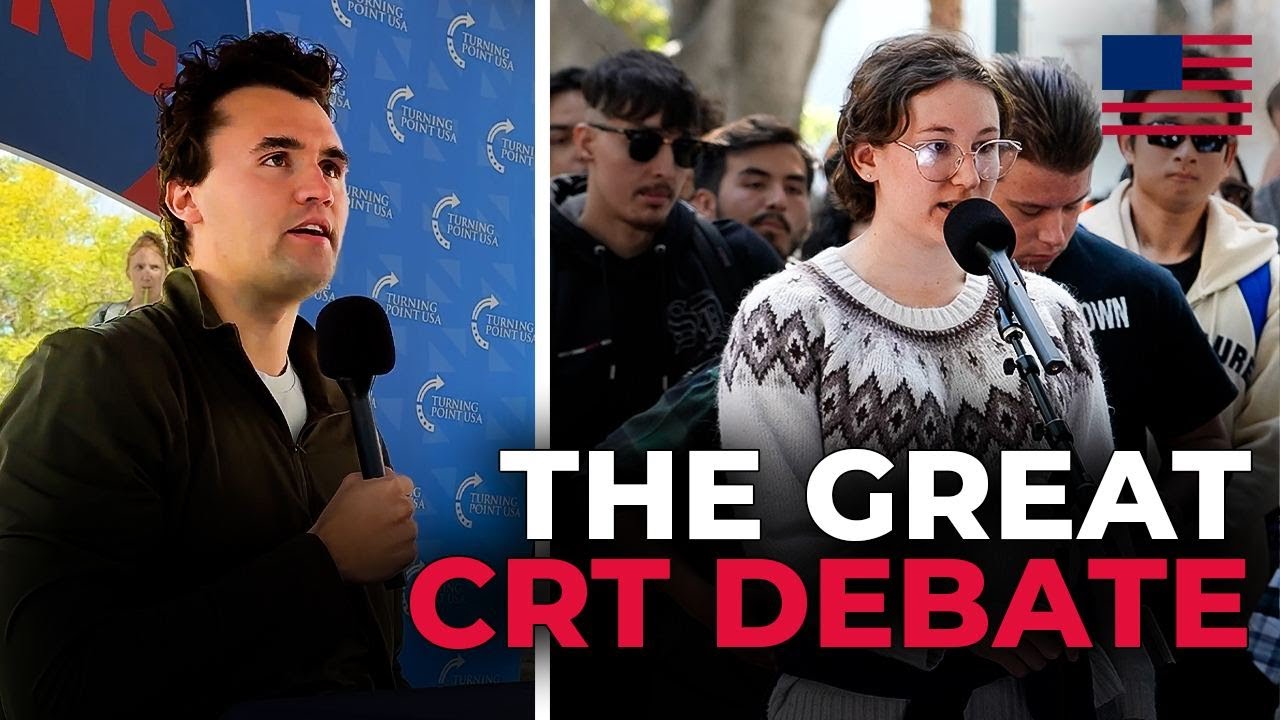
Charlie Kirk Debates University of Tennessee Student on Racism, Opportunity, and America's Racial History
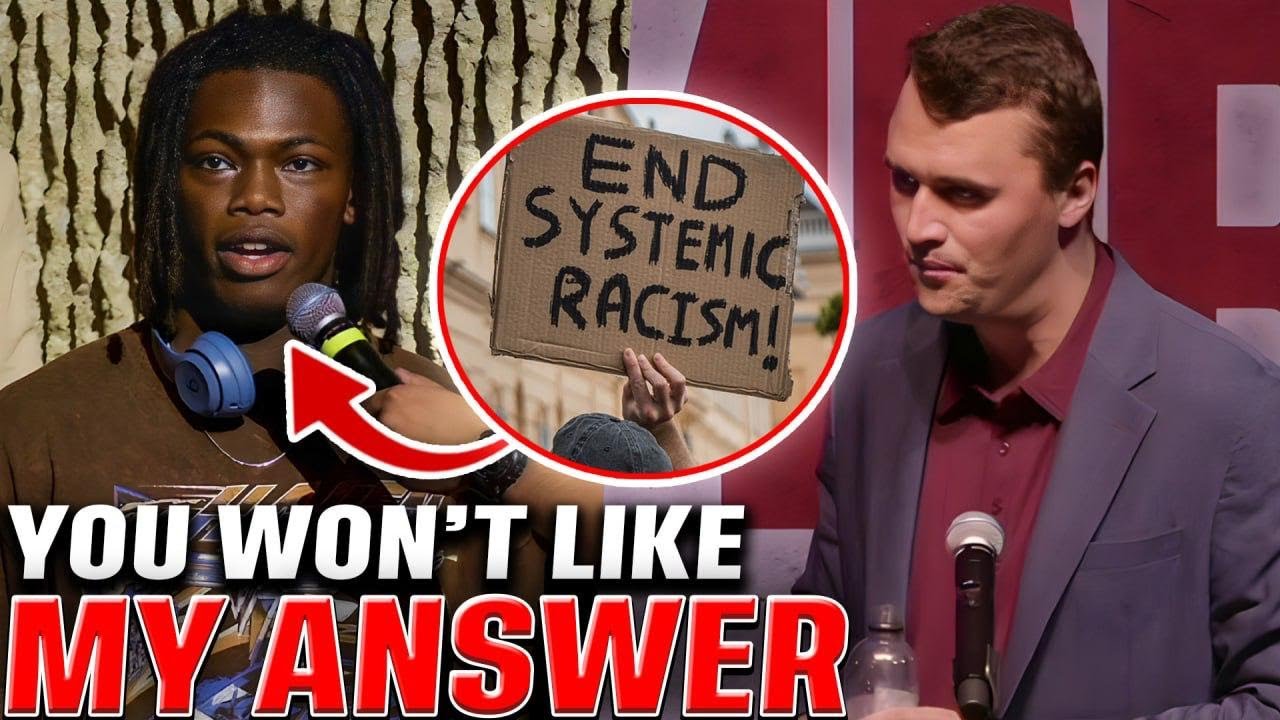
Charlie Kirk engages in a thought-provoking debate with Gigi, a black student at the University of Tennessee, about racism, equal opportunity, and the legacy of America's racial history. The conversation covers critical race theory in schools, the definition of racism, whether racism can be directed at any race, and the role of government versus personal responsibility in the black community. Kirk challenges Gigi to reconsider viewing success through a victim lens, pointing to her own educational achievements as evidence that black Americans can flourish despite historical injustices. The exchange offers a window into how conservatives and progressives view America's past and present differently.
The conversation begins with Gigi expressing concerns about the current political climate, particularly regarding DEI programs, the Department of Education, and debates over critical race theory and black history in schools. She argues that America has a history of using the Bible to dehumanize black people and that racist rhetoric remains built into the country's institutions.
Charlie Kirk responds by asking Gigi to define racism without using the word itself. After some back and forth, Gigi offers: "A discrimination against a minority class of people in order to create an imbalance in the society or a hierarchy based on something that is undetermined as of color race... the color of your skin."
Kirk then tests this definition by asking whether one can be racist against Asians and white people. Gigi agrees about Asians but hesitates on white people, stating she believes "you can have prejudice against white people, but in the way that this country was built and the way that this country has been founded... there are many legacies of white people in this country."
Challenging the Power-Based Definition
Kirk presents a scenario: if a group of black individuals decided to "go beat up whitey," would that be racist? After asking for context, Gigi agrees it would be. Kirk points out this contradicts her earlier definition that racism requires exercise of power against a minority group.
He then proposes what he considers a better definition: "A human being or institution prejudicing or stereotyping against anybody else because of their race." Gigi acknowledges this is a better general definition but maintains there's a more specific way racism operates "in society in terms of setting people behind not having equal amounts of opportunities in these institutions specifically colleges jobs etc etc hospitals."
Equal Opportunity Under the Law
When Gigi asserts that America doesn't talk enough about "the history and the impact of long-term racism in this country against minorities," especially under the current presidency, Kirk pushes back strongly. "That's all we've talked about the last 5 years," he responds, citing The 1619 Project, dedicated black channels on streaming platforms, and what he characterizes as a "non-stop race obsession" that has reoriented the national dialogue.
Kirk then asks Gigi directly whether she believes black people in this country have equal opportunity and are treated equally as white people. She responds, "Absolutely." But when pressed further, Kirk asks what he can do under the law that Gigi cannot. After clarifying he means legally, Gigi admits: "On paper, nothing."
Kirk emphasizes this point: "That's equal opportunity and equal treatment. Right." Gigi agrees "on paper" this is true, noting she is a citizen, an American, a black American, and a child of God. However, she maintains that for productive conversations to continue, there must be acknowledgment that "black people specifically... in this country have never had the opportunities to bring themselves back up."
Government Role and Personal Responsibility
The conversation shifts to the breakdown of the black family. Gigi suggests this partly resulted from Reagan administration policies, mentioning "the rhetoric of crack babies and crack drugs." Kirk challenges this: "How is it the government's fault of why dads aren't around?" and "Isn't it a decision to take drugs?"
Gigi agrees these are personal decisions, and Kirk acknowledges people decide to commit crimes as well. He then presents his conservative perspective: looking at a population where fathers are absent, that is "very very murderous per per population capita, that is very violent, more likely to be involved in gangs," conservatives conclude "the problem is within the community. The problem is not the government. The problem is not the culture. The problem is not the history."
Instead, Kirk argues, "what needs to happen is black leadership, black pastors and black dads need to go into the black community and say, 'We're better than this. Cut the killing. Cut the violence.'" He points out that outside of heart disease, the number one killer of black people in America is "fellow black people," noting that a black person is far more likely to be killed by another black person than anything else. "Black people are a greater threat to their own people than any other community," he states.
Historical Legacy and Current Barriers
Gigi pushes back on the idea that government plays no role, pointing to history: "At one point, the government allowed and pushed and raised for slavery. That was something that this government did. They made laws in the improvement of segregation. So in terms of the long history, you can't take out the fact that government has played a major institution."
Kirk acknowledges that government plays a role but then personalizes the question: "How did that legacy of slavery prevent you from getting to this school and having a great career?" He points out that Gigi is at the University of Tennessee with "the whole world as your oyster in front of you," positioned to do better than most people in her community. "How did the legacy of slavery get in your way?"
Gigi responds that the legacy affected her in that she's not a legacy child at the university, and her parents and grandparents "were not afforded the same were not at one point even allowed to be on the property of this school."
Rejecting the Victim Mindset
Kirk's response focuses on mindset: "But you're here. It didn't get in the way." He encourages Gigi to adopt a different attitude: "Instead of just looking at everything in the past that's wrong and bad through a victim lens, say, 'You know what? I'm an American and I'm going to use my mental energy to say, despite all of that, I get to succeed and flourish and prosper as a black American at the University of Tennessee.'"
He emphasizes that Gigi herself is "a living embodiment... that you can still succeed as a black individual."
Gigi disagrees, explaining that "there are a lot of barriers, there's a lot of obstacles, there's a lot of prejudice just in somebody might look at me and not even assume that I could even do what they're thinking." She acknowledges she doesn't know what people are thinking but can "assume from prejudices that I know exist in this country."
Universal Prejudice and Moving Forward
Kirk offers a final perspective, pointing out that prejudice exists in many forms. He gives an example of stereotypes about "a white boy with the short shorts" at southern schools who might be assumed to only be there because of his parents. His point: "Everybody has to overcome some form of bias, prejudice or stereotyping."
He concludes with what he sees as the path forward: "What's most helpful? Let's stop talking about it so much and talking about how we can apply ourselves to become better people and better citizens."