2,422 videos 1,389,747,653 views US Joined Aug 30, 2018
Charlie Kirk is the Founder and President of Turning Point USA, the largest and fastest growing conservative youth activist organization in the country with over 250,000 student members, over 150 full-time staff, and a presence on over 2,000 high school and college campuses nationwide. Charlie is also the Chairman of Students for Trump, which aims to activate one million new college voters on campuses in battleground states in the lead up to the 2020 presidential election. His social media reaches over 100 million people per month and according to Axios, he is one of the "top 10 most engaged" Twitter handles in the world. He is also the host of “The Charlie Kirk Show,” which regularly ranks among the top news shows on Apple podcast charts.
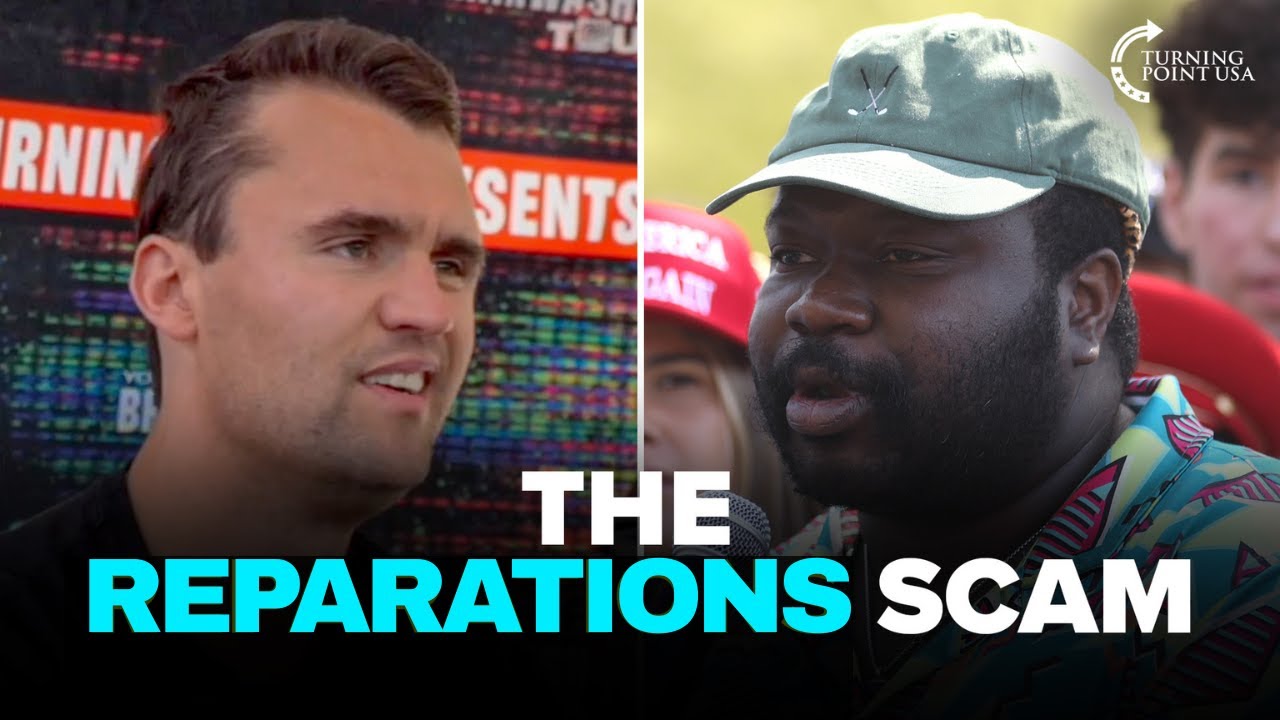
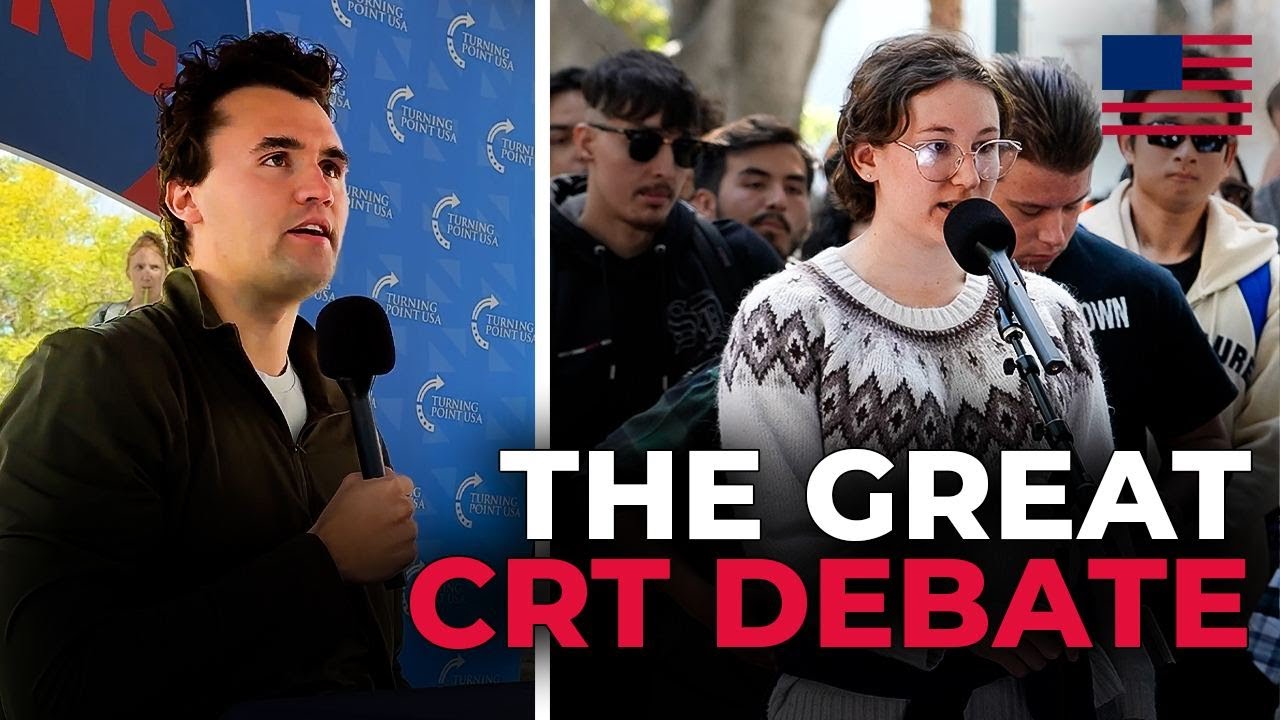
Charlie Kirk Debates College Student on Critical Race Theory, Reparations, and Systemic Racism
Charlie Kirk engages in a heated campus debate with a college student over the principles and implications of Critical Race Theory. The conversation covers segregated spaces on college campuses, the intellectual foundations of CRT through scholars like Richard Delgado and Ibram X. Kendi, and whether reparations should be paid to black Americans. Kirk challenges the student on their understanding of CRT literature, argues that the theory promotes racial division rather than equality, and compares modern segregated dormitories to historical racism. The debate becomes increasingly contentious as they discuss wealth disparities among different ethnic groups, family structure, and personal responsibility versus systemic factors.
Charlie Kirk identifies Critical Race Theory as "repugnant racism," arguing that the ideology fundamentally contradicts principles of equality. When asked to elaborate on his opposition to CRT, Kirk references Richard Delgado's introduction to Critical Race Theory, noting that CRT proponents believe "racism is normative, it's everywhere, it exists just as people exist." Kirk firmly rejects this premise, stating his belief that skin color should not determine a person's value or identity. "I care about your character, your code of conduct, and your soul, not your skin color," he explains.
The college student pushes back, arguing that Critical Race Theory also advocates for racial equality and primarily teaches the history of race in America. However, Kirk challenges this interpretation, pressing the student on their actual knowledge of CRT literature and scholarship.
The Question of Segregated Spaces
Kirk shifts the conversation to a concrete application of CRT principles: the existence of black-only dormitories on over 100 universities across the country. He poses a direct question to the student about whether segregated spaces based on race are good or bad. The student initially resists the question, claiming it's not relevant to the original discussion about CRT.
When pressed further, the student defends these spaces as "safe spaces for individuals, minorities," distinguishing them from historical segregation by arguing they are voluntary rather than forced. Kirk responds by drawing a direct comparison to the segregated South, asking whether white-only restrooms were acceptable. The student says no, but maintains that voluntary safe spaces are different because they allow people "to accept their culture" and "be safe amongst your people."
Kirk challenges this logic, asking whether the presence of white people threatens black people, and argues that defending such segregation "plays into this false narrative." He contends that CRT scholars, including Richard Delgado, Nicole Hannah Jones, and Ibram X. Kendi, actively support black-only and white-only spaces. "It is repugnantly evil to segregate people based on [race]," Kirk declares, arguing that CRT advocates for discrimination: "you are no better than a KKK leader in the 1950s."
Examining CRT Scholarship and Intellectual Foundations
Throughout the debate, Kirk repeatedly challenges the student to demonstrate knowledge of the actual CRT literature and scholars. He references multiple leading figures in the field:
Richard Delgado and his introduction to Critical Race Theory
Nicole Hannah Jones and The 1619 Project
Ibram X. Kendi
Harry Rogers
Postmodernist thinkers like Derrida and Foucault
Cornel West's book "Race Matters"
Kirk criticizes The 1619 Project specifically, stating that Nicole Hannah Jones "has been obliterated by fellow liberal scholars as making up history, revisionist history, not using original source documents." He characterizes her work as not properly quoting the founding fathers and using a "motive type methodology" that fails academic standards.
When the student admits to not knowing many of these scholars currently, Kirk seizes on this admission as evidence that the student is defending a theory without understanding its intellectual foundations. "You don't know very much about the theory," Kirk states, encouraging the student to "read the literature."
The Core Argument: Does Race Matter?
Kirk articulates what he sees as the fundamental problem with Critical Race Theory: "The undercurrent of all CRT literature, whether it be Delgado, whether it be Nicole Hannah Jones or Ibram X. Kendi, whether it be Marcuse or Derrida or Foucault or any of the postmodernists, they believe race matters and you actively must construct society around race using power dynamics."
He lists what he identifies as CRT policy prescriptions:
Anti-white discrimination
Affirmative action
Black-only dormitories
Black-only graduation ceremonies
Black-only hiring practices
Kirk challenges the student to identify where his summary is incorrect, claiming he has read the literature extensively. "This is what I do for a living," he explains, asserting his authority on the subject.
The Reparations Debate
The conversation turns to the question of reparations for slavery. Kirk asks whether black people should receive reparations, and the student responds affirmatively. Kirk then poses a more specific question: should a black person who immigrated from Nigeria or the Dominican Republic in the 1980s be entitled to reparations?
The student clarifies that reparations should only go to people whose ancestors were enslaved in America. This leads Kirk to question why white people today should pay for slavery. The student characterizes Kirk's question as "really selfish" and "non-empathetic." Kirk pushes back: "Why should I have empathy for a race? I don't have white guilt because I breathe."
Kirk becomes more specific, asking why white students today should "have to work harder to pay for black kids" when many white families had no connection to slavery. He uses his own family as an example, noting they fought for the Union cause in the Civil War to free slaves. The student acknowledges that not every white person benefited from slavery, but argues that families who owned slaves are "proven" to be better off today.
Kirk challenges the narrative of uninterrupted privilege, pointing out that many slave owners "had their plantations burned to the ground by the North, many of them had to stand for war crimes, many of them lost everything." He also notes that tens of millions of white people immigrated to America after slavery ended, asking how an Irish immigrant in 1905 could have benefited from slavery.
Comparing Different Ethnic Groups
Kirk introduces comparisons to other ethnic groups who faced severe discrimination but achieved economic success. He asks how Jews became wealthy after the Holocaust, when they had been subjected to extermination and had everything stolen from them. He notes that Asians were placed in internment camps during World War II and were once the poorest group in America, but are now the richest per capita.
The student characterizes these comparisons as "really hateful dialect," but Kirk insists they are factual observations. He argues that these groups succeeded "because they worked hard and they kept the family unit together."
Family Structure and Personal Responsibility
Kirk's most controversial argument centers on family structure within the black community. He claims that black Americans were making economic progress through the 1960s, but that progress stalled due to family breakdown. "I'm noticing blacks started having out-of-wedlock marriage births, and that is why black people remain poor. Asians don't do that, Jews don't do that," Kirk states.
The student objects that Kirk is "blaming black people for being put down for centuries," pointing to redlining and residential segregation as systemic factors. Kirk responds by asking why blacks were "getting wealthier when all that stuff was getting pushed" in the 1950s.
Kirk presents specific statistics: "75% of blacks had dads around in 1975, now 20% have it. That's not because of white men or white supremacy, it's because blacks started to abandoning the women they impregnated, and that's their fault, not the white man's fault." He insists these observations are not racist but simply "noticing" facts.
The Limits of Academic Discussion
Throughout the debate, both participants accuse each other of avoiding questions and straying from the topic. The student repeatedly tells Kirk he's bringing up issues that aren't directly relevant to the original question about Critical Race Theory. Kirk counters that all his examples flow directly from CRT principles and policy applications.
The student admits to being enrolled in a class called "race and ethnicities" that covers "the history of race and how white people are systemically privileged," but has not yet completed comprehensive study of CRT literature. The student defends this by noting that "critical race theory has only existed for a little amount of time less than other classes, we know less about and we're still researching it just like any other field of study."
Kirk's response is that the student cannot adequately defend a theory they haven't thoroughly studied, particularly when that theory is being implemented as policy on college campuses across America. The fundamental disagreement remains: whether Critical Race Theory represents an honest attempt to address historical and ongoing racism, or whether it constitutes a new form of racism that divides people based on skin color rather than uniting them based on character.