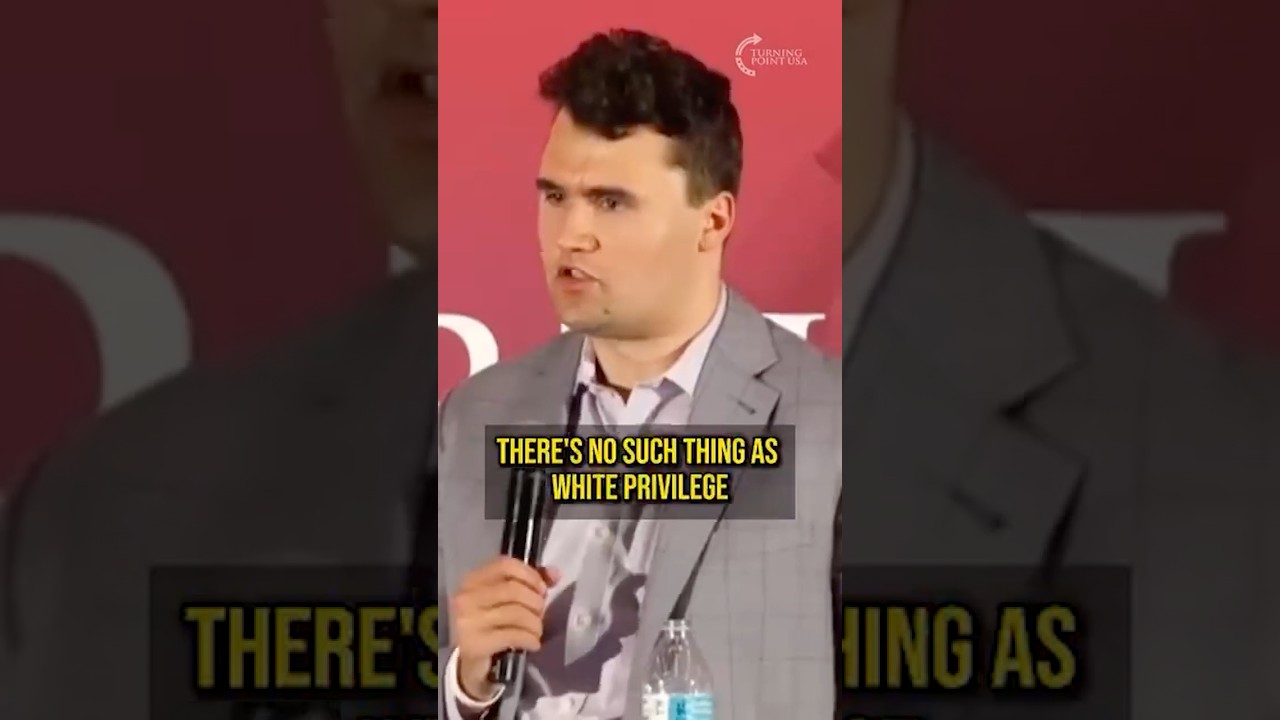
Charlie Kirk Debates White Privilege and Immigration Enforcement With Student Over SB 1070
Enjoying this? Share it with someone who needs to see it.
Up Next
Charlie Kirk Challenges Military Veteran on White Privilege: A Heated Exchange on Race and Opportunity in America
1:00
Charlie Kirk Explains Why White Privilege Is Racist, A Lie, and Divides America Based on Skin Color
7:17
Charlie Kirk Rejects White Privilege as Racist, Points to Asian American Success Since Internment Camps
0:46
Charlie Kirk Debates White Privilege and Immigration Enforcement With Student Over SB 1070
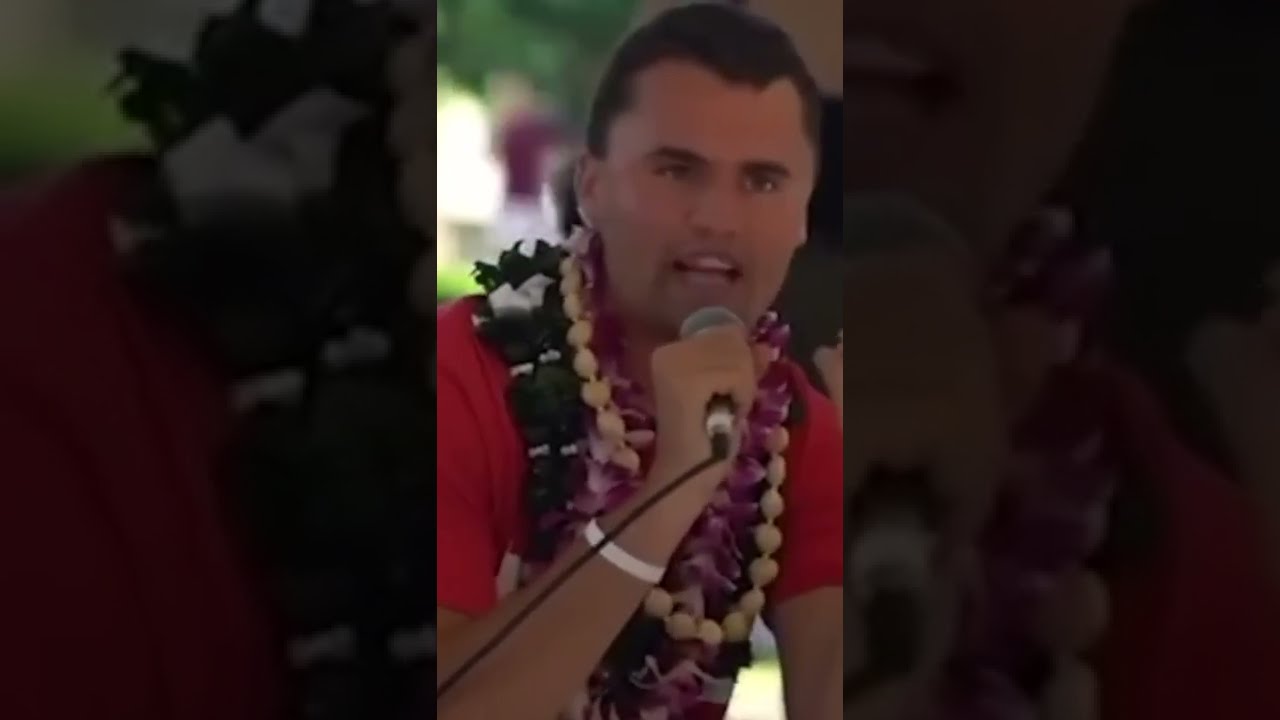
Charlie Kirk engages in a heated exchange with a student who claims white privilege exempts him from immigration enforcement concerns. The debate centers on Arizona's SB 1070 law, which allows officers to request documentation during stops. Kirk challenges the premise that requesting identification constitutes racism or white privilege, arguing that all citizens get asked for their driver's license during traffic stops. He confronts what he sees as a victim mentality, asserting that the narrative of systemic racism is designed to disempower people rather than reflect reality. The exchange highlights fundamental disagreements about immigration policy, law enforcement practices, and the existence of institutional racism in America.
A student confronts Charlie Kirk with a direct challenge: "How can you come here and tell me there's no such thing as white privilege and no such thing as racism?" Kirk's response is equally direct and unambiguous. He acknowledges that racism exists but firmly denies the existence of institutional racism or white privilege as commonly defined by progressive activists.
The SB 1070 Debate
The conversation quickly turns to Arizona's SB 1070, a controversial immigration law. The student describes it as "basically a law for an officer to pull me over and ask for my papers," framing this as evidence of differential treatment based on appearance. Kirk's position is straightforward: he believes people should be asked for their papers regardless of their background or appearance. This statement becomes the focal point of the student's argument about white privilege.
Dismantling the Victim Narrative
Kirk challenges what he sees as a fundamental flaw in the student's worldview. "You're looking at the world as a victim," he says, offering what he frames as advice rather than condemnation. He argues that the student has adopted a perspective that views systemic racism and "the evil white man" as forces designed to crush minority communities. Kirk calls this perspective "a lie" that is "designed to try and disempower you."
The Driver's License Comparison
Kirk draws a comparison to his own experiences with law enforcement. He points out that he gets asked for his driver's license every time he's pulled over, just like anyone else. When the student protests "you don't look like me man," suggesting that appearance matters in these interactions, Kirk refuses to accept this framing. He maintains that showing identification during a traffic stop is a standard procedure that applies to everyone, regardless of race or ethnicity.
Immigration Enforcement Standards
The conversation concludes with Kirk stating his position on immigration enforcement clearly: if a non-citizen does not have their papers, they should be deported from the country. This stance reflects his broader view that immigration laws should be enforced uniformly and that requesting documentation is not inherently discriminatory but rather a legitimate function of law enforcement. Kirk sees no contradiction between equal treatment under the law and strict immigration enforcement policies.