Up Next

Charlie Kirk Calls Christians to Action: Why Biblical Duty Demands Political Engagement This Election Day
25:44
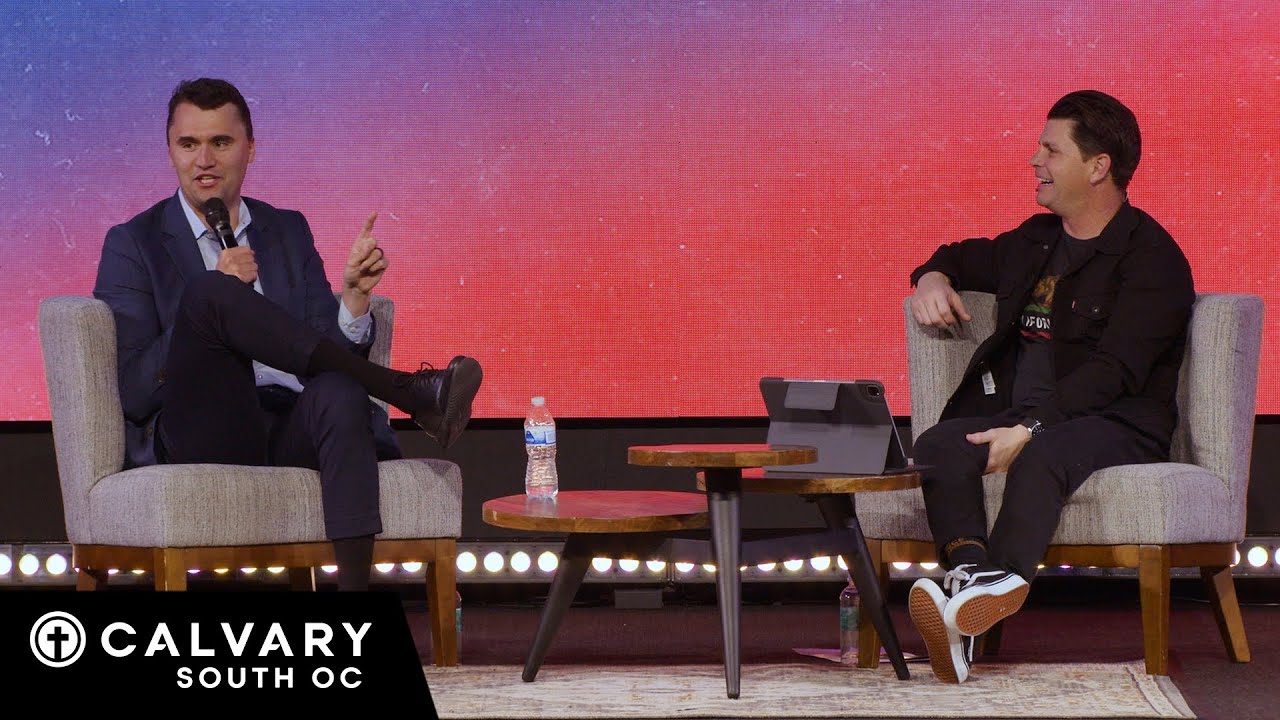
Charlie Kirk on Fatherhood, Faith, and Fighting for the Next Generation at Calvary Chapel South OC
1:07:33

Charlie Kirk Explains Why the American Church Must Rise Up Against Tyranny and Technocracy Before It's Too Late
2:09:55
Charlie Kirk Challenges Churches to Rise Up as America's Last Institution Standing Against Totalitarian Left
Charlie Kirk delivers a message at Calvary Oro Valley on the church's role in American politics and cultural battles. Speaking candidly about the erosion of liberty, critical race theory infiltrating churches, and pastors remaining silent during persecution, Kirk argues that with tech companies, colleges, and government institutions captured by the secular left, the church remains America's final hope. He challenges Christians to stop compartmentalizing faith, confront political apathy in their congregations, and recognize that every biblical principle from the nuclear family to the sanctity of life demands engagement in the public square.
The Church Must Engage in Politics
Charlie Kirk opens by addressing a common misconception among Christians: that the church should stay out of politics. He argues this view ignores biblical precedent and the actions of heroes like Esther, Daniel, Mordecai, Joseph, Nehemiah, and Jeremiah who all engaged in secular government for God's purposes. The entire foundation of America itself was built on biblical principles, with the Founding Fathers choosing a verse from Leviticus for the Liberty Bell: "Proclaim liberty throughout the land."
Kirk challenges the teachings of prominent pastors like Rick Warren who claim God doesn't care how people vote. He argues this represents a dangerous theological error, suggesting God is apathetic about abortion, religious liberty, and whether society protects the vulnerable. According to Kirk, God cares about every aspect of life, including political choices that shape laws affecting millions.
Jesus Founded an Ecclesia, Not Just a Church
Kirk explores the original Greek meaning of ecclesia, the word Jesus used when he said "on this rock I will build my church." He explains that ecclesia was actually a secular Greek term for a government political meeting. Jesus deliberately chose this word rather than synagogue or temple, suggesting he wanted comprehensive Christianity that permeates every sphere of influence, not compartmentalized faith confined to Sunday mornings.
This linguistic insight reveals that speaking and dialogue represent the Christian way of governing, contrasting with governing through force. When God spoke creation into existence in Genesis, he established speech as the mechanism of truth. This is why the left aggressively attacks free speech on college campuses and social media platforms—speech prevents society from tearing itself apart and allows nuance and understanding to emerge.
Arizona's Two Democrat Senators and the Silent Church
Kirk directly addresses his Arizona audience, explaining that the state elected two Democrat senators because churches remained silent on moral issues. If pastors had spoken biblical truth despite potential criticism, the political landscape would look entirely different. He emphasizes he's not claiming Republicans are anointed by God, but that an agenda promoting lawlessness, defunding police, post-term abortion, attacks on religious liberty, and the smearing of Justice Brett Kavanaugh stands in direct opposition to scripture.
He points to President Biden's executive order allowing biological men who identify as women to compete in women's sports as an example of policy fundamentally incompatible with the first verses of Genesis, which clearly establish God's creation of male and female as distinct. The problem, Kirk argues, is that too many pastors treat the Bible as a self-improvement book rather than the authoritative Word of God, leading to theological chaos on basic issues.
Three Types of Churches in America Today
Kirk identifies three categories of churches currently operating in America. First are churches like Calvary Oro Valley that actively engage cultural and political issues from a biblical perspective. He encourages these churches to grow their impact through monthly "ecclesia nights" where current events are examined through the lens of scripture.
Second are apathetic churches whose pastors avoid controversial topics, believing it's not their responsibility to address politics. Kirk urges Christians in these congregations to lovingly but firmly push their pastors toward engagement, writing emails that express appreciation for spiritual guidance while asking why the church remains silent on abortion, transgender ideology, and religious persecution.
Third, and most concerning, are politically left-wing churches that actually outnumber conservative churches in America. From Chattanooga to Maine to Wisconsin to Texas, Kirk hears consistent reports that 90 percent of churches in various regions actively teach critical race theory, Black Lives Matter ideology, and LGBT affirmations. This represents a virus more dangerous than coronavirus—the critical race theory virus that has infected the American church.
The Persecution of Pastor Mike McClure
Kirk highlights the striking contrast in how politics affects religious liberty by pointing to Calvary Chapel San Jose and Pastor Mike McClure. While the congregation at Calvary Oro Valley gathers freely without social distancing or masks, McClure faces $1.7 million in fines, and his bank is pulling the church's note—all for continuing to meet during lockdowns. San Jose authorities deemed Black Lives Matter protests, abortion facilities, cannabis dispensaries, liquor shops, and home improvement stores essential while declaring church gatherings illegal.
Some argue McClure violated Romans 13's command to submit to governing authorities. Kirk counters that in America, citizens are the sovereign, not kings or dictators. When government officials violate citizens' natural rights, they are the ones violating Romans 13. The devastating reality is that only about ten Calvary Chapel congregations have stood up for McClure despite hundreds existing nationwide. Most Christians don't care that a fellow pastor faces financial destruction for doing exactly what they're doing freely in other states.
Why Christians Are Failing the Persecution Test
Kirk argues that God is calling the church's number after blessing American Christianity with budgets, baptisms, and buildings. Christians talk about faith and readiness for persecution, but when the test arrives, the church is failing miserably. More secular individuals are standing up to tyrannical government than Christians, which troubles Kirk deeply. Believers should be the ones unafraid of persecution since they know how the story ends.
He identifies two reasons for this failure. First, a false belief that Christians must be non-confrontational at all costs, which has no biblical basis. Speaking truth doesn't require being unkind, as Kirk tries to demonstrate in his college campus interactions. Second, many Christians simply don't know how to engage the political space and feel intimidated by it. The solution is for churches to become the drumbeat of freedom, the last institution in America capable of resisting totalitarian impulses.
The Calvary vs. Cavalry Embarrassment
Kirk recounts an illuminating moment from the impeachment proceedings when House Manager Eric Swalwell presented a tweet from Jennifer Lynn Lawrence as evidence of insurrection. She had tweeted about "Calvary" coming, referring to a prayer vigil. Swalwell and his team interpreted this as a call for "cavalry"—military forces. Dozens of people reviewed the impeachment briefs before they went public, yet not one person recognized the biblical reference to Calvary Chapel or understood the difference between Calvary and cavalry.
This incident reveals the profound biblical illiteracy of America's political elite. An entire team of lawyers, researchers, and Democratic leadership couldn't distinguish between a prayer meeting reference and a military mobilization. According to Democrats' interpretation, everyone at Calvary Chapel is now part of a paramilitary group. The embarrassment went largely uncovered by mainstream media, representing a perfect opportunity for pastors to highlight the dangerous ignorance of those making laws.
Thomas Jefferson and Judging People in Their Time
Kirk addresses the nationwide movement to remove statues and rename schools, particularly the effort in San Francisco to rename the Abraham Lincoln School because Lincoln allegedly didn't adequately fight for Black lives. He returns to a principle found in the early chapters of Genesis: "Noah was a righteous man amongst his generation." This phrasing is intentional—Noah compared to Elijah might not seem as righteous, but the Bible instructs readers to judge people based on the time they lived in.
Thomas Jefferson owned slaves, an undeniable moral failing. But Jefferson also wrote condemnation of slavery in the original draft of the Declaration of Independence, contested to abolish slavery in the Virginia House of Commons, and as president signed an executive order prohibiting new slaves from entering the United States. This nuance matters enormously. Jefferson was wrestling with a multi-thousand-year-old sin that America didn't create but inherited. Judging historical figures requires understanding the moral landscape of their generation while recognizing that more slaves exist on earth today than during Jefferson's lifetime.
The Totalitarian Nature of the Left
Kirk explains that universities have become hotbeds of indoctrination because they operate without the fear of God, and as the Old Testament teaches, without the fear of God there is no wisdom. These institutions now teach that men and women are identical, that men can become pregnant and menstruate, and parents wonder why their 25-year-old children are confused and miserable. Sowing chaos intentionally into young lives produces exactly that outcome.
An attribute defining the left is pride and the belief that with enough power, they can solve all problems. This represents a desire to become god or ruler over others. Without a vertical relationship with God, the temptation to dominate horizontally becomes overwhelming. There are only two ways to govern: through force or through speech, dialogue, and persuasion. Jesus chose the latter, becoming history's most influential person not through conquest like Muhammad, but through speaking truth.
The Death of Free Speech
Kirk identifies himself as a free speech absolutist, believing that unless speech directly incites imminent harm, it should be permitted regardless of how offensive. He notes the irony that liberals in the 1960s through 1980s fought for extreme free speech, even defending art like a crucifix in a jar of urine. That stance was always a lie—a tactic to gain power. Now that the left controls institutions, they use that power to silence Christian expression and conservative values.
The reason the left fears speech so intensely is that conversation allows nuance and reveals the humanity in others. The dominant narrative claims half of America consists of racist white supremacist militia members who must be destroyed. When actual dialogue happens, this extremist belief fades. Social media companies, universities, and cultural institutions restrict speech because they understand that open dialogue threatens their power. Christ was never afraid to talk with anyone about anything, always staying ten steps ahead of those trying to trap him.
Critical Race Theory: A Virus in the Church
Kirk describes critical race theory as a pathogen that started in the 1960s and 1970s with Herbert Marcuse, now being taught to elementary school children. This racist ideology has infected corporate America, political dialogue, churches, and seminaries. It teaches that everything is racist, that America is fundamentally a white supremacist project, and that only massive revolutionary Marxist policies can undo this reality.
Children as young as four, five, and six learn that American history is solely about oppressors and the oppressed, with people judged entirely by skin color. The actual history of America—leading the abolition movement, liberating people of all colors, advancing women's rights—is never taught. Kirk explains that nine years ago, he attended a majority Hispanic high school where teachers taught that skin color doesn't matter, only character and values. The school never had racial problems because students saw each other as individuals, not racial categories.
The Privilege of Not Being Called Racist
Kirk acknowledges that he grew up believing being called racist was among the worst accusations possible, which is probably correct. The left exploited this reasonable fear by creating a supply and demand problem—massive demand to find racism but very low actual supply. Unable to find sufficient real racism in an increasingly decent society, they redefined racism itself. Now, according to critical race theory, white people possess privilege they don't even realize, must apologize endlessly, participate in redistribution, and atone for their existence.
This directly contradicts biblical teaching that there is neither slave nor free, Greek nor Jew, but all are one in Christ Jesus. The left uses Christian ethics against Christians by weaponizing the fear of the "r-word." People are bullied into voting Democrat, donating to certain corporations, and supporting specific policies under threat of being labeled racist. Kirk describes an exchange with a college student who demanded he prove he's not racist—a metaphysically impossible task, like proving you're not a dinosaur. The accusation itself becomes the evidence: white Christian straight male existence automatically equals racism until proven otherwise.
The Nuclear Family and Single Motherhood
Kirk confronts the elephant in the room that American discourse avoids: 84 percent of Black children are raised without fathers in the home. When the Civil Rights Act passed, that number was 24 percent. Kirk states he'll accept that Jim Crow, segregation, poll taxes, and Southern racism contributed to that 24 percent, but challenges anyone to explain the additional 60 percent that accumulated as America became progressively less racist.
The answer involves three factors: subsidizing single motherhood through the Great Society Act, glamorizing promiscuous lifestyles across all races and cultures contrary to biblical teaching, and failing to focus on the nuclear family as public policy for preventing poverty. A Black child raised by married parents is much more likely to succeed than a white child raised by a single mother. The biblical nuclear family represents the greatest antipoverty program in existence, yet this reality is systematically ignored in favor of invisible systemic racism explanations.
Kirk emphasizes that if Americans make three or four basic decisions, they can succeed regardless of skin color: find any job, get married before having children, don't commit heinous crimes, and graduate high school. Having a mother and father provides accountability and discipline to help children make these decisions. Rather than pursuing multi-trillion dollar reparations programs that require showing documents to prove nine generations of ancestry (while simultaneously claiming voter ID is racist), America should focus on reducing Black single motherhood from 84 percent to 50 percent. Crime rates, education outcomes, and economic indicators would auto-correct.
The Mistake After the Berlin Wall Fell
Kirk offers tough love to his audience, particularly those who remember when the Berlin Wall fell in 1989. President George H.W. Bush made a critical error by not giving a major speech celebrating the fall, with advisers later explaining he didn't want to "rub it in." That moment represented one of the climaxes of American life—defeating multiple totalitarian governments throughout the 20th century, the last without firing a shot or launching a nuclear missile. American ideas and values won.
But when that wall fell, the conservative generation celebrated, enjoyed the victory, and returned to normal life, assuming their superior ideas meant nothing left to fight for. Meanwhile, the left took advantage of this complacency. Throughout the 1980s, American conservatives maintained a posture of action with Reagan keeping the drumbeat going. Once the perceived threat disappeared, conservatives believed communism and socialism were defeated permanently. In the 1990s, that belief seemed justified—colleges had problems but still hosted conservative professors and respected the Constitution, corporations leaned free-market, and Silicon Valley wielded minimal power.
Twenty-seven years later, the America Kirk's generation inherits was created by the left during conservative complacency. Conservatives didn't run for school boards, didn't take local positions seriously, and sent children to colleges without asking critical questions. Now comes the reckoning—a long strategic plan to rechart the nation's course so that 27 years from now, America still exists as a free country. Kirk emphasizes that instant gratification expectations in politics must be abandoned in favor of generational thinking.
What Christians Must Do Now
Kirk explains that the left fears an active church because they understand the numbers. President Biden carefully avoided attacking religion as aggressively as other Democrats because he knows that if he can persuade just six or seven percent of Christians that he's a nice guy, Democrats maintain power indefinitely. But if that swings 10 or 15 percent toward biblical values, Democrats lose permanently.
The solution involves education of children, building new institutions, remaining active in communities, and mobilizing churches and pastors as activists. Churches must become monthly meeting places for "ecclesia nights" where current events are examined through biblical lenses—transgender executive orders, rule of law, sanctity of life, religious persecution. Christians in apathetic churches must lovingly confront their pastors, explaining that a fellow church across the country gathers freely while Pastor Mike McClure faces millions in fines for identical actions.
The Cost of Not Having Church
Kirk addresses the importance of physical church attendance versus online streaming. While he doesn't condemn those with legitimate health concerns who watch remotely and exercise liberty responsibly, he argues that mature societies weigh costs and benefits. The shutdown narrative presented closing churches as having only benefits with no costs—a fundamentally immature perspective.
The cost of having church is that people gather in a room, accepting whatever risk that entails. But the cost of not having church includes lost fellowship, missed counseling and guidance, abandoned community support for jobs or childcare, and the erosion of relationships that form the church body. Kirk poses a thought experiment: if churches couldn't livestream and still collect tithes and offerings, would they open their doors tomorrow? Of course they would, revealing that current closures stem from comfort rather than the excuses given.
The lockdowns will be remembered as one of the worst decisions in Western civilization history when accounting for suicides, drug abuse, alcoholism, and developmental damage to an entire generation. Liberty requires responsibility—a six-year-old doesn't have the liberty to drive because they lack responsibility. Adults can choose to stay home, and no one argues for government mandates forcing assembly. The argument is simply to allow people to leave their homes and assemble if they choose, exercising the liberty that requires accepting personal responsibility for the decision.
Video Transcript
good morning how are you guys doing doing well yeah you guys excited well happy valentine's day my wife picked out my valentine's day shirt so it's all pink well you guys can stand and if you're in the foyer you guys can come on in and join us and uh yeah like i think kevin was saying you guys can do the calvary crunch right squeeze in for people to come in well let's pray before we enter into this time of worship generally father we thank you so much for this day that this is the day that you have made god and i thank you that we can be excited that we can rejoice because you are good no matter what trials we're going through god thank you that um it produces uh such good things in our life god it produces growth and it draws us closer to you and i just pray god that we can just lay everything down before you right now there's anything that's on our mind that is overwhelming us or anything uh that we see in this world that we just we just see so much evil but god we pray that we could be the light and that we pray god that as your love has touched each of our hearts that we will be able to share that with friends and family and even strangers and even enemies god and so i just thank you so much that we have this opportunity to worship you and to praise you in this place i pray that we would do it with joy and that um there will also be conviction in this place god and that there'll be repentance um tears of joy but also on just that worship that you desire that worship that in spirit and in truth so god we just submit to you right now and uh we give you this service and it's in jesus mighty name i pray and all god's people said amen [Music] i think there's no rock but there's the rock there's the god like your cat [Music] no other names [Music] is [Music] is [Music] she [Music] is [Music] is [Music] is [Music] [Music] [Music] [Music] [Music] you're foreign my love you're worth it all god you pursue me empowering glory [Music] just [Music] sing [Music] every wall oh [Music] is [Music] separated [Music] separated [Music] separated [Music] i and pushing [Music] no fear no death [Music] me [Music] [Applause] [Music] me [Music] is [Music] [Applause] is [Music] [Music] [Music] so [Music] [Music] [Music] giving [Music] to seek your face [Music] mercy [Music] in your presence [Music] yeah you can't you my i wanna be [Music] bow down [Music] so [Music] [Music] i wanna [Music] my [Music] is [Music] [Music] so yeah you came to my rescue [Music] [Music] [Music] [Music] give me father you always miss me your kingdom come in my word in my life [Music] lead me far from temptation deliver me from the evil world [Music] [Music] [Music] didn't just [Music] so why should i worry why do i freak out [Music] you know what i need is [Music] seen the kingdom the kingdom of the heavens [Music] is [Music] is [Music] yes you love me [Music] is [Music] [Music] [Music] is [Music] the rest from these [Music] [Music] [Music] will forgive us of our sins god forgive us for all the times we've rejected you lord [Music] thank you for the verse in second chronicles 7 14. if my people call by my if your people call by my name will humble themselves and pray and seek my face turn from the wicked ways then i'll hear from heaven forgive their sins and heal their land god that's our prayer lord please forgive us god let us get right with you god be intimate with you to know you more lord [Music] oh lord we cast down [Music] oh lord we cast down our rattles give us cleanness give us pure hearts [Music] let us now lift our souls to another [Music] to one another [Music] oh give us pure hearts and let us now lift our souls to another [Music] oh [Music] oh [Music] oh god [Music] oh god [Music] [Music] do [Music] our spirit can make us we turn our eyes from evil things oh although we cast down our idols and give us cleanness give us pure hearts let us not lift our souls to another give us cleanness give us pure hearts let us not lift our souls to one another [Music] oh god [Music] oh god [Music] hey man let's give the lord a clap bless you you guys may greet one another in the lord oh actually you guys may be seated no greeting all right well good morning good morning come on there's more of you in here than that good morning all right there we go welcome to calvary oro valley um real quick i want to get this out of the way just so that we're everybody here because we've got a lot of new people here so we just wanted to make it very clear we have a disruption of service disclaimer that we want to go over with you guys politics can bring out the best and uh worst of us so worse worst worst uh so on behalf of calvary oro valley and all those who love our god-given american freedom we want to thank you guys for coming amen [Applause] we do require that this service be orderly and conducted in a spirit of respect which is biblical right the gifts of the spirit done decently and in order in light of this calvary valley in conjunction with local law enforcement present will exercise a zero tolerance policy regarding disruptions of any kind during this service for the sake of safety for our congregation and those gathered here this morning please be advised that it is a crime to interrupt the religious service and anyone disrupting today's service our event will be arrested and prosecuted to the fullest extent of the law and we do that based on romans 13. all right all right so just a few announcements that i want to go over real quick first of all again welcome to calvary or valley especially those of you who are here for the first time or first time in a long time if you don't have a church home we would love to invite you to come back and join us we have a wednesday night service at seven o'clock every wednesday and our sunday morning service at 10 am if you have a good bible-believing teaching church stay there and continue to be involved there but if you are looking for a church we welcome you invite you to come and join us we have another event coming up on april 25th that we want to announce to all of you and that is seth gruber how many of you guys have heard of seth gruber quite a few awesome so he uh preaches and teaches uh preachers teaches against abortion and so we had him on calvary conversations if you haven't heard of calvary conversations that's our podcast pastor craig and his daughter mariah uh every week every tuesday night at seven we have a calvary conversation uh with different people we've had josh mcdowell we've had charlie kirk we've had stephen bancar some of you were here for that event as well and so we want to encourage you guys to watch that on youtube subscribe to our youtube channel tuesday nights at seven but seth was also on calvary conversations and so he's gonna be coming out and doing an event for us on april 25th here at calvary uh we do ask that you guys register if you plan on attending that and the website for that is calvaryov.com events and you can register he's going to be speaking that morning and then he's going to we're going to have a sunday evening service that day as well and then real quick if you didn't see it on your way in uh there is a turning point usa table out front there and i wanted to show you guys some of the stuff that they've got it's kind of cool uh kiss me i'm a capitalist that's great for march i made these so i just i'm just kidding just kidding this one i really like taxation is theft i don't know if you can see who that is behind the mask he's known for wearing mittens and a coat at the inauguration big government sucks there we go yep and in case i'm not allowed to use that word from the pulpit just know it's turning point usa not me and then we got freedom in all calibers amen there we go all right they also have they've got some buttons and some stickers i really like these stickers i wanted to show them to you this one again socialism sucks that's great for your water bottle and some of the older generation might not get this one but big gov suss china kindest us that's from among us not that i've played it's kind of like my little secret game i like to play that no one knows about except now i just told all you guys in on youtube so all right well that's it for announcements just a few reminders if you have any electronic devices who doesn't please check them now make sure that they're put on silent or on vibrate we don't want those going off during the service if it does i have a button i will push and you'll be sucked into the floor and it'll never happen again but please make sure they put on silent or vibrate we really don't want them going off it i announce it every sunday and almost every sunday something goes off especially the media portion on your phone we forget that because when you open your bible app and you actually hit the play button it'll start playing the bible out loud so just be sure that those are all put on silent run vibrate um if you have a child over in sunday school you are assigned a number that number will show up on the screen if you need it for any reason so please keep an eye out for that during the service especially today's service as you can see it's a packed house and it's going to be very difficult for us to try and come into the rows and find you so if you have a child and you want to keep your child if you have a child please make sure to keep an eye out for that number and uh with that we're going to continue our service with tides and offerings and our ushers will come and hand the offering back down the aisles we also have agape boxes for if you want to use those after the service where you can drop any ties and offerings that you like so let's go ahead and pray as we prepare to give to the lord dear lord thank you so much for this morning we thank you for this awesome opportunity to gather in freedom to worship you uh to hear from your servant and to just do what you have called us to do lord to be together as a body as a church and we thank you for the freedom that we do have to be able to gather together and uh lord we just pray that you would continue to bless the rest of the service and right now we want to prepare our hearts as we prepare to give to you our tithes and our offerings lord we thank you for the provision that you have blessed each and every one of us we have here in america pretty much all of our needs if not most of our wants and a lot of the stuff we don't have that we want we really don't need so we thank you that you have blessed us and you have taken care of us lord i pray that with those thankful hearts that we would continue to give to you or maybe for some of us give to you for the first time out of those thankful hearts lord as your word tells us that you provide the seed for the sower you give us the finances you give us the money that we have and so i pray that we would be obedient to you as we give back to you a portion of that this morning we pray this in the mighty name of jesus christ amen ushers you may receive this morning's tides and offerings do do do do do do do running the white house folks i want to thank charles he's an incredible guy his spirit his love of this country he's done an amazing job building one of the most powerful youth organizations ever created turning point usa we will not embrace the ideas that have destroyed countries destroyed lives and we are going to fight for freedom on campuses across the country that's why we are here oh amen how many are excited to be here today yeah i want you guys get pumped i want this to be it might be the smallest church charlie's ever spoken but i want to be the most radical church okay you guys get it pumped okay and yeah and i want to say that uh happy valentine's day amen and i want to say i love you guys so much i decided to give you a great gift charlie so uh anyway i get more nervous doing these intros that i do speak it it's weird but anyway i want to say that i am so blessed with charlie being here today he came last minute uh he so i mean it's just so cool but uh i also want to give a shout out to his girl his fiancee erica can you get a yeah so they just got engaged so that's cool but uh you know um i lost track of what i'm saying anyway so but uh i want to say it's so neat that we know a lot of young people are kind of can be a little scary nowadays you know i mean i'd say young people i'm old i can say you kids nowadays but uh but it's so neat to see people like charlie and erica and his staff that uh just speaking biblical truths and uh biblical values to uh college campuses amen it gives me hope you know and he's he's very old he's 27 so uh but you know it's so neat and i just want to say thank you i want to also say this too what's so cool is that um you know like i said that charlie coming here you know he spoke at the national convention he's going to be on the mark levine show i think this week i mean you know i know we're pretty close to that but um but i just want to say i am so thankful that he would do that can we give him a clap for that you know [Applause] and that just blesses me because you know we've kind of had a rough year my wife has cancer and so it's just a real blessing real encouragement i want to get all weepy on you but i want to say i'm so blessed to have him here and he's got a ministry um not ministry turning point usa he's also written a best-selling book mega doctrine encourage you get that and he's going to tell you how to get in touch with his podcast the troll kirk show cause i'm he says you have to be 15 years old to understand how to do it i'm too old so he'll tell you how to do that but with no further ado i want to give a warm calvary or valley welcome to charlie kirk give it up thank you thank you guys it's great to be here thank you no it's wonderful um i just want to say yep i'll stop right when it's done so you got it not a minute over okay uh no i want to thank you guys it's uh it's been it's been a wild couple months i think all of us would agree and the one of the reasons i wanted to come here you know erica my fiance was uh was texting with the team here and i've just in the last year and a half i felt more and more called to speak at churches all across the country i've had a unique opportunity to speak at over 50 churches from all across the country from maine to california to texas to arizona i grew up in a bible believing church in the suburbs of chicago i'm an evangelical christian it's the most important thing in my life but it's always been a frustration of mine being in the political space looking into the christian world saying why are churches not more involved in offering moral clarity to what's happening in our country and i just wanted to say your church and your pastor is one of the few that's actually doing the right thing in that regard and this church will be blessed because of that and so i'm sure some people here today or some people watching the live stream are kind of quietly saying you know what i'm going to hear this guy out but i don't like the the political thing i just want to get away from politics well let's just start very plainly and simply some people say i don't want the church to get involved in politics i don't think the church should ever do that i just want to talk about the gospel you've heard this before some pastors say that well look i will make the argument just to start here that we as christians are called to get into all spheres of influence including the political space and our values the values the gospel looking at looking after the people that can't defend themselves looking after people that do not have the same rights and privileges we have what better space to contend for that than in the political space let's even take a broader picture though how are we supposed to make sense of people like esther and daniel and mordecai and joseph and nehemiah and jeremiah people that we look to in the old testament as biblical heroes that got involved in secular government for god's chosen purpose in order to say that the church shouldn't get involved in politics you'd have to ignore huge parts of the bible the entire country we live in was founded on biblical principles you see you know how i knew the founding fathers were awesome and they were awesome in so many different ways they chose to use a verse from leviticus on the liberty bell like who does that leviticus and it's actually one of the reasons my fiancee has an amazing uh clothing line you guys should check it out all made in america i'm sporting it today proclaim proclaim ministries but the verse on the liberty bell is and i'm paraphrasing you will proclaim liberty throughout the land the founding fathers understood this and they understood the idea of three branches of government comes from the torah it comes from the old testament the idea of private property where you own something because you worked hard and you should keep it comes from abraham when abraham went down to hebron he didn't go say this is mine i want it he said no he purchased it the idea of commerce and trade a man's wage is worth the work he puts in from proverbs all these ideas that we take for granted in western society it stems from a singular source and also jesus christ himself said we should get involved in politics that's right the opposite will be told in most churches across the country most people say you know there's a pastor from california who was very influential um growing up and i've been so saddened seeing his fall in the last couple of years because he says you know what god doesn't care how you vote that's what he said i thought about that i said well first of all the theology i have is god cares about everything you do everything like he cares about what you eat he cares about how you interact this idea that god kind of gives you a permission slip for any course of action is bizarre to me but what he's really saying is your vote is really not a reflection of your values basically he's arguing that voting is no different than just choosing chili's or outback or olive garden or red robin right it's like not that big of a deal that's the argument this guy's making and it's rick warren and you know i've emailed him back and forth and he's just been such a disappointment i only mention his name because he has a big platform and you know he can handle it and no i mean that i lovingly say that and i i think he's done some wonderful work for the kingdom but he's really misleading people right now and he said god doesn't care how you vote and i said wait a second you're trying to tell me god is apathetic when it comes to abortion like that's what we're supposed to believe that god just doesn't really care about whether or not we build a society to defend those that can't defend themselves that that's something that we're supposed to believe that god cares about how you marry who you marry god cares about whether or not you tell the truth god cares about how you manage your finances god cares about whether you tell the truth but when you go in the voting booth we're supposed to believe that all the laws of the bible all that is not really applicable but even deeper than that one of the most quoted verses um that all of you know is when jesus went up to caesarea philippi and he told his disciples he said on this rock build mine we say church right well the word in koine greek is at clacia so he said on this rock build my ekklesia what is an ecclesia now the filler word is church well william tyndale who is the original translator of the bible he was the guy that gave us the bible that we have today he went back into the koine greek and he real and he discovered because in in latin it was a little bit it was a little bit ambiguous it wasn't clear that ekklesia was a secular greek term it's what we're doing right now ecclesia was a government political meeting so think about it in the original koine greek it wasn't on this rock build my synagogue it wasn't on this rock build my temple now why would that be because i always love looking at the scriptures and i love saying why does it say this and not say something else it's a very it's a very uh fulfilling and way to read the text and i'll get into some examples of that and how they apply today which i think is really interesting maybe because jesus wanted comprehensive christianity not compartmentalized christianity maybe jesus was saying you know what take this light to every sphere of influence i'll be very honest with you guys my life would be easier if i avoided politics i completely admit that the reason why pastors don't do it is because you want to talk about the most brutal emotional friendship crushing division it's politics not religion religion does not crush friendships anymore politics does that's why pastors avoid it they've they avoid it because they think they're going to lose tides and offerings which is not true but who cares if you do all of a sudden you're some sort of business model as if you have to have a certain occupancy rate like you're running a a bed and breakfast you speak the truth god will take care of the rest it's not that hard it's it's as if and so i get the idea that the church should be a place that is a refuge for all people i completely understand that i understand that some people think politics in general is nothing but division and people pitted against each other i understand that the church is all supposed to be a place of truth and if we as christians make the decision which we have in america by the way majority of christians do not take stances on moral issues can i speak plainly to you guys our offices are here in phoenix arizona spending a lot of time here in arizona arizona elected two democrat senators because the church was silent that's why it happened and it was on the margins if pastors in this state went to their congregation and was okay with getting a couple angry emails but stood on what the word of god says there would be two republican senators and the state wouldn't have voted for joe biden now i'm not saying republicans are anointed by god i'm not saying that what i am saying though is an agenda that wants to destroy the rule of law get rid of the police tolerate post-post-term abortions attack religious liberty smear innocent men like justice brett kavanaugh that is not even close to what the scriptures are talking about and some people say well it's the lesser of two evils of course it is look what kind of conver everything is the lesser of two evils we're all fallen we're all broken of course it is the question is what agenda what set of policies is closer to biblical truth how about this joe biden a couple days into his presidency signs an executive order saying that men who think they are women should be able to compete in women's sports no one who reads like the first six verses of the bible can say that that is within biblical truth it's that simple maybe the first 14 verses of the bible it's it's not that hard god created man and god created woman wow that's not that hard but you know what the real problem is is that too many pastors are starting to say you know the bible is like a self-improvement book it's not the word of god it's kind of like a it's kind of like a thing where you can it's an allegory right it's kind of it's not true but it has some truths in it and so as the church has stopped going verse by verse and chapter by chapter of the word of god then all of a sudden you start getting stuff of well maybe god is a gender-neutral god maybe men and women is actually just a fallow logo-centric power structure that was formed you get into chaos very quickly and so the reason why i'm here today and the reason i'm going to speak at every single church that will have me and not every church will by the way so you guys deserve great credit for that by the way is i believe and let's just let's just be very honest the tech companies are lost the colleges are lost our high schools are lost almost all local government is lost we have two democrat senators here every institution in the country is basically controlled by secular nihilistic leftists there's only one place left in this country and that's the church i actually believe it and the church is now going to be tested like never before now be very clear now let me be very clear the the democrats on the left they do not want to get rid of the church immediately they want to get rid of the churches they don't like they want to get rid of the disagreeable church even stalin allowed a national church to exist even stalin allowed certain people in the christian tradition as long as they never gave a sermon or they never gave any teaching that went against stalinism that went against the soviet union because he knew that if he obliterated quickly people would retaliate and so now we are going to see one of the most anti-nature anti-laws of nature agenda ever implemented you get the government that you deserve we'll get into a lot of that other stuff that contributed to it but that's the way it is and so the question is what will the church do i know what this specific church will do but the better question is what will the people that go to church do so some for some of you here this is not your home church right some of you guys have other churches if your pastor is not fully open if your pastor is not telling you at least once a month what it means to be an involved citizen of this country you got to start putting the pressure on you got to start writing emails and say dear pastor smith this church right here is wide open no social distancing no mass they trust their congregation to be able to make the right decisions liberty is such an amazing thing if you feel unsafe to come here then watch on the live stream but then don't prevent other people from coming here such a bizarre thing and so but that's what you have to do now you write your pastor tonight lovingly you say hey i went to this i've gone to your church for a decade you've helped me with my marriage you've helped me with this you know that but why is it you're not speaking out against abortion speaking out against the transgender executive order why didn't you give out voting guides why don't you register your and they say well we don't do politics in this church and what they're saying is oh so you don't fight for what's right when it's really hard see it's it's easy in the church to say you know what we have you know child sex trafficking recovering ministries those things are agreeable right what's difficult is saying well maybe we should have a government that actually wants to contest for those things and so the guide should always be the word of god always and we've gotten away from that so much in our country i'll give you a great example of this so we have statues being taken down all across the country they're renaming schools in san francisco and one of my favorite is their renaming school in san francisco the abraham lincoln school right because they're saying he did not adequately fight for black lives one of the most absurd things right and this is what your children are learning in school by the way but let's go back to the bible as a reference guide for this there's a wonderful verse it's one of the first couple chapters of the bible where it says noah was a righteous man amongst his generation and so you should take a pause and it says wait a second why doesn't it just say that noah was a righteous man maybe because if you compared noah with elijah he wouldn't be that righteous the bible tells us you always judge people based on the time that they're in maybe a hundred years from now people will say huh they still had abortion back then they were all terrible the point is this abraham lincoln first of all was a hero one of america's greatest presidents but you judge him on the time that he was in abraham lincoln was a righteous man amongst his generation thomas jefferson was a righteous man amongst his generation yes thomas jefferson owned slaves but thomas jefferson also wrote in the original draft of the declaration condemning slavery to the king of england go figure that one out it's as if we human beings know nothing about sinful contradiction right as if we say one thing and do another the moral righteousness that has seeped into the left-wing decision-makers in our country this anyone who came before me is a bigot and there is no wisdom that predated me it's one of the most dangerous things that's happening in our country and so they're doing this through renaming and they're doing this through canceling and they're doing this through all these sorts of things and what's so amazing to me is how many christians remain completely silent on this and i'm gonna be very honest this is a calvary chapel oh by the way i have to get into the cavalry thing this is so funny so i don't know if you guys saw this or not this week it was phenomenal it's one of the greatest moments ever and none of the media is covering it and this was a great opportunity for pastors to rise up and just talk about how incredibly dishonest and illiterate and how low quality our political elite is you probably didn't hear about this it's wonderful so you had eric you might have heard eric swalwell comes up wonderful guy right so um he's got a lot of stuff going on um anyway yeah you guys can figure that one out he never should have been a house impeachment manager so he comes up to try and attack former president trump and he comes up and he says look at this tweet by jennifer lynn lawrence not that jennifer lawrence different travelers and he says she tweeted out that the calvary are coming right and so all the people gasp and the cnn commentators say that's terrible they're bringing in the infantry the militia and all this stuff so for those of us that have actually existed outside of san jose and menlo park and have been to a church or read the scriptures know that there's a difference between calvary and calvary right so on the house floor he is going after former president trump making this elaborate case about how she was signaling about bringing militia men she was she brought a prayer vigil to washington dc calvary is what she tweeted but to him he knows no difference now i want you to understand this is not just him right he's he's worthy of criticism because he's you know anyway the the point is it's not about him the point is that the dozens of people that reviewed these briefs before they went public no one noticed it not one expert thought to say wait a second why is it spelled cal not cav they thought oh she's such an idiot that she doesn't even know how to spell it no no she spelled it perfectly and so anyway calvary's been in the news lately and i just think it's a perfect moment to notice so all of you here according to the democrats are actually some form of a paramilitary group or something going on here calvary chapel not calvary chapel okay anyway so i don't know how i got onto that but um so the trend of the country that i think that is most that is most important for us to recognize and realize is if we take a step back one of the biggest lies taught to our kids is that america was founded on just secular secularism this is in our public schools i'm sure a lot of you guys hear it and you cannot get to the founding of our country at the black robe regiment about william blackstone without whitfield jonathan edwards without activist preachers and pastors it's impossible america was the great leap forward america changed the world our founding was absolutely incredible our founding fathers are mischaracterized as being bitter slave-owning bigots and that is a complete misrepresentation of their life and their brilliance and their genius remember you must always judge people the time that they are in right nowis noah was a righteous man amongst his generation i'm sure that if we just said if all of a sudden we dissected noah's behavior i was in is he really worth looking at well there was a lot of other stuff even worse happening around him so he was after god's favor thomas jefferson for example owned slaves released him upon his deathbed as i mentioned he repudiated slavery in the first draft of the declaration they got rid of it for some compromise but even beyond that thomas jefferson being the third american president at the first moment he had an opportunity to do so signed an executive order as president saying no new slaves allowed into the united states thomas jefferson contested in the virginia house of commons to abolish slavery he was unsuccessful so that kind of nuance is pretty important isn't it this is a guy that was actually wrestling with a couple thousand year old sin america didn't found slavery america didn't master it or create it they were born into this evil awful tradition which by the way was in the bible as well and by the way there's more slaves on the planet today than there were back then so before we get on our moral high horse doctors of we've abolished every single square inch of this earth that is not true go throughout africa you go throughout the asian world slavery is still alive and well today and of a soft form of slavery exist in this country in sex trafficking and silence child sex trafficking and so but why would thomas jefferson be someone important to study and why are they trying to get rid of it get rid of him if you study thomas jefferson you study george washington you study james madison you study john adams every single one of them believed that there was no document no text even close to the bible and you understand that their their plan is they know if they can remove god from the equation then they're able to get whatever power they desire it's really interesting i visit college campuses i know that a lot of you guys come in contact with university of arizona around here sorry about that um do we have any people around here yeah so very very liberal i think noam chomsky still literally teaches there is that right num chomp yep i don't know if you guys know who that is um so one of the reasons why universities have become these hotbeds of indoctrination and quite honestly places where they are teaching things so destructive and so corrosive it's it's an old it's an old testament verse without the fear of god there is no wisdom there's no god at these universities so there's no wisdom so they're teaching kids that men and women are exactly the same they teach things that men can become pregnant and menstruate it's just this is what your children are being taught and then we wonder by the time they turn 25 why they're so confused and why they're so miserable like i wonder why the next generation can't find direction well they can't find direction because you sowed chaos intentionally into their life it's very it's very interesting an attribute of the left is pride and is this belief that if you just give us enough power we can sort this whole thing out they are totalitarian in nature they they demand power because in some ways they see themselves as wanting to become god or the ruler over other people and so if you do not have a vertical relationship in your life like we do then all of a sudden it becomes very tempting to want to do that right like let's get rid of all these other people's ability to congregate and to speak and to be able to speak freely that's exactly right because that's a threat to us and so there's only two ways to govern people one way to govern people is through force we know how that works the other way is through speech dialogue persuasion that's the christian ethic how did jesus spread truth did he go raise an army did he go conquer lands he's the most influential person in the history of the planet regardless if you believe he's the son of god or not i do and he did that not through what muhammad did which is years of conquest but instead through speech instead through truth through speaking ex nihilo speaking out of existence right what does it say in genesis 1 god spoke it into existence right god spoke it into existence so when we speak we are embodying how truth itself came to this world that's why they want to get rid of speech so bad that's all of a sudden why they want to say you can't say that on social media you can't say that on a college campus because speaking is all that prevents us from tearing each other apart we take this for granted because when you speak something interesting happens nuance ends up happening you're able to actually understand the humanity in somebody else one of the lessons from christ is he was never afraid to talk to anyone ever about anything they thought they could trip him up they thought they could put them in sort of some sort of logical trap he was always 10 steps ahead go figure right and what's the lesson for us on that it's that the christ-like way is to never be afraid of a discussion or a dialogue who's afraid of discussion right now the predominant power structures in our country you can't talk on digital social media without getting ticked off anymore can't talk on a university campus you can't even talk to a neighbor or a friend anymore right without losing those friendships without someone calling you an evil awful an awful name why it's because they know that as soon as that conversation happens their narrative might disappear their narrative is very simple half the country are racist white supremacist militia people and they must be destroyed at all costs it's that simple when you start talking and you start having dialogue and conversation a lot of that extremist belief actually just kind of fades away that's why i'm a free speech absolutist i believe no matter unless you are in actually inciting not this ridiculous new threshold of inciting imminent harm you should be allowed to say it regardless of how nasty or how awful it is now it's so interesting and you guys remember this back in the 60s 70s and 80s is that liberals used to be on the side of that they used to be the ones that say you know what we should be able to put a crucifix in a jar of urine like awful things right no this is remember that was those are the lawsuits they used to fight for because they're like all speech is important that was always a lie they did that as a way to get into power they never believed in freedom of speech now that when you want to become a christian or you want to speak out for your christian faith or conservative values then they want to use the power they have to silence you so there's there's a couple different ways i could take this and i do want to take some questions i don't want to you know uh meander okay that's fine so i could meander all day um yeah so thank you so the interesting thing here is what we as believers have to do in this moment so in james one it says basically you should rejoice in persecution not because of the per not like not this not that oh yes i'm so happy i'm suffering but be be rejoice that the persecution is a test of your faith and that will produce more faith and so this is a moment for us for the church that we should be leaning into and i'm seeing a lot of pastors my pastor rob mccoy out in the cavalry calvary chapel thousand oaks who's doing an amazing job of this and let me prove to you how important politics is if some of you are still on the fence like i don't know how important politics is it's just kind of all the same you know everyone's the same let me prove it to you what you're doing right now would result in millions of dollars of fines to a fellow calvary chapel pastor right now in san jose so calvary chapel san jose mike mcclure is facing 1.7 million dollars in fines the bank pulling his note all because every single city council around council member around him the governor this the supervisor of the county believed that it should be illegal for the church to meet but blm incorporated abortion factories and cannabis dispensaries all fine liquor shops home improvement stores so what is mike mcclure decided to do mike mcclure calvary chapel san jose continues to meet continues to meet now some people say he's in defiance to romans 13 which says to submit to all rulers of authority hold on a second who's the sovereign in our country we are we don't have a king nero or julius caesar so as soon as our rights get violated our natural rights they're the ones that are violating romans 13 we aren't it's the supervisors it's the local city council but here's the difference that politics makes if you are in san jose versus tucson i know it might feel the same sometimes but you guys in this state have still made better choices over the last couple decades you'd have police officers for a different reason outside of the door you know what the police officers would be here doing they'd be taking your license plate numbers you're like oh wow that's terrible yeah you know how many calvary chapels have stood up for mike like 10. there's hundreds and hundreds of calvary chapels most christians don't care they don't most christians don't care that mike mcclure is being persecuted for millions of dollars for doing what you're doing right now and so this is going to be a reckoning moment right now in american christianity and i think god is he's calling our number you know what that is i have blessed you with budgets baptisms and buildings you guys talk about how much you believe in faith and you're ready for the persecution let's see it and guess what we are miserably failing miserably i tell you right now there are more people that are secular that are standing up in defiance to tyrannical government than christians and i struggle with that i really do because i say aren't we as christians supposed to be the ones that don't actually care if we get persecuted we know how this story ends and i think the reason is this that there's this belief that we're supposed to be non-confrontational at all costs that's number one that's not biblical in any way shape or form that doesn't mean you have to be a jerk i try to embody that in my videos and what i do on college campuses you could speak truth and be willing to endure whatever might happen to you because of that but the second part is this and i would offer some grace i think a lot of christians don't know how to engage in the political space i think some christians are intimidated by the political space so here's something that i think that every church in the country should do and this church is already doing this the podcasting the events with gruber and all this is that the church needs to become the drumbeat of freedom in the country it needs to be the place where it's all we have left literally and so we're seeing three different types of churches in the country right now number one is churches like this and my encouragement to you guys is grow this make it a monthly meeting where you call it an ecclesia night where you talk about the news of today and how it compares to the bible oh transgender that one's not that hard right you know rule of law that one's you know what i'm saying like you go through and you just say what's in the news and how does it compare to that the second form of a church is the apathetic church where they just don't care but they're saying app it's not up to us it's up to us now to encourage those churches to lovingly look those pastors in the eye and to hopefully get them into an active posture but the third type of church i wish was apathetic and this is a very important thing you see there are more politically left-wing churches than politically conservative churches in the country and that might be stunning for you to hear but i've visited churches all across the country and i go to from the chattanooga to bangor maine to wisconsin to texas and i say what's happening politically in your churches and they say well we're one of the few that are open and speaking against this but 90 of all the churches in our area are teaching critical race theory blm incorporated lgbt nonsense and i say i totally believe you so there's two viruses happening in the country right now there's the chinese coronavirus and there's the critical race theory virus the critical race theory virus has infected the american church the critical race theory virus is this is that they believe firmly this this is it's a pathogen that started in 1960s and 70s from a guy named herbert marcuzza all your kids are learning this by the way in elementary school in high school and college and it is a racist idea i talk i'm actually i pre-recorded it i talked with mark levine about it tonight on fox and i'll go into even detail right here this has infected corporate america this has infected our political dialogue our churches our seminaries and it is a belief that of a couple things the first of which is that everything is actually racist everything and this might be something you actually i'm starting to see them communicate to you but that this whole country is a white supremacist project the whole country and there is no way to undo it unless there is massive revolutionary marxist policies this is being taught to kids that are four five six years old now by the way they don't ever teach the actual history of our country that we're the ones that led the abolition movement against slavery that we are the ones that led the liberation of people of all colors and men and women that's that sort of history is never taught instead the entire way they teach history is through an oppressor and a pressed lens and it judges people based on skin color so i actually grew up in america nine years ago and this is what so this is what's so sick about this it really is and then i'm gonna give some tough love to you guys i'm gonna kind of give it back i'm gonna first tell you what the problem is i'm gonna tell you kind of how we got there it's so sick when i grew up in america i was taught by my teachers in a liberal high school that skin color doesn't matter it was this amazing thing i went to a majority hispanic high school in the suburbs of chicago 53 english as a second language spanish was the predominant language at my high school and my teacher said your skin color means nothing that how you act means everything your character and your values matter and guess what we never had any racial problems in our school we had blacks we had hispanics we had asians we had people from all across the world and we all got along and there were some kids that of course said maybe jokes they shouldn't have said you know how they wronged how they remedied that they went to the person and looked in the eyes and they apologized like what a 15 year old would do they didn't have white privilege robin d'angelo white fragility seminars it worked i could tell you it worked so now fast forward nine years later for the first time in your life and my life we are now making racial regression in our country we're now that very same high school and what's happening in our country we are now judging people based on skin color let me be very clear your skin color means nothing to me nothing your melanin content is irrelevant they don't believe that they believe that if you are a melon melon content like i am that i have privilege that i don't even realize i must apologize endlessly i must participate in the redistribution and i must atone for that this is so against the teaching of the bible in fact it's antithetical to the bible it says clearly never slave nor greek nor jew were all free and the same in christ jesus now why would they do this why because for good reason they're using a christian ethic against us here's why because i grew up in america believing that being called a racist was the worst thing you could be called and that's probably right it really is it's probably one of the worst things that you can be and be called and so my whole life was believing that i don't want to be called the r word i'm sure a lot of you have felt this at all costs i don't want to be called the r word and so then they realized that there was a supply and demand problem for racism in our country an incredible demand to find racist but a very very low supply it's an inverted problem like there must be racism everywhere you can't find it that often because we're actually more decent than you might think look at this church it's a multi-racial church and people get along it's amazing they don't they don't actually believe something like this can exist and so then they said and they i mean the left and the democrats and the academics realized that a way to get power is to use that fear of being called the r word in a totalitarian way at all costs vote for us give money to our corporations put us in power or else we're going to call you the r word and that's exactly where we are today for good reason you don't want to be called that word but now it's baseless and it is without evidence just because of your existence and it's it's an amazing thing how do you prove a negative i've had a kid at a college campus say charlie proved to me you're not a racist i see what do i have to show every action i've ever done in the history of my life it's this guilty and so proven innocent thing how can i prove that i'm not something it's like prove to me you're not you know a dinosaur like i can't right it's it it's it's metaphysically impossible instead i always say well prove to me i am and they say no your existence as a white christian straight male means you are automatically a racist until you prove otherwise and i say okay wait a second so i'm a racist unless i vote democrat let me just make sure i'm clear that's the only way to cleanse yourself of the accusation and it's true that's how they get power a lot of well-meaning people are now being bullied into behavior they don't believe because they don't want to be called the r-word and now let me be very clear there are racists in this country i've dealt with them some of them have come to my events and i've confronted them in viral fashion i might add and i have humiliated some of them they're very far and few between let me tell you because the same people kept on showing up at the same events i'm not minimizing it i'm not saying that we should validate it i'm saying the opposite i'm actually saying we're much more decent than we give ourselves credit for and let's get to the other part of it is the system the broader indictment than they say is okay it's not about as much you because charlie i can't prove it's the system you represent it's free markets that are racist it's conservative values that are racist it's christianity that's racist it's the whole american way of life that is racist because it was founded by racists we've already been through some of the the incredibly important nuance when we talk about that but then why is it when martin luther king did the civil rights act speech he said i am here to cash in a promissory note from the declaration of independence martin luther king didn't say this declaration is a racist document let's shred it he said i want to fulfill the ideas i'm here to cash in on it he leaned on the founders he didn't stray away from it you look at just the what's happening in our country right now a young black kid who is born to a two-parent household is much more likely to succeed than a white child raised by a single mother i think single mothers are modern day heroes but the biblical nuclear family is the greatest way to keep children out of poverty period do you notice how we never talk about that anymore do you notice how all we talk about is invisible racism as if we have to go look we're ghostbusters we have to find things that can't exist instead there's something so obvious in front of us that 84 of black kids are being raised fathers in the home 84 now some people say well it's because of our racist white supremacist construct that that's the case i'll give you 24 of that let me tell you why when the civil rights act was passed black single motherhood was at 24 okay i'll give you jim crow segregation poll tax racism in the south that contributed 24 of black single motherhood i will agree to that explain to me the rest of the 60 percent that as america got less racist more black kids were raised about fathers how did that happen a couple reasons we subsidized single motherhood through the great society act number two we glamorized and glorified lifestyle that was let's just say promiscuous in nature of all races and cultures and creeds against the bible and number three is that we never focused on it from a public policy position as the greatest way to prevent poverty in our country and so people you could blame 24 of it for that here's another good question that should be asked and i already said that a a black child raised by a mother and a father nuclear family much higher likely to succeed than a white kid raised by if america was so unbelievably racist which we're not why is it that more black people have immigrated legally to this country since 1970 that ever came here as slaves maybe because they see that there might be some form of opportunity here if america was so unbelievably racist why is it that the blacks in our country are the 18th largest economy in the world regardless of skin color if you make three or four very basic decisions you can succeed now i admit that there are problems to be able to get people to make these decisions and i'll get into that in a second but the decisions are this find a job any job get married before you have kids don't commit heinous crimes right and graduate high school that's about it those four things now what allows those things to happen well we know that when you have a mother and a father they're an accountability measure and a disciplinary measure to make you do those things and that's less likely in the current environment so instead of saying we need a multi-trillion dollar reparation bill in our country which by the way it always i never understand how the the reparation argument can work they say that voter id is racist yet they ex they think that you can go back nine generations of paperwork and play and claim that you came from slaves like you can't show an id to vote but somehow you could show the paperwork to prove that your ninth generation removed like is it some isn't that racist to ask for that kind of what about the recent african immigrants they now have to go pay reparations to the whole things what if you're half black half white you pay yourself like the whole thing is totally screwed up right so it's completely illogical it is it's not rational nothing the left talks about is rational so instead of saying we have to redistribute 84 trillion dollars whatever how about this let's get single motherhood from the black community from 84 to 50 that would be an admirable moonshot goal right i'm telling you right now crime education rates everything starts to auto correct as soon as you bring fathers back into the home and let me be clear part of this is on the fathers for being cowards for abandoning the women that they were with and they should be treated as such and confronted in their communities and saying why are you walking away from a decision that you made and you're leaving it to to a woman that has to raise this child alone and so the other part of this that i think is very interesting is the hyper fixation on things you cannot change the bible tells us clearly that you should not focus on things that you cannot change your skin color your parents where you come from instead it's who are you and if we are now wanting to make a decision as a society that who you are is how you look like that is such an unbelievable disservice to the america that i grew up in and i'm 27 years old so how did we get here that's the question so i'm going to give some tough love and then we can do some questions okay but i mean this lovingly when the berlin wall fell i was not even born yet you guys remember when the berlin wall fell george h.w bush made a mistake you know what he did after the berlin wall fell nothing his advisers later said to peggy noonan that he did not give a speech celebrating the fall of the berlin wall because he didn't want to rub it in i think he made a terrible mistake because that at that moment in my opinion was one of the climaxes and thresh high thresholds of american life we had defeated multiple totalitarian authoritarian governments throughout the 20th century the last one without having to go to war without having to fire a nuclear missile and our ideas won and our values won and we saw the berlin wall fall but what happened is this is that my parents generation and many people and you guys in this room when that berlin wall fell you celebrated you enjoyed and you said okay we won i can go back to my life that our ideas are superior we have the greatest country we're going to enjoy the 90s we're going to build families i was born in 93. i know a lot of you were too what did the left do as soon as that wall fell they took advantage of our complacency and our apathy they knew that american conservatives you guys were in a posture for action in the 80s reagan was keeping that drum beat going right you guys were doing even bomb drills all throughout the 70s and early 80s but as soon as that wall fell you said we want against communism and socialism we have nothing to worry about and in the 90s you were right they didn't control anything in the 90s colleges were bad but they weren't like they were now colleges are still a place where you have ideas and conservative professors and the constitution is respected how about corporations corporations were on the conservative side in the 90s tech companies internet companies they were generally free market silicon valley had little to no power 27 years later from when i've been born we are now living in the america that the left created that we let them we did not run for school boards we did not take these positions seriously we sent our kids to college not asking the right questions and now we're living in that americas now we have to take a pause we have to say boy now it's a long strategic plan to implement isn't it oh yeah one of the problems with how we do politics is instant gratification i expect result text by right now and so the question is what what are we now going to do to rechart our course so now maybe 27 years from today we still have a country i don't say that lightly because that's the america that my generation and the the kids younger than me are gonna have to live in so what are the decisions we're making right now like the decisions they made after the wall fell because this is our wall falling moment trump loses you lose the senate you lose the senate seats here that's the equivalent of the depression that the bolsheviks felt when the wall fell so now what are we doing about it well tough love i find a lot of people giving up and i get it just cut it out seriously if i get one more email from somebody saying i'm giving up on all this i say move to paris that's all they do okay seriously they have a whole culture around celebrating surrender seriously that that's what they invented two things in france the tourniquets and the white flag you can go there and and really no seriously and really really bad philosophy and bad ideas we here in america have always been different we've always been people that have understood a threat took a pause analyzed the landscape and went after it so what does that look like that's again why i'm here today the left fears an act of church they know the numbers they're not dumb there's a reason why biden his swearing-in ceremony right there's a reason why biden was careful not to go after religion as much as the other democrats he knows if he can hedge six or seven percent of the christian world in his way about being a nice guy they're in power indefinitely but he also knows that if that thing swings 10 or 15 percent they're never going to win anything ever again so the question is this is what do we do it's from the education of our children from building new things being active in our communities and getting our churches and our pastors to be activists and that's exactly why i'm here today so let's do some questions is that okay so okay it's like a deposition or something well if you get the right answer i'll give you a turning point sticker thank you all right first question is uh are your political stances and beliefs rooted in the bible yes absolutely um so i'm a christian first i'm an american second a constitutionalist third then a conservative and then i vote republican i'm not i don't even call myself a republican like i vote i i don't vote democrat let's put it that way um yes absolutely from my views on immigration to abortion to my views on the rule of law to views of due process everything is rooted in the bible and look the the bible is the source of the liberty that we enjoy today it's that simple and there is not one public policy position that i would argue for that is not consistent with the teachings of the bible that's a good answer there's one sticker for you there you go all right why is it important to come to church oh coming i mean first of all it says it very clearly in the scriptures not to forsake the gathering of believers but also you know actually physically being in church together is incredibly important i i think this whole new youtube live stream stuff as just only the way to do church i think it's a bunch of nonsense that's my opinion and there's a reason for that it's because somebody here today is going to see somebody else and fellowship will happen and maybe that person needed to get counseling or guidance on something maybe that person is looking for a job maybe that person needs their kids to be kicked up picked up from school that's the community of the church that's just missing if it just becomes a youtube live stream and so everything in a mature society and we become an immature society is about weighing costs and benefits so what's the cost of having church the cost of having church is that you're all together in a room and you know what that means some of you might be vaccinated some of you might not believe in the vaccine some of you are wearing masks that's all fine that's what liberty is about you guys all know the cost but what we fail to ever talk about is the cost of not having church it's such an obvious thing right that that's a mature society it's as if shutting down church was nothing but benefits and quite honestly here's here's the thought exercise for you which i think is really interesting how many churches would open their doors tomorrow if they did not have the ability to live stream if they did not have the ability to live stream and still get tithes and offerings would they open their church and the answer is of course they would it's not because of the excuse they give it's because they currently are in a comfortable position that's why and i'm a believer that what you're doing right now dates back thousands of years of how church is supposed to be and i again i'm not attacking if you're watching on the live stream and you have pre-existing underlying health conditions and you're making the choice using your liberty god bless you and i mean that because that's what liberty is all about and i i've never ever condemned anyone that watches using the stream mechanism but here's the thing that people don't understand you guys were probably live streaming your services before the virus too it's not it's you weren't no okay well most churches were we were weird we were weird most churches were because of that reason but i understand the risks for certain people but you have to understand the costs of what the lockdowns have done in our country and let me just say this the lockdowns will go down as one of the worst decisions ever made in western civilization from the suicides to the drug usage to the alcoholism to all of it and i completely understand the threat of the virus i understand that for a certain portion of the population it's a very very real thing but if you do not weigh that with the cost of a lockdown on what it's done to an entire generation to stunt their development it is that that is the sort of mature conversation that was completely missing from from the last nine months i've done my best to try to contribute to it but i'm a believer in this is that liberty requires responsibility so for example there are certain age groups where you do not trust them with the responsibility to have liberty a great example is you do not trust a six-year-old to drive in your dodge durango right they have to earn that liberty with responsibility basically if you want no responsibility therefore nor no liberty it's no different than being in prison three meals a day a little bit of sunlight confined to your own space now what's amazing about liberty is if you want to just stay in your home you can also do that it's not as if we were ever arguing that there must be a government mandate for everyone to assemble it's not like i was saying the police will come and drag you out of your home it's simply saying allow people to leave their home and that's that that is it that is a completely
Related Books
Browse Conservative Books