2,387 videos 1,376,944,188 views US Joined Aug 30, 2018
Charlie Kirk is the Founder and President of Turning Point USA, the largest and fastest growing conservative youth activist organization in the country with over 250,000 student members, over 150 full-time staff, and a presence on over 2,000 high school and college campuses nationwide. Charlie is also the Chairman of Students for Trump, which aims to activate one million new college voters on campuses in battleground states in the lead up to the 2020 presidential election. His social media reaches over 100 million people per month and according to Axios, he is one of the "top 10 most engaged" Twitter handles in the world. He is also the host of “The Charlie Kirk Show,” which regularly ranks among the top news shows on Apple podcast charts.
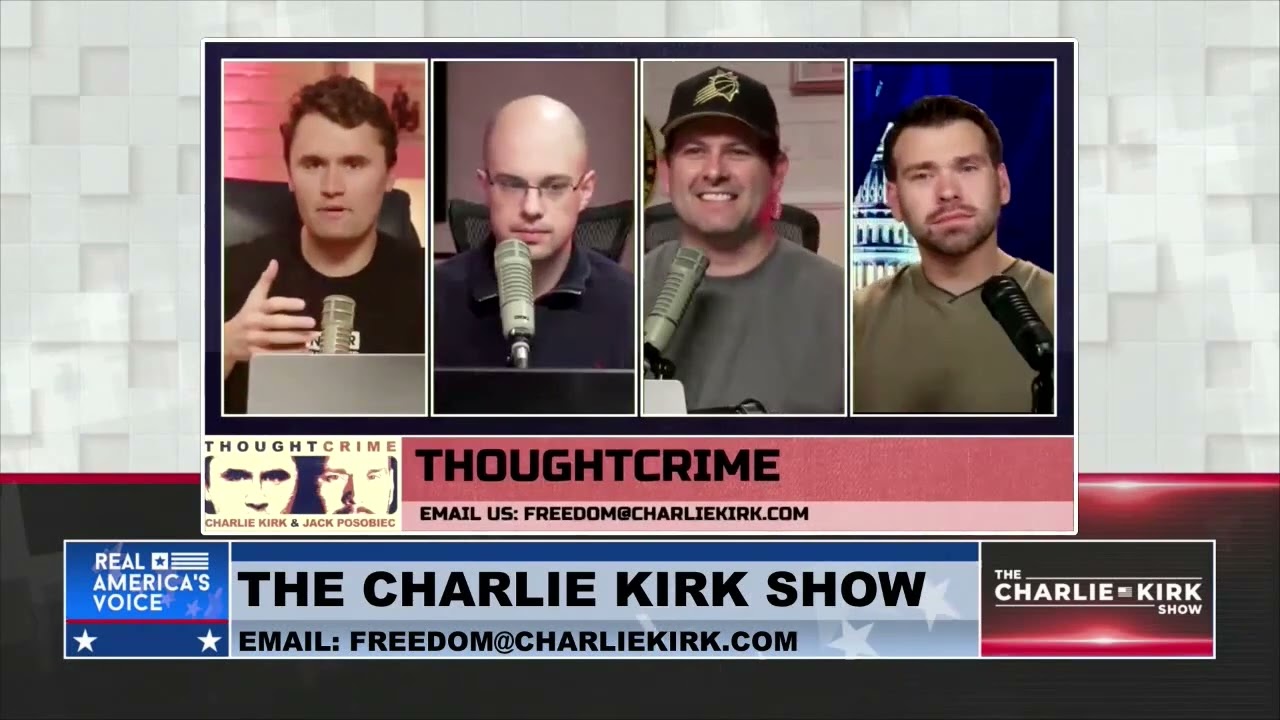
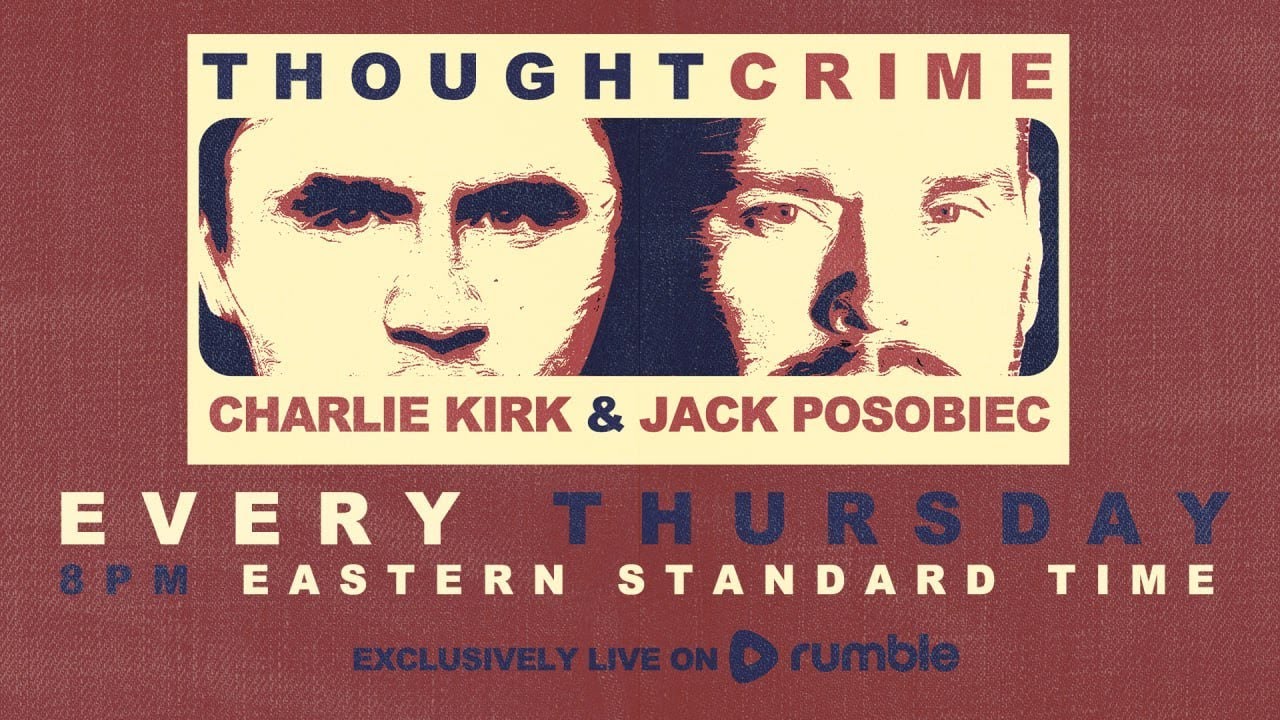
Charlie Kirk and Jack Posobiec Debate the Power of New Year's Resolutions Versus Daily Commitments
Charlie Kirk defends the transformative power of New Year's resolutions while Jack Posobiec argues for daily commitments instead. Kirk shares how his 2023 resolution to study the entire Torah with Dennis Prager and his 2024 resolution to elect Donald Trump shaped his year. Blake Neff reveals how losing 70 pounds and reading 101 books started not on New Year's but on April Fool's Day 2017. Andrew Kolvet discusses the psychology of keeping promises to yourself and shares how a planning session from years ago continues to guide the growth of The Charlie Kirk Show. The team explores whether the timing of resolutions matters or if daily discipline trumps annual goal-setting.
Charlie Kirk and Jack Posobiec clash over the value of New Year's resolutions in a spirited discussion that examines whether annual goal-setting truly works or if daily commitments prove more effective. Kirk passionately defends the tradition while Posobiec questions its arbitrary nature, sparking a conversation about self-improvement, discipline, and the psychology of personal change.
Charlie Kirk's Case for New Year's Resolutions
Kirk makes an enthusiastic case for the power of New Year's resolutions, arguing that the practice represents something fundamentally important: the willingness to acknowledge you're not yet who you want to be. He believes the simple act of wanting to be better at something is phenomenal, regardless of whether you ultimately keep the resolution.
Looking back at his own life, Kirk identifies some of his greatest accomplishments as direct results of New Year's resolutions. His 2023 resolution led him to listen to Dennis Prager teach the entire Torah. His 2024 resolution was to work as hard as a human being possibly can to get Donald Trump elected president.
Kirk challenges the negativity around failed resolutions, arguing that keeping them isn't even the point. The true value lies in self-examination and the acknowledgment that you want to be better. He questions who could possibly be against such a practice.
Jack Posobiec's Argument for Daily Resolutions
Posobiec doesn't oppose resolutions themselves but questions whether the New Year timing makes them particularly effective. Speaking from personal experience, he argues that daily resolutions might prove more powerful and practical than annual ones.
He points out the arbitrary nature of the calendar itself, noting that the current year numbering system is actually off by a couple of years from the actual birth of Christ. To Posobiec, New Year's Day feels like just another day of the week without special resonance for personal change.
Drawing from his military experience, Posobiec suggests framing goals around concrete progressions—what you'll accomplish at your current rank to reach the next one, or what you'll achieve this day, this month, or this progression. He observes the cliché of packed gyms on January 1st that empty out within weeks, arguing this pattern reveals the weakness of New Year's resolutions compared to daily commitments. He and his team did hit the gym on January 1st and 2nd, but he knows most others won't maintain that discipline.
Blake Neff's April Fool's Day Transformation
Blake Neff offers a fascinating perspective that somewhat bridges both viewpoints. He agrees with Posobiec that the New Year timing feels arbitrary and worries that society has created such a culture around New Year's resolutions that they've become an "anti-promise"—the promise you make that carries social approval to break because everyone expects failure.
Neff shares a striking personal story about his most memorable life transformation, which didn't happen on New Year's but on April Fool's Day 2017. On that day, while driving to King's Dominion amusement park in Central Virginia with his roommate, his roommate's girlfriend, and a friend, he had a sudden realization about his weight and decided to change.
That single moment sparked a self-improvement frenzy that lasted about a year and a half. Neff lost 70 pounds in one year and read 101 books during the same period. He remembers thinking at the time that he couldn't maintain that level of intensity forever, but he could maintain it as long as possible.
Reflecting on this experience, Neff wonders if the timing mattered significantly. Because his transformation didn't happen on New Year's, the momentum felt more durable to him—it wasn't tied to the cultural expectation of failure that surrounds January 1st resolutions.
Andrew Kolvet on the Psychology of Keeping Promises to Yourself
Andrew Kolvet addresses both the question of resolutions and shares his own ongoing commitment. He acknowledges the built-in social acceptance of failing at resolutions that both Jack and Blake mentioned, but argues that this mindset misses the profound power of actually keeping promises to yourself.
Kolvet reveals that he's still living up to a resolution made four or five years ago. In a small room with Kirk and a few others, they mapped out on a whiteboard how they wanted to see The Charlie Kirk Show grow. He took pictures of that whiteboard and still looks back at them about once a month or once every two months to check their progress. While they haven't reached all their goals yet, they're closer than ever, which excites him.
On the psychology of resolutions, Kolvet argues that if you know you're not going to keep a resolution, they're useless. But the moment you honor a promise you make to yourself—when your yes is yes and your no is no—you begin to believe in yourself internally and build momentum.
He describes a powerful psychological shift that occurs once you take one step in the right direction. Each day becomes easier, momentum builds, and your internal narrative changes from "I'm not going to do this, why am I even trying?" to "Wow, I can't believe I made it this far, I really want to keep going." Once you turn that corner, something profound and powerful happens, and you become a much more powerful person.
Kolvet emphasizes that resolutions don't have to come at New Year's, but the practice of doing something hard and making yourself keep doing it transforms you into someone who can actually trust yourself when you commit to something. That, he argues, is a powerful way to live your life.
Kirk's Love for New Year's Day
Beyond resolutions, Kirk expresses his genuine love for New Year's Day itself. He admits that this particular New Year's Day was awful—well, great until it wasn't—because Oregon lost in humiliating fashion. But setting aside that disappointment, he has a tradition he loves: going through his iPhone and reaching out to people he hasn't contacted in a while, spending time sending messages and reconnecting. This ritual of reaching out represents his way of using New Year's as a moment to wipe away the old year and step into the new one.