2,422 videos 1,389,747,653 views US Joined Aug 30, 2018
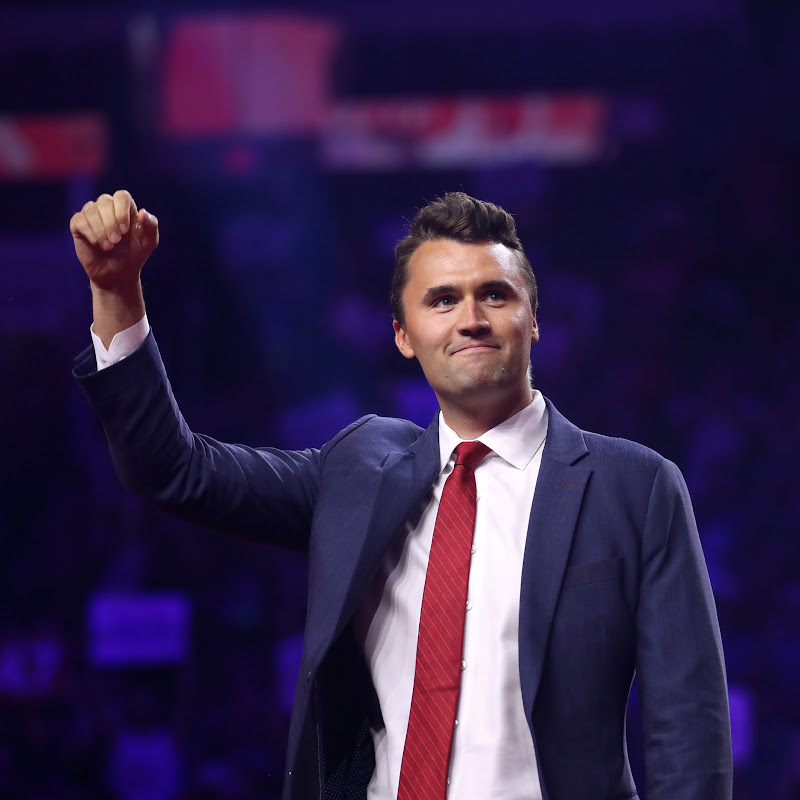
Charlie Kirk is the Founder and President of Turning Point USA, the largest and fastest growing conservative youth activist organization in the country with over 250,000 student members, over 150 full-time staff, and a presence on over 2,000 high school and college campuses nationwide. Charlie is also the Chairman of Students for Trump, which aims to activate one million new college voters on campuses in battleground states in the lead up to the 2020 presidential election. His social media reaches over 100 million people per month and according to Axios, he is one of the "top 10 most engaged" Twitter handles in the world. He is also the host of “The Charlie Kirk Show,” which regularly ranks among the top news shows on Apple podcast charts.
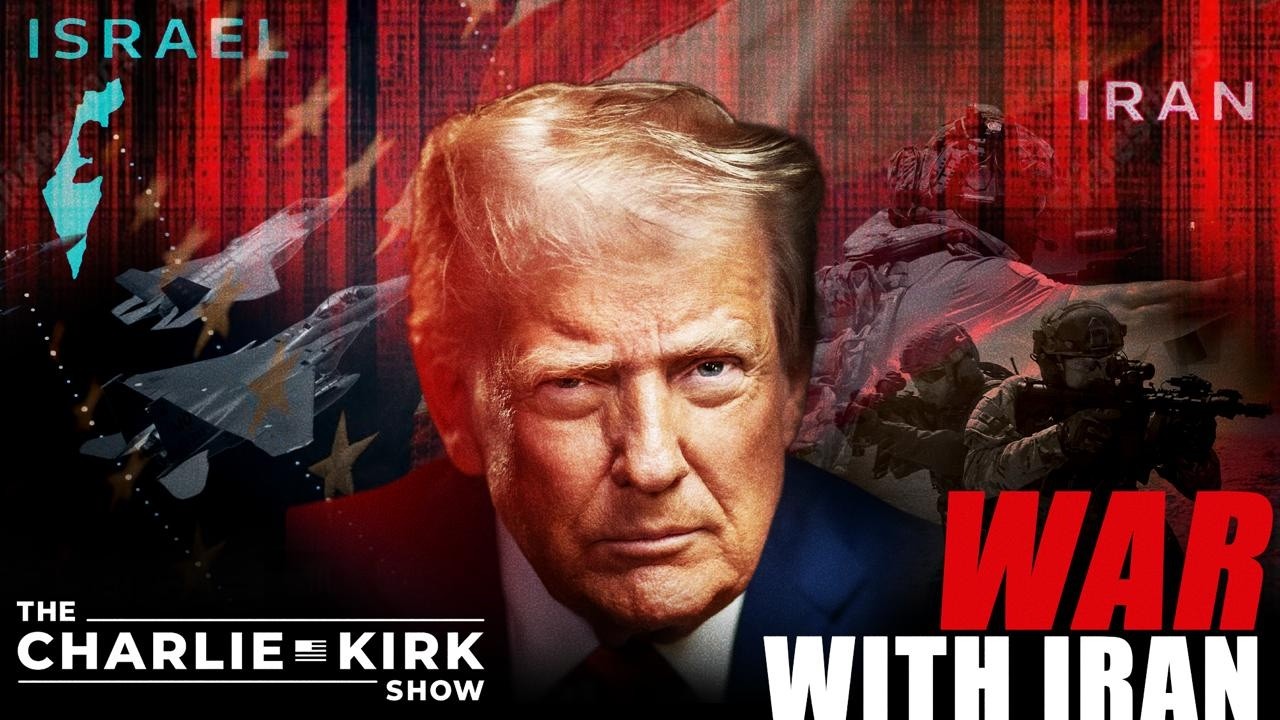
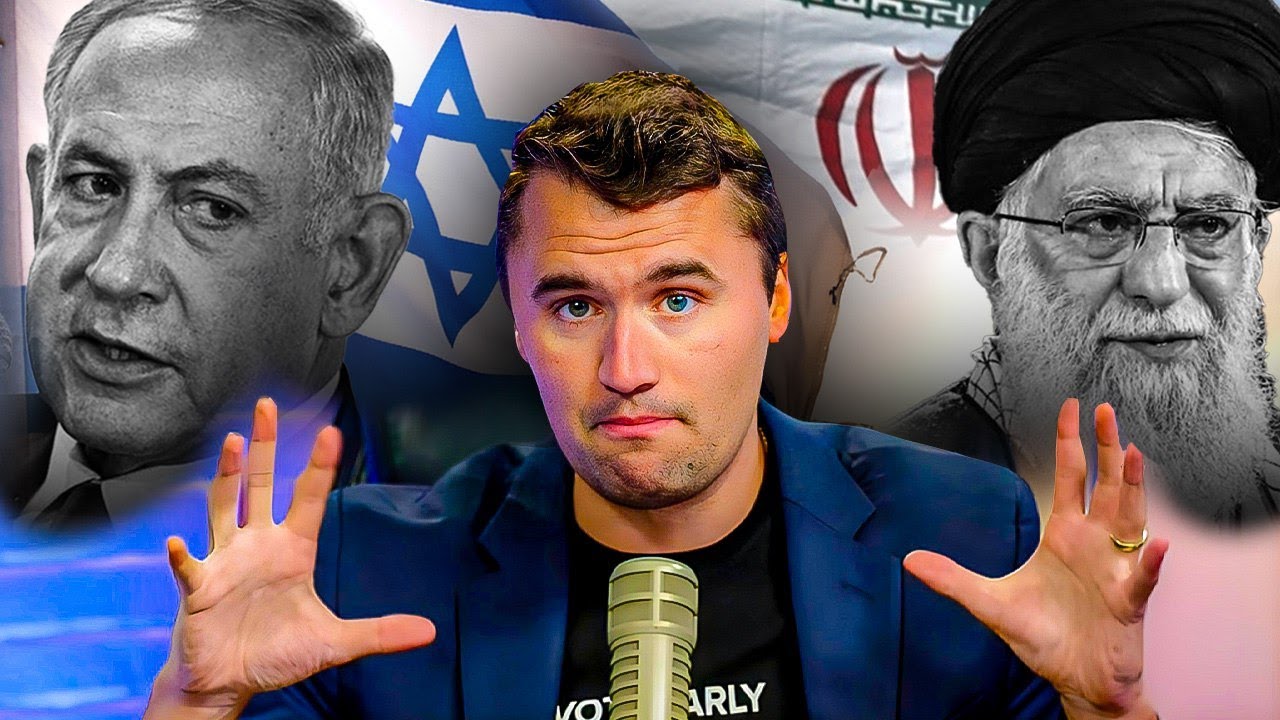
Charlie Kirk's Team Navigates Iran Crisis After Ayatollah's Death and Operation Midnight Hammer
Charlie Kirk's team reflects on their emergency livestream covering the Iran military strikes that killed the Ayatollah and 49 IRGC leaders. Drawing on their experience with Charlie during Operation Midnight Hammer, they examine President Trump's precision strikes, the debate over regime change versus targeted leadership removal, and Charlie's consistent reluctance about Middle East wars balanced against his trust in Trump's judgment. Secretary of Defense Pete Hegseth insists this is not another Iraq, while the team emphasizes humility about unknown outcomes, prayers for troops, and hope this could be the last Middle East war America fights.
The weekend proved eventful as Charlie Kirk's team conducted an emergency livestream on Saturday, drawing tens of thousands of viewers. In Charlie's absence, the team worked to honor what he would say in such situations, drawing on their experience walking alongside him during the summer strikes and Operation Midnight Hammer. They witnessed firsthand how Charlie deliberated through tough decisions, navigated difficult backroom calls and private conversations, and then communicated publicly.
The team acknowledged the fundamental uncertainty surrounding the situation: no one knows how this will ultimately turn out, whether it will be judged a success or failure by history. What has been clear is the precision and lethality of the US military on full display. President Trump indicated they are ahead of schedule, especially regarding targeting the leadership of the IRGC. The Ayatollah is dead, a fact that emerged after their Saturday stream concluded, along with 49 other members of Iran's leadership structure.
The Leadership Vacuum in Iran
President Trump revealed that strikes have been so successful that there's no obvious successor at this point. This was initially misinterpreted by some who thought the US had killed its own candidates to replace Iranian leaders. In reality, Trump was referring to the hostile leadership itself. There had been suspicion about who would be selected if the Supreme Leader was killed. Another Supreme Leader was briefly installed for 22 hours before he too was killed.
The ultimate succession plan remains unclear. Trump's comments suggest this is not a regime change war in the traditional sense. These are targeted air strikes to take out the leadership and allow the people of Iran to choose the next leader. The team emphasized their reluctance about regime change wars and the use of kinetic force in this region, especially against a country as large and strong as Iran. The unintended consequences are sure to be extreme.
Charlie's Competing Impulses
The team explained why they continue to invoke Charlie's perspective: people looked to him as a leader in the movement, someone with wise perspectives who wasn't under anyone else's control. He could be frank and honest. They're trying to maintain that voice so people have that guidance.
Charlie would have had two competing impulses. As a millennial, he was shaped by Iraq and Afghanistan, two wars that looked easy at the start but went on longer and cost more than expected, ending in failure or at best mixed results. This shaped his attitude toward intervention. The competing impulse was his support for President Trump and trust in Trump's judgment on international affairs, combined with his American patriotism. His perspective would have been: he was hesitant about this, but he trusted the president's judgment and believed Trump must have good reasons and a plan to prevent endless escalation.
Over and over, Charlie said the reason he fought so hard for President Trump was for moments exactly like this.
This Is Not Iraq, Says Secretary Hegseth
Secretary of Defense Pete Hegseth addressed concerns about endless wars in his press conference with General Kaine. He directly confronted critics: "To the media outlets and political left screaming endless wars. Stop. This is not Iraq. This is not endless. I was there for both. Our generation knows better and so does this president. He called the last 20 years of nation building wars dumb. And he's right. This is the opposite. This operation is a clear, devastating, decisive mission. Destroy the missile threat. Destroy the Navy. No nukes."
Hegseth outlined the strategic operational objectives and explained the "why" behind the mission: "Iran's stubborn and self-evident nuclear pursuits, their targeting of global shipping lanes and their swelling arsenal of ballistic missiles and killer drones were no longer tolerable risks. Iran was building powerful missiles and drones to create a conventional shield for their nuclear blackmail ambitions. Our bases, our people, our allies, all in their crosshairs. Iran had a conventional gun to our head as they tried to lie their way to a nuclear bomb. It almost worked under Obama and his terrible deal, but not under this president."
His conclusion generated headlines: "Turns out the regime who chanted death to America and death to Israel was gifted death from America and death from Israel."
Charlie's Impossible Interview Moment
The team recalled a memorable moment at the height of public conflict about Operation Midnight Hammer when Charlie appeared on Jesse Watters in what they described as an impossible situation. They felt he nailed the moment perfectly.
Charlie told Watters: "President Trump understands his base extraordinarily well. He knows that his base does not want another Iraq. He does not want Libya. Does not want a civil war where the United States is left carrying the bag. But also, President Trump has been morally clear for a decade. Iran should not have a nuclear weapon. And President Trump has the talent, the expertise to be able to thread that needle. The generation that I represent, Jesse, the under 30 crowd, they absolutely are very war weary. Many of them voted for President Trump on college campuses because they did not want to see a Joe Biden or George Bush philosophy where we get into this endless conflict where we're sending hundreds of billions of dollars. I think President Trump will be able to balance those two things while defending our allies, saying that Iran will not have a nuclear weapon without having to deploy a single American troop or even having America involved from the sky. President Trump can get that deal done while fulfilling the mandate that the voters gave him."
They remembered Charlie saying that night, "Well, say a prayer, wish me luck" before the interview.
Trump's 1980 Iran Stance
Charlie had made a point about how consistent President Trump has been regarding Iran. The team found a clip from 1980 of Trump discussing his posture on Iran during the Iranian hostage crisis of 1979. Trump was clearly offended that America let the situation happen.
In the vintage interview, Trump said: "When you get the respect of the other countries, then the other countries tend to do a little bit as you do and you can create the right attitudes. The Iranian situation is a case in point that they hold our hostages is just absolutely and totally ridiculous. That this country sits back and allows a country such as Iran to hold our hostages to my way of thinking is a horror." When asked if he was advocating going in with troops, Trump responded: "I absolutely feel that. Yes. I don't think there's any question. There's no question in my mind. I think right now we'd be an oil rich nation and I believe that we should have done it and I'm very disappointed that we didn't do it and I don't think anybody would have held us in abeyance. I don't think anybody would have been angry with us and we had every right to do it at the time."
The team noted Trump has the best vocabulary and has been consistent on Iran. Charlie had made the point that Trump tends to defy both extremes—the hyper-interventionalists and the anti-interventionists. Trump finds a third way.
The Reality of Ongoing Danger
The team emphasized that anyone claiming to know how this will work out is completely wrong. Many people are being smug, acting like the war is already over because the Ayatollah is dead. It's not over. Iran has responded by lobbing missiles at seven different Arab countries almost at random. Their goal appears to be to demoralize, break apart, and create pressure for peace as casualties mount. Iran hopes people will blame the US and Israel for all of it.
So far, there's been somewhat of an opposite effect. Saudi Arabia is now participating in some actions because they had missiles dropped on them. Four US troops have been lost, which requires prayers that troops remain safe and casualties stay minimal. President Trump has indicated there will probably be more losses, which is horrifying and unfortunate, but he's right that this is what happens in armed conflict between militaries.
The team stressed the importance of holding multiple truths simultaneously: praying for success while understanding they don't know all the details. During their Saturday stream, after making numerous calls to gather intel, they heard a repeated theme from multiple sources: there was real concern that Iran was like a rabid dog backed into a corner. Two things could be true at once—the strikes against facilities were successful and the regime was weaker than ever, but they could also be more dangerous than ever.
Why the Strikes Happened Now
Iran was pursuing hypersonics from China—carrier sinkers that could sink US carriers in the region with 5,000 people on board. They were working on dirty bombs, possibly collecting materials from struck sites like Fordow or obtaining them on the black market. They were rapidly building their ballistic missile stockpiles. The reported numbers about how many ballistic missiles Iran had were probably underestimations—they likely had far more, as current indications suggest.
Iran was a dog backed into a corner and they were going to bite. President Trump made the decision to hit them before they were ready to hit the US. The team understands that calculus, though they acknowledge people don't have to agree with it or even think Iran was an imminent threat to understand that reasonable people would reach different conclusions.
Humility, Not Celebration
The team made clear they're not drums-of-war people. There's no excitement, giddiness, or fervor. Instead, there's humility, concern, and prayer for troops, wishing and praying for success that this would ultimately be good for the world and the region. If this ends positively, it's undeniable there could be massive upside, including choking off energy flow to the CCP and many other downstream effects.
The team expressed hope that instead of being another Middle East war, this could be the last Middle East war the United States has to be involved in. America has fought in the Middle East multiple times, but at this point, Iran is the last entity that poses a serious danger. The Houthis shoot missiles at ships in the Red Sea, but they're not a strategic danger to any entire country that matters.
Ideally, once the Iranian regime is either removed or curtailed—and the president has indicated that if all their military capabilities are destroyed and they never try to rebuild them, he doesn't care what they do after that—most troops could come home, most ships could come home, most planes could go elsewhere. This could represent a reorientation of focus to the Indo-Pacific. America has endured 45 years of conflict in the Middle East. It would be nice to not have anymore.