2,422 videos 1,389,747,653 views US Joined Aug 30, 2018
Charlie Kirk is the Founder and President of Turning Point USA, the largest and fastest growing conservative youth activist organization in the country with over 250,000 student members, over 150 full-time staff, and a presence on over 2,000 high school and college campuses nationwide. Charlie is also the Chairman of Students for Trump, which aims to activate one million new college voters on campuses in battleground states in the lead up to the 2020 presidential election. His social media reaches over 100 million people per month and according to Axios, he is one of the "top 10 most engaged" Twitter handles in the world. He is also the host of “The Charlie Kirk Show,” which regularly ranks among the top news shows on Apple podcast charts.
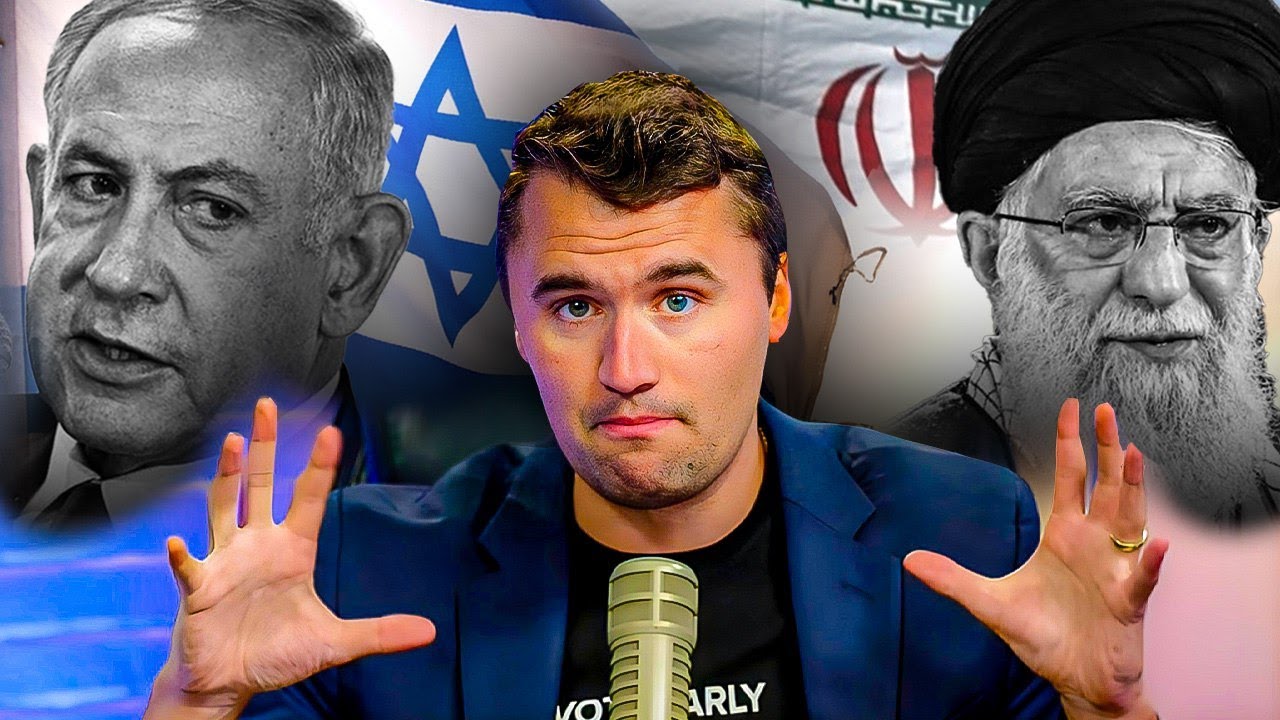
Charlie Kirk and Alex Marlow Confront Republican Senators Pushing Regime Change in Iran Over Nuclear Strikes
Charlie Kirk examines the dangerous shift in Republican rhetoric from targeting Iran's nuclear program to advocating for full regime change. As senators like Lindsey Graham and James Lankford push for deposing the Ayatollah, Kirk and Breitbart's Alex Marlow warn against repeating the catastrophic mistakes of Iraq, Afghanistan, Libya, and Syria. With Iran being a nation of 92 million people and two-and-a-half times the size of Texas, they argue that regime change would be a reckless, prideful approach that ignores decades of failed Western intervention in the Middle East. Kirk advocates for trusting President Trump's pattern of proportional force and strategic restraint, while firmly opposing any American boots on the ground or nation-building efforts that could fracture the MAGA coalition and drain American blood and treasure.
The Dangerous Shift from Nuclear Strikes to Regime Change
Charlie Kirk opens by thanking his audience for making The Charlie Kirk Show the number one conservative podcast on Apple charts and number three overall in news, demonstrating that Americans turn to the program when breaking news becomes confusing and intense. He addresses a troubling shift in Republican rhetoric regarding Iran that demands immediate attention.
Kirk explains that for over a decade, including throughout President Trump's tenure, the consistent message has been clear: Iran will not be allowed to obtain a nuclear weapon. This position, Kirk acknowledges, is defensible when executed with precision and prudence. The idea of limited strikes against Iran's nuclear facilities using American B-52 bunker-busting bombs or B-2 bombers is something he can understand, even if he maintains some caution about such intervention.
However, Kirk identifies a concerning pattern among Washington neoconservatives who have been wrong about every major foreign policy decision over the past 20 years. These figures were wrong about Afghanistan, Iraq, Libya, Syria, and the Arab Spring. The Middle East, Kirk argues, is filled to capacity with their failures. Now these same voices are attempting to shift the Overton window from preventing Iran from obtaining nuclear weapons to forcibly removing the Ayatollah and implementing regime change.
Lindsey Graham's Reckless Advocacy for Regime Change
Kirk plays clips of Senator Lindsey Graham explicitly calling for regime change in Iran. Graham states he would like to see the regime fall and declares he is willing to risk what happens next, calling the Iranian leadership "fanatical religious Nazis." Graham claims taking down the Ayatollah's regime is "a good thing, not a bad thing" and that he knows it will only get better after they're gone.
Kirk identifies this rhetoric as immature, shallow, sloppy, irresponsible, and insane. He emphasizes that the first rule of foreign policy is humility—you must enter situations recognizing that you don't know with certainty how things will unfold. You can predict probabilities and look to history, but claiming absolute knowledge about future outcomes represents exactly the kind of arrogance and pride that led to the quagmires in Iraq and Afghanistan, the ongoing civil war in Libya, and the Syrian civil war that killed 600,000 people and created 6 million refugees who fundamentally changed Europe's demographic composition.
Kirk stresses that Iran is a country of 92 million people, two-and-a-half times the size of Texas. Regime change in such a nation could trigger catastrophic consequences. The best-case scenario would likely require at least 5,000 U.S. troops and $100 billion. The most probable scenario would be a bloody civil war resulting in hundreds of thousands dead, with various ethnic groups fighting for power, potentially triggering another refugee crisis flowing toward the West.
James Lankford's Equally Dangerous Position
Kirk then turns to Senator James Lankford of Oklahoma, who attempted to negotiate a border deal with the Biden administration that would have allowed 5,000 illegal border crossers per day. Thanks to grassroots opposition that killed that bill, the border now sees zero crossings—a historic achievement under President Trump that Kirk celebrates as one of the greatest legislative derailments in modern history.
Despite representing Oklahoma, Lankford now speaks indistinguishably from a member of the Israeli Knesset, focusing entirely on Middle East regime change rather than Oklahoma's problems with fentanyl, schools, taxes, or regulation. In a clip Kirk plays, Lankford explicitly calls for regime change in Iran, saying the country needs a new regime because they oppress their own people and use oil money to fund terrorism.
Kirk finds this reasoning profoundly reckless. He could name 50 countries that repress their own people, but that alone doesn't justify American intervention to overthrow governments. He points out that while no one on his program likes Vladimir Putin, it would be delusional and insane to advocate for regime change in Russia, given that Putin controls the most time zones and the largest nuclear arsenal on the planet.
The Realities of What Regime Change Would Mean
Kirk emphasizes the practical dangers of regime change in Iran. The country possesses 2,000 ballistic missiles. When the country falls into turmoil, what happens to those weapons? Will they all be launched at the 40,000 U.S. troops currently within missile range of Iran? How many American service members dying would be acceptable to senators like Lankford and Graham?
If the Ayatollah is assassinated, who takes control? A religious fanatic could seize power and immediately begin launching missiles at American positions. Regime change represents an outgrowth of a prideful, cloistered, sheltered worldview that acts as if policymakers know with certainty what will come next in a complex nation of 92 million people.
Kirk makes clear distinctions in his position. If the Persian people want to organically and authentically take back their government from the ground up, Americans should cheer them on. The Persian people are wonderful, industrious, and among the highest IQ populations on the planet. But Western-forced, central-planning regime change is an entirely different matter that follows a predictable and disastrous pattern: overthrow the government, then send a small number of troops to support the new regime, then provide financial support, then send more troops. Americans have seen this play before, and it always ends badly.
Alex Marlow Joins to Analyze the Situation
Kirk welcomes Alex Marlow, Breitbart News editor-in-chief and host of The Alex Marlow Show, to discuss the situation. Marlow expresses frustration for those who don't want President Trump to be entirely isolationist but also recognize the dangers of the current rhetoric from senators like Lankford and Graham.
Marlow emphasizes that the conversation should focus on what President Trump has consistently promised for over a decade: preventing Iran from obtaining nuclear weapons. Trump tweeted in 2011 that Iran's quest for nuclear weapons is a major threat to American national security interests and that America can't allow Iran to go nuclear. The debate, Marlow argues, should be about whether Iran is on the brink of going nuclear, not about regime change.
Marlow points out the absurdity of watching establishment Republicans—the exact people the MAGA movement displaced—talking about regime change in the Middle East with no idea what would happen next, other than Americans spending blood and treasure while the defense sector gets rich. This is precisely what the movement opposed from the beginning, going back to the work of Andrew Breitbart, Stephen K. Bannon, and Stephen Miller over a decade ago.
Even Nikki Haley Opposes Regime Change
Kirk notes that even Nikki Haley tweeted that the U.S. should not engage in regime change in Iran, stating that America's focus should only be on national security. Haley argued that America should support Israel in eliminating nuclear sites at Natanz and Fordo to prevent the threat of atomic bombs, but that the Iranian people should decide who they want for their leader.
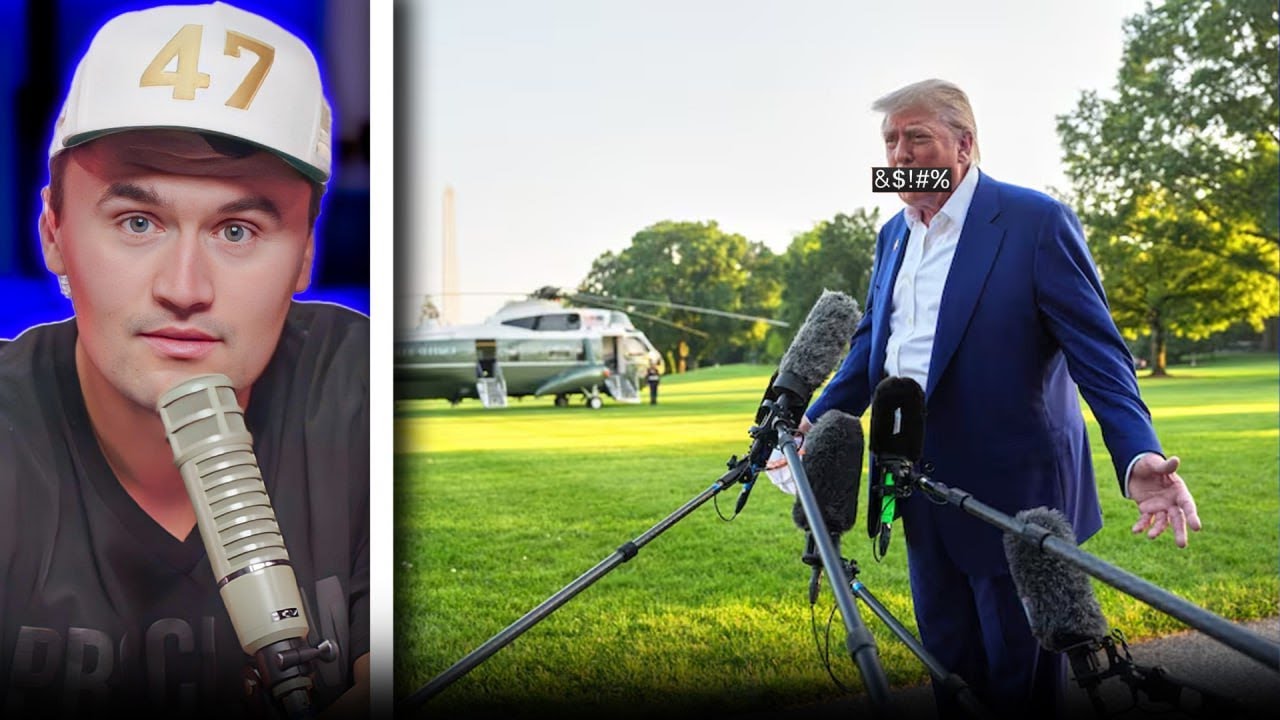
Kirk agrees with about 90% of Haley's statement, though he emphasizes it's not her call whether to eliminate the nuclear program—that decision belongs to President Trump. He makes an important distinction: if Trump bombs those two nuclear facilities, that doesn't necessarily constitute starting a new war. Iran could retaliate, but Kirk trusts President Trump 100% to navigate this moment. Trump took out Qasem Soleimani, defeated ISIS, and has proven capable of managing complex Middle East situations with restraint and proportion.
President Trump's Pattern of Proportional Force
Both Kirk and Marlow emphasize President Trump's historical pattern of using violent but proportional force and then disengaging and deescalating. In 2019, when Iran shot down an American drone, warmongers around Trump wanted him to kill 140 Iranians in response. Trump famously refused, saying that response wouldn't be proportional to shooting down an unmanned drone. He showed restraint and moved on.
Similarly, with the Syria strikes, people wanted full regime change of Bashar al-Assad, but Trump conducted limited strikes and nothing more—and he did this twice. The same pattern appeared with the Houthis. Trump's approach involves proportional violence followed by disconnection and deescalation. The Soleimani strike and the use of the MOAB against ISIS demonstrated this capability for decisive action without prolonged entanglement.
Kirk argues that people need to view the current situation through the lens of Trump's historical pattern, not through the lens of the Iraq land invasion. The concern should focus on preventing boots on the ground and regime change, not on preventing all possible military action.
The Political Dynamics and Coalition Unity
Marlow discusses the political implications, noting that while there's significant chatter online that superficially divides people, he doesn't believe this represents a permanent fracture. If President Trump navigates the situation with prudence, avoiding U.S. troops on the ground and prolonged conflict, the situation could be resolved relatively quickly—potentially by July 4th, people might barely remember the Iran tensions.
Both agree on two absolute red lines: no boots on the ground and no regime change. Beyond those boundaries, there's room for debate and nuance. Marlow expresses optimism that so long as American boots aren't on the ground, the MAGA base can have faith that President Trump will act judiciously and with prudence, and will be able to reassemble his coalition.
Marlow raises concern that statements from senators like Lindsey Graham are destructive because they could be used to secretly explode the military budget, potentially dividing the coalition. Senator Rand Paul has expressed concern about this in the context of debates over the "big beautiful bill" currently under consideration. However, Marlow remains optimistic that Trump will settle the issue and the movement won't become too fractured, even if people are highly emotional online trying to get their points across.
The Stakes and the Path Forward
Kirk emphasizes that Iran has believed in "death to America" since the slogan became prominent in 1979. They hate America and Americans. In general, the Iranian people deserve better than the current regime. However, when America has tried regime change in recent years in the Middle East, all it has done is enrich the defense sector and destabilize the region without helping anyone.
The debate must focus on the nuances between these extremes. Regime change is off the table. Standing up to Iran if they take proactive attacks on America or allies in the region is a no-brainer—America will provide defense capabilities. Whether to take out facilities like the Fordo nuclear site, which everyone agrees should not be operational but currently is, remains a legitimate debate. Kirk doesn't advocate for immediate action, but argues Americans shouldn't broadcast to adversaries that the country is willing to let them get away with anything.
Kirk concludes by noting that sanity seems to be winning out, particularly after JD Vance's tweet that articulated a balanced position on the issue. However, vigilance remains essential because deeply interested parties on all sides are trying to settle long-standing grievances their way. This is a nuanced moment that requires careful navigation, not ideological extremism in either direction.