Up Next
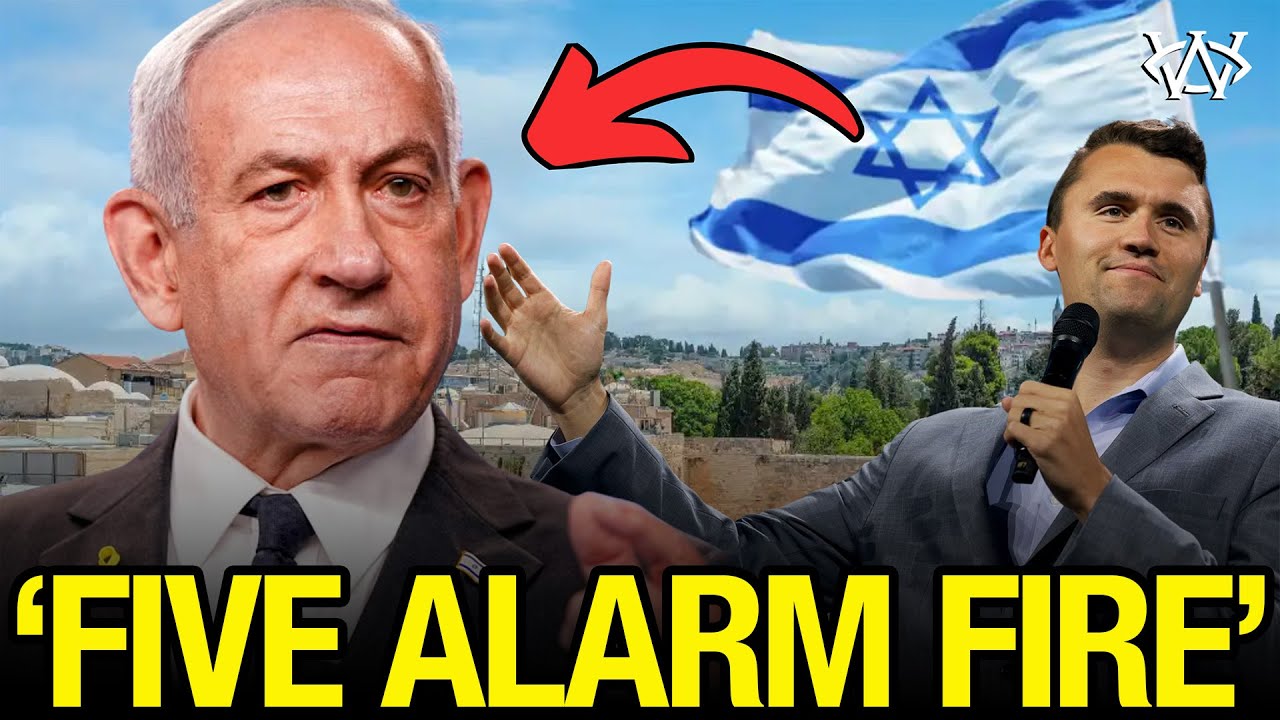
Charlie Kirk Hosts Gen Z Conservative Leaders for Raw Discussion on Israel, Foreign Aid, and American Priorities
22:47
Charlie Kirk Issues Urgent Voter Registration Deadline Warning for Arizona and Georgia Voters
8:53
Megyn Kelly and Charlie Kirk Confront Backlash From Pro-Israel Allies Over Nuanced Criticisms
17:36
Charlie Kirk is the Founder and President of Turning Point USA, the largest and fastest growing conservative youth activist organization in the country with over 250,000 student members, over 150 full-time staff, and a presence on over 2,000 high school and college campuses nationwide. Charlie is also the Chairman of Students for Trump, which aims to activate one million new college voters on campuses in battleground states in the lead up to the 2020 presidential election. His social media reaches over 100 million people per month and according to Axios, he is one of the "top 10 most engaged" Twitter handles in the world. He is also the host of “The Charlie Kirk Show,” which regularly ranks among the top news shows on Apple podcast charts.
Subscribe on YouTubeCharlie Kirk and Josh Hammer Reflect on High-Profile Israel Debate at Turning Point USA Summit
Charlie Kirk and Josh Hammer discuss the packed-room Israel debate at the Turning Point USA Student Action Summit that featured Hammer facing off against Dave Smith. The debate explored America First foreign policy, U.S.-Israel relations, and the Trump doctrine while drawing standing-room-only crowds on a typically quiet Sunday closing session. Hammer argues that nationalist realist foreign policy represents a third way between neoconservatism and isolationism, while both debaters found common ground on phasing out aid to Israel and condemning antisemitism. Kirk and Hammer break down the viral moments, points of agreement, and what the debate revealed about how younger generations view American involvement in the Middle East.
Record-Breaking Debate Attendance
Charlie Kirk opens by reflecting on an extraordinary moment at the Turning Point USA Student Action Summit—a Sunday closing session that defied all expectations. Typically, Sunday sessions see attendance drop to about one-third capacity as attendees fly home after a long weekend. However, the Israel debate between Josh Hammer and Dave Smith packed the room to capacity, marking one of the most attended closing sessions in summit history outside of appearances by President Trump.
Kirk invites Hammer back on The Charlie Kirk Show to unpack the debate, offer additional context, and expand on points that time constraints prevented during the live event. The conversation reveals not just the substance of the debate itself, but what it signals about the state of foreign policy discussions within the America First movement.
The Trump Doctrine: A Third Way Forward
Hammer emphasizes that one of his primary objectives during the debate was to clarify what the Trump doctrine of foreign policy actually represents. He explains that MAGA and America First do not mean what libertarian isolationists believe they should mean. Instead, the Trump doctrine embodies nationalist realist foreign policy—a third way between two equally problematic extremes.
"The Trump doctrine of foreign policy is a nationalist realist foreign policy. It is a third wave form policy between the equally absurd extremes of neoconservatism on the one end and isolationism on the other end," Hammer states. This framing became a central theme throughout the debate, repeated deliberately to ensure the audience understood the distinction.
Hammer points to Operation Midnight Hammer and Trump's 12-day war against Iran as the perfect embodiment of this doctrine in action. The surgical strikes demonstrated how American military force can be used effectively without nation-building, regime change, or extended occupation. For younger millennials and Gen Z who grew up witnessing the failures in Iraq and Afghanistan, this represents a potential inflection point in how they view American military engagement overseas.
Points of Agreement
Despite the heated nature of the debate, Kirk highlights five key areas where Hammer and Smith found common ground:
- Both agreed on implementing a plan to wind down U.S. aid to Israel, though they disagreed on the timeline
- Both affirmed that every human is made in the image of God and civilian casualties should not be trivialized
- Both condemned the October 7th attacks as awful and terrible, deserving more emphasis in public discourse
- Both rejected antisemitism and Jew-hatred as having any place in legitimate political discussion
- Both demonstrated that open debate is preferable to censorship and name-calling
Kirk makes a point of emphasizing the importance of the fourth agreement, addressing what he describes as "disgusting stuff online." He tells the audience directly: "Don't get yourself involved in that. I'm telling you, it will rot your brain. It's bad for your soul. It's bad. It's evil. I think it's demonic."
Hammer responds by praising Kirk's consistent defense of the Jewish people throughout his career, noting the absurdity of situations where Kirk, a young evangelical Christian, finds himself having to defend the Talmud to online conspiracy theorists on college campuses.
The Case for Phasing Out Aid to Israel
One of the most substantive areas of agreement between the debaters concerns U.S. aid to Israel. Hammer explains that he has been criticizing this arrangement for a decade, arguing it ultimately harms both countries.
From the American perspective, the annual $3.8 billion aid package functions as crony capitalism within the military-industrial complex that President Dwight Eisenhower warned about in his farewell address. The arrangement essentially subsidizes major defense contractors like Boeing and Northrop Grumman—companies that, in Hammer's view, don't need additional taxpayer money flowing into their coffers.
From Israel's perspective, reliance on foreign aid creates vulnerability to political pressure. The more dependent Israel becomes on American aid, the more leverage other countries have to threaten aid cuts as a form of coercion. Hammer points to the Biden administration's repeated attempts to use aid as leverage after October 7th as a prime example of this dynamic in action.
Hammer connects this to the concept of Zionism itself, which he defines as "the notion rooted in the book of Genesis that the Jewish people have a God-given ancestral biblical right to their homeland." If that premise is accepted, he argues, it follows that the Jewish people should be self-determining and not dependent on foreign support.
However, Hammer makes clear that timing matters. He would not advocate cutting aid during an active seven-front war like Israel has faced since October 7th, but believes that in the mid-to-long term, phasing out the aid would serve both countries' interests.
Regarding AIPAC, Hammer challenges the perception that the organization wields enormous power. He points to their failure to stop Barack Obama's Iran nuclear deal in 2015—their top priority of the decade—as evidence that they are not the boogeyman many portray them to be. Nonetheless, he criticizes the organization for existing primarily to secure annual aid appropriations that he believes ultimately undermine both American and Israeli interests.
Genesis 1:27 and the Foundation of Western Morality
Hammer takes time to elaborate on the theological and philosophical importance of Genesis 1:27—the verse declaring that humans are created in God's image. He argues this concept represents the foundational ethical imperative of all Western civilization.
In his book "Israel and Civilization," Hammer traces how this biblical concept flows through the American founding documents and civil rights movements. Thomas Jefferson's declaration that "all men are created equal" has its roots in Genesis 1:27. The Equal Protection Clause of the 14th Amendment, Martin Luther King Jr.'s speech in Washington, and the Civil Rights Act of 1964 all derive their moral authority from this Hebrew Bible principle.
Hammer applies this principle consistently across conflicts, emphasizing concern for human dignity whether discussing Gaza, the Yemeni civil war, Syria, or Boko Haram in Nigeria. He notes with some irony that many who express intense concern about civilian casualties in Gaza remain conspicuously silent about humanitarian disasters elsewhere in the world.
Israel's Humanitarian Measures in Gaza
When asked what points he wished he could have expanded on during the debate, Hammer immediately points to the proactive humanitarian measures the Israeli military takes to prevent civilian casualties in Gaza. This is an area where time constraints prevented him from fully developing his argument.
Hammer explains that the IDF has implemented extraordinary protocols dating back at least to the 2014 Gaza conflict, possibly as early as 2012. These measures include:
- Dropping leaflets from the sky onto buildings warning of impending military operations
- Individually calling apartment buildings, stores, and houses to provide advance warning
- Giving civilians 30 minutes to several hours to evacuate before operations begin
- Targeting only locations confirmed to house Hamas facilities, often embedded in mosques or residential areas
Hammer cites data from John Spencer, the head of urban warfare studies at West Point, showing Israel achieved a civilian-to-combatant death ratio of 1 to 1.5 in Gaza—the lowest in the entire history of recorded urban warfare. This makes the IDF's Gaza operations the most humane urban military campaign ever conducted.
"In many ways, Israel is the IDF along with the US Army is the most moral warfighting machine in the modern history of the world," Hammer states. He describes accusations of indiscriminate slaughter as a modern manifestation of ancient blood libel against Jews.
Some U.S. military veterans have reportedly expressed surprise at how far Israel goes to prevent civilian casualties, with protocols that exceed even American standards. Hammer suggests that while the Obama administration imposed overly restrictive rules of engagement on U.S. forces, Israel's self-imposed restrictions go even further—perhaps, he suggests, sometimes too far in trying to appease critics who will never be satisfied.
Why Platform This Debate?
Kirk addresses criticism he received for hosting the debate in the first place. Some questioned why he would platform Dave Smith's perspective on Israel. Kirk defends the decision by arguing that open debate strengthens rather than weakens the movement.
Hammer points out that this was actually his second debate with Smith in just six months, having previously faced off at Princeton University as part of the Steamboat Institute's Campus Liberty Tour. He acknowledges that Smith has a significant platform and that many younger people take his views seriously, particularly on foreign policy matters.
"Dave Smith, for better or for worse, your mileage may vary. I obviously am not a fan to put it mildly of what the guy says. I think a lot of it is egregiously wrong to the point at times of just being utterly offensively wrong," Hammer admits. "But he has a platform and people especially a lot of younger people really really really tend to glom on to what he says."
Hammer draws a distinction between debating legitimate substantive issues—the nature of U.S.-Israel relations, appropriate levels of engagement, foreign aid policy—and debating premises he considers beyond the pale, such as whether Israel is committing genocide or operates as an apartheid state. The debate stayed within bounds of legitimate policy discussion rather than crossing into fundamental moral questions about Israel's right to exist or defend itself.
What Young People Can Learn
In closing, Kirk asks Hammer what takeaway young people should draw from the debate and what he learned about better framing these issues for younger audiences.
Hammer acknowledges that millennials and Gen Z came of age during or immediately after the failed regime change operations in Iraq and Afghanistan. Their skepticism toward U.S. military involvement overseas is both understandable and justified given that context.
However, he sees Operation Midnight Hammer—Trump's 12-day war involving 37-hour B-2 bomber runs into Iran—as a potential turning point. Combined with Trump's first-term eliminations of Qasem Soleimani and ISIS leader Abu Bakr al-Baghdadi, these operations demonstrate what surgical, nationalist-realist military action looks like in practice.
"I think that Donald Trump has highlighted for young people for maybe the first time in their lives what a truly surgical strike, nationalist realists, bomb the crap out of our enemies who want to kill us and then get the heck out. What that kind of foreign policy can actually look like," Hammer explains.
He emphasizes that the Iran strikes would not have been possible without Israel's prior neutralization of Iranian air defenses and missile launchers—an example of strategic cooperation that serves American interests without requiring nation-building or extended occupation.
Hammer concludes by praising Trump for fulfilling multiple campaign promises with a single operation: setting back Iran's nuclear ambitions by many years while avoiding war and American casualties. This, he argues, is the Trump doctrine in action—and exactly what America First foreign policy should look like.
Video Transcript
I'm excited to tell you that I'll be
speaking at the Culture and Christianity
Conference at World Outreach Church just
south of Nashville, Tennessee this
September. And I'm inviting you to join
me. My friend, Pastor Alan Jackson,
organized this conference so we can
address the issues we're facing in
today's culture, but through the lens of
God's truth. We'll talk about what's
happening in the church, but media and
with our help. When you attend, you'll
gain insight and valuable perspectives
on what's happening in the world today.
Learn more and register at
allenjack.com/charlie.
That's alenjackson.com/charlie.
I'll see you there.
[Music]
Email us as always freedom
charliekirk.com and subscribe to the
charliekirkshow podcast page. Joining us
now is Josh Hammer. Josh, great to see
you again. We were on stage together
yesterday. Um I guess to make it fair,
we should have Dave Smith also on the
show, but we could have Dave back on at
another time. But Dave, I do want Josh,
I do want to take this opportunity just
to promote the debate for those that
haven't seen it, uh, to recap it. So
Josh, I want to get your opinion, then
we're going to play some pieces of tape,
and then Josh, I want to give you an
opportunity to maybe finish some points
that you, um, might not have had time to
do so. Uh, but first, Josh, your
impression, your experience at the
Turning Point USA high-profile Israel
debate.
>> Well, first of all, Charlie, thank you
for the invitation to appear at the
debate and thank you for moderating. you
you moderated an outstanding debate. I
told you in person afterwards I thought
it was 10 out of 10. You you did a
fantastic job there. Look, it's a very
emotional topic and and emotions run
high there, but there were a lot of
substant points on both sides. One of
the things that I that I want to do and
now that we've already seen what
happened, I think it's very clear in
retrospect that it was a deliberate one
of one of many deliberate tactics on my
end to try to to make sure that the
people there understand and the audience
watching at home and around the world
that MAGA and America first and the
Trump doctrine of foreign policy simply
does not mean what libertarian
isolationists like Dave Smith think that
it means or what they think it ought to
mean. The Trump doctrine of foreign
policy is a nationalist realist foreign
policy. It is a thirdwave form policy
between the the equally absurd extremes
of neoconservatism on the one end and
isolationism on the other end. And
Charlie, that was a theme that that I
tried to hit over and over and over
again through the course of this debate.
It was a very lively audience. The
audience was super engaged there. All
sorts of applause lines I thought for
for both of us. The occasional boo at
times as well, but it was an incredibly
enriching and rewarding experience. I'm
deeply happy that I did it.
>> Yeah. And so I want to play some pieces
of tape, but I want to congratulate both
you and Dave. Usually on Sunday, the the
rule that works at the the the rule at
Turning Point USA events is Sunday,
we'll be lucky to have like onethird of
the room filled. Wow. You It's just the
way it is. People fly home, they're
like, "Okay, they had a long night the
night before."
>> But it was packed. I mean, it was the
most packed closing to a summit we've
ever had outside of having Trump or
something like that, obviously. So,
let's just play some pieces of tape here
that have gone viral. Uh, but first I
want to go to a piece of agreement that
I think is important. I want to first
play cut 257 where I throw it down and I
say, "Look, we can you can criticize the
Netanyahu government." Great, Dave.
Josh, you know, you can have a view on,
you know, Iranian intervention, but
we're not going to put up with this Jew
hate stuff. It's not going to happen.
We're not going to put up with it. Play
cut 257.
There is a rise of I just think some
disgusting stuff online. I'm not blaming
you for this. I'm not one of those
people. Right. But what do you have to
say that there's this like dark Jew hate
out there and you see it and I see it. I
hate it. It's It's not good. And
everyone in this audience, guys, don't
get yourself involved in that. I'm
telling you, will rot your brain. It's
bad for your soul. It's bad. It's evil.
I think it's demonic.
Josh, I think that was an important
point. Dave agreed and it really kind of
fenced in where this is what I think
good faith argumentation versus kind of
the slop that we see emerge far too
often online.
Yeah. And this is the critical
distinction. Look, there there are so
many parts of USI is relations of US
involvement in the Middle East more
generally, US involvement in this in the
12-day war against Iran. I I think all
this is totally fair game. What should
the level of US aid to Israel? What
should it be? Should there actually be
aid? Dave and I actually agree that that
aid should be phased out. We disagree on
the time frame, but we broadly agree
that US aid to Israel ends up being
something of a mutual bear hug that in
my judgment actually ends up undermining
both the United States and Israel in in
the mid to long term. So there was
actually a no small amount of of
agreement when you kind of go between
the lines there. But this clip that we
just saw, Charlie, is so important. And
throughout your entire career, you've
just been such a stalwart friend of the
Jewish people, defender of the Jewish
people. Charlie, you and I are friends.
We talk a lot offline and you know, I've
told you that that that that what you go
through on college campuses, what when
you have these these crazy people that
that have gone down these rabbit holes
on social media that are talking to you,
Charlie Kirk, a a a young evangelical
Christian, about what is in the Talmud.
First of all, my heart breaks that this
is where we are in the year 2025 that
that that a young conservative Christian
is being asked to defend the Talmud.
It's just an utterly absurd thing. Like
on its face, it is just totally absurd.
But more importantly, you do an amazing
job with it. An absolutely amazing job
of defending the dignity of the Jewish
people, the dignity of the of the Jewish
state of Israel there. So, God bless you
and thank you for all you've done
throughout your career to defend the
Jewish people and the Jewish day. I
think I think the crowd and everyone
watching at home saw that yet again
yesterday.
>> That that Thank you for saying that and
that is such a good point. And look,
some people are, you know, oh Charlie,
how dare you platform. Can you can you
respond to that, Josh? Because they're
saying, you know, why'd you platform
Dave Smith, by the I think that's
ridiculous. But you act it was a debate
obviously you know that I think we
actually get stronger through debate. We
should be unafraid to have those kind of
discussions. How would you respond to
that Josh? So first of all this actually
was not my first time debating Dave
Smith. I actually debated him back in
February at Princeton University in New
Jersey as part of the Steamboat
Institutees Campus Liberty Tour. I think
is is the exact name for that tour. So
this this is my second time in just 6
months debating him. So, if people are
blaming Charlie Kirk and Turning Point
USA for for for throwing Dave Smith into
a debate, then they probably have other
organizations to to to blame as well. I
look, Dave Smith, for better or for
worse, your mileage may vary. I I
obviously am not a fan to put it mildly
of of what the guy says. I I think I
think a lot of it is egregiously wrong
to the point at times of just being
utterly offensively wrong. But he has a
platform and people especially a lot of
younger people really really really tend
to glom on to what he says and and to
take what he says seriously and to the
extent that we're debating legitimate
substantive issues. What are what is the
nature of USIsrael relations? What
should US Israel relations look like? I
think that is entirely legitimately fair
game. Now Charlie, it it would have been
very different if we had gone there on
that stage and you as the moderator had
said, "Okay, you know, Josh and Dave,
why don't you debate whether Israel is a
Nazi enterprise committing a a
Nazis-esque holocaust in Gaza, God
forbid, or or let's debate whether
Israel is an apartheid state?" I mean,
you know, there are some things that I
think definitely should not be subject
to a legitimate debate, especially at a
at a high-profile, highly influential
conference like TPUSA Student Action
Summit, but that's not what we did on
stage yesterday. And I'm really just
quite pleased with how it went.
>> I want to play one more piece of tape
here, but now I want to get uh let's
just play this here. This is
uh towards the end and the agreements.
And let's just go through. You and Dave
both agreed on a suns setting of aid to
Israel that the United States should
decouple and I' I've I've said this for
a while by the way. BB Netanyahu has
also said this that if Israel is betting
on the domestic support of the American
body politic that is a risky support
risky bet things can change over time.
Let's go to the agreements. Let's go to
cut 254. I want to just summarize this
was time well spent. Both Dave and Josh
agree on some plan to wind down USIsrael
aid. That was an agreement. Correct. My
the timeline you could debate about.
Number two, they both say every human's
made an image of God and we should not
trivialize when you know people are
killed. Also, I think we all agreed
October 7th was awful. It was terrible
and should be talked about more and it
needs to be emphasized. We also agree
this Jew hate stuff has no place in
public discourse. Period. End of story.
And I don't like it. It's disgusting and
we need to call it out when we see it.
And finally, I think the fifth is that I
hope we demonstrated and both our
participants got a little lively at
times that this is a debate worth
having. That it's better to have this
out in the open than silence people and
censor them and call them names.
Instead, this is how we solve our
problems. Give it up for Josh and Dave
one last time, everybody. Thank you.
>> So Josh, comment on the agreement.
So, you know, we talked a little bit
about about about the aid, Charlie, but
I'll just kind of reiterate my my basic
point here, which is that US aid to
Israel, I've been criticizing this
arrangement for the past decade. In in
fact, Apac, first of all, Apac is not
the boogeyman that a lot of people think
that it is. We had this conversation on
stage yesterday. They simply are not
anywhere close to as powerful as I think
a lot of people think that they are. The
easiest way to know that is that Apac
failed to stop Barack Obama's nuclear
deal back in 2015. and it was their
number one priority of the entire decade
and they failed. But none nonetheless,
despite that point, I'm not personally a
fan of them because they exist
effectively in large part to get these
large scale and annual aid
appropriations, roughly $3.8 billion in
in the most recent aid package every
year from the US to Israel. Now, in my
opinion, that aid ends up being harmful
to both countries. From the from the
United States perspective, it does end
up being a crony capitalist bit of the
military-industrial complex that
President Dwight Eisenhower famously
warned about in his farewell address.
You end up essentially subsidizing
Boeing, North of Grumman, very large fat
cat defense contractors, people, you
know, the kind of companies that Lindsey
Graham lobbies for. You frankly don't
need any more money flowing into their
coffers. But from Israel's perspective,
you know, they should understand, I
think, Israel, that the more that they
are reliant on foreign aid, the more
that you embolden other countries that
are not, in this case, Israel to
essentially wag a finger and no, you
can't do XYZ thing or else we're going
to cut off your aid. We saw that time
and time again from the Biden
administration in particular after
October 7th. And if you actually believe
in Zionism, Charlie, Zionism is this
word that has been tred and feathered by
the jihadis, the kafia clad radicals on
campuses. Zionism is a very simple and
actually beautiful concept. It is the
notion rooted, I would argue, in the
book of Genesis, no less, that the
Jewish people have a God-given ancestral
biblical right to their to their
homeland. That's literally all that
Zionism is. So, if you believe with that
very simple rudimentary proposition, it
stands to reason that the Jewish people
actually should determine that and that
they should not be reliant on anyone
ultimately other than themselves to the
extent possible there. So, I think that
this aid arrangement ends up undermining
both countries interest in the mid to
long term. Again, I think Dave and I
disagree very much on the time frame. I
wouldn't I wouldn't cut that off, god
forbid, in the middle of an active
sevenfront war the likes of which Israel
has been facing since October 7th, but I
definitely think that in the mid-to long
term, it would be a good idea for both
countries. And then just really briefly
on the Genesis 127 point, Charlie, in my
book, Israel and Civilization, I I talk
about how Genesis 1 27 the divine image
imperative we would say in the Hebrew, a
mo day for our Catholic friends in the
Latin, this is the foundational ethical
moral imperative of all of Western
civilization. Literally everything. In
fact, I argue that Thomas Jefferson
never would have been able to write the
words that he wrote in the Declaration
of Independence. We hold these truths to
be self-evident that all men are created
equal. Well, where is he getting that
from? The 14th amendment sweeping claim
of equal protection in section one of
the 14th amendment, the equal protection
clause. Where is that coming from?
Martin Luther King speech in Washington,
the Civil Rights Act in 1964, all these
sweeping moral assertions of genuine
human equality in in the American legal
and moral order. It has its root. That
root that root is the Hebrew Bible and
that root is Genesis 127. So yes, we
obviously all care about the dignity and
the humanity of every single human being
across the world. And it's very
important no matter what conflict we're
discussing, whether it's Gaza, whether
it's the Yemeni civil war or anything
there. And I do think it's curious, by
the way, that a lot of people tend to
assert this concern when it comes just
to Gaza, but tend to be a little silent
when it comes to Yemen or Syria or or or
Boo Haram in Nigeria and so forth. So I
I will call him out for some hypocrisy
there, but I try to be consistent in in
trying to believe in Genesis 127, what
that means for all conflicts all
throughout the world.
>> Josh, what points do you wish you would
have made or that you would have made
more completely had you had more time?
>> Charlie, I would have liked to spend a
little more time to be clear, this is
not your fault. This is just the just
the nature of how these debates go. But
I would have liked to take taken a
little more time to to explain the the
proactive humanitarian measures that the
Israeli military takes in Gaza to
prevent civilian casualties. There was a
lot of exchange, a lot of accusations.
Dave Smith and people who agree with
Dave Smith tend to often times accuse
Israel of doing terrible things of of
slaughtering babies, of indiscriminately
just just opening fire. Now, on the
debate, which I agree everyone should go
ahead and check out the debate. I I did
talk a little bit about how we actually
have some numbers when it comes to
civilian to combatant death ratio 1 to
1.5 as crunched by John Spencer, the
head of urban warfare studies at West
Point. A number that he says is the
lowest in the entire history of recorded
urban warfare literally ever. So, the
most humane. But I would have liked to
explain a little bit more about how the
IDF going back at least as far as the
2014 war in Gaza, arguably as far back,
I think maybe as even the the prior
conflict, 2012, they will literally drop
leaflets out of the sky onto buildings.
They will individually call up apartment
buildings and stores and houses and say
there is going to be a military
operation here because there is a Hamas
facility headquartered as the case may
be in the mosque where you are or in the
housing area where you are there. So
we're going to have to take care of
this. So you have 30, 60 minutes, 2
hours, four hours, whatever it is to
basically get the heck out of dodge.
They do this all the time there. So
look, in many ways, Israel is the IDF
along with the US Army is the most moral
warfighting machine in the modern
history of the world. So this these
continued allegations of just
effectively just trying to turn the old
blood liel smear and then turn it on on
the Jewish military when it comes to
Gaza is really just a frankly despicable
line. I would have liked to have taken a
little more time to explain why it
simply is is not the case there because
again they they go above and beyond
Charlie sometimes frankly even some
folks in the US military have looked
what Israel does and I've heard some
veterans say wow I mean we would never
do such a thing there. So you know we
complain a lot about how Barack Obama
put overly restrictive rules of
engagement on our own boys here in the
US military. Israel goes so far,
arguably one might even argue, but
perhaps at times too far, to impose
ultra ultra ultra strict rules of
engagement on their own forces, all
trying to basically appease these
nefarious and scandalous allegations of
indiscriminately slaughtering children,
none of which is even remotely true. In
closing here, uh Josh, what would you
say uh is the takeaway of how young
people are viewing this is issue and
what you maybe learned throughout the
debate on a better way to keep framing
it to win over younger people.
>> Charlie, look, I I you and I are in our
are in our 30s at least. I think you're
in your 30s. You know, we're we're Yeah,
I'm 36. So we're we're effectively the
same age and we and we grew up in in the
context and in the immediate aftermath
of the failed regime change moralistic
boondoggles in Iraq and Afghanistan. And
for younger millennials and Gen Z who
grew up in this in this context, they
they rightfully are skeptical when it
comes to US military involvement
overseas. I I I I think that Operation
Midnight Hammer, Trump's 12-day war, the
37-hour B2 bomber runs in Iran, could
potentially be an inflection point in
showing to young people that not every
use of American military force, Trump
did the same thing with Kasimsulammani
and Abu Bakar Albaghdadi, the head of
ISIS, by the way, back during his first
term. I think he has shown yet again
with this extraordinarily successful
surgical strike in Iran. a strike, by
the way, that would not have been
possible were it not for the IDF
essentially neutralizing the Iranian air
air control and missile launchers and
all that there. But with this strike, I
think that Donald Trump has highlighted
for young people for maybe the first
time in their lives what a truly
surgical strike, nationalist realists,
bomb the crap out of our enemies who
want to kill us and then get the heck
out. What that kind of foreign policy
can actually look like. Charlie, it is
the Trump doctrine in action, as I've
been arguing for the past month. And I'm
just proud to call this man
commander-in-chief because again, he
fulfilled multiple campaign promises
with one strike of the blow. He has set
Iran's nuclear ambitions back by by many
years on the one hand and two, he did so
without starting a war, without a single
American casualty.
>> Check out the Josh Hammer show and check
out newsweek.com. Josh, thank you so
much.